The Matrix of Gog


Azahari Hassim

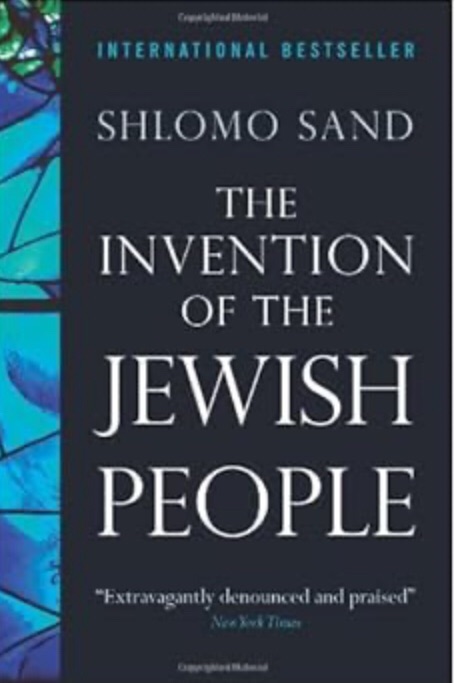
What is the significance of the title “The Matrix of Gog” authored by Daniel Patrick in the context of the book?

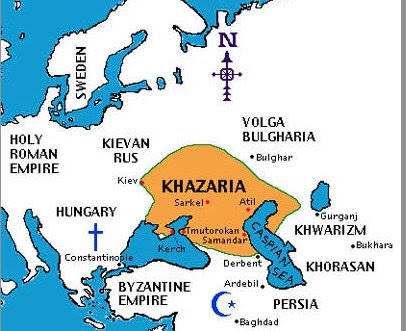
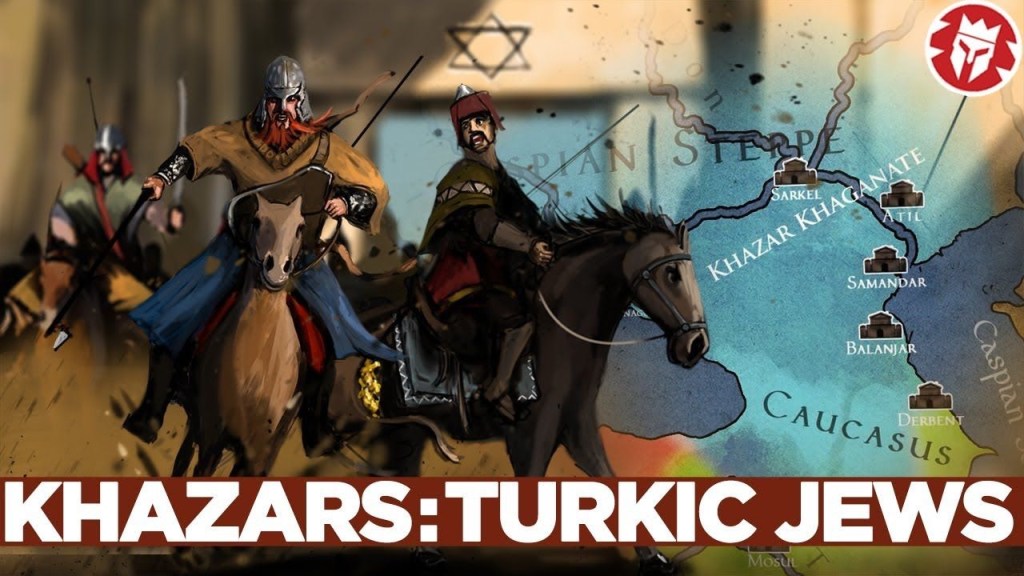
The title “The Matrix of Gog” authored by Daniel Patrick holds significant meaning in the context of the book. The term “Matrix of Gog” refers to the fulfillment of Bible prophecy, specifically Ezekiel 38 and 39, which describe a powerful world leader named Gog from the land of Magog who will emerge and precipitate a global war. The book aims to inform readers about Gog, Magog, and their connection to the Jews, revealing that today’s Jews are not descendants of Abraham but are of the Turkic bloodline from Khazaria, a country in the Caucasus south of Russia.

The title also implies a complex web or system (matrix) involving Gog and his influence on world events, particularly in relation to Israel and the Jewish people. The book challenges the common belief among Christian Zionists that they must support the Israeli state unconditionally, suggesting that this belief is based on a misunderstanding of biblical prophecy.

In essence, “The Matrix of Gog” is a title that encapsulates the book’s focus on uncovering the true identity of Gog and Magog and their role in fulfilling biblical prophecies, while also critiquing the prophetic paradigm that supports Zionist Israel.

Context and Content

1. Gog and Magog: In biblical and Quranic traditions, Gog and Magog are often associated with apocalyptic prophecies. The book explores the idea that Gog, from the land of Magog, has already exerted influence over the land of Israel, suggesting a fulfillment of these prophecies.

2. Khazars: The book delves into the history of the Khazars, a people who converted to Judaism in the medieval period. The author posits that they play a significant role in the destruction and plunder of lands, tying them to the narrative of Gog and Magog.

3. Prophetic and Historical Analysis: The author examines historical events and their potential prophetic significance, suggesting that the actions of Gog and Magog are part of a larger, divinely orchestrated plan. The “matrix” in the title implies a hidden framework through which these events unfold.

Overall, the title *The Matrix of Gog* reflects the book’s exploration of complex historical and prophetic themes, suggesting an underlying network of influences related to Gog and Magog and their impact on world events, particularly concerning the land of Israel.

According to the author, who is Gog?

According to the author, Gog is the demonic leader or king of the land of Khazaria, which is the country of origin for today’s “Jews.” The book “The Matrix of Gog” informs us about Gog, Magog, and the Jews, revealing that today’s “Jews” are the “Synagogue of Satan” as mentioned in Revelation 2 and 3.

According to the author, who are the present-day descendants of the ancient Israelites?

According to the author, the present-day descendants of the ancient Israelites are not the majority of Jews, but rather some Palestinians who have more Israelite blood than the Jews. Some Palestinians even have DNA markers that establish them as descendants of the ancient priests who worked in the Jewish temples and synagogues.

In what way does “The Matrix of Gog” establish a connection between Khazars and Gog from the land of Magog?

The book “The Matrix of Gog” establishes a connection between Khazars and Gog from the land of Magog by revealing that Gog is the demonic leader or king of Khazaria, which is located in the Caucasus, south of Russia. It explains that the people we call “Jews” today are actually of the Turkic bloodline and not descendants of Abraham, Israelites, or Semites. 

The book informs us about Gog, Magog, and the Jews, showing that the Holy Bible is accurate in its depiction. Additionally, it delves into the lineage of Togarmah, who is related to Magog and Ashkenaz, giving insight into the origins of the Khazars and their connection to the Ashkenazi Jews.

The perspective of the author towards Palestinians is what exactly?

The perspective of the author towards Palestinians is that they had more Israelite blood than the Jews themselves, and some Palestinians even had DNA that established they were ‘Cohens’ – workers at the ancient Temple and synagogues of the Jews.

What is the author’s perspective towards Ashkenazi Jews?

The author’s perspective towards Ashkenazi Jews is critical, as they view revealing books on the origins of Ashkenazi Jewry as a “Frankenstein nightmare” that won’t die despite attempts to suppress it in the media. The author also mentions a book by Dr. Paul Wexler that challenges Zionist beliefs about Ashkenazi Jews. Additionally, the author discusses the Khazar mass migration into Eastern Europe and the DNA research findings that suggest most Jews came from Khazar blood.

Matrix of Gog—The Fulfillment of Bible Prophecy

Ezekiel 38 and 39 are key to understanding the events of the last days. We read in Ezekiel that “Gog, from the land of Magog,” a powerful world leader, will emerge. He and his military forces will descend on and conquer Israel and go on to precipitate a horrendous, deadly global war.

Who is “Gog,” and where is “Magog?” Until recently, these vital questions were mysteries. But now, DNA science, history, and archeology have given us answers. Magog is the land of Khazaria, in the Caucasus, south of Russia. Gog, meanwhile, is the demonic leader, or king, of this great land.

Khazaria is the country of origin for today’s “Jews,” whom DNA science has confirmed are not descendants of Abraham and so, are not Israelites and Semites. The people whom we call “Jews” are, in fact, of the Turkic bloodline.

What this important book, Matrix of Gog, does is inform us about Gog, Magog, and the Jews. We discover that the Holy Bible is accurate, that today’s “Jews” are the “Synagogue of Satan” of Revelation 2 and 3.

Moreover, claiming to be Jews, the Khazars from Europe in recent decades have descended upon Israel in great numbers, just as prophesied. They have no family relationship and no ancestry to the ancient Israelites. As such, they are not the seed of Abraham but are pretenders. In an astonishing turn of events, today’s “Jews” are, in reality, none other than followers of Gog, of the land of Magog.

Texe Marrs, author

DNA Science and the Jewish Bloodline

Austin, TX 78733

Reexamining Abraham’s Sacrifice: An Islamic Perspective on Potential Scribal Interpolation in Genesis 22


Azahari Hassim

Micah 6, verse 7, reads:

“Will the Lord be pleased with thousands of rams, with ten thousand rivers of olive oil? Shall I offer my firstborn for my transgression, the fruit of my body for the sin of my soul?“

Jeremiah 8, verse 8, reads:

“’How can you say, “We are wise, for we have the law of the Lord,” when actually the lying pen of the scribes has handled it falsely?“

Several Islamic scholars believe Micah 6, verse 7, and Jeremiah 8, verse 8, may reflect a scribal interpolation of Isaac’s name in Genesis 22. The son who was nearly sacrificed is believed to have been Ishmael, not Isaac. What is the articulation of their argument?

The argument presented by some Islamic scholars regarding the potential scribal interpolation of Isaac’s name in Genesis 22 is based on several key points:

1. Quranic perspective: The Quran mentions the story of Abraham being commanded to sacrifice his son but does not explicitly name the son. Islamic tradition generally holds that it was Ishmael, not Isaac, who was to be sacrificed.

2. Textual analysis of Micah 6, verse 7: This verse states, “Shall I give my firstborn for my transgression, the fruit of my body for the sin of my soul?” Some Islamic scholars interpret this as a reference to the sacrifice story and argue that since Ishmael was Abraham’s firstborn, this verse supports the idea that Ishmael was the intended sacrifice.

3. Interpretation of Jeremiah 8, verse 8: This verse reads, “How can you say, ‘We are wise, for we have the law of the Lord,’ when actually the lying pen of the scribes has handled it falsely?” Islamic scholars use this to suggest that scribes may have altered biblical texts, potentially including the story of Abraham’s sacrifice.

4. Historical context: Some scholars suggest that the emphasis on Isaac in Jewish traditions may have led to a gradual change in the story, resulting in Isaac’s name being added to the biblical narrative.

5. Linguistic analysis: Some scholars examine the original Hebrew text and argue that there are inconsistencies or ambiguities that could support the idea of later interpolation.

6. Theological implications: The argument often ties into broader Islamic theological perspectives on the role and significance of Ishmael in the Abrahamic tradition.

It is crucial to emphasize that this perspective is not universally embraced by scholars of comparative religion, and it is just one interpretation within a multifaceted interfaith discussion. The argument relies heavily on interpretation and inference, as there is no direct textual evidence of interpolation in the Genesis account itself.

This perspective challenges traditional Jewish and Christian understandings of the text and highlights the different ways sacred texts can be interpreted across religious traditions.

The Scriptural Alteration and the Abrahamic Covenant

Was the Abrahamic covenant fulfilled through Ishmael rather than Isaac?

The belief that the Abrahamic covenant was fulfilled through Ishmael rather than Isaac, including the promise of land from the Nile to the Euphrates and the blessing to all nations through Abraham’s seed, is held by some, particularly within Islamic tradition. Here’s a more detailed articulation of their argument:

Ishmael and the Covenant

  1. Ishmael as the Firstborn: Supporters of this view argue that Ishmael, being Abraham’s firstborn son, was the original heir to the covenant. They emphasize that Ishmael was the first child of Abraham, born to Hagar, Sarah’s Egyptian maidservant.
  2. Sacrifice Narrative: They contend that the narrative of Abraham being asked to sacrifice his son originally referred to Ishmael, not Isaac. This is based on the belief that ancient scriptures were altered by Israelite scribes to emphasize Isaac’s role.
  3. Blessing and Land Promise: The promise of land from the Nile to the Euphrates and the blessing to all nations is seen as applying to Ishmael’s descendants. Islamic tradition views Ishmael as an ancestor of the Arab peoples, and thus sees the fulfillment of these promises through the Islamic Hajj and in the rise of Islamic civilization.
    Scriptural Alteration Argument
  4. Scribal Changes: They argue that ancient Israelite scribes altered the scriptures to shift the focus from Ishmael to Isaac. This was done to establish a theological foundation for the Israelites’ claim to the land and their unique covenantal relationship with God.
  5. Evidence from Quranic Texts: The Quran does not name the son of the near sacrifice, but Islamic tradition identifies him as Ishmael. This is supported by the timeline in the Quran, which implies that the promise of Isaac’s birth occurred following the sacrifice event, suggesting that Ishmael was the probable candidate.

In conclusion, the perspective that Ishmael, rather than Isaac, was the true heir to the Abrahamic covenant is rooted in the belief that Ishmael, as the firstborn, was the original recipient of God’s promises.

This view is supported by interpretations of Islamic tradition and arguments regarding scriptural alterations.

While this belief contrasts with the traditional Judeo-Christian view that Isaac was the chosen heir, it highlights the diverse understandings and interpretations of Abrahamic history within different religious traditions.

Mount Sinai is venerated by the three faiths for its relevance to the story of the Exodus when Moses led the Hebrew people out of Egypt

Inheritance Rights

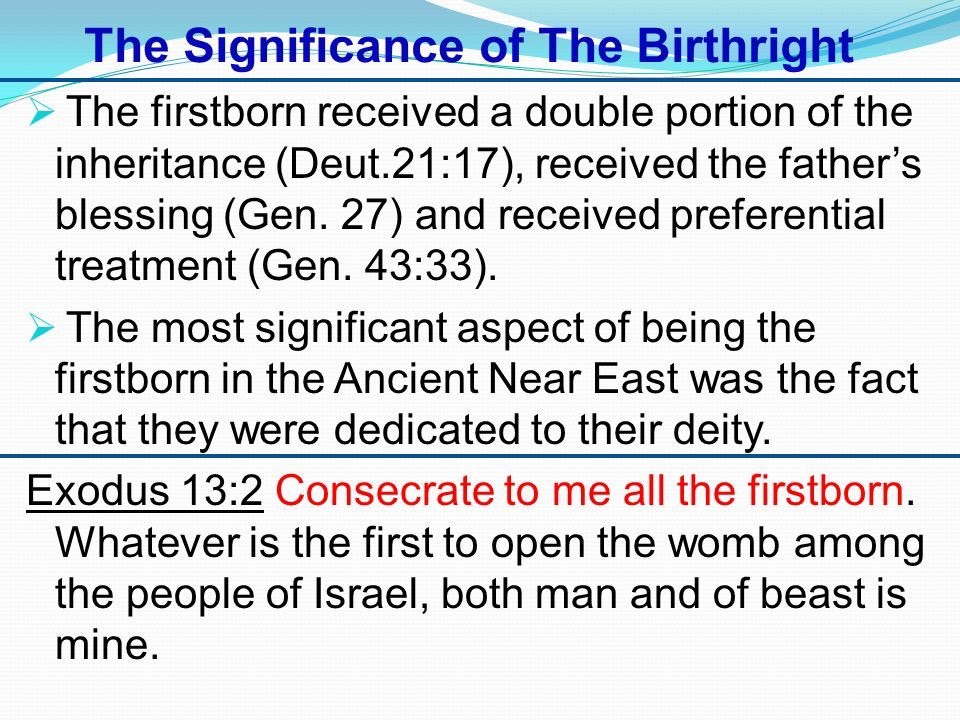
The Bible contains several passages that outline the rights and significance of the firstborn, particularly in the context of inheritance, family leadership, and religious duties. These rights are rooted in both the cultural and legal traditions of ancient Israel, and they are often intertwined with theological themes.

Deuteronomy 21:15-17 explicitly addresses the inheritance rights of the firstborn son:

“If a man has two wives, one beloved and the other unloved, and both the beloved and the unloved have borne him children, and if the firstborn son belongs to the unloved, then on the day when he wills his possessions to his sons, he may not treat the son of the beloved as the firstborn in preference to the son of the unloved, who is the firstborn. He must acknowledge the son of the unloved wife as the firstborn by giving him a double portion of all that he has, for he is the first fruits of his strength. The right of the firstborn is his.”

This passage establishes that the firstborn son is entitled to a “double portion” of the inheritance. This meant that the firstborn would receive twice as much as any other son, a right that underscored the firstborn’s role as the primary heir and leader of the family after the father’s death.

The significance of the firstborn

The significance of the firstborn has been a subject of study and commentary by many anthropologists, who have explored its importance in various cultures and societies. Here are some quotes from well-known anthropologists that touch on the theme of the firstborn:

1. Bronisław Malinowski

Bronisław Malinowski, a pioneer in the field of social anthropology, often explored the role of kinship and family structures in society. Regarding the importance of the firstborn, he noted:

“The firstborn in many societies is not just the first in line of descent but often embodies the continuity of the family’s legacy, carrying the weight of tradition and expectations, and serves as a crucial link between generations.”
Bronisław Malinowski, The Dynamics of Cultural Change.

2. Sir Edward Burnett Tylor

Sir Edward Burnett Tylor, considered the father of cultural anthropology, explored the role of ritual and tradition in human societies. He remarked on the significance of the firstborn:

“The status of the firstborn, whether in terms of inheritance, ritual responsibility, or social rank, is deeply ingrained in the customs and legal traditions of many cultures, reflecting an ancient belief in the primacy of order and hierarchy in human society.”
Edward B. Tylor, Primitive Culture.

3. Claude Lévi-Strauss

Claude Lévi-Strauss, a key figure in the development of structural anthropology, examined kinship and family systems in various cultures. He discussed the role of the firstborn in terms of social structure:

“The firstborn often stands as a symbol of the societal structure itself, representing the first and most visible manifestation of the underlying principles of kinship and succession that define a culture’s social organization.”
Claude Lévi-Strauss, The Elementary Structures of Kinship.

4. Margaret Mead

Margaret Mead, an influential cultural anthropologist, studied the impact of family dynamics on individual development. She touched on the expectations placed on the firstborn:

“In many cultures, the firstborn is often seen as the torchbearer of the family’s values, traditions, and honor. The expectations placed on them can be both a burden and a privilege, shaping their role in both the family and society at large.”
Margaret Mead, Coming of Age in Samoa.

5. Jack Goody

Jack Goody, a British social anthropologist, focused on kinship and inheritance systems. He explored the cultural importance of the firstborn:

“The position of the firstborn in various inheritance systems, whether through primogeniture or other means, is not merely a legal matter but a reflection of the cultural emphasis on continuity, stability, and the preservation of the social order.”
Jack Goody, The Development of the Family and Marriage in Europe.

Conclusion

These quotes illustrate that the firstborn holds a critical place in the anthropology of kinship and social structure, often symbolizing continuity, leadership, and the transmission of cultural and familial values across generations. Anthropologists have recognized the firstborn’s role as pivotal in understanding the dynamics of family, inheritance, and societal expectations in various cultures.

Comparing the Popularity of “Servant of the Lord” and “Son of God” Titles for Jesus


Azahari Hassim

What is the reason for the lesser popularity of the title “Servant of the Lord” in reference to Jesus, in comparison to the widely recognized title “Son of God,” despite the description given in the well-known book of Isaiah 42?

The lesser popularity of the title “Servant of the Lord” in reference to Jesus, in comparison to the widely recognized title “Son of God,” may be due to several reasons. One reason could be that the concept of a servant is not as commonly understood or revered in the same way as the concept of a son. In many cultures and religious traditions, the idea of a son implies a special and close relationship, while the concept of a servant may not carry the same connotations of significance.

Additionally, the title “Son of God” has been more widely emphasized and popularized in Christian theology and scripture, particularly in references to Jesus in the New Testament. This has contributed to its widespread recognition and acceptance among Christians.

Furthermore, there may be a tendency to focus on the divinity and special relationship of Jesus as the Son of God, rather than emphasizing his role as a servant. This emphasis on divine status may overshadow the significance of the title “Servant of the Lord” in some interpretations of Christian theology.

Overall, the lesser popularity of the title “Servant of the Lord” in comparison to “Son of God” may be a result of its historical and theological emphasis, as well as cultural and linguistic factors. Despite this, the concept of Jesus as the Servant of the Lord is an important and meaningful aspect of Christian faith, as highlighted in the book of Isaiah and other biblical texts.

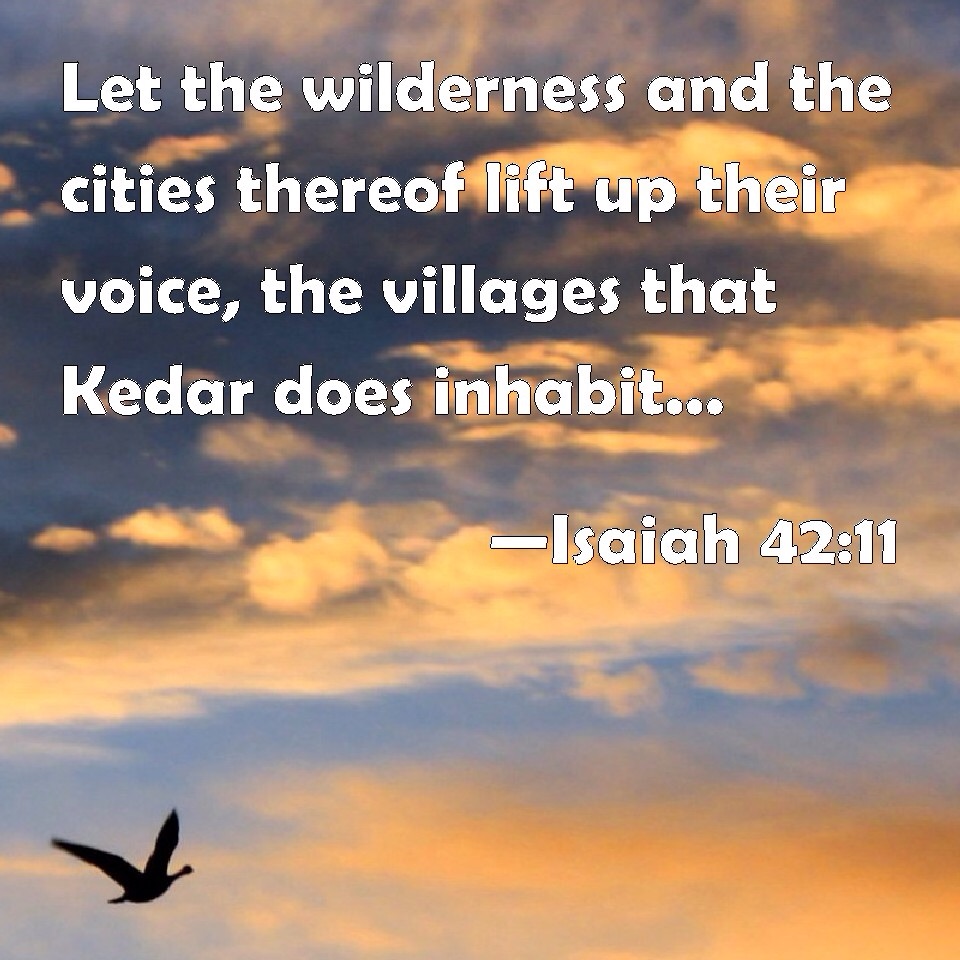
Muhammad is identified as a servant of Allah in the Quran. There are those who posit that the reference to the servant of the Lord in Isaiah 42, specifically verse 11 which mentions Kedar, may be alluding to Muhammad. How do they present and support this argument?

Those who posit that the reference to the servant of the Lord in Isaiah 42, specifically mentioning Kedar, may be alluding to Muhammad, often present and support this argument based on several key points:

  1. Kedar’s Descendants: In Isaiah 42, verse 11, it mentions Kedar, who was the second son of Ishmael and, according to Islamic tradition, is considered the ancestor of the Arabs. The argument is that since Muhammad was an Arab, and he came from the lineage associated with Kedar, this reference could be an allusion to him.
  2. Characteristics of the Servant: The description of the servant in Isaiah 42 aligns with certain traits that are associated with Muhammad in Islamic tradition. The servant is described as bringing a new law, being a light for the nations, and engaging in conquest and warfare. Proponents of this argument argue that these attributes are consistent with the mission and actions of Muhammad.
  3. Similarities in Language and Prophecies: Some commentators draw parallels between the language used in Isaiah 42 and certain prophecies and descriptions related to Muhammad in Islamic sources. They argue that linguistic and conceptual similarities between Isaiah 42 and Islamic teachings support the idea that Muhammad is the servant referenced in the passage.
  4. Connection to Monotheism: Proponents of this argument also highlight the emphasis on monotheism in Isaiah 42, which they relate to the monotheistic message of Islam and the role of Muhammad as a carrier of the monotheistic faith in the Arabian Peninsula.

It’s important to note that this interpretation is based on a specific reading of the text and is subject to debate and interpretation within different religious traditions. Not all scholars or religious authorities agree with this perspective, and there are varied understandings of the meanings and implications of the servant mentioned in Isaiah 42. Different religious communities and denominations may have distinct interpretations of these passages based on their particular religious and theological frameworks.

In constructing a genealogy of Muhammad, the Islamic hagiographers traced his descent from Abraham and Ishmael through Kedar.

Zondervan Pictorial Encyclopedia of the Bible
The Arabian Desert has sporadic vegetation that include mostly shrubs and specific trees

Analyze Jesus and Muhammad in Abrahamic faiths through the concept of “Seed” in Genesis 22:18

Certain individuals argue that the reference to the “seed” in Genesis 22, verse 18, does not pertain to Jesus due to his words in Matthew 15, verse 24. Instead, they point to Muhammad based on Surah 21, verse 107. How is their argument articulated?

The argument that the “seed” mentioned in Genesis 22, verse 18, refers to Muhammad rather than Jesus is articulated by contrasting biblical and Quranic texts. Here’s how the argument is structured:

Genesis 22, verse 18, states:

“And through your offspring all nations of the earth will be blessed, because you have obeyed My voice”.

The Hebrew word used for “offspring” or “seed” is “zera”, which can be a collective singular noun, implying it could refer to a single individual or a group.

In Matthew 15, verse 24, Jesus says:

“I was sent only to the lost sheep of the house of Israel”.

This statement is interpreted by some to mean that Jesus’ mission was primarily focused on the Israelites and not on all nations directly. This interpretation is used to argue that Jesus was not the fulfillment of the promise in Genesis 22, verse 18, which speaks of a blessing to “all nations”.

Surah 21, verse 107 of the Quran states:

“And We have not sent you, [O Muhammad], except as a mercy to the worlds”.

This verse is interpreted to mean that Muhammad’s mission was universal, extending to all of humanity, which aligns with the promise in Genesis 22, verse 18, about blessing all nations.

The proponents of this view argue that since Jesus explicitly stated his mission was to the Israelites, he does not fulfill the universal aspect of the blessing promised in Genesis 22, verse 18.

In contrast, Muhammad is described in the Quran as a mercy to all worlds, which they believe aligns more closely with the promise of a blessing to all nations. Therefore, they conclude that the “seed” in Genesis 22, verse 18, refers to Muhammad rather than Jesus.

This argument hinges on the interpretation of Jesus’ mission scope in the New Testament and the universal mission attributed to Muhammad in the Quran.

There are some scholars who believe the prophethood of Muhammad is related to Abraham’s near sacrifice of Ishmael. Therefore, Muslims commemorate Eid ul-Adha or the Feast of Sacrifice. How is this argument articulated?

The argument that the prophethood of Muhammad is related to Abraham’s near sacrifice of Ishmael is based on the Islamic tradition that Abraham was commanded by God to sacrifice his son Ishmael, not Isaac as mentioned in the Bible.

This event is seen as a test of Abraham’s faith and obedience to God, and Ishmael’s willingness to be sacrificed is seen as a demonstration of his own faith and submission to God’s will.

In Islamic theology, this event is considered a precursor to the prophethood of Muhammad, who is seen as a descendant of Ishmael. The story of Abraham’s sacrifice is commemorated by Muslims during the Eid al-Adha, or the Feast of Sacrifice, which is one of the most important Islamic holidays.

The argument is articulated as follows:

  1. Abraham was commanded by God to sacrifice his son Ishmael, as mentioned in the Quran (Surah 37: 100 to 108).
  2. Ishmael was willing to be sacrificed, demonstrating his faith and submission to God’s will.
  3. This event is seen as a test of Abraham’s faith and obedience to God.
  4. The prophethood of Muhammad is related to this event, as he is a descendant of Ishmael.
  5. The story of Abraham’s sacrifice is commemorated by Muslims during the Eid al-Adha, which is a celebration of Abraham’s faith and obedience to God.

Therefore, the prophethood of Muhammad is seen as a continuation of the legacy of Abraham and Ishmael, and the story of Abraham’s sacrifice is seen as a precursor to the prophethood of Muhammad.

What is Eid al-Adha?

Eid al-Adha, also known as the “Festival of Sacrifice,” is one of the most significant Islamic holidays. It commemorates the willingness of Prophet Ibrahim (Abraham) to sacrifice his son Isma’il (Ishmael) as an act of obedience to God.

According to Islamic tradition, just as Abraham was about to sacrifice his son, God provided a lamb to sacrifice instead.

The holiday is marked by various rituals and traditions, including:

  1. Prayer: Special prayers are held in congregation, usually at a mosque or an open field.
  2. Sacrifice: Families who can afford it will sacrifice an animal, typically a sheep, goat, cow, or camel. The meat is then distributed among family, friends, and those in need.
  3. Charity: Emphasizing the importance of helping others, Muslims give to charity and ensure that everyone can partake in the celebration.
  4. Gatherings and Feasts: Families and communities come together to share meals, celebrate, and enjoy each other’s company.

Eid al-Adha is celebrated on the 10th day of Dhu al-Hijjah, the last month of the Islamic lunar calendar, and it coincides with the pilgrimage to Mecca known as Hajj. Muslims who are performing Hajj experience this holiday in a particularly special way.

King Solomon, King Cyrus, and the Messianic reference to Muhammad by Jesus


Azahari Hassim

What distinguishes King Solomon from King Cyrus in relation to messiahship?

The main distinction between King Solomon and King Cyrus in relation to messiahship is:

  1. King Solomon was an Israelite king from the Davidic dynasty, while King Cyrus was a Persian king who ruled over the Israelites.
  2. King Solomon is not generally considered a messianic figure, though he was an important and influential king in the Old Testament. In contrast, King Cyrus is referred to as a “messiah” or “anointed one” in the Bible (Isaiah 45, verse 1).
  3. The reason Cyrus is referred to as a messiah is that, though he was not an Israelite, God used him to facilitate the return of the Jewish people from the Babylonian exile and the rebuilding of the Temple in Jerusalem. This was seen as a messianic act of delivering and restoring God’s people.
  4. Solomon, despite his wisdom and wealth, did not have the same messianic role or divine calling that Cyrus had in relation to the Israelites and their restoration. Solomon was an important king, but not considered a messianic figure in the same way.

So in summary, the key distinction is that Cyrus was explicitly called a messiah in Scripture for his role in facilitating the return from exile, while Solomon, though a great king, did not have the same messianic status or function in biblical theology.

Cyrus the Great, also known as Cyrus II of Persia, was the founder of the Achaemenid Empire, which became the first Persian Empire. He reigned from approximately 559 to 530 BCE and is renowned for his military conquests, administrative genius, and policies of tolerance and respect for the cultures and religions of the lands he conquered.

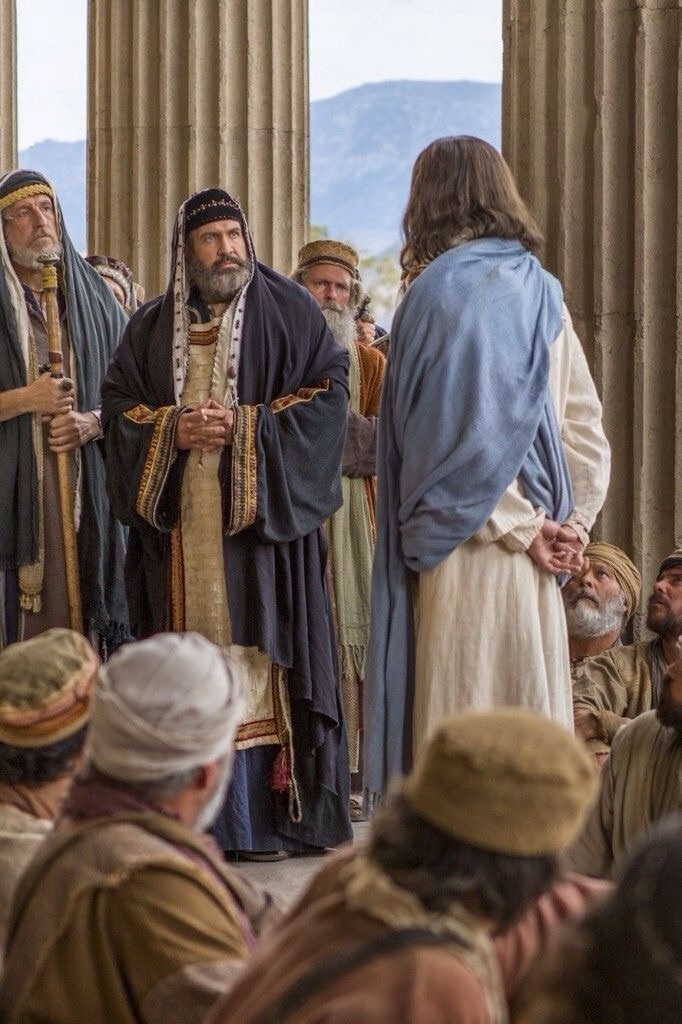
Jesus was teaching in the Temple area. He asked, “Why do the teachers of the law say that the Messiah is the son of David?

With the help of the Holy Spirit, David himself says, ‘The Lord (God) said to my Lord ( my master): Sit by me at my right side, and I will put your enemies under your control. ‘

David himself calls the Messiah ‘Lord.’ So how can the Messiah be David’s son?”

Many people listened to Jesus and were very pleased.

It has been argued by some Muslims that Jesus denies in Mark 12, verses 35 to 37, that the messiah Jews are looking for is a descendant of David. There is also a similar account in Luke 20, verses 41 to 44, and Matthew 22, verses 41 to 46. Their point of contention is that Jesus refers to Muhammad rather than himself. What is the significance of this argument?

The argument that Jesus refers to Muhammad in the above statements rather than to himself as the Messiah, and suggests that the Messiah Jews are awaiting is not a descendant of David, is an interpretation that emerges from a particular reading of these biblical passages in light of Islamic prophecy and eschatology.

This interpretation is not found within mainstream Christian theology but is part of Muslim perspectives that see Muhammad as the final prophet foretold in earlier scriptures, including the Bible. Here’s how this argument is typically explained:

  1. Jesus’ Questioning: Among Muslims, Jesus’ questioning is interpreted as a rejection of the idea that the Messiah is a physical descendant of David. Instead, they propose that Jesus is hinting at a more profound spiritual truth about the Messiah’s identity. This interpretation is seen as opening the door to the idea that Jesus might be indicating the coming of another prophet (Muhammad), as per Islamic belief, who is considered the final prophet and a messenger in Islam.
  2. Jewish Expectation: At the time, many Jews expected the Messiah to be a political or military leader who would liberate Israel from Roman rule. This expectation was based on various Old Testament prophecies that the Messiah would come from David’s lineage.
  3. Reference to Muhammad: Some Muslims interpret Jesus’ reference to “my Lord” as a prophecy about Muhammad, who is considered in Islam to be the final prophet and a “Spiritual Messiah.” This interpretation is bolstered by Islamic teachings that regard Muhammad as the “Praised One” (which is what the name Muhammad means) and as fulfilling biblical prophecies about a final messenger.
  4. Distinction from Davidic Lineage: By focusing on the term “Lord” and the context in which Jesus presents his argument, some Muslims see this as a clear indication that the coming Messiah, who they believe is Muhammad, would have a different role and authority than the one traditionally ascribed to the Davidic Messiah. This reading suggests that Jesus was pointing to the advent of a new spiritual leader who would come from the lineage of Ishmael, not Isaac, thus not being a direct descendant of David but still fulfilling the role of a Messiah.
  5. Islamic Eschatology and Prophecy: This interpretation is part of a broader Islamic eschatological view that sees Jesus and Muhammad as connected within God’s plan for humanity. Jesus is seen as heralding the coming of Muhammad, with his mission serving as a bridge between Jewish expectations of a Messiah and the arrival of the final prophet, Muhammad.

It’s important to note that this interpretation is specific to Islamic theology and is not shared by Jewish or Christian traditions, which have their own understandings of the Messiah and the prophecies concerning him.

Was Muhammad a promised Messiah to the Jews?

Allah says in the Quran, Surah 2 verse 89:

”And when there came to them (Jews) a Book from Allah, confirming that which is with them—and earlier they would pray for victory over the pagans (through the medium of His messenger)—so when there came to them what they recognized (that is, Muhammad), they denied it. So may the curse of Allah be on the faithless!“

Some believe this verse indirectly points to Muhammad as a promised Messiah. How is this interpretation explained?

This verse refers to the Jews who were awaiting the coming of their Messiah, as they had read about him in the scripture. They used to invoke Allah for his arrival, hoping that he would help them defeat their enemies. However, when Allah sent Muhammad to the Arabs, and he brought the Quran that confirmed the previous scriptures, the Jews rejected him and denied his prophethood. They did this out of envy and pride, because they wanted the Prophet to be from among them. Therefore, Allah cursed them for their disbelief and ingratitude.

The verse implies that the Jews had some knowledge of the characteristics and attributes of the Prophet Muhammad, and they recognized him when he came. This is also supported by other verses in the Quran, such as Surah 2, verse 146, which says:

”Those to whom We gave the Scripture know him as they know their own sons. But indeed, a party of them conceal the truth while they know [it].“

Therefore, some Muslims believe that this verse indirectly points to Muhammad as a promised Messiah, who was foretold by the previous prophets and scriptures.

Certain individuals posit that Daniel 7, verse 25, can be interpreted as an allusion to Constantine the Great, the prominent figurehead of the Council of Nicaea, while they also propose that Daniel 7, verse 13, may be a reference to Muhammad’s celebrated Night Journey. How is this argument articulated?

This argument is highly controversial and not accepted by Christians. According to mainstream interpretation, Daniel 7, verse 25, refers to the Antichrist, while Daniel 7, verse 13, refers to the Messiah. However, some proponents of this argument offer the following explanation:

They argue that Constantine the Great, the Roman emperor who converted to Christianity and convened the Council of Nicaea in 325 AD, is seen as the little horn mentioned in Daniel 7, verse 25. They claim that Constantine, through his actions, spoke against the Most High and attempted to change religious practices, such as introducing the doctrine of the Trinity, celebrating Easter instead of Passover, and observing Sunday rather than Saturday as the Sabbath. They also accuse Constantine of persecuting those who did not conform to his version of Christianity, particularly the Arians who denied the divinity of Jesus.

Regarding Muhammad, the founder of Islam, they argue that his Night Journey from Mecca to Jerusalem and subsequent ascension to heaven aligns with the Son of Man mentioned in Daniel 7, verse 13. They believe this refers to Muhammad being granted dominion, glory, and an everlasting kingdom by God. They assert that Muhammad restored monotheism and argue that his kingdom will never be destroyed, with all nations and peoples serving him or submitting to his law.

The Departure of Hagar and Ishmael: Analyzing Biblical Text and Midrash Interpretations


Azahari Hassim

According to biblical accounts, Ishmael is described as a teenager at the time he and Hagar depart from Abraham’s household. In contrast, Islamic tradition presents him as an infant or young child whom Hagar nurses as they leave Abraham’s residence.

Was Ishmael placed on Hagar’s shoulder by Abraham in Genesis 21 before their departure? Was Ishmael able to walk when Abraham sent him and his mother away? How does the Midrash explain it?

Midrash is a term used in Jewish tradition to refer to a method of interpreting biblical texts. It involves exploring and expanding upon the stories, laws, and teachings found in the Hebrew Bible through storytelling, commentary, and analysis. Midrashic interpretations often seek to uncover deeper meanings or lessons within the text and can vary widely in style and content.

The Midrash provides an interpretation of the events in Genesis 21. According to the Midrash, Ishmael was indeed placed on Hagar’s shoulders, and this act is seen as a demonstration of Hagar’s devotion to her son. However, the Midrash also acknowledges the inconsistency between Ishmael’s age and his physical abilities, suggesting that the text may have been altered or fabricated to fit the narrative.

According to Rashi’s commentary, Ishmael was unable to walk at the time, potentially due to an evil eye cast upon him by Sarah that caused him to become ill. Rashi suggests Abraham placed the teenage Ishmael on Hagar’s shoulder along with their supplies because he was too feeble to walk on his own.

So in summary, while Rashi argues Ishmael was placed on Hagar’s shoulders because he was too ill to walk, this explanation is debated given Ishmael’s age and other details in the text and Midrash. The passage is ambiguous about how Hagar and Ishmael departed together. Alternative interpretations suggest Ishmael was old enough to walk, even if he required some support from his mother.

A passage from “Hard Sayings of the Bible” states:

A number of commentators have insisted on the fact that Ishmael was placed on the shoulders of Hagar when she left. This would imply that at the time the boy was a mere infant who needed to be carried by his mother. Then in Genesis 21, verse 15, he is spoken of as being cast or placed under a bush.

Now after these interpreters have reached these conclusions about Ishmael being a mere infant, they go on to declare that this assessment is in conflict with Genesis 16, verse 16, 17, verse 25, and 21, verse 5, where the boy seems to be at least thirteen or fourteen years old, and that this is the mark of multiple sources, for the texts were not edited as carefully as they should have been.

What is the explanation for this argument?

The argument you’ve mentioned is centered around the apparent discrepancies in Ishmael’s age in different parts of the Genesis narrative. The confusion arises from the portrayal of Ishmael as both an infant and a teenager in various passages.

According to Genesis 16, verse 16, Abraham was 86 years old when Ishmael was born. By the time Isaac was born, Abraham was 100 years old, making Ishmael approximately 14 years old (Genesis 21, verse 5). The event of Hagar and Ishmael being sent away occurs after the weaning of Isaac, which could imply that Ishmael was between 17 and 19 years old at that time.

The passage you’ve cited suggests that some commentators interpret the text as if Ishmael were an infant during this event, based on the description of him being carried on Hagar’s shoulders and placed under a bush. This interpretation could be seen as conflicting with the earlier texts that indicate Ishmael’s teenage years.

The explanation for this discrepancy is a subject of debate among scholars. Some propose that it might be due to multiple sources or redactions in the text, which were not perfectly harmonized. Others suggest that the narrative is not strictly chronological or that the descriptions are figurative rather than literal. It’s also possible that the term “child” or “boy” used in the text does not necessarily imply infancy but could simply refer to a son.


Abraham lived some thirty-seven years after Sarah’s death and died at the age of 175.
The biblical writer’s comment that Abraham was gathered to his people hints at the Israelites’ early belief in an afterlife.
The patriarch’s two oldest sons Isaac (now seventy-five) and Ishmael (now eighty-nine) took the responsibility of burying their father.

THE CSB STUDY BIBLE

The Importance of the Hajj in Islam as a reflection of alterations in the Torah and Islam’s role as a revived faith of Abraham

There is an argument among scholars regarding the significance of Hajj in Islam as a restored religion tracing back to Abraham. It is posited that Ishmael was exiled as a young child well before the birth of Isaac, and that Ishmael, rather than Isaac, was the intended sacrifice. How is this argument articulated?

The argument regarding the significance of Hajj in Islam as a restored religion tracing back to Abraham, and the associated narrative involving Ishmael and Isaac, is articulated through several key points:

1. Lineage and Prophetic Tradition: 

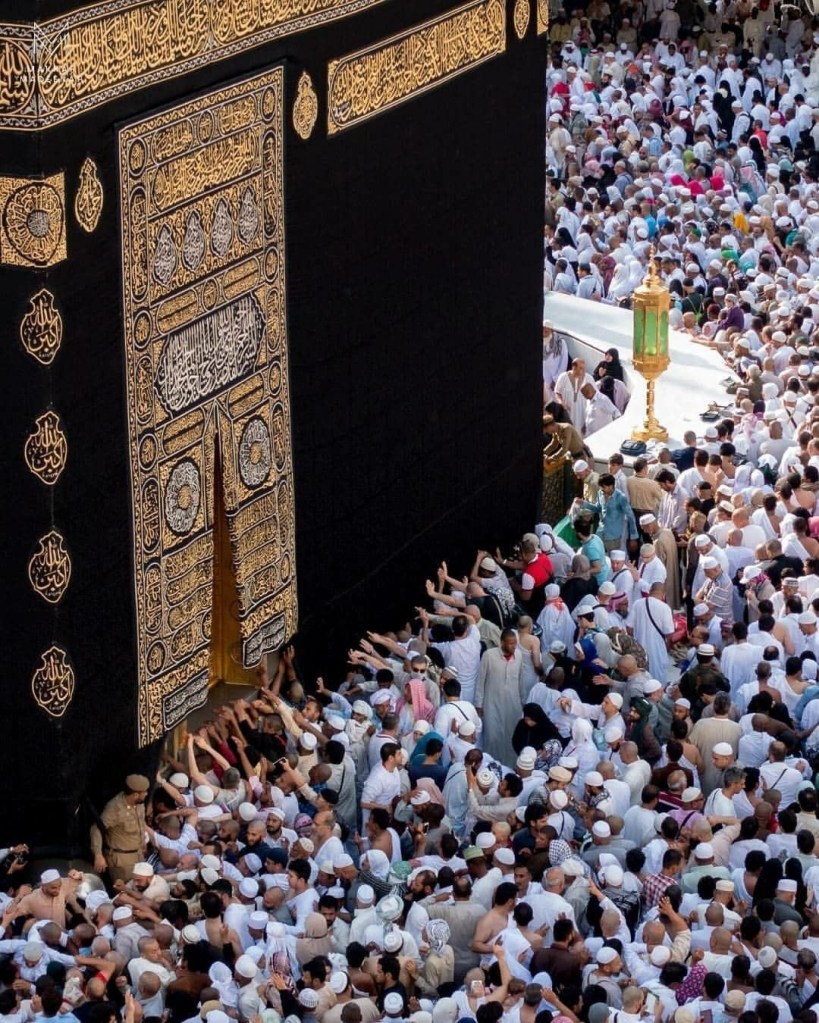
In Islamic tradition, Hajj is deeply connected to the figure of Abraham (Ibrahim). Muslims believe that Abraham, along with his son Ishmael (Ismail), played a foundational role in establishing the rites of Hajj. The Kaaba, the central structure around which Hajj is performed, is believed to have been built by Abraham and Ishmael.

2. The Story of Ishmael and Isaac:

  Exile of Ishmael: According to Islamic narratives, long before Isaac was born, Ishmael and his mother Hagar were settled by Abraham in the desert of Mecca, which is where the Zamzam well miraculously appeared to sustain both of Hagar and her infant son Ishmael. This event is commemorated during the Hajj.

  The Sacrifice: Islamic tradition holds that it was Ishmael, not Isaac, who was the intended sacrifice. This is based on interpretations of the Quran, specifically Surah 37, verses 100 to 113, where it is generally understood that the son who was to be sacrificed was Ishmael. According to the sequence of events in the Quran, the promise of Isaac’s birth comes after the story of sacrifice, indicating that Ishmael is the son in question.

This contrasts with the Judeo-Christian tradition, which identifies Isaac as the intended sacrifice.

3. Symbolic Acts of Hajj:

The rites of Hajj include reenactments and commemorations of events from the lives of Abraham, Hagar, and Ishmael. For instance:

The Sa’i, which involves walking seven times between the hills of Safa and Marwah, commemorates Hagar’s desperate search for water for her infant son Ishmael.

The stoning of the Jamarat represents Abraham’s rejection of Satan’s temptation, which is believed to have occurred when he was about to sacrifice Ishmael.

4. Restoration of Abrahamic Monotheism: 

Islam views itself as a continuation and restoration of the pure monotheistic faith of Abraham. The Hajj serves as a means to reconnect with the Abrahamic legacy, emphasizing monotheism, obedience to God, and the unity of the Muslim community.

In summary, the argument hinges on the belief that Ishmael, rather than Isaac, was central to the narrative of sacrifice and that the rites of Hajj are rooted in the events of Abraham’s life as they unfolded in Mecca with Ishmael. This perspective underscores the significance of Hajj in Islam and its connection to Abraham as a pivotal prophet in the monotheistic tradition.

The Cave of Machpelah, also known as the Cave of the Patriarchs, is a significant archaeological and religious site located in Hebron, in the West Bank. It is traditionally believed to be the burial place of the biblical patriarchs Abraham, Isaac, Jacob, and their wives Sarah, Rebekah, and Leah.
According to the Book of Genesis, Abraham purchased the cave from Ephron the Hittite as a burial site for his wife Sarah. This act is considered one of the first instances of land ownership in the biblical narrative. The cave and the surrounding field are mentioned in Genesis 23:19-20 and Genesis 49:29-32.
The site has great religious significance for Judaism, Christianity, and Islam. It is revered as a holy site, and a mosque was built there in the 7th century CE. The structure has undergone various renovations and expansions over the centuries, reflecting its importance to different faiths.
Today, the Cave of Machpelah is a place of pilgrimage and worship, attracting visitors from around the world. It is also a site of political and religious tension, given its location in a contested area.

Hagar and Ishmael in the Desert by Francois-Joseph Navez, c. 1820 CE 
Royal Museums of Fine Arts of Belgium

Eerdman’s Dictionary of the Bible

HAGAR (Heb. hāg̱ār)


An Egyptian woman, servant to the matriarch Sarai. The story of Hagar, representing two strands of tradition in Gen. 16, 21, is one of status competition, surrogate motherhood, ethnic conflict, class struggle, abuse, exile, and triumph.


The barren Sarai gives Hagar to Abram “as a wife” (Gen. 16:3) making any would-be offspring a legal heir according to contemporary Mesopotamian law. Sarai comes to rue the day she manipulated such a union. Hagar, upon conceiving, scorns Sarai (Gen. 16:4), driving Sarai to abuse her in return. Hagar flees into the desert wilderness, pregnant and on foot, headed 240 km. (150 mi.) south to Shur. The angel of the Lord sends her back to Sarai with promises similar to those made to Abraham, Isaac, and Jacob. Her son, to be named Ishmael, would bear offspring too numerous to count (Gen. 16:10) — 12 tribes which would become a great nation (17:20).


Some years later (Gen. 21:8-21), at the weaning of Isaac, Sarah notices Ishmael laughing or playing with him. The incident, though positive, is interpreted by Sarah as bearing threat to Isaac’s inheritance. She asks Abraham to rid her family of Hagar and Ishmael once and for all. Hagar, finding herself once again in the wilderness without sustenance, leaves Ishmael to die (here her son’s age doesn’t quite fit the context). Once again, God intervenes, providing food and water and reiterating the earlier promises to Hagar. She later finds an Egyptian wife for her near-grown son.

The Apostle Paul later allegorizes the story of Sarah and Hagar (Gal. 4:21-31) to portray Sarah’s literal descendants as enslaved (like Hagar) to the old covenant, while Sarah’s descendants by faith (and promise) become the essence of the new covenant of freedom. Ironically, to make his analogy work, Paul, like so many commentators before and since, overlooks the ambiguous faithfulness of both Sarah and Hagar.

How does the Quran obliquely refer to Muhammad as the “Shiloh”?


Azahari Hassim

Some believe that Surah 2, verse 129 and 133 of the Quran points to Muhammad as the “Shiloh” prophesied by Jacob in Genesis 49, verse 10. How is this argument articulated?

The argument that Surah 2, verses 129 and 133 of the Quran point to Muhammad as the “Shiloh” prophesied by Jacob in Genesis 49, verse 10, is articulated through several points:

  1. Surah 2, verse 29, reads:

“Our Lord, and send among them a messenger from themselves who will recite to them Your verses and teach them the Book and wisdom and purify them. Indeed, You are the Exalted in Might, the Wise.”

This verse mentions a prayer by Abraham and Ishmael for a messenger to be sent among their descendants, which Muslims believe refers to Muhammad. This is seen as a continuation of the Abrahamic prophetic tradition.

  1. Surah 2, verse 33, reads:

Or were you witnesses when death approached Jacob, when he said to his sons, “What will you worship after me?” They said, “We will worship your God and the God of your fathers, Abraham and Ishmael and Isaac – one God. And we are Muslims [in submission] to Him.”

This verse mentions Jacob asking his sons whom they will worship after his death, and they affirm their worship of the God of their forefathers, including Abraham, Ishmael, and Isaac. This is interpreted as a testament to the continuity of monotheism and the prophetic mission culminating in Muhammad.

  1. In Genesis 49, verse 10, Jacob states:

“The sceptre shall not depart from Judah, nor a lawgiver from between his feet, until Shiloh come; and unto him shall the gathering of the people be.”

This biblical verse speaks of a ruler from Judah until “Shiloh” comes, interpreted by some as a messianic figure. The argument posits that Muhammad, as a descendant of Abraham through Ishmael, fulfills this prophecy by bringing a final and universal message.

These points collectively argue that Muhammad is the awaited “Shiloh” who brings the final divine guidance, aligning with the Quranic narrative of prophetic succession.


In Genesis Rabbah, a classical collection of Jewish homiletical interpretations, “Shiloh” is also understood messianically. The Midrash associates “Shiloh” with the coming of the Messiah, who will bring peace (since the word “Shiloh” is linked to the Hebrew word for peace, “Shalom”).

Midrash Rabbah

Muhammad, Torah and Hebrew prophets

Does Hagar’s prophecy in Genesis 21, verse 18, predate the Torah given to Moses?

Yes, Hagar’s prophecy in Genesis 21, verse 18, predates the Torah as given to Moses. The Book of Genesis, which includes the story of Hagar, is considered part of the Torah (the first five books of the Hebrew Bible) and traditionally attributed to Moses. 

However, the events described in Genesis, including Hagar’s encounter with God and the prophecy concerning her son Ishmael, are believed to have occurred long before the time of Moses, around the patriarchal period.

The narrative in Genesis 21 describes Hagar and Ishmael in the context of Abraham’s family and is thus seen as part of the pre-Mosaic tradition. The Torah, or Pentateuch, as a compilation and codification, is generally understood to have been formalized during the time of Moses, which occurs much later in the biblical timeline. 

Therefore, the events and prophecies in Genesis can be considered as part of the earlier history before the giving of the law to Moses.

What is the argument put forth by those who support the idea that the prophethood of Muhammad is linked to Hagar’s prophecy, which predates the Torah, in contrast to Hebrew prophets who are associated with the Torah? Consequently, Muhammad, in contrast to Hebrew prophets such as Jesus, is not bound by the laws of the Torah.

Supporters of the idea that the prophethood of Muhammad is linked to Hagar’s prophecy, which predates the Torah, argue that this connection sets Muhammad apart from Hebrew prophets who are associated with the Torah. Here is a detailed explanation of their argument:

  1. Pre-Torah Origins of Hagar’s Prophecy: Proponents argue that Hagar’s prophecy, as mentioned in Genesis 21, verse 18, predates the Torah given to Moses. This prophecy concerns Hagar’s son, Ishmael, who is promised to become a great nation. This predates the formalization of the Torah, which is traditionally attributed to Moses and his time.
  2. Reiteration and Fulfillment in Islamic Rituals:

The Torah reiterates Hagar’s prophecy, but its fulfillment is seen in Islamic practices, particularly the Hajj pilgrimage. The Hajj, which involves rituals connected to Hagar and Ishmael, is viewed as a direct link to their legacy. This pilgrimage is a central practice in Islam, signifying the prophecy’s fulfillment and its importance in Islamic tradition.

  1. Marginalization by Ancient Israelite: Scribes It is suggested that ancient Israelite scribes attempted to downplay the significance of Hagar and Ishmael due to theological and political reasons. This marginalization aimed to elevate the prominence of Isaac and the Israelite lineage over Ishmael. The argument posits that the biblical narrative was shaped in a way that selectively emphasized aspects favorable to the Israelite lineage.

Contrast with Hebrew Prophets

  1. Association with the Torah: Hebrew prophets are closely linked to the Torah, which is seen as the foundation of their prophetic authority. The Torah, given to Moses, contains the laws and ethical teachings that Hebrew prophets were tasked with interpreting and enforcing. This connection establishes a continuous line of prophetic tradition rooted in the Mosaic covenant.
  2. Muhammad’s Independent Prophetic Lineage: In contrast, Muhammad’s prophethood is associated with the Abrahamic covenant through Ishmael, rather than the Mosaic covenant. This distinction is significant in Islamic theology, which views Muhammad’s message as a continuation and fulfillment of the Abrahamic faith, independent of the Mosaic laws. This perspective underscores the universality of Muhammad’s revelation, intended for all humanity, rather than being confined to the specific legal and ritual practices of the Jewish people.

Theological Implications

  1. Universal Prophetic Tradition: By associating Muhammad with a prophecy that predates the Torah, supporters argue that prophetic messages have been universal and ongoing throughout human history. This places Islam within a broader, inclusive prophetic tradition that transcends Jewish ethnic and religious boundaries. It emphasizes the continuity of divine guidance from the time of Abraham through to Muhammad.
  2. Distinct Covenants: The argument also highlights the existence of distinct covenants in the Abrahamic religions. While the Hebrew prophets operate under the covenant of Moses and the Sinai revelation, Muhammad is seen as part of the covenant given to Abraham and Ishmael. This theological distinction reinforces the idea that different prophetic traditions are validated by separate covenants within the broader framework of Abrahamic faiths.

In summary, the argument linking Muhammad’s prophethood to Hagar’s prophecy emphasizes its pre-Torah origins, fulfillment in Islamic Hajj, and the marginalization of Hagar’s significance by ancient Israelite scribes. This perspective contrasts Muhammad’s universal and independent prophetic lineage with the Hebrew prophets’ association with the Torah, highlighting distinct covenants and a broader prophetic tradition.


In Genesis 48-49, Jacob’s final words to his sons included descriptions (judgments) of their characters and prophecies about their futures. It is here that we find out that God planned the double portion blessing for Joseph’s sons and a special blessing for Judah—Jacob’s fourth son. 

Two covenants: Abrahamic and Sinai covenants from an Islamic perspective

From an Islamic perspective, the word “Shiloh” in Genesis 49, verse 10, is connected to the Abrahamic covenant through Ishmael, who, not Isaac, is believed to be nearly sacrificed. Conversely, the terms “scepter” and “lawgiver” mentioned in Genesis 49, verse 10, are associated with the Sinai covenant. How is their argument articulated?

From an Islamic perspective, the interpretation of Genesis 49, verse 10, and its connection to the Abrahamic covenant through Ishmael involves several key arguments:

1. Shiloh as Muhammad:

Some Islamic scholars interpret “Shiloh” as a reference to Prophet Muhammad. They argue that the prophecy indicates a shift in divine authority away from the line of Judah to a descendant of Ishmael.

2. Abrahamic Covenant through Ishmael:

Islamic tradition holds that it was Ishmael, not Isaac, who was nearly sacrificed by Abraham. This is seen as a pivotal moment in the Abrahamic covenant, establishing Ishmael’s line as the inheritors of God’s promise.

3. Scepter and Lawgiver:

The terms “scepter” and “lawgiver” in Genesis 49, verse 10, are associated with the Sinai covenant given to Moses. Islamic interpretation suggests that these symbols of authority and divine law would remain with the descendants of Judah until the coming of “Shiloh” (Muhammad).

4. Transfer of Authority:

The verse is interpreted to mean that the religious and political authority (“scepter” and “lawgiver”) would depart from Judah’s line when Shiloh (Muhammad) comes. This is seen as a prophecy of the transition of divine guidance from the Israelite tradition to Islam.

5. Gathering of the People:

The phrase “unto him shall the gathering of the people be” is interpreted as referring to the universal message of Islam brought by Muhammad, which would unite people from various nations and backgrounds.

6. Continuation of Abrahamic Legacy:

Islamic scholars argue that Muhammad, as a descendant of Ishmael, fulfills this prophecy by bringing the final revelation that completes and supersedes previous covenants, while still maintaining continuity with the Abrahamic tradition.

7. Non-Judahite Messiah:

Some interpretations suggest that the verse implies the coming of a messianic figure from outside the tribe of Judah, which aligns with the Islamic view of Muhammad’s lineage through Ishmael.

It’s important to note that this interpretation is specific to Islamic theology and is not accepted in Jewish or Christian exegesis. The Islamic perspective sees this verse as one of many biblical passages that they believe foretell the coming of Prophet Muhammad and the establishment of Islam as the final Abrahamic faith.

Jesus, Kingdom of God, and Islam


Azahari Hassim

Is the Kingdom of God proclaimed by Jesus in the gospels the same as the fifth kingdom mentioned in Daniel 2 and 7?

The question of whether the Kingdom of God proclaimed by Jesus in the Gospels is the same as the fifth kingdom mentioned in the book of Daniel is a topic of interpretation and belief among biblical scholars and theologians. Different individuals and religious traditions may interpret these passages differently, so there isn’t a single definitive answer.

In the book of Daniel, the fifth kingdom represents a future kingdom that God establishes. It is often understood to refer to the Kingdom of God or the Messianic Kingdom. This kingdom is often associated with the reign of the Messiah and the ultimate triumph of God’s rule over all creation.

In the Gospels, Jesus frequently spoke about the Kingdom of God or the Kingdom of Heaven. He proclaimed that the Kingdom of God is near, calling people to repent and believe in this imminent reality. Jesus described this kingdom as both a present reality and a future culmination, emphasizing the rule and reign of God in the hearts and lives of believers.

Some theologians and scholars see a connection between the fifth kingdom in Daniel and the Kingdom of God proclaimed by Jesus. They believe that Jesus came to his people to proclaim the realization of God’s promised kingdom as stated in the Old Testament. Others may see subtle differences or emphasize other aspects of the Kingdom of God.

Ultimately, interpretations vary, and it depends on one’s religious beliefs, theological perspectives, and understanding of Scripture. It is a topic that invites further study, discussion, and input from various sources.


Proclamation of the Kingdom:

Jesus began his public ministry with the proclamation that the Kingdom of God was near. In Mark 1:15, he says, “The time has come. The kingdom of God has come near. Repent and believe the good news!”

This announcement indicated that the long-awaited reign of God was breaking into history.

Did Jesus equate the kingdom of God he preached with the religion of Christianity?

No, Jesus did not equate the kingdom of God he preached with the religion of Christianity. The kingdom of God that Jesus preached was a spiritual concept centered around the reign and rule of God in people’s hearts and lives. It was about living in accordance with God’s will, showing love and compassion to others, and seeking justice and righteousness.

Christianity, on the other hand, is a specific religious tradition that developed after Jesus’ death and resurrection. It is based on the teachings of Jesus as recorded in the New Testament, as well as interpretations and beliefs that have been developed over centuries by Christian theologians.

While Christianity sees itself as being rooted in the teachings of Jesus about the kingdom of God, it is a distinct religious tradition with its own beliefs, practices, rituals, and organizational structures.

In summary, while Jesus preached the Kingdom of God as the central theme of His ministry, He did not specifically equate it with the religion of Christianity.

Some believe that Islam is the fifth kingdom mentioned in the prophecy of Daniel 2 and 7, which is understood as a Kingdom of God. Surah 24, verse 55 of the Quran confirms this. How is this argument articulated?

The argument presents the interpretation that Islam represents the fifth kingdom mentioned in the prophecies of Daniel chapters 2 and 7 in the Bible. According to these prophecies, a sequence of world empires will be succeeded by a divine, eternal kingdom established by God.

This interpretation is supported by a verse from the Quran (Surah 24, verse 55), which promises those who believe and do righteous deeds that they will be granted succession on Earth, seen as aligning with the final kingdom prophesied in Daniel.

The visions in Daniel describe a series of empires (Babylon, Medo-Persia, Greece, and Rome), followed by a divine kingdom that will never be destroyed. Proponents of this view argue that the emergence and expansion of Islam fulfill this prophecy, positioning Islam as the fifth kingdom and the everlasting divine kingdom established by God.

The Quran, in Surah 24, verse 55, states that

“Allah has promised those who have believed among you and done righteous deeds that He will surely grant them succession [to authority and the Caliphate] upon the earth.”

This verse is interpreted by some as a confirmation that Islam is the fulfillment of the divine kingdom prophesied in the Book of Daniel.

Interpreting Daniel’s Fifth Kingdom: A Case for Islam

Some believe that the fifth kingdom mentioned in the book of Daniel, which is the Kingdom of God, is actually referring to Islam. This interpretation is based on the fact that Islam emerged after the Byzantine Empire, also known as the Eastern Roman Empire, which is considered to be the fourth beast in Daniel 7 and the fourth kingdom in Daniel 2. How is this interpretation presented?

This interpretation suggests that the fifth kingdom mentioned in the book of Daniel, known as the Kingdom of God, is referring to Islam. The reasoning behind this interpretation lies in the historical context and sequence of events described in Daniel’s prophecies.

The four beasts in the book of Daniel represent different kingdoms or empires. The lion with eagle’s wings represents Babylon, the bear represents the Medo-Persian Empire, the leopard with four wings and four heads represents the Greek Empire under Alexander the Great, and the fourth beast represents the Roman Empire. These beasts symbolize the succession of powerful empires throughout history.

According to this view, the fourth beast mentioned in Daniel 7 and the fourth kingdom described in Daniel 2 represent the Byzantine Empire or Eastern Roman Empire. This empire was a significant power during Daniel’s time and eventually fell to Islamic conquests.

The proponents of this interpretation argue that since Islam emerged after the Byzantine Empire or Eastern Roman Empire, it can be seen as a continuation or successor to it. They believe that Islam fulfilled some of the characteristics attributed to the fifth kingdom mentioned by Daniel.

Overall, this interpretation presents a viewpoint suggesting that Islam is seen as fulfilling certain aspects of prophecy within the book of Daniel, particularly regarding its emergence after the fall of Byzantium or Eastern Roman Empire.

Ishmael and Isaac in Islamic Tradition: The Sons of Abraham


Azahari Hassim

Ishmael was the fruit of Abraham, while Isaac was a gift from God to Abraham.

From the Islamic perspective, Ishmael was the fruit of Abraham, while Isaac was a gift of God to Abraham due to his willingness to sacrifice his firstborn son, Ishmael. What is the explanation for this?

In Islamic tradition, both Ishmael and Isaac are revered as prophets and are the sons of the Prophet Abraham . Here’s a breakdown from the Islamic perspective:

  1. Ishmael: He is the first son of Abraham and Hagar. When Hagar and Ishmael were in the desert, God provided them with the well of Zamzam. Ishmael and his father, Abraham, later constructed the Kaaba in Mecca. The majority of Islamic traditions indicate that it was Ishmael, not Isaac, whom Abraham was commanded to sacrifice. However, at the last moment, God provided a ram to sacrifice in place of Ishmael. This event is commemorated during Eid al-Adha, known as the Festival of Sacrifice.
  2. Isaac: He is the second son of Abraham and his wife, Sarah. In Islamic narratives, after the trial of the sacrifice, as a reward for Abraham’s unwavering faith, God blessed him with a second son, Isaac, through Sarah. Isaac is also considered a prophet and is respected in Islamic tradition.

The Islamic account differs from the Jewish and Christian traditions, where Isaac is the one whom Abraham is commanded to sacrifice. In the Qur’an, the specific name of the son to be sacrificed is not mentioned, but many Islamic scholars and traditions identify him as Ishmael based on various hadiths and the historical context.

From a Quranic perspective, Abraham offered Hagar and Ishmael to God as if they belonged to Him. In return, God granted both Abraham and Sarah a son named Isaac as a divine gift.

“Ishaq was a noble prophet of Allah, the son of Ibrahim, and the father of Yaqub (Jacob). Allah blessed him and his descendants, making prophethood and revelation continue through his lineage.”

Ibn Kathir (Renowned Islamic scholar and historian)
Great Mosque, Haram el-Khalil, built over tombs of patriarchs, Abraham, Isaac and Jacob, Hebron, Palestine

The right of Ishmael as being the firstborn of Abraham

Genesis 16, verse 3, is a verse from the Bible that describes a key event involving Abraham, Sarah, and Hagar. In this verse, Sarai (later known as Sarah), the wife of Abram (later known as Abraham), gives her Egyptian maidservant Hagar to Abraham as a wife to bear children, as Sarah had not been able to conceive. This action marks a significant moment in the narrative, as it leads to complex family dynamics and consequences in the story of Abraham and his descendants.

Genesis 16, verse 3, reads:

”And Sarai Abram’s wife took Hagar her maid the Egyptian, after Abram had dwelt ten years in the land of Canaan, and gave her to her husband Abram to be his wife.“

Deuteronomy 21, verses 15 to 17, is a passage from the Old Testament of the Bible that addresses the rights of a man concerning his sons, particularly in the context of inheritance. The verses outline conditions for a man who has two wives, one he loves and one he does not. The law states that when dividing his inheritance among his sons, he must not favor the son of the loved wife over the son of the unloved wife. Instead, he should acknowledge the firstborn son, regardless of the mother’s status. This passage emphasizes fairness and the importance of honoring the firstborn in matters of inheritance.

Deuteronomy 21, verses 15 to 17, reads:

”If a man have two wives, one beloved, and another hated, and they have born him children, both the beloved and the hated; and if the firstborn son be hers that was hated:

Then it shall be, when he maketh his sons to inherit that which he hath, that he may not make the son of the beloved firstborn before the son of the hated, which is indeed the firstborn:

But he shall acknowledge the son of the hated for the firstborn, by giving him a double portion of all that he hath: for he is the beginning of his strength; the right of the firstborn is his.“

The belief that the Abrahamic covenant was fulfilled through Ishmael rather than Isaac, including the promise of land from the Nile to the Euphrates and the blessing to all nations through Abraham’s seed, is held by some, particularly within Islamic tradition. Here’s a more detailed articulation of their argument:

Ishmael and the Covenant.

  1. Ishmael as the Firstborn: Supporters of this view argue that Ishmael, being Abraham’s firstborn son, was the original heir to the covenant. They emphasize that Ishmael was the first child of Abraham, born to Hagar, Sarah’s Egyptian maidservant.
  2. Sacrifice Narrative: They contend that the narrative of Abraham being asked to sacrifice his son originally referred to Ishmael, not Isaac. This is based on the belief that ancient scriptures were altered by Israelite scribes to emphasize Isaac’s role.
  3. Blessing and Land Promise: The promise of land from the Nile to the Euphrates and the blessing to all nations is seen as applying to Ishmael’s descendants. Islamic tradition views Ishmael as an ancestor of the Arab peoples, and thus sees the fulfillment of these promises through the Islamic Hajj and in the rise of Islamic civilization.

Scriptural Alteration Argument.

  1. Scribal Changes: They argue that ancient Israelite scribes altered the scriptures to shift the focus from Ishmael to Isaac. This was done to establish a theological foundation for the Israelites’ claim to the land and their unique covenantal relationship with God.
  2. Evidence from Quranic Texts: The Quran refers to the story of Abraham and his son, implying that Ishmael was the one to be sacrificed. This, combined with historical accounts and interpretations, is used to argue for the primacy of Ishmael in the covenantal promises.

What was the rationale behind the prophet’s decision to present his firstborn instead of his other sons, as detailed in the Bible (Micah 6, verse 7)?

The verse reads:

“Shall I give my firstborn for my transgression, the fruit of my body for the sin of my soul?”.

The rationale behind the prophet’s decision to present his firstborn instead of his other sons in Micah 6, verse 7 is likely based on the cultural and religious significance of the firstborn in ancient Israelite society.

In many ancient cultures, including Israelite culture, the firstborn held a special status and had certain privileges and responsibilities. This included being the primary heir to the family’s inheritance and having a special connection to the divine.

By offering his firstborn, the prophet may have been trying to convey the seriousness and gravity of the situation. This action would have been a powerful symbol of sacrifice and devotion, as the firstborn was typically seen as the most valuable and cherished among the children.

It could also be seen as a way of emphasizing the depth of the prophet’s regret and repentance for his transgressions, as offering one’s firstborn would have been an unimaginable and incredibly difficult act for any parent.

Messiah


Azahari Hassim

The term “Messiah” signifies the anointment of an individual with consecrated oil, designating them as God’s representative. Who in the Old Testament is anointed with sacred oil to be God’s messiah?

In the Old Testament, the term “Messiah” refers to anointed individuals who were consecrated with sacred oil to serve as God’s representatives. This anointing was a sign of being chosen by God for a special role or mission. The concept of “Messiah” is primarily associated with three types of figures:

  1. Priests: The first time the word “Messiah” appears in the Old Testament is in the context of priests, specifically in the Book of Leviticus, where the role of the priest in offering sacrifices for sin is described.
  2. Kings: Kings were also anointed with oil when they were consecrated. For example, Samuel the prophet poured oil on the head of Saul, Israel’s first king, and David, Israel’s second king. This anointing signified their role as leaders chosen by God to rule over the people.
  3. Prophets: While prophets were typically anointed by God with the Holy Spirit rather than with oil, there is an exception with the prophet Elisha, who was anointed with oil by Elijah as his successor.

These anointings with oil symbolized the presence of God’s spirit and blessing upon these individuals, setting them apart for their divine responsibilities.

The anointing of priests, kings, and prophets with sacred oil was a significant ritual in the Old Testament, marking them as “messiahs” or “anointed ones” in their respective roles.

The term “Messiah” in the Old Testament is thus not limited to a single individual but applies to various people anointed for specific roles by divine command.


“The Dead Sea Scrolls reveal that the Qumran community expected two Messiahs: one a priestly Messiah of Aaron, and the other a royal Messiah of Israel. This dual expectation highlights the community’s anticipation of both spiritual and political deliverance.”

Geza Vermes (Renowned Scholar of the Dead Sea Scrolls)

There is a belief that Jesus was a messiah in the same sense as other messiahs before him. Scripturally, Jesus was not the apocalyptic messiah who was predicted by the Hebrew prophets to establish God’s kingdom in the Holy Land. Could you kindly provide an explanation for the meaning of the preceding statement?

The belief that Jesus was a messiah in the same sense as other messiahs before him refers to the idea that he was seen as a savior figure who would bring about spiritual redemption and salvation. In this context, messiah is understood as a leader or deliverer chosen by God to fulfill a specific role in the divine plan.

However, scripturally speaking, Jesus was not the apocalyptic messiah that many Jews were expecting based on the prophecies found in Hebrew scriptures. The traditional Jewish understanding of the apocalyptic messiah was of a powerful political and military leader who would liberate Israel from its enemies, establish God’s kingdom on earth in the Holy Land, and rebuild the Holy Temple in Jerusalem.

Jesus’ teachings and actions did not align with these expectations of a conquering warrior king. Instead, he preached about love, forgiveness, and spiritual transformation. He emphasized inner righteousness over outward displays of power. This led many Jews to reject Jesus as their expected messiah, that is, the apocalyptic messiah.

In Christian theology, Jesus is believed to be the fulfillment of Old Testament prophecies in a different way than what was traditionally expected. Christians see Jesus as the ultimate savior who brings salvation through his sacrificial death and resurrection, rather than through political conquest.

So, when it is said that Jesus was not the apocalyptic messiah predicted by Hebrew prophets to establish God’s kingdom in the Holy Land, it means that his role and mission were different from what many people at that time were anticipating based on their interpretation of scripture.

“The concept of messianism in the Dead Sea Scrolls is complex and multifaceted. It includes expectations of a Davidic king, a priestly figure, and even a prophet like Moses, reflecting a diverse and rich messianic hope within Second Temple Judaism.”

John J. Collins (Biblical Scholar and Professor of Old Testament Criticism and Interpretation)

Does the Quran mention Muhammad as the Messiah whom the Jews await?

In the Quran, Muhammad is not explicitly referred to as the Messiah whom the Jews await. However, there is an indirect mention in Surah 2, verse 89, that can be interpreted in this context.

Surah 2, verse 89, states:

“And when there came to them a Book from Allah confirming that which was with them – although before they used to pray for victory against those who disbelieved – but [then] when there came to them that which they recognized, they disbelieved in it; so the curse of Allah will be upon the disbelievers.”

This verse is believed by some scholars and interpreters to refer to a prophecy mentioned in Jewish scriptures about a future prophet who would come after Moses. According to this interpretation, the Jews were awaiting this promised prophet or Messiah.

Muslims believe that Muhammad is the final prophet sent by Allah and consider him as fulfilling various prophecies mentioned in previous religious texts. Therefore, some Muslims interpret Surah 2, verse 89, as indirectly referring to Muhammad as the awaited Messiah.

It’s important to note that interpretations of religious texts can vary among different scholars and individuals. While some may see a connection between Muhammad and the awaited Messiah based on this verse, others may have different interpretations or understandings.

Who were the royal messiah, priestly messiah, and the prophetic messiah mentioned in the Dead Sea Scrolls? Who was the owner of the Dead Sea Scrolls?

The Dead Sea Scrolls, discovered in the mid-20th century, provide significant insights into the messianic expectations of the Qumran community, a Jewish sect that existed around the time of the Second Temple period. These scrolls mention several messianic figures, each with distinct roles:

1. Royal Messiah: Often referred to as the “Messiah of Israel” or “Messiah ben David,” this figure is expected to be a kingly leader descending from the line of David. This messiah would fulfill the role of a political and military leader, restoring the kingdom of Israel and establishing justice and peace.

2. Priestly Messiah: Known as the “Messiah of Aaron” or “Messiah ben Aaron,” this figure is envisioned as a religious leader, specifically a high priest from the line of Aaron. The priestly messiah is associated with restoring proper worship and religious practices, emphasizing the spiritual and ritual aspects of leadership.

3. Prophetic Messiah: The scrolls also allude to a prophetic figure akin to Moses, who would act as a teacher and guide. This messianic role aligns with the prophecy in Deuteronomy 18:18-19, which speaks of a prophet like Moses who would arise among the people.

Regarding the ownership of the Dead Sea Scrolls, the scrolls were first discovered by Bedouin shepherds in 1947 in caves near the site of Qumran, on the northwestern shore of the Dead Sea. The scrolls are believed to have been owned by the Essenes, a Jewish sect that lived in the area during the Second Temple period. 

However, the ownership of the scrolls has been a matter of international dispute. Both Israel and Jordan have laid claims to the scrolls. Israel currently holds the scrolls, having acquired them during the Six-Day War in 1967 when it took control of East Jerusalem, where the scrolls were housed in a museum managed by Jordan.

Does Isaac possess the necessary credentials to be considered an appropriate sacrifice?


Azahari Hassim

Does Isaac possess the necessary credentials to be considered an appropriate sacrifice?

According to the Mosaic law, the offering must consist of the first-born and must be completely flawless.

It seems Isaac does not possess the necessary qualifications to be considered as a suitable sacrifice due to the fact that he was not the firstborn of Abraham.

Furthermore, his circumcision on the eighth day is deemed as a flaw that renders him unsuitable for sacrificial purposes.

How is this argument explained?

The argument you provided appears to be analyzing the story of Abraham and Isaac in the context of Mosaic law. The Mosaic law outlined certain guidelines for offerings, which included the necessity of sacrificing the firstborn and ensuring the offering was perfect and without any flaws.

In the case of Isaac, he did not meet the requirements to be considered a suitable sacrifice according to the Mosaic law for two main reasons:

  1. Isaac was not the firstborn of Abraham: The Mosaic law stipulated that the initial offspring should be offered as a sacrifice. Because Isaac was not Abraham’s firstborn son (with Ishmael being the firstborn), he did not fulfill this particular qualification.
  2. Circumcision on the eighth day: Circumcision was an important ritual in the Old Testament that signified the covenant between God and the people of Israel. In the case of Isaac, he was circumcised on the eighth day as prescribed by God to Abraham.

However, in the context of sacrificial offerings, having been circumcised was seen as a flaw or imperfection that rendered Isaac unsuitable for a sacrificial purpose because he was already consecrated to God through circumcision.

Therefore, based on the specific requirements outlined in the Mosaic law and the circumstances surrounding Isaac, it can be argued that Isaac did not possess the necessary qualifications to be considered as a suitable sacrifice according to the standards set forth the biblical text.

What was the rationale behind the prophet’s decision to present his firstborn instead of his other sons, as detailed in the Bible (Micah 6, verse 7)?

The verse reads:

“Shall I give my firstborn for my transgression, the fruit of my body for the sin of my soul?”.

The rationale behind the prophet’s decision to present his firstborn instead of his other sons in Micah 6, verse 7 is likely based on the cultural and religious significance of the firstborn in ancient Israelite society.

In many ancient cultures, including Israelite culture, the firstborn held a special status and had certain privileges and responsibilities. This included being the primary heir to the family’s inheritance and having a special connection to the divine.

By offering his firstborn, the prophet may have been trying to convey the seriousness and gravity of the situation. This action would have been a powerful symbol of sacrifice and devotion, as the firstborn was typically seen as the most valuable and cherished among the children.

It could also be seen as a way of emphasizing the depth of the prophet’s regret and repentance for his transgressions, as offering one’s firstborn would have been an unimaginable and incredibly difficult act for any parent.

The issue involves the principle of the inheritance of the firstborn (the right of primogeniture). The firstborn son of the man, whether from the favorite wife or not, was to receive the double portion of the inheritance. The father did not have the authority to transfer this right to another son.


The right of the firstborn, known as "primogeniture" in legal and cultural traditions, has been discussed by various scholars and historical figures across different fields. Here are a few notable quotes that explore this concept:

1. Sir Henry Maine, a British jurist and legal historian, discussed the significance of primogeniture in his work on the development of legal institutions:

"The practice of primogeniture is, in fact, but another name for the postponement of the claims of equality."

This quote reflects Maine's analysis of how primogeniture shapes social structures and legal norms, often at the expense of equality among siblings.

2. James Frazer, in his anthropological work, delved into the cultural and religious dimensions of the firstborn’s rights:

"In many societies, the firstborn son traditionally inherits the lion's share of power and responsibility, seen as both a privilege and a burden."

Frazer's examination considers the dual aspects of primogeniture, highlighting the role of the firstborn in maintaining continuity and stability within the family and society.

3. Thomas Aquinas, a theologian and philosopher, provided a theological perspective on the rights of the firstborn in Christian doctrine:

"The right of the firstborn is an ordinance of the divine law."

Aquinas emphasizes the divine mandate behind primogeniture, linking it to Biblical precedents and theological principles.

These quotes reflect diverse perspectives on the right of the firstborn, exploring its legal, cultural, and theological implications across different societies and historical periods.

The right of Ishmael as being the firstborn of Abraham

Genesis 16, verse 3, is a verse from the Bible that describes a key event involving Abraham, Sarah, and Hagar. In this verse, Sarai (later known as Sarah), the wife of Abram (later known as Abraham), gives her Egyptian maidservant Hagar to Abraham as a wife to bear children, as Sarah had not been able to conceive. This action marks a significant moment in the narrative, as it leads to complex family dynamics and consequences in the story of Abraham and his descendants.

Genesis 16, verse 3, reads:

”And Sarai Abram’s wife took Hagar her maid the Egyptian, after Abram had dwelt ten years in the land of Canaan, and gave her to her husband Abram to be his wife.“

Deuteronomy 21, verses 15 to 17, is a passage from the Old Testament of the Bible that addresses the rights of a man concerning his sons, particularly in the context of inheritance. The verses outline conditions for a man who has two wives, one he loves and one he does not. The law states that when dividing his inheritance among his sons, he must not favor the son of the loved wife over the son of the unloved wife. Instead, he should acknowledge the firstborn son, regardless of the mother’s status. This passage emphasizes fairness and the importance of honoring the firstborn in matters of inheritance.

Deuteronomy 21, verses 15 to 17, reads:

”If a man have two wives, one beloved, and another hated, and they have born him children, both the beloved and the hated; and if the firstborn son be hers that was hated: 

Then it shall be, when he maketh his sons to inherit that which he hath, that he may not make the son of the beloved firstborn before the son of the hated, which is indeed the firstborn: 

But he shall acknowledge the son of the hated for the firstborn, by giving him a double portion of all that he hath: for he is the beginning of his strength; the right of the firstborn is his.“

The belief that the Abrahamic covenant was fulfilled through Ishmael rather than Isaac, including the promise of land from the Nile to the Euphrates and the blessing to all nations through Abraham’s seed, is held by some, particularly within Islamic tradition. Here’s a more detailed articulation of their argument:

Ishmael and the Covenant.

1. Ishmael as the Firstborn: Supporters of this view argue that Ishmael, being Abraham’s firstborn son, was the original heir to the covenant. They emphasize that Ishmael was the first child of Abraham, born to Hagar, Sarah’s Egyptian maidservant.

2. Sacrifice Narrative: They contend that the narrative of Abraham being asked to sacrifice his son originally referred to Ishmael, not Isaac. This is based on the belief that ancient scriptures were altered by Israelite scribes to emphasize Isaac’s role.

3. Blessing and Land Promise: The promise of land from the Nile to the Euphrates and the blessing to all nations is seen as applying to Ishmael’s descendants. Islamic tradition views Ishmael as an ancestor of the Arab peoples, and thus sees the fulfillment of these promises through the Islamic Hajj and in the rise of Islamic civilization.

Scriptural Alteration Argument.

1. Scribal Changes:  They argue that ancient Israelite scribes altered the scriptures to shift the focus from Ishmael to Isaac. This was done to establish a theological foundation for the Israelites’ claim to the land and their unique covenantal relationship with God.

2. Evidence from Quranic Texts:  The Quran refers to the story of Abraham and his son, implying that Ishmael was the one to be sacrificed. This, combined with historical accounts and interpretations, is used to argue for the primacy of Ishmael in the covenantal promises.