
Azahari Hassim
Islam and the True Heir of the Abrahamic Covenant: Ishmael, the Sacrificed Son
As one journeys through the sacred scriptures of the Abrahamic faiths, a profound theme emerges: God’s covenant with His chosen servants. In Islam, this covenant begins not at Mount Sinai with Moses, but much earlier—with Abraham (Ibrahim عليه السلام), the father of nations. Unlike the Jewish and Christian traditions, which uphold Isaac as the central heir, Islam presents a compelling counter-narrative: it was Ishmael (Ismail عليه السلام)—the elder son—who was destined for sacrifice, and through whom the universal covenant was fulfilled.
The Abrahamic Covenant: A Universal Trust
According to the Qur’an, Allah made a sacred covenant with Abraham, declaring him a leader of mankind:
“Indeed, I will make you a leader for the people.”
Abraham asked, “And of my descendants?”
Allah replied, “My covenant does not include the wrongdoers.”
— Qur’an 2:124
This exchange sets the tone for an ethical and faith-based covenant, not one bound by ethnicity or tribal lineage. Abraham, in his submission to God, was promised leadership, guidance, and progeny who would uphold monotheism.
But what is often overlooked in Judeo-Christian retellings is the chronology and context of this divine pledge. When the covenant was established, Ishmael was the only son alive, having been circumcised alongside Abraham as a sign of this sacred pact (cf. Genesis 17:23–26). Isaac had not yet been born. The Qur’an emphasizes this continuity through Abraham’s prayer for a prophet from among his descendants:
“Our Lord, send among them a messenger from themselves…”
— Qur’an 2:129
Muslim scholars understand this to be a prophecy of Muhammad صلى الله عليه وسلم, a direct descendant of Ishmael, thus reaffirming Ishmael’s centrality to the covenant.
The Sacrifice: Ishmael, Not Isaac
Perhaps the most emotionally stirring moment in Abraham’s life is the divine command to sacrifice his beloved son. The Qur’an recounts this story in Surah Aṣ-Ṣāffāt (37:100–113), but not once does it name the son. Yet all contextual clues point to Ishmael:
“So We gave him good news of a forbearing boy.”
(37:101)
When the boy was old enough to walk with his father, Abraham said,
“O my son, I have seen in a dream that I must sacrifice you…”
(37:102)
This boy is obedient, submitting to the will of God without hesitation. Later in the passage, Isaac is mentioned separately, in a different context (37:112), indicating that he is not the son being referred to earlier.
Thus, from an Islamic viewpoint, it was Ishmael who was offered in sacrifice, not Isaac. The act was not merely a test of faith, but the ultimate sign of Abraham and Ishmael’s joint submission (Islam) to God. It also spiritually consecrated Ishmael as the heir to the Abrahamic covenant.
Circumcision: The Forgotten Proof of Ishmael’s Precedence
The sign of the Abrahamic covenant—circumcision—was first performed on Abraham and Ishmael, as recorded in the Bible:
❝That very day Abraham was circumcised… and his son Ishmael was thirteen years old.❞
(Genesis 17:24–25)
This took place before Isaac’s birth (Genesis 17:21, 21:2), indicating that Ishmael was the only son included in the covenant at that critical moment.
In Islam, actions carry covenantal weight. Ishmael’s circumcision is not a mere detail—it is a sacred sign of his full inclusion and precedence.
The Sinai Covenant: Conditional and Revoked
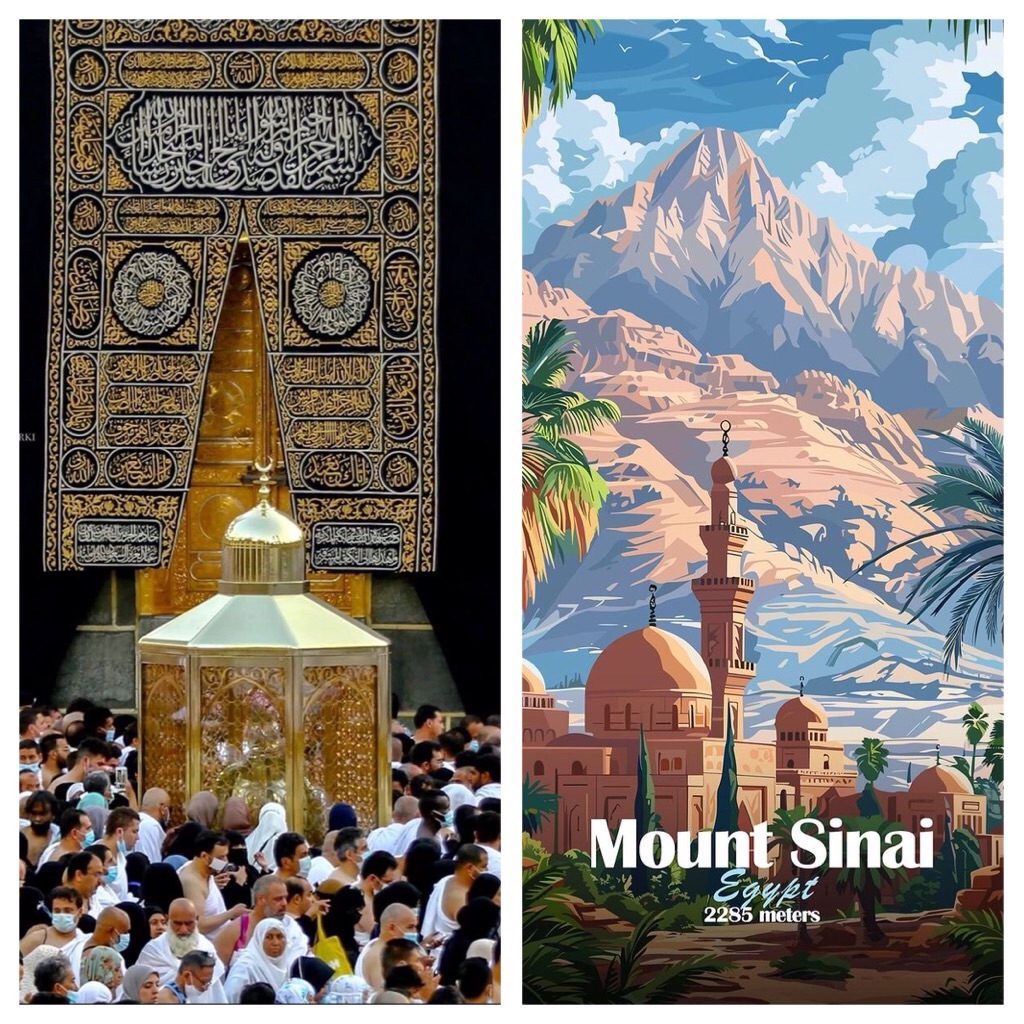
Generations after Abraham, the Israelites entered into another covenant at Mount Sinai during the time of Moses (Mūsā عليه السلام). This Sinai Covenant, detailed in both the Torah and the Qur’an, involved the giving of divine law (Torah) and required strict adherence to God’s commandments.
But this covenant was conditional. The Qur’an frequently reminds the Children of Israel of their repeated breaches:
“And [recall] when We took your covenant… but you turned away after that.”
— Qur’an 2:63
“Because of their breaking the covenant, We cursed them and made their hearts hard.”
— Qur’an 5:13
From the Islamic standpoint, the Israelites violated their trust with God through disobedience, distortion of scripture, and rejection of prophets. As a result, the Sinai covenant—while once valid—was revoked, and divine favor passed on to a broader, inclusive community centered around Islam.
Islam: The Final Fulfillment of the Covenant
In contrast to the ethnically bound covenant at Sinai, the Abrahamic covenant is universal and eternal, and its completion is found in the revelation of the Qur’an and the Prophethood of Muhammad صلى الله عليه وسلم.
“This day I have perfected for you your religion and completed My favor upon you and have approved for you Islam as your religion.”
— Qur’an 5:3
Islam presents itself not as a new religion, but as the restoration of Abraham’s original monotheism. It honors all previous prophets, acknowledges their scriptures in original form, but firmly asserts that the final covenant is through the message of Islam.
Conclusion: The Line of Ishmael Vindicated
In summary, the Islamic narrative realigns the story of divine covenants:
• The Abrahamic Covenant was first given to Abraham and Ishmael, rooted in faith, obedience, and universality.
• The Sinai Covenant, later made with the Israelites, was limited, legalistic, and ultimately broken.
• The final covenant, embodied in Islam, reaffirms the legacy of Ishmael, vindicates Abraham’s prayer, and brings the universal message of submission to God back to the forefront of human history.
Thus, from the Islamic perspective, Ishmael was not only the son who was offered, but also the true heir of Abraham’s mission—culminating in the birth of an Ummah, an Islamic nation, and a prophet of Islam, Muhammad صلى الله عليه وسلم, who would carry the covenant to all of humanity
The Abrahamic and Sinai Covenants: An Islamic Perspective on Sacred Continuity and Relics
In the comparative theology of Abrahamic religions, the concept of divine covenants occupies a central role. Judaism, Christianity, and Islam all trace their spiritual lineage to the Prophet Abraham (Ibrahim عليه السلام), but they diverge in their understanding of which covenant is binding and through whom it continues.
One unique Islamic perspective highlights the theological and symbolic significance of sacred relics and the distinction between the Abrahamic Covenant and the Sinai (Mosaic) Covenant. This article explores how Islamic scholars frame the continuity of divine promise, drawing attention to the absence of Abrahamic relics in Jewish tradition and the centrality of Abrahamic symbolism in Islamic rites.
1. Two Covenants: Abrahamic and Sinai
The Abrahamic Covenant, as recorded in both the Bible and Qur’an, was made between God and Abraham, promising:
• A multitude of descendants
• A blessed lineage
• A divinely appointed land
In contrast, the Sinai Covenant—or Mosaic Covenant—was established generations later, between God and the Israelites through Moses at Mount Sinai. This covenant was heavily centered on legal ordinances, ritual purity, and national identity.
Islamic scholars underscore this distinction, arguing that while the Sinai Covenant was specific to the Israelites and conditional upon their obedience, the Abrahamic Covenant is universal, unconditional, and eternal, forming the foundation of Islamic monotheism.
2. Islamic Continuity: Inheriting the Abrahamic Legacy
From an Islamic theological standpoint, the Prophet Muhammad ﷺ is seen as a direct descendant of Abraham through his firstborn son Ishmael. This lineage is critical in Islamic thought, as it places Muhammad ﷺ and the Muslim ummah within the direct stream of Abrahamic blessing and covenantal responsibility.
Islam views itself not as a new religion, but as the revival and perfection of the original Abrahamic faith. This perspective is reinforced by the Qur’an’s emphasis on following “the religion of Abraham, the upright” (Qur’an 3:95), and by prophetic traditions affirming the the reconstruction of the House of God (Kaaba) by Abraham and Ishmael.
3. The Role of Sacred Relics
A distinctive element of the Islamic argument involves the presence or absence of Abrahamic relics:
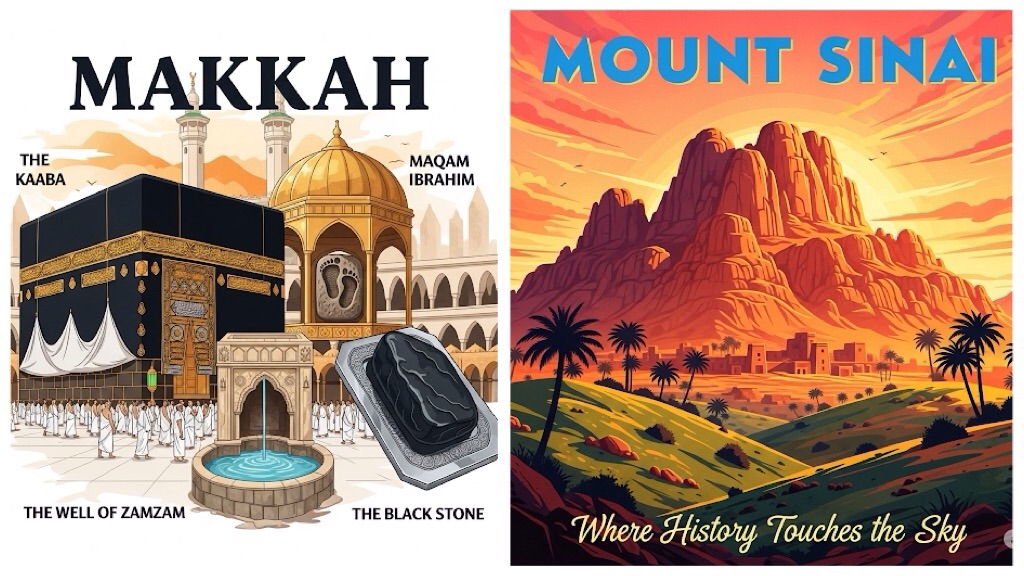
In Islam, the Kaaba (House of God) in Mecca is considered the house built by Abraham and Ishmael (Qur’an 2:125–127), accompanied by the Black Stone (Hajar al-Aswad) and the Station of Abraham (Maqam Ibrahim). These physical sites serve as living relics of the Abrahamic legacy, venerated by over a billion Muslims worldwide.
In Judaism, no physical relic directly associated with Abraham has been preserved. The most significant ancient artifact, the Ark of the Covenant, belongs to the Mosaic era and is tied to the Sinai Covenant, not Abraham. Moreover, it was lost during the destruction of the First Temple.
Islamic scholars point to this contrast to suggest that the direct covenantal heritage of Abraham has been preserved in Islam, not in Judaism. The absence of relics connected to Abraham in Jewish tradition is interpreted by some as symbolic of a rupture in the transmission of his legacy.
4. The Ark of the Covenant: Significance and Loss
The Ark of the Covenant remains an iconic symbol in Jewish history. It was said to contain the tablets of the Law (Torah) and represented the divine presence among the Israelites. However, from an Islamic perspective, the Ark is not seen as an Abrahamic relic but rather as a Mosaic artifact.
Its eventual loss during the Babylonian destruction of the First Temple is often viewed by Islamic scholars as a symbolic termination of the Sinai Covenant, marking the end of that specific historical phase of divine interaction.
5. Universality of the Abrahamic Covenant in Islam
A key theme in Islamic theology is the universality of the Abrahamic Covenant. Unlike the Sinai Covenant, which was exclusively for the Children of Israel, the Abrahamic Covenant—according to Islamic understanding—was meant for all peoples who follow the monotheistic path of submission to God (Islam).
This universalism is enshrined in the Qur’an (Surah 22:78):
“It is He who has named you Muslims before and in this [revelation], that the Messenger may be a witness over you and you may be witnesses over mankind.”
Thus, Islam positions itself as the final and universal expression of the Abrahamic mission, encompassing all of humanity beyond ethnic or tribal lines.
6. Supersession and Theological Fulfillment
While Islam respects the prophets of Judaism and Christianity, many Islamic scholars adopt a form of theological supersessionism: the idea that Islam, as revealed to Muhammad ﷺ, completes and supersedes previous revelations. This includes both the Abrahamic and Mosaic covenants.
According to this view, the Qur’an is the final testament, and the Muslim community (ummah) is the rightful heir to Abraham’s spiritual legacy, fulfilling his vision of pure monotheism (tawḥīd) untainted by tribal exclusivism or theological alteration.
Conclusion
The Islamic view on the Abrahamic and Sinai covenants is deeply rooted in both theological reasoning and historical symbolism. By emphasizing the continuity of Abrahamic rites, the preservation of sacred relics, and the universal scope of its message, Islam asserts itself as the true fulfillment of the covenant established with Abraham. The absence of equivalent Abrahamic relics in Jewish tradition and the eventual disappearance of the Ark are seen not as mere historical events, but as spiritual markers—signifying a shift from the tribal covenant of Sinai to the universal mission embodied by Islam.
While these perspectives are uniquely Islamic and may not be shared by Jewish or Christian theology, they contribute meaningfully to the broader discourse on how each faith understands its relationship with Abraham, the friend of God.
Ishmael was the fruit of Abraham, while Isaac was a gift of God to Abraham
From the Islamic perspective, Ishmael was the fruit of Abraham, while Isaac was a gift of God to Abraham due to his willingness to sacrifice his firstborn son, Ishmael. What is the explanation for this?
In Islamic tradition, both Ishmael and Isaac are revered as prophets and are the sons of the Prophet Abraham. Here’s a breakdown from the Islamic perspective:
- Ishmael: He is the first son of Abraham and Hagar. When Hagar and her infant son Ishmael were in the desert, God provided them with the well of Zamzam. Ishmael and his father, Abraham, later constructed the Kaaba in Mecca. The majority of Islamic traditions indicate that it was Ishmael, not Isaac, whom Abraham was commanded to sacrifice. However, at the last moment, God provided a ram to sacrifice in place of Ishmael. This event is commemorated during Eid al-Adha.
- Isaac: He is the second son of Abraham and his wife, Sarah. In Islamic narratives, after the trial of the sacrifice, as a reward for Abraham’s unwavering faith, God blessed him with a second son, Isaac, through Sarah. Isaac is also considered a prophet and is respected in Islamic tradition.
The Islamic account differs from the Jewish and Christian traditions, where Isaac is the one whom Abraham is commanded to sacrifice. In the Qur’an, the specific name of the son to be sacrificed is not mentioned, but many Islamic scholars and traditions identify him as Ishmael based on the sequence of events in the Quran, which suggests that the promise of Isaac’s birth came after the sacrifice narrative, implying Ishmael was the son involved (Surah 37, verses 100 to 112).

What does the Arabic word “نَافِلَةً” mean in Surah 21, verse 72, in the Quran? Could you elaborate more on why the Quran uses such a word to refer to Abraham concerning Isaac and Jacob?
The Arabic word “نَافِلَةً” in Surah 21, verse 72 of the Quran refers to “additional” or “extra” in English. In this verse, it is used to describe how Allah favored Abraham by giving him the additional gift of Isaac and Jacob, in addition to his son Ishmael.
This word is significant in this context because it highlights the special and additional blessings that Allah bestowed upon Prophet Abraham. It emphasizes the extraordinary nature of the gift of Isaac and Jacob, in addition to his first son Ishmael, as a form of divine favor and grace.
The use of the word “نَافِلَةً” also emphasizes the generosity and abundance of Allah’s blessings, highlighting the multiplicity of children and the continuity of prophethood within Prophet Abraham’s lineage. This choice of wording serves to underscore the extraordinary nature of Allah’s favors and blessings upon his chosen prophets and their descendants.
Overall, the use of the word “نَافِلَةً” in this verse serves to emphasize the exceptional nature of the gift of Isaac and Jacob to Prophet Abraham, in addition to his son Ishmael, highlighting the abundance and generosity of Allah’s blessings upon his chosen servants.
Ishmael, the son dedicated to God, and Isaac, the son of blessing for Abraham and Sarah
It is thought that Abraham abandoned Hagar and the baby Ishmael close to the Kaaba (House of God) to devote them to God as if they were His. Consequently, Muslims celebrate Eid al-Adha and Sa’i, which honors Hagar’s search for water for her child. This happened well before Isaac’s birth. How is their argument explained?
The Islamic narrative of Abraham, Hagar, and Ishmael differs significantly from the Biblical account and forms an important part of Islamic tradition and ritual. Here’s an explanation of the argument:
- Abraham’s Journey to Mecca
According to Islamic tradition, Abraham was commanded by God to take Hagar and their infant son Ishmael to Mecca. This journey was not seen as abandonment, but rather as fulfilling a divine command. Abraham left them near the location of what would later become the Kaaba, entrusting them to God’s care.
- Hagar’s Faith and the Zamzam Well
After Abraham’s departure, Hagar demonstrated remarkable faith. When their water supply was exhausted, she ran between the hills of Al-Safa and Al-Marwah seven times, desperately searching for water for her thirsty child. This act of faith resulted in the miraculous appearance of the Zamzam well, a spring of water that gushed forth near Ishmael.
- Significance in Islamic Ritual
This event is commemorated in the Islamic pilgrimage (Hajj) through the ritual of Sa’i, where pilgrims run or walk between the hills of Al-Safa and Al-Marwah seven times, reenacting Hagar’s search for water.
- The Kaaba and Mecca
Islamic tradition holds that Abraham later returned to Mecca multiple times. During one of these visits, he and Ishmael constructed the Kaaba as the first house of worship dedicated to the one true God. This established Mecca as a sacred site in Islam.
- Eid al-Adha
Eid al-Adha commemorates Abraham’s willingness to sacrifice his son (identified as Ishmael in Islamic tradition) at God’s command. This event is believed to have occurred near Mecca, further cementing the area’s religious significance.
- Timing in Relation to Isaac
In the Islamic narrative, these events occurred before Isaac’s birth. Ishmael is considered the elder son and the one whom Abraham was commanded to sacrifice.
- God’s Blessing of Isaac
Following the near sacrifice of Ishmael, God blessed Sarah and Abraham with a son named Isaac, fulfilling His promise to them and establishing Isaac as another patriarch in the Abrahamic faiths.
Islam as the Restoration of Abraham’s Original Teachings
Islam is considered a restored religion of Abraham, based on the perspective that both Judaism and Christianity have deviated from his original teachings.
Adherents of Islam assert that Judaism has altered the command regarding the sacrifice of Abraham’s son, holding that the son in question was Ishmael rather than Isaac.
Furthermore, they contend that Christianity has diverged from the tenet of monotheism by introducing the concept of the Trinity and modifying the practice of circumcision.
Therefore, from the Islamic viewpoint, Islam embodies the authentic restoration of the teachings of Abraham as presented in the Quran.
Isaac and Ishmael in Islamic Tradition: A Narrative of Trial and Reward
From the Islamic perspective, the story of Prophet Abraham and his sons, Ishmael and Isaac, is not merely a tale of lineage but a profound spiritual narrative that speaks to themes of faith, sacrifice, and divine reward. Central to this story is the contrasting yet complementary roles that Ishmael and Isaac play within the broader tapestry of Abraham’s life and legacy.
According to Islamic tradition, the birth of Isaac is seen as the final chapter in a long journey of trials, a divine reward granted after Abraham’s unwavering faith was tested to its limits. Isaac, therefore, represents a “son of reward”—a miraculous gift born to Abraham and his wife Sarah in their old age, symbolizing the fulfillment of God’s promise and the blessings that come after steadfastness in faith.
Ishmael, on the other hand, is viewed as a “son of trial.” Islamic sources recount that Abraham, following divine instruction, left his firstborn son Ishmael and Ishmael’s mother, Hagar, in the barren desert of Mecca. This act was not one of abandonment, but one of supreme obedience to God’s will. As a baby, Ishmael was placed in an environment of utter desolation, where his mother ran between the hills of Safa and Marwa in desperate search of water—an act that is commemorated during the Hajj pilgrimage. The appearance of the Zamzam well at Ishmael’s feet is seen as a sign of divine mercy and providence.
Furthermore, Islamic tradition maintains that it was Ishmael, not Isaac, who was the intended son in the near-sacrifice event—an ultimate test of Abraham’s devotion. This belief is supported by Quranic verses that describe the son as a “forbearing” boy and speak of the trial before Isaac’s birth, which aligns with the timeline of Ishmael’s life.
In this view, Isaac’s birth is not isolated from Ishmael’s story but is intricately connected to it. It is understood as a divine reward to Abraham after he demonstrated his willingness to sacrifice his only and firstborn son at the time—Ishmael. The reward was not only in the sparing of Ishmael but also in the joyous arrival of Isaac, fulfilling God’s promise of righteous progeny.
Thus, from an Islamic viewpoint, the narratives of Ishmael and Isaac are two sides of the same coin—trial and reward, obedience and fulfillment. Isaac’s birth closes a chapter of hardship with divine joy, while Ishmael’s trials underscore the depth of Abraham’s faith and the mercy of God. Together, they form a unified story of a family chosen by God, through which great nations and prophetic legacies would arise.
Ishmael: The Rightful Heir of the Abrahamic Covenant – Revisiting Biblical Circumcision and Lineage
The Abrahamic covenant stands as a foundational pillar in the sacred histories of Judaism, Christianity, and Islam. Central to this covenant is the rite of circumcision, instituted by God as a binding sign between Himself and Abraham’s descendants. Traditionally, Jewish and Christian interpretations assert that Isaac, the son born to Abraham and Sarah, is the rightful heir through whom this covenant is fulfilled.
However, a careful reexamination of the biblical chronology challenges this assumption. This article argues that Ishmael, not Isaac, was the first and only son to receive the covenantal sign alongside Abraham himself—prior to Isaac’s birth—thereby establishing Ishmael as the sole and true heir of the original Abrahamic covenant. By exploring the timing, recipients, and implications of circumcision in Genesis 17 and 21, this piece invites readers to reconsider long-held views and appreciate the overlooked centrality of Ishmael in the divine covenant.
1. The Biblical Basis for Circumcision as a Covenant
The Bible establishes circumcision as the sign of the covenant between God and Abraham:
Genesis 17:9–11
“Then God said to Abraham, ‘As for you, you must keep my covenant, you and your descendants after you for the generations to come. This is my covenant with you and your descendants after you, the covenant you are to keep: Every male among you shall be circumcised… it will be the sign of the covenant between me and you.’”
Here, circumcision is the definitive sign of the Abrahamic covenant.
2. The Timing of Circumcision Before Isaac’s Birth
The Bible affirms that circumcision was performed before Isaac was born:
Genesis 17:23–26
“On that very day Abraham took his son Ishmael and all those born in his household or bought with his money, every male in his household, and circumcised them, as God told him… Abraham was ninety-nine years old when he was circumcised, and his son Ishmael was thirteen.”
At this critical juncture, only Abraham and Ishmael were Abraham’s natural descendants to receive the sign of the covenant. Isaac had not yet been born.
3. Ishmael as the Sole and True Heir of the Abrahamic Covenant
This sequence of events reveals that:
Circumcision is the outward and binding sign of the Abrahamic covenant.
Ishmael was the only son of Abraham present to receive this sign alongside him.
All others circumcised at that time were household members and servants—not Abraham’s direct offspring.
Therefore, Ishmael alone stands as the true and sole heir of the Abrahamic covenant, sharing this foundational covenantal sign with Abraham himself.
4. Isaac as Merely a Participant Like Other Household Members
When Isaac was born, he too was circumcised on the eighth day (Genesis 21:4). However, this circumcision occurred after the covenant was already established through Abraham and Ishmael. Like the other members of Abraham’s household, Isaac simply entered into an existing covenantal practice rather than establishing or uniquely embodying it.
In this understanding:
Isaac’s circumcision parallels that of Abraham’s other household members.
He was brought into the covenantal sign but did not share in the original covenantal enactment alongside Abraham.
Thus, Isaac is seen merely as a participant in the Abrahamic covenant, not as its unique heir.
5. Distinction from the Sinai Covenant
The Sinai covenant was revealed exclusively to the descendants of Isaac through Jacob (Israel), establishing a separate covenantal framework for the Israelites.
In contrast, the original Abrahamic covenant—established through circumcision before Isaac’s birth—finds its complete and exclusive fulfillment in Ishmael, who was the first to embody and share this sign with Abraham.
6. Challenging Traditional Jewish and Christian Views
Traditionally, Jewish and Christian interpretations place Isaac as the sole heir of the Abrahamic covenant. However, this argument radically reorients that view:
Ishmael alone shares the covenantal enactment with Abraham.
Isaac, like the other household members, enters a covenantal practice already established.
Therefore, Ishmael alone emerges as the true and rightful heir of the Abrahamic covenant.
Summary of the Articulation
Circumcision, the outward sign of the Abrahamic covenant, was first performed on Abraham and Ishmael before Isaac was born. This historical reality establishes that while Isaac and others in Abraham’s household were participants in the sign of the covenant, only Ishmael shared in the covenant’s original establishment and thus stands as its true and exclusive heir. In this perspective, Ishmael’s role transcends mere participation—he alone embodies the Abrahamic covenant in its full and foundational form.
 ABRAHAMIC THEOLOGY