Jacob’s Stone in Jewish tradition and the black stone (Hajar al Aswad) in Mecca


Azahari Hassim

Would Jews revere Jacob’s stone if it had been handed down through the generations from Jacob? What is the similarity between the black stone (Hajar al Aswad) in Mecca and the stone that Jacob used as a pillow in Genesis 28, verses 18 and 22? What is the theological importance from the viewpoint of Abrahamic theology?

To answer this question, we need to consider several aspects of religious history, tradition, and theology. Let’s break it down into parts:

1. Jacob’s Stone in Jewish tradition:

If Jacob’s stone had been handed down through generations, it’s likely that Jews would indeed revere it. Judaism has a strong tradition of venerating physical objects associated with important biblical figures and events. For example, the Western Wall in Jerusalem is revered as the last remaining structure of the Second Temple. However, there is no historical evidence or tradition of Jacob’s stone being preserved or passed down in Jewish culture.

2. Similarity between the Black Stone (Hajar al-Aswad) and Jacob’s stone:

There are some interesting parallels between these two stones:

A. Divine association: Both stones are associated with divine encounters. Jacob’s stone was used as a pillow when he had his dream of a ladder to heaven, while the Black Stone is believed by Muslims to have been sent down by Allah from heaven.

B. Ritual significance: Jacob anointed his stone with oil and set it up as a pillar, declaring it to be God’s house (Genesis 28:18,22). The Black Stone is a focal point of the Hajj pilgrimage, where pilgrims attempt to kiss or touch it.

C. Covenant symbolism: Jacob’s stone became a symbol of his covenant with God, while the Black Stone is seen by some Muslims as a symbol of the covenant between Allah and humanity.

3. Theological Importance from the Viewpoint of Abrahamic Theology:

A. Covenantal Significance:

Both stones are linked to the covenantal promises made by God to the Abrahamic patriarchs, which are foundational to Judaism, Christianity, and Islam. Jacob’s stone marks the place where God reaffirmed the covenant with Abraham, Isaac, and Jacob. The Hajar al-Aswad is connected to the Abrahamic tradition through its association with the Kaaba, the house of worship built by Abraham and Ishmael.

B. Pilgrimage and Worship:

Both stones are associated with significant pilgrimage sites and ritual practices within their respective Abrahamic traditions. Jacob’s stone became a place of worship and a destination for pilgrimage for the Israelites. The Hajar al-Aswad is a central focus of the Hajj pilgrimage, which is a fundamental obligation for Muslims.

In summary, if Jacob’s stone had been handed down through generations, it would likely be revered by Jews in a similar manner to how the Hajar al-Aswad is venerated by Muslims, as both stones represent profound theological and covenantal significance within the broader context of Abrahamic faiths.

“Jacob’s ladder represents the bridge between heaven and earth. His dream at Bethel shows that God is present in the world, and that human beings can reach spiritual heights through devotion and covenant.”

Kuzari, Part I, Chapter 95

Rabbi Yehuda HaLevi (1075–1141), author of The Kuzari, viewed Jacob as a symbol of spiritual ascension, tying his visions and experiences directly to Israel’s national and religious identity.

Genesis 28:18-22
[18] Early the next morning Jacob took the stone he had placed under his head and set it up as a pillar and poured oil on top of it.
[19] He called that place Bethel, though the city used to be called Luz.
[20] Then Jacob made a vow, saying, “If God will be with me and will watch over me on this journey I am taking and will give me food to eat and clothes to wear
[21] so that I return safely to my father’s household, then the Lord will be my God
[22] and this stone that I have set up as a pillar will be God’s house, and of all that you give me I will give you a tenth. ”

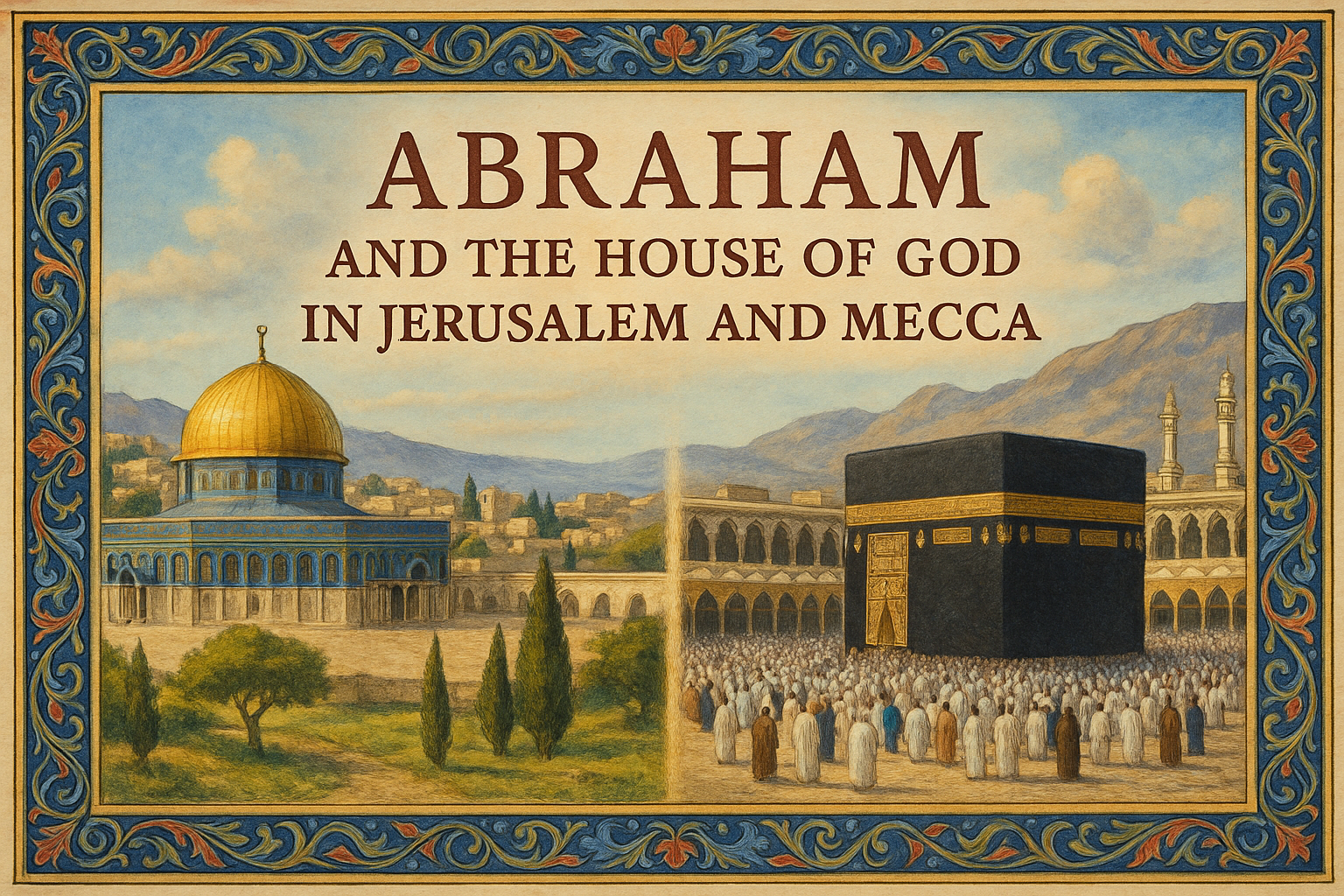
Abraham and the House of God in Jerusalem and Mecca

Did Moses and Abraham know that the temple would be built in Jerusalem?

The Bible does not explicitly state that Moses and Abraham knew about the future construction of the Temple in Jerusalem. However, both figures are significant in the Jewish tradition regarding the covenant with God and the eventual establishment of a central place of worship.

1. Abraham: He is often associated with the land of Canaan, which includes Jerusalem. The biblical narrative highlights that he established altars and worshiped God in various locations, symbolizing a connection to the land that would later become significant in Jewish history.

2. Moses: He led the Israelites out of Egypt and received the Law at Mount Sinai. His connection to the Tabernacle, a mobile sanctuary, is significant, as it laid the groundwork for central worship in the future. The establishment of the Temple in Jerusalem is often viewed as a fulfillment of the promise of a permanent dwelling place for God, but there is no direct indication that Moses was aware of the future Temple.

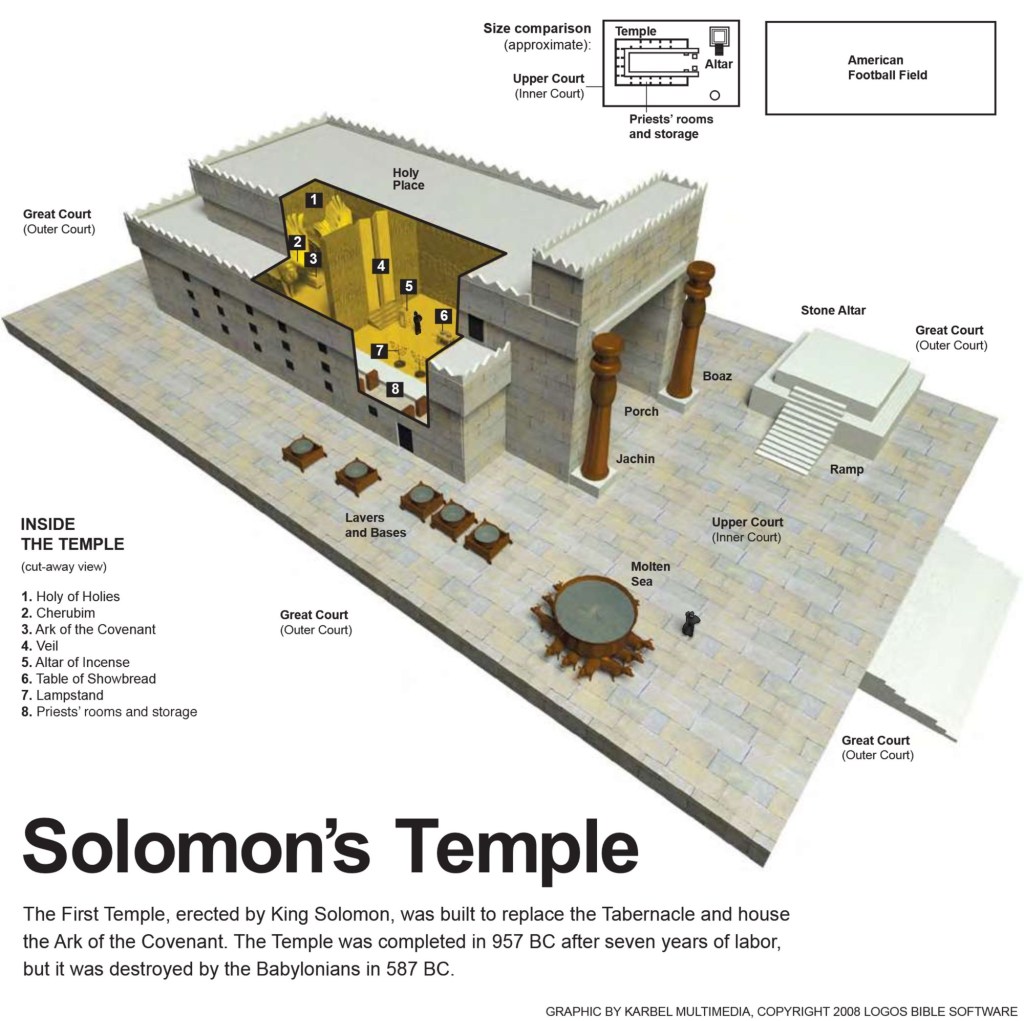
In Jewish tradition, the idea of a Temple in Jerusalem is connected to prophecies and promises made later in the biblical narrative, particularly during the time of King David and Solomon. Therefore, while Moses and Abraham played crucial roles in the religious history of the Israelites, there is no definitive evidence that Moses and Abraham had knowledge of the Temple’s future construction.

Tawaf is the ritual circumambulation of the Kaaba in Mecca, performed by Muslims during Hajj and Umrah, and is closely associated with the legacy of Prophet Abraham and his son Ishmael, who are believed to have established the Kaaba as a place of worship dedicated to the One God.

How is Abraham linked to the Kaaba (House of God) in Mecca in Islam?

In Islam, Abraham is deeply connected to the Kaaba in Mecca, which is regarded as the House of God. According to Islamic tradition:

1. Construction of the Kaaba: It is believed that Abraham, along with his son Ishmael, was instructed by God to build the Kaaba as a place of worship. The Kaaba is considered the first house of worship dedicated to the monotheistic belief in one God.

2. Covenant and Submission: Abraham is viewed as a key figure in Islam for his unwavering submission to God’s will and his role as a prophet. His dedication to monotheism is foundational to Islamic beliefs.

3. Pilgrimage (Hajj): The Kaaba is the focal point of the Hajj pilgrimage, one of the Five Pillars of Islam. Muslims from around the world perform rituals around the Kaaba, commemorating the actions of Abraham and Ishmael.

4. Significance of the Black Stone: The Black Stone (Hajar al-Aswad), set into the corner of the Kaaba, is said to have been given to Abraham by the angel Gabriel. It is revered by Muslims as a sacred object.

Overall, Abraham’s legacy as a prophet and the father of monotheism links him to the Kaaba (House of God), reinforcing the importance of the site in Islamic faith and practice.

Abraham and the Jewish Temple in Jerusalem

Why was the Jewish temple so vital to be attached to the person of Abraham?

The Jewish temple was so vital to be attached to the person of Abraham because Abraham was the founder of Judaism and the first person to make a covenant with God. The covenant was a promise that God made to Abraham and his descendants, that they would be God’s chosen people and inherit the land of Canaan, also known as the Promised Land. The temple was the place where the Jews worshipped God and offered sacrifices, as well as the symbol of their connection to God and the Promised Land. The temple was also believed to be the dwelling place of God’s presence on earth, also known as the Shekhinah. Therefore, the temple was a vital link between Abraham, the father of Judaism, and God, the creator and protector of Judaism.

Did Abraham know that the temple would be built on the site where he almost sacrificed his son?

There is no definitive answer to whether Abraham knew that the temple would be built on the site where he almost sacrificed his son. Different traditions and interpretations have different views on this question. Here are some possible perspectives:

According to Jewish tradition, Abraham was aware of the future significance of Mount Moriah, as he named it “the Lord will provide” (Genesis 22 verse 14), implying that God would provide a place for His presence and worship there. Some Jewish sources also suggest that Abraham saw a vision of the future temple when he ascended the mountain with Isaac.

According to Christian tradition, Abraham did not know the exact location of the future temple, but he had faith that God would fulfill His promises to him and his descendants. Some Christian sources also see Abraham’s sacrifice of Isaac as a foreshadowing of God’s sacrifice of His Son, Jesus Christ, on the cross.

According to Islamic tradition, Abraham did not sacrifice Isaac, but Ishmael, his firstborn son by Hagar. Muslims believe that Abraham and Ishmael built the Kaaba, the house of God, in Mecca, which is the holiest site in Islam. Muslims do not consider the Temple Mount in Jerusalem as the place where Abraham offered his son, but rather as the place where Muhammad ascended to heaven during his night journey.

Holy Quran 17:1

سُبْحَٰنَ ٱلَّذِىٓ أَسْرَىٰ بِعَبْدِهِۦ لَيْلًا مِّنَ ٱلْمَسْجِدِ ٱلْحَرَامِ إِلَى ٱلْمَسْجِدِ ٱلْأَقْصَا ٱلَّذِى بَٰرَكْنَا حَوْلَهُۥ لِنُرِيَهُۥ مِنْ ءَايَٰتِنَآ ۚ إِنَّهُۥ هُوَ ٱلسَّمِيعُ ٱلْبَصِيرُ

Glory to Him who journeyed His servant by night, from the Sacred Mosque, to the Farthest Mosque (the Temple Mount in Jerusalem), whose precincts We have blessed, in order to show him of Our wonders. He is the Listener, the Beholder.


Muhammad’s Night Journey and the Holy City of Jerusalem

It is believed that Muhammad’s Night Journey serves as a divine sign, indicating the abrogation of Jewish ownership of the Holy City of Jerusalem and its transfer to Muslims. How is this argument explained?

Some scholars and Muslim believers argue that the Night Journey symbolizes the transfer of religious authority from the Jews to the Muslims. They contend that because the Prophet Muhammad traveled to Jerusalem and then ascended to the heavens, it signifies a divine affirmation of Islam as the final and true religion, superseding earlier religious traditions.

In this interpretation, it is believed that during the Night Journey, Muhammad received divine confirmation that Jerusalem would be a significant place for Muslims. The transfer of ownership from Jews to Muslims is seen as a symbol of the shift of religious authority from Judaism to Islam.

This interpretation is often associated with the concept of abrogation (naskh) in Islamic law. Abrogation, guided by the belief in progressive revelation, holds that certain earlier rulings or traditions may have been replaced or superseded by subsequent divine revelations. Some Muslims see Muhammad’s Night Journey as a momentous event that signifies the transition from Judaism to Islam as the true faith, with Jerusalem being a central focal point in this transition.

The Unnamed Son of Abraham’s Sacrifice in the Quran


Azahari Hassim

In the Quran, the specific name of the son to be sacrificed by Abraham is not mentioned. Thus it signifies that the name of Isaac in Genesis 22, verse 2, is nothing but a scribal interpolation. What is the explanation for this argument?

The argument that the Quran’s omission of the specific name of the son to be sacrificed by Abraham signifies that the name of Isaac in Genesis 22, verse 2, is a scribal interpolation is a viewpoint held by some scholars, but it is not universally accepted within the field of biblical studies or Islamic theology. This argument is based on textual and historical analysis and often arises in discussions about the relationship between the Quran and the Bible.

Here’s a brief overview of the argument:

  1. Quranic account: In the Quran, the story of Abraham’s willingness to sacrifice his son is mentioned in Surah As Saffat (Chapter 37), but the specific name of the son is not provided. This omission has led some scholars to argue that the Quran intentionally avoids naming the son to prevent any confusion or dispute regarding the identity of the son.
  2. Biblical account: In the Book of Genesis (Genesis 22, verse 2), the son to be sacrificed is identified as Isaac. This is a well-known account in both Jewish and Christian traditions.
  3. Argument: Some scholars propose that the Quranic omission of the son’s name suggests that the original, unaltered biblical account did not specify the son’s name, and the name Isaac was added later through scribal interpolation in the biblical text.
  4. Quranic Interpretation:
    The Quranic narrative does not explicitly name the son of the near sacrifice, but Islamic tradition and many Muslim scholars have historically identified him as Ishmael. This belief is supported by the chronological events in the Quran, indicating that the promise of Isaac’s birth was made after the account of sacrifice, suggesting that Ishmael was the likely candidate for sacrifice.

It’s important to note that this argument is not universally accepted, and there is ongoing debate among scholars regarding the relationship between the Quran and the Bible. Islamic tradition generally does not delve into such textual criticism but rather focuses on the theological and moral aspects of the story.

“The Sacrifice of Isaac” by Caravaggio is among the most famous paintings of the sacrifice and is remarkable in its ability to capture both the beauty and terror of the story. Abraham is about to sacrifice Isaac but an angel dramatically stops Abraham by grabbing his hand and pointing to the substitute ram

Genesis 22:18: Muhammad, the Hajj, and Differing Interpretations Across Abrahamic Faiths

Did Muhammad, through the Hajj ritual, fulfill the prophecy mentioned in Genesis 22, verse 18?

The verse you are referring to, Genesis 22, verse 18, reads:

“And through your offspring all nations on earth will be blessed, because you have obeyed me.”

This promise is made to Abraham after he demonstrates his willingness to sacrifice his son (Isaac, according to the Bible; Ishmael, according to Islamic tradition).


Many Jewish and Christian theologians interpret the “offspring” (or “seed”) mentioned in this verse as a reference to the line of descendants that would lead to the Jewish people, and by extension, to Jesus Christ in Christian theology. Through this lineage, blessings would be conferred to all nations.

In Islamic theology, however, the “offspring” or “seed” in Genesis 22, verse 18, is often interpreted as referring to Ishmael, the son who was nearly sacrificed according to Islamic tradition. Muslims believe that the Prophet Muhammad, as a direct descendant of Ishmael, fulfills this prophecy, as it is through him that all nations are blessed with the message of Islam.

The lineage of Prophet Muhammad through Ishmael is considered important in Islamic belief because the near-sacrifice event, believed to involve Ishmael instead of Isaac, is central to the Abrahamic covenant. Muslims believe that the final and complete message of God to humanity, Islam, came through this prophetic lineage.


The Hajj ritual, which commemorates events in the lives of Abraham, Hagar, and Ishmael, can be seen by Muslims as a testament to the fulfillment of this prophecy. Every year, followers of Islam globally gather in Mecca to take part in the Hajj pilgrimage, commemorating the tradition of Abraham’s near sacrifice of his son Ishmael.

It symbolizes the universality of the blessings promised to Abraham’s descendants. For many Muslims, this pilgrimage is a manifestation of the blessings through Ishmael’s lineage, culminating in Muhammad and the global reach of Islam.

However, this interpretation is not universally accepted, especially among Jewish and Christian theologians, who typically see the “offspring” or “seed” in Genesis 22, verse 18, as referring to Isaac’s line, ultimately leading to the people of Israel and, in Christian theology, to Jesus Christ. Interpretations of scripture are deeply influenced by religious, theological, and cultural perspectives.

In summary, while some Muslims assert that Muhammad, as a descendant of Ishmael, fulfills the prophecy in Genesis 22, verse 18, through the message of Islam and rituals like the Hajj, this interpretation is specific to Islamic theology. It reflects the belief that Ishmael, rather than Isaac, was the son nearly sacrificed and that Muhammad, as Ishmael’s descendant, brings blessings to all nations. This view is not shared by all Abrahamic faiths.

Augustine of Hippo (354–430 CE)

An influential early Christian theologian and philosopher, Augustine discussed Abraham’s role in God’s plan in his seminal work, The City of God.

Quote:

“Abraham is the father not only of the Hebrew nation but of all nations who follow his example of faith. He believed God, and it was credited to him as righteousness. Thus, he is truly the father of many nations, not by the flesh but by the unity of faith.”

— Augustine, The City of God, Book XVI, Chapter 26.

Interpretation:

Augustine emphasizes that Abraham’s fatherhood transcends biological lineage. It’s rooted in faith, making him a spiritual ancestor to all who believe in God’s promises.

The Significance of Hajj: Commemorating Hagar’s Search for Water and Abraham’s Sacrifice

Introduction:

Hajj, the annual Islamic pilgrimage to Mecca, holds great significance for millions of Muslims worldwide. While Hajj is primarily associated with the life of Prophet Muhammad, it also commemorates important biblical events. One such event is the story of Hagar’s search for water for her baby Ishmael, as well as Abraham’s willingness to sacrifice his son, Ishmael. This essay aims to explore the historical and religious significance of these events in the context of Hajj.

Historical Background:

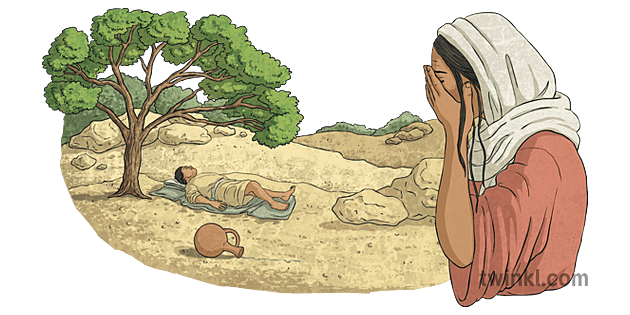
To understand the significance of Hagar’s search for water for her baby Ishmael and Abraham’s sacrifice, it is crucial to delve into their historical context. According to Islamic tradition, Hagar was the wife of the Prophet Abraham and the mother of Ishmael. Hagar and Ishmael were sent away by Abraham at God’s command. They wandered in the desert near Mecca until they ran out of water, prompting Hagar to search desperately for water to save her infant son.

Hagar’s Search for Water:

Hagar’s search for water for her infant son Ishmael is a deeply emotional and poignant story that resonates with the theme of struggle and resilience. In Islamic tradition, it is believed that Hagar’s unwavering faith and determination led her to the miraculous discovery of the Zamzam well, which continues to provide water for pilgrims during Hajj. The act of retracing Hagar’s footsteps during the Hajj pilgrimage symbolizes the physical and spiritual journey of seeking Muslims blessings and guidance from God.

Abraham’s Sacrifice:

Another biblical event associated with Hajj is the story of Abraham’s willingness to sacrifice his son Ishmael. According to Islamic tradition, Abraham received a command from God to sacrifice his beloved son as a test of his faith. Abraham, demonstrating unwavering devotion, prepared to carry out the command, but at the last moment, God intervened and replaced Ishmael with a ram. This event is commemorated during Hajj through the observance of Eid al-Adha, the Festival of Sacrifice.

Symbolism and Spiritual Significance:

The story of Hagar’s search for water for her infant son and Abraham’s sacrifice carries profound symbolism and spiritual significance for Muslims. Hagar’s unwavering faith and determination symbolize the importance of perseverance and trust in God’s providence. Her search for water reflects the universal human struggle for survival, while the discovery of Zamzam represents divine intervention and sustenance.

Abraham’s willingness to sacrifice his son symbolizes the ultimate act of submission to God’s will. Muslims commemorate this event during Hajj by performing the symbolic stoning of the pillars representing Satan, symbolizing the rejection of temptation and evil. The act of sacrificing an animal during Eid al-Adha symbolizes one’s willingness to give up personal desires and possessions for the sake of God’s pleasure.

Conclusion:

Hajj, the annual Islamic pilgrimage, holds immense religious and historical significance for Muslims worldwide. The commemoration of Hagar’s search for water for her infant son and Abraham’s willingness to sacrifice his son Ishmael adds depth and meaning to this sacred journey. These events symbolize the themes of struggle, faith, perseverance, and submission to God’s will. By retracing Hagar’s footsteps and participating in the rituals associated with Abraham’s sacrifice, Muslims reaffirm their commitment to their faith and seek spiritual enlightenment and blessings during Hajj.

Reinterpreting Zechariah 12:10 through an Islamic Lens: The “Only and Firstborn Son.”

Zechariah 12, verse 10 reads:

“And I will pour upon the house of David, and upon the inhabitants of Jerusalem, the spirit of grace and of supplications: and they shall look upon me whom they have pierced, and they shall mourn for him, as one mourneth for his only son, and shall be in bitterness for him, as one that is in bitterness for his firstborn.”

Through an Islamic lens, let’s explore Zechariah 12, verse 10, where the “only” and “firstborn” may refer to Ishmael, Abraham’s intended sacrifice, causing him immense sorrow, and link this to Surah 2, verse 91 concerning the slaying of God’s prophets.

The Sacred Scriptures, both Old and New Testaments and the Qur’an, narrate profound tales of faith, sacrifice, and the unwavering will of God. Among these, the narrative of Abraham’s readiness to sacrifice his son stands as a paramount example of submission. 

While Christian and Jewish traditions firmly identify this son as Isaac, an alternative perspective emerges when examining Zechariah 12, verse 10 through an Islamic lens, suggesting that the “only” and “firstborn” mourned may indeed be Ishmael, the elder son, and linking this poignant sorrow to the broader theme of the slaying of God’s prophets as mentioned in the Qur’an (Surah 2, verse 91).

From an Islamic perspective, the descriptors “only son” and “firstborn” resonate deeply with the position of Ishmael Abraham’s life at the time of the divine command for sacrifice. When Abraham received the command, Ishmael was Abraham’s sole son and indeed his firstborn, many years before Isaac’s birth. 

The profound sorrow and “bitterness” described in Zechariah 12, verse 10, mirroring the grief for a singular, irreplaceable child, powerfully aligns with the immense emotional trial Abraham faced concerning Ishmael.

The narrative in the Qur’an (Surah Al-Saffat, 37, verses 102 to 107) speaks of Abraham’s vision and Ishmael’s courageous acceptance of his father’s duty, culminating not in a literal sacrifice, but in God substituting a great ram. This pivotal moment underscores the depth of the trial and the immense love and trust between father and son.

The weight of Abraham’s potential loss, had the sacrifice been carried out, would have been unimaginable. The idea that Abraham was prepared to sacrifice his only son at that time, his beloved firstborn, resonates profoundly with the language used in Zechariah. This interpretation posits that the grief envisioned in the prophecy is a reflection of this profound historical and emotional reality.

The anguish described in Zechariah 12, verse 10 – “and they shall look upon me whom they have pierced” – invites a profound contemplation within an Islamic worldview. While God in Islam is utterly transcendent, beyond physical form or suffering, the concept of “piercing” can be understood metaphorically. In the Quran, this metaphor aligns with the condemnation of those who have murdered God’s prophets, symbolically equating the rejection and killing of His messengers with an insult to God Himself.

Surah 2, verse 91 addresses this rebellion:

“And when it is said to them, ‘Believe in what Allah has revealed,’ they say, ‘We believe [only] in what was revealed to us.’ And they disbelieve in what came after it, while it is the truth confirming what is with them. Say, ‘Then why did you kill the prophets of Allah before, if you were [indeed] believers?’”

Here, the Quran rebukes the Israelites for killing the prophets, equating such acts with a direct affront to God Himself. This aligns with the language of Zechariah 12, verse 10—“they shall look upon me whom they have pierced.” In Islam, attacking God’s prophets is seen as a direct assault upon the divine mission and, by extension, a rebellion against God’s will.

Conclusion


Through an Islamic lens, Zechariah 12, verse 10’s references to “only” and “firstborn” harmonize with the identity of Ishmael as Abraham’s first son and the near-sacrificial offering. Abraham’s sorrow reflects the deep grief described in the verse. 

Furthermore, the “piercing” mentioned in Zechariah 12, verse 10 finds a thematic parallel in the Quranic condemnation of those who murdered God’s prophets, illustrating that such acts of violence against the messengers of God are tantamount to defying God Himself

Interpolation in the Torah from an Islamic viewpoint


Azahari Hassim

Here is how the Jewish scribe manipulated Ishmael’s story:

  1. The age of Ishmael at the time of his departure from Abraham’s house.
  2. Abraham’s son, who was offered as a sacrifice.

Some Islamic scholars suspect that the scribes tampered with the story of Hagar and Ishmael in the Torah. It is argued that Genesis 21, verses 9 to 10, may have been added later because Ishmael and Hagar had already left Abraham’s house long before Isaac was born, with Ishmael being an infant according to Islamic tradition.

Similarly, some question whether Genesis 22, verse 2, could refer to Ishmael, since Isaac had never been Abraham’s only son, whereas Ishmael had been for fourteen years before Isaac was born. How is this Islamic viewpoint presented?

The Islamic perspective on the stories of Hagar, Ishmael, and Isaac, as presented in the Torah, differs significantly from the Jewish and Christian narratives. These differences have led some Islamic scholars to question the authenticity of certain Biblical passages, suggesting possible later additions or alterations.

In the Islamic tradition, Hagar and Ishmael’s story is seen through a different lens compared to the Biblical account. According to Islamic belief, Ishmael was an infant when he and his mother Hagar were left in the desert, which contrasts with the Biblical narrative where Ishmael is depicted as a young boy during this event. Some Islamic scholars argue that certain verses in Genesis, such as Genesis 21:9-10, might have been added later, as they imply that Ishmael was older and capable of mocking Isaac, which would not align with the Islamic timeline where Ishmael had already left before Isaac’s birth.

The question of who was the intended son of sacrifice is another point of divergence. In the Quran, it is generally believed that Ishmael was the son whom Abraham was commanded to sacrifice, whereas the Bible identifies Isaac as the intended sacrifice. This discrepancy has led some Islamic scholars to suggest that Genesis 22, verse 2, which refers to Isaac as Abraham’s “only son,” might be inaccurate, as Ishmael was Abraham’s firstborn and was his only son for fourteen years before Isaac’s birth. The argument is that the description of Isaac as the “only son” could have been a later addition to emphasize Isaac’s significance in the Jewish tradition.

Islamic narratives emphasize the significance of Ishmael and his descendants, linking them to the lineage of the Prophet Muhammad. The Islamic tradition holds that Abraham and Ishmael together built the Kaaba in Mecca, a central element in Islamic faith, which is not mentioned in the Bible. The Quran and Islamic teachings often highlight the spiritual and prophetic roles of both Ishmael and Isaac, but with a focus on Ishmael’s role in the lineage leading to Islam.

Conclusion

The Islamic viewpoint on the story of Hagar and Ishmael in the Torah is characterized by skepticism towards the authenticity of certain verses. Islamic scholars argue that the timeline and events described in the Torah may have been altered, and that Ishmael may have been the son referred to in Genesis 22:2 instead of Isaac.

Rashi on Genesis 22:2 – “And He said, ‘Please take your son’… God said to him, ‘Take your son.’ He [Abraham] said, ‘I have two sons.’ He said to him, ‘Your only one.’ He said, ‘This one is the only son of his mother, and this one is the only son of his mother.’ He said to him, ‘The one you love.’ He said to him, ‘I love them both.’ He said to him, ‘Isaac.’”

Rashi’s commentary focuses on the emotional tension in the dialogue between God and Abraham. Abraham’s deep love for both his sons is highlighted, but God singles out Isaac as the one who will be involved in this ultimate test.

Reinterpreting Ishmael’s Age: The Use of ‘Yelid’ and the Question of His Youth in Genesis 21

Some people think that Ishmael, when sent away by Abraham in the Torah, was just a young child, not a teenager, based on the phrase “and he grew” in Genesis 21, verse 20. They point out that the Hebrew word “yelid” is used for both Ishmael and baby Moses (Exodus 2, verse 6). How do they explain this argument?

The argument is articulated by pointing out the use of the Hebrew word “yelid” in both Genesis 21, verses 14 to 15, and Exodus 2, verse 6. In these verses, “yelid” is used to describe both Ishmael and infant Moses. Supporters of the argument claim that since “yelid” is used to describe Moses when he was an infant, it should also be understood to mean that Ishmael was still a young child in Genesis 21, verse 20.

Additionally, the phrase “and he grew” in Genesis 21, verse 20, is interpreted by some to imply that Ishmael was still in the process of growing and developing, suggesting a younger age. They argue that if Ishmael were already a teenager or older, it would not be necessary to mention his growth.

It should be noted, however, that interpretations of biblical texts can vary, and different scholars or readers may have different understandings of the intended meaning.

Here is how the Jewish scribe manipulated Ishmael’s story:

1. The age of Ishmael at the time of his departure from Abraham’s house.

2. Abraham’s son, who was offered as a sacrifice.

Calculating Ishmael’s age as 27, a midrash takes a different tack: Sarah had cast the evil eye on him and made him ill, thus incapable of walking.

(‘Gen. Rab.’ 53.12)
Hagar and Ishmael in the Wilderness – Francesco Cozza, 1665

The Unnamed Son of Abraham’s Sacrifice in the Quran

In the Quran, the specific name of the son to be sacrificed by Abraham is not mentioned. Thus it signifies that the name of Isaac in Genesis 22, verse 2, is nothing but a scribal interpolation. What is the explanation for this argument?

The argument that the Quran’s omission of the specific name of the son to be sacrificed by Abraham signifies that the name of Isaac in Genesis 22, verse 2, is a scribal interpolation is a viewpoint held by some scholars, but it is not universally accepted within the field of biblical studies or Islamic theology. This argument is based on textual and historical analysis and often arises in discussions about the relationship between the Quran and the Bible.

Here’s a brief overview of the argument:

  1. Quranic account: In the Quran, the story of Abraham’s willingness to sacrifice his son is mentioned in Surah As Saffat (Chapter 37), but the specific name of the son is not provided. This omission has led some scholars to argue that the Quran intentionally avoids naming the son to prevent any confusion or dispute regarding the identity of the son.
  2. Biblical account: In the Book of Genesis (Genesis 22, verse 2), the son to be sacrificed is identified as Isaac. This is a well-known account in both Jewish and Christian traditions.
  3. Argument: Some scholars propose that the Quranic omission of the son’s name suggests that the original, unaltered biblical account did not specify the son’s name, and the name Isaac was added later through scribal interpolation in the biblical text.
  4. Quranic Interpretation: The Quranic narrative does not explicitly name the son of the near sacrifice, but Islamic tradition and many Muslim scholars have historically identified him as Ishmael. This belief is supported by the chronological events in the Quran, indicating that the promise of Isaac’s birth was made after the account of sacrifice, suggesting that Ishmael was the likely candidate for sacrifice.

It’s important to note that this argument is not universally accepted, and there is ongoing debate among scholars regarding the relationship between the Quran and the Bible. Islamic tradition generally does not delve into such textual criticism but rather focuses on the theological and moral aspects of the story.


Holy Quran 37:102

فَلَمَّا بَلَغَ مَعَهُ ٱلسَّعْىَ قَالَ يَٰبُنَىَّ إِنِّىٓ أَرَىٰ فِى ٱلْمَنَامِ أَنِّىٓ أَذْبَحُكَ فَٱنظُرْ مَاذَا تَرَىٰ ۚ قَالَ يَٰٓأَبَتِ ٱفْعَلْ مَا تُؤْمَرُ ۖ سَتَجِدُنِىٓ إِن شَآءَ ٱللَّهُ مِنَ ٱلصَّٰبِرِينَ

Then, when he was old enough to accompany him, he said, “O My son, I see in a dream that I am sacrificing you; see what you think.” He said, “O my Father, do as you are commanded; you will find me, God willing, one of the steadfast.”

The Near Sacrifice of Ishmael: Islamic Theology and Its Support for the Prophethood of Muhammad

What theological reasoning do Islamic scholars offer to explain how Abraham’s near sacrifice of Ishmael, instead of Isaac, supports the prophethood of Muhammad?

According to Islamic tradition and theology, the near sacrifice of Ishmael by Abraham, rather than Isaac, provides support for the prophethood of Muhammad in several key ways:

Judaism, Christianity, and Islam all trace their spiritual lineage to Abraham as a shared patriarch. The story of Abraham’s willingness to sacrifice his son at God’s command is seen as a supreme test of faith in all three traditions. By identifying the son as Ishmael rather than Isaac, Islam establishes a direct link between Abraham and Muhammad through Ishmael.

The Quran in Surah 37 recounts the story of Abraham’s willingness to sacrifice his son out of obedience to God. Despite not explicitly naming the son, the Quran places the narrative of the sacrifice before the announcement of Isaac’s birth, which some interpret as an indication that Ishmael was the one sacrificed. This Quranic account is seen as affirming Ishmael’s role.

Islamic tradition holds that Muhammad is a direct descendant of Ishmael. The legitimacy and authenticity of Muhammad’s prophethood is thus connected to this lineage going back to Abraham through Ishmael. Ishmael’s willingness to be sacrificed is viewed as a significant event that foreshadows the prophethood of Muhammad, which holds a central role in the religion.

Muslims believe the Quran is the final, unaltered word of God as revealed to Muhammad, arguing that earlier scriptures like the Torah and Bible have been changed over time. In this view, the Quran corrects these alterations, and its indication that Ishmael was the sacrificial son is seen as the accurate version of the story. This affirms Muhammad’s role in restoring the original monotheistic message.

While acknowledging the prophets of Judaism and Christianity, Islam considers Muhammad to be the final prophet who came to restore the pure monotheistic faith and correct deviations that had entered the earlier religions. The story of Ishmael’s near-sacrifice is thus seen as part of this corrective prophetic message continuing through Muhammad.

In summary, the Islamic theological argument is that the identification of Ishmael as the son Abraham was commanded to sacrifice establishes a direct link between Abraham, Ishmael, and Muhammad, supporting the legitimacy of Muhammad’s prophethood as a continuation of the Abrahamic lineage and monotheistic message that was preserved intact through Ishmael and fully restored in the revelation of the Quran to Muhammad. The Ishmael narrative reinforces Muhammad’s prophetic authority for Muslims.

The Symbolism of Eid al-Adha (Feast of the Sacrifice)


Azahari Hassim

What is Eid al-Adha?

 Eid al-Adha is the “Feast of the Sacrifice,” commemorating Abraham’s devotion to God, when he intended to sacrifice his son and God provided a lamb to sacrifice instead. It follows the Hajj rituals for pilgrims in Mecca, but is celebrated by all Muslims.

Certain scholars contend that Eid Al Adha in Islam suggests a scribal interpolation in the Torah concerning the son intended for near sacrifice, positing that it is Ishmael rather than Isaac. How is their argument articulated?

Some Islamic scholars argue that Eid al-Adha in Islam points to a scribal interpolation in the Torah regarding which son Abraham was commanded to sacrifice. Their argument for scribal interpolation is articulated as follows:

Islamic tradition holds that it was Ishmael, not Isaac, whom Abraham was commanded to sacrifice. This belief forms the basis for the celebration of Eid al-Adha, one of the most important festivals in Islam.

Scholars who support this view present several arguments:

1. Primacy of Ishmael: They argue that Ishmael, being Abraham’s firstborn son, was the original heir to the covenant and thus the logical choice for such a significant test of faith.

2. Quranic Account: The Quran’s narrative of the sacrifice does not explicitly name the son, but contextual evidence and Islamic tradition point to Ishmael. This interpretation stems from the chronological events presented in the Quran, indicating that the promise of Isaac’s birth occurred after the narrative of the sacrifice, thereby suggesting that Ishmael was the son mentioned in that context.

3. Historical Context: These scholars suggest that ancient Israelite scribes may have altered the original text to emphasize Isaac’s role, shifting the focus away from Ishmael to establish a stronger theological foundation for Israelite claims.

4. Geographical Inconsistencies: They point out that the biblical account mentions Mount Moriah, while Islamic tradition places the event near Mecca, where Ishmael and Hagar settled.

5. Linguistic Analysis: Some argue that careful examination of the original Hebrew text reveals inconsistencies that suggest later editing.

If this interpretation is accepted, it would have significant implications:

It would challenge the traditional Jewish and Christian understanding of the Abrahamic covenant.

It would support the Islamic view of Ishmael as a central figure in the Abrahamic narrative.

It would reinforce the Islamic belief in the Quran as a correction to earlier scriptures.

ثُمَّ أَوْحَيْنَآ إِلَيْكَ أَنِ ٱتَّبِعْ مِلَّةَ إِبْرَٰهِيمَ حَنِيفًا ۖ وَمَا كَانَ مِنَ ٱلْمُشْرِكِينَ

Then We inspired you: “Follow the religion of Abraham, the Monotheist. He was not an idol-worshiper.”

Holy Quran 16:123
The pilgrimage takes place during the Islamic month of Dhu al-Hijjah and attracts millions of faithful from diverse backgrounds, all united in their devotion and submission to Allah.

What theological reasoning do Islamic scholars offer to explain how Abraham’s near sacrifice of Ishmael, instead of Isaac, supports the prophethood of Muhammad?

According to Islamic tradition and theology, the near sacrifice of Ishmael by Abraham, rather than Isaac, provides support for the prophethood of Muhammad in several key ways:

Judaism, Christianity, and Islam all trace their spiritual lineage to Abraham as a shared patriarch. The story of Abraham’s willingness to sacrifice his son at God’s command is seen as a supreme test of faith in all three traditions. By identifying the son as Ishmael rather than Isaac, Islam establishes a direct link between Abraham and Muhammad through Ishmael.

The Quran in Surah 37 recounts the story of Abraham’s willingness to sacrifice his son out of obedience to God. Despite not explicitly naming the son, the Quran places the narrative of the sacrifice before the announcement of Isaac’s birth, which some interpret as an indication that Ishmael was the one sacrificed. This Quranic account is seen as affirming Ishmael’s role.

Islamic tradition holds that Muhammad is a direct descendant of Ishmael. The legitimacy and authenticity of Muhammad’s prophethood is thus connected to this lineage going back to Abraham through Ishmael. Ishmael’s willingness to be sacrificed is viewed as a significant event that foreshadows the prophethood of Muhammad, which holds a central role in the religion.

Muslims believe the Quran is the final, unaltered word of God as revealed to Muhammad, arguing that earlier scriptures like the Torah and Bible have been changed over time. In this view, the Quran corrects these alterations, and its indication that Ishmael was the sacrificial son is seen as the accurate version of the story. This affirms Muhammad’s role in restoring the original monotheistic message.

While acknowledging the prophets of Judaism and Christianity, Islam considers Muhammad to be the final prophet who came to restore the pure monotheistic faith and correct deviations that had entered the earlier religions. The story of Ishmael’s near-sacrifice is thus seen as part of this corrective prophetic message continuing through Muhammad.

In summary, the Islamic theological argument is that the identification of Ishmael as the son Abraham was commanded to sacrifice establishes a direct link between Abraham, Ishmael, and Muhammad, supporting the legitimacy of Muhammad’s prophethood as a continuation of the Abrahamic lineage and monotheistic message that was preserved intact through Ishmael and fully restored in the revelation of the Quran to Muhammad. The Ishmael narrative reinforces Muhammad’s prophetic authority for Muslims.

“The promise that Abraham shall be the father of many nations reflects an expansion of the covenant, indicating that the election of Abraham has implications for the entire world. It foreshadows the universalism that is to come.”

Gerhard von Rad, Genesis: A Commentary, Old Testament Library.

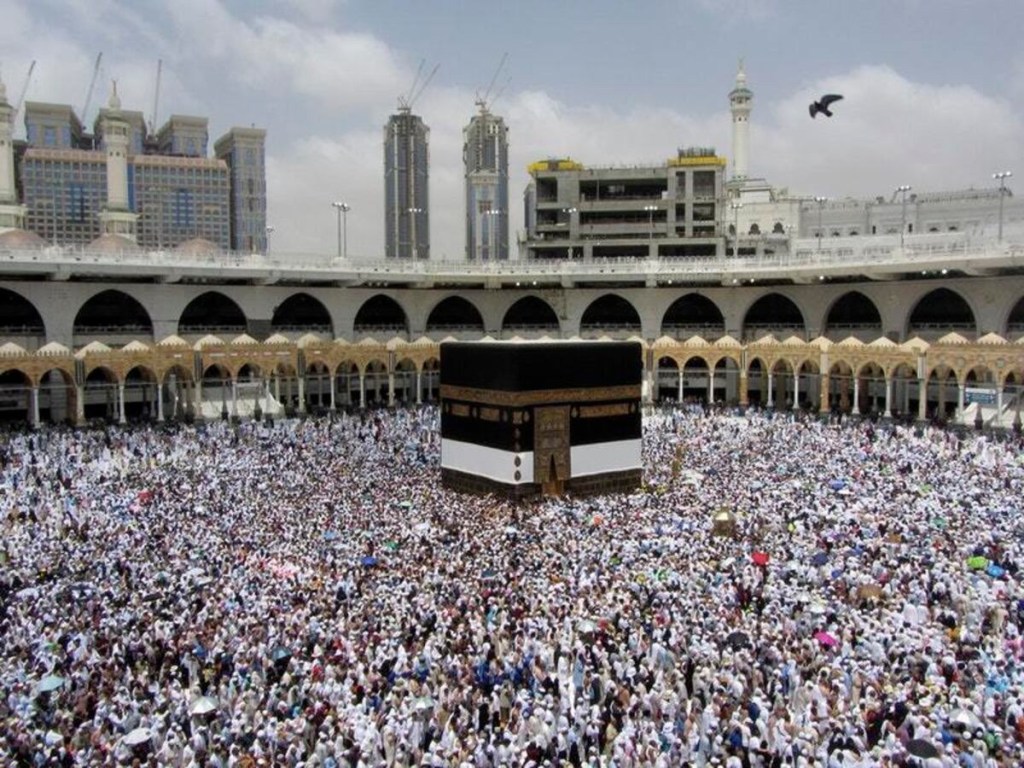
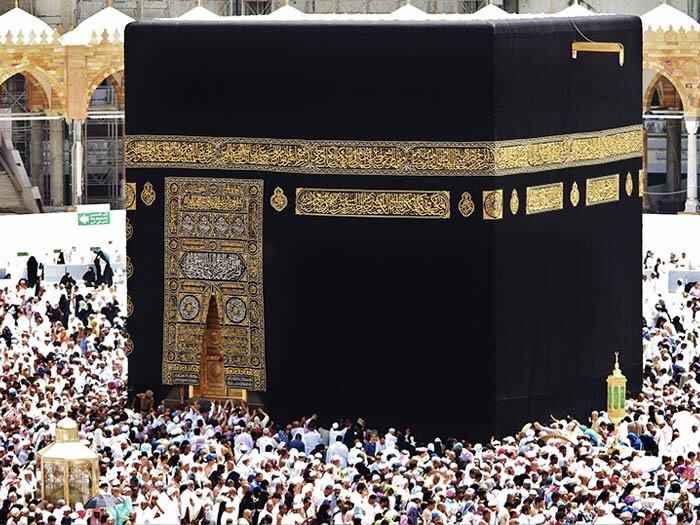
Muslim pilgrims pray around the holy Kaaba at the Grand Mosque, during the annual hajj pilgrimage in Mecca 

The Abrahamic Focus of Hajj: A Testament to the Prophet Muhammad’s Authenticity

One of the most striking aspects of Islam’s most sacred ritual, the Hajj pilgrimage, is its overwhelming focus on the figure of Abraham (Ibrahim in Arabic). This emphasis on Abraham, rather than on the Prophet Muhammad, peace be upon him, himself, offers a compelling argument for the Prophet Muhammad’s, peace be upon him, authenticity as a prophet. In an era when religious leaders often sought personal glory, Muhammad’s decision to center the Hajj around Prophet Abraham, peace be upon him, demonstrates a humility and divine focus that lends credence to his prophetic claims.

The Abrahamic Core of Hajj Rituals

The Hajj is one of the Five Pillars of Islam, obligatory for every able-bodied Muslim who can afford it at least once in their lifetime. It involves a journey to Mecca, Saudi Arabia, following a series of rituals that commemorate events in the lives of Prophet Abraham, his wife Hagar, and their son Ishmael peace be upon them. These rituals are deeply symbolic, each pointing back to this revered family rather than to Muhammad or his own life events.

For instance, the Kaaba, the black, cube-shaped structure at the heart of Mecca’s Grand Mosque. Muslims believe Prophets Abraham and Ishmael, peace be upon them, built this structure as the world’s first temple dedicated to the worship of the One God. During Hajj, pilgrims circumambulate the Kaaba seven times, symbolically centering their worship on the divine unity that Abraham proclaimed, not on any human figure.

Next, pilgrims run between the hills of Safa and Marwa, reenacting Hagar’s desperate search for water for her infant son Ishmael. This ritual recalls her trust in God during a moment of extreme vulnerability. It has no connection to the life of the Prophet Muhammad, peace be upon him, but instead honors a mother’s faith from thousands of years before his time. Had the Prophet Muhammad, peace be upon him, fabricated the religion, he would have likely made the ritual about one of his own wives or daughters.

Perhaps most tellingly, on the 10th day of Dhul Hijjah (the month of Hajj), pilgrims perform the symbolic stoning of the devil. This ritual commemorates Prophet Abraham’s unwavering obedience to God. According to Islamic tradition, when God commanded Prophet Abraham, peace be upon him, to sacrifice his son, Satan tried three times to dissuade him. Each time, the Prophet Abraham, peace be upon him, drove Satan away by throwing stones at him.

The Obvious Absence – Why Not the Prophet Muhammad, peace be upon him?

Given the status of the Prophet Muhammad, peace be upon him, in Islam as the final prophet, one might expect the Hajj to revolve around his life and teachings. After all, he was born in Mecca, received his first revelations nearby, and eventually returned to establish the city as Islam’s spiritual capital. His biographical events provide ample material for symbolic rituals. Yet, strikingly, none of the core Hajj rites center on the Prophet Muhammad, peace be upon him.

This deliberate focus on the Prophet Abraham, peace be upon him, is evidence that the Prophet Muhammad, peace be upon him, was a Prophet who simply obeyed commandments from God. In 7th century Arabia, tribal and religious leaders often sought to aggrandize themselves, using their influence to gain personal prestige, wealth, or power. In this context, a false prophet would likely design rituals that glorified himself, cementing his status among his followers.

However, the Prophet Muhammad, peace be upon him, did the opposite. Despite his unparalleled status in Islam, he directed the most important ritual not to himself but to the Prophet Abraham, peace be upon him. This decision aligns perfectly with the Quran which describes that the Prophet Muhammad, peace be upon him, as a messenger in the line of previous prophets, not as a competing or superseding figure.

The Hajj is one of Islam’s most important rituals and pillars. If the Prophet Muhammad, peace be upon him, had been an opportunist, the hajj would have presented a perfect chance for him to make it about himself. However, he had no say in it because it was ordained by God, who decided to root the hajjaaround the family of the Prophet Abraham, peace be upon him. This move facilitated the presentation of Islam as a universal faith, the culmination of a prophetic tradition rather than a break from it. A self-serving charlatan might have made the hajj about his own family, focusing on self-promotion. But the Prophet Muhammad, peace be upon him, did not exploit the hajj for personal gain, as it was a divine command beyond his controland is evidence of the truthful nature of his message.

Addressing Counter-Arguments

Critics might argue that the Prophet Muhammad, peace be upon him, simply co-opted pre-existing Arabian traditions associated with the Prophet Abraham, peace be upon him. Indeed, the Kaaba and some Hajj rituals predate Islam. However, this historical continuity actually strengthens the case for the Prophet‘s truthfulness. By purifying these practices from polytheistic elements and reorienting them toward monotheism, he fulfilled his self-described mission of revival, not invention.

Additionally, one could contend that the Prophet, peace be upon him, didn’t need to make the Hajj about himself because his influence was already pervasive in other aspects of Muslim life. Yet this counterargument fails to account for human nature. Most people, especially those in positions of power, tend to seek more glory, not less. The Prophet’s restraint in the realm of Hajj, despite his prominence elsewhere, suggests a consistent character focused on his divine mission.

The overwhelming Abrahamic focus of the Hajj rituals stands in stark contrast to the practices of most religious innovators throughout history. Founders of new faiths have frequently designed rituals and practices that reinforce their own spiritual authority and centrality. The Prophet Muhammad, peace be upon him, bucked this trend because it was not him, but God whodecided that the Hajj pilgrimage center entirely on the lives of the Prophet Abraham and his family. This provides compelling evidence that the Prophet Muhammad, peace be upon him, was not acting as a self-serving inventor of a new religion, but rather as a sincere Prophet restoring and reviving the original monotheistic tradition.

If the Prophet Muhammad, peace be upon him, had simply been an opportunistic religious charlatan, the Hajj would almost certainly have looked very different. He likely would have shaped it to elevate his own life events, teachings, and persona – as religious innovators so often do Instead, the Hajj’s sublime lack of focus on the life of the Prophet Muhammad, peace be upon him, remains a powerful signal of the truthfulness of Islam’s final prophet.

While acknowledging the prophets of Judaism and Christianity, Islam considers Muhammad to be the final prophet who came to restore the pure monotheistic faith and correct deviations that had entered the earlier religions. The story of Ishmael’s near-sacrifice is thus seen as part of this corrective prophetic message continuing through Muhammad.

In summary, the Islamic theological argument is that the identification of Ishmael as the son Abraham was commanded to sacrifice establishes a direct link between Abraham, Ishmael, and Muhammad, supporting the legitimacy of Muhammad’s prophethood as a continuation of the Abrahamic lineage and monotheistic message that was preserved intact through Ishmael and fully restored in the revelation of the Quran to Muhammad. The Ishmael narrative reinforces Muhammad’s prophetic authority for Muslims.

Why is the Song of Solomon included in the canon despite the absence of God’s name?


Azahari Hassim

Why does God permit the Song of Solomon to be included in the canon, even though the name of God is absent from it? Some think it is due to the divine name of Muhammad being written in it (Song of Solomon 5:16). How is their reasoning expressed?

The Song of Solomon, also known as the Song of Songs, is a unique book in the Bible due to its poetic, romantic, and sensual nature, as well as the fact that it does not explicitly mention God’s name. Despite this, it was included in the biblical canon because it has been traditionally interpreted as an allegory of God’s love for His people, either between God and Israel or Christ and the Church. The absence of God’s name does not diminish its perceived spiritual depth or its theological significance.

Some individuals, particularly within Islamic circles, argue that the inclusion of the Song of Solomon in the biblical canon—despite the absence of God’s name—is due to a prophetic reference to the Prophet Muhammad found within its text. Their reasoning centers on the interpretation of a specific Hebrew word in Song of Solomon 5:16.

In this verse, the Hebrew word “מַחֲמַדִּים” (mahmadim) is used, which is commonly translated into English as “altogether lovely” or “desirable.” The argument is constructed as follows:

  1. Phonetic Similarity: The root word “מַחֲמַד” (mahmad) closely resembles the Arabic name “Muhammad” in both spelling and pronunciation. Proponents suggest that this is not a coincidence but a deliberate reference.
  2. Plural of Respect: The suffix ”-im” in Hebrew can denote a plural form but is also used to express greatness or majesty (often referred to as the “plural of excellence” or “plural of respect”). Therefore, “mahmadim” can be interpreted as a singular noun denoting a person of great esteem.
  3. Direct Reference: By reading “mahmadim” as “Muhammad”, they posit that the verse directly names the Prophet Muhammad, making it a prophetic mention within the Hebrew scriptures.
  4. Justification for Canon Inclusion: They reason that the presence of this prophetic reference justifies the inclusion of the Song of Solomon in the biblical canon, despite the absence of explicit mentions of God. The text’s value lies in its concealed prophecy about an important future figure—Muhammad.
  5. Contextual Interpretation: The surrounding verses describe an individual of remarkable qualities, which they align with descriptions of Muhammad. This alignment strengthens their claim that the text is speaking about him.

An example of their reasoning expressed in interpretative translation might look like this:

“His mouth is most sweet; yea, he is Muhammad. This is my beloved, and this is my friend, O daughters of Jerusalem.”

(Song of Solomon 5:16)

By substituting “mahmadim” with “Muhammad”, they assert that the verse explicitly mentions him by name. This interpretation is used to support the idea that the Song of Solomon holds prophetic significance concerning Muhammad, thereby explaining its canonical status despite the absence of God’s name.

Rabbi Akiva (born around 50 CE) famously declared:

“All the writings are holy, but the Song of Solomon is the Holy of Holies.”

This statement emphasizes the profound spiritual significance of the book despite the absence of God’s name.

Rashi (born on February 22, 104) commented:

“The Song of Solomon is entirely allegorical. It is a parable of the relationship between God and Israel.”

Rashi’s interpretation sees the love story in the Song as a metaphor for the divine-human relationship, even though God is not explicitly named.

The Song of Solomon

The Song of Solomon (also known as Shir HaShirim in Hebrew) is a biblical book that has been interpreted in various ways by renowned rabbis and scholars throughout Jewish history. One of the unique aspects of the Song of Solomon is the absence of explicit mention of God’s name, which has led to extensive commentary and discussion. Here are some key perspectives from renowned rabbis and Jewish commentators on this issue:

1. Rabbi Akiva (1st–2nd century CE)

Rabbi Akiva famously considered the Song of Solomon as the “Holy of Holies” among the biblical writings, meaning it is a deeply spiritual and sacred text. Despite the absence of God’s name, Rabbi Akiva argued that the book is a metaphor for the relationship between God and the people of Israel. The love described in the poem is symbolic of the covenantal love between God and Israel, where the deep bond between the lovers mirrors the divine connection between the Creator and His people. Thus, even though God’s name is not explicitly mentioned, the entire text is imbued with divine presence.

2. Rashi (1040–1105 CE)

Rashi, one of the most influential medieval Jewish commentators, also viewed the Song of Solomon allegorically. He believed the absence of God’s name was not significant, since the entire narrative is a metaphor for the relationship between God and Israel. Rashi explained that the lovers in the song are symbols of God (the male figure) and Israel (the female figure). The passionate love and yearning described throughout the text reflect Israel’s yearning for God during times of exile and redemption. Thus, Rashi interpreted the absence of God’s name as intentional, since the entire poem is a representation of the divine relationship.

3. Ibn Ezra (1089–1167 CE)

Ibn Ezra, another prominent medieval Jewish commentator, acknowledged the secular, even sensual, nature of the language in the Song of Solomon but, like Rashi, understood it allegorically. He commented that the absence of God’s name does not detract from the sanctity of the book. Rather, the metaphorical nature of the song, in which the lovers represent God and Israel, implicitly includes God throughout the entire narrative. The intense love and yearning reflect the soul’s desire for God, even without His name being overtly mentioned.

4. The Zohar (13th century CE)

The Zohar, the foundational text of Kabbalah, also offers a mystical interpretation of the Song of Solomon. The Zohar reads the song as a deep allegory of the divine union between different aspects of God’s emanations (the Sefirot) and the relationship between God and the Shekhinah (the feminine divine presence). The absence of God’s name in the text is seen as reflective of the hidden and mystical nature of the divine in the world. The love between the bride and groom represents the unification of divine aspects, and the song’s hidden meaning reveals the nature of spiritual love and connection.

5. Nachmanides (1194–1270 CE)

Nachmanides, also known as Ramban, embraced a mystical and allegorical approach to the Song of Solomon. He argued that the absence of God’s name emphasizes the hidden nature of the relationship being described. According to Nachmanides, the Song of Solomon describes not only the historical relationship between God and Israel but also a deeper, mystical connection between God and the world. The absence of God’s name can be seen as symbolizing the hiddenness of the divine in the material world, which is revealed only to those who are spiritually attuned.

Summary

In Jewish tradition, the absence of God’s name in the Song of Solomon is generally seen as a deliberate literary and theological choice. Rather than detracting from its sanctity, the absence of explicit references to God is often interpreted as enhancing the allegorical nature of the text, where the love between the human characters represents the divine relationship between God and Israel or between God and the soul. The entire text is viewed as imbued with spiritual meaning, despite (or perhaps because of) the lack of direct mention of God.

Solomon Dedicates Temple

Does the name of Muhammad appear in the Bible?

Some interpret Song of Solomon 5, verses 10 to 16, as a depiction of Muhammad using hyperbolic language. What is the comparative religious perspective on the argument regarding the manifestation of the name Muhammad in verse 16, expressed in the plural form as a sign of respect?

The Islamic perspective on the interpretation of Song of Solomon 5, verses 10 to 16, particularly verse 16, as a reference to the Prophet Muhammad stems from the claim that the Hebrew word “מַחֲמַדִּים”, found in this verse, is remarkably similar to the name Muhammad.

This word is translated into English as “altogether lovely,” “very pleasant,” or similar phrases, but some Muslims argue that it should be understood as a direct reference to Muhammad, given the phonetic similarity and the significance of the name.

In Islamic tradition, Muhammad is believed to be the final prophet sent by God to guide humanity, and his coming is interpreted by some Muslims as having been foretold in previous scriptures, including the Bible. The argument here hinges on the linguistic and phonetic connection between the Hebrew word in the text and the name Muhammad.

Proponents of this view argue that the use of “מַחֲמַדִּים” in the plural form is a stylistic or honorific form in Hebrew, used to convey respect or exaltation, rather than a literal plural. This is seen as analogous to how Arabic uses certain plural forms to denote honor or respect, rather than quantity.

The verses Song of Solomon 5, verses 10 to 16 read:

Verse 10: My beloved is white and ruddy,
Chief among ten thousand.


Verse 11: His head is like the finest gold;
his locks are wavy,
and black as a raven.


Verse 12: His eyes are like doves
by the rivers of waters,
washed with milk,
and fitly set.


Verse 13: His cheeks are like a bed of spices,
banks of scented herbs.
His lips are lilies,
Dripping liquid myrrh.

Verse 14: His hands are rods of gold
set with beryl.
His body is carved ivory
inlaid with sapphires.


Verse 15: His legs are pillars of marble
set on bases of fine gold.
His countenance is like Lebanon,
excellent as the cedars.


Verse 16: His mouth is most sweet,
yes, he is altogether, מַחֲמַדִּים (lovely).
This is my beloved,
and this is my friend,
O daughters of Jerusalem.

Genesis 22:18: Muhammad, the Hajj, and Differing Interpretations Across Abrahamic Faiths


Azahari Hassim

Did Muhammad, through the Hajj ritual, fulfill the prophecy mentioned in Genesis 22, verse 18?

The verse you are referring to, Genesis 22, verse 18, reads:

“And through your offspring all nations on earth will be blessed, because you have obeyed me.”

This promise is made to Abraham after he demonstrates his willingness to sacrifice his son (Isaac, according to the Bible; Ishmael, according to Islamic tradition).


Many Jewish and Christian theologians interpret the “offspring” (or “seed”) mentioned in this verse as a reference to the line of descendants that would lead to the Jewish people, and by extension, to Jesus Christ in Christian theology. Through this lineage, blessings would be conferred to all nations.

In Islamic theology, however, the “offspring” or “seed” in Genesis 22, verse 18, is often interpreted as referring to Ishmael, the son who was nearly sacrificed according to Islamic tradition. Muslims believe that the Prophet Muhammad, as a direct descendant of Ishmael, fulfills this prophecy, as it is through him that all nations are blessed with the message of Islam.

The lineage of Prophet Muhammad through Ishmael is considered important in Islamic belief because the near-sacrifice event, believed to involve Ishmael instead of Isaac, is central to the Abrahamic covenant. Muslims believe that the final and complete message of God to humanity, Islam, came through this prophetic lineage.


The Hajj ritual, which commemorates events in the lives of Abraham, Hagar, and Ishmael, can be seen by Muslims as a testament to the fulfillment of this prophecy. Every year, followers of Islam globally gather in Mecca to take part in the Hajj pilgrimage, commemorating the tradition of Abraham’s near sacrifice of his son Ishmael.

It symbolizes the universality of the blessings promised to Abraham’s descendants. For many Muslims, this pilgrimage is a manifestation of the blessings through Ishmael’s lineage, culminating in Muhammad and the global reach of Islam.

However, this interpretation is not universally accepted, especially among Jewish and Christian theologians, who typically see the “offspring” or “seed” in Genesis 22, verse 18, as referring to Isaac’s line, ultimately leading to the people of Israel and, in Christian theology, to Jesus Christ. Interpretations of scripture are deeply influenced by religious, theological, and cultural perspectives.

In summary, while some Muslims assert that Muhammad, as a descendant of Ishmael, fulfills the prophecy in Genesis 22, verse 18, through the message of Islam and rituals like the Hajj, this interpretation is specific to Islamic theology. It reflects the belief that Ishmael, rather than Isaac, was the son nearly sacrificed and that Muhammad, as Ishmael’s descendant, brings blessings to all nations. This view is not shared by all Abrahamic faiths.

Abraham’s journey, significant in Judaism, Christianity, and Islam, is primarily described in the Book of Genesis.

Abrahamic covenant: Isaac or Ishmael from a Quranic perspective

In Surah 2, verse 124 of the Quran, it is stated that God made a covenant with Abraham through Ishmael instead of Isaac, and it is implied that Jewish scribes corrupted the Torah in favor of Isaac. How is this interpretation explained?

Surah 2, verses 124 to 125 reads:

“And when his Lord tested Abraham with certain words, and he fulfilled them. God said, “I am making you a leader of humanity.” Abraham said, “And my descendants?” God said, “My pledge does not include the wrongdoers.”

“And We made the House a focal point for the people, and a sanctuary. Use the shrine of Abraham as a place of prayer. And We commissioned Abraham and Ishmael, “Sanctify My House for those who circle around it, and those who seclude themselves in it, and those who kneel and prostrate.”

The Quran clearly states in Surah 2, verse 124 that God made a covenant with Abraham through his son Ishmael, not Isaac. This contradicts the Biblical account which portrays Isaac as the son who was to inherit the covenant from Abraham.

The Quran suggests the Torah (the first five books of the Bible containing the story of Abraham and his sons) was corrupted by Jewish scribes who altered the narrative to favor Isaac over Ishmael. Evidence for this includes:

The Bible itself initially portrays Ishmael as the firstborn and heir before contradicting itself later by calling Isaac the “only son”.
Islamic sources consistently name Ishmael as the son taken by Abraham for the intended sacrifice, while the Bible names Isaac.

The Quranic narrative does not explicitly name the son of the near sacrifice, but Islamic tradition and many Muslim scholars have historically identified him as Ishmael. This is partly based on the sequence of events in the Quran, which suggests that the promise of Isaac’s birth came after the sacrifice narrative, implying Ishmael was the son involved.

The Quran establishes Ishmael’s lineage as the one that inherits the covenant and religious practices like the Kaaba in Mecca, contradicting the Biblical focus on Isaac’s descendants (the Israelites).

So according to the Quran and Islamic tradition, the Biblical account was distorted to displace Ishmael’s status as Abraham’s heir in favor of Isaac, likely due to Jewish scribes’ bias towards the Israelite lineage.

The Quran asserts that it rectifies this by confirming Ishmael as the son who carried on Abraham’s legacy in accordance with the original divine covenant, while the divine choice of the ancient Israelites and their Hebrew prophets before the arrival of Islam is intended to prepare the way for Muhammad, the final Prophet.

Muslims believe that the Kaaba was originally built by the Prophet Ibrahim (Abraham) and his son Isma’il (Ishmael) as a house of worship. The Kaaba is also the focal point of the Hajj pilgrimage, which is one of the Five Pillars of Islam. During the Hajj, millions of Muslims from around the world perform rituals that include walking around the Kaaba seven times in a counterclockwise direction, a practice known as Tawaf.

“Say, [O believers], ‘We have believed in Allah and what has been revealed to us and what has been revealed to Abraham and Ishmael and Isaac and Jacob and the Descendants and what was given to Moses and Jesus and what was given to the prophets from their Lord. We make no distinction between any of them, and we are Muslims [in submission] to Him.’”

Surah Al-Baqarah (2:136)

Hagar’s Legacy: Exploring the Intersection of Biblical Prophecy and Islamic Tradition

Hagar, an Egyptian woman with no power or status, is the first person in Scripture to be visited by an angel and the only person in Scripture to give God a name—El Roi, “the God who sees me.” In the midst of her pain and struggle, Hagar receives God’s blessing and promises.

It is believed that the prophecy of Hagar predated the Torah revealed to the Israelites. The Torah reiterated her prophecy, whose fulfillment is realized in the ritual Hajj of Islam. Some argue that the scribes of ancient Israelites attempted to tone down its importance. How is the argument articulated?

The argument as presented suggests that the prophecy of Hagar, which is believed to have predated the Torah, finds its fulfillment in the Islamic ritual of Hajj, and that the scribes of ancient Israel attempted to diminish its significance. Here’s how this argument is explained:

  1. Pre Torah origins: This argument posits that the prophecy of Hagar and her descendants, including Ishmael, existed prior to the revelation of the Torah to Moses. Supporters of this view often point to the genealogical and historical connections between Hagar and Ishmael and the founding of the Arab people.
  2. Prophecy reiterated in Torah: The claim is made that the Torah, when it was revealed to the Israelites, reiterated and acknowledged the prophecy related to Hagar and Ishmael. This acknowledgment can be found in the biblical narrative where Hagar and Ishmael’s story is mentioned.
  3. Importance of the Hajj ritual: Proponents then assert that the fulfillment of Hagar’s prophecy, as reiterated in the Torah, can be seen in the Islamic ritual of Hajj. They argue that Hajj, which is a pilgrimage to the Kaaba in Mecca, Saudi Arabia, is seen as a direct link to Hagar and Ishmael and represents the fulfillment of their destiny. This ritual is regarded as a significant practice in Islam and is central to the religious identity of Muslims.
  4. Suppression of Hagar’s significance: The argument continues by suggesting that the scribes of ancient Israel attempted to downplay the importance of Hagar and her descendants, including Ishmael, due to theological and political motivations. It is proposed that, in shaping the biblical narrative, these scribes might have marginalized or selectively emphasized certain aspects to elevate the prominence of Isaac and the Israelite lineage over Ishmael.

It’s important to note that this argument reflects a particular perspective and interpretation. There are different viewpoints on this topic, and scholars hold a wide array of opinions regarding the relationship between biblical narratives, biblical redaction, and the Islamic tradition.

Does Islam represent the concept of “the Kingdom of God” as taught by Jesus and John the Baptist?


Azahari Hassim

Did Jesus and John the Baptist announce the coming of the kingdom of God?

Yes, both Jesus and John the Baptist announced the coming of the Kingdom of God. John the Baptist’s ministry focused on repentance and emphasized the nearness of the Kingdom. John’s message in the Gospels urges individuals to repent and return to God, preparing for the arrival of the Messiah, referred to as the “son of man” in Jesus’ parables, who will establish the Kingdom.

Jesus continued this theme in His ministry, often speaking about the Kingdom of God in His teachings. He used parables, miracles, and sermons to explain the nature of this Kingdom, addressing its spiritual dimensions and moral implications.

Did Jesus equate the kingdom with the religion of Christianity?

No, Jesus did not explicitly equate the Kingdom of God with what later became known as Christianity. The term “Christianity” was not used during His lifetime; the followers of Jesus were initially seen as a Jewish sect.

In summary, Jesus and John the Baptist announced the coming of the Kingdom of God, but Jesus did not equate this Kingdom directly with the religion that later emerged as Christianity.

It is thought that Christianity originated as an apocalyptic group within Judaism, with Jesus proclaiming the arrival of the son of man and his Kingdom as described in the Book of Daniel. Islamic scholars believe that this apocalyptic figure, son of man, is none other than Muhammad who established Islam in the land where God promised to Abraham in Genesis 15, verse 18. Islam is regarded as the kingdom of God preached by Jesus. How is their argument articulated?

The argument by some Islamic scholars that the apocalyptic figure referred to by Jesus is Muhammad, and that Islam is the kingdom of God as preached by Jesus, is based on a reinterpretation of certain Biblical and Qur’anic texts. Here’s how the argument is articulated:

  1. Jesus and the Son of Man:
    In Christian eschatology, the “Son of Man” is an apocalyptic figure described in the Book of Daniel and in the Gospels. Jesus speaks of the coming of the “Son of Man” who will establish God’s kingdom.
    Islamic scholars who subscribe to this interpretation propose that the “Son of Man” could be a symbolic reference to Muhammad, who they argue, fulfilled this prophecy by establishing Islam from the River of Egypt to the Euphrates River including the Arabian Peninsula, a land promised to Abraham’s descendants.
  2. The Kingdom of God:
    In Christian theology, the “Kingdom of God” or “Kingdom of Heaven” is often understood as a spiritual realm where God reigns supreme, and which will be fully realized in the eschatological future.
    Islamic scholars who support this view argue that Jesus’ references to the coming “Kingdom of God” were not about a spiritual kingdom, but a prophetic kingdom established on earth. They interpret this kingdom as the Islamic state that Muhammad established in Medina and later expanded throughout Arabia and beyond.
  3. The Covenant and the Land Promise:
    In Genesis 15, verse 18, God promises Abraham’s descendants a specific land. Jewish and Christian interpretations traditionally see this as a promise fulfilled in the biblical history of Israel.
    However, some Islamic scholars reinterpret this promise in the context of Islam, suggesting that the true fulfillment of God’s covenant and the promised land is seen in the establishment of Islam from the River of Egypt to the Euphrates River, a promise made to Ishmael instead of Isaac. They argue that Islam, as the final and complete religion, fulfills this covenant.
  4. Prophecies and Islamic Tradition:
    Islamic tradition holds that Muhammad is the “Seal of the Prophets,” completing the line of prophets that includes Abraham, Moses, and Jesus. Some scholars interpret Jesus’ statements about a future prophet (like the “Comforter” in John 14, verses 16 to 17) as references to Muhammad.
    They argue that Jesus was predicting Muhammad’s arrival, and that the establishment of Islam represents the realization of the kingdom Jesus spoke of.
  5. Theological Implications:
    This argument hinges on the belief that Islam is the final and most complete form of the Abrahamic faith, and that previous scriptures (Torah, Psalms, Gospels) were either incomplete or have been altered over time. The Qur’an is seen as the final, unaltered word of God, and Muhammad as the last prophet who brings the ultimate message.

In summary, the argument is built on a re-interpretation of Jesus’ teachings and the apocalyptic expectations found in the New Testament, suggesting that these were actually referring to the coming of Muhammad as a “son of man”and the establishment of Islam, which they view as the true “Kingdom of God.”

Jesus, Kingdom of God, and Islam

Is the Kingdom of God proclaimed by Jesus in the gospels the same as the fifth kingdom mentioned in Daniel 2 and 7?

The question of whether the Kingdom of God proclaimed by Jesus in the Gospels is the same as the fifth kingdom mentioned in the book of Daniel is a topic of interpretation and belief among biblical scholars and theologians. Different individuals and religious traditions may interpret these passages differently, so there isn’t a single definitive answer.

In the book of Daniel, the fifth kingdom represents a future kingdom that God establishes. It is often understood to refer to the Kingdom of God or the Messianic Kingdom. This kingdom is often associated with the reign of the Messiah and the ultimate triumph of God’s rule over all creation.

In the Gospels, Jesus frequently spoke about the Kingdom of God or the Kingdom of Heaven. He proclaimed that the Kingdom of God is near, calling people to repent and believe in this imminent reality. Jesus described this kingdom as both a present reality and a future culmination, emphasizing the rule and reign of God in the hearts and lives of believers.

Some theologians and scholars see a connection between the fifth kingdom in Daniel and the Kingdom of God proclaimed by Jesus. They believe that Jesus came to his people to proclaim the realization of God’s promised kingdom as stated in the Old Testament. Others may see subtle differences or emphasize other aspects of the Kingdom of God.

Ultimately, interpretations vary, and it depends on one’s religious beliefs, theological perspectives, and understanding of Scripture. It is a topic that invites further study, discussion, and input from various sources.

Some believe that Islam is the fifth kingdom mentioned in the prophecy of Daniel 2 and 7, which is understood as a Kingdom of God. Surah 24, verse 55 of the Quran confirms this. How is this argument articulated?

The argument presents the interpretation that Islam represents the fifth kingdom mentioned in the prophecies of Daniel chapters 2 and 7 in the Bible. According to these prophecies, a sequence of world empires will be succeeded by a divine, eternal kingdom established by God.

This interpretation is supported by a verse from the Quran (Surah 24, verse 55), which promises those who believe and do righteous deeds that they will be granted succession on Earth, seen as aligning with the final kingdom prophesied in Daniel.

The visions in Daniel describe a series of empires (Babylon, Medo-Persia, Greece, and Rome), followed by a divine kingdom that will never be destroyed. Proponents of this view argue that the emergence and expansion of Islam fulfill this prophecy, positioning Islam as the fifth kingdom and the everlasting divine kingdom established by God.

The Quran, in Surah 24, verse 55, states that

“Allah has promised those who have believed among you and done righteous deeds that He will surely grant them succession [to authority] upon the earth.”

This verse is interpreted by some as a confirmation that Islam is the fulfillment of the divine kingdom prophesied in the Book of Daniel.

Emperor Constantine I, who had converted to Christianity, sought to unify the empire under a single faith to promote stability. He believed that resolving the theological disputes would help achieve this goal. The Council of Nicaea in 325 AD was the first ecumenical council of the Christian Church. It aimed to address theological disputes and unify Christian doctrine. Key outcomes included the Nicene Creed affirming the Trinity and condemning Arianism. The council’s significance lies in shaping Christian theology and establishing a precedent for future councils.

The Prophecy of Daniel: Constantine the Great and Muhammad the Prophet

Some believe that Daniel 7, verse 25 alludes to Constantine the Great, who presided over the council of Nicaea, while Daniel 7, verse 13, points to Muhammad’s Night Journey. How is this argument explained?

This is a very controversial argument that is not widely accepted by most biblical scholars and Christians, who believe that Daniel 7, verse 25, and Daniel 7, verse 13, refer to the Antichrist and the Messiah, respectively. However, some people who support this argument explain it in the following way:
They claim that Constantine the Great, who was the first Roman emperor to convert to Christianity and who convened the Council of Nicaea in 325 AD, was the little horn of Daniel 7, verse 25, who spoke pompous words against the Most High and tried to change the times and the laws.

They argue that Constantine corrupted the original teachings of Jesus and imposed his own doctrines and creeds on the Christian church, such as the doctrine of the Trinity, the observance of Sunday instead of Saturday as the Sabbath, and the celebration of Easter instead of Passover.

They also accuse Constantine of persecuting and oppressing those who did not conform to his version of Christianity, such as the followers of Arianism, who denied the divinity of Jesus.
Arianism sparked significant debates within the Church, particularly during the early Ecumenical Councils. The First Council of Nicaea in 325 AD condemned Arianism, affirming the doctrine of the Trinity and the full divinity of Christ. The Nicene Creed established the belief that the Son is “begotten, not made, of one substance with the Father.”

Islamic scholars claim that Muhammad, who was the prophet of Islam and who claimed to have a miraculous Night Journey from Mecca to Jerusalem and then to heaven in 621 AD, was the Son of Man of Daniel 7, verse 13, who came with the clouds of heaven and was given dominion, glory, and a kingdom by the Ancient of Days, that is God.

The term “night visions” directly suggests an event that takes place at night. Muhammad’s Night Journey, which is said to have occurred during the night, aligns with this description. In contrast, Jesus’ ascension is generally not described as happening at night in Christian texts.

They argue that Muhammad was a true prophet of God who restored the pure monotheism that was lost by Constantine and his followers. They also assert that Muhammad’s kingdom is an everlasting kingdom that will never be destroyed, and that all nations and peoples of every language will serve him or submit to his law.


In summary, these are a few points made by Islamic scholars to back the notion that Daniel 7, verse 25, and 7, verse 13, refer to Constantine as the little horn who established the Trinity at the Council of Nicea, and Muhammad as the Son of Man who encountered God on his Night Journey to the seventh heaven.

How does Bart Ehrman interpret the term “son of man” as used by Jesus in the gospel?

Bart Ehrman is an American biblical scholar and author specializing in New Testament studies and the historical Jesus. He is a professor at the University of North Carolina at Chapel Hill and has written extensively on the Bible and early Christianity. Known for his critical perspective on traditional religious beliefs, he engages in public discussions about religion and biblical texts.

How does Bart Ehrman interpret the term “son of man” as used by Jesus in the gospel?

Here is a summary of Bart Ehrman’s interpretation of Jesus’ use of the term “son of man” in the gospels:

  1. Ehrman believes that when Jesus used the phrase “son of man”, he was referring to a future apocalyptic figure who would come as the cosmic judge at the end of time, not to himself. In other words, Jesus did not see himself as the “son of man”.
  2. According to Ehrman, Jesus expected and taught that this “son of man”, a heavenly being sent by God, perhaps a powerful angel like Michael, would arrive imminently to judge the earth and establish God’s kingdom.
  3. Ehrman argues this cosmic “son of man” figure derives from passages like Daniel 7, verses 13 to 14, where he is portrayed as an exalted, divine-like figure subordinate only to God himself. However, Ehrman maintains this figure was still understood to be human, not divine, since that is what “son of man” means.
  4. In Ehrman’s view, it was only after Jesus’ death that his disciples came to believe that Jesus himself was the “son of man” he had predicted would come. The gospels then place this title on Jesus’ own lips as a self-designation.
  5. While Ehrman acknowledges that Paul seems to equate Jesus with the Danielic “son of man” in 1 Thessalonians, he argues these are likely later additions representing more developed Christology, not Jesus’ original teachings.

In summary, Ehrman’s controversial perspective is that Jesus did not use “son of man” as a title for himself, but rather to refer to a separate apocalyptic figure. This view contradicts the common interpretation that Jesus was claiming that title and identity directly. However, Ehrman’s arguments have generated significant scholarly debate and pushback from those who maintain Jesus did indeed see himself as the “son of man”.

Does the Night Journey of Prophet Muhammad to Heaven have a theological connection with the prophecy of the “son of man” in Daniel 7:13? Please provide a detailed explanation to support this argument.

The argument connecting the Night Journey of the Prophet Muhammad to Heaven with Daniel 7 verse 13 is based on theological interpretations that draw parallels between the two events. Here’s an explanation of this argument:

  1. The Night Journey of Prophet Muhammad ( الإسراء والمعراج): According to Islamic tradition, the Night Journey (الإسراء) and Ascension (المعراج) is a miraculous event in which the Prophet Muhammad was transported from Mecca to Jerusalem and then ascended through the heavens, meeting various prophets and eventually coming into the presence of Allah.
  2. Daniel 7 verse 13 in the Bible: In the Book of Daniel in the Old Testament of the Bible, specifically in Daniel 7 verse 13, there is a prophecy that says: “I saw in the night visions, and behold, with the clouds of heaven there came one like a son of man, and he came to the Ancient of Days (that is, God) and was presented before him.” This verse is often interpreted as a reference to a messianic figure.

The argument connecting these two events revolves around the idea that both the Night Journey of Prophet Muhammad and the vision in Daniel 7 verse 13 involve a figure coming into the presence of God. Some scholars, particularly in comparative religion and interfaith dialogue, suggest that there are thematic similarities between these events:

Divine Revelation: In both situations, there is a significant meeting with the divine, as Prophet Muhammad ascends to the highest levels of heaven, and the individual in Daniel 7 verse 13 (son of man) is brought before the “Ancient of Days,” a divine being.

Prophetic Roles: The figure in Daniel 7 verse 13 is often associated with a messianic or prophetic role. Similarly, Prophet Muhammad is considered the final prophet in Islam, and his Night Journey is seen as a confirmation of his prophethood.

It’s important to note that this argument is primarily a matter of theological interpretation and interfaith dialogue. Different scholars and religious traditions may have varying perspectives on the significance and connections between these events.

The Tests of Abraham: Interpretation of ‘Certain Words’ in Surah 2:124


Azahari Hassim

In Surah 2, verse 124 of the Quran, God says to Abraham:

“And when his Lord tried Abraham with certain words and he fulfilled them.” God said, “I am making you a leader of humanity.” Abraham said, “And my descendants?” God said, “My covenant does not include the wrongdoers.”

What is the interpretation of “the certain words” (بِكَلِمَٰتٍ) in Surah 2, verse 124, of the Quran according to the Quranic commentators? Can you provide a list of those “certain words”?

The interpretation of “the certain words” (بِكَلِمَٰتٍ) in this verse according to Quranic commentators refers to the tests and commands that God gave to Abraham. These tests included leaving his family in a barren land, sacrificing his son Ishmael, rebuilding the Kaaba, and instituting the rite of circumcision.

Some of the specific “certain words” mentioned by Quranic commentators include:

  1. Leaving his family in a barren land: God commanded Abraham to leave his wife Hagar and their infant son Ishmael in the desolate valley of Mecca.
  2. Sacrificing his son Ishmael: God tested Abraham’s devotion by commanding him to sacrifice his beloved son Ishmael. However, at the last moment, God provided a ram as a substitute for sacrifice.
  3. Rebuilding the Kaaba: After leaving Hagar and Ishmael in Mecca, Abraham was instructed by God to rebuild the Kaaba as a place of worship for monotheism.
  4. The rite of circumcision: Circumcision is a significant command given to Abraham as a sign of the covenant between God and his followers. It remains a practice among his spiritual descendants, particularly in Islam, symbolizing purification and faithfulness to God’s covenant.

These “certain words” (بِكَلِمَٰتٍ) were tests of faith and obedience for Abraham, which he successfully fulfilled, demonstrating his unwavering devotion to God.

It was on the eighth day after His Nativity that Jesus was circumcised in accordance with the Old Testament Law.  All male infants underwent circumcision as a sign of God’s Covenant with the holy Forefather Abraham and his descendants [Genesis 17:10-14, Leviticus 12:3].

Abrahamic covenant: Isaac or Ishmael from a Quranic perspective

In Surah 2, verse 124 of the Quran, it is stated that God made a covenant with Abraham through Ishmael instead of Isaac, and it is implied that Jewish scribes corrupted the Torah in favor of Isaac. How is this interpretation explained?

Surah 2, verses 124 to 125 reads:

“And when his Lord tested Abraham with certain words, and he fulfilled them. God said, “I am making you a leader of humanity.” Abraham said, “And my descendants?” God said, “My pledge does not include the wrongdoers.”

“And We made the House a focal point for the people, and a sanctuary. Use the shrine of Abraham as a place of prayer. And We commissioned Abraham and Ishmael, “Sanctify My House for those who circle around it, and those who seclude themselves in it, and those who kneel and prostrate.”

The Quran clearly states in Surah 2, verse 124 that God made a covenant with Abraham through his son Ishmael, not Isaac. This contradicts the Biblical account which portrays Isaac as the son who was to inherit the covenant from Abraham.

The Quran suggests the Torah (the first five books of the Bible containing the story of Abraham and his sons) was corrupted by Jewish scribes who altered the narrative to favor Isaac over Ishmael. Evidence for this includes:

The Bible itself initially portrays Ishmael as the firstborn and heir before contradicting itself later by calling Isaac the “only son”.
Islamic sources consistently name Ishmael as the son taken by Abraham for the intended sacrifice, while the Bible names Isaac.

The Quranic narrative does not explicitly name the son of the near sacrifice, but Islamic tradition and many Muslim scholars have historically identified him as Ishmael. This is partly based on the sequence of events in the Quran, which suggests that the promise of Isaac’s birth came after the sacrifice narrative, implying Ishmael was the son involved.

The Quran establishes Ishmael’s lineage as the one that inherits the covenant and religious practices like the Kaaba in Mecca, contradicting the Biblical focus on Isaac’s descendants (the Israelites).

So according to the Quran and Islamic tradition, the Biblical account was distorted to displace Ishmael’s status as Abraham’s heir in favor of Isaac, likely due to Jewish scribes’ bias towards the Israelite lineage.

The Quran asserts that it rectifies this by confirming Ishmael as the son who carried on Abraham’s legacy in accordance with the original divine covenant, while the divine choice of the ancient Israelites and their Hebrew prophets before the arrival of Islam is intended to prepare the way for Muhammad, the final Prophet.

“The promise that Abraham shall be the father of many nations reflects an expansion of the covenant, indicating that the election of Abraham has implications for the entire world. It foreshadows the universalism that is to come.”

Gerhard von Rad
Traditional site of Abraham’s tomb in Hebron

The Near Sacrifice of Ishmael: Islamic Theology and Its Support for the Prophethood of Muhammad

What theological reasoning do Islamic scholars offer to explain how Abraham’s near sacrifice of Ishmael, instead of Isaac, supports the prophethood of Muhammad?

According to Islamic tradition and theology, the near sacrifice of Ishmael by Abraham, rather than Isaac, provides support for the prophethood of Muhammad in several key ways:

Judaism, Christianity, and Islam all trace their spiritual lineage to Abraham as a shared patriarch. The story of Abraham’s willingness to sacrifice his son at God’s command is seen as a supreme test of faith in all three traditions. By identifying the son as Ishmael rather than Isaac, Islam establishes a direct link between Abraham and Muhammad through Ishmael.

The Quran in Surah 37 recounts the story of Abraham’s willingness to sacrifice his son out of obedience to God. Despite not explicitly naming the son, the Quran places the narrative of the sacrifice before the announcement of Isaac’s birth, which some interpret as an indication that Ishmael was the one sacrificed. This Quranic account is seen as affirming Ishmael’s role.

Islamic tradition holds that Muhammad is a direct descendant of Ishmael. The legitimacy and authenticity of Muhammad’s prophethood is thus connected to this lineage going back to Abraham through Ishmael. Ishmael’s willingness to be sacrificed is viewed as a significant event that foreshadows the prophethood of Muhammad, which holds a central role in the religion.

Muslims believe the Quran is the final, unaltered word of God as revealed to Muhammad, arguing that earlier scriptures like the Torah and Bible have been changed over time. In this view, the Quran corrects these alterations, and its indication that Ishmael was the sacrificial son is seen as the accurate version of the story. This affirms Muhammad’s role in restoring the original monotheistic message.

While acknowledging the prophets of Judaism and Christianity, Islam considers Muhammad to be the final prophet who came to restore the pure monotheistic faith and correct deviations that had entered the earlier religions. The story of Ishmael’s near-sacrifice is thus seen as part of this corrective prophetic message continuing through Muhammad.

In summary, the Islamic theological argument is that the identification of Ishmael as the son Abraham was commanded to sacrifice establishes a direct link between Abraham, Ishmael, and Muhammad, supporting the legitimacy of Muhammad’s prophethood as a continuation of the Abrahamic lineage and monotheistic message that was preserved intact through Ishmael and fully restored in the revelation of the Quran to Muhammad. The Ishmael narrative reinforces Muhammad’s prophetic authority for Muslims.

The Significance of Hajj: Commemorating Hagar’s Search for Water and Abraham’s Sacrifice

Introduction:

Hajj, the annual Islamic pilgrimage to Mecca, holds great significance for millions of Muslims worldwide. While Hajj is primarily associated with the life of Prophet Muhammad, it also commemorates important biblical events. One such event is the story of Hagar’s search for water for her baby Ishmael, as well as Abraham’s willingness to sacrifice his son, Ishmael. This essay aims to explore the historical and religious significance of these events in the context of Hajj.

Historical Background:

To understand the significance of Hagar’s search for water for her baby Ishmael and Abraham’s sacrifice, it is crucial to delve into their historical context. According to Islamic tradition, Hagar was the wife of the Prophet Abraham and the mother of Ishmael. Hagar and Ishmael were sent away by Abraham at God’s command. They wandered in the desert near Mecca until they ran out of water, prompting Hagar to search desperately for water to save her infant son.

Hagar’s Search for Water:

Hagar’s search for water for her infant son Ishmael is a deeply emotional and poignant story that resonates with the theme of struggle and resilience. In Islamic tradition, it is believed that Hagar’s unwavering faith and determination led her to the miraculous discovery of the Zamzam well, which continues to provide water for pilgrims during Hajj. The act of retracing Hagar’s footsteps during the Hajj pilgrimage symbolizes the physical and spiritual journey of seeking Muslims blessings and guidance from God.

Abraham’s Sacrifice:

Another biblical event associated with Hajj is the story of Abraham’s willingness to sacrifice his son Ishmael. According to Islamic tradition, Abraham received a command from God to sacrifice his beloved son as a test of his faith. Abraham, demonstrating unwavering devotion, prepared to carry out the command, but at the last moment, God intervened and replaced Ishmael with a ram. This event is commemorated during Hajj through the observance of Eid al-Adha, the Festival of Sacrifice.

Symbolism and Spiritual Significance:

The story of Hagar’s search for water for her infant son and Abraham’s sacrifice carries profound symbolism and spiritual significance for Muslims. Hagar’s unwavering faith and determination symbolize the importance of perseverance and trust in God’s providence. Her search for water reflects the universal human struggle for survival, while the discovery of Zamzam represents divine intervention and sustenance.

Abraham’s willingness to sacrifice his son symbolizes the ultimate act of submission to God’s will. Muslims commemorate this event during Hajj by performing the symbolic stoning of the pillars representing Satan, symbolizing the rejection of temptation and evil. The act of sacrificing an animal during Eid al-Adha symbolizes one’s willingness to give up personal desires and possessions for the sake of God’s pleasure.

Conclusion:

Hajj, the annual Islamic pilgrimage, holds immense religious and historical significance for Muslims worldwide. The commemoration of Hagar’s search for water for her infant son and Abraham’s willingness to sacrifice his son Ishmael adds depth and meaning to this sacred journey. These events symbolize the themes of struggle, faith, perseverance, and submission to God’s will. By retracing Hagar’s footsteps and participating in the rituals associated with Abraham’s sacrifice, Muslims reaffirm their commitment to their faith and seek spiritual enlightenment and blessings during Hajj.

What distinguishes the prophethood in Deuteronomy 18:18 from that in Numbers 12:6?


Azahari Hassim

The distinction between the prophethood mentioned in Deuteronomy 18, verse 18, and that in Numbers 12, verse 6, lies primarily in the nature and role of the prophets being described.

  1. Deuteronomy 18, verse 18: This verse speaks of a future prophet who will arise from among the brothers of Israelites, like Moses. The text states:

“I will raise up for them a prophet like you from among their brothers; I will put my words in his mouth, and he will tell them everything I command him.”

This prophet is often interpreted as a reference to a specific future figure, which many Christians understand to be Jesus Christ, while in Jewish tradition, it may refer to a line of prophets that continue the work of Moses. Muslims believe it refers to the prophecy of Muhammad as the last prophet. This prophecy emphasizes the authority of the prophet, who speaks God’s words directly and is seen as a mediator between God and the people.

  1. Numbers 12, verse 6: In this context, God is speaking about the prophets in general, indicating that He communicates with them through visions and dreams. The verse highlights the distinction between Moses and other prophets, stating that Moses is unique because he speaks to God “face to face” and has a more direct relationship with Him. This underscores Moses’ special status as the leader of the Israelites and the primary lawgiver.

In summary, Deuteronomy 18, verse 18, focuses on the future prophet who will speak God’s words with authority, while Numbers 12, verse 6, emphasizes the unique relationship Moses has with God compared to other prophets. This sets the stage for understanding the role of prophecy in Israel’s history, highlighting both continuity and distinction within the prophetic tradition.

The mummy of Ramesses II was placed in the Egyptian Museum in Cairo in 1885. In 1974, Egyptologists working for the museum realized that the pharaoh’s mummy was deteriorating at an alarming rate, and decided to have it sent to France for an examination. 

Surah 10, verse 92, reads:

”Today We will preserve your body (O Pharaoh), so that you become a sign for those after you. But most people are heedless of Our signs.“

Some scholars contend that the discovery of Ramses’ body in modern times is viewed as a miraculous event in the Quran, specifically in Surah 10, verse 92. It resembles Moses’ parting of the Red Sea. As a result, they argue that Muhammad is the prophet mentioned in Deuteronomy 18, verse 18, similar to Moses. How do they express their argument?

The scholars who make this argument typically point to several key points to support their claim:

  1. Discovery of Ramses’ body: They argue that the discovery of Pharaoh Ramses II’s body in modern times is a significant event that aligns with the story of Pharaoh’s body being preserved as a sign in Surah 10, verse 92 of the Quran. This miraculous preservation of Pharaoh’s body is seen as a fulfillment of that prophecy.
  2. Resemblance to Moses’ parting of the Red Sea: The scholars suggest that the discovery of Ramses’ body can be seen as a parallel to the miracle of Moses parting the Red Sea, as both events involve extraordinary occurrences related to Pharaoh and Moses. This parallel further strengthens the connection between the two stories.
  3. Muhammad as the prophet like Moses: In Deuteronomy 18, verse 18, the Bible mentions the coming of a prophet like Moses, whom God will raise up among the brethren of Israelites. Some scholars argue that Muhammad fits the description of this prophet due to similarities in their roles, teachings, and experiences with prophethood.

By combining these points, scholars argue that the discovery of Ramses’ body, the resemblance to Moses’ story, and the identification of Muhammad as the prophet like Moses provide evidence for the divine inspiration of the Quran and Muhammad’s status as a prophet in the line of Moses.

The Prophethood of Muhammad and the Hebrew Prophets: Exploring Biblical and Theological Foundations

In Genesis, chapter 21 and verse 18, an important prophecy and interaction between God and Hagar regarding Ishmael is mentioned.

The verse states:

“Arise, lift up the lad and hold him with your hand, for I will make him a great nation.”

One hypothesis proposes that the prophethood of the Hebrew prophets is tied to the Torah given to Moses, whereas Muhammad’s prophethood is associated with the prophecy of Hagar which predates the Torah. How is this idea presented?

The hypothesis you mention explores the relationship and distinctions between the prophethood of the Hebrew prophets and that of Muhammad, focusing on their respective biblical and theological foundations. This idea can be presented and analyzed through various religious, historical, and scriptural perspectives:

The prophethood of the Hebrew prophets is often seen as being linked directly to the Torah, which according to Jewish tradition, was given to Moses by God on Mount Sinai. This link is crucial because it establishes a continuous line of prophetic authority and teaching that is rooted in the laws and ethical teachings of the Torah.

The prophets following Moses are considered to have the role of interpreting, enforcing, and expanding upon the Torah’s teachings.

In contrast, Muhammad’s prophethood is sometimes associated with the prophecy attributed to Hagar. Hagar, according to the Genesis account, was the servant of Abraham and Sarah, and mother of Ishmael, who is considered by Muslims to be an ancestor of Muhammad.

This association is used to argue that Muhammad’s prophetic lineage predates the Mosaic Torah and is linked instead to Abrahamic covenant through Ishmael.

This hypothesis suggests that there are distinct covenants in the Abrahamic religions that validate different prophetic traditions. The Hebrew prophets fall under the covenant of Moses and the Sinai revelation, while Muhammad is considered under the covenant given to Abraham and Ishmael (as Hagar’s son).

This distinction is important in Islamic theology which views Islam as a continuation and fulfillment of Abrahamic faith, independent of the Mosaic laws.

The idea also touches upon the nature of the revelations received by the prophets. The Torah is often viewed as a national revelation aimed at the Jewish people, containing civil, moral, and ceremonial laws specifically designed for them.

In contrast, Muhammad’s revelation (the Quran) is considered universal, intended for all humanity, and not tied to the specific legal and ritual practices of the Jews.

By associating Muhammad with a prophecy that predates the Torah, this hypothesis also underscores the notion that prophetic messages have been universal and ongoing throughout human history. This could be seen as an attempt to place Islam within a broader, inclusive prophetic tradition that transcends Jewish ethnic and religious boundaries.

The Ten Commandments, or Decalogue, are key biblical principles
in Judaism and Christianity
found in Exodus and Deuteronomy. They include:
1. No other gods before Me.
2. No idols or images.
3. Do not misuse God’s name.
4. Keep the Sabbath holy.
5. Honor your parents.
6. Do not murder.
7. Do not commit adultery.
8. Do not steal.
9. Do not bear false witness.
10. Do not covet.
These commandments provide ethical

guidelines that have shaped moral and legal systems throughout history.

The Final Brick: Interpreting the Connection Between Psalm 118:22 and Prophethood in Islam

Is there any connection between Psalm 118, verse 22 and the conclusion of prophethood with Muhammad, the prophet of Islam?

Allah’s Messenger said,

“My similitude in comparison with the other prophets before me, is that of a man who has built a house nicely and beautifully, except for a place of one brick in a corner. The people go about it and wonder at its beauty, but say: ‘Would that this brick be put in its place!’ So I am that brick, and I am the last of the Prophets.”

It is believed the above Hadith has connection with Psalm 118, verse 22. How is this argument explained from a Islamic perspective?

The Hadith you’ve mentioned, where the Prophet Muhammad likens his role to that of a final brick completing the edifice of prophethood, is a significant illustration in Islamic teachings, emphasizing his position as the last prophet in a long line of messengers sent by Allah (God) to guide humanity. This Hadith is often cited to highlight the completion of prophetic revelation with Muhammad, affirming the belief in Islam that he is the seal of the prophets (Khatam an-Nabiyyin).

The connection between this Hadith and Psalm 118, verse 22, from the Bible, which reads, “The stone which the builders refused is become the head stone of the corner,” is seen in the thematic similarity of both references, with the latter often interpreted by scholars as a prophecy about Messiah.
In the context of Islamic interpretation, however, scholars might draw parallels to demonstrate the universal nature of God’s message and the continuity of monotheistic faith, suggesting that both texts metaphorically speak to the importance of recognizing and completing a divine mission or structure.

From an Islamic perspective, the argument linking the Hadith to Psalm 118, verse 22, might be explained in a few ways:

  1. Universal Message of Monotheism: Both texts can be seen as emphasizing the culmination of a divine plan or revelation. In Islam, the prophets are understood to have come with a consistent message of monotheism and submission to the will of God, with Muhammad completing this message. The connection to Psalm 118, verse 22, could be interpreted as an acknowledgment of the universal truth present in previous scriptures, culminating in the final message brought by Muhammad.
  2. Rejection and Acceptance: Psalm 118, verse 22, speaks of a stone rejected by builders that ultimately becomes the cornerstone, which can metaphorically represent the initial rejection and eventual acceptance of a prophet’s message. In Islamic thought, this can parallel the experience of Muhammad and, by extension, the message of Islam, which faced rejection but ultimately established a lasting religious and civilizational foundation.
  3. Interfaith Dialogue: Some scholars might use the similarity between the Hadith and the Psalm to foster interfaith dialogue, pointing out shared themes in Abrahamic religions. This approach emphasizes commonalities in the essence of the messages brought by prophets across these faith traditions.
  4. Completion and Perfection of the Divine Message: The Hadith specifically mentions Muhammad as the final brick, symbolizing the completion of the prophetic tradition. This idea can be seen as paralleled in the notion of a cornerstone in Psalm 118, verse 22, which is crucial for the integrity and completion of a structure. In this context, the argument would focus on the role of Muhammad in completing the cycle of prophetic messages, sealing the divine revelation.

It’s important to note that while drawing parallels, Islamic scholars also maintain the distinctiveness of the Islamic faith and its teachings, viewing the Quran and Hadith as the final and complete revelation of God’s will to humanity.

Abrahamic covenant: Isaac or Ishmael from a Quranic perspective


Azahari Hassim

In Surah 2, verse 124 of the Quran, it is stated that God made a covenant with Abraham through Ishmael instead of Isaac, and it is implied that Jewish scribes corrupted the Torah in favor of Isaac. How is this interpretation explained?


Surah 2, verses 124 to 125 reads:

“And when his Lord tested Abraham with certain words, and he fulfilled them. God said, “I am making you a leader of humanity.” Abraham said, “And my descendants?” God said, “My pledge (covenant) does not include the wrongdoers.”

“And We made the House a focal point for the people, and a sanctuary. Use the shrine of Abraham as a place of prayer. And We commissioned Abraham and Ishmael, “Sanctify My House for those who circle around it, and those who seclude themselves in it, and those who kneel and prostrate.”

The Quran clearly states in Surah 2, verse 124 that God made a covenant with Abraham through his son Ishmael, not Isaac. This contradicts the Biblical account which portrays Isaac as the son who was to inherit the covenant from Abraham.

The Quran suggests the Torah (the first five books of the Bible containing the story of Abraham and his sons) was corrupted by Jewish scribes who altered the narrative to favor Isaac over Ishmael. Evidence for this includes:

The Bible itself initially portrays Ishmael as the firstborn and heir before contradicting itself later by calling Isaac the “only son”.
Islamic sources consistently name Ishmael as the son taken by Abraham for the intended sacrifice, while the Bible names Isaac.

The Quranic narrative does not explicitly name the son of the near sacrifice, but Islamic tradition and many Muslim scholars have historically identified him as Ishmael. This is partly based on the sequence of events in the Quran, which suggests that the promise of Isaac’s birth came after the sacrifice narrative, implying Ishmael was the son involved.

The Quran establishes Ishmael’s lineage as the one that inherits the covenant and religious practices like the Kaaba in Mecca, contradicting the Biblical focus on Isaac’s descendants (the Israelites).

So according to the Quran and Islamic tradition, the Biblical account was distorted to displace Ishmael’s status as Abraham’s heir in favor of Isaac, likely due to Jewish scribes’ bias towards the Israelite lineage.

The Quran asserts that it rectifies this by confirming Ishmael as the son who carried on Abraham’s legacy in accordance with the original divine covenant, while the divine choice of the ancient Israelites and their Hebrew prophets before the arrival of Islam is intended to prepare the way for Muhammad, the final Prophet.

Ishmael, watercolour by James Tissot, as in Genesis 21:20: “And God was with the lad; and he grew, and dwelt in the wilderness, and became an archer.”

The Tests of Abraham: Interpretation of ‘Certain Words’ in Surah 2:124 of the Quran

In Surah 2, verse 124 of the Quran, God says to Abraham

“And when his Lord tried Abraham with certain words and he fulfilled them.” God said, “I am making you a leader of humanity.” Abraham said, “And my descendants?” God said, “My covenant does not include the wrongdoers.”

What is the interpretation of “the certain words” (بِكَلِمَٰتٍ) in Surah 2, verse 124, of the Quran according to the Quranic commentators? Can you provide a list of those “certain words”?

The interpretation of “the certain words” (بِكَلِمَٰتٍ) in this verse according to Quranic commentators refers to the tests and commands that God gave to Abraham. These tests included leaving his family in a barren land, sacrificing his son Ishmael, rebuilding the Kaaba, and instituting the rite of circumcision.

Some of the specific “certain words” mentioned by Quranic commentators include:

  1. Leaving his family in a barren land: God commanded Abraham to leave his wife Hagar and their infant son Ishmael in the desolate valley of Mecca.
  2. Sacrificing his son Ishmael: God tested Abraham’s devotion by commanding him to sacrifice his beloved son Ishmael. However, at the last moment, God provided a ram as a substitute for sacrifice.
  3. Rebuilding the Kaaba: After leaving Hagar and Ishmael in Mecca, Abraham was instructed by God to rebuild the Kaaba as a place of worship for monotheism.
  4. The rite of circumcision: Circumcision is a significant command given to Abraham as a sign of the covenant between God and his followers. It remains a practice among his spiritual descendants, particularly in Islam, symbolizing purification and faithfulness to God’s covenant.

These “certain words” (بِكَلِمَٰتٍ) were tests of faith and obedience for Abraham, which he successfully fulfilled, demonstrating his unwavering devotion to God.

Two covenants: Abrahamic and Sinai covenants from an Islamic perspective

Genesis 49, verse 10, reads:

“The sceptre shall not depart from Judah, nor a lawgiver from between his feet, until Shiloh come; and unto him shall the gathering of the people be.”

The verse implies that Judah’s offspring will govern Israel until the arrival of “Shiloh,” who holds all royal power. Here, Shiloh, similar to “the Seed” in Genesis 22, verse 18, refers to the future Messiah.

From an Islamic perspective, the word “Shiloh” in Genesis 49, verse 10, is connected to the Abrahamic covenant through Ishmael, who, not Isaac, is believed to be nearly sacrificed. Conversely, the terms “scepter” and “lawgiver” mentioned in Genesis 49, verse 10, are associated with the Sinai covenant. How is their argument articulated?

From an Islamic perspective, the interpretation of Genesis 49, verse 10, and its connection to the Abrahamic covenant through Ishmael involves several key arguments:

  1. Shiloh as Muhammad:
    Some Islamic scholars interpret “Shiloh” as a reference to Prophet Muhammad. They argue that the prophecy indicates a shift in divine authority away from the line of Judah to a descendant of Ishmael.
  2. Abrahamic Covenant through Ishmael:
    Islamic tradition holds that it was Ishmael, not Isaac, who was nearly sacrificed by Abraham. This is seen as a pivotal moment in the Abrahamic covenant, establishing Ishmael’s line as the inheritors of God’s promise.
  3. Scepter and Lawgiver:
    The terms “scepter” and “lawgiver” in Genesis 49, verse 10, are associated with the Sinai covenant given to Moses. Islamic interpretation suggests that these symbols of authority and divine law would remain with the descendants of Judah until the coming of “Shiloh” (Muhammad).
  4. Transfer of Authority:
    The verse is interpreted to mean that the religious and political authority (“scepter” and “lawgiver”) would depart from Judah’s line when Shiloh (Muhammad) comes. This is seen as a prophecy of the transition of divine guidance from the Israelite tradition to Islam.
  5. Gathering of the People:
    The phrase “unto him shall the gathering of the people be” is interpreted as referring to the universal message of Islam brought by Muhammad, which would unite people from various nations and backgrounds.
  6. Continuation of Abrahamic Legacy:
    Islamic scholars argue that Muhammad, as a descendant of Ishmael, fulfills this prophecy by bringing the final revelation that completes and supersedes previous covenants, while still maintaining continuity with the Abrahamic tradition.
  7. Non-Judahite Messiah:
    Some interpretations suggest that the verse implies the coming of a messianic figure from outside the tribe of Judah, which aligns with the Islamic view of Muhammad’s lineage through Ishmael.

It’s important to note that this interpretation is specific to Islamic theology and is not accepted in Jewish or Christian exegesis. The Islamic perspective sees this verse as one of many biblical passages that they believe foretell the coming of Prophet Muhammad and the establishment of Islam as the final Abrahamic faith.

“The figure of Abraham is central to all three monotheistic traditions, but in Islam, he is seen as a father not only to Isaac but to Ishmael, the progenitor of the Arab peoples. The Abrahamic Covenant in the Qur’an is seen as the foundation of the pure monotheism that Islam claims to restore, with Ishmael playing a key role in this divine plan.”

Karen Armstrong

Ishmael: The Rightful Heir of the Abrahamic Covenant – Revisiting Biblical Circumcision and Lineage

The Abrahamic covenant stands as a foundational pillar in the sacred histories of Judaism, Christianity, and Islam. Central to this covenant is the rite of circumcision, instituted by God as a binding sign between Himself and Abraham’s descendants. 

Traditionally, Jewish and Christian interpretations assert that Isaac, the son born to Abraham and Sarah, is the rightful heir through whom this covenant is fulfilled.

However, a careful reexamination of the biblical chronology challenges this assumption. This article argues that Ishmael, not Isaac, was the first and only son to receive the covenantal sign alongside Abraham himself—prior to Isaac’s birth—thereby establishing Ishmael as the sole and true heir of the original Abrahamic covenant. By exploring the timing, recipients, and implications of circumcision in Genesis 17 and 21, this piece invites readers to reconsider long-held views and appreciate the overlooked centrality of Ishmael in the divine covenant.

1. The Biblical Basis for Circumcision as a Covenant

The Bible establishes circumcision as the sign of the covenant between God and Abraham:

Genesis 17:9–11:

“Then God said to Abraham, ‘As for you, you must keep my covenant, you and your descendants after you for the generations to come. This is my covenant with you and your descendants after you, the covenant you are to keep: Every male among you shall be circumcised… it will be the sign of the covenant between me and you.’”

Here, circumcision is the definitive sign of the Abrahamic covenant.

2. The Timing of Circumcision Before Isaac’s Birth

The Bible affirms that circumcision was performed before Isaac was born:

Genesis 17:23–26:

“On that very day Abraham took his son Ishmael and all those born in his household or bought with his money, every male in his household, and circumcised them, as God told him… Abraham was ninety-nine years old when he was circumcised, and his son Ishmael was thirteen.”

At this critical juncture, only Abraham and Ishmael were Abraham’s natural descendants to receive the sign of the covenant. Isaac had not yet been born.

3. Ishmael as the Sole and True Heir of the Abrahamic Covenant

This sequence of events reveals that:
Circumcision is the outward and binding sign of the Abrahamic covenant.
Ishmael was the only son of Abraham present to receive this sign alongside him.
All others circumcised at that time were household members and servants—not Abraham’s direct offspring.
Therefore, Ishmael alone stands as the true and sole heir of the Abrahamic covenant, sharing this foundational covenantal sign with Abraham himself.

4. Isaac as Merely a Participant Like Other Household Members

When Isaac was born, he too was circumcised on the eighth day (Genesis 21:4). However, this circumcision occurred after the covenant was already established through Abraham and Ishmael. Like the other members of Abraham’s household, Isaac simply entered into an existing covenantal practice rather than establishing or uniquely embodying it.

In this understanding:
Isaac’s circumcision parallels that of Abraham’s other household members.
He was brought into the covenantal sign but did not share in the original covenantal enactment alongside Abraham.
Thus, Isaac is seen merely as a participant in the Abrahamic covenant, not as its unique heir.

5. Distinction from the Sinai Covenant

The Sinai covenant was revealed exclusively to the descendants of Isaac through Jacob (Israel), establishing a separate covenantal framework for the Israelites.

In contrast, the original Abrahamic covenant—established through circumcision before Isaac’s birth—finds its complete and exclusive fulfillment in Ishmael, who was the first to embody and share this sign with Abraham.

6. Challenging Traditional Jewish and Christian Views

Traditionally, Jewish and Christian interpretations place Isaac as the sole heir of the Abrahamic covenant. However, this argument radically reorients that view:
Ishmael alone shares the covenantal enactment with Abraham.
Isaac, like the other household members, enters a covenantal practice already established.
Therefore, Ishmael alone emerges as the true and rightful heir of the Abrahamic covenant.

Summary of the Articulation

Circumcision, the outward sign of the Abrahamic covenant, was first performed on Abraham and Ishmael before Isaac was born. This historical reality establishes that while Isaac and others in Abraham’s household were participants in the sign of the covenant, only Ishmael shared in the covenant’s original establishment and thus stands as its true and exclusive heir. In this perspective, Ishmael’s role transcends mere participation—he alone embodies the Abrahamic covenant in its full and foundational form.

How does the Quran obliquely refer to Muhammad as the “Shiloh”?

Some believe that Surah 2, verse 129 and 133 of the Quran points to Muhammad as the “Shiloh” prophesied by Jacob in Genesis 49, verse 10. How is this argument articulated?

The argument that Surah 2, verses 129 and 133 of the Quran point to Muhammad as the “Shiloh” prophesied by Jacob in Genesis 49, verse 10, is articulated through several points:

  1. Surah 2, verse 29, reads:

“Our Lord, and send among them a messenger from themselves who will recite to them Your verses and teach them the Book and wisdom and purify them. Indeed, You are the Exalted in Might, the Wise.”

This verse mentions a prayer by Abraham and Ishmael for a messenger to be sent among their descendants, which Muslims believe refers to Muhammad. This is seen as a continuation of the Abrahamic prophetic tradition.

  1. Surah 2, verse 33, reads:

Or were you witnesses when death approached Jacob, when he said to his sons, “What will you worship after me?” They said, “We will worship your God and the God of your fathers, Abraham and Ishmael and Isaac – one God. And we are Muslims [in submission] to Him.”

This verse mentions Jacob asking his sons whom they will worship after his death, and they affirm their worship of the God of their forefathers, including Abraham, Ishmael, and Isaac. This is interpreted as a testament to the continuity of monotheism and the prophetic mission culminating in Muhammad.

  1. In Genesis 49, verse 10, Jacob states:

“The sceptre shall not depart from Judah, nor a lawgiver from between his feet, until Shiloh come; and unto him shall the gathering of the people be.”

This biblical verse speaks of a ruler from Judah until “Shiloh” comes, interpreted by some as a messianic figure. The argument posits that Muhammad, as a descendant of Abraham through Ishmael, fulfills this prophecy by bringing a final and universal message.

These points collectively argue that Muhammad is the awaited “Shiloh” who brings the final divine guidance, aligning with the Quranic narrative of prophetic succession.

Islam as the Restored Faith of Abraham: Addressing Perceived Deviations in Judaism and Christianity

Islam is considered as a restored religion of Abraham due to Judaism corrupting their text as regards a son whom Abraham was commanded to sacrifice. At the same time, Christianity corrupted their scripture concerning the oneness of God and the rite of circumcision. What is the explanation for this?

The belief that Islam is a restored religion of Abraham stems from the belief that both Judaism and Christianity deviated from the original teachings of Abraham. According to Islamic beliefs, Judaism corrupted their text by incorrectly interpreting the command to sacrifice a son, as mentioned in the Quran. Muslims believe that Abraham was commanded to sacrifice his son Ishmael, not Isaac as mentioned in the Hebrew Bible.

Similarly, Muslims believe that Christianity corrupted their scripture by deviating from the belief in the oneness of God (monotheism) and by modifying the rite of circumcision. Islam emphasizes the concept of tawheed, which is the belief in the oneness of God, and questions the Trinity as mentioned in Christian theology. Islam also practices circumcision, although the method and significance may differ from those in Judaism and some Christian traditions.

These differences and perceived corruptions are seen from the perspective of Islamic theology, which asserts that Islam is the restoration of the original teachings of Abraham, as revealed in the Quran.