
Azahari Hassim

What is the significance of the title “The Matrix of Gog” authored by Daniel Patrick in the context of the book?
The title “The Matrix of Gog” authored by Daniel Patrick holds significant meaning in the context of the book. The term “Matrix of Gog” refers to the fulfillment of Bible prophecy, specifically Ezekiel 38 and 39, which describe a powerful world leader named Gog from the land of Magog who will emerge and precipitate a global war. The book aims to inform readers about Gog, Magog, and their connection to the Jews, revealing that today’s Jews are not descendants of Abraham but are of the Turkic bloodline from Khazaria, a country in the Caucasus south of Russia.
The title also implies a complex web or system (matrix) involving Gog and his influence on world events, particularly in relation to Israel and the Jewish people. The book challenges the common belief among Christian Zionists that they must support the Israeli state unconditionally, suggesting that this belief is based on a misunderstanding of biblical prophecy.
In essence, “The Matrix of Gog” is a title that encapsulates the book’s focus on uncovering the true identity of Gog and Magog and their role in fulfilling biblical prophecies, while also critiquing the prophetic paradigm that supports Zionist Israel.
Context and Content
1. Gog and Magog: In biblical and Quranic traditions, Gog and Magog are often associated with apocalyptic prophecies. The book explores the idea that Gog, from the land of Magog, has already exerted influence over the land of Israel, suggesting a fulfillment of these prophecies.
2. Khazars: The book delves into the history of the Khazars, a people who converted to Judaism in the medieval period. The author posits that they play a significant role in the destruction and plunder of lands, tying them to the narrative of Gog and Magog.
3. Prophetic and Historical Analysis: The author examines historical events and their potential prophetic significance, suggesting that the actions of Gog and Magog are part of a larger, divinely orchestrated plan. The “matrix” in the title implies a hidden framework through which these events unfold.
Overall, the title *The Matrix of Gog* reflects the book’s exploration of complex historical and prophetic themes, suggesting an underlying network of influences related to Gog and Magog and their impact on world events, particularly concerning the land of Israel.
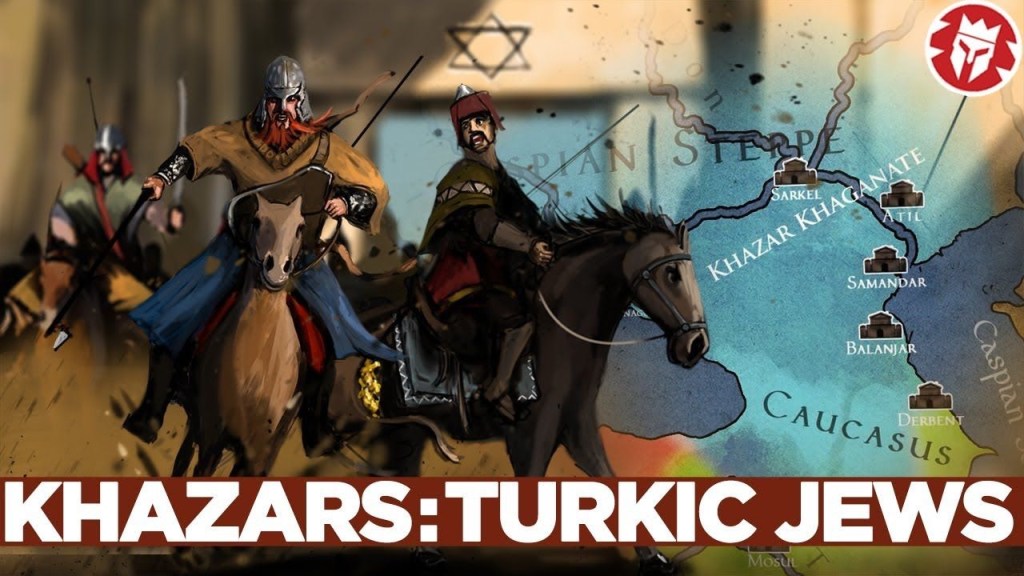
According to the author, who is Gog?
According to the author, Gog is the demonic leader or king of the land of Khazaria, which is the country of origin for today’s “Jews.” The book “The Matrix of Gog” informs us about Gog, Magog, and the Jews, revealing that today’s “Jews” are the “Synagogue of Satan” as mentioned in Revelation 2 and 3.
According to the author, who are the present-day descendants of the ancient Israelites?
According to the author, the present-day descendants of the ancient Israelites are not the majority of Jews, but rather some Palestinians who have more Israelite blood than the Jews. Some Palestinians even have DNA markers that establish them as descendants of the ancient priests who worked in the Jewish temples and synagogues.
In what way does “The Matrix of Gog” establish a connection between Khazars and Gog from the land of Magog?
The book “The Matrix of Gog” establishes a connection between Khazars and Gog from the land of Magog by revealing that Gog is the demonic leader or king of Khazaria, which is located in the Caucasus, south of Russia. It explains that the people we call “Jews” today are actually of the Turkic bloodline and not descendants of Abraham, Israelites, or Semites.
The book informs us about Gog, Magog, and the Jews, showing that the Holy Bible is accurate in its depiction. Additionally, it delves into the lineage of Togarmah, who is related to Magog and Ashkenaz, giving insight into the origins of the Khazars and their connection to the Ashkenazi Jews.
The perspective of the author towards Palestinians is what exactly?
The perspective of the author towards Palestinians is that they had more Israelite blood than the Jews themselves, and some Palestinians even had DNA that established they were ‘Cohens’ – workers at the ancient Temple and synagogues of the Jews.
What is the author’s perspective towards Ashkenazi Jews?
The author’s perspective towards Ashkenazi Jews is critical, as they view revealing books on the origins of Ashkenazi Jewry as a “Frankenstein nightmare” that won’t die despite attempts to suppress it in the media. The author also mentions a book by Dr. Paul Wexler that challenges Zionist beliefs about Ashkenazi Jews. Additionally, the author discusses the Khazar mass migration into Eastern Europe and the DNA research findings that suggest most Jews came from Khazar blood.
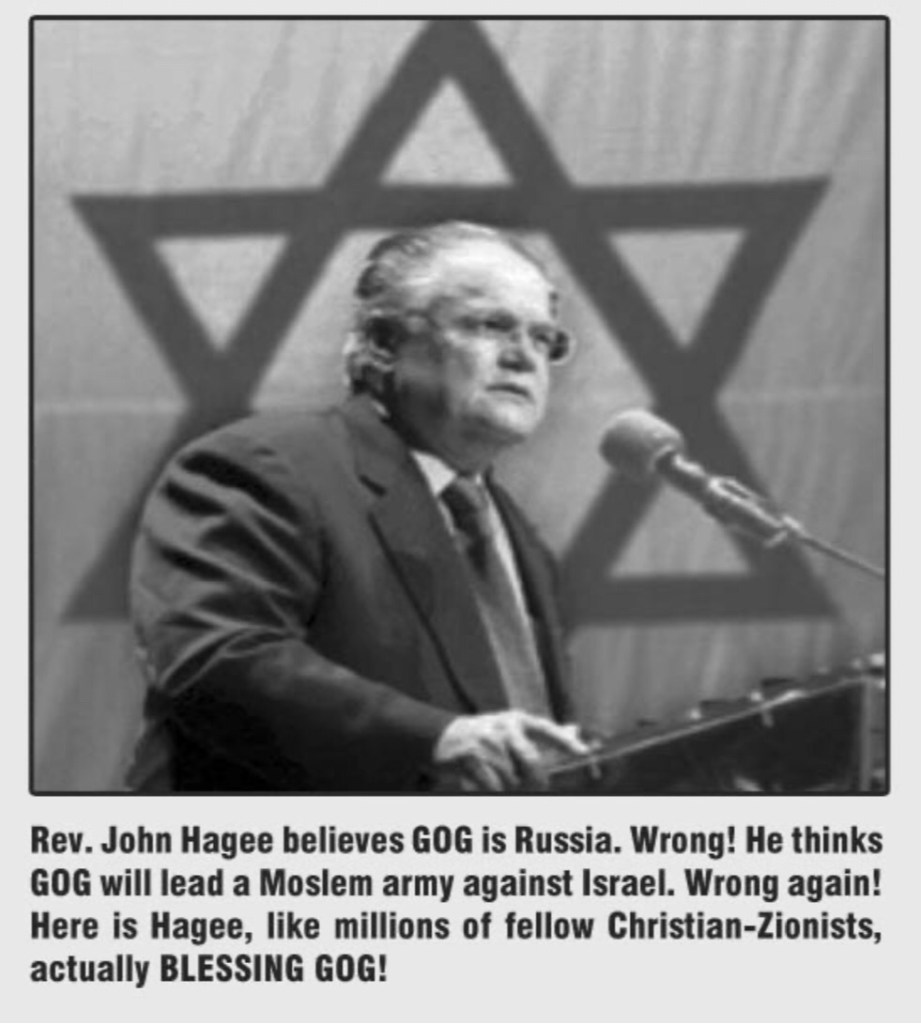
Matrix of Gog—The Fulfillment of Bible Prophecy
Ezekiel 38 and 39 are key to understanding the events of the last days. We read in Ezekiel that “Gog, from the land of Magog,” a powerful world leader, will emerge. He and his military forces will descend on and conquer Israel and go on to precipitate a horrendous, deadly global war.
Who is “Gog,” and where is “Magog?” Until recently, these vital questions were mysteries. But now, DNA science, history, and archeology have given us answers. Magog is the land of Khazaria, in the Caucasus, south of Russia. Gog, meanwhile, is the demonic leader, or king, of this great land.
Khazaria is the country of origin for today’s “Jews,” whom DNA science has confirmed are not descendants of Abraham and so, are not Israelites and Semites. The people whom we call “Jews” are, in fact, of the Turkic bloodline.
What this important book, Matrix of Gog, does is inform us about Gog, Magog, and the Jews. We discover that the Holy Bible is accurate, that today’s “Jews” are the “Synagogue of Satan” of Revelation 2 and 3.
Moreover, claiming to be Jews, the Khazars from Europe in recent decades have descended upon Israel in great numbers, just as prophesied. They have no family relationship and no ancestry to the ancient Israelites. As such, they are not the seed of Abraham but are pretenders. In an astonishing turn of events, today’s “Jews” are, in reality, none other than followers of Gog, of the land of Magog.
—Texe Marrs, author
DNA Science and the Jewish Bloodline
Austin, TX 78733
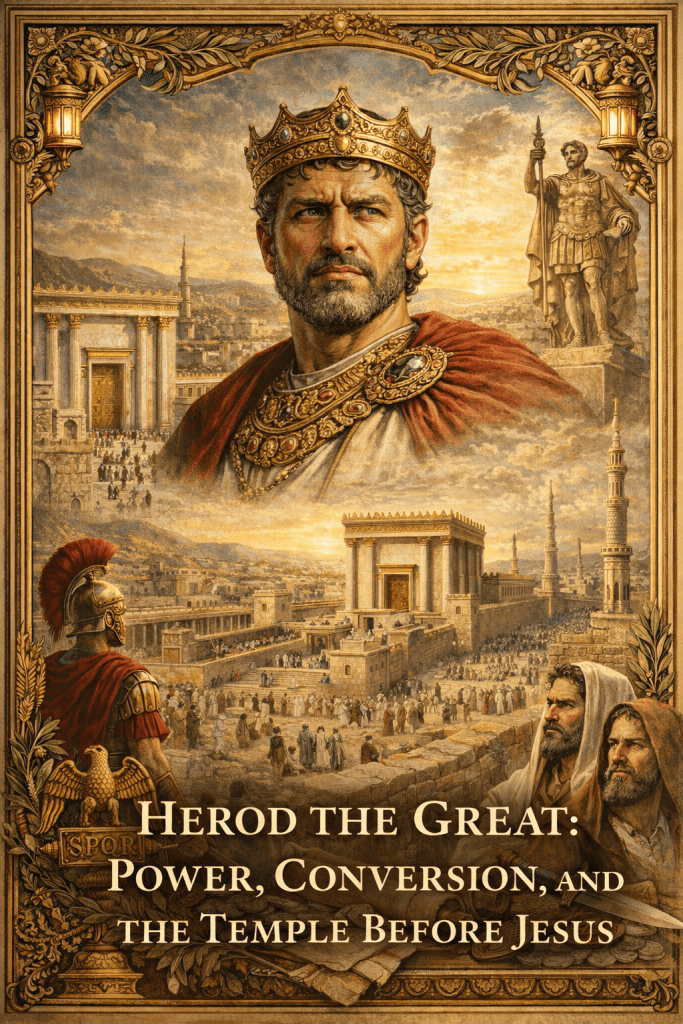
Herod the Great: Power, Conversion, and the Temple Before Jesus
❓How did Herod the Great, originally a Gentile by ancestry, come to be recognized as King of the Jews, and what were his major contributions to Jewish society?
📜 Herod the Great: Power, Conversion, and the Temple Before Jesus
Herod the Great (c. 73–4 BCE), a fascinating and controversial figure in Jewish history, was appointed “King of the Jews” by the Roman Senate in 40 BCE and ruled Judea under Roman authority until his death. Though not ethnically Jewish by traditional standards, he played a central role in shaping Second Temple Judaism and the region of Judea in the decades before the birth of Jesus.
Let’s explore the complex layers of his identity, conversion, and contributions:
⸻
🧬 1. Was Herod a Jew? A Gentile? A Convert?
Herod was not born a Jew in the tribal or genealogical sense, but his family practiced Judaism, and he ruled as the “King of the Jews.”
🔸 Herod’s Ancestry:
• Father: Antipater the Idumaean — from the region of Idumea (Edom) south of Judea. The Idumaeans were descendants of Esau and had been forcibly converted to Judaism by the Hasmonean ruler John Hyrcanus around 125 BCE.
• Mother: Cyprus, a Nabatean (from modern-day Jordan/Arabia).
So, Herod was a second-generation Jew by conversion, not by birth or tribe. To many in Judea, he was still considered a foreigner or half-Jew, which affected how he was viewed — especially by Pharisees, Essenes, and the Hasmonean (priestly) elite.
⸻
🏛️ 2. How Did Herod Become King?
• Herod rose to power through his father’s alliance with Julius Caesar and later supported Mark Antony.
• In 40 BCE, the Roman Senate declared Herod “King of the Jews” — even though he was not from the Davidic line, nor a Hasmonean.
• He took Judea by force with Roman military backing in 37 BCE.
Thus, his rule was seen by many Jews as illegitimate and imposed by Rome, despite his nominal Judaism.
⸻
🏗️ 3. Herod’s Contributions to the Jewish People
Despite his reputation for cruelty and paranoia (even executing some of his own sons and his wife), Herod left an immense architectural and administrative legacy.
🕍 A. Rebuilding the Second Temple (Herod’s Temple)
• Perhaps Herod’s greatest contribution was the massive expansion and beautification of the Second Temple in Jerusalem (starting around 20 BCE).
• He doubled the size of the Temple Mount, built marble porticoes, a grand courtyard, and lavishly adorned the sanctuary.
• Though controversial, the Temple became a symbol of Jewish pride and national identity, even earning admiration from some later rabbis.
🛐 It was this Temple that Jesus and his disciples visited, and it stood until its destruction by the Romans in 70 CE.
🏙️ B. Urban and Architectural Projects
Herod modernized Judea with Roman-style architecture, bringing economic development, jobs, and prestige.
• Built Caesarea Maritima — a port city with a Roman amphitheater, aqueducts, and a palace.
• Constructed fortresses like Masada, Herodium, and Machaerus, often used for defense and royal retreats.
• Developed roads, water systems, and cities that helped integrate Judea into the Roman world.
🛡️ C. Political Stabilization (Temporarily)
Herod’s reign brought a period of relative peace and prosperity after the chaos of Hasmonean infighting and Roman conquest. He skillfully navigated Roman politics, shifting loyalties between Antony and Octavian (Augustus), always ensuring his survival — and by extension, Judea’s stability.
⸻
⚔️ 4. Tensions and Tyranny
While Herod left behind monumental achievements, he was also deeply distrusted by his subjects.
• He heavily taxed the people to fund his massive projects and Roman tributes.
• Executed members of the Hasmonean royal family, including Mariamme, his Jewish wife — leading to widespread resentment.
• Suppressed religious dissent and was viewed as a Roman puppet, especially by the Pharisees and zealots.
• His reign was marked by brutality, paranoia, and cruelty — including the infamous “Massacre of the Innocents” (recorded in the Gospel of Matthew, though not in other sources).
⸻
🧭 Conclusion: A Complex Legacy
Herod the Great remains one of the most complex and polarizing figures in Jewish history.
✅ His contributions:
• Rebuilt the Jerusalem Temple, making it a center of Jewish life.
• Developed Judea’s economy and infrastructure.
• Brought temporary political stability.
❌ His contradictions:
• A convert king ruling a people who didn’t fully accept him.
• Architect of Jewish grandeur — but also seen as brutal, impious, and pro-Roman.
• His reign foreshadowed the deep tensions that would later erupt in the Great Jewish Revolt against Rome.
Herod may not have been “fully Jewish” by lineage, but his rule forever shaped Jewish religious and cultural life. He is a reminder that identity, power, and faith were deeply intertwined and contested in the last century before the rise of Rabbinic Judaism and Christianity.
 ABRAHAMIC THEOLOGY