Shiloh, Muhammad, and the Muslim Community (Ummah).


Azahari Hassim

Genesis 49, verse 10, reads:

“The scepter shall not depart from Judah,
nor a lawgiver from between his feet, until Shiloh comes; and to him will be the obedience of the people.”

In this verse, it seems to be implied that Shiloh (Messiah) should be outside of the clan of Judah. What is the explanation for this argument?

The interpretation of Genesis 49, verse 10, particularly the term “Shiloh,” has been a subject of considerable debate among scholars and theologians for centuries. The passage is part of Jacob’s blessings to his sons, where he makes prophetic statements about their futures and the destiny of their descendants.

The verse is traditionally understood as a messianic prophecy within both Jewish and Christian traditions, although interpretations of who or what “Shiloh” represents may vary. The verse indicates that the scepter, which symbolises rulership, and the lawgiver, who represents the law, shall remain with Judah until “Shiloh” comes.

“Shiloh” is often interpreted as a reference to the Messiah, although the exact identity and meaning of the term are not clear from the text itself.

Several scholars believe that the word “until” in the verse indicates the time at which Judah’s authority ended.

Therefore, Shiloh (Messiah) does not descend from David’s lineage, which is traced back to Judah.

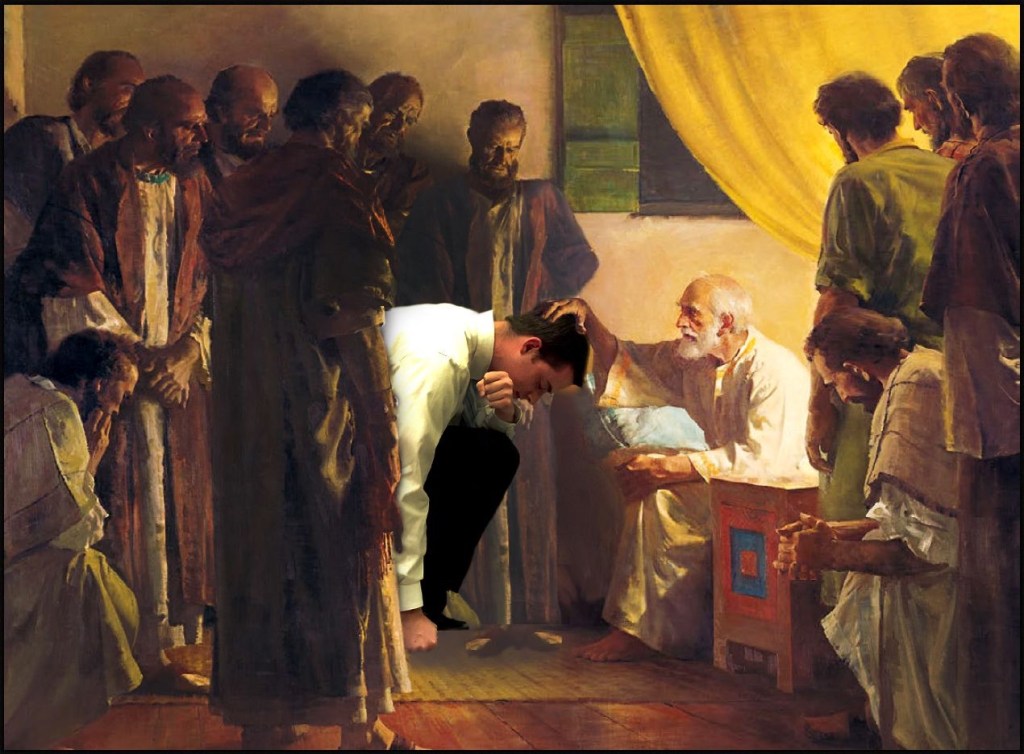
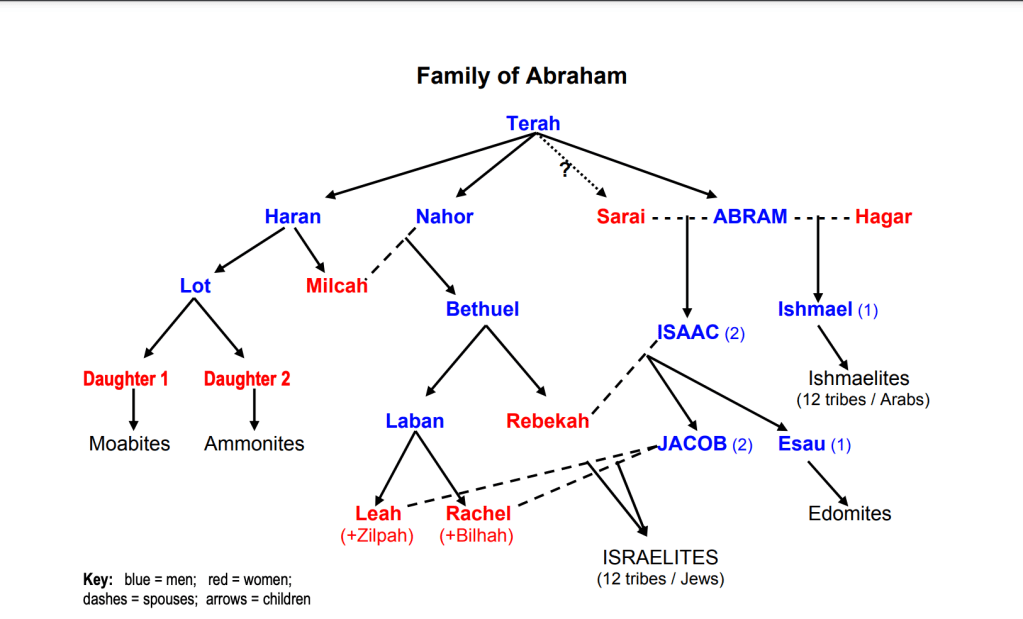
Jacob blesses his sons

Some believe that the statement “and unto him shall the gathering of the people be” in Genesis 49, verse 10, refers to the replacement of the Jewish nation by new nations, specifically pointing to the Muslim community as a whole. Muhammad is regarded as a “Shiloh”. This interpretation is supported by Matthew 8, verse 12. Can you explain this interpretation further?

The verse from Genesis 49, verse 10, is part of the blessings Jacob gave to his sons before he died, where each son’s blessing contained prophecies about their descendants. The verse in question is traditionally ascribed to Judah:

“The scepter shall not depart from Judah, nor a lawgiver from between his feet, until Shiloh come; and unto him shall the gathering of the people be.”

“Shiloh” is a term that has been interpreted in various ways over the centuries. In Jewish interpretation, it is often understood as a reference to the Messiah from the line of Judah, who would be a ruler over Israel. Christianity interprets Jesus as this Messiah, and thus as “Shiloh.”

However, some Muslim scholars interpret “Shiloh” as a prophecy of Muhammad. In this view, the verse is seen as a prediction that rulership (the scepter) and religious authority (the lawgiver) would remain with the descendants of Judah until a new prophet (Muhammad) arises, and to him, the obedience of the peoples would turn. This interpretation thus sees the Muslim community as the fulfillment of this prophecy, with Muhammad being “Shiloh,” and the Muslim ummah (community) as the gathering of the people.

Matthew 8, verse 12, on the other hand, is a part of the New Testament where Jesus says:

“But the children of the kingdom shall be cast out into outer darkness: there shall be weeping and gnashing of teeth.”

This verse is often interpreted in a Christian context to mean that those who were originally chosen (the Jewish people) but do not accept Jesus as the Messiah will not inherit the Kingdom of Heaven. Some Muslim interpreters might use this verse to support the idea that there is a new chosen community (the Muslims) that has replaced the old (the Jewish people) due to their acceptance of the final prophet Muhammad, as prophesied in Genesis.

It’s important to note that this interpretation is not a traditional or mainstream understanding within Judaism or Christianity. Both religions typically do not see Muhammad as prophesied in their scriptures. Jewish tradition does not recognize either Jesus or Muhammad as the fulfillment of the messianic prophecies, and Christianity does not recognize Muhammad as a prophet.

However, there is the Quranic message of the Surah 2, verse 133, to the Jews and Christians:

“Or were you witnesses when death approached Jacob, and he said to his sons, “What will you worship after Me?” They said, “We will worship your God, and the God of your fathers, Abraham, Ishmael, and Isaac; One God; and to Him we submit.

Shiloh

A title of the Messiah (Gen. 49:10), Heb. shîlōh. Though there has been much discussion as to the grammatical interpretation of the word, Jewish officialdom and the Christian church agree as to the fact that the patriarch is here proclaiming the coming of the Messiah.

While the northern kingly lines were eventually obliterated by the Assyrians, Judah’s royal line continued right up to the time of the arrival of the Messiah. Jacob’s prophecy also points to the fact that eventually God’s kingdom will encompass much more than the Jewish nation. Of course, in a sense, God already reigns over the nations. He is not a mere Jewish tribal deity. He is Lord over all the earth, worthy of everyone’s worship.

Jesus, Muhammad, and the Davidic Messiah

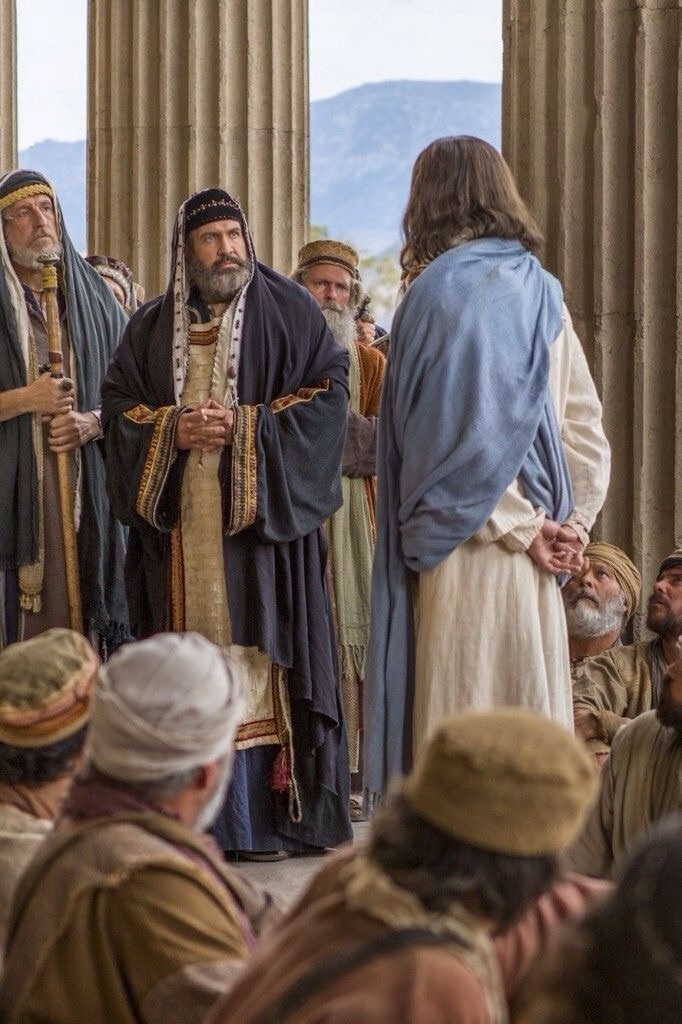
In Matthew 22, verse 45, Jesus posed a question to the Pharisees. How can the Messiah be considered David’s descendant if David himself refers to him as ‘Lord’?

The following is an excerpt from Willmington’s Bible Handbook notes on Matthew 22, verses 42 to 45:

Jesus now asked a question of the Pharisees: They accepted Psalm 110 as a prediction of the Messiah, yet they considered that he would be a merely human descendant of David. If that were the case, asked Jesus, why did David refer to him as “Lord”? Both the deity and humanity of the Messiah are taught clearly in the Old Testament but the leaders could not see it. Jesus had finally silenced his critics once and for all.

Some Islamic scholars believe that, although Jesus was considered a messiah, he never publicly claimed to be the Davidic messiah whom the Jews were expecting. Moreover, it appears that in Matthew 22, verses 42 to 45, Jesus did not emphasize his divinity as most Christian commentators claim, but rather rejected the notion that the Messiah would be a descendant of David.

Islamic scholars argue that Jesus did not refer to himself but to someone other than him, that is Prophet Muhammad who was seated at the right hand of God. Similarly, while Jesus understood himself to be a prophet, he never publicly claimed to be the prophet mentioned in Deuteronomy 18, verse 18. How is this argument explained?

Islamic scholars present a nuanced interpretation of Jesus’ role as the Messiah and his relationship to the prophecies in the Hebrew Bible and the New Testament. Their arguments often center around specific biblical passages and the broader theological context within Islam.

Jesus as the Messiah and the Davidic Lineage

In Islam, Jesus (Isa) is recognized as the Messiah (Al-Masih), but this title does not carry the same connotations as it does in Christian theology. The Quran refers to Jesus as the Messiah eleven times, emphasizing his role as a prophet and messenger of God rather than a divine figure or a political savior from the line of David. This interpretation aligns with the Islamic view that Jesus did not claim divinity or a unique messianic kingship in the way that some Jewish and Christian traditions suggest.

Interpretation of Matthew 22, verses 42 to 45

In Matthew 22, verses 42 to 45, Jesus questions the Pharisees about the Messiah’s lineage, asking why David calls the Messiah “Lord” if the Messiah is his son. Some Islamic scholars have interpreted this passage as indicating that Jesus was referring to someone other than himself. Jesus was distancing himself from the traditional Jewish expectation of a Davidic Messiah. They contend that Jesus denied the future Messiah’s lineage from David and instead highlighted an inconsistent interpretation of messianic prophecy by the scribes.

Jesus and Prophet Muhammad

Some Islamic scholars extend this interpretation to suggest that Jesus was alluding to another figure who would fulfill the messianic expectations more completely. They propose that this messianic figure is Prophet Muhammad, who is considered the Seal of the Prophets in Islam and is believed to have brought the final and complete revelation from God. This perspective is supported by the belief that Jesus foretold the coming of Muhammad, aligning with the Islamic view that all prophets, including Jesus, pointed towards the final messenger.

Jesus and Deuteronomy 18, verse 18

Regarding Deuteronomy 18, verse 18, which speaks of a prophet like Moses, Islamic scholars argue that Jesus did not publicly claim to be this prophet. Instead, they believe that this prophecy refers to Muhammad, who, like Moses, brought a comprehensive law and led a community of believers. This interpretation is consistent with the Islamic view that Muhammad fulfills the role of the final prophet, bringing the last and complete message from God.

Conclusion

Islamic scholars argue that Jesus, although being a messiah like other messiahs before him, did not claim to be the Davidic Messiah in the traditional Jewish sense and that he did not see himself as the prophet mentioned in Deuteronomy 18, verse 18. Instead, they believe that these roles were fulfilled by Prophet Muhammad. This interpretation is rooted in a broader theological framework that sees Jesus as a significant prophet and messenger who foretold the coming of Muhammad, the final prophet.

Two covenants: Abrahamic and Sinai covenants from an Islamic perspective


Azahari Hassim

Genesis 49, verse 10, reads:

“The sceptre shall not depart from Judah, nor a lawgiver from between his feet, until Shiloh come; and unto him shall the gathering of the people be.”

The verse implies that Judah’s offspring will govern Israel until the arrival of “Shiloh,” who holds all royal power. Here, Shiloh, similar to “the Seed” in Genesis 22, verse 18, refers to the future Messiah.

From an Islamic perspective, the word “Shiloh” in Genesis 49, verse 10, is connected to the Abrahamic covenant through Ishmael, who, not Isaac, is believed to be nearly sacrificed. Conversely, the terms “scepter” and “lawgiver” mentioned in Genesis 49, verse 10, are associated with the Sinai covenant. How is their argument articulated?

From an Islamic perspective, the interpretation of Genesis 49, verse 10, and its connection to the Abrahamic covenant through Ishmael involves several key arguments:

  1. Shiloh as Muhammad:
    Some Islamic scholars interpret “Shiloh” as a reference to Prophet Muhammad. They argue that the prophecy indicates a shift in divine authority away from the line of Judah to a descendant of Ishmael.
  2. Abrahamic Covenant through Ishmael:
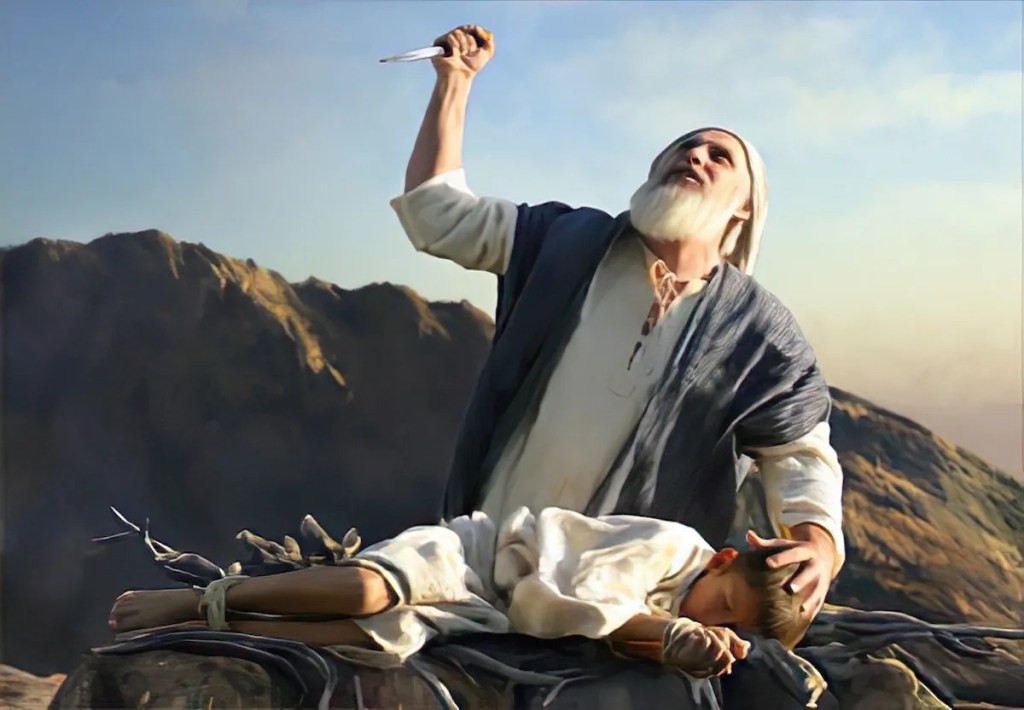
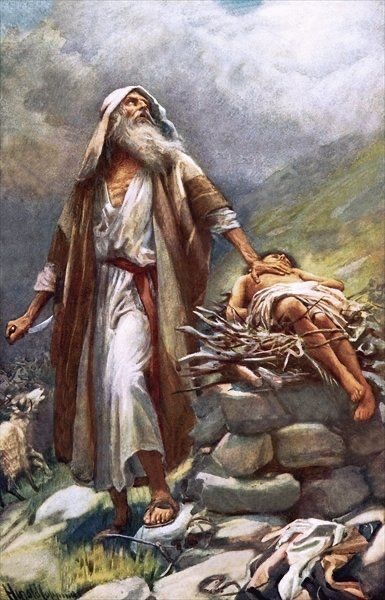
    Islamic tradition holds that it was Ishmael, not Isaac, who was nearly sacrificed by Abraham. This is seen as a pivotal moment in the Abrahamic covenant, establishing Ishmael’s line as the inheritors of God’s promise.
  3. Scepter and Lawgiver:
    The terms “scepter” and “lawgiver” in Genesis 49, verse 10, are associated with the Sinai covenant given to Moses. Islamic interpretation suggests that these symbols of authority and divine law would remain with the descendants of Judah until the coming of “Shiloh” (Muhammad).
  4. Transfer of Authority:
    The verse is interpreted to mean that the religious and political authority (“scepter” and “lawgiver”) would depart from Judah’s line when Shiloh (Muhammad) comes. This is seen as a prophecy of the transition of divine guidance from the Israelite tradition to Islam.
  5. Gathering of the People:
    The phrase “unto him shall the gathering of the people be” is interpreted as referring to the universal message of Islam brought by Muhammad, which would unite people from various nations and backgrounds.
  6. Continuation of Abrahamic Legacy:
    Islamic scholars argue that Muhammad, as a descendant of Ishmael, fulfills this prophecy by bringing the final revelation that completes and supersedes previous covenants, while still maintaining continuity with the Abrahamic tradition.
  7. Non-Judahite Messiah:
    Some interpretations suggest that the verse implies the coming of a messianic figure from outside the tribe of Judah, which aligns with the Islamic view of Muhammad’s lineage through Ishmael.

It’s important to note that this interpretation is specific to Islamic theology and is not accepted in Jewish or Christian exegesis. The Islamic perspective sees this verse as one of many biblical passages that they believe foretell the coming of Prophet Muhammad and the establishment of Islam as the final Abrahamic faith.

Mount Sinai Egypt

Muhammad and the Hebrew prophets

What is the argument put forth by those who support the idea that the prophethood of Muhammad is linked to Hagar’s prophecy, which predates the Torah, in contrast to Hebrew prophets who are associated with the Torah? Consequently, Muhammad, in contrast to Hebrew prophets such as Jesus, is not bound by the laws of the Torah.

Supporters of the idea that the prophethood of Muhammad is linked to Hagar’s prophecy, which predates the Torah, argue that this connection sets Muhammad apart from Hebrew prophets who are associated with the Torah. Here is a detailed explanation of their argument:

1. Pre-Torah Origins of Hagar’s Prophecy:

Proponents argue that Hagar’s prophecy, as mentioned in Genesis 21, verse 18, predates the Torah given to Moses. This prophecy concerns Hagar’s son, Ishmael, who is promised to become a great nation. This predates the formalization of the Torah, which is traditionally attributed to Moses and his time.

2. Reiteration and Fulfillment in Islamic Rituals:

The Torah reiterates Hagar’s prophecy, but its fulfillment is seen in Islamic practices, particularly the Hajj pilgrimage. The Hajj, which involves rituals connected to Hagar and Ishmael, is viewed as a direct link to their legacy. This pilgrimage is a central practice in Islam, signifying the prophecy’s fulfillment and its importance in Islamic tradition.

3. Marginalization by Ancient Israelite Scribes:

It is suggested that ancient Israelite scribes attempted to downplay the significance of Hagar and Ishmael due to theological and political reasons. This marginalization aimed to elevate the prominence of Isaac and the Israelite lineage over Ishmael. The argument posits that the biblical narrative was shaped in a way that selectively emphasized aspects favorable to the Israelite lineage.

Contrast with Hebrew Prophets

1. Association with the Torah:

Hebrew prophets are closely linked to the Torah, which is seen as the foundation of their prophetic authority. The Torah, given to Moses, contains the laws and ethical teachings that Hebrew prophets were tasked with interpreting and enforcing. This connection establishes a continuous line of prophetic tradition rooted in the Mosaic covenant.

2. Muhammad’s Independent Prophetic Lineage:

In contrast, Muhammad’s prophethood is associated with the Abrahamic covenant through Ishmael, rather than the Mosaic covenant. This distinction is significant in Islamic theology, which views Muhammad’s message as a continuation and fulfillment of the Abrahamic faith, independent of the Mosaic laws. This perspective underscores the universality of Muhammad’s revelation, intended for all humanity, rather than being confined to the specific legal and ritual practices of the Jewish people.

Theological Implications

1. Universal Prophetic Tradition:

By associating Muhammad with a prophecy that predates the Torah, supporters argue that prophetic messages have been universal and ongoing throughout human history. This places Islam within a broader, inclusive prophetic tradition that transcends Jewish ethnic and religious boundaries. It emphasizes the continuity of divine guidance from the time of Abraham through to Muhammad.

2. Distinct Covenants:

The argument also highlights the existence of distinct covenants in the Abrahamic religions. While the Hebrew prophets operate under the covenant of Moses and the Sinai revelation, Muhammad is seen as part of the covenant given to Abraham and Ishmael. This theological distinction reinforces the idea that different prophetic traditions are validated by separate covenants within the broader framework of Abrahamic faiths.

In summary, the argument linking Muhammad’s prophethood to Hagar’s prophecy emphasizes its pre-Torah origins, fulfillment in Islamic Hajj, and the marginalization of Hagar’s significance by ancient Israelite scribes. This perspective contrasts Muhammad’s universal and independent prophetic lineage with the Hebrew prophets’ association with the Torah, highlighting distinct covenants and a broader prophetic tradition.

In Judaism, the Messiah is known as the son of David

Jewish teachings about the Messiah, often referred to as the “Mashiach,” frequently evoke the figure of the Son of David. Here are a few notable quotes and concepts regarding the Messiah from Jewish rabbinical texts:

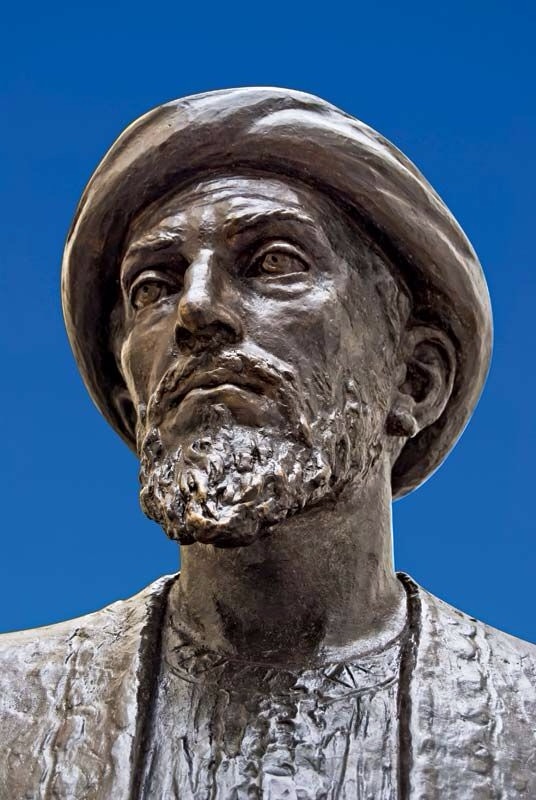
  1. Maimonides (Rambam): In his “Mishneh Torah,” he states that the Messiah will be a descendant of King David and will restore Israel to its former glory.
  2. Talmud (Sanhedrin 98a): The Talmud describes the Messiah as a “Son of David” who will arise in a time of tribulation and will bring peace to the world.
  3. Rabbi Isaac Luria (Ha’ari): He emphasized the messianic role of the Son of David in bringing about the final redemption and restoring the Jewish people to their land.
  4. Rashi: In his commentary on various texts, he frequently references the Messiah as a Davidic king who will gather Jews from the diaspora and rebuild the Holy Temple.

These teachings reflect a deep-rooted belief in a future redeemer who will come from the lineage of David, fulfilling prophetic promises found throughout the Hebrew Scriptures. The concept of the Messiah is a source of hope and expectation in Jewish thought.

Is Muhammad the messiah whom Jews were waiting for according to the Islamic belief? The answere is indirectly yes based on Surah 2, verse 89. How is their argument articulated from an Islamic perspective?

While Islamic belief does not directly identify Muhammad as the Messiah awaited by Jews, some interpretations and arguments can imply a connection based on Surah 2:89 of the Quran.

The verse reads:

“And when the Book was sent to them by God verifying what had been revealed to them already even though before it they used to pray for victory over the unbelievers and even though they recognised it when it came to them, they renounced it. The curse of God be on those who deny!“

Here’s how the argument is articulated from an Islamic perspective:

  1. “That which was with them”: Surah 2, verse 89, refers to the Jews receiving a Book (the Quran) that confirms earlier scriptures. This verse highlights that those who awaited divine guidance through a messiah should have recognized Muhammad’s prophethood since it aligns with their prophecies concerning redemption.
  2. Recognition of Truth: The verse emphasizes that the Jewish people had previously prayed for a deliverer( Messiah) or victory over disbelief. When Muhammad came with a message that they were familiar with (based on their scriptures), many of them rejected him. This rejection is seen as a failure to recognize the fulfillment of what they had been waiting for, which could suggest that from an Islamic perspective, Muhammad embodies the qualities of a Messiah in bringing forth God’s final revelation.
  3. Completing the Message: Muslims believe that Muhammad’s role as the final prophet completes the message of the earlier prophets and brings a universal message accessible to all, including Jews. Hence, in this context, some may argue that he fulfills the broader expectations of a Messiah-like figure, even if not in the traditional Jewish sense.
  4. Prophetic Tradition: Islamic tradition speaks of the coming of Jesus as a key figure who is also termed the Messiah (Masih). In this context, some Islamic interpretations view Muhammad’s prophecy as part of a continuum, where he is vital in the unfolding of the divine plan, which eventually includes the return of Jesus.

In summary, from an Islamic perspective, while Muhammad isn’t explicitly defined as the Messiah in the same way as in Judaism, some interpretations of Surah 2, verse 89, suggest that his mission aligns with the expectations surrounding a messianic deliverer or prophet, indicating a fulfillment of their hope for divine guidance.

Rulership would continue in this tribe till Shiloh (the Messiah) came, and in Him it would remain forever. His people would give Him willing obedience in the day of His power. The meaning of the name “Shiloh” is obscure. Some suggested meanings are: Prince of peacetranquilseedhis descendantwhose it is (cf. Ezek. 21:27).

Believer’s Bible Commentary

How does the Quran obliquely refer to Muhammad as the “Shiloh”?

Some believe that Surah 2, verse 129 and 133 of the Quran points to Muhammad as the “Shiloh” prophesied by Jacob in Genesis 49, verse 10. How is this argument articulated?

The argument that Surah 2, verses 129 and 133 of the Quran point to Muhammad as the “Shiloh” prophesied by Jacob in Genesis 49, verse 10, is articulated through several points:

  1. Surah 2, verse 29, reads:

“Our Lord, and send among them a messenger from themselves who will recite to them Your verses and teach them the Book and wisdom and purify them. Indeed, You are the Exalted in Might, the Wise.”

This verse mentions a prayer by Abraham and Ishmael for a messenger to be sent among their descendants, which Muslims believe refers to Muhammad. This is seen as a continuation of the Abrahamic prophetic tradition.

  1. Surah 2, verse 33, reads:

Or were you witnesses when death approached Jacob, when he said to his sons, “What will you worship after me?” They said, “We will worship your God and the God of your fathers, Abraham and Ishmael and Isaac – one God. And we are Muslims [in submission] to Him.”

This verse mentions Jacob asking his sons whom they will worship after his death, and they affirm their worship of the God of their forefathers, including Abraham, Ishmael, and Isaac. This is interpreted as a testament to the continuity of monotheism and the prophetic mission culminating in Muhammad.

  1. In Genesis 49, verse 10, Jacob states:

“The sceptre shall not depart from Judah, nor a lawgiver from between his feet, until Shiloh come; and unto him shall the gathering of the people be.”

This biblical verse speaks of a ruler from Judah until “Shiloh” comes, interpreted by some as a messianic figure. The argument posits that Muhammad, as a descendant of Abraham through Ishmael, fulfills this prophecy by bringing a final and universal message.

These points collectively argue that Muhammad is the awaited “Shiloh” who brings the final divine guidance, aligning with the Quranic narrative of prophetic succession.

The Quran’s rebuttal to Trinitarian interpretations of the Hebrew Bible


Azahari Hassim

How does God depict His unity in the Bible, especially in the Book of Isaiah?

In the Book of Isaiah, God repeatedly emphasizes His oneness and uniqueness as the only true God. Here are some passages that highlight God’s oneness:

1. Isaiah 44, verse 6:

“Thus says the Lord, the King of Israel and his Redeemer, the Lord of hosts: ‘I am the first and I am the last; besides me there is no god.'”

2. Isaiah 45, verse 5:

“I am the Lord, and there is no other; besides me there is no god.”

3. Isaiah 45, verse 18:

“For thus says the Lord, who created the heavens (he is God!), who formed the earth and made it (he established it; he did not create it empty, he formed it to be inhabited!): ‘I am the Lord, there is and no other.'”

These verses, among others in the Book of Isaiah, affirm the absolute oneness of God and His exclusive divine authority. They reject the concept of multiple gods and assert that there is no deity besides Him. God’s oneness is a central theme in Isaiah’s teachings, emphasizing monotheism and the worship of the one true God.

Some believe the Hebrew Bible, as the word of God that upholds the oneness of God, cannot withstand the onslaught of the Trinitarian hermeneutics. After all, the Hebrew Bible becomes part of the Christian scriptures known as the Old Testament. The Quran, as the safeguard to protect the unity of God, comes into existence to challenge the doctrine of the Trinity that creeps into the Hebrew scriptures. How is this argument explained?

This is a complex and controversial topic that has been debated for centuries by scholars and theologians of different faiths.

The argument that the Quran challenges the doctrine of the Trinity that creeps into the Hebrew scriptures is based on the following premises:

The Hebrew Bible, as the word of God, upholds the oneness of God and does not contain any explicit or implicit indication of a triune Godhead. The concept of Trinity is a later development that emerged from the interaction of Jewish and Hellenistic thought in the early centuries of Christianity.

The Quran, as the final and complete revelation of God, confirms the oneness of God and rejects any form of association or partnership with Him. The Quran explicitly criticizes the Christian belief in the Trinity as a form of polytheism and deviation from the true monotheism of Abraham. The Quran also corrects some of the misconceptions that Christians have about Jesus and the Holy Spirit, such as their divine status or their role in the Trinity.

The Quran is the safeguard to protect the unity of God from any distortion or corruption that may have occurred in the previous scriptures, such as the Hebrew Bible or the New Testament. The Quran claims to be a confirmation and clarification of what was revealed before it, and a criterion to judge between truth and falsehood. The Quran also challenges the people of the Book (Jews and Christians) to produce evidence for their claims and to follow the original message of God that was revealed to their prophets.

Therefore, according to this argument, the Quran is superior to the Hebrew Bible in terms of preserving and presenting the pure monotheism of God, and it exposes and refutes the doctrine of the Trinity that creeps into the Hebrew scriptures through human interpretation and influence.

In summary, the argument says that the Quran is a better guide for understanding the idea of one God because it strongly emphasizes monotheism. It criticizes concepts like the Trinity, which have shaped interpretations of the Hebrew Bible due to historical and cultural reasons. By clearly focusing on the oneness of God, the Quran guides people to embrace true monotheism.

The Jewish Perspective on the Belief in God Having a Son

In Judaism, how grave a sin is it to believe that the God of Abraham has a son?

Judaism is a monotheistic religion that believes in one God who is the creator and ruler of the universe. Judaism rejects the idea that God has a son or any other partner or equal. Judaism considers the belief that God has a son to be a form of idolatry, which is a grave sin and a violation of the first commandment.

According to Judaism, God does not have a physical body or human attributes. God is transcendent and incomparable. God does not need a son or any other intermediary to communicate with humanity. God speaks directly to the prophets and reveals His will through the Torah, the sacred scriptures of Judaism.

The term “son of God” is sometimes used in the Hebrew Bible (Old Testament) to refer to different groups or individuals who have a special relationship with God, such as Israel, the king, the angels, or the righteous. However, this term is not meant to imply any biological or metaphysical connection between God and His creatures. It is a metaphorical expression of love, favor, or covenant.

Judaism does not accept the Christian claim that Jesus is the son of God.

Therefore, to believe that God has a son is contrary to the core principles of Judaism and an offense to God’s uniqueness and sovereignty. It is a serious sin that goes against the most fundamental belief of Judaism: “Hear, O Israel: The Lord our God, the Lord is one” (Deuteronomy 6, verse 4).

The Quran as Complement to the Torah

Some Islamic scholars argue that the Quran complements the Torah given to the Jews. They base this on the assertion that the Torah lacks explicit descriptions of God’s nature, such as the one found in Surah 112 verse 3, of the Quran, which refutes the Christian concept of the Trinity. How is this argument articulated?

Yes, there are Islamic scholars who argue that the Quran complements the Torah given to the Jews. They believe that the Quran provides additional guidance and clarification on certain aspects that may not have been explicitly mentioned in the Torah.

One of the points they highlight is the description of God’s nature. Islamic scholars argue that the Quran, in Surah 112 verse 3, provides a clear and explicit refutation of the Christian concept of the Trinity.

The verse states:

“He begets not, nor was He begotten; And there is none comparable unto Him.”

This is seen as a clarification of God’s oneness and refutation of the idea of God having offspring or being part of a Trinity, which they argue is not emphasized in the Torah.

Therefore, according to this argument, the Quran is superior to the Torah in terms of preserving and presenting the pure monotheism of God, and it exposes and refutes the doctrine of the Trinity that creeps into the Torah through human interpretation and influence.

In the interpretation of the verse in the Torah (Genesis 1, verse 26), what are the differences between Jews and Christians?

The interpretation of Genesis 1, verse 26, in the Torah, which states, “Then God said, ‘Let us make mankind in our image, in our likeness,'” can vary among Jews and Christians.

In Judaism, this verse is often understood as expressing God’s consultation with the heavenly court or angels before creating humans. It emphasizes the uniqueness of humanity, created in the image of God, and highlights the responsibility humans have to reflect God’s qualities in the world. Jewish interpretations generally focus on ethical and moral implications rather than theological concepts like the Trinity.

In Christianity, various interpretations exist among different denominations and theologians. One common interpretation is that the plural pronouns “us” and “our” suggest the presence of the Trinity, specifically referencing God the Father, God the Son (Jesus Christ), and God the Holy Spirit. This interpretation emphasizes the Christian belief in the Triune nature of God.

Ishmael was the fruit of Abraham, while Isaac was a gift of God to Abraham


Azahari Hassim

From the Islamic perspective, Ishmael was the fruit of Abraham, while Isaac was a gift of God to Abraham due to his willingness to sacrifice his firstborn son, Ishmael. What is the explanation for this?

In Islamic tradition, both Ishmael and Isaac are revered as prophets and are the sons of the Prophet Abraham. Here’s a breakdown from the Islamic perspective:

  1. Ishmael: He is the first son of Abraham and Hagar. When Hagar and her infant son Ishmael were in the desert, God provided them with the well of Zamzam. Ishmael and his father, Abraham, later constructed the Kaaba in Mecca. The majority of Islamic traditions indicate that it was Ishmael, not Isaac, whom Abraham was commanded to sacrifice. However, at the last moment, God provided a ram to sacrifice in place of Ishmael. This event is commemorated during Eid al-Adha.
  2. Isaac: He is the second son of Abraham and his wife, Sarah. In Islamic narratives, after the trial of the sacrifice, as a reward for Abraham’s unwavering faith, God blessed him with a second son, Isaac, through Sarah. Isaac is also considered a prophet and is respected in Islamic tradition.

The Islamic account differs from the Jewish and Christian traditions, where Isaac is the one whom Abraham is commanded to sacrifice. In the Qur’an, the specific name of the son to be sacrificed is not mentioned, but many Islamic scholars and traditions identify him as Ishmael based on the sequence of events in the Quran, which suggests that the promise of Isaac’s birth came after the sacrifice narrative, implying Ishmael was the son involved (Surah 37, verses 100 to 112).

“By faith Abraham . . . obeyed by going out to a place he was to receive as an inheritance; he went out, although not knowing where he was going.”—Hebrews 11:8

What does the Arabic word “نَافِلَةً” mean in Surah 21, verse 72, in the Quran? Could you elaborate more on why the Quran uses such a word to refer to Abraham concerning Isaac and Jacob?

The Arabic word “نَافِلَةً” in Surah 21, verse 72 of the Quran refers to “additional” or “extra” in English. In this verse, it is used to describe how Allah favored Abraham by giving him the additional gift of Isaac and Jacob, in addition to his son Ishmael.

This word is significant in this context because it highlights the special and additional blessings that Allah bestowed upon Prophet Abraham. It emphasizes the extraordinary nature of the gift of Isaac and Jacob, in addition to his first son Ishmael, as a form of divine favor and grace.

The use of the word “نَافِلَةً” also emphasizes the generosity and abundance of Allah’s blessings, highlighting the multiplicity of children and the continuity of prophethood within Prophet Abraham’s lineage. This choice of wording serves to underscore the extraordinary nature of Allah’s favors and blessings upon his chosen prophets and their descendants.

Overall, the use of the word “نَافِلَةً” in this verse serves to emphasize the exceptional nature of the gift of Isaac and Jacob to Prophet Abraham, in addition to his son Ishmael, highlighting the abundance and generosity of Allah’s blessings upon his chosen servants.

Ishmael’s Story and Scriptural Alterations in The Torah: Islamic Perspectives

Genesis 21, verses 9 to 10, reads:

But Sarah saw that the son whom Hagar the Egyptian had borne to Abraham was mocking, and she said to Abraham, “Get rid of that slave woman and her son, for that woman’s son will never share in the inheritance with my son Isaac.”

Genesis 22, verse 2, reads:

Then God said, “Take your son , your only son, whom you love, Isaac, and go to the region of Moriah. Sacrifice him there as a burnt offering on a mountain I will show you. ”

Here is how the Jewish scribe manipulated Ishmael’s story:

  1. The age of Ishmael at the time of his departure from Abraham’s house.
  2. Abraham’s son, who was offered as a sacrifice.

Some Islamic scholars suspect that the scribes tampered with the story of Hagar and Ishmael in the Torah. It is argued that Genesis 21, verses 9 to 10, may have been added later because Ishmael and Hagar had already left Abraham’s house long before Isaac was born, with Ishmael being an infant according to Islamic tradition.

Similarly, some question whether Genesis 22, verse 2, could refer to Ishmael, since Isaac had never been Abraham’s only son, whereas Ishmael had been for fourteen years before Isaac was born. How is this Islamic viewpoint presented?

The Islamic perspective on the stories of Hagar, Ishmael, and Isaac, as presented in the Torah, differs significantly from the Jewish and Christian narratives. These differences have led some Islamic scholars to question the authenticity of certain Biblical passages, suggesting possible later additions or alterations.

In the Islamic tradition, Hagar and Ishmael’s story is seen through a different lens compared to the Biblical account. According to Islamic belief, Ishmael was an infant when he and his mother Hagar were left in the desert, which contrasts with the Biblical narrative where Ishmael is depicted as a young boy during this event. Some Islamic scholars argue that certain verses in Genesis, such as Genesis 21:9-10, might have been added later, as they imply that Ishmael was older and capable of mocking Isaac, which would not align with the Islamic timeline where Ishmael had already left before Isaac’s birth.

The question of who was the intended son of sacrifice is another point of divergence. In the Quran, it is generally believed that Ishmael was the son whom Abraham was commanded to sacrifice, whereas the Bible identifies Isaac as the intended sacrifice. This discrepancy has led some Islamic scholars to suggest that Genesis 22, verse 2, which refers to Isaac as Abraham’s “only son,” might be inaccurate, as Ishmael was Abraham’s firstborn and was his only son for fourteen years before Isaac’s birth. The argument is that the description of Isaac as the “only son” could have been a later addition to emphasize Isaac’s significance in the Jewish tradition.

Islamic narratives emphasize the significance of Ishmael and his descendants, linking them to the lineage of the Prophet Muhammad. The Islamic tradition holds that Abraham and Ishmael together built the Kaaba in Mecca, a central element in Islamic faith, which is not mentioned in the Bible. The Quran and Islamic teachings often highlight the spiritual and prophetic roles of both Ishmael and Isaac, but with a focus on Ishmael’s role in the lineage leading to Islam.

Conclusion

The Islamic viewpoint on the story of Hagar and Ishmael in the Torah is characterized by skepticism towards the authenticity of certain verses. Islamic scholars argue that the timeline and events described in the Torah may have been altered, and that Ishmael may have been the son referred to in Genesis 22:2 instead of Isaac.

Ishmael’s Story and Scriptural Alterations in The Torah: Islamic Perspectives


Azahari Hassim

Genesis 21, verses 9 to 10, reads:

But Sarah saw that the son whom Hagar the Egyptian had borne to Abraham was mocking,  and she said to Abraham, “Get rid of that slave woman and her son, for that woman’s son will never share in the inheritance with my son Isaac.”

Genesis 22, verse 2, reads:

Then God said, “Take your son , your only son, whom you love, Isaac, and go to the region of Moriah. Sacrifice him there as a burnt offering on a mountain I will show you. ”

Here is how the Jewish scribe manipulated Ishmael’s story:

1. The age of Ishmael at the time of his departure from Abraham’s house.

2. Abraham’s son, who was offered as a sacrifice.

Some Islamic scholars suspect that the scribes tampered with the story of Hagar and Ishmael in the Torah. It is argued that Genesis 21, verses 9 to 10, may have been added later because Ishmael and Hagar had already left Abraham’s house long before Isaac was born, with Ishmael being an infant according to Islamic tradition. 

Similarly, some question whether Genesis 22, verse 2, could refer to Ishmael, since Isaac had never been Abraham’s only son, whereas Ishmael had been for fourteen years before Isaac was born. How is this Islamic viewpoint presented?

The Islamic perspective on the stories of Hagar, Ishmael, and Isaac, as presented in the Torah, differs significantly from the Jewish and Christian narratives. These differences have led some Islamic scholars to question the authenticity of certain Biblical passages, suggesting possible later additions or alterations.

In the Islamic tradition, Hagar and Ishmael’s story is seen through a different lens compared to the Biblical account. According to Islamic belief, Ishmael was an infant when he and his mother Hagar were left in the desert, which contrasts with the Biblical narrative where Ishmael is depicted as a young boy during this event. Some Islamic scholars argue that certain verses in Genesis, such as Genesis 21:9-10, might have been added later, as they imply that Ishmael was older and capable of mocking Isaac, which would not align with the Islamic timeline where Ishmael had already left before Isaac’s birth.

The question of who was the intended son of sacrifice is another point of divergence. In the Quran, it is generally believed that Ishmael was the son whom Abraham was commanded to sacrifice, whereas the Bible identifies Isaac as the intended sacrifice. This discrepancy has led some Islamic scholars to suggest that Genesis 22, verse 2, which refers to Isaac as Abraham’s “only son,” might be inaccurate, as Ishmael was Abraham’s firstborn and was his only son for fourteen years before Isaac’s birth. The argument is that the description of Isaac as the “only son” could have been a later addition to emphasize Isaac’s significance in the Jewish tradition.

Islamic narratives emphasize the significance of Ishmael and his descendants, linking them to the lineage of the Prophet Muhammad. The Islamic tradition holds that Abraham and Ishmael together built the Kaaba in Mecca, a central element in Islamic faith, which is not mentioned in the Bible. The Quran and Islamic teachings often highlight the spiritual and prophetic roles of both Ishmael and Isaac, but with a focus on Ishmael’s role in the lineage leading to Islam.

Conclusion

The Islamic viewpoint on the story of Hagar and Ishmael in the Torah is characterized by skepticism towards the authenticity of certain verses. Islamic scholars argue that the timeline and events described in the Torah may have been altered, and that Ishmael may have been the son referred to in Genesis 22:2 instead of Isaac.

Hagar and Ishmael

The Significance of Hajj in Islam: Reconnecting with the Abrahamic Legacy Through the Story of Ishmael

There is an argument among scholars regarding the significance of Hajj in Islam as a restored religion tracing back to Abraham. It is posited that Ishmael was exiled as a young child well before the birth of Isaac, and that Ishmael, rather than Isaac, was the intended sacrifice. How is this argument articulated?

The argument regarding the significance of Hajj in Islam as a restored religion tracing back to Abraham, and the associated narrative involving Ishmael and Isaac, is articulated through several key points:

1. Lineage and Prophetic Tradition: 

In Islamic tradition, Hajj is deeply connected to the figure of Abraham (Ibrahim). Muslims believe that Abraham, along with his son Ishmael (Ismail), played a foundational role in establishing the rites of Hajj. The Kaaba, the central structure around which Hajj is performed, is believed to have been built by Abraham and Ishmael.

2. The Story of Ishmael and Isaac: 

   Exile of Ishmael: According to Islamic narratives, long before Isaac was born, Ishmael and his mother Hagar were settled by Abraham in the desert of Mecca, which is where the Zamzam well miraculously appeared to sustain both of Hagar and her infant son Ishmael. This event is commemorated during the Hajj.

   The Sacrifice: Islamic tradition holds that it was Ishmael, not Isaac, who was the intended sacrifice. This is based on interpretations of the Quran, specifically Surah 37, verses 100 to 113, where it is generally understood that the son who was to be sacrificed was Ishmael. According to the sequence of events in the Quran, the promise of Isaac’s birth comes after the story of sacrifice, indicating that Ishmael is the son in question.

This contrasts with the Judeo-Christian tradition, which identifies Isaac as the intended sacrifice.

3. Symbolic Acts of Hajj: The rites of Hajj include reenactments and commemorations of events from the lives of Abraham, Hagar, and Ishmael. For instance:

The Sa’i, which involves walking seven times between the hills of Safa and Marwah, commemorates Hagar’s desperate search for water for her infant son Ishmael.

The stoning of the Jamarat represents Abraham’s rejection of Satan’s temptation, which is believed to have occurred when he was about to sacrifice Ishmael.

4. Restoration of Abrahamic Monotheism: 

Islam views itself as a continuation and restoration of the pure monotheistic faith of Abraham. The Hajj serves as a means to reconnect with the Abrahamic legacy, emphasizing monotheism, obedience to God, and the unity of the Muslim community.

In summary, the argument hinges on the belief that Ishmael, rather than Isaac, was central to the narrative of sacrifice and that the rites of Hajj are rooted in the events of Abraham’s life as they unfolded in Mecca with Ishmael. This perspective underscores the significance of Hajj in Islam and its connection to Abraham as a pivotal prophet in the monotheistic tradition.

A man came to the Messenger of Allah, peace and blessings be upon him, and said, “O best of creation!” The Messenger of Allah, peace and blessings be upon him, replied, “That is Abraham, peace be upon him.”

This Hadith is recorded in Sahih Muslim, in the Book of Virtues (Kitab al-Fada’il).

Abraham’s Sacrifice: An Islamic Perspective on Potential Scribal Interpolation in Genesis 22

Micah 6, verse 7, reads:

“Will the Lord be pleased with thousands of rams, with ten thousand rivers of olive oil? Shall I offer my firstborn for my transgression, the fruit of my body for the sin of my soul?“

Jeremiah 8, verse 8, reads:

“’How can you say, “We are wise, for we have the law of the Lord,” when actually the lying pen of the scribes has handled it falsely?“

Several Islamic scholars believe Micah 6, verse 7, and Jeremiah 8, verse 8, may reflect a scribal interpolation of Isaac’s name in Genesis 22. The son who was nearly sacrificed is believed to have been Ishmael, not Isaac. What is the articulation of their argument?

The argument presented by some Islamic scholars regarding the potential scribal interpolation of Isaac’s name in Genesis 22 is based on several key points:

  1. Quranic perspective: The Quran mentions the story of Abraham being commanded to sacrifice his son but does not explicitly name the son. Islamic tradition generally holds that it was Ishmael, not Isaac, who was to be sacrificed.
  2. Textual analysis of Micah 6, verse 7: This verse states, “Shall I give my firstborn for my transgression, the fruit of my body for the sin of my soul?” Some Islamic scholars interpret this as a reference to the sacrifice story and argue that since Ishmael was Abraham’s firstborn, this verse supports the idea that Ishmael was the intended sacrifice.
  3. Interpretation of Jeremiah 8, verse 8: This verse reads, “How can you say, ‘We are wise, for we have the law of the Lord,’ when actually the lying pen of the scribes has handled it falsely?” Islamic scholars use this to suggest that scribes may have altered biblical texts, potentially including the story of Abraham’s sacrifice.
  4. Historical context: Some scholars suggest that the emphasis on Isaac in Jewish traditions may have led to a gradual change in the story, resulting in Isaac’s name being added to the biblical narrative.
  5. Linguistic analysis: Some scholars examine the original Hebrew text and argue that there are inconsistencies or ambiguities that could support the idea of later interpolation.
  6. Theological implications: The argument often ties into broader Islamic theological perspectives on the role and significance of Ishmael in the Abrahamic tradition.

It is crucial to emphasize that this perspective is not universally embraced by scholars of comparative religion, and it is just one interpretation within a multifaceted interfaith discussion. The argument relies heavily on interpretation and inference, as there is no direct textual evidence of interpolation in the Genesis account itself.

This perspective challenges traditional Jewish and Christian understandings of the text and highlights the different ways sacred texts can be interpreted across religious traditions.

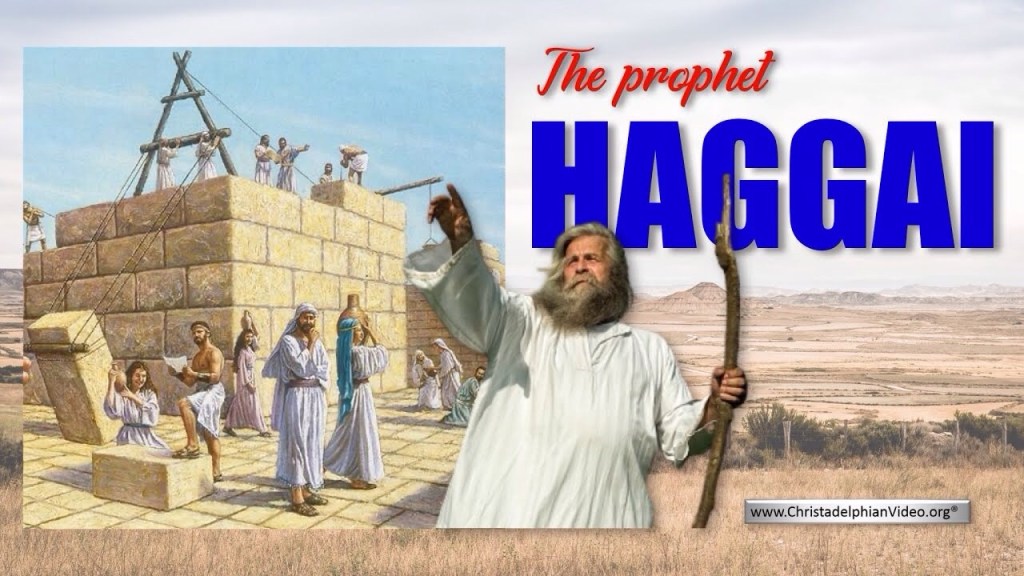
Is the prophet Haggai foretelling the coming of Muhammad?


Azahari Hassim

What is the biblical controversy surrounding Haggai 2, verse 7?


The controversy surrounding Haggai 2, verse 7, revolves around different interpretations of the verse and its implications. In this verse, Haggai prophesies about the coming of the Messiah and states,

“And I will shake all nations, and the Desire of all nations shall come: and I will fill this house with glory, saith the LORD of hosts.”

Some interpretations suggest that the phrase “the Desire of all nations shall come” refers to the Messiah, who is the ultimate desire and hope of all nations. This interpretation aligns with Christian beliefs about the fulfillment of this prophecy in the coming of the Messiah.

However, other interpretations focus on the phrase “the Desire of all nations shall come” as referring to material wealth or treasures, rather than the Messiah. This difference in interpretation has led to some controversy and debate among biblical scholars and theologians regarding the true meaning of Haggai 2, verse 7, and its significance in relation to the coming of the Messiah.

Interpretative Variations

1. Jewish Interpretation:

Jewish scholars and commentators, such as Rashi, typically interpret “the desire of all nations” as the wealth or treasures of the nations that will be brought to the Temple. This interpretation is consistent with the context of the passage, which focuses on the rebuilding of the Temple in Jerusalem and its future glory.

2. Christian Interpretation:

In Christian exegesis, especially in historical translations like the KJV, “the desire of all nations” is often seen as a Messianic prophecy, with “the desire” being a reference to the coming of the Messiah, who is seen as the fulfillment of the nations’ ultimate longing.

Historically, who are the traditional commentators on the Bible who perceive “the Desire of all nations” of Haggai 2, verse 7, as a Messiah?

Many Christian commentators and theologians historically have interpreted “the Desire of all nations” in Haggai 2, verse 7, as a reference to the Messiah. Some of the notable commentators who have held this view include:

  1. John Calvin: The Protestant Reformer and theologian, John Calvin, interpreted this passage as referring to the coming of the Messiah, who would bring fulfillment and blessing to all nations.
  2. Matthew Henry: The famous English commentator, Matthew Henry, viewed “the Desire of all nations” as a reference to the Messiah, who would bring peace, prosperity, and salvation to the entire world.
  3. John Gill: The Baptist theologian, John Gill, also saw the “Desire of all nations” as a messianic prophecy, pointing to the coming of the Messiah as the ultimate fulfillment of this promise.
  4. Adam Clarke: The Methodist theologian and commentator, Adam Clarke, likewise interpreted Haggai 2, verse 7, as a messianic prophecy, identifying the “Desire of all nations” with the Messiah who would bring salvation and blessing to the world.

These commentators and many others throughout Christian history have viewed Haggai 2, verse 7, as a prophetic reference to the coming of the Messiah.

There is a belief that the Hebrew word “Desire” in Haggai 2:7 and the names Muhammad or Ahmad have the same root. How is this argument articulated?

The argument that the Hebrew word “Desire” in Haggai 2:7 and the names Muhammad or Ahmad have the same root is based on a linguistic comparison between the Hebrew and Arabic languages.

In Haggai 2:7, the Hebrew word for “Desire” is “חֶמְדַּת”, which is derived from the root word “חָמַד” meaning “to desire” or “to delight in.”

In Arabic, the name Muhammad is derived from the root word “حمد” (Hamd) which means “praise” or “commendation.” The name Ahmad is also related to the same root word “حمد“ (Hamd): and means “highly praised” or “one who praises.”

The argument suggests that there may be a linguistic connection between the Hebrew word for “Desire” and the Arabic names Muhammad and Ahmad due to the similarity in the root words and their meanings. However, it is important to note that linguistic connections between different languages do not necessarily imply a direct historical or religious connection.

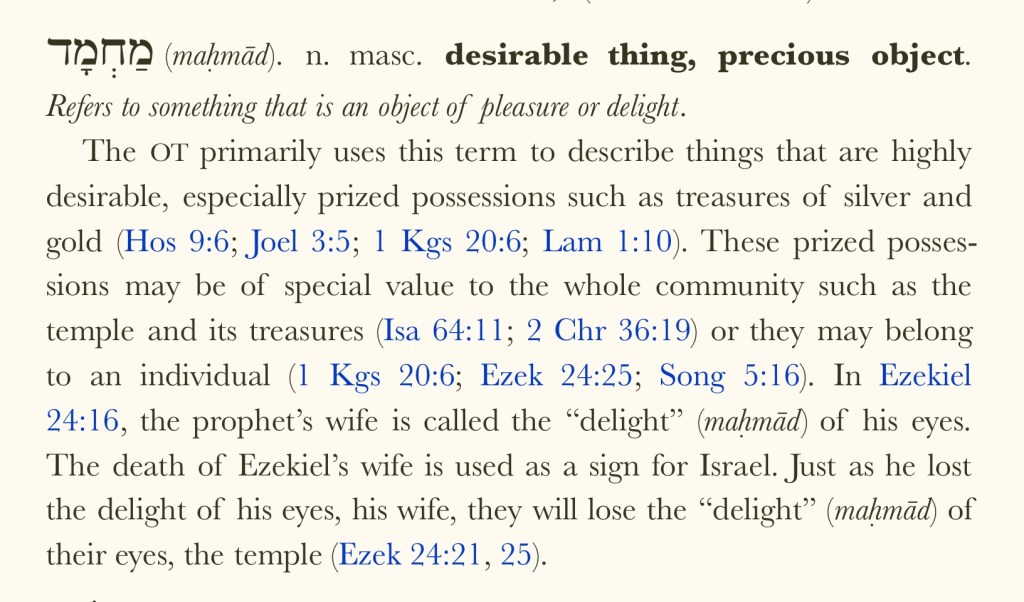
The Lexham Theological Wordbook
Mangum, Douglas, Derek R. Brown, Rachel Klippenstein, and Rebekah Hurst, eds. 2014. In Lexham Theological Wordbook. Lexham Bible Reference Series. Bellingham, WA: Lexham Press.

The Linguistic Link Between Haggai 2:7 and Muhammad’s Night Journey: An Islamic Perspective

It is believed that Haggai 2, verse 7, is a reference to the Night Journey of the Prophet Muhammad to Jerusalem. The word “Desire” in Hebrew is חֶמְדָּה, which has the same root letters as Muhammad in Arabic. How is this argument explained from an Islamic perspective? 

This is an interesting question. The argument that Haggai 2, verse 7, is a reference to the Night Journey of the Prophet Muhammad (peace be upon him) is based on the following points:

The verse says, “And I will shake all nations, and the desire of all nations shall come: and I will fill this house with glory, saith the LORD of hosts.” (King James Version)

The word “desire” in Hebrew is חֶמְדָּה, which means something precious, delightful, or desirable. 

The word “חֶמְדָּה” is the feminine form of the Hebrew word “חֶמֶד”, which means “desirable” or “beloved”. Both words share the same root letters (ח מ ד). In Arabic, both the name Muhammad and Ahmad also share these root letters and mean “the praised one.”  This connection highlights a similarity in meaning between the Hebrew and Arabic words, emphasizing the idea of being beloved or praised. It shows how languages can have common roots and meanings, even across different cultures and religions.

The verse implies that the “desire of all nations” will come to the house of God, which is the Temple Mount in Jerusalem, where the Al-Aqsa Mosque is located.

The Night Journey of the Prophet Muhammad (peace be upon him) was a miraculous event in which he traveled from Makkah to Jerusalem on a winged creature called Buraq, and then ascended to the heavens, where he met Allah and other prophets.

From an Islamic perspective, the argument that Haggai 2, verse 7, is a reference to the Night Journey of the Prophet Muhammad (peace be upon him) is a possible interpretation, but not a definitive proof. It is based on linguistic similarities and historical coincidences, but not on direct evidence or revelation. It is also not a widely accepted or popular view among Muslim scholars or laypeople.  

What Hebrew words are derived from the letters ח מ ד?

Here are some Hebrew words derived from the root letters letters ח מ ד.

1. 

חָמֵד (Hamad):

 “desirable,” “coveted”.

2.

 חֶמְדָּה (Hemdah): 

 “delight,” “precious object”.

3.

 נֶחְמָד (Nehmad):

 pleasant, nice, desirable.

4.

 מַחְמָד (Mahmad):

 “delight,” “desirable thing”.

These words all share the root letters ח מ ד, which convey a sense of strong emotion and intense desire. In Hebrew, these words are often used to express a deep longing for something or someone, whether it be physical, emotional, or spiritual in nature.

Jesus, Muhammad, and the Davidic Messiah


Azahari Hassim

In Matthew 22, verse 45, Jesus posed a question to the Pharisees. How can the Messiah be considered David’s descendant if David himself refers to him as ‘Lord’?

The following is an excerpt from Willmington’s Bible Handbook notes on Matthew 22, verses 42 to 45:

Jesus now asked a question of the Pharisees: They accepted Psalm 110 as a prediction of the Messiah, yet they considered that he would be a merely human descendant of David. If that were the case, asked Jesus, why did David refer to him as “Lord”? Both the deity and humanity of the Messiah are taught clearly in the Old Testament but the leaders could not see it. Jesus had finally silenced his critics once and for all.

Some Islamic scholars believe that, although Jesus was considered a messiah, he never publicly claimed to be the Davidic messiah whom the Jews were expecting. Moreover, it appears that in Matthew 22, verses 42 to 45, Jesus did not emphasize his divinity as most Christian commentators claim, but rather rejected the notion that the Messiah would be a descendant of David. 

Islamic scholars argue that Jesus did not refer to himself but to someone other than him, that is Prophet Muhammad who was seated at the right hand of God.  Similarly, while Jesus understood himself to be a prophet, he never publicly claimed to be the prophet mentioned in Deuteronomy 18, verse 18. How is this argument explained?

Islamic scholars present a nuanced interpretation of Jesus’ role as the Messiah and his relationship to the prophecies in the Hebrew Bible and the New Testament. Their arguments often center around specific biblical passages and the broader theological context within Islam.

Jesus as the Messiah and the Davidic Lineage

In Islam, Jesus (Isa) is recognized as the Messiah (Al-Masih), but this title does not carry the same connotations as it does in Christian theology. The Quran refers to Jesus as the Messiah eleven times, emphasizing his role as a prophet and messenger of God rather than a divine figure or a political savior from the line of David. This interpretation aligns with the Islamic view that Jesus did not claim divinity or a unique messianic kingship in the way that some Jewish and Christian traditions suggest.

Interpretation of Matthew 22, verses 42 to 45

In Matthew 22, verses 42 to 45, Jesus questions the Pharisees about the Messiah’s lineage, asking why David calls the Messiah “Lord” if the Messiah is his son. Some Islamic scholars have interpreted this passage as indicating that Jesus was referring to someone other than himself. Jesus was distancing himself from the traditional Jewish expectation of a Davidic Messiah. They contend that Jesus denied the future Messiah’s lineage from David and instead highlighted an inconsistent interpretation of messianic prophecy by the scribes. 

Some Islamic scholars extend this interpretation to suggest that Jesus was alluding to another figure who would fulfill the messianic expectations more completely. They propose that this messianic figure is Prophet Muhammad, who is considered the Seal of the Prophets in Islam and is believed to have brought the final and complete revelation from God. This perspective is supported by the belief that Jesus foretold the coming of Muhammad, aligning with the Islamic view that all prophets, including Jesus, pointed towards the final messenger.

Jesus and Deuteronomy 18, verse 18

Regarding Deuteronomy 18, verse 18, which speaks of a prophet like Moses, Islamic scholars argue that Jesus did not publicly claim to be this prophet. Instead, they believe that this prophecy refers to Muhammad, who, like Moses, brought a comprehensive law and led a community of believers. This interpretation is consistent with the Islamic view that Muhammad fulfills the role of the final prophet, bringing the last and complete message from God.

 Conclusion

Islamic scholars argue that Jesus, although being a messiah like other messiahs before him, did not claim to be the Davidic Messiah in the traditional Jewish sense and that he did not see himself as the prophet mentioned in Deuteronomy 18, verse 18. Instead, they believe that these roles were fulfilled by Prophet Muhammad. This interpretation is rooted in a broader theological framework that sees Jesus as a significant prophet and messenger who foretold the coming of Muhammad, the final prophet.

Pharisees Question Jesus

What is the Jewish interpretation of the phrase “my lord” in Psalms 110?  Does it refer to the Messiah, Son of David?

The interpretation of Psalms 110, particularly the phrase “my lord” found in verse 1, varies significantly within Jewish scholarship and does not uniformly refer to the Messiah, Son of David. 

This psalm is one of the most debated texts when it comes to its application and implications in Jewish thought. Here’s a detailed look into the interpretation:

The verse in question, Psalms 110, verse 1, reads:

“The LORD says to my lord: ‘Sit at my right hand, until I make your enemies your footstool.'”

The key terms here are:

1. The LORD (YHWH): This is the tetragrammaton, representing the ineffable name of God in the Hebrew Bible.

2. my lord (ladoni): This is the term that causes most of the debate about the identity of the figure mentioned here.

Jewish Interpretations:

1. Not Necessarily Messianic:

In traditional Jewish interpretation, the phrase “my lord” is not automatically associated with a messianic figure. Rashi, the medieval French rabbi and commentator, interprets “my lord” as referring to Abraham, seeing the psalm as a dialog between God and David about Abraham. According to Rashi, David is calling Abraham “my lord” out of respect and reverence.

Other interpretations might consider “my lord” as referring to a contemporary king or leader, possibly even a high priest, rather than a messianic or eschatological figure.

2. Literal and Figurative Interpretations:

  Some Jewish commentators might interpret the psalm figuratively, seeing “my lord” as an archetype for righteous leadership without necessarily pinpointing it as the Messiah.

  The Talmud (Nedarim 32b) suggests that David is speaking to himself, using “my lord” in a poetic manner to express humility and devotion to God’s will, which can be a common technique in Hebrew poetry.

Conclusion:

In Judaism, Psalms 110, verse 1, and the phrase “my lord” is generally not interpreted as a direct reference to the Messiah, Son of David. More often, it is seen as referring to either a historical figure like Abraham or David himself, or used in a metaphorical sense for godly leadership. 

The messianic interpretation is more typical of Christian exegesis, where this psalm is often cited in the New Testament as evidence of Jesus’ divine appointment and his role as the Messiah. In Jewish thought, such an interpretation is less emphasized, focusing instead on diverse and historically contextual readings.

Maimonides (Rambam): In his “Mishneh Torah,” he states that the Messiah will be a descendant of King David and will restore Israel to its former glory.

Messiah in Judaism

Jewish rabbis throughout history have had various interpretations and teachings regarding the Messiah, Son of David. This figure is traditionally seen as a future Jewish king from the Davidic line who will be anointed as the leader of the Jewish people and bring about an era of peace and understanding.

Some key themes from rabbinic literature include:

1. Lineage: The Messiah is expected to come from the lineage of King David, fulfilling promises made in the Hebrew Bible.

2. Role: He is often described as a wise and just leader who will restore Israel, rebuild the Temple in Jerusalem, and bring peace to the world.

3. Characteristics: Rabbis have debated and described various qualities of the Messiah, emphasizing righteousness, knowledge of Torah, and leadership abilities.

4. Time of Arrival: There are varied opinions on when the Messiah will come. Some say it will be in a time of great need, while others suggest it will happen when the world is deserving.

5. Talmudic References: The Talmud contains discussions about the Messiah, including his potential arrival, characteristics, and the state of the world prior to his coming.

These interpretations can vary significantly across different Jewish communities and over time.

Jewish teachings about the Messiah, often referred to as the “Mashiach,” frequently evoke the figure of the Son of David. Here are a few notable quotes and concepts regarding the Messiah from Jewish rabbinical texts:

  1. Maimonides (Rambam): In his “Mishneh Torah,” he states that the Messiah will be a descendant of King David and will restore Israel to its former glory.
  2. Talmud (Sanhedrin 98a): The Talmud describes the Messiah as a “Son of David” who will arise in a time of tribulation and will bring peace to the world.
  3. Rabbi Isaac Luria (Ha’ari): He emphasized the messianic role of the Son of David in bringing about the final redemption and restoring the Jewish people to their land.
  4. Rashi: In his commentary on various texts, he frequently references the Messiah as a Davidic king who will gather Jews from the diaspora and rebuild the Holy Temple.

These teachings reflect a deep-rooted belief in a future redeemer who will come from the lineage of David, fulfilling prophetic promises found throughout the Hebrew Scriptures. The concept of the Messiah is a source of hope and expectation in Jewish thought.

Jerusalem in the Qur’an


Azahari Hassim

The book “Jerusalem in the Qur’an“ by Imran N. Hosein is a detailed exploration of the role Jerusalem plays in Islamic eschatology and its significance in the context of global historical events. The primary message conveyed throughout the book is that Jerusalem holds a central place in the end-times narrative as understood within the Islamic tradition.

Contents Overview:

1. Introduction and Background: The book begins by outlining the author’s thesis that the modern state of Israel and the events surrounding it are deeply connected to prophecies within the Qur’an and Hadith concerning the end of times. The author suggests that the return of the Jews to Jerusalem, the establishment of the state of Israel, and the conflicts in the Middle East are all part of a divine plan that is unfolding according to Islamic teachings.

2. Jerusalem’s Role in Islamic Eschatology: The text emphasizes that Jerusalem is not just a significant city for Jews and Christians, but also for Muslims, as it is believed to be central to the events leading up to the Day of Judgment. The book discusses the return of the Jews to the Holy Land as a prelude to the arrival of the False Messiah (Dajjal) and the eventual return of Jesus (Isa, peace be upon him), who, according to Islamic belief, will defeat the Dajjal and restore justice.

3. Historical Context: Hosein also delves into the historical context of Jerusalem, examining the various prophecies related to the city from Islamic sources. He connects these prophecies to contemporary events, arguing that the modern political landscape, especially in the Middle East, reflects the fulfillment of these ancient predictions.

4. Critique of Zionism: A significant portion of the book is dedicated to critiquing Zionism and its impact on the Middle East. The author argues that the establishment of Israel is a result of a grand deception by the False Messiah and that it will ultimately lead to the downfall of those who support it, according to Islamic prophecy.

5. Call to Action for Muslims: The book concludes by urging Muslims to recognize the importance of Jerusalem and to understand their religious obligations concerning the Holy Land. The author calls for greater awareness and involvement in the struggle to liberate Jerusalem from what he perceives as Zionist occupation.

Underlying Message:

The underlying message of the book is that Jerusalem is at the heart of a cosmic battle between good and evil as foretold in Islamic scriptures. The modern political developments in the region are seen as a manifestation of these prophecies, with the eventual outcome being the triumph of Islam and the establishment of justice in Jerusalem. The author encourages Muslims to be vigilant and prepared for the unfolding of these events, as they are part of a divine plan leading to the final Day of Judgment.

Gog and Magog with a barrel, 1840. The mythical giants, statues of whom are inside the Guildhall in the City of London. Artist: Ebenezer Landells.

Who are Gog and Magog according to the author?

According to the author, Imran N. Hosein, Gog and Magog (referred to as Y’ajuj and M’ajuj in the Qur’an) are described as agents of “Fasad,” which means corruption, oppression, and wickedness on a global scale. The book indicates that these entities are human communities endowed with invincible power by Allah and that their release marks a significant event in Islamic eschatology, signaling the onset of the Last Age or the Age of Trials (Fitan).

Hosein links the historical and current world order, particularly the influence of European civilization, to Gog and Magog. He argues that modern Western civilization, with its godlessness and oppressive power, exemplifies the world order of Gog and Magog. The spread of this civilization, particularly its materialism and secularism, is seen as evidence of Gog and Magog’s influence and control over the world. The return of the Jews to the Holy Land and the establishment of the state of Israel are viewed as signs of their dominion, as foretold in Islamic prophecy.

The narrative suggests that the release of Gog and Magog occurred during the lifetime of the Prophet Muhammad (peace be upon him), and their complete dominance is connected to the fulfillment of the eschatological events described in the Qur’an and Hadith.

How does the author establish a connection between modern-day Jews and the group known as Gog and Magog?

The author, Imran N. Hosein, establishes a connection between modern-day Jews and the group known as Gog and Magog by interpreting various Islamic texts and prophecies. According to Hosein, Gog and Magog are symbolic of powerful, godless civilizations that would dominate the world in the Last Age, spreading corruption and wickedness. He argues that European civilization, after it was transformed from a Christian to a secular and materialistic society, became the civilization of Gog and Magog. This transformation was accompanied by a series of political and social revolutions that led to the dominance of Europe over the world.

Hosein specifically identifies the return of the Jews to the Holy Land and the establishment of the State of Israel as the fulfillment of the prophecies concerning Gog and Magog. He argues that it was the godless European civilization, embodying Gog and Magog, that made possible the return of the Jews to Jerusalem, an event that he interprets as a sign that Gog and Magog have taken control of the world. This return is seen as a major sign of the Last Age in Islamic eschatology.

The author further suggests that the Jewish people, having been deceived by Gog and Magog, are on a path that will lead to their ultimate destruction, as foretold in Islamic prophecies. Hosein’s interpretation is that the secular, materialistic, and godless values promoted by modern Western civilization are part of the influence of Gog and Magog, and that the Jews, by aligning with these forces, are fulfilling their role in the eschatological narrative.

What is the importance of Jerusalem in the Quran as per the author’s analysis?

According to Imran N. Hosein in “Jerusalem in the Qur’an,” the importance of Jerusalem in the Qur’an is multifaceted and deeply rooted in Islamic eschatology. The author emphasizes that Jerusalem is not explicitly mentioned by name in the Qur’an but is referred to in various indirect ways, such as “the town” in Surah 21:95 or “the Holy Land.” This omission is seen as a form of divine wisdom, preserving the enigmatic and significant role Jerusalem plays in the unfolding of the Last Age.

 Key Points on Jerusalem’s Importance:

1. Symbol of Faith and Divine Punishment: Jerusalem is portrayed as a critical symbol in the narratives of faith and divine punishment. The Qur’an recounts how the Children of Israel were commanded to enter the Holy Land but were warned that repeated acts of corruption (Fasad) would lead to their expulsion, a theme that is revisited throughout the text.

2. Night Journey (Isra and Mi’raj): One of the most significant references to Jerusalem in the Qur’an is related to the Night Journey of Prophet Muhammad (PBUH) from Mecca to Jerusalem and then into the heavens. This journey is seen as a divine validation of the spiritual significance of Jerusalem and its connection to Islamic faith. The Masjid al-Aqsa in Jerusalem is highlighted as a blessed site, further underscoring its importance.

3. End-Times Significance: Hosein emphasizes that Jerusalem is destined to play a crucial role in the end-times according to Islamic eschatology. The Qur’an suggests that the return of the Jews to Jerusalem and the establishment of Israel are part of a larger divine plan that will culminate in significant eschatological events, including the return of Jesus (Isa, PBUH) and the ultimate triumph of truth over falsehood.

4. Divine Legitimacy: The author argues that the Qur’an asserts that the true followers of Prophet Muhammad (PBUH) are the rightful inheritors of the Holy Land, including Jerusalem. This is contrasted with the current state of Israel, which Hosein views as lacking religious legitimacy, being part of a broader deception orchestrated by Gog and Magog.

Hosein’s analysis of Jerusalem in the Qur’an thus positions the city as a pivotal element in the Islamic narrative, both historically and in the future, with its destiny tied to the broader themes of justice, faith, and divine retribution.

Khazaria with Rus in the west and Khwarezm in the east
Khazar rabbis

What is the author’s interpretation of the connection between Ashkenazi Jews and Khazars?

Imran N. Hosein’s interpretation of the connection between Ashkenazi Jews and the Khazars is based on the historical hypothesis that a significant portion of Ashkenazi Jews are descendants of the Khazars, a Turkic people who converted to Judaism in the 8th or 9th century in the region of what is now southern Russia and Ukraine.

Key Points on the Interpretation:

1. Khazar Conversion to Judaism: Hosein points out that the Khazars, who were a Turkic tribe, converted to Judaism en masse under the influence of their ruling elite. This conversion, according to Hosein, did not make them Semitic in the ethnic sense, as they did not descend from the biblical Israelites.

2. Ashkenazi Ancestry: He links the Ashkenazi Jews, who primarily lived in Eastern Europe and later migrated to Western Europe and the Americas, to the Khazars. Hosein argues that many of the Jews who claim descent from the ancient Israelites and who have returned to Israel in modern times are actually of Khazar origin, not Semitic. This, according to him, undermines the religious and historical claims of these Jews to the land of Israel.

3. Implications for the State of Israel: Hosein uses this connection to argue that the modern state of Israel, founded largely by Ashkenazi Jews, lacks legitimate ties to the ancient Israelites and the biblical covenant regarding the land. He suggests that this Khazar origin is part of a larger deception orchestrated by forces like Gog and Magog, as mentioned in his eschatological interpretation.

Imran Hosein’s interpretation aligns with a controversial theory that challenges the mainstream historical narrative regarding the ancestry of Ashkenazi Jews.

Who wrote the book “Jerusalem in the Quran”? What is his background?

The book *”Jerusalem in the Qur’an”* was written by Imran N. Hosein, an Islamic scholar known for his work on Islamic eschatology, international affairs, and the role of Islam in the modern world.

Background of Imran N. Hosein:

Early Life and Education**: Imran N. Hosein was born in Trinidad and Tobago, where he also completed his early education. He pursued higher education in Islamic studies, philosophy, and international relations at institutions in several countries, including Al-Azhar University in Cairo, Egypt, and the Institute of International Relations at the University of the West Indies in Trinidad.

Career: 

Imran Hosein has served as a diplomat for the government of Trinidad and Tobago, which provided him with a unique perspective on international affairs and global politics. He has also worked as an Imam and lecturer in various countries around the world, including the United States, Pakistan, Malaysia, and South Africa.

Areas of Focus:

 Hosein is particularly well-known for his work on Islamic eschatology (the study of the end times), with a focus on how contemporary global events align with prophecies found in the Qur’an and Hadith. His analyses often explore the intersections of religion, politics, and economics, with a strong emphasis on the challenges facing the Muslim world today.

Publications and Influence: 

Beyond “Jerusalem in the Qur’an,” Imran N. Hosein has written several other books and articles on related topics, including “The Caliphate, the Hejaz and the Saudi-Wahhabi Nation-State,” and “The Gold Dinar and Silver Dirham – Islam and the Future of Money.” His work has gained a considerable following among those interested in Islamic perspectives on global issues, particularly in the context of eschatological events.

Imran Hosein’s perspectives are often seen as unconventional, blending traditional Islamic teachings with a critical analysis of modern global systems. His work appeals to those who are looking for an Islamic interpretation of current events that is rooted in both scripture and a critique of modernity.

The Invention of the Jewish People


Azahari Hassim

“The Invention of the Jewish People“ is a non-fiction book written by Shlomo Sand. The book was published in 2008 by Resling Publishing House. As of 2021, it has been translated into 23 languages.

Contents of the Book:

The book deals with the proto-national and national historiographical tradition that exalted the existence of a Jewish people since the Exodus from Egypt. Through a theoretical discussion on the issue of nationalism and inspired by Benedict Anderson and Ernest Gellner, Sand seeks to dismantle the Zionist narrative, which he claims invented the Jewish people in order to create a new nation. 

According to Sand, the invention of the Jewish people was based on the Bible as a historical book and on the Christian myth of the Jewish exile following the Great Revolt, thereby creating a long-term national history that never existed.

Sand adopts the hypothesis that the Jews were never exiled from the Land of Israel, and that the Arabs who lived in the Land of Israel over the generations are largely their descendants. Sand argues that Judaism was the first monotheistic religion to embark on a mass conversion campaign, and the origins of Jews are much more diverse and rich than commonly believed.

According to him, Ashkenazi Jews are primarily converts originating from the Khazar Kingdom, the origin of Yemeni Jews is the Himyarite Kingdom, and even North African and Spanish Jews are mostly converts.

 Therefore, Jews are a unique religious civilization, but they are not a foreign and wandering people as both anti-Semites and some Zionists have perceived them. In the conclusion of the book, Sand discusses the ethnonationalist identity politics in Israel and expresses concern about the future of this political approach.

Shlomo Sand, in his book “The Invention of the Jewish People” discusses the origins of Ashkenazi Jews. He challenges the conventional historical narrative by arguing that a significant portion of Ashkenazi Jews are not direct descendants of ancient Israelites, but rather, their origins can be traced back to the Khazar Kingdom, a Turkic state in Eastern Europe that converted to Judaism in the 8th or 9th century. 

Sand contends that these converts and their descendants later formed a large part of the Jewish communities in Eastern Europe, rather than being a diaspora community that originated in the Land of Israel. This argument is central to his thesis that Jewish identity, particularly in the context of Ashkenazi Jews, is more complex and diverse than traditionally understood.

This perspective has been highly controversial and has sparked extensive debate among historians, scholars, and the general public.

“I could not have continued to live in Israel without becoming a Zionist. Therefore I decided to leave Israel. I believe that every individual has the right to be who he is, and a nation has the right to have its own identity, but not at the expense of other people.”

This reflects Sand’s complex relationship with his identity and his critical stance on Zionism

Responses and Criticism:

Sand’s thesis sparked widespread public debate in Israel and around the world.

In March 2009, the book received the “Aujourd’hui” Prize from French journalists for 2009.

Historian Israel Bartal rejected Sand’s criticism of Zionist historiography, arguing that Sand reiterates well-known ideas in historiography—that conversion was a significant phenomenon in Jewish history in antiquity and the early Middle Ages, and that there is a possibility that millions of Yiddish-speaking Jews originated from the Khazars—and that these facts were not suppressed in Zionist historiographical discourse, but there is a gap between it and the political discourse on the memory of the past.

Middle Eastern scholar Shaul Bartal criticized the book, claiming that Sand’s work is a rehash of ideas promoted by Arab elements who sought to deny the historical right claimed by Zionism to establish a Jewish state, and that the book might serve those aiming to delegitimize Israel.

Other critics argue that Sand takes specific and minor events in Jewish history and constructs from them a dubious theory to support his fundamentally anti-Zionist political viewpoint.

Historian Shaul Stampfer asserts that the story of the Khazar conversion, which plays a central role in Sand’s book, has no basis.

Shlomo Sand

Shlomo Sand, born in Linz, Austria, to Polish Jewish Holocaust survivors, was raised in a Yiddish cultural environment. His father’s disillusionment with religious institutions led the family away from traditional Jewish practices. Sand’s parents held strong Communist and anti-imperialist views and refused reparations from Germany for their wartime suffering.

After spending his early years in a displaced persons camp, Sand moved with his family to Jaffa, Israel, in 1948. He was expelled from high school at sixteen, studied electronics at night, and worked during the day. He served in the Israeli military during the Six-Day War, an experience that shifted his views toward the radical left. His time in the military, including witnessing violence against Palestinians, deepened his sense of loss and alienation from Israel.

Sand became friends with Palestinian poet Mahmoud Darwish, inspiring Darwish’s poem “A Soldier Dreams Of White Lilies.” Sand was involved with the Communist and anti-Zionist Matzpen movement but left in 1970 due to disillusionment. He later studied and taught in France, earning a PhD in French History. Sand has taught at Tel Aviv University, the University of California, Berkeley, and in Paris. His work has included critical views on Zionism and Israeli politics, and he has engaged in academic debates, notably criticizing Claude Lanzmann’s film *Shoah* in his book *Film as History*.

Sand’s best-known book in English is The Invention of the Jewish People, originally published in Hebrew (Resling, 2008) as Matai ve’eich humtsa ha‘am hayehudi? (When and How Was the Jewish People Invented?) and translated into English the following year (Verso, 2009). It has generated a heated controversy.

Sand was criticized for presenting “dubious theories” regarding Jewish identity as historical facts. One provocative theory espoused by Sand, but challenged by other historians as “a myth with no factual basis,” is the hypothesis that Ashkenazi Jews are descended from Khazars, who purportedly converted in the early Middle Ages.

The book was in the best-seller list in Israel for nineteen weeks. It was reprinted three times when published in French (Comment le peuple juif fut inventé, Fayard, Paris, 2008). In France, it received the “Prix Aujourd’hui”, a journalists’ award given to a non-fiction political or historical work.  An English translation of the book was published by Verso Books in October 2009.  

The book has also been translated into German, Italian, Spanish, Portuguese, Arabic, Russian, and Slovene and as of late 2009 further translations were underway. The Invention of the Jewish People has now been translated into more languages than any other Israeli history book.

The Matrix of Gog


Azahari Hassim

What is the significance of the title “The Matrix of Gog” authored by Daniel Patrick in the context of the book?

The title “The Matrix of Gog” authored by Daniel Patrick holds significant meaning in the context of the book. The term “Matrix of Gog” refers to the fulfillment of Bible prophecy, specifically Ezekiel 38 and 39, which describe a powerful world leader named Gog from the land of Magog who will emerge and precipitate a global war. The book aims to inform readers about Gog, Magog, and their connection to the Jews, revealing that today’s Jews are not descendants of Abraham but are of the Turkic bloodline from Khazaria, a country in the Caucasus south of Russia.

The title also implies a complex web or system (matrix) involving Gog and his influence on world events, particularly in relation to Israel and the Jewish people. The book challenges the common belief among Christian Zionists that they must support the Israeli state unconditionally, suggesting that this belief is based on a misunderstanding of biblical prophecy.

In essence, “The Matrix of Gog” is a title that encapsulates the book’s focus on uncovering the true identity of Gog and Magog and their role in fulfilling biblical prophecies, while also critiquing the prophetic paradigm that supports Zionist Israel.

Context and Content

1. Gog and Magog: In biblical and Quranic traditions, Gog and Magog are often associated with apocalyptic prophecies. The book explores the idea that Gog, from the land of Magog, has already exerted influence over the land of Israel, suggesting a fulfillment of these prophecies.

2. Khazars: The book delves into the history of the Khazars, a people who converted to Judaism in the medieval period. The author posits that they play a significant role in the destruction and plunder of lands, tying them to the narrative of Gog and Magog.

3. Prophetic and Historical Analysis: The author examines historical events and their potential prophetic significance, suggesting that the actions of Gog and Magog are part of a larger, divinely orchestrated plan. The “matrix” in the title implies a hidden framework through which these events unfold.

Overall, the title *The Matrix of Gog* reflects the book’s exploration of complex historical and prophetic themes, suggesting an underlying network of influences related to Gog and Magog and their impact on world events, particularly concerning the land of Israel.

According to the author, who is Gog?

According to the author, Gog is the demonic leader or king of the land of Khazaria, which is the country of origin for today’s “Jews.” The book “The Matrix of Gog” informs us about Gog, Magog, and the Jews, revealing that today’s “Jews” are the “Synagogue of Satan” as mentioned in Revelation 2 and 3.

According to the author, who are the present-day descendants of the ancient Israelites?

According to the author, the present-day descendants of the ancient Israelites are not the majority of Jews, but rather some Palestinians who have more Israelite blood than the Jews. Some Palestinians even have DNA markers that establish them as descendants of the ancient priests who worked in the Jewish temples and synagogues.

In what way does “The Matrix of Gog” establish a connection between Khazars and Gog from the land of Magog?

The book “The Matrix of Gog” establishes a connection between Khazars and Gog from the land of Magog by revealing that Gog is the demonic leader or king of Khazaria, which is located in the Caucasus, south of Russia. It explains that the people we call “Jews” today are actually of the Turkic bloodline and not descendants of Abraham, Israelites, or Semites. 

The book informs us about Gog, Magog, and the Jews, showing that the Holy Bible is accurate in its depiction. Additionally, it delves into the lineage of Togarmah, who is related to Magog and Ashkenaz, giving insight into the origins of the Khazars and their connection to the Ashkenazi Jews.

The perspective of the author towards Palestinians is what exactly?

The perspective of the author towards Palestinians is that they had more Israelite blood than the Jews themselves, and some Palestinians even had DNA that established they were ‘Cohens’ – workers at the ancient Temple and synagogues of the Jews.

What is the author’s perspective towards Ashkenazi Jews?

The author’s perspective towards Ashkenazi Jews is critical, as they view revealing books on the origins of Ashkenazi Jewry as a “Frankenstein nightmare” that won’t die despite attempts to suppress it in the media. The author also mentions a book by Dr. Paul Wexler that challenges Zionist beliefs about Ashkenazi Jews. Additionally, the author discusses the Khazar mass migration into Eastern Europe and the DNA research findings that suggest most Jews came from Khazar blood.

Matrix of Gog—The Fulfillment of Bible Prophecy

Ezekiel 38 and 39 are key to understanding the events of the last days. We read in Ezekiel that “Gog, from the land of Magog,” a powerful world leader, will emerge. He and his military forces will descend on and conquer Israel and go on to precipitate a horrendous, deadly global war.

Who is “Gog,” and where is “Magog?” Until recently, these vital questions were mysteries. But now, DNA science, history, and archeology have given us answers. Magog is the land of Khazaria, in the Caucasus, south of Russia. Gog, meanwhile, is the demonic leader, or king, of this great land.

Khazaria is the country of origin for today’s “Jews,” whom DNA science has confirmed are not descendants of Abraham and so, are not Israelites and Semites. The people whom we call “Jews” are, in fact, of the Turkic bloodline.

What this important book, Matrix of Gog, does is inform us about Gog, Magog, and the Jews. We discover that the Holy Bible is accurate, that today’s “Jews” are the “Synagogue of Satan” of Revelation 2 and 3.

Moreover, claiming to be Jews, the Khazars from Europe in recent decades have descended upon Israel in great numbers, just as prophesied. They have no family relationship and no ancestry to the ancient Israelites. As such, they are not the seed of Abraham but are pretenders. In an astonishing turn of events, today’s “Jews” are, in reality, none other than followers of Gog, of the land of Magog.

Texe Marrs, author

DNA Science and the Jewish Bloodline

Austin, TX 78733

Herod the Great: Power, Conversion, and the Temple Before Jesus

How did Herod the Great, originally a Gentile by ancestry, come to be recognized as King of the Jews, and what were his major contributions to Jewish society?

📜 Herod the Great: Power, Conversion, and the Temple Before Jesus

Herod the Great (c. 73–4 BCE), a fascinating and controversial figure in Jewish history, was appointed “King of the Jews” by the Roman Senate in 40 BCE and ruled Judea under Roman authority until his death. Though not ethnically Jewish by traditional standards, he played a central role in shaping Second Temple Judaism and the region of Judea in the decades before the birth of Jesus.

Let’s explore the complex layers of his identity, conversion, and contributions:

🧬 1. Was Herod a Jew? A Gentile? A Convert?

Herod was not born a Jew in the tribal or genealogical sense, but his family practiced Judaism, and he ruled as the “King of the Jews.”

🔸 Herod’s Ancestry:

• Father: Antipater the Idumaean — from the region of Idumea (Edom) south of Judea. The Idumaeans were descendants of Esau and had been forcibly converted to Judaism by the Hasmonean ruler John Hyrcanus around 125 BCE.
• Mother: Cyprus, a Nabatean (from modern-day Jordan/Arabia).

So, Herod was a second-generation Jew by conversion, not by birth or tribe. To many in Judea, he was still considered a foreigner or half-Jew, which affected how he was viewed — especially by Pharisees, Essenes, and the Hasmonean (priestly) elite.

🏛️ 2. How Did Herod Become King?

• Herod rose to power through his father’s alliance with Julius Caesar and later supported Mark Antony.
• In 40 BCE, the Roman Senate declared Herod “King of the Jews” — even though he was not from the Davidic line, nor a Hasmonean.
• He took Judea by force with Roman military backing in 37 BCE.

Thus, his rule was seen by many Jews as illegitimate and imposed by Rome, despite his nominal Judaism.

🏗️ 3. Herod’s Contributions to the Jewish People

Despite his reputation for cruelty and paranoia (even executing some of his own sons and his wife), Herod left an immense architectural and administrative legacy.

🕍 A. Rebuilding the Second Temple (Herod’s Temple)

• Perhaps Herod’s greatest contribution was the massive expansion and beautification of the Second Temple in Jerusalem (starting around 20 BCE).
• He doubled the size of the Temple Mount, built marble porticoes, a grand courtyard, and lavishly adorned the sanctuary.
• Though controversial, the Temple became a symbol of Jewish pride and national identity, even earning admiration from some later rabbis.

🛐 It was this Temple that Jesus and his disciples visited, and it stood until its destruction by the Romans in 70 CE.

🏙️ B. Urban and Architectural Projects

Herod modernized Judea with Roman-style architecture, bringing economic development, jobs, and prestige.

• Built Caesarea Maritima — a port city with a Roman amphitheater, aqueducts, and a palace.
• Constructed fortresses like Masada, Herodium, and Machaerus, often used for defense and royal retreats.
• Developed roads, water systems, and cities that helped integrate Judea into the Roman world.

🛡️ C. Political Stabilization (Temporarily)

Herod’s reign brought a period of relative peace and prosperity after the chaos of Hasmonean infighting and Roman conquest. He skillfully navigated Roman politics, shifting loyalties between Antony and Octavian (Augustus), always ensuring his survival — and by extension, Judea’s stability.

⚔️ 4. Tensions and Tyranny

While Herod left behind monumental achievements, he was also deeply distrusted by his subjects.

• He heavily taxed the people to fund his massive projects and Roman tributes.
• Executed members of the Hasmonean royal family, including Mariamme, his Jewish wife — leading to widespread resentment.
• Suppressed religious dissent and was viewed as a Roman puppet, especially by the Pharisees and zealots.
• His reign was marked by brutality, paranoia, and cruelty — including the infamous “Massacre of the Innocents” (recorded in the Gospel of Matthew, though not in other sources).

🧭 Conclusion: A Complex Legacy

Herod the Great remains one of the most complex and polarizing figures in Jewish history.

✅ His contributions:

• Rebuilt the Jerusalem Temple, making it a center of Jewish life.
• Developed Judea’s economy and infrastructure.
• Brought temporary political stability.

❌ His contradictions:

• A convert king ruling a people who didn’t fully accept him.
• Architect of Jewish grandeur — but also seen as brutal, impious, and pro-Roman.
• His reign foreshadowed the deep tensions that would later erupt in the Great Jewish Revolt against Rome.

Herod may not have been “fully Jewish” by lineage, but his rule forever shaped Jewish religious and cultural life. He is a reminder that identity, power, and faith were deeply intertwined and contested in the last century before the rise of Rabbinic Judaism and Christianity.