Messiah


Azahari Hassim

The term “Messiah” signifies the anointment of an individual with consecrated oil, designating them as God’s representative. Who in the Old Testament is anointed with sacred oil to be God’s messiah?

In the Old Testament, the term “Messiah” refers to anointed individuals who were consecrated with sacred oil to serve as God’s representatives. This anointing was a sign of being chosen by God for a special role or mission. The concept of “Messiah” is primarily associated with three types of figures:

  1. Priests: The first time the word “Messiah” appears in the Old Testament is in the context of priests, specifically in the Book of Leviticus, where the role of the priest in offering sacrifices for sin is described.
  2. Kings: Kings were also anointed with oil when they were consecrated. For example, Samuel the prophet poured oil on the head of Saul, Israel’s first king, and David, Israel’s second king. This anointing signified their role as leaders chosen by God to rule over the people.
  3. Prophets: While prophets were typically anointed by God with the Holy Spirit rather than with oil, there is an exception with the prophet Elisha, who was anointed with oil by Elijah as his successor.

These anointings with oil symbolized the presence of God’s spirit and blessing upon these individuals, setting them apart for their divine responsibilities.

The anointing of priests, kings, and prophets with sacred oil was a significant ritual in the Old Testament, marking them as “messiahs” or “anointed ones” in their respective roles.

The term “Messiah” in the Old Testament is thus not limited to a single individual but applies to various people anointed for specific roles by divine command.


“The Dead Sea Scrolls reveal that the Qumran community expected two Messiahs: one a priestly Messiah of Aaron, and the other a royal Messiah of Israel. This dual expectation highlights the community’s anticipation of both spiritual and political deliverance.”

Geza Vermes (Renowned Scholar of the Dead Sea Scrolls)

There is a belief that Jesus was a messiah in the same sense as other messiahs before him. Scripturally, Jesus was not the apocalyptic messiah who was predicted by the Hebrew prophets to establish God’s kingdom in the Holy Land. Could you kindly provide an explanation for the meaning of the preceding statement?

The belief that Jesus was a messiah in the same sense as other messiahs before him refers to the idea that he was seen as a savior figure who would bring about spiritual redemption and salvation. In this context, messiah is understood as a leader or deliverer chosen by God to fulfill a specific role in the divine plan.

However, scripturally speaking, Jesus was not the apocalyptic messiah that many Jews were expecting based on the prophecies found in Hebrew scriptures. The traditional Jewish understanding of the apocalyptic messiah was of a powerful political and military leader who would liberate Israel from its enemies, establish God’s kingdom on earth in the Holy Land, and rebuild the Holy Temple in Jerusalem.

Jesus’ teachings and actions did not align with these expectations of a conquering warrior king. Instead, he preached about love, forgiveness, and spiritual transformation. He emphasized inner righteousness over outward displays of power. This led many Jews to reject Jesus as their expected messiah, that is, the apocalyptic messiah.

In Christian theology, Jesus is believed to be the fulfillment of Old Testament prophecies in a different way than what was traditionally expected. Christians see Jesus as the ultimate savior who brings salvation through his sacrificial death and resurrection, rather than through political conquest.

So, when it is said that Jesus was not the apocalyptic messiah predicted by Hebrew prophets to establish God’s kingdom in the Holy Land, it means that his role and mission were different from what many people at that time were anticipating based on their interpretation of scripture.

“The concept of messianism in the Dead Sea Scrolls is complex and multifaceted. It includes expectations of a Davidic king, a priestly figure, and even a prophet like Moses, reflecting a diverse and rich messianic hope within Second Temple Judaism.”

John J. Collins (Biblical Scholar and Professor of Old Testament Criticism and Interpretation)

Does the Quran mention Muhammad as the Messiah whom the Jews await?

In the Quran, Muhammad is not explicitly referred to as the Messiah whom the Jews await. However, there is an indirect mention in Surah 2, verse 89, that can be interpreted in this context.

Surah 2, verse 89, states:

“And when there came to them a Book from Allah confirming that which was with them – although before they used to pray for victory against those who disbelieved – but [then] when there came to them that which they recognized, they disbelieved in it; so the curse of Allah will be upon the disbelievers.”

This verse is believed by some scholars and interpreters to refer to a prophecy mentioned in Jewish scriptures about a future prophet who would come after Moses. According to this interpretation, the Jews were awaiting this promised prophet or Messiah.

Muslims believe that Muhammad is the final prophet sent by Allah and consider him as fulfilling various prophecies mentioned in previous religious texts. Therefore, some Muslims interpret Surah 2, verse 89, as indirectly referring to Muhammad as the awaited Messiah.

It’s important to note that interpretations of religious texts can vary among different scholars and individuals. While some may see a connection between Muhammad and the awaited Messiah based on this verse, others may have different interpretations or understandings.

Who were the royal messiah, priestly messiah, and the prophetic messiah mentioned in the Dead Sea Scrolls? Who was the owner of the Dead Sea Scrolls?

The Dead Sea Scrolls, discovered in the mid-20th century, provide significant insights into the messianic expectations of the Qumran community, a Jewish sect that existed around the time of the Second Temple period. These scrolls mention several messianic figures, each with distinct roles:

1. Royal Messiah: Often referred to as the “Messiah of Israel” or “Messiah ben David,” this figure is expected to be a kingly leader descending from the line of David. This messiah would fulfill the role of a political and military leader, restoring the kingdom of Israel and establishing justice and peace.

2. Priestly Messiah: Known as the “Messiah of Aaron” or “Messiah ben Aaron,” this figure is envisioned as a religious leader, specifically a high priest from the line of Aaron. The priestly messiah is associated with restoring proper worship and religious practices, emphasizing the spiritual and ritual aspects of leadership.

3. Prophetic Messiah: The scrolls also allude to a prophetic figure akin to Moses, who would act as a teacher and guide. This messianic role aligns with the prophecy in Deuteronomy 18:18-19, which speaks of a prophet like Moses who would arise among the people.

Regarding the ownership of the Dead Sea Scrolls, the scrolls were first discovered by Bedouin shepherds in 1947 in caves near the site of Qumran, on the northwestern shore of the Dead Sea. The scrolls are believed to have been owned by the Essenes, a Jewish sect that lived in the area during the Second Temple period. 

However, the ownership of the scrolls has been a matter of international dispute. Both Israel and Jordan have laid claims to the scrolls. Israel currently holds the scrolls, having acquired them during the Six-Day War in 1967 when it took control of East Jerusalem, where the scrolls were housed in a museum managed by Jordan.

Does Isaac possess the necessary credentials to be considered an appropriate sacrifice?


Azahari Hassim

Does Isaac possess the necessary credentials to be considered an appropriate sacrifice?

According to the Mosaic law, the offering must consist of the first-born and must be completely flawless.

It seems Isaac does not possess the necessary qualifications to be considered as a suitable sacrifice due to the fact that he was not the firstborn of Abraham.

Furthermore, his circumcision on the eighth day is deemed as a flaw that renders him unsuitable for sacrificial purposes.

How is this argument explained?

The argument you provided appears to be analyzing the story of Abraham and Isaac in the context of Mosaic law. The Mosaic law outlined certain guidelines for offerings, which included the necessity of sacrificing the firstborn and ensuring the offering was perfect and without any flaws.

In the case of Isaac, he did not meet the requirements to be considered a suitable sacrifice according to the Mosaic law for two main reasons:

  1. Isaac was not the firstborn of Abraham: The Mosaic law stipulated that the initial offspring should be offered as a sacrifice. Because Isaac was not Abraham’s firstborn son (with Ishmael being the firstborn), he did not fulfill this particular qualification.
  2. Circumcision on the eighth day: Circumcision was an important ritual in the Old Testament that signified the covenant between God and the people of Israel. In the case of Isaac, he was circumcised on the eighth day as prescribed by God to Abraham.

However, in the context of sacrificial offerings, having been circumcised was seen as a flaw or imperfection that rendered Isaac unsuitable for a sacrificial purpose because he was already consecrated to God through circumcision.

Therefore, based on the specific requirements outlined in the Mosaic law and the circumstances surrounding Isaac, it can be argued that Isaac did not possess the necessary qualifications to be considered as a suitable sacrifice according to the standards set forth the biblical text.

What was the rationale behind the prophet’s decision to present his firstborn instead of his other sons, as detailed in the Bible (Micah 6, verse 7)?

The verse reads:

“Shall I give my firstborn for my transgression, the fruit of my body for the sin of my soul?”.

The rationale behind the prophet’s decision to present his firstborn instead of his other sons in Micah 6, verse 7 is likely based on the cultural and religious significance of the firstborn in ancient Israelite society.

In many ancient cultures, including Israelite culture, the firstborn held a special status and had certain privileges and responsibilities. This included being the primary heir to the family’s inheritance and having a special connection to the divine.

By offering his firstborn, the prophet may have been trying to convey the seriousness and gravity of the situation. This action would have been a powerful symbol of sacrifice and devotion, as the firstborn was typically seen as the most valuable and cherished among the children.

It could also be seen as a way of emphasizing the depth of the prophet’s regret and repentance for his transgressions, as offering one’s firstborn would have been an unimaginable and incredibly difficult act for any parent.

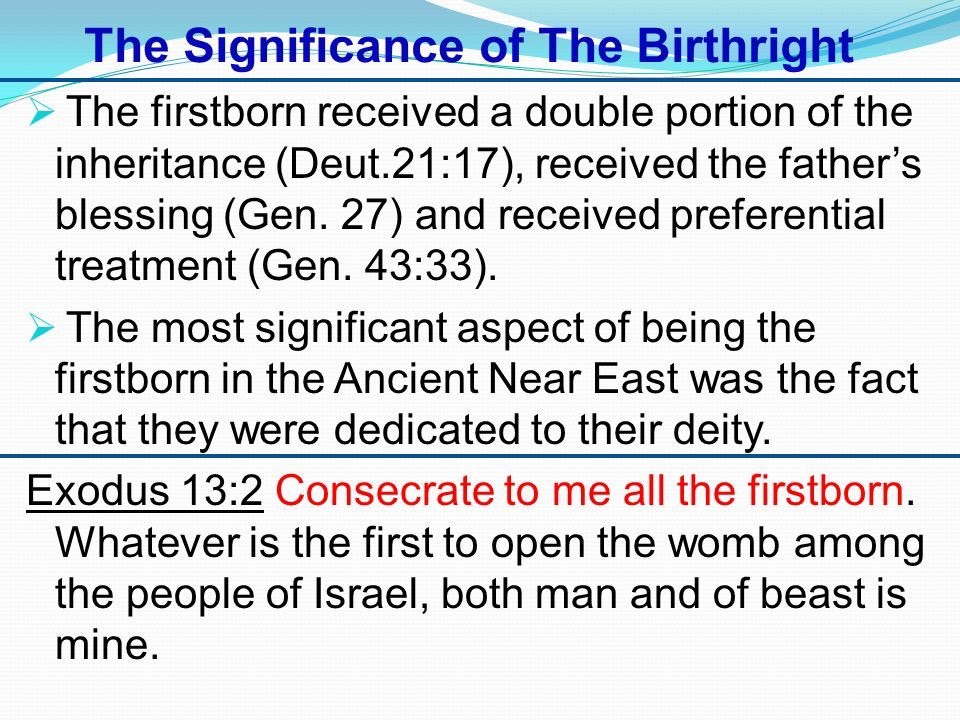
The issue involves the principle of the inheritance of the firstborn (the right of primogeniture). The firstborn son of the man, whether from the favorite wife or not, was to receive the double portion of the inheritance. The father did not have the authority to transfer this right to another son.


The right of the firstborn, known as "primogeniture" in legal and cultural traditions, has been discussed by various scholars and historical figures across different fields. Here are a few notable quotes that explore this concept:

1. Sir Henry Maine, a British jurist and legal historian, discussed the significance of primogeniture in his work on the development of legal institutions:

"The practice of primogeniture is, in fact, but another name for the postponement of the claims of equality."

This quote reflects Maine's analysis of how primogeniture shapes social structures and legal norms, often at the expense of equality among siblings.

2. James Frazer, in his anthropological work, delved into the cultural and religious dimensions of the firstborn’s rights:

"In many societies, the firstborn son traditionally inherits the lion's share of power and responsibility, seen as both a privilege and a burden."

Frazer's examination considers the dual aspects of primogeniture, highlighting the role of the firstborn in maintaining continuity and stability within the family and society.

3. Thomas Aquinas, a theologian and philosopher, provided a theological perspective on the rights of the firstborn in Christian doctrine:

"The right of the firstborn is an ordinance of the divine law."

Aquinas emphasizes the divine mandate behind primogeniture, linking it to Biblical precedents and theological principles.

These quotes reflect diverse perspectives on the right of the firstborn, exploring its legal, cultural, and theological implications across different societies and historical periods.

The right of Ishmael as being the firstborn of Abraham

Genesis 16, verse 3, is a verse from the Bible that describes a key event involving Abraham, Sarah, and Hagar. In this verse, Sarai (later known as Sarah), the wife of Abram (later known as Abraham), gives her Egyptian maidservant Hagar to Abraham as a wife to bear children, as Sarah had not been able to conceive. This action marks a significant moment in the narrative, as it leads to complex family dynamics and consequences in the story of Abraham and his descendants.

Genesis 16, verse 3, reads:

”And Sarai Abram’s wife took Hagar her maid the Egyptian, after Abram had dwelt ten years in the land of Canaan, and gave her to her husband Abram to be his wife.“

Deuteronomy 21, verses 15 to 17, is a passage from the Old Testament of the Bible that addresses the rights of a man concerning his sons, particularly in the context of inheritance. The verses outline conditions for a man who has two wives, one he loves and one he does not. The law states that when dividing his inheritance among his sons, he must not favor the son of the loved wife over the son of the unloved wife. Instead, he should acknowledge the firstborn son, regardless of the mother’s status. This passage emphasizes fairness and the importance of honoring the firstborn in matters of inheritance.

Deuteronomy 21, verses 15 to 17, reads:

”If a man have two wives, one beloved, and another hated, and they have born him children, both the beloved and the hated; and if the firstborn son be hers that was hated: 

Then it shall be, when he maketh his sons to inherit that which he hath, that he may not make the son of the beloved firstborn before the son of the hated, which is indeed the firstborn: 

But he shall acknowledge the son of the hated for the firstborn, by giving him a double portion of all that he hath: for he is the beginning of his strength; the right of the firstborn is his.“

The belief that the Abrahamic covenant was fulfilled through Ishmael rather than Isaac, including the promise of land from the Nile to the Euphrates and the blessing to all nations through Abraham’s seed, is held by some, particularly within Islamic tradition. Here’s a more detailed articulation of their argument:

Ishmael and the Covenant.

1. Ishmael as the Firstborn: Supporters of this view argue that Ishmael, being Abraham’s firstborn son, was the original heir to the covenant. They emphasize that Ishmael was the first child of Abraham, born to Hagar, Sarah’s Egyptian maidservant.

2. Sacrifice Narrative: They contend that the narrative of Abraham being asked to sacrifice his son originally referred to Ishmael, not Isaac. This is based on the belief that ancient scriptures were altered by Israelite scribes to emphasize Isaac’s role.

3. Blessing and Land Promise: The promise of land from the Nile to the Euphrates and the blessing to all nations is seen as applying to Ishmael’s descendants. Islamic tradition views Ishmael as an ancestor of the Arab peoples, and thus sees the fulfillment of these promises through the Islamic Hajj and in the rise of Islamic civilization.

Scriptural Alteration Argument.

1. Scribal Changes:  They argue that ancient Israelite scribes altered the scriptures to shift the focus from Ishmael to Isaac. This was done to establish a theological foundation for the Israelites’ claim to the land and their unique covenantal relationship with God.

2. Evidence from Quranic Texts:  The Quran refers to the story of Abraham and his son, implying that Ishmael was the one to be sacrificed. This, combined with historical accounts and interpretations, is used to argue for the primacy of Ishmael in the covenantal promises.

The Prophecy of Hagar and Its Fulfillment: A Comparative Analysis of Genesis 21:18 and Isaiah 60:7


Azahari Hassim

There is a belief that the prophecy of Hagar in Genesis 21, verse 18, holds more weight than Isaiah 60, verse 7, which is linked to and completes the former. How is this understanding conveyed?

The belief that the prophecy of Hagar in Genesis 21, verse 18, holds more weight than Isaiah 60, verse 7, which is linked to and completes the former, can be understood through a close examination of the biblical texts and their contexts. Here’s how this understanding is conveyed:

  1. Genesis 21, verse 18 (The Prophecy of Hagar).

This verse is part of the story where God speaks to Hagar after she and her son, Ishmael, are sent away by Abraham. Hagar is distraught, fearing for her son’s life in the desert.

The verse reads:

“Arise, lift up the lad, and hold him in thine hand; for I will make him a great nation.”

This prophecy directly promises that Ishmael will become a great nation. This is a foundational promise, as it assures Hagar of her son’s future and his importance in God’s plan.

  1. Isaiah 60, verse 7 (Completion of the Prophecy). This chapter of Isaiah deals with the future glory of Zion, depicting a time of great prosperity and the gathering of nations to honor God.

The verse reads:

“All the flocks of Kedar shall be gathered together unto thee, the rams of Nebaioth shall minister unto thee: they shall come up with acceptance on mine altar, and I will glorify the house of my glory.”

Both Kedar and Nebaioth are descendants of Ishmael. This verse indicates the fulfillment and continuation of the promise given to Hagar, showing that Ishmael’s descendants will play a significant role in the future worship and honor of God.

  1. Interconnection and Weight: The prophecy in Genesis 21, verse 18, is seen as having “more weight” because it is the initial divine promise regarding Ishmael, establishing his importance and future. It is a direct communication from God to Hagar at a crucial moment. Isaiah 60, verse 7, is viewed as the completion or continuation of this promise. It confirms and elaborates on the fulfillment of God’s plan for Ishmael’s descendants, showing their eventual integration into the worship of God and their contribution to the glory of Zion.

The “weight” of Genesis 21, verse 18, lies in its foundational nature, while Isaiah 60, verse 7, provides a more detailed and expanded vision of the fulfillment of that initial promise.

This understanding is conveyed by recognizing that the original promise to Hagar is the cornerstone of the prophecy concerning Ishmael and his descendants.

The later prophetic vision in Isaiah builds upon this foundation, demonstrating the fulfillment of God’s promise in a broader and more comprehensive way. Therefore, while Isaiah 60, verse 7 is significant in its completion of the prophecy, Genesis 21, verse 18, holds a primary and foundational weight in the narrative.


Safa and Marwa are two small hills, connected to the larger Abu Qubais and Qaiqan mountains respectively, now made part of the Masjid al-Haram in Makkah. Muslims travel back and forth between them seven times in what is known as Sa’i (Sa’ee or Sa’iy; lit. ’seeking/searching or walking’) is a ritual of Ḥajj and Umrah as a tribute to Hagar’s search for water in the area when she ran out of provisions after Prophet Ibrahim (Abraham) left her with infant Ismail in the valley upon Allah’s command. The space between the two mountains in which the pilgrims walk is called Mas’aa.

Some believe that Isaiah 60, verse 7, is related to the Hajj ritual, and is the fulfillment of Hagar’s prophecy regarding Ishmael in Genesis 21, verse 18. How is this interpretation presented?

This is an interesting question. The interpretation that Isaiah 60, verse 7, is related to the Hajj ritual and the fulfillment of Hagar’s prophecy regarding Ishmael is based on the following assumptions:

The verse reads:

“All the flocks of Kedar will be gathered to you, The rams of Nebaioth will serve you; They will go up on My altar with acceptance, And I will glorify My glorious house.”

The flocks of Kedar and the rams of Nebaioth in Isaiah 60, verse 7, refer to the descendants of Ishmael, who was the son of Abraham and Hagar, and the ancestor of the Arabs. Kedar and Nebaioth were two of Ishmael’s sons (Genesis 25, verse 13).

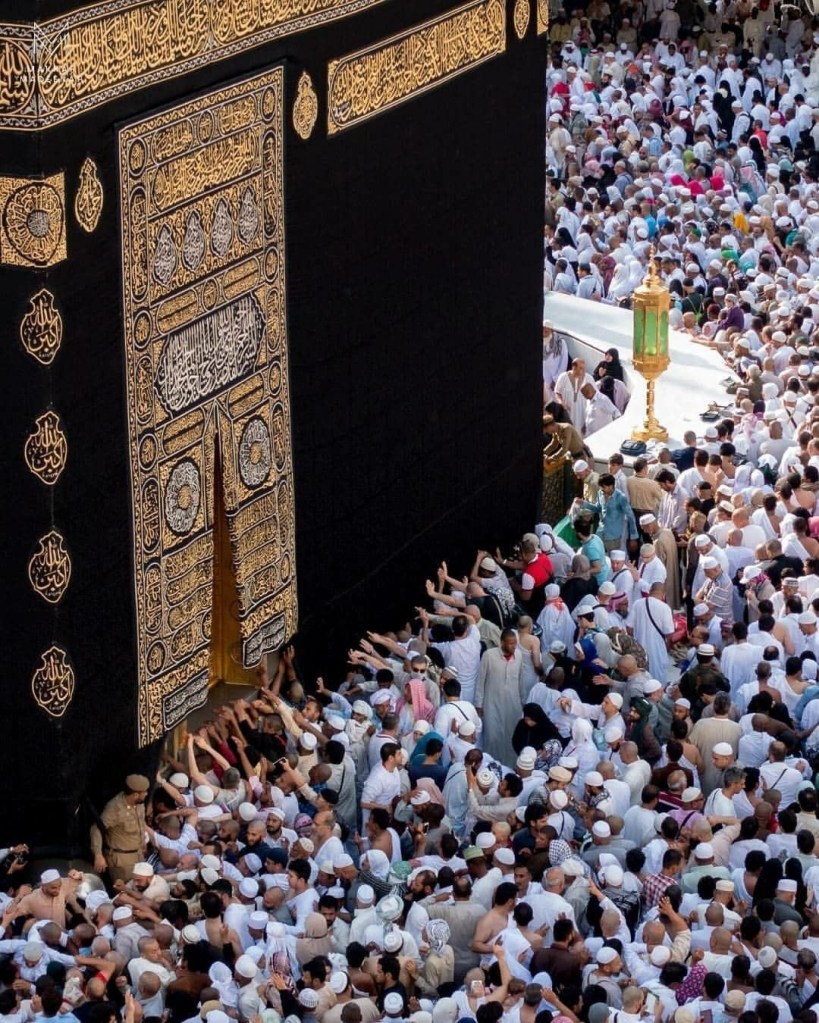
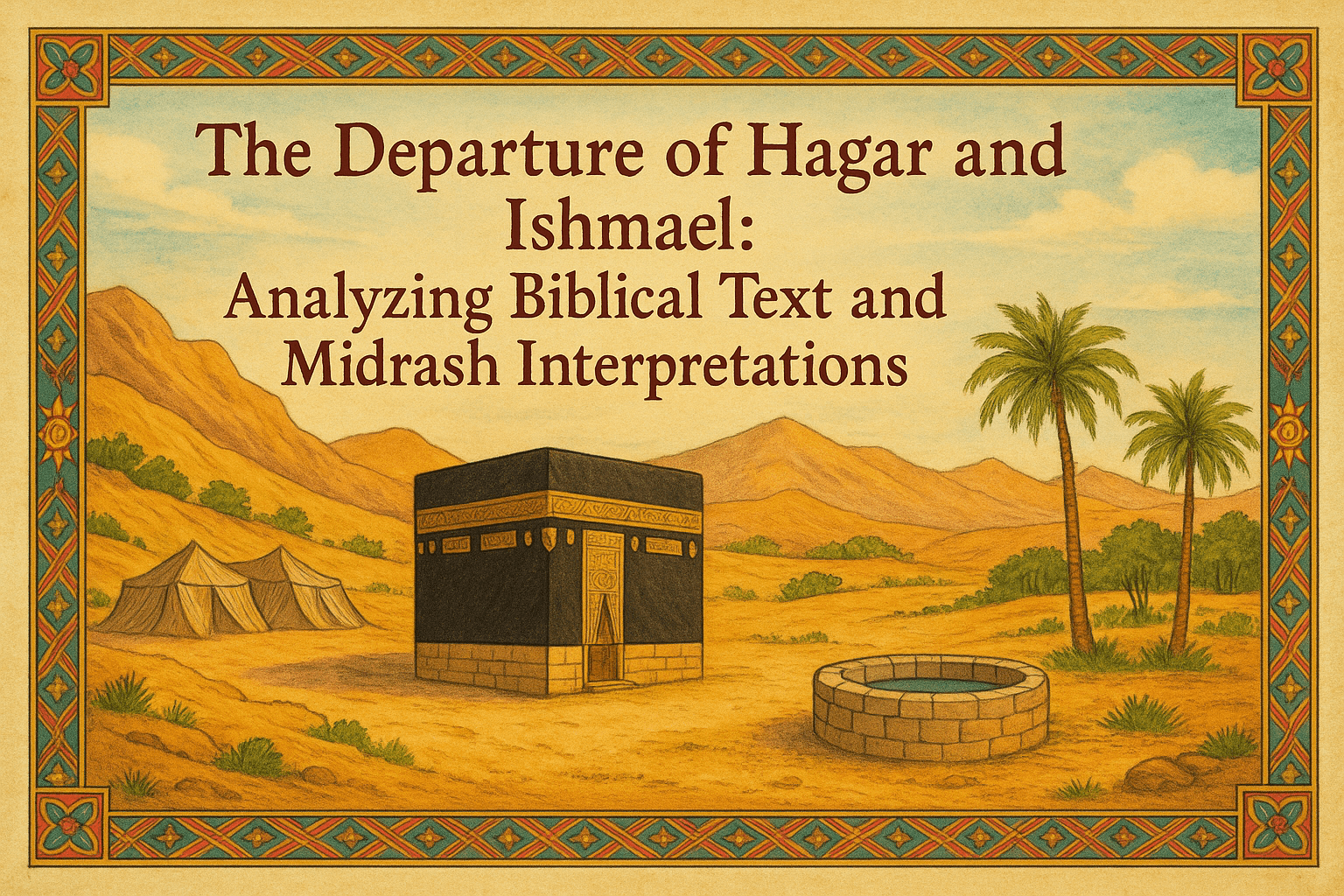
The altar and the glorious house mentioned in Isaiah 60, verse 7, refer to the Kaaba. The Kaaba is a sacred building in Mecca that has a cube shape. Muslims believe it was constructed by Abraham and Ishmael. It serves as the direction of prayer and is also the destination for the Hajj pilgrimage.

The acceptance of the offerings on the altar and the glorification of the house in Isaiah 60, verse 7, refer to Muslims performing their Hajj, known as the Feast of Sacrifice. This sacrifice is performed in remembrance of Prophet Abraham’s willingness to sacrifice his son Ishmael and as a demonstration of submission to Allah’s will.

Furthermore, it is a prophecy of God’s acceptance and blessing of the Ishmaelites, who worship Him at the Kaaba in sincerity and submission, as He promised Hagar in Genesis 21, verse 18, “I will make him into a great nation.”

This interpretation is presented by some Muslim scholars and commentators, who see it as a proof of the truth and validity of Islam and the Hajj ritual.

Hagar in Islamic Tradition: A Story of Faith, Resilience, and Divine Providence

In Islamic tradition, Hagar, known as Hajar in Arabic, holds a significant and revered position. Her story is prominently featured in various Hadith (sayings and actions of the Prophet Muhammad) and Islamic teachings. Here are some key aspects of what Hadith and Islamic tradition say about Hagar:

1. Hagar and Ishmael in the Desert:

One of the most well-known stories involving Hagar is her journey to the desert with her infant son Ishmael. According to Hadith, Abraham (Ibrahim) was commanded by God to leave Hagar and her baby in the barren desert of Mecca. Hagar’s trust in God and her perseverance are highlighted in this story.

A significant Hadith from Sahih Bukhari describes Hagar running between the hills of Safa and Marwah in search of water for her infant son Ishmael. This event is commemorated in the Sa’i ritual, part of the Hajj pilgrimage, where pilgrims re-enact her search for water.

2. The Well of Zamzam:

Islamic tradition holds that as Hagar searched desperately for water, the angel Jibril (Gabriel) struck the ground, and the well of Zamzam miraculously sprang forth. This well provided water for Hagar and Ishmael, and it remains a significant site in Islam to this day. This story is also recounted in Sahih Bukhari.

3. Hagar’s Faith and Patience:

Hagar is often praised in Hadith and Islamic literature for her unwavering faith, patience, and devotion. Her story is used to exemplify trust in God’s plan and the importance of perseverance in the face of hardship.

4. Role in Islamic Rituals:

As mentioned, the Sa’i ritual in Hajj, where pilgrims walk between Safa and Marwah, directly commemorates Hagar’s search for water. This act is a testament to her endurance and faith.

Example Hadith:

Sahih Bukhari 3364:

Narrated by Ibn Abbas: The first lady to use a girdle was the mother of Ishmael. She used a girdle so that she might hide her tracks from Sarah. Abraham brought her and her son Ishmael while she was suckling him, to a place near the Ka’ba under a tree on the spot of Zamzam, at the highest place in the mosque. During those days, there was nobody in Mecca, nor was there any water there. So he made them sit over there and placed near them a leather bag containing some dates, and a small water-skin containing some water, and set out homeward. 

Hagar followed him, saying, “O Abraham! Where are you going, leaving us in this valley where there is no person whose company we may enjoy, nor is there anything (to enjoy)?” She repeated that to him many times, but he did not look back at her. Then she asked him, “Has Allah ordered you to do so?” 

He said, “Yes.” She said, “Then He will not neglect us,” and returned while Abraham proceeded onwards, and on reaching Thaniya where they could not see him, he faced the Ka’ba, and raising both hands, invoked Allah saying the following prayers: “O our Lord! I have made some of my offspring dwell in a valley without cultivation, by Your Sacred House (Ka’ba at Mecca) in order, O our Lord, that they may offer prayer perfectly. So fill some hearts among men with love towards them, and (O Allah) provide them with fruits so that they may give thanks.”

Conclusion:

Hagar’s story in Islamic tradition is one of profound faith, resilience, and trust in God’s providence. Her experiences are integral to several Islamic rituals and continue to inspire Muslims around the world.

Contrasting Narratives: Interpolation of Genesis 21:9-10 in Light of Islamic Tradition


Azahari Hassim

The Great Mosque at Mecca is the focus of the Hajj. In Muhammad’s time it was no more than a walled courtyard around the Kaaba; now it can hold up to 1.5 million worshippers.

The prehistory of the Hajj

Many elements of the pilgrimage predate the time of Muhammad, and are intimately linked to the story of Ibrahim (the Abraham of the Book of Genesis). It tells how he left his wife Hajar (Hagar) and their infant son Ishmael alone in the desert near Mecca.

Having run out of water, and concerned that she would not be able to continue to nurse her baby, Hajar ran back and forth seven times between the two hills of Safa and Marwa, looking for someone who might be able to help them. Her search is echoed in the rituals performed by pilgrims to Mecca today.

Islamic tradition also holds that it was Ibrahim who first built what is now the Kaaba. He incorporated a black stone into the structure, which had been given to him by the angel Jibreel (Gabriel). This remains set into a corner of the Kaaba, and pilgrims attempt to kiss it or gesture toward it as they circumambulate during their Hajj pilgrimage.

Islamic tradition holds that Abraham left his wife Hagar and their son Ishmael alone in the desert near Mecca. Ishmael was still an infant at the time. The interpolation of Genesis 21, verses 9 to 10, is therefore evident from this event. How are they articulating their argument?

The argument regarding the interpolation of Genesis 21, verses 9 to 10, in the context of Abraham, Hagar, and Ishmael is articulated by contrasting the Islamic tradition with the Judeo-Christian narrative. Here’s how the argument is framed:

  1. Divine Command Versus Human Jealousy:

In Islamic tradition, Abraham’s decision to leave Hagar and Ishmael in the desert was a direct command from God as a test of faith. This is seen as a noble and divinely ordained act, rather than a result of Sarah’s jealousy.

In the Judeo-Christian narrative, the banishment is attributed to Sarah’s jealousy when she saw Ishmael “mocking” Isaac, which led her to demand their expulsion.

  1. Age Discrepancy:

Islamic sources describe Ishmael as a nursing infant when he was left in the desert, which aligns with the practical details of Hagar carrying him and the subsequent events.

The Bible suggests Ishmael was about 17 years old, which raises logical issues about Hagar carrying him and the depiction of him as a helpless child under a bush.

  1. Miraculous Provision:

In Islamic tradition, the story emphasizes the miraculous provision of water through the Zamzam well, which is a central part of Hajj rituals and symbolizes God’s care and provision.

The Judeo-Christian account also mentions divine intervention, but it does not have the same ritualistic and symbolic significance as in Islam.

  1. Cultural and Religious Impact:

The Islamic narrative underscores the foundational role of Ishmael and Hagar in the establishment of Mecca and the Kaaba, highlighting their importance in Islamic tradition.

In contrast, Ishmael plays a minor role in Judeo-Christian traditions, primarily recognized as the ancestor of the Arabs but not central to religious practices.

Conclusion

The interpolation argument is articulated by highlighting these differences and suggesting that the Genesis account may have been influenced or altered to fit the theological and cultural context of the Judeo-Christian tradition. The Islamic narrative, with its emphasis on divine command and the early age of Ishmael, presents a coherent and practical story that aligns with the physical and spiritual elements of the Hajj pilgrimage, thus offering a distinct perspective on the events surrounding Abraham, Hagar, and Ishmael.

   Hagar is a symbol of survival, of resourcefulness and resilience in the face of hardship. She is a figure of courage, a mother who does what she must to ensure the survival of her child in the wilderness.”

Delores S. Williams (theologian and scholar, known for her work in womanist theology):
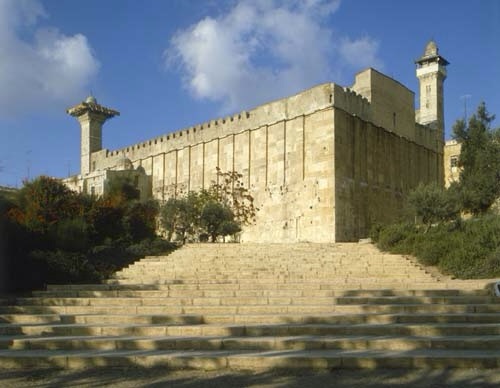
The veneration of Abraham in Judaism was long-standing by the era of Paul. This structure in Hebron (West Bank), originally built by Herod the Great, is said to be the location of the burial of Abraham, Isaac, and Jacob. Underground tombs exist beneath the building, but they have not been excavated.

Reevaluating the Abrahamic Covenant: The Case for Ishmael Over Isaac

There is a belief among Islamic scholars that the Abrahamic covenant, fulfilled through Ishmael instead of Isaac, entails the promise of the land from the Nile River to the great river of Euphrates, along with the blessing to all nations through Abraham’s seed. 

Those who hold this view argue that God asked Abraham to offer Ishmael, not Isaac. They also contend that the ancient Israelite scribes altered their scriptures.

In contrast, the Israelites are bound by the Sinai covenant, which highlights communal responsibilities and accountability to God and to each other as part of the agreement between God and the Israelites. What is the articulation of their argument?

The argument that the Abrahamic covenant is fulfilled through Ishmael rather than Isaac involves several key points articulated by those who support this view. Here is a summary and analysis of their arguments:

1. Promise of the Land: Proponents of this view argue that the promise of the land extending from the Nile River to the Euphrates, as mentioned in Genesis 15:18, was intended for the descendants of Ishmael. They believe that this geographic expanse aligns with the territories historically associated with Islam and Muhammad, who was a descendant of Ishmael.

2. Blessing to All Nations: They interpret the promise of blessings to all nations through Abraham’s seed (Genesis 12:3, 22:18) as being fulfilled through Muhammad (Surah 21:107). They argue that Islam, preached by Muhammad, has had a significant historical and cultural impact on a global scale, thus fulfilling the promise of being a blessing to all nations.

3. Sacrifice of Ishmael: This argument hinges on the belief that God asked Abraham to offer Ishmael as a sacrifice, rather than Isaac. This is primarily based on Islamic tradition found in the Quran (Surah 37:99-113), which states that Abraham was asked to sacrifice his son, and many Muslims believe this son was Ishmael. They argue that this narrative was the original one, which was later altered by Israelite scribes to place Isaac in the position of the sacrificial son.

4. Scriptural Alterations: Supporters of this view contend that ancient Israelite scribes altered the scriptures to reflect Isaac as the chosen son who was to be sacrificed and through whom the covenant would be fulfilled. They believe that these alterations were made to establish and legitimize the Israelite claim to the covenantal promises.

 Sinai Covenant Context

The Sinai covenant, distinct from the Abrahamic covenant, focuses on the relationship between God and the Israelites, emphasizing communal responsibilities and accountability. This covenant, given at Mount Sinai, includes the Ten Commandments and a detailed code of laws that govern the moral, religious, and social conduct of the Israelite community. The Sinai covenant underscores the idea that the Israelites are to be a holy nation and a kingdom of priests, dedicated to serving God and adhering to His commandments.

Articulation of Their Argument

Those who argue for the fulfillment of the Abrahamic covenant through Ishmael articulate their position by highlighting these key points:

1. Historical and Geographic Claims: They argue that the promise of the land and blessings align more closely with the historical and geographic realities of Ishmael’s descendants rather than those of Isaac.

2. Islamic Tradition: They cite Islamic scripture and tradition, which they believe preserves the original account of the sacrifice involving Ishmael, rather than Isaac. This account is viewed as being more authentic and less altered than the Hebrew Bible’s version.

3. Critical View of Scripture: They take a critical view of the Hebrew Bible, suggesting that it underwent alterations by Israelite scribes to support their theological and political claims. They argue that these changes were made to establish a narrative that centers on Isaac and his descendants as the primary inheritors of God’s covenant with Abraham.

4. Fulfillment Through Ishmael’s Lineage: They believe that the widespread influence and significance of Ishmael’s descendants fulfill the covenantal promises more broadly and inclusively, aligning with the idea of being a blessing to all nations.

In conclusion, the articulation of their argument is rooted in a combination of scriptural interpretation, historical and geographic considerations, and a critical perspective on the transmission and preservation of religious texts.

What covenant does God establish with the Children of Adam in the Quran?


Azahari Hassim

What covenant does God establish with the Children of Adam in Surah 7, verse 173 of the Quran?

In Surah 7, verse 172 of the Quran, God establishes a covenant with the Children of Adam by bringing forth their descendants from their loins and making them testify against themselves. They are asked,

“Am I not your Lord?” to which they respond, “Yes, we have testified.”

This is done so that they cannot claim on the Day of Resurrection that they were unaware of this covenant. This verse is often interpreted as referring to the innate recognition of God and His lordship over humanity, which is considered a fundamental aspect of faith in Islam. It serves as a reminder of the accountability of human beings to their Creator and their inherent knowledge of His existence and sovereignty.

What is the consequence in the afterlife, as outlined in the Quran, for those who deny Islam and the prophethood of Muhammad?

In Islam, the Quran states that those who deny Islam and the prophethood of Muhammad will face consequences in the afterlife. These consequences are described as facing punishment in Hell for eternity. The Quran emphasizes the importance of belief in the teachings of Islam and the prophethood of Muhammad as a key aspect of faith. It is believed that those who reject these teachings will not receive mercy from God and will be held accountable for their disbelief.


Romans 1:19-20 ESV


[19] For what can be known about God is plain to them, because God has shown it to them.

[20] For his invisible attributes, namely, his eternal power and divine nature, have been clearly perceived, ever since the creation of the world, in the things that have been made. So they are without excuse.

Does secularism embody the modern world?

Yes, secularism is often seen as embodying the modern world. Secularism is the principle of separating religious and governmental institutions and advocating for a society where individuals have the freedom to practice any religion or no religion at all. It emerged as a response to the religious conflicts and dominance of religious authority in the past. In the modern world, secularism is considered a key element of liberal democracies and is enshrined in the constitutions and legal systems of many countries. It promotes equality, freedom of belief, and the separation of church and state, which are seen as integral to modern notions of individual rights and freedoms.

Religions in the Postmodern Era: Exploring the Challenge to Independence and Authority

Are all religions in the postmodern era colonized and devoid of independence? Each religion cannot exert its authority to its full extent. How is this argument explained?

The argument that all religions in the postmodern era are colonized and lack independence is a complex one. It suggests that religions today cannot fully exert their authority due to various factors. This perspective can be explained through several lenses:

  1. Secularization: The theory of secularization posits that as societies become more modern, the influence of religion diminishes. In a postmodern context, this could mean that traditional religious authority is weakened as societies prioritize secular values.
  2. Pluralism: Postmodern societies are often characterized by a diversity of beliefs and worldviews. This pluralism can lead to a situation where no single religion can claim absolute authority, as there are many competing narratives.
  3. Individualism: There’s a trend towards individualized spirituality, where people craft their own belief systems rather than adhering strictly to organized religion. This shift can reduce the centralized authority of religious institutions.
  4. Globalization: The interconnectedness of the world through globalization means that religions are influenced by a variety of cultures and ideas, which can dilute their traditional authority and independence.
  5. Critique of Metanarratives: Postmodernism is skeptical of grand narratives or universal truths, which includes religious doctrines. This skepticism challenges the authority that religions have traditionally held.

It’s important to note that these are broad trends and interpretations, and the reality is more nuanced. Some religions may experience a resurgence or adapt to maintain their relevance and authority in different ways.

The postmodern era has indeed changed the landscape for religions, but it hasn’t rendered them completely devoid of independence or authority. Each religion’s response to the challenges of postmodernism is unique and can’t be generalized.

What is the status of Adam in Judaism?

In Judaism, Adam holds a foundational and significant status as the first human being created by God. Here are the key points regarding Adam’s status and role in Jewish tradition:

  1. Creation and Role:
  • First Human: According to the Book of Genesis, Adam is the first man created by God. His creation is described in Genesis 2:7, where God forms him from the dust of the ground and breathes into his nostrils the breath of life.
  • Partner of Eve: Adam is created along with Eve, the first woman, who is made from one of Adam’s ribs to be his companion (Genesis 2:21-22). Together, they represent the archetypal human couple.
  1. Garden of Eden:
  • Inhabitants of Eden: Adam and Eve live in the Garden of Eden, a paradise where they are given the task to tend and care for the garden (Genesis 2:15).
  • The Fall: The story of Adam and Eve’s disobedience in eating from the Tree of Knowledge of Good and Evil, against God’s command, leads to their expulsion from Eden (Genesis 3). This act introduces the concept of original sin and human mortality in Jewish thought.
  1. Theological Significance:
  • Image of God: Adam is created “in the image of God” (Genesis 1:27), which implies a special status and inherent dignity in humanity. This concept underlines the belief in the sanctity and worth of every human life.
  • Moral Responsibility: Adam’s role and actions emphasize human free will and moral responsibility. His choices and their consequences serve as foundational lessons about obedience, sin, and repentance.
  1. Legacy and Lineage:
  • Progenitor of Humanity: Adam is considered the ancestor of all human beings. The genealogies in the Bible trace humanity back to Adam, establishing a direct connection to the divine creation.
  • Symbolic Role: In Jewish thought, Adam symbolizes humanity itself, representing the human condition, potential, and the relationship between God and mankind.
  1. Interpretations and Teachings:
  • Rabbinic Literature: The Talmud and Midrash expand on the Biblical narrative, offering deeper insights and moral lessons from Adam’s life and actions. For example, discussions about Adam’s repentance and the concept of tshuva (returning to God) are explored in these texts.
  • Kabbalistic Views: In Kabbalah, Adam is sometimes seen as Adam Kadmon, a primordial, spiritual being, representing the cosmic and mystical aspects of creation.

Overall, Adam is a central figure in Jewish tradition, symbolizing the beginning of humanity, the human relationship with God, and the ethical and moral responsibilities bestowed upon mankind.

Does the prophet like Moses mentioned in Deuteronomy 18, verse 18, refer to the Messiah?


Azahari Hassim

Does the prophet like Moses mentioned in Deuteronomy 18, verse 18, refer to the Messiah?

According to many interpretations, Deuteronomy 18, verse 18, does refer to the Messiah. In Jewish tradition, this verse is often understood as a prophecy about a future prophet who will be like Moses.

This belief is based on the idea that Moses was a unique and significant figure in Jewish history, and that another prophet like him would arise in the future to guide and lead the people of Israel. Many Jewish scholars and commentators have identified this prophet as the Messiah, who will possess similar qualities and fulfill similar roles as Moses.

Holy Quran 7:157

Who follow the messenger, the gentile Prophet, described in the Torah and the Gospel, who bids things noble and forbids things vile, makes lawful what is clean, and prohibits what is foul, who relieves them of their burdens, and the yoke that lies upon them. Those who believe and honour and help him, and follow the light sent with him, are those who will attain their goal.”

Does the Quran mention Muhammad as the Messiah whom the Jews await?

In the Quran, Muhammad is not explicitly referred to as the Messiah whom the Jews await. However, there is an indirect mention in Surah 2, verse 89, that can be interpreted in this context.

Surah 2, verse 89, states, “And when there came to them a Book from Allah confirming that which was with them – although before they used to pray for victory against those who disbelieved – but [then] when there came to them that which they recognized, they disbelieved in it; so the curse of Allah will be upon the disbelievers.”

This verse is believed by some scholars and interpreters to refer to a prophecy mentioned in Jewish scriptures about a future prophet who would come after Moses. According to this interpretation, the Jews were awaiting this promised prophet or Messiah.

Muslims believe that Muhammad is the final prophet sent by Allah and consider him as fulfilling various prophecies mentioned in previous religious texts. Therefore, some Muslims interpret Surah 2, verse 89, as indirectly referring to Muhammad as the awaited Messiah.

It’s important to note that interpretations of religious texts can vary among different scholars and individuals. While some may see a connection between Muhammad and the awaited Messiah based on this verse, others may have different interpretations or understandings.

William Muir:

“The character of Muhammad, his sayings and doings, as drawn by the earliest and most authentic records, is a historical picture which needs no adventitious coloring to attract the eye.”

William Muir, a 19th-century British historian and scholar of Islam, presents a detailed historical analysis of Muhammad’s life in his work “The Life of Mahomet.”
ANCIENT OIL LAMPS

Muhammad, Torah and Hebrew prophets

Does Hagar’s prophecy in Genesis 21, verse 18, predate the Torah given to Moses?

Yes, Hagar’s prophecy in Genesis 21, verse 18, predates the Torah as given to Moses. The Book of Genesis, which includes the story of Hagar, is considered part of the Torah (the first five books of the Hebrew Bible) and traditionally attributed to Moses. 

However, the events described in Genesis, including Hagar’s encounter with God and the prophecy concerning her son Ishmael, are believed to have occurred long before the time of Moses, around the patriarchal period.

The narrative in Genesis 21 describes Hagar and Ishmael in the context of Abraham’s family and is thus seen as part of the pre-Mosaic tradition. The Torah, or Pentateuch, as a compilation and codification, is generally understood to have been formalized during the time of Moses, which occurs much later in the biblical timeline. 

Therefore, the events and prophecies in Genesis can be considered as part of the earlier history before the giving of the law to Moses.

What is the argument put forth by those who support the idea that the prophethood of Muhammad is linked to Hagar’s prophecy, which predates the Torah, in contrast to Hebrew prophets who are associated with the Torah? Consequently, Muhammad, in contrast to Hebrew prophets such as Jesus, is not bound by the laws of the Torah.

Supporters of the idea that the prophethood of Muhammad is linked to Hagar’s prophecy, which predates the Torah, argue that this connection sets Muhammad apart from Hebrew prophets who are associated with the Torah. Here is a detailed explanation of their argument:

  1. Pre-Torah Origins of Hagar’s Prophecy: Proponents argue that Hagar’s prophecy, as mentioned in Genesis 21, verse 18, predates the Torah given to Moses. This prophecy concerns Hagar’s son, Ishmael, who is promised to become a great nation. This predates the formalization of the Torah, which is traditionally attributed to Moses and his time.
  2. Reiteration and Fulfillment in Islamic Rituals: The Torah reiterates Hagar’s prophecy, but its fulfillment is seen in Islamic practices, particularly the Hajj pilgrimage. The Hajj, which involves rituals connected to Hagar and Ishmael, is viewed as a direct link to their legacy. This pilgrimage is a central practice in Islam, signifying the prophecy’s fulfillment and its importance in Islamic tradition.
  1. Marginalization by Ancient Israelite Scribes: It is suggested that ancient Israelite scribes attempted to downplay the significance of Hagar and Ishmael due to theological and political reasons. This marginalization aimed to elevate the prominence of Isaac and the Israelite lineage over Ishmael. The argument posits that the biblical narrative was shaped in a way that selectively emphasized aspects favorable to the Israelite lineage.

Contrast with Hebrew Prophets

  1. Association with the Torah: Hebrew prophets are closely linked to the Torah, which is seen as the foundation of their prophetic authority. The Torah, given to Moses, contains the laws and ethical teachings that Hebrew prophets were tasked with interpreting and enforcing. This connection establishes a continuous line of prophetic tradition rooted in the Mosaic covenant.
  2. Muhammad’s Independent Prophetic Lineage: In contrast, Muhammad’s prophethood is associated with the Abrahamic covenant through Ishmael, rather than the Mosaic covenant. This distinction is significant in Islamic theology, which views Muhammad’s message as a continuation and fulfillment of the Abrahamic faith, independent of the Mosaic laws. This perspective underscores the universality of Muhammad’s revelation, intended for all humanity, rather than being confined to the specific legal and ritual practices of the Jewish people.

Theological Implications

  1. Universal Prophetic Tradition: By associating Muhammad with a prophecy that predates the Torah, supporters argue that prophetic messages have been universal and ongoing throughout human history. This places Islam within a broader, inclusive prophetic tradition that transcends Jewish ethnic and religious boundaries. It emphasizes the continuity of divine guidance from the time of Abraham through to Muhammad.
  2. Distinct Covenants:. The argument also highlights the existence of distinct covenants in the Abrahamic religions. While the Hebrew prophets operate under the covenant of Moses and the Sinai revelation, Muhammad is seen as part of the covenant given to Abraham and Ishmael. This theological distinction reinforces the idea that different prophetic traditions are validated by separate covenants within the broader framework of Abrahamic faiths.

In summary, the argument linking Muhammad’s prophethood to Hagar’s prophecy emphasizes its pre-Torah origins, fulfillment in Islamic Hajj, and the marginalization of Hagar’s significance by ancient Israelite scribes. This perspective contrasts Muhammad’s universal and independent prophetic lineage with the Hebrew prophets’ association with the Torah, highlighting distinct covenants and a broader prophetic tradition.

These well-preserved sandals were found at Masada and date to the first-century AD.

PROPHETS

Three Hebrew words are used in the OT to designate the prophets, namely nāvî’, rō’eh and hōzeh. The last two words are participles and may be rendered “seer.” They are practically synonymous in meaning. The first term, nāvî’, is difficult to explain etymologically, although various attempts have been made. The significance of these words, however, may be learned from their usage.

Each of the words designates one who is spokesman for God. The usage of nāvi’ is illustrated by Exodus 4:15-16 and 7:1. In these passages it is clearly taught that Moses stood in relation to the pharaoh as God. Between them was an intermediary, Aaron. Aaron was to speak to Pharaoh the words that Moses gave to him. “He [Aaron] will speak to the people for you, and it will be as if he were your mouth and as if you were God to him” (Exod 4:16). The man who can be designated a nāvi’, then, is one who speaks forth for God.

The two words rō’eh and hōzeh perhaps have primary reference to the fact that the person so designated sees the message God gives him. This seeing may mean that the message first came through a vision and in some instances it did, but overall the use of these two words is as broad as the English words perceive and perception. They may refer to sight, but they usually refer to insight. Thus the words designate one who, whether by vision or otherwise, is given insight into the mind of God, and who declares what he has “seen” as a message to the people. The biblical emphasis throughout is practical. It is not the mysterious mode of reception of the prophetic revelation that is emphasized, but rather the deliverance of the message itself for God.


The biblical prophet must be distinguished from the prophētēs of the Greeks. The latter really acted as an interpreter for the muses and the oracles of the gods. The prophets, however, were not interpreters. They uttered the actual words that God had given to them, without any modification or interpretation on their part. The Bible itself gives an accurate description of the function of the true prophet: “I will put my words in his mouth, and he will tell them everything I command him” (Deut 18:18). The words were placed in the prophet’s mouth by God; i.e., they were revealed to the prophet, and then the prophet spoke to the nation precisely what God had commanded him.

Understanding Jesus as Messiah: Differing Expectations in Jewish and Christian Beliefs


Azahari Hassim

There is a belief that Jesus was a messiah in the same sense as other messiahs before him. Scripturally, Jesus was not the apocalyptic messiah who was predicted by the Hebrew prophets to establish God’s kingdom in the Holy Land. Could you kindly provide an explanation for the meaning of the preceding statement?

The belief that Jesus was a messiah in the same sense as other messiahs before him refers to the idea that he was seen as a savior figure who would bring about spiritual redemption and salvation. In this context, messiah is understood as a leader or deliverer chosen by God to fulfill a specific role in the divine plan.

However, scripturally speaking, Jesus was not the apocalyptic messiah that many Jews were expecting based on the prophecies found in Hebrew scriptures. The traditional Jewish understanding of the apocalyptic messiah was of a powerful political and military leader who would liberate Israel from its enemies, establish God’s kingdom on earth in the Holy Land, and rebuild the Holy Temple in Jerusalem.

Jesus’ teachings and actions did not align with these expectations of a conquering warrior king. Instead, he preached about love, forgiveness, and spiritual transformation. He emphasized inner righteousness over outward displays of power. This led many Jews to reject Jesus as their expected messiah, that is, the apocalyptic messiah.

In Christian theology, Jesus is believed to be the fulfillment of Old Testament prophecies in a different way than what was traditionally expected. Christians see Jesus as the ultimate savior who brings salvation through his sacrificial death and resurrection, rather than through political conquest.

So, when it is said that Jesus was not the apocalyptic messiah predicted by Hebrew prophets to establish God’s kingdom in the Holy Land, it means that his role and mission were different from what many people at that time were anticipating based on their interpretation of scripture.

Scholar John Bright:

“In the decree of Cyrus, we witness a unique instance where a foreign ruler is seen as the instrument of God’s plan, fulfilling the role of a messiah in delivering Israel from exile and allowing the rebuilding of the Temple.”

In his work “A History of Israel,” John Bright discusses how Cyrus is uniquely positioned as a foreign messiah in biblical history.

Who in the Old Testament is anointed with sacred oil to be God’s Messiah?

Numerous figures in the Old Testament were consecrated with holy oil to symbolize their appointment as holy messengers, commonly known as messiahs (anointed ones). Among them were:

  1. Kings: The most prominent examples are the kings of Israel and Judah. For instance:
    Saul: Anointed by the prophet Samuel to be the first king of Israel (1 Samuel 10, verse 1).
    David: Also anointed by Samuel to succeed Saul as king (1 Samuel 16, verse 13).
    Solomon: Anointed by the priest Zadok and the prophet Nathan to succeed David (1 Kings 1, verse 39).
  2. Priests: The high priests and their successors were also anointed with sacred oil, signifying their holy office. For example:
    Aaron: Anointed by Moses to serve as the first high priest (Leviticus 8, verse 12).
  3. Prophets: Occasionally, prophets were anointed to signify their special role and mission. For example:
    Elisha: Anointed by Elijah to be his successor as a prophet (1 Kings 19, verse 16).

In the Old Testament, the act of anointing priests, kings, and prophets with holy oil was a crucial ceremony that identified them as “messiahs” or “anointed ones” in their specific positions.
The term “Messiah” is not restricted to one person but refers to different individuals who are anointed for specific purposes as directed by God.

Jesus, Muhammad, and the Davidic Messiah

In Matthew 22, verse 45, Jesus posed a question to the Pharisees. How can the Messiah be considered David’s descendant if David himself refers to him as ‘Lord’?

The following is an excerpt from Willmington’s Bible Handbook notes on Matthew 22, verses 42 to 45:

Jesus now asked a question of the Pharisees: They accepted Psalm 110 as a prediction of the Messiah, yet they considered that he would be a merely human descendant of David. If that were the case, asked Jesus, why did David refer to him as “Lord”? Both the deity and humanity of the Messiah are taught clearly in the Old Testament but the leaders could not see it. Jesus had finally silenced his critics once and for all.

Some Islamic scholars believe that, although Jesus was considered a messiah, he never publicly claimed to be the Davidic messiah whom the Jews were expecting. Moreover, it appears that in Matthew 22, verses 42 to 45, Jesus did not emphasize his divinity as most Christian commentators claim, but rather rejected the notion that the Messiah would be a descendant of David.

Islamic scholars argue that Jesus did not refer to himself but to someone other than him, that is Prophet Muhammad who was seated at the right hand of God. Similarly, while Jesus understood himself to be a prophet, he never publicly claimed to be the prophet mentioned in Deuteronomy 18, verse 18. How is this argument explained?

Islamic scholars present a nuanced interpretation of Jesus’ role as the Messiah and his relationship to the prophecies in the Hebrew Bible and the New Testament. Their arguments often center around specific biblical passages and the broader theological context within Islam.

Jesus as the Messiah and the Davidic Lineage

In Islam, Jesus (Isa) is recognized as the Messiah (Al-Masih), but this title does not carry the same connotations as it does in Christian theology. The Quran refers to Jesus as the Messiah eleven times, emphasizing his role as a prophet and messenger of God rather than a divine figure or a political savior from the line of David. This interpretation aligns with the Islamic view that Jesus did not claim divinity or a unique messianic kingship in the way that some Jewish and Christian traditions suggest.

Interpretation of Matthew 22, verses 42 to 45

In Matthew 22, verses 42 to 45, Jesus questions the Pharisees about the Messiah’s lineage, asking why David calls the Messiah “Lord” if the Messiah is his son. Some Islamic scholars have interpreted this passage as indicating that Jesus was referring to someone other than himself. Jesus was distancing himself from the traditional Jewish expectation of a Davidic Messiah. They contend that Jesus denied the future Messiah’s lineage from David and instead highlighted an inconsistent interpretation of messianic prophecy by the scribes.

Jesus and Prophet Muhammad

Some Islamic scholars extend this interpretation to suggest that Jesus was alluding to another figure who would fulfill the messianic expectations more completely. They propose that this messianic figure is Prophet Muhammad, who is considered the Seal of the Prophets in Islam and is believed to have brought the final and complete revelation from God. This perspective is supported by the belief that Jesus foretold the coming of Muhammad, aligning with the Islamic view that all prophets, including Jesus, pointed towards the final messenger.

Jesus and Deuteronomy 18, verse 18

Regarding Deuteronomy 18, verse 18, which speaks of a prophet like Moses, Islamic scholars argue that Jesus did not publicly claim to be this prophet. Instead, they believe that this prophecy refers to Muhammad, who, like Moses, brought a comprehensive law and led a community of believers. This interpretation is consistent with the Islamic view that Muhammad fulfills the role of the final prophet, bringing the last and complete message from God.

Conclusion

Islamic scholars argue that Jesus, although being a messiah like other messiahs before him, did not claim to be the Davidic Messiah in the traditional Jewish sense and that he did not see himself as the prophet mentioned in Deuteronomy 18, verse 18. Instead, they believe that these roles were fulfilled by Prophet Muhammad. This interpretation is rooted in a broader theological framework that sees Jesus as a significant prophet and messenger who foretold the coming of Muhammad, the final prophet.

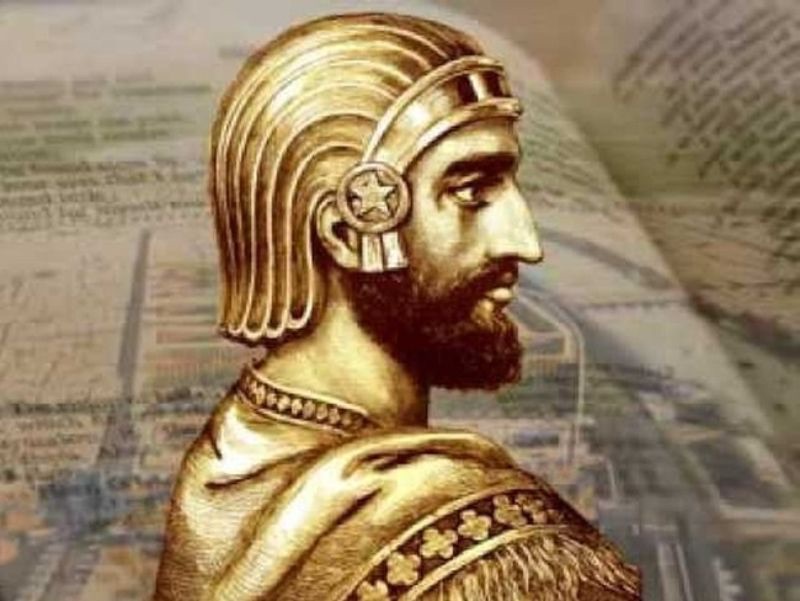
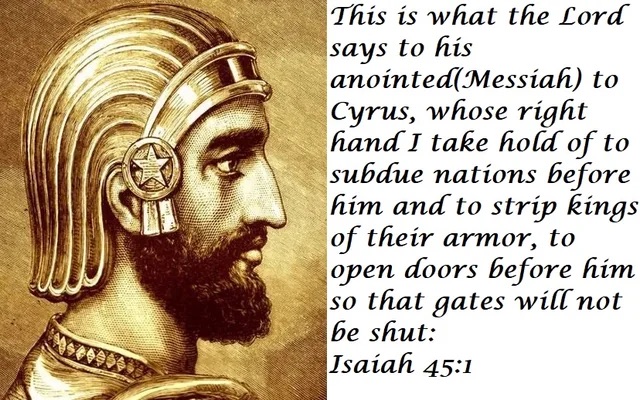
Cyrus is praised in the Book of Isaiah (Isaiah 45:1) as a “Messiah” or “anointed one” chosen by God to restore the Israelites to their homeland and rebuild the Temple in Jerusalem. In the Book of Ezra, Cyrus’s decree allows the Jews to return to Jerusalem, highlighting his role as a liberator and a proponent of religious tolerance.

The Hebrew Bible

CYRUS

Cyrus II, better known as Cyrus the Great, was the founder and first ruler of the Persian Empire (559–529 BC). After Cyrus assumed leadership of the Persians, he defeated the Medes (c. 550 BC) and combined the two states into one. He then defeated the Lydians (c. 546 BC), located in Asia Minor with a capital at Sardis, ruled at that time by the legendary King Croesus.

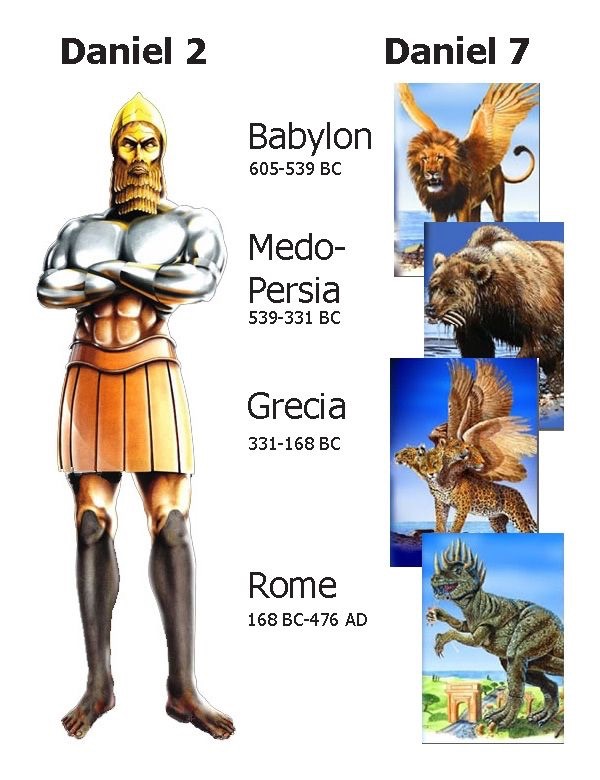
Cyrus then turned his attention to the major prize, Babylon, whose kingdom extended from Palestine into Syria and across Mesopotamia. In 539 BC he defeated the army of Babylon under the leadership of its king, Nabonidus, then soon entered the city, which, according to Dan. 5, was ruled by Nabonidus’s son and coregent, Belshazzar.

After inheriting the Babylonian empire and all its vassals, Cyrus issued a decree that allowed these subjugated people to return to their lands and rebuild their temples. This decree is described in what has come to be known as the Cyrus Cylinder, a record of major events in Cyrus’s reign, but in the Bible the version is specifically directed toward the Jewish people (2 Chron. 36:23; Ezra 1:2–4). Soon thereafter, some, but not all, Jewish exiles began to return to Jerusalem under the leadership of Sheshbazzar and Zerubbabel.

Cyrus’s impact on the people of God is described in Isa. 44:28–45:13 (esp. 45:1), where God refers to this foreign king as “his anointed” or “his messiah” (mashiakh). Such an honorific shows that it was really God himself who moved history to restore his people to their land. Cyrus died in 530 BC while fighting the Massagetae in central Asia. His son Cambyses II inherited his vast empire from him at that time.

This is the tomb of Cyrus II of Persia, the ruler who released the Jewish people to return to Judah with goods for the trip and rebuilding (Ezra 1).
The Cyrus Cylinder describes Persian King Cyrus II’s victory over Babylon (538 – 530 BC) and gives an example of his releasing captive peoples to return to their homelands. How this decree of Cyrus affected the Jewish people is recorded in Ezra 1.

What was the description of Allah according to the Arabs prior to the emergence of Islam?


Azahari Hassim

What was the description of Allah according to the Arabs prior to the emergence of Islam?

Prior to the emergence of Islam, Arabian beliefs were primarily polytheistic, involving the worship of many gods and goddesses. Allah was recognized among these deities and was considered the Supreme God or the God of gods, often linked to creation, the heavens, and high virtues such as mercy and compassion.

Allah was known to them according to the impression from the Holy Quran, (in Surah 29, verse 61 and Surah 31, verse 25) where it is indicated that even in pre-Islamic times, if the polytheists were asked who created the heavens and the earth, they would have surely said, “Allah.”

However, their understanding and worship of Allah were not monotheistic as in Islam. They worshipped other gods alongside Allah and embraced a number of ritualistic practices.

Interestingly, the word Allah itself means “the One True God” in Arabic, and it was used by both Jewish and Christian Arabs to refer to the monotheistic deity. So, even before Islam, the concept of Allah existed, albeit in different contexts and beliefs.

In conclusion, prior to the emergence of Islam, Arabs recognized Allah but did not single him out exclusively for worship.

Was the term “Allah” used by Christian Arabs to refer to God prior to the rise of Islam in the Arabian Peninsula?

The term “Allah” was indeed used by Christian Arabs to refer to God prior to the rise of Islam in the Arabian Peninsula. The word “Allah” is derived from the Arabic words “al-ilah,” which means “the God.” It was a common term used by Arab Christians, Jews, and pagans alike to refer to their respective deities before the advent of Islam.

Christian Arabs who spoke Arabic as their native language would use the term “Allah” in their religious texts, prayers, and everyday conversations when referring to God. This practice predates Islam and continued even after the spread of Islam in the region.

The use of the term “Allah” by Christian Arabs highlights the linguistic and cultural continuity between pre-Islamic Arabia and early Islamic societies. It also demonstrates that monotheistic beliefs were present among various religious communities in the region long before Islam emerged as a major religion.

Edward William Lane
(British Orientalist and Lexicographer):

“Allah is the proper name of the deity, acknowledged by the ancient Arabs before the introduction of Christianity and Islam. It is a word that signifies the universal, singular nature of the divine being.”

Linguistic Connections: The Word for God in Jesus’ Aramaic and its Relation to Arabic ‘Allah

How the word “God” is pronounced in the language of Jesus?

The language spoken by Jesus and the people of his time was Aramaic. In Aramaic, the word for “God” is “Alaha” (ܐܒܐ). This is the term Jesus likely used when referring to God. It is important to note that Aramaic has different dialects, so the exact pronunciation might vary slightly depending on the specific dialect spoken in Jesus’ region.

What is the connection between “Allah” and the word of God in the Aramaic language in Jesus’ time?

In Jesus’ time, the common language spoken in the region was Aramaic. The word for God in Aramaic is “Alaha” or “Elaha” which is similar to the Arabic word “Allah.” Both words are derived from the Semitic root “il” which means God.

So, the word for God in the Aramaic language spoken during Jesus’ time, “Alaha,” is linguistically related to the word “Allah” in Arabic. This linguistic connection highlights the shared heritage and linguistic roots of the Semitic languages spoken in the region, including Aramaic and Arabic.

Allah

Arabic Allāh (“God”), the one and only God in Islam.

Etymologically, the name Allah is probably a contraction of the Arabic al-llah, “the God.” The name’s origin can be traced to the earliest Semitic writings in which the word for god was il, el, or eloah, the latter two used in the Hebrew Bible (Old Testament). Allah is the standard Arabic word for God and is used by Arabic-speaking Christians and Jews as well as by Muslims.

The association of the word specifically with Islam comes from the special status of Arabic as the language of Islam’s holy scripture, the Qur’an: since the Qur’ān in its original language is considered to be the literal word of God, it is believed that God described himself in the Arabic language as Allāh. The Arabic word thus holds special significance for
Muslims, regardless of their native tongue, because the Arabic word was spoken by God himself.

Allah is the pivot of the Muslim faith. The Qur’ān stresses above all Allah’s singularity and sole sovereignty, a doctrinal tenet indicated by the Arabic term tawḥīd (“oneness”). He never sleeps or tires, and, while transcendent, he perceives and reacts to everything in every place through the omnipresence of his divine knowledge. He creates ex nihilo and is in no need of a consort, nor does he have offspring.

Three themes preponderate in the Qur’ān: (1) Allah is the Creator, Judge, and Rewarder; (2) he is unique (wāḥid) and inherently one (aḥad); and (3) he is omnipotent and all-merciful. Allah is the “Lord of the Worlds,” the Most High; “nothing is like unto him,” and this in itself is to the believer a request to adore Allah as the Protector and to glorify his powers of compassion and forgiveness.

The Potential Link Between Isaiah 42 and the Prophet Foretold in Deuteronomy 18:18


Azahari Hassim

Some argue Isaiah 42 might be referring to the prophet prophesied by Moses in Deuteronomy 18, verse 18. How is their interpretation presented?

Some scholars believe that Isaiah 42 is referring to a prophet who was prophesied by Moses in Deuteronomy 18, verse 18. In Deuteronomy, Moses predicts that God will raise up a prophet like him from among the brethren of the Israelites, and whoever does not listen to this prophet will be held accountable.

In Isaiah 42, the passage describes a servant of God who will bring justice to the nations and establish righteousness on earth. This servant is described as being chosen by God and having a special relationship with Him. Some argue that this description aligns with the characteristics of the prophet foretold by Moses. They believe that the servant in Isaiah is seen as a messianic figure.

The interpretation presented by those who believe Isaiah 42 refers to the prophet mentioned in Deuteronomy 18, verse 18, is based on similarities between the descriptions of both figures in their respective passages. They argue that these similarities suggest a connection between the two prophecies and point to a fulfillment of Moses’ prediction in Isaiah’s prophecy.

Surah Al-Furqan (25:1):

“Blessed is He (Allah) who sent down the Criterion [of right and wrong, i.e., the Quran] upon His Servant that he may be to the worlds a warner.”

This verse highlights Muhammad’s role as a messenger tasked with delivering the Quran to humanity.

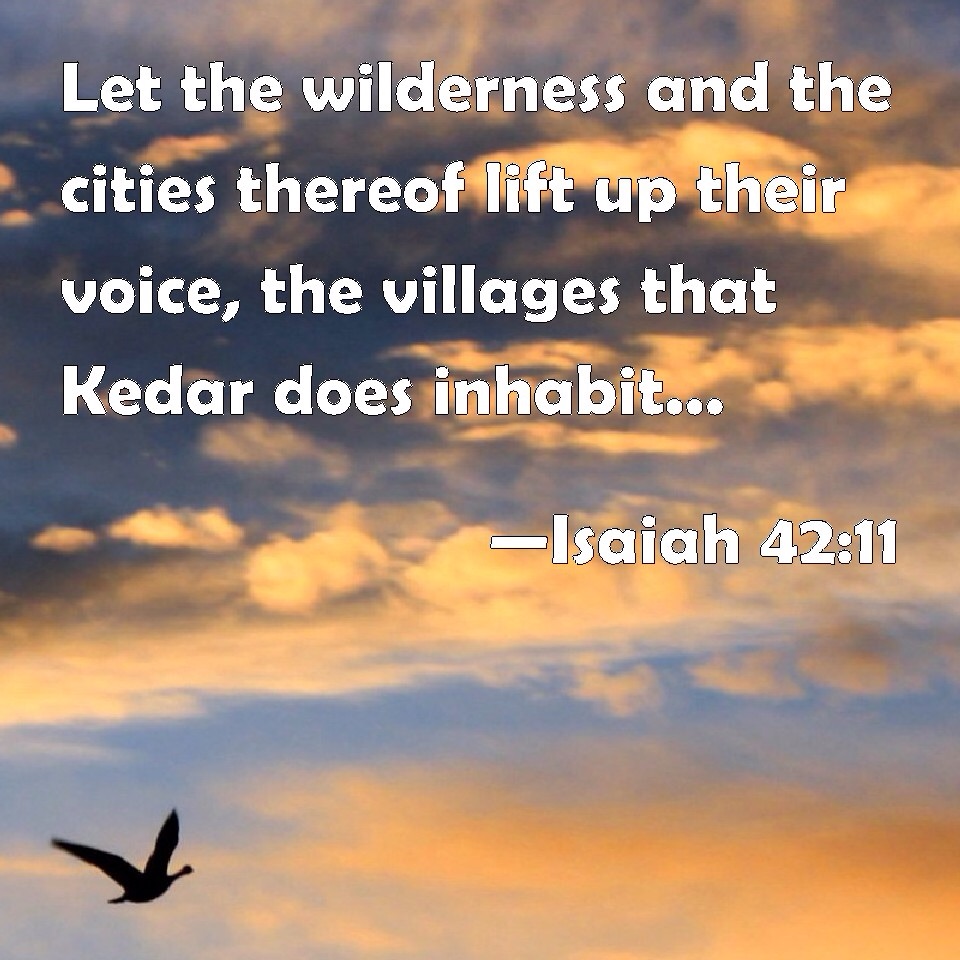
Muhammad is identified as a servant of Allah in the Quran. There are those who posit that the reference to the servant of the Lord in Isaiah 42, specifically verse 11 which mentions Kedar, may be alluding to Muhammad. How do they present and support this argument?

Those who posit that the reference to the servant of the Lord in Isaiah 42, specifically mentioning Kedar, may be alluding to Muhammad, often present and support this argument based on several key points:

  1. Kedar’s Descendants: In Isaiah 42, verse 11, it mentions Kedar, who was the second son of Ishmael and, according to Islamic tradition, is considered the ancestor of the Arabs. The argument is that since Muhammad was an Arab, and he came from the lineage associated with Kedar, this reference could be an allusion to him.
  2. Characteristics of the Servant: The description of the servant in Isaiah 42 aligns with certain traits that are associated with Muhammad in Islamic tradition. The servant is described as bringing a new law, being a light for the nations, and engaging in conquest and warfare. Proponents of this argument argue that these attributes are consistent with the mission and actions of Muhammad.
  3. Similarities in Language and Prophecies: Some commentators draw parallels between the language used in Isaiah 42 and certain prophecies and descriptions related to Muhammad in Islamic sources. They argue that linguistic and conceptual similarities between Isaiah 42 and Islamic teachings support the idea that Muhammad is the servant referenced in the passage.
  4. Connection to Monotheism: Proponents of this argument also highlight the emphasis on monotheism in Isaiah 42, which they relate to the monotheistic message of Islam and the role of Muhammad as a carrier of the monotheistic faith in the Arabian Peninsula.

It’s important to note that this interpretation is based on a specific reading of the text and is subject to debate and interpretation within different religious traditions. Not all scholars or religious authorities agree with this perspective, and there are varied understandings of the meanings and implications of the servant mentioned in Isaiah 42. Different religious communities and denominations may have distinct interpretations of these passages based on their particular religious and theological frameworks.

The message of isaiah the book of isaiah is one of the most important books of the old testament.

The Servant in the book of Isaiah and the Paraclete in the Gospel of John

The Servant in the messianic prophecy of Isaiah in Chapter 42 and the Paraclete or the Spirit of truth in the prophetic words of Jesus in the Gospel of John chapter 16 verse 13 are the reference to the identification of the Prophet like Moses predicted by Moses in Deuteronomy in Chapter 18 verse 18.

The scholars of the dead sea scrolls style him as a prophetic Messiah or Messianic prophet.

This new Moses, prophesied by Moses, elaborated by Isaiah, proclaimed by Jesus and awaited by the Samaritans is none other than the Prophet of Islam.

Allah in the Quran testifies to the fact that Muhammad is that prophet. Allah says in Sura 7 verse 157:

”Those who follow the messenger, the Prophet who can neither read nor write, whom they will find described in the Torah and the Gospel which are with them. He will enjoin on them that which is right and forbid them that which is wrong. He will make lawful for them all good things and prohibit for them only the foul; and he will relieve them of their burden and the fetters that they used to wear. Then those who believe in him, and honour him, and help him, and follow the light which is sent down with him, they are the successful.“


Isaiah is one of seven Old Testament prophets painted by Michelangelo in the Vatican’s Sistine Chapel (1508–1512). Isaiah (Greek “Esaias”) holds the Book of Isaiah under his arm.

Servant עֶבֶד

ʻebed means “servant” and is used in theologically significant ways in the Old Testament. It can refer to the position of a human being before God, emphasizing the Creator/creature distinction. For example, Israel is a servant of God (Lev. 25:55), as are the prophets (Jer. 7:25); they do what God bids. ʻebed is also used as a descriptor of significant figures in the Old Testament who have distinctive roles and offices in the economy of God—e.g., Abraham, Isaac, Jacob (Exod. 32:13; Deut. 9:27), Caleb (Num. 14:29), Moses (the servant par excellence, Deut. 34:5), Joshua (Jos. 24:29), Isaiah (Isa. 20:3), David (1 Sam. 23:10), Israel as a nation (Isa. 41:8), and surprisingly, even Cyrus and Nebuchadnezzar (Isa. 44:28; Jer. 25:9).

The most significant use of ʻebed is found in Isa. 40-55. The “servant of the LORD” is the means of God’s restoration of both Israel and the nations 49:1-6). In a surprisingly new and unprecedented fashion, God promises to redeem both the nations and Zion by means of the servant who suffers in the place of and on behalf of others (Isa. 53). When referring to “the servant of the Lord,” ʻebed is always in the sing. up to Isa. 53, but after this key chapter the term is found only in the plural and may refer to the righteous offspring promised to Isaiah’s servant in 53:10. These righteous servants have recognized, in retrospect, the significance of the servant’s suffering. They follow the servant in obedience though they suffer as well while awaiting the coming day of vindication 54:17; 57,1; 65,1-25).

Interpreting Deuteronomy 18:18: A Cross-Religious Analysis of Messianic Prophecy


Azahari Hassim

Does Deuteronomy 18, verse 18, contain a messianic prophecy?

Deuteronomy 18, verse 18, is often discussed in the context of messianic prophecy. Some interpretations suggest that it could be seen as a messianic prophecy, as it talks about a prophet who will come in the future and speak on behalf of God.

However, others argue that this verse is specifically referring to a line of prophets to come after Moses, rather than a single messianic figure. Ultimately, the interpretation of whether or not it contains a messianic prophecy is subjective and varies among different religious traditions.

The verse says:

“I will raise them up a Prophet from among their brethren, like unto thee, and will put my words in his mouth; and he shall speak unto them all that I shall command him.”


The identity of the prophet mentioned in this verse is a point of debate among different religious traditions. Here’s a breakdown of the main interpretations:

  1. Christianity: Christians generally believe this prophet refers to Jesus Christ. They see Jesus fulfilling the characteristics mentioned in the passage, like speaking God’s words and performing miracles.
  2. Islam: Muslims believe the prophet refers to Muhammad, the founder of Islam. The phrase “and he shall speak unto them all that I shall command him” pertains to the Quran, the sacred text of Islam.
  3. Judaism: Traditionally, Orthodox Jews believe the prophet refers to Joshua, Moses’ successor, who led the Israelites into the Promised Land.

Certain Jewish individuals do not consider Deuteronomy 18, verse 18, to be a commonly accepted messianic prediction. Instead, it is understood as referring to a line of prophets that God would send to the Israelites to guide them, starting with Joshua and continuing through the history of the Jewish people with prophets like Samuel, Elijah, Isaiah, Jeremiah, and others.

Some Jewish interpretations might see it as referring to a specific future messianic figure who, like Moses, would be a leader, lawgiver, and prophet.

Thomas Carlyle:

“The lies (Western slander) which well-meaning zeal has heaped round this man (Muhammad) are disgraceful to ourselves only.”

The Prophethood of Muhammad and the Hebrew Prophets: Exploring Biblical and Theological Foundations

In Genesis, chapter 21 and verse 18, an important prophecy and interaction between God and Hagar regarding Ishmael is mentioned.

The verse states:

“Arise, lift up the lad and hold him with your hand, for I will make him a great nation.“

One hypothesis proposes that the prophethood of the Hebrew prophets is tied to the Torah given to Moses, whereas Muhammad’s prophethood is associated with the prophecy of Hagar which predates the Torah. How is this idea presented?

The hypothesis you mention explores the relationship and distinctions between the prophethood of the Hebrew prophets and that of Muhammad, focusing on their respective biblical and theological foundations. This idea can be presented and analyzed through various religious, historical, and scriptural perspectives:

The prophethood of the Hebrew prophets is often seen as being linked directly to the Torah, which according to Jewish tradition, was given to Moses by God on Mount Sinai. This link is crucial because it establishes a continuous line of prophetic authority and teaching that is rooted in the laws and ethical teachings of the Torah.

The prophets following Moses are considered to have the role of interpreting, enforcing, and expanding upon the Torah’s teachings.

In contrast, Muhammad’s prophethood is sometimes associated with the prophecy attributed to Hagar. Hagar, according to the Genesis account, was the servant of Abraham and Sarah, and mother of Ishmael, who is considered by Muslims to be an ancestor of Muhammad.

This association is used to argue that Muhammad’s prophetic lineage predates the Mosaic Torah and is linked instead to Abrahamic covenant through Ishmael.

This hypothesis suggests that there are distinct covenants in the Abrahamic religions that validate different prophetic traditions. The Hebrew prophets fall under the covenant of Moses and the Sinai revelation, while Muhammad is considered under the covenant given to Abraham and Ishmael (as Hagar’s son).

This distinction is important in Islamic theology which views Islam as a continuation and fulfillment of Abrahamic faith, independent of the Mosaic laws.

The idea also touches upon the nature of the revelations received by the prophets. The Torah is often viewed as a national revelation aimed at the Jewish people, containing civil, moral, and ceremonial laws specifically designed for them.

In contrast, Muhammad’s revelation (the Quran) is considered universal, intended for all humanity, and not tied to the specific legal and ritual practices of the Jews.

By associating Muhammad with a prophecy that predates the Torah, this hypothesis also underscores the notion that prophetic messages have been universal and ongoing throughout human history. This could be seen as an attempt to place Islam within a broader, inclusive prophetic tradition that transcends Jewish ethnic and religious boundaries.

Messianism

In the Hebrew Bible, “messiah” refers to persons serving in divinely ordained positions of authority, most often Israelite kings (e.g., 2 Sam. 23:1; Ps. 2:2) but also high priests (e.g., Lev. 4:3; Dan. 9:25) and, in one case, a foreign king (Isa. 45:1). Prophets were also anointed to office (1 Kings 19:16; Isa. 61:1) and could collectively be called “anointed ones” (Ps. 105:16). In early Jewish literature, the term “messiah,” though used infrequently, is applied to royal, priestly, and heavenly eschatological figures (e.g., Pss. Sol. 17:32; 1QS 9:10–11; 1 Enoch 48:10).

In light of this usage, scholars use the term “messiah” broadly to refer to any eschatological figure, whether royal, priestly, prophetic, or heavenly, who serves as an agent of God’s purposes in the world. Accordingly, messianism can be defined as the set of ideas associated with the identity and activity of divinely appointed eschatological agents of God’s judgment, salvation, or rule.