The Missing Years: Ishmael’s Hidden Journey in the Book of Genesis


Azahari Hassim

🌿 The Missing Years: Ishmael’s Hidden Journey in the Book of Genesis

Introduction

The book of Genesis contains a striking silence in the life of Ishmael.
He is born in Genesis 16… and then he disappears.

The next time we see him—in Genesis 17—he is suddenly thirteen years old, standing beside Abraham, about to be circumcised.

What happened during those missing years?
Why does the text fall silent?
And what does this silence reveal about the deeper Abrahamic story?

To answer this, we look at the two major episodes that follow:
Genesis 21, where Ishmael is a helpless child sent into the wilderness,
and Genesis 22, where Abraham is commanded to sacrifice his “only son.

Read in sequence—and without assuming the later editorial layers—both narratives point to Ishmael as Abraham’s firstborn, beloved, and only son at those points in time.

Ishmael’s Infancy and the Test of Separation

(Genesis 21:14–20)

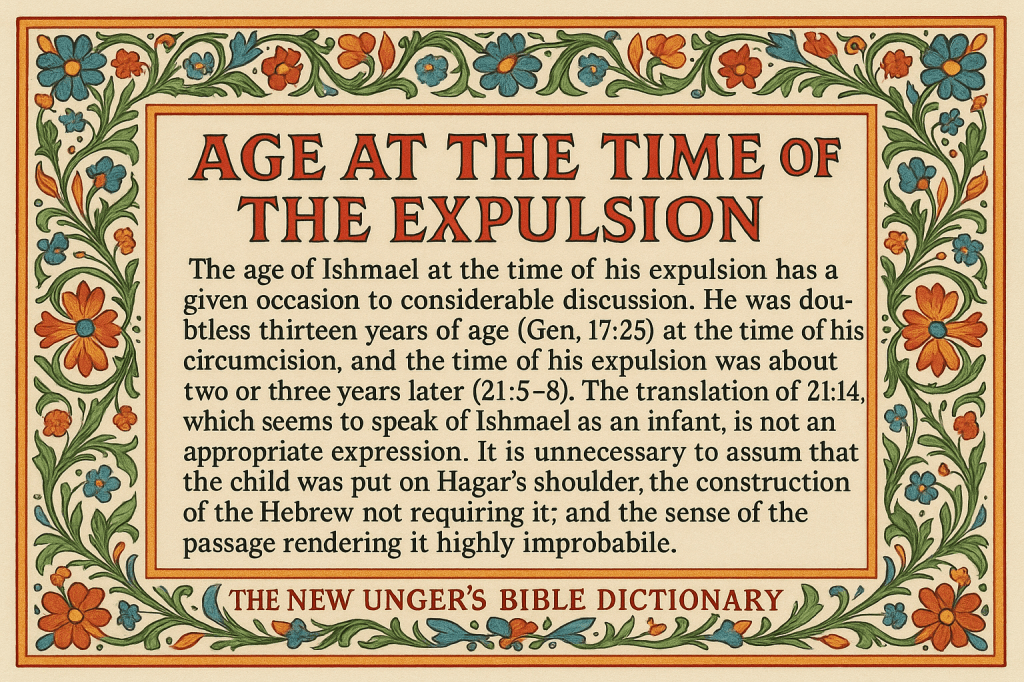
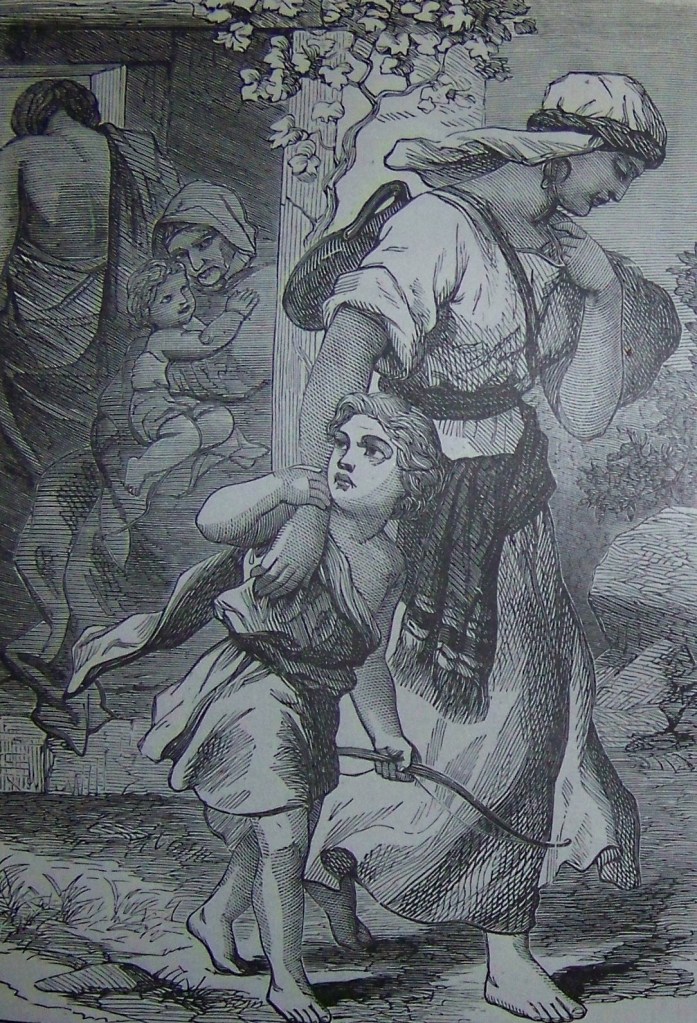
Genesis 21 describes Abraham placing Ishmael on Hagar’s shoulder, and later Hagar laying him under a bush to die of thirst. This is not the picture of a thirteen-year-old teenager.

The Hebrew word naʿar, often translated “lad,” covers a wide age range.
But the context here—being carried, unable to walk, crying out—makes it clear Ishmael was still a young child.

Then, verse 20 says:
“And God was with the lad, and he grew.
The phrase vayigdal—“and he grew”—signals a new developmental stage beginning after his infancy.

Many scholars note that Genesis 21:9–10, the sudden appearance of Sarah’s jealousy, appears to be a later editorial insert.
Its purpose?
To justify removing Ishmael from the covenantal story in favor of Isaac.

But beneath this layer, the original narrative highlights a divine test of Abraham—
a test centered on the life of his firstborn son.

The Offering of the “Only Son”

(Genesis 22:1–19)

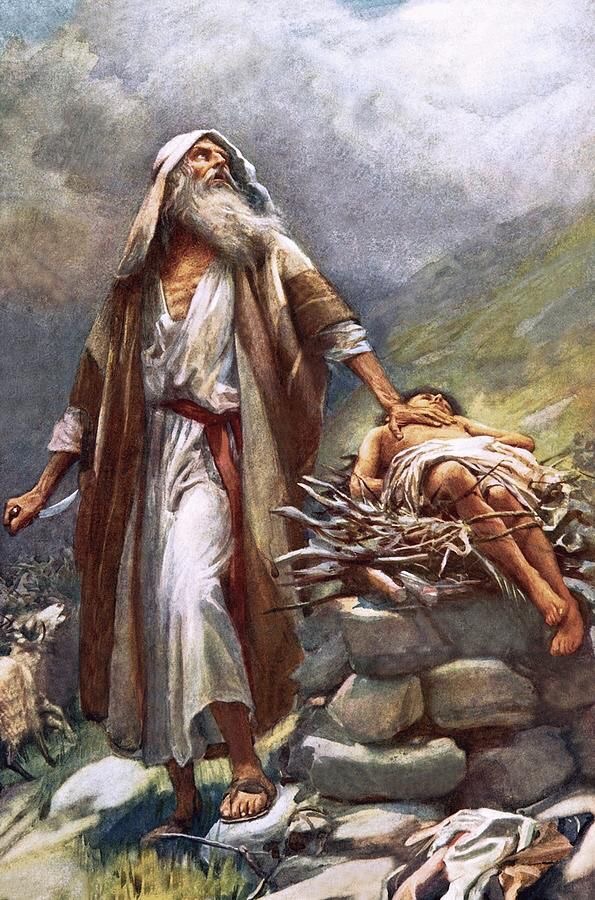
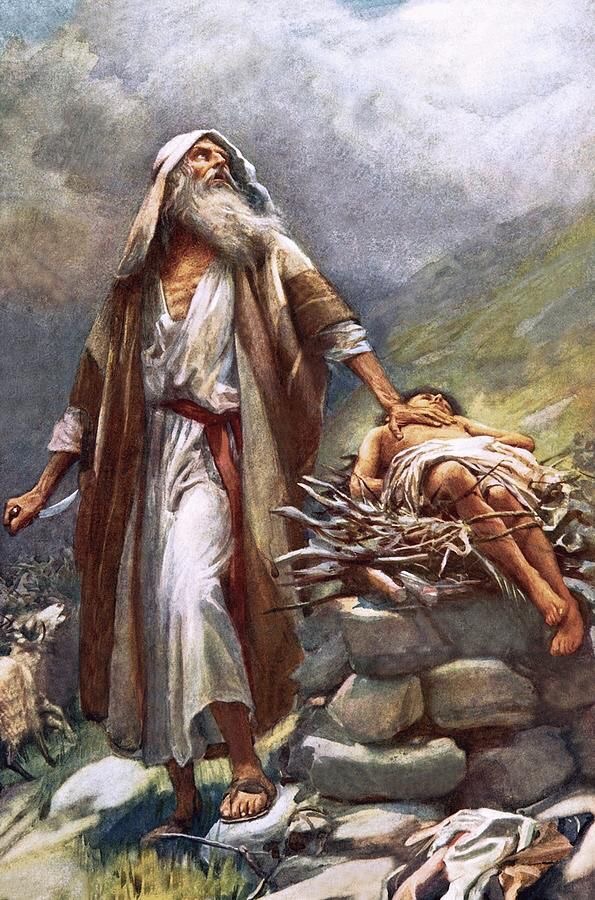
In the very next chapter, Genesis 22, God commands Abraham:

Take your son, your only son, whom you love…”

At this point in the story, Abraham has two sons.
Ishmael is alive, blessed, and living in Paran.

So how can Isaac be called the “only son”?

This tension has led many critical scholars to conclude that the original Akedah narrative—Genesis 22—was about Ishmael, not Isaac.
Only later was Isaac’s name inserted to fit the rising Israelite theology of exclusive election.

The parallels are remarkable:

• In Genesis 21, a child is left to die; an angel calls from heaven and saves him.
• In Genesis 22, a child is about to be sacrificed; an angel calls from heaven and saves him.

Two tests.
Two near-deaths.
Two divine interventions.

One original story:
Abraham’s faith tested through Ishmael.

Editorial Interpolations and Covenant Theology

The final shape of Genesis reflects layers of theological editing:

  1. Genesis 21:9–10 justifies Ishmael’s exclusion.
  2. Genesis 22 is reshaped so that Isaac becomes the child of sacrifice.

These changes reflect later Israelite identity formation—but they do not erase the earlier, deeper tradition of Ishmael at the center of Abraham’s trials.

Conclusion

When read without the later editorial layers, Genesis 21 and 22 appear to occur before Genesis 17.

In this reconstructed sequence:

• Ishmael is Abraham’s only son.
• Abraham’s faith is tested through him.
• The covenant of Genesis 17 becomes the ratification of a relationship already proven through obedience.

Only later does Isaac enter the story as a gift—
a joyful reward after Abraham has endured the greatest tests with Ishmael.

Thus, Ishmael is not a marginal figure.
He stands at the very core of the Abrahamic narrative, the first vessel of divine blessing, mercy, and trial.
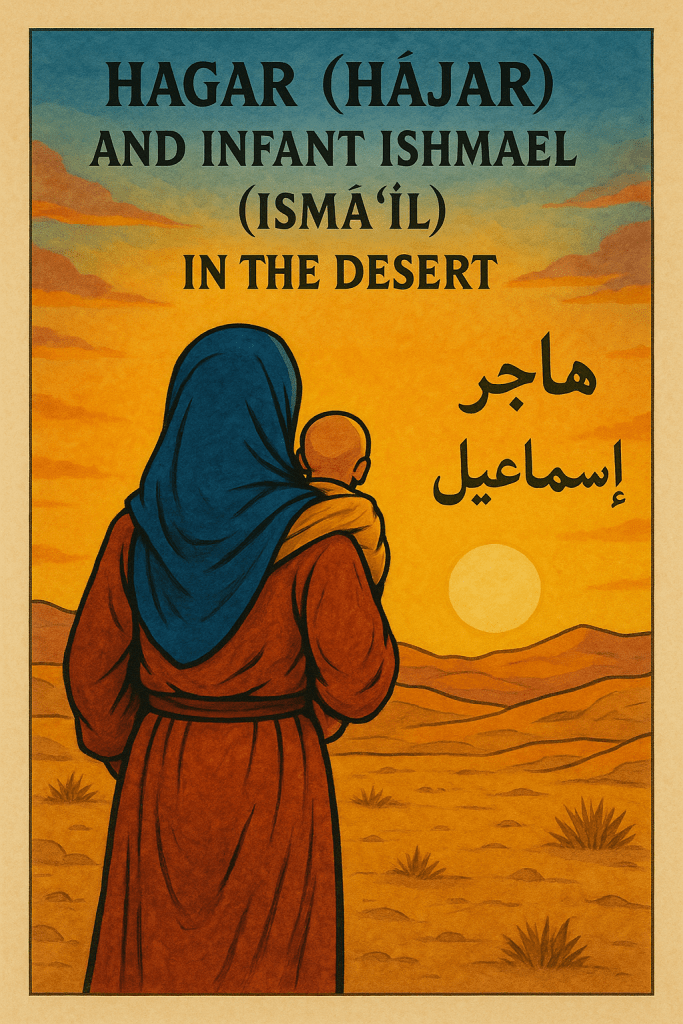
Hagar’s Elevated Status in Islam Through the Hajj Pilgrimage

Understanding Her Role as a Matriarch and Mother of Many Nations

📜 Covenantal Roots: Abraham, Hagar, and the Promise

In the Torah, God established a covenant with Abraham (Ibrahim عليه السلام), promising that he would be:

• 🌍 A blessing to all nations

• 👑 A father of many nations—both biologically and spiritually

Yet, Hagar, the Egyptian woman who bore him Ishmael (Isma’il عليه السلام), is notably absent from the list of Jewish matriarchs. In the Qur’an, her name is never mentioned directly, and even the miraculous well linked to her—Zamzam—is not cited by name, though its legacy is deeply woven into Islamic ritual.

🏜 The Desert Trial: Faith in the Face of Desperation

According to Islamic tradition, Abraham was commanded by God to leave Hagar and the infant Ishmael in the barren valley of Makkah. With no water and no vegetation, Hagar’s maternal desperation turned into an act of enduring faith:

• She ran 🏃‍♀️ seven times between the hills of Safa and Marwa searching for water.

• In her struggle, an angel appeared, striking the ground and causing the Zamzam well to gush forth.

This was not merely survival—it was the divine establishment of a new spiritual legacy through Ishmael, from whom Prophet Muhammad ﷺ would later descend.

🕋 The Sa’i Ritual: Immortalizing a Mother’s Struggle

One of the central pillars of the Hajj pilgrimage is Sa’i, the reenactment of Hagar’s search for water:

• Pilgrims walk or run seven times between Safa and Marwa, just as Hagar once did.

• This act is not symbolic alone—it is an obligatory rite for completing Hajj and ‘Umrah.

By making her desperate search a permanent part of Islamic worship, Islam does what the Torah and Jewish tradition do not—it elevates Hagar to the rank of a spiritual matriarch.

🌟 Hagar: The Matriarch of Many Nations

Through the Hajj, Hagar’s status is transformed:

• 📖 From obscurity in the Qur’an’s text → to central remembrance in Islamic practice.

• 🏛 From marginalization in Judeo-Christian tradition → to being honored as a mother of the Muslim ummah.

• ❤️ From a desperate mother in the desert → to a symbol of resilience, faith, and divine providence.

Her story teaches that:

Faith under trial can create legacies that outlive generations.

Why This Matters Today

In every Hajj season, millions of Muslims—men and women—trace Hagar’s footsteps, physically placing themselves in her journey. Her endurance is not merely remembered; it is experienced.

She is thus not only Ishmael’s mother but also:

• 🌍 Mother of many nations through Abraham’s covenant

• 🕊 Embodiment of trust in God’s plan

• 🏅 A spiritual role model for all believers

📌 Conclusion:

In Islamic tradition, the desert story of Hagar is not a footnote—it is a foundational narrative. The Sa’i ritual immortalizes her courage, transforming her from a historical figure into a living symbol of faith. In this way, the Hajj pilgrimage enshrines Hagar as a matriarch in the spiritual lineage of Islam, fulfilling God’s promise to make her and her son a great nation.
📜 The Family of Abraham in Islamic and Judeo-Christian Perspectives

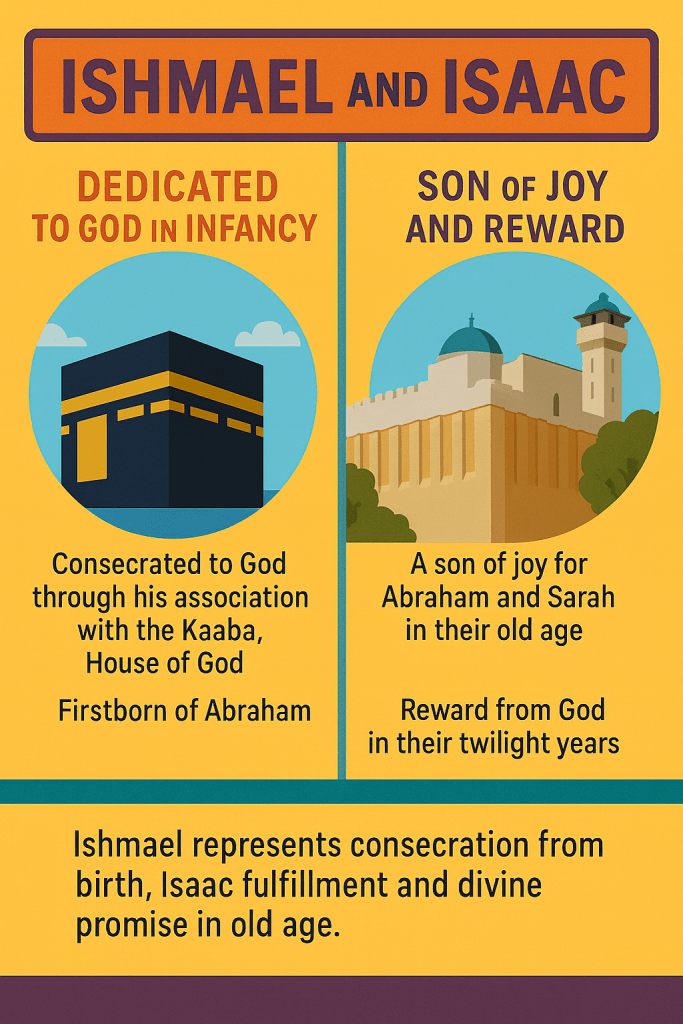
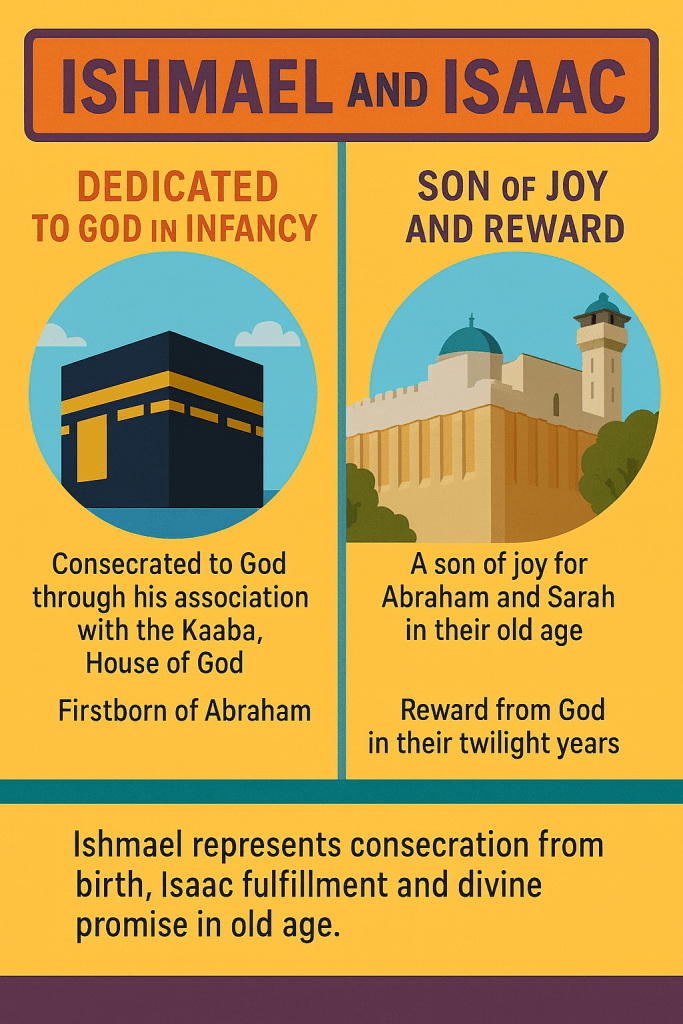
Ishmael as the Son of Sacrifice and Covenant, Isaac as the Son of Reward and Blessing

🌟 Introduction

Within the Abrahamic faiths, the household of Abraham (Ibrāhīm عليه السلام) stands as a sacred model of obedience and divine promise. Yet, the interpretation of this family’s story differs sharply across traditions.

In the Islamic understanding, Abraham’s family is not a story of rivalry but of divine sequence and harmony. Ishmael (Ismāʿīl عليه السلام) is the son of sacrifice, through whom the ultimate test of faith was fulfilled and the covenant was established. Isaac (Isḥāq عليه السلام) is the son of reward, granted to Abraham and Sarah as a divine blessing following their endurance and obedience.

In contrast, the Judeo-Christian tradition often portrays Abraham’s household as marked by jealousy and exclusion. Islam restores unity to this narrative by recognizing both sons as integral to God’s unfolding covenantal plan.

1. The Near Sacrifice: Ishmael as the Son of Testing

The Qur’an recounts Abraham’s supreme test — the command to sacrifice his beloved son:

“He said, ‘O my son, indeed I have seen in a dream that I am sacrificing you, so see what you think.’

He said, ‘O my father, do as you are commanded; you will find me, if Allah wills, among the steadfast.’”

— Surah al-Ṣāffāt 37:102

Both father and son displayed perfect submission to the divine will. When Abraham fulfilled the command, God intervened:

“We ransomed him with a great sacrifice, and We left for him [a good mention] among later generations.”

— Surah al-Ṣāffāt 37:107–108

This episode signifies the culmination of Abraham’s trials and the perfection of his faith. Classical exegetes such as al-Ṭabarī and Ibn Kathīr affirm that the son in this event was Ishmael, as Isaac’s birth occurred only afterward. Ishmael thus becomes the son of trial, sacrifice, and covenantal submission, the one through whom Abraham’s obedience is eternally commemorated.

2. The Covenant Established After the Sacrifice

The Qur’an indicates that the divine covenant (ʿahd) was granted after Abraham had successfully completed all his tests — culminating in the near sacrifice:

“And [mention] when Abraham was tested by his Lord with certain commands, and he fulfilled them. He said, ‘Indeed, I will make you a leader (Imām) for mankind.’ Abraham said, ‘And of my descendants?’ [Allah] said, ‘My covenant does not include the wrongdoers.’”

— Surah al-Baqarah 2:124

This verse marks the formal establishment of the Abrahamic Covenant, conferred only after Abraham’s demonstration of perfect obedience. The covenant was not inherited automatically, but earned through faithfulness.

Because Ishmael was the son involved in the supreme test, the covenant naturally extends through his line — the line of submission (islām) — culminating in the Prophet Muhammad ﷺ, the final bearer of the Abrahamic mission.

The covenant, therefore, follows the pattern:

Trial → Fulfillment → Covenant → Reward.

3. Isaac: The Son of Reward and Blessing

After Abraham’s trial and the establishment of the covenant, God rewarded him and Sarah with the joyful announcement of a new son — Isaac:

“And We gave him good news of Isaac, a prophet from among the righteous.”

— Surah al-Ṣāffāt 37:112

Isaac’s birth represents divine reward for Abraham’s faithfulness and Sarah’s endurance. His arrival in their old age symbolizes the mercy that follows obedience. Isaac is thus the son of reward and blessing, embodying the continuation of prophecy and grace among the Children of Israel.

In the Islamic framework, Isaac’s role complements rather than replaces Ishmael’s. Ishmael carries the covenantal trust, established through the trial of sacrifice, while Isaac carries the prophetic continuation within his descendants.

According to this understanding, the descendants of Isaac through Jacob (Ya‘qūb عليه السلام) are bound by the Sinai Covenant, revealed later to Moses (Mūsā عليه السلام), whereas the descendants of Ishmael remain under the universal Abrahamic Covenant — the primordial covenant of submission (islām) that extends to all nations through the final Messenger, Muhammad ﷺ.

4. The Judeo-Christian Portrayal: Rivalry and Election

In the Biblical narrative, Abraham’s household is often portrayed as a drama of jealousy and exclusion. Sarah’s envy of Hagar leads to Ishmael’s expulsion (Genesis 16; 21), and the covenantal blessing is confined to Isaac’s lineage. This introduces the theology of divine election, which prioritizes one lineage over another.

Christian writers such as Paul later spiritualize this tension, contrasting Ishmael as “born according to the flesh” with Isaac as “born according to the promise” (Galatians 4:22–31). Such readings reinforce a dichotomy of rejection versus election — a divide that Islam transcends by recognizing both sons as divinely chosen for distinct missions.

5. The Islamic Restoration: Unity Through Faith and Obedience

In the Qur’anic vision, Abraham’s family is unified by faithful submission, not divided by bloodline or favoritism. The covenant rests upon righteousness and obedience, not genealogy.

• Ishmael is the son of sacrifice, through whom the covenant of divine leadership was confirmed.

• Isaac is the son of reward, through whom the chain of prophethood was extended to the Children of Israel.

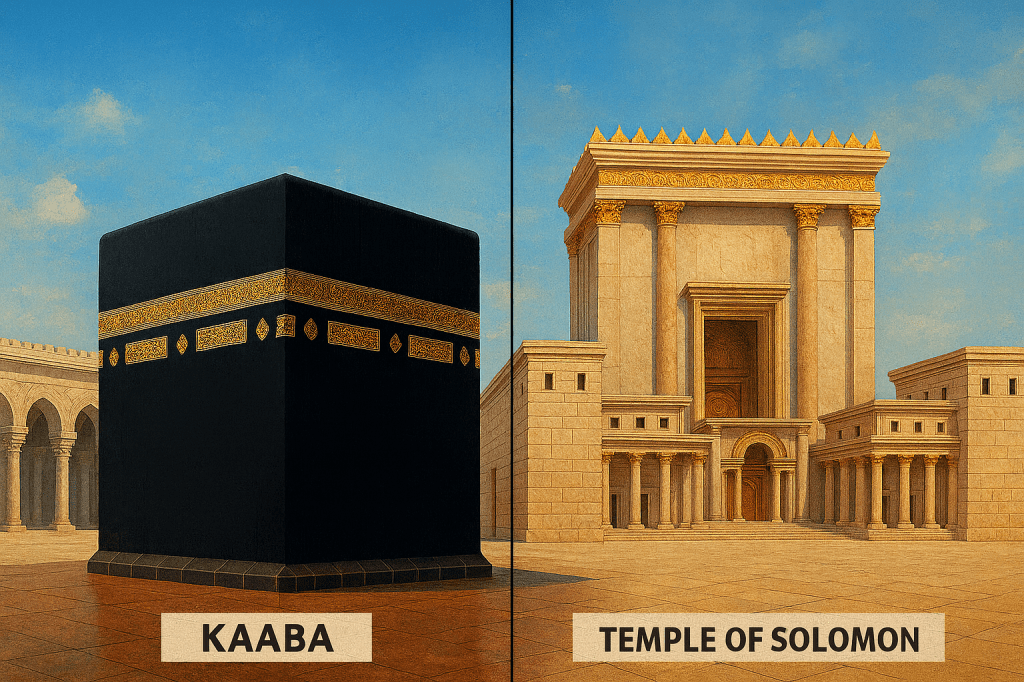
The Kaaba, built by Abraham and Ishmael (2:125–127), stands as the living symbol of the universal covenant, while the Torah at Sinai represents the specific covenant with Israel. Both reflect divine guidance within their respective missions — yet Islam views the Abrahamic Covenant as the root from which all subsequent covenants branch.

6. Theological Implications: Covenant as the Fruit of Obedience

The Islamic chronology clarifies the divine order of revelation:

1. The Trial — Abraham’s command to sacrifice Ishmael.

2. The Fulfillment — Both submit to God’s will.

3. The Covenant — Leadership and divine favor established (2:124).

4. The Reward — Birth of Isaac and continuation of prophecy.

Thus, the Abrahamic Covenant arises as the result of Abraham’s perfect obedience, not as a prior entitlement. Ishmael is its living witness, and Isaac is its blessed continuation — both united in purpose, distinct in role.

Conclusion

In Islam, the family of Abraham embodies the balance between sacrifice and mercy, trial and reward, covenant and continuation. Ishmael stands as the son of sacrifice and covenant, the one through whom the divine test was fulfilled; Isaac as the son of reward and blessing, the one through whom prophecy flourished among Israel.

While the descendants of Isaac through Jacob entered the Sinai Covenant, the descendants of Ishmael preserved the Abrahamic Covenant, culminating in the universal message of Islam — the final expression of monotheism envisioned by Abraham himself.

Thus, Islam transforms the story of Abraham’s family from rivalry into revelation, from division into divine harmony — where every son, every covenant, and every test reveals a single eternal truth: submission to the One God (Allāh).
Muhammad Mythicism: Origins, Arguments, and Scholarly Responses

Azahari Hassim

📜 Muhammad Mythicism: Origins, Arguments, and Scholarly Responses

❇️ Abstract:

Muhammad mythicism—the claim that the Prophet Muhammad did not exist as a historical person—has emerged in recent decades from both ideological and revisionist impulses. While it draws on broader skepticism toward early Islamic historiography, it remains largely outside peer-reviewed academic scholarship. This article outlines the development of Muhammad mythicism, evaluates its central arguments, and highlights the scholarly consensus affirming Muhammad’s historicity based on a range of converging evidences.

♦️1. Introduction

The figure of the Prophet Muhammad stands at the foundation of Islam, yet a small but vocal movement questions whether he existed at all. This position, known as Muhammad mythicism, has garnered attention in popular circles, particularly since the early 2000s. Although often perceived as a new phenomenon, its roots can be traced back to a largely forgotten Soviet Marxist tradition. Today, its proponents include figures such as Yehuda Navo, Judith Corin, the Inara school, Johannes Jantzen, and Robert Spencer. Despite its public appeal, Muhammad mythicism is virtually absent from mainstream academic discourse.

♦️2. Historical Development of Muhammad Mythicism

Muhammad mythicism has two distinct phases:

• Soviet Marxist Origins: Early expressions of Muhammad mythicism appeared within the context of Soviet ideology, where religion was broadly critiqued as a socio-economic construct. These views, however, did not significantly impact Western scholarship.

• Western Revival (2000s–present): A more developed form of mythicism emerged in the early 21st century, influenced by broader skepticism towards early Islamic historiography. This revival coincided with an increase in revisionist approaches to the study of Islam’s origins, though mythicism remains a fringe position even within revisionism.

♦️3. Core Arguments of Muhammad Mythicism

3.1. Argument from Silence

Mythicists often argue that early sources fail to mention Muhammad explicitly, implying he was invented later. However, this is contradicted by a growing body of early non-Muslim sources, coins, and inscriptions that reference Muhammad or closely associated events within a few decades of his death. Scholars also note that earlier strata of Islamic reports can often be reconstructed through isnāds (chains of transmission), preserving information from a relatively early period.

3.2. “Muhammad” as a Title

Another mythicist argument claims that “Muhammad” originally functioned as a title for Jesus, rather than a personal name. This interpretation fails linguistically and contextually. In both Quranic passages and early inscriptions, “Muhammad” appears as the definite subject in nominal sentences—a syntactic structure indicating a proper name. Additionally, non-Arabic sources transliterate the name, a treatment typically reserved for personal names, not titles. Historical evidence also shows “Muhammad” was already in use as a personal name decades prior to the earliest known inscriptions bearing the name.

3.3. Geographical Discrepancies – The Petra Thesis

Some mythicists propose that early Islam originated not in Mecca but in Petra, based on perceived discrepancies in geographical descriptions. However, early non-Muslim sources that would have known of Petra provide no such indication. Furthermore, Islamic tradition preserves no memory of a shift in the sanctuary’s location, which would be an unlikely omission had such a move occurred. Scholars widely consider this thesis speculative and unsupported.

♦️4. Scholarly Consensus on Muhammad’s Historicity

Despite justified caution regarding the reliability of many early Islamic sources, most scholars maintain that a historical Muhammad did exist. This position is supported by several key lines of evidence.

4.1. Corroboration from Non-Muslim Sources

One of the most compelling pieces of evidence comes from an Armenian chronicle dated around 660 CE—approximately 30 years after Muhammad’s death. It summarizes Muhammad’s career in terms that largely match the traditional Islamic narrative. The source is widely accepted as authentic and undermines claims of late fabrication or interpolation.

4.2. Chronological and Political Frameworks

Coins, inscriptions, and non-Muslim writings from the 7th century corroborate the chronological and political framework of Islamic history as preserved in Islamic tradition. These external sources reinforce the notion that key elements of early Islam, including its leadership structures and expansionist policies, were in place soon after Muhammad’s supposed lifetime.

4.3. Reliability of Genealogical Traditions

The detailed genealogical data found in early Islamic sources, particularly regarding Arabian tribes, has been partially verified through inscriptions and is considered largely accurate. Muhammad’s lineage, for example, fits within this broader genealogical framework, further affirming his historical reality.

4.4. Inter-Regional Consistency and the Criterion of Dissimilarity

Early Islamic centers—Medina, Kufa, Basra, and Syria—independently preserved traditions about Muhammad that align on basic facts, including his name, his marriage to Khadijah, and his tribal affiliation with the Banu Hashim. Importantly, some of this information contradicts the interests of powerful factions (e.g., the Umayyads), suggesting it was inherited and widely accepted rather than fabricated. This aligns with the criterion of dissimilarity, often used in historical Jesus studies, which holds that information unlikely to have been invented for polemical reasons is more likely to be authentic.

♦️5. Conclusion

While Muhammad mythicism has gained some popularity in certain online and ideological circles, it lacks serious support in academic scholarship. The weight of evidence—from early non-Muslim testimony, material culture, internal consistency across regions, and linguistic and genealogical data—strongly supports the conclusion that Muhammad was a real historical figure. The study of ancient figures frequently presents challenges in establishing historical certainty. Nevertheless, the most credible interpretation of the available evidence indicates that a Prophet Muhammad did exist in 7th-century Arabia.

📋 How Jay Smith and His Group Argue That “Muhammad” (MHMD) Originally Referred to Jesus

Jay Smith is part of a Christian polemical movement that challenges the early history of Islam. Within this framework, Smith and his colleagues—such as those connected to the “Inarah Institute”-inspired revisionist school—propose that the term MHMD (محمد / muhammad, meaning “the praised one”) in the earliest Islamic texts may not refer to a historical Arabian prophet, but instead to Jesus as the “praised” or “glorified” figure.

Their argument has five major pillars:

  1. “Muhammad” Means The Praised One, Not Necessarily a Personal Name

Smith’s foundational linguistic claim:

• The word muhammad is a passive participle meaning “the praised one”.
• It can function as a title, not only a personal name.
• Christian traditions frequently refer to Jesus as:
• “The Glorified One
• “The Praised One”
• “The Blessed One

Smith’s group argues that the Qur’anic and inscriptional term MHMD may originally have functioned like these titles.

  1. Early Arabic Inscriptions Contain “MHMD” Without Any Biographical Link to Mecca or a Human Prophet

Smith refers to early inscriptions such as:

• The Dome of the Rock inscriptions (690 CE)
• The Arab-Byzantine coins (early 7th–8th century)
• The Zuhayr inscription and others

He argues:

• The inscriptions say things like “Muhammad is the servant of God” but do not give:

• A birthplace,
• A mother,
• A life story,
• A prophetic career.
• He claims these phrases could easily be read as:
“The Praised One is God’s servant” → referring to Jesus.

Thus, he says:
Early Islam’s use of “MHMD” was devotional and Christological, not biographical.

  1. Early Coins Depict a Human Figure Who Resembles Byzantine Christian Imagery

Smith famously analyzes early Islamic coins:

• Some feature a standing figure with a cross-like staff.
• Others include Christian formulas.
• The term mhmd appears alongside symbols long associated with Jesus.

Smith’s interpretation:

• These coins do not depict an Arabian prophet, but rather a modified representation of Jesus, adapted by Arab Christians who later formed part of the Umayyad administration.

Thus he claims:

“MHMD” was a Christological epithet on early Arab-Christian coins.

  1. The Qur’an Never Gives Muhammad a Biography—Indicating, Smith Claims, That the Name Was Originally Symbolic

Jay Smith argues:

• The Qur’an does not describe Muhammad’s:
• Parents,
• Childhood,
• Tribe,
• Location,
• Chronology,
• Battles (except allusions without names),
• Wife names,
• Mecca.

Since the Qur’an contains no narrative biography, he argues the term muhammad may not have originally referred to a person, but to a theological figure—similar to:

al-Masīḥ (the Messiah)
al-Muṣṭafā (the Chosen One)

He claims early Muslims later retroactively attached a biography to the title.

  1. Christian Sources Before Islam Refer to Jesus as “The Praised One” (Parallel to MHMD)

Smith cites Syriac Christian literature:
• The Syriac word “maḥmūdā” (ܡܗܡܘܕܐ) meaning “praised, glorified”
• Used in reference to Jesus

He argues:
• Arab Christians may have used the Arabic equivalent “muhammad” as a devotional epithet for Jesus.
• Thus, MHMD originally identified Jesus, not a separate prophet.

This supports his claim of a Christological reading of early Qur’anic phrases such as:

wa-muḥammadun rasūlu-llāh
The Praised One is the messenger of God.”

From Smith’s perspective, this could mean:

Jesus, the praised one, is God’s messenger.”

Synthesis: Jay Smith’s Overall Thesis

Putting the claims together:

  1. MHMD = “The Praised One,” a title.
  2. Early inscriptions and coins do not reference a historical prophet Muhammad.
  3. MHMD appears in Christianized contexts with Christological imagery.
  4. Qur’an lacks biographical material, consistent with a title rather than a person.
  5. Syriac Christian liturgy used similar titles for Jesus.

Conclusion (according to Jay Smith):

The earliest “Muhammad” was not the Prophet of Islam but a title for Jesus, and only later—during the 8th–9th centuries—was this title reinterpreted as the proper name of a new Arabian prophet.

Important Note

This is Jay Smith’s polemical position, not the mainstream academic view.

Most historians—Muslim and non-Muslim—accept that:

• “Muhammad” was a real historical figure,
• The Qur’an’s references to him are contextual,
• Early inscriptions genuinely refer to the Prophet of Islam.

📜 Is “Muhammad” a Title? A Critical Examination of the Claim in Light of Early Islamic Evidence

A recurring argument in certain revisionist circles—most notably among some Christian polemical scholars—is the proposal that the name “Muhammad” (MHMD) in early Islamic inscriptions and within the Qur’an itself is not a personal name but a title meaning “the praised one.” Proponents of this view claim that these references originally pointed not to a historical Arabian prophet, but rather to Jesus as a praised or exalted figure.

However, a closer examination of linguistic, historical, and epigraphic evidence reveals significant weaknesses in this theory. The totality of available data points instead to “Muhammad” functioning as a proper name from the earliest strata of Islamic history. This article evaluates the argument critically and demonstrates why the thesis of “Muhammad as a title for Jesus” fails under scrutiny.

  1. Linguistic Structure of Early Islamic Formulae

One of the most decisive challenges to the title-theory lies in the grammatical construction of early Islamic declarations, especially the formula:

Muḥammad rasūl Allāh” — “Muhammad is the messenger of God.”

In classical Arabic syntax, this phrase is:

• A standard nominal sentence consisting of a clear subject (mubtadaʾ) and predicate (khabar).
• The word Muḥammad functions as a definite, non-descriptive subject, which is how proper names consistently behave in Arabic.

If muhammad were intended as a title or adjective, we would expect linguistic markers such as:

• The definite article al- (i.e., al-muḥammad = “the praised one”),
• Or syntactic positioning that reflects adjectival usage rather than nominal identity.

These features do not appear. Instead, the phrase behaves identically to other proper-name constructions such as:

• ʿĪsā rasūl Allāh (Jesus, a messenger of God)
• Mūsā kalīm Allāh (Moses, the one who spoke with God)

Thus, the grammar of early Islamic formulae strongly implies a named individual, not an honorific applied to another figure.

  1. Transliteration in Non-Arabic Sources Indicates a Personal Name

A second major weakness in the title-theory concerns the way Muḥammad is rendered in contemporary external sources, including:

• Syriac chronicles
• Greek Christian writings
• Armenian historical texts

These sources consistently:

• Transcribe Muḥammad phonemically, not semantically.
• Treat the term as a proper noun, analogous to how they transcribe names like Abraham, Ishmael, or ʿUmar.

Had muhammad been understood by non-Muslims as a title meaning “praised one,” translators would have rendered it into their own languages—e.g., “the praised,” “the glorified.” But they do not. The foreign transliterations reflect recognition of a personal figure who is named Muhammad, not a descriptive epithet attached to Jesus or any other figure.

This pattern is consistent and widespread, offering strong historical evidence that contemporaries of early Islam understood Muhammad to be an actual person, not a symbolic title.

  1. Personal Use of the Name “Muhammad” Predates the Earliest Inscriptions

Archaeological and documentary evidence indicates that “Muhammad” was already used as a personal name by Arabs before the first Islamic inscriptions that mention the Prophet.

Generations prior to Islam, the name Muḥammad appears in:

• Pre-Islamic Arabian genealogical records
• South Arabian inscriptions
• Early Arabic naming traditions documented by later historians

These attestations demonstrate that:

  1. The name was culturally available and recognizable before the rise of Islam.
  2. It was used as a human personal name, not as a title.
  3. The appearance of the name in early Islamic contexts fits a pre-existing naming pattern, not a sudden invention for theological purposes.

This genealogical continuity significantly undermines any theory that mhmd originally functioned as a Christological epithet.

  1. Early Inscriptions Treat Muhammad as a Historical Figure

The earliest Islamic inscriptions—including the Dome of the Rock (691 CE), the Zuhayr inscription, and Arab-Sasanian coins—contain formulae linking Muhammad to:

• God’s messengership
• The proclamation of monotheism
• The emerging Islamic community

These inscriptions reflect:

• A figure with clear prophetic identity,
• Integrated into developing Islamic statecraft,
• Referred to in ways typical for leaders and historical figures, not theological abstractions.

Even inscriptions lacking narrative biography still treat Muhammad as a recognizable referent, consistent with proper-name usage. None of this fits the theory that “Muhammad” originally denoted Jesus or functioned exclusively as a praise-title.

  1. Conclusion: The Title-Theory Lacks Linguistic and Historical Support

While the idea that “Muhammad” is a title may appear attractive within certain polemical frameworks, it is undermined by multiple lines of evidence:

(a) Linguistic evidence:

Early formulae function grammatically as naming statements.

(b) Philological evidence:

Non-Arabic sources transliterate Muhammad as a proper noun, not a descriptive title.

(c) Onomastic evidence:

The name was used in Arabian society before Islam, showing its function as a personal name.

(d) Epigraphic evidence:

Early Islamic inscriptions employ “Muhammad” in ways that presuppose a concrete, historical referent.

Taken together, these findings overwhelmingly support the view that “Muhammad” in the Qur’an and early Islamic inscriptions denotes a historical individual, not a title referring to Jesus or any other figure.

The title-theory, therefore, remains linguistically weak, historically implausible, and epigraphically unsupported.

Haggai 2:7 and the Night Journey of the Prophet Muhammad ﷺ: An Islamic Reading

🌟 Introduction

Haggai 2:7 declares:

“And I will shake all nations, and the desire of all nations shall come: and I will fill this house with glory, saith the LORD of hosts.” (KJV)

From an Islamic perspective, this verse can be seen as an allusion to the Prophet Muhammad ﷺ and his Night Journey (al-Isrāʾ) to Jerusalem. The key lies in the Hebrew term חֶמְדָּה (ḥemdāh)—translated as “desire” or “delight”—which shares its root with the Arabic names Muhammad and Ahmad. ✨ Notably, the Hebrew word ḥemdāh is the feminine form of ḥemed, while the Arabic name Ahmad is another title of Muhammad ﷺ, prophesied by Jesus in Surah 61:6. This linguistic bridge offers a fascinating interfaith reflection on prophecy, sacred language, and divine promise.

🔤 The Hebrew Root ח מ ד (ḥ-m-d)

The root ḥ-m-d in Hebrew conveys desirability, preciousness, and belovedness. Several Hebrew words derive from it:


• 📖 ḥāmed (חָמֵד): “desirable” or “coveted”
• 📖 ḥemdāh (חֶמְדָּה): “delight” or “precious object” (appearing in Haggai 2:7)
• 📖 neḥmād (נֶחְמָד): “pleasant” or “lovely”
• 📖 maḥmād (מַחְמָד): “delight” or “desirable thing”

All of these share the same root idea of something beloved or longed for 💖.

🕌 “The Desire of All Nations Shall Come”

Haggai’s prophecy envisions a time when the house of God in Jerusalem will be filled with divine glory. For Muslims, this recalls the Prophet’s miraculous Night Journey (al-Isrāʾ), explicitly mentioned in the Qur’an:

“Exalted is He who took His Servant by night from al-Masjid al-Ḥarām to al-Masjid al-Aqṣā, whose surroundings We have blessed, to show him of Our signs. Indeed, He is the Hearing, the Seeing.” (Qur’an 17:1)

🌙 This verse establishes the link between the Prophet Muhammad ﷺ, Mecca, and Jerusalem. His presence at al-Masjid al-Aqṣā sanctified the site, bringing a moment of divine glory to the Temple Mount. Thus, Haggai’s vision of the “desire of all nations” entering God’s house can be interpreted as pointing to Muhammad ﷺ, whose Night Journey symbolically unites all prophets and all nations 🌍 in worship of the One God.

🔗 A Linguistic and Theological Bridge

The connection becomes clearer when Hebrew and Arabic are read side by side:
• ✡️ Hebrew: ḥemdāh → “delight” / “precious object
• ✡️ Related forms: ḥāmed → “desirable,” neḥmād → “pleasant,” maḥmād → “delight
• ☪️ Arabic: ḥ-m-d → Names Muhammad (“the praised one”) and Ahmad (“the most praiseworthy”)

The Qur’an itself records Jesus ✝️ foretelling the coming of a messenger named Ahmad:

“And [remember] when Jesus, the son of Mary, said, ‘O Children of Israel, indeed I am the messenger of Allah to you, confirming what came before me of the Torah and bringing good tidings of a messenger to come after me, whose name is Ahmad.’” (Qur’an 61:6)

In both languages, the root carries the idea of something or someone deeply desired, beloved, praised, and precious. 🌹

Theologically, the prophecy of nations being “shaken” 🌍⚡ aligns with Islam’s transformative impact on world history. Within a generation of Muhammad’s Night Journey, the message of Islam spread across nations, fulfilling the vision of divine glory filling God’s house 🕋.

⚖️ Limits and Interpretive Context

It is important to stress that this reading is an interpretive possibility rather than a universally held Islamic doctrine. Classical Muslim exegetes (mufassirūn) did not directly cite Haggai 2:7 as prophecy of the Night Journey. Rather, modern interfaith scholars and daʿwah perspectives highlight it as an example of linguistic and symbolic overlap between the Hebrew Bible and the Qurʾan.

Conclusion

From an Islamic perspective, Haggai 2:7 can be read as an anticipation of the Prophet Muhammad’s Night Journey 🌙 to Jerusalem. The shared Semitic root ḥ-m-d links the Hebrew ḥemdāh (“desire, delight”) with the Arabic Muhammad (“praised one”) and Ahmad, while the verse’s imagery of nations shaken 🌍 and the house of God filled with glory ✨ aligns with Islam’s transformative impact on world history and resonates deeply with the Prophet’s presence at al-Masjid al-Aqṣā (Qur’an 17:1).

Coupled with Jesus’ announcement of Ahmad in Qur’an 61:6, this interpretation reflects the profound ways in which language, prophecy, and sacred history intertwine across the Abrahamic traditions ☪️✡️✝️.

Does the name of Muhammad appear in the Bible?

Some interpret Song of Solomon 5, verses 10 to 16, as a depiction of Muhammad using hyperbolic language. What is the comparative religious perspective on the argument regarding the manifestation of the name Muhammad in verse 16, expressed in the plural form as a sign of respect?

The Islamic perspective on the interpretation of Song of Solomon 5, verses 10 to 16, particularly verse 16, as a reference to the Prophet Muhammad stems from the claim that the Hebrew word “מַחֲמַדִּים”, found in this verse, is remarkably similar to the name Muhammad.

This word is translated into English as “altogether lovely,” “very pleasant,” or similar phrases, but some Muslims argue that it should be understood as a direct reference to Muhammad, given the phonetic similarity and the significance of the name.

In Islamic tradition, Muhammad is believed to be the final prophet sent by God to guide humanity, and his coming is interpreted by some Muslims as having been foretold in previous scriptures, including the Bible. The argument here hinges on the linguistic and phonetic connection between the Hebrew word in the text and the name Muhammad.

Proponents of this view argue that the use of “מַחֲמַדִּים” in the plural form is a stylistic or honorific form in Hebrew, used to convey respect or exaltation, rather than a literal plural. This is seen as analogous to how Arabic uses certain plural forms to denote honor or respect, rather than quantity.

The verses Song of Solomon 5, verses 10 to 16 read:

Verse 10: My beloved is white and ruddy,
Chief among ten thousand.


Verse 11: His head is like the finest gold;
his locks are wavy,
and black as a raven.


Verse 12: His eyes are like doves
by the rivers of waters,
washed with milk,
and fitly set.


Verse 13: His cheeks are like a bed of spices,
banks of scented herbs.
His lips are lilies,
Dripping liquid myrrh.

Verse 14: His hands are rods of gold
set with beryl.
His body is carved ivory
inlaid with sapphires.


Verse 15: His legs are pillars of marble
set on bases of fine gold.
His countenance is like Lebanon,
excellent as the cedars.


Verse 16: His mouth is most sweet,
yes, he is altogether, מַחֲמַדִּים (lovely).
This is my beloved,
and this is my friend,
O daughters of Jerusalem.

Constantine the Great and Prophet Muhammad in the Vision of Daniel 7: An Alternative Interpretation

Azahari Hassim

📜 Constantine the Great and Prophet Muhammad in the Vision of Daniel 7: An Alternative Interpretation

♦️ I. Introduction

The seventh chapter of the Book of Daniel has long captivated theologians, historians, and mystics alike. Within its apocalyptic imagery lies a vision of four beasts, a “little horn” that speaks arrogantly against God, and the appearance of the “Son of Man” coming with the clouds of heaven. Traditional Judeo-Christian interpretations identify the “little horn” with the Antichrist and the “Son of Man” with the Messiah—most often understood as Jesus Christ.

However, an alternative and highly controversial view, circulating among certain Islamic thinkers and independent researchers, proposes a radically different interpretation: that Daniel 7:25 alludes to Constantine the Great and the Council of Nicaea (325 CE), while Daniel 7:13 foreshadows Prophet Muhammad’s Night Journey (al-Isrāʾ wa al-Miʿrāj). Though not accepted by mainstream scholars, this perspective offers a striking counter-reading of history and prophecy.

♦️ II. Constantine the Great as the “Little Horn” (Daniel 7:25)

The verse in question declares:

“He shall speak pompous words against the Most High, shall persecute the saints of the Most High, and shall intend to change times and law.”
(Daniel 7:25)

Those who associate this verse with Constantine argue that it corresponds to his religious and political reforms that reshaped Christianity and the Roman world. They maintain that Constantine, though hailed as the first Christian emperor, altered the faith’s original teachings and merged political expedience with theology, giving rise to an imperial form of Christianity.

Proponents claim that:

  1. Changing “times and laws” refers to Constantine’s alteration of key religious observances.
    • He replaced the Sabbath (Saturday) with Sunday worship, aligning Christian practice with the solar cult of Sol Invictus.
    • He endorsed Easter in place of Passover, detaching Christianity from its Judaic roots.
  2. Speaking “pompous words” symbolizes his role in defining divine doctrine.
    • At the Council of Nicaea (325 CE), Constantine presided over theological debates that condemned Arianism—a movement denying the full divinity of Jesus—and established the Nicene Creed, proclaiming Christ as “of one substance with the Father.”
    • Critics argue this moment marked the institutionalization of the Trinity, a concept absent from Jesus’ original message of pure monotheism.
  3. Persecution of dissenters reflects Constantine’s suppression of alternative Christian sects.
    • Those who refused to accept Nicene orthodoxy—particularly the Arians—were marginalized, exiled, or silenced, thereby consolidating a new orthodoxy under imperial control.

In this view, Constantine emerges as the “little horn” who rose from the fourth beast—the Roman Empire—changing divine law and redefining the spiritual calendar of the faithful.

♦️ III. Prophet Muhammad as the “Son of Man” (Daniel 7:13)

Daniel 7:13–14 describes a majestic vision:

“I saw in the night visions, and behold, one like the Son of Man came with the clouds of heaven, and came to the Ancient of Days (God), and they brought him near before Him. And there was given him dominion, and glory, and a kingdom, that all people, nations, and languages should serve him.”
(Daniel 7:13–14)

While Christians traditionally interpret this passage as a prophecy of Jesus Christ, some Muslim scholars draw intriguing parallels with Prophet Muhammad’s Night Journey (al-Isrāʾ wa al-Miʿrāj). They observe that Daniel’s vision occurs specifically “in the night”, which resonates with the Qur’anic account of the Prophet’s miraculous ascent to heaven from Jerusalem, guided by the angel Gabriel.

Key interpretive points include:

  1. Night visions” correspond to the nocturnal nature of Muhammad’s ascension, as mentioned in Surah al-Isrāʾ (17:1) and Surah al-Najm (53:13–18).
    • This event, which took place around 621 CE, is said to have culminated in the Prophet’s encounter with God (“the Ancient of Days”) and the conferral of divine authority.
  2. Coming with the clouds of heaven” symbolizes the Prophet’s heavenly journey, not as a divine being but as a chosen servant elevated by God.
    • His ascent was not an act of self-deification but a manifestation of divine favor and revelation.
  3. Given dominion, glory, and a kingdom” reflects the universal scope of Islam, which emerged soon after as a civilization uniting diverse nations, languages, and peoples under one creed of monotheism (tawḥīd).
    • The phrase “an everlasting dominion that shall not pass away” aligns with the Islamic belief that the message of Muhammad is final and enduring, sealing all previous revelations.

In this framework, Muhammad is not identified as a deity but as the final prophet, fulfilling the vision of a divine kingdom based on submission to the One God—a restoration of Abrahamic monotheism after its corruption in earlier traditions.

♦️ IV. Historical and Theological Implications

This interpretation views Daniel 7 as a prophetic drama depicting two pivotal moments in sacred history:
• The corruption of faith through Constantine’s imperial Christianity, symbolized by the little horn who changes divine law.
• The restoration of true monotheism through Muhammad’s mission, symbolized by the Son of Man who ascends to God in a night vision and is granted universal dominion.

Supporters argue that this reading reconciles the continuity of divine revelation across time, casting Islam not as a break from the biblical narrative but as its culmination.
It reframes Daniel’s prophecy as a chronicle of decline and renewal—from theological distortion to prophetic restoration.

♦️ V. Conclusion

Though controversial and rejected by mainstream Christian exegesis, the alternative interpretation of Daniel 7 provides a provocative interfaith lens. It depicts Constantine the Great as the agent who altered the message of Jesus and Prophet Muhammad as the divinely chosen messenger who restored it.

Seen this way, Daniel’s vision transcends time, linking the fall of a corrupted empire with the rise of a new spiritual order in Islam, which restored the principle of pure monotheism after centuries of distortion. Whether one accepts this interpretation or not, it highlights a profound truth shared by both scriptures—that divine sovereignty continues beyond the rise and fall of empires, and that ultimate authority belongs only to the Eternal God, “the Ancient of Days.”

Until Shiloh Comes: The Transfer of Covenant from Sinai to Abraham through Ishmael

Introduction

🌟 Genesis 49:10 stands as one of the most profound prophecies in the Hebrew Bible, where Jacob’s blessing to Judah speaks of a mysterious figure called “Shiloh”. For centuries, both Jewish and Christian traditions have understood this verse as messianic, anticipating a redeemer from Judah’s lineage.

However, when examined through the wider lens of covenantal theology, this verse reveals a deeper transition — from the Sinai covenant, particular to Israel and bound by Mosaic law, to the Abrahamic covenant, universal in scope and ultimately fulfilled through Ishmael’s descendants.

This article explores how the prophecy of “Shiloh” may refer not to a ruler from Judah, but to a divinely appointed messenger from Ishmael’s descendants, through whom the Abrahamic faith reaches its completion and universality in the message of Islam.

This perspective recognizes that it was Ishmael, not Isaac, whom God commanded Abraham to offer in sacrifice — the supreme act of submission that sealed Abraham’s faith. This event, memorialized every year by Muslims in the festival of Eid al-Adha, signifies the enduring covenant through Ishmael’s line, culminating in the coming of Prophet Muhammad ﷺ, the promised Shiloh through whom divine guidance attained its universal form.


  1. The Context of Jacob’s Prophecy

In Genesis 49, Jacob gathers his twelve sons and speaks of their future destinies. Concerning Judah, he declares:

“The scepter shall not depart from Judah,
nor a lawgiver from between his feet,
until Shiloh comes;
and to him shall the obedience of the peoples be.”
(Genesis 49:10)

Traditionally, this prophecy has been interpreted as predicting Judah’s enduring leadership until the arrival of a messianic ruler. Yet a covenantal reading reveals that this marks not permanence but transition — from Judah’s temporal authority under the Sinai covenant to the restoration of the Abrahamic covenant through Ishmael, the son of sacrifice and obedience.

Several scholars believe that the word “until” in the verse indicates the time at which Judah’s authority ended.

Therefore, Shiloh (Messiah) does not descend from David’s lineage, which is traced back to Judah.


  1. The Scepter and Lawgiver: Symbols of the Sinai Covenant

The first half of the verse — “The scepter shall not depart from Judah, nor a lawgiver from between his feet” — symbolizes the religious and political authority vested in Judah.

The scepter represents kingship, embodied in David and his royal line.

The lawgiver refers to the Torah, the revealed law of Sinai that governed Israel’s covenantal life.

This Sinaitic covenant was conditional and particular, bound to a specific nation and land. It endured “until Shiloh came” — until divine authority passed to the heir of Abraham’s universal covenant through Ishmael.


  1. Shiloh and the Renewal of the Abrahamic Covenant through Ishmael

The word Shiloh carries meanings such as peace, rest, or he whose right it is. It thus designates the rightful inheritor of divine authority.

In the story of Abraham’s supreme test, as preserved in Islamic tradition, Ishmael is the son chosen for sacrifice — the act that confirmed both Abraham’s faith and Ishmael’s submission. In recognition of this, God renewed His promise:

“As for Ishmael, I have blessed him, and will make him fruitful, and will multiply him exceedingly; twelve princes shall he beget, and I will make him a great nation.”
(Genesis 17:20)

This promise is inseparable from the earlier Abrahamic benediction in Genesis 22:18:

“And in your seed shall all the nations of the earth be blessed, because you have obeyed My voice.”

From an Islamic perspective, this universal blessing reaches its perfection in Shiloh — the divinely appointed messenger from Ishmael’s descendants, Prophet Muhammad ﷺ, through whom the Abrahamic faith was universalized beyond lineage and territory.


  1. Shiloh as the Prophet from Ishmael’s Descendants

In the Islamic understanding, Shiloh points to Muhammad ﷺ, the final messenger and restorer of Abrahamic monotheism.

The scepter and lawgiver symbolize Judah’s rule under the Mosaic order, which lasted until Shiloh’s advent.

The arrival of Shiloh marks the transfer of divine covenant from a national to a universal dispensation.

The phrase “and to him shall the obedience of the peoples be” finds its fulfillment in the global ummah united in Islam.

Through Muhammad ﷺ, the two branches of Abraham’s family — Isaac and Ishmael — converge in spiritual unity, as the promise made on the mountain of sacrifice finds its universal realization.

This fulfills the Abrahamic prophecy of Genesis 22:18 — “in your seed shall all the nations of the earth be blessed” — echoed centuries later in the Qur’anic verse:

“And We have not sent you (O Muhammad) except as a mercy to all the worlds.”
(Surah 21:107)

The blessing to “all nations” in Genesis thus finds its full resonance in the Qur’an’s rahmah lil-‘ālamīn — mercy to the worlds.”


  1. The Living Memory of the Covenant: Eid al-Adha

The memory of Abraham’s near-sacrifice of Ishmael is not a forgotten legend. It is commemorated annually by Muslims worldwide in the sacred festival of Eid al-Adha (“The Feast of Sacrifice”).

Each year, millions of believers retrace Abraham’s obedience by offering sacrifices in remembrance of his willingness to surrender his beloved son at God’s command. This universal observance — transcending race, nation, and language — is the living embodiment of the Abrahamic covenant through Ishmael, reaffirming humanity’s submission (Islām) to the One God.

Through Eid al-Adha, the covenant of faith, obedience, and trust in divine will is renewed across generations — a perpetual testimony that the legacy of Abraham and Ishmael remains alive within the heart of the Muslim community.


  1. The Biblical and Qur’anic Continuity

The Qur’an reaffirms this covenantal unity:

“Were you witnesses when death approached Jacob, when he said to his sons:
‘What will you worship after me?’
They said: ‘We will worship your God, and the God of your fathers — Abraham, Ishmael, and Isaac — One God, and to Him we submit.’”
(Qur’an 2:133)

Here, Ishmael stands explicitly alongside Abraham and Isaac as a patriarch of covenantal faith, confirming that divine favor is not ethnic but spiritual — a continuity of submission to the Creator.


  1. The Transfer of Covenant and Authority

The New Testament, too, preserves a hint of this covenantal transition. Jesus proclaimed:

“And I say unto you, that many shall come from the east and west, and shall sit down with Abraham, Isaac, and Jacob in the kingdom of heaven.
But the children of the kingdom shall be cast out into outer darkness: there shall be weeping and gnashing of teeth.”
(Matthew 8:11–12)

This declaration signifies a divine realignment of covenantal authority. The “children of the kingdom” — those who claimed exclusive descent from Israel — would lose their privileged position, while “many from the east and west” would inherit the covenantal blessings by embracing the faith of Abraham.

From an Islamic perspective, this imagery points to the emergence of a new spiritual community beyond ethnic or national boundaries — the ummah of Islam — gathered from all directions of the earth. It is this global assembly of believers, united in the submission (Islām) that characterized Abraham himself, who truly “sit with Abraham” in the renewed Kingdom of Heaven.

In the Abrahamic continuum, this renewal is realized through Ishmael’s descendants, led by Muhammad ﷺ, the promised Shiloh, through whom the covenant finds its universal completion. Thus, the “Kingdom of Heaven” in Jesus’ saying can be seen as the restored Abrahamic faith of submission, embodied and perfected in Islam.


  1. From Sinai to Mecca: The Completion of the Covenant

The geography of revelation reflects this sacred progression:

From Mount Sinai, where the Law was given to Moses;
To Mount Zion, where David ruled over Israel;
To the Sanctuary of Mecca, where Muhammad ﷺ restored the House of Abraham.

Thus, revelation moves from law to faith, from tribe to humanity, from Sinai to Mecca. The coming of Shiloh from Ishmael’s line fulfills the Abrahamic promise in its universal form, making Islam the completion of the covenant’s long journey — the very fulfillment of Genesis 22:18 and Surah 21:107 united in one divine truth.


  1. Conclusion

Genesis 49:10 encapsulates the divine drama of covenantal history — the passing of the scepter of revelation from Judah’s temporal rule to Ishmael’s enduring spiritual lineage.

For the Jews, Shiloh remains the awaited Messiah.
For Christians, he prefigures Christ.
But for Muslims, he is Muhammad ﷺ — the promised Shiloh, the Seal of Prophethood, and the descendant of Ishmael, whose submission on the altar of sacrifice became the symbol of perfect faith.

Every year, the world’s Muslim community renews this covenant through Eid al-Adha, keeping alive the memory of Abraham’s trial and Ishmael’s obedience. Through that living tradition, the promise of Genesis 22:18 — “in your seed shall all the nations of the earth be blessed” — finds its full realization in the Qur’an’s affirmation:

“And We have not sent you (O Muhammad) except as a mercy to all the worlds.”
(Surah 21:107)

Thus, the Abrahamic covenant, universalized through Ishmael and fulfilled in Muhammad ﷺ, stands as the enduring testament that divine mercy, guidance, and covenantal blessing belong to all humankind.

📜 Muhammad Mythicism: Origins, Arguments, and Scholarly Responses

❇️ Abstract:

Muhammad mythicism—the claim that the Prophet Muhammad did not exist as a historical person—has emerged in recent decades from both ideological and revisionist impulses. While it draws on broader skepticism toward early Islamic historiography, it remains largely outside peer-reviewed academic scholarship. This article outlines the development of Muhammad mythicism, evaluates its central arguments, and highlights the scholarly consensus affirming Muhammad’s historicity based on a range of converging evidences.

♦️1. Introduction

The figure of the Prophet Muhammad stands at the foundation of Islam, yet a small but vocal movement questions whether he existed at all. This position, known as Muhammad mythicism, has garnered attention in popular circles, particularly since the early 2000s. Although often perceived as a new phenomenon, its roots can be traced back to a largely forgotten Soviet Marxist tradition. Today, its proponents include figures such as Yehuda Navo, Judith Corin, the Inara school, Johannes Jantzen, and Robert Spencer. Despite its public appeal, Muhammad mythicism is virtually absent from mainstream academic discourse.

♦️2. Historical Development of Muhammad Mythicism

Muhammad mythicism has two distinct phases:

• Soviet Marxist Origins: Early expressions of Muhammad mythicism appeared within the context of Soviet ideology, where religion was broadly critiqued as a socio-economic construct. These views, however, did not significantly impact Western scholarship.

• Western Revival (2000s–present): A more developed form of mythicism emerged in the early 21st century, influenced by broader skepticism towards early Islamic historiography. This revival coincided with an increase in revisionist approaches to the study of Islam’s origins, though mythicism remains a fringe position even within revisionism.

♦️3. Core Arguments of Muhammad Mythicism

3.1. Argument from Silence

Mythicists often argue that early sources fail to mention Muhammad explicitly, implying he was invented later. However, this is contradicted by a growing body of early non-Muslim sources, coins, and inscriptions that reference Muhammad or closely associated events within a few decades of his death. Scholars also note that earlier strata of Islamic reports can often be reconstructed through isnāds (chains of transmission), preserving information from a relatively early period.

3.2. “Muhammad” as a Title

Another mythicist argument claims that “Muhammad” originally functioned as a title for Jesus, rather than a personal name. This interpretation fails linguistically and contextually. In both Quranic passages and early inscriptions, “Muhammad” appears as the definite subject in nominal sentences—a syntactic structure indicating a proper name. Additionally, non-Arabic sources transliterate the name, a treatment typically reserved for personal names, not titles. Historical evidence also shows “Muhammad” was already in use as a personal name decades prior to the earliest known inscriptions bearing the name.

3.3. Geographical Discrepancies – The Petra Thesis

Some mythicists propose that early Islam originated not in Mecca but in Petra, based on perceived discrepancies in geographical descriptions. However, early non-Muslim sources that would have known of Petra provide no such indication. Furthermore, Islamic tradition preserves no memory of a shift in the sanctuary’s location, which would be an unlikely omission had such a move occurred. Scholars widely consider this thesis speculative and unsupported.

♦️4. Scholarly Consensus on Muhammad’s Historicity

Despite justified caution regarding the reliability of many early Islamic sources, most scholars maintain that a historical Muhammad did exist. This position is supported by several key lines of evidence.

4.1. Corroboration from Non-Muslim Sources

One of the most compelling pieces of evidence comes from an Armenian chronicle dated around 660 CE—approximately 30 years after Muhammad’s death. It summarizes Muhammad’s career in terms that largely match the traditional Islamic narrative. The source is widely accepted as authentic and undermines claims of late fabrication or interpolation.

4.2. Chronological and Political Frameworks

Coins, inscriptions, and non-Muslim writings from the 7th century corroborate the chronological and political framework of Islamic history as preserved in Islamic tradition. These external sources reinforce the notion that key elements of early Islam, including its leadership structures and expansionist policies, were in place soon after Muhammad’s supposed lifetime.

4.3. Reliability of Genealogical Traditions

The detailed genealogical data found in early Islamic sources, particularly regarding Arabian tribes, has been partially verified through inscriptions and is considered largely accurate. Muhammad’s lineage, for example, fits within this broader genealogical framework, further affirming his historical reality.

4.4. Inter-Regional Consistency and the Criterion of Dissimilarity

Early Islamic centers—Medina, Kufa, Basra, and Syria—independently preserved traditions about Muhammad that align on basic facts, including his name, his marriage to Khadijah, and his tribal affiliation with the Banu Hashim. Importantly, some of this information contradicts the interests of powerful factions (e.g., the Umayyads), suggesting it was inherited and widely accepted rather than fabricated. This aligns with the criterion of dissimilarity, often used in historical Jesus studies, which holds that information unlikely to have been invented for polemical reasons is more likely to be authentic.

♦️5. Conclusion

While Muhammad mythicism has gained some popularity in certain online and ideological circles, it lacks serious support in academic scholarship. The weight of evidence—from early non-Muslim testimony, material culture, internal consistency across regions, and linguistic and genealogical data—strongly supports the conclusion that Muhammad was a real historical figure. The study of ancient figures frequently presents challenges in establishing historical certainty. Nevertheless, the most credible interpretation of the available evidence indicates that a Prophet Muhammad did exist in 7th-century Arabia.

The Silent Years of Ishmael: Reconstructing the Lost Narrative Between Genesis 16 and 17


Azahari Hassim

🌿 The Silenced Years of Ishmael: A Non-Traditional Chronological Reading of Genesis 16–22

The story of Ishmael in the Book of Genesis unfolds through a sequence of striking silences and editorial reconfigurations. When read in its received order, Ishmael’s presence seems fragmented—his birth in Genesis 16, his circumcision in Genesis 17, and his banishment in Genesis 21. Yet when the narrative is approached through a non-traditional chronological lens, a very different picture emerges: one that restores coherence to Ishmael’s life and reclaims his place in the Abrahamic covenantal story.

In this alternative sequence, Genesis 21:14–20 and Genesis 22 are understood to follow directly after Genesis 16, forming a continuous Ishmaelite cycle of trial and divine assurance. The later chapter Genesis 17, attributed to the Priestly (P) source, is then seen not as an earlier covenantal foundation, but as the formal ratification that follows the divine promise first articulated in Genesis 22.

I. From Birth to Silence: The Thirteen-Year Gap

The canonical narrative first introduces Ishmael in Genesis 16, where Hagar, Sarah’s Egyptian maid, conceives him through Abraham at Sarah’s own request. The angel of the Lord declares that Ishmael will be a “wild man” and the father of a great nation—a promise of enduring lineage.

But after this early scene, the text falls into thirteen years of silence concerning Ishmael’s life. When the story resumes in Genesis 17, God appears to Abraham, commanding circumcision and renaming him “father of many nations.” Here Ishmael is explicitly said to be thirteen years old, marking the transition from childhood to maturity.

This chronological marker becomes crucial for the non-traditional reading: if Ishmael is thirteen in Genesis 17, then the preceding silence conceals an unrecorded period in which the events of Genesis 21:14–20 and Genesis 22 may more naturally belong.

II. The Ishmaelite Cycle: From Wilderness to Mountain

In Genesis 21:14–20, Hagar and Ishmael are sent away into the wilderness—a scene that, in the non-traditional chronology, continues naturally from Genesis 16. At this stage, Ishmael is still an infant, consistent with the Islamic narrative in which Abraham leaves Hagar and her baby near the barren valley of Bakkah (later known as Makkah). The mother’s anguish, the drying of the water skin, and the angelic reassurance all mirror the Islamic version, where divine mercy springs forth in the form of the Zamzam well. In this view, the episode preserves an ancient memory of Ishmael’s early exile and divine deliverance, long before his adolescence and circumcision. The portrayal of the child’s helplessness and the miraculous provision of water thus reflect an authentic recollection of Ishmael’s infancy—his first encounter with divine providence in the wilderness.

The angel’s voice from heaven—“Fear not, for God has heard the voice of the lad”—marks a divine reaffirmation of Ishmael’s destiny. The wilderness ordeal becomes the first stage of a covenantal trial that mirrors Abraham’s own later testing.

This trial reaches its climax in Genesis 22, where Abraham is commanded to offer his “only son.” In the non-traditional chronology, this episode immediately follows Ishmael’s wilderness experience and refers to Ishmael, not Isaac. The parallels between the two chapters—departure, near-death, angelic intervention, divine blessing—form an unmistakable unity. Both episodes concern Ishmael and the same divine purpose: the proving of Abraham’s faith through his firstborn son.

III. Promise Before Ratification: Reordering Genesis 22 and 17

In this reading, Genesis 22 represents the stage of divine promise, while Genesis 17 represents the later ratification of that promise. The theological rhythm follows a familiar biblical pattern: divine favor is spoken before it is institutionally sealed.

After Abraham’s supreme act of obedience in Genesis 22, God swears by Himself:

“Because you have done this thing and have not withheld your son, your only son,

I will surely bless you and multiply your seed as the stars of heaven and as the sand which is on the seashore” (Gen. 22:16–17).

This solemn oath is promissory, forward-looking, and grounded in faith rather than ritual. Only later, in Genesis 17, is the same divine promise formalized into a ratified covenant through circumcision—the ratification that confirms what faith had already secured.

Thus, in the reconstructed chronology, Genesis 22 (promise) precedes Genesis 17 (ratification). The order of theological causality is restored: obedience leads to divine assurance, which then leads to covenantal institution.

IV. Redactional Reversal and the Rise of Isaac

The canonical order of Genesis—where Genesis 17 precedes Genesis 22—reflects a deliberate redactional reversal designed to elevate Isaac’s role as the covenantal heir. In the non-traditional chronology, however, the sequence unfolds differently: Genesis 21:14–20 and Genesis 22 follow directly after Genesis 16, forming a unified Ishmaelite cycle of trial and divine assurance, while Genesis 17 stands later as the formal ratification of the promise that faith had already secured.

In this reading, Genesis 21:14–20 records Ishmael’s early exile into the wilderness—a scene that continues naturally from Genesis 16. At this stage, Ishmael is still an infant, in harmony with the Islamic narrative in which Abraham leaves Hagar and her baby in the barren valley of Bakkah (Makkah). The mother’s anguish, the exhaustion of the water skin, and the angelic reassurance mirror the Qur’anic memory of divine mercy manifested through the spring of Zamzam. The episode thus preserves an ancient recollection of Ishmael’s infant exile and miraculous deliverance, representing his first encounter with divine providence.

The angel’s voice from heaven—“Fear not, for God has heard the voice of the lad”—announces the beginning of Ishmael’s destiny as a nation-bearer. This wilderness trial becomes the first stage of covenantal testing, mirroring the later trial in Genesis 22, where Abraham is commanded to offer his “only son.” In this non-traditional sequence, Genesis 22 immediately follows Ishmael’s wilderness ordeal and refers again to Ishmael, not Isaac. The parallels between the two episodes—departure, near-death, angelic intervention, and divine blessing—form a continuous narrative arc. Both scenes concern the same son and the same divine purpose: the testing of Abraham’s faith through his firstborn.

Yet, in the canonical Genesis, this Ishmaelite cycle has been recast. By portraying Ishmael as a marginal episode and substituting Isaac into the near-sacrifice narrative, the redactor transformed the theological center of the story. The covenantal promise once bound to Ishmael’s faith and deliverance was redirected to Isaac’s election. Nevertheless, subtle traces of the older Ishmaelite tradition remain—visible in the angelic interventions, the duplicate promises of blessing, and the recurring description of the “only son.”

V. Theological Implications

Under this restored chronology, Ishmael emerges as the original figure of faith and trial—the child of promise who experiences divine testing before covenantal ratification. His infancy in the wilderness becomes the prelude to the greater trial of obedience on the mountain. The “promise before ratification” pattern reaffirms the divine order that pervades Scripture: Noah finds favor before covenant (Genesis 8–9), Moses receives his call before Sinai (Exodus 3–19), and here, Abraham’s faith through Ishmael precedes the covenant of circumcision in Genesis 17.

This theological structure restores the primacy of faith preceding law, and of divine promise preceding institution. Ishmael’s story thus reveals an ancient, universal rhythm of revelation—one in which God’s mercy and testing lead to covenantal confirmation, rather than the other way around.

In this view, Ishmael is not a peripheral figure but the first manifestation of Abrahamic faith, the forerunner of prophetic endurance and submission (islām). His deliverance in the desert and his near-sacrifice on the mountain form a unified testimony of divine providence and human obedience—a covenantal relationship established not through birthright, but through trial and trust.

Conclusion

The non-traditional chronology, placing Genesis 21:14–20 and Genesis 22 immediately after Genesis 16, and understanding Genesis 22 (promise) as preceding Genesis 17 (ratification), restores narrative coherence and theological depth to Ishmael’s story. It reunites his infancy, trial, and divine deliverance into a single arc of faith, thereby recovering the early Abrahamic tradition in which the covenant arises as the fruit of obedience, not its prerequisite.

Seen through this lens, the covenant with Abraham becomes not the exclusive inheritance of Isaac but the culmination of a universal divine pattern—one that begins with Ishmael, the firstborn of faith, whose endurance and trust in the wilderness and on the mountain prefigure the submission that would later define the very essence of Abrahamic monotheism.

Does the Promise of a “Son from Your Own Body” Refer to Ishmael?

📜 Reassessing Genesis 15:4:

Does the Promise of a “Son from Your Own Body” Refer to Ishmael?

Abstract

Genesis 15:4 contains God’s foundational promise to Abraham that his heir will be “a son from your own body.” While Jewish and Christian tradition identifies this promised son as Isaac, an examination of the narrative order, the literal Hebrew wording, and source-critical insights suggests that the earliest and most natural fulfillment of this promise is Ishmael, Abraham’s firstborn. This article re-evaluates Genesis 15:4 through textual, historical, and Islamic perspectives to explore whether the promise originally referred to Ishmael before later priestly reinterpretation.

📘 1. Introduction

In Genesis 15, Abraham expresses deep concern about his lack of a biological heir and assumes his servant Eliezer will inherit his estate. God responds decisively:

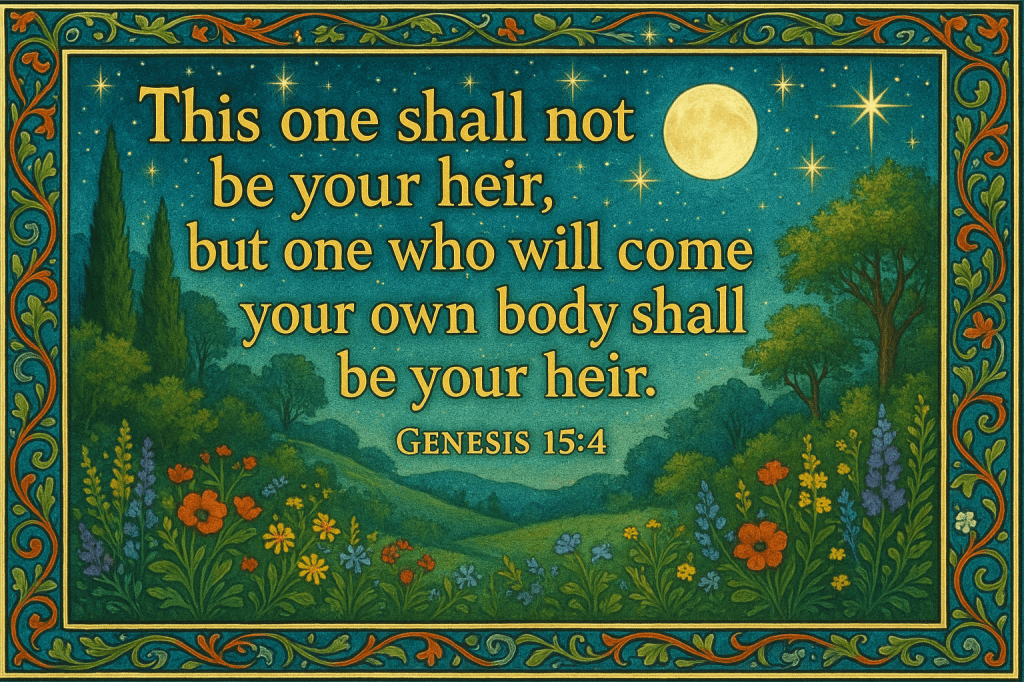
“This one shall not be your heir, but one who will come from your own body shall be your heir.”
(Genesis 15:4)

At this point in the narrative:

• Sarah has not yet given birth,
• Isaac has not yet been announced, and
• Ishmael has not yet been conceived.

The promise is therefore open and unnamed. The very next chapter, Genesis 16, introduces Hagar and narrates the birth of Ishmael—Abraham’s first biological son, who literally fulfills the condition of Genesis 15:4.

This raises a critical theological and textual question:

If Genesis 15:4 does not refer to Ishmael, then whose son is Ishmael, and why does Ishmael perfectly fulfill the verse?

📘 2. The Wording of Genesis 15:4

The Hebrew phrase “yēṣēʾ mimmeʿêkā” (יֵצֵ֣א מִמֵּעֶ֔יךָ ) translates:

One who comes forth from your own body/loins.”

Three observations are decisive:

  1. The promise does not mention Sarah — only Abraham’s biological paternity is required.
  2. The child is not named — the reader is left waiting for a son born to Abraham.
  3. The promise precedes the Isaac announcement — Isaac appears only two chapters later.

Therefore, the literal sense of the verse is broad enough to include any biological son of Abraham, and chronologically, Ishmael is the first and only son who fulfills it.

📘 3. Narrative Logic: Ishmael as Immediate Fulfillment

If Genesis 15:4 is interpreted as not referring to Ishmael, the text becomes internally incoherent.

The promise requires:

• a biological son,
• born after the promise,
• replacing Eliezer as heir.

Ishmael meets all three criteria:

• He is Abraham’s biological son.
• He is born immediately after the promise (Genesis 16).
• He becomes Abraham’s heir prior to the Isaac narrative.

Thus, if the verse does not refer to Ishmael, one must logically deny Ishmael’s biological connection to Abraham—a contradiction of the text.

Therefore:

Ishmael is the natural and immediate fulfillment of Genesis 15:4.

Isaac’s role emerges much later, within a new covenantal framework introduced in Genesis 17.

📘 4. Canonical vs. Text-Critical Interpretations

4.1 The Canonical Interpretation (Jewish & Christian)

According to the narrative order of Genesis as preserved in the Bible:

• Genesis 16 records the birth of Ishmael—the first son born after the promise of a “son from your own body.”
• Genesis 17 follows, when Ishmael is already 13 years old; here God announces Isaac for the first time and assigns the covenant to him.
• Genesis 21 narrates the birth of Isaac.

Because Isaac’s covenantal role is introduced only after Ishmael’s birth, Jewish and Christian tradition retroactively reads Genesis 15:4 as referring to Isaac—even though Ishmael is the first and literal fulfillment of that promise.

4.2 The Pre-Priestly Source (J/E) Interpretation

Historical-critical scholarship proposes that Genesis 15 belongs to an earlier narrative layer in which Ishmael played the role of Abraham’s primary heir.

Key scholars (Friedman, Sarna, Westermann) have observed:

• Genesis 15 is older, J/E (non-priestly) material.
• Genesis 17 is priestly (P) and reflects later theological concerns.
• The priestly layer shifts privilege from Ishmael to Isaac.

Thus:

In the earlier narrative tradition, Ishmael appears to be the intended heir of Genesis 15.
The priestly editor later reinterpreted this promise toward Isaac.

This aligns seamlessly with the Islamic view, where Ishmael is the firstborn heir prior to Isaac’s later covenantal role.

📘 5. The Islamic Perspective

Islam teaches that Ishmael is Abraham’s firstborn and rightful heir. The Qur’an positions Ishmael and Abraham together in key covenantal acts—building the Kaaba, dedicating it to God, and establishing the monotheistic legacy continued by Muhammad ﷺ.

Within this framework, Genesis 15:4 is perfectly consistent with Ishmael’s role:

• He is Abraham’s first biological son,
• the heir “from your own body,”
• and the son through whom Abraham’s first trials occur (desert episode, near-sacrifice in Islamic tradition).

Therefore:

From an Islamic view, Genesis 15:4 is a clear anticipation of Ishmael’s birth.

🌟 6. Conclusion

📝 Genesis 15:4 promises that Abraham’s heir will be a son “from your own body.” When read in its chronological context, this promise applies directly to Ishmael, whose birth is recorded in Genesis 16, the only son born after the promise and before the later covenantal reinterpretation of Genesis 17.

🔔 Therefore, on narrative, chronological, and source-critical grounds, Genesis 15:4 is best understood as originally referring to Ishmael—Abraham’s firstborn son. Only later, through priestly redaction in Genesis 17, is Isaac elevated to the center of the covenantal narrative, reshaping the earlier storyline.

This reading harmonizes the biblical narrative with Islamic tradition and offers a compelling reinterpretation of the Abrahamic story grounded in textual coherence and historical analysis.

🕋 The Abrahamic Covenant and the Sinai Covenant: An Islamic Perspective

Introduction

In the history of divine revelation, few themes are as central as the notion of covenant—a sacred bond between God and humankind. Both Judaism and Islam trace their spiritual origins to Abraham (Ibrāhīm عليه السلام), yet they diverge significantly in how they interpret the continuity and authority of that covenant. While Jewish tradition venerates the Ark of the Covenant (Aron ha-Berit) as the central relic of divine presence, Islam maintains a living connection to Abraham through enduring symbols such as the Kaaba (House of God), the Black Stone (Hajar al-Aswad), and the Station of Abraham (Maqām Ibrāhīm).

From an Islamic standpoint, this difference reflects not merely a matter of heritage, but a profound theological distinction between two divine covenants: the Abrahamic and the Sinai.

  1. The Abrahamic Covenant and the Sinai Covenant

The Abrahamic Covenant represents God’s original and universal promise to Abraham—offering him descendants, land, and blessings for all nations (Genesis 12, 15, 17). It is viewed in Islam as the foundation of true monotheism and moral submission (islām).

In contrast, the Sinai Covenant (or Mosaic Covenant) was established later with the Israelites through Moses (Mūsā عليه السلام) at Mount Sinai. This covenant centered on the Law (Torah) and bound a particular nation to divine commandments. Islamic scholars interpret this as a temporary covenant intended to guide a specific community until the restoration of the universal Abrahamic faith.

  1. Continuity and Fulfillment in Islam

Islamic theology asserts that Muslims are the true inheritors of the Abrahamic Covenant. This covenant, described as universal and eternal, transcends tribal or ethnic boundaries. It was renewed and fulfilled through Prophet Muhammad ﷺ, a direct descendant of Abraham through Ishmael (Ismāʿīl عليه السلام).

In contrast, the Sinai Covenant is seen as particular and conditional—its blessings dependent on Israel’s obedience to divine law. When that law was broken and the Ark of the Covenant lost, Islamic scholars view it as symbolizing the closure of that covenantal phase.

  1. The Significance of Relics and Continuity of Faith

A striking contrast between Judaism and Islam lies in the preservation of relics tied to their covenantal heritage.

• Judaism possesses no surviving Abrahamic relic; the Ark of the Covenant—the holiest object of ancient Israel—was associated with Moses, not Abraham, and disappeared after the First Temple’s destruction.

• Islam, by contrast, maintains tangible Abrahamic relics: the Kaaba (House of God), built by Abraham and Ishmael; the Black Stone, believed to mark God’s covenantal witness; and the Station of Abraham, where he stood during construction of the Kaaba.

Islamic scholars often interpret this continuity of relics as an enduring testimony that Islam preserves the living Abrahamic legacy in both spirit and form.

  1. The Ark of the Covenant and the End of the Sinai Order

The Ark of the Covenant served as the focal symbol of God’s presence in Israelite religion, containing the stone tablets of the Law revealed to Moses. However, its loss during the Babylonian destruction of the First Temple is understood in Islamic thought as emblematic—the withdrawal of divine favor from a covenant that had fulfilled its temporal purpose.

In contrast, Islam views the Kaaba as the restored House of God (Bayt Allāh), representing a continuous line of divine worship from Adam to Abraham and finally to Muhammad ﷺ.

The Ark belonged to the age of law, but the Kaaba belongs to the age of unity. The former was carried by priests; the latter is circled by all believers.

  1. Lineage and Restoration of the Original Faith

Islamic scholarship emphasizes that Prophet Muhammad ﷺ descends from Abraham through Ishmael, preserving the original monotheistic lineage. This genealogical link reinforces Islam’s claim as the restoration, rather than innovation, of Abraham’s faith.

Thus, Islam positions itself not as a new religion but as the revival of the primordial covenant—the same faith of Abraham, purified from human distortions and reaffirmed for all nations.

  1. Universality and Particularity

Theologically, Islam presents the Abrahamic Covenant as universal, extending to all humanity through submission to one God. By contrast, the Sinai Covenant is viewed as particular, restricted to the Israelites and their historical experience.

This distinction underscores Islam’s claim that the divine message, once localized in Israel, has now been universalized through the final revelation of the Qur’an—fulfilling God’s promise to make Abraham “a father of many nations” (Genesis 17:5).

  1. Supersession and Fulfillment

Some Islamic interpretations express a form of supersessionism, not in the sense of replacement but of completion. The Qur’an acknowledges earlier covenants while affirming that final guidance was perfected in Islam:

“This day I have perfected your religion for you, completed My favor upon you, and chosen Islam as your way.”
(Qur’an 5:3)

Thus, the Abrahamic Covenant, renewed through Muhammad ﷺ, is seen as the culmination of God’s redemptive plan that began with Abraham and reached universality through Islam.

Conclusion

The Islamic distinction between the Abrahamic and Sinai covenants is not merely historical but profoundly theological. The loss of the Ark, the absence of Abrahamic relics in Judaism, and the survival of the Kaaba and the Station of Abraham in Islam are read as symbolic of a divine transition—from the particular to the universal, from the Mosaic to the Abrahamic, from the temporal to the eternal.

In the eyes of Islamic scholarship, the covenant lives on not in a lost ark of gold, but in the living hearts of those who submit to God in the faith of Abraham—the father of all who believe.

Haggai 2:7 and the Night Journey of the Prophet Muhammad ﷺ: An Islamic Reading

Azahari Hassim

📜 Haggai 2:7 and the Night Journey of the Prophet Muhammad ﷺ: An Islamic Reading

🌟 Introduction

Haggai 2:7 declares:

“And I will shake all nations, and the desire of all nations shall come: and I will fill this house with glory, saith the LORD of hosts.” (KJV)

From an Islamic perspective, this verse can be seen as an allusion to the Prophet Muhammad ﷺ and his Night Journey (al-Isrāʾ) to Jerusalem. The key lies in the Hebrew term חֶמְדָּה (ḥemdāh)—translated as “desire” or “delight”—which shares its root with the Arabic names Muhammad and Ahmad. ✨ Notably, the Hebrew word ḥemdāh is the feminine form of ḥemed, while the Arabic name Ahmad is another title of Muhammad ﷺ, prophesied by Jesus in Surah 61:6. This linguistic bridge offers a fascinating interfaith reflection on prophecy, sacred language, and divine promise.

🔤 The Hebrew Root ח מ ד (ḥ-m-d)

The root ḥ-m-d in Hebrew conveys desirability, preciousness, and belovedness. Several Hebrew words derive from it:
• 📖 ḥāmed (חָמֵד): “desirable” or “coveted”
• 📖 ḥemdāh (חֶמְדָּה): “delight” or “precious object” (appearing in Haggai 2:7)
• 📖 neḥmād (נֶחְמָד): “pleasant” or “lovely”
• 📖 maḥmād (מַחְמָד): “delight” or “desirable thing”

All of these share the same root idea of something beloved or longed for 💖.

🕌 “The Desire of All Nations Shall Come”

Haggai’s prophecy envisions a time when the house of God in Jerusalem will be filled with divine glory. For Muslims, this recalls the Prophet’s miraculous Night Journey (al-Isrāʾ), explicitly mentioned in the Qur’an:

“Exalted is He who took His Servant by night from al-Masjid al-Ḥarām to al-Masjid al-Aqṣā, whose surroundings We have blessed, to show him of Our signs. Indeed, He is the Hearing, the Seeing.” (Qur’an 17:1)

🌙 This verse establishes the link between the Prophet Muhammad ﷺ, Mecca, and Jerusalem. His presence at al-Masjid al-Aqṣā sanctified the site, bringing a moment of divine glory to the Temple Mount. Thus, Haggai’s vision of the “desire of all nations” entering God’s house can be interpreted as pointing to Muhammad ﷺ, whose Night Journey symbolically unites all prophets and all nations 🌍 in worship of the One God.

🔗 A Linguistic and Theological Bridge

The connection becomes clearer when Hebrew and Arabic are read side by side:


• ✡️ Hebrew: ḥemdāh → “delight” / “precious object”


• ✡️ Related forms: ḥāmed → “desirable,” neḥmād → “pleasant,” maḥmād → “delight”


• ☪️ Arabic: ḥ-m-d → Names Muhammad (“the praised one”) and Ahmad (“the most praiseworthy”)

The Qur’an itself records Jesus ✝️ foretelling the coming of a messenger named Ahmad:

“And [remember] when Jesus, the son of Mary, said, ‘O Children of Israel, indeed I am the messenger of Allah to you, confirming what came before me of the Torah and bringing good tidings of a messenger to come after me, whose name is Ahmad.’” (Qur’an 61:6)

In both languages, the root carries the idea of something or someone deeply desired, beloved, praised, and precious. 🌹

Theologically, the prophecy of nations being “shaken” 🌍⚡ aligns with Islam’s transformative impact on world history. Within a generation of Muhammad’s Night Journey, the message of Islam spread across nations, fulfilling the vision of divine glory filling God’s house 🕋.

⚖️ Limits and Interpretive Context

It is important to stress that this reading is an interpretive possibility rather than a universally held Islamic doctrine. Classical Muslim exegetes (mufassirūn) did not directly cite Haggai 2:7 as prophecy of the Night Journey. Rather, modern interfaith scholars and daʿwah perspectives highlight it as an example of linguistic and symbolic overlap between the Hebrew Bible and the Qurʾan.

Conclusion

From an Islamic perspective, Haggai 2:7 can be read as an anticipation of the Prophet Muhammad’s Night Journey 🌙 to Jerusalem. The shared Semitic root ḥ-m-d links the Hebrew ḥemdāh (“desire, delight”) with the Arabic Muhammad (“praised one”) and Ahmad, while the verse’s imagery of nations shaken 🌍 and the house of God filled with glory ✨ aligns with Islam’s transformative impact on world history and resonates deeply with the Prophet’s presence at al-Masjid al-Aqṣā (Qur’an 17:1).

Coupled with Jesus’ announcement of Ahmad in Qur’an 61:6, this interpretation reflects the profound ways in which language, prophecy, and sacred history intertwine across the Abrahamic traditions ☪️✡️✝️.

Does the phrase “the night visions” in Daniel 7 refer to Muhammad’s Night Journey?

How do some argue that the phrase “the night visions” in Daniel 7, verse 13 refers to Muhammad’s Night Journey to the seventh heaven to meet God instead of Jesus, whose ascension did not occur at night?

Some argue that the phrase “the night visions” in Daniel 7, verse 13, refers to Muhammad’s Night ( الإسراء والمعراج) rather than Jesus’ ascension based on the following points:

1. The term “night visions” directly suggests an event that takes place at night. Muhammad’s Night Journey, which is said to have occurred during the night, aligns with this description. In contrast, Jesus’ ascension is generally not described as happening at night in Christian texts.

2. According to Islamic tradition, during the Isra, Muhammad traveled from Mecca to Jerusalem and then ascended through the heavens in the Mi’raj. He is described as having profound spiritual experiences, meeting past prophets, and ultimately coming into the presence of God.

In Daniel 7, verses 13 to 14, “one like a son of man” is seen coming with the clouds of heaven and approaching the “Ancient of Days” (interpreted by scholars as God). This imagery of traveling through the heavens and meeting a divine figure has parallels with Muhammad’s Night Journey.

3. The mention of the “clouds of heaven” could be metaphorically linked to the ethereal and divine nature of Muhammad’s ascent through the heavens, which is a central element in the Night Journey narrative.

4. Some Muslim scholars see Daniel’s vision as prophetic, foretelling not just events relevant to Jewish history but also later significant religious events. They interpret the “one like a son of man” as a reference to a future prophet who would establish a new era, which Muhammad is believed to have done in Islam.

5. In the vision, the figure receives authority, glory, and sovereign power, and all nations serve him. Supporters of this interpretation argue that Muhammad’s establishment of Islam fits this prophecy as he united tribes and established a widespread religious and political community.

While these arguments are compelling within an Islamic interpretive framework, this interpretation is not widely accepted in Christian and Jewish traditions.

However, it’s important to note that these interpretations are not mainstream and are often viewed within the context of interfaith dialogue or polemics.

Traditional Jewish and Christian interpretations generally identify the “one like a son of man” as a messianic figure, often associated with Jesus in Christian theology, while in Jewish thought, it can be seen as a representation of Israel or the Messiah.

The Prophecy of Daniel: Constantine the Great and Muhammad the Prophet

Some believe that Daniel 7, verse 25 alludes to Constantine the Great, who presided over the council of Nicaea, while Daniel 7, verse 13, points to Muhammad’s Night Journey. How is this argument explained?

This is a very controversial argument that is not widely accepted by most biblical scholars and Christians, who believe that Daniel 7, verse 25, and Daniel 7, verse 13, refer to the Antichrist and the Messiah, respectively. However, some people who support this argument explain it in the following way:


They claim that Constantine the Great, who was the first Roman emperor to convert to Christianity and who convened the Council of Nicaea in 325 AD, was the little horn of Daniel 7, verse 25, who spoke pompous words against the Most High and tried to change the times and the laws.

They argue that Constantine corrupted the original teachings of Jesus and imposed his own doctrines and creeds on the Christian church, such as the doctrine of the Trinity, the observance of Sunday instead of Saturday as the Sabbath, and the celebration of Easter instead of Passover.

They also accuse Constantine of persecuting and oppressing those who did not conform to his version of Christianity, such as the followers of Arianism, who denied the divinity of Jesus.
Arianism sparked significant debates within the Church, particularly during the early Ecumenical Councils. The First Council of Nicaea in 325 AD condemned Arianism, affirming the doctrine of the Trinity and the full divinity of Christ. The Nicene Creed established the belief that the Son is “begotten, not made, of one substance with the Father.”

Islamic scholars claim that Muhammad, who was the prophet of Islam and who claimed to have a miraculous Night Journey from Mecca to Jerusalem and then to heaven in 621 AD, was the Son of Man of Daniel 7, verse 13, who came with the clouds of heaven and was given dominion, glory, and a kingdom by the Ancient of Days, that is God.

The term “night visions” directly suggests an event that takes place at night. Muhammad’s Night Journey, which is said to have occurred during the night, aligns with this description. In contrast, Jesus’ ascension is generally not described as happening at night in Christian texts.

They argue that Muhammad was a true prophet of God who restored the pure monotheism that was lost by Constantine and his followers. They also assert that Muhammad’s kingdom is an everlasting kingdom that will never be destroyed, and that all nations and peoples of every language will serve him or submit to his law.
In summary, these are a few points made by Islamic scholars to back the notion that Daniel 7, verse 25, and 7, verse 13, refer to Constantine as the little horn who established the Trinity at the Council of Nicea, and Muhammad as the Son of Man who encountered God on his Night Journey to the seventh heaven.

📋 “Muhammad” as a Title for Jesus?

A Full Explanation of Jay Smith’s Argument

Introduction

In recent years, Christian polemicist and historian Jay Smith—a prominent figure in London’s Hyde Park debates—has advanced a controversial re-reading of early Islamic origins. One of his most provocative claims is that the term “Muhammad” (MHMD), as it appears in early Arabic inscriptions and coinage, did not originally refer to a historical Arabian prophet, but rather functioned as a title for Jesus used by Syriac-speaking Christian communities in the 6th–7th centuries.
This reinterpretation forms part of Smith’s broader revisionist model that challenges the traditional narrative of Islam’s emergence in 7th-century Arabia.

This article explains Smith’s reasoning, the linguistic and historical evidence he proposes, and the Christian tradition he believes produced this title.

  1. Syriac Christianity as the Alleged Source of “Muhammad”

According to Jay Smith, the key to understanding the early appearances of the name MHMD is the influence of Syriac-speaking Christian sects.
He argues that:

1.1. Syriac Christians used titles rather than personal names in liturgical texts

Smith points out that Syriac hymnography and homilies frequently use descriptive epithets for Jesus, including:

• Mshīḥā — “the Messiah”
• Mār(y)a — “the Lord”
• Raḥmānā — “the Merciful”
• Mḥīmmādā / Mḥamdā — “the Praised One”

This last term—rooted in the Semitic tri-consonantal cluster ḥ-m-d (to praise, to commend)—becomes the central pillar of his argument.

1.2. “Mḥmd” was allegedly a Christological title

Smith contends that in some Syriac poetic and liturgical traditions, Jesus was poetically described as mḥmd—“the praised one.”
Thus, the MHMD appearing in early inscriptions could, in his view, reasonably refer to Jesus Christ, not to a human founder of Islam.

1.3. Syriac Christians shaped early Arab religious vocabulary

Smith claims that Arab tribes living in the Levant, northern Arabia, and Mesopotamia—before Islam—were heavily influenced by:

• Syriac Orthodox (Jacobite) Christians
• Nestorian Christians
• Aramaic-speaking monastics and missionaries

Thus, the earliest Arabic religious inscriptions may reflect Christian theological language, not Islamic identity.

  1. Early Coins and Inscriptions: Reading MHMD as Jesus

Jay Smith frequently cites 7th-century archaeological data—coins, inscriptions, and manuscripts—to support his claim.

2.1. The earliest MHMD references do not resemble later Islamic theology

On coins from the late 7th century (especially during the reign of Abd al-Malik), the inscription:

• MHMD appears alongside Christian symbols, such as
• a cross
• Christological phrases

According to Smith, this demonstrates the following:

The earliest Muslims were still using Christian iconography and language; therefore, “Muhammad” must have been a title within this Christianized framework.

2.2. The absence of prophetic biography

Smith argues that inscriptions mentioning MHMD contain no indication of:

• a birthplace in Mecca
• a prophetic mission
• a Quran
• companions
• battles
• hadith
• prophetic sayings

Thus, he concludes that MHMD was not originally a historical prophet, but a venerated figure already known in Christian tradition.

2.3. MHMD in the Dome of the Rock inscription (691 CE)

The Dome of the Rock contains the phrase:

• “Muhammad is the servant of God and His Messenger.”

Smith argues that this phrase resembles Christian formulations about Jesus—particularly the biblical phrase “Jesus, the servant of God”—and therefore could originally have signified Jesus, before being reinterpreted as a reference to an Arabian prophet.

This is a highly contested claim, but central to his reasoning.

  1. Which Christian Tradition Produced This Title?

Jay Smith’s position is clear:

He attributes the “Muhammad-as-Title-for-Jesus” interpretation to:

3.1. Syriac Orthodox (Jacobite) Christianity

• Based in Syria and Mesopotamia
• Known for poetic, honorific titles for Christ
• Used Semitic linguistic roots like ḥ-m-d in Christological praise

3.2. Other Eastern Christian sects

Smith sometimes expands this to:

• Nestorian Arabs
• Syriac-speaking monastic communities
• Arabized Christian tribes

These groups, he argues, created an environment in which a title such as “the praised one” (mḥmd) could easily be applied to Jesus.

  1. How, According to Smith, the Title Became a Personal Name

Jay Smith argues that early Arab rulers—particularly those forging a new political-religious identity after the fall of Byzantine influence—misappropriated or reinterpreted the Syriac epithet.

4.1. A title becomes a name

He claims that as Arabic replaced Syriac as the dominant liturgical and administrative language, the term:
• mḥmd → “Muhammad”

shifted from a title meaning “praised one”
to a personal name belonging to a newly constructed prophet-figure.

4.2. The creation of a prophetic biography

Smith asserts that the sīrah (prophetic biography) and hadith literature—compiled much later—retroactively built a life story around this name, transforming a Christological epithet into a new religious founder.

  1. Scholarly Response

Most historians, linguists, and Islamic scholars—both Western and Muslim—reject Smith’s view, arguing that:

• “Muhammad” behaves grammatically as a proper name in early Arabic sentences
• Coins and inscriptions reflect a transitional Islamic theology, not Christian language
• Syriac texts using the root ḥ-m-d do not equate this term with a personal identity for Jesus
• Smith’s method selectively reads evidence

Nonetheless, his theory remains influential in certain polemical circles and continues to generate debate online.

Conclusion

Jay Smith’s argument that “Muhammad” was originally a title for Jesus arises from his broader revisionist project that reexamines Islam’s earliest decades. He locates this idea in Syriac-speaking Christian traditions, particularly Jacobite Christianity, which he suggests used poetic praise terms such as mḥmd for Jesus.
From this foundation, he argues that early Arab rulers and later Islamic writers misinterpreted and transformed this epithet into the personal name “Muhammad,” eventually constructing a prophetic biography around it.

Though not supported by mainstream scholarship, Smith’s thesis represents a distinctive attempt to reinterpret early Islamic materials through the lens of late antique Syriac Christianity.

Ishmael and Isaac: Sons of Abraham, Different Paths of Dedication


Azahari Hassim

🔹 Ishmael and Isaac: Sons of Abraham, Different Paths of Dedication

Introduction

The story of Abraham’s two sons, Ishmael and Isaac, is central to the shared heritage of Judaism, Christianity, and Islam. While both sons embody Abraham’s devotion to God, their roles and legacies differ in ways that shaped the theological horizons of nations. Ishmael represents consecration from infancy through his association with the Kaaba, the House of God, while Isaac stands as the son of joy and promise, born to Abraham and Sarah in their old age. Together, their stories reflect divine reward, human sacrifice, and covenantal destiny.

🔹 Ishmael: Consecrated in Infancy

According to Islamic tradition, Ishmael (Ismā‘īl عليه السلام) was dedicated to God from his earliest days. Abraham, at God’s command, left Hagar and infant Ishmael in the barren valley of Bakkah (later known as Mecca). This act was not abandonment but consecration: Ishmael was placed directly under God’s care, sustained by the miraculous spring of Zamzam.

The Kaaba, raised later by Abraham and Ishmael (Qur’ān 2:127–129), became the House of God on earth, a perpetual sign of Ishmael’s unique link to divine worship. Even the Bible hints at this sanctity when it states: “And God was with the child as he grew up” (Genesis 21:20). Ishmael, the firstborn, carried the sign of circumcision at thirteen, marking his flesh with the covenant long before Isaac was born. In this way, his entire life—from infancy onward—was devoted to God.

🔹 Isaac: The Son of Joy and Reward

Isaac (Isḥāq عليه السلام), by contrast, represents divine joy and fulfillment. Born when Abraham was a hundred and Sarah ninety, his very name (Yitzḥaq in Hebrew, “he laughs”) reflects the wonder and laughter of parents blessed in their old age. Isaac’s birth was not only a miracle but also a reward from God, granted after Abraham’s willingness to dedicate his firstborn son, Ishmael, upon the altar of sacrifice.

The Torah preserves God’s words: “Take your son, your only son…” (Genesis 22:2). While Jewish and Christian traditions identify Isaac as the son of this near-sacrifice, Islamic tradition regards Ishmael as the one tested. Moreover, Isaac’s name reflects grace and fulfillment, not trial and sacrifice.

🔹 Two Sons, One Covenant Story

Ishmael and Isaac embody two dimensions of Abraham’s devotion:

• Ishmael reflects consecration through sacrifice, hardship, and association with the House of God, Mecca. His line culminates in the Prophet Muhammad ﷺ, through whom monotheism was universalized.
• Isaac reflects joy, blessing, and reward—proof that God fulfills promises even against natural odds. His line carries forward through Israel, the people who received the Law at Sinai.

Thus, the destinies of both sons form complementary expressions of the Abrahamic covenant: Ishmael sanctified from infancy, and Isaac gifted as a reward in old age. Together, they testify to God’s faithfulness, mercy, and the universality of His plan.

🔹 Conclusion

The lives of Ishmael and Isaac cannot be reduced to rivalry but must be understood as twin strands in Abraham’s legacy. Ishmael symbolizes the House of God in Mecca, consecration from birth, and the spiritual resilience of a firstborn offered to God. Isaac embodies joy, fulfillment, and divine promise in the twilight years of Abraham and Sarah. In their distinct paths, both sons reveal how God weaves dedication and reward into the fabric of covenant history—a story still alive in the hearts of Jews, Christians, and Muslims today.

🕊️ A Nontraditional Chronological Reading of Genesis: Ishmael’s Role in the Sequence of Covenants

This argument represents a nontraditional chronological reading of Genesis that seeks to reconcile narrative and covenantal tensions surrounding Abraham, Ishmael, and Isaac. It reorders the events to portray Ishmael—not Isaac—as the son tested in the near-sacrifice episode, interpreting Genesis as a progressive unfolding of divine trials and covenantal ratifications.

1. Premise: The Covenants and Promises Are Sequentially Related

Proponents begin by noting that Genesis presents several covenantal moments with Abraham—particularly in Genesis 15, Genesis 17, Genesis 21, and Genesis 22—which they view as successive stages of a single divine plan rather than separate, unrelated episodes.

★ Genesis 15: God promises Abraham descendants as numerous as the stars.

★ Genesis 17: God formalizes this promise through the covenant of circumcision, renaming Abram as Abraham, “father of many nations.”

★ Genesis 21:14–20: Abraham faces his first test concerning Ishmael’s fate when Hagar and Ishmael are sent away into the wilderness.

★ Genesis 22: Abraham faces the ultimate test—offering his “only son” to God.

In this interpretive model, the episodes are not arranged chronologically in the canonical order. Genesis 21 and 22, both dealing with Ishmael, are understood to precede Genesis 17, forming the experiential foundation upon which the covenant of circumcision is later ratified.


2. Genesis 22 — The Supreme Test: Abraham’s Willingness to Sacrifice Ishmael

In the canonical order, Genesis 22 features the near-sacrifice of Isaac. But the description of the son as “your only son” cannot apply to Isaac if Ishmael is alive and older. By placing Genesis 22 earlier—before Isaac’s conception—the narrative unfolds with perfect coherence:

• Ishmael is Abraham’s firstborn.

• Ishmael is Abraham’s only son at that stage.

• Ishmael is the son through whom Abraham has already received divine promises.

Thus, in non-canonical interpretations where Genesis 22 precedes Genesis 17, the son offered in the near-sacrifice must be Ishmael, since Isaac had not yet been born or even promised.


3. Genesis 21:14–20 as the First Test of Abraham

Before the near-sacrifice in Genesis 22, the episode in Genesis 21:14–20 portrays Abraham’s earlier emotional trial involving Ishmael. In this narrative, Abraham sends Hagar and Ishmael into the wilderness at Sarah’s insistence. The text describes Ishmael as an infant carried by Hagar, a detail that aligns closely with the Islamic tradition in which Ishmael is still a small child when Abraham leaves him in the desert (Mecca).

According to Genesis 21:5, Ishmael would have been 16–17 years old at the time. Yet the surrounding verses (vv. 14–20) treat him as if he were a helpless toddler. This is not merely a literary flourish but a direct inconsistency in age and behavior within the same episode.

Therefore, in non-canonical interpretations, Genesis 21:14–20 is understood to occur prior to Genesis 17—specifically because the passage depicts Ishmael as an infant or small child, in stark contrast to Genesis 17, which explicitly states that Ishmael was already 13 years old. By placing the desert episode before Genesis 17, the age contradiction is resolved, and the narrative fits naturally within an earlier phase of Abraham’s life.

Viewed this way, the “banishment test” becomes Abraham’s first trial involving Ishmael, testing his faith in God’s promise concerning Ishmael’s survival and future greatness (“I will make him a great nation,” Gen 21:18).

The subsequent “sacrifice test” in Genesis 22 then functions as the second and supreme trial, where Abraham’s obedience reaches its deepest expression. Together, these two Ishmael-centered episodes frame the development of Abraham’s faith before the covenantal ratification of Genesis 17.


4. Identification of the Sacrificed Son as Ishmael

On this reordered chronology:

★ The “only son” of Genesis 22 refers to Ishmael, Abraham’s firstborn by Hagar.

★ The phrase “your son, your only son” (Gen 22:2) fits Ishmael prior to Isaac’s birth.

★ The later introduction of Isaac (Gen 17–18) is not a replacement but a continuation of the divine plan—rewarding Abraham’s faithfulness through a second lineage that expands the original covenant.

Hence, the Akedah (binding of the son) becomes a test of Ishmael’s line, and Genesis 17 becomes a ratification of that obedience through the promise of “many nations.”


5. Genesis 17 as Covenant Ratification

In this model, Genesis 17 does not precede but follows the tests of Genesis 21–22. It represents God’s ratification of Abraham’s proven obedience:

★ Abraham is renamed and blessed as “father of many nations.

★ Circumcision is introduced as a covenantal sign, extending the promise to all his progeny.

★ The birth of Isaac is announced as a reward and continuation of divine favor.

Thus, Genesis 17 serves as the formalization of the faith demonstrated earlier through Abraham’s trials involving Ishmael.


6. Literary-Critical Perspective

From a literary-critical standpoint, this interpretation draws upon source-critical and redactional insights. Scholars employing the Documentary Hypothesis often distinguish between several compositional layers within Genesis, each reflecting different theological emphases and historical contexts:

★ Genesis 21 and Genesis 22 are generally attributed to the Elohist (E) and Jahwist (J) sources, which are earlier traditions. These sources emphasize vivid narrative, moral testing, and divine encounter—often conveyed through the figure of the angel of the Lord.

★ Genesis 17, by contrast, is assigned to the Priestly (P) source, which is later in composition and is marked by formal covenantal language, ritual precision, and theological systematization.

Within this framework, proponents of the chronological reordering argue that the older E/J traditions—which may have originally centered on Ishmael—were subsequently integrated and reinterpreted by Priestly editors. These later redactors inserted Genesis 17’s covenantal structure before the narrative of Genesis 22, thereby reshaping the sequence to emphasize Isaac as the covenantal heir.

Thus, from a literary-critical perspective, the hypothesis that Genesis 22 predates Genesis 17 in origin aligns with the idea that an earlier Ishmaelite-focused narrative was overlaid by a later Priestly redaction, producing the canonical order familiar today.


7. Summary Articulation

To summarize:

★ 1. Genesis 21:14–20 presents Abraham’s first test concerning Ishmael’s separation, aligning with the Islamic account of the desert episode.

★ 2. Genesis 22 (the near-sacrifice) represents the second and climactic test, also involving Ishmael.

★ 3. Genesis 17, announcing Isaac’s birth and instituting circumcision, follows these trials and serves as God’s ratification of Abraham’s faith.

Therefore, the sequence Genesis 21 → Genesis 22 → Genesis 17 portrays a coherent theological and narrative progression in which Abraham’s obedience regarding Ishmael becomes the foundation for his establishment as the “father of many nations.”

This reading not only restores textual coherence to the phrase “your only son,” but also resolves the age contradiction, places the narrative within an earlier phase of Abraham’s life, integrates Ishmael’s covenantal significance, and provides a bridge between Biblical and Qur’anic portrayals of Abraham’s faith.

📖 Ishmael in Genesis 21: Baby vs. Mocking Teenager

Hagar and Ishmael cast out, as in Genesis 21, illustration from the 1890 Holman Bible.

This black-and-white engraving depicts the biblical scene of Hagar and Ishmael being cast out. A sorrowful Hagar is shown leading her young son Ishmael by the arm, walking barefoot and carrying provisions. Ishmael looks distressed, while Hagar appears contemplative and burdened. In the background, Abraham and Sarah can be seen near the doorway of a house—Sarah holding Isaac—emphasizing the cause of the expulsion. The illustration captures the pathos of separation and exile central to the Genesis 21 narrative.

✍️ A Case for Interpolation in Genesis 21:9–10

⚖️ The Core Contradiction

Genesis 21 contains two irreconcilable portrayals of Ishmael:

• Genesis 21:14–20 → Ishmael is depicted as a helpless child—carried on Hagar’s shoulder, laid under a bush, and rescued by an angel. Verse 20 reinforces this image: “And God was with the boy, and he grew.” If Ishmael had already been a teenager or older, it would not have been necessary to mention his growth.
• Genesis 21:9–10 → Ishmael appears as a teenager “mocking” Isaac, prompting Sarah to demand his expulsion to secure Isaac’s inheritance.

But according to Genesis 16:16 and 21:5, Ishmael was 16–17 years old at this point. The surrounding verses (vv. 14–20), however, treat him as if he were an infant. This is not a stylistic flourish but a direct contradiction in age and behavior within the same episode.

📜 The Textual Inconsistency

The contradiction is sharp:

• 👶 Genesis 21:14–20 + 21:20 → Ishmael is a small boy growing up under God’s care.
• 🧑‍🦱 Genesis 21:9–10 → Ishmael is a mocking adolescent, a threat to Isaac’s status.

This inconsistency strongly suggests that Genesis 21 combines two traditions or has been redacted with an interpolation to reshape the story.

🔎 Why 21:9–10 is Interpolation

Several factors converge:

  1. ⚖️ Contradictory portrayals: helpless child vs. mocking teenager.
  2. ⚡ Abrupt insertion: v. 9 introduces a sudden and unexplained motive.
  3. 📖 Theological shaping: vv. 9–10 are designed to exclude Ishmael from inheritance.
  4. 📚 Textual fluidity: the LXX shows this very section was unstable.
  5. 🧵 Narrative flow without vv. 9–10: the story reads smoothly if Sarah’s demand is absent—Abraham provides, Hagar departs, baby Ishmael nearly dies, God rescues, Ishmael grows.

✡️ Hebrew Note

In Genesis 21:14, the Hebrew says:

וַיִּתֵּ֣ן אֶל־הָגָ֑ר שָׂ֣ם עַל־שִׁכְמָ֔הּ וְאֶת־הַיֶּ֖לֶד

He put [the bread and water] on her shoulder, and [he gave her] the child.

Some translations smooth this as if Abraham “placed the child on her shoulder,” reinforcing the infant image. Others take it as “gave her the child,” but the syntax still suggests dependence and smallness—clashing with the teenager portrayal of vv. 9–10.

☪️ The Islamic Resonance

The “helpless child” imagery in Genesis 21 aligns closely with the Islamic tradition, in which Abraham leaves Hagar and infant Ishmael in the valley of Makkah, where God miraculously provides water (the well of Zamzam 💧).

This suggests that the older stratum of the story remembered Ishmael as a baby. The later interpolation (vv. 9–10) reframes him as a rival heir to justify his expulsion and Isaac’s primacy.

Conclusion

Genesis 21 preserves two incompatible portrayals of Ishmael:

• 👶 one as a baby in need of rescue (vv. 14-20),
• 🧑 one as a mocking teenager (vv.9-10).

The tension is best explained by redactional activity, with Genesis 21:9–10 functioning as an interpolation to serve Israel’s covenantal theology.

Without those verses, the passage regains coherence and aligns with an earlier tradition—one that resonates strongly with the Islamic account of Ishmael’s infancy.

Isaac or Ishmael? A Comparative Study of the Abrahamic Covenant in Islam and the Bible

  1. Why Islamic Scholars Believe the Torah Was Altered Regarding Ishmael

The Qur’an accuses some Jewish scribes of altering scripture:

“Do you hope they will believe you, when some of them used to hear the words of God then distort them after they had understood them, knowingly?” (Qur’an 2:75)

“So woe to those who write the Book with their own hands and then say, ‘This is from God,’ to exchange it for a small price.” (Qur’an 2:79)

This doctrine of taḥrīf (distortion) is applied by Muslim exegetes to the Abrahamic covenant narratives. They argue that the Torah originally gave Ishmael covenantal prominence, but Jewish scribes altered the text to place Isaac in that role for political and ethnic reasons:

• Ethnic exclusivity: Restricting the covenant to Isaac made it Israel’s exclusive inheritance.
• Religious authority: Elevating Isaac justified Israel’s claim to be God’s sole chosen people.
• Arab-Israelite rivalry: Excluding Ishmael delegitimized the Ishmaelites (later Arabs) as covenantal heirs.

  1. Islamic Reasons Supporting Ishmael’s Role

a. Qur’anic Testimony

• Universal covenant: Abraham was promised leadership for his descendants, but God limited it to the righteous, not by bloodline (Qur’an 2:124). Ishmael qualifies.


• The Sacrifice Narrative: Qur’an 37:101–112 implies the sacrificed son was Ishmael, since Isaac’s birth is mentioned after the sacrifice story.


• Kaaba (House of God) and prayer for Ishmael’s descendants: Abraham and Ishmael built the Kaaba and prayed for a messenger from their line (Qur’an 2:127–129) — fulfilled in Muhammad ﷺ.


• Praise for Ishmael: The Qur’an honors Ishmael as a prophet and covenant-keeper (Qur’an 19:54–55).

b. Historical logic

• Firstborn son: By ancient Near Eastern custom, Ishmael (the firstborn) should have been covenantal heir unless disqualified — but the Bible itself shows God blessing him greatly (Genesis 17:20).


• Circumcision: Ishmael was circumcised at the age of 13, on the same day as his father Abraham, and before Isaac was born (Genesis 17:23–25). This means that Ishmael entered the covenant earlier than Isaac. Therefore, the theological importance of Isaac’s circumcision is similar to that of the other members of Abraham’s household.


• Sacrificial test: Islam preserves Ishmael’s central role in the great test of faith, commemorated annually at Eid al-Adha. Judaism and Christianity, in contrast, have no liturgical commemoration of Isaac’s binding (Akedah), which Muslims see as a sign of textual alteration.

  1. Biblical Reasons that Support the Islamic Assertion

Even within the Bible, there are tensions and clues that suggest Ishmael’s role was more significant than later scribes allowed:

  1. Ishmael is blessed to become a “great nation”
    • “As for Ishmael, I have heard you. I will surely bless him; I will make him fruitful and will greatly increase his numbers. He will be the father of twelve rulers, and I will make him into a great nation.” (Genesis 17:20)
    This blessing closely parallels covenantal promises given to Isaac.
  2. Circumcision before Isaac
    • Genesis 17:23–25 explicitly records Ishmael’s circumcision as covenantal sign, before Isaac’s birth. This raises the question: why would the covenant sign be given to one excluded from it?
  3. Ambiguity of the Sacrifice Story
    • In Genesis 22:2, Isaac is named as the son to be sacrificed. But Muslim scholars argue this insertion is suspicious because:
    • Earlier verses (Genesis 22:1) simply say “your son, your only son” — which could only have referred to Ishmael at the time, since Isaac wasn’t born until later.
    • The phrase “your only son” makes no sense if Isaac is meant, because Ishmael was alive. Thus, the text seems edited.
  4. No Jewish Festival for the Binding
    • Despite its centrality, Judaism has no feast commemorating Isaac’s binding, whereas Islam preserves its memory through Eid al-Adha. This absence suggests the Isaac-centered version was secondary.
  5. Arab traditions of Abraham and Ishmael
    • Pre-Islamic Arabs preserved traditions of Abraham and Ishmael at the Kaaba (House of God) in Mecca. This continuity indicates Ishmael’s role was widely remembered outside of Jewish editing.

4. Ishmael as a Baby: A Biblical Contradiction

The book of Genesis presents Ishmael in a way that appears inconsistent with the chronological details of the narrative:

• Genesis 21:9–10: Sarah sees “the son of Hagar” and demands that Abraham “cast out” the slave woman and her son. Ishmael would have been approximately 16 or 17 years old at this point — not a small child.

• Genesis 21:14–18: Abraham sends Hagar away with bread and water, placing the child on her shoulder as though he were an infant. Later, Hagar lays Ishmael under a bush, unable to watch him die of thirst, until an angel instructs her to “lift the boy up.”

• Genesis 21:20: The text continues, “And God was with the boy as he grew,” which further suggests an image of early childhood.

However, according to the timeline (Genesis 16:16; 21:5), Ishmael would have been approximately 16–17 years old at this stage. The portrayal of him as a helpless baby, therefore, introduces a notable tension within the biblical narrative.

Interestingly, this depiction parallels the Islamic account, which holds that Ishmael was still an infant when Hagar left Abraham’s household and settled in the valley of Makkah, where God provided for them. From this perspective, the biblical image of Ishmael as a young child—despite its chronological inconsistencies—can be seen as indirectly reinforcing the Islamic tradition that situates his departure during infancy, long before the birth of Isaac.

Furthermore, some scholars view Genesis 21:9–10, where Sarah insists on the expulsion of Hagar and Ishmael, as a later editorial addition. This insertion may have been intended to emphasize Isaac as the legitimate covenant heir and to reduce Ishmael’s significance, thereby reinforcing Israel’s unique identity within the biblical narrative.

Conclusion

The ambiguous wording of the sacrifice narrative—where the phrase “your son, your only son” could only have referred to Ishmael at that time—and the fact that Ishmael was circumcised alongside Abraham before Isaac’s birth, strongly indicate his covenantal significance. These elements suggest that Ishmael was indeed a rightful heir of the Abrahamic covenant, but the text was later shaped to elevate Isaac while diminishing Ishmael’s original role.

The contradictions within Genesis — portraying Ishmael as both a teenager by chronology and as a helpless baby by narrative — point to possible textual reshaping intended to diminish his stature in favor of Isaac. At the same time, this very imagery, whether intentional or not, indirectly supports the Islamic belief that Ishmael was in fact an infant when he left Abraham’s household with Hagar.

Islam affirms that Ishmael was never rejected. Instead, he was a prophet, covenant-bearer, and forefather of Muhammad ﷺ. Through him, the Abrahamic covenant found its universal fulfillment, not confined to one lineage but extending to all nations through Muhammad and the message of Islam.

The Qur’an’s Silence vs. the Torah’s Voice


Azahari Hassim

The Qur’an’s Silence vs. the Torah’s Voice

The Qur’an does retell the Abrahamic narrative but leaves certain elements unspoken: Hagar’s name, the name of the son to be sacrificed, circumcision, and even Zamzam.

Introduction

The Qur’an recounts the story of Abraham (Ibrāhīm عليه السلام) with remarkable depth — his search for God, his trials, and his covenant. Yet on some of the most debated aspects of his legacy, the Qur’an remains silent: it does not name Hagar, the mother of Ishmael; it does not identify the son who was nearly sacrificed; it does not legislate circumcision; and it does not name Zamzam, the well that saved Ishmael’s line in the barren valley of Makkah.

To some, this silence seems puzzling. But when read against the backdrop of Jewish and Christian claims of covenantal exclusivity, the silence of the Qur’an is not absence — it is strategy. It universalizes Abraham’s covenant, bypasses rabbinic control of scripture, and positions Muhammad ﷺ and his Ummah (nation) as the true fulfillment of Abraham’s prayer.

Hagar and Zamzam: The Forgotten Mother Remembered by Rites

• Torah: Hagar is remembered as the Egyptian servant, driven away. Her suffering becomes marginal to the covenant story, which centers Isaac.
• Qur’an: Hagar’s name is absent, but her story is enshrined in ritual. The sa‘y (ritual walking) between Ṣafā and Marwah (Q 2:158) immortalizes her desperate search for water. Zamzam is not named in the Qur’an, but every pilgrim drinks from it.

Theological Point: By omitting her name yet embedding her sacrifice into the Hajj, the Qur’an elevates Hagar from marginal slave to the mother of covenantal continuity — without needing textual polemics against the Torah.

The Sacrificed Son: A Test Beyond Lineage

• Torah: Genesis 22 names Isaac as the intended sacrifice, tying the covenant firmly to Israel’s patriarch.
• Qur’an: The son is never named (Q 37:99–113). Early Muslim memory, however, identifies him as Ishmael.

Theological Point: Silence denies Jewish exclusivism the chance to argue “lineage proof.” Instead, the focus is shifted: covenant is about submission, not biology. In Islam, the moral weight of the sacrifice lives on in Eid al-Adha — commemorated globally — whereas the Torah prescribes no festival for the Akedah (The Binding of Isaac).

Circumcision: From Physical Mark to Spiritual Covenant

• Torah: Circumcision is the everlasting “sign” of Abraham’s covenant (Genesis 17).
• Qur’an: No mention of circumcision at all. Instead, believers are called to follow “the millah of Abraham” (Q 16:123; Q 22:78).

Theological Point: By omitting circumcision, the Qur’an redirects the covenant away from bodily marks to spiritual submission. Abraham’s legacy becomes a matter of faith and obedience, not merely a cut in the flesh. Circumcision survives in Sunnah (the practice of the Prophet Muhammad), but the Qur’an shifts the axis of covenant from tribal identity to universal submission.

The Jewish Perplexity and Envy

The rabbis of late antiquity held covenant as Israel’s exclusive treasure: Isaac, not Ishmael; Jacob, not Esau. But the Qur’an reframes it:


• “My covenant does not include the wrongdoers.” (Q 2:124)
• “Abraham was neither a Jew nor a Christian, but a ḥanīf, a Muslim.” (Q 3:67)
• “Many of the People of the Book wish to turn you back to disbelief out of envy, after the truth has become clear to them.” (Q 2:109)

The covenant thus shifts from a genealogical privilege to an ethical trust. This move perplexes and unsettles Jewish exclusivity because it means the covenant they guarded through Isaac reappears in Ishmael’s children — embodied in Muhammad ﷺ and his Ummah.

Muhammad ﷺ and the Universalization of the Covenant

Abraham prayed:

“Our Lord, raise up from among them a Messenger, who will recite to them Your revelations, teach them the Book and wisdom, and purify them.”
(Q 2:129)

Muslims see Muhammad ﷺ as the direct fulfillment of this prayer. His Ummah, spread across nations, becomes Abraham’s true seed — the global nation of submission.

Thus, the Qur’an’s silence is purposeful: it avoids being trapped in ethnic polemics and instead establishes a covenant fulfilled through faith, not bloodline. This universality disarms rabbinic exclusivity and leaves Jewish scholars both perplexed and envious, as the covenantal promise “from the River of Egypt to the Euphrates” (Genesis 15:18) finds a broader expression in Islam’s spread.

Conclusion

The Qur’an’s silences — on Hagar’s name, on the sacrificed son, on circumcision, and on Zamzam — are not omissions but theological strategies. They strip away tribal markers and redirect covenantal identity to submission to God.

Through this reframing, Muhammad ﷺ and his Ummah are established as the living heirs of Abraham’s covenant, fulfilling the patriarch’s universal mission. What once appeared as a lineage dispute is recast as a faith-based covenant — one that transcends genealogy and extends to all who submit to the God of Abraham.

🕋 ✝ Islam and Paul on the Abrahamic Covenant ✦ Ishmael, Isaac, and the Fulfillment of Faith

🔥 Who really inherits the promise of Abraham?

For over two thousand years, this question has divided believers. To Jews, the answer is Isaac, father of Israel. To Christians, following Paul, Isaac again becomes the key—but in a spiritualized sense, fulfilled in Christ. To Muslims, however, the heir is Ishmael, the firstborn son, consecrated through sacrifice and covenant, and the forefather of Prophet Muhammad ﷺ.

This is not just a matter of family tree—it’s about the very meaning of faith, law, and salvation. Islam and Paul tell two radically different stories about Abraham’s covenant, and those stories still shape how billions of people understand their relationship with God today.

Abraham (Ibrahim, عليه السلام) is one of the few figures who holds such a central position in the Abrahamic faiths. Revered as the friend of God, he embodies pure monotheism and the bearer of a covenant that continues to shape history. Yet the legacy of Abraham takes two very different paths in Islam and in the theology of Paul of Tarsus.

➤ In Islam, Ishmael (Ismāʿīl عليه السلام) is upheld as the true heir of the covenant.
➤ In Paul’s epistles, Isaac becomes the symbolic heir, while Ishmael is cast aside.

This is not a minor exegetical debate—it is a fundamental clash over lineage, covenant, and the meaning of salvation itself.

Abraham in Islam Ishmael as Covenant Heir

The Qur’an presents Abraham as chosen to lead humanity through his submission:

“Indeed, I will make you a leader for the people.”
Abraham asked, “And of my descendants?”
Allah replied, “My covenant does not include the wrongdoers.”
— Qur’an 2:124

✔ The covenant was universal and ethical, not restricted by ethnicity.
✔ Ishmael was alive when circumcision—the sign of the covenant—was established (Genesis 17:23–26). Isaac was not yet born.
✔ Abraham prayed for a prophet from Ishmael’s descendants (Qur’an 2:129), which Muslims believe was fulfilled in Prophet Muhammad ﷺ.

Even the sacrifice story in Surah Aṣ-Ṣāffāt (37:100–113) aligns with Ishmael as the son offered—his submission alongside his father consecrated him as the rightful heir of Abraham’s mission.

Paul’s Theology Faith and Isaac

Paul reframes Abraham’s covenant for a Gentile audience. His central claim: true heirs of Abraham are those who share his faith, not his bloodline.

✦ “Understand, then, that those who have faith are children of Abraham.” — Galatians 3:7

✗ Circumcision, Paul argues, is unnecessary. Abraham was justified by faith before being circumcised (Romans 4:9–11).
✗ In Galatians 4:21–31, Paul allegorizes the two sons:
• Ishmael = slavery, law, bondage.
• Isaac = freedom, promise, fulfillment in Christ.

Here, Paul reverses what Islam upholds: Ishmael is not heir but excluded, while Isaac is made central to salvation history.

The Sinai Covenant Broken or Temporary?

➤ Islam’s View:
• The Mosaic covenant was valid but conditional.
• Israel repeatedly broke it through disobedience (Qur’an 2:63, 5:13).
• Ultimately, God restored the Abrahamic covenant universally through the Qur’an and the Prophet Muhammad ﷺ.

➤ Paul’s View:
• The Law was never ultimate but only a temporary guardian (Galatians 3:24–25).
• With Christ, the covenant of grace supersedes the Law entirely.
• The Sinai covenant is not revoked for disobedience but rendered obsolete by design.

Key Contrasts Islam vs. Paul

✔ Covenant Heir
• Islam: Ishmael, consecrated through sacrifice and circumcision.
• Paul: Isaac, symbol of promise; Ishmael cast as bondage.

✔ Sign of Covenant
• Islam: Circumcision, first practiced by Abraham and Ishmael.
• Paul: Faith alone—ritual is secondary.

✔ Fulfillment of Covenant
• Islam: Prophet Muhammad ﷺ, descendant of Ishmael, restoring pure monotheism.
• Paul: Jesus Christ, descendant of Isaac, fulfilling promise through death and resurrection.

✔ Path to Salvation
• Islam: Submission (islām), obedience, and faith in one God.
• Paul: Grace through faith in Christ, apart from works of the Law.

Conclusion Competing Visions of Abraham’s Legacy

Islam and Paul stand on opposite sides of Abrahamic theology.

✦ Islam preserves Ishmael as heir, upholding the covenant through lineage, obedience, and the coming of Muhammad ﷺ.
✦ Paul spiritualizes the covenant, detaches it from law and ritual, and anchors it solely in faith through Christ.

At stake is more than which son was chosen—it is the very definition of what it means to be a true child of Abraham:
• In Islam: surrender to God’s will.
• In Paul’s theology: faith in Christ’s grace.

✨ This contrast continues to define how Islam and Christianity understand their Abrahamic roots—not merely as history, but as competing theological claims about covenant, salvation, and divine promise.

Ishmael and Isaac: Sons of Abraham, Different Paths of Dedication

Introduction

The story of Abraham’s two sons, Ishmael and Isaac, is central to the shared heritage of Judaism, Christianity, and Islam. While both sons embody Abraham’s devotion to God, their roles and legacies differ in ways that shaped the theological horizons of nations. Ishmael represents consecration from infancy through his association with the Kaaba, the House of God, while Isaac stands as the son of joy and promise, born to Abraham and Sarah in their old age. Together, their stories reflect divine reward, human sacrifice, and covenantal destiny.

🔹 Ishmael: Consecrated in Infancy

According to Islamic tradition, Ishmael (Ismā‘īl عليه السلام) was dedicated to God from his earliest days. Abraham, at God’s command, left Hagar and infant Ishmael in the barren valley of Bakkah (later known as Mecca). This act was not abandonment but consecration: Ishmael was placed directly under God’s care, sustained by the miraculous spring of Zamzam.

The Kaaba, raised later by Abraham and Ishmael (Qur’ān 2:127–129), became the House of God on earth, a perpetual sign of Ishmael’s unique link to divine worship. Even the Bible hints at this sanctity when it states: “And God was with the child as he grew up” (Genesis 21:20). Ishmael, the firstborn, carried the sign of circumcision at thirteen, marking his flesh with the covenant long before Isaac was born. In this way, his entire life—from infancy onward—was devoted to God.

🔹 Isaac: The Son of Joy and Reward

Isaac (Isḥāq عليه السلام), by contrast, represents divine joy and fulfillment. Born when Abraham was a hundred and Sarah ninety, his very name (Yitzḥaq in Hebrew, “he laughs”) reflects the wonder and laughter of parents blessed in their old age. Isaac’s birth was not only a miracle but also a reward from God, granted after Abraham’s willingness to dedicate his firstborn son, Ishmael, upon the altar of sacrifice.

The Torah preserves God’s words: “Take your son, your only son…” (Genesis 22:2). While Jewish and Christian traditions identify Isaac as the son of this near-sacrifice, Islamic tradition regards Ishmael as the one tested. Moreover, Isaac’s name reflects grace and fulfillment, not trial and sacrifice.

🔹 Two Sons, One Covenant Story

Ishmael and Isaac embody two dimensions of Abraham’s devotion:

• Ishmael reflects consecration through sacrifice, hardship, and association with the House of God, Mecca. His line culminates in the Prophet Muhammad ﷺ, through whom monotheism was universalized.
• Isaac reflects joy, blessing, and reward—proof that God fulfills promises even against natural odds. His line carries forward through Israel, the people who received the Law at Sinai.

Thus, the destinies of both sons form complementary expressions of the Abrahamic covenant: Ishmael sanctified from infancy, and Isaac gifted as a reward in old age. Together, they testify to God’s faithfulness, mercy, and the universality of His plan.

🔹 Conclusion

The lives of Ishmael and Isaac cannot be reduced to rivalry but must be understood as twin strands in Abraham’s legacy. Ishmael symbolizes the House of God in Mecca, consecration from birth, and the spiritual resilience of a firstborn offered to God. Isaac embodies joy, fulfillment, and divine promise in the twilight years of Abraham and Sarah. In their distinct paths, both sons reveal how God weaves dedication and reward into the fabric of covenant history—a story still alive in the hearts of Jews, Christians, and Muslims today.

📜 Abraham, His Sons, and the House of God: A Comparative Study of the Bible and the Qur’an

🌟 Introduction

Across the Abrahamic traditions, the figure of Abraham stands as a foundational patriarch whose life, trials, and descendants shape the theological identity of Judaism, Christianity, and Islam. Yet the way these scriptures portray Abraham’s relationship to sacred places differs significantly. The Qur’an presents Abraham and his firstborn son Ishmael as the physical builders and consecrators of the Kaaba in Mecca. The Bible, in contrast, links Abraham and Isaac to the future Temple Mount through narrative association rather than construction. This distinction reveals how each tradition frames the origins of sacred space and the covenantal roles of Abraham’s sons.

♦️ 1. The Qur’an: Abraham, Ishmael, and the Kaaba

The Qur’anic narrative places Abraham (Ibrāhīm) and Ishmael (Ismāʿīl) at the centre of the establishment of the Kaaba, the primordial sanctuary in Mecca.

1.1 Building the Kaaba

The Qur’an explicitly describes Abraham and Ishmael raising the foundations of the Kaaba:

“And when Abraham raised the foundations of the House, and [with him] Ishmael, [saying], ‘Our Lord, accept this from us…’” (Qur’an 2:127)

This verse identifies them not only as worshippers but as architects of the House of God.

1.2 Dedication and Purification of the Sacred Space

Abraham and Ishmael are commanded to cleanse the House for those who perform worship, circumambulation, and devotion (Qur’an 2:125). Another passage speaks of Abraham leaving Ishmael’s descendants in the valley near the House to establish true worship (Qur’an 14:37), reinforcing their custodial role.

1.3 Universality of the Kaaba

The Qur’an describes the Kaaba as “the first House established for mankind” (Qur’an 3:96), giving it a universal, primordial character. Abraham and Ishmael thus appear not merely as historical figures but as founders of a sacred centre for all humanity.

In Islamic tradition, Abraham and Ishmael are understood as active constructors, purifiers, and guardians of the Kaaba — the earliest sanctuary dedicated to monotheistic worship.

♦️ 2. The Bible: Abraham, Isaac, and the Temple Mount

While the Hebrew Bible (Tanakh/Old Testament) also portrays Abraham as central to God’s covenantal plan, it does not attribute to him or to Isaac the establishment of a physical sanctuary.

2.1 Abraham and Isaac at Mount Moriah

Genesis 22 recounts the “Akedah,” or Binding of Isaac. God commands Abraham to offer Isaac as a sacrifice “on one of the mountains in the land of Moriah” (Genesis 22:2).

Centuries later, 2 Chronicles 3:1 identifies this same region as the site of Solomon’s Temple:

“Then Solomon began to build the house of the Lord in Jerusalem on Mount Moriah, where the Lord had appeared to David his father…”

This connection retroactively links the Akedah to the future Temple Mount. Yet the link is narrative and theological rather than architectural; Abraham and Isaac do not participate in constructing the sanctuary.

2.2 David and Solomon as Temple Builders

In the biblical tradition, the idea of a permanent sanctuary arises not with Abraham or Isaac but with King David. The Temple itself is built by Solomon (1 Kings 6), fulfilling David’s aspiration as narrated in 2 Samuel 7. Thus, temple-building is royal, not patriarchal.

♦️ 3. Key Difference: Builder vs. Symbol

A clear contrast emerges between the two scriptural traditions:

3.1 Qur’anic Perspective

• Abraham and Ishmael are direct builders and consecrators of the Kaaba.

• The sanctuary originates in their hands and through their supplication.

• The Kaaba becomes the focal point of monotheistic worship for all humanity.

3.2 Biblical Perspective

• Abraham and Isaac are linked to the site of the future Temple (Mount Moriah), but only symbolically.

• They do not build or establish a sanctuary.

• Temple-building is attributed to the Davidic-Solomonic monarchy.

3.3 Associative vs. Foundational

• The Bible connects Abraham and Isaac to the Temple through memory and location: the Akedah becomes part of Jerusalem’s sacred geography.

• The Qur’an connects Abraham and Ishmael to the Kaaba through construction and divine command: they physically establish the House of God.

♦️ Conclusion

Both the Bible and the Qur’an situate Abraham at the heart of sacred history, yet they portray his relationship to holy places in distinct ways. In the Qur’an, Abraham and Ishmael lay the physical and spiritual foundations of the Kaaba, making them architects of a universal sanctuary. In the Bible, Abraham and Isaac are remembered for their obedience at Moriah, a site later reinterpreted as the location of the Temple, but they do not build it.

These contrasting narratives shape how each tradition understands sacred space, lineage, and the enduring legacy of Abraham and his sons.

The Eschatological Supremacy of Jesus in Islam: Greater than the Mahdi


Azahari Hassim

The Eschatological Supremacy of Jesus in Islam: Greater than the Mahdi

In Islamic eschatology, both Jesus and the Imam Mahdi are central figures expected to appear in the end times. However, their roles differ significantly in scope and theological significance. While the Mahdi is recognized as a righteous leader who will restore justice and guide the Muslim ummah, Jesus occupies a uniquely exalted status as the divinely appointed Messiah who will:

➤ Defeat the Antichrist (al-Masīḥ ad-Dajjāl)
➤ Overcome Gog and Magog (Yaʾjuj wa Maʾjuj)
➤ Affirm the final truth of Islam

The narrative affirms that Jesus’s return is more pivotal than that of the Mahdi, as he bears the universal mission of completing God’s plan on earth.

Jesus: The True Messiah and Divine Appointee

According to the Qur’an and Hadith, Jesus was neither killed nor crucified, but was raised up to God and will return at the end of time:

“They did not kill him, nor did they crucify him, but it was made to appear so to them…”
(Surah An-Nisā’ 4:157)

✧ His second coming is not to bring a new religion but to vindicate the original message of tawḥid (monotheism), which was later distorted by his followers.
✧ In Islamic belief, Jesus will return as a follower of Muhammad’s sharīʿah, correcting Christian doctrines and uniting humanity under Islam.

Most significantly, Jesus will personally slay the Dajjāl, a feat that not even the Mahdi is capable of accomplishing:

“It will be at this very time that Allah will send Christ, son of Mary, and he will descend… He will search for him (Dajjāl) until he catches hold of him and kills him at the gate of Ludd.”
(Ṣaḥīḥ Muslim 2937)

✔ This act highlights Jesus’s supreme authority in the eschatological timeline and reaffirms his title as al-Masīḥ, the True Messiah—in contrast to the false messiah (al-Masīḥ ad-Dajjāl).

The Mahdi: The Guided Leader

The Imam Mahdi is described in Islamic traditions as a descendant of the Prophet Muhammad ﷺ. He will:

➤ Appear before the return of Jesus
➤ Lead the Muslim community
➤ Establish justice and equity
➤ Prepare the world for Christ’s descent

⚑ However, the Mahdi is a temporal leader, not a prophet, and his role is subordinate to that of Jesus.

When Jesus descends, he will defer to the Mahdi’s leadership in prayer:

“The Mahdi will ask Jesus to lead the prayer, but Jesus will decline, saying: ‘The iqāmah was made for you, so lead the prayer.’”
(Musnad Aḥmad; supported by Abū Dāwūd and others)

✦ This gesture is not inferiority, but humility. Jesus’s greater role lies in:
• Correcting Christian misbeliefs
• Breaking the cross
• Killing the swine
• Abolishing the jizyah

These acts symbolize the end of religious division and the triumph of pure monotheism.

Jesus and the Defeat of Gog and Magog

Another mission exclusive to Jesus is his confrontation with Gog and Magog (Yaʾjuj wa Maʾjuj)—chaotic forces unleashed after the Dajjāl’s defeat.

⚑ Neither the Mahdi nor anyone else on earth will be able to resist them.
⚑ Jesus will lead the believers in refuge and supplicate to God.
⚑ Divine intervention will annihilate them:

“Then Jesus and his companions will be besieged… until Allah will send worms that attack the necks of Gog and Magog, and they will die en masse.”
(Ṣaḥīḥ Muslim 2937)

✔ This reveals God’s direct support for Jesus and underscores his unique eschatological authority.

Summary of Jesus’s Supreme Role

In the grand narrative of Islamic eschatology:

➤ The Mahdi restores justice and unity as Caliph.
➤ But Jesus fulfills the highest divine mission:

✧ He destroys the Antichrist
✧ He corrects doctrinal errors and affirms Islam
✧ He leads the final confrontation with Gog and Magog
✧ He ushers in a period of global peace before the world’s end

Conclusion

Thus, Jesus is not merely a returning prophet; he is the seal of eschatological fulfillment, divinely appointed to complete what began with Abraham and culminated in Muhammad ﷺ.

His return signals the climax of human history, where truth triumphs over falsehood and all deviations in belief are rectified.

The Qur’an alludes to this in Surah Az-Zukhruf (43:61):

وَإِنَّهُ لَعِلْمٌ لِّلسَّاعَةِ فَلَا تَمْتَرُنَّ بِهَا وَاتَّبِعُونِ ۚ هَـٰذَا صِرَاطٌ مُّسْتَقِيمٌ
“And indeed, he [Jesus] will be a sign for the Hour, so do not doubt it, and follow Me. This is a straight path.”

✦ By defeating the Antichrist, overcoming Gog and Magog, and affirming the finality of the Muhammadan message, Jesus validates the universality and supremacy of Islam.

❖ His return fulfills the eschatological hope of divine justice, the unification of belief, and the final proof of God’s truth to all mankind. ❖

Dajjal on the Throne of Solomon: A Subtle Revelation in Surah Ṣād

📖 Introduction

In Islamic eschatology, some argue that Dajjal, the great deceiver of the end times, is not mentioned explicitly in the Qur’an.


Yet, a closer look at Surah Ṣād (38:34–35) uncovers a symbolic but profound clue—a body placed on the throne of Prophet Solomon (Sulayman عليه السلام).

Some scholars view this as a foreshadowing of Dajjal himself—the impostor king awaited by many in the Jewish tradition as the Messiah ben David.

📜 The Qur’anic Verses

“And We certainly tested Solomon, and placed upon his throne a body; then he turned in repentance (to Allah).”
He said, ‘My Lord, forgive me and grant me a kingdom that will never be possessed by anyone after me. Indeed, You are the Bestower.’” (38:34–35)

🔑 The word jasad (جَسَدًا) means a body without a soul—an artificial or hollow form.
Classical scholars debated whether this was Solomon’s child or a devil, but modern eschatologists interpret it as a symbolic appearance of Dajjal.

👤 Dajjal as the “Body” on the Throne

1️⃣ A False Usurper

The jasad represents something incomplete, mimicking the form of true kingship but lacking the spirit of divine authority.
This aligns with hadith descriptions of Dajjal as:
• An imitator of the prophets
• A miracle-forger
• A false god-claimant

Placed on Solomon’s throne, it is as though Dajjal posed as the rightful ruler—but was in reality, the ultimate fraud.

2️⃣ Solomon’s Strategic Prayer

After seeing this, Solomon prayed:

“Grant me a kingdom that will never be possessed by anyone after me.”

⚠️ Why ask for a kingdom that cannot be duplicated?
Because he had just witnessed a terrifying imitation—an impostor who nearly seized his throne.
This was not an ordinary political loss, but a prophetic preview of the end-times deception.

👑 Dajjal & the “Son of David” Concept

🕍 1. The Jewish Messianic Expectation

Jewish tradition speaks of Messiah ben David, a king who will:
• Restore Israel’s kingdom
• Rule the entire world
• Rebuild the Temple of Solomon

However, Islam teaches that the true Messiah is Jesus (ʿĪsā عليه السلام)—not the political “Son of David” awaited by many Jews today.

2. The False Messiah

Hadiths describe Dajjal as al-Masīḥ ad-Dajjāl—the False Messiah—because he will claim to be the promised savior.
This makes it highly probable that the political Messiah awaited by many Jews is Dajjal himself.

📚 Perspectives from Islamic Scholarship

Classical Tafsīr:
• al-Ṭabarī & al-Qurṭubī: Jasad was either Solomon’s son or a jinn impersonator.

Modern Eschatology:
• Sheikh Imran N. Hosein: Jasad symbolizes Dajjal’s early manifestation—a rehearsal of the final deception in the end times.

🧩 Conclusion: The Qur’an’s Hidden Warning

Surah Ṣād 38:34–35 is not merely a story of Solomon’s trial—it is a layered allegory pointing to Dajjal as:
• An imitator of divine kingship
• A symbol of end-time deception
• A prophetic warning hidden in symbolic language

📢 The Qur’an does mention Dajjal—but in a veiled form, shown to Solomon and rejected through his prayer.

Indeed, this is a reminder; so whoever wills—let him take a path to his Lord.” (76:29)

Ezekiel’s Prophecies, the Khazar Hypothesis, and Ben-Gurion’s Paradox of Ancestry

Ezekiel’s Prophecies, the Khazar Hypothesis, and Ben-Gurion’s Paradox of Ancestry ✡️☪️✝️

Introduction 📜

The establishment of the modern State of Israel in 1948 has often been framed as the fulfillment of biblical prophecy. Many point to Ezekiel 37—the “valley of dry bones”—as the divine foretelling of Israel’s national resurrection. Yet competing perspectives challenge this narrative. Some scholars argue that the prophecy of Ezekiel 37 remains unfulfilled and that the events surrounding the modern state may instead align with Ezekiel 38–39, where Gog and Magog ⚔️ rise against the land. This interpretive debate is further complicated by the Khazar hypothesis 🏹 regarding Ashkenazi origins and by a paradoxical statement from David Ben-Gurion 🇮🇱, Israel’s first Prime Minister, who acknowledged that many Palestinians may be direct descendants of the ancient Jews.

The Khazar Hypothesis and Ashkenazi Identity 🏰✡️

The “Khazar hypothesis” proposes that Ashkenazi Jews largely descend from the Khazars, a Turkic people whose ruling class converted to Judaism in the 8th–9th centuries. While contested and not universally accepted, this theory has influenced theological interpretations, especially among those who question the legitimacy of modern Zionism in biblical terms.

If modern Ashkenazim descend primarily from converts rather than the exiled tribes of Israel, then the biblical framework of “return” to the land becomes less clear. Critics argue that in such a scenario, the establishment of Israel would not represent Ezekiel’s vision of restored Israel, but rather a foreign incursion ⚔️ upon it.

Ezekiel 37: The Vision of Restoration 🌄✡️

Ezekiel 37 presents a powerful vision of dry bones coming to life 💀➡️🌱, symbolizing not only physical restoration to the land but also spiritual renewal:

“I will put My Spirit in you, and you shall live, and I will place you in your own land” (Ezek. 37:14).

Proponents of Zionism often point to Israel’s rebirth after the Holocaust 🕯️ as a miraculous fulfillment of this passage. Yet critics note that the modern state is largely secular and political, lacking the covenantal transformation envisioned in the text. For them, the true restoration of Israel described by Ezekiel 37 has not yet taken place ⏳.

Ezekiel 38–39: Gog and Magog in the Holy Land ⚔️🌍

Ezekiel 38–39 describes the invasion of the holy land by Gog of Magog and his allies, leading to a climactic confrontation in which God Himself intervenes ✡️🔥.

Some interpreters argue that modern Israel, rather than fulfilling Ezekiel 37, fits more closely with this apocalyptic scenario (Ezekiel 38–39 )📖. By this reasoning, the presence of Khazar-descended Jews 🏹 in the land could correspond to the role of Gog and Magog—outsiders whose settlement sparks the eschatological conflict.

Ben-Gurion’s Paradox: Palestinians as Descendants of Ancient Jews 🌿☪️

David Ben-Gurion himself complicated the Zionist narrative. He acknowledged the belief that many Palestinians 🇵🇸 were descendants of the ancient Jews who had remained in the land after the Roman expulsions of 70 CE and 135 CE. Over time, these communities converted—first to Christianity ✝️ and later to Islam ☪️—while retaining cultural and agricultural continuities with their ancestors.

Ben-Gurion’s rationale rested on several perspectives:

1. Historical Continuity 🕰️: Not all Jews were exiled; many remained and gradually assimilated into the local population.

2. Sociological Evidence 🌾: Palestinian fellahin (peasants) preserved agricultural practices and customs resembling those of ancient Israelites.

3. Ideological Reflection 💭: If Palestinians were indeed descendants of ancient Jews, then the paradox arises that those seen as “strangers” by Zionism might actually be the truer heirs 🌿✡️ of the land promised in scripture.

Theological and Political Implications ⚖️

This paradox destabilizes the neat narrative of prophecy fulfillment. If Ashkenazim are linked to Khazars 🏹, while Palestinians carry Israelite ancestry 🌿, then the lines between “restoration” and “intrusion” blur.

Ezekiel 37 may then point toward a future yet to come ⏳—a spiritual return of covenant fidelity—while Ezekiel 38–39 foreshadows the current geopolitical struggle involving outsiders in the land.

Conclusion 🔍

The convergence of the Khazar hypothesis 🏹, Ezekiel’s prophecy 📖, and Ben-Gurion’s reflections 🇮🇱 highlights the complexities of modern Israel’s identity.

Is the state a fulfillment of the valley of dry bones 💀➡️🌱, or is it the stage for Gog and Magog ⚔️🌍? Is the true Israelite heritage found in the Jewish immigrants of Europe ✡️, or in the Palestinians ☪️🌿 who never left the land?

These questions reveal not only theological tensions but also the paradox at the heart of Israel’s national story: prophecy, history, and identity remain contested and unresolved 🔄.

📜 The Kuzari: The Khazar King’s Conversion and Yehudah Halevi’s Philosophical Masterpiece

👑 The King and Nobles of the Khazar Kingdom embraced Judaism — a story preserved in the book “Kuzari”, written by the Jewish scholar ✍️ Yehudah Halevi. The Kuzari stands as a profound apologetic defense of Judaism and a critique of its Abrahamic counterparts—Christianity and Islam.

🧑‍⚕️ Yehudah Halevi, who lived in the 11th–12th centuries, was famous as a philosopher, doctor, and poet from Spain 🇪🇸. His masterpiece, Kuzari, is considered a profound work of literature 📜.

In 1140 CE, he left Spain and embarked on a dangerous journey to Israel 🇮🇱. It remains uncertain whether he actually reached his destination.

📖 The book consists of five parts and is presented in the form of a dialogue 💬 between a pagan Khazar king 👑 and a Jewish sage ✡️, who was invited to explain the Jewish faith. It also compares Judaism with Christianity ✝️ and Islam ☪️.

Originally written in Arabic, it was later translated into Hebrew ✡️📖 and many other languages. The work is regarded as one of the most important apologetic writings in Jewish philosophy, while Halevi is also renowned for his poetry 🕊️ that reflects his love for Israel.

✨ The Kuzari tells the story of how the Khazar king and his nobles converted to Judaism. The book presents a conversation in which the king investigates religious truths from the three Abrahamic faiths: Judaism, Christianity, and Islam.

🌙 According to the Kuzari:

• The King of the Khazars 👑 had a disturbing dream 😴⚡ that made him question his faith.
• He invited representatives of the three great religions — Islam ☪️, Christianity ✝️, and Judaism ✡️ — to explain their beliefs.
• After listening carefully, the king was most convinced by the Jewish sage ✡️📖.
• He and his nobles embraced Judaism 🙌✡️, shaping the spiritual path of the kingdom.

📚 Through this tale, Halevi sought to defend Judaism and critique other religions, especially Christianity ✝️ and Islam ☪️.

💎 Kuzari is deeply respected in Jewish tradition ✡️ and is considered one of the classics of Jewish philosophy 🕎. Even though its historical accuracy is debated 🤔, the story has had a lasting influence 🌍 on Jewish thought and on the study of Khazar history 🏰.

Gog and Magog: Their Religion and Obsession with the “Town”

The figures of Gog and Magog—known in Islamic tradition as Yajuj and Majuj—are shrouded in apocalyptic mystery across Abrahamic religions. While the Quran and Hadith literature provide limited but evocative details about them, interpretations and speculation abound. Among these is the idea that Gog and Magog may adhere to the Jewish faith and harbor a fixation on the Holy Land, especially the city of Jerusalem.

Quranic Reference and the “Town”

In Surah 21, verse 95, the Quran states:

“And there is a ban upon [the people of] a town which We destroyed: they shall not return.
Until, when Gog and Magog are let loose, and they swarm down from every mound.”

This verse has been interpreted by some exegetes and commentators to refer to Jerusalem, the “town” whose destruction and the divine decree against its reentry become symbolically significant. In this context, the town becomes central to eschatological narratives, particularly involving Gog and Magog. Their emergence is linked to the end of days and the unfolding of divine justice on earth.

Who Are Gog and Magog?

In both Islamic and Judeo-Christian texts, Gog and Magog are described as tribes or peoples of great power and corruption. In the Quran (Surah 18, verses 94 to 99), they are described as causing “mischief in the land” and being temporarily sealed off by the righteous ruler Dhul-Qarnayn, only to break free near the end of time.

In the Islamic eschatological view, their release marks a cataclysmic moment in human history—one of chaos, global strife, and ultimately, divine intervention.

The Theory: Adherents of the Jewish Faith?

One theory proposed by some interpreters and observers is that Gog and Magog might be associated with the Jewish faith. This theory is not explicitly supported by classical Islamic texts, but it arises from certain geopolitical and scriptural readings. The idea hinges on their supposed obsession with the Holy Land, particularly Jerusalem—a city central to Jewish theology, identity, and eschatology.

According to this view, the reference in Surah 21, verse 95 to a town (Jerusalem) and a divine prohibition on return could be indirectly linked to the movements or aspirations of Gog and Magog. Their “obsession” with the land may be interpreted as a reflection of a deeper theological or historical attachment, possibly rooted in Jewish claims to the area.

However, this view remains speculative and is not universally accepted. Many Islamic scholars argue that Gog and Magog are not to be identified with any specific religious group but rather represent a corrupt and destructive force, devoid of spiritual alignment and indifferent to divine guidance.

Symbolism vs. Literalism

The Quranic and Hadith portrayals of Yajuj and Majuj allow room for symbolic interpretation. Rather than focusing solely on their ethnic or religious identity, many scholars emphasize their role in divine narrative: as signs of the approaching Day of Judgment, their release into the world serves as a stark reminder of human vulnerability, the limits of power, and the necessity of divine guidance.

Thus, whether or not they adhere to a specific religion, the deeper message lies in what their emergence represents—chaos preceding divine order, falsehood before the triumph of truth.

Conclusion

While some theorists suggest that Gog and Magog may follow the Jewish faith and possess an enduring obsession with the Holy Land—particularly Jerusalem—Islamic scripture provides little direct support for such claims. Surah 21, verse 95 does refer to a town whose people are barred from return, and this is often interpreted to mean Jerusalem. Yet, the identities and motives of Gog and Magog remain deliberately vague, serving more as eschatological signs than as historical actors.

As with many elements of apocalyptic literature, the role of Gog and Magog ultimately points beyond themselves—to the divine plan, the coming of the final hour, and the unfolding of cosmic justice.

Until Shiloh Comes: The Transfer of Covenant from Sinai to Abraham through Ishmael


Azahari Hassim

📜 Until Shiloh Comes: The Transfer of Covenant from Sinai to Abraham through Ishmael

Introduction

🌟 Genesis 49:10 stands as one of the most profound prophecies in the Hebrew Bible, where Jacob’s blessing to Judah speaks of a mysterious figure called “Shiloh”. For centuries, both Jewish and Christian traditions have understood this verse as messianic, anticipating a redeemer from Judah’s lineage.

However, when examined through the wider lens of covenantal theology, this verse reveals a deeper transition — from the Sinai covenant, particular to Israel and bound by Mosaic law, to the Abrahamic covenant, universal in scope and ultimately fulfilled through Ishmael’s descendants.

This article explores how the prophecy of “Shiloh” may refer not to a ruler from Judah, but to a divinely appointed messenger from Ishmael’s descendants, through whom the Abrahamic faith reaches its completion and universality in the message of Islam.

This perspective recognizes that it was Ishmael, not Isaac, whom God commanded Abraham to offer in sacrifice — the supreme act of submission that sealed Abraham’s faith. This event, memorialized every year by Muslims in the festival of Eid al-Adha, signifies the enduring covenant through Ishmael’s line, culminating in the coming of Prophet Muhammad ﷺ, the promised Shiloh through whom divine guidance attained its universal form.


1. The Context of Jacob’s Prophecy

In Genesis 49, Jacob gathers his twelve sons and speaks of their future destinies. Concerning Judah, he declares:

“The scepter shall not depart from Judah,
nor a lawgiver from between his feet,
until Shiloh comes;
and to him shall the obedience of the peoples be.”
(Genesis 49:10)

Traditionally, this prophecy has been interpreted as predicting Judah’s enduring leadership until the arrival of a messianic ruler. Yet a covenantal reading reveals that this marks not permanence but transition — from Judah’s temporal authority under the Sinai covenant to the restoration of the Abrahamic covenant through Ishmael, the son of sacrifice and obedience.

Several scholars believe that the word “until” in the verse indicates the time at which Judah’s authority ended.

Therefore, Shiloh (Messiah) does not descend from David’s lineage, which is traced back to Judah.


2. The Scepter and Lawgiver: Symbols of the Sinai Covenant

The first half of the verse — “The scepter shall not depart from Judah, nor a lawgiver from between his feet” — symbolizes the religious and political authority vested in Judah.

The scepter represents kingship, embodied in David and his royal line.

The lawgiver refers to the Torah, the revealed law of Sinai that governed Israel’s covenantal life.

This Sinaitic covenant was conditional and particular, bound to a specific nation and land. It endured “until Shiloh came” — until divine authority passed to the heir of Abraham’s universal covenant through Ishmael.


3. Shiloh and the Renewal of the Abrahamic Covenant through Ishmael

The word Shiloh carries meanings such as peace, rest, or he whose right it is. It thus designates the rightful inheritor of divine authority.

In the story of Abraham’s supreme test, as preserved in Islamic tradition, Ishmael is the son chosen for sacrifice — the act that confirmed both Abraham’s faith and Ishmael’s submission. In recognition of this, God renewed His promise:

“As for Ishmael, I have blessed him, and will make him fruitful, and will multiply him exceedingly; twelve princes shall he beget, and I will make him a great nation.”
(Genesis 17:20)

This promise is inseparable from the earlier Abrahamic benediction in Genesis 22:18:

“And in your seed shall all the nations of the earth be blessed, because you have obeyed My voice.”

From an Islamic perspective, this universal blessing reaches its perfection in Shiloh — the divinely appointed messenger from Ishmael’s descendants, Prophet Muhammad ﷺ, through whom the Abrahamic faith was universalized beyond lineage and territory.


4. Shiloh as the Prophet from Ishmael’s Descendants

In the Islamic understanding, Shiloh points to Muhammad ﷺ, the final messenger and restorer of Abrahamic monotheism.

The scepter and lawgiver symbolize Judah’s rule under the Mosaic order, which lasted until Shiloh’s advent.

The arrival of Shiloh marks the transfer of divine covenant from a national to a universal dispensation.

The phrase “and to him shall the obedience of the peoples be” finds its fulfillment in the global ummah united in Islam.

Through Muhammad ﷺ, the two branches of Abraham’s family — Isaac and Ishmael — converge in spiritual unity, as the promise made on the mountain of sacrifice finds its universal realization.

This fulfills the Abrahamic prophecy of Genesis 22:18 — “in your seed shall all the nations of the earth be blessed” — echoed centuries later in the Qur’anic verse:

“And We have not sent you (O Muhammad) except as a mercy to all the worlds.”
(Surah 21:107)

The blessing to “all nations” in Genesis thus finds its full resonance in the Qur’an’s rahmah lil-‘ālamīn — mercy to the worlds.”


5. The Living Memory of the Covenant: Eid al-Adha

The memory of Abraham’s near-sacrifice of Ishmael is not a forgotten legend. It is commemorated annually by Muslims worldwide in the sacred festival of Eid al-Adha (“The Feast of Sacrifice”).

Each year, millions of believers retrace Abraham’s obedience by offering sacrifices in remembrance of his willingness to surrender his beloved son at God’s command. This universal observance — transcending race, nation, and language — is the living embodiment of the Abrahamic covenant through Ishmael, reaffirming humanity’s submission (Islām) to the One God.

Through Eid al-Adha, the covenant of faith, obedience, and trust in divine will is renewed across generations — a perpetual testimony that the legacy of Abraham and Ishmael remains alive within the heart of the Muslim community.


6. The Biblical and Qur’anic Continuity

The Qur’an reaffirms this covenantal unity:

“Were you witnesses when death approached Jacob, when he said to his sons:
‘What will you worship after me?’
They said: ‘We will worship your God, and the God of your fathers — Abraham, Ishmael, and Isaac — One God, and to Him we submit.’”
(Qur’an 2:133)

Here, Ishmael stands explicitly alongside Abraham and Isaac as a patriarch of covenantal faith, confirming that divine favor is not ethnic but spiritual — a continuity of submission to the Creator.


7. The Transfer of Covenant and Authority

The New Testament, too, preserves a hint of this covenantal transition. Jesus proclaimed:

“And I say unto you, that many shall come from the east and west, and shall sit down with Abraham, Isaac, and Jacob in the kingdom of heaven.
But the children of the kingdom shall be cast out into outer darkness: there shall be weeping and gnashing of teeth.”
(Matthew 8:11–12)

This declaration signifies a divine realignment of covenantal authority. The “children of the kingdom” — those who claimed exclusive descent from Israel — would lose their privileged position, while “many from the east and west” would inherit the covenantal blessings by embracing the faith of Abraham.

From an Islamic perspective, this imagery points to the emergence of a new spiritual community beyond ethnic or national boundaries — the ummah of Islam — gathered from all directions of the earth. It is this global assembly of believers, united in the submission (Islām) that characterized Abraham himself, who truly “sit with Abraham” in the renewed Kingdom of Heaven.

In the Abrahamic continuum, this renewal is realized through Ishmael’s descendants, led by Muhammad ﷺ, the promised Shiloh, through whom the covenant finds its universal completion. Thus, the “Kingdom of Heaven” in Jesus’ saying can be seen as the restored Abrahamic faith of submission, embodied and perfected in Islam.


8. From Sinai to Mecca: The Completion of the Covenant

The geography of revelation reflects this sacred progression:

From Mount Sinai, where the Law was given to Moses;
To Mount Zion, where David ruled over Israel;
To the Sanctuary of Mecca, where Muhammad ﷺ restored the House of Abraham.

Thus, revelation moves from law to faith, from tribe to humanity, from Sinai to Mecca. The coming of Shiloh from Ishmael’s line fulfills the Abrahamic promise in its universal form, making Islam the completion of the covenant’s long journey — the very fulfillment of Genesis 22:18 and Surah 21:107 united in one divine truth.


9. Conclusion

Genesis 49:10 encapsulates the divine drama of covenantal history — the passing of the scepter of revelation from Judah’s temporal rule to Ishmael’s enduring spiritual lineage.

For the Jews, Shiloh remains the awaited Messiah.
For Christians, he prefigures Christ.
But for Muslims, he is Muhammad ﷺ — the promised Shiloh, the Seal of Prophethood, and the descendant of Ishmael, whose submission on the altar of sacrifice became the symbol of perfect faith.

Every year, the world’s Muslim community renews this covenant through Eid al-Adha, keeping alive the memory of Abraham’s trial and Ishmael’s obedience. Through that living tradition, the promise of Genesis 22:18 — “in your seed shall all the nations of the earth be blessed” — finds its full realization in the Qur’an’s affirmation:

“And We have not sent you (O Muhammad) except as a mercy to all the worlds.”
(Surah 21:107)

Thus, the Abrahamic covenant, universalized through Ishmael and fulfilled in Muhammad ﷺ, stands as the enduring testament that divine mercy, guidance, and covenantal blessing belong to all humankind.

Samaritan Interpretation of Shiloh in Genesis 49:10

📜 Samaritan Interpretation of Shiloh in Genesis 49:10

The Samaritan interpretation of “Shiloh” (שִׁילֹה) in Genesis 49:10 differs dramatically from traditional Jewish and Christian messianic readings. Samaritans identify Shiloh with King Solomon, viewing this passage not as a prophecy of the Messiah but as a negative assessment of Solomon’s reign and moral failings.

The Samaritan Text and Translation

The Samaritan Pentateuch presents Genesis 49:10-12 with significant textual variations from the Masoretic Text. Based on Samaritan Targumim (Aramaic translations), the passage reads: “The scepter shall not depart from Judah, nor the ruler’s staff from among his hosts, until Shiloh comes. To him the people are gathering. He turned aside to his city, Gaphna [Jerusalem], and the sons of his strength to emptiness. He washes his garment in wine and his robe in the blood of grapes. His eyes are turbid from wine and white are his teeth from fat”.

In Samaritan Arabic translations, the identification becomes explicit. One medieval manuscript directly states: “The reign shall not depart from Judah, nor the ruler’s staff from among his hosts until Solomon comes. And the peoples will follow him”.

Theological Significance: Solomon as Shiloh

The medieval Samaritan-Arabic commentary Šarḥ al-barakatayn (“The Explanation of the Two Blessings”), commonly ascribed to the period after Ṣadaqa b. Munaǧǧā (died after 1223), provides detailed exegesis of this identification. According to this commentary:

The passage means that Judah’s descendants would remain under God’s blessing and obedience to the law “until the one mentioned before (i.e., Shiloh) comes. He removes the law, adopts a vile belief and permits negligence in religion, so that the fool may follow him”. The commentary explains that when it says “And the peoples will follow him,” this means many people will follow him, “because those who act righteously are small in number”.

The text explicitly states: “And this (i.e., Shiloh) is Solomon because the smallest of sins he committed, was that he took from the daughters of the kings dissenting from religion and married them, and (he committed even) more of the major sins”.

Criticism of Solomon’s Character

The Samaritan interpretation emphasizes Solomon’s moral deficiencies, particularly his excessive consumption and character flaws:
Wine and Luxury: Genesis 49:11 (“He binds his ass to the vine”) is interpreted as referring to Solomon’s excessive planting of vineyards and love for pressing wine. The commentary warns that “too much wine distracts the mind and hinders the body to rise, just as the clouds hinder the sunlight”.

Self-Indulgence: The phrase “his eyes are turbid from wine” is understood as describing Solomon when “the covetous power triumphs over the mind,” showing that “he was irrepressibly greedy and full of it”. The reference to teeth being “white from fat” indicates his excessive consumption of meat, which the commentary notes “is surely dispraised by law and by tradition”.

Historical Context and Samaritan Chronicles

This identification appears consistently in Samaritan literature beyond commentaries. The Samaritan Chronicle II (edited by Macdonald) uses “Shiloh” interchangeably with “Solomon” throughout, written in Neo-Samaritan Hebrew. The chronicle states: “Thus applies the statement of our ancestor Jacob concerning the tribe of Judah to the times of King Solomon the son of David. All these words apply in the same way to the deeds of King Solomon the son of David, for he behaved exactly as this statement said”.

Polemical Purpose

This interpretation serves a clear polemical function within Samaritan theology. The Samaritan tradition emphasizes the primacy of Joseph over Judah, in direct contrast to Jewish-Christian focus on Judah’s preeminence. By identifying Shiloh with Solomon and portraying him negatively, Samaritans accomplish several goals:

❇️ 1. Opposing Jewish messianic claims: They reject the Jewish identification of Shiloh with a future Messiah from the tribe of Judah.

❇️ 2. Discrediting the Jerusalem Temple: Solomon’s negative portrayal serves to delegitimize the Jerusalem Temple he built, which Samaritans considered a schismatic sanctuary competing with their legitimate worship center on Mount Gerizim.

❇️ 3. Challenging Davidic authority: The interpretation undermines the authority of the Davidic line and the tribe of Judah as a whole, “in gross opposition to the priority that is given to them in Jewish and Christian exegesis”.

This stands in stark contrast to ancient Jewish sources like the Dead Sea Scrolls and Targum Onkelos, which interpreted Genesis 49:10 messianically, as well as Christian interpretations that see it fulfilled in Jesus of Nazareth. The Samaritan reading represents a unique alternative that transforms a prophecy of blessing into a warning about moral corruption and religious decline.

How do Samaritan beliefs differ from Jewish beliefs?

🏞️ The image depicts Samaritan men in white garments and red fez hats gathered on Mount Gerizim for a religious ritual. A participant holds a Torah scroll wrapped in a blue-striped tallit. The scene, illuminated by warm light during sunrise or sunset, highlights their Passover or pilgrimage festival, celebrated in accordance with ancient Israelite traditions.

Samaritans share Israelite monotheism and the Mosaic Torah with Jews, but they diverge on scripture, sacred place, religious authority, and messianic expectation—accepting only the Pentateuch, centering worship on Mount Gerizim, upholding priestly authority over rabbinic law, and expecting the Taheb (a prophet-like-Moses, Deut. 18:18) rather than a Davidic Messiah. These differences shape distinct liturgy, festivals, and communal life despite overlapping origins and many shared practices.

Scripture and canon

Samaritans regard the Torah as the sole divinely authoritative scripture, holding the Samaritan Pentateuch to be the original and unchanged Torah and treating Moses as the greatest prophet. They explicitly reject the Prophets, Writings, and all rabbinic Oral Torah (Mishnah/Talmud), which are central sources of authority in Rabbinic Judaism.

Sacred place

For Samaritans, Mount Gerizim is the one legitimate sanctuary chosen by God, and they do not recognize the sanctity of Jerusalem or its Temple Mount. Jewish tradition centers holiness on Jerusalem and Mount Zion, in contrast to the Samaritan focus on Gerizim.

Authority and law

Samaritan religious authority is vested in a hereditary priesthood from the tribe of Levi, and halakhic life is derived directly and literally from the Torah rather than from later rabbinic interpretation. By contrast, Jews look to rabbinic teachers and the halakhic tradition embodied in the Oral Torah for interpretation and application of the commandments, which Samaritans reject.

Textual tradition

The Samaritan Pentateuch differs from the Masoretic Text in roughly six thousand places, with some variants affecting interpretation as well as wording, and Samaritans affirm their version preserves the pristine Torah. Samaritans also preserve readings that emphasize Mount Gerizim’s primacy, aligning with their sanctuary doctrine.

Messianic hope

Samaritans anticipate the Taheb (“Restorer”), a prophet-like-Moses from the tribe of Joseph who will inaugurate the end time, gather Israel, and accompany the resurrection of the dead, rediscovering the Tabernacle’s tent on Mount Gerizim before his death. Jewish eschatology, by contrast, awaits the Messiah rather than the Taheb, a distinction noted in intergroup comparisons of belief.

Ritual practice

Samaritans continue literal Pentateuchal observances such as the communal Passover lamb sacrifice on Mount Gerizim, along with distinctive prayer customs (including praying barefoot and facing Gerizim) and strict purity practices, including separate housing for menstruating women. They celebrate only the biblical festivals mandated in the Torah (e.g., Passover, Unleavened Bread, Weeks), and they do not observe later Jewish holidays like Hanukkah or Purim because these are not in the Pentateuch.

Lineage and community

Samaritans maintain patrilineal descent norms and historically have required adherence to Torah-based communal standards, with prayers oriented toward Gerizim. The community is very small and is concentrated around Mount Gerizim (near Nablus) and in Holon in Israel.

Historical self-understanding

Samaritans present themselves as the faithful Israelite remnant that preserved the original Mosaic religion in the north after the Assyrian conquest, with the split rooted in rival sanctuaries and priestly lines. In this view, Jerusalem’s prominence arose with dissenters who followed Eli to Shiloh, while the true sanctuary and priestly succession remained at Gerizim among those who became the Samaritans.

Common ground

Both Samaritans and Jews are heirs of ancient Israel and worship the one God of Abraham, Isaac, and Jacob, receiving the Torah through Moses as foundational revelation. They share many commandments and patterns of life from the Torah, even as their canons, sanctuaries, and authorities diverged over time.

Samaritan Theology on the Prophecy of a Prophet Like Moses

🕎 Who Is the Taheb?

In Samaritan belief, the Taheb (תאהב) — a term meaning “the Restorer” or “He who returns” — is a future prophetic figure foretold by Moses in Deuteronomy 18:18:

“I will raise up for them a prophet like you from among their brethren; and I will put My words in his mouth, and he shall speak to them all that I command him.”

For Samaritans, this prophecy is not about a succession of prophets (as in Judaism), but about one ultimate prophet who will come at the end of days — a new Moses who restores the true religion and renews the covenant at Mount Gerizim.

📜 The Role of the Taheb

The Taheb is believed to:

  1. Restore pure worship of the one God (YHWH) on Mount Gerizim, rather than in Jerusalem — regarded by Samaritans as the holiest place on earth.
  2. Reunite the twelve tribes of Israel, healing the schism between Judah and Israel.
  3. Reveal divine truth anew, bringing a renewed understanding of the Torah and purifying the community.
  4. Initiate an era of peace and resurrection, when the dead will rise and divine justice will prevail.

He is thus not merely a moral teacher, but a messianic redeemer and eschatological restorer — the centerpiece of Samaritan hope for salvation.

🔱 Taheb and Moses: Theological Comparison

  1. Moses was the first prophet and lawgiver, who received the Torah at Sinai.
  2. Taheb is the future prophet and restorer of the Law, who will renew the covenant at the end of days.
  3. Moses revealed the original Torah and established God’s law.
  4. Taheb will reveal the perfect interpretation of the Torah and restore what has been corrupted or lost.
  5. Moses served as the founder of the covenant community.
  6. Taheb will act as the restorer and purifier of the covenant community.
  7. Moses is regarded as the supreme prophet, and none has arisen like him.
  8. Taheb is considered the second Moses — equal to him in authority and spirit, though not greater.

Thus, the Taheb is not above Moses, but a continuation of Moses’ prophetic spirit — his return in a new age. In Samaritan thought, the Taheb will complete what Moses began: the full realization of divine order on Mount Gerizim and among all Israel.

🕊️ Summary

  • “Taheb” means Restorer or He who returns.
  • He is a Mosaic messiah, not Davidic.
  • He will reveal truth, restore worship on Mount Gerizim, and usher in the final redemption.
  • His authority is derived from and equal to Moses, not independent of him.

In short, for the Samaritans, Moses is the beginning, and the Taheb is the completion — two ends of one divine mission.

The Ark of the Covenant and the Kaaba: Two Stages of God’s Covenantal Unfolding in Islamic Perspective


Azahari Hassim

📦🕋 The Ark of the Covenant and the Kaaba: Two Stages of God’s Covenantal Unfolding in Islamic Perspective

Introduction

In the history of Abrahamic faiths, sacred objects and sanctuaries have often served as visible signs of God’s covenant with humankind. From an Islamic perspective, both the Ark of the Covenant and the Kaaba (House of God) represent distinct stages in the unfolding of divine history.

The Ark embodied the Sinai covenant, centered upon the Law revealed to Moses (Mūsā عليه السلام), while the Kaaba, constructed by Abraham (Ibrāhīm عليه السلام) and Ishmael (Ismāʿīl عليه السلام), stands as the enduring symbol of the universal covenant of monotheism. These two symbols—one lost to history, the other preserved and revered—reflect the transition from particularity to universality in God’s plan for humanity.

The Ark of the Covenant and the Sinai Covenant

The Ark of the Covenant held a central role in Israelite religion. Described in the Hebrew Bible as a gilded wooden chest containing the tablets of the Law (Exodus 25:10–22), it served as the visible sign of God’s presence among the Children of Israel. The Ark was housed first in the Tabernacle and later in the Temple of Solomon, representing the covenant God made with Israel at Mount Sinai.

From an Islamic perspective, this covenant was real and significant but limited in scope. It was tied to a particular people, a priestly class, and a sacred geography centered upon Jerusalem. The Qur’an itself acknowledges that God honored Israel and entrusted them with divine guidance (Qur’an 2:47–53).

However, it also records how this covenant was frequently broken, and how the Israelites often strayed from God’s commands (Qur’an 2:63–64). Ultimately, the Ark—so central to their religious life—was lost to history, symbolizing the fragility of a covenant confined to one nation and dependent on physical objects.

The Kaaba and the Abrahamic Covenant

By contrast, the Kaaba stands as a universal symbol of God’s covenant with humankind. According to Islamic tradition, Abraham and Ishmael were commanded to raise the foundations of the Kaaba as a sanctuary for the worship of the One God (Qur’an 2:125–129). Unlike the Ark, which was portable and hidden within the Holy of Holies, the Kaaba was established as a permanent sanctuary, accessible to all who respond to the call of Abraham:

“Proclaim the pilgrimage to all people—they will come to you on foot and on every lean camel, from every distant path.”
(Qur’an 22:27)

The Kaaba thus universalizes the Abrahamic covenant. It is not confined to one people or priesthood but welcomes nations and tribes from across the earth. It serves as the qibla (direction of prayer) for Muslims worldwide, embodying the unity of humankind in submission to Allah.

Continuity and Fulfillment

The contrast between the Ark and the Kaaba illustrates the unfolding of divine history. The Ark symbolized the Sinai covenant—a covenant of law, priesthood, and nationhood. The Kaaba symbolizes the Abrahamic covenant fulfilled in Islam—a covenant of faith, unity, and universality. Where the Ark was lost, the Kaaba endures; where the Ark excluded all but a priestly elite, the Kaaba is open to all believers; where the Ark tied covenantal life to a single people, the Kaaba extends God’s invitation to the entire human family.

Conclusion

From an Islamic perspective, the Ark of the Covenant and the Kaaba represent two stages of God’s covenantal unfolding. The Ark was associated with the Sinai covenant, which was specific in scope and tied to Israel; however, its historical significance was not enduring.

The Kaaba, by contrast, embodies the universal call of the Abrahamic covenant, preserved through Islam and accessible to all who affirm the oneness of God. It endures as a living sanctuary, welcoming nations to renew their bond with the Creator and to walk in the path of Abraham, the patriarch of monotheism.

📜 Until Shiloh Comes: The Transfer of Covenant from Sinai to Abraham through Ishmael

Introduction

🌟 Genesis 49:10 stands as one of the most profound prophecies in the Hebrew Bible, where Jacob’s blessing to Judah speaks of a mysterious figure called “Shiloh”. For centuries, both Jewish and Christian traditions have understood this verse as messianic, anticipating a redeemer from Judah’s lineage.

However, when examined through the wider lens of covenantal theology, this verse reveals a deeper transition — from the Sinai covenant, particular to Israel and bound by Mosaic law, to the Abrahamic covenant, universal in scope and ultimately fulfilled through Ishmael’s descendants.

This article explores how the prophecy of “Shiloh” may refer not to a ruler from Judah, but to a divinely appointed messenger from Ishmael’s descendants, through whom the Abrahamic faith reaches its completion and universality in the message of Islam.

This perspective recognizes that it was Ishmael, not Isaac, whom God commanded Abraham to offer in sacrifice — the supreme act of submission that sealed Abraham’s faith. This event, memorialized every year by Muslims in the festival of Eid al-Adha, signifies the enduring covenant through Ishmael’s line, culminating in the coming of Prophet Muhammad ﷺ, the promised Shiloh through whom divine guidance attained its universal form.

1. The Context of Jacob’s Prophecy

In Genesis 49, Jacob gathers his twelve sons and speaks of their future destinies. Concerning Judah, he declares:

“The scepter shall not depart from Judah,

nor a lawgiver from between his feet,

until Shiloh comes; and to him shall the obedience of the peoples be.”

(Genesis 49:10)

Traditionally, this prophecy has been interpreted as predicting Judah’s enduring leadership until the arrival of a messianic ruler. Yet a covenantal reading reveals that this marks not permanence but transition — from Judah’s temporal authority under the Sinai covenant to the restoration of the Abrahamic covenant through Ishmael, the son of sacrifice and obedience.

Several scholars believe that the word “until” in the verse indicates the time at which Judah’s authority ended. 

Therefore, Shiloh (Messiah) does not descend from David’s lineage, which is traced back to Judah. 

2. The Scepter and Lawgiver: Symbols of the Sinai Covenant

The first half of the verse — “The scepter shall not depart from Judah, nor a lawgiver from between his feet” — symbolizes the religious and political authority vested in Judah.

The scepter represents kingship, embodied in David and his royal line.

The lawgiver refers to the Torah, the revealed law of Sinai that governed Israel’s covenantal life.

This Sinaitic covenant was conditional and particular, bound to a specific nation and land. It endured “until Shiloh came” — until divine authority passed to the heir of Abraham’s universal covenant through Ishmael.

3. Shiloh and the Renewal of the Abrahamic Covenant through Ishmael

The word Shiloh carries meanings such as peace, rest, or he whose right it is. It thus designates the rightful inheritor of divine authority.

In the story of Abraham’s supreme test, as preserved in Islamic tradition, Ishmael is the son chosen for sacrifice — the act that confirmed both Abraham’s faith and Ishmael’s submission. In recognition of this, God renewed His promise:

“As for Ishmael, I have blessed him, and will make him fruitful, and will multiply him exceedingly; twelve princes shall he beget, and I will make him a great nation.”

(Genesis 17:20)

This promise is inseparable from the earlier Abrahamic benediction in Genesis 22:18:

“And in your seed shall all the nations of the earth be blessed, because you have obeyed My voice.”

From an Islamic perspective, this universal blessing reaches its perfection in Shiloh — the divinely appointed messenger from Ishmael’s descendants, Prophet Muhammad ﷺ, through whom the Abrahamic faith was universalized beyond lineage and territory.

4. Shiloh as the Prophet from Ishmael’s Descendants

In the Islamic understanding, Shiloh points to Muhammad ﷺ, the final messenger and restorer of Abrahamic monotheism.

The scepter and lawgiver symbolize Judah’s rule under the Mosaic order, which lasted until Shiloh’s advent.

The arrival of Shiloh marks the transfer of divine covenant from a national to a universal dispensation.

The phrase “and to him shall the obedience of the peoples be” finds its fulfillment in the global ummah united in Islam.

Through Muhammad ﷺ, the two branches of Abraham’s family — Isaac and Ishmael — converge in spiritual unity, as the promise made on the mountain of sacrifice finds its universal realization.

This fulfills the Abrahamic prophecy of Genesis 22:18 — “in your seed shall all the nations of the earth be blessed” — echoed centuries later in the Qur’anic verse:

“And We have not sent you except as a mercy to all the worlds.”

(Surah 21:107)

The blessing to “all nations” in Genesis thus finds its full resonance in the Qur’an’s rahmah lil-‘ālamīn — mercy to the worlds.”

5. The Living Memory of the Covenant: Eid al-Adha

The memory of Abraham’s near-sacrifice of Ishmael is not a forgotten legend. It is commemorated annually by Muslims worldwide in the sacred festival of Eid al-Adha (“The Feast of Sacrifice”).

Each year, millions of believers retrace Abraham’s obedience by offering sacrifices in remembrance of his willingness to surrender his beloved son at God’s command. This universal observance — transcending race, nation, and language — is the living embodiment of the Abrahamic covenant through Ishmael, reaffirming humanity’s submission (Islām) to the One God.

Through Eid al-Adha, the covenant of faith, obedience, and trust in divine will is renewed across generations — a perpetual testimony that the legacy of Abraham and Ishmael remains alive within the heart of the Muslim community.

6. The Biblical and Qur’anic Continuity

The Qur’an reaffirms this covenantal unity:

“Were you witnesses when death approached Jacob, when he said to his sons:

‘What will you worship after me?’

They said: ‘We will worship your God, and the God of your fathers — Abraham, Ishmael, and Isaac — One God, and to Him we submit.’”

(Qur’an 2:133)

Here, Ishmael stands explicitly alongside Abraham and Isaac as a patriarch of covenantal faith, confirming that divine favor is not ethnic but spiritual — a continuity of submission to the Creator.

7. The Transfer of Covenant and Authority

The New Testament, too, preserves a hint of this covenantal transition. Jesus proclaimed:

“And I say unto you, that many shall come from the east and west, and shall sit down with Abraham, Isaac, and Jacob in the kingdom of heaven.

But the children of the kingdom shall be cast out into outer darkness: there shall be weeping and gnashing of teeth.”

(Matthew 8:11–12)

This declaration signifies a divine realignment of covenantal authority. The “children of the kingdom” — those who claimed exclusive descent from Israel — would lose their privileged position, while “many from the east and west” would inherit the covenantal blessings by embracing the faith of Abraham.

From an Islamic perspective, this imagery points to the emergence of a new spiritual community beyond ethnic or national boundaries — the ummah of Islam — gathered from all directions of the earth. It is this global assembly of believers, united in the submission (Islām) that characterized Abraham himself, who truly “sit with Abraham” in the renewed Kingdom of Heaven.

In the Abrahamic continuum, this renewal is realized through Ishmael’s descendants, led by Muhammad ﷺ, the promised Shiloh, through whom the covenant finds its universal completion. Thus, the “Kingdom of Heaven” in Jesus’ saying can be seen as the restored Abrahamic faith of submission, embodied and perfected in Islam.

8. From Sinai to Mecca: The Completion of the Covenant

The geography of revelation reflects this sacred progression:

From Mount Sinai, where the Law was given to Moses;

To Mount Zion, where David ruled over Israel;

To the Sanctuary of Mecca, where Muhammad ﷺ restored the House of Abraham.

Thus, revelation moves from law to faith, from tribe to humanity, from Sinai to Mecca. The coming of Shiloh from Ishmael’s line fulfills the Abrahamic promise in its universal form, making Islam the completion of the covenant’s long journey — the very fulfillment of Genesis 22:18 and Surah 21:107 united in one divine truth.

9. Conclusion

Genesis 49:10 encapsulates the divine drama of covenantal history — the passing of the scepter of revelation from Judah’s temporal rule to Ishmael’s enduring spiritual lineage.

For the Jews, Shiloh remains the awaited Messiah.

For Christians, he prefigures Christ.

But for Muslims, he is Muhammad ﷺ — the promised Shiloh, the Seal of Prophethood, and the descendant of Ishmael, whose submission on the altar of sacrifice became the symbol of perfect faith.

Every year, the world’s Muslim community renews this covenant through Eid al-Adha, keeping alive the memory of Abraham’s trial and Ishmael’s obedience. Through that living tradition, the promise of Genesis 22:18 — “in your seed shall all the nations of the earth be blessed” — finds its full realization in the Qur’an’s affirmation:

“And We have not sent you except as a mercy to all the worlds.”

(Surah 21:107)

Thus, the Abrahamic covenant, universalized through Ishmael and fulfilled in Muhammad ﷺ, stands as the enduring testament that divine mercy, guidance, and covenantal blessing belong to all humankind.

📜 Abraham, His Sons, and the House of God: A Comparative Study of the Bible and the Qur’an

🌟 Introduction

Across the Abrahamic traditions, the figure of Abraham stands as a foundational patriarch whose life, trials, and descendants shape the theological identity of Judaism, Christianity, and Islam. Yet the way these scriptures portray Abraham’s relationship to sacred places differs significantly.

The Qur’an presents Abraham and his firstborn son Ishmael as the physical builders and consecrators of the Kaaba in Mecca. The Bible, in contrast, links Abraham and Isaac to the future Temple Mount through narrative association rather than construction. This distinction reveals how each tradition frames the origins of sacred space and the covenantal roles of Abraham’s sons.

♦️ 1. The Qur’an: Abraham, Ishmael, and the Kaaba

The Qur’anic narrative places Abraham (Ibrāhīm) and Ishmael (Ismāʿīl) at the centre of the establishment of the Kaaba, the primordial sanctuary in Mecca.

1.1 Building the Kaaba

The Qur’an explicitly describes Abraham and Ishmael raising the foundations of the Kaaba:

“And when Abraham raised the foundations of the House, and [with him] Ishmael, [saying], ‘Our Lord, accept this from us…’” (Qur’an 2:127)

This verse identifies them not only as worshippers but as architects of the House of God.

1.2 Dedication and Purification of the Sacred Space

Abraham and Ishmael are commanded to cleanse the House for those who perform worship, circumambulation, and devotion (Qur’an 2:125). Another passage speaks of Abraham leaving Ishmael’s descendants in the valley near the House to establish true worship (Qur’an 14:37), reinforcing their custodial role.

1.3 Universality of the Kaaba

The Qur’an describes the Kaaba as “the first House established for mankind” (Qur’an 3:96), giving it a universal, primordial character. Abraham and Ishmael thus appear not merely as historical figures but as founders of a sacred centre for all humanity.

In Islamic tradition, Abraham and Ishmael are understood as active constructors, purifiers, and guardians of the Kaaba — the earliest sanctuary dedicated to monotheistic worship.

♦️ 2. The Bible: Abraham, Isaac, and the Temple Mount

While the Hebrew Bible (Tanakh/Old Testament) also portrays Abraham as central to God’s covenantal plan, it does not attribute to him or to Isaac the establishment of a physical sanctuary.

2.1 Abraham and Isaac at Mount Moriah

Genesis 22 recounts the “Akedah,” or Binding of Isaac. God commands Abraham to offer Isaac as a sacrifice “on one of the mountains in the land of Moriah” (Genesis 22:2).

Centuries later, 2 Chronicles 3:1 identifies this same region as the site of Solomon’s Temple:

“Then Solomon began to build the house of the Lord in Jerusalem on Mount Moriah, where the Lord had appeared to David his father…”

This connection retroactively links the Akedah to the future Temple Mount. Yet the link is narrative and theological rather than architectural; Abraham and Isaac do not participate in constructing the sanctuary.

2.2 David and Solomon as Temple Builders

In the biblical tradition, the idea of a permanent sanctuary arises not with Abraham or Isaac but with King David. The Temple itself is built by Solomon (1 Kings 6), fulfilling David’s aspiration as narrated in 2 Samuel 7. Thus, temple-building is royal, not patriarchal.

♦️ 3. Key Difference: Builder vs. Symbol

A clear contrast emerges between the two scriptural traditions:

3.1 Qur’anic Perspective

• Abraham and Ishmael are direct builders and consecrators of the Kaaba.

• The sanctuary originates in their hands and through their supplication.

• The Kaaba becomes the focal point of monotheistic worship for all humanity.

3.2 Biblical Perspective

• Abraham and Isaac are linked to the site of the future Temple (Mount Moriah), but only symbolically.

• They do not build or establish a sanctuary.

• Temple-building is attributed to the Davidic-Solomonic monarchy.

3.3 Associative vs. Foundational

• The Bible connects Abraham and Isaac to the Temple through memory and location: the Akedah becomes part of Jerusalem’s sacred geography.

• The Qur’an connects Abraham and Ishmael to the Kaaba through construction and divine command: they physically establish the House of God.

♦️ Conclusion

Both the Bible and the Qur’an situate Abraham at the heart of sacred history, yet they portray his relationship to holy places in distinct ways. In the Qur’an, Abraham and Ishmael lay the physical and spiritual foundations of the Kaaba, making them architects of a universal sanctuary.

In the Bible, Abraham and Isaac are remembered for their obedience at Moriah, a site later reinterpreted as the location of the Temple, but they do not build it.

These contrasting narratives shape how each tradition understands sacred space, lineage, and the enduring legacy of Abraham and his sons.

Islamic Views on the Abrahamic and Sinai Covenants in Relation to Heritage and Relics

There is no specific Abrahamic relic that has been preserved through Jewish generations, similar to the Kaaba, the Black Stone (Hajar al-Aswad) and the Station of Abraham (Maqam Ibrahim) in Islam. The sole significant artifact associated with Jewish heritage is the Ark of the Covenant.

However, it is important to note that the Ark can be traced back to Moses rather than Abraham and was lost during the destruction of the First Temple. Consequently, Islamic scholars maintain that the Israelites were bound by the Sinai Covenant, while Muslims are considered to be under the Abrahamic Covenant. How does their argument go?

The argument presented by Islamic scholars regarding the Abrahamic Covenant and the Sinai Covenant is based on several theological and historical points. To understand their perspective, let’s break down the key elements:

  1. Abrahamic Covenant vs. Sinai Covenant: The Abrahamic Covenant is believed to be the original covenant between God and Abraham, which includes promises of land, descendants, and blessings.
    The Sinai Covenant, also known as the Mosaic Covenant, was established between God and the Israelites through Moses at Mount Sinai.
  2. Islamic view on continuity: Islamic scholars argue that Muslims are the true inheritors of the Abrahamic Covenant, which they consider to be universal and eternal.
    They contend that the Sinai Covenant was specific to the Israelites and was temporary or conditional.
  3. Lack of physical relics: The absence of a specific Abrahamic relic in Jewish tradition, comparable to the Kaaba, the Black Stone, or the Station of Abraham in Islam, is seen by some Islamic scholars as significant.
    They argue that this absence might indicate a break in the direct line of Abrahamic heritage.
  4. The Ark of the Covenant: While the Ark of the Covenant is a significant artifact in Jewish history, it is associated with Moses rather than Abraham.
    Its loss during the destruction of the First Temple is sometimes interpreted by Islamic scholars as a symbolic end to the Sinai Covenant.
  5. Islamic claim to Abrahamic heritage: Islamic scholars often emphasize the direct lineage of Muhammad to Abraham through Ishmael.
    They argue that Islam represents a restoration of the original Abrahamic monotheism, unencumbered by later additions or alterations.
  6. Universality vs. particularity: The Islamic view often presents the Abrahamic Covenant as universal, meant for all of humanity.
    In contrast, they view the Sinai Covenant as particular to the Israelites and not binding on all people.
  7. Supersessionism: Some Islamic interpretations incorporate a form of supersessionism, suggesting that Islam supersedes earlier revelations and covenants.

It’s important to note that this argument represents a specific Islamic perspective and is not universally accepted outside of Islamic scholarship. Jewish and Christian traditions have their own interpretations of these covenants and their ongoing relevance. The topic of covenants and their applicability is a complex theological issue with various interpretations across different faith traditions.

Does the Expansion of Islam in the Middle East Fulfill the Prophecy in Genesis?

📖 1. The Promise in Genesis

In the Book of Genesis (ch. 12, 15, 17), God promises Abraham that his descendants will inherit a specific land — described as stretching from the “River of Egypt” to the “Euphrates.

• Abraham has two key lines of descendants:
• Isaac → leading to Jacob/Israel → the Israelites (the covenantal line).
• Ishmael → also blessed by God (Genesis 17:20), though not tied to the covenantal land promise.

✡️ In Jewish and Christian traditions, the covenantal promise of the land is linked specifically to Isaac’s descendants.

🌴 2. The Ishmaelite Connection and Later Arabs

• Islamic tradition traces Arab descent (and much of the Muslim world) through Ishmael, Abraham’s first son.
• Genesis records that Ishmael too will become a “great nation” (Genesis 21:18).
• Thus:
• Isaac’s line = covenantal inheritance.
• Ishmael’s line = blessing and greatness in its own right.

🌍 3. The Expansion of Islam

• In the 7th century, Islam arose in Arabia and rapidly spread across the Middle East and beyond.
• These lands overlap significantly with the territories mentioned in Genesis.

☪️ From an Islamic perspective: This spread reflects God’s promise to bless Ishmael’s descendants and make them into great nations across Abraham’s homeland.

✡️✝️ From Jewish and Christian perspectives: The covenantal inheritance remains with Israel, not Ishmael’s descendants.

🕊️ 4. Theological Interpretations

• ✡️ Jewish perspective: The covenant and land promise are eternal for Israel alone. Islam’s rise is historical but not covenantal fulfillment.
• ✝️ Christian perspective: Views differ — some see the promise fulfilled spiritually in Christ (extended to all believers), while others expect a future literal fulfillment for Israel.
• ☪️ Islamic perspective: Muslims see themselves as the true heirs of Abraham’s faith through Ishmael and Muhammad. The expansion of Islam is seen as a realization of God’s promise of greatness.

Summary:

• ✡️/✝️ Jewish/Christian tradition: The specific land promise refers to Isaac’s descendants, not Ishmael’s.

• ☪️ Islamic tradition: The rapid growth and dominance of Ishmael’s descendants across Abraham’s homeland can be understood as a manifestation of God’s promise to Ishmael.