Interpreting the ‘Seed’: The Debate Over Jesus’ Mission and Genesis 22:18


Azahari Hassim

Some believe that the “seed” mentioned in Genesis 22, verse 18, is not Jesus because of his statement in Matthew 15, verse 24. How is this argument articulated?

The argument concerning the “seed” mentioned in Genesis 22, verse 18, and Jesus’ statement in Matthew 15, verse 24, involves interpreting biblical texts and understanding the scope of Jesus’ mission according to the New Testament.

In Genesis 22, verse 17 to 18, God promises Abraham,

“I will surely bless you and make your descendants as numerous as the stars in the sky and as the sand on the seashore. Your descendants will take possession of the cities of their enemies, and through your offspring (seed) all nations on earth will be blessed, because you have obeyed me.”

This promise, particularly the part about “through your offspring all nations on earth will be blessed,” is seen by Christians as a messianic prophecy referring to Jesus Christ. The argument that it refers to Jesus is supported by passages in the New Testament, such as Galatians 3, verse 16, where Paul explicitly identifies Christ as the “seed” to whom the promise was made.

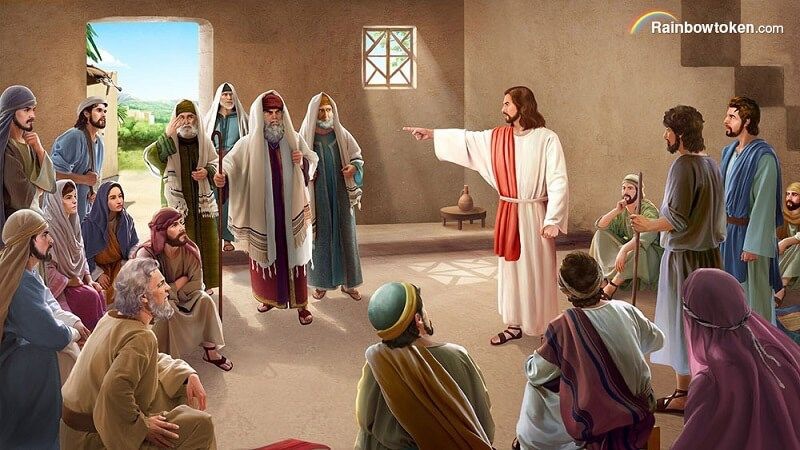
However, some argue that the “seed” mentioned in Genesis cannot be Jesus based on His statement in Matthew 15, verse 24. In this passage, Jesus says,

“I was sent only to the lost sheep of Israel.”

This statement is made in the context of Jesus initially refusing to help a Canaanite woman who asks Him to heal her demon-possessed daughter. Jesus’ declaration of being sent only to the lost sheep of Israel is interpreted by some as evidence that His mission was exclusively to the Jewish people, not to all nations.

Thus, the argument against Jesus being the “seed” mentioned in Genesis 22, verse 18, is articulated by pointing out a perceived contradiction between the universal blessing promised to Abraham’s seed (implying a mission to all nations) and Jesus’ own words limiting His mission to the Israelites.

Critics of the view that Jesus is the fulfillment of the Genesis prophecy might argue that if Jesus Himself stated His mission was only to the Israelites, then He cannot be the “seed” through whom all nations on earth are blessed, as described in Genesis.

In summary, based on Jesus’ statement, some believe that Jesus saw his mission primarily as being directed towards the Jewish people and not necessarily towards all humanity. Therefore, they argue that it is unlikely for Jesus to be directly linked to the “seed” promised to Abraham in Genesis 22, verse 18.

Holy Quran 3:49

وَرَسُولًا إِلَىٰ بَنِىٓ إِسْرَٰٓ

And (make him, Jesus) an apostle to the children of Israel:

Genesis 22:18: Muhammad, the Hajj, and Differing Interpretations Across Abrahamic Faiths

Did Muhammad, through the Hajj ritual, fulfill the prophecy mentioned in Genesis 22, verse 18?

The verse you are referring to, Genesis 22, verse 18, reads: “And through your offspring all nations on earth will be blessed, because you have obeyed me.” This promise is made to Abraham after he demonstrates his willingness to sacrifice his son (Isaac, according to the Bible; Ishmael, according to Islamic tradition).

Many Jewish and Christian theologians interpret the “offspring” (or “seed”) mentioned in this verse as a reference to the line of descendants that would lead to the Jewish people, and by extension, to Jesus Christ in Christian theology. Through this lineage, blessings would be conferred to all nations.

In Islamic theology, however, the “offspring” or “seed” in Genesis 22, verse 18, is often interpreted as referring to Ishmael, the son who was nearly sacrificed according to Islamic tradition. Muslims believe that the Prophet Muhammad, as a direct descendant of Ishmael, fulfills this prophecy, as it is through him that all nations are blessed with the message of Islam. 

The lineage of Prophet Muhammad through Ishmael is considered important in Islamic belief because the near-sacrifice event, believed to involve Ishmael instead of Isaac, is central to the Abrahamic covenant. Muslims believe that the final and complete message of God to humanity, Islam, came through this prophetic lineage.

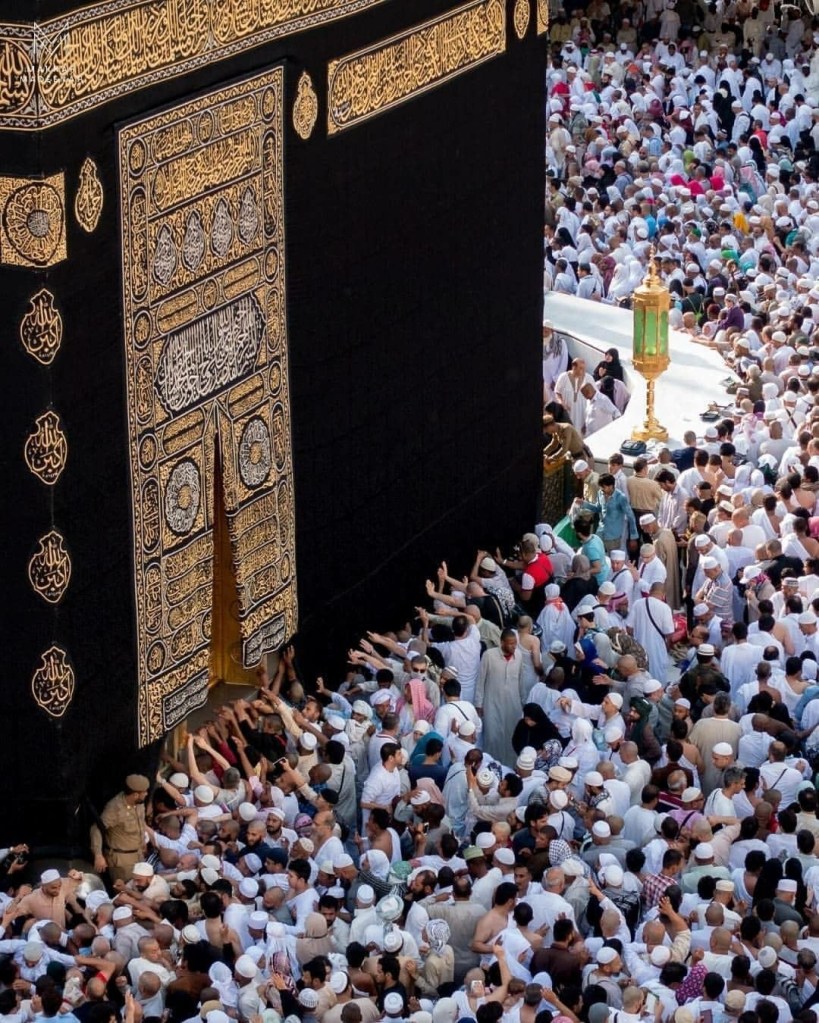
The Hajj ritual, which commemorates events in the lives of Abraham, Hagar, and Ishmael, can be seen by Muslims as a testament to the fulfillment of this prophecy. Every year, followers of Islam globally gather in Mecca to take part in the Hajj pilgrimage, commemorating the tradition of Abraham’s near sacrifice of his son Ishmael. 

It symbolizes the universality of the blessings promised to Abraham’s descendants. For many Muslims, this pilgrimage is a manifestation of the blessings through Ishmael’s lineage, culminating in Muhammad and the global reach of Islam.

However, this interpretation is not universally accepted, especially among Jewish and Christian theologians, who typically see the “offspring” or “seed” in Genesis 22, verse 18, as referring to Isaac’s line, ultimately leading to the people of Israel and, in Christian theology, to Jesus Christ. Interpretations of scripture are deeply influenced by religious, theological, and cultural perspectives.

In summary, while some Muslims assert that Muhammad, as a descendant of Ishmael, fulfills the prophecy in Genesis 22, verse 18, through the message of Islam and rituals like the Hajj, this interpretation is specific to Islamic theology. It reflects the belief that Ishmael, rather than Isaac, was the son nearly sacrificed and that Muhammad, as Ishmael’s descendant, brings blessings to all nations. This view is not shared by all Abrahamic faiths.

The right of Ishmael as being the firstborn of Abraham

Genesis 16, verse 3, is a verse from the Bible that describes a key event involving Abraham, Sarah, and Hagar. In this verse, Sarai (later known as Sarah), the wife of Abram (later known as Abraham), gives her Egyptian maidservant Hagar to Abraham as a wife to bear children, as Sarah had not been able to conceive. This action marks a significant moment in the narrative, as it leads to complex family dynamics and consequences in the story of Abraham and his descendants.

Genesis 16, verse 3, reads:

And Sarai Abram’s wife took Hagar her maid the Egyptian, after Abram had dwelt ten years in the land of Canaan, and gave her to her husband Abram to be his wife.

Deuteronomy 21, verses 15 to 17, is a passage from the Old Testament of the Bible that addresses the rights of a man concerning his sons, particularly in the context of inheritance. The verses outline conditions for a man who has two wives, one he loves and one he does not. The law states that when dividing his inheritance among his sons, he must not favor the son of the loved wife over the son of the unloved wife. Instead, he should acknowledge the firstborn son, regardless of the mother’s status. This passage emphasizes fairness and the importance of honoring the firstborn in matters of inheritance.

Deuteronomy 21, verses 15 to 17, reads:

If a man have two wives, one beloved, and another hated, and they have born him children, both the beloved and the hated; and if the firstborn son be hers that was hated:

Then it shall be, when he maketh his sons to inherit that which he hath, that he may not make the son of the beloved firstborn before the son of the hated, which is indeed the firstborn:

But he shall acknowledge the son of the hated for the firstborn, by giving him a double portion of all that he hath: for he is the beginning of his strength; the right of the firstborn is his.

The belief that the Abrahamic covenant was fulfilled through Ishmael rather than Isaac, including the promise of land from the Nile to the Euphrates and the blessing to all nations through Abraham’s seed, is held by some, particularly within Islamic tradition. Here’s a more detailed articulation of their argument:

Ishmael and the Covenant.

  1. Ishmael as the Firstborn: Supporters of this view argue that Ishmael, being Abraham’s firstborn son, was the original heir to the covenant. They emphasize that Ishmael was the first child of Abraham, born to Hagar, Sarah’s Egyptian maidservant.
  2. Sacrifice Narrative: They contend that the narrative of Abraham being asked to sacrifice his son originally referred to Ishmael, not Isaac. This is based on the belief that ancient scriptures were altered by Israelite scribes to emphasize Isaac’s role.
  3. Blessing and Land Promise: The promise of land from the Nile to the Euphrates and the blessing to all nations is seen as applying to Ishmael’s descendants. Islamic tradition views Ishmael as an ancestor of the Arab peoples, and thus sees the fulfillment of these promises through the Islamic Hajj and in the rise of Islamic civilization.

Scriptural Alteration Argument

  1. Scribal Changes: They argue that ancient Israelite scribes altered the scriptures to shift the focus from Ishmael to Isaac. This was done to establish a theological foundation for the Israelites’ claim to the land and their unique covenantal relationship with God.
  2. Evidence from Quranic Texts: The Quran refers to the story of Abraham and his son, implying that Ishmael was the one to be sacrificed. This, combined with historical accounts and interpretations, is used to argue for the primacy of Ishmael in the covenantal promises.

Shall I give my firstborn for my transgression, The fruit of my body for the sin of my soul? (Micah 6:7)

What was the rationale behind the prophet’s decision to present his firstborn instead of his other sons, as detailed in the Bible (Micah 6, verse 7)?

The verse reads:

“Shall I give my firstborn for my transgression, the fruit of my body for the sin of my soul?”.

The rationale behind the prophet’s decision to present his firstborn instead of his other sons in Micah 6, verse 7 is likely based on the cultural and religious significance of the firstborn in ancient Israelite society.

In many ancient cultures, including Israelite culture, the firstborn held a special status and had certain privileges and responsibilities. This included being the primary heir to the family’s inheritance and having a special connection to the divine.

By offering his firstborn, the prophet may have been trying to convey the seriousness and gravity of the situation. This action would have been a powerful symbol of sacrifice and devotion, as the firstborn was typically seen as the most valuable and cherished among the children.

It could also be seen as a way of emphasizing the depth of the prophet’s regret and repentance for his transgressions, as offering one’s firstborn would have been an unimaginable and incredibly difficult act for any parent.

What is the position of Abraham within the Islamic faith?

In Islam, Abraham (known as Ibrahim in Arabic) is a highly revered prophet and a key figure in the faith. He is considered one of the greatest prophets and is often referred to as a “Friend of God” (Khalilullah). His significance in Islam can be summarized in several key points:

1. Father of Monotheism: Abraham is regarded as the patriarch of monotheism. He is seen as a model of faith and submission to the one God (Allah), and his commitment to monotheism is emphasized in Islamic teachings.

2. Prophet and Messenger: Abraham is recognized as one of the major prophets who received divine revelation. He is mentioned numerous times in the Quran, which highlights his role in calling people to worship the one true God and reject polytheism.

3. Ancestral Figure: Abraham is considered a spiritual ancestor of many nations. He is acknowledged as the forefather of both the Israelites through his son Isaac (Ishaq) and the Ishmaelites through his son Ishmael (Ismail). Muslims trace their lineage back to Ishmael.

4. Hajj and Rituals: The annual pilgrimage to Mecca, known as Hajj, includes rituals that commemorate events in the life of Abraham and his family. For example, the act of standing in the plain of Arafat and the symbolic stoning of the devil at Mina are associated with Abraham’s rejection of evil.

5. Sacrifice: The festival of Eid al-Adha, or the Feast of Sacrifice, commemorates Abraham’s willingness to sacrifice his son Ishmael in obedience to God’s command and God’s provision of a ram as a substitute. This act is celebrated as a demonstration of faith and submission.

6. Example of Faith: Abraham’s unwavering faith, his trials, and his obedience to God serve as an inspirational example for Muslims. His life and actions are explored in various Islamic teachings, and he is often cited in discussions about faith and righteousness.

Overall, Abraham holds a central position in Islam as a prophet, a model of monotheistic faith, and an important figure in the historical and spiritual lineage of Muslims.

Divine Mandate of the Blessed Land of Sham (Syria, Jordan, Lebanon, Palestine, and Israel)


Azahari Hassim

The Prophet said:

فَإِنَّ اللَّهَ عَزَّ وَجَلَّ تَوَكَّلَ لِي بِالشَّامِ وَأَهْلِهِ.

Allah, the Almighty, has entrusted the Sham and its people to me.
(Hadith Musnad Imam Ahmad).

Some believe the above hadith is related to establishment of Islamic caliphate in the region of the Sham (‎الشَّامِ). They point to the Arabic word ‎“تَوَكَّلَ”. What is the definition of “Sham”? How is their argument articulated?

Definition of “Sham” (الشَّامِ):

It is an Arabic term historically used to refer to the region commonly known today as the Levant. This region encompasses several modern-day countries, including:

Syria
Lebanon
Jordan
Palestine
Israel

It is a region with significant historical, religious, and cultural relevance within the Islamic tradition and also in the broader Middle Eastern history.

Articulation of the Argument:

Supporters of the view that the hadith relates to the establishment of an Islamic caliphate in the region of Sham argue their case as follows:

1. Divine Mandate:

The verb تَوَكَّلَ means to entrust, rely upon, or delegate responsibility to someone. When used in this hadith, it implies that Allah has entrusted or vested a particular responsibility to the Prophet Muhammad regarding the region of Sham and its people.

2. Vision of Governance:

By declaring that “Allah has entrusted me with Sham and its people,” the Prophet may be indicating a divine endorsement for governance or leadership over this region. This is seen as a sign that the area holds special significance and is destined for a particular kind of leadership.

  1. Historical and Religious Importance:

Sham holds a crucial place in Islamic history and eschatology. It was a major center of early Islamic civilization and later became a vital part of various Islamic caliphates, including the Umayyad Caliphate, which had its capital in Damascus.

  1. Connotation of تَوَكَّلَ:

The word تَوَكَّلَ does not just convey a simple trusting; it suggests a deep and complete reliance and entrustment. This profound sense of divine trust can be seen as an indication of a significant leadership role for the Islamic community in that region.

  1. Legacy of the Prophet’s Teachings:

The fact that the Prophet Muhammad would mention that Allah entrusted him with Sham can be interpreted as a directive for his followers to see this region as a central area for Islamic governance and societal development.

Key Points in Their Argument:

Linguistic Interpretation:

Emphasis on the word تَوَكَّلَ (entrusted) as an indicator of divine delegation and responsibility.

Geopolitical Importance: Recognition of Sham as a historically and religiously significant region in Islam.

Leadership & Governance:

Viewing the hadith as a sign of endorsement for establishing a caliphate or Islamic government in the region.

Historical Context:

Understanding the Islamic historical narratives and prophecies that highlight the role of Sham in Islamic governance.

By linking the hadith to the establishment of an Islamic caliphate, they argue that the Prophet’s statement is not merely about spiritual or moral guidance but also about a concrete, divinely sanctioned political vision for the region.

Origen of Alexandria:

“If we had to pray towards a particular place, as is customary among some, we should be justified in praying toward Jerusalem because it was there that the holy presence of God appeared and the divine presence was seen in the Temple.”

Holy Quran 21:71

وَنَجَّيْنَٰهُ وَلُوطًا إِلَى ٱلْأَرْضِ ٱلَّتِى بَٰرَكْنَا فِيهَا لِلْعَٰلَمِينَ

And We delivered Abraham as well as Lot to the land which We had blessed for all people.

Muhammad’s Night Journey and the Holy City of Jerusalem

It is believed that Muhammad’s Night Journey serves as a divine sign, indicating the abrogation of Jewish ownership of the Holy City of Jerusalem and its transfer to Muslims. How is this argument explained?

Some scholars and Muslim believers argue that the Night Journey symbolizes the transfer of religious authority from the Jews to the Muslims. They contend that because the Prophet Muhammad traveled to Jerusalem and then ascended to the heavens, it signifies a divine affirmation of Islam as the final and true religion, superseding earlier religious traditions.

In this interpretation, it is believed that during the Night Journey, Muhammad received divine confirmation that Jerusalem would be a significant place for Muslims. The transfer of ownership from Jews to Muslims is seen as a symbol of the shift of religious authority from Judaism to Islam.

This interpretation is often associated with the concept of abrogation (naskh) in Islamic law. Abrogation, guided by the belief in progressive revelation, holds that certain earlier rulings or traditions may have been replaced or superseded by subsequent divine revelations. Some Muslims see Muhammad’s Night Journey as a momentous event that signifies the transition from Judaism to Islam as the true faith, with Jerusalem being a central focal point in this transition.


What is a considerable obstacle to the Jews to rebuild their temple in Jerusalem?

A considerable obstacle to the Jews rebuilding their temple in Jerusalem is the current presence of the Al-Aqsa Mosque and the Dome of the Rock, two of the holiest sites in Islam. Both structures are located on the Temple Mount (known as Haram al-Sharif in Islam), which is traditionally believed to be the location of the First and Second Jewish Temples.

Here are some specific challenges related to this:

  1. Religious Significance: The Al-Aqsa Mosque and the Dome of the Rock have been central to Islamic worship for over a millennium. Any attempt to alter or remove these structures would be met with strong resistance from the Muslim world.
  2. Political Implications: The status of Jerusalem, and particularly the Temple Mount/Haram al-Sharif, is one of the most contentious issues in the Israeli-Palestinian conflict. Any changes to the status quo could lead to significant political and social upheaval.
  3. Historical & Archaeological Concerns: While there is broad consensus among scholars and archaeologists that the Jewish Temples once stood on the Temple Mount, the exact locations and dimensions remain subjects of debate. Excavations or construction on the Mount would be controversial and potentially damaging to existing structures and artifacts.
  4. International Response: Any attempt to alter the status quo on the Temple Mount/Haram al-Sharif would likely elicit strong reactions from the international community, given the site’s significance to billions of people worldwide.

It’s worth noting that while there are some groups advocating for the rebuilding of the Jewish Temple, mainstream Jewish thought and Israeli policy have, for the most part, accepted the status quo, prioritizing peace and stability over any immediate plans to rebuild the Temple.

Holy Land

AD 324–640: Byzantine Period


With the conversion of the Roman emperor Constantine (AD 306–37), Christianity enjoyed a season of growth under the toleration championed by the Edict of Milan (AD 313). Constantine’s mother, Helena, began a vigorous campaign of building churches on locations in Israel associated with the life of Jesus. As pilgrims flocked to this land, some elected to remain and establish monastic communities. There was frequent destruction and rebuilding of Christian compounds during this era, much of it related to the Samaritan uprising (AD 529) and the Persian invasion (AD 614).

AD 640–1099: Early Arab (Islamic) Period

Byzantine rule, weakened by Persian invasion, collapsed quickly in the face of Arabian invaders who captured the city of Jerusalem in AD 638. Respectful of both Judaism and Christianity, these Muslim rulers protected and enhanced Jerusalem with new architecture that celebrated the city’s relationship to Islam. The Dome of the Rock was built in AD 691, and the El-Aqsa Mosque in AD 715. The exception to tolerance is linked to the rule of Caliph Hakim, who unleashed a persecution against Christians and their churches. During his rule, the tomb of Jesus at the Church of the Holy Sepulchre was destroyed (AD 1009).


AD 1099–1291: Crusader Period


At the close of the early Arab period, in his speech, Pope Urban II called for a military expedition to the Holy Land with the primary aim of recapturing Jerusalem from Muslim rule and protecting Christian. During the course of five Crusades, access was restored for European pilgrims, churches were rebuilt or founded, hospitals were established, and castles found their place on this land. Unfortunately the Crusaders also attacked and killed many Muslim and Jewish citizens of this land, imposing a negative image on the Crusades that lives to this day in the memory of many. By the close of the thirteenth century, the Crusaders had been defeated and driven from the promised land, largely because of the efforts of Saladin, the first sultan of Egypt and Syria.

Did John’s prophecy pertain to Jesus?


Azahari Hassim

Did John’s prophecy pertain to Jesus?

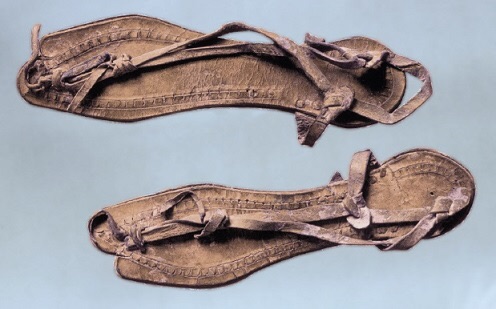
There is a debate among scholars regarding the interpretation of John the Baptist’s prophecy in Mark 1, verses 7 to 8. The passage mentions, “After me comes the one more powerful than I, the straps of whose sandals I am not worthy to stoop down and untie. I baptize you with water, but he will baptize you with the Holy Spirit.” Some argue that this prophecy may not necessarily be referring to Jesus.

This viewpoint is based on the observation that John the Baptist did not overtly follow Jesus as his disciple. John carried on with his ministry and was subsequently put in prison, separate from the ministry of Jesus.

Additionally, there was a dispute between John’s disciples and Jesus’ disciples over ceremonial washing (John 3, verse 25), and John even sent his disciples to ask Jesus, “Are you the one who is to come, or should we expect someone else?” (Matthew 11, verse 3; Luke 7, verse 19).

These actions suggest that John maintained an independent ministry and allowed room for questioning Jesus’ identity. Supporters of this viewpoint argue that if John truly believed Jesus was the one he prophesied about, he would have likely followed Jesus more devotedly.

Furthermore, they point out that the “one more powerful” could fit various Jewish eschatological figures such as the apocalyptic Messiah, a prophet like Moses, or the heavenly Son of Man.

In the context of Matthew 22, verses 41 to 45, a scholarly debate arises between Jesus and the Pharisees concerning the genealogy of the Messiah, who was not a direct descendant of David. This suggests that Jesus may have been referring to a person previously identified by John.
Supporters of this theory suggest that the person identified as John and Jesus could potentially be Muhammad, the revered prophet of Islam, instead of the anticipated Davidic Messiah.

There is a belief that Jesus was a messiah in the same sense as other messiahs before him. Scripturally, Jesus was not the apocalyptic messiah who was predicted by the Hebrew prophets to establish God’s kingdom in the Holy Land. Could you kindly provide an explanation for the meaning of the preceding statement?

The belief that Jesus was a messiah in the same sense as other messiahs before him refers to the idea that he was seen as a savior figure who would bring about spiritual redemption and salvation. In this context, messiah is understood as a leader or deliverer chosen by God to fulfill a specific role in the divine plan.

However, scripturally speaking, Jesus was not the apocalyptic messiah that many Jews were expecting based on the prophecies found in Hebrew scriptures. The traditional Jewish understanding of the apocalyptic messiah was of a powerful political and military leader who would liberate Israel from its enemies, establish God’s kingdom on earth in the Holy Land, and rebuild the Holy Temple in Jerusalem.

Jesus’ teachings and actions did not align with these expectations of a conquering warrior king. Instead, he preached about love, forgiveness, and spiritual transformation. He emphasized inner righteousness over outward displays of power. This led many Jews to reject Jesus as their expected messiah, that is, the apocalyptic messiah.

So, when it is said that Jesus was not the apocalyptic messiah predicted by Hebrew prophets to establish God’s kingdom in the Holy Land, it means that his role and mission were different from what many people at that time were anticipating based on their interpretation of scripture.

Does Islam represent the concept of “the Kingdom of God” as taught by Jesus and John the Baptist?

Did Jesus and John the Baptist announce the coming of the kingdom of God?

Yes, both Jesus and John the Baptist announced the coming of the Kingdom of God. John the Baptist’s ministry focused on repentance and emphasized the nearness of the Kingdom. John’s message in the Gospels urges individuals to repent and return to God, preparing for the arrival of the Messiah, referred to as the “son of man” in Jesus’ parables, who will establish the Kingdom.

Jesus continued this theme in His ministry, often speaking about the Kingdom of God in His teachings. He used parables, miracles, and sermons to explain the nature of this Kingdom, addressing its spiritual dimensions and moral implications.

Did Jesus equate the kingdom with the religion of Christianity?

No, Jesus did not explicitly equate the Kingdom of God with what later became known as Christianity. The term “Christianity” was not used during His lifetime; the followers of Jesus were initially seen as a Jewish sect.

In summary, Jesus and John the Baptist announced the coming of the Kingdom of God, but Jesus did not equate this Kingdom directly with the religion that later emerged as Christianity.

It is thought that Christianity originated as an apocalyptic group within Judaism, with Jesus proclaiming the arrival of the son of man and his Kingdom as described in the Book of Daniel. Islamic scholars believe that this apocalyptic figure, son of man, is none other than Muhammad who established Islam in the land where God promised to Abraham in Genesis 15, verse 18. Islam is regarded as the kingdom of God preached by Jesus. How is their argument articulated?

The argument by some Islamic scholars that the apocalyptic figure referred to by Jesus is Muhammad, and that Islam is the kingdom of God as preached by Jesus, is based on a reinterpretation of certain Biblical and Qur’anic texts. Here’s how the argument is articulated:

  1. Jesus and the Son of Man:
    In Christian eschatology, the “Son of Man” is an apocalyptic figure described in the Book of Daniel and in the Gospels. Jesus speaks of the coming of the “Son of Man” who will establish God’s kingdom.
    Islamic scholars who subscribe to this interpretation propose that the “Son of Man” could be a symbolic reference to Muhammad, who they argue, fulfilled this prophecy by establishing Islam from the River of Egypt to the Euphrates River including the Arabian Peninsula, a land promised to Abraham’s descendants.
  2. The Kingdom of God:
    In Christian theology, the “Kingdom of God” or “Kingdom of Heaven” is often understood as a spiritual realm where God reigns supreme, and which will be fully realized in the eschatological future.
    Islamic scholars who support this view argue that Jesus’ references to the coming “Kingdom of God” were not about a spiritual kingdom, but a prophetic kingdom established on earth. They interpret this kingdom as the Islamic state that Muhammad established in Medina and later expanded throughout Arabia and beyond.
  3. The Covenant and the Land Promise:
    In Genesis 15, verse 18, God promises Abraham’s descendants a specific land. Jewish and Christian interpretations traditionally see this as a promise fulfilled in the biblical history of Israel.
    However, some Islamic scholars reinterpret this promise in the context of Islam, suggesting that the true fulfillment of God’s covenant and the promised land is seen in the establishment of Islam from the River of Egypt to the Euphrates River, a promise made to Ishmael instead of Isaac. They argue that Islam, as the final and complete religion, fulfills this covenant.
  4. Prophecies and Islamic Tradition:
    Islamic tradition holds that Muhammad is the “Seal of the Prophets,” completing the line of prophets that includes Abraham, Moses, and Jesus. Some scholars interpret Jesus’ statements about a future prophet (like the “Comforter” in John 14, verses 16 to 17) as references to Muhammad.
    They argue that Jesus was predicting Muhammad’s arrival, and that the establishment of Islam represents the realization of the kingdom Jesus spoke of.
  5. Theological Implications:
    This argument hinges on the belief that Islam is the final and most complete form of the Abrahamic faith, and that previous scriptures (Torah, Psalms, Gospels) were either incomplete or have been altered over time. The Qur’an is seen as the final, unaltered word of God, and Muhammad as the last prophet who brings the ultimate message.

In summary, the argument is built on a re-interpretation of Jesus’ teachings and the apocalyptic expectations found in the New Testament, suggesting that these were actually referring to the coming of Muhammad as a “son of man”and the establishment of Islam, which they view as the true “Kingdom of God.”

Holy Quran 3:39

Then the angels called to him (Zachariah) as he stood praying in the sanctuary: That Allah gives you the good news of John verifying a Word from Allah, and honorable and chaste and a prophet from among the good ones.


John the Baptist was an intriguing figure in the gospel narrative. Chosen by God, adopting a drastically different life, he was a voice in the wilderness. 

John Baptist

Like Jesus, John the Baptist is born in miraculous circumstances. In Luke (1:5–23), an angel of the Lord visits Zechariah, an aged priest, and his barren wife Elizabeth. He announces that they will have a son and that he will become a great man of God. Such is Zechariah’s disbelief at this revelation—owing to their age— that God strikes him dumb. Zechariah recovers his speech when Elizabeth gives birth to their son, John. Luke confirms that the birth occurs just months prior to that of Jesus (1:36).

John becomes a preacher, living an austere and hermitic life in the desert. He preaches a message advocating both confession and repentance, and offers baptism in the River Jordan to all who heed him. John speaks, above all, of a “greater one” who will come after him—the Messiah prophesied in the scriptures. John’s preaching ultimately leads to his downfall, when he warns King Herod against marrying his brother’s wife. The king marries her anyway, but she never forgives John, and John is eventually beheaded on the whim of her daughter, Salome.


“John’s message of the kingdom of God is eschatological, calling for urgent repentance in light of an imminent divine intervention.”

R.T. France – British New Testament scholar:

Messianic hopes

The extravagant visions of the apocalypses were only one among the many hopes currently cherished by the Jews. Many messianic figures from the Old Testament had taken firm root in popular expectation: the prophet like Moses (Deuteronomy 18:15-19); the returning Elijah (Malachi 4:5-6); but above all the Son of David, a great king and warrior, whose mission it would be to bring victory, peace, and glory to Israel.

Some saw a place for the Gentiles in this hope, others were exclusively nationalistic. Some thought of spiritual restoration, most of victory over the Romans. To utter the word ‘Messiah’ (Greek, ‘Christ’) would inevitably stir up hopes of political independence, so it is no wonder that Jesus was cautious in letting others call him ‘Christ’. He came to a people who, if they were not agreed quite what they were hoping for, were united in eagerly ‘looking for the consolation of Israel’ (Luke 2:25). But none expected it to come by way of across.

Does the phrase “the night visions” in Daniel 7 refer to Muhammad’s Night Journey?


Azahari Hassim

How do some argue that the phrase “the night visions” in Daniel 7, verse 13 refers to Muhammad’s Night Journey to the seventh heaven to meet God instead of Jesus, whose ascension did not occur at night?

Some argue that the phrase “the night visions” in Daniel 7, verse 13, refers to Muhammad’s Night ( الإسراء والمعراج) rather than Jesus’ ascension based on the following points:

  1. The term “night visions” directly suggests an event that takes place at night. Muhammad’s Night Journey, which is said to have occurred during the night, aligns with this description. In contrast, Jesus’ ascension is generally not described as happening at night in Christian texts.
  2. According to Islamic tradition, during the Isra, Muhammad traveled from Mecca to Jerusalem and then ascended through the heavens in the Mi’raj. He is described as having profound spiritual experiences, meeting past prophets, and ultimately coming into the presence of God.

In Daniel 7, verses 13 to 14, “one like a son of man” is seen coming with the clouds of heaven and approaching the “Ancient of Days” (interpreted by scholars as God). This imagery of traveling through the heavens and meeting a divine figure has parallels with Muhammad’s Night Journey.

  1. The mention of the “clouds of heaven” could be metaphorically linked to the ethereal and divine nature of Muhammad’s ascent through the heavens, which is a central element in the Night Journey narrative.
  2. Some Muslim scholars see Daniel’s vision as prophetic, foretelling not just events relevant to Jewish history but also later significant religious events. They interpret the “one like a son of man” as a reference to a future prophet who would establish a new era, which Muhammad is believed to have done in Islam.
  3. In the vision, the figure receives authority, glory, and sovereign power, and all nations serve him. Supporters of this interpretation argue that Muhammad’s establishment of Islam fits this prophecy as he united tribes and established a widespread religious and political community.

While these arguments are compelling within an Islamic interpretive framework, this interpretation is not widely accepted in Christian and Jewish traditions.

However, it’s important to note that these interpretations are not mainstream and are often viewed within the context of interfaith dialogue or polemics.

Traditional Jewish and Christian interpretations generally identify the “one like a son of man” as a messianic figure, often associated with Jesus in Christian theology, while in Jewish thought, it can be seen as a representation of Israel or the Messiah.

John Esposito:

“The Night Journey is a central event in the life of Muhammad, the founding prophet of Islam. It marks the moment when Muhammad is spiritually exalted and shown the vastness of God’s universe.”

The Prophecy of Daniel: Constantine the Great and Muhammad the Prophet

Some believe that Daniel 7, verse 25 alludes to Constantine the Great, who presided over the council of Nicaea, while Daniel 7, verse 13, points to Muhammad’s Night Journey. How is this argument explained?

This is a very controversial argument that is not widely accepted by most biblical scholars and Christians, who believe that Daniel 7, verse 25, and Daniel 7, verse 13, refer to the Antichrist and the Messiah, respectively. However, some people who support this argument explain it in the following way:
They claim that Constantine the Great, who was the first Roman emperor to convert to Christianity and who convened the Council of Nicaea in 325 AD, was the little horn of Daniel 7, verse 25, who spoke pompous words against the Most High and tried to change the times and the laws.

They argue that Constantine corrupted the original teachings of Jesus and imposed his own doctrines and creeds on the Christian church, such as the doctrine of the Trinity, the observance of Sunday instead of Saturday as the Sabbath, and the celebration of Easter instead of Passover.

They also accuse Constantine of persecuting and oppressing those who did not conform to his version of Christianity, such as the followers of Arianism, who denied the divinity of Jesus.
Arianism sparked significant debates within the Church, particularly during the early Ecumenical Councils. The First Council of Nicaea in 325 AD condemned Arianism, affirming the doctrine of the Trinity and the full divinity of Christ. The Nicene Creed established the belief that the Son is “begotten, not made, of one substance with the Father.”

Islamic scholars claim that Muhammad, who was the prophet of Islam and who claimed to have a miraculous Night Journey from Mecca to Jerusalem and then to heaven in 621 AD, was the Son of Man of Daniel 7, verse 13, who came with the clouds of heaven and was given dominion, glory, and a kingdom by the Ancient of Days, that is God.

The term “night visions” directly suggests an event that takes place at night. Muhammad’s Night Journey, which is said to have occurred during the night, aligns with this description. In contrast, Jesus’ ascension is generally not described as happening at night in Christian texts.

They argue that Muhammad was a true prophet of God who restored the pure monotheism that was lost by Constantine and his followers. They also assert that Muhammad’s kingdom is an everlasting kingdom that will never be destroyed, and that all nations and peoples of every language will serve him or submit to his law.
In summary, these are a few points made by Islamic scholars to back the notion that Daniel 7, verse 25, and 7, verse 13, refer to Constantine as the little horn who established the Trinity at the Council of Nicea, and Muhammad as the Son of Man who encountered God on his Night Journey to the seventh heaven.

The Night Journey and Ascension to Heaven


Laylat al-Isra wal Miraj is Arabic for the night of the journey and ascension to heaven, an event that Muslims believe occurred on the 27th of Rajab, the seventh month of the Islamic calendar, in the tenth year of hijrah. It is said that having lost his wife Khadijah, and suffered in the town of Taif in the same year, Muhammad was consoled and strengthened in his mission by this timely miracle. 

According to Islamic tradition, Muhammad spent the evening with his family and then went to visit the Kaabah, where he fell asleep in the hijr Ismail. He was woken by the Archangel Jibril, who led him to where a white winged beast named al-Buraq stood. He mounted the beast and they sped toward Madinah and Jerusalem. There, according to hadith, Muhammad led all the previous prophets in prayer at the site of the farthest mosque, al-Masjid al-Aqsa. 

He was offered two cups of drink – wine and milk- but chose to drink the milk. Jibril approved of his choice, confirming that wine was prohibited. Finally, it is told, al-Buraq flew him up to heaven from the site of a rock, now the Dome of the Rock Mosque.

Muhammad met all the prophets again, but they were now in their heavenly forms. He went as far as the ‘lote tree of the uttermost end’, mentioned in the Quran (53:14), beyond which no one has ventured. 

God’s divine light descended on the tree, and unlike Moses, Muhammad was able to gaze at it. Muslims believe that God instituted the five daily prayers here, first as 50, but finally reducing them to five. Muhammad claimed that he revealed only a part of what he and Allah discussed that night, and even that only over time.

While returning to Makkah, Muhammad saw trading caravans, which he later described to his companions. The caravans arrived just when he predicted, exhibiting all the details that he had described. Like the Night of Power, this night is marked by Muslims with devotion, prayers and shared meals.


What is Bart Ehrman’s perspective on the term “son of man” as utilized by Jesus in the gospel?

Bart Ehrman, a prominent New Testament scholar, has a nuanced perspective on the term “Son of Man” as used by Jesus in the Gospels. His views can be summarized as follows:

1. Different Referents:

Ehrman argues that when Jesus used the term “Son of Man,” he was often referring to someone other than himself. Specifically, Ehrman believes that Jesus was speaking about a future cosmic judge who would come from heaven to judge the earth, a figure distinct from Jesus himself.

2. Apocalyptic Context:

   Ehrman situates Jesus’ use of “Son of Man” within an apocalyptic framework. He suggests that Jesus anticipated the imminent arrival of God’s kingdom, where this “Son of Man” would play a critical role in the final judgment and the establishment of a utopian order.

3. Metaphorical and Literal Uses:

 While some scholars argue that “Son of Man” could be a self-referential term used metaphorically by Jesus, Ehrman maintains that many instances in the Gospels indicate a literal expectation of a future divine figure. This figure, coming with divine authority, would execute judgment and bring about the end times.

4. Post-Resurrection Identification:

According to Ehrman, after Jesus’ resurrection, his disciples began to identify him as the “Son of Man” he had prophesied about. They believed that Jesus, having ascended to heaven, would return as this divine judge.

5. Scholarly Debate:

  Ehrman’s view is not universally accepted. Many scholars believe that Jesus did refer to himself as the “Son of Man,” interpreting it as a self-designation. However, Ehrman’s interpretation is considered mainstream and is supported by his extensive work on the historical Jesus and early Christian writings.

Conclusion

Bart Ehrman’s perspective on the term “Son of Man” highlights a complex interplay between Jesus’ self-understanding and the apocalyptic expectations of his time. Ehrman posits that Jesus used the term to refer to a future divine judge rather than himself, a view that has sparked considerable scholarly debate. This interpretation underscores the diversity of early Christian thought and the evolving understanding of Jesus’ identity among his followers.

A Comparative Analysis of the Gospel of Paul and the Teachings of Jesus


Azahari Hassim

Some believe that the gospel of Paul is at odds with the teaching of Jesus. How is this argument articulated?

This is a complex and controversial topic that has been debated by scholars and theologians for centuries. There is no definitive answer, but some of the main arguments are:

Some believe that Paul’s gospel of grace and justification by faith contradicts Jesus’ gospel of the kingdom of God and obedience to the law. They claim that Paul distorted or ignored the teachings of Jesus, and introduced new doctrines that were not in line with the original message of Jesus and his Jewish followers.

Some believe that Paul’s gospel of Christ’s death and resurrection as the core of salvation history differs from Jesus’ gospel of God’s reign as the fulfillment of Israel’s hopes. They argue that Paul focused more on the person and work of Jesus, while Jesus focused more on the will and action of God.

Some believe that Paul’s gospel of inclusion of the Gentiles and freedom from the law opposes Jesus’ gospel of Israel’s restoration and observance of the law. They assert that Paul compromised or abandoned the Jewish identity and heritage of Jesus and his followers, and created a new religion that was detached from its Jewish roots.

These are some of the main ways that some people argue that the gospel of Paul is at odds with the teaching of Jesus. However, there are also many others who defend the harmony and continuity between Paul and Jesus, and who seek to reconcile their apparent differences by considering their historical, cultural, and theological contexts. Ultimately, this is a matter of interpretation and faith, and one that requires careful study and respectful dialogue.

Karen Armstrong:

“Paul’s teaching was quite different from that of Jesus. Whereas Jesus preached about the Kingdom of God, Paul’s gospel was about Jesus himself. Paul, therefore, can be seen as the second founder of Christianity.”


Christian Zionism is a belief among some Christians that the return of the Jewish people to the Holy Land and the establishment of the State of Israel is in accordance with biblical prophecy. This belief is often based on interpretations of the Bible that suggest a special role for the Jewish people in God’s plan and the importance of the land of Israel in biblical history.
Christian Zionists typically support the State of Israel and its policies, viewing Israel as a fulfillment of biblical prophecy and as a key ally in the Middle East. They often advocate for the protection of Israel and its right to exist as a Jewish state.
Christian Zionism has been a significant influence in shaping attitudes towards Israel and the Israeli-Palestinian conflict, particularly in the United States. Critics of Christian Zionism argue that it can sometimes lead to uncritical support for Israeli government policies and contribute to tensions in the region.
Overall, Christian Zionism is a complex and multifaceted belief system that intersects religion, politics, and geopolitics in the context of the Middle East.

Jesus and Paul on Zionism: Exploring Apparent Contradictions

Does Jesus contradict Paul regarding Zionism?

Jesus says in Matthew 8, verses 11 to 12:

I tell you that many people from the east and the west (referring to Gentiles) will come and join Abraham, Isaac, and Jacob in the kingdom of heaven for a feast.

“But the citizens of the kingdom (referring to the Jewish nation) will be cast out into darkness, where there will be crying and grinding of teeth.”

Some believe many modern Christians support the Zionist ideology because of Paul’s statement in Romans 11 verse 28, which contradicts the statement of Jesus in Matthew 8 verse 12. How is this interpretation explained?

The interpretation that many modern Christians support Zionist ideology based on Paul’s statement in Romans 11 verse 28, despite the apparent contradiction with Jesus’ statement in Matthew 8 verse 12, is a viewpoint held by some proponents of Christian Zionism. Here is how this interpretation is explained:

In Romans 11 verse 28, Paul writes,

“As regards the gospel, they (the Jews) are enemies for your sake. But as regards election, they are beloved for the sake of their forefathers.”

Christian Zionists argue that this verse indicates that, despite the rejection of Jesus by some Jews, God’s covenantal love for the Jewish people and His promises to them are irrevocable.

They interpret this verse as a testament to the ongoing significance of the Jewish people in God’s plan and the fulfillment of His promises to Israel. Christian Zionists believe that the establishment of the modern state of Israel is a manifestation of God’s faithfulness to His covenant with the Jewish people.

Regarding the apparent contradiction with Jesus’ statement in Matthew 8 verse 12, Christian Zionists argue that Jesus’ words were specific to a particular context and time. They contend that Jesus was addressing the religious leaders of His day who rejected Him, rather than making a sweeping statement about the entire Jewish people. They maintain that Paul’s teachings in Romans 11 provide a broader perspective on God’s enduring love for the Jewish people.

It is important to note that not all Christians interpret these verses in the same way, and there are varying theological perspectives on the relationship between Christianity and Zionism. These interpretations are subject to debate and can differ among individuals and Christian denominations.

Athens was one of the strategic targets in Paul’s mission. The market-place in Athens was overlooked by the Acropolis (background left) and Areopagus (background right), from which the Court where Paul argued took its name.

PAUL

Michael A. Smith

Paul was bom into a Jewish family in Tarsus, where his parents were Roman citizens. He was a strict Pharisee, and even as a young man was outstanding in his orthodox beliefs and in his hatred of Christians. He was present at the stoning of Stephen, and was commissioned by the High Priest to arrest Christians at Damascus. Paul was converted through a vision of the risen Christ on his way to Damascus. 

Temporarily blinded, he was befriended by a Christian called Ananias, and when cured he began to preach Christ in Damascus. However, attempts were made against his life, and he had to escape by being lowered down the city wall in a basket. After a spell in Arabia, Paul may have returned to Damascus, but later came to Jerusalem, where he was befriended by Barnabas and introduced to Peter. Further Jewish threats against his life forced him to flee again, and he returned to Tarsus. 

There followed a period of roughly ten years about which little is known; but Paul must have been active in Christian work, for when the Gentile mission began to flourish at Antioch, Barnabas summoned him from Tarsus to join in the work. Paul visited Jerusalem again, taking famine-relief funds, and discussed the Gentile mission with Peter. Then Paul began the evangelistic work which made him the most outstanding Christian missionary of the first century. 

He went with Barnabas and John Mark to Cyprus and Central Asia Minor, founding a number of churches. On his return he had a violent disagreement with Peter at Antioch about how far Gentiles had to accept Jewish customs when they became Christians. However, this question was settled soon after at the Council of Jerusalem (Acts 15).

Paul now set out again, this time with Silas, and they travelled through Asia Minor and crossed into Macedonia. Further successful missionary work followed, especially in Macedonia, Corinth and Ephesus. After another visit to Jerusalem, Paul left with Timothy for further evangelistic work, finally returning to Jerusalem with money collected for the poor Christians there. 

On his arrival, Paul was seized by a Jewish mob and would have been lynched, but for the prompt intervention of the Roman garrison. He was kept in protective custody at Caesarea for two years by the Roman governor Felix, whose successor, Festus, suggested that Paul be tried at Jerusalem. But Paul refused to face such a biassed court and appealed to the Roman Emperor for justice. Paul was taken under escort to Rome, surviving a shipwreck at Malta on the way. 

After two years in Rome (at which point the account in Acts ends) Paul was probably released and spent further time in missionary work before being martyred on a second visit to Rome during Nero’s persecution of AD 64. Paul’s surviving letters are found in the New Testament. 

Galatians was probably written before the Council of Jerusalem. 1and 2 Thessalonians date from Paul’s first journey into Greece; Romans and 1 and 2 Corinthians come from his last spell in Greece before his arrest at Jerusalem. Philippians, Colossians, Ephesians and Philemon were probably written from Rome during Paul’s first imprisonment (although some scholars date them from an earlier imprisonment in Ephesus). 1 and 2 Timothy and Titus were probably written after Paul’s first stay in Rome.

 Paul’s letters were highly valued during his lifetime, and were probably collected together soon after his death. In 1 Clement (written about AD 95) they are already accepted on an equal basis with other Scripture. They were certainly in their present collected form by the time of Marcion (about AD 140). 

Paul’s theology was not well understood in the period immediately after his death. This was partly because the heretic Marcion rejected the Old Testament and much that was Jewish in the New Testament, and made great use of Paul’s writings to support his own ideas. As long as Marcion’s heresy was a threat, mainstream Christian teachers did not stress many of Paul’s distinctive doctrines, such as law and grace. Augustine was the first to give full weight to Paul’s theology.

Does the prophecy of Daniel refer to Muhammad as the son of man?

Azahari Hassim

Is there a theological correlation between the Night Journey of Prophet Muhammad to Heaven and the prophecy mentioned in Daniel 7:13?

Please provide a detailed explanation to support this argument.

The argument connecting the Night Journey of the Prophet Muhammad to Heaven with Daniel 7 verse 13 is based on theological interpretations that draw parallels between the two events. Here’s an explanation of this argument:

  1. The Night Journey of Prophet Muhammad ( الإسراء والمعراج): According to Islamic tradition, the Night Journey (الإسراء) and Ascension (المعراج) is a miraculous event in which the Prophet Muhammad was transported from Mecca to Jerusalem and then ascended through the heavens, meeting various prophets and eventually coming into the presence of Allah.
  2. Daniel 7 verse 13 in the Bible: In the Book of Daniel in the Old Testament of the Bible, specifically in Daniel 7 verse 13, there is a prophecy that says: “I saw in the night visions, and behold, with the clouds of heaven there came one like a son of man, and he came to the Ancient of Days (that is, God) and was presented before him.” This verse is often interpreted as a reference to a messianic figure.

The argument connecting these two events revolves around the idea that both the Night Journey of Prophet Muhammad and the vision in Daniel 7 verse 13 involve a figure coming into the presence of God. Some scholars, particularly in comparative religion and interfaith dialogue, suggest that there are thematic similarities between these events:

Divine Revelation: In both situations, there is a significant meeting with the divine, as Prophet Muhammad ascends to the highest levels of heaven, and the individual in Daniel 7 verse 13 is brought before the “Ancient of Days,” a divine being.

Prophetic Roles: The figure in Daniel 7 verse 13 is often associated with a messianic or prophetic role. Similarly, Prophet Muhammad is considered the final prophet in Islam, and his Night Journey is seen as a confirmation of his prophethood.

It’s important to note that this argument is primarily a matter of theological interpretation and interfaith dialogue. Different scholars and religious traditions may have varying perspectives on the significance and connections between these events.

Al-Suyuti (Islamic scholar and historian):

“Daniel, peace be upon him, was among the prophets sent to the Children of Israel. He was blessed with wisdom and the ability to interpret dreams. He foretold the coming of several empires and their eventual downfall. His body was discovered during the conquest of Persia, and the Muslims respected it qand reburied it to protect it from being desecrated.”


What is the perspective of Islam on the biblical figure of Daniel?

In Islam, the perspective on the biblical figure of Daniel is quite respectful, though Daniel is not mentioned explicitly in the Quran. Despite this absence, Daniel is recognized and revered in Islamic tradition and literature, primarily through historical narratives and the Hadith (sayings and actions of Prophet Muhammad).

Reverence in Islamic Tradition:

  1. Historical Narratives: Daniel is considered a prophet by some Muslim scholars, though this is not universally agreed upon since he is not mentioned in the Quran. His story and qualities are often cited in Islamic works, drawing from Jewish and Christian traditions. Islamic texts sometimes include stories about Daniel, portraying him as a wise and devout man. These narratives often focus on his ability to interpret dreams, his steadfast faith, and his survival in the den of lions—mirroring the biblical account.
  2. Literature and Folklore: Daniel appears in various Islamic texts and is particularly noted for his prophetic wisdom and piety. In some Islamic stories, he is credited with great wisdom and miraculous abilities, similar to those found in the Book of Daniel in the Bible. For instance, he is sometimes associated with the town of Susa in Iran, where a shrine said to be his tomb is located.
  3. Interpretations and Beliefs: In Islamic eschatology, Daniel is sometimes mentioned in discussions about the end times, although these references are more cultural and based on hadith literature rather than the Quran. His ability to interpret dreams and visions is often highlighted in Islamic teachings, paralleling the role he plays in the biblical narratives.

In summary, while Daniel is not a Quranic figure, his legacy as a wise and devout servant of God is acknowledged and respected within Islamic tradition, where he is often considered a prophet and a righteous man. His stories are used to impart moral lessons and to exemplify a life of faith and integrity.


How does Bart Ehrman interpret the term “son of man” as used by Jesus in the gospel?

Here is a summary of Bart Ehrman’s interpretation of Jesus’ use of the term “son of man” in the gospels:

1. Ehrman believes that when Jesus used the phrase “son of man”, he was referring to a future apocalyptic figure who would come as the cosmic judge at the end of time, not to himself. In other words, Jesus did not see himself as the “son of man”.

2. According to Ehrman, Jesus expected and taught that this “son of man”, a heavenly being sent by God, perhaps a powerful angel like Michael, would arrive imminently to judge the earth and establish God’s kingdom.

3. Ehrman argues this cosmic “son of man” figure derives from passages like Daniel 7:13-14, where he is portrayed as an exalted, divine-like figure subordinate only to God himself. However, Ehrman maintains this figure was still understood to be human, not divine, since that is what “son of man” means.

4. In Ehrman’s view, it was only after Jesus’ death that his disciples came to believe that Jesus himself was the “son of man” he had predicted would come. The gospels then place this title on Jesus’ own lips as a self-designation.

5. While Ehrman acknowledges that Paul seems to equate Jesus with the Danielic “son of man” in 1 Thessalonians, he argues these are likely later additions representing more developed Christology, not Jesus’ original teachings.

In summary, Ehrman’s controversial perspective is that Jesus did not use “son of man” as a title for himself, but rather to refer to a separate apocalyptic figure. This view contradicts the common interpretation that Jesus was claiming that title and identity directly. However, Ehrman’s arguments have generated significant scholarly debate and pushback from those who maintain Jesus did indeed see himself as the “son of man”.

Muhammad, Torah and Hebrew Prophets


Azahari Hassim

Does Hagar’s prophecy in Genesis 21, verse 18, predate the Torah given to Moses?

Yes, Hagar’s prophecy in Genesis 21, verse 18, predates the Torah as given to Moses. The Book of Genesis, which includes the story of Hagar, is considered part of the Torah (the first five books of the Hebrew Bible) and traditionally attributed to Moses. 

However, the events described in Genesis, including Hagar’s encounter with God and the prophecy concerning her son Ishmael, are believed to have occurred long before the time of Moses, around the patriarchal period.

The narrative in Genesis 21 describes Hagar and Ishmael in the context of Abraham’s family and is thus seen as part of the pre-Mosaic tradition. The Torah, or Pentateuch, as a compilation and codification, is generally understood to have been formalized during the time of Moses, which occurs much later in the biblical timeline. 

Therefore, the events and prophecies in Genesis can be considered as part of the earlier history before the giving of the law to Moses.

Holy Quran 7:144

قَالَ يَٰمُوسَىٰٓ إِنِّى ٱصْطَفَيْتُكَ عَلَى ٱلنَّاسِ بِرِسَٰلَٰتِى وَبِكَلَٰمِى فَخُذْ مَآ ءَاتَيْتُكَ وَكُن مِّنَ ٱلشَّٰكِرِينَ

[Allah] said, “O Moses, I have chosen you over the people with My messages and My words [to you]. So take what I have given you and be among the grateful.”

What is the argument put forth by those who support the idea that the prophethood of Muhammad is linked to Hagar’s prophecy, which predates the Torah, in contrast to Hebrew prophets who are associated with the Torah? Consequently, Muhammad, in contrast to Hebrew prophets such as Jesus, is not bound by the laws of the Torah.

Supporters of the idea that the prophethood of Muhammad is linked to Hagar’s prophecy, which predates the Torah, argue that this connection sets Muhammad apart from Hebrew prophets who are associated with the Torah. Here is a detailed explanation of their argument:

1. Pre-Torah Origins of Hagar’s Prophecy

   Proponents argue that Hagar’s prophecy, as mentioned in Genesis 21, verse 18, predates the Torah given to Moses. This prophecy concerns Hagar’s son, Ishmael, who is promised to become a great nation. This predates the formalization of the Torah, which is traditionally attributed to Moses and his time.

2. Reiteration and Fulfillment in Islamic Rituals

The Torah reiterates Hagar’s prophecy, but its fulfillment is seen in Islamic practices, particularly the Hajj pilgrimage. The Hajj, which involves rituals connected to Hagar and Ishmael, is viewed as a direct link to their legacy. This pilgrimage is a central practice in Islam, signifying the prophecy’s fulfillment and its importance in Islamic tradition.

3. Marginalization by Ancient Israelite Scribes

   It is suggested that ancient Israelite scribes attempted to downplay the significance of Hagar and Ishmael due to theological and political reasons. This marginalization aimed to elevate the prominence of Isaac and the Israelite lineage over Ishmael. The argument posits that the biblical narrative was shaped in a way that selectively emphasized aspects favorable to the Israelite lineage.

           Contrast with Hebrew Prophets

1. Association with the Torah

   Hebrew prophets are closely linked to the Torah, which is seen as the foundation of their prophetic authority. The Torah, given to Moses, contains the laws and ethical teachings that Hebrew prophets were tasked with interpreting and enforcing. This connection establishes a continuous line of prophetic tradition rooted in the Mosaic covenant.

2. Muhammad’s Independent Prophetic Lineage

   In contrast, Muhammad’s prophethood is associated with the Abrahamic covenant through Ishmael, rather than the Mosaic covenant. This distinction is significant in Islamic theology, which views Muhammad’s message as a continuation and fulfillment of the Abrahamic faith, independent of the Mosaic laws. This perspective underscores the universality of Muhammad’s revelation, intended for all humanity, rather than being confined to the specific legal and ritual practices of the Jewish people.

                 Theological Implications

1. Universal Prophetic Tradition

   By associating Muhammad with a prophecy that predates the Torah, supporters argue that prophetic messages have been universal and ongoing throughout human history. This places Islam within a broader, inclusive prophetic tradition that transcends Jewish ethnic and religious boundaries. It emphasizes the continuity of divine guidance from the time of Abraham through to Muhammad.

2. Distinct Covenants

   The argument also highlights the existence of distinct covenants in the Abrahamic religions. While the Hebrew prophets operate under the covenant of Moses and the Sinai revelation, Muhammad is seen as part of the covenant given to Abraham and Ishmael. This theological distinction reinforces the idea that different prophetic traditions are validated by separate covenants within the broader framework of Abrahamic faiths.

In summary, the argument linking Muhammad’s prophethood to Hagar’s prophecy emphasizes its pre-Torah origins, fulfillment in Islamic Hajj, and the marginalization of Hagar’s significance by ancient Israelite scribes. This perspective contrasts Muhammad’s universal and independent prophetic lineage with the Hebrew prophets’ association with the Torah, highlighting distinct covenants and a broader prophetic tradition.

What distinguishes the prophethood of Moses from that of the prophets who came after him?

The prophethood of Moses is distinguished from that of subsequent prophets in several significant ways, particularly regarding his role, experiences, and the nature of the revelations he received. Here are some key distinctions:

  1. Direct Encounter with God: Moses is unique in that he had direct, face-to-face encounters with God (Exodus 33:11). This level of intimacy and direct communication is described as unparalleled, with other prophets often receiving messages through visions, dreams, or angels rather than direct interaction.
  2. The Revelation of the Torah: Moses is credited with receiving the entirety of the Torah (the first five books of the Hebrew Bible), which includes laws, commandments, and instructions essential for the covenant community of Israel. This comprehensive legal and ethical code set a foundational framework for Jewish law and identity. Subsequent prophets, such as Isaiah, Jeremiah, and Ezekiel, often reaffirmed, interpreted, or expanded upon the existing laws but did not receive a new foundational law like Moses did.
  3. Covenant Mediator: Moses acted as a mediator of the covenant between God and the Israelites. He led the Israelites out of Egypt, guided them through the wilderness, and established the covenant at Sinai. His role as a leader and lawgiver, along with his intercessory prayers on behalf of the people, underscores his unique relationship as the primary figure in establishing Israel’s identity as a nation under God.
  4. Prophecies and Predictions: While many prophets delivered messages of warning, hope, and future events, Moses’ prophecies included significant long-term predictions, such as the future of Israel in the Promised Land, blessings and curses based on obedience to God’s law (as seen in Deuteronomy), and the coming of a prophet like himself, which later prophetic traditions and the New Testament interpret as a foretelling of the coming Messiah.
  5. Significance in Religious Tradition: Moses occupies a central and revered role in Judaism, often regarded as the greatest of all prophets. His story is foundational to Jewish identity and religious life, and he is frequently referenced in both Jewish and Christian traditions as a touchstone for prophetic authority. In Islam, Moses (Musa) is also revered as a great prophet, but the distinctions in religious functions and teachings remain significant.
  6. Legacy and Tradition: The events of Moses’s life—such as the Exodus, the plagues in Egypt, and the giving of the Ten Commandments—are pivotal events that shape the narrative of the Hebrew Bible. His legacy establishes parameters for prophetic authority, and he is often considered a model for later prophets in terms of leadership, covenant fidelity, and obedience to God’s commands.

In summary, Moses’s unique experiences, the foundational revelation of the Torah through him, his mediating role in establishing the covenant, and the lasting impact of his life and teachings all contribute to what distinguishes his prophethood from those who followed him. While all prophets play essential roles in their communities, Moses stands out as a singular figure in Jewish, Christian, and Islamic traditions.

The end of the Jews’ role as a kingdom of priests associated with ritual sacrifices


Azahari Hassim

It is believe that the Kingdom of God, as announced by Jesus in Matthew 8, verse 11 to 12, signifies the end of the Jews’ role as a kingdom of priests associated with ritual sacrifices. This argument can be explained from an Islamic perspective as follows:

In Islam, the completion of prophethood through Muhammad, the final messenger, is a key belief. Therefore, the Islamic view aligns with the notion that Jesus proclamation of the kingdom of God effectively ended the Jewish role as a kingdom of priests tied to ritual sacrifices.

This is seen as part of a continuous prophetic tradition that calls for righteous living and submission to God’s will.

In Islamic theology, the Kingdom of God is perceived as God’s sovereign rule over all creation. The invitation to enter this kingdom is viewed as a call to submit to God’s will and to live according to His guidance.

Islam respects the historical role of the Children of Israel as a chosen community tasked with responsibilities and blessings, including their past as a kingdom of priests dedicated to worshiping God.

Thus, from an Islamic perspective, Jesus’ announcement about the Kingdom of God is interpreted as both a revocation of the Jews’ priestly role and a continuation of the prophetic message, emphasizing the importance of faith, righteousness, and devotion to God.”


Isra

The first part of the Prophet’s Night Journey, in which he traveled on the winged steed Buraq to the “furthest mosque,” identified with al-Aqsa Mosque in Jerusalem.

From an Islamic viewpoint, Muhammad’s Night Journey to Jerusalem symbolizes the end of Judaism as a sacrificial religion, as it is linked to the former Jewish temple.

The Night Journey of Prophet Muhammad to Jerusalem holds significant importance in Islamic belief as it marks a turning point in the relationship between Islam and Judaism.

In Islamic perspective, this event signifies the end of Judaism as a sacrificial religion because it is believed that during his journey, Prophet Muhammad ascended to heaven and received instructions for the Muslim community, including the commandment to pray five times a day.

The connection to the Jewish temple in Jerusalem is also significant as it symbolizes the shift from Jewish practices to Islamic teachings. By visiting this sacred site, Prophet Muhammad demonstrated that Islam was now the true religion and successor to Judaism.

This event serves as a reminder of the historical ties between these two Abrahamic faiths while also emphasizing the unique beliefs and practices of Islam.

Overall, Muhammad’s Night Journey to Jerusalem represents a pivotal moment in Islamic history where Judaism’s role as a sacrificial religion came to an end, paving the way for Islam to emerge as a distinct and influential faith.

Miraj

The second part of Prophet Muhammad’s Night Journey, when he ascended from Jerusalem to the heavens.

The Dome of the Rock (known also as Qubbat al-Sakhrah in Arabic) is an Islamic shrine located on the Temple Mount in Jerusalem. This shrine dates to the 7th century, and is the oldest extant Islamic building in the world. The Dome of the Rock is sacred not only to Muslims, but also to Jews and Christians.

Could it be argued that Muhammad is the “son of man” and that Islam symbolizes the “kingdom of God” as suggested in Surah 4 verse 54 and Surah 2 verse 89 of the Quran? It is worth noting that Islam arose following the Byzantine Empire, also known as the Eastern Roman Empire.

The idea that Muhammad might be identified with the “son of man” from the Book of Daniel and that Islam represents the “kingdom of God” is an interpretation that has been proposed by some, particularly within Islamic thought, but it’s essential to understand the contexts of both religious traditions.

Quranic Verses: 

Surah 4 verse 54 (An-Nisa) reads: “Or do they envy people for what Allah has given them of His bounty? But we had already given the family of Abraham the Scripture and wisdom and conferred upon them a great kingdom.”

Surah 2 verse 89 (Al-Baqarah) states: “And when there came to them a Book from Allah confirming that which was with them – although before they used to pray for victory against those who disbelieved – but [then] when there came to them that which they recognized, they disbelieved in it; so the curse of Allah will be upon the disbelievers.”

Both verses make reference to the recognition of a divine revelation or guidance that was granted to previous communities and then to the community of Muhammad. The emphasis in these verses is on the continuity of prophetic revelation and the recognition (or rejection) of that revelation by its recipients.

Interpretation:  

While the emergence of Islam after the Byzantine (Eastern Roman) Empire is historically accurate, directly equating Muhammad to the “son of man” in Daniel based on these Quranic verses might be a stretch when considering the original contexts and intentions of both the Book of Daniel and the mentioned Surahs. However, like any religious interpretation, views can be diverse, and some might see parallels or symbolic connections.

It’s also important to note that the Quran itself doesn’t explicitly identify Muhammad as the “son of man” from Daniel. Traditional Islamic belief holds that Muhammad is the last prophet in a long line of prophets, including figures like Abraham, Moses, David, and Jesus, and that Islam’s emergence is a continuation and finalization of the monotheistic tradition.

Conclusion:  

While there might be intriguing parallels to explore, it’s essential to approach such interpretations with an understanding of the historical, theological, and textual contexts of both traditions. Directly equating Muhammad with the “son of man” from Daniel based on the Quranic verses would require a broader interpretive framework that takes into account various other factors, historical events, and theological considerations.

At the heart of the Dome of the Rock is a limestone outcrop revered by Muslims as the place from which Muhammad ascended on his mystical journey into heaven. 

Some scholars believe the Night Journey of the Prophet Muhammad to Heaven is theologically related to Daniel 7 verse 13. How is this argument explained?

The argument connecting the Night Journey of the Prophet Muhammad to Heaven with Daniel 7 verse 13 is based on theological interpretations that draw parallels between the two events. Here’s an explanation of this argument:

1. The Night Journey of Prophet Muhammad (Isra and Mi’raj):

According to Islamic tradition, the Night Journey (Isra) and Ascension (Mi’raj) is a miraculous event in which the Prophet Muhammad was transported from Mecca to Jerusalem and then ascended through the heavens, meeting various prophets and eventually coming into the presence of Allah.

2. Daniel 7 verse 13 in the Bible:

In the Book of Daniel in the Old Testament of the Bible, specifically in Daniel 7 verse 13, there is a prophecy that says: “I saw in the night visions, and behold, with the clouds of heaven there came one like a son of man, and he came to the Ancient of Days (that is, God)  and was presented before him.” This verse is often interpreted as a reference to a messianic figure.

The argument connecting these two events revolves around the idea that both the Night Journey of Prophet Muhammad and the vision in Daniel 7 verse 13 involve a figure coming into the presence of God. Some scholars, particularly in comparative religion and interfaith dialogue, suggest that there are thematic similarities between these events:

Divine Revelation:

In both cases, there is a profound encounter with the divine, with the Prophet Muhammad ascending to the highest levels of heaven and the figure in Daniel 7 verse 13 being presented before the “Ancient of Days,” a divine entity.

Prophetic Roles:

The figure in Daniel 7 verse 13 is often associated with a messianic or prophetic role. Similarly, Prophet Muhammad is considered the final prophet in Islam, and his Night Journey is seen as a confirmation of his prophethood.

The Night Journey

Muhammad’s famous Night Journey, which took place in about the same period as the Hijra, is briefly mentioned in the Quran: “Glory be to Him who made His servant go by night from the Sacred Temple to the farther Temple whose surroundings We have blessed, that We might show him some of Our signs” (17:1). The Prophet’s biographer Ibn Ishaq and various hadith provide more detail. They describe a miraculous night journey (the Isra in Arabic), when he rode a flying steed named Buraq from Mecca to Jerusalem. Once there, he ascended to heaven (the Miraj), where he met many of the great prophets. He was even granted a veiled vision of God, who commanded the Muslim community to pray 50 times a day. When the Prophet requested a more lenient obligation, the number was lowered to five daily prayers. The story serves to ground the importance of Jerusalem in Islam’s sacred geography, provide a basis for the five daily prayers required of Muslims, and affirm the nature of Muhammad as a spiritual guide.

During the Miraj (ascension to Heaven), Muhammad, on board his mount Buraq, was among the angels, who are shown in this 17th century Persian miniature.

Hagar’s Legacy: Exploring the Intersection of Biblical Prophecy and Islamic Tradition


Azahari Hassim

Hagar, an Egyptian woman with no power or status, is the first person in Scripture to be visited by an angel and the only person in Scripture to give God a name—El Roi, “the God who sees me.” In the midst of her pain and struggle, Hagar receives God’s blessing and promises.

It is believed that the prophecy of Hagar predated the Torah revealed to the Israelites. The Torah reiterated her prophecy, whose fulfillment is realized in the ritual Hajj of Islam. Some argue that the scribes of ancient Israelites attempted to tone down its importance. How is the argument articulated?

The argument as presented suggests that the prophecy of Hagar, which is believed to have predated the Torah, finds its fulfillment in the Islamic ritual of Hajj, and that the scribes of ancient Israel attempted to diminish its significance. Here’s how this argument is explained:

  1. Pre Torah origins: This argument posits that the prophecy of Hagar and her descendants, including Ishmael, existed prior to the revelation of the Torah to Moses. Supporters of this view often point to the genealogical and historical connections between Hagar and Ishmael and the founding of the Arab people.
  2. Prophecy reiterated in Torah: The claim is made that the Torah, when it was revealed to the Israelites, reiterated and acknowledged the prophecy related to Hagar and Ishmael. This acknowledgment can be found in the biblical narrative where Hagar and Ishmael’s story is mentioned.
  3. Importance of the Hajj ritual: Proponents then assert that the fulfillment of Hagar’s prophecy, as reiterated in the Torah, can be seen in the Islamic ritual of Hajj. They argue that Hajj, which is a pilgrimage to the Kaaba in Mecca, Saudi Arabia, is seen as a direct link to Hagar and Ishmael and represents the fulfillment of their destiny. This ritual is regarded as a significant practice in Islam and is central to the religious identity of Muslims.
  4. Suppression of Hagar’s significance: The argument continues by suggesting that the scribes of ancient Israel attempted to downplay the importance of Hagar and her descendants, including Ishmael, due to theological and political motivations. It is proposed that, in shaping the biblical narrative, these scribes might have marginalized or selectively emphasized certain aspects to elevate the prominence of Isaac and the Israelite lineage over Ishmael.

It’s important to note that this argument reflects a particular perspective and interpretation. There are different viewpoints on this topic, and scholars hold a wide array of opinions regarding the relationship between biblical narratives, biblical redaction, and the Islamic tradition.

Renita J. Weems (biblical scholar and author):

Hagar’s story is about an African slave woman who hears God, names God, and survives abuse. Her narrative invites us to consider the experiences of those who are often overlooked and undervalued.”

Most Christians are unaware of the Muslim reverence for the Virgin Mary. In 24 of the 34 references to Mary (Maryam) in the Qur’an, she is identified as the mother of Jesus. No other woman is even mentioned by name in the Qur’an. One chapter of the Qur’an (Sura 19) is entitled “Maryam” and narrates events of the Annunciation and Jesus’ birth. In addition, Muslims call Mary Sitti Maryam, with Sitti being a term of endearment because of her privilege to be the mother of Jesus.

Mary and Hagar in Islam: Prominence and Reverence in Tradition and Ritual

In Islam, who is more prominent, Mary, the mother of Jesus, or Hagar, the mother of Ishmael?

In Islam, both Mary, the mother of Jesus, and Hagar, the mother of Ishmael, hold significant and respected positions, but their prominence is contextual and varies in different aspects of Islamic tradition.

  1. Mary in Islam: Mary is highly revered in Islam and is the only woman mentioned by name in the Quran. She has an entire chapter (Surah) named after her, that is Surah Maryam (Chapter 19). She is celebrated for her piety, chastity, and the miraculous birth of Jesus. Maryam is often cited as an example of virtue and is one of the most honored women in Islamic tradition.
  2. Hagar in Islam: Hagar is also a revered figure, especially for her role in the story of Prophet Abraham. Her search for water for her son Ishmael in the desert is commemorated by Muslims during the Hajj pilgrimage in the ritual of Sa’i, where pilgrims walk between the hills of Safa and Marwah. Hagar’s story symbolizes faith, perseverance, and trust in God’s providence.

The prominence of each figure can be contextually determined:

Religiously and Scripturally: Mary has a more detailed narrative in the Quran and is explicitly named, highlighting her unique status.

Culturally and Ritually: Hagar’s legacy is physically re-enacted by millions of Muslims annually during Hajj, giving her a prominent ritualistic role in Islamic practice.

Both figures, however, are deeply respected and are seen as exemplary models of faith and devotion in their own right. Their stories and the lessons derived from them are integral to Islamic teachings.

Hagar worked as a servant for Abraham and his wife Sarah. Sarah was unable to have children, and as was a common practice of the time, Sarah offered her servant, Hagar, to Abraham to be his wife in hopes that she would conceive.

How is Hagar depicted in the Midrash literature?

In the Midrash, Hagar is described as a daughter of Pharaoh who becomes the handmaid of Sarah, Abraham’s wife. The story goes that when Pharaoh encountered the miracles God performed for Sarah to protect her from him, he gave his daughter Hagar to Sarah, hoping that by aligning his family with Abraham’s, he could also benefit from God’s protection. 

The Midrashic account highlights Hagar’s royal origin to emphasize her significant status and the depth of her descent, from princess to servant, and later to the mother of Ishmael, emphasizing themes of divine providence and the interconnected fate of biblical characters.

Hagar in Islamic Tradition

In Islamic tradition, Hagar, known as Hajar in Arabic, holds a significant and revered position. Her story is prominently featured in various Hadith (sayings and actions of the Prophet Muhammad) and Islamic teachings. Here are some key aspects of what Hadith and Islamic tradition say about Hagar:

  1. Hagar and Ishmael in the Desert:

One of the most well-known stories involving Hagar is her journey to the desert with her infant son Ishmael. According to Hadith, Abraham was commanded by God to leave Hagar and her baby in the barren desert of Mecca. Hagar’s trust in God and her perseverance are highlighted in this story.

A significant Hadith from Sahih Bukhari describes Hagar running between the hills of Safa and Marwah in search of water for her infant son Ishmael. This event is commemorated in the Sa’i ritual, part of the Hajj pilgrimage, where pilgrims re-enact her search for water.

  1. The Well of Zamzam:

Islamic tradition holds that as Hagar searched desperately for water, the angel Jibril (Gabriel) struck the ground, and the well of Zamzam miraculously sprang forth. This well provided water for Hagar and Ishmael, and it remains a significant site in Islam to this day. This story is also recounted in Sahih Bukhari.

  1. Hagar’s Faith and Patience:

Hagar is often praised in Hadith and Islamic literature for her unwavering faith, patience, and devotion. Her story is used to exemplify trust in God’s plan and the importance of perseverance in the face of hardship.

  1. Role in Islamic Rituals:

As mentioned, the Sa’i ritual in Hajj, where pilgrims walk between Safa and Marwah, directly commemorates Hagar’s search for water. This act is a testament to her endurance and faith.

Example Hadith:

Sahih Bukhari 3364:

Narrated by Ibn Abbas: The first lady to use a girdle was the mother of Ishmael. She used a girdle so that she might hide her tracks from Sarah. Abraham brought her and her son Ishmael while she was suckling him, to a place near the Ka’ba under a tree on the spot of Zamzam, at the highest place in the mosque. During those days, there was nobody in Mecca, nor was there any water there. So he made them sit over there and placed near them a leather bag containing some dates, and a small water-skin containing some water, and set out homeward.

Hagar followed him, saying, “O Abraham! Where are you going, leaving us in this valley where there is no person whose company we may enjoy, nor is there anything (to enjoy)?” She repeated that to him many times, but he did not look back at her. Then she asked him, “Has Allah ordered you to do so?”

Abraham said, “Yes.” Hagar said, “Then Allah will not neglect us,” and returned while Abraham proceeded onwards, and on reaching Thaniya where they could not see him, Abraham faced the Ka’ba, and raising both hands, invoked Allah saying the following prayers: “O our Lord! I have made some of my offspring dwell in a valley without cultivation, by Your Sacred House (Ka’ba at Mecca) in order, O our Lord, that they may offer prayer perfectly. So fill some hearts among men with love towards them, and (O Allah) provide them with fruits so that they may give thanks.”

Conclusion:

Hagar’s story in Islamic tradition is one of profound faith, resilience, and trust in God’s providence. Her experiences are integral to several Islamic rituals and continue to inspire Muslims around the world.


Does the Quran mention Muhammad as the Messiah whom the Jews await?


Azahari Hassim

Does the Quran mention Muhammad as the Messiah whom the Jews await?

In the Quran, Muhammad is not explicitly referred to as the Messiah whom the Jews await. However, there is an indirect mention in Surah 2, verse 89, that can be interpreted in this context.

Surah 2, verse 89, states,

“And when there came to them a Book from Allah confirming that which was with them – although before they used to pray for victory against those who disbelieved – but [then] when there came to them that which they recognized, they disbelieved in it; so the curse of Allah will be upon the disbelievers.”

This verse is believed by some scholars and interpreters to refer to a prophecy mentioned in Jewish scriptures about a future prophet who would come after Moses. According to this interpretation, the Jews were awaiting this promised prophet or Messiah.

Muslims believe that Muhammad is the final prophet sent by Allah and consider him as fulfilling various prophecies mentioned in previous religious texts. Therefore, some Muslims interpret Surah 2, verse 89, as indirectly referring to Muhammad as the awaited Messiah.

It’s important to note that interpretations of religious texts can vary among different scholars and individuals. While some may see a connection between Muhammad and the awaited Messiah based on this verse, others may have different interpretations or understandings.
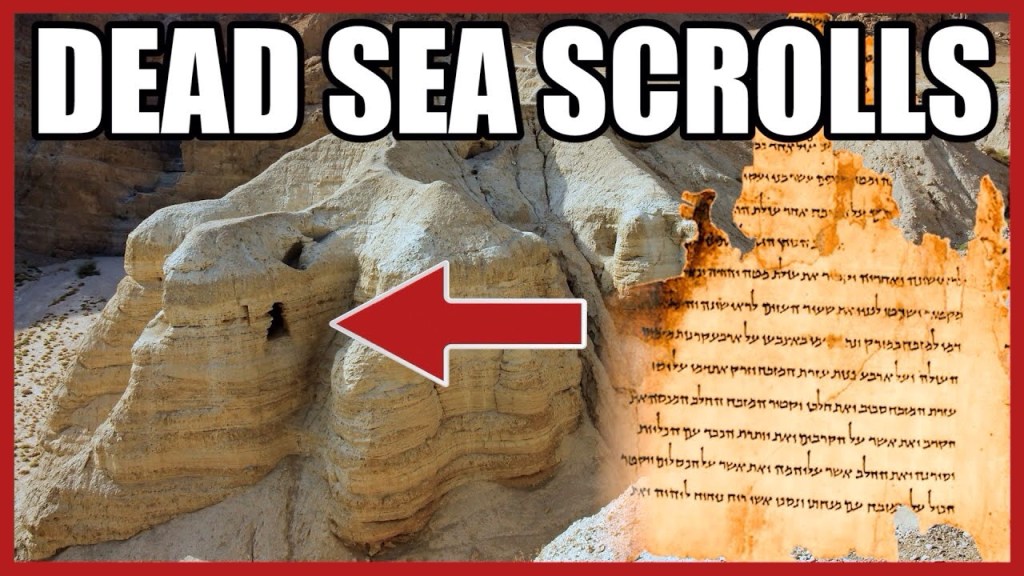

George Bernard Shaw:

“I have studied him – the wonderful man – and in my opinion far from being an anti-Christ, he must be called the Savior of Humanity.”

Jesus and the Pharisees were known to have conflicting beliefs and teachings during the time of Jesus’ ministry. The Pharisees were a religious sect in Judaism who focused on strict adherence to the Mosaic Law and traditions, while Jesus often challenged their interpretations and practices. This led to many confrontations and debates between Jesus and the Pharisees, as their differing perspectives on faith and righteousness clashed. Ultimately, their interactions played a significant role in shaping the narrative of the New Testament.

Jesus, Muhammad, and the Davidic Messiah

In Matthew 22, verse 45, Jesus posed a question to the Pharisees. How can the Messiah be considered David’s descendant if David himself refers to him as ‘Lord’?

The following is an excerpt from Willmington’s Bible Handbook notes on Matthew 22, verses 42 to 45:

Jesus now asked a question of the Pharisees: They accepted Psalm 110 as a prediction of the Messiah, yet they considered that he would be a merely human descendant of David. If that were the case, asked Jesus, why did David refer to him as “Lord”? Both the deity and humanity of the Messiah are taught clearly in the Old Testament but the leaders could not see it. Jesus had finally silenced his critics once and for all.

Some Islamic scholars believe that, although Jesus was considered a messiah, he never publicly claimed to be the Davidic messiah whom the Jews were expecting. Moreover, it appears that in Matthew 22, verses 42 to 45, Jesus did not emphasize his divinity as most Christian commentators claim, but rather rejected the notion that the Messiah would be a descendant of David.

Islamic scholars argue that Jesus did not refer to himself but to someone other than him, that is Prophet Muhammad who was seated at the right hand of God. Similarly, while Jesus understood himself to be a prophet, he never publicly claimed to be the prophet mentioned in Deuteronomy 18, verse 18. How is this argument explained?

Islamic scholars present a nuanced interpretation of Jesus’ role as the Messiah and his relationship to the prophecies in the Hebrew Bible and the New Testament. Their arguments often center around specific biblical passages and the broader theological context within Islam.

Jesus as the Messiah and the Davidic Lineage

In Islam, Jesus (Isa) is recognized as the Messiah (Al-Masih), but this title does not carry the same connotations as it does in Christian theology. The Quran refers to Jesus as the Messiah eleven times, emphasizing his role as a prophet and messenger of God rather than a divine figure or a political savior from the line of David. This interpretation aligns with the Islamic view that Jesus did not claim divinity or a unique messianic kingship in the way that some Jewish and Christian traditions suggest.

Interpretation of Matthew 22, verses 42 to 45

In Matthew 22, verses 42 to 45, Jesus questions the Pharisees about the Messiah’s lineage, asking why David calls the Messiah “Lord” if the Messiah is his son. Some Islamic scholars have interpreted this passage as indicating that Jesus was referring to someone other than himself. Jesus was distancing himself from the traditional Jewish expectation of a Davidic Messiah. They contend that Jesus denied the future Messiah’s lineage from David and instead highlighted an inconsistent interpretation of messianic prophecy by the scribes.

Jesus and Prophet Muhammad

Some Islamic scholars extend this interpretation to suggest that Jesus was alluding to another figure who would fulfill the messianic expectations more completely. They propose that this messianic figure is Prophet Muhammad, who is considered the Seal of the Prophets in Islam and is believed to have brought the final and complete revelation from God. This perspective is supported by the belief that Jesus foretold the coming of Muhammad, aligning with the Islamic view that all prophets, including Jesus, pointed towards the final messenger.

Jesus and Deuteronomy 18, verse 18

Regarding Deuteronomy 18, verse 18, which speaks of a prophet like Moses, Islamic scholars argue that Jesus did not publicly claim to be this prophet. Instead, they believe that this prophecy refers to Muhammad, who, like Moses, brought a comprehensive law and led a community of believers. This interpretation is consistent with the Islamic view that Muhammad fulfills the role of the final prophet, bringing the last and complete message from God.

Conclusion

Islamic scholars argue that Jesus, although being a messiah like other messiahs before him, did not claim to be the Davidic Messiah in the traditional Jewish sense and that he did not see himself as the prophet mentioned in Deuteronomy 18, verse 18. Instead, they believe that these roles were fulfilled by Prophet Muhammad. This interpretation is rooted in a broader theological framework that sees Jesus as a significant prophet and messenger who foretold the coming of Muhammad, the final prophet.


This is the tomb of Cyrus II of Persia, the ruler who released the Jewish people to return to Judah with goods for the trip and rebuilding

CYRUS

Cyrus II, better known as Cyrus the Great, was the founder and first ruler of the Persian Empire (559–529 BC). Cyrus’s impact on the people of God is described in Isa. 44:28–45:13 (esp. 45:1), where God refers to this foreign king as “his anointed” or “his messiah” (mashiakh).

Such an honorific shows that it was really God himself who moved history to restore his people to their land. After Cyrus assumed leadership of the Persians, he defeated the Medes (c. 550 BC) and combined the two states into one. He then defeated the Lydians (c. 546 BC), located in Asia Minor with a capital at Sardis, ruled at that time by the legendary King Croesus. Cyrus then turned his attention to the major prize, Babylon, whose kingdom extended from Palestine into Syria and across Mesopotamia.

In 539 BC he defeated the army of Babylon under the leadership of its king, Nabonidus, then soon entered the city, which, according to Dan. 5, was ruled by Nabonidus’s son and coregent, Belshazzar.
After inheriting the Babylonian empire and all its vassals, Cyrus issued a decree that allowed these subjugated people to return to their lands and rebuild their temples.

This decree is described in what has come to be known as the Cyrus Cylinder, a record of major events in Cyrus’s reign, but in the Bible the version is specifically directed toward the Jewish people (2 Chron. 36:23; Ezra 1:2–4). Soon thereafter, some, but not all, Jewish exiles began to return to Jerusalem under the leadership of Sheshbazzar and Zerubbabel.


Cyrus died in 530 BC while fighting the Massagetae in central Asia. His son Cambyses II inherited his vast empire from him at that time.