The Prophethood of Muhammad and the Hebrew Prophets: Exploring Biblical and Theological Foundations


Azahari Hassim

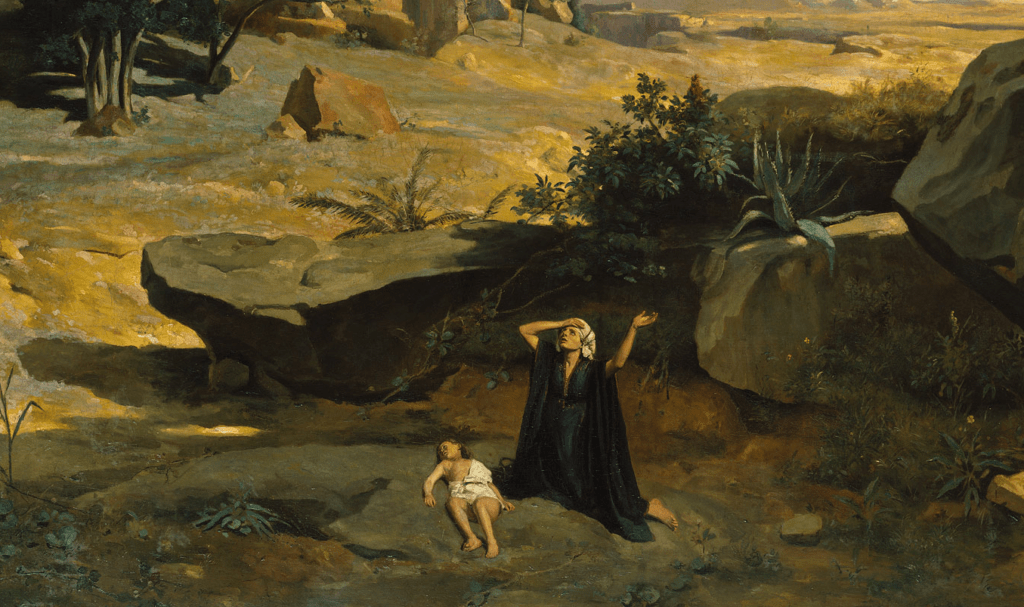
In Genesis, chapter 21 and verse 18, an important prophecy and interaction between God and Hagar regarding Ishmael is mentioned.

The verse states, “Arise, lift up the lad and hold him with your hand, for I will make him a great nation.

One hypothesis proposes that the prophethood of the Hebrew prophets is tied to the Torah given to Moses, whereas Muhammad’s prophethood is associated with the prophecy of Hagar which predates the Torah. How is this idea presented?

The hypothesis you mention explores the relationship and distinctions between the prophethood of the Hebrew prophets and that of Muhammad, focusing on their respective biblical and theological foundations. This idea can be presented and analyzed through various religious, historical, and scriptural perspectives:

The prophethood of the Hebrew prophets is often seen as being linked directly to the Torah, which according to Jewish tradition, was given to Moses by God on Mount Sinai. This link is crucial because it establishes a continuous line of prophetic authority and teaching that is rooted in the laws and ethical teachings of the Torah.

The prophets following Moses are considered to have the role of interpreting, enforcing, and expanding upon the Torah’s teachings.

In contrast, Muhammad’s prophethood is sometimes associated with the prophecy attributed to Hagar. Hagar, according to the Genesis account, was the servant of Abraham and Sarah, and mother of Ishmael, who is considered by Muslims to be an ancestor of Muhammad.

This association is used to argue that Muhammad’s prophetic lineage predates the Mosaic Torah and is linked instead to Abrahamic covenant through Ishmael.

This hypothesis suggests that there are distinct covenants in the Abrahamic religions that validate different prophetic traditions. The Hebrew prophets fall under the covenant of Moses and the Sinai revelation, while Muhammad is considered under the covenant given to Abraham and Ishmael (as Hagar’s son).

This distinction is important in Islamic theology which views Islam as a continuation and fulfillment of Abrahamic faith, independent of the Mosaic laws.

The idea also touches upon the nature of the revelations received by the prophets. The Torah is often viewed as a national revelation aimed at the Jewish people, containing civil, moral, and ceremonial laws specifically designed for them.

In contrast, Muhammad’s revelation (the Quran) is considered universal, intended for all humanity, and not tied to the specific legal and ritual practices of the Jews.

By associating Muhammad with a prophecy that predates the Torah, this hypothesis also underscores the notion that prophetic messages have been universal and ongoing throughout human history. This could be seen as an attempt to place Islam within a broader, inclusive prophetic tradition that transcends Jewish ethnic and religious boundaries.


PROPHET

An inspired messenger called by God to declare His will (Ezra 5:2). Prophets were described as God’s servants (Zech. 1:6), watchmen (Ezek. 3:17), and holy men (2 Pet. 1:21). In the N.T. the prophets were cited as a noble example of patient suffering (Jas. 5:10). Another word for prophet is seer.

Pharaoh Ramses II was believed to have been a contemporary of Moses. Ramses II is often associated with the biblical account of Moses leading the Israelites out of Egypt, as he ruled during the 13th century BCE, around the time that the events described in the Bible are thought to have taken place. Some historians and scholars believe that Ramses II could have been the pharaoh mentioned in the story of Moses, although this connection is not definitively proven.

The Miraculous Preservation of Pharaoh’s Body: The Connection to Muhammad as the Prophet Like Moses

Surah 10, verse 92, reads:

“Today We will preserve your body (O Pharaoh), so that you become a sign for those after you. But most people are heedless of Our signs.”

Some scholars contend that the discovery of Ramses’ body in modern times is viewed as a miraculous event in the Quran, specifically in Surah 10, verse 92. It resembles Moses’ parting of the Red Sea. As a result, they argue that Muhammad is the prophet mentioned in Deuteronomy 18, verse 18, similar to Moses. How do they express their argument?

The scholars who make this argument typically point to several key points to support their claim:

  1. Discovery of Ramses’ body: They argue that the discovery of Pharaoh Ramses II’s body in modern times is a significant event that aligns with the story of Pharaoh’s body being preserved as a sign in Surah 10, verse 92 of the Quran. This miraculous preservation of Pharaoh’s body is seen as a fulfillment of that prophecy.
  2. Resemblance to Moses’ parting of the Red Sea: The scholars suggest that the discovery of Ramses’ body can be seen as a parallel to the miracle of Moses parting the Red Sea, as both events involve extraordinary occurrences related to Pharaoh and Moses. This parallel further strengthens the connection between the two stories.
  3. Muhammad as the prophet like Moses: In Deuteronomy 18, verse 18, the Bible mentions the coming of a prophet like Moses, whom God will raise up among the brethren of Israelites. Some scholars argue that Muhammad fits the description of this prophet due to similarities in their roles, teachings, and experiences with prophethood.

By combining these points, scholars argue that the discovery of Ramses’ body, the resemblance to Moses’ story, and the identification of Muhammad as the prophet like Moses provide evidence for the divine inspiration of the Quran and Muhammad’s status as a prophet in the line of Moses.

Does Hagar’s prophecy in Genesis 21:18 predate the Torah given to Moses?

Yes, Hagar’s prophecy in Genesis 21:18 predates the Torah as given to Moses. The Book of Genesis, which includes the story of Hagar, is considered part of the Torah (the first five books of the Hebrew Bible) and traditionally attributed to Moses. However, the events described in Genesis, including Hagar’s encounter with God and the prophecy concerning her son Ishmael, are believed to have occurred long before the time of Moses, around the patriarchal period.

The narrative in Genesis 21 describes Hagar and Ishmael in the context of Abraham’s family and is thus seen as part of the pre-Mosaic tradition. The Torah, or Pentateuch, as a compilation and codification, is generally understood to have been formalized during the time of Moses, which occurs much later in the biblical timeline. 

Therefore, the events and prophecies in Genesis can be considered as part of the earlier history before the giving of the law to Moses.

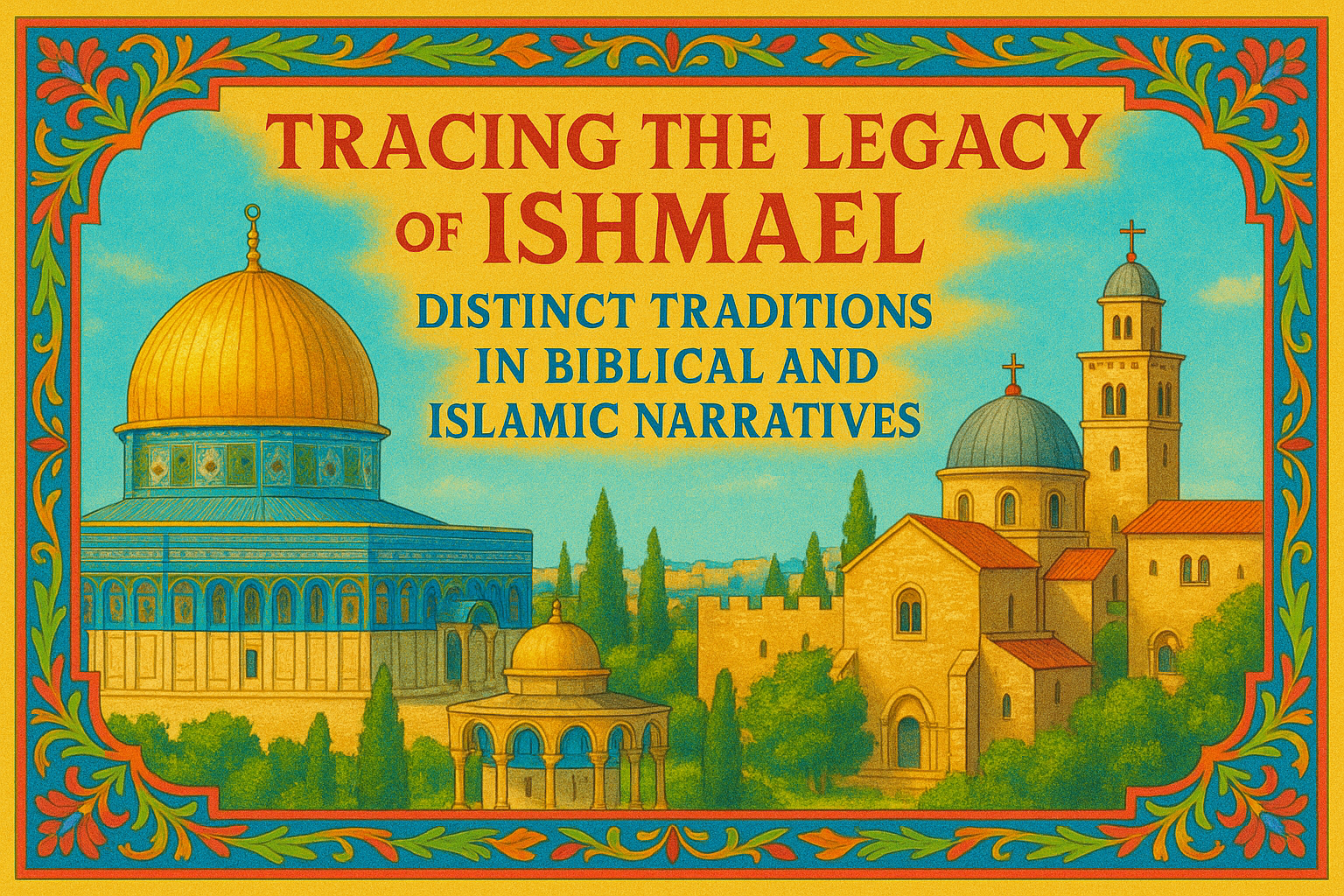
Tracing the Legacy of Ishmael: Distinct Traditions in Biblical and Islamic Narratives


Azahari Hassim

Do Ishmaelites possess a distinct tradition that traces back to their forefather, apart from the biblical narrative?

The Ishmaelites, as referred to in various historical and religious texts, are traditionally considered to be the descendants of Ishmael, the first son of Abraham and Hagar. Ishmael is an important figure in Judeo-Christian and Islamic traditions, but the traditions and histories diverge in significant ways across these faiths, particularly in Islam.

In Biblical Narrative:

In the Bible, particularly the Book of Genesis, Ishmael is portrayed as the elder half-brother of Isaac. The narrative describes how he and his mother Hagar were sent away into the desert by Abraham at the behest of Sarah (Isaac’s mother).

The biblical narrative primarily depicts Ishmael as the progenitor of the Ishmaelites, often considered ancestors of the Arab peoples. However, detailed traditions specifically tracing back to Ishmael in terms of rituals, laws, or unique religious practices distinct from later Jewish or Christian traditions are not extensively documented within the Bible itself.

In Islamic Tradition:

In Islamic tradition, however, Ishmael (Ismail in Arabic) holds a significantly different and more detailed historical and spiritual legacy. Islam regards Ishmael as a prophet and an ancestor of Muhammad, which is distinct from the biblical account in several key aspects:

Foundation of Mecca:

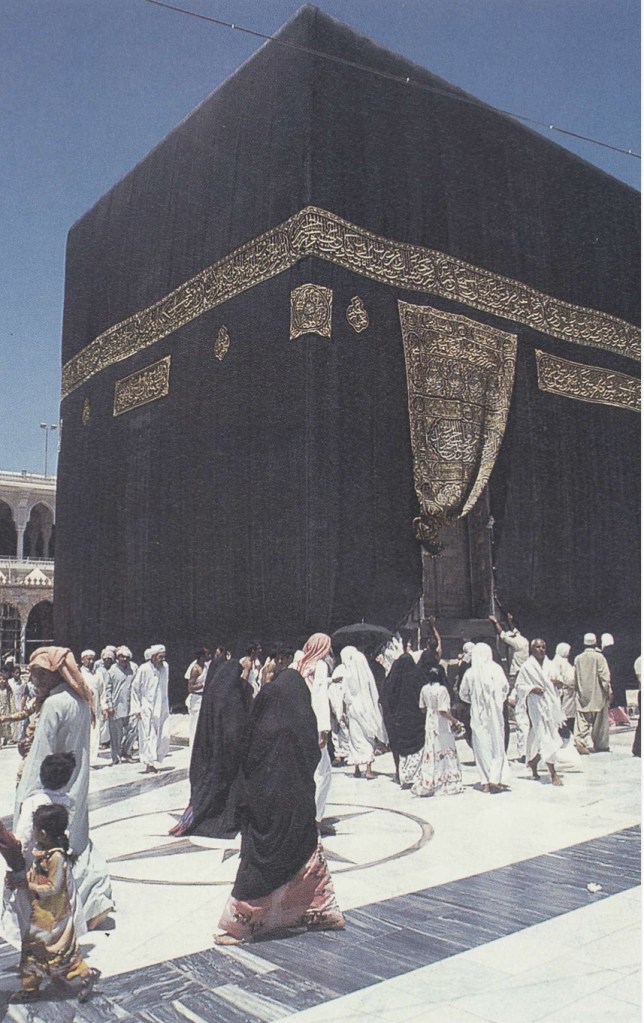
Islamic traditions hold that Ishmael and his father Abraham were involved in the rebuilding of the Kaaba in Mecca, which is the holiest site in Islam.

The Hajj Ritual:

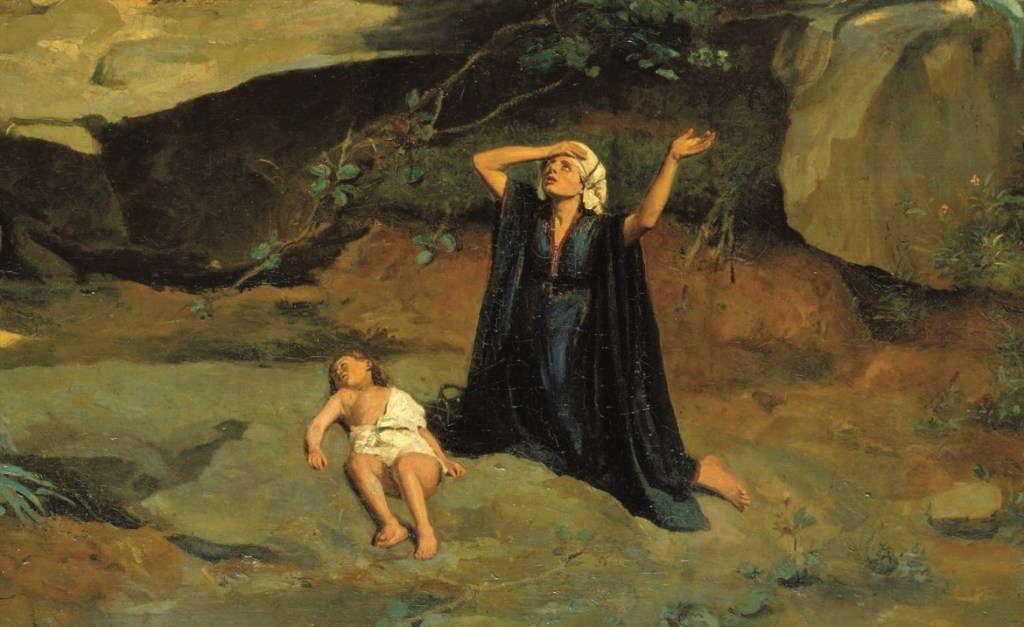
Many rituals performed during the Hajj (the Islamic pilgrimage to Mecca) are commemorated in the context of events involving Ishmael and Abraham. For instance, the ritual of the Sa’i, walking between the hills of Safa and Marwah, is a re-enactment of Hagar’s search for water for her baby son Ishmael.

Sacrifice:

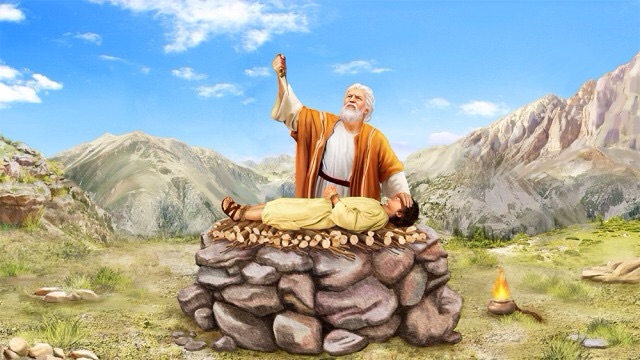
The Islamic festival of Eid al-Adha commemorates the willingness of Abraham to sacrifice his son in obedience to God’s command, which in Islamic tradition is believed to have been Ishmael, rather than Isaac as in the Judeo-Christian tradition.

Cultural and Historical Perspective:

Beyond religious texts, the identity and historical interpretations of the Ishmaelites have evolved in various cultures. In some traditions, the Ishmaelites are often conflated with Arab tribes, and thus Ishmael is considered an important forefather of Arabs. This lineage has sometimes been used historically to claim a shared ancestry for Arab peoples.

Conclusion:

While the biblical narrative does not extensively detail distinct traditions that trace back specifically to Ishmael separate from broader Jewish and Christian practices, Islamic tradition provides a rich, detailed cultural and religious heritage tracing back to Ishmael.

This includes specific rituals and celebrations that are integral to Islamic practice today. These distinctions highlight the varying ways in which the figure of Ishmael has been revered and remembered across different cultures and religions.

Martin Luther (1483–1546):

“The Turk [Muslim] is the rod of the wrath of the Lord our God… If we were such Christians as we ought to be, the Turk would not have grown so powerful, but he would have stayed in his own land.”

Midrashic and Islamic Interpretations of Abraham’s Sacrifice: The Identity of the ‘Only Son’

What is the explanation of the Midrash about Isaac being called “thy only son” when God ordered Abraham to sacrifice his son? In Islamic tradition, it is Ishmael and not Isaac, whom God instructed Abraham to sacrifice his son.

The Midrash, which is a form of rabbinic literature that provides interpretative commentary on the Torah, offers several explanations for why Isaac is referred to as Abraham’s “only son” in the context of the Akedah (the Binding of Isaac). Here are some key points from the Midrashic perspective:

The Midrash explains that while Abraham had two sons, Isaac held a unique status as the son of the covenant. He was born to Sarah, Abraham’s wife, and was seen as the fulfillment of God’s promise. Isaac is considered the spiritual heir of Abraham, chosen to carry on the legacy of monotheism and the covenant with God.

In some Midrashic accounts, when God says “your only son,” Abraham responds by saying he has two sons. God then specifies “the one whom you love,” and Abraham says he loves both. Finally, God says “Isaac,” clarifying His command. The phrase “only son” is interpreted to mean the son who is singularly devoted to God, emphasizing Isaac’s spiritual qualities rather than his birth order.

Some rabbinical commentators suggest that the Hebrew word for “only” (יחיד) can also mean “unique” or “special,” rather than strictly “sole.” The use of “only son” is seen as part of the test, emphasizing the magnitude of what God is asking Abraham to sacrifice.

In contrast, the Islamic tradition, as recorded in the Quran, identifies Ishmael as the son whom Abraham was commanded to sacrifice. The Quranic narrative does not explicitly name the son, but Islamic tradition and many Muslim scholars have historically identified him as Ishmael. This is partly based on the sequence of events in the Quran, which suggests that the promise of Isaac’s birth came after the sacrifice narrative, implying Ishmael was the son involved.

The differences between the Jewish and Islamic narratives have been the subject of theological discussions and interpretations. Some scholars suggest that each tradition emphasizes different aspects of the story to highlight their theological and historical narratives.

While the Islamic tradition interprets the sacrificial son to be Ishmael based on him being the firstborn, Judaism relies on the Torah’s explicit identification of Isaac and his special covenantal status to explain why Isaac is called the “only son” in this context. The two traditions remain at odds on this important narrative.

In summary, the explanation of the Midrash about Isaac being called “thy only son” is a matter of religious interpretation, with Jewish and Islamic traditions holding different views on who was the son intended for sacrifice.


A HISTORY OF THE CHRISTIAN CHURCH
by Lars P. Qualben

Islam and the Greek Church

While Christianity was gaining mastery over the barbarian tribes of western Europe, a new Theocracy arising in Arabia expanded to tremendous proportions. It was modeled on that of Moses. Mohammed (570-632) was its founder, its prophet, and its military leader. Sprung from the distinguished tribe of the Koreish, the custodians of the sacred shrine of the Kaaba (cube), he was born in the holy city of Mecca. 

Within this temple was preserved the sacred black stone which the Mohammedans say was originally white as milk, but turned black because of the sin of man. Mohammed was brought up by his relatives without any education. First a shepherd, he later became a merchant and a camel driver.

The religion of his people was heathenism, but Mohammed and his tribe came in frequent contact with Judaism and degenerate forms of Christianity (Ebionism, Arianism, and Sabellianism). A commercial journey through Syria with an uncle brought Christianity and Judaism to his special attention.

In 610, at the age of forty, Mohammed appeared as a prophet, proclaiming a new religion sometimes called Islam, meaning “submission to Allah,” sometimes Mohammedanism after its. The religious system of Islam may be summed up as follows: God, or Allah, is one. He is omnipotent and omniscient. Submission to Him is the central principle in the system. 

Hence the name Islam. All events are foreordained, and men must submit to this unchangeable order of things without a murmur. There are two classes of angels: good and bad. Allah has given His revelation in the Scriptures, that is, in the Quran and in the Sunna, a great body of traditions of Mohammed’s sayings.

God has sent prophets such as Adam, Abraham, Moses, and Jesus. But the greatest of them all is Mohammed, the Paraclete” promised by Jesus.

Connecting the Dots: Isaiah 60:7, the Hajj Ritual, and the Prophecy of Ishmael’s Descendants


Azahari Hassim

Some believe that Isaiah 60, verse 7, is related to the Hajj ritual, and is the fulfillment of Hagar’s prophecy regarding Ishmael in Genesis 21, verse 18. How is this interpretation presented?

This is an interesting question. The interpretation that Isaiah 60, verse 7, is related to the Hajj ritual and the fulfillment of Hagar’s prophecy regarding Ishmael is based on the following assumptions:

The verse reads:

“All the flocks of Kedar will be gathered to you, The rams of Nebaioth will serve you; They will go up on My altar with acceptance, And I will glorify My glorious house.”

The flocks of Kedar and the rams of Nebaioth in Isaiah 60, verse 7, refer to the descendants of Ishmael, who was the son of Abraham and Hagar, and the ancestor of the Arabs. Kedar and Nebaioth were two of Ishmael’s sons (Genesis 25, verse 13).

The altar and the glorious house mentioned in Isaiah 60, verse 7, refer to the Kaaba. The Kaaba is a sacred building in Mecca that has a cube shape. Muslims believe it was constructed by Abraham and Ishmael. It serves as the direction of prayer and is also the destination for the Hajj pilgrimage.

The acceptance of the offerings on the altar and the glorification of the house in Isaiah 60, verse 7, refer to Muslims performing their Hajj, known as the Feast of Sacrifice. This sacrifice is performed in remembrance of Prophet Abraham’s willingness to sacrifice his son Ishmael and as a demonstration of submission to Allah’s will.

Furthermore, it is a prophecy of God’s acceptance and blessing of the Ishmaelites, who worship Him at the Kaaba in sincerity and submission, as He promised Hagar in Genesis 21, verse 18,

“I will make him into a great nation.”

This interpretation is presented by some Muslim scholars and commentators, who see it as a proof of the truth and validity of Islam and the Hajj ritual.

The Kaaba rises majestically above the worshippers around it. This is not the most crowded time of year, but still there are some pilgrims performing the Umrah, or smaller pilgrimage. fhe Umrah consists of circling the Kaaba and running between the hills of Safa and Marwah.

Ibn Battuta 1304 – 1368

“The Kaaba is the most sacred place on Earth, a focal point of devotion for millions of Muslims. To behold it is to feel a profound connection to the divine.”

The Prophecy of Hagar and Its Fulfillment: A Comparative Analysis of Genesis 21:18 and Isaiah 60:7

There is a belief that the prophecy of Hagar in Genesis 21, verse 18, holds more weight than Isaiah 60, verse 7, which is linked to and completes the former. How is this understanding conveyed?

The belief that the prophecy of Hagar in Genesis 21, verse 18, holds more weight than Isaiah 60, verse 7, which is linked to and completes the former, can be understood through a close examination of the biblical texts and their contexts. Here’s how this understanding is conveyed:

1. Genesis 21, verse 18 (The Prophecy of Hagar).

This verse is part of the story where God speaks to Hagar after she and her son, Ishmael, are sent away by Abraham. Hagar is distraught, fearing for her son’s life in the desert.

The verse reads: Arise, lift up the lad, and hold him in thine hand; for I will make him a great nation.”

This prophecy directly promises that Ishmael will become a great nation. This is a foundational promise, as it assures Hagar of her son’s future and his importance in God’s plan.

2. Isaiah 60, verse 7 (Completion of the Prophecy).

This chapter of Isaiah deals with the future glory of Zion, depicting a time of great prosperity and the gathering of nations to honor God.

The verse reads: “All the flocks of Kedar shall be gathered together unto thee, the rams of Nebaioth shall minister unto thee: they shall come up with acceptance on mine altar, and I will glorify the house of my glory.”

Both Kedar and Nebaioth are descendants of Ishmael. This verse indicates the fulfillment and continuation of the promise given to Hagar, showing that Ishmael’s descendants will play a significant role in the future worship and honor of God.

3. Interconnection and Weight:

The prophecy in Genesis 21, verse 18, is seen as having “more weight” because it is the initial divine promise regarding Ishmael, establishing his importance and future. It is a direct communication from God to Hagar at a crucial moment. Isaiah 60, verse 7, is viewed as the completion or continuation of this promise. It confirms and elaborates on the fulfillment of God’s plan for Ishmael’s descendants, showing their eventual integration into the worship of God and their contribution to the glory of Zion.

The “weight” of Genesis 21, verse 18, lies in its foundational nature, while Isaiah 60, verse 7, provides a more detailed and expanded vision of the fulfillment of that initial promise.

This understanding is conveyed by recognizing that the original promise to Hagar is the cornerstone of the prophecy concerning Ishmael and his descendants.

The later prophetic vision in Isaiah builds upon this foundation, demonstrating the fulfillment of God’s promise in a broader and more comprehensive way. Therefore, while Isaiah 60, verse 7 is significant in its completion of the prophecy, Genesis 21, verse 18, holds a primary and foundational weight in the narrative.


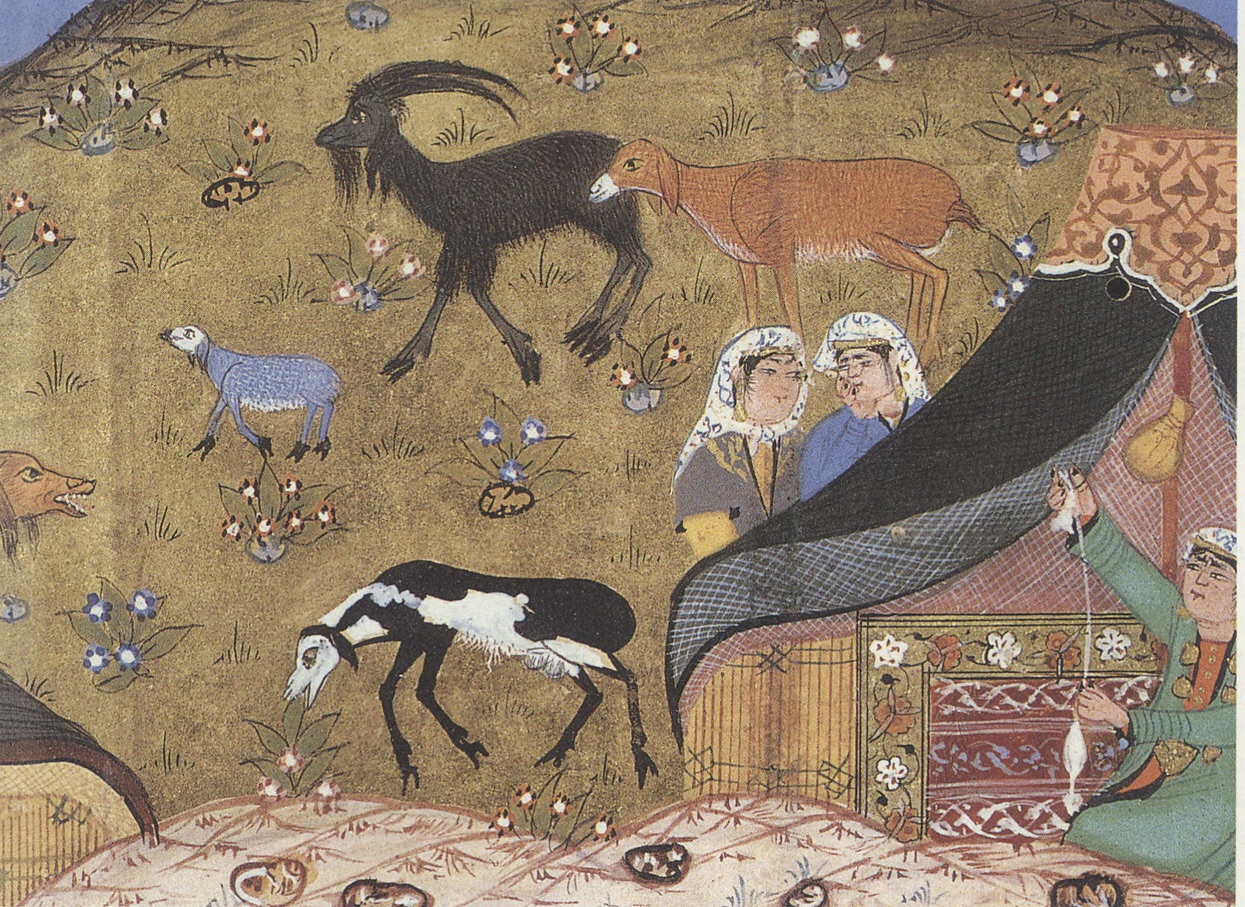
The first settlers on the site of Mecca were nomadic bedouin people from Yemen. This picture from a 16th century Persian manuscript gives a fanciiul image of bedouin life. The lady on the right is spinning, while sheep and goats gtaze near by. The details in the picture – such as the tent and the ladies’ clothes – are all Persian in style.

Origins

Muslims believe that the valley of Mecca was chosen by God as a holy place at the beginning of time, and that the first settlement at Mecca was established when the Prophet Abraham was commanded by God to send his wife, Hagar, and their son, Ishmael, into the desert.

This was an act of faith, by which Abraham entrusted his wife and son to God’s care. By the time mother and child had exhausted their supply of water they had reached the spot that was later to become Mecca. Hagar searched for water to quench her child’s thirst, running between two low hills which became known as Safa and Marwah. All the time she prayed to God for help and, in answer to her prayers, a spring of water burst forth miraculously from the dry earth beside the infant child. The spring became known as the well of Zamzam.

According to Muslim tradition, the presence of water attracted some people passing near by on their travels from Yemen. The people made a contract with Hagar for the use of the well, and thus a settlement was established. This was the origin of the first village of Mecca. Muslims believe that Abraham later visited Mecca, and taught the people to worship one God rather than many different idols. At God’s command he built the Kaaba (with the help of Ishmael), and established the rites of pilgrimage. Mecca was soon revered throughout Arabia as a holy place, and the pilgrimage became an annual institution.


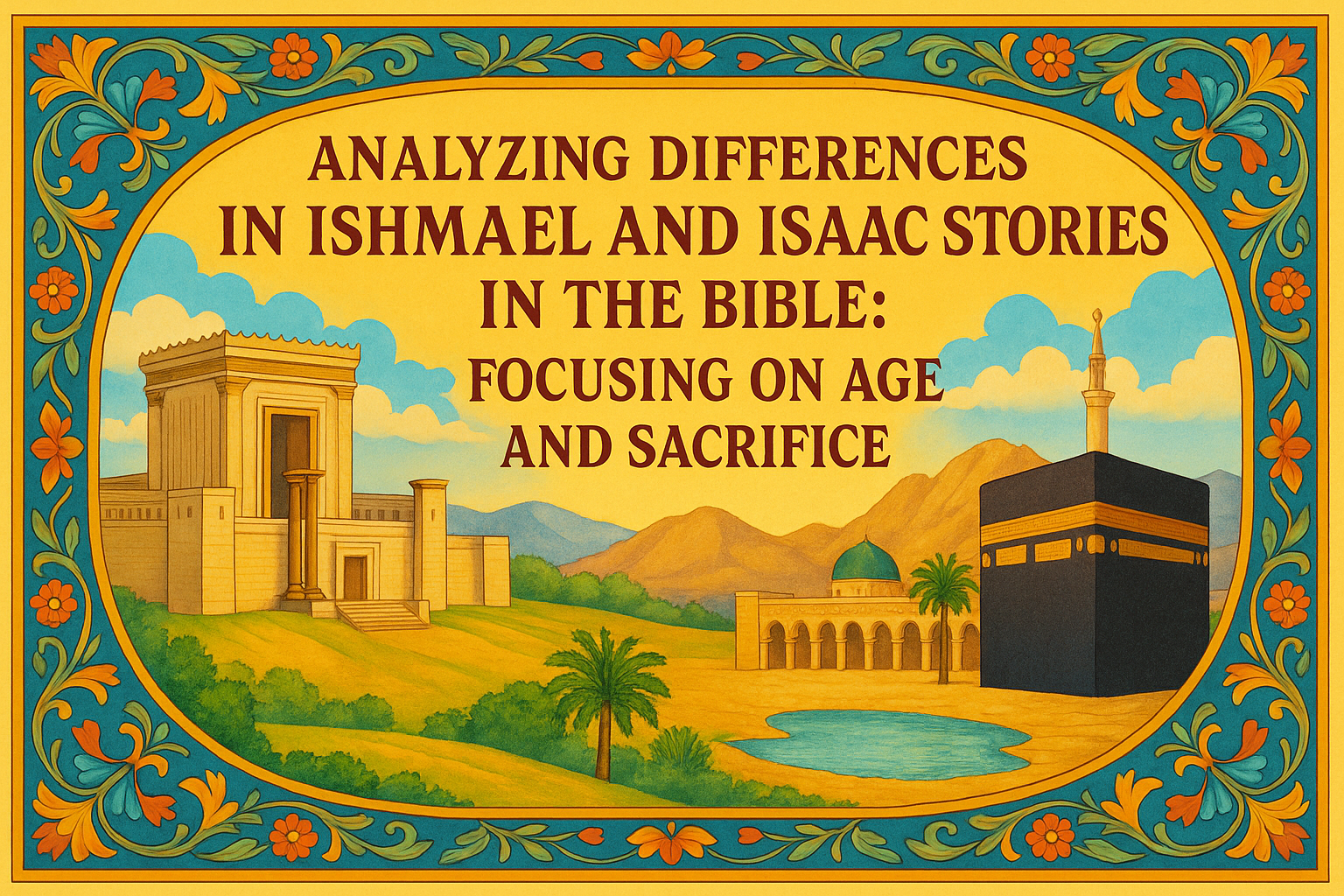
The Age of Ishmael in Biblical and Islamic Traditions and Its Significance in the Hajj Ritual of Sa’i


Azahari Hassim

What was Ishmael’s age when he and his mother were sent by Abraham to the desert, according to the Bible and Islamic tradition?

According to the Bible, Ishmael was around 14 years old when he and his mother Hagar were sent by Abraham to the desert. This event is described in the book of Genesis in the Old Testament.

In Islamic tradition, Ishmael is believed to have been a young child, possibly an infant or toddler, when he and Hagar were sent to the desert by Abraham. This event is also mentioned in Islamic texts such as the Quran and Hadiths.

The differences in age between the two traditions can be attributed to variations in interpretations of religious texts and cultural beliefs. Both traditions agree on the basic narrative of Ishmael being sent away with his mother by Abraham, but there are slight discrepancies in details such as his age at that time.


Is Ishmael depicted as an infant in the Hajj ritual of Sa’i when he and his mother were sent to the desert by Abraham?

In the Hajj ritual of Sa’i, Ishmael is depicted as an infant because according to Islamic tradition, he was a baby when he and his mother Hagar were sent to the desert by Abraham. This event is known as the story of Abraham and Hagar in Islam. In this story, Abraham was commanded by God to leave Hagar and baby Ishmael in the barren desert of Mecca with only a small amount of food and water.

As their supplies ran out, Hagar desperately searched for water for her infant son Ishmael until she found the well of Zamzam miraculously provided by God.

The act of Sa’i during Hajj reenacts Hagar’s frantic search for water by walking back and forth between the hills of Safa and Marwah seven times. This ritual symbolizes devotion, perseverance, trust in God’s provision, and the importance of seeking help in times of need.

By depicting Ishmael as an infant during this ritual, it serves as a reminder of his vulnerability and dependence on his mother during their time in the desert. It also highlights their resilience and faith in God’s plan despite facing hardships.

Overall, depicting Ishmael as an infant in the Hajj ritual of Sa’i helps to emphasize important themes such as family bonds, trust in divine providence, perseverance through challenges, and reliance on faith during difficult times.


The Departure of Hagar and Ishmael: Analyzing Biblical Text and Midrash Interpretations

Was Ishmael placed on Hagar’s shoulder by Abraham in Genesis 21 before their departure? Was Ishmael able to walk when Abraham sent him and his mother away? How does the Midrash explain it?

The Midrash provides an interpretation of the events in Genesis 21. According to the Midrash, Ishmael was indeed placed on Hagar’s shoulders, and this act is seen as a demonstration of Hagar’s devotion to her son. However, the Midrash also acknowledges the inconsistency between Ishmael’s age and his physical abilities, suggesting that the text may have been altered or fabricated to fit the narrative.

According to Rashi’s commentary, Ishmael was unable to walk at the time, potentially due to an evil eye cast upon him by Sarah that caused him to become ill. Rashi suggests Abraham placed the teenage Ishmael on Hagar’s shoulder along with their supplies because he was too feeble to walk on his own. 

So in summary, while Rashi argues Ishmael was placed on Hagar’s shoulders because he was too ill to walk, this explanation is debated given Ishmael’s age and other details in the text and Midrash. The passage is ambiguous about how Hagar and Ishmael departed together. Alternative interpretations suggest Ishmael was old enough to walk, even if he required some support from his mother.


Does the name of Muhammad appear in the Bible?


Azahari Hassim

Some interpret Song of Solomon 5, verses 10 to 16, as a depiction of Muhammad using hyperbolic language. What is the comparative religious perspective on the argument regarding the manifestation of the name Muhammad in verse 16, expressed in the plural form as a sign of respect?

The Islamic perspective on the interpretation of Song of Solomon 5, verses 10 to 16, particularly verse 16, as a reference to the Prophet Muhammad stems from the claim that the Hebrew word “מַחֲמַדִּים”, found in this verse, is remarkably similar to the name Muhammad.

This word is translated into English as “altogether lovely,” “very pleasant,” or similar phrases, but some Muslims argue that it should be understood as a direct reference to Muhammad, given the phonetic similarity and the significance of the name.

In Islamic tradition, Muhammad is believed to be the final prophet sent by God to guide humanity, and his coming is interpreted by some Muslims as having been foretold in previous scriptures, including the Bible. The argument here hinges on the linguistic and phonetic connection between the Hebrew word in the text and the name Muhammad.

Proponents of this view argue that the use of “מַחֲמַדִּים” in the plural form is a stylistic or honorific form in Hebrew, used to convey respect or exaltation, rather than a literal plural. This is seen as analogous to how Arabic uses certain plural forms to denote honor or respect, rather than quantity.

The verses Song of Solomon 5, verses 10 to 16 read:

Verse 10: My beloved is white and ruddy,
Chief among ten thousand.

Verse 11: His head is like the finest gold;
his locks are wavy,
and black as a raven.

Verse 12: His eyes are like doves
by the rivers of waters,
washed with milk,
and fitly set.

Verse 13: His cheeks are like a bed of spices,
banks of scented herbs.
His lips are lilies,
Dripping liquid myrrh.

Verse 14: His hands are rods of gold
set with beryl.
His body is carved ivory
inlaid with sapphires.

Verse 15: His legs are pillars of marble
set on bases of fine gold.
His countenance is like Lebanon,
excellent as the cedars.

Verse 16: His mouth is most sweet,
yes, he is altogether, מַחֲמַדִּים (lovely).
This is my beloved,
and this is my friend,
O daughters of Jerusalem.

Michael H. Hart:

“My choice of Muhammad to lead the list of the world’s most influential persons may surprise some readers and may be questioned by others, but he was the only man in history who was supremely successful on both the religious and secular level.”

The Mount Hira in Mecca city of Saudi Arabia (Jabal Al-Nur). Before the Prophet Muhammad (S.A.W) was charged with the prophethood by Allah (S.W.T) he would go for spiritual retreats to a cave in this mount. This cave is named as Cave Hira and located in the projecting part of the mount on the left-up side. The Prophet Muhammad had received the first Koran verses from our Lord in the Cave Hira on this mount and seen the Angel Gabriel first time in its true form here. The first Koran verses revealed to Him on this mount were these: “READ! IN THE NAME OF YOUR LORD WHO CREATES. CREATES MAN FROM A CLOT OF BLOOD. READ! AND YOUR LORD IS MOST GENEROUS. WHO TEACHES BY THE PEN. TEACHES MEN THAT WHICH HE KNEW NOT.“ (The Holy Koran: 96:1-5.)

The biblical prophecy of Muhammad receiving his first revelation

Book of the Prophet Isaiah chapter 29, verse 12 reads:

“And the scroll is delivered to him that is not learned, saying, Read this, I pray thee: and he saith, I am not learned.”

Some believe Isaiah 29 verse 12 is the prophecy of Muhammad receiving his first revelation on Mount Hira in Mecca through the angel Gabriel. How is this interpretation explained?

The interpretation of Isaiah 29 verse 12 as a prophecy of Muhammad’s first revelation is based on the following parallels:

The scroll: In Isaiah 29 verse 12, a scroll is given to someone who cannot read, symbolizing the inability of the people to understand God’s message. This is seen as analogous to Muhammad’s illiteracy, as he was unable to read or write until he received the revelation.

The illiterate recipient: The inability to read is further emphasized in the verse, suggesting that the message is not meant for those who are already learned or knowledgeable. This is seen as a reference to Muhammad’s lack of formal religious education, as he was not a priest or scholar.

Prophecy of a New Prophet: Some interpretations suggest that Isaiah 29 verse 12 may be a prophecy of a new prophet who would come after Isaiah. This aligns with the Islamic belief that Muhammad was the last prophet in the Abrahamic tradition.

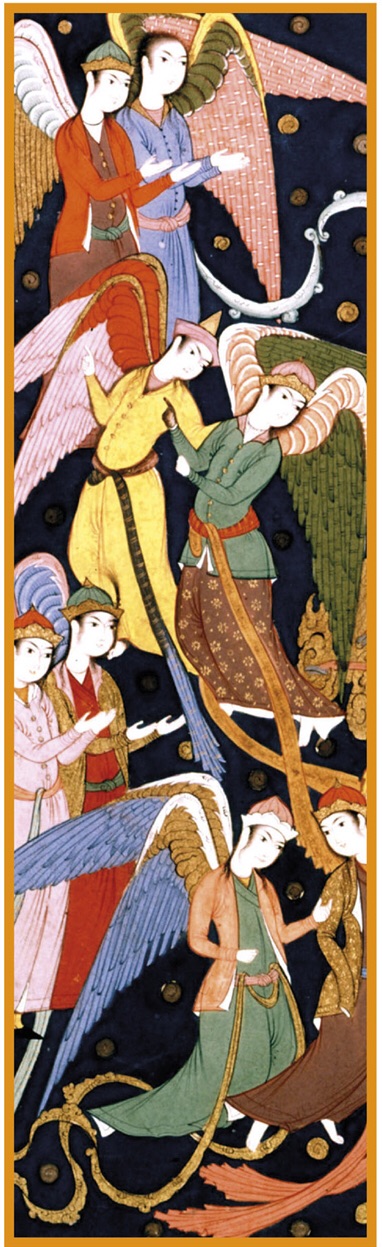
The angel Jibreel appeared to Muhammad to reveal verses of the Quran. Jibreel would sometimes take on the form of a man; at other times, he would share revelations by voice only.

The early life of Muhammad

According to Islamic tradition, in around 582 ce a Christian hermit, Bahira, was living in the Syrian desert when, one day, a boy passing by with a camel train caught his attention. After talking with him, Bahira concluded that the sign of prophecy was upon the boy. He was destined for greatness, Bahira told the boy’s guardians, and should be cared for well. The young boy was Muhammad, who became the prophet of Islam and, according to Muslims, God’s Final Messenger.

Muhammad was born in 570 in Mecca (Makkah) into the Banu Hashim clan of the Quraysh tribe. His father died before he was born and his mother when Muhammad was six. His grandfather, Abd al-Muttalib, took him into his care until he, too, died when Muhammad was eight. From this point, his uncle Abu Talib raised him. They lived in meager circumstances and Muhammad worked with his uncle as a traveling merchant. He later married and had children, and was known for his kindness to the poor, but otherwise Muhammad led an unexceptional life

The angel says “Read” Muhammad often climbed to a cave on Jabal al-Nur (Mountain of Light) in the Meccan Valley to meditate for days at a time. In 610, on the 27th night of what is now Ramadan (the ninth month of the Islamic calendar), he was awoken from sleep in his cave by a divine presence. According to tradition, it was the angel Jibreel (the Arabic name for Gabriel) who appeared to him. The angel simply commanded Muhammad to “Read!”

A confused Muhammad replied, “I am not a reader.” The angel embraced Muhammad and commanded him again to read. This happened three times before Muhammad asked, “What shall I read?” Jibreel responded with the very first revelation, what is now the first five verses of chapter 96 of the Quran: Read in the name of your Lord who created; created man from clots of blood. Read! Your Lord is the Most Bountiful One, who by the pen taught man what he did not know.

The Significance of Ishmael in Islamic Faith


Azahari Hassim

If Abraham had been instructed by God to sacrifice Ishmael instead of Isaac, it could be argued that Islam and Muhammad have a legitimate claim as a true religion and prophet. This argument can be further explained by examining the differences in the narrative of Abraham’s sacrifice between Islamic and Judeo-Christian traditions.

The story of Abraham being commanded to sacrifice his son is significant in Judaism, Christianity, and Islam. However, the key difference lies in the identity of the son involved. In Jewish and Christian traditions, it is Isaac who was nearly sacrificed, while in Islamic tradition, it is believed to be Ishmael. Although Ishmael’s name is not explicitly mentioned in the Quran, Muslims believe that he was the son whom Abraham was instructed to sacrifice.

If one were to argue for the legitimacy of Islam and Muhammad as a prophet based on the premise that Ishmael was the son intended for sacrifice, the argument might be structured as follows:

  1. Shared Abrahamic Roots: All three monotheistic religions—Judaism, Christianity, and Islam—trace their spiritual lineage to Abraham, recognizing him as a patriarch. The story of Abraham’s willingness to sacrifice his son at God’s command is seen as a test of faith in all three traditions.
  2. Islamic Narrative: The Quran (Surah 37, verses 100 to 113) recounts the story of Abraham’s willingness to sacrifice his son as a demonstration of his obedience to God. While the Quran does not name the son, the majority of Islamic traditions and interpretations identify the son as Ishmael, the eldest son of Abraham through Hagar. This interpretation is derived from the order of events in the Quran, indicating that the promise of Isaac’s birth occurred after the sacrifice story, leading to the conclusion that Ishmael was the son mentioned.
  3. Prophetic Lineage: In Abrahamic theology, the near sacrifice of Ishmael is regarded as a foreshadowing of Muhammad’s prophethood. This connection between Ishmael’s near-sacrifice and Muhammad’s lineage plays a vital role in confirming Muhammad’s position as a prophet in Islam, serving as a fundamental aspect of the faith and offering valuable insight into the validity of his prophethood.
  4. Preservation of Revelation: Muslims believe that the Quran is the final and unaltered word of God, preserved exactly as it was revealed to Muhammad. They argue that earlier scriptures, such as the Torah and the Bible, have been altered or misinterpreted over time. In this view, the Quran corrects these alterations, and the indication that Ishmael was the son to be sacrificed is seen as the correct version of the story.
  5. Continuity of Prophethood: Islam acknowledges the prophets of Judaism and Christianity but considers Muhammad to be the last prophet, who came to restore the original monotheistic faith and to correct deviations that had entered earlier religions. The story of Ishmael’s near-sacrifice, then, is seen as part of this corrective message.
  6. Theological Implications: The identification of the son in the story of Abraham’s sacrifice holds great significance as it symbolizes the heir of the Abrahamic covenant. In Islamic tradition, designating Ishmael as the son underscores his pivotal role in their religious history and bolsters the credibility of the Islamic faith for Muslims. This underscores the crucial role that lineage and inheritance play within religious narratives.

In conclusion, the narrative of Ishmael as the son intended for sacrifice strengthens Islam’s theological foundation and affirms Muhammad as a prophet. It shows Islam’s connection to the Abrahamic tradition, preservation of divine revelation, and role in restoring monotheistic beliefs. This narrative difference also highlights the interconnectedness and differences among the three Abrahamic faiths, shaping their unique theological identities.


George Bernard Shaw:

“I have studied him (Muhammad) – the wonderful man – and in my opinion far from being an anti-Christ, he must be called the Savior of Humanity.”

Ishmael’s Story and Scriptural Alterations in The Torah: Islamic Perspectives

Genesis 21, verses 9 to 10, reads:

But Sarah saw that the son whom Hagar the Egyptian had borne to Abraham was mocking, and she said to Abraham, “Get rid of that slave woman and her son, for that woman’s son will never share in the inheritance with my son Isaac.”

Genesis 22, verse 2, reads:

Then God said, “Take your son , your only son, whom you love, Isaac, and go to the region of Moriah. Sacrifice him there as a burnt offering on a mountain I will show you. ”

Here is how the Jewish scribe manipulated Ishmael’s story:

  1. The age of Ishmael at the time of his departure from Abraham’s house.
  2. Abraham’s son, who was offered as a sacrifice.

Some Islamic scholars suspect that the scribes tampered with the story of Hagar and Ishmael in the Torah. It is argued that Genesis 21, verses 9 to 10, may have been added later because Ishmael and Hagar had already left Abraham’s house long before Isaac was born, with Ishmael being an infant according to Islamic tradition.

Similarly, some question whether Genesis 22, verse 2, could refer to Ishmael, since Isaac had never been Abraham’s only son, whereas Ishmael had been for fourteen years before Isaac was born. How is this Islamic viewpoint presented?

The Islamic perspective on the stories of Hagar, Ishmael, and Isaac, as presented in the Torah, differs significantly from the Jewish and Christian narratives. These differences have led some Islamic scholars to question the authenticity of certain Biblical passages, suggesting possible later additions or alterations.

In the Islamic tradition, Hagar and Ishmael’s story is seen through a different lens compared to the Biblical account. According to Islamic belief, Ishmael was an infant when he and his mother Hagar were left in the desert, which contrasts with the Biblical narrative where Ishmael is depicted as a young boy during this event. Some Islamic scholars argue that certain verses in Genesis, such as Genesis 21:9-10, might have been added later, as they imply that Ishmael was older and capable of mocking Isaac, which would not align with the Islamic timeline where Ishmael had already left before Isaac’s birth.

The question of who was the intended son of sacrifice is another point of divergence. In the Quran, it is generally believed that Ishmael was the son whom Abraham was commanded to sacrifice, whereas the Bible identifies Isaac as the intended sacrifice. This discrepancy has led some Islamic scholars to suggest that Genesis 22, verse 2, which refers to Isaac as Abraham’s “only son,” might be inaccurate, as Ishmael was Abraham’s firstborn and was his only son for fourteen years before Isaac’s birth. The argument is that the description of Isaac as the “only son” could have been a later addition to emphasize Isaac’s significance in the Jewish tradition.

Islamic narratives emphasize the significance of Ishmael and his descendants, linking them to the lineage of the Prophet Muhammad. The Islamic tradition holds that Abraham and Ishmael together built the Kaaba in Mecca, a central element in Islamic faith, which is not mentioned in the Bible. The Quran and Islamic teachings often highlight the spiritual and prophetic roles of both Ishmael and Isaac, but with a focus on Ishmael’s role in the lineage leading to Islam.

Conclusion

The Islamic viewpoint on the story of Hagar and Ishmael in the Torah is characterized by skepticism towards the authenticity of certain verses. Islamic scholars argue that the timeline and events described in the Torah may have been altered, and that Ishmael may have been the son referred to in Genesis 22:2 instead of Isaac.

The Role of Prophets in the Bible

Normally nābîʼ translates as “prophet,” but it may also mean “spokesman” or “speaker.”

While scholars debate the derivation of nābîʼ, the majority relate the word to nabʼium in Akkadian, a passive form that means “the called one.” Numerous prophets wrote of this “call” experience (Isa. 6; Jer. 1; Ezek. 2; Amos 7). Although OT writers list Abraham as the first nābîʼ (Gen. 20:7), prophetism proper begins with Moses (Deut. 18:15) and continues uninterrupted through the NT (Mt. 21:26). Most biblical readers will recognize the names of Elijah (1 Ki. 18:22) and Elisha (2 Ki. 6:12) in the impressive succession of prophets.

Most of the latter books of the OT were named after the prophets who wrote them. On some occasions, a woman could be a prophetess (e.g., Deborah, Jdg. 4:4; Huldah, 2 Ki. 22:14). Historically speaking, a prophecy is a communication from God to the people through a chosen representative, inspired by God’s Spirit.

Old Testament prophets in general addressed contemporary issues among God’s people, such as idolatry, selfishness on the part of Israel’s leaders, and issues of social injustice (Amos 5:7-13). They often spoke words of judgment against the people, but they also offered hope if the people repented. Sometimes their words looked ahead to the far distant future, to the coming messianic age (e.g., Isa. 53; Dan. 7). Moses in particular prophesied of a coming final prophet (Deut. 18:15-18).

The Quran as Complement to the Torah


Azahari Hassim

Some Islamic scholars argue that the Quran complements the Torah given to the Jews. They base this on the assertion that the Torah lacks explicit descriptions of God’s nature, such as the one found in Surah 112 verse 3, of the Quran, which refutes the Christian concept of the Trinity. How is this argument articulated?

Yes, there are Islamic scholars who argue that the Quran complements the Torah given to the Jews. They believe that the Quran provides additional guidance and clarification on certain aspects that may not have been explicitly mentioned in the Torah.

One of the points they highlight is the description of God’s nature. Islamic scholars argue that the Quran, in Surah 112 verse 3, provides a clear and explicit refutation of the Christian concept of the Trinity.

The verse states,

“He begets not, nor was He begotten; And there is none comparable unto Him.”

This is seen as a clarification of God’s oneness and refutation of the idea of God having offspring or being part of a Trinity, which they argue is not emphasized in the Torah.

Therefore, according to this argument, the Quran is superior to the Torah in terms of preserving and presenting the pure monotheism of God, and it exposes and refutes the doctrine of the Trinity that creeps into the Torah through human interpretation and influence.

In the interpretation of the verse in the Torah (Genesis 1, verse 26), what are the differences between Jews and Christians?

The interpretation of Genesis 1, verse 26, in the Torah, which states,

“Then God said, ‘Let us make mankind in our image, in our likeness,'”

can vary among Jews and Christians.

In Judaism, this verse is often understood as expressing God’s consultation with the heavenly court or angels before creating humans. It emphasizes the uniqueness of humanity, created in the image of God, and highlights the responsibility humans have to reflect God’s qualities in the world. Jewish interpretations generally focus on ethical and moral implications rather than theological concepts like the Trinity.

In Christianity, various interpretations exist among different denominations and theologians. One common interpretation is that the plural pronouns “us” and “our” suggest the presence of the Trinity, specifically referencing God the Father, God the Son (Jesus Christ), and God the Holy Spirit. This interpretation emphasizes the Christian belief in the Triune nature of God.

Isaac Newton:

“The law of the Jews, contained in the books of Moses (Torah), was the most complete and admirable, as well as the earliest, law in the world.”

Very old Torah scroll. The Torah scroll is a long scroll containing the entire text of the Five Books of Moses, hand-written by a scribe in the original Hebrew. It is rolled up around two ornate wooden shafts, attached to either end of the scroll.

Muhammad’s prophethood and its connection to Hagar’s prophecy

The argument surrounding Muhammad’s prophethood and its connection to Hagar’s prophecy is a significant topic in Islamic theology, particularly as it relates to the broader narrative of Abrahamic faiths. This perspective posits that Hagar’s prophecy, which concerns her son Ishmael, predates the Torah and serves as a foundational element for understanding Muhammad’s role as a prophet. Islamic scholars assert that this link not only highlights the distinctiveness of Muhammad’s mission but also sets him apart from Hebrew prophets who are traditionally associated with the teachings and laws found within the Torah.

Key points elaborating on this argument include:

1. Pre-Torah Prophecy: The prophecy given to Hagar regarding her son Ishmael is considered by many Islamic scholars to be one of the earliest prophetic messages in history. This prophecy foretold that Ishmael would become a great nation, which Muslims interpret as being fulfilled through various aspects of Islamic practice today, most notably during the Hajj pilgrimage. The rituals performed during Hajj, such as running between Safa and Marwah and standing at Arafat, are seen as direct continuations of practices rooted in this early prophetic tradition linked to both Hagar and Ishmael.

2. Marginalization by Israelite Scribes: There is an assertion among some scholars that ancient Israelite scribes intentionally downplayed or marginalized the significance of figures like Hagar and her son Ishmael within biblical narratives. This was likely done to reinforce the prominence of Isaac and his descendants in establishing Jewish identity and lineage. By focusing on Isaac’s line—culminating in Jacob (Israel) and ultimately leading to Moses—the contributions of other figures were minimized or overlooked entirely, creating a more exclusive narrative centered around Israelite heritage.

3. Contrast with Hebrew Prophets: In comparison to Hebrew Prophets like Moses, Isaiah, and even Jesus, who are strongly connected to the Mosaic laws in the Torah and mainly focused on their own communities, Muhammad’s prophethood is seen from a completely different perspective. His message is perceived not merely as an extension or continuation of previous revelations but rather as part of a broader Abrahamic covenant established through Ishmael. This distinction suggests that Muhammad operates independently from Mosaic law while still being deeply rooted in Abrahamic tradition.

4. Theological Implications: The implications of this argument extend into theological discussions about universality versus particularity within religious traditions. It emphasizes a prophetic lineage that transcends Jewish boundaries while acknowledging distinct covenants present within Abrahamic faiths—Judaism, Christianity, and Islam alike. In this view, Muhammad’s message is framed not just for Arabs or Muslims but intended for all humanity—a universal call towards monotheism that seeks to unify rather than divide followers across different cultures.

In essence, this perspective underscores Muhammad’s unique position within religious history—a prophetic lineage characterized by independence from Mosaic covenantal frameworks yet firmly rooted in an expansive tradition shared among all believers descended from Abraham through both Isaac and Ishmael alike. Such interpretations invite deeper reflection on how these narratives shape interfaith dialogues today while highlighting commonalities amidst diverse beliefs.

The Quran’s rebuttal to Trinitarian interpretations of the Hebrew Bible emphasizing the oneness of God

How does God depict His unity in the Bible, especially in the Book of Isaiah?

In the Book of Isaiah, God repeatedly emphasizes His oneness and uniqueness as the only true God. Here are some passages that highlight God’s oneness:

1. Isaiah 44, verse 6: “Thus says the Lord, the King of Israel and his Redeemer, the Lord of hosts: ‘I am the first and I am the last; besides me there is no god.'”

2. Isaiah 45, verse 5: “I am the Lord, and there is no other; besides me there is no god.”

3. Isaiah 45, verse 18: “For thus says the Lord, who created the heavens (he is God!), who formed the earth and made it (he established it; he did not create it empty, he formed it to be inhabited!): ‘I am the Lord, there is and no other.'”

These verses, among others in the Book of Isaiah, affirm the absolute oneness of God and His exclusive divine authority. They reject the concept of multiple gods and assert that there is no deity besides Him. God’s oneness is a central theme in Isaiah’s teachings, emphasizing monotheism and the worship of the one true God.


Some believe the Hebrew Bible, as the word of God that upholds the oneness of God, cannot withstand the onslaught of the Trinitarian hermeneutics. After all, the Hebrew Bible becomes part of the Christian scriptures known as the Old Testament. The Quran,  as the safeguard to protect the unity of God, comes into existence to challenge the doctrine of the Trinity that creeps into the Hebrew scriptures. How is this argument explained?

This is a complex and controversial topic that has been debated for centuries by scholars and theologians of different faiths.

The argument that the Quran challenges the doctrine of the Trinity that creeps into the Hebrew scriptures is based on the following premises:

The Hebrew Bible, as the word of God, upholds the oneness of God and does not contain any explicit or implicit indication of a triune Godhead. The concept of Trinity is a later development that emerged from the interaction of Jewish and Hellenistic thought in the early centuries of Christianity. 

The Quran, as the final and complete revelation of God, confirms the oneness of God and rejects any form of association or partnership with Him. The Quran explicitly criticizes the Christian belief in the Trinity as a form of polytheism and deviation from the true monotheism of Abraham. The Quran also corrects some of the misconceptions that Christians have about Jesus and the Holy Spirit, such as their divine status or their role in the Trinity. 

The Quran is the safeguard to protect the unity of God from any distortion or corruption that may have occurred in the previous scriptures, such as the Hebrew Bible or the New Testament. The Quran claims to be a confirmation and clarification of what was revealed before it, and a criterion to judge between truth and falsehood. The Quran also challenges the people of the Book (Jews and Christians) to produce evidence for their claims and to follow the original message of God that was revealed to their prophets.

Therefore, according to this argument, the Quran is superior to the Hebrew Bible in terms of preserving and presenting the pure monotheism of God, and it exposes and refutes the doctrine of the Trinity that creeps into the Hebrew scriptures through human interpretation and influence.

In summary, the argument says that the Quran is a better guide for understanding the idea of one God because it strongly emphasizes monotheism. It criticizes concepts like the Trinity, which have shaped interpretations of the Hebrew Bible due to historical and cultural reasons. By clearly focusing on the oneness of God, the Quran guides people to embrace true monotheism.


Theological Connections Between the Sacred Land of Sham in Islam and the Promised Land in the Torah


Azahari Hassim

What is the theological connection between the sacred land of Sham in Islam and the promised land referenced in the Torah, Genesis 15, verse 18?

The sacred land of Sham (often referred to as Greater Syria, encompassing modern-day Syria, Lebanon, Jordan, and Palestine) holds significant theological importance in Islam, and there are interesting connections to the promised land referenced in Genesis 15, verse 18, in the Torah and the Bible.

  1. Sacred Land in Islam:

Sham in Islamic Tradition: Sham is considered a blessed and sacred region in Islamic tradition. It is frequently mentioned in Hadith literature and is associated with numerous prophets, including Abraham, Moses, and Jesus. The Prophet Muhammad is reported to have said that blessings are found in Sham and that it will be a place of safety and faith.

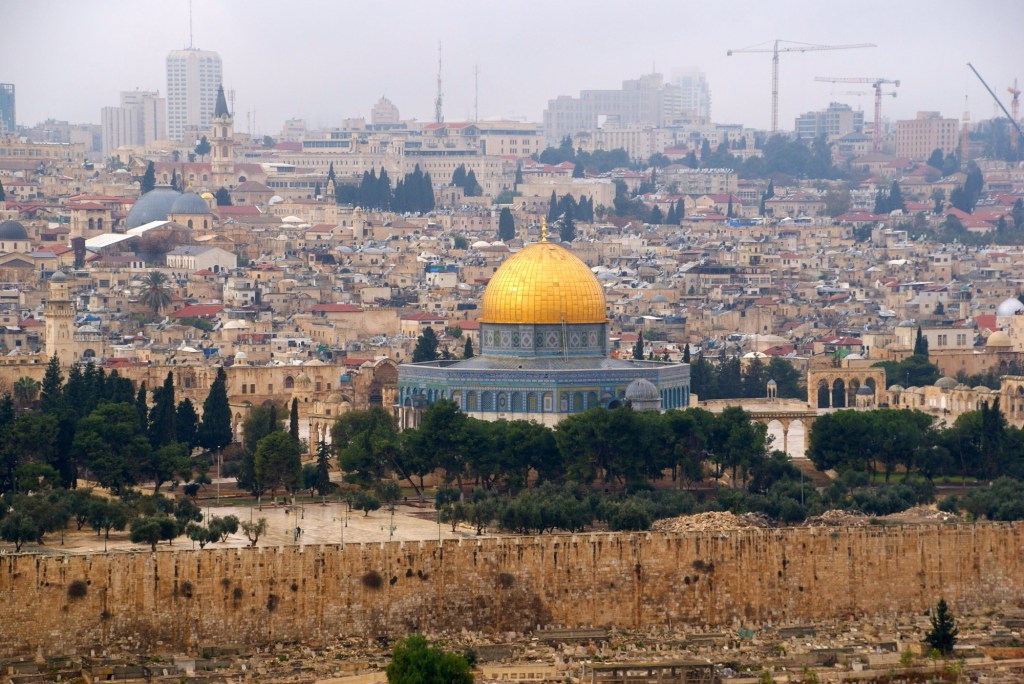
Historical Significance: Sham is home to many significant Islamic historical sites, including the Al-Aqsa Mosque in Jerusalem, which is the third holiest site in Islam.

  1. Promised Land in the Torah and the Bible:

Genesis 15, verse 18: In the Bible, Genesis 15, verse 18, states, “On that day the Lord made a covenant with Abram and said,

‘To your descendants I give this land, from the Wadi of Egypt to the great river, the Euphrates.'”

This covenant is seen as the promise of a specific territory to the descendants of Abraham.

Geographical Scope: The land promised in Genesis is often understood to encompass parts of modern-day Israel, Palestine, Lebanon, Jordan, and Syria, which overlaps significantly with the region known as Sham.

  1. Theological Connections:
    Common Ancestry: Both Islamic and Judeo-Christian traditions trace their spiritual lineage to Abraham (Ibrahim in Islam), making the lands associated with him significant in both religions.

Shared Sacred Geography: The overlapping geographical regions underscore a shared sacred geography, with both traditions venerating places like Jerusalem and considering them central to their faith narratives.

Prophetic Tradition: In Islam, many of the prophets who are also revered in Judaism and Christianity are believed to have lived or traveled through Sham, further intertwining the religious significance of the region.

  1. Interfaith Perspectives:
    Covenantal Promises: The concept of a promised land is a foundational element in Judaism and Christianity, while Islam emphasizes the sanctity and blessing of the land of Sham. Both perspectives highlight the importance of the region in God’s plan for humanity.

Spiritual Significance: For Muslims, Sham is seen as a land of great spiritual significance, while for Jews and Christians, the promised land represents the fulfillment of God’s covenant with Abraham.

In summary, the sacred land of Sham in Islam and the promised land referenced in Genesis 15, verse 18, share deep theological connections rooted in the common ancestry of Abraham, the overlapping sacred geography, and the profound spiritual significance attributed to these regions in both Islamic and Judeo-Christian traditions.


Prophet Muhammad (PBUH):

“Blessed is Al-Sham.” When asked why, he replied, “O people, you should know that the angels of the Most Merciful spread their wings over it.”

The term “Holy Land” typically refers to the region in the Middle East that is considered sacred by several major world religions, including Judaism, Christianity, and Islam. This region includes parts of modern-day Israel, the Palestinian territories, Jordan, and Lebanon. The term “Holy Land of Palestine” specifically refers to the area known as Palestine, which includes the West Bank, Gaza Strip, and East Jerusalem. This region holds significant religious, historical, and cultural importance for many people around the world.

The connection between Islam and the land that God promised to Abraham in the Torah

Genesis 15, verse 18 reads:

“In the same day the Lord made a covenant with Abram, saying, Unto thy seed have I given this land, from the river of Egypt unto the great river, the river Euphrates”.

Genesis 15, verse 18 is a specific verse in the Bible, which is part of the book of Genesis in the Old Testament. It describes a covenant that God made with Abraham, promising him and his descendants land from the river of Egypt to the Euphrates River.

Did the establishment of Islam as the religion of Abraham in the Middle East or the Levant fulfill the promise of God to Abraham that his descendants through Ishmael would inherit the land from the border of Egypt to the Euphrates River as mentioned in the Torah or Genesis 15, verse 18?

Islamic scholars assert that the ancient scribes may have manipulated the Torah to favor Isaac instead of Ishmael. How do they present their argument?


Islamic scholars argue that the establishment of Islam in the Middle East and Levant region did fulfill God’s promise to Abraham regarding Ishmael’s descendants. They point out that Islam spread rapidly across this area in the 7th-8th centuries, bringing monotheistic worship of the God of Abraham to millions.


It is asserted that the ancient scribes who wrote the Torah may have altered the stories to show preference for Isaac’s descendants over Ishmael’s. They suggest that this bias may have been influenced by socio-political factors, such as the dominance of the Israelite tribes, which led to the emphasis on Isaac’s descendants in the biblical account.


Historically, the Arab-Islamic Caliphates after the rise of Islam in the 7th century did indeed conquer and control territories extending from Egypt to the Euphrates River, which matches the geographical extent of the land mentioned in Genesis 15, verse 18. This has led some to draw parallels between the spread of Islam and the fulfillment of the promise to Ishmael’s descendants.


From an Islamic theological perspective, the establishment of Islam in the Middle East and the Levant is seen as the fulfillment of God’s promise to Abraham, as it recognizes and upholds the significance of Ishmael’s lineage.


Islamic scholars argue that both Isaac and Ishmael are equally revered as prophets, and that their respective lineages are part of God’s overarching plan for humanity, with Hebrew prophets paving the way for the coming of Muhammad, the last prophet.

In summary, Islamic scholars argue that:

  1. The promise made to Abraham about his descendants inheriting the land could have been fulfilled through Ishmael.
  2. The Torah might have been altered over time to give greater emphasis to Isaac’s lineage and downplay Ishmael’s role.
  3. The rise of Islam and the influence of the descendants of Ishmael (through Prophet Muhammad) is seen as a fulfillment of God’s promise to Abraham.
  4. The spread of Islam and its dominance in the Middle East aligns with the geographical scope of the promise made to Abraham in the Torah, reinforcing the idea that Ishmael’s descendants inherited this blessing.

These arguments reflect a broader theological debate regarding the interpretation of ancient texts and the legacy of Abraham’s two sons, Isaac and Ishmael, in the context of religious history.

Holy Land of Palestine and Islamic Caliphate

Holy Quran Surah 21, verse71 reads:

.‎وَنَجَّيْنَاهُ وَلُوطًا إِلَى الْأَرْضِ الَّتِي بَارَكْنَا فِيهَا لِلْعَالَمِينَ

And We rescued Abraham and Lot to the land which We have blessed for the whole world.

From the Quranic perspective, some believe any attempt to secularise the Holy Land of Palestine rather than establish it through an Islamic caliphate would incur divine disasters. After all, Surah 21, verse 71, of the Quran references the Holy Land of Palestine as a blessing to the whole world, especially the Muslim world. How is this argument articulated?

The argument as mentioned is based on the interpretation of Surah 21, verse 71 of the Holy Quran. According to this interpretation, the verse refers to the rescue of Abraham and Lot and their settlement in a blessed land. Some believe that this blessed land mentioned in the verse is the Holy Land of Palestine.

From this perspective, it is argued that the Holy Land of Palestine is not just a geographical region, but a sacred land with spiritual significance. It is believed to have been blessed by Allah, and therefore, it is seen as a land that should be governed by Islamic principles and established as an Islamic caliphate.

Those who hold this viewpoint argue that any attempt to secularize or separate the Holy Land from its Islamic identity would go against divine will and result in negative consequences. They believe that only through the establishment of an Islamic caliphate can the true potential and blessings of the Holy Land be realized for the benefit of the Muslim world and humanity as a whole.

It’s important to note that interpretations of religious texts can vary among individuals and scholars. Different perspectives exist on the issue of the Holy Land and its governance, and it is a topic of ongoing debate and discussion within the Muslim community.

Palestine

Nelson’s Foundational Bible Dictionary

PALESTINE

The land of the Israelites, only once called Palestine (Joel 3:4, KJV; “Philistia” NKJV). In the Old Testament the name signifies the “land of the Philistines.” It was called Canaan by the Hebrews in distinction from Gilead, east of the Jordan. When taken by Joshua, it became known as the land of Israel (1 Sa 13:19; Ma 2:20). It is called the land of promise (He 11:9) and the Holy Land (Ze 2:12). During the Middle Ages, the name “Holy Land” was the most popular. In those days,

Palestine was considered to be the center of the earth, and in a sense this is perfectly true. It is strategically located on a tiny strip of land on the eastern coast of the Mediterranean Sea which unites three continents (Africa, Asia, and Europe). It was situated between the most dominant ancient kingdoms of the world (Egypt, Babylon, Assyria, and Persia).

As occupied by the Israelites, the land extended from Mount Hermon on the north to Kadesh-barnea on the south and from the sea on the west to the Jordan and the region east of the river occupied by Reuben, Gad, and half-tribe of Manasseh. The Israelites never expanded their kingdom to include all the area promised to them in Numbers 34.

Islam as the Restoration of Abraham’s Original Teachings

Islam is considered a restored religion of Abraham, based on the perspective that both Judaism and Christianity have deviated from his original teachings.
Adherents of Islam assert that Judaism has altered the command regarding the sacrifice of Abraham’s son, holding that the son in question was Ishmael rather than Isaac.

Furthermore, they contend that Christianity has diverged from the tenet of monotheism by introducing the concept of the Trinity and modifying the practice of circumcision.
Therefore, from the Islamic viewpoint, Islam embodies the authentic restoration of the teachings of Abraham as presented in the Quran.

The Abrahamic and Sinai Covenants: An Islamic Perspective on Sacred Continuity and Relics

In the comparative theology of Abrahamic religions, the concept of divine covenants occupies a central role. Judaism, Christianity, and Islam all trace their spiritual lineage to the Prophet Abraham (Ibrahim عليه السلام), but they diverge in their understanding of which covenant is binding and through whom it continues. 

One unique Islamic perspective highlights the theological and symbolic significance of sacred relics and the distinction between the Abrahamic Covenant and the Sinai (Mosaic) Covenant. This article explores how Islamic scholars frame the continuity of divine promise, drawing attention to the absence of Abrahamic relics in Jewish tradition and the centrality of Abrahamic symbolism in Islamic rites.

1. Two Covenants: Abrahamic and Sinai

The Abrahamic Covenant, as recorded in both the Bible and Qur’an, was made between God and Abraham, promising:

• A multitude of descendants

• A blessed lineage

• A divinely appointed land

In contrast, the Sinai Covenant—or Mosaic Covenant—was established generations later, between God and the Israelites through Moses at Mount Sinai. This covenant was heavily centered on legal ordinances, ritual purity, and national identity.

Islamic scholars underscore this distinction, arguing that while the Sinai Covenant was specific to the Israelites and conditional upon their obedience, the Abrahamic Covenant is universal, unconditional, and eternal, forming the foundation of Islamic monotheism.

2. Islamic Continuity: Inheriting the Abrahamic Legacy

From an Islamic theological standpoint, the Prophet Muhammad ﷺ is seen as a direct descendant of Abraham through his firstborn son Ishmael. This lineage is critical in Islamic thought, as it places Muhammad ﷺ and the Muslim ummah within the direct stream of Abrahamic blessing and covenantal responsibility.

Islam views itself not as a new religion, but as the revival and perfection of the original Abrahamic faith. This perspective is reinforced by the Qur’an’s emphasis on following “the religion of Abraham, the upright” (Qur’an 3:95), and by prophetic traditions affirming the the reconstruction of the House of God (Kaaba) by Abraham and Ishmael.

3. The Role of Sacred Relics

A distinctive element of the Islamic argument involves the presence or absence of Abrahamic relics:

In Islam, the Kaaba (House of God) in Mecca is considered the house built by Abraham and Ishmael (Qur’an 2:125–127), accompanied by the Black Stone (Hajar al-Aswad) and the Station of Abraham (Maqam Ibrahim). These physical sites serve as living relics of the Abrahamic legacy, venerated by over a billion Muslims worldwide.

In Judaism, no physical relic directly associated with Abraham has been preserved. The most significant ancient artifact, the Ark of the Covenant, belongs to the Mosaic era and is tied to the Sinai Covenant, not Abraham. Moreover, it was lost during the destruction of the First Temple.

Islamic scholars point to this contrast to suggest that the direct covenantal heritage of Abraham has been preserved in Islam, not in Judaism. The absence of relics connected to Abraham in Jewish tradition is interpreted by some as symbolic of a rupture in the transmission of his legacy.

4. The Ark of the Covenant: Significance and Loss

The Ark of the Covenant remains an iconic symbol in Jewish history. It was said to contain the tablets of the Law (Torah) and represented the divine presence among the Israelites. However, from an Islamic perspective, the Ark is not seen as an Abrahamic relic but rather as a Mosaic artifact.

Its eventual loss during the Babylonian destruction of the First Temple is often viewed by Islamic scholars as a symbolic termination of the Sinai Covenant, marking the end of that specific historical phase of divine interaction.

5. Universality of the Abrahamic Covenant in Islam

A key theme in Islamic theology is the universality of the Abrahamic Covenant. Unlike the Sinai Covenant, which was exclusively for the Children of Israel, the Abrahamic Covenant—according to Islamic understanding—was meant for all peoples who follow the monotheistic path of submission to God (Islam).

This universalism is enshrined in the Qur’an (Surah 22:78):

“It is He who has named you Muslims before and in this [revelation], that the Messenger may be a witness over you and you may be witnesses over mankind.”

Thus, Islam positions itself as the final and universal expression of the Abrahamic mission, encompassing all of humanity beyond ethnic or tribal lines.

6. Supersession and Theological Fulfillment

While Islam respects the prophets of Judaism and Christianity, many Islamic scholars adopt a form of theological supersessionism: the idea that Islam, as revealed to Muhammad ﷺ, completes and supersedes previous revelations. This includes both the Abrahamic and Mosaic covenants.

According to this view, the Qur’an is the final testament, and the Muslim community (ummah) is the rightful heir to Abraham’s spiritual legacy, fulfilling his vision of pure monotheism (tawḥīd) untainted by tribal exclusivism or theological alteration.

Conclusion

The Islamic view on the Abrahamic and Sinai covenants is deeply rooted in both theological reasoning and historical symbolism. By emphasizing the continuity of Abrahamic rites, the preservation of sacred relics, and the universal scope of its message, Islam asserts itself as the true fulfillment of the covenant established with Abraham. The absence of equivalent Abrahamic relics in Jewish tradition and the eventual disappearance of the Ark are seen not as mere historical events, but as spiritual markers—signifying a shift from the tribal covenant of Sinai to the universal mission embodied by Islam.

While these perspectives are uniquely Islamic and may not be shared by Jewish or Christian theology, they contribute meaningfully to the broader discourse on how each faith understands its relationship with Abraham, the friend of God.


The Legacy of Isaac and Ishmael: Diverging Perspectives in Judeo-Christian and Islamic Traditions


Azahari Hassim

What is the issue between Isaac and Ishmael from a Judeo-Christian perspective?

The issue between Isaac and Ishmael from a Judeo-Christian perspective stems from the story of Abraham and his two sons. According to the biblical narrative, Abraham and his wife Sarah were unable to have children, so Sarah gave her servant Hagar to Abraham in order to bear a child. Hagar bore Ishmael, but later Sarah miraculously gave birth to Isaac.

The tension between Isaac and Ishmael arises from the fact that both sons were considered heirs to Abraham, and their descendants became the ancestors of the Jewish and Arab peoples, respectively.

This has led to conflict and rivalry between the two groups throughout history. In the Bible, Ishmael and his mother Hagar were eventually sent away by Abraham at Sarah’s insistence, further exacerbating the animosity between the two sons and their descendants.

The issue between Isaac and Ishmael serves as a source of division and conflict within the Judeo-Christian tradition, often emblematic of the larger divides between the Jewish and Arab peoples. However, interpretations and understandings of this issue can vary among different religious and cultural contexts.


It is a common belief among Jews, Christians, and Muslims that God commanded Abraham to sacrifice his beloved son. However, these faiths differ on which son was to be sacrificed. Jews and Christians, drawing from the Old Testament, believe it was Isaac. In contrast, Muslims believe it was Ishmael.

In Genesis 22, verse 18 of the Torah, God tells Abraham,

“In your seed, all the nations of the earth shall be blessed, because you have obeyed my voice.”

Here, “seed” is interpreted by Jews to signify a great redeemer or divine messenger who will bring salvation to humanity. Christians share this view due to their inheritance of the Hebrew Bible.

Muslims, however, see Muhammad as the fulfillment of this promise, a view not shared by Jews and Christians. The Quran, in Surah 21, verse 107, states,

“And we have not sent you (Muhammad) but as a mercy to the worlds,”

reinforcing this belief. The Hajj, a central pillar of Islam, is considered a restoration of the religion of Abraham, which has been distorted by the Jews through their writings pertaining to whose son is to be sacrificed.

The Islamic narrative suggests that since Ishmael was Abraham’s only son for 14 years before Isaac’s birth, it is he who was to be sacrificed—a point hinted at in Genesis 22, verse 12, where God refers to Abraham’s “only son” without specifying a name. Muslims see this ambiguity as indicating Ishmael, rather than Isaac.

Circumcision is another point of contention. It is a practice traced back to Abraham and mandated in the Torah. Christians, however, have largely abandoned physical circumcision, instead emphasizing spiritual circumcision, or placing one’s faith in Jesus Christ. The Quran does not explicitly mention circumcision, but Surah 16, verse 123, which instructs Muhammad to follow the religion of Abraham, is interpreted by some to imply the practice. Thus, circumcision is widely regarded as obligatory in Islam.

Controversy arose in the early church (Acts 10-15) as to whether Gentile converts need be circumcised. Paul led the Jerusalem Council to decide circumcision was not essential to Christian faith and fellowship. Circumcision of the heart via repentance and faith were the only requirements.

The article questions why the Torah does not require the Israelites to commemorate Abraham’s sacrifice, as it does with other significant events like Passover. It suggests that this absence supports the Islamic claim that it was Ishmael, not Isaac, who was nearly sacrificed.

Furthermore, it argues that the practice of circumcision, which renders a sacrifice blemished according to Deuteronomy 17, verse 1, would disqualify both Isaac and Jesus as perfect offerings.

Since the scripture forbids sacrificing animals with defects, it’s argued that this applies to the child meant for offering. Isaac’s circumcision on the eighth day, alongside Jesus’s, is seen as scripturally imperfect for such a sacrifice.

In conclusion, the article implies that the religious practices of Jews and Christians have deviated from what it claims to be the original Abrahamic faith, particularly concerning the Sacrifice of Abraham and the rite of Circumcision.

Two covenants: Abrahamic and Sinai covenants from an Islamic perspective

Genesis 49, verse 10, reads:

“The sceptre shall not depart from Judah, nor a lawgiver from between his feet, until Shiloh come; and unto him shall the gathering of the people be.”

The verse implies that Judah’s offspring will govern Israel until the arrival of “Shiloh,” who holds all royal power. Here, Shiloh, similar to “the Seed” in Genesis 22, verse 18, refers to the future Messiah.

From an Islamic perspective, the word “Shiloh” in Genesis 49, verse 10, is connected to the Abrahamic covenant through Ishmael, who, not Isaac, is believed to be nearly sacrificed. Conversely, the terms “scepter” and “lawgiver” mentioned in Genesis 49, verse 10, are associated with the Sinai covenant. How is their argument articulated?

From an Islamic perspective, the interpretation of Genesis 49, verse 10, and its connection to the Abrahamic covenant through Ishmael involves several key arguments:

  1. Shiloh as Muhammad:
    Some Islamic scholars interpret “Shiloh” as a reference to Prophet Muhammad. They argue that the prophecy indicates a shift in divine authority away from the line of Judah to a descendant of Ishmael.
  2. Abrahamic Covenant through Ishmael:
    Islamic tradition holds that it was Ishmael, not Isaac, who was nearly sacrificed by Abraham. This is seen as a pivotal moment in the Abrahamic covenant, establishing Ishmael’s line as the inheritors of God’s promise.
  3. Scepter and Lawgiver:
    The terms “scepter” and “lawgiver” in Genesis 49, verse 10, are associated with the Sinai covenant given to Moses. Islamic interpretation suggests that these symbols of authority and divine law would remain with the descendants of Judah until the coming of “Shiloh” (Muhammad).
  4. Transfer of Authority:
    The verse is interpreted to mean that the religious and political authority (“scepter” and “lawgiver”) would depart from Judah’s line when Shiloh (Muhammad) comes. This is seen as a prophecy of the transition of divine guidance from the Israelite tradition to Islam.
  5. Gathering of the People:
    The phrase “unto him shall the gathering of the people be” is interpreted as referring to the universal message of Islam brought by Muhammad, which would unite people from various nations and backgrounds.
  6. Continuation of Abrahamic Legacy:
    Islamic scholars argue that Muhammad, as a descendant of Ishmael, fulfills this prophecy by bringing the final revelation that completes and supersedes previous covenants, while still maintaining continuity with the Abrahamic tradition.
  7. Non-Judahite Messiah:
    Some interpretations suggest that the verse implies the coming of a messianic figure from outside the tribe of Judah, which aligns with the Islamic view of Muhammad’s lineage through Ishmael.

It’s important to note that this interpretation is specific to Islamic theology and is not accepted in Jewish or Christian exegesis. The Islamic perspective sees this verse as one of many biblical passages that they believe foretell the coming of Prophet Muhammad and the establishment of Islam as the final Abrahamic faith.

Hajj’s Importance in Islam: Reconnecting with the Abrahamic Legacy Through the Story of Ishmael

There is an argument among scholars regarding the significance of Hajj in Islam as a restored religion tracing back to Abraham. It is posited that Ishmael was exiled as a young child well before the birth of Isaac, and that Ishmael, rather than Isaac, was the intended sacrifice. How is this argument articulated?

The argument regarding the significance of Hajj in Islam as a restored religion tracing back to Abraham, and the associated narrative involving Ishmael and Isaac, is articulated through several key points:

1. Lineage and Prophetic Tradition:

In Islamic tradition, Hajj is deeply connected to the figure of Abraham (Ibrahim). Muslims believe that Abraham, along with his son Ishmael (Ismail), played a foundational role in establishing the rites of Hajj. The Kaaba, the central structure around which Hajj is performed, is believed to have been built by Abraham and Ishmael.

2. The Story of Ishmael and Isaac:

Exile of Ishmael: According to Islamic narratives, long before Isaac was born, Ishmael and his mother Hagar were settled by Abraham in the desert of Mecca, which is where the Zamzam well miraculously appeared to sustain both of Hagar and her infant son Ishmael. This event is commemorated during the Hajj.

The Sacrifice: Islamic tradition holds that it was Ishmael, not Isaac, who was the intended sacrifice. This is based on interpretations of the Quran, specifically Surah 37, verses 100 to 113, where it is generally understood that the son who was to be sacrificed was Ishmael. According to the sequence of events in the Quran, the promise of Isaac’s birth comes after the story of sacrifice, indicating that Ishmael is the son in question. This contrasts with the Judeo-Christian tradition, which identifies Isaac as the intended sacrifice.

3. Symbolic Acts of Hajj:

The rites of Hajj include reenactments and commemorations of events from the lives of Abraham, Hagar, and Ishmael. For instance:

The Sa’i, which involves walking seven times between the hills of Safa and Marwah, commemorates Hagar’s desperate search for water for her infant son Ishmael.

The stoning of the Jamarat represents Abraham’s rejection of Satan’s temptation, which is believed to have occurred when he was about to sacrifice Ishmael.

4. Restoration of Abrahamic Monotheism:

Islam views itself as a continuation and restoration of the pure monotheistic faith of Abraham. The Hajj serves as a means to reconnect with the Abrahamic legacy, emphasizing monotheism, obedience to God, and the unity of the Muslim community.

In summary, the argument hinges on the belief that Ishmael, rather than Isaac, was central to the narrative of sacrifice and that the rites of Hajj are rooted in the events of Abraham’s life as they unfolded in Mecca with Ishmael. This perspective underscores the significance of Hajj in Islam and its connection to Abraham as a pivotal prophet in the monotheistic tradition.

How is Ishmael depicted in the Midrash literature?

According to Midrashic literature, there are several positive portrayals of Ishmael, Abraham’s eldest son:

In Pirkei deRabbi Eliezer, an 8th century midrashic work, Abraham visits Ishmael twice after sending him away. In the first visit, Ishmael’s wife refuses to give Abraham food and water. Ishmael then divorces her and marries a woman named Fatimah. On Abraham’s second visit, Fatimah shows him hospitality. The midrash states that “Abraham stood and prayed before the Holy One, blessed be He, and Ishmael’s house became filled with all good things. When Ishmael returned, his wife told him about it, and Ishmael knew that his father still loved him.” This portrays a reconciliation between Abraham and Ishmael.

The name of Ishmael’s second wife, Fatimah, is significant as it is the name of Muhammad’s daughter in Islam. Pirkei deRabbi Eliezer, by using this name, is making a positive reference to Islam, indicating the possibility of friendship between the two Abrahamic faiths descending from Isaac and Ishmael.

In another midrash, Abraham again visits Ishmael and encounters his kind wife Fatimah, who provides him food and drink. Abraham prays for Ishmael and his house is blessed. When Ishmael returns, he realizes his father’s love and compassion for him remain, as it says “Like a father has compassion for his children” (Psalms 103:13).

Some of the greatest Talmudic sages and high priests were named Ishmael, showing he was considered righteous, even though Isaac was chosen to carry on Abraham’s legacy. The biblical narrative only hints at Ishmael’s story, but the Midrash expands on it, ultimately portraying Ishmael as repenting and being righteous.

In summary, while Isaac was destined to father the Israelites, the Midrash contains several stories painting Ishmael in a positive light – as ultimately reconciling with Abraham, being blessed by his father’s prayers, and having his line produce righteous individuals. The Midrash sees the potential for friendship between Isaac and Ishmael’s descendants.

Hagar: A Pious Figure in the Abrahamic Religions


Azahari Hassim

What was Hagar’s religion according to the Bible? Did she follow Abraham’s religion?

Hagar is an important figure in the Abrahamic religions, which include Judaism, Christianity, and Islam. In the Bible, Hagar was an Egyptian servant of Sarah, Abraham’s wife. According to the biblical account, Hagar bore a son named Ishmael to Abraham. In Islamic tradition, it is believed that Hagar and Ishmael settled in Mecca and that they are ancestors of the Prophet Muhammad.

As for her religion specifically, since she was a servant of Abraham’s household and part of his family’s life at that time, it can be assumed that she followed their religious practices. So yes, it can be said that she professed the religion of Abraham during her time with him.

Was Hagar considered a pious woman from a biblical perspective?

Hagar is often regarded as a pious and faithful woman in religious traditions. In the Bible, she demonstrated great faith when she obeyed God’s command to return to Sarah after fleeing from her mistreatment. She also received divine reassurance and promises regarding her son Ishmael’s future.

In Islamic tradition, Hagar is highly respected as a noble and patient woman who endured hardships while fulfilling her role as a mother and wife. Her story serves as an example of steadfastness, trust in God, and perseverance.

So overall, Hagar is generally seen as a virtuous figure in both biblical and Islamic narratives.

Was she a prophetess?

While Hagar is not explicitly referred to as a prophetess in the Bible, she did have encounters with God and received divine messages. In Genesis 16, verse 7 to 14, an angel of the Lord appears to Hagar in the wilderness and delivers a message about her future and that of her son Ishmael. This interaction can be seen as a form of divine revelation.

In Islamic tradition, Hagar is considered to be one of the honored women who received revelations from God through angels. Her story is mentioned in the Hadith, where she plays a significant role as an exemplary figure.

So while she may not hold the title of “prophetess” like some other biblical figures, Hagar’s experiences with divine communication make her an important spiritual figure in both religious traditions.


“Hagar is a symbol of survival, of resourcefulness and resilience in the face of hardship. She is a figure of courage, a mother who does what she must to ensure the survival of her child in the wilderness.”

Delores S. Williams (theologian and scholar, known for her work in womanist theology)

Midrashic Perspectives on Hagar: Origins, Spiritual Encounters, and Legacy

In Jewish tradition, Hagar, the mother of Ishmael, is a significant figure, and various Midrashic texts provide insights and interpretations about her life and experiences. Below are some key Midrashic quotations and interpretations related to Hagar:

1. Hagar as Pharaoh’s Daughter

   Midrash Genesis Rabbah 45:1: This Midrash suggests that Hagar was the daughter of Pharaoh, the king of Egypt. When Pharaoh saw the miracles God performed for Sarah, he said, “It is better for my daughter to be a maidservant in this household than a mistress in another household.” Therefore, he gave his daughter Hagar to Sarah as a handmaid.

2. Hagar’s Name

   Midrash Genesis Rabbah 45:9: The name “Hagar” is interpreted as meaning “reward” or “payment” because Hagar was given to Abraham as a reward for his good deeds. Another interpretation is that her name derives from the Hebrew word “ger,” meaning “stranger,” emphasizing her status as an outsider.

3. Hagar and the Angels

   Midrash Genesis Rabbah 45:7: This Midrash elaborates on the story of Hagar’s encounter with the angel in the wilderness. It notes that Hagar was the first woman to whom an angel appeared and that she was blessed with multiple angelic visits, highlighting her unique spiritual experience. The Midrash also emphasizes that Hagar gave names to God and the place of the encounter, reflecting her deep religious awareness.

4. Hagar’s Return to Abraham

   Midrash Genesis Rabbah 45:8: When Hagar fled from Sarah’s harsh treatment, the angel instructed her to return and submit to Sarah’s authority. The Midrash explains that this was a test of Hagar’s humility and obedience, qualities that were necessary for her to fulfill her role in the divine plan.

5. Hagar as Keturah

   Midrash Genesis Rabbah 61:4: Some Midrashic texts suggest that Hagar and Keturah, the woman whom Abraham marries after Sarah’s death, are the same person. The Midrash suggests that after Hagar was sent away, she later returned to Abraham under the name Keturah, which means “incense,” symbolizing that her deeds had become pleasing to God.

6. Hagar’s Legacy

   Midrash Pirkei DeRabbi Eliezer 30: This Midrash notes that Hagar was a righteous woman and that Ishmael inherited her good qualities. It emphasizes her endurance and faith in God, particularly in her ability to survive in the desert and care for her son, Ishmael.

Summary

In the Midrash, Hagar is portrayed with complexity and depth, often with an emphasis on her noble origins, her spiritual experiences, and her trials. Despite her status as a maidservant and an outsider, Hagar is recognized for her strength, faith, and the critical role she played in the unfolding of the Abrahamic narrative.

Hagar: A Pillar of Faith and Resilience in Islamic Tradition

Hagar, also known as Hajar in Arabic, holds a revered place in the hearts of Muslims worldwide. Her story is a testament to faith, resilience, and the unshakable bond between a mother and her child. Let’s explore her significance:

1. Hagar’s Journey:

   Hagar was an Egyptian woman who became the wife of Prophet Ibrahim (Abraham) and the mother of Isma’il (Ishmael).

   Her story is prominently featured in the Quran, where her unwavering faith and dedication shine through.

   Ibrahim received a divine command to leave Hagar and Isma’il in the desolate desert of Mecca (now the holy city of Islam).

Hagar’s sacrifice in obeying this command is a testament to her unwavering faith and trust in Allah.

2. Hagar’s Faith:

Despite daunting challenges, she endured the scorching desert heat and harsh conditions for her infant child’s future.

   As water ran out, she ran between the hills of Safa and Marwah in search of sustenance for her infant son, leading to the emergence of the ritual of Sa’i during the annual Hajj pilgrimage.

   A miraculous spring, known as Zamzam, gushed forth to provide sustenance for her and Ishmael, establishing Mecca as a sacred place.

3. Legacy and Rituals:

   Hagar’s resilience, trust in Allah, and devotion to her child serve as an enduring example for Muslims worldwide.

   The Sa’i ritual during Hajj, where pilgrims retrace Hagar’s steps between Safa and Marwah, symbolizes determination, faith, and seeking divine guidance.

Hagar’s story reminds us of the importance of patience, faith, and trusting in Allah’s plan, even in adversity. 🌟