
Azahari Hassim
Isaiah 29, verse 12, reads:
”And the book is delivered to him that is not learned, saying, “Read this, I pray thee”; and he saith, “I am not learned.”
Isaiah 29, verse 14, reads:
”Therefore, behold, I will proceed to do a marvelous work among this people, even a marvelous work and a wonder; for the wisdom of their wise men shall perish, and the understanding of their prudent men shall be hid.”
Some believe that Isaiah 29, verse 14, points to the miracle of the Quran and may be linked to Isaiah 29, verse 12, which suggests a first revelation of the Quran to Muhammad at Mount Hira through the angel Gabriel. How is this connection explained?
The connection between Isaiah 29, verse 14, and the Quran, particularly in relation to Isaiah 29, verse 12, is a matter of interpretation that some Islamic scholars and believers use to suggest a prophecy of the coming of the Quran and Prophet Muhammad. Here’s an explanation of this connection:
Isaiah 29, verse 12 states: “And the book is delivered to him that is not learned, saying, Read this, I pray thee: and he saith, I am not learned.”
Islamic Interpretation
- “The book”: In Islamic interpretation, this is seen as referring to the Quran.
- “Him that is not learned”: Muslims believe this refers to the Prophet Muhammad, who was illiterate.
- “Read this, I pray thee”: This is interpreted as the command given to Muhammad by the angel Gabriel during the first revelation.
- “I am not learned”: According to Islamic tradition, Muhammad responded to Gabriel’s command to read with “I am not learned” (in Arabic: “Ma ana bi qari”).
Isaiah 29, verse 14, states: “Therefore, behold, I will again do a marvelous work among this people, a marvelous work and a wonder: for the wisdom of their wise men shall perish, and the understanding of their prudent men shall be hid.”
Islamic Interpretation
- “A marvelous work and a wonder”: This is interpreted by some Muslims to refer to the Quran, considered a miraculous and divine revelation.
- “The wisdom of their wise men shall perish”: This phrase is seen as indicating that the coming of the Quran would challenge the existing knowledge and wisdom of the people at that time, transforming their understanding and beliefs.
- “Context of Revelation”: The connection is further strengthened by the context of Isaiah 29, verse 12, which emphasizes a revelation to an unlearned person, aligning with Muhammad’s experience at Mount Hira.
Summary
The connection relies on the belief that Isaiah’s prophecy in these verses points to a future revelation given to an unlearned person (Prophet Muhammad), bringing forth a “marvelous work” (the Quran) that would challenge and transform existing wisdom and understanding. This interpretation is not universally accepted but is used within some Islamic scholarly traditions to draw a link between the Biblical text and Islamic beliefs about the Quran and Muhammad.
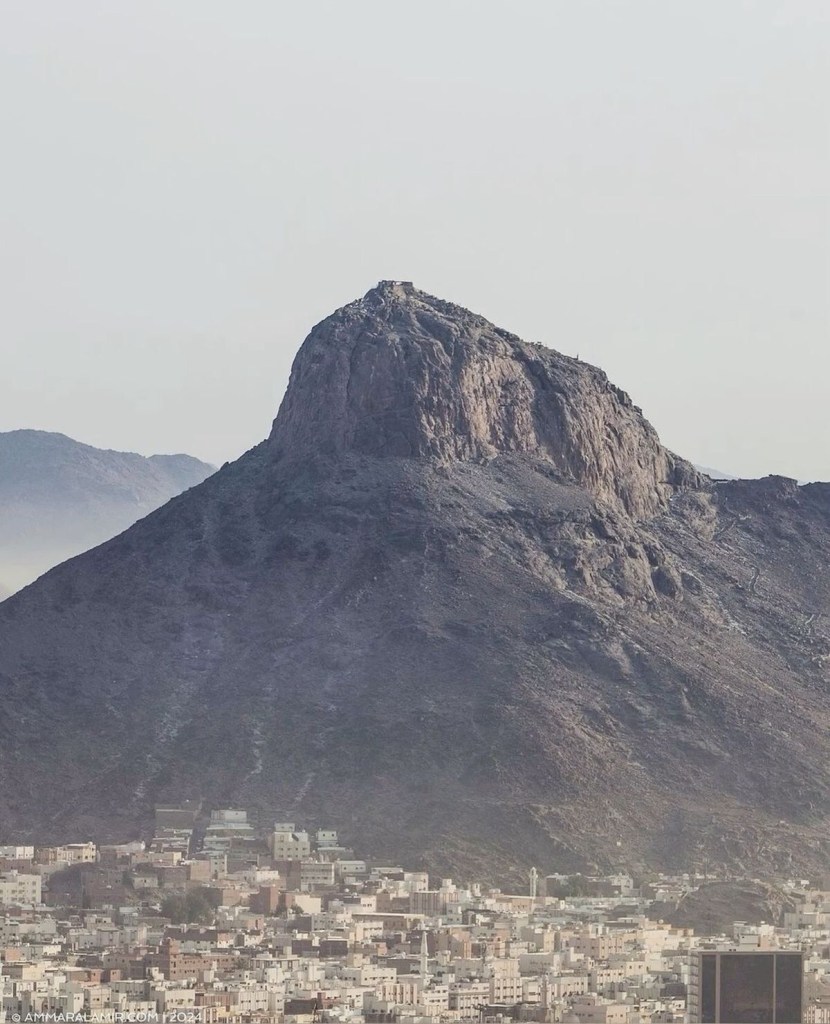
This is Mount Hira (Jabal Hira), which lies about two miles from the Ka’bah. Near the top is a small cave, a little less than 4 meters in length and a little more than one and a half meters in width. It was here that the Prophet Muhammad (ﷺ) received the first revelations of the Holy Quran during the month of Ramadhan in 610 CE. The mountain is also known as Jabal Noor (the Mountain of Light).
The Miraculous Preservation of Pharaoh’s Body: The Connection to Muhammad as the Prophet Like Moses
Surah 10, verse 92, reads:
“Today We will preserve your body (O Pharaoh), so that you become a sign for those after you. But most people are heedless of Our signs.”
Some scholars contend that the discovery of Ramses’ body in modern times is viewed as a miraculous event in the Quran, specifically in Surah 10, verse 92. It resembles Moses’ parting of the Red Sea. As a result, they argue that Muhammad is the prophet mentioned in Deuteronomy 18, verse 18, similar to Moses. How do they express their argument?
The scholars who make this argument typically point to several key points to support their claim:
- Discovery of Ramses’ body: They argue that the discovery of Pharaoh Ramses II’s body in modern times is a significant event that aligns with the story of Pharaoh’s body being preserved as a sign in Surah 10, verse 92 of the Quran. This miraculous preservation of Pharaoh’s body is seen as a fulfillment of that prophecy.
- Resemblance to Moses’ parting of the Red Sea: The scholars suggest that the discovery of Ramses’ body can be seen as a parallel to the miracle of Moses parting the Red Sea, as both events involve extraordinary occurrences related to Pharaoh and Moses. This parallel further strengthens the connection between the two stories.
- Muhammad as the prophet like Moses: In Deuteronomy 18, verse 18, the Bible mentions the coming of a prophet like Moses, whom God will raise up among the brethren of Israelites. Some scholars argue that Muhammad fits the description of this prophet due to similarities in their roles, teachings, and experiences with prophethood.
By combining these points, scholars argue that the discovery of Ramses’ body, the resemblance to Moses’ story, and the identification of Muhammad as the prophet like Moses provide evidence for the divine inspiration of the Quran and Muhammad’s status as a prophet in the line of Moses.
The biblical prophecy of Muhammad receiving his first revelation
Book of the Prophet Isaiah chapter 29, verse 12 reads:
“And the scroll is delivered to him that is not learned, saying, Read this, I pray thee: and he saith, I am not learned.”
Some believe Isaiah 29 verse 12 is the prophecy of Muhammad receiving his first revelation on Mount Hira in Mecca through the angel Gabriel. How is this interpretation explained?
The interpretation of Isaiah 29 verse 12 as a prophecy of Muhammad’s first revelation is based on the following parallels:
The scroll: In Isaiah 29 verse 12, a scroll is given to someone who cannot read, symbolizing the inability of the people to understand God’s message. This is seen as analogous to Muhammad’s illiteracy, as he was unable to read or write until he received the revelation.
The illiterate recipient: The inability to read is further emphasized in the verse, suggesting that the message is not meant for those who are already learned or knowledgeable. This is seen as a reference to Muhammad’s lack of formal religious education, as he was not a priest or scholar.
Prophecy of a New Prophet: Some interpretations suggest that Isaiah 29 verse 12 may be a prophecy of a new prophet who would come after Isaiah. This aligns with the Islamic belief that Muhammad was the last prophet in the Abrahamic tradition.

