Isaac: A Son of Joy, Not Sacrifice — Rethinking the Identity of the Sacrificial Son


Azahari Hassim

Isaac: A Son of Joy, Not Sacrifice — Rethinking the Identity of the Sacrificial Son

The story of Abraham’s willingness to sacrifice his son is one of the most profound and contested episodes in the Abrahamic traditions. While the Hebrew Bible clearly names Isaac as the intended sacrifice, Islamic tradition maintains that it was Ishmael. In recent years, some scholars and believers have revisited the linguistic, theological, and contextual clues surrounding the narrative. A compelling argument centers around the meaning and role of Isaac’s name, suggesting that Isaac’s very identity may indicate he was never meant to be the sacrificial son.

The Meaning of Isaac’s Name

The name Isaac (Hebrew: Yitzḥaq, meaning “he will laugh” or “laughter”) is deeply tied to the emotional response of Abraham and Sarah upon hearing the divine promise that they would have a child in their old age (Genesis 17:17, 18:12). This laughter reflects astonishment, joy, and divine mercy—emphasizing the miraculous and comforting nature of Isaac’s birth. The child represents the culmination of a divine promise and the joy of old age, rather than a figure marked for trial and sacrifice.

Isaac as a Symbol of Fulfillment and Closure

From this perspective, Isaac is seen not as a son of trial, but as a gift of consolation—the final chapter in the long journey of Abraham and Sarah. His birth occurs after decades of wandering, waiting, and testing. His role in the narrative is one of continuation, legacy, and divine reward, not intense sacrifice. The Biblical text even notes that Abraham was 100 years old and Sarah 90 when Isaac was born—a clear emphasis on grace and joy rather than hardship and testing.

Ishmael as the Son of Trial

In contrast, Ishmael—Abraham’s firstborn by Hagar—is born amid tension, struggle, and uncertainty. According to both Islamic and Biblical narratives, he and his mother were sent away into the wilderness. In the Islamic tradition, this is framed as part of a divine plan, with Ishmael becoming the ancestor of a great nation and a prophet in his own right. Importantly, Islamic scripture (Qur’an 37:99–113) narrates the near-sacrifice without naming the son, but contextual clues suggest it refers to Ishmael, since the announcement of Isaac’s birth follows after the sacrifice episode.

Linguistic and Narrative Inference

The sequence of events in the Qur’an is particularly telling:

“So We gave him the good news of a forbearing son… And when he reached the age of striving, he said: ‘O my son! I have seen in a dream that I am sacrificing you…’” (Qur’an 37:101–102)

This is followed later by:

“And We gave him good news of Isaac, a prophet from among the righteous.” (Qur’an 37:112)

This sequence supports the interpretation that the son being sacrificed was not Isaac, but someone before him—namely, Ishmael. Moreover, this interpretation aligns with a thematic reading: Ishmael is the son through whom Abraham is first tested, while Isaac is the son through whom Abraham is blessed.

Pre-Islamic Arab Tradition

Arab oral traditions preceding Islam also reflect the belief that Ishmael was the son nearly sacrificed. This belief was deeply rooted in the collective memory of the Arab people and manifested in religious rituals such as Eid al-Adha and the Sa’i—the reenactment of Hagar’s search for water. These practices are tied to Ishmael, not Isaac, further reinforcing his role as the son of trial.

Conclusion

While the Biblical tradition names Isaac as the sacrificial son, both linguistic and theological reflections open space for rethinking this assumption. The joyful connotation of Isaac’s name, the sequence of Qur’anic verses, and longstanding Arab traditions all support the idea that Isaac was not the son marked for sacrifice, but rather a son of comfort and reward.

In contrast, Ishmael bears the marks of trial, testing, and divine submission—characteristics that align more directly with the sacrificial narrative. This perspective invites a deeper, more nuanced understanding of Abraham’s legacy and the roles of his two sons in the shared heritage of monotheism.

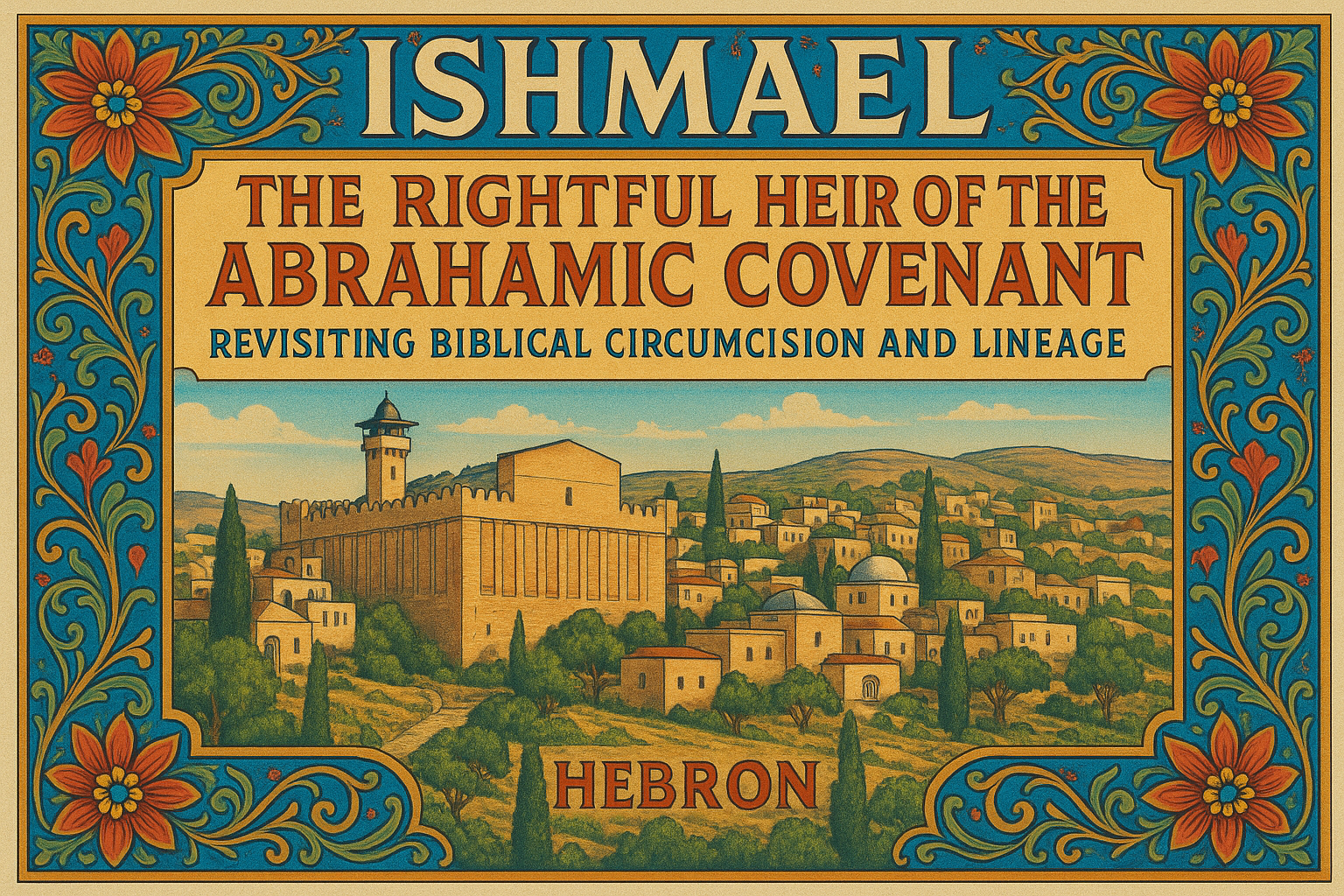
Ishmael: The Rightful Heir of the Abrahamic Covenant – Revisiting Biblical Circumcision and Lineage

The Abrahamic covenant stands as a foundational pillar in the sacred histories of Judaism, Christianity, and Islam. Central to this covenant is the rite of circumcision, instituted by God as a binding sign between Himself and Abraham’s descendants. Traditionally, Jewish and Christian interpretations assert that Isaac, the son born to Abraham and Sarah, is the rightful heir through whom this covenant is fulfilled.

However, a careful reexamination of the biblical chronology challenges this assumption. This article argues that Ishmael, not Isaac, was the first and only son to receive the covenantal sign alongside Abraham himself—prior to Isaac’s birth—thereby establishing Ishmael as the sole and true heir of the original Abrahamic covenant. By exploring the timing, recipients, and implications of circumcision in Genesis 17 and 21, this piece invites readers to reconsider long-held views and appreciate the overlooked centrality of Ishmael in the divine covenant.

  1. The Biblical Basis for Circumcision as a Covenant

The Bible establishes circumcision as the sign of the covenant between God and Abraham:

“Then God said to Abraham, ‘As for you, you must keep my covenant, you and your descendants after you for the generations to come. This is my covenant with you and your descendants after you, the covenant you are to keep: Every male among you shall be circumcised… it will be the sign of the covenant between me and you.’”

Genesis 17:9–11

Here, circumcision is the definitive sign of the Abrahamic covenant.

  1. The Timing of Circumcision Before Isaac’s Birth

The Bible affirms that circumcision was performed before Isaac was born:


“On that very day Abraham took his son Ishmael and all those born in his household or bought with his money, every male in his household, and circumcised them, as God told him… Abraham was ninety-nine years old when he was circumcised, and his son Ishmael was thirteen.”

At this critical juncture, only Abraham and Ishmael were Abraham’s natural descendants to receive the sign of the covenant. Isaac had not yet been born.

  1. Ishmael as the Sole and True Heir of the Abrahamic Covenant

This sequence of events reveals that:
Circumcision is the outward and binding sign of the Abrahamic covenant.
Ishmael was the only son of Abraham present to receive this sign alongside him.
All others circumcised at that time were household members and servants—not Abraham’s direct offspring.
Therefore, Ishmael alone stands as the true and sole heir of the Abrahamic covenant, sharing this foundational covenantal sign with Abraham himself.

  1. Isaac as Merely a Participant Like Other Household Members

When Isaac was born, he too was circumcised on the eighth day (Genesis 21:4). However, this circumcision occurred after the covenant was already established through Abraham and Ishmael. Like the other members of Abraham’s household, Isaac simply entered into an existing covenantal practice rather than establishing or uniquely embodying it.

In this understanding:
Isaac’s circumcision parallels that of Abraham’s other household members.
He was brought into the covenantal sign but did not share in the original covenantal enactment alongside Abraham.
Thus, Isaac is seen merely as a participant in the Abrahamic covenant, not as its unique heir.

  1. Distinction from the Sinai Covenant

The Sinai covenant was revealed exclusively to the descendants of Isaac through Jacob (Israel), establishing a separate covenantal framework for the Israelites.

In contrast, the original Abrahamic covenant—established through circumcision before Isaac’s birth—finds its complete and exclusive fulfillment in Ishmael, who was the first to embody and share this sign with Abraham.

  1. Challenging Traditional Jewish and Christian Views

Traditionally, Jewish and Christian interpretations place Isaac as the sole heir of the Abrahamic covenant. However, this argument radically reorients that view:
Ishmael alone shares the covenantal enactment with Abraham.
Isaac, like the other household members, enters a covenantal practice already established.
Therefore, Ishmael alone emerges as the true and rightful heir of the Abrahamic covenant.

Summary of the Articulation

Circumcision, the outward sign of the Abrahamic covenant, was first performed on Abraham and Ishmael before Isaac was born. This historical reality establishes that while Isaac and others in Abraham’s household were participants in the sign of the covenant, only Ishmael shared in the covenant’s original establishment and thus stands as its true and exclusive heir. In this perspective, Ishmael’s role transcends mere participation—he alone embodies the Abrahamic covenant in its full and foundational form.

The Abrahamic and Sinai Covenants: An Islamic Perspective on Sacred Continuity and Relics

In the comparative theology of Abrahamic religions, the concept of divine covenants occupies a central role. Judaism, Christianity, and Islam all trace their spiritual lineage to the Prophet Abraham (Ibrahim عليه السلام), but they diverge in their understanding of which covenant is binding and through whom it continues.

One unique Islamic perspective highlights the theological and symbolic significance of sacred relics and the distinction between the Abrahamic Covenant and the Sinai (Mosaic) Covenant. This article explores how Islamic scholars frame the continuity of divine promise, drawing attention to the absence of Abrahamic relics in Jewish tradition and the centrality of Abrahamic symbolism in Islamic rites.

1. Two Covenants: Abrahamic and Sinai

The Abrahamic Covenant, as recorded in both the Bible and Qur’an, was made between God and Abraham, promising:

• A multitude of descendants

• A blessed lineage

• A divinely appointed land

In contrast, the Sinai Covenant—or Mosaic Covenant—was established generations later, between God and the Israelites through Moses at Mount Sinai. This covenant was heavily centered on legal ordinances, ritual purity, and national identity.

Islamic scholars underscore this distinction, arguing that while the Sinai Covenant was specific to the Israelites and conditional upon their obedience, the Abrahamic Covenant is universal, unconditional, and eternal, forming the foundation of Islamic monotheism.

2. Islamic Continuity: Inheriting the Abrahamic Legacy

From an Islamic theological standpoint, the Prophet Muhammad ﷺ is seen as a direct descendant of Abraham through his firstborn son Ishmael. This lineage is critical in Islamic thought, as it places Muhammad ﷺ and the Muslim ummah within the direct stream of Abrahamic blessing and covenantal responsibility.

Islam views itself not as a new religion, but as the revival and perfection of the original Abrahamic faith. This perspective is reinforced by the Qur’an’s emphasis on following “the religion of Abraham, the upright” (Qur’an 3:95), and by prophetic traditions affirming the the reconstruction of the House of God (Kaaba) by Abraham and Ishmael.

3. The Role of Sacred Relics

A distinctive element of the Islamic argument involves the presence or absence of Abrahamic relics:

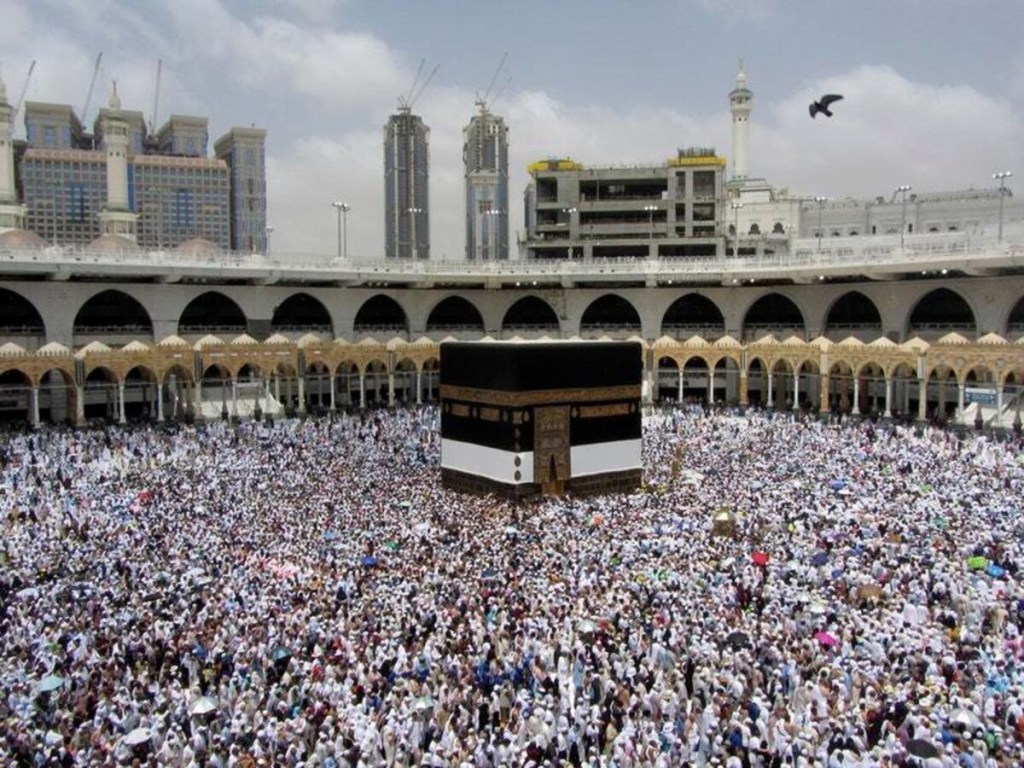
In Islam, the Kaaba (House of God) in Mecca is considered the house built by Abraham and Ishmael (Qur’an 2:125–127), accompanied by the Black Stone (Hajar al-Aswad) and the Station of Abraham (Maqam Ibrahim). These physical sites serve as living relics of the Abrahamic legacy, venerated by over a billion Muslims worldwide.

In Judaism, no physical relic directly associated with Abraham has been preserved. The most significant ancient artifact, the Ark of the Covenant, belongs to the Mosaic era and is tied to the Sinai Covenant, not Abraham. Moreover, it was lost during the destruction of the First Temple.

Islamic scholars point to this contrast to suggest that the direct covenantal heritage of Abraham has been preserved in Islam, not in Judaism. The absence of relics connected to Abraham in Jewish tradition is interpreted by some as symbolic of a rupture in the transmission of his legacy.

4. The Ark of the Covenant: Significance and Loss

The Ark of the Covenant remains an iconic symbol in Jewish history. It was said to contain the tablets of the Law (Torah) and represented the divine presence among the Israelites. However, from an Islamic perspective, the Ark is not seen as an Abrahamic relic but rather as a Mosaic artifact.

Its eventual loss during the Babylonian destruction of the First Temple is often viewed by Islamic scholars as a symbolic termination of the Sinai Covenant, marking the end of that specific historical phase of divine interaction.

5. Universality of the Abrahamic Covenant in Islam

A key theme in Islamic theology is the universality of the Abrahamic Covenant. Unlike the Sinai Covenant, which was exclusively for the Children of Israel, the Abrahamic Covenant—according to Islamic understanding—was meant for all peoples who follow the monotheistic path of submission to God (Islam).

This universalism is enshrined in the Qur’an (Surah 22:78):

“It is He who has named you Muslims before and in this [revelation], that the Messenger may be a witness over you and you may be witnesses over mankind.”

Thus, Islam positions itself as the final and universal expression of the Abrahamic mission, encompassing all of humanity beyond ethnic or tribal lines.

6. Supersession and Theological Fulfillment

While Islam respects the prophets of Judaism and Christianity, many Islamic scholars adopt a form of theological supersessionism: the idea that Islam, as revealed to Muhammad ﷺ, completes and supersedes previous revelations. This includes both the Abrahamic and Mosaic covenants.

According to this view, the Qur’an is the final testament, and the Muslim community (ummah) is the rightful heir to Abraham’s spiritual legacy, fulfilling his vision of pure monotheism (tawḥīd) untainted by tribal exclusivism or theological alteration.

Conclusion

The Islamic view on the Abrahamic and Sinai covenants is deeply rooted in both theological reasoning and historical symbolism. By emphasizing the continuity of Abrahamic rites, the preservation of sacred relics, and the universal scope of its message, Islam asserts itself as the true fulfillment of the covenant established with Abraham. The absence of equivalent Abrahamic relics in Jewish tradition and the eventual disappearance of the Ark are seen not as mere historical events, but as spiritual markers—signifying a shift from the tribal covenant of Sinai to the universal mission embodied by Islam.

While these perspectives are uniquely Islamic and may not be shared by Jewish or Christian theology, they contribute meaningfully to the broader discourse on how each faith understands its relationship with Abraham, the friend of God.

Two covenants: Abrahamic and Sinai covenants from an Islamic perspective

Genesis 49, verse 10, reads:

“The sceptre shall not depart from Judah, nor a lawgiver from between his feet, until Shiloh come; and unto him shall the gathering of the people be.”

The verse implies that Judah’s offspring will govern Israel until the arrival of “Shiloh,” who holds all royal power. Here, Shiloh, similar to “the Seed” in Genesis 22, verse 18, refers to the future Messiah.

From an Islamic perspective, the word “Shiloh” in Genesis 49, verse 10, is connected to the Abrahamic covenant through Ishmael, who, not Isaac, is believed to be nearly sacrificed. Conversely, the terms “scepter” and “lawgiver” mentioned in Genesis 49, verse 10, are associated with the Sinai covenant. How is their argument articulated?

From an Islamic perspective, the interpretation of Genesis 49, verse 10, and its connection to the Abrahamic covenant through Ishmael involves several key arguments:

  1. Shiloh as Muhammad:
    Some Islamic scholars interpret “Shiloh” as a reference to Prophet Muhammad. They argue that the prophecy indicates a shift in divine authority away from the line of Judah to a descendant of Ishmael.
  2. Abrahamic Covenant through Ishmael:
    Islamic tradition holds that it was Ishmael, not Isaac, who was nearly sacrificed by Abraham. This is seen as a pivotal moment in the Abrahamic covenant, establishing Ishmael’s line as the inheritors of God’s promise.
  3. Scepter and Lawgiver:
    The terms “scepter” and “lawgiver” in Genesis 49, verse 10, are associated with the Sinai covenant given to Moses. Islamic interpretation suggests that these symbols of authority and divine law would remain with the descendants of Judah until the coming of “Shiloh” (Muhammad).
  4. Transfer of Authority:
    The verse is interpreted to mean that the religious and political authority (“scepter” and “lawgiver”) would depart from Judah’s line when Shiloh (Muhammad) comes. This is seen as a prophecy of the transition of divine guidance from the Israelite tradition to Islam.
  5. Gathering of the People:
    The phrase “unto him shall the gathering of the people be” is interpreted as referring to the universal message of Islam brought by Muhammad, which would unite people from various nations and backgrounds.
  6. Continuation of Abrahamic Legacy:
    Islamic scholars argue that Muhammad, as a descendant of Ishmael, fulfills this prophecy by bringing the final revelation that completes and supersedes previous covenants, while still maintaining continuity with the Abrahamic tradition.
  7. Non-Judahite Messiah:
    Some interpretations suggest that the verse implies the coming of a messianic figure from outside the tribe of Judah, which aligns with the Islamic view of Muhammad’s lineage through Ishmael.

It’s important to note that this interpretation is specific to Islamic theology and is not accepted in Jewish or Christian exegesis. The Islamic perspective sees this verse as one of many biblical passages that they believe foretell the coming of Prophet Muhammad and the establishment of Islam as the final Abrahamic faith.
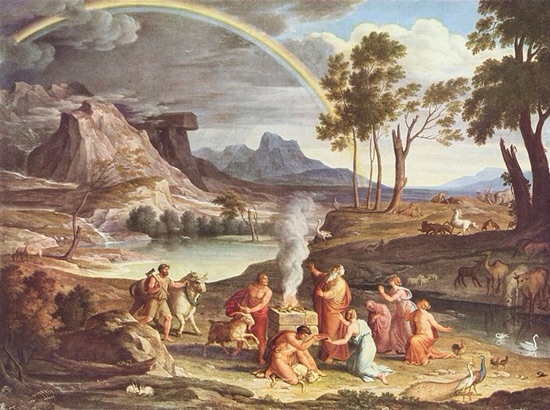
A covenant is an agreement between two parties. In a biblical sense, covenants are made to humanity by God and are intended to ensure mankind acts together in harmony according to the teachings provided by biblical scripture. In some cases, biblical covenants may include symbolic sacrifice. In all cases, biblical covenants have no expiration date – and are enforced by God.

COVENANT

The word used to describe the agreements made between God and the Jewish people. Tradition says that God made several covenants. The Torah tells of the covenant God makes with Abraham, promising him that he will be the patriarch of a great nation. In return, Abraham agrees that every male will be circumcised as a sign of this covenant. 

This ancient rite is still practiced today; Jewish males are circumcised in a ceremony known as brit milah, or “the covenant of circumcision.” God also makes a covenant with Moses as he prepares to receive the Ten Commandments. God tells Moses: “If you obey me faithfully and keep My covenant, you shall be treasured among all the peoples.” 

Many scholars regard acceptance of the teachings of the Ten Commandments as an example of the Israelites’ covenantal relationship with God. God also made a covenant with Noah, a non-Jew, after the Great Flood, giving him the Noahide Laws and promising never again to destroy the world. God created the rainbow as a sign of this covenant.
The Jealousy of Rabbis: A Verse from the Quran and a Prophecy from the Bible


Azahari Hassim

During the caliphate of ʿUmar ibn al-Khaṭṭāb, a remarkable incident occurred involving a Jewish rabbi. It is reported in authentic hadith collections that the rabbi approached ʿUmar and said:

“If this verse had been revealed to us in our scripture, we would have commemorated the day of its revelation as a festival.”

The verse in question is found in Surah al-Mā’idah 5:3:

“This day I have perfected your religion for you, completed My favor upon you, and have chosen for you Islam as your religion.”

ʿUmar replied that this verse was indeed revealed on a momentous day—during the Prophet Muhammad’s ﷺ final pilgrimage (Ḥajj al-Wadāʿ), which occurred on a Friday, the Day of ʿArafah.

Theological Significance of the Envy

To understand the rabbi’s envy, one must grasp the theological and eschatological significance behind the completion of religion in Islam, especially in light of Jewish expectations regarding the future restoration of divine worship.

In Judaism, especially in rabbinic tradition, animal sacrifice plays a central role in religious life and covenantal atonement. These offerings were to be made exclusively in the Jerusalem Temple, as prescribed in the Torah. However, since the Second Temple was destroyed by the Romans in 70 CE, this essential element of Judaism has been suspended. The absence of the Temple has left a theological void, with Jews still praying for the arrival of the Messiah and the rebuilding of the Third Temple to resume sacrificial rites.

Isaiah’s Prophecy and Its Ishmaelite Connection

The rabbi’s perspective seems to be influenced by a messianic and prophetic vision found in the Book of Isaiah, specifically Isaiah 60:7:

“All Kedar’s flocks will be gathered to you, the rams of Nebaioth will serve you; they will be accepted as offerings on My altar, and I will glorify the house of My glory.”

This verse is highly significant for several reasons:

1. Kedar and Nebaioth are explicitly named as sons of Ishmael (Genesis 25:13), representing prominent Arabian tribes.

2. The verse foresees a time when descendants of Ishmael—Arab peoples—will bring offerings to God.

3. These offerings will be accepted, and through them, God’s house (often interpreted as the Temple) will be glorified.

The prophecy envisions an eschatological role for Ishmael’s descendants in the worship of the One God—something traditionally seen as inconceivable within the framework of Jewish exclusivity.

Meccan Fulfillment vs. Jerusalem Expectation

Judaism awaits a literal fulfillment of Isaiah’s prophecy: the Arabs (sons of Ishmael) bringing sacrifices to Jerusalem’s Temple once it is rebuilt.

However, the rabbi in ʿUmar’s time may have begun to realize something profound: this prophecy, rather than pointing to a future temple in Jerusalem, appeared to be fulfilled in Mecca, during Hajj, where:

Sacrificial animals are brought by Muslims from all over the world—many of whom are descendants of Kedar and Nebaioth—as a commemoration of the moment when God tested Abraham with the command to sacrifice his son Ishmael.

These animals are sacrificed as part of the rites established by Prophet Muhammad ﷺ, who himself descends from Ishmael.

The rites of Hajj center around the Kaʿbah, referred to in the Qur’an as the first house built for the worship of God (Surah 3:96), and restored by Abraham and Ishmael.

Thus, Islam—through its rituals, lineage, and theology—perfectly aligns with the vision in Isaiah 60:7 in a way that neither Judaism (due to the absence of the Temple) nor Christianity (which spiritualizes and abolishes sacrifice) can.

Christian Response and Qur’anic Clarification

Many Christian theologians interpret Isaiah 60 as a prophecy of Arab conversions to Christianity, viewing Jesus’ atoning death as the end of all sacrifices. However, this interpretation contradicts the explicit sacrificial imagery in Isaiah 60:7, where animal offerings are accepted by God—a practice Christianity explicitly abandons.

Furthermore, the Qur’an offers a decisive theological clarification:

“Abraham was neither a Jew nor a Christian, but he was a ḥanīf, one inclining toward truth, a Muslim. And he was not of the polytheists.”

(Surah 3:67)

Islam asserts itself as the continuation and perfection of Abraham’s monotheism—without the distortion introduced by later religious developments. The Qur’anic declaration in Surah 5:3 signifies the culmination of divine guidance and the completion of Abraham’s covenant, now universalized through Islam.

Conclusion: Islam as the Fulfillment of Abrahamic Prophecy

The Jewish rabbi’s envy was not merely of a verse—but of a divine reality realized in Islam:

A perfected religion, firmly rooted in Abrahamic tradition.

Living sacrificial rites enacted by Ishmael’s descendants.

A universal house of worship (the Kaʿbah) glorified through acts of piety and submission.

Rather than await a future fulfillment through rebuilt temples or symbolic reinterpretations, Islam offers a living embodiment of prophetic hope—something the rabbis of old may have sensed, but could not accept.

This is why the verse in Surah 5:3 provoked not just admiration, but deep theological envy.

Hajj as the Fulfillment of Abrahamic Prophecy

Torah, Genesis 22 verse 18, reads:

“And in thy seed shall all the nations of the earth be blessed; because thou hast obeyed my voice.”

It is believed the event of the Hajj in Mecca is the fulfillment of the biblical prophecy of Genesis 22 verse 18. According to the Islamic belief, Abraham offered Ishmael, not Isaac, as a sacrifice to God, emphasizing Ishmael’s role in fulfilling God’s covenant with Abraham. The event of Hajj proves that God made a covenant with Abraham through Hagar and Ishmael rather than Sarah and Isaac. How is this viewpoint presented?

The viewpoint that the Hajj in Mecca is a fulfillment of the biblical prophecy of Genesis 22 verse 18, and represents a covenant made by God with Abraham through Hagar and Ishmael, rather than Sarah and Isaac, is articulated based on several key aspects of Islamic belief and interpretation of religious texts:

  1. Prophecy of Genesis 22 verse 18: The verse in Genesis states, “And in thy seed shall all the nations of the earth be blessed; because thou hast obeyed my voice.” Some interpret this as a prophecy that is fulfilled through the descendants of Ishmael, Abraham’s son with Hagar. The Islamic narrative holds that it was Ishmael, not Isaac, who was offered by Abraham as a sacrifice to God. This signifies Ishmael’s importance in the fulfillment of God’s covenant with Abraham. The Hajj, as a major Islamic ritual commemorating the actions of Abraham and Ishmael, is seen as a manifestation of this blessing.
  2. The Hajj and Ishmael’s Legacy: In Islamic tradition, the Hajj includes rituals that are believed to commemorate the life and trials of Abraham and his son Ishmael. The ritual of Sa’i, where pilgrims travel back and forth between the hills of Safa and Marwah, is seen as a re-enactment of Hagar’s desperate search for water for her infant son Ishmael. According to Islamic belief, the well of Zamzam originated to rescue baby Ishmael.
  3. The Kaaba and Islamic Tradition: The Kaaba in Mecca, which is the focal point of the Hajj, is believed in Islamic tradition to have been built by Abraham and Ishmael as a house of worship to the one true God. This act of establishing monotheism in the region is viewed as a key part of fulfilling God’s covenant with Abraham.
  4. Universal Blessing and Unity of Humankind: The Hajj is seen as a fulfillment of God’s promise to bless all nations through Abraham’s descendants. The gathering of millions of Muslims from diverse nations during Hajj is viewed as a symbol of this blessing and the unity of humankind under God’s guidance.
  5. Continuity of Abrahamic Tradition: The Hajj is also seen as a continuation and fulfillment of the Abrahamic tradition of monotheism. This perspective posits that Islam, as the final revelation in the Abrahamic tradition, fulfills and perfects earlier revelations given to Jews and Christians.

This viewpoint is part of the broader Islamic interpretation of religious history, which sees Islam as both a continuation and a completion of the monotheistic tradition established by Abraham.

Ishmael and the House of God

Some scholars interpret the phrase “God was with the lad” from Genesis 21:20 to imply that Abraham left Ishmael and Hagar near the House of God (Kaaba) and dedicated them to God, as mentioned in the Quran, Surah 14, verse 37. They also believe the phrase “and he grew” in Genesis 21:20 indicates that Ishmael was still an infant at that time. What are their reasoning and arguments?

Here are the key arguments and reasoning behind this particular scholarly interpretation:

1. Analysis of “God was with the lad” (Genesis 21:20):

These scholars argue that this phrase indicates more than just divine protection – it suggests a specific sacred location. They connect this with Surah 14, verse 37, of the Quran where Abraham states: “O our Lord! I have settled some of my offspring in an uncultivated valley near Your Sacred House”. The parallel between these texts is seen as evidence that Ishmael was left near the Kaaba (House of God), where God’s presence would be particularly manifest.

2. Ishmael’s Age and the Phrase “And He Grew”:

The phrase “and he grew” suggests a developmental stage, implying that Ishmael was still a young child or infant when these events occurred. This is consistent with the narrative in Genesis 21, where Hagar carries the child and later places him under a shrub when they run out of water. In Islamic texts, Ishmael is depicted as an infant during the journey to Mecca. The miracle of the Zamzam well, which sprang forth to provide water for Hagar and Ishmael, is a central story illustrating God’s care for them in their vulnerability.

3. Theological Framework:

These scholars view the story as part of a larger narrative of divine purpose. Abraham’s action is interpreted not as abandonment but as a divinely guided placement. The location near the Kaaba is seen as crucial for Ishmael’s future role in establishing monotheistic worship there.

4. Textual Connections:

The scholars draw parallels between the biblical account and Quranic narrative. They see the biblical phrase “God was with the lad” as complementary to the Quranic account of Abraham settling his family near God’s Sacred House. The emphasis on divine presence in both texts is viewed as supporting this interpretation.

This interpretation represents a particular scholarly view that attempts to harmonize biblical and Quranic accounts, though it’s important to note that this is one of several interpretations of these texts.

Genesis 22:18: Muhammad, the Hajj, and Differing Interpretations Across Abrahamic Faiths

Did Muhammad, through the Hajj ritual, fulfill the prophecy mentioned in Genesis 22, verse 18?

The verse you are referring to, Genesis 22, verse 18, reads: “And through your offspring all nations on earth will be blessed, because you have obeyed me.” This promise is made to Abraham after he demonstrates his willingness to sacrifice his son (Isaac, according to the Bible; Ishmael, according to Islamic tradition).


Many Jewish and Christian theologians interpret the “offspring” (or “seed”) mentioned in this verse as a reference to the line of descendants that would lead to the Jewish people, and by extension, to Jesus Christ in Christian theology. Through this lineage, blessings would be conferred to all nations.

In Islamic theology, however, the “offspring” or “seed” in Genesis 22, verse 18, is often interpreted as referring to Ishmael, the son who was nearly sacrificed according to Islamic tradition. Muslims believe that the Prophet Muhammad, as a direct descendant of Ishmael, fulfills this prophecy, as it is through him that all nations are blessed with the message of Islam.

The lineage of Prophet Muhammad through Ishmael is considered important in Islamic belief because the near-sacrifice event, believed to involve Ishmael instead of Isaac, is central to the Abrahamic covenant. Muslims believe that the final and complete message of God to humanity, Islam, came through this prophetic lineage.


The Hajj ritual, which commemorates events in the lives of Abraham, Hagar, and Ishmael, can be seen by Muslims as a testament to the fulfillment of this prophecy. Every year, followers of Islam globally gather in Mecca to take part in the Hajj pilgrimage, commemorating the tradition of Abraham’s near sacrifice of his son Ishmael.

It symbolizes the universality of the blessings promised to Abraham’s descendants. For many Muslims, this pilgrimage is a manifestation of the blessings through Ishmael’s lineage, culminating in Muhammad and the global reach of Islam.

However, this interpretation is not universally accepted, especially among Jewish and Christian theologians, who typically see the “offspring” or “seed” in Genesis 22, verse 18, as referring to Isaac’s line, ultimately leading to the people of Israel and, in Christian theology, to Jesus Christ. Interpretations of scripture are deeply influenced by religious, theological, and cultural perspectives.

In summary, while some Muslims assert that Muhammad, as a descendant of Ishmael, fulfills the prophecy in Genesis 22, verse 18, through the message of Islam and rituals like the Hajj, this interpretation is specific to Islamic theology. It reflects the belief that Ishmael, rather than Isaac, was the son nearly sacrificed and that Muhammad, as Ishmael’s descendant, brings blessings to all nations. This view is not shared by all Abrahamic faiths.

Why Does the Quran Frequently Mention Abraham Alongside His Son Isaac and Grandson Jacob?


Azahari Hassim

The Quran repeatedly mentions the patriarch Abraham together with his son Isaac and grandson Jacob, highlighting their unique roles in the tapestry of prophetic history.

This frequent association is rooted in both their familial lineage and their significant spiritual legacy, as outlined in several Quranic verses.

The Divine Trust and Distinction

Abraham’s life was marked by profound faith and obedience to God. One of the most significant episodes is when Abraham, following divine command, entrusted Hagar and their infant son Ishmael to God’s protection in the barren land of Mecca. Later, Abraham was tested again when he was commanded to sacrifice his “only son”—a reference understood in Islamic tradition as Ishmael, since Isaac had not yet been born at that time. Abraham’s unwavering submission to God’s will was rewarded: God miraculously granted him and his wife Sarah a son, Isaac, in their old age.

This narrative establishes a distinction: while Ishmael and Hagar were dedicated to God in a unique way—entrusted entirely to His care—Isaac and his mother Sarah remained with Abraham, forming a distinct branch of his lineage. The Quran emphasizes this by presenting Isaac and Jacob as direct gifts and blessings to Abraham, underscoring their special place in his household and in the continuation of prophethood.

Lineage and Prophethood

The Quranic verses that mention Abraham, Isaac, and Jacob together often do so to highlight the continuity of divine guidance and favor within this lineage. For example:

Surah 11:71: “And his wife was standing, and she laughed. Then We gave her good tidings of Isaac and after Isaac, Jacob.”

Surah 38:45: “And remember Our servants, Abraham, Isaac, and Jacob—those of strength and vision.

Surah 29:27: “And We gave to Abraham, Isaac and Jacob, and We placed in his descendants prophethood and scripture.

Surah 19:49: “So when he had left them and those they worshipped besides Allah, We gave him Isaac and Jacob, and each of them We made a prophet.

Surah 12:38: “And I have followed the religion of my fathers, Abraham, Isaac, and Jacob…

Surah 6:84: “And We gave to him Isaac and Jacob; all [of them] We guided…

These verses underscore the divine favor bestowed upon Abraham and his descendants, particularly Isaac and Jacob, who are both recognized as prophets and as forebears of a prophetic lineage.

The Two Covenants: Abrahamic and Sinai

The lineage of Ishmael from Abraham led to the birth of the Prophet Muhammad (peace be upon him), who, according to Islam, is regarded as the fulfillment of the Abrahamic Covenant. This covenant signifies the continuity of monotheism (tauhid) and prophethood through the line of Ishmael, culminating in the final prophecy for all of humanity.

On the other hand, Jacob, also known as Israel, is the progenitor of the Israelites. His descendants are central to the Sinai covenant, which includes the giving of the Torah to Moses and the establishment of the Children of Israel as a chosen community with a unique religious mission.

Burial and Legacy

Abraham, Isaac, Jacob, and their wives (excluding Rachel, Jacob’s wife and Joseph’s mother) are traditionally believed to be buried in the Cave of Machpelah, a site revered by Jews, Christians, and Muslims. This shared heritage further emphasizes the interconnectedness of their stories and the enduring significance of their legacy.

Conclusion

This story highlights the clear distinction between Abraham’s two sons: Ishmael and his mother, Hagar, were completely entrusted to God and separated from living together with Abraham. In contrast, Isaac remained by the side of Abraham and Sarah as a divine gift—a reward for Abraham’s willingness to sacrifice his firstborn, Ishmael. In this context, it is as if Ishmael had been offered to God and was no longer personally possessed by Abraham as a father.

Ishmael and the House of God

Some scholars interpret the phrase “God was with the lad” from Genesis 21:20 to imply that Abraham left Ishmael and Hagar near the House of God (Kaaba) and dedicated them to God, as mentioned in the Quran, Surah 14, verse 37. They also believe the phrase “and he grew” in Genesis 21:20 indicates that Ishmael was still an infant at that time. What are their reasoning and arguments?

Here are the key arguments and reasoning behind this particular scholarly interpretation:

1. Analysis of “God was with the lad” (Genesis 21:20):

These scholars argue that this phrase indicates more than just divine protection – it suggests a specific sacred location. They connect this with Surah 14, verse 37, of the Quran where Abraham states: “O our Lord! I have settled some of my offspring in an uncultivated valley near Your Sacred House”. The parallel between these texts is seen as evidence that Ishmael was left near the Kaaba (House of God), where God’s presence would be particularly manifest.

2. Ishmael’s Age and the Phrase “And He Grew”:

The phrase “and he grew” suggests a developmental stage, implying that Ishmael was still a young child or infant when these events occurred. This is consistent with the narrative in Genesis 21, where Hagar carries the child and later places him under a shrub when they run out of water. In Islamic texts, Ishmael is depicted as an infant during the journey to Mecca. The miracle of the Zamzam well, which sprang forth to provide water for Hagar and Ishmael, is a central story illustrating God’s care for them in their vulnerability.

3. Theological Framework:

These scholars view the story as part of a larger narrative of divine purpose. Abraham’s action is interpreted not as abandonment but as a divinely guided placement. The location near the Kaaba is seen as crucial for Ishmael’s future role in establishing monotheistic worship there.

4. Textual Connections:

The scholars draw parallels between the biblical account and Quranic narrative. They see the biblical phrase “God was with the lad” as complementary to the Quranic account of Abraham settling his family near God’s Sacred House. The emphasis on divine presence in both texts is viewed as supporting this interpretation.

This interpretation represents a particular scholarly view that attempts to harmonize biblical and Quranic accounts, though it’s important to note that this is one of several interpretations of these texts.

Pre-Islamic Arab Tradition vs Torah

According to established tradition, prior to the advent of Muhammad, the Arabs believed that their ancestor Abraham was on the verge of offering his son Ishmael as a sacrifice to God. It is believed that their pre-Islamic tradition about Ishmael predates the Torah given to Moses. How is their argument articulated?

Scholars argue that the oral traditions of the Arabs, including those surrounding Ishmael, predate the written texts of the Torah. This assertion is based on the notion that oral traditions can be older than their written counterparts, as they may have been passed down through generations long before being codified in scripture.

The argument that the pre-Islamic Arab tradition about Ishmael predates the Torah given to Moses is articulated through several points:

1. Historical Narratives:

Early Arab traditions held that Ishmael, not Isaac, was the son Abraham was commanded to sacrifice. This belief is deeply rooted in the cultural and religious narratives of pre-Islamic Arabia.

2. Religious Significance:

The story of Ishmael’s near-sacrifice is significant in Islam, where it is believed that both Abraham and Ishmael willingly submitted to God’s command. This act of submission is seen as a profound demonstration of faith and obedience.

3. Cultural Artifacts:

Some early Muslim scholars argued that the horns of the ram, which was sacrificed in place of Ishmael, were once displayed in the Kaaba, suggesting a long-standing tradition that predates Islamic scripture.

4. Jealousy Argument:

There is also an argument that Jews claimed Isaac was the intended sacrifice out of jealousy, as Ishmael is considered the ancestor of the Arabs.

These points collectively support the belief that the tradition of Ishmael’s near-sacrifice has ancient roots, predating the Torah and reflecting the unique relationship between God and the Arab people.

Interestingly, before the rise of Islam, ancient Arabs in Mecca circumcised their children at the age of 13 or 14. Did they inherit this practice from the Torah, which requires circumcision at eight days, or was it a tradition tracing back to Abraham that predated the Torah?

It is plausible that the tradition of circumcision among ancient Arabs in Mecca traced back to Abraham, who is considered a common ancestor by both Jews and Arabs. It could be that this practice was passed down through generations independently of any direct influence from the Torah or Judaism.

Islamic Views on the Abrahamic and Sinai Covenants in Relation to Heritage and Relics

There is no specific Abrahamic relic that has been preserved through Jewish generations, similar to the Kaaba, the Black Stone (Hajar al-Aswad) and the Station of Abraham (Maqam Ibrahim) in Islam. The sole significant artifact associated with Jewish heritage is the Ark of the Covenant.

However, it is important to note that the Ark can be traced back to Moses rather than Abraham and was lost during the destruction of the First Temple. Consequently, Islamic scholars maintain that the Israelites were bound by the Sinai Covenant, while Muslims are considered to be under the Abrahamic Covenant. How does their argument go?

The argument presented by Islamic scholars regarding the Abrahamic Covenant and the Sinai Covenant is based on several theological and historical points. To understand their perspective, let’s break down the key elements:

  1. Abrahamic Covenant vs. Sinai Covenant: The Abrahamic Covenant is believed to be the original covenant between God and Abraham, which includes promises of land, descendants, and blessings.
    The Sinai Covenant, also known as the Mosaic Covenant, was established between God and the Israelites through Moses at Mount Sinai.
  2. Islamic view on continuity: Islamic scholars argue that Muslims are the true inheritors of the Abrahamic Covenant, which they consider to be universal and eternal.
    They contend that the Sinai Covenant was specific to the Israelites and was temporary or conditional.
  3. Lack of physical relics: The absence of a specific Abrahamic relic in Jewish tradition, comparable to the Kaaba, the Black Stone, or the Station of Abraham in Islam, is seen by some Islamic scholars as significant.
    They argue that this absence might indicate a break in the direct line of Abrahamic heritage.
  4. The Ark of the Covenant: While the Ark of the Covenant is a significant artifact in Jewish history, it is associated with Moses rather than Abraham.
    Its loss during the destruction of the First Temple is sometimes interpreted by Islamic scholars as a symbolic end to the Sinai Covenant.
  5. Islamic claim to Abrahamic heritage: Islamic scholars often emphasize the direct lineage of Muhammad to Abraham through Ishmael.
    They argue that Islam represents a restoration of the original Abrahamic monotheism, unencumbered by later additions or alterations.
  6. Universality vs. particularity: The Islamic view often presents the Abrahamic Covenant as universal, meant for all of humanity.
    In contrast, they view the Sinai Covenant as particular to the Israelites and not binding on all people.
  7. Supersessionism: Some Islamic interpretations incorporate a form of supersessionism, suggesting that Islam supersedes earlier revelations and covenants.

It’s important to note that this argument represents a specific Islamic perspective and is not universally accepted outside of Islamic scholarship. Jewish and Christian traditions have their own interpretations of these covenants and their ongoing relevance. The topic of covenants and their applicability is a complex theological issue with various interpretations across different faith traditions.

The Covenant of Abraham: A Comparison Between the Bible and the Quran

According to biblical scripture, it is recorded that God established a covenant with Abraham through his son Isaac, rather than his firstborn Ishmael. Conversely, the Quran presents a different perspective by indicating that the covenant was made with Ishmael instead of Isaac. How does the Quran describe this?

Surah 2, verses 124 to 125 of the Quran read:

“And when his Lord tested Abraham with certain words, and he fulfilled them. God said, “I am making you a leader of humanity.” Abraham said, “And my descendants?” God said, “My covenant does not include the wrongdoers.”
“And We made the House a focal point for the people, and a sanctuary. Use the shrine of Abraham as a place of prayer. And We commissioned Abraham and Ishmael, “Sanctify My House for those who circle around it, and those who seclude themselves in it, and those who kneel and prostrate.”

The phrase “And when his Lord tested Abraham with certain words,” presented in verse 124, is understood by Quranic commentators to refer to the tests and commands that God imparted to Abraham. These included leaving his family in a barren land, sacrificing his son Ishmael, rebuilding the Kaaba (House of God), and instituting the rite of circumcision.

The Quran clearly states in Surah 2, verse 124 that God made a covenant with Abraham through his son Ishmael, not Isaac. The covenant was established prior to the birth of Isaac, who is regarded as a divine gift to Abraham and Sarah, a result of Abraham’s readiness to offer Ishmael as a sacrifice.


In this context, Ishmael is understood as a son dedicated to God, whereas Isaac is considered a son of blessing for Abraham and Sarah. This contradicts the Biblical account which portrays Isaac as the son who was to inherit the covenant from Abraham.

According to the Quran and Islamic tradition, the Biblical account was distorted to diminish Ishmael’s status as Abraham’s heir in favor of Isaac. This alteration is thought to stem from the bias of Jewish scribes toward the Israelite lineage.

The Quran asserts that it rectifies this distortion by confirming Ishmael as the son who carried on Abraham’s legacy in accordance with the original divine covenant. Additionally, the divine selection of the ancient Israelites and their Hebrew prophets before the advent of Islam is seen as a preparation for the arrival of Muhammad, the final Prophet.

The Fulfillment of Prophecy: The Jewish Rabbi’s Admiration for Islam’s Sacrificial Legacy


Azahari Hassim

Religious traditions frequently assert their divine fulfillment, searching for validation of their legitimacy and divine favor within their scriptures.

A notably significant moment in Islamic history illustrates this dynamic—when a Jewish rabbi came to Caliph ʿUmar ibn al-Khaṭṭāb with a remarkable confession: “If a verse like this had been revealed to us Jews, we would have declared the day of its revelation a festival day.” The verse in question is from Surah al-Mā’idah (5:3):

“This day I have perfected for you your religion, completed My favor upon you, and have chosen for you Islam as your religion.”

This Quranic declaration came during the Prophet Muhammad’s final pilgrimage (Ḥajj), marking the formal completion of Islam as a revealed religion. But why would a Jewish rabbi regard this verse with such admiration—perhaps even envy? To understand this, we must explore a prophetic verse from the Hebrew Bible, found in Isaiah 60:7, and analyze how Islamic rituals, particularly the Ḥajj, embody the prophetic vision better than the expectations of either Judaism or Christianity.

Isaiah 60:7 – A Sacrificial Vision Involving Arabs

The Hebrew verse in Isaiah reads:

“All the flocks of Kedar shall be gathered unto thee, the rams of Nebaioth shall minister unto thee: they shall come up with acceptance on Mine altar, and I will glorify the house of My glory.”

(Isaiah 60:7)

This verse envisions a time when the descendants of Kedar and Nebaioth, two sons of Ishmael (Genesis 25:13), will offer sacrifices acceptable to God. The mention of “Mine altar” and “house of My glory” is generally understood by Jewish commentators to refer to the Temple in Jerusalem, where animal sacrifices were once offered according to the Torah.

Yet, the destruction of the Second Temple in 70 CE left a void in Jewish religious life. Without the altar, the sacrificial system central to the Mosaic covenant could no longer be practiced. Jews have since longed for the rebuilding of the Third Temple, expecting the resumption of sacrificial rites in fulfillment of such prophetic verses.

But here lies the tension: the sacrificial act involving the Ishmaelite tribes—Arabs from the lineage of Kedar and Nebaioth—has not been realized in Judaism. Instead, it is in Islam’s Ḥajj rituals, especially the ʿEid al-Aḍḥā sacrifice, that this prophecy seems to find a living expression.

Islam’s Living Sacrifice: A Fulfillment of Isaiah?

During the annual pilgrimage in Mecca, Muslims from all over the world—many of them literal descendants of Ishmael—participate in animal sacrifices in remembrance of Abraham’s willingness to sacrifice his son (identified in Islam as Ishmael, not Isaac). These animals are offered near the Kaʿbah, the sanctuary Muslims believe was originally built by Abraham and Ishmael.

The connection becomes theologically provocative:

Kedar and Nebaioth: Represent Ishmaelite tribes, settled in the Arabian Peninsula.

Offerings accepted on the altar: The animals offered during Ḥajj are intended as acts of devotion to God, distributed to the poor in a ritual of divine acceptance.

“House of My glory”: In Islamic interpretation, this refers not to the destroyed Temple in Jerusalem, but to the Kaʿbah in Mecca—revived and purified by Prophet Muhammad, a descendant of Ishmael.

This paradigm effectively transfers the axis of prophetic fulfillment from Jerusalem to Mecca, and from Temple Judaism to Islam. The Jewish rabbi, recognizing this shift, would understandably feel a mix of reverence and regret—hence his comment to ʿUmar.

Christianity and the Sacrifice: Atonement Without Altars

Christianity diverges sharply in interpreting sacrificial themes. For most Christians, Jesus’ crucifixion is understood as the once-for-all sacrifice that atones for sin, rendering animal offerings obsolete:

“We have been made holy through the sacrifice of the body of Jesus Christ once for all.”

(Hebrews 10:10)

Thus, Isaiah 60:7, with its focus on physical offerings and ritual sacrifice, is often spiritualized or placed in an eschatological future. Some Christian theologians believe it refers to Arab conversion to Christianity in the end times, where the imagery of Kedar and Nebaioth signifies a gentile embrace of the Gospel.

Yet, the explicit association with animal sacrifice, a practice explicitly abandoned in Christian theology, remains problematic for this interpretation. Islam, by contrast, continues the sacrificial rites within a monotheistic framework that maintains Abrahamic purity and the legacy of Ishmael.

The Quranic Rebuttal: Abraham Was Neither Jew Nor Christian

The Qur’an addresses this theological contention directly in Surah Āl ʿImrān (3:67):

“Abraham was neither a Jew nor a Christian, but he was a monotheist, submitting to God (a Muslim), and he was not of the polytheists.”

Islam positions itself not as a new religion but as the restoration of the pure monotheism of Abraham, inclusive of the sacrificial rites and covenantal practices once diluted or abandoned by later traditions.

Conclusion: A Verse to Be Envied

The statement of the Jewish rabbi to ʿUmar ibn al-Khaṭṭāb reflects a profound religious realization: Islam had fulfilled a prophecy that Jews were still awaiting. The verse in Surah 5:3, revealed during the Prophet’s final pilgrimage, proclaims the completion of divine religion and favor:

“This day I have perfected for you your religion, completed My favor upon you, and have chosen for you Islam as your religion.”

This stands in sharp contrast to Judaism’s waiting for the Third Temple and Christianity’s departure from sacrificial rites. Islam emerges as the living continuation of Abrahamic worship—including the role of Ishmael’s descendants—thus embodying both the form and spirit of prophetic visions such as Isaiah 60:7.

In the end, it is not merely doctrinal differences, but the embodiment of prophecy in historical and living religious practice, that made that verse in the Qur’an the object of such profound rabbinic envy.

The Prophecy of Hagar and Its Fulfillment: A Comparative Analysis of Genesis 21:18 and Isaiah 60:7

There is a belief that the prophecy of Hagar in Genesis 21, verse 18, holds more weight than Isaiah 60, verse 7, which is linked to and completes the former. How is this understanding conveyed?

The belief that the prophecy of Hagar in Genesis 21, verse 18, holds more weight than Isaiah 60, verse 7, which is linked to and completes the former, can be understood through a close examination of the biblical texts and their contexts. Here’s how this understanding is conveyed:

  1. Genesis 21, verse 18 (The Prophecy of Hagar).

This verse is part of the story where God speaks to Hagar after she and her son, Ishmael, are sent away by Abraham. Hagar is distraught, fearing for her son’s life in the desert.

The verse reads:

“Arise, lift up the lad, and hold him in thine hand; for I will make him a great nation.”

This prophecy directly promises that Ishmael will become a great nation. This is a foundational promise, as it assures Hagar of her son’s future and his importance in God’s plan.

  1. Isaiah 60, verse 7 (Completion of the Prophecy). This chapter of Isaiah deals with the future glory of Zion, depicting a time of great prosperity and the gathering of nations to honor God.

The verse reads:

“All the flocks of Kedar shall be gathered together unto thee, the rams of Nebaioth shall minister unto thee: they shall come up with acceptance on mine altar, and I will glorify the house of my glory.”

Both Kedar and Nebaioth are descendants of Ishmael. This verse indicates the fulfillment and continuation of the promise given to Hagar, showing that Ishmael’s descendants will play a significant role in the future worship and honor of God.

  1. Interconnection and Weight: The prophecy in Genesis 21, verse 18, is seen as having “more weight” because it is the initial divine promise regarding Ishmael, establishing his importance and future. It is a direct communication from God to Hagar at a crucial moment. Isaiah 60, verse 7, is viewed as the completion or continuation of this promise. It confirms and elaborates on the fulfillment of God’s plan for Ishmael’s descendants, showing their eventual integration into the worship of God and their contribution to the glory of Zion.

The “weight” of Genesis 21, verse 18, lies in its foundational nature, while Isaiah 60, verse 7, provides a more detailed and expanded vision of the fulfillment of that initial promise.

This understanding is conveyed by recognizing that the original promise to Hagar is the cornerstone of the prophecy concerning Ishmael and his descendants.

The later prophetic vision in Isaiah builds upon this foundation, demonstrating the fulfillment of God’s promise in a broader and more comprehensive way. Therefore, while Isaiah 60, verse 7 is significant in its completion of the prophecy, Genesis 21, verse 18, holds a primary and foundational weight in the narrative.

The Apostle Paul and the people of Kedar

Paul claimed that he was an apostle to the Gentiles. What was his connection to the people of Kedar, who were Gentiles and would enter God’s fold as predicted in Isaiah 42 verse 11 and Isaiah 60 verse 7? Kedar was the son of Ishmael, the ancestor of the Arab people.

This is a very interesting question. Paul was an apostle to the Gentiles, meaning that he preached the gospel of Jesus Christ to the non-Jewish nations. He traveled extensively throughout the Roman Empire, visiting places such as Cyprus, Asia Minor, Greece, Macedonia, and Rome. He also wrote many letters to the churches he founded or visited, which are part of the New Testament. While Paul’s ministry was mainly directed towards the Gentiles in various regions, there is no specific mention or connection between Paul and the people of Kedar in the New Testament.

The people of Kedar were a nomadic tribe of Arabs, descended from Ishmael, the son of Abraham and Hagar. They are mentioned several times in the Old Testament as examples of the distant nations that would worship the true God. Isaiah 42 verse 11 and Isaiah 60 verse 7 are two of the prophecies that foretell the inclusion of the people of Kedar in God’s salvation plan.

The references to Kedar in Isaiah are prophecies that speak about the inclusion of Gentiles into God’s fold. These prophecies imply that people from various nations, including the descendants of Kedar, would come to worship and acknowledge God.

Although Paul’s mission was to bring the message of salvation to the Gentiles, his primary interactions were with the Greco-Roman world rather than specific Arab or Ishmaelite communities. However, there is no specific mention of Paul having a direct connection to the people of Kedar mentioned in those specific verses of Isaiah.

Isaiah 60:7 and the Christian Belief in Jesus’ Sacrificial Atonement

Some scholars argue that Isaiah 60, verse 7, which predicts the restoration of animal sacrifices, contradicts the Christian belief in the sacrificial death of Jesus as the ultimate atonement for humanity’s sins. According to this Christian perspective, Jesus’ sacrifice negates the necessity for the Old Testament sacrifices. What is the basis of the arguments presented by these scholars?

Isaiah 60, verse 7, states:

“All the flocks of Kedar shall be gathered to you; the rams of Nebaioth shall minister to you; they shall come up with acceptance on my altar, and I will beautify my glorious house.”

This verse has prompted debates among scholars, particularly regarding its implications for the Christian belief in Jesus’ sacrificial death as the ultimate atonement for humanity’s sins. Here’s the basis of their argument:

1. Literal Interpretation of the Prophecy

Some scholars argue that Isaiah 60, verse 7, predicts a literal restoration of Old Testament animal sacrifices. This interpretation suggests a future scenario where temple rituals, including offerings, are reintroduced. For Christians who believe Jesus’ death was the ultimate and final atonement for sin (Hebrews 10, verses 10 to 18), this interpretation seems contradictory, as it implies that these sacrifices in Isaiah retain some salvific value.

2. Theological Implications

If Isaiah 60, verse 7, indeed prophesies the reinstatement of animal sacrifices, it raises questions about the sufficiency of Jesus’ sacrifice. Central to Christian theology is the belief that Jesus’ crucifixion fulfilled and replaced the sacrificial system outlined in the Old Testament (Matthew 5, verse 17; John 19, verse 30). Any reintroduction of sacrifices could imply that Jesus’ atonement was incomplete, directly challenging key doctrines of salvation and the New Covenant.

3. Symbolic vs. Literal:

Many Christian scholars interpret Isaiah 60, verse 7 symbolically rather than literally. They argue that the reference to sacrifices and altars is metaphorical, symbolizing worship, devotion, and the gathering of nations to God. In this view, the verse does not predict a literal return to Old Testament sacrificial practices but reflects the restoration and glorification of God’s people in a spiritual sense.

4. Eschatological Considerations

For Christians, eschatological theology plays a critical role in understanding Isaiah 60, verse 7. Some argue that if this prophecy is taken literally, it contradicts the belief that Jesus’ crucifixion and resurrection were the ultimate and final means of atonement. This creates tension between a literal interpretation of the verse and the Christian doctrine of salvation.

5. Comparative Religious Perspective: Eid al-Adha

Interestingly, some Islamic scholars view the prophecy of Isaiah 60, verse 7, as aligning more closely with Islamic traditions, particularly the celebration of Eid al-Adha (the Feast of Sacrifice). This festival commemorates Abraham’s willingness to sacrifice his son Ishmael in obedience to God and involves the offering of animals as part of worship. From this perspective, the prophecy of Isaiah 60, verse 7, reflects a continuation of sacrificial practices consistent with Islamic beliefs, contrasting with the Christian claim that Jesus’ death replaced all sacrifices.

Conclusion

The interpretation of Isaiah 60, verse 7, presents a theological challenge, particularly for Christian doctrines concerning the sufficiency of Jesus’ sacrificial death. A literal understanding of the verse raises questions about the necessity and effectiveness of Jesus’ crucifixion as the final and complete sacrifice for sin.


However, alternative interpretations—such as symbolic readings or eschatological frameworks—allow many Christians to reconcile this passage with their beliefs. Meanwhile, comparative religious perspectives, such as those from Islam, offer alternative understandings that highlight the complexity and depth of this biblical prophecy.

Reexamining the Abrahamic Covenant: Ishmael’s Primacy in Islamic Tradition


Did Abraham, Isaac and Jacob know about Mount Sinai and its sacredness?

The biblical accounts suggest that Mount Sinai and its sacredness were not known to Abraham, Isaac, and Jacob. The significance sacred of Mount Sinai is primarily associated with the story of Moses and the Israelites’ liberation from Egypt, as described in the Book of Exodus. However, it’s important to note that beliefs and interpretations may vary among different religious traditions.

The belief that the Abrahamic covenant was fulfilled through Ishmael rather than Isaac, including the promise of land from the Nile to the Euphrates and the blessing to all nations through Abraham’s seed, is held by some, particularly within Islamic tradition. Here’s a more detailed articulation of their argument:

Ishmael and the Covenant.

  1. Ishmael as the Firstborn: Supporters of this view argue that Ishmael, being Abraham’s firstborn son, was the original heir to the covenant. They emphasize that Ishmael was the first child of Abraham, born to Hagar, Sarah’s Egyptian maidservant.
  2. Sacrifice Narrative: They contend that the narrative of Abraham being asked to sacrifice his son originally referred to Ishmael, not Isaac. This is based on the belief that ancient scriptures were altered by Israelite scribes to emphasize Isaac’s role.
  3. Blessing and Land Promise: The promise of land from the Nile to the Euphrates and the blessing to all nations is seen as applying to Ishmael’s descendants. Islamic tradition views Ishmael as an ancestor of the Arab peoples, and thus sees the fulfillment of these promises through the Islamic Hajj and in the rise of Islamic civilization.

Scriptural Alteration Argument.

  1. Scribal Changes: They argue that ancient Israelite scribes altered the scriptures to shift the focus from Ishmael to Isaac. This was done to establish a theological foundation for the Israelites’ claim to the land and their unique covenantal relationship with God.
  2. Evidence from Quranic Texts: The Quran refers to the story of Abraham and his son, implying that Ishmael was the one to be sacrificed. This, combined with historical accounts and interpretations, is used to argue for the primacy of Ishmael in the covenantal promises.

Ishmael: The Rightful Heir of the Abrahamic Covenant – Revisiting Biblical Circumcision and Lineage

The Abrahamic covenant stands as a foundational pillar in the sacred histories of Judaism, Christianity, and Islam. Central to this covenant is the rite of circumcision, instituted by God as a binding sign between Himself and Abraham’s descendants. Traditionally, Jewish and Christian interpretations assert that Isaac, the son born to Abraham and Sarah, is the rightful heir through whom this covenant is fulfilled.

However, a careful reexamination of the biblical chronology challenges this assumption. This article argues that Ishmael, not Isaac, was the first and only son to receive the covenantal sign alongside Abraham himself—prior to Isaac’s birth—thereby establishing Ishmael as the sole and true heir of the original Abrahamic covenant. By exploring the timing, recipients, and implications of circumcision in Genesis 17 and 21, this piece invites readers to reconsider long-held views and appreciate the overlooked centrality of Ishmael in the divine covenant.

1. The Biblical Basis for Circumcision as a Covenant

The Bible establishes circumcision as the sign of the covenant between God and Abraham:

Genesis 17:9–11

“Then God said to Abraham, ‘As for you, you must keep my covenant, you and your descendants after you for the generations to come. This is my covenant with you and your descendants after you, the covenant you are to keep: Every male among you shall be circumcised… it will be the sign of the covenant between me and you.’”

Here, circumcision is the definitive sign of the Abrahamic covenant.

2. The Timing of Circumcision Before Isaac’s Birth

The Bible affirms that circumcision was performed before Isaac was born:

Genesis 17:23–26

“On that very day Abraham took his son Ishmael and all those born in his household or bought with his money, every male in his household, and circumcised them, as God told him… Abraham was ninety-nine years old when he was circumcised, and his son Ishmael was thirteen.”

At this critical juncture, only Abraham and Ishmael were Abraham’s natural descendants to receive the sign of the covenant. Isaac had not yet been born.

3. Ishmael as the Sole and True Heir of the Abrahamic Covenant

This sequence of events reveals that:
Circumcision is the outward and binding sign of the Abrahamic covenant.
Ishmael was the only son of Abraham present to receive this sign alongside him.
All others circumcised at that time were household members and servants—not Abraham’s direct offspring.
Therefore, Ishmael alone stands as the true and sole heir of the Abrahamic covenant, sharing this foundational covenantal sign with Abraham himself.

4. Isaac as Merely a Participant Like Other Household Members

When Isaac was born, he too was circumcised on the eighth day (Genesis 21:4). However, this circumcision occurred after the covenant was already established through Abraham and Ishmael. Like the other members of Abraham’s household, Isaac simply entered into an existing covenantal practice rather than establishing or uniquely embodying it.

In this understanding:
Isaac’s circumcision parallels that of Abraham’s other household members.
He was brought into the covenantal sign but did not share in the original covenantal enactment alongside Abraham.
Thus, Isaac is seen merely as a participant in the Abrahamic covenant, not as its unique heir.

5. Distinction from the Sinai Covenant

The Sinai covenant was revealed exclusively to the descendants of Isaac through Jacob (Israel), establishing a separate covenantal framework for the Israelites.

In contrast, the original Abrahamic covenant—established through circumcision before Isaac’s birth—finds its complete and exclusive fulfillment in Ishmael, who was the first to embody and share this sign with Abraham.

6. Challenging Traditional Jewish and Christian Views

Traditionally, Jewish and Christian interpretations place Isaac as the sole heir of the Abrahamic covenant. However, this argument radically reorients that view:
Ishmael alone shares the covenantal enactment with Abraham.
Isaac, like the other household members, enters a covenantal practice already established.
Therefore, Ishmael alone emerges as the true and rightful heir of the Abrahamic covenant.

Summary of the Articulation

Circumcision, the outward sign of the Abrahamic covenant, was first performed on Abraham and Ishmael before Isaac was born. This historical reality establishes that while Isaac and others in Abraham’s household were participants in the sign of the covenant, only Ishmael shared in the covenant’s original establishment and thus stands as its true and exclusive heir. In this perspective, Ishmael’s role transcends mere participation—he alone embodies the Abrahamic covenant in its full and foundational form.

Here is how the Jewish scribe manipulated Ishmael’s story:

  1. The age of Ishmael at the time of his departure from Abraham’s house.
  2. Abraham’s son, who was offered as a sacrifice.

Some people think that Ishmael, when sent away by Abraham in the Torah, was just a young child, not a teenager, based on the phrase “and he grew” in Genesis 21, verse 20. They point out that the Hebrew word “yelid” is used for both Ishmael and baby Moses (Exodus 2, verse 6). How do they explain this argument?

The argument is articulated by pointing out the use of the Hebrew word “yelid” in both Genesis 21, verses 14 to 15, and Exodus 2, verse 6. In these verses, “yelid” is used to describe both Ishmael and infant Moses. Supporters of the argument claim that since “yelid” is used to describe Moses when he was an infant, it should also be understood to mean that Ishmael was still a young child in Genesis 21, verse 20.

Additionally, the phrase “and he grew” in Genesis 21, verse 20, is interpreted by some to imply that Ishmael was still in the process of growing and developing, suggesting a younger age. They argue that if Ishmael were already a teenager or older, it would not be necessary to mention his growth.

It should be noted, however, that interpretations of biblical texts can vary, and different scholars or readers may have different understandings of the intended meaning.

Why are the statements about Abraham wanting to sacrifice his son in Genesis 22, verse 2, and verse 16 problematic? In one case, the son is referred to as “the only,” while in the other, the name of the son is not mentioned.

The story of Abraham being tested to sacrifice his son in Genesis 22 has raised some interpretative questions and concerns among readers. Specifically, the statements as mentioned in verses 2 and 16 are problematic for a couple of reasons.

First, in Genesis 22, verse 2, when God calls Abraham to sacrifice his son, Isaac is described as “your only son.” However, this raises a discrepancy because at that point, Abraham already had an older son named Ishmael, born to Hagar. Ishmael was not mentioned in this context, leading to confusion regarding why Isaac was referred to as the “only” son. This linguistic inconsistency has led some scholars to suggest that the story might have been composed independently from other narratives that mention Ishmael.

Secondly, in Genesis 22, verse 16, after Abraham successfully passes the test and God intervenes by providing a ram as a substitute sacrifice, God blesses Abraham and says, “because you have not withheld your son, your only son.” This repetition of “your only son” raises another concern since Isaac’s name is not mentioned. It seems that the narrative originally presents the unnamed and only son of Abraham, alluding to Ishmael who lived as Abraham’s only son for almost 14 years before Isaac was born.

These discrepancies may be due to several factors, such as different sources or traditions being woven together, intentional theological messaging, or even potential editorial modifications over time. Scholars have examined these issues and proposed various explanations to reconcile the inconsistencies, but it remains a topic of debate and interpretation.

Ultimately, the problematic nature of these statements arises from the textual and narrative intricacies within the story, which have led to questions about authorship, redaction, and theological implications.

Prophetic Completion in Islam and Psalm 118:22 – A Comparative Reflection


The Prophet Muhammad said,

“My similitude in comparison with the other prophets before me, is that of a man who has built a house nicely and beautifully, except for a place of one brick in a corner. The people go about it and wonder at its beauty, but say: ‘Would that this brick be put in its place!’ So I am that brick, and I am the last of the Prophets.”

This Hadith highlights Muhammad’s role as the seal of the prophets, symbolizing the completion of divine revelation in Islam.

A thematic parallel is often drawn between this Hadith and Psalm 118, verse 22, which states:

“The stone which the builders refused is become the head stone of the corner.”

While the Psalm is traditionally interpreted in Christian contexts as referring to the Messiah, some Islamic scholars see it as resonating with the idea of prophetic culmination.

From an Islamic perspective, this connection is understood in several ways:

  1. Culmination of Monotheism: Both texts symbolize the fulfillment of a divine plan. Islam views all prophets as part of a unified mission of monotheism, with Muhammad completing this message.
  2. Rejection and Vindication: The Psalm’s reference to a rejected stone becoming the cornerstone mirrors the Prophet Muhammad’s initial rejection and ultimate acceptance, emphasizing the enduring truth of his message.
  3. Interfaith Resonance: Such parallels can serve as a foundation for interfaith dialogue, underscoring shared themes in Abrahamic faiths about divine mission and prophetic legacy.
  4. Finality and Perfection: Just as a cornerstone or final brick is crucial to completing a structure, Muhammad’s prophethood is seen as the final piece that perfects the building of divine guidance for humanity.

While acknowledging scriptural differences, the connection between the Hadith and Psalm 118:22 can highlight the continuity and universality of God’s message across traditions—culminating, in Islamic belief, with the mission of Muhammad.

Allah says in the Quran, Surah 2 verse 89:

And when there came to them (Jews) a Book from Allah, confirming that which is with them—and earlier they would pray for victory over the pagans (through the medium of His messenger)—so when there came to them what they recognized (that is, Muhammad), they denied it. So may the curse of Allah be on the faithless!

The verse refers to the Jews who were awaiting the coming of the Messiah, as foretold in their scriptures. They used to pray for his arrival to help them triumph over their enemies. However, when Muhammad came with a message confirming their own scripture, they rejected him out of envy, since he was not from their lineage. This rejection, despite recognizing him, led to Allah’s condemnation.

Some Muslims interpret this verse as indirectly identifying Muhammad as the awaited Messiah, based on the Jews’ prior recognition of his qualities and the Quran’s confirmation of earlier revelations. This interpretation is reinforced by Surah 2, verse 146, which states that the People of the Book knew him as clearly as they knew their own sons.

Unnamed but Honored: The Quran’s Recognition of Hebrew Prophets

Some critics and scholars contend that the Quran omits reference to prominent Hebrew prophets such as Isaiah, Jeremiah, Ezekiel, Daniel, and the so-called “minor prophets” of the Hebrew Bible. This observation has been a point of theological inquiry and discussion among Jews, Christians, and Muslims alike.

However, a closer look at the Quran—particularly Surah 45, verse 16—reveals a broader and more inclusive view of prophetic tradition that offers a nuanced response to this claim.

Surah 45, verse 16 — A Testament to the Israelite Legacy

The verse in question states:

“And We did certainly give the Children of Israel the Scripture and judgment and prophethood, and We provided them with good things and preferred them over the worlds.”

This verse serves as a general affirmation of the divine gifts bestowed upon the Children of Israel, which includes prophethood. While the Quran does not explicitly name every Hebrew prophet mentioned in the Tanakh (Old Testament), it recognizes that a multitude of prophets were sent to the Israelites, and it honors their legacy as recipients of divine wisdom, scripture, and favor.

An Inclusive View of Prophethood

The Quran mentions around 25 prophets by name, including major figures like Moses, David, Solomon, and others known from the Hebrew Bible. However, it also emphasizes that there were many more messengers sent throughout history whose names are not listed:

“And We have already sent messengers before you. Among them are those [whose stories] We have related to you, and among them are those We have not related to you…”
(Surah 40, verse 78)

This passage reinforces the idea that the Quran does not aim to list all prophets exhaustively, but rather to highlight certain figures for moral and spiritual lessons. Thus, while prophets like Isaiah, Jeremiah, Ezekiel, and Daniel are not mentioned by name, their existence and roles are not denied. Instead, their contributions are included in the broader recognition of prophetic tradition.

Prophets Without Borders

It is also worth noting that the Quran views all prophets as part of a single continuum of guidance sent by God to various peoples. The emphasis is on the message, not the identity of the messenger:

“Indeed, this, your religion, is one religion, and I am your Lord, so fear Me.”
(Surah 23, verse 52)

This universal view transcends ethnic or historical boundaries, reinforcing the Quran’s message that divine guidance is a shared heritage of humanity, not limited to any single group.

Conclusion

While the Quran may not mention every Hebrew prophet by name, Surah 45, verse 16 affirms their collective legacy by acknowledging the divine gifts—scripture, wisdom, and prophethood—given to the Children of Israel. Through this verse and others, the Quran embraces an inclusive theology that honors the broader prophetic tradition of the Israelites. The absence of certain names is not a denial of their prophethood, but rather a reflection of the Quran’s selective and thematic focus.

In sum, Surah 45, verse 16 stands as a powerful testament to the shared spiritual lineage between Islamic and Hebrew traditions, and offers a respectful response to the theological inquiry regarding the recognition of the Hebrew prophets in the Quran.

The Prophethood of Muhammad and the Hebrew Prophets: Exploring Biblical and Theological Foundations

In Genesis, chapter 21 and verse 18, an important prophecy and interaction between God and Hagar regarding Ishmael is mentioned.

The verse states,

“Arise, lift up the lad and hold him with your hand, for I will make him a great nation.

One hypothesis proposes that the prophethood of the Hebrew prophets is tied to the Torah given to Moses, whereas Muhammad’s prophethood is associated with the prophecy of Hagar which predates the Torah. How is this idea presented?

The hypothesis you mention explores the relationship and distinctions between the prophethood of the Hebrew prophets and that of Muhammad, focusing on their respective biblical and theological foundations. This idea can be presented and analyzed through various religious, historical, and scriptural perspectives:

The prophethood of the Hebrew prophets is often seen as being linked directly to the Torah, which according to Jewish tradition, was given to Moses by God on Mount Sinai. This link is crucial because it establishes a continuous line of prophetic authority and teaching that is rooted in the laws and ethical teachings of the Torah.

The prophets following Moses are considered to have the role of interpreting, enforcing, and expanding upon the Torah’s teachings.

In contrast, Muhammad’s prophethood is sometimes associated with the prophecy attributed to Hagar. Hagar, according to the Genesis account, was the servant of Abraham and Sarah, and mother of Ishmael, who is considered by Muslims to be an ancestor of Muhammad.

This association is used to argue that Muhammad’s prophetic lineage predates the Mosaic Torah and is linked instead to Abrahamic covenant through Ishmael.

This hypothesis suggests that there are distinct covenants in the Abrahamic religions that validate different prophetic traditions. The Hebrew prophets fall under the covenant of Moses and the Sinai revelation, while Muhammad is considered under the covenant given to Abraham and Ishmael (as Hagar’s son).

This distinction is important in Islamic theology which views Islam as a continuation and fulfillment of Abrahamic faith, independent of the Mosaic laws.

The idea also touches upon the nature of the revelations received by the prophets. The Torah is often viewed as a national revelation aimed at the Jewish people, containing civil, moral, and ceremonial laws specifically designed for them.

In contrast, Muhammad’s revelation (the Quran) is considered universal, intended for all humanity, and not tied to the specific legal and ritual practices of the Jews.

By associating Muhammad with a prophecy that predates the Torah, this hypothesis also underscores the notion that prophetic messages have been universal and ongoing throughout human history. This could be seen as an attempt to place Islam within a broader, inclusive prophetic tradition that transcends Jewish ethnic and religious boundaries.

Ishmael: The Rightful Heir of the Abrahamic Covenant – Revisiting Biblical Circumcision and Lineage


Azahari Hassim

The Abrahamic covenant stands as a foundational pillar in the sacred histories of Judaism, Christianity, and Islam. Central to this covenant is the rite of circumcision, instituted by God as a binding sign between Himself and Abraham’s descendants.

Traditionally, Jewish and Christian interpretations assert that Isaac, the son born to Abraham and Sarah, is the rightful heir through whom this covenant is fulfilled.

However, a careful reexamination of the biblical chronology challenges this assumption. This article argues that Ishmael, not Isaac, was the first and only son to receive the covenantal sign alongside Abraham himself—prior to Isaac’s birth—thereby establishing Ishmael as the sole and true heir of the original Abrahamic covenant. By exploring the timing, recipients, and implications of circumcision in Genesis 17 and 21, this piece invites readers to reconsider long-held views and appreciate the overlooked centrality of Ishmael in the divine covenant.

1. The Biblical Basis for Circumcision as a Covenant

The Bible establishes circumcision as the sign of the covenant between God and Abraham:

Genesis 17:9–11:

“Then God said to Abraham, ‘As for you, you must keep my covenant, you and your descendants after you for the generations to come. This is my covenant with you and your descendants after you, the covenant you are to keep: Every male among you shall be circumcised… it will be the sign of the covenant between me and you.’”

Here, circumcision is the definitive sign of the Abrahamic covenant.

2. The Timing of Circumcision Before Isaac’s Birth

The Bible affirms that circumcision was performed before Isaac was born:

Genesis 17:23–26:

“On that very day Abraham took his son Ishmael and all those born in his household or bought with his money, every male in his household, and circumcised them, as God told him… Abraham was ninety-nine years old when he was circumcised, and his son Ishmael was thirteen.”

At this critical juncture, only Abraham and Ishmael were Abraham’s natural descendants to receive the sign of the covenant. Isaac had not yet been born.

3. Ishmael as the Sole and True Heir of the Abrahamic Covenant

This sequence of events reveals that:
Circumcision is the outward and binding sign of the Abrahamic covenant.
Ishmael was the only son of Abraham present to receive this sign alongside him.
All others circumcised at that time were household members and servants—not Abraham’s direct offspring.
Therefore, Ishmael alone stands as the true and sole heir of the Abrahamic covenant, sharing this foundational covenantal sign with Abraham himself.

4. Isaac as Merely a Participant Like Other Household Members

When Isaac was born, he too was circumcised on the eighth day (Genesis 21:4). However, this circumcision occurred after the covenant was already established through Abraham and Ishmael. Like the other members of Abraham’s household, Isaac simply entered into an existing covenantal practice rather than establishing or uniquely embodying it.

In this understanding:
Isaac’s circumcision parallels that of Abraham’s other household members.
He was brought into the covenantal sign but did not share in the original covenantal enactment alongside Abraham.
Thus, Isaac is seen merely as a participant in the Abrahamic covenant, not as its unique heir.

5. Distinction from the Sinai Covenant

The Sinai covenant was revealed exclusively to the descendants of Isaac through Jacob (Israel), establishing a separate covenantal framework for the Israelites.

In contrast, the original Abrahamic covenant—established through circumcision before Isaac’s birth—finds its complete and exclusive fulfillment in Ishmael, who was the first to embody and share this sign with Abraham.

6. Challenging Traditional Jewish and Christian Views

Traditionally, Jewish and Christian interpretations place Isaac as the sole heir of the Abrahamic covenant. However, this argument radically reorients that view:
Ishmael alone shares the covenantal enactment with Abraham.
Isaac, like the other household members, enters a covenantal practice already established.
Therefore, Ishmael alone emerges as the true and rightful heir of the Abrahamic covenant.

Summary of the Articulation

Circumcision, the outward sign of the Abrahamic covenant, was first performed on Abraham and Ishmael before Isaac was born. This historical reality establishes that while Isaac and others in Abraham’s household were participants in the sign of the covenant, only Ishmael shared in the covenant’s original establishment and thus stands as its true and exclusive heir. In this perspective, Ishmael’s role transcends mere participation—he alone embodies the Abrahamic covenant in its full and foundational form.

Hajj as the Fulfillment of Abrahamic Prophecy

Torah, Genesis 22 verse 18, reads:

“And in thy seed shall all the nations of the earth be blessed; because thou hast obeyed my voice.”

It is believed the event of the Hajj in Mecca is the fulfillment of the biblical prophecy of Genesis 22 verse 18. According to the Islamic belief, Abraham offered Ishmael, not Isaac, as a sacrifice to God, emphasizing Ishmael’s role in fulfilling God’s covenant with Abraham. The event of Hajj proves that God made a covenant with Abraham through Hagar and Ishmael rather than Sarah and Isaac. How is this viewpoint presented?

The viewpoint that the Hajj in Mecca is a fulfillment of the biblical prophecy of Genesis 22 verse 18, and represents a covenant made by God with Abraham through Hagar and Ishmael, rather than Sarah and Isaac, is articulated based on several key aspects of Islamic belief and interpretation of religious texts:

1. Prophecy of Genesis 22 verse 18: The verse in Genesis states:

“And in thy seed shall all the nations of the earth be blessed; because thou hast obeyed my voice.”

Some interpret this as a prophecy that is fulfilled through the descendants of Ishmael, Abraham’s son with Hagar. The Islamic narrative holds that it was Ishmael, not Isaac, who was offered by Abraham as a sacrifice to God. This signifies Ishmael’s importance in the fulfillment of God’s covenant with Abraham. The Hajj, as a major Islamic ritual commemorating the actions of Abraham and Ishmael, is seen as a manifestation of this blessing.

2. The Hajj and Ishmael’s Legacy: In Islamic tradition, the Hajj includes rituals that are believed to commemorate the life and trials of Abraham and his son Ishmael. The ritual of Sa’i, where pilgrims travel back and forth between the hills of Safa and Marwah, is seen as a re-enactment of Hagar’s desperate search for water for her infant son Ishmael. According to Islamic belief, the well of Zamzam originated to rescue baby Ishmael.

3. The Kaaba and Islamic Tradition: The Kaaba in Mecca, which is the focal point of the Hajj, is believed in Islamic tradition to have been built by Abraham and Ishmael as a house of worship to the one true God. This act of establishing monotheism in the region is viewed as a key part of fulfilling God’s covenant with Abraham.

4. Universal Blessing and Unity of Humankind: The Hajj is seen as a fulfillment of God’s promise to bless all nations through Abraham’s descendants. The gathering of millions of Muslims from diverse nations during Hajj is viewed as a symbol of this blessing and the unity of humankind under God’s guidance.

5. Continuity of Abrahamic Tradition: The Hajj is also seen as a continuation and fulfillment of the Abrahamic tradition of monotheism. This perspective posits that Islam, as the final revelation in the Abrahamic tradition, fulfills and perfects earlier revelations given to Jews and Christians.

This viewpoint is part of the broader Islamic interpretation of religious history, which sees Islam as both a continuation and a completion of the monotheistic tradition established by Abraham.

Interpolation in the Torah from an Islamic viewpoint

Here is how the Jewish scribe manipulated Ishmael’s story:

  1. The age of Ishmael at the time of his departure from Abraham’s house.
  2. Abraham’s son, who was offered as a sacrifice.

Some Islamic scholars suspect that the scribes tampered with the story of Hagar and Ishmael in the Torah. It is argued that Genesis 21, verses 9 to 10, may have been added later because Ishmael and Hagar had already left Abraham’s house long before Isaac was born, with Ishmael being an infant according to Islamic tradition.

Similarly, some question whether Genesis 22, verse 2, could refer to Ishmael, since Isaac had never been Abraham’s only son, whereas Ishmael had been for fourteen years before Isaac was born. How is this Islamic viewpoint presented?

The Islamic perspective on the stories of Hagar, Ishmael, and Isaac, as presented in the Torah, differs significantly from the Jewish and Christian narratives. These differences have led some Islamic scholars to question the authenticity of certain Biblical passages, suggesting possible later additions or alterations.

In the Islamic tradition, Hagar and Ishmael’s story is seen through a different lens compared to the Biblical account. According to Islamic belief, Ishmael was an infant when he and his mother Hagar were left in the desert, which contrasts with the Biblical narrative where Ishmael is depicted as a young boy during this event. Some Islamic scholars argue that certain verses in Genesis, such as Genesis 21:9-10, might have been added later, as they imply that Ishmael was older and capable of mocking Isaac, which would not align with the Islamic timeline where Ishmael had already left before Isaac’s birth.

The question of who was the intended son of sacrifice is another point of divergence. In the Quran, it is generally believed that Ishmael was the son whom Abraham was commanded to sacrifice, whereas the Bible identifies Isaac as the intended sacrifice. This discrepancy has led some Islamic scholars to suggest that Genesis 22, verse 2, which refers to Isaac as Abraham’s “only son,” might be inaccurate, as Ishmael was Abraham’s firstborn and was his only son for fourteen years before Isaac’s birth. The argument is that the description of Isaac as the “only son” could have been a later addition to emphasize Isaac’s significance in the Jewish tradition.

Islamic narratives emphasize the significance of Ishmael and his descendants, linking them to the lineage of the Prophet Muhammad. The Islamic tradition holds that Abraham and Ishmael together built the Kaaba in Mecca, a central element in Islamic faith, which is not mentioned in the Bible. The Quran and Islamic teachings often highlight the spiritual and prophetic roles of both Ishmael and Isaac, but with a focus on Ishmael’s role in the lineage leading to Islam.

Conclusion

The Islamic viewpoint on the story of Hagar and Ishmael in the Torah is characterized by skepticism towards the authenticity of certain verses. Islamic scholars argue that the timeline and events described in the Torah may have been altered, and that Ishmael may have been the son referred to in Genesis 22:2 instead of Isaac.

The Symbolism of Eid al-Adha (Feast of the Sacrifice)

What is Eid al-Adha?

 Eid al-Adha is the “Feast of the Sacrifice,” commemorating Abraham’s devotion to God, when he intended to sacrifice his son and God provided a lamb to sacrifice instead. It follows the Hajj rituals for pilgrims in Mecca, but is celebrated by all Muslims.

Certain scholars contend that Eid Al Adha in Islam suggests a scribal interpolation in the Torah concerning the son intended for near sacrifice, positing that it is Ishmael rather than Isaac. How is their argument articulated?

Some Islamic scholars argue that Eid al-Adha in Islam points to a scribal interpolation in the Torah regarding which son Abraham was commanded to sacrifice. Their argument for scribal interpolation is articulated as follows:

Islamic tradition holds that it was Ishmael, not Isaac, whom Abraham was commanded to sacrifice. This belief forms the basis for the celebration of Eid al-Adha, one of the most important festivals in Islam.

Scholars who support this view present several arguments:

1. Primacy of Ishmael: They argue that Ishmael, being Abraham’s firstborn son, was the original heir to the covenant and thus the logical choice for such a significant test of faith.

2. Quranic Account: The Quran’s narrative of the sacrifice does not explicitly name the son, but contextual evidence and Islamic tradition point to Ishmael. This interpretation stems from the chronological events presented in the Quran, indicating that the promise of Isaac’s birth occurred after the narrative of the sacrifice, thereby suggesting that Ishmael was the son mentioned in that context.

3. Historical Context: These scholars suggest that ancient Israelite scribes may have altered the original text to emphasize Isaac’s role, shifting the focus away from Ishmael to establish a stronger theological foundation for Israelite claims.

4. Geographical Inconsistencies: They point out that the biblical account mentions Mount Moriah, while Islamic tradition places the event near Mecca, where Ishmael and Hagar settled.

5. Linguistic Analysis: Some argue that careful examination of the original Hebrew text reveals inconsistencies that suggest later editing.

If this interpretation is accepted, it would have significant implications: It would challenge the traditional Jewish and Christian understanding of the Abrahamic covenant.

It would support the Islamic view of Ishmael as a central figure in the Abrahamic narrative. It would reinforce the Islamic belief in the Quran as a correction to earlier scriptures.

What theological reasoning do Islamic scholars offer to explain how Abraham’s near sacrifice of Ishmael, instead of Isaac, supports the prophethood of Muhammad?

According to Islamic tradition and theology, the near sacrifice of Ishmael by Abraham, rather than Isaac, provides support for the prophethood of Muhammad in several key ways:

Judaism, Christianity, and Islam all trace their spiritual lineage to Abraham as a shared patriarch. The story of Abraham’s willingness to sacrifice his son at God’s command is seen as a supreme test of faith in all three traditions. By identifying the son as Ishmael rather than Isaac, Islam establishes a direct link between Abraham and Muhammad through Ishmael.

The Quran in Surah 37 recounts the story of Abraham’s willingness to sacrifice his son out of obedience to God. Despite not explicitly naming the son, the Quran places the narrative of the sacrifice before the announcement of Isaac’s birth, which some interpret as an indication that Ishmael was the one sacrificed. This Quranic account is seen as affirming Ishmael’s role.

Islamic tradition holds that Muhammad is a direct descendant of Ishmael. The legitimacy and authenticity of Muhammad’s prophethood is thus connected to this lineage going back to Abraham through Ishmael. Ishmael’s willingness to be sacrificed is viewed as a significant event that foreshadows the prophethood of Muhammad, which holds a central role in the religion.

Muslims believe the Quran is the final, unaltered word of God as revealed to Muhammad, arguing that earlier scriptures like the Torah and Bible have been changed over time. In this view, the Quran corrects these alterations, and its indication that Ishmael was the sacrificial son is seen as the accurate version of the story. This affirms Muhammad’s role in restoring the original monotheistic message.

While acknowledging the prophets of Judaism and Christianity, Islam considers Muhammad to be the final prophet who came to restore the pure monotheistic faith and correct deviations that had entered the earlier religions. The story of Ishmael’s near-sacrifice is thus seen as part of this corrective prophetic message continuing through Muhammad.

In summary, the Islamic theological argument is that the identification of Ishmael as the son Abraham was commanded to sacrifice establishes a direct link between Abraham, Ishmael, and Muhammad, supporting the legitimacy of Muhammad’s prophethood as a continuation of the Abrahamic lineage and monotheistic message that was preserved intact through Ishmael and fully restored in the revelation of the Quran to Muhammad. The Ishmael narrative reinforces Muhammad’s prophetic authority for Muslims.

Gog and Magog: Medieval Jewish Link to the Khazars


Azahari Hassim

The Jewish Encyclopedia (published 1901–1906) does indeed discuss the connection between the peoples of Gog and Magog and the Khazars, reflecting both medieval Jewish traditions and interpretations circulating at the time.

Key Points from the Jewish Encyclopedia

1. Biblical and Apocalyptic Origins: Gog and Magog are originally biblical figures and nations mentioned in Ezekiel (chapters 38–39) and later in apocalyptic literature. They are depicted as nations from the far north who will attack Israel in the end times.

2. Medieval Jewish Tradition: In the Middle Ages, Jewish writers and travelers often tried to identify Gog and Magog with actual peoples or nations known to them.
The Jewish Encyclopedia notes that, according to some Jewish traditions, the “barbarous nations” of the far north, particularly those beyond the Caucasus, were associated with Gog and Magog.

3. Connection to the Khazars:

The Jewish Encyclopedia specifically mentions that in some medieval Jewish sources, the Khazars—a Turkic people who established a powerful kingdom north of the Caucasus and whose ruling class converted to Judaism—were identified with the peoples of Gog and Magog.

This identification is found in the writings of Jewish travelers such as Petachiah of Regensburg and Benjamin of Tudela, who described the Khazar lands as being those of Gog and Magog.

The Encyclopedia states:

“The name [Gog and Magog] was applied to the wild peoples of the north, especially the Khazars, by the Jews of the Middle Ages…”

4. Legends and Folklore: The association was partly based on the legend that Alexander the Great had built a wall to confine the uncivilized peoples of Gog and Magog, and that the Khazars were believed to live beyond this barrier.

Summary

The Jewish Encyclopedia records that, in medieval Jewish tradition and folklore, the Khazars were sometimes identified with the apocalyptic peoples of Gog and Magog—nations expected to play a role in the events preceding the Messianic era. This connection was not based on historical or biblical evidence but rather on the geographical imagination and apocalyptic expectations of the time.

Do Gog and its allies embrace Judaism?

The interpretation you are referring to suggests that Gog, the mentioned invader in the Book of Ezekiel, represents a nation that converted to Judaism and subsequently develops an obsession with the Holy Land and Jerusalem.

It is important to note that this interpretation is not universally accepted and represents a specific perspective among certain individuals or groups.

Those who hold this viewpoint often base their argument on various passages from the Old Testament, particularly Ezekiel 38-39. They claim that Gog and its allies, portrayed as invading forces, could symbolize a nation that is intimately connected to or influenced by Judaism.

Supporters of this interpretation suggest that the nation’s conversion to Judaism might influence its territorial ambitions, particularly towards the Holy Land and Jerusalem. They argue that this conversion leads to a deep attachment to the land and a desire to possess it for religious or messianic reasons.

However, it is crucial to acknowledge that this specific interpretation is speculative and there are alternative explanations for the meaning and identity of Gog presented in various schools of thought. Different religious traditions and scholars may offer diverging perspectives on the subject matter.

As with any interpretive claim, it is essential to critically evaluate the evidence and consider a range of viewpoints to gain a comprehensive understanding of different perspectives on the topic.

Prophetic Parallels: The Role of Gog and Magog in Islam and Judaism and Their Implications

In the Quran, Allah provides a prophecy concerning Gog and Magog, identifying them and their allies as adversaries of Allah and the Muslims, particularly those residing in the Holy Land, the site of Muhammad’s Night Journey.

Given that the prophecy of Gog and Magog also appears in Jewish scripture, what message does this convey to the Jewish community?

The prophecy of Gog and Magog appears in both Islamic and Jewish scripture, and the message it conveys is significant to both communities. In the Jewish tradition, the prophecy is found in the Hebrew Bible, particularly in the Book of Ezekiel. It describes a great apocalyptic battle involving Gog of the land of Magog, a powerful and hostile force that will invade the Holy Land.

The message of the Quran to the Jews who also have the prophecy of Gog and Magog in their scripture is that they should believe in Allah and His Messenger Muhammad, and follow the guidance of Islam, which is the final and complete revelation from Allah.
The Quran warns the Jews that they will face a severe punishment from Allah if they persist in their disbelief and corruption, and that they will be among the allies of Gog and Magog, who are the enemies of Allah and His righteous servants.
The Quran also informs the Muslims that they will be victorious over Gog and Magog, with the help of Allah, and that they will inherit the Holy Land after the destruction of Gog and Magog.

This image appears to depict the story of Gog and Magog (Yajuj wa Majuj) from Islamic tradition, specifically from Persian or Mughal manuscript art.
Key Visual Clues:
The humanoid figures with beastly or demonic appearances, trapped behind a barrier on the left side, are characteristic of how Gog and Magog are illustrated in Islamic miniatures.
The barrier of iron or brass being built or maintained, often associated with Dhul-Qarnayn (a figure mentioned in Surah Al-Kahf 18:83–98), who is said to have constructed a massive wall to contain Gog and Magog.
The regal figure seated on a throne, likely Dhul-Qarnayn, receiving counsel or giving orders.
The architectural and artistic style—including Persian calligraphy and iconography—links it to Islamic manuscript illustrations, possibly from a Shahnama (Book of Kings) or a Qisas al-Anbiya’ (Stories of the Prophets) type manuscript.

Download: The Matrix of Gog.pdf

The Matrix of Gog

Who is the author of the book “The Matrix of Gog”?

The author of the book is Daniel Patrick.

According to the author, who is Gog?

According to the author, Gog is the demonic leader or king of the land of Khazaria, which is the country of origin for today’s “Jews.” The book “The Matrix of Gog” informs us about Gog, Magog, and the Jews, revealing that today’s “Jews” are the “Synagogue of Satan” as mentioned in Revelation 2 and 3.

According to the author, who are the present-day descendants of the ancient Israelites?

According to the author, the present-day descendants of the ancient Israelites are not the majority of Jews, but rather some Palestinians who have more Israelite blood than the Jews. Some Palestinians even have DNA markers that establish them as descendants of the ancient priests who worked in the Jewish temples and synagogues.

In what way does “The Matrix of Gog” establish a connection between Khazars and Gog from the land of Magog?

The book “The Matrix of Gog” establishes a connection between Khazars and Gog from the land of Magog by revealing that Gog is the demonic leader or king of Khazaria, which is located in the Caucasus, south of Russia. It explains that the people we call “Jews” today are actually of the Turkic bloodline and not descendants of Abraham, Israelites, or Semites.

The book informs us about Gog, Magog, and the Jews, showing that the Holy Bible is accurate in its depiction. Additionally, it delves into the lineage of Togarmah, who is related to Magog and Ashkenaz, giving insight into the origins of the Khazars and their connection to the Ashkenazi Jews.

The perspective of the author towards Palestinians is what exactly?

The perspective of the author towards Palestinians is that they had more Israelite blood than the Jews themselves, and some Palestinians even had DNA that established they were ‘Cohens’ – workers at the ancient Temple and synagogues of the Jews.

What is the author’s perspective towards Ashkenazi Jews?

The author’s perspective towards Ashkenazi Jews is critical, as they view revealing books on the origins of Ashkenazi Jewry as a “Frankenstein nightmare” that won’t die despite attempts to suppress it in the media. The author also mentions a book by Dr. Paul Wexler that challenges Zionist beliefs about Ashkenazi Jews. Additionally, the author discusses the Khazar mass migration into Eastern Europe and the DNA research findings that suggest most Jews came from Khazar blood.

What is the religion of the people of Gog and Magog?

Some believe Gog, mentioned in the Book of Ezekiel that invades the Holy Land, is the nation that converted to Judaism. They obsess over the Holy Land and Jerusalem due to their conversion. How is this argument explained?

The argument that Gog, mentioned in the Book of Ezekiel, is a nation that converted to Judaism and will invade the Holy Land can be explained through various interpretations and beliefs held by some individuals.

In the Book of Ezekiel, Gog is described as a powerful ruler who leads an army against the people of the Holy land. Some people interpret this passage metaphorically, suggesting that Gog represents a nation or group of nations rather than an individual. According to this interpretation, these nations are believed to have converted to Judaism and developed a strong attachment to the Holy Land and Jerusalem.

This belief may stem from the idea that conversion to Judaism involves adopting not only religious practices but also a connection with Jewish history and heritage. The Holy Land holds immense significance in Judaism as it is considered the promised land given by God to the Jewish people. Therefore, those who convert might develop an intense focus on reclaiming or protecting this sacred territory.

Additionally, Jerusalem holds great importance in both religious and historical contexts for Jews. It is home to significant religious sites such as the Western Wall and Temple Mount. Consequently, individuals who believe in this argument might emphasize Jerusalem’s role as a central point for their newly adopted faith.

It’s important to note that interpretations of biblical texts can vary widely among different individuals or religious groups. While some may support this argument about Gog being a converted nation invading the Holy Land due to their intense focus on Jerusalem, others may have alternative explanations or reject this interpretation altogether.

Gog and Magog: Their Religion and Obsession with the “Town”


Azahari Hassim

The figures of Gog and Magog—known in Islamic tradition as Yajuj and Majuj—are shrouded in apocalyptic mystery across Abrahamic religions.

While the Quran and Hadith literature provide limited but evocative details about them, interpretations and speculation abound. Among these is the idea that Gog and Magog may adhere to the Jewish faith and harbor a fixation on the Holy Land, especially the city of Jerusalem.

Quranic Reference and the “Town”

In Surah 21, verse 95, the Quran states:

“And there is a ban upon [the people of] a town which We destroyed: they shall not return.
Until, when Gog and Magog are let loose, and they swarm down from every mound.”

This verse has been interpreted by some exegetes and commentators to refer to Jerusalem, the “town” whose destruction and the divine decree against its reentry become symbolically significant. In this context, the town becomes central to eschatological narratives, particularly involving Gog and Magog. Their emergence is linked to the end of days and the unfolding of divine justice on earth.

Who Are Gog and Magog?

In both Islamic and Judeo-Christian texts, Gog and Magog are described as tribes or peoples of great power and corruption. In the Quran (Surah 18, verses 94 to 99), they are described as causing “mischief in the land” and being temporarily sealed off by the righteous ruler Dhul-Qarnayn, only to break free near the end of time.

In the Islamic eschatological view, their release marks a cataclysmic moment in human history—one of chaos, global strife, and ultimately, divine intervention.

The Theory: Adherents of the Jewish Faith?

One theory proposed by some interpreters and observers is that Gog and Magog might be associated with the Jewish faith. This theory is not explicitly supported by classical Islamic texts, but it arises from certain geopolitical and scriptural readings. The idea hinges on their supposed obsession with the Holy Land, particularly Jerusalem—a city central to Jewish theology, identity, and eschatology.

According to this view, the reference in Surah 21, verse 95 to a town (Jerusalem) and a divine prohibition on return could be indirectly linked to the movements or aspirations of Gog and Magog. Their “obsession” with the land may be interpreted as a reflection of a deeper theological or historical attachment, possibly rooted in Jewish claims to the area.

However, this view remains speculative and is not universally accepted. Many Islamic scholars argue that Gog and Magog are not to be identified with any specific religious group but rather represent a corrupt and destructive force, devoid of spiritual alignment and indifferent to divine guidance.

Symbolism vs. Literalism

The Quranic and Hadith portrayals of Yajuj and Majuj allow room for symbolic interpretation. Rather than focusing solely on their ethnic or religious identity, many scholars emphasize their role in divine narrative: as signs of the approaching Day of Judgment, their release into the world serves as a stark reminder of human vulnerability, the limits of power, and the necessity of divine guidance.

Thus, whether or not they adhere to a specific religion, the deeper message lies in what their emergence represents—chaos preceding divine order, falsehood before the triumph of truth.

Conclusion

While some theorists suggest that Gog and Magog may follow the Jewish faith and possess an enduring obsession with the Holy Land—particularly Jerusalem—Islamic scripture provides little direct support for such claims. Surah 21, verse 95 does refer to a town whose people are barred from return, and this is often interpreted to mean Jerusalem. Yet, the identities and motives of Gog and Magog remain deliberately vague, serving more as eschatological signs than as historical actors.

As with many elements of apocalyptic literature, the role of Gog and Magog ultimately points beyond themselves—to the divine plan, the coming of the final hour, and the unfolding of cosmic justice.

This is a famous medieval Islamic map by Al-Idrisi (1100–1165 CE), known from his geographical work “Nuzhat al-Mushtaq fi Ikhtiraq al-Afaq” (commonly referred to as the Tabula Rogeriana), created for King Roger II of Sicily in 1154. The map is oriented with South at the top and North at the bottom, which is characteristic of many early Islamic world maps.

Red-Circled Area: Yajuj and Majuj
The red circled area is widely believed by scholars to depict the land of Yajuj and Majuj (Gog and Magog). In Al-Idrisi’s worldview, they are placed in the far northeast—which, when flipped by modern orientation, corresponds roughly to parts of Central Asia, near the Caucasus Mountains, between the Caspian Sea and the Black Sea.

This placement aligns with:
The Islamic tradition where Dhul-Qarnayn travels to a region between two mountains and builds a massive barrier (Surah al-Kahf 18:93–98) to contain Yajuj and Majuj.
Geographical theories connecting this location to the Dariel Gorge or Derbent Pass, historically known as a barrier zone between Eurasian steppes and the Middle East.

Possible Modern Correlates:
The map’s red-circled area likely corresponds today to:
Caucasus region (Georgia, Azerbaijan, Dagestan)
Khazar territory in historical memory (linked by some theories to Gog and Magog)
Steppe borderlands of Central Asia, often seen as the “edge of civilization” in medieval Islamic geography

Summary:
Map Source: Al-Idrisi’s Tabula Rogeriana (1154 CE)
Red Circle: Likely depicts the region of Yajuj and Majuj
Modern Equivalent: Roughly the Caucasus and Central Asian frontier, possibly including southern Russia, Dagestan, Georgia, and Azerbaijan
Theological/Geopolitical Purpose: A symbolic frontier of chaos, beyond which the apocalyptic forces of Yajuj and Majuj are imprisoned until the End Times

Exploring the Connection Between Gog, Magog, and the Khazars in the Jewish Encyclopedia

How does Jewish Encyclopedia make a connection between people of Gog and Magog and the Khazars?

The Jewish Encyclopedia, a comprehensive work published in the early 20th century, discusses various historical, religious, and cultural topics related to Judaism. In its entries, the encyclopedia explores the connection between Gog and Magog and the Khazars, drawing upon historical and biblical sources.

Gog and Magog are biblical figures mentioned in the Book of Ezekiel and the Book of Revelation, often associated with apocalyptic prophecies and the end times. Over time, these names have been linked to various groups and regions, sometimes representing distant lands or threatening forces.

The Khazars were a semi-nomadic Turkic people who established a powerful empire in the region of the Caucasus and the Volga River between the 7th and 10th centuries. Notably, the Khazar elite and parts of their population converted to Judaism around the 8th century.

In the Jewish Encyclopedia, the connection between Gog and Magog and the Khazars is explored through the lens of medieval Jewish and Christian writings. Some medieval Jewish authors, influenced by earlier traditions and geopolitical realities, identified the Khazars with the apocalyptic figures of Gog and Magog. This association might have been bolstered by the Khazars’ geographical location on the fringes of the known world and their involvement in regional power dynamics.

It’s important to note that these connections are more interpretative and speculative rather than based on concrete historical evidence. They reflect the ways in which biblical prophecies and historical events were intertwined in the medieval imagination, often serving as a means to understand contemporary geopolitical situations through a religious and eschatological framework.

The revelation of Gog and Magog in the Scripture of the Jews, Christians, and Muslims

Both the Hebrew and Christian Bibles have the prophecy of Gog and Magog invading the Holy Land. Curiously the Quran also has it. What is the message behind the revelation of Gog and Magog in the Quran for the Jews and the Christians?

The message behind the revelation of Gog and Magog in the Quran for the Jews and the Christians is a matter of interpretation and debate among scholars and believers. Some possible messages are:

Gog and Magog are a sign of the end times and the final battle between good and evil. They will emerge from behind a barrier that was built by a righteous king named Dhul Qarnayn, who is identified by some as Alexander the Great, Cyrus the Great, or another historical figure. They will cause corruption and destruction on earth until they are destroyed by Allah or by Jesus (peace be upon him) who will return to lead the believers.

Gog and Magog are not literal people or tribes, but symbolic names for the forces of oppression and injustice that have dominated the world throughout history. They represent the enemies of God and His messengers, who have persecuted the believers of all faiths. They are also associated with the modern Zionist movement and its allies, who have occupied the holy land of Palestine and oppressed its people.

Gog and Magog are a reminder of the common origin and destiny of all human beings, who are descendants of Adam and Eve (peace be upon them). They are also a warning to the Jews and the Christians to uphold the true teachings of their prophets, Moses and Jesus (peace be upon them), and not to follow the corrupted versions of their scriptures or the innovations of their sects. They are also an invitation to the Jews and the Christians to recognize Muhammad (peace be upon him) as the final prophet and messenger of God, who was sent to confirm and complete their previous revelations.

The Matrix of Gog

Who is the author of the book “The Matrix of Gog”?

The author of the book is Daniel Patrick.

According to the author, who is Gog?

According to the author, Gog is the demonic leader or king of the land of Khazaria, which is the country of origin for today’s “Jews.” The book “The Matrix of Gog” informs us about Gog, Magog, and the Jews, revealing that today’s “Jews” are the “Synagogue of Satan” as mentioned in Revelation 2 and 3.

According to the author, who are the present-day descendants of the ancient Israelites?

According to the author, the present-day descendants of the ancient Israelites are not the majority of Jews, but rather some Palestinians who have more Israelite blood than the Jews. Some Palestinians even have DNA markers that establish them as descendants of the ancient priests who worked in the Jewish temples and synagogues.

In what way does “The Matrix of Gog” establish a connection between Khazars and Gog from the land of Magog?

The book “The Matrix of Gog” establishes a connection between Khazars and Gog from the land of Magog by revealing that Gog is the demonic leader or king of Khazaria, which is located in the Caucasus, south of Russia. It explains that the people we call “Jews” today are actually of the Turkic bloodline and not descendants of Abraham, Israelites, or Semites.

The book informs us about Gog, Magog, and the Jews, showing that the Holy Bible is accurate in its depiction. Additionally, it delves into the lineage of Togarmah, who is related to Magog and Ashkenaz, giving insight into the origins of the Khazars and their connection to the Ashkenazi Jews.

The perspective of the author towards Palestinians is what exactly?

The perspective of the author towards Palestinians is that they had more Israelite blood than the Jews themselves, and some Palestinians even had DNA that established they were ‘Cohens’ – workers at the ancient Temple and synagogues of the Jews.

What is the author’s perspective towards Ashkenazi Jews?

The author’s perspective towards Ashkenazi Jews is critical, as they view revealing books on the origins of Ashkenazi Jewry as a “Frankenstein nightmare” that won’t die despite attempts to suppress it in the media. The author also mentions a book by Dr. Paul Wexler that challenges Zionist beliefs about Ashkenazi Jews. Additionally, the author discusses the Khazar mass migration into Eastern Europe and the DNA research findings that suggest most Jews came from Khazar blood.

Divine Immutability vs. the Trinity: Insights from the Tanakh, New Testament, and Arianism


Azahari Hassim

The statement that “the idea of immutability is at odds with the Christian understanding of God in relation to the Trinity” highlights a profound theological tension.

Let’s explore how this idea interacts with the scriptures of the Tanakh and the New Testament, as well as how it resonates with the Arian perspective.

1. The Tanakh (Hebrew Bible)

In the Hebrew Scriptures, God’s immutability—His unchanging nature—is a foundational attribute. Verses such as Malachi 3:6 (“For I the LORD do not change”) and Numbers 23:19 (“God is not a man, that He should lie, nor a son of man, that He should change His mind”) affirm this stability and eternal constancy. God’s steadfastness is a source of assurance for Israel, emphasizing His faithfulness to His covenantal promises.

The concept of immutability in the Tanakh does not anticipate the idea of God taking on human form or existing in multiple hypostases. Rather, God is portrayed as utterly transcendent and singular in His essence. Consequently, there is no tension within the Tanakh between immutability and any triune nature.

2. The New Testament

In the New Testament, the emergence of Christological doctrines introduces complexity. Jesus is described as the incarnate Word who shares in the divine essence, yet He experiences birth, growth, suffering, and death. These aspects of change—birth, growth, suffering, and death—appear to challenge the absolute immutability of God.

Nevertheless, the Epistle of James reaffirms the unchanging nature of God: “Every good gift and every perfect gift is from above, coming down from the Father of lights, with whom there is no variation or shadow due to change” (James 1:17). This verse highlights the constancy of God’s character, reinforcing the Hebrew Bible’s teaching of divine immutability.

However, the development of the Trinity doctrine complicates this understanding. The human experiences of Jesus—His birth, life, and death—appear to introduce change within the second person of the Trinity, presenting a challenge to the classical notion of God’s unchanging nature.

3. Arian Perspective

Arius, a 4th-century presbyter, rejected the co-equality and consubstantiality of the Son with the Father. Arians asserted that the Son was a created being, distinct and subordinate to the immutable Father. In this view, immutability belongs solely to the Father; the Son, as a created intermediary, is capable of change and thus not truly immutable.

For Arians, the doctrine of the Trinity (as defined by Nicene orthodoxy) appeared incompatible with immutability, because it required that the Son—who was subject to birth, suffering, and death—be fully God. They argued that this compromised the changelessness of the divine essence. The Arian position thus reinforced the idea that the Trinity undermines the classical attribute of divine immutability.

The tension between divine immutability and the Trinity emerges uniquely within Christianity. While the Tanakh affirms God’s unchanging nature without invoking a triune framework, the New Testament presents a divine figure who enters time and history in the person of Jesus Christ. For Arians, this was unacceptable: true divinity, they argued, could neither suffer nor change.

The Arian controversy underscores the vital importance of upholding the scriptural affirmations of God’s constancy and absolute immutability. The radical claim that God Himself took on flesh is, from the Arian perspective, an untenable departure from these scriptural truths.

For Arians, Jesus remains distinct from the eternal and unchangeable God. The immutable Father does not enter into history or undergo change, but rather sends Jesus as the mediator between Himself and creation.

This conviction continues to resonate in theological discourse today, reminding believers to uphold the absolute transcendence and immutability of God the Father, who—unlike any creature or mediator—remains forever unchanged.

Who were the Unitarian scholars among Christians prior to the establishment of the Nicene Creed?

Prior to the formulation of the Nicene Creed in 325 CE, certain Christian scholars and theologians expressed Unitarian beliefs, focusing on the singularity of God and rejecting the doctrines of the Trinity. These figures typically aligned with early theological traditions that emphasized the Father as the sole God. Some of these individuals include:

1. Theodotus of Byzantium (late 2nd century):

Theodotus taught that Jesus was a man who was adopted as the Son of God at his baptism (“Adoptionism”). He rejected the idea of Jesus being divine by nature, affirming the singularity of God, and was excommunicated for his views.

2. Paul of Samosata (3rd century):

Paul, a bishop of Antioch, was a key figure in early Christian Monarchianism, emphasizing the unity of God. He taught that Jesus was a man endowed with divine wisdom and power but not preexistent or divine in nature. His views were condemned at the Synod of Antioch (268 CE).

3. Artemon (2nd–3rd century):

Artemon is associated with a form of Monarchianism, maintaining that early Christian doctrine affirmed that Jesus was merely human and not divine. He argued that the belief in Christ’s divinity was a later development.

4. Ebionites (1st–4th centuries):

The Ebionites were an early Jewish-Christian group that rejected the divinity of Jesus and the preexistence doctrine. They viewed Jesus as a prophet and the Messiah but emphasized the absolute unity of God.

5. Photinus of Sirmium:

Photinus was a 4th-century bishop who rejected the Trinity, viewing God as a singular entity rather than three distinct persons. His beliefs conflicted with orthodox Christian teachings, particularly the Nicene Creed established in 325 AD, which affirmed the Trinitarian view. Photinus emphasized God’s unity but was eventually condemned as a heretic by the Church for opposing the established doctrine.

6. Origen (184–253 CE):

Although Origen is often considered a precursor to later Trinitarian thought, he also emphasized the subordination of the Son to the Father. His theological framework left room for interpretations that leaned toward a Unitarian understanding of the supremacy of the Father.

7. Arianism and Arius (c. 250–336 CE):

Arius, though post-Nicene, was active before the council and denied the co-eternity and consubstantiality of the Son with the Father. He argued that the Son was created by the Father and therefore subordinate, aligning with a Unitarian emphasis on God’s singularity.

8. Early Jewish Christians:

Many early Jewish Christians, including those in the Nazarean and Ebionite communities, maintained strict monotheism. They rejected the idea of Jesus’ divinity and upheld the belief in God as a singular being.

These figures and groups represent diverse streams of early Christian thought that diverged from the later Trinitarian orthodoxy solidified at the Council of Nicaea. Their beliefs highlight the rich and contested theological debates of early Christianity.

Does God of Israel have a son?

The question of whether the God of Israel has a son is answered differently depending on the religious tradition—Judaism, Christianity, or Islam. Here’s a summary of each perspective:

Judaism:
No, God has no son.
In Jewish theology, God is absolutely one (monotheism), indivisible, and without partners or offspring.
The concept of God having a literal or divine son is firmly rejected.
While kings like David were sometimes metaphorically called “sons of God” (Psalm 2, verse 7), this was understood in a symbolic or covenantal sense—not a divine or literal sonship.

Christianity:
Yes, God has a Son—Jesus Christ.
Christians believe that Jesus is the Son of God, begotten not made, and of one essence with the Father (as expressed in the Nicene Creed).
The title “Son of God” means more than a metaphor; it affirms the divinity of Jesus and his unique relationship with God the Father.
This belief is central to Christian doctrine and salvation theology.

Islam:
No, God (Allah) has no son.
The Qur’an explicitly denies that God has any children or partners:
“He begets not, nor is He begotten” (Qur’an, Surah 112, verse 3).
Calling God the “father” or claiming that He has a son is seen as a serious theological error (shirk), contradicting the core Islamic belief in the absolute oneness (tawhid) of God.

Thus, the belief that the God of Israel has a son is affirmed in Christianity, but denied in both Judaism and Islam—each for distinct theological reasons rooted in their respective scriptures and conceptions of divine unity.

The Hebrew Bible, the Trinity, and the Quran: A Brief Reflection

The Hebrew Bible, central to Jewish faith, firmly upholds the absolute oneness of God, as seen in the Shema (Deuteronomy 6:4). However, when Christianity adopted these scriptures as the Old Testament, it introduced Trinitarian hermeneutics — interpreting the texts in a way that supported the belief in one God in three persons: Father, Son, and Holy Spirit. Some argue this approach distorts the original monotheistic message of the Hebrew Bible.

In response to such theological developments, Islam presents the Quran as the final revelation, aimed at safeguarding God’s unity (tawhid). The Quran challenges the concept of the Trinity, reaffirming that God is singular, eternal, and without equal. Thus, while all three Abrahamic faiths deeply honor divine revelation, they differ significantly in interpreting and preserving the oneness of God.

Holy Spirit and the Filioque Controversy

In pre-Christian Judaism, the Holy Spirit was perceived as God’s dynamic and active presence in the world, without any connotation of being a distinct person within a triune deity.

Christianity later developed the concept of the Holy Spirit as a distinct person within the Trinity, particularly through theological reflection and debates in the early centuries of the church. This development marked a significant departure from the Jewish understanding, which saw the Holy Spirit as an integral aspect of the one, indivisible God rather than a separate person.

The Jewish understanding continues to view the Holy Spirit as God’s presence and power rather than as a distinct divine person, maintaining the strict monotheism characteristic of Judaism. This fundamental difference in understanding remains one of the theological distinctions between Judaism and Christianity.

The Filioque is the clause inserted into the Nicene Creed at Toledo in 589, which asserts that the Holy Spirit proceeds from the Son as well as from the Father.
Was “Filioque“ invented by the Western Church? What is the Eastern Orthodox Church’s theological viewpoint on “Filioque”?

Yes, the term “Filioque” was introduced by the Western Church. “Filioque,” which means “and the Son” in Latin, was added to the Nicene Creed by the Western Church (specifically in the Roman Catholic Church) to express the belief that the Holy Spirit proceeds from both the Father and the Son.

This addition was made to the creed at the Council of Toledo in 589 and became a point of contention between the Western and Eastern Churches.

The Eastern Orthodox Church, however, rejects the Filioque clause. Theologically, the Eastern Orthodox Church maintains that the Holy Spirit proceeds from the Father alone, as originally stated in the Nicene Creed from the First Council of Constantinople (381 AD).

They argue that adding “Filioque” to the creed without a universal ecumenical council’s agreement is unauthorized and constitutes a theological alteration with significant implications for the doctrine of the Trinity.

The Filioque controversy was among the issues that contributed to the Great Schism of 1054 between the Eastern Orthodox and Western Catholic Churches.


This image depicts a white dove with outstretched wings, flying in front of a golden circle. The dove is a well-known symbol in various traditions:

Christian Symbolism: In Christianity, the dove often represents the Holy Spirit, particularly in reference to the baptism of Jesus where the Spirit descended in the form of a dove.
Peace: The dove is widely recognized as a symbol of peace, often depicted carrying an olive branch in its beak.

Purity and Hope: White doves also convey ideas of purity, innocence, and hope.

Theologically speaking, is the Western Church’s doctrine of Filioque a branch of the Eastern Orthodox Church’s doctrine?

No, theologically speaking, the Western Church’s doctrine of Filioque is not a branch of the Eastern Orthodox Church’s doctrine. In fact, it represents a significant point of divergence between Western (Roman Catholic and Protestant) and Eastern Orthodox theology.

To explain further:

  1. Origin: The Filioque clause (“and the Son”) was added to the Nicene Creed by the Western Church, not the Eastern Church.
  2. Theological difference: The Eastern Orthodox Church teaches that the Holy Spirit proceeds from the Father alone, while the Western Church teaches that the Holy Spirit proceeds from both the Father and the Son.
  3. Doctrinal status: The Eastern Orthodox Church considers the Filioque an unauthorized addition to the Nicene Creed and rejects it as doctrinally incorrect.
  4. Historical impact: The Filioque controversy was one of the major theological disputes that contributed to the Great Schism between the Eastern and Western churches in 1054 AD.
  5. Current stance: The Eastern Orthodox Church continues to view the Filioque as a significant theological error of the Western Church, not as a legitimate development or branch of its own doctrine.
  6. Ecumenical discussions: While there have been attempts to reconcile this difference in modern ecumenical dialogues, the Filioque remains a point of disagreement between Eastern and Western Christian traditions.

In summary, rather than being a branch of Eastern Orthodox doctrine, the Filioque represents a distinct Western theological position that is at odds with Eastern Orthodox teaching on the procession of the Holy Spirit.

Differences between Christianity and Judaism in their beliefs about the Holy Spirit

What are the differences between Christianity and Judaism in their beliefs about the Holy Spirit? What are the key theological distinctions between Judaism and Christianity regarding the Holy Spirit?

Christianity and Judaism have fundamentally different understandings of the Holy Spirit, despite sharing some common scriptural roots.

In Judaism, the Holy Spirit (ruach ha-kodesh) is understood as a divine force or manifestation of God’s power and influence in the world. Key aspects of the Jewish view include:

  1. Divine Force: The Holy Spirit is seen as God’s divine quality and influence over the universe and His creatures, not as a distinct person or being.
  2. Prophetic Gift: The Holy Spirit is primarily associated with prophecy, wisdom, and divine inspiration. It was believed to rest upon prophets and worthy individuals, but its presence was not permanent.
  3. Manifestation of God: Rather than being a separate entity, the Holy Spirit is viewed as a way God intersects with the physical world.

Christianity developed a more personalized and distinct conception of the Holy Spirit:

  1. Divine Person: Christians view the Holy Spirit as the third person of the Trinity, co-equal and co-eternal with God the Father and God the Son.
  2. Permanent Indwelling: In Christian theology, the Holy Spirit permanently dwells within believers after they accept Christ, serving as a seal of their salvation.
  3. Personal Attributes: Christianity attributes personal characteristics to the Holy Spirit, including:
  • Teaching and guiding believers
  • Comforting and advocating
  • Convicting of sin
  • Enabling spiritual gifts

Key Distinctions

Nature of Being: The fundamental difference lies in personhood – Judaism sees the Holy Spirit as a divine force, while Christianity views it as a divine person.

Relationship to God: In Judaism, the Holy Spirit is a manifestation of God’s power, while in Christianity, it is understood as a distinct person within the unified Godhead.

Role in Believers: Judaism views the Holy Spirit as an occasional gift for specific purposes, while Christianity teaches it as a permanent indwelling presence for all believers.


How does Surah 16, verse 102 in the Quran relate to the concept of the Holy Spirit in Judaism?

Surah 16, verse 102 of the Quran states:

“Say, ˹O Prophet,˺, the Holy Spirit has brought it (the Quran) down from your Lord in truth to reassure the believers and as a guide and good news for those who submit ˹to Allah˺.”


This verse highlights the “Holy Spirit” (Ruh al-Qudus) as the agent through which divine revelation is delivered to the Prophet Muhammad. Islamic tradition generally identifies the “Holy Spirit” as the angel Jibreel (Gabriel), who is responsible for conveying God’s messages to prophets.


In Judaism, the concept of the “Holy Spirit” (Ruach HaKodesh) carries a somewhat different connotation. In Jewish understanding, Ruach HaKodesh refers to God’s divine inspiration and presence that enables individuals to perceive and convey His will. It is more of a manifestation of divine influence rather than a distinct being or angel. The Holy Spirit operates as a means to inspire prophecy, guide moral behavior, and provide wisdom.

Relation Between the Two Concepts:

  1. Divine Source: In both Islam and Judaism, the Holy Spirit (Ruh al-Qudus/Ruach HaKodesh) is directly connected to divine will and revelation. In the Quranic context, this spirit ensures the delivery of divine truth, while in Judaism, it inspires prophets and righteous individuals to act in accordance with God’s will.
  2. Role in Prophecy and Revelation: The Quranic Ruh al-Qudus (identified with Gabriel) functions as the intermediary delivering God’s words to the Prophet Muhammad. In Judaism, Ruach HaKodesh is connected with inspiring prophets, including figures such as Moses, and enabling them to communicate God’s will or record sacred scriptures.
  3. Divine Guidance: Both traditions see the Holy Spirit as a means of divine guidance, offering reassurance and support to believers. In Surah 16, verse 102, the Holy Spirit brings the Quran to “reassure the believers,” while in Judaism, Ruach HaKodesh provides wisdom and strength to those who seek to align with God’s commands.

Although the terms overlap conceptually in being mechanisms for divine interaction with humanity, the Quran emphasizes the Holy Spirit as a distinct entity (angel Gabriel), whereas in Judaism, Ruach HaKodesh represents God’s divine energy or presence manifesting in the world.