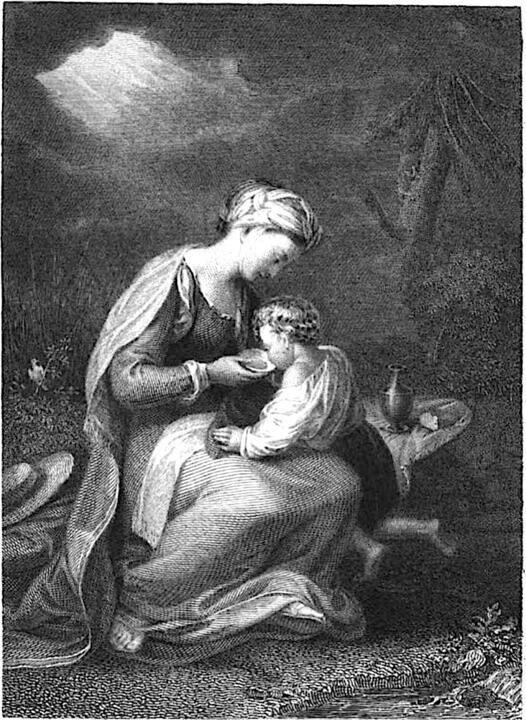
Hajj as the Fulfillment of Abrahamic Prophecy


Azahari Hassim

Torah, Genesis 22 verse 18, reads:

“And in thy seed shall all the nations of the earth be blessed; because thou hast obeyed my voice.”

It is believed the event of the Hajj in Mecca is the fulfillment of the biblical prophecy of Genesis 22 verse 18. According to the Islamic belief, Abraham offered Ishmael, not Isaac, as a sacrifice to God, emphasizing Ishmael’s role in fulfilling God’s covenant with Abraham. The event of Hajj proves that God made a covenant with Abraham through Hagar and Ishmael rather than Sarah and Isaac. How is this viewpoint presented?

The viewpoint that the Hajj in Mecca is a fulfillment of the biblical prophecy of Genesis 22 verse 18, and represents a covenant made by God with Abraham through Hagar and Ishmael, rather than Sarah and Isaac, is articulated based on several key aspects of Islamic belief and interpretation of religious texts:

  1. Prophecy of Genesis 22 verse 18: The verse in Genesis states, “And in thy seed shall all the nations of the earth be blessed; because thou hast obeyed my voice.” Some interpret this as a prophecy that is fulfilled through the descendants of Ishmael, Abraham’s son with Hagar. The Islamic narrative holds that it was Ishmael, not Isaac, who was offered by Abraham as a sacrifice to God. This signifies Ishmael’s importance in the fulfillment of God’s covenant with Abraham. The Hajj, as a major Islamic ritual commemorating the actions of Abraham and Ishmael, is seen as a manifestation of this blessing.
  2. The Hajj and Ishmael’s Legacy: In Islamic tradition, the Hajj includes rituals that are believed to commemorate the life and trials of Abraham and his son Ishmael. The ritual of Sa’i, where pilgrims travel back and forth between the hills of Safa and Marwah, is seen as a re-enactment of Hagar’s desperate search for water for her infant son Ishmael. According to Islamic belief, the well of Zamzam originated to rescue baby Ishmael.
  3. The Kaaba and Islamic Tradition: The Kaaba in Mecca, which is the focal point of the Hajj, is believed in Islamic tradition to have been built by Abraham and Ishmael as a house of worship to the one true God. This act of establishing monotheism in the region is viewed as a key part of fulfilling God’s covenant with Abraham.
  4. Universal Blessing and Unity of Humankind: The Hajj is seen as a fulfillment of God’s promise to bless all nations through Abraham’s descendants. The gathering of millions of Muslims from diverse nations during Hajj is viewed as a symbol of this blessing and the unity of humankind under God’s guidance.
  5. Continuity of Abrahamic Tradition: The Hajj is also seen as a continuation and fulfillment of the Abrahamic tradition of monotheism. This perspective posits that Islam, as the final revelation in the Abrahamic tradition, fulfills and perfects earlier revelations given to Jews and Christians.

This viewpoint is part of the broader Islamic interpretation of religious history, which sees Islam as both a continuation and a completion of the monotheistic tradition established by Abraham.
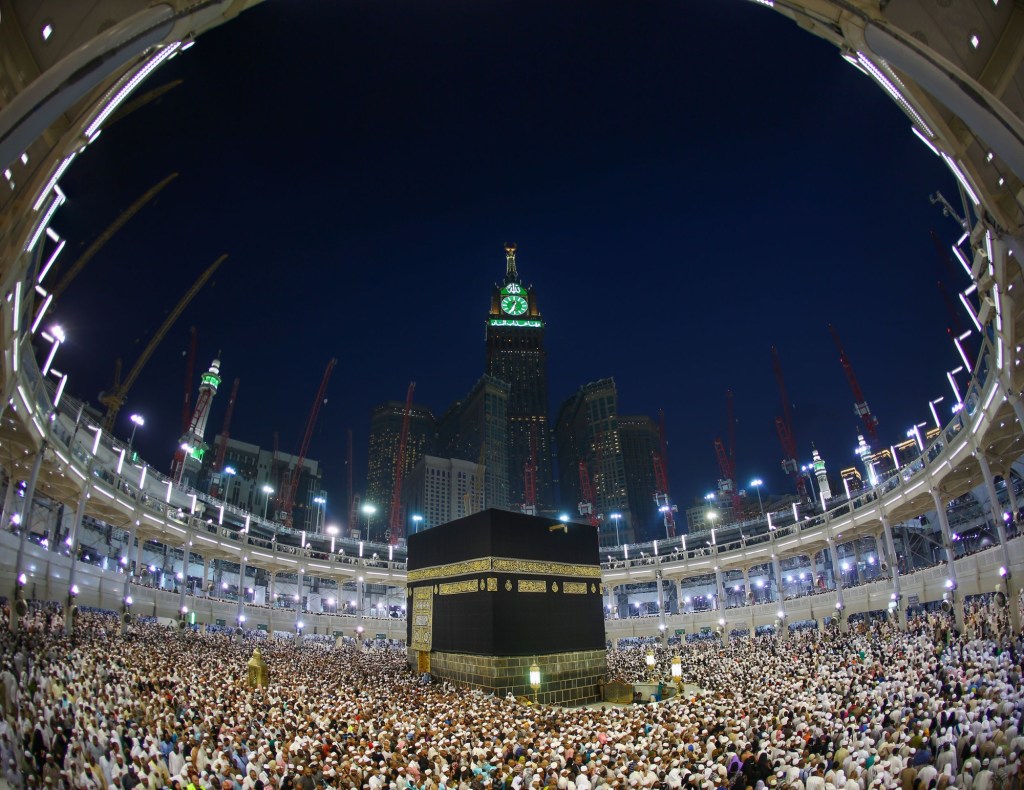
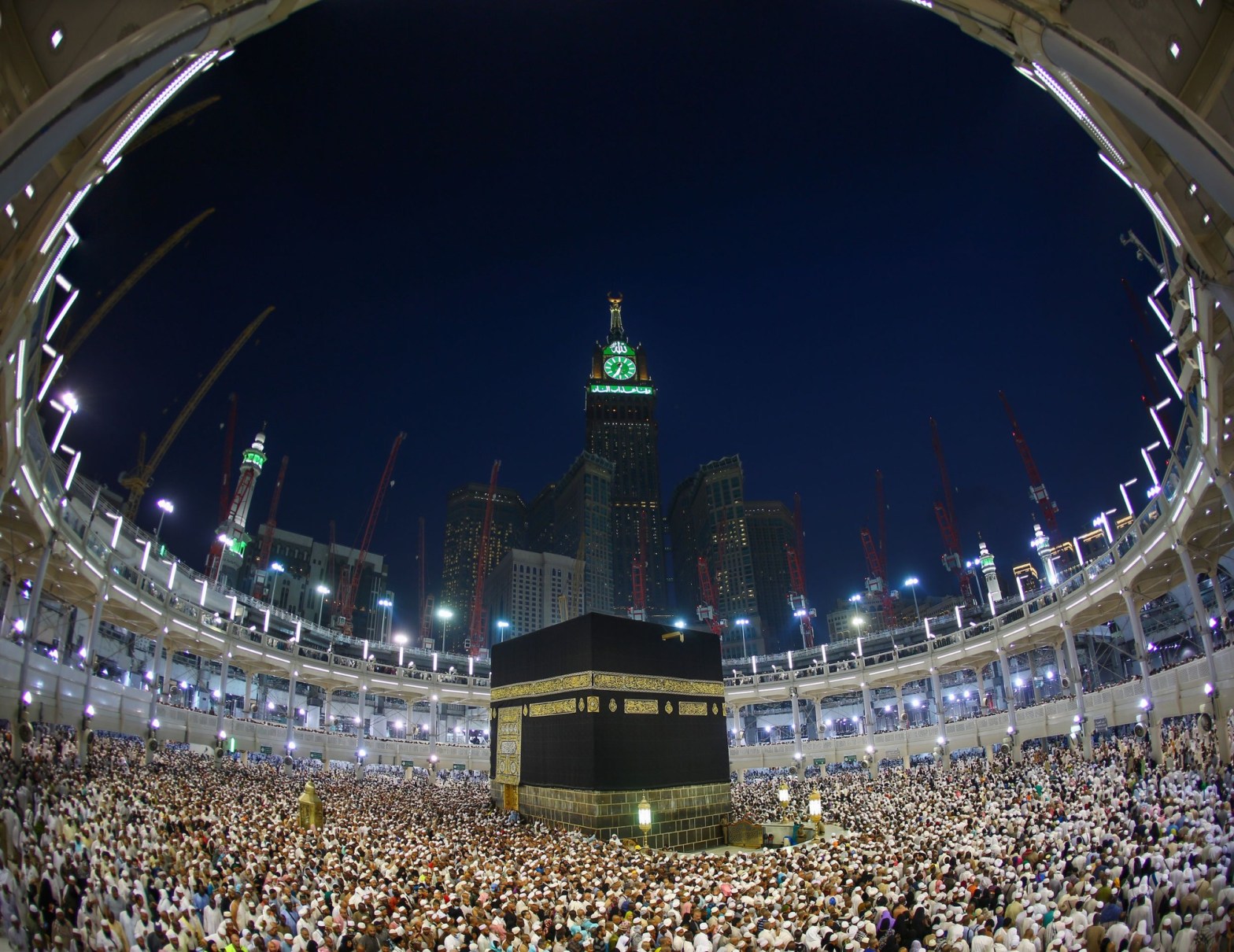
During the days of the Hajj, millions of pilgrims will gather in Makkah, Saudi Arabia to pray together, eat together, remember historical events, and celebrate the glory of Allah.

Mecca

Muslims believe that the valley of Mecca was chosen by God as a holy place at the beginning of time, and that the first settlement at Mecca was established when the Prophet Abraham was commanded by God to send his wife, Hagar, and their son, Ishmael, into the desert. This was an act of faith, by which Abraham entrusted his wife and son to God’s care.
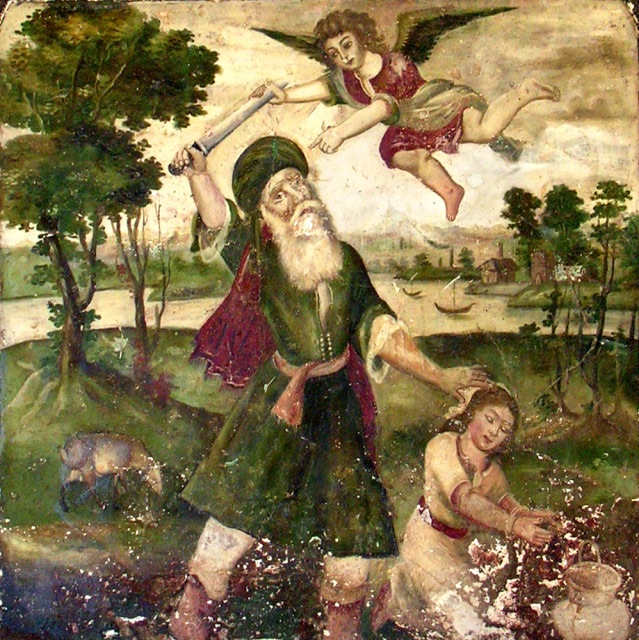
A fresco painting on a Haft Tanan mausoleum wall in Shiraz, Iran, has this image of Abraham preparing to sacrifice his son Ishmael.

Abraham’s Sacrifice: An Islamic Perspective on Potential Scribal Interpolation in Genesis 22

Micah 6, verse 7, reads:

“Will the Lord be pleased with thousands of rams, with ten thousand rivers of olive oil? Shall I offer my firstborn for my transgression, the fruit of my body for the sin of my soul?“

Jeremiah 8, verse 8, reads:

“’How can you say, “We are wise, for we have the law of the Lord,” when actually the lying pen of the scribes has handled it falsely?“


Several Islamic scholars believe Micah 6, verse 7, and Jeremiah 8, verse 8, may reflect a scribal interpolation of Isaac’s name in Genesis 22. The son who was nearly sacrificed is believed to have been Ishmael, not Isaac. What is the articulation of their argument?

The argument presented by some Islamic scholars regarding the potential scribal interpolation of Isaac’s name in Genesis 22 is based on several key points:

  1. Quranic perspective: The Quran mentions the story of Abraham being commanded to sacrifice his son but does not explicitly name the son. Islamic tradition generally holds that it was Ishmael, not Isaac, who was to be sacrificed.
  2. Textual analysis of Micah 6, verse 7: This verse states, “Shall I give my firstborn for my transgression, the fruit of my body for the sin of my soul?” Some Islamic scholars interpret this as a reference to the sacrifice story and argue that since Ishmael was Abraham’s firstborn, this verse supports the idea that Ishmael was the intended sacrifice.
  3. Interpretation of Jeremiah 8, verse 8: This verse reads, “How can you say, ‘We are wise, for we have the law of the Lord,’ when actually the lying pen of the scribes has handled it falsely?” Islamic scholars use this to suggest that scribes may have altered biblical texts, potentially including the story of Abraham’s sacrifice.
  4. Historical context: Some scholars suggest that the emphasis on Isaac in Jewish traditions may have led to a gradual change in the story, resulting in Isaac’s name being added to the biblical narrative.
  5. Linguistic analysis: Some scholars examine the original Hebrew text and argue that there are inconsistencies or ambiguities that could support the idea of later interpolation.
  6. Theological implications: The argument often ties into broader Islamic theological perspectives on the role and significance of Ishmael in the Abrahamic tradition.

It is crucial to emphasize that this perspective is not universally embraced by scholars of comparative religion, and it is just one interpretation within a multifaceted interfaith discussion. The argument relies heavily on interpretation and inference, as there is no direct textual evidence of interpolation in the Genesis account itself.

This perspective challenges traditional Jewish and Christian understandings of the text and highlights the different ways sacred texts can be interpreted across religious traditions.

Interpreting the ‘Seed’: The Debate Over Jesus’ Mission and Genesis 22:18

Some believe that the “seed” mentioned in Genesis 22, verse 18, is not Jesus because of his statement in Matthew 15, verse 24. How is this argument articulated?

The argument concerning the “seed” mentioned in Genesis 22, verse 18, and Jesus’ statement in Matthew 15, verse 24, involves interpreting biblical texts and understanding the scope of Jesus’ mission according to the New Testament.

In Genesis 22, verse 17 to 18, God promises Abraham,

“I will surely bless you and make your descendants as numerous as the stars in the sky and as the sand on the seashore. Your descendants will take possession of the cities of their enemies, and through your offspring (seed) all nations on earth will be blessed, because you have obeyed me.”

This promise, particularly the part about “through your offspring all nations on earth will be blessed,” is seen by Christians as a messianic prophecy referring to Jesus Christ. The argument that it refers to Jesus is supported by passages in the New Testament, such as Galatians 3, verse 16, where Paul explicitly identifies Christ as the “seed” to whom the promise was made.

However, some argue that the “seed” mentioned in Genesis cannot be Jesus based on His statement in Matthew 15, verse 24. In this passage, Jesus says,

“I was sent only to the lost sheep of Israel.”

This statement is made in the context of Jesus initially refusing to help a Canaanite woman who asks Him to heal her demon-possessed daughter. Jesus’ declaration of being sent only to the lost sheep of Israel is interpreted by some as evidence that His mission was exclusively to the Jewish people, not to all nations.

Thus, the argument against Jesus being the “seed” mentioned in Genesis 22, verse 18, is articulated by pointing out a perceived contradiction between the universal blessing promised to Abraham’s seed (implying a mission to all nations) and Jesus’ own words limiting His mission to the Israelites.

Critics of the view that Jesus is the fulfillment of the Genesis prophecy might argue that if Jesus Himself stated His mission was only to the Israelites, then He cannot be the “seed” through whom all nations on earth are blessed, as described in Genesis.

In summary, based on Jesus’ statement, some believe that Jesus saw his mission primarily as being directed towards the Jewish people and not necessarily towards all humanity. Therefore, they argue that it is unlikely for Jesus to be directly linked to the “seed” promised to Abraham in Genesis 22, verse 18.
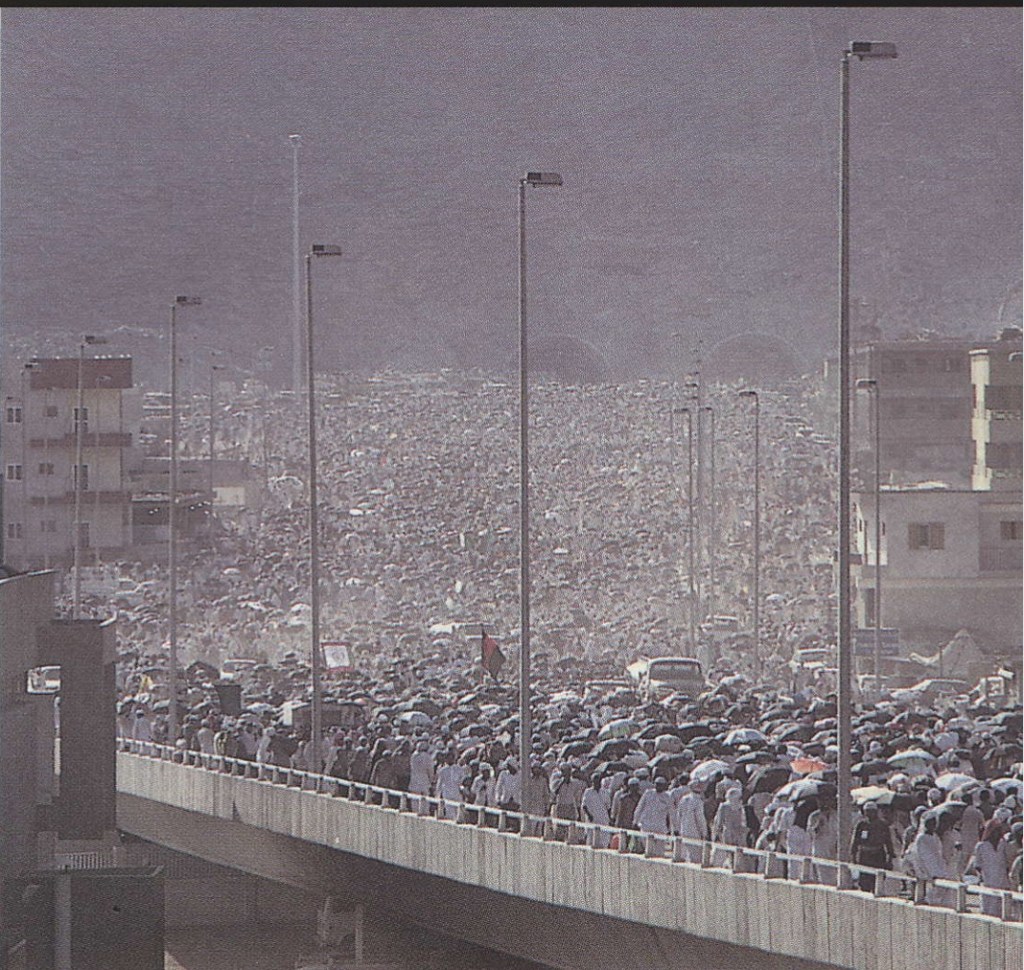

Crowds of pilgrims on their way to Arafat. Many are carrying umbrellas to protect them from the sun, not the rain!

What is Hajj?

Hajj is an annual Islamic pilgrimage to Mecca, the holiest city for Muslims, located in Saudi Arabia. It is one of the Five Pillars of Islam, which are the five basic acts of worship that are considered the foundation of a Muslim’s faith and practice.

The Hajj pilgrimage is mandatory for all adult Muslims who are physically and financially capable of undertaking the journey at least once in their lifetime.

Hajj takes place during the Islamic month of Dhu al-Hijjah, specifically between the 8th and the 12th days. During the pilgrimage, Muslims perform a series of rituals that include:

1. Ihram: Donning a special white garment that symbolizes purity and equality before God.

2. Tawaf: Circumambulating the Kaaba, the cube-shaped building at the center of the Masjid al-Haram in Mecca, seven times in a counterclockwise direction.

3. Sa’i: Walking seven times between the hills of Safa and Marwah, just as Hagar did in search of water for her infant son Ishmael.

4. Standing at Arafat: Spending the afternoon at the plain of Arafat, praying and reflecting. This is considered the climax of the Hajj.

5. Muzdalifah: Collecting pebbles at Muzdalifah to be used in the ritual of the stoning of the devil.

6. Ramy al-Jamarat: Throwing the collected pebbles at three pillars in Mina, symbolizing the rejection of evil.

7. Sacrifice: Performing the sacrifice of an animal (usually a sheep, goat, or cow), commemorating the willingness of Abraham to sacrifice his son Ishmael as an act of obedience to God.

8. Tawaf al-Ifadah: Another circumambulation of the Kaaba, which signifies the completion of Hajj.

9. Shaving/Cutting Hair: Men typically shave their heads or cut a portion of their hair, and women cut a small portion of their hair, symbolizing a new beginning.

These rituals are deeply symbolic and are meant to demonstrate the unity of the Muslim Ummah (community) and their submission to Allah.
Antiquity of Pre-Islamic Arab Traditions Versus the Torah


Azahari Hassim

It is believed that pre-Islamic Arab traditions concerning Hagar, sacrifice of Ishmael, and circumcision predate the Torah given to the children of Israel. How is this argument articulated?

The argument that pre-Islamic Arab traditions concerning Hagar, the sacrifice of Ishmael, and circumcision predate the Torah given to the children of Israel is often articulated by examining historical, religious, and cultural contexts. Here’s how this argument is typically laid out:

  1. Historical Context: Proponents of this argument suggest that the Arabian Peninsula had its own religious and cultural traditions long before the advent of Islam. These traditions were oral and transmitted through generations, which could predate the written texts of the Torah.
  2. Hagar and Ishmael: In the Islamic tradition, Hagar and Ishmael are considered important figures. Hagar, a maidservant of Sarah (Abraham’s wife), and her son Ishmael were sent away to the desert. This narrative is similar but not identical to the one found in the Torah. The significance of Hagar and Ishmael in Arab tradition suggests that their story was well-established among Arabs before the advent of Islam and possibly before the Torah was written.
  3. Sacrifice of Ishmael: Islamic tradition holds that Abraham was commanded to sacrifice his son Ishmael, not Isaac as in the Torah. This narrative is central to the Islamic festival of Eid al-Adha. The belief is that this tradition was already present among Arabs and was later formalized in Islamic texts. The argument is that since this tradition is integral to Arab culture and predates the Quran, it could also predate the Torah.
  4. Circumcision: Circumcision is a practice shared by both Jewish and Islamic traditions. In Islam, it is considered a practice that predates the Quran, suggesting it was already a well-established ritual among pre-Islamic Arabs. The continuity of this practice in Arab culture supports the argument that it was part of their tradition before the Torah was given.
  5. Cultural Transmission: The argument includes the idea that cultural and religious practices can be transmitted and preserved orally for generations. The Arabs, being a largely oral society, would have maintained their traditions independently of written texts. This oral transmission is posited to have preserved these traditions from a time predating the written Torah.
  6. Comparative Religious Studies: Scholars who support this view often compare religious texts and traditions. They argue that similarities between the Jewish and Arab narratives do not necessarily indicate borrowing from the Torah but rather point to a shared or parallel development of traditions.

In summary, the argument is that these traditions were part of the pre-Islamic Arab cultural and religious fabric, transmitted orally over generations, and thus could predate the written accounts of the Torah. This perspective emphasizes the antiquity and independence of Arab traditions in relation to Jewish scripture.

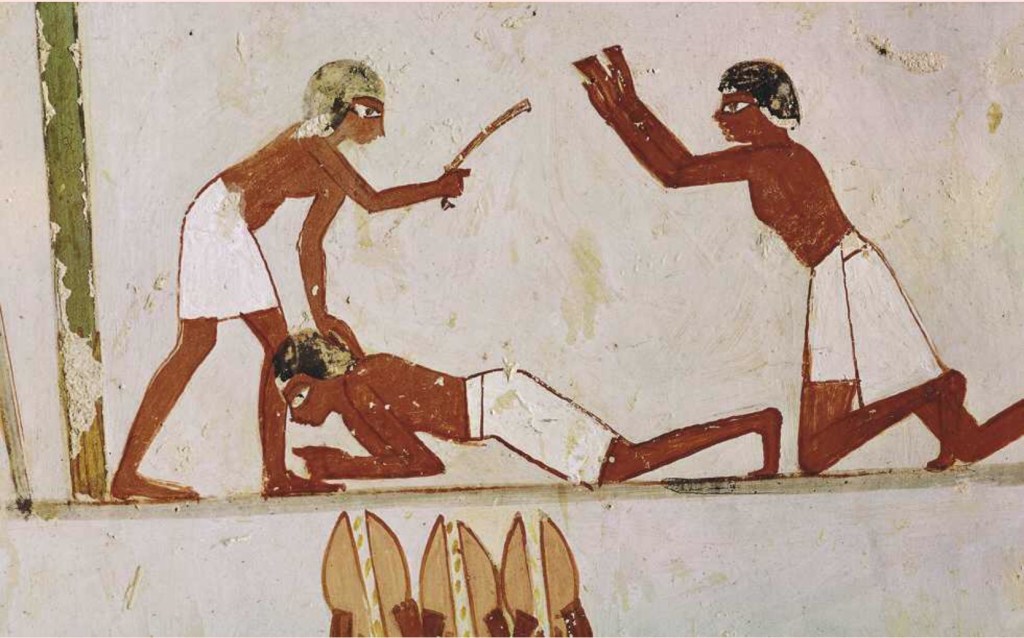
An Egyptian beating a slave with a rod.

Muhammad and the Hebrew prophets

What is the argument put forth by those who support the idea that the prophethood of Muhammad is linked to Hagar’s prophecy, which predates the Torah, in contrast to Hebrew prophets who are associated with the Torah? Consequently, Muhammad, in contrast to Hebrew prophets such as Jesus, is not bound by the laws of the Torah.

Supporters of the idea that the prophethood of Muhammad is linked to Hagar’s prophecy, which predates the Torah, argue that this connection sets Muhammad apart from Hebrew prophets who are associated with the Torah. Here is a detailed explanation of their argument:

1. Pre-Torah Origins of Hagar’s Prophecy:

Proponents argue that Hagar’s prophecy, as mentioned in Genesis 21, verse 18, predates the Torah given to Moses. This prophecy concerns Hagar’s son, Ishmael, who is promised to become a great nation. This predates the formalization of the Torah, which is traditionally attributed to Moses and his time.

2. Reiteration and Fulfillment in Islamic Rituals:

The Torah reiterates Hagar’s prophecy, but its fulfillment is seen in Islamic practices, particularly the Hajj pilgrimage. The Hajj, which involves rituals connected to Hagar and Ishmael, is viewed as a direct link to their legacy. This pilgrimage is a central practice in Islam, signifying the prophecy’s fulfillment and its importance in Islamic tradition.

3. Marginalization by Ancient Israelite Scribes:

It is suggested that ancient Israelite scribes attempted to downplay the significance of Hagar and Ishmael due to theological and political reasons. This marginalization aimed to elevate the prominence of Isaac and the Israelite lineage over Ishmael. The argument posits that the biblical narrative was shaped in a way that selectively emphasized aspects favorable to the Israelite lineage.

Contrast with Hebrew Prophets

1. Association with the Torah:

Hebrew prophets are closely linked to the Torah, which is seen as the foundation of their prophetic authority. The Torah, given to Moses, contains the laws and ethical teachings that Hebrew prophets were tasked with interpreting and enforcing. This connection establishes a continuous line of prophetic tradition rooted in the Mosaic covenant.

2. Muhammad’s Independent Prophetic Lineage:

In contrast, Muhammad’s prophethood is associated with the Abrahamic covenant through Ishmael, rather than the Mosaic covenant. This distinction is significant in Islamic theology, which views Muhammad’s message as a continuation and fulfillment of the Abrahamic faith, independent of the Mosaic laws. This perspective underscores the universality of Muhammad’s revelation, intended for all humanity, rather than being confined to the specific legal and ritual practices of the Jewish people.

Theological Implications

1. Universal Prophetic Tradition:

By associating Muhammad with a prophecy that predates the Torah, supporters argue that prophetic messages have been universal and ongoing throughout human history. This places Islam within a broader, inclusive prophetic tradition that transcends Jewish ethnic and religious boundaries. It emphasizes the continuity of divine guidance from the time of Abraham through to Muhammad.

2. Distinct Covenants:

The argument also highlights the existence of distinct covenants in the Abrahamic religions. While the Hebrew prophets operate under the covenant of Moses and the Sinai revelation, Muhammad is seen as part of the covenant given to Abraham and Ishmael. This theological distinction reinforces the idea that different prophetic traditions are validated by separate covenants within the broader framework of Abrahamic faiths.

In summary, the argument linking Muhammad’s prophethood to Hagar’s prophecy emphasizes its pre-Torah origins, fulfillment in Islamic Hajj, and the marginalization of Hagar’s significance by ancient Israelite scribes. This perspective contrasts Muhammad’s universal and independent prophetic lineage with the Hebrew prophets’ association with the Torah, highlighting distinct covenants and a broader prophetic tradition.

How did God fulfill the prophecy of Hagar, the mother of Ishmael, in the desert?

Some believe that the prophecy in the Torah (Genesis 21 verse 18) was fulfilled when God established Hajj as an Islamic rite. Pilgrims perform Sa’i in memory of Hagar, who searched for water for her infant son, Ishmael, in the desert, and God provided them with the well of Zamzam. Sa’i, which involves walking seven times between the hills of Safa and Marwa in Mecca, is one of the essential rituals of Hajj and Umrah. How is this argument articulated?

There is a belief among some Muslims that the prophecy mentioned in Genesis 21 verse 18 was fulfilled through the establishment of Hajj in Islam. This verse of the Torah prophesies that God will make a great nation from the descendants of Ishmael, the son of Abraham and Hagar. The argument connecting the Islamic narrative with the story in the Torah can be articulated through a few key points:

1. Biblical Story of Hagar and Ishmael: In the Torah, the story of Hagar and her son Ishmael, who were cast into the desert, is recounted. In Genesis 21 verse 18, God tells Hagar,

“Lift up the boy and hold him fast with your hand, for I will make him into a great nation.”

This is often interpreted as a divine promise of Ishmael’s survival and future significance.

2. Link to the Prophecy: The argument connects the establishment of Hajj, including the ritual of Sa’i, to the fulfillment of the prophecy in Genesis. It’s posited that God’s establishment of these rituals and the continued commemoration by millions of Muslims is a fulfillment of the promise made to Hagar regarding Ishmael.

In summary, the act of Sa’i is not only a way for pilgrims to remember and honor Hagar’s struggle but also to symbolize the fulfillment of the prophecy in the Torah through the establishment of the ritual of Hajj in Islam.


lshmael

in the Old Testament, son of Abraham and his wife Sarah’s Egyptian maid Hagar; traditional ancestor of Muhammad and the Arab people. He and his mother were driven away by Sarah’s jealousy. Muslims believe that it was Ishmael, not Isaac, whom God commanded Abraham to sacrifice, and that Ishmael helped Abraham build the Ka’aba in Mecca.

Depictions of Hagar and Ishmael in Midrash Literature

How are Hagar and Ishmael depicted in the Midrash literature?

1. Hagar

Hagar is a complex and multifaceted character in Midrash literature. Several key themes and interpretations emerge from various Midrashic texts:

Royal Origin and Humility: According to the Midrash, Hagar was the daughter of Pharaoh, the king of Egypt. She chose to become a maidservant in Sarah’s house after witnessing the miracles performed by God for Sarah, indicating her humility and recognition of divine power.

Relationship with Sarah: The relationship between Hagar and Sarah is depicted as strained and contentious. Initially, Sarah persuades Abraham to take Hagar as a second wife in hopes of bearing children through her. However, once Hagar becomes pregnant, she looks down upon Sarah, leading to increased tension and mistreatment. This dynamic highlights the complexities and rivalries within the household.

Spirituality and Divine Encounters: Hagar is portrayed as a spiritually sensitive and righteous woman. She is one of the few individuals in the Bible to whom an angel of God appears directly. This encounter occurs when she flees into the wilderness, where the angel instructs her to return to Sarah and promises that her son, Ishmael, will be the progenitor of a great nation.

Reconciliation and Return: Some Midrashic traditions suggest that Hagar, identified as Keturah, returns to Abraham after Sarah’s death and remarries him. This reconciliation is facilitated by Isaac, who brings her back to his father, indicating a resolution of past conflicts and a continuation of her bond with Abraham.

2. Ishmael

Ishmael’s depiction in Midrash literature is equally nuanced, reflecting his complex role in Abraham’s family and his legacy:

Birth and Name: Ishmael’s name, meaning “God hears,” signifies the divine attention and promise given to Hagar regarding her son. The angel’s prophecy that Ishmael would be a “wild man” and live in conflict with others underscores his future as a formidable and independent figure.

Conflict with Isaac: The tension between Ishmael and Isaac is a recurring theme. Midrashic interpretations often highlight the rivalry and potential threats posed by Ishmael to Isaac, Sarah’s son. This conflict ultimately leads to Hagar and Ishmael’s expulsion from Abraham’s household.

Repentance and Legacy: Despite the initial conflicts, some Midrashic texts depict Ishmael as repenting and returning to the faith of his father, Abraham. This act of repentance and reconciliation is significant, as it portrays Ishmael in a more positive light, emphasizing his eventual alignment with Abraham’s spiritual legacy.

Descendants and Influence: Ishmael is considered the ancestor of several tribes and is linked to the Arab and Bedouin peoples. His descendants are seen as both a fulfillment of God’s promise to Abraham and as a source of ongoing tension with the Israelites.

Conclusion

In Midrash literature, Hagar and Ishmael are depicted with a blend of complexity, spirituality, and conflict. Hagar’s humility, spiritual encounters, and eventual reconciliation with Abraham contrast with the initial strife she experiences with Sarah.

Ishmael’s journey from conflict to repentance highlights his significant yet contentious role in Abraham’s lineage. These narratives provide rich material for understanding the broader themes of faith, conflict, and reconciliation within the Abrahamic traditions.