Abrahamic theology refers to the religious beliefs and doctrines that originate from the figure of Abraham, a patriarch in Judaism, Christianity, and Islam.
🕋 Hagar’s Elevated Status in Islam Through the Hajj Pilgrimage
Understanding Her Role as a Matriarch and Mother of Many Nations
⸻
📜 Covenantal Roots: Abraham, Hagar, and the Promise
In the Torah, God established a covenant with Abraham (Ibrahim عليه السلام), promising that he would be:
• 🌍 A blessing to all nations • 👑 A father of many nations—both biologically and spiritually
Yet, Hagar, the Egyptian woman who bore him Ishmael (Isma’il عليه السلام), is notably absent from the list of Jewish matriarchs. In the Qur’an, her name is never mentioned directly, and even the miraculous well linked to her—Zamzam—is not cited by name, though its legacy is deeply woven into Islamic ritual.
⸻
🏜 The Desert Trial: Faith in the Face of Desperation
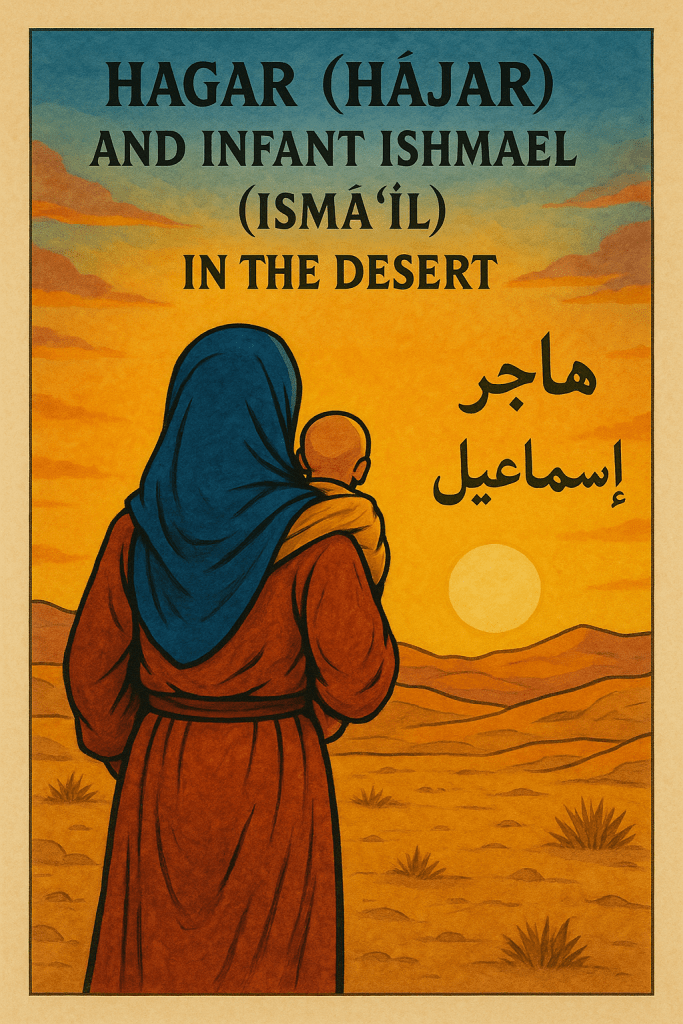
According to Islamic tradition, Abraham was commanded by God to leave Hagar and the infant Ishmael in the barren valley of Makkah. With no water and no vegetation, Hagar’s maternal desperation turned into an act of enduring faith:
• She ran 🏃♀️ seven times between the hills of Safa and Marwa searching for water. • In her struggle, an angel appeared, striking the ground and causing the Zamzam well to gush forth.
This was not merely survival—it was the divine establishment of a new spiritual legacy through Ishmael, from whom Prophet Muhammad ﷺ would later descend.
⸻
🕋 The Sa’i Ritual: Immortalizing a Mother’s Struggle
One of the central pillars of the Hajj pilgrimage is Sa’i, the reenactment of Hagar’s search for water:
• Pilgrims walk or run seven times between Safa and Marwa, just as Hagar once did. • This act is not symbolic alone—it is an obligatory rite for completing Hajj and ‘Umrah.
By making her desperate search a permanent part of Islamic worship, Islam does what the Torah and Jewish tradition do not—it elevates Hagar to the rank of a spiritual matriarch.
⸻
🌟 Hagar: The Matriarch of Many Nations
Through the Hajj, Hagar’s status is transformed:
• 📖 From obscurity in the Qur’an’s text → to central remembrance in Islamic practice. • 🏛 From marginalization in Judeo-Christian tradition → to being honored as a mother of the Muslim ummah. • ❤️ From a desperate mother in the desert → to a symbol of resilience, faith, and divine providence.
Her story teaches that:
Faith under trial can create legacies that outlive generations.
⸻
✨ Why This Matters Today
In every Hajj season, millions of Muslims—men and women—trace Hagar’s footsteps, physically placing themselves in her journey. Her endurance is not merely remembered; it is experienced.
She is thus not only Ishmael’s mother but also:
• 🌍 Mother of many nations through Abraham’s covenant • 🕊 Embodiment of trust in God’s plan • 🏅 A spiritual role model for all believers
⸻
📌 Conclusion:
In Islamic tradition, the desert story of Hagar is not a footnote—it is a foundational narrative. The Sa’i ritual immortalizes her courage, transforming her from a historical figure into a living symbol of faith. In this way, the Hajj pilgrimage enshrines Hagar as a matriarch in the spiritual lineage of Islam, fulfilling God’s promise to make her and her son a great nation.
📜 Reassessing Genesis 15:4: Does the Promise of a “Son from Your Own Body” Refer to Ishmael?
Abstract
Genesis 15:4 contains God’s foundational promise to Abraham that his heir will be “a son from your own body.” While Jewish and Christian tradition identifies this promised son as Isaac, an examination of the narrative order, the literal Hebrew wording, and source-critical insights suggests that the earliest and most natural fulfillment of this promise is Ishmael, Abraham’s firstborn. This article re-evaluates Genesis 15:4 through textual, historical, and Islamic perspectives to explore whether the promise originally referred to Ishmael before later priestly reinterpretation.
⸻
📘 1. Introduction
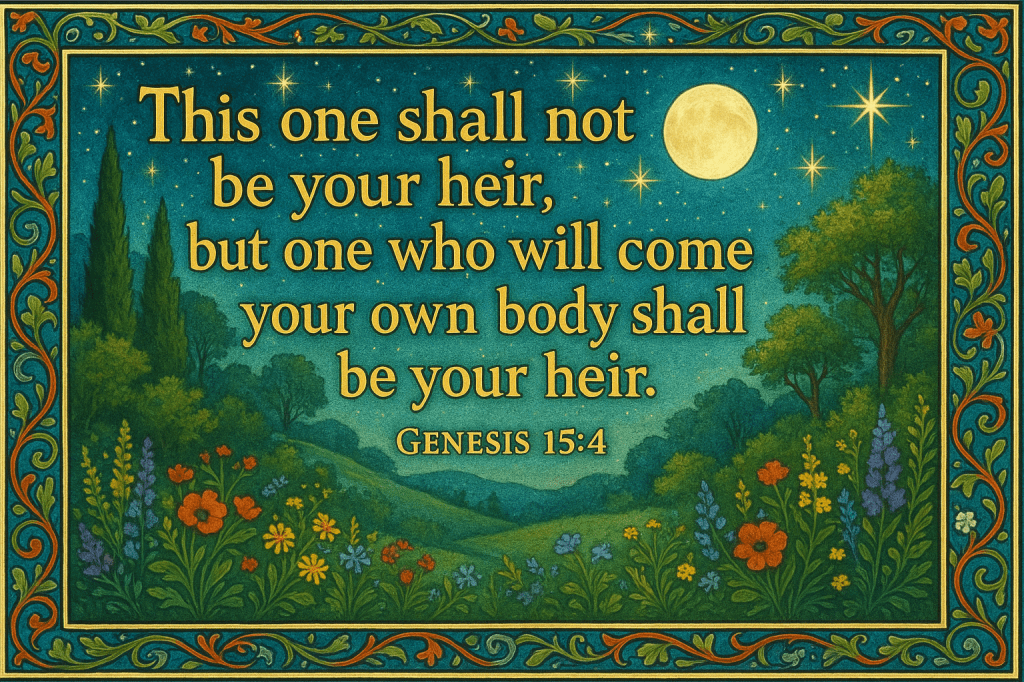
In Genesis 15, Abraham expresses deep concern about his lack of a biological heir and assumes his servant Eliezer will inherit his estate. God responds decisively:
“This one shall not be your heir, but one who will come from your own body shall be your heir.” (Genesis 15:4)
At this point in the narrative:
• Sarah has not yet given birth, • Isaac has not yet been announced, and • Ishmael has not yet been conceived.
The promise is therefore open and unnamed. The very next chapter, Genesis 16, introduces Hagar and narrates the birth of Ishmael—Abraham’s first biological son, who literally fulfills the condition of Genesis 15:4.
This raises a critical theological and textual question:
If Genesis 15:4 does not refer to Ishmael, then whose son is Ishmael, and why does Ishmael perfectly fulfill the verse?
⸻
📘 2. The Wording of Genesis 15:4
The Hebrew phrase “yēṣēʾ mimmeʿêkā” (יֵצֵ֣א מִמֵּעֶ֔יךָ ) translates:
“One who comes forth from your own body/loins.”
Three observations are decisive:
The promise does not mention Sarah — only Abraham’s biological paternity is required.
The child is not named — the reader is left waiting for a son born to Abraham.
The promise precedes the Isaac announcement — Isaac appears only two chapters later.
Therefore, the literal sense of the verse is broad enough to include any biological son of Abraham, and chronologically, Ishmael is the first and only son who fulfills it.
⸻
📘 3. Narrative Logic: Ishmael as Immediate Fulfillment
If Genesis 15:4 is interpreted as not referring to Ishmael, the text becomes internally incoherent.
The promise requires:
• a biological son, • born after the promise, • replacing Eliezer as heir.
Ishmael meets all three criteria:
• He is Abraham’s biological son. • He is born immediately after the promise (Genesis 16). • He becomes Abraham’s heir prior to the Isaac narrative.
Thus, if the verse does not refer to Ishmael, one must logically deny Ishmael’s biological connection to Abraham—a contradiction of the text.
Therefore:
Ishmael is the natural and immediate fulfillment of Genesis 15:4.
Isaac’s role emerges much later, within a new covenantal framework introduced in Genesis 17.
⸻
📘 4. Canonical vs. Text-Critical Interpretations
4.1 The Canonical Interpretation (Jewish & Christian)
According to the narrative order of Genesis as preserved in the Bible:
• Genesis 16 records the birth of Ishmael—the first son born after the promise of a “son from your own body.” • Genesis 17 follows, when Ishmael is already 13 years old; here God announces Isaac for the first time and assigns the covenant to him. • Genesis 21 narrates the birth of Isaac.
Because Isaac’s covenantal role is introduced only after Ishmael’s birth, Jewish and Christian tradition retroactively reads Genesis 15:4 as referring to Isaac—even though Ishmael is the first and literal fulfillment of that promise.
4.2 The Pre-Priestly Source (J/E) Interpretation
Historical-critical scholarship proposes that Genesis 15 belongs to an earlier narrative layer in which Ishmael played the role of Abraham’s primary heir.
Key scholars (Friedman, Sarna, Westermann) have observed:
• Genesis 15 is older, J/E (non-priestly) material. • Genesis 17 is priestly (P) and reflects later theological concerns. • The priestly layer shifts privilege from Ishmael to Isaac.
Thus:
In the earlier narrative tradition, Ishmael appears to be the intended heir of Genesis 15. The priestly editor later reinterpreted this promise toward Isaac.
This aligns seamlessly with the Islamic view, where Ishmael is the firstborn heir prior to Isaac’s later covenantal role.
⸻
📘 5. The Islamic Perspective
Islam teaches that Ishmael is Abraham’s firstborn and rightful heir. The Qur’an positions Ishmael and Abraham together in key covenantal acts—building the Kaaba, dedicating it to God, and establishing the monotheistic legacy continued by Muhammad ﷺ.
Within this framework, Genesis 15:4 is perfectly consistent with Ishmael’s role:
• He is Abraham’s first biological son, • the heir “from your own body,” • and the son through whom Abraham’s first trials occur (desert episode, near-sacrifice in Islamic tradition).
Therefore:
From an Islamic view, Genesis 15:4 is a clear anticipation of Ishmael’s birth.
⸻
🌟 6. Conclusion
📝 Genesis 15:4 promises that Abraham’s heir will be a son “from your own body.” When read in its chronological context, this promise applies directly to Ishmael, whose birth is recorded in Genesis 16, the only son born after the promise and before the later covenantal reinterpretation of Genesis 17.
🔔 Therefore, on narrative, chronological, and source-critical grounds, Genesis 15:4 is best understood as originally referring to Ishmael—Abraham’s firstborn son. Only later, through priestly redaction in Genesis 17, is Isaac elevated to the center of the covenantal narrative, reshaping the earlier storyline.
This reading harmonizes the biblical narrative with Islamic tradition and offers a compelling reinterpretation of the Abrahamic story grounded in textual coherence and historical analysis.
📜 Between Two Covenants: Islam, Ishmael, and the Biblical Promise of the Nile–Euphrates Territory
🌟 Introduction
Among the most enduring debates in Abrahamic theology is the meaning and scope of the land promised to Abraham in the Book of Genesis. Genesis 15:18 describes a vast territorial grant—from the River of Egypt (Nile) to the Great River, the Euphrates. Within Jewish and Christian tradition, this land is associated with the Israelites through Isaac and Jacob, forming the territorial core of the Sinai Covenant.
From an Islamic perspective, however, the Sinai Covenant is distinct from—and secondary to—the universal and primordial Abrahamic Covenant (Qur’an 2:124). While the Abrahamic Covenant is universal, the Sinai Covenant is conditional. Islamic tradition maintains that although the Israelites were indeed granted the land of Canaan, their right to remain in it was contingent upon obedience to God’s commandments.
Their repeated breaches of the covenant led to divine withdrawal of protection, and the rise of Islam brought a new community that inherited the broader Abrahamic mission, eventually including the territories of Canaan itself.
This article presents the Islamic position that:
• The Sinai Covenant grants the Israelites a conditional territorial inheritance: the land of Canaan.
• The Abrahamic Covenant, broader and older, grants Ishmael’s descendants a civilizational inheritance extending across the region historically described as from the Nile to the Euphrates—fulfilled through the rise of Islam.
• Canaan itself falls under the wider Abrahamic Covenant and, due to covenantal breach, eventually passed from Israelite control during the expansion of Islam.
⸻
♦️ 1. Two Distinct Covenants: Abrahamic vs. Sinai
1.1 The Abrahamic Covenant (Universal and Primordial)
In Qur’anic theology, God promises Abraham:
“I will make you a leader for all nations.” — Qur’an 2:124
In Genesis, the parallel promise reads:
“I will make you the father of a multitude of nations.” — Genesis 17:4–5
Crucially, this covenant predates both Isaac and Jacob, meaning it encompasses all of Abraham’s descendants—including Ishmael.
Furthermore, Qur’anic theology affirms that all lands granted to Abraham fall under this universal covenant (e.g., Qur’an 21:71, 21:105). Thus, Islam maintains that Canaan is originally Abrahamic land, entrusted temporarily to the Israelites under a conditional covenant.
1.2 The Sinai Covenant (Particular, Conditional, and Territorial)
The Sinai Covenant is:
• Made with Moses and the Children of Israel • Condition-based: obedience secures blessing; disobedience invites expulsion • Rooted in Torah law • Focused specifically on Canaan
This conditionality is repeatedly emphasized in the Bible:
“If you obey… you will live long in the land.” “But if you turn away… you will perish from the land.” — Deuteronomy 4, 28, 30
From an Islamic viewpoint, this fragility of the covenant explains why:
• The Israelites repeatedly lost sovereignty over Canaan in Biblical history. • The land eventually passed into Muslim control during the 7th century, consistent with divine withdrawal of Israelite privilege.
⸻
♦️ 2. The Nile–Euphrates Promise in Genesis 15:18
Genesis states:
“To your descendants I give this land, from the River of Egypt to the great river, the Euphrates.” — Genesis 15:18
Three observations support the Islamic interpretation:
2.1 The promise predates Isaac
Genesis 15 is earlier than:
• The covenant of circumcision (Genesis 17) • The announcement of Isaac’s birth (Genesis 17:16–21)
Thus, the promise must concern Abraham’s immediate offspring—Ishmael.
2.2 The scope includes Canaan as well
Canaan is not excluded from Genesis 15; it lies inside the promised zone. Hence, Islam views:
• Canaan as Abrahamic land • Temporarily entrusted to the Israelites • Ultimately reverting under the wider Abrahamic destiny when the covenant is broken
2.3 Historical fulfillment through Ishmael’s descendants
• The Sinai Covenant was repeatedly violated • God withdrew His protection (Qur’an 5:12–14) • The land passed to new communities, culminating in Muslim rule
Thus, Canaan’s integration into the Islamic world is seen as: • Not a contradiction of scripture • But the very consequence that scripture predicted would follow covenantal breach
⸻
♦️ 5. A Dual-Inheritance Framework in Islamic Thought
5.1 The Sinai Covenant (Isaac → Israel)
• Territory: Canaan • Condition: obedience • Status: forfeited after repeated breaches • Outcome: loss of sovereignty, fulfilled historically through Islamic expansion
5.2 The Abrahamic Covenant (Ishmael → Muhammad → Ummah)
• Territory: Nile to Euphrates (including Canaan) • Nature: universal, unconditional, civilizational • Fulfillment: spread of Islam from the 7th century onward • Outcome: Ishmael’s descendants inherit the broader Abrahamic mandate
Thus Islam affirms:
• The Israelites’ original right to Canaan • Their subsequent loss of this right • The Ummah’s inheritance of Abraham’s universal covenant, including Canaan • All without negating scripture
⸻
❇️ Conclusion
From an Islamic theological standpoint:
• The Abrahamic Covenant includes the entire region from the Nile to the Euphrates—including Canaan. • The Israelites were granted Canaan under the conditional Sinai Covenant, which they eventually forfeited through covenantal violations. • The rise of Islam represents the fulfillment of the broader, unconditional Abrahamic Covenant through Ishmael’s lineage. • Consequently, the historical integration of Canaan into the Islamic world is seen as a continuation—not a contradiction—of sacred history.
This yields a unified covenantal model:
Canaan for Isaac’s descendants under a conditional covenant—later forfeited.
Nile-to-Euphrates civilization for Ishmael’s descendants under the universal Abrahamic Covenant—fulfilled through Islam.
In this way, Islamic theology harmonizes the Biblical and Qur’anic narratives, affirming Abraham as the father of a global monotheistic mission, completed through Muhammad ﷺ and the Ummah.
📕 The Silent Trial: Abraham, Ishmael, and the Desert of Genesis 21
🌟 Genesis 21:14–20 may be interpreted as an early formative test in the Abraham narrative, one that precedes and anticipates the more dramatic trial presented in Genesis 22. Within the canonical sequence, the expulsion of Hagar and Ishmael occurs after the announcement of Isaac’s birth; however, the internal literary features of the passage introduce significant chronological tensions that have invited reinterpretation within various non-canonical frameworks.
The pericope begins with Abraham sending Hagar and Ishmael into the wilderness in compliance with Sarah’s demand. Although the text offers no explicit commentary on Abraham’s emotional state, the brevity and austerity of the description suggest an episode of considerable internal conflict, particularly given Ishmael’s status as Abraham’s firstborn and long-expected son.
The narrative then depicts Ishmael in terms that evoke the vulnerability of an infant or small child. Hagar is described as carrying him, and when the water supply is exhausted, she places him under a bush, distancing herself so as not to witness his anticipated death. These details align closely with portrayals of Ishmael in later Islamic tradition, where he is understood to be a young child during the desert episode associated with the origins of Mecca, occurring long before Isaac’s birth.
Yet, this depiction stands in tension with the chronological markers provided elsewhere in the text. Genesis 16:16 notes that Abraham was eighty-six years old when Ishmael was born, and Genesis 21:5 states that Abraham was one hundred years old when Isaac was born.
If the canonical order is maintained, Ishmael would therefore be approximately sixteen or seventeen years old at the time of his expulsion—an age inconsistent with the image of a helpless toddler conveyed in Genesis 21:14–20. The incongruity between the chronological data and the narrative presentation is significant enough that it cannot be dismissed as a merely stylistic or symbolic embellishment.
Therefore, several non-canonical interpretations propose a reordering of the Genesis chronology. Within these readings, the desert episode of Genesis 21:14–20 is situated before the birth of Isaac and the covenantal discourse in Genesis 17. Such a rearrangement renders Ishmael’s portrayal as a young child linguistically and historically coherent, resolving the otherwise unavoidable age contradiction.
In this reconstructed timeline, the sequence becomes: an early test involving Ishmael and Hagar in the wilderness; the subsequent and more severe test of Genesis 22; and finally, the covenantal ratification of Abraham’s faith in Genesis 17, which introduces the promise of Isaac.
This reordered narrative structure produces a more internally consistent developmental arc within the Abraham cycle. It portrays the expulsion of Ishmael not as a late-stage family dispute but as an initial test of Abraham’s obedience and trust, one that foreshadows the later Moriah episode (sacrificial event) and contextualizes the covenantal developments (Genesis 17) that follow.
In doing so, it situates Ishmael’s role more prominently in the early formation of Abraham’s covenantal identity, offering a coherent theological and literary framework that bridges the biblical text with later interpretive traditions.
📜 Reassessing the Claim: Who was Abraham’s true “only son” in Genesis 22 — Isaac or Ishmael?
A Textual-Critical and Theological Investigation Into the Identity of Abraham’s “Only Son”
Abstract
This study examines the theological coherence and logical consistency of the proposal that Genesis 22—the near-sacrifice narrative—chronologically precedes Genesis 17, despite its later placement in the canonical text.
Through a combination of source criticism, internal narrative analysis, and comparative tradition, the article evaluates whether this reordered sequence renders Ishmael—not Isaac—the son described as Abraham’s “only son” in Genesis 22.
While such a reading conflicts with canonical Jewish and Christian chronology, it demonstrates internal validity within a reconstructed textual framework and aligns with Islamic tradition. The analysis suggests that the episode may reflect an older Ishmaelite tradition preserved within the E source, later subordinated by priestly redaction.
⸻
❇️ 1. Introduction
The Akedah (Genesis 22:1–19) is one of the most influential and contested narratives within the Abrahamic tradition. Judaism and Christianity historically identify Isaac as the sacrificial son, based on the canonical order of Genesis in which Isaac is born in Genesis 21 and offered in Genesis 22. Islamic tradition, however, identifies Ishmael as the son of sacrifice — a position paralleled by certain textual-critical reconstructions.
This article evaluates the academic argument that:
Genesis 22 originally preceded Genesis 17 — the chapter that introduces the promise of Isaac — and therefore the ‘only son’ offered in the earlier version of the narrative would have been Ishmael, Abraham’s firstborn.
The analysis draws upon biblical scholarship, internal narrative assessment, and comparative theology.
⸻
❇️ 2. Logical Structure of the Argument
The central claim is based on a clear and internally consistent sequence of reasoning:
Genesis 17 contains the first announcement of Isaac’s forthcoming birth.
Before Genesis 17, Isaac does not yet exist.
In Genesis 22, Abraham is commanded to sacrifice his “only son.”
If Genesis 22 originally preceded Genesis 17 in the narrative chronology, then only Ishmael could have been Abraham’s “only son” at that time.
Therefore, under this reconstructed order, the son intended for sacrifice in Genesis 22 must be Ishmael.
This challenges the traditional view—held in both Judaism and Christianity—that Isaac is the son in Genesis 22. That view introduces a logical tension: Why would God promise a covenant and future lineage through Isaac in Genesis 17, only to command his near-destruction in Genesis 22?
The argument becomes logically sound if one accepts the possibility of textual reordering as proposed by source-critical scholarship. In that context, the sequence aligns more consistently with narrative logic and internal chronology.
⸻
❇️ 3. The Composite Nature of Genesis and the Case for Reordering
Modern biblical scholarship widely recognizes Genesis as a composite work, formed through the integration of multiple literary sources. These include:
• E (Elohist): Originating in the northern kingdom of Israel, this tradition is marked by prophetic themes and a strong emphasis on divine communication.
• J (Yahwist): Developed in the southern kingdom of Judah, the Yahwist source is known for its vivid narrative style and anthropomorphic depiction of God.
• P (Priestly): Composed later—likely during or after the Babylonian exile—the Priestly source is characterized by formal structure, genealogies, and a distinct theological agenda centered on covenant, ritual, and Israelite identity.
Within this compositional framework:
• Genesis 22 is generally attributed to the Elohist source. It preserves older sacrificial and covenantal themes that function largely independently of the more systematic theology found in the Priestly tradition.
• Genesis 17 is assigned to the Priestly source. It reflects a later stage of theological development in which Israel’s identity is more sharply defined, and Isaac is explicitly designated as the sole covenantal heir. This creates a degree of tension with earlier, more inclusive or open-ended traditions.
Text-critical analysis suggests that certain references to Isaac—particularly those that appear abrupt or misaligned with the surrounding narrative—may be later Priestly insertions. These additions likely served to reshape earlier traditions by emphasizing Isaac’s centrality in the covenant, in alignment with the Priestly author’s theological objectives.
Given these distinct sources and layers of editorial activity, it is both structurally coherent and historically plausible to propose a non-canonical chronological sequence in which Genesis 22 precedes Genesis 17. This reconstruction implies that a later redactor reorganized and integrated independent traditions to develop a unified covenantal theology centered on Isaac and the formation of Israel’s identity.
⸻
❇️ 4. The Meaning of “Only Son” in Genesis 22
The phrase “your son, your only son, whom you love” (Hebrew: yeḥidkha) creates an interpretive difficulty if Isaac is intended:
• Abraham had two sons at the canonical time of Genesis 22. • Isaac was not literally his “only” son.
Jewish and Christian interpreters resolve this by redefining “only son” to mean “unique son of promise,” but this requires theological inference.
Under the reconstructed chronology, however:
• Isaac has not yet been promised or born, • Ishmael is Abraham’s only biological son for nearly 14 years, • The phrase regains its literal meaning without theological reinterpretation. • That is, the expression “your only son” becomes literal rather than theological.
Thus, the textual and semantic fit is stronger with Ishmael under the reordered sequence.
⸻
❇️ 5. Narrative Coherence: Isaac’s Name Contradicts a Sacrificial Role
One of the most compelling internal arguments for the Ishmael reading emerges from the meaning of Isaac’s name. The Hebrew name Yitzḥaq (“he laughs,” “he brings joy”) encapsulates Isaac’s identity as the child of joy and miraculous fulfillment:
• Sarah laughs at the promise (Genesis 18:12). • Abraham laughs in wonder (Genesis 17:17). • Sarah celebrates the birth with laughter and delight (Genesis 21:6). • Isaac is explicitly framed as the child of comfort, hope, and divine blessing.
Isaac’s narrative role is therefore constructed around themes of:
• joy, • promise, • celebration, • continuity.
This stands in stark contradiction to the role of a child destined for trial, burden, or death.
A child named for laughter and joy is theologically incongruent with the archetype of a sacrificial son. Nothing in Isaac’s narrative arc suggests impending crisis or divine testing. His story is one of assurance, not ordeal.
By contrast, Ishmael’s life is consistently shaped by:
Ishmael’s identity aligns naturally with the Akedah’s motifs of danger, trial, and divine rescue. Thus:
Isaac’s joyful identity contradicts the sacrificial profile of Genesis 22, while Ishmael’s narrative fully embodies it.
This provides strong internal support for the view that Genesis 22 originally concerned Ishmael.
⸻
❇️ 6. Canonical Jewish and Christian Chronology
The canonical sequence upheld by rabbinic and Christian tradition is:
Genesis 16 — Ishmael’s birth
Genesis 17 — covenant + Isaac’s first announcement
Genesis 21 — Isaac’s birth
Genesis 22 — near-sacrifice of Isaac
Within this framework:
• “Only son” becomes “only covenantal son,” • Isaac becomes the heir of promise, • Ishmael is excluded from the covenantal lineage.
Thus, canonical tradition remains coherent only by reinterpreting “only” to mean “unique heir,” not “solechild.”
This differs from the textual-critical reading, which seeks chronological and narrative coherence rather than theological harmonization.
⸻
❇️ 7. Historical-Critical Support
Multiple scholars note features that suggest Genesis 22 may have originally been an Ishmael narrative:
• The “only son” designation fits Ishmael literally. • The structure resembles ancient Near Eastern “trial of the firstborn” motifs. • The E source may contain pro-Ishmaelite or non-Isaac traditions. • The Qur’anic narrative preserves a memory of Ishmael as the sacrificial son. • Genesis 17 (P) introduces Isaac in a way that appears to supersede earlier traditions.
Thus, while the Isaac reading is canonical, the Ishmael reading is historically and textually plausible.
⸻
❇️ 8. General Evaluation
Logical Consistency:
The reconstructed chronology produces a fully coherent and logically airtight reading of Genesis 22.
Theological Coherence:
The Ishmael reading aligns with:
• the textual structure of E traditions, • the narrative identity of Ishmael, • the meaning of Isaac’s name, • the thematic profile of divine testing.
Canonical Compatibility:
No, it remains incompatible with Jewish and Christian canonical order but fits comfortably within:
The proposal that Genesis 22 originally preceded Genesis 17 and that Ishmael was the original referent of “your only son” demonstrates:
• internal logical strength, • narrative coherence, • textual-critical plausibility, • alignment with Ishmael’s life themes, • and deep theological resonance.
Isaac’s identity as the child of joy makes him an unlikely candidate for a narrative of trial and near-sacrifice, whereas Ishmael’s life is defined by the very motifs reflected in the Akedah (The Near-Sacrifice Story). While the Isaac interpretation remains normative in Jewish and Christian tradition, the Ishmael interpretation is academically viable and theologically consistent within a reconstructed pre-canonical framework.
This also resolves a major tension: It appears contradictory that God would guarantee a covenant and future descendants through Isaac in Genesis 17, only to instruct his near-destruction in Genesis 22.
This contradiction dissolves entirely under the reconstructed chronology.
📜 Reassessing the Claim: Does Genesis 21:14–20 Depict Ishmael as an Infant?
The assertion that Genesis 21:14–20 portrays Ishmael as an infant—in contrast to Genesis 17, which fixes his age at thirteen—stems from a textual and narrative inconsistency that has long been noted by scholars. Here is a balanced reassessment of that claim.
❇️ 1. The Firm Age Reference in Genesis 17
In Genesis 17:23–25, the text explicitly states that:
• Abraham was 99 years old. • Ishmael was 13 years old when circumcised. • This event takes place before Isaac’s birth is even announced.
Therefore, by the time of Genesis 21, Ishmael must be at least 16–17 years old.
❇️ 2. The Problematic Portrayal in Genesis 21:14–20
Yet, Genesis 21:14–20 describes Ishmael in ways that do not fit a teenager, including:
• Abraham placing “the child” on Hagar’s shoulder (v.14) — physically impossible with a 16–17-year-old. • The narrative treating him as helpless, unable to walk or survive without being “carried.” • His crying is described with the Hebrew term yeled, which often means a small child or infant, not a youth. • Hagar distances herself “so as not to see the boy die” (v.16), implying physical fragility inconsistent with a strong adolescent.
❇️ 3. Scholarly Explanations for the Contradiction
Most commentators propose one of the following:
A. Two Separate Traditions Woven Together (Documentary Hypothesis)
The style of Genesis 21:14–20 aligns with the Elohist or Jahwist tradition, where Ishmael is originally portrayed as a little boy during the desert episode.
Genesis 17, however, belongs to the Priestly tradition, which reorders or reframes events to highlight Isaac’s covenantal line.
Thus, the “infant-Ishmael” tradition and the “teenage-Ishmael” tradition were later combined, creating the age contradiction.
B. The Narrative Originally Occurred Before Genesis 17
Some interpreters—especially within Islamic-leaning or alternative chronological readings—argue:
• Therefore, Genesis 21:14–20 must reflect an earlier stage in the Abraham story, • before Genesis 17, • before Ishmael was 13, • which aligns naturally with the portrayal of him as an infant or small child.
This non-canonical reconstruction restores internal coherence by removing the contradiction.
C. Literary Dramatization
A minority of scholars argue that the infant-like portrayal is symbolic or dramatic, but this view is weaker because:
• The physical descriptions are concrete. • The narrative requires the child to be too weak to walk. • No clear literary device explains why a teenager is treated as a toddler.
❇️ 4. Conclusion
Yes — Genesis 21:14–20 does depict Ishmael as if he were an infant or very small child, which directly contradicts the chronological age established in Genesis 17 (13 years old). This tension has led scholars to propose either:
• multiple traditions spliced together, or • a non-canonical chronological reordering in which the desert episode (Genesis 21:14–20) originally belonged to an earlier phase of Abraham’s life — before Genesis 17.
This reassessment confirms that the “infant Ishmael” portrayal is real, textually evident, and central to the debate about chronological coherence in the Abraham narrative.
📜 Isaiah 60:7 and the Kaaba: A Prophetic Connection Between the Bible and the Qur’an
Introduction: A Meeting Point of Scriptures
The prophetic poetry of Isaiah 60 envisions a time when distant nations will turn toward the worship of the One God. Among its vivid images stands a verse that has drawn the attention of both biblical scholars and Islamic interpreters alike:
“All the flocks of Kedar shall be gathered to you; the rams of Nebaioth shall serve you; they shall come up with acceptance on My altar, and I will glorify the house of My glory.” — Isaiah 60:7
While Christian commentators such as Albert Barnes (1834) and the Wycliffe Bible Commentary traditionally view this as symbolic of future conversion to God, others have proposed a remarkable possibility: that this prophecy refers specifically to the Kaaba in Mecca — the “House of God” associated with Abraham and Ishmael.
⸻
☪️ 1. The Arabian Lineage of Kedar and Nebaioth
Isaiah’s imagery centers on Kedar and Nebaioth, two tribes descended from Ishmael (Genesis 25:13). Their mention situates the prophecy firmly within the Arabian context.
The Wycliffe Bible Commentary notes that the treasures mentioned in Isaiah 60 are “preponderantly Arabian,” and even suggests a future turning of Islam “to the Cross,” signaling an openness among some Christian commentators to interfaith prophetic fulfillments.
Similarly, Albert Barnes, writing in 1834, observed that Arabia, with its descendants of Abraham and its deeply spiritual traditions, would eventually be “converted to God.” Though Barnes wrote from a Christian missionary perspective, his acknowledgment of Arabia’s religious importance ties into the broader idea that Ishmael’s lineage has a divine role.
Yet from an Islamic perspective, this “turning” may rather represent a return — a reorientation of the descendants of Ishmael toward the pure monotheism of Abraham, centered on the Kaaba.
⸻
🕋 2. “The Glorious House”: Identified with the Kaaba
Many Muslim scholars interpret the phrase “the house of My glory” as referring to the Kaaba (Baytullāh) — the sacred House of God in Mecca. According to the Qur’an (2:125–127), Abraham and Ishmael were commanded to raise its foundations:
“And when We designated for Abraham the site of the House, saying, ‘Do not associate anything with Me and purify My House for those who circumambulate it and those who stand, bow, and prostrate [in prayer].’” — Surah al-Ḥajj 22:26; cf. al-Baqarah 2:125–127
If Isaiah foresaw a time when the descendants of Kedar and Nebaioth would bring offerings to the altar of the “glorious house,” then this could signify the Hajj pilgrimage, where animals are sacrificed in devotion to God — a living ritual traceable to Abraham himself.
⸻
🌟 3. “God Was with the Lad”: The Presence of God with Ishmael
The book of Genesis provides another link to this prophetic vision. When Hagar and Ishmael were cast out, the text affirms:
“And God was with the lad; and he grew, and dwelt in the wilderness, and became an archer.” — Genesis 21:20
Traditional Islamic exegesis understands this “wilderness” to be the valley of Bakkah (Mecca). The phrase “God was with the lad” is thus interpreted not only as divine protection but as a declaration of God’s presence in a sacred location — a site where His worship would endure through Ishmael’s lineage.
This understanding aligns perfectly with the Qur’anic narrative, in which Abraham’s prayer identifies that same location as the “Sacred House”.
⸻
📜 4. Surah 14:37 — Abraham’s Prayer and the Sacred House
The Qur’an preserves Abraham’s moving invocation:
“O our Lord! I have settled some of my offspring in an uncultivated valley near Your Sacred House, our Lord, so that they may establish prayer. So make hearts among the people incline toward them, and provide for them fruits that they might be grateful.” — Surah Ibrāhīm 14:37
Here, Abraham explicitly locates Ishmael and Hagar beside the Sacred House (al-Bayt al-Muḥarram), implying that the Kaaba already existed as a holy site, later rebuilt by Abraham and his son. His prayer anticipates Mecca becoming a spiritual center to which human hearts would turn — precisely what Isaiah 60 envisions when nations stream toward God’s glorified house.
⸻
🌟 5. Theological Implications: Fulfillment through Ishmael’s Descendants
Interpreters who draw this connection propose that Isaiah 60:7 prophesies Mecca’s role as the universal center of monotheistic worship. The flocks of Kedar and Nebaioth symbolize the submission of Ishmael’s descendants to God, as visibly fulfilled in the Islamic rites of Hajj and Eid al-Adha. The sacrificial offerings at the Kaaba — echoing Abraham’s own devotion — mirror Isaiah’s vision of accepted sacrifices on God’s altar.
In this interpretation:
• Isaiah 60:7 anticipates the revival of Abrahamic worship among the Ishmaelites. • Genesis 21:20 foreshadows divine favor upon Ishmael’s descendants in a specific sacred region. • Surah 14:37 confirms that sacred geography: the barren valley of Mecca, chosen for divine worship.
Together, they form a triadic continuity — a prophetic, historical, and theological alignment linking the Bible and the Qur’an through Abraham and Ishmael.
⸻
Conclusion: The House of God Revisited
The convergence of these scriptural strands suggests a profound harmony: that both the Bible and the Qur’an point toward a future restoration of Abrahamic monotheism centered on God’s “House of Glory.”
For believers who see the Kaaba as this very House, Isaiah’s vision is not merely about the distant conversion of nations, but about the universal return to the pure worship of the One God first established by Abraham and his son Ishmael.
⸻
References:
• Albert Barnes, Notes on the Bible (1834), on Isaiah 60:7 • The Wycliffe Bible Commentary, on Isaiah 60:4–7 • Genesis 21:18–20; Isaiah 60:7 • Qur’an 2:125–127; 14:37; 22:26
Abraham Between Scriptures: Reconstructing the Ishmael Narrative
Introduction
📜 The Abraham narrative in Genesis remains one of the most theologically charged and textually complex portions of the Hebrew Bible. Traditionally, the canonical order—Genesis 17 (covenant and promise of Isaac), Genesis 21 (Ishmael’s expulsion), and Genesis 22 (the near-sacrifice)—forms the backbone of Jewish and Christian interpretations of Abraham’s faith.
📘 However, alternative readings, often emerging from comparative Islamic–Biblical studies and internal textual analysis, propose a different chronological sequence: Genesis 21 → Genesis 22 → Genesis 17.
📗 This reordered sequence offers a fresh interpretive lens that centers Ishmael in the formative stages of Abraham’s spiritual development. It also addresses several longstanding textual tensions—particularly the age contradiction in Genesis 21 and the reference to the “only son” in Genesis 22—while creating an integrative bridge between Biblical and Qur’anic portrayals of Abraham.
⸻
Genesis 21:14–20 — The First Test: Ishmael’s Separation
🌿 In the canonical reading, Genesis 21 recounts the expulsion of Hagar and Ishmael after Isaac’s birth. Ishmael should be approximately 16–17 years old at this point (Gen 16:16; 21:5). However, the narrative describes him as if he were a helpless infant carried by Hagar, unable even to stand or walk (Gen 21:14–20). This tension is one of the most noted inconsistencies in the Abraham narrative.
🌤️ In non-canonical interpretations, this episode is repositioned earlier in Abraham’s life—before Genesis 17, when Ishmael would indeed still be a small child. This re-sequencing not only resolves the age contradiction but also aligns closely with the Islamic tradition, where Ishmael is still an infant during the desert episode (associated with the origins of Mecca).
🌾 Viewed this way, Genesis 21 becomes Abraham’s first great test: releasing Ishmael into the wilderness in trust that God will preserve him and fulfill the promise, “I will make him a great nation” (Gen 21:18). This trial tests Abraham’s emotional endurance and his willingness to surrender Ishmael into divine care.
⸻
Genesis 22 — The Second and Climactic Test: The Near-Sacrifice
🔥 Genesis 22, the story of the near-sacrifice, is considered the apex of Abraham’s trials in Jewish and Christian traditions. Yet the description of the son as “your only son” presents a theological challenge if Isaac has already been born. Ishmael, alive and older, remains Abraham’s son; thus Isaac cannot be described as the “only son” in any literal or historical sense.
🕊️ By placing Genesis 22 before Genesis 17, this difficulty vanishes: Isaac has not yet been promised; Ishmael is truly Abraham’s only son; and the command makes perfect narrative and emotional sense.
🗡️ In this alternative chronology, the near-sacrifice becomes the second and supreme test concerning Ishmael. Abraham’s willingness to sacrifice his only heir and the bearer of the divine promise forms the climactic demonstration of his faith.
🌙 This view also naturally resonates with Islamic tradition, where the sacrificial son is widely understood to be Ishmael, not Isaac.
⸻
Genesis 17 — Covenant Ratification After the Trials
🌟 In the canonical sequence, Genesis 17 precedes the trials of Genesis 21 and 22. But in the reordered interpretation, Genesis 17 becomes the divine ratification of Abraham’s faith after he has passed the two Ishmael-centered tests.
📜 In this reading, the promise of numerous descendants, the covenant of circumcision, the changing of Abraham’s name, and the announcement of Isaac’s future birth all occur after Abraham’s faith has already been tested and proven through his obedience concerning Ishmael.
👑 Genesis 17 thus becomes the culminating divine affirmation that Abraham is now fit to be “the father of many nations” (Gen 17:4–5).
⸻
A Coherent Theological and Narrative Progression
🔎 The sequence Genesis 21 → Genesis 22 → Genesis 17 creates a remarkably coherent theological and literary framework.
📖 First, it resolves textual contradictions, such as Ishmael’s apparent infancy in Genesis 21 and the use of “your only son” in Genesis 22.
🕊️ Second, it highlights Ishmael’s covenantal significance by placing him at the center of Abraham’s formative spiritual testing rather than as a marginal figure displaced by Isaac.
🤲 Third, it aligns with the Qur’anic portrayal, which emphasizes Ishmael’s foundational role in Abraham’s obedience, making this sequence a natural bridge between the two traditions.
🌄 Fourth, it creates a natural developmental arc in which Abraham’s spiritual journey unfolds as Test 1: Surrender Ishmael (Genesis 21), Test 2: Sacrifice Ishmael (Genesis 22), and finally Covenant: God ratifies Abraham’s faith (Genesis 17).
🌱 Abraham’s journey becomes one of emotional surrender leading to ultimate obedience, culminating in divine covenant.
⸻
Conclusion
🌐 Although this reconstruction diverges from the canonical Jewish and Christian chronology, it offers a compelling alternative grounded in textual observations, theological coherence, and comparative Abrahamic studies.
🌙 It gives Ishmael a restored centrality in Abraham’s early faith narrative and provides an interpretive bridge between Biblical and Islamic traditions.
📚 By situating Genesis 21 and 22 prior to Genesis 17, this reading presents a unified, coherent, and theologically rich portrait of Abraham—one in which Ishmael’s role is not marginal but foundational to the covenantal story.
🌍 If Abraham Had Not Existed: Reimagining the Foundations of the Abrahamic Faiths
🕊️ Introduction
Few figures in human history hold as central a place as Abraham. Revered as a patriarch by Jews, Christians, and Muslims alike, Abraham’s life represents faith, obedience, and covenantal relationship with God. Yet one may ask: what if Abraham had not existed? How would the three great monotheistic religions—Judaism, Christianity, and Islam—have looked without him?
⸻
✡️ 1. Judaism Without Abraham
In Judaism, Abraham is Avraham Avinu—“our father Abraham”—the first to recognize and worship one God. He embodies the beginning of the covenant through which God promised descendants as numerous as the stars and granted the Land of Israel as their inheritance.
Without Abraham, Judaism might never have developed its distinctive identity as a covenantal faith. The entire theological framework linking the Jewish people to divine promise and land would lack its origin. A different patriarchal figure might have emerged, but the concept of the chosen people bound by a divine covenant could have been far less defined or even absent altogether.
⸻
✝️ 2. Christianity Without Abraham
Christianity draws deeply upon Abraham as the model of faith before the law. In Paul’s Epistle to the Romans (4:3), Abraham is cited as the one who “believed God, and it was credited to him as righteousness.” For early Christians, Abraham’s faith symbolized justification through belief rather than works—a cornerstone of Christian theology.
If Abraham were missing from the biblical narrative, Christian thought might have lacked its archetype of faith and obedience. The connection between the Old and New Testaments would have been weaker, and Paul’s theological bridge from Judaism to Christianity less convincing. The doctrine of salvation through faith could have taken a different shape or rested upon another figure entirely.
⸻
☪️ 3. Islam Without Abraham
In Islam, Abraham (Ibrahim عليه السلام) stands as one of the greatest prophets and the friend of Allah (Khalīlullāh). He is seen as the renewer of pure monotheism and the spiritual father of both prophetic lines—through Isaac leading to Israel, and through Ishmael leading to the final Messenger, Muhammad ﷺ.
Without Abraham, Islam would lose a profound ancestral link that unites the prophetic tradition. The rituals of Hajj—circumambulating the Kaaba, performing Sa‘i between Safa and Marwah, and the symbolic sacrifice—are all reenactments of Abraham’s and Ishmael’s devotion. Without his example, the pilgrimage and even the symbolism of the Kaaba as the restored “House of God” might not exist in the same form.
⸻
🔥 4. The Missing Narratives of Faith and Sacrifice
Abraham’s absence would erase some of the most formative narratives of divine testing and human submission. The binding of Isaac (in Jewish and Christian scripture) or sacrifice of Ishmael (in the Qur’anic version) expresses the highest model of surrender to God’s will. Without such a story, the moral archetype of total faith under trial would be lost. The concept of “submission” (Islam) itself finds its origin in Abraham’s willingness to yield entirely to divine command.
⸻
📜 5. The Prophetic Testimony: “That is Abraham, upon him be peace”
Islamic tradition exalts Abraham as the best of creation. Anas bin Malik reported:
A man came to the Messenger of Allah (ﷺ) and said,“O best of creation!” The Prophet replied, “That is Abraham, upon him be peace.” (Sahih Muslim)
This humility of the Prophet Muhammad ﷺ reveals not only reverence for Abraham’s spiritual stature but also the continuity of divine mission across time. Abraham’s unwavering monotheism and selfless faith form the spiritual DNA of all later prophets.
⸻
🌟 Conclusion: The Irreplaceable Patriarch of Monotheism
Had Abraham never lived, the landscape of world religion would be unrecognizably different. Judaism might lack its covenantal foundation; Christianity might lack its doctrine of faith; Islam might lose its living model of surrender and devotion. Abraham’s existence bridges heaven and earth, past and future, uniting humanity under the banner of pure monotheism. As the Prophet Muhammad ﷺ affirmed, Abraham remains the best of creation—an eternal symbol of faith, obedience, and divine friendship.
📜 Relics as Symbols of Covenant Continuity in Islam and Judaism
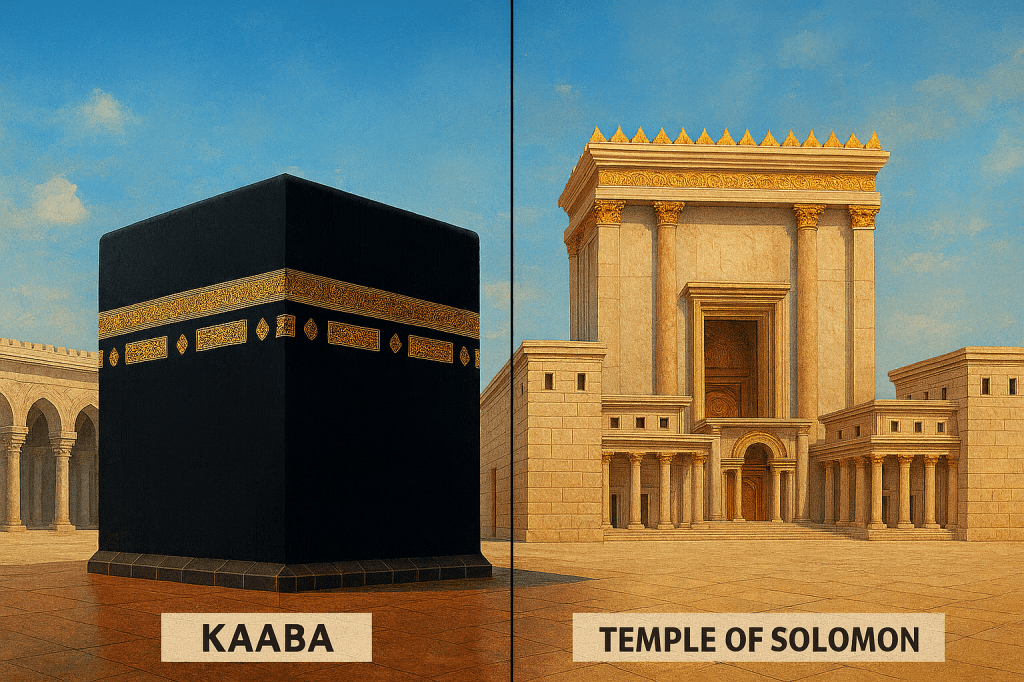
Throughout religious history, sacred relics have served as powerful symbols of divine-human relationships. In the Jewish tradition, the Ark of the Covenant and the First and Second Temples stood as tangible manifestations of God’s presence among the people of Israel. These objects were revered not only for their spiritual significance but also as physical markers of a covenant — a binding promise between God and His chosen people. However, within Islamic theology, the concept of relics takes on a different dimension: one that shifts the focus from static objects of memory to living, dynamic symbols of ongoing devotion.
⸻
🕊️ From Sacred Objects to Living Symbols
In Judaism, the Ark — which housed the tablets of the Law given to Moses on Mount Sinai — symbolized the Sinai Covenant, a legal and national covenant between God and Israel. The Temple in Jerusalem, as the dwelling place of God’s presence, further anchored this relationship in a specific geography and people. Yet the loss of these relics — the Ark’s disappearance and the destruction of both Temples — marked the end of a historical era.
Islam, by contrast, does not locate its covenantal identity in lost relics or vanished sanctuaries. Instead, it offers living symbols that actively participate in the spiritual lives of believers to this day. These include:
🕋 The Kaaba in Mecca, built by Prophet Abraham and his son Ishmael as a sanctuary for the worship of the One God, stands as the spiritual center of Islam and a lasting symbol of Abraham’s legacy.
⚫ The Black Stone, set in the Kaaba’s corner, is believed to have been given to Abraham by the Angel Gabriel. Pilgrims venerate it as a sign of the covenant between God and humanity.
👣 The Station of Abraham (Maqam Ibrahim) marks where Abraham stood while building the Kaaba, symbolizing his faith, devotion, and obedience to God.
Unlike relics confined to sacred texts or museum displays, these Islamic symbols are embodied in worship: believers walk around the Kaaba (House of God) during the Hajj, kiss the Black Stone as a gesture of reverence, and pray facing the Kaaba (House of God) five times a day. In doing so, they reaffirm a covenant not of the past but of the present — one that continues to live through ritual, faith, and devotion.
⸻
🕍 Covenant Theology: Sinai vs. Abraham
Islamic theology draws a significant distinction between two covenants central to the Abrahamic tradition:
📖 The Sinai Covenant, specific to the children of Israel and signified by the Ark and the Temples, was tied to a legalistic framework and particular lineage.
🌍 The Abrahamic Covenant, which Islam claims to fulfill universally, envisions Abraham as a monotheist who submitted to God (Qur’an 3:67–68). This covenant is timeless, inclusive, and centered on submission (Islam), not ethnicity.
Whereas the Ark belonged to the age of law, carried exclusively by Levitical priests, the Kaaba (House of God) belongs to the age of unity, open to all believers. Every Muslim, regardless of race or nation, participates equally in the rites associated with these symbols — most notably during Hajj, where the unity of believers in submission to one God is vividly enacted.
Thus, the Kaaba stands as the enduring symbol of the universal Abrahamic covenant, fulfilling the divine promise that through Abraham’s seed — specifically through Ishmael and his descendants — all nations would be blessed in the worship of the One True God.
⸻
🌟 Sacred Heritage Reimagined
Islam thus reimagines the role of relics in religious life. They are not merely sacred objects to be preserved; they are sacred acts to be lived. This is why the Kaaba (House of God), the Black Stone, and the Station of Abraham are not relics in the traditional sense — they are active participants in Islamic spiritual life.
The physical continuity of these symbols in living worship stands in stark contrast to the historical loss of the Ark and the Temples in Judaism. Islam claims this continuity as proof of its role as the final bearer of the Abrahamic covenant, fulfilling and universalizing the faith of Abraham.
⸻
🌈 Conclusion
In essence, Islam’s theology of relics reveals a profound transformation in the understanding of sacred heritage. Where other traditions may look to lost artifacts as reminders of a divine past, Islam sees in its living symbols — especially the Kaaba (House of God) — a present and enduring connection to the covenant made with Abraham. This covenant is not etched in gold or stone, but in the hearts and actions of those who, like Abraham, submit fully to the will of the One God.
Thus, the Islamic view holds that true sacred continuity lies not in relics of the past, but in the unified devotion of the present — a faith that circles, not carries, the House of God.
If Abraham Had Not Existed: Reimagining the Foundations of the Abrahamic Faiths
🕊️ Introduction
Few figures in human history hold as central a place as Abraham. Revered as a patriarch by Jews, Christians, and Muslims alike, Abraham’s life represents faith, obedience, and covenantal relationship with God. Yet one may ask: what if Abraham had not existed? How would the three great monotheistic religions—Judaism, Christianity, and Islam—have looked without him?
⸻
✡️ 1. Judaism Without Abraham
In Judaism, Abraham is Avraham Avinu—“our father Abraham”—the first to recognize and worship one God. He embodies the beginning of the covenant through which God promised descendants as numerous as the stars and granted the Land of Israel as their inheritance.
Without Abraham, Judaism might never have developed its distinctive identity as a covenantal faith. The entire theological framework linking the Jewish people to divine promise and land would lack its origin. A different patriarchal figure might have emerged, but the concept of the chosen people bound by a divine covenant could have been far less defined or even absent altogether.
⸻
✝️ 2. Christianity Without Abraham
Christianity draws deeply upon Abraham as the model of faith before the law. In Paul’s Epistle to the Romans (4:3), Abraham is cited as the one who “believed God, and it was credited to him as righteousness.” For early Christians, Abraham’s faith symbolized justification through belief rather than works—a cornerstone of Christian theology.
If Abraham were missing from the biblical narrative, Christian thought might have lacked its archetype of faith and obedience. The connection between the Old and New Testaments would have been weaker, and Paul’s theological bridge from Judaism to Christianity less convincing. The doctrine of salvation through faith could have taken a different shape or rested upon another figure entirely.
⸻
☪️ 3. Islam Without Abraham
In Islam, Abraham (Ibrahim عليه السلام) stands as one of the greatest prophets and the friend of Allah (Khalīlullāh). He is seen as the renewer of pure monotheism and the spiritual father of both prophetic lines—through Isaac leading to Israel, and through Ishmael leading to the final Messenger, Muhammad ﷺ.
Without Abraham, Islam would lose a profound ancestral link that unites the prophetic tradition. The rituals of Hajj—circumambulating the Kaaba, performing Sa‘i between Safa and Marwah, and the symbolic sacrifice—are all reenactments of Abraham’s and Ishmael’s devotion. Without his example, the pilgrimage and even the symbolism of the Kaaba as the restored “House of God” might not exist in the same form.
⸻
🔥 4. The Missing Narratives of Faith and Sacrifice
Abraham’s absence would erase some of the most formative narratives of divine testing and human submission. The binding of Isaac (in Jewish and Christian scripture) or sacrifice of Ishmael (in the Qur’anic version) expresses the highest model of surrender to God’s will. Without such a story, the moral archetype of total faith under trial would be lost. The concept of “submission” (Islam) itself finds its origin in Abraham’s willingness to yield entirely to divine command.
⸻
📜 5. The Prophetic Testimony: “That is Abraham, upon him be peace”
Islamic tradition exalts Abraham as the best of creation. Anas bin Malik reported:
A man came to the Messenger of Allah (ﷺ) and said, “O best of creation!” The Prophet replied, “That is Abraham, upon him be peace.” (Sahih Muslim)
This humility of the Prophet Muhammad ﷺ reveals not only reverence for Abraham’s spiritual stature but also the continuity of divine mission across time. Abraham’s unwavering monotheism and selfless faith form the spiritual DNA of all later prophets.
⸻
🌟 Conclusion: The Irreplaceable Patriarch of Monotheism
Had Abraham never lived, the landscape of world religion would be unrecognizably different. Judaism might lack its covenantal foundation; Christianity might lack its doctrine of faith; Islam might lose its living model of surrender and devotion. Abraham’s existence bridges heaven and earth, past and future, uniting humanity under the banner of pure monotheism. As the Prophet Muhammad ﷺ affirmed, Abraham remains the best of creation—an eternal symbol of faith, obedience, and divine friendship.
📜 The Family of Abraham in Islamic and Judeo-Christian Perspectives
Ishmael as the Son of Sacrifice and Covenant, Isaac as the Son of Reward and Blessing
⸻
🌟 Introduction
Within the Abrahamic faiths, the household of Abraham (Ibrāhīm عليه السلام) stands as a sacred model of obedience and divine promise. Yet, the interpretation of this family’s story differs sharply across traditions.
In the Islamic understanding, Abraham’s family is not a story of rivalry but of divine sequence and harmony. Ishmael (Ismāʿīl عليه السلام) is the son of sacrifice, through whom the ultimate test of faith was fulfilled and the covenant was established. Isaac (Isḥāq عليه السلام) is the son of reward, granted to Abraham and Sarah as a divine blessing following their endurance and obedience.
In contrast, the Judeo-Christian tradition often portrays Abraham’s household as marked by jealousy and exclusion. Islam restores unity to this narrative by recognizing both sons as integral to God’s unfolding covenantal plan.
⸻
The Near Sacrifice: Ishmael as the Son of Testing
The Qur’an recounts Abraham’s supreme test — the command to sacrifice his beloved son:
“He said, ‘O my son, indeed I have seen in a dream that I am sacrificing you, so see what you think.’ He said, ‘O my father, do as you are commanded; you will find me, if Allah wills, among the steadfast.’” — Surah al-Ṣāffāt 37:102
Both father and son displayed perfect submission to the divine will. When Abraham fulfilled the command, God intervened:
“We ransomed him with a great sacrifice, and We left for him [a good mention] among later generations.” — Surah al-Ṣāffāt 37:107–108
This episode signifies the culmination of Abraham’s trials and the perfection of his faith. Classical exegetes such as al-Ṭabarī and Ibn Kathīr affirm that the son in this event was Ishmael, as Isaac’s birth occurred only afterward. Ishmael thus becomes the son of trial, sacrifice, and covenantal submission, the one through whom Abraham’s obedience is eternally commemorated.
⸻
The Covenant Established After the Sacrifice
The Qur’an indicates that the divine covenant (ʿahd) was granted after Abraham had successfully completed all his tests — culminating in the near sacrifice:
“And [mention] when Abraham was tested by his Lord with certain commands, and he fulfilled them. He said, ‘Indeed, I will make you a leader (Imām) for mankind.’ Abraham said, ‘And of my descendants?’ [Allah] said, ‘My covenant does not include the wrongdoers.’” — Surah al-Baqarah 2:124
This verse marks the formal establishment of the Abrahamic Covenant, conferred only after Abraham’s demonstration of perfect obedience. The covenant was not inherited automatically, but earned through faithfulness.
Because Ishmael was the son involved in the supreme test, the covenant naturally extends through his line — the line of submission (islām) — culminating in the Prophet Muhammad ﷺ, the final bearer of the Abrahamic mission.
The covenant, therefore, follows the pattern: Trial → Fulfillment → Covenant → Reward.
⸻
Isaac: The Son of Reward and Blessing
After Abraham’s trial and the establishment of the covenant, God rewarded him and Sarah with the joyful announcement of a new son — Isaac:
“And We gave him good news of Isaac, a prophet from among the righteous.” — Surah al-Ṣāffāt 37:112
Isaac’s birth represents divine reward for Abraham’s faithfulness and Sarah’s endurance. His arrival in their old age symbolizes the mercy that follows obedience. Isaac is thus the son of reward and blessing, embodying the continuation of prophecy and grace among the Children of Israel.
In the Islamic framework, Isaac’s role complements rather than replaces Ishmael’s. Ishmael carries the covenantal trust, established through the trial of sacrifice, while Isaac carries the prophetic continuation within his descendants.
According to this understanding, the descendants of Isaac through Jacob (Ya‘qūb عليه السلام) are bound by the Sinai Covenant, revealed later to Moses (Mūsā عليه السلام), whereas the descendants of Ishmael remain under the universal Abrahamic Covenant — the primordial covenant of submission (islām) that extends to all nations through the final Messenger, Muhammad ﷺ.
⸻
The Judeo-Christian Portrayal: Rivalry and Election
In the Biblical narrative, Abraham’s household is often portrayed as a drama of jealousy and exclusion. Sarah’s envy of Hagar leads to Ishmael’s expulsion (Genesis 16; 21), and the covenantal blessing is confined to Isaac’s lineage. This introduces the theology of divine election, which prioritizes one lineage over another.
Christian writers such as Paul later spiritualize this tension, contrasting Ishmael as “born according to the flesh” with Isaac as “born according to the promise” (Galatians 4:22–31). Such readings reinforce a dichotomy of rejection versus election — a divide that Islam transcends by recognizing both sons as divinely chosen for distinct missions.
⸻
The Islamic Restoration: Unity Through Faith and Obedience
In the Qur’anic vision, Abraham’s family is unified by faithful submission, not divided by bloodline or favoritism. The covenant rests upon righteousness and obedience, not genealogy.
• Ishmael is the son of sacrifice, through whom the covenant of divine leadership was confirmed. • Isaac is the son of reward, through whom the chain of prophethood was extended to the Children of Israel.
The Kaaba, built by Abraham and Ishmael (2:125–127), stands as the living symbol of the universal covenant, while the Torah at Sinai represents the specific covenant with Israel. Both reflect divine guidance within their respective missions — yet Islam views the Abrahamic Covenant as the root from which all subsequent covenants branch.
⸻
Theological Implications: Covenant as the Fruit of Obedience
The Islamic chronology clarifies the divine order of revelation:
The Trial — Abraham’s command to sacrifice Ishmael.
The Fulfillment — Both submit to God’s will.
The Covenant — Leadership and divine favor established (2:124).
The Reward — Birth of Isaac and continuation of prophecy.
Thus, the Abrahamic Covenant arises as the result of Abraham’s perfect obedience, not as a prior entitlement. Ishmael is its living witness, and Isaac is its blessed continuation — both united in purpose, distinct in role.
⸻
Conclusion
In Islam, the family of Abraham embodies the balance between sacrifice and mercy, trial and reward, covenant and continuation. Ishmael stands as the son of sacrifice and covenant, the one through whom the divine test was fulfilled; Isaac as the son of reward and blessing, the one through whom prophecy flourished among Israel.
While the descendants of Isaac through Jacob entered the Sinai Covenant, the descendants of Ishmael preserved the Abrahamic Covenant, culminating in the universal message of Islam — the final expression of monotheism envisioned by Abraham himself.
Thus, Islam transforms the story of Abraham’s family from rivalry into revelation, from division into divine harmony — where every son, every covenant, and every test reveals a single eternal truth: submission to the One God (Allāh).