Reassessing Isaiah 54:1 in Light of Hagar and the Abrahamic Covenant

Azahari Hassim

📜 Reassessing Isaiah 54:1 in Light of Hagar and the Abrahamic Covenant

⸝

🪔 Introduction

📖 Isaiah 54:1 opens with a striking prophetic summons:

“Sing, O barren, thou that didst not bear; break forth into singing, and cry aloud, thou that didst not travail with child: for more are the children of the desolate than the children of the married wife, saith the LORD.”

Within mainstream Judeo-Christian interpretation, this verse is commonly understood as a reference to Sarah, the wife of Abraham, whose barrenness is resolved through the birth of Isaac. This interpretation is explicitly endorsed by the Apostle Paul in Galatians 4:27, where Isaiah 54:1 is allegorized to support a theological contrast between Sarah and Hagar.

Islamic theological reflection, however, offers a markedly different reading. Rather than identifying the “barren” or “desolate” woman with Sarah, Muslim scholars have proposed that Isaiah 54 symbolically reflects Hagar’s ordeal, exile, and eventual vindication, particularly in light of Genesis 21:18, where God promises to make Ishmael into a “great nation.”

According to this perspective, Isaiah 54 may echo Hagar’s experience as a woman cast out, left desolate, yet ultimately promised a vast posterity. The declaration that “more are the children of the desolate woman” can be read as a poetic foreshadowing of Hagar’s descendants, who, according to Islamic tradition, became the forebears of many Arab tribes, culminating in the Prophet Muhammad ﷺ.

This article explores these competing interpretations and presents an Islamic theological case for reading Isaiah 54 as a prophetic portrayal of Hagar’s desolation and future triumph, rather than Sarah’s biological infertility.

⸝

📜 Paul’s Interpretation: Sarah as the “Barren Woman”

In Galatians 4:21–31, Paul reinterprets the Genesis narrative through an allegorical framework. He presents:

• Sarah as the free woman, associated with the covenant of promise
• Hagar as the bondwoman, associated with Mount Sinai and bondage

Paul explicitly cites Isaiah 54:1 to validate Sarah’s role as the mother of the “children of promise.” Within this framework, “barrenness” is understood literally, referring to Sarah’s infertility prior to Isaac’s birth.

From an Islamic theological standpoint, this reading is selective and doctrinally motivated. It detaches Isaiah 54 from its broader prophetic-historical context and reassigns it to support a later theological construction commonly associated with Pauline supersessionism, wherein the covenant is narrowed and redefined through allegory rather than preserved in its original universal scope.

⸝

🔍 Reconsidering “Barrenness” in Prophetic Language

Islamic theology challenges the assumption that “barrenness” in prophetic literature must refer strictly to biological sterility. In the language of prophecy, such imagery frequently functions symbolically, denoting:

• Social abandonment
• Covenant exclusion
• Historical marginalization
• Deferred or obscured prophetic fulfillment

From this perspective, Sarah—who becomes the recognized matriarch of an established lineage within Abraham’s household—does not embody the emotional depth or narrative tension conveyed by Isaiah 54’s imagery of desolation, shame, and restoration.

By contrast, Hagar’s experience—marked by exile, vulnerability, and deferred promise—corresponds closely to the chapter’s prophetic language.

⸝

🌾 Hagar and the Deferred Promise of Genesis 21:18

In Genesis 21:18, God declares concerning Ishmael:

“I will make him into a great nation.”

Yet immediately thereafter, Hagar and Ishmael are cast into the wilderness, severed from Abraham’s household, inheritance, and covenantal visibility.

From an Islamic theological perspective:

• The divine promise exists, but its fulfillment is delayed
• Hagar lives in a state of prophetic suspension
• Ishmael’s destiny remains unseen within the Genesis narrative

Thus, Hagar is not barren biologically—she has a son—but barren covenantally within the Abrahamic household as portrayed in Genesis. She embodies promise without immediate manifestation, desolation without abandonment by God.

⸝

🪞 Isaiah 54 as a Prophetic Mirror of Hagar’s Experience

Isaiah 54:1–6 develops themes of desolation, shame, abandonment, and divine restoration. When read through an Islamic theological lens, these verses closely parallel Hagar’s experience in Genesis.

Verse 1: The Desolate Woman and the Reversal of Status

“For more are the children of the desolate than the children of the married wife, saith the LORD.” (Isaiah 54:1)

Here, the emphasis lies not on biological fertility but on prophetic reversal. The ‘desolate woman’ may be read as representing Hagar and her abandonment rather than childlessness. Although Sarah is Abraham’s “married wife,” it is Hagar’s lineage that expands into numerous nations, demonstrating that divine promise transcends social rank.

Verse 4: The Removal of Shame and Reproach

“Fear not; for thou shalt not be ashamed… for thou shalt forget the shame of thy youth, and shalt not remember the reproach of thy widowhood any more.” (Isaiah 54:4)

This language reflects Hagar’s humiliation when she was cast out. God’s reassurance mirrors His intervention in Genesis 21:17–18, where He hears Ishmael’s cry and reaffirms His promise.

Verse 5: God as Protector and Sustainer

“For your Maker is your husband—the LORD Almighty is his name.” (Isaiah 54:5)

Though abandoned by Abraham, Hagar is not abandoned by God. Divine guardianship replaces human protection, signaling restoration and covenantal care.

Verse 6: The Rejected Wife Restored

“The LORD will call you back as if you were a wife deserted and distressed in spirit.” (Isaiah 54:6)

This verse resonates deeply with Hagar’s experience of rejection and distress, portraying a compassionate God who restores dignity to the forsaken.

Verse 13: Divine Instruction and the Fulfillment of Abraham’s Prayer

“And all thy children shall be taught of the LORD; and great shall be the peace of thy children.” (Isaiah 54:13)

This verse reflects the fulfillment of Abraham’s supplication in Surah al-Baqarah 2:129:

“Our Lord, raise up among them a messenger from among themselves, who will recite to them Your revelations, teach them the Book and wisdom, and purify them.”

Though Hagar and Ishmael were cast out, Abraham’s prayer for their progeny finds fulfillment in Prophet Muhammad ﷺ, whose mission brought divine instruction and peace. Thus, the children of the once “desolate” woman emerge not as marginal figures but as recipients of divine guidance and spiritual leadership.

⸝

🧭 Reading Isaiah 54 as a Hagar Narrative

Some Muslim scholars propose that Isaiah 54 should be read as a prophetic tableau centered on Hagar. Several recurring motifs support this reading:

• Rejection followed by restoration
• Shame transformed into honor
• Promise realized after exile
• A forsaken dwelling rebuilt

These motifs parallel the Islamic sacred narrative in which:

• Hagar’s exile leads to the rise of Mecca
• Ishmael’s lineage gives rise to Prophet Muhammad ﷺ and multiple nations
• Abraham’s wilderness prayer is fulfilled universally

⸝

🕊️ An Islamic Theological Interpretation of Isaiah 54

From an Islamic perspective, Isaiah 54 is not a polemic against Hagar but a hidden testament to her destiny. It anticipates:

• The reversal of exclusion
• The expansion of Ishmael’s descendants
• The universality of Abraham’s covenant

In contrast to Paul’s interpretation in Galatians 4:21–31, the chapter may prophetically gesture toward the restoration of the marginalized branch of Abraham’s household—Hagar and Ishmael.

⸝

🏁 Conclusion

While Paul’s interpretation in Galatians has profoundly shaped Christian theology, it represents one interpretive trajectory rather than an uncontested reading. Islamic theology invites a reassessment of Isaiah 54 that:

• Expands “barrenness” beyond biological limitation
• Recognizes Hagar’s covenantal desolation
• Identifies the chapter as a prophecy of delayed yet ultimate fulfillment

In this light, Isaiah 54 emerges not as a text of exclusion, but as a testimony to divine justice—wherein the forsaken woman is restored, her descendants multiplied, and her legacy vindicated before the nations.

The Abrahamic Covenant and the Promise of the Land: An Islamic Perspective on Ishmael’s Inheritance

Azahari Hassim

🌍 The Abrahamic Covenant and the Promise of the Land: An Islamic Perspective on Ishmael’s Inheritance

1️⃣ Introduction

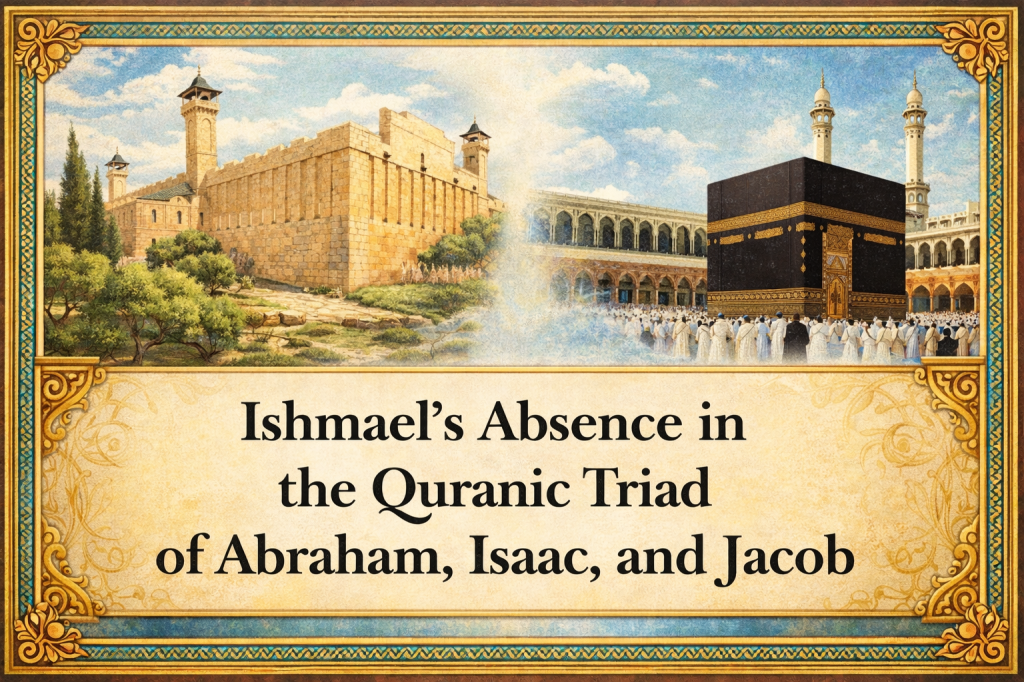
Within Islamic scholarship, there is a significant perspective that the Abrahamic Covenant—God’s promise to grant a specific land and bless all nations—was fulfilled through Ishmael (Ismā‘īl عليه السلام) and his descendants, culminating in the final Messenger, Muhammad ﷺ.
This view contrasts with the Israelite tradition, which locates the covenant’s fulfillment in the line of Isaac (Ishāq عليه السلام) and his descendants through Jacob (Ya‘qūb عليه السلام), under the Sinai Covenant.

⸝

2️⃣ The Land Promise: From the Nile to the Euphrates

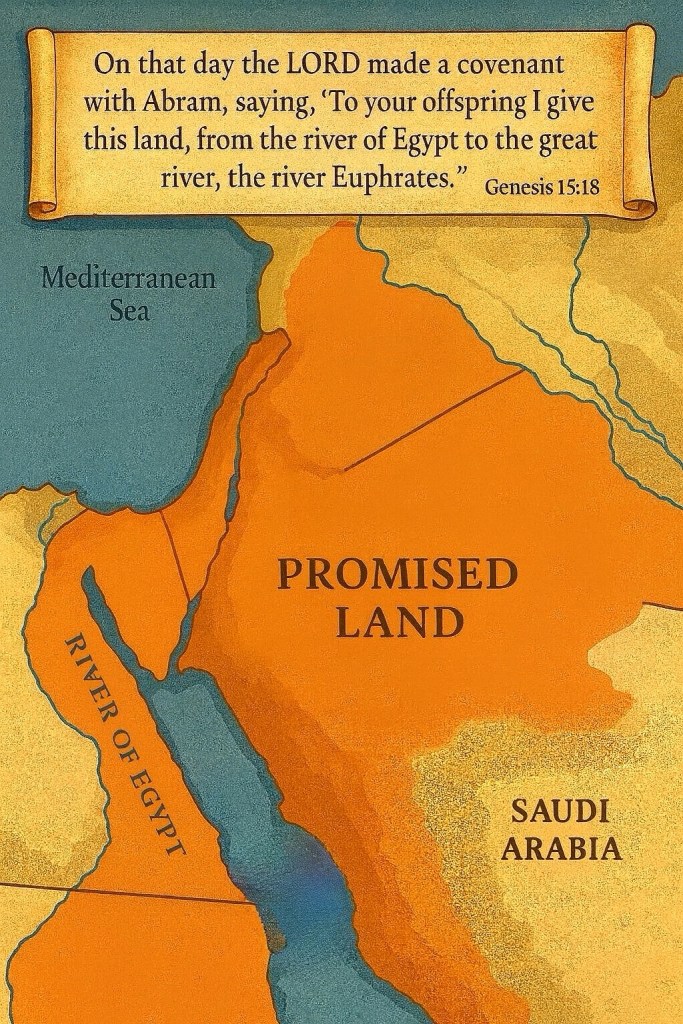
The Torah records in Genesis 15:18:

“To your descendants I give this land, from the river of Egypt to the great river, the river Euphrates.”

From an Islamic perspective, scholars who uphold the Ishmaelite fulfillment argue that:

• Geographical Alignment – The promised territory, stretching from the Nile in Egypt to the Euphrates in Mesopotamia, corresponds more closely to the expanse of Muslim lands during the Caliphates, especially under the leadership of the early successors of Prophet Muhammad ﷺ.

• Historical Realization – While the Israelites never fully possessed all the land between the two rivers, the early Muslim ummah—descendants of Ishmael through Muhammad ﷺ—established dominion over this very region, thus fulfilling the territorial aspect of the covenant.

⸝

3️⃣ Blessing to All Nations

God promised Abraham in Genesis 12:3 and Genesis 22:18:

“Through your seed all nations on earth will be blessed.”

In the Qur’an, this universal blessing is reflected in Surah al-Anbiyā’ (21:107):

“And We have not sent you, [O Muhammad], except as a mercy to the worlds.”

Islamic scholars view this as a direct fulfillment:

• Global Scope – The mission of Prophet Muhammad ﷺ was not confined to a single tribe or nation, but addressed all humanity.

• Restoration of Abraham’s Religion – Islam is understood as the revival of dīn Ibrāhīm—pure monotheism, worship of the One God without partners, and a moral code intended for all nations.

⸝

4️⃣ The Sacrifice: Ishmael or Isaac?

The identity of the sacrificial son is a central point of divergence:

• Islamic View – The Qur’an (Surah al-Ṣāffāt 37:99–113) narrates the event without naming the son, but the sequence of verses places the announcement of Isaac’s birth after the sacrifice episode, implying that Ishmael was the son offered.

• Historical Claim – Many Muslim scholars assert that ancient Israelite scribes altered the Torah to replace “Ishmael” with “Isaac” in the sacrificial narrative, thus reorienting the covenantal claim toward Israel rather than the Ishmaelite line.

⸝

5️⃣ The Sinai Covenant and Israelite Responsibility

In contrast, the Sinai Covenant (Exodus 19–24) was established specifically with the Children of Israel after their exodus from Egypt.

• Content – It contained the Ten Commandments and detailed laws governing worship, justice, and community life.

• Nature – The Sinai Covenant was conditional: blessings were tied to the Israelites’ adherence to God’s commandments.

• Scope – Unlike the Abrahamic Covenant’s universal vision, the Sinai Covenant was primarily ethnic and national, binding the Israelites as a distinct community to their divine mission.

⸝

6️⃣ Conclusion: The Restored Covenant in Islam

Those who uphold the Ishmaelite fulfillment of the Abrahamic Covenant believe:

• The land promise from the Nile to the Euphrates found its historical manifestation through the Muslim Caliphate, led by the descendants of Ishmael via Muhammad ﷺ.

• The universal blessing promised to Abraham was realized in the Prophet Muhammad ﷺ, who brought the message of Islam as a mercy to all peoples and nations.

• The original sacrificial son was Ishmael, signifying that the covenant was first and foremost with him and his righteous descendants.

From this perspective, Islam is not a new religion but the restoration of Abraham’s original monotheistic faith, uniting humanity under the worship of the One God, just as promised in the covenant.

“Muhammad” as a Title for Jesus?

Azahari Hassim

📋 “Muhammad” as a Title for Jesus?

A Full Explanation of Jay Smith’s Argument

Introduction

In recent years, Christian polemicist and historian Jay Smith—a prominent figure in London’s Hyde Park debates—has advanced a controversial re-reading of early Islamic origins. One of his most provocative claims is that the term “Muhammad” (MHMD), as it appears in early Arabic inscriptions and coinage, did not originally refer to a historical Arabian prophet, but rather functioned as a title for Jesus used by Syriac-speaking Christian communities in the 6th–7th centuries.
This reinterpretation forms part of Smith’s broader revisionist model that challenges the traditional narrative of Islam’s emergence in 7th-century Arabia.

This article explains Smith’s reasoning, the linguistic and historical evidence he proposes, and the Christian tradition he believes produced this title.

⸝

  1. Syriac Christianity as the Alleged Source of “Muhammad”

According to Jay Smith, the key to understanding the early appearances of the name MHMD is the influence of Syriac-speaking Christian sects.
He argues that:

1.1. Syriac Christians used titles rather than personal names in liturgical texts

Smith points out that Syriac hymnography and homilies frequently use descriptive epithets for Jesus, including:

• Mshīḥā — “the Messiah”
• Mār(y)a — “the Lord”
• Raḥmānā — “the Merciful”
• Mḥīmmādā / Mḥamdā — “the Praised One”

This last term—rooted in the Semitic tri-consonantal cluster ḥ-m-d (to praise, to commend)—becomes the central pillar of his argument.

1.2. “Mḥmd” was allegedly a Christological title

Smith contends that in some Syriac poetic and liturgical traditions, Jesus was poetically described as mḥmd—“the praised one.”
Thus, the MHMD appearing in early inscriptions could, in his view, reasonably refer to Jesus Christ, not to a human founder of Islam.

1.3. Syriac Christians shaped early Arab religious vocabulary

Smith claims that Arab tribes living in the Levant, northern Arabia, and Mesopotamia—before Islam—were heavily influenced by:

• Syriac Orthodox (Jacobite) Christians
• Nestorian Christians
• Aramaic-speaking monastics and missionaries

Thus, the earliest Arabic religious inscriptions may reflect Christian theological language, not Islamic identity.

⸝

  1. Early Coins and Inscriptions: Reading MHMD as Jesus

Jay Smith frequently cites 7th-century archaeological data—coins, inscriptions, and manuscripts—to support his claim.

2.1. The earliest MHMD references do not resemble later Islamic theology

On coins from the late 7th century (especially during the reign of Abd al-Malik), the inscription:

• MHMD appears alongside Christian symbols, such as
• a cross
• Christological phrases

According to Smith, this demonstrates the following:

The earliest Muslims were still using Christian iconography and language; therefore, “Muhammad” must have been a title within this Christianized framework.

2.2. The absence of prophetic biography

Smith argues that inscriptions mentioning MHMD contain no indication of:

• a birthplace in Mecca
• a prophetic mission
• a Quran
• companions
• battles
• hadith
• prophetic sayings

Thus, he concludes that MHMD was not originally a historical prophet, but a venerated figure already known in Christian tradition.

2.3. MHMD in the Dome of the Rock inscription (691 CE)

The Dome of the Rock contains the phrase:

• “Muhammad is the servant of God and His Messenger.”

Smith argues that this phrase resembles Christian formulations about Jesus—particularly the biblical phrase “Jesus, the servant of God”—and therefore could originally have signified Jesus, before being reinterpreted as a reference to an Arabian prophet.

This is a highly contested claim, but central to his reasoning.

⸝

  1. Which Christian Tradition Produced This Title?

Jay Smith’s position is clear:

He attributes the “Muhammad-as-Title-for-Jesus” interpretation to:

3.1. Syriac Orthodox (Jacobite) Christianity

• Based in Syria and Mesopotamia
• Known for poetic, honorific titles for Christ
• Used Semitic linguistic roots like ḥ-m-d in Christological praise

3.2. Other Eastern Christian sects

Smith sometimes expands this to:

• Nestorian Arabs
• Syriac-speaking monastic communities
• Arabized Christian tribes

These groups, he argues, created an environment in which a title such as “the praised one” (mḥmd) could easily be applied to Jesus.

⸝

  1. How, According to Smith, the Title Became a Personal Name

Jay Smith argues that early Arab rulers—particularly those forging a new political-religious identity after the fall of Byzantine influence—misappropriated or reinterpreted the Syriac epithet.

4.1. A title becomes a name

He claims that as Arabic replaced Syriac as the dominant liturgical and administrative language, the term:
• mḥmd → “Muhammad”

shifted from a title meaning “praised one”
to a personal name belonging to a newly constructed prophet-figure.

4.2. The creation of a prophetic biography

Smith asserts that the sīrah (prophetic biography) and hadith literature—compiled much later—retroactively built a life story around this name, transforming a Christological epithet into a new religious founder.

⸝

  1. Scholarly Response

Most historians, linguists, and Islamic scholars—both Western and Muslim—reject Smith’s view, arguing that:

• “Muhammad” behaves grammatically as a proper name in early Arabic sentences
• Coins and inscriptions reflect a transitional Islamic theology, not Christian language
• Syriac texts using the root ḥ-m-d do not equate this term with a personal identity for Jesus
• Smith’s method selectively reads evidence

Nonetheless, his theory remains influential in certain polemical circles and continues to generate debate online.

⸝

Conclusion

Jay Smith’s argument that “Muhammad” was originally a title for Jesus arises from his broader revisionist project that reexamines Islam’s earliest decades. He locates this idea in Syriac-speaking Christian traditions, particularly Jacobite Christianity, which he suggests used poetic praise terms such as mḥmd for Jesus.
From this foundation, he argues that early Arab rulers and later Islamic writers misinterpreted and transformed this epithet into the personal name “Muhammad,” eventually constructing a prophetic biography around it.

Though not supported by mainstream scholarship, Smith’s thesis represents a distinctive attempt to reinterpret early Islamic materials through the lens of late antique Syriac Christianity.

📜 A Muslim Theological Rebuttal to Jay Smith’s Claim that “Muhammad” Was a Title for Jesus

Introduction

Jay Smith’s revisionist proposal—that the name “Muhammad” (MHMD) in early inscriptions was not a historical individual but a title for Jesus borrowed from Syriac Christianity—directly challenges Islamic belief concerning the Prophet Muhammad ﷺ.
From a Muslim standpoint, this argument is untenable both textually and theologically. Islam upholds Muhammad as a real, historical prophet sent in the 7th century, whose life, teachings, and community are extensively documented.
The claim that his name originated as a Christological title contradicts core Islamic doctrine, linguistic evidence, and the established historical record.

This rebuttal clarifies the Muslim position in four major domains: Qur’anic theology, Arabic linguistics, prophetic biography, and historical transmission.

⸝

  1. Qur’anic Evidence: Muhammad as a Distinct Human Prophet 💫

The Qur’an clearly identifies Muhammad as:

• a human being,
• a prophet,
• living among the Arabs,
• delivering a message,
• surrounded by opponents and followers.

1.1 The Qur’an explicitly separates Muhammad from Jesus

Verse 3:144 states:

“Muhammad is no more than a messenger; messengers passed away before him.”

This verse presupposes:

• Muhammad is not Jesus,
• but one in a sequence of messengers,
• who has his own distinct historical mission.

Other verses (33:40, 47:2, 48:29) consistently refer to Muhammad as a unique individual with his own prophetic identity, not as a title applied to an earlier figure.

1.2 The Qur’an distinguishes their communities

Each prophet has his own ummah, laws, and circumstances. Jesus’ community is:

• al-Ḥawāriyyūn (the disciples)

Muhammad’s community is:

• the early Muslim believers of Arabia

This is theological evidence that Muhammad and Jesus cannot be conflated.

1.3 The Qur’an narrates separate missions, separate covenants

Jesus:

• Born miraculously
• Granted the Injil
• Sent to the Israelites

Muhammad:

• Born in Mecca
• Received the Qur’an in Arabic
• Sent to humanity at large

No Qur’anic narrative or doctrine merges their identities.

⸝

  1. Arabic Linguistic Rebuttal: “Muhammad” Functions Grammatically as a Personal Name 🌟

Jay Smith’s speculation rests on the similarity between the Syriac root ḥ-m-d and the Arabic name Muḥammad, but this comparison fails linguistically.

2.1 “Muhammad” is a standard Arabic proper noun, not a title

Arabic grammar treats “Muhammad” as a definite proper name, identical in structure to:

• Aḥmad
• Maḥmūd
• Ḥamīd

All of these derive from the same Semitic root.
Arabic names commonly derive from verbal forms, but this does not make them titles any more than “Solomon” implies “peaceful” or “David” implies “beloved.”

2.2 Arabic inscriptions present Muhammad as a concrete historical agent

In early inscriptions (e.g., early mosques, coins, rock engravings), Muhammad is described not merely as:

• “praised one”

But as:

• rasūl Allāh — the messenger of God
• ʿabd Allāh — the servant of God

These roles require a living agent, not a poetic epithet.

2.3 The title → personal name theory ignores Arabic morphology

The form MuḼammad means:

“The one who is repeatedly praised.”

This is a grammatically valid Arabic name in the pattern (mufa‘‘al).
Nothing requires this to derive from Syriac Christian vocabulary.

⸝

  1. Historical Rebuttal: The Biography of Prophet Muhammad Is Too Detailed to Be a Later Invention ♦️

Jay Smith’s theory implies that a vast prophetic biography was invented in the 8th–9th centuries and retroactively applied to a title originally referring to Jesus.
This contradicts the massive volume of early Islamic historical data, including:

3.1 Eyewitness testimony

The SÄŤrah and Hadith literature were preserved by:

• thousands of transmitters
• across multiple regions
• with rigorous chains of narration (isnād system)

This is unprecedented in world religious history.

3.2 Non-Muslim sources

6th–8th century Jewish, Christian, and Zoroastrian writers mention:

• Muhammad as a real Arab leader
• Muhammad’s battles
• Muhammad’s followers
• Muhammad’s monotheistic preaching

Such sources include:

• The Doctrina Jacobi (c. 640 CE)
• The Chronicle of Sebeos (660s CE)
• Thomas the Presbyter (640s CE)
• John of Damascus (c. 750 CE)

None of these writers equate Muhammad with Jesus.
They all treat Muhammad as a contemporary Arabian figure.

3.3 Rapid expansion of Islam requires a historical founder

A poetic title from Syriac Christianity cannot explain:

• the emergence of a unified Arabian polity
• early Islamic law
• military expansions
• administrative reforms

These require a living founder, not a misinterpreted epithet.

⸝

  1. Theological Rebuttal: Islam Cannot Theologically Accept a Jesus–Muhammad Identity 🌟

Even conceptually, Jay Smith’s theory contradicts Islamic doctrine:

4.1 Jesus is not the final prophet in Islam

Islam considers:

• Jesus a prophet who lived centuries earlier
• Muhammad the final prophet who seals revelation

Equating them collapses the entire Qur’anic framework.

4.2 The Qur’an names both “Muhammad” and “Aḥmad”

Surah 61:6 explicitly records Jesus predicting the coming of:

“a messenger to come after me, whose name is Aḥmad.”

This verse is theologically impossible if “Aḥmad/Muḥammad” was simply a title already used for Jesus.

4.3 Distinct missions necessitate distinct identities

Jesus:

• Brought miracles
• Was raised to heaven
• Had disciples

Muhammad:

• Delivered the Qur’an
• United the Arabs
• Governed Medina

This division is built into Islamic doctrine.

⸝

Conclusion ☪️

From a Muslim theological and historical standpoint, Jay Smith’s claim that “Muhammad” was originally a Syriac Christian title for Jesus is unsustainable. The Qur’an’s explicit differentiation between Jesus and Muhammad, the linguistic integrity of the Arabic name, the enormous breadth of historical evidence for Muhammad’s individual life, and the theological architecture of Islam all insist that Muhammad is a distinct human prophet, not a reused epithet.

Islamic tradition maintains:

Muhammad  was a unique, historical messenger sent to humanity, foretold by Jesus but never identical to him.

The claim that “Muhammad” was merely a title for Jesus is thus both theologically incompatible with Islam and historically implausible.

“Mahmadim” in the Song of Solomon: Why a God-Silent Book Was Preserved in Scripture

Azahari Hassim

📜 “Mahmadim” in the Song of Solomon: Why a God-Silent Book Was Preserved in Scripture

🕊️ A Theological Reflection on Prophetic Foresight and Israel’s Rejection of Muhammad

🧭 Introduction

Among the books of the Hebrew Bible, the Song of Solomon (also called Song of Songs) stands out for an extraordinary reason: it does not mention God even once. This absence has puzzled scholars, theologians, and rabbis for centuries. Why would a book that makes no explicit reference to God, covenant, law, prophecy, or worship be preserved within a canon otherwise defined by divine speech?

Jewish tradition has offered various literary and allegorical justifications. Yet a deeper theological reflection—particularly from an Islamic perspective—reveals a provocative possibility:
The Song of Solomon was preserved because it contains a prophetic clue that later generations would need to confront, a clue embedded in the Hebrew expression “maḥmaddîm” (מַחְמַדִּים) in Song of Solomon 5:16.

This expression, meaning “most desirable” or “altogether lovely,” bears a striking morphological connection to the name Muhammad ﷺ. Its presence in a book otherwise devoid of theological content becomes theologically meaningful: God ensured this book remained in the canon so that the Israelites could never erase this prophetic sign pointing to the final messenger.

⸝

📖 1. A Book Without God—Yet Protected by God

⚖️ The Content Paradox

The Song of Solomon contains:

• ❌ No mention of God
• ❌ No covenantal material
• ❌ No prophetic message
• ❌ No legal or ethical instruction
• ❌ No historical context tied to Israel’s religious identity

Under normal canonical criteria, it should have been excluded.

Ancient Jewish debates reflect this tension. The Mishnah (Yadaim 3:5) records disputes over its sacred status. Some rabbis argued it was too sensual; others said it lacked theological substance.

Yet, mysteriously, it remained—as though ✨ God ensured its preservation for the sake of a hidden prophetic sign that Israel would one day recognize yet dismiss.

🧑‍🏫 Rabbi Akiva and the Defense of the Song

Rabbi Akiva, one of the most authoritative sages of early Judaism, famously defended the sanctity of the Song of Solomon during these debates. He declared:

“All the writings are holy, but the Song of Songs is the Holy of Holies.”
(Mishnah, Yadaim 3:5)

🕍 This statement is remarkable precisely because the book contains no explicit reference to God. Why would a text of romantic poetry be elevated to the status of the “Holy of Holies”—a term otherwise reserved for the innermost sanctuary of the Temple?

🤲 From an Islamic theological perspective, Rabbi Akiva’s insistence appears less as an exegetical explanation and more as an unconscious submission to divine will. God moved the rabbis to preserve a book whose deeper prophetic significance they themselves did not perceive. The very sage who defended its holiness may have been safeguarding, unknowingly, a linguistic sign embedded within its Hebrew vocabulary—one that would later point toward the final messenger of God.

🧩 The Preservation Puzzle

If the rabbis excluded some texts that were far more “religious” in nature—such as certain wisdom literature, apocryphal writings, and early prophetic works—why protect a book that is silent about God?

The Islamic theological answer is clear:

☝️ God protected this book because it contains a linguistic sign about His final prophet—something Israel was destined to overlook or reject.

⸝

🔤 2. “Mahmadim”: A Linguistic Window Toward Prophecy

📜 The Hebrew Word

Song of Solomon 5:16 reads:

“חִכּוֹ֙ מַֽמְתַקִּ֔ים וְכֻלֹּ֖ו מַחֲמַדִּ֑ים”

“His mouth is sweetness itself; he is altogether lovely/desirable.”

The word maḥmaddîm (מַחְמַדִּים) is the plural form of maḥmad, a Semitic root meaning:

• 🌸 “desirable,”
• ⭐ “praiseworthy,”
• 💎 “worthy of admiration,”
• ❤️ “one who is cherished.”

In Hebrew morphology, the -ĂŽm plural can function:

• as a true plural,
• as an intensive plural,
• or as a plural of majesty.

Thus, maḥmaddîm may signify “the great” or “the most praised one.”

🕌 The Connection to Muhammad

The consonantal root ḥ-m-d (ح م د) is the same Semitic root underlying:

• Muhammad (مُحَمَّد) ﷺ — “the praised one”
• Ahmad (أحمد) — “the most praised”
• Hamd (حمد) — “praise”

This creates a compelling intertextual thread:

🔗 The Hebrew Bible preserves forms of the root ḥ-m-d repeatedly in contexts of admiration, desire, and exaltation.

In Song of Solomon 5:16, the form maḥmaddîm functions as a linguistic parallel to “Muhammad,” forming a prophetic pointer that becomes meaningful only once the final prophet appears.

⸝

📢 3. A Prophetic Indication of Israel’s Future Rejection

📖 Qur’anic Expectation of Jewish Rejection

The Qur’an states that the Children of Israel:

• 👁️ Recognized Muhammad ﷺ from their own scriptures (2:89, 2:101, 2:146, 7:157)
• ❌ Yet rejected him out of envy and national exclusivism
• 🧱 Altered or concealed aspects of revelation

”Those to whom We gave the Scripture (Jews and Christians) recognise him as they recongise their sons. But verily, a party of them conceal the truth while they know it.“
(Surah 2:146)

🕯️ Song of Solomon as a Divine Witness

By embedding the key term maḼmaddÎm in a text lacking overt theological content, God ensures that the prophetic sign remains preserved:

• 🚫 There is no theological reason to remove it
• 🚫 There is no prophetic framework to provoke suspicion
• 📚 There are no divine references to trigger canonical objections

In other words, the sign is concealed in plain sight 👀.

It becomes a theological trapdoor:

• 🔒 preserved by God,
• ⏳ unnoticed for centuries,
• ✨ but recognizable once the prophetic figure named Muhammad ﷺ arises.

The Jews would encounter the Hebrew root, recognize the linguistic form, yet still reject the prophet—exactly as the Qur’an foretells 📖.

⸝

🧠 4. The Underlying Theological Logic

🧩 God’s Foreknowledge and Scriptural Architecture

From an Islamic perspective, scripture is divinely arranged—not merely historically assembled. God places signs within texts that will only reveal their meaning at the appointed time ⏰.

Thus, the Song of Solomon functions as:

  1. 📘 A literary vessel — outwardly romantic and secular
  2. 🔐 A prophetic vault — housing a name-encoded indicator of the final messenger
  3. ⚖️ A divine testimony — demonstrating that Israel was given sufficient signs yet rejected the truth

God does not require the book to teach theology; the book exists to contain a sign.

🌍 Why This Matters Theologically

This interpretation highlights:

• 🔄 The continuity of God’s prophetic plan
• 🌐 The interconnectedness of Semitic linguistic traditions
• 🕋 The divine preparation for the advent of Muhammad ﷺ
• ⚠️ The accountability of those who recognized yet rejected the foretold prophet

⸝

🔔 5. Conclusion: A Silent Book That Speaks Loudly

Though the Song of Solomon contains no explicit mention of God, it speaks through language, etymology, and prophetic foresight 🗣️.

The presence of maḼmaddÎm in Song of Solomon 5:16 becomes:

• 🔤 a linguistic echo of Muhammad’s name,
• 📜 a prophetic hint embedded within Israel’s own canon,
• ⚖️ and a divine reminder that the final prophet would be dismissed despite the sign being preserved.

Thus, the Song of Solomon’s inclusion in Scripture—despite its apparent secular nature—is not accidental.

✨ It is a deliberate act of divine providence, ensuring that no community could claim ignorance when the “Praised One” — Muhammad ﷺ — finally appeared.

📋 How Jay Smith and His Group Argue That “Muhammad” (MHMD) Originally Referred to Jesus

Jay Smith is part of a Christian polemical movement that challenges the early history of Islam. Within this framework, Smith and his colleagues—such as those connected to the “Inarah Institute”-inspired revisionist school—propose that the term MHMD (محمد / muhammad, meaning “the praised one”) in the earliest Islamic texts may not refer to a historical Arabian prophet, but instead to Jesus as the “praised” or “glorified” figure.

Their argument has five major pillars:

⸝

  1. “Muhammad” Means The Praised One, Not Necessarily a Personal Name

Smith’s foundational linguistic claim:

• The word muhammad is a passive participle meaning “the praised one”.
• It can function as a title, not only a personal name.
• Christian traditions frequently refer to Jesus as:
• “The Glorified One”
• “The Praised One”
• “The Blessed One”

Smith’s group argues that the Qur’anic and inscriptional term MHMD may originally have functioned like these titles.

⸝

  1. Early Arabic Inscriptions Contain “MHMD” Without Any Biographical Link to Mecca or a Human Prophet

Smith refers to early inscriptions such as:

• The Dome of the Rock inscriptions (690 CE)
• The Arab-Byzantine coins (early 7th–8th century)
• The Zuhayr inscription and others

He argues:

• The inscriptions say things like “Muhammad is the servant of God” but do not give:

• A birthplace,
• A mother,
• A life story,
• A prophetic career.
• He claims these phrases could easily be read as:
“The Praised One is God’s servant” → referring to Jesus.

Thus, he says:
Early Islam’s use of “MHMD” was devotional and Christological, not biographical.

⸝

  1. Early Coins Depict a Human Figure Who Resembles Byzantine Christian Imagery

Smith famously analyzes early Islamic coins:

• Some feature a standing figure with a cross-like staff.
• Others include Christian formulas.
• The term mhmd appears alongside symbols long associated with Jesus.

Smith’s interpretation:

• These coins do not depict an Arabian prophet, but rather a modified representation of Jesus, adapted by Arab Christians who later formed part of the Umayyad administration.

Thus he claims:

“MHMD” was a Christological epithet on early Arab-Christian coins.

⸝

  1. The Qur’an Never Gives Muhammad a Biography—Indicating, Smith Claims, That the Name Was Originally Symbolic

Jay Smith argues:

• The Qur’an does not describe Muhammad’s:
• Parents,
• Childhood,
• Tribe,
• Location,
• Chronology,
• Battles (except allusions without names),
• Wife names,
• Mecca.

Since the Qur’an contains no narrative biography, he argues the term muhammad may not have originally referred to a person, but to a theological figure—similar to:

• al-Masīḥ (the Messiah)
• al-Muṣṭafā (the Chosen One)

He claims early Muslims later retroactively attached a biography to the title.

⸝

  1. Christian Sources Before Islam Refer to Jesus as “The Praised One” (Parallel to MHMD)

Smith cites Syriac Christian literature:
• The Syriac word “maḥmūdā” (ܡܗܡܘܕܐ) meaning “praised, glorified”
• Used in reference to Jesus

He argues:
• Arab Christians may have used the Arabic equivalent “muhammad” as a devotional epithet for Jesus.
• Thus, MHMD originally identified Jesus, not a separate prophet.

This supports his claim of a Christological reading of early Qur’anic phrases such as:

wa-muḼammadun rasōlu-llāh
“The Praised One is the messenger of God.”

From Smith’s perspective, this could mean:

“Jesus, the praised one, is God’s messenger.”

⸝

Synthesis: Jay Smith’s Overall Thesis

Putting the claims together:

  1. MHMD = “The Praised One,” a title.
  2. Early inscriptions and coins do not reference a historical prophet Muhammad.
  3. MHMD appears in Christianized contexts with Christological imagery.
  4. Qur’an lacks biographical material, consistent with a title rather than a person.
  5. Syriac Christian liturgy used similar titles for Jesus.

Conclusion (according to Jay Smith):

The earliest “Muhammad” was not the Prophet of Islam but a title for Jesus, and only later—during the 8th–9th centuries—was this title reinterpreted as the proper name of a new Arabian prophet.

⸝

Important Note

This is Jay Smith’s polemical position, not the mainstream academic view.

Most historians—Muslim and non-Muslim—accept that:

• “Muhammad” was a real historical figure,
• The Qur’an’s references to him are contextual,
• Early inscriptions genuinely refer to the Prophet of Islam.

📜 A Muslim Theological Rebuttal to Jay Smith’s Claim that “Muhammad” Was a Title for Jesus

Introduction

Jay Smith’s revisionist proposal—that the name “Muhammad” (MHMD) in early inscriptions was not a historical individual but a title for Jesus borrowed from Syriac Christianity—directly challenges Islamic belief concerning the Prophet Muhammad ﷺ.
From a Muslim standpoint, this argument is untenable both textually and theologically. Islam upholds Muhammad as a real, historical prophet sent in the 7th century, whose life, teachings, and community are extensively documented.
The claim that his name originated as a Christological title contradicts core Islamic doctrine, linguistic evidence, and the established historical record.

This rebuttal clarifies the Muslim position in four major domains: Qur’anic theology, Arabic linguistics, prophetic biography, and historical transmission.

⸝

  1. Qur’anic Evidence: Muhammad as a Distinct Human Prophet 💫

The Qur’an clearly identifies Muhammad as:

• a human being,
• a prophet,
• living among the Arabs,
• delivering a message,
• surrounded by opponents and followers.

1.1 The Qur’an explicitly separates Muhammad from Jesus

Verse 3:144 states:

“Muhammad is no more than a messenger; messengers passed away before him.”

This verse presupposes:

• Muhammad is not Jesus,
• but one in a sequence of messengers,
• who has his own distinct historical mission.

Other verses (33:40, 47:2, 48:29) consistently refer to Muhammad as a unique individual with his own prophetic identity, not as a title applied to an earlier figure.

1.2 The Qur’an distinguishes their communities

Each prophet has his own ummah, laws, and circumstances. Jesus’ community is:

• al-Ḥawāriyyūn (the disciples)

Muhammad’s community is:

• the early Muslim believers of Arabia

This is theological evidence that Muhammad and Jesus cannot be conflated.

1.3 The Qur’an narrates separate missions, separate covenants

Jesus:

• Born miraculously
• Granted the Injil
• Sent to the Israelites

Muhammad:

• Born in Mecca
• Received the Qur’an in Arabic
• Sent to humanity at large

No Qur’anic narrative or doctrine merges their identities.

⸝

  1. Arabic Linguistic Rebuttal: “Muhammad” Functions Grammatically as a Personal Name 🌟

Jay Smith’s speculation rests on the similarity between the Syriac root ḥ-m-d and the Arabic name Muḥammad, but this comparison fails linguistically.

2.1 “Muhammad” is a standard Arabic proper noun, not a title

Arabic grammar treats “Muhammad” as a definite proper name, identical in structure to:

• Aḥmad
• Maḥmūd
• Ḥamīd

All of these derive from the same Semitic root.
Arabic names commonly derive from verbal forms, but this does not make them titles any more than “Solomon” implies “peaceful” or “David” implies “beloved.”

2.2 Arabic inscriptions present Muhammad as a concrete historical agent

In early inscriptions (e.g., early mosques, coins, rock engravings), Muhammad is described not merely as:

• “praised one”

But as:

• rasūl Allāh — the messenger of God
• ʿabd Allāh — the servant of God

These roles require a living agent, not a poetic epithet.

2.3 The title → personal name theory ignores Arabic morphology

The form MuḼammad means:

“The one who is repeatedly praised.”

This is a grammatically valid Arabic name in the pattern (mufa‘‘al).
Nothing requires this to derive from Syriac Christian vocabulary.

⸝

  1. Historical Rebuttal: The Biography of Prophet Muhammad Is Too Detailed to Be a Later Invention ♦️

Jay Smith’s theory implies that a vast prophetic biography was invented in the 8th–9th centuries and retroactively applied to a title originally referring to Jesus.
This contradicts the massive volume of early Islamic historical data, including:

3.1 Eyewitness testimony

The SÄŤrah and Hadith literature were preserved by:

• thousands of transmitters
• across multiple regions
• with rigorous chains of narration (isnād system)

This is unprecedented in world religious history.

3.2 Non-Muslim sources

6th–8th century Jewish, Christian, and Zoroastrian writers mention:

• Muhammad as a real Arab leader
• Muhammad’s battles
• Muhammad’s followers
• Muhammad’s monotheistic preaching

Such sources include:

• The Doctrina Jacobi (c. 640 CE)
• The Chronicle of Sebeos (660s CE)
• Thomas the Presbyter (640s CE)
• John of Damascus (c. 750 CE)

None of these writers equate Muhammad with Jesus.
They all treat Muhammad as a contemporary Arabian figure.

3.3 Rapid expansion of Islam requires a historical founder

A poetic title from Syriac Christianity cannot explain:

• the emergence of a unified Arabian polity
• early Islamic law
• military expansions
• administrative reforms

These require a living founder, not a misinterpreted epithet.

⸝

  1. Theological Rebuttal: Islam Cannot Theologically Accept a Jesus–Muhammad Identity 🌟

Even conceptually, Jay Smith’s theory contradicts Islamic doctrine:

4.1 Jesus is not the final prophet in Islam

Islam considers:

• Jesus a prophet who lived centuries earlier
• Muhammad the final prophet who seals revelation

Equating them collapses the entire Qur’anic framework.

4.2 The Qur’an names both “Muhammad” and “Aḥmad”

Surah 61:6 explicitly records Jesus predicting the coming of:

“a messenger to come after me, whose name is Aḥmad.”

This verse is theologically impossible if “Aḥmad/Muḥammad” was simply a title already used for Jesus.

4.3 Distinct missions necessitate distinct identities

Jesus:

• Brought miracles
• Was raised to heaven
• Had disciples

Muhammad:

• Delivered the Qur’an
• United the Arabs
• Governed Medina

This division is built into Islamic doctrine.

⸝

Conclusion ☪️

From a Muslim theological and historical standpoint, Jay Smith’s claim that “Muhammad” was originally a Syriac Christian title for Jesus is unsustainable. The Qur’an’s explicit differentiation between Jesus and Muhammad, the linguistic integrity of the Arabic name, the enormous breadth of historical evidence for Muhammad’s individual life, and the theological architecture of Islam all insist that Muhammad is a distinct human prophet, not a reused epithet.

Islamic tradition maintains:

Muhammad  was a unique, historical messenger sent to humanity, foretold by Jesus but never identical to him.

The claim that “Muhammad” was merely a title for Jesus is thus both theologically incompatible with Islam and historically implausible.

Circumcision Among Pre-Islamic Arabs: An Abrahamic Legacy and Its Restoration in Islam

Azahari Hassim

📜 Circumcision Among Pre-Islamic Arabs: An Abrahamic Legacy and Its Restoration in Islam

💫 Introduction

Circumcision is most commonly associated with Judaism as a defining sign of the Abrahamic covenant. However, historical and theological evidence indicates that circumcision was also practiced among pre-Islamic Arabs long before the rise of Islam. This raises an important theological question: Was circumcision among pre-Islamic Arabs understood as a divine Abrahamic tradition, similar to its role in Judaism, or merely a cultural custom?

This article explores circumcision within pre-Islamic Arab society through the lens of Abrahamic continuity, Qur’anic theology, and Islamic tradition. It argues that circumcision, alongside rites such as Hajj and reverence for the Zamzam well, was regarded as a sacred inheritance from Abraham (Ibrāhīm), even if its theological clarity had become obscured over time. Islam, rather than introducing a new practice, sought to restore and purify this ancient Abrahamic legacy.

⸝

✡️ Circumcision in the Torah: The Abrahamic Covenant

In Jewish theology, circumcision (brit milah) is explicitly defined as a divine command. According to Genesis 17, God commands Abraham to circumcise himself and every male in his household as a sign of the everlasting covenant. Circumcision thus becomes:

• A divine commandment
• A physical mark of covenantal identity
• A symbol of belonging to the lineage of Abraham

For Jews, circumcision is not merely ritual—it is theological, marking participation in God’s covenant with Abraham and his descendants through Isaac and Jacob.

⸝

📃 Circumcision Among Pre-Islamic Arabs: Historical Reality and Theological Memory

While pre-Islamic Arabia lacked a codified scripture comparable to the Torah, circumcision was widely practiced among Arab tribes. Classical Muslim historians and ethnographers—including Ibn Isḥāq and al-Masʿūdī—report that Arabs traced this practice back to Abraham through Ishmael.

Importantly, circumcision among Arabs was not perceived as a random cultural habit. Rather, it was linked to a broader set of Abrahamic rites preserved in Meccan society, including:

• The Kaaba as a sanctuary established by Abraham and Ishmael
• The Hajj pilgrimage
• The veneration of the Zamzam well, associated with Hagar
• Ritual purity practices tied to fitrah (natural disposition)

Though theological distortions and polytheistic practices emerged over time, the Abrahamic core was never entirely lost.

⸝

☪️ Islam and Circumcision: Fitrah and Abrahamic Continuity

With the advent of Islam, circumcision was reaffirmed—not as a newly revealed law—but as part of fitrah, the natural and primordial religion of humanity.

The Prophet Muhammad  said:

“Five are from fitrah: circumcision, shaving the pubic hair, trimming the moustache, clipping the nails, and plucking the underarm hair.”

Islamic jurisprudence differs on whether circumcision is obligatory or strongly emphasized (wājib or sunnah mu’akkadah), but there is unanimous agreement that it is:

• A continuation of Abraham’s tradition
• A marker of ritual purity
• An act aligned with divine intention

Unlike Judaism, Islam does not frame circumcision as an exclusive ethnic covenant. Instead, it is universalized as part of Abraham’s monotheistic legacy applicable to all who submit to God.

⸝

🕋 Circumcision, Hajj, and the Zamzam well: A Unified Abrahamic Heritage

Circumcision in Islam cannot be isolated from other Abrahamic practices preserved in Mecca. Together, they form a coherent theological pattern:

  • Circumcision → covenantal devotion
  • Hajj → commemoration of Abraham’s willingness to offer Ishmael
  • Zamzam → divine providence through Hagar and Ishmael
  • Kaaba → monotheistic sanctuary

All of these rites pre-date Islam historically but were re-consecrated by Islam theologically. They were not abolished, but purified of polytheism and restored to their original Abrahamic and monotheistic meaning.
⸝

🌟 Qur’anic Foundation: Following the Creed of Abraham

The Qur’an explicitly grounds Islamic practice in Abrahamic continuity:

“Then We revealed to you [O Muhammad], ‘Follow the creed of Abraham, a ḥanīf, who was not of the polytheists.’”
(Qur’an 16:123)

This verse establishes Abraham not as a Jewish or Christian figure, but as a primordial monotheist whose practices pre-dated later religious institutionalization. Circumcision, as part of Abraham’s embodied devotion, fits naturally within this framework.

⸝

🔲 Theological Conclusion

Circumcision among pre-Islamic Arabs was neither accidental nor merely cultural. It functioned as a sacred remnant of Abrahamic religion, transmitted through Ishmael and preserved in Meccan society alongside other foundational rites.

Islam did not invent circumcision; rather, it restored its theological meaning, situating it within a universal monotheistic framework rooted in Abraham. Just as Islam reclaimed the Kaaba, purified the Hajj, and reaffirmed Zamzam’s sacredness, it also reaffirmed circumcision as a divinely grounded Abrahamic practice—part of humanity’s original covenant with God.

In this sense, circumcision stands as a powerful symbol of Islam’s broader mission: not to create a new religion, but to restore the primordial faith of Abraham in its purest form.

The Absence of “Land of Moriah” in the Samaritan Torah: A Textual and Theological Analysis

Azahari Hassim

📜 The Absence of “Land of Moriah” in the Samaritan Torah: A Textual and Theological Analysis

Introduction

Genesis 22—the narrative traditionally known in Judaism as the Akedah—begins with God commanding Abraham to travel to a specific region to offer his son as a sacrifice. In the Masoretic Text (MT), the canonical Hebrew Bible used in Judaism, the command directs Abraham to “the land of Moriah.”

This phrase has become foundational in Jewish and Christian tradition, especially in associating the event with Jerusalem and the future Temple Mount.

Yet, the Samaritan Torah preserves a different reading, one that significantly reshapes the geographical and theological setting of the story. Importantly, the Samaritan Torah does not contain the phrase “land of Moriah” at all.

⸝

📃 The Samaritan Reading of Genesis 22

In the Samaritan Pentateuch (SP), the wording of Genesis 22:2 diverges from the Masoretic text. Instead of “Moriah,” the Samaritan version reads:

“Go to the land of Moreh.”

Thus, the Samaritan Torah identifies the location not as Moriah, but as Moreh—the same geographical region associated with Abraham’s first altar in Genesis 12. This difference is profound: while “Moriah” later becomes linked to Jerusalem, “Moreh” is firmly tied to the area around Shechem, near Mount Gerizim, the holiest site in Samaritanism.

This means that in the Samaritan tradition, the Binding of Isaac narrative (Akedah) unfolds not in the future Temple region, but within the ancient Abrahamic landscape of Shechem and Gerizim.

⸝

🌟 The Significance of This Variant Reading

  1. Sacred Geography

For the Samaritans, Mount Gerizim—not Jerusalem—is the chosen mountain of God.
By reading “Moreh,” the Samaritan text situates the near-sacrifice narrative geographically close to Gerizim, reinforcing their belief that this region is the true center of divine revelation.

This interpretation also aligns with earlier Abraham narratives:

• In Genesis 12, Abraham builds his first altar at the “oak of Moreh.”
• In the Samaritan worldview, Genesis 22 naturally continues Abraham’s early sacred geography.

  1. Textual Considerations

Scholars often note that the term “Moriah” in the Masoretic Text is linguistically difficult and appears only in two biblical texts: Genesis 22 and a much later passage in Chronicles. The rarity of the word has led many scholars to suggest that “Moriah” may reflect:

• A later interpretive development,
• Or a geographical reorientation toward Jerusalem for theological purposes.

By contrast, the Samaritan reading “Moreh” is a well-established place name within the Pentateuch itself. It is geographically coherent and consistent with the Abrahamic narrative.

This leaves open the scholarly possibility that the Samaritan reading may preserve an older or more original form of the text.

  1. Theological Implications

Removing “Moriah” detaches the narrative from Jerusalem, thereby separating the Binding story (Akedah) from the later Temple traditions that dominate Rabbinic Judaism and Christianity.

In Samaritan theology:

• The true sacrificial mountain is Mount Gerizim.
• The Akedah is understood as part of a continuous Abrahamic tradition centered in Shechem–Gerizim, not Zion.
• The absence of “Moriah” supports their claim that the Torah does not endorse the sanctity of Jerusalem.

This alternative textual tradition therefore becomes a foundational element in the longstanding religious differences between Samaritans and Jews.

⸝

📕 Conclusion

The Samaritan Torah’s omission of the phrase “land of Moriah” highlights a deeply significant textual variation with wide-reaching implications.
Rather than pointing Abraham toward Jerusalem, the Samaritan version locates the near-sacrifice in the land of Moreh, near Shechem and Mount Gerizim.

This difference not only shapes Samaritan sacred geography but also offers valuable insight into the diverse ways ancient communities transmitted, interpreted, and localized the Abrahamic tradition.

By noting that “land of Moriah” does not appear in the Samaritan Torah, we gain a clearer understanding of how textual variants preserve competing visions of the covenantal landscape and the history of Israel’s earliest traditions.

The Abrahamic Covenant in Islam: Ratified After the Sacrifice, Not Predeclared

Azahari Hassim

📜 The Abrahamic Covenant in Islam: Ratified After the Sacrifice, Not Predeclared

A Qur’anic Rebuttal to the Biblical Chronology of Covenant

Introduction

In the Biblical narrative of Genesis 17, the covenant between God and Abraham is presented as a predeclared agreement, granted before the birth of Isaac, and independent of any monumental act of obedience. By contrast, the Qur’an presents a profoundly different theological order: the covenant is not announced in advance but is conferred upon Abraham only after he proves unwavering submission—most dramatically, in the episode traditionally understood in Islam as the near-sacrifice of Ishmael.

This difference is not a minor chronological disagreement; it reveals two fundamentally divergent theological frameworks. In the Qur’an, the covenant is something earned through obedience, not something granted beforehand and later tested. The pivotal verse is Surah al-Baqarah 2:124, a cornerstone of Islamic covenant theology.

⸝

🌟The Qur’anic Sequence: The Covenant Comes After the Test

  1. The Test Precedes the Covenant (Qur’an 2:124)

The Qur’an states plainly:

“And [remember] when Abraham was tested by his Lord with certain commands, and he fulfilled them.
[God] said: ‘I will make you a leader for mankind.’”
(Qur’an 2:124)

This verse establishes two essential theological principles:

  1. The covenant (leadership / imamate) was not announced beforehand.
  2. It was granted only after Abraham successfully fulfilled a set of divine commands.

Islamic exegetes—classical and modern—identify the ultimate test (al-balāʾ al-ʿaẓīm, cf. 37:106) as the command to sacrifice his son, whom Muslims understand to be Ishmael. This act represents the apex of Abraham’s submission (islām), making him the archetypal Muslim (22:78).

Thus, in the Qur’anic order:

• Test → Fulfillment → Covenant

The covenant is the result, not the premise, of Abraham’s obedience.

⸝

  1. The Son in the Qur’anic Narrative: Ishmael, the Firstborn and Heir of Sacrifice

The Qur’an situates the sacrifice narrative before the birth announcement of Isaac (37:100–113). This means:

• The son involved must be Ishmael.
• The covenantal blessing upon Abraham flows from the episode with Ishmael, not Isaac.

This has direct implications for covenant theology:

• Ishmael, not Isaac, is the son through whom Abraham demonstrates absolute surrender.
• Therefore, the covenant’s ratification follows Abraham’s relationship with Ishmael—not Isaac.

This reverses the chronological and theological structure found in Genesis 17–22.

⸝

♦️ The Biblical Sequence: Covenant First, Test Later

In Genesis 17, the covenant is:

• Announced before Isaac’s birth,
• Unconditional,
• Tied specifically to Isaac as the exclusive heir.

The order is the reverse of the Qur’an:

• Covenant → Birth Promise → Test (Genesis 22)

This creates a theological puzzle often noted in Jewish and Christian scholarship:

Why would God declare Isaac the guaranteed covenantal heir in Genesis 17,
only to command his near-destruction in Genesis 22?

From the Qur’anic viewpoint, this puzzle does not arise, because:

  1. The covenant had not yet been announced.
  2. The test was not of Isaac but of Ishmael.
  3. The covenant comes after the supreme test, not before it.

⸝

♦️ Qur’anic Theology: Covenant as the Fruit of Obedience

Surah 2:124 continues:

“[Abraham] said: ‘And from my descendants?’
[God] replied: ‘My covenant does not include the wrongdoers.’”

This indicates:

• The covenant is conditional (ishtirāṭī), not automatic.
• It does not blanket all biological descendants.
• Its transmission is tied to righteousness, not mere lineage.

Thus, unlike the Biblical model—which ties covenantal inheritance exclusively to Isaac’s seed—the Qur’anic model conditions covenantal leadership on piety and submission, not ethnicity or primogeniture.

⸝

☪️ Why the Qur’anic Order Matters

  1. It Resolves the Canonical Tension in the Bible

The Qur’anic sequence avoids the apparent contradiction of:

• Promising Isaac as the guaranteed heir in Genesis 17,
• Then nearly eliminating him in Genesis 22.

  1. It Places Ishmael at the Heart of Covenant History

Since the covenant follows the test, and since the test involves Ishmael, the Qur’an centers Ishmael—not Isaac—as the arena of covenantal ratification.

  1. It Embodies the Core Islamic Principle: Submission Before Privilege

In Islam, honor is a result of submission.
Covenant arises from obedience.
Imamate (leadership) comes after trial.

Abraham becomes the Imam (leader) of Humanity because he fulfilled the test, not because of biological lineage.

⸝

📕 Conclusion

From the Qur’anic perspective, the Abrahamic covenant is not a predeclared divine grant delivered before the birth of a promised son. Instead, it is a conferred reward—bestowed after Abraham’s greatest act of obedience: his willingness to sacrifice Ishmael.

Surah 2:124 stands as the decisive statement of this theology. The covenant, in Islam, is the crown placed upon Abraham only after he proves that nothing—not even his beloved son—stands between him and his Lord.

This Qur’anic narrative not only diverges sharply from the Biblical sequence in Genesis 17 and 22 but also reframes the covenant as the fruit of faith, earned through total submission—a paradigm that shapes the entire Abrahamic identity of Islam.

Surah 2:124 and Genesis 17:21: A Qur’anic Contradiction of the Biblical Allocation of Covenant and Sacrifice

Azahari Hassim

📜 Surah 2:124 and Genesis 17:21: A Qur’anic Contradiction of the Biblical Allocation of Covenant and Sacrifice

Introduction

The figure of Abraham stands at the heart of the Abrahamic traditions, yet the question of which son carries the covenant, and which son was nearly sacrificed, remains one of the most defining differences between the Qur’an and the Bible.

The Biblical narrative presents Isaac as both the covenantal heir (Genesis 17:21) and the child of sacrifice (Genesis 22). The Qur’an, however, frames the covenantal sequence very differently—most importantly in Surah 2:124, which explicitly ties the Abrahamic Covenant to Abraham’s great trial, understood in Islamic tradition as the near-sacrifice of Ishmael.

This Qur’anic link between the covenant and the sacrificial event fundamentally contradicts the Biblical arrangement, wherein Isaac is granted the covenant prior to the Akedah (sacrificial episode) and Ishmael is explicitly excluded from the covenant in Genesis 17:21.

⸝

  1. The Qur’anic Framework: Covenant After the Trial

1.1 Surah 2:124 — The Covenant Follows the Trial of Sacrifice

Surah 2:124 states:

“And [remember] when Abraham was tested by his Lord with several commands, and he fulfilled them. He said: ‘I will make you a leader (imām) for mankind.’”

Islamic exegetes—from early mufassirūn to classical jurists—identify the “great trial” (al-ibtalā’) as the moment when Abraham was commanded to sacrifice his son. This is reinforced by:

• The flow of Surah 37:99–113, where the near-sacrifice is narrated before the announcement of Isaac’s birth.
• The Qur’an’s consistent refusal to name Isaac as the son of sacrifice.
• The theological logic that the covenantal elevation of Abraham to leadership (imāmah) occurs after he proves absolute obedience.

Thus, the Qur’an depicts the covenant as a direct reward for Abraham’s completion of the trial—which Islamic tradition universally associates with Ishmael, the firstborn son whom Abraham sent with Hagar to Mecca.

1.2 The Covenant Extends to “His Descendants”

When Abraham asks that this leadership (imāmah) be extended to his progeny:

“And of my descendants?”
God replies: “My covenant does not include the wrongdoers.” (2:124)

This indicates:

• The covenant includes Abraham’s descendants generally, but disqualifies the unjust.
• The covenant is not restricted to Isaac’s line, nor does the Qur’an ever assign it exclusively to Israel.
• The context of the sacrifice (Ishmael in Islamic memory) places Ishmael’s lineage at the center of the covenantal promise.

Therefore, in the Qur’anic perspective, the Abrahamic Covenant is linked to Ishmael, not Isaac.

⸝

  1. Genesis 17:21 — A Contradictory Allocation of Covenant

Genesis 17:21 reads:

“But my covenant I will establish with Isaac, whom Sarah shall bear to you at this time next year.”

This verse forms the Biblical foundation for the exclusivity of Isaac’s line regarding the covenant. According to the Bible:

• Ishmael is blessed (Genesis 17:20),
• But the covenant is restricted to Isaac (Genesis 17:21),
• Long before the near-sacrifice of Genesis 22 occurs.

2.1 A Contradiction in Sequence

The Bible presents the covenant before the sacrificial test.

The Qur’an presents the covenant after the sacrificial test.

Because these sequences differ, the Qur’anic account cannot coexist with Genesis 17.

The Bible states that the covenant is specifically granted to Isaac prior to the near-sacrifice event (Genesis 17:21). In contrast, the Qur’an indicates that the covenant is bestowed upon Abraham after he successfully completes the trial of obedience, and that this covenant extends particularly through Ishmael (Qur’an 2:124; 2:125–129; 37:100–113). In this Qur’anic narrative, the near-sacrifice involves Ishmael, not Isaac.

Therefore, the Bible and the Qur’an present contradictory sequences regarding both the timing of the covenant and the identity of the son nearly sacrificed.

⸝

  1. The Islamic Claim: Isaac’s Line Belongs to the Sinai Covenant, Not the Abrahamic Covenant

Islamic theology treats two different covenants:

3.1 Sinai Covenant — Restricted to the Children of Israel

Isaac → Jacob → Israel

• The Israelites receive law, ritual, the Promised Land, and prophetic succession tied to the Torah.
• This is a national covenant, geographically bound and legally defined.

3.2 Abrahamic Covenant — Universal, Perpetual, and Pre-Sinai

Ishmael → Arabs → Muhammad → Global Ummah

• This covenant is universal, not ethnic.
• It is connected to the Kaaba, the original monotheistic sanctuary (2:125–129).
• It produces the final prophet (2:129), through the line of Ishmael.

Thus, Isaac’s descendants hold the Sinai Covenant, while Ishmael’s descendants carry the Abrahamic Covenant—which emerges after the sacrifice.

This position directly contradicts Genesis 17:21, which restricts the covenant to Isaac even before Isaac’s birth.

⸝

  1. The Identity of the Sacrificial Son: Qur’an vs. Bible

4.1 Qur’anic Logic Favors Ishmael

Several Qur’anic elements align the sacrificial event with Ishmael:

  1. The sacrifice occurs before Isaac’s birth announcement (37:112).
  2. The son involved is described as patient, dutiful, and the firstborn, qualities associated with Ishmael in the Qur’anic historical memory.
  3. The episode occurs in a setting traditionally associated with Mecca, not Palestine.
  4. The covenant of leadership (2:124) is given after the sacrifice—suggesting the sacrificed son is also the line through which covenantal leadership flows.

4.2 Biblical Logic Has an Internal Tension

The Biblical narrative presents Isaac’s name—meaning “he laughs”—as theologically inconsistent with a near-sacrifice story built on fear, anguish, obedience, and solemnity.

Additionally:

• The phrase “your only son” (Genesis 22:2) becomes problematic because Ishmael was alive at that time, unless later redaction is assumed.
• The covenant is declared for Isaac before he is even born, which contradicts the Qur’an’s portrayal of covenant as the reward of a test.

⸝

  1. The Contradiction Summarized

Qur’an (2:124):

• Abraham undergoes a major trial (near-sacrifice).
• Only after fulfilling the trial is he granted covenantal leadership.
• The covenant extends to descendants who are righteous—fulfilled through Ishmael’s lineage.

Bible (Genesis 17:21):

• Isaac receives the covenant before the trial occurs.
• Ishmael is excluded from covenantal status from the outset.
• Isaac is later presented as the child of sacrifice.

Thus, the Qur’an reverses the order, reassigns the covenant, and reidentifies the son of sacrifice, contradicting Genesis at each of these three points.

⸝

Conclusion

Surah 2:124 depicts the Abrahamic Covenant as arising after Abraham’s completion of the sacrificial trial, implicitly linking the covenant to the son involved in that event—Ishmael. This stands in explicit contradiction to Genesis 17:21, which limits the covenant to Isaac even before the sacrificial narrative of Genesis 22.

From the Qur’anic perspective, Isaac and Jacob are honored prophets within the Sinai Covenant, tied to Israel’s sacred history. Yet the universal Abrahamic Covenant—the one that elevates Abraham as a leader for all humanity—belongs to the line of Ishmael, whose near-sacrifice forms the dramatic foundation of that covenant.

In this way, the Qur’an reinterprets the ancient narrative, offering a theological counter-reading in which Ishmael, not Isaac, stands at the heart of Abraham’s greatest trial and the covenant that follows.

Abraham, His Sons, and the House of God: A Comparative Study of the Bible and the Qur’an

Azahari Hassim

📜 Abraham, His Sons, and the House of God: A Comparative Study of the Bible and the Qur’an

🌟 Introduction

Across the Abrahamic traditions, the figure of Abraham stands as a foundational patriarch whose life, trials, and descendants shape the theological identity of Judaism, Christianity, and Islam. Yet the way these scriptures portray Abraham’s relationship to sacred places differs significantly. The Qur’an presents Abraham and his firstborn son Ishmael as the physical builders and consecrators of the Kaaba in Mecca. The Bible, in contrast, links Abraham and Isaac to the future Temple Mount through narrative association rather than construction. This distinction reveals how each tradition frames the origins of sacred space and the covenantal roles of Abraham’s sons.

⸝

♦️ 1. The Qur’an: Abraham, Ishmael, and the Kaaba

The Qur’anic narrative places Abraham (Ibrāhīm) and Ishmael (Ismāʿīl) at the centre of the establishment of the Kaaba, the primordial sanctuary in Mecca.

1.1 Building the Kaaba

The Qur’an explicitly describes Abraham and Ishmael raising the foundations of the Kaaba:

“And when Abraham raised the foundations of the House, and [with him] Ishmael, [saying], ‘Our Lord, accept this from us…’” (Qur’an 2:127)

This verse identifies them not only as worshippers but as architects of the House of God.

1.2 Dedication and Purification of the Sacred Space

Abraham and Ishmael are commanded to cleanse the House for those who perform worship, circumambulation, and devotion (Qur’an 2:125). Another passage speaks of Abraham leaving Ishmael’s descendants in the valley near the House to establish true worship (Qur’an 14:37), reinforcing their custodial role.

1.3 Universality of the Kaaba

The Qur’an describes the Kaaba as “the first House established for mankind” (Qur’an 3:96), giving it a universal, primordial character. Abraham and Ishmael thus appear not merely as historical figures but as founders of a sacred centre for all humanity.

In Islamic tradition, Abraham and Ishmael are understood as active constructors, purifiers, and guardians of the Kaaba — the earliest sanctuary dedicated to monotheistic worship.

⸝

♦️ 2. The Bible: Abraham, Isaac, and the Temple Mount

While the Hebrew Bible (Tanakh/Old Testament) also portrays Abraham as central to God’s covenantal plan, it does not attribute to him or to Isaac the establishment of a physical sanctuary.

2.1 Abraham and Isaac at Mount Moriah

Genesis 22 recounts the “Akedah,” or Binding of Isaac. God commands Abraham to offer Isaac as a sacrifice “on one of the mountains in the land of Moriah” (Genesis 22:2).

Centuries later, 2 Chronicles 3:1 identifies this same region as the site of Solomon’s Temple:

“Then Solomon began to build the house of the Lord in Jerusalem on Mount Moriah, where the Lord had appeared to David his father…”

This connection retroactively links the Akedah to the future Temple Mount. Yet the link is narrative and theological rather than architectural; Abraham and Isaac do not participate in constructing the sanctuary.

2.2 David and Solomon as Temple Builders

In the biblical tradition, the idea of a permanent sanctuary arises not with Abraham or Isaac but with King David. The Temple itself is built by Solomon (1 Kings 6), fulfilling David’s aspiration as narrated in 2 Samuel 7. Thus, temple-building is royal, not patriarchal.

⸝

♦️ 3. Key Difference: Builder vs. Symbol

A clear contrast emerges between the two scriptural traditions:

3.1 Qur’anic Perspective

• Abraham and Ishmael are direct builders and consecrators of the Kaaba.
• The sanctuary originates in their hands and through their supplication.
• The Kaaba becomes the focal point of monotheistic worship for all humanity.

3.2 Biblical Perspective

• Abraham and Isaac are linked to the site of the future Temple (Mount Moriah), but only symbolically.
• They do not build or establish a sanctuary.
• Temple-building is attributed to the Davidic-Solomonic monarchy.

3.3 Associative vs. Foundational

• The Bible connects Abraham and Isaac to the Temple through memory and location: the Akedah becomes part of Jerusalem’s sacred geography.
• The Qur’an connects Abraham and Ishmael to the Kaaba through construction and divine command: they physically establish the House of God.

⸝

♦️ Conclusion

Both the Bible and the Qur’an situate Abraham at the heart of sacred history, yet they portray his relationship to holy places in distinct ways. In the Qur’an, Abraham and Ishmael lay the physical and spiritual foundations of the Kaaba, making them architects of a universal sanctuary. In the Bible, Abraham and Isaac are remembered for their obedience at Moriah, a site later reinterpreted as the location of the Temple, but they do not build it.

These contrasting narratives shape how each tradition understands sacred space, lineage, and the enduring legacy of Abraham and his sons.

Abraham, History, and Identity: Why Judaism and Islam Relate Differently to the Patriarch

Azahari Hassim

📜 Abraham, History, and Identity: Why Judaism and Islam Relate Differently to the Patriarch

💫 Introduction

Among the three great Abrahamic religions, all trace their spiritual lineage to Abraham. Yet the way each tradition relates to Abraham differs profoundly. A recurring argument — especially in comparative theological discourse — claims that Judaism is more connected to its historical experience, whereas Islam is more directly connected to the person and legacy of Abraham. This distinction becomes evident when comparing the centrality of the Exodus and Sinai in Judaism with the centrality of Hajj and the Abraham–Ishmael narrative in Islam.

This article explores the theological framework behind this argument, demonstrating how sacred history, covenantal identity, and ritual practices shape the role of Abraham in each tradition.

⸝

♦️ 1. Judaism: A Religion Rooted in Communal History and Covenant

1.1 Abraham as the Patriarch, but Sinai as the Core

Judaism undeniably venerates Abraham as the patriarch (Genesis 12–25). However, Jewish religious identity is shaped less by Abraham personally and more by Israel’s collective historical journey, particularly:

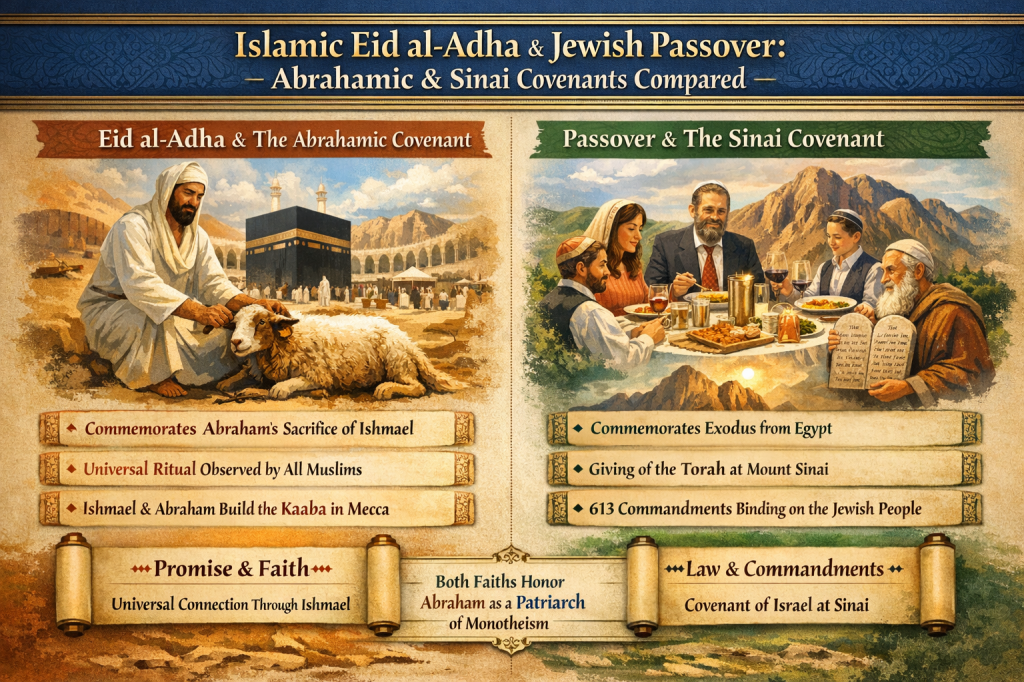
• The Exodus from Egypt
• The Giving of the Torah at Mount Sinai
• The Sinai Covenant (Brit Sinai)
• The formation of Israel as a holy nation (Exodus 19:6)

Judaism’s primary self-definition is not “the children of Abraham,” but rather “the people who stood at Sinai.”

The Rabbis famously state:

“Our covenant is not through Abraham alone, but through the Torah given to all Israel at Sinai.”

This is why the central liturgical memory in Judaism is not Abraham’s tests but the Exodus:

• The Passover (Pesach) festival
• The Sabbath (a memorial of liberation)
• Daily prayers constantly invoking “the God who brought you out of Egypt”

1.2 Covenant Through Isaac and Jacob

Judaism’s theological architecture rests on the Sinai Covenant and the ancestral chain:

Abraham → Isaac → Jacob → the Twelve Tribes of Israel.

Thus, covenantal continuity is traced ethnically and historically, not ritually through reenactments of Abraham’s life. Abraham is a revered ancestor — but the religion’s heart is the law (Torah) and the national history of Israel.

⸝

♦️ 2. Islam: Abraham as the Living Ritual and Spiritual Model

2.1 Islam Calls Itself “The Religion of Abraham” (Millat Ibrāhīm)

The Qur’an repeatedly emphasizes Abraham more than any other patriarch:

• “Follow the religion of Abraham” (Qur’an 3:95)
• Abraham is called ḥanīf, a pure monotheist (Qur’an 16:120)

Abraham is not just a historical patriarch — he is the archetype of submission (islām).

2.2 Abraham and Ishmael in the Kaaba and Hajj

Islam intricately weaves the story of Abraham into the lives of its believers through the rituals performed during Hajj.

Pilgrims reenact key events, such as the áš­awāf around the Kaaba, which honors the moment Abraham and Ishmael established its foundations (Qur’an 2:127). The sa‘y between ᚢafā and Marwah represents Hajar’s search for water, while drinking from Zamzam recalls the miracle provided for baby Ishmael.

Standing at ‘Arafah signifies Abraham’s devotion, and the sacrifice during ‘Eid al-Adha commemorates his willingness to obey God by offering his firstborn son. Lastly, the stoning of the Jamarāt symbolizes Abraham’s rejection of Satan’s temptations.

Thus, while Judaism remembers Abraham theologically, Islam reenacts Abraham ritually.

2.3 Ishmael’s Role Restored

In the Islamic narrative, Ishmael is not marginal but central:

• He helps Abraham build the Kaaba.
• He is linked to the sacred sanctuary (Q 2:125–129).
• He is believed to be the son whom Abraham was commanded to sacrifice, demonstrating ultimate submission to God.
• He is part of the prophetic lineage leading to Muhammad ﷺ.

Thus, Islam’s living rituals restore Abraham and Ishmael to the center of religious consciousness.

⸝

♦️ 3. Why the Two Traditions Differ

3.1 Judaism: History as Identity

Judaism emerged as a national–historical covenant. Its sacred memory is:

• Liberation from Egypt
• Revelation at Sinai
• Life under the Torah
• The historical survival of Israel

Thus, Jewish identity is shaped by collective memory, not primarily by reenacting the life of Abraham.

3.2 Islam: Abraham as the Universal Prototype

Islam presents itself as:

the restoration of Abraham’s original monotheism
(Qur’an 3:67)

Islam views Abraham as:

• the spiritual father of all who submit to God,
• the builder of the Kaaba (house of God),
• the model for rituals of pilgrimage, sacrifice, and prayer.

Therefore, Islam sees Abraham as the living foundation of its religious practice.

3.3 Two Different Theological Trajectories

• Judaism: A religion of a people and their historical covenant
• Islam: A religion of a prophet and his universal monotheism

Both honor Abraham, but the mechanisms of memory differ:
• Judaism emphasizes the journey of Israel.
• Islam emphasizes the journey of Abraham.

⸝

🌟 4. Conclusion

The claim that Judaism is more connected to its history while Islam is more connected to the person of Abraham reflects deep theological truths:

• Judaism’s heart is Sinai, the covenant of the Torah and the historical identity of Israel.
• Islam’s heart is Abraham, whose life is woven into its rituals, theology, and annual pilgrimage.

Both traditions preserve Abraham’s legacy — but Islam experiences Abraham through ritual reenactment, while Judaism remembers him through narrative and covenantal ancestry.

Thus, the argument is not about superiority, but about different religious architectures:
one built on historical memory, the other on prophetic example and ritual continuity.