A Nontraditional Chronological Reading of Genesis: Ishmael’s Role in the Sequence of Covenants

Azahari Hassim

🕊️ A Nontraditional Chronological Reading of Genesis: Ishmael’s Role in the Sequence of Covenants

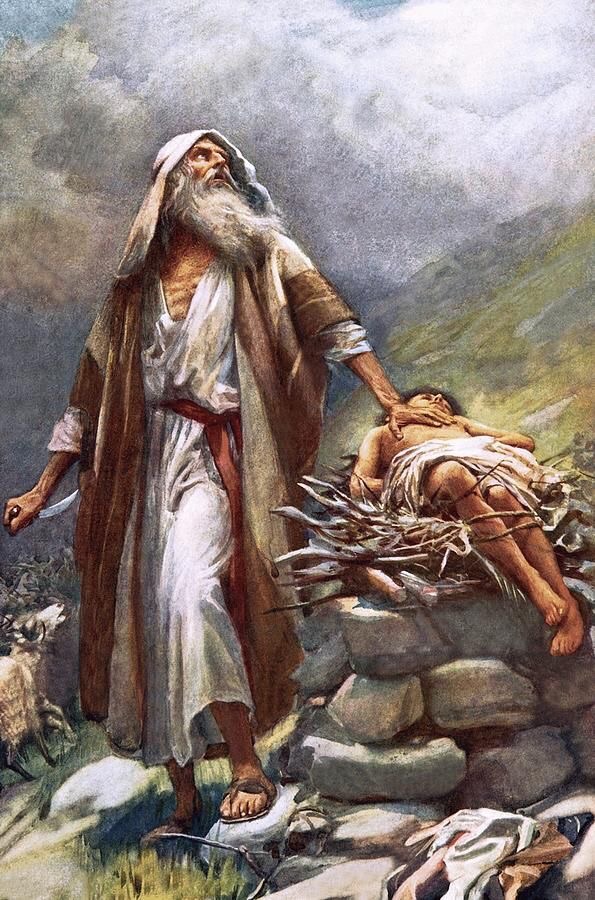
This argument represents a nontraditional chronological reading of Genesis that seeks to reconcile narrative and covenantal tensions surrounding Abraham, Ishmael, and Isaac. It reorders the events to portray Ishmael—not Isaac—as the son tested in the near-sacrifice episode, interpreting Genesis as a progressive unfolding of divine trials and covenantal ratifications.

1. Premise: The Covenants and Promises Are Sequentially Related

Proponents begin by noting that Genesis presents several covenantal moments with Abraham—particularly in Genesis 15, Genesis 17, Genesis 21, and Genesis 22—which they view as successive stages of a single divine plan rather than separate, unrelated episodes.

★ Genesis 15: God promises Abraham descendants as numerous as the stars.

★ Genesis 17: God formalizes this promise through the covenant of circumcision, renaming Abram as Abraham, “father of many nations.”

★ Genesis 21:14–20: Abraham faces his first test concerning Ishmael’s fate when Hagar and Ishmael are sent away into the wilderness.

★ Genesis 22: Abraham faces the ultimate test—offering his “only son” to God.

In this interpretive model, the episodes are not arranged chronologically in the canonical order. Genesis 21 and 22, both dealing with Ishmael, are understood to precede Genesis 17, forming the experiential foundation upon which the covenant of circumcision is later ratified.


2. Genesis 22 — The Supreme Test: Abraham’s Willingness to Sacrifice Ishmael

In the canonical order, Genesis 22 features the near-sacrifice of Isaac. But the description of the son as “your only son” cannot apply to Isaac if Ishmael is alive and older. By placing Genesis 22 earlier—before Isaac’s conception—the narrative unfolds with perfect coherence:

• Ishmael is Abraham’s firstborn.

• Ishmael is Abraham’s only son at that stage.

• Ishmael is the son through whom Abraham has already received divine promises.

Thus, in non-canonical interpretations where Genesis 22 precedes Genesis 17, the son offered in the near-sacrifice must be Ishmael, since Isaac had not yet been born or even promised.


3. Genesis 21:14–20 as the First Test of Abraham

Before the near-sacrifice in Genesis 22, the episode in Genesis 21:14–20 portrays Abraham’s earlier emotional trial involving Ishmael. In this narrative, Abraham sends Hagar and Ishmael into the wilderness at Sarah’s insistence. The text describes Ishmael as an infant carried by Hagar, a detail that aligns closely with the Islamic tradition in which Ishmael is still a small child when Abraham leaves him in the desert (Mecca).

According to Genesis 21:5, Ishmael would have been 16–17 years old at the time. Yet the surrounding verses (vv. 14–20) treat him as if he were a helpless toddler. This is not merely a literary flourish but a direct inconsistency in age and behavior within the same episode.

Therefore, in non-canonical interpretations, Genesis 21:14–20 is understood to occur prior to Genesis 17—specifically because the passage depicts Ishmael as an infant or small child, in stark contrast to Genesis 17, which explicitly states that Ishmael was already 13 years old. By placing the desert episode before Genesis 17, the age contradiction is resolved, and the narrative fits naturally within an earlier phase of Abraham’s life.

Viewed this way, the “banishment test” becomes Abraham’s first trial involving Ishmael, testing his faith in God’s promise concerning Ishmael’s survival and future greatness (“I will make him a great nation,” Gen 21:18).

The subsequent “sacrifice test” in Genesis 22 then functions as the second and supreme trial, where Abraham’s obedience reaches its deepest expression. Together, these two Ishmael-centered episodes frame the development of Abraham’s faith before the covenantal ratification of Genesis 17.


4. Identification of the Sacrificed Son as Ishmael

On this reordered chronology:

★ The “only son” of Genesis 22 refers to Ishmael, Abraham’s firstborn by Hagar.

★ The phrase “your son, your only son” (Gen 22:2) fits Ishmael prior to Isaac’s birth.

★ The later introduction of Isaac (Gen 17–18) is not a replacement but a continuation of the divine plan—rewarding Abraham’s faithfulness through a second lineage that expands the original covenant.

Hence, the Akedah (binding of the son) becomes a test of Ishmael’s line, and Genesis 17 becomes a ratification of that obedience through the promise of “many nations.”


5. Genesis 17 as Covenant Ratification

In this model, Genesis 17 does not precede but follows the tests of Genesis 21–22. It represents God’s ratification of Abraham’s proven obedience:

★ Abraham is renamed and blessed as “father of many nations.”

★ Circumcision is introduced as a covenantal sign, extending the promise to all his progeny.

★ The birth of Isaac is announced as a reward and continuation of divine favor.

Thus, Genesis 17 serves as the formalization of the faith demonstrated earlier through Abraham’s trials involving Ishmael.


6. Literary-Critical Perspective

From a literary-critical standpoint, this interpretation draws upon source-critical and redactional insights. Scholars employing the Documentary Hypothesis often distinguish between several compositional layers within Genesis, each reflecting different theological emphases and historical contexts:

★ Genesis 21 and Genesis 22 are generally attributed to the Elohist (E) and Jahwist (J) sources, which are earlier traditions. These sources emphasize vivid narrative, moral testing, and divine encounter—often conveyed through the figure of the angel of the Lord.

★ Genesis 17, by contrast, is assigned to the Priestly (P) source, which is later in composition and is marked by formal covenantal language, ritual precision, and theological systematization.

Within this framework, proponents of the chronological reordering argue that the older E/J traditions—which may have originally centered on Ishmael—were subsequently integrated and reinterpreted by Priestly editors. These later redactors inserted Genesis 17’s covenantal structure before the narrative of Genesis 22, thereby reshaping the sequence to emphasize Isaac as the covenantal heir.

Thus, from a literary-critical perspective, the hypothesis that Genesis 22 predates Genesis 17 in origin aligns with the idea that an earlier Ishmaelite-focused narrative was overlaid by a later Priestly redaction, producing the canonical order familiar today.


7. Summary Articulation

To summarize:

★ 1. Genesis 21:14–20 presents Abraham’s first test concerning Ishmael’s separation, aligning with the Islamic account of the desert episode.

★ 2. Genesis 22 (the near-sacrifice) represents the second and climactic test, also involving Ishmael.

★ 3. Genesis 17, announcing Isaac’s birth and instituting circumcision, follows these trials and serves as God’s ratification of Abraham’s faith.

Therefore, the sequence Genesis 21 → Genesis 22 → Genesis 17 portrays a coherent theological and narrative progression in which Abraham’s obedience regarding Ishmael becomes the foundation for his establishment as the “father of many nations.”

This reading not only restores textual coherence to the phrase “your only son,” but also resolves the age contradiction, places the narrative within an earlier phase of Abraham’s life, integrates Ishmael’s covenantal significance, and provides a bridge between Biblical and Qur’anic portrayals of Abraham’s faith.
The Abrahamic Covenant: Before or After the Near-Sacrifice?

🌟 The Abrahamic Covenant: Before or After the Near-Sacrifice?

The Abrahamic covenant is central to the shared heritage of Judaism, Christianity, and Islam. Yet a key question remains: Was this covenant established before or after the near-sacrifice of Abraham’s son? The answer depends on how the scriptures are read and how different traditions interpret the sequence of events.

1. The Canonical Biblical Order

According to the Hebrew Bible/Old Testament, the Abrahamic covenant is established before the episode of sacrifice:

• Genesis 15 — God pledges to Abraham countless descendants and grants him the land of Canaan.
• Genesis 17 — The covenant is reaffirmed; Abraham receives his new name, circumcision is instituted as its sign, and the promise of nations and kings through his offspring is declared.
• Genesis 22 — Only afterward does the narrative describe the “Akedah” (binding of Isaac), where Abraham is commanded to sacrifice his son.

In this canonical sequence, the covenant precedes the sacrifice, with the latter serving as a divine test of Abraham’s loyalty and faith.

2. The Qur’anic Perspective — Covenant After the Sacrifice

The Qur’an reorders the logic of the covenant. Instead of covenant preceding sacrifice, the covenant is bestowed after Abraham’s obedience in the trial of sacrifice:

• Surah al-Saffāt (37:100–113): Abraham sees in a vision that he must sacrifice his son (identified in Islamic tradition as Ishmael). Both father and son submit, but God ransoms the son with a great sacrifice, showing the fullness of their submission (islām).


• Surah al-Baqarah (2:124): This verse makes explicit that the covenant of leadership (imāmah) came after Abraham fulfilled his trials:

“And when Abraham was tested by his Lord with certain words and he fulfilled them, He said: ‘I have appointed you as a leader for the people.’ Abraham said: ‘And of my descendants?’ He said: ‘My covenant does not include the wrongdoers.’”

Here, covenantal authority is not automatic but conditional — awarded only after demonstrated faith.

Key Implications:

  1. Obedience Before Covenant: The trial of sacrifice is the turning point that secures Abraham’s role as leader.
  2. Ishmael’s Role: Since Ishmael is the son identified with the sacrifice, the covenant is understood to extend through him, culminating in the building of the Kaaba (Qur’an 2:125–129).
  3. Conditional Covenant: The Qur’an stresses that covenantal blessings apply only to the righteous line of descendants.

Thus, from the Qur’anic perspective, the covenant is not pre-declared but ratified after Abraham’s supreme act of submission.

3. Scholarly Reordered Reading of Genesis

Some modern interpreters also suggest that Genesis itself may be read in a reordered fashion:

  1. Genesis 22 (Sacrifice): Abraham’s willingness to sacrifice his son demonstrates his ultimate faith.
  2. Genesis 22:17 (Promise): God then promises to multiply Abraham’s descendants “as the stars of heaven and the sand on the seashore.”
  3. Genesis 17 (Covenant): Abraham is finally declared “father of many nations” as a consequence, not a precondition.

This reading highlights Ishmael’s unique position: as the firstborn, circumcised before Isaac’s birth, Ishmael stands as the covenantal son through whom nations would arise.

4. Summary of Perspectives

• Jewish & Christian Tradition (Canonical Order):
Covenant (Gen 15 & 17) → Near-sacrifice (Gen 22).

• Qur’anic Understanding:
Sacrifice (37:100–113) → Covenant confirmed (2:124) → Kaaba (2:125–129).

• Scholarly Reordering:
Genesis 22 (obedience & promise) → Genesis 17 (father of many nations).

Conclusion

The question of whether the Abrahamic covenant was established before or after the sacrifice reveals profound theological differences.

• For Judaism and Christianity, the covenant is given first and tested later.


• For Islam, the covenant is established after Abraham’s trial of sacrifice, highlighting obedience as the gateway to divine leadership.


• For some scholars, Genesis itself is better read as sacrifice first, covenant second.

What unites all perspectives is the recognition that Abraham’s faith and obedience stand at the heart of God’s covenantal promise — whether as foundation, condition, or ultimate confirmation.
Abraham’s Promise of Many Nations: A Reconsideration of Genesis 17 and 22

📜 Abraham’s Promise of Many Nations: A Reconsideration of Genesis 17 and 22

Introduction

The biblical narrative of Abraham is foundational to Jewish, Christian, and Islamic traditions. Central to his story is the divine promise that he would become the “father of many nations” (Genesis 17:4–7). However, the sequence of events between Genesis 17 and Genesis 22 raises theological and logical questions.

How could God promise Abraham numerous descendants in Genesis 17, only to command him later in Genesis 22 to sacrifice his son—the very means by which that promise would be fulfilled?

A reconsideration of the chronology suggests that Genesis 17 may actually be a consequence of the events in Genesis 22, and that the promise of “many nations” is tied more closely to Ishmael than to Isaac.

The Tension Between Genesis 17 and Genesis 22

In Genesis 17:4–7, God tells Abraham:

“As for me, this is my covenant with you: You shall be the father of a multitude of nations. … I will make you exceedingly fruitful, and I will make nations of you, and kings shall come from you.”

Yet in Genesis 22, Abraham is commanded to sacrifice his son. If this son is Isaac, as traditionally held in Judaism and Christianity, then the sequence seems illogical: Why promise descendants through Isaac in Genesis 17, only to nearly eliminate that line in Genesis 22?

From an Islamic perspective, the son in Genesis 22 is not Isaac but Ishmael, which changes the framework of interpretation.

Genesis 22:17 as the Key Promise

After Abraham demonstrates his obedience in the near-sacrifice narrative, God reaffirms His covenant with new force:

“I will surely bless you, and I will surely multiply your descendants as the stars of heaven and as the sand that is on the seashore. And your descendants shall possess the gate of their enemies” (Genesis 22:17).

This promise comes after Abraham’s supreme test of faith. It is therefore reasonable to see Genesis 22:17 as the pivotal moment where Abraham earns the covenant of multitude. Genesis 17, in this view, is not a precursor but rather a retrospective affirmation rooted in Abraham’s proven faithfulness (Genesis 22).

Ishmael as the Fulfillment

If Ishmael is the son in Genesis 22—as preserved in Islamic tradition—the flow of the narrative becomes more coherent. God’s promise in Genesis 22:17 directly leads to Ishmael’s great destiny, as also stated earlier in Genesis 21:18:

“I will make him a great nation.”

Thus, Abraham’s role as “father of many nations” is logically connected to Ishmael’s posterity. Through Ishmael, vast nations arise—Arab tribes and, ultimately, the universal message of Islam through Prophet Muhammad (peace be upon him). This interpretation removes the apparent contradiction of God’s promise followed by the command of sacrifice.

Rethinking the Chronology

If Genesis 22 is placed before Genesis 17 chronologically, the progression becomes logical:

  1. Genesis 22: Abraham proves his loyalty through the sacrifice test.
  2. Genesis 22:17: God rewards Abraham with the promise of innumerable descendants.
  3. Genesis 17:4–7: God formalizes this covenant, affirming Abraham as the father of many nations.

In this arrangement, according to this reconstructed chronology of events, Genesis 17 flows naturally from Genesis 22: the covenant of “many nations” becomes the direct consequence of Abraham’s demonstrated obedience, rather than an isolated or unexplained divine declaration.

The Phrase “Only Son” as Evidence of Pre-Isaac Timing

A further textual clue strengthening this reordered chronology is the phrase “your son, your only son” in Genesis 22:2. Historically, Ishmael was Abraham’s only son for nearly fourteen years before Isaac’s birth. The expression “only son” therefore aligns perfectly with a timeframe before Isaac existed, since Abraham never again had a period in which he possessed only one son once Isaac was born. If the near-sacrifice narrative occurred after Isaac’s birth, the phrase becomes theologically and logically problematic. But if the event precedes Genesis 17—when Isaac is merely foretold—then the designation “only son” authentically describes Ishmael and reinforces the view that the Akedah/Dhabīḥ (sacrificial trial) narrative originally belonged to the Ishmael cycle, not the Isaac cycle.

Isaac’s Name and the Logic of the Narrative

Adding to this reconsideration is the meaning of Isaac’s very name. Yitzḥaq (“he laughs” or “laughter”) reflects the joy, relief, and divine humour surrounding his unexpected birth to elderly parents. His name symbolizes delight, celebration, and the fulfillment of long-awaited hope.

This semantic field stands in tension with the notion that Isaac is the son of trial, burden, and sacrificial testing. A child whose identity is built upon laughter, promise, and joy does not naturally align with the role of the son through whom Abraham faces his greatest ordeal. By contrast, Ishmael—already associated with hardship, exile, and survival—fits more coherently within the narrative framework of testing, trial, and divine assurance.

Thus, Isaac’s name itself subtly reinforces the view that he is not the son intended in Genesis 22, further supporting an Ishmaelite-centered interpretation o

Conclusion

A re-examination of the sequence between Genesis 17 and Genesis 22—supported by the logic of the narrative, the pivotal promise of Genesis 22:17, the historical reality that Ishmael was Abraham’s only son for many years, and the theological meaning encoded in the names of the two sons—reveals a coherent pattern pointing toward Ishmael as the son of the sacrificial trial. In this reconstructed chronology, the near-sacrifice of Ishmael becomes the decisive act of obedience that earns Abraham the covenant of “many nations.” Genesis 17 then emerges not as a prior decree but as a divine reaffirmation rooted in Abraham’s demonstrated faithfulness. 

Within this integrated framework, Ishmael—not Isaac—naturally assumes the role through whom Abraham’s covenant expands into multitudinous nations and universal significance. This reading harmonizes the textual data, resolves internal tensions, and aligns fully with the Islamic understanding of the Abrahamic story.
Does the Expansion of Islam in the Middle East Fulfill the Prophecy in Genesis?

🌟 Does the Expansion of Islam in the Middle East Fulfill the Prophecy in Genesis?

📖 1. The Promise in Genesis

In the Book of Genesis (ch. 12, 15, 17), God promises Abraham that his descendants will inherit a specific land — described as stretching from the “River of Egypt” to the “Euphrates.”

• Abraham has two key lines of descendants:
• Isaac → leading to Jacob/Israel → the Israelites (the covenantal line).
• Ishmael → also blessed by God (Genesis 17:20), though not tied to the covenantal land promise.

✡️ In Jewish and Christian traditions, the covenantal promise of the land is linked specifically to Isaac’s descendants.

🌴 2. The Ishmaelite Connection and Later Arabs

• Islamic tradition traces Arab descent (and much of the Muslim world) through Ishmael, Abraham’s first son.
• Genesis records that Ishmael too will become a “great nation” (Genesis 21:18).
• Thus:
• Isaac’s line = covenantal inheritance.
• Ishmael’s line = blessing and greatness in its own right.

🌍 3. The Expansion of Islam

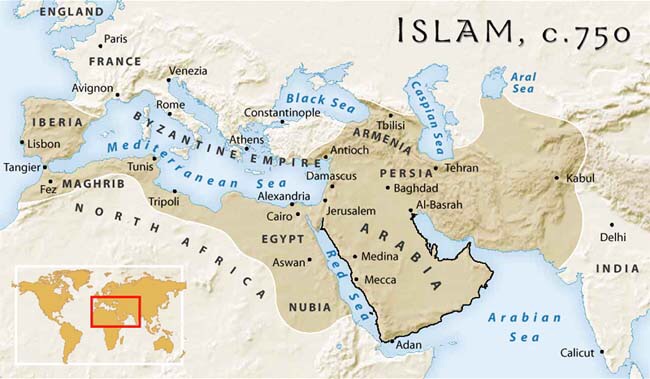
• In the 7th century, Islam arose in Arabia and rapidly spread across the Middle East and beyond.
• These lands overlap significantly with the territories mentioned in Genesis.

☪️ From an Islamic perspective: This spread reflects God’s promise to bless Ishmael’s descendants and make them into great nations across Abraham’s homeland.

✡️✝️ From Jewish and Christian perspectives: The covenantal inheritance remains with Israel, not Ishmael’s descendants.

🕊️ 4. Theological Interpretations

• ✡️ Jewish perspective: The covenant and land promise are eternal for Israel alone. Islam’s rise is historical but not covenantal fulfillment.
• ✝️ Christian perspective: Views differ — some see the promise fulfilled spiritually in Christ (extended to all believers), while others expect a future literal fulfillment for Israel.
• ☪️ Islamic perspective: Muslims see themselves as the true heirs of Abraham’s faith through Ishmael and Muhammad. The expansion of Islam is seen as a realization of God’s promise of greatness.

Summary:

• ✡️/✝️ Jewish/Christian tradition: The specific land promise refers to Isaac’s descendants, not Ishmael’s.

• ☪️ Islamic tradition: The rapid growth and dominance of Ishmael’s descendants across Abraham’s homeland can be understood as a manifestation of God’s promise to Ishmael.
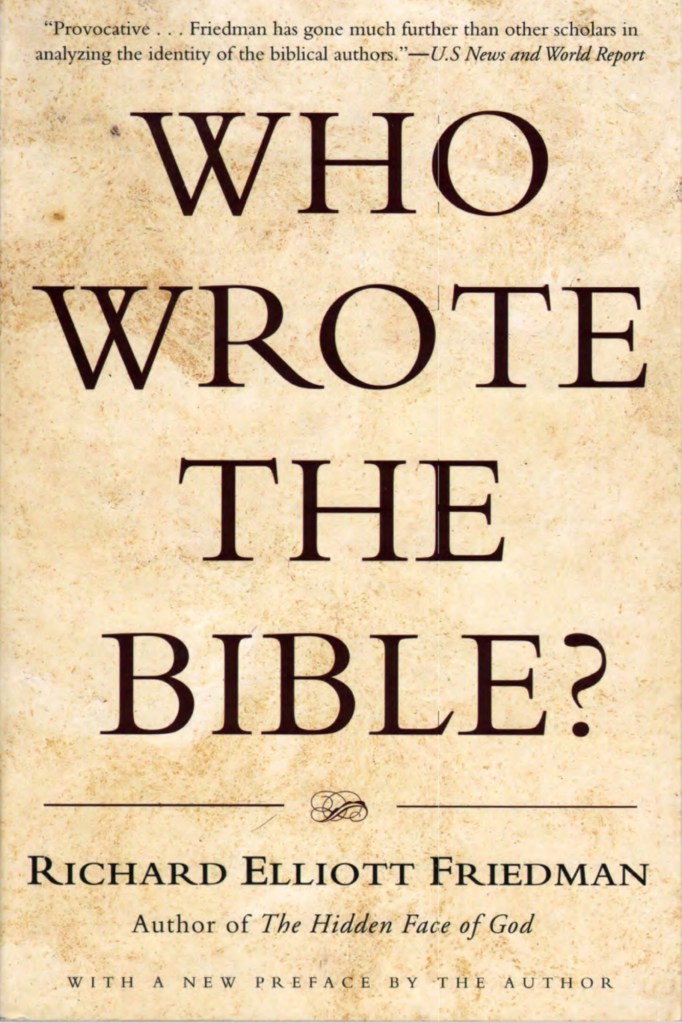
Who Wrote the Bible? Unraveling the Origins of the Sacred Text“

For more than two thousand years, the Bible has stood at the heart of Western civilization — shaping faith, philosophy, literature, and law. Yet despite its universal influence, a fundamental question persists: who actually wrote it?

In Who Wrote the Bible?”, biblical scholar Richard Elliott Friedman traces this mystery through centuries of investigation, revealing that the Bible is not the work of a single hand but a tapestry woven from multiple voices across hundreds of years.

From Tradition to Investigation

For centuries, both Jewish and Christian tradition maintained that Moses wrote the first five books — Genesis, Exodus, Leviticus, Numbers, and Deuteronomy — collectively known as the Torah or Pentateuch. However, inconsistencies within the text—such as repeated stories, contradictory timelines, and the account of Moses’s own death—challenged that belief.

Scholars across time, from medieval rabbis like Ibn Ezra to Enlightenment philosophers like Spinoza, began to recognize that these books contained multiple distinct styles, vocabularies, and perspectives, suggesting multiple authors.

The Discovery of the Four Sources

By the 19th century, biblical scholars identified four major literary sources behind the Torah, each representing a different time, community, and theological viewpoint. Friedman details how these sources were ultimately woven together by later editors into the unified narrative we now call the Bible.

1. J – The Yahwist (Earliest, c. 950 BCE)

Region: Southern Kingdom of Judah

Divine name used: Yahweh (Jehovah)

Tone: Earthy, vivid storytelling; emphasizes humanity and the closeness of God

Themes: God as directly involved in human affairs; focus on Judah’s royal line, especially David

Historical Context: Likely written during the early monarchy when Judah flourished under David and Solomon

2. E – The Elohist (c. 850 BCE)

Region: Northern Kingdom of Israel

Divine name used: Elohim (God)

Tone: More abstract, moralistic, and distant portrayal of God

Themes: Focuses on prophets, dreams, and moral testing (e.g., Abraham and Isaac); favors northern heroes like Joseph

Historical Context: Written in a time of tension between the northern and southern kingdoms, showing Israel’s distinct identity

3. D – The Deuteronomist (c. 622 BCE)

Region: Jerusalem, during the reign of King Josiah

Divine name used: Yahweh

Tone: Preaching, legalistic, reform-oriented

Themes: Centralization of worship in Jerusalem, covenant loyalty, divine justice

Historical Context: Likely written during Josiah’s religious reforms, when the “Book of the Law” was rediscovered in the Temple (2 Kings 22). This source forms nearly all of the book of Deuteronomy.

4. P – The Priestly Source (Latest, c. 550–400 BCE)

Region: During or after the Babylonian Exile

Divine name used: Elohim (early on), later Yahweh

Tone: Structured, ritualistic, concerned with laws, genealogies, and priestly duties

Themes: Emphasizes holiness, sacred order, ritual purity, and the authority of the priesthood

Historical Context: Composed when Israel’s identity was in crisis during exile; aimed to preserve religious traditions and priestly authority

Together, these four documents form the Documentary Hypothesis, which holds that the Pentateuch is a composite of these sources, edited into one continuous story by later redactors.

From Controversy to Acceptance

Initially, these discoveries were met with fierce opposition. Religious authorities denounced scholars who challenged Mosaic authorship — from Spinoza’s excommunication to John Colenso’s condemnation as “the wicked bishop.” But over time, evidence prevailed.

By the mid-20th century, even the Catholic Church, once cautious about historical criticism, encouraged scholarly study of the Bible’s human authors. Pope Pius XII’s 1943 encyclical Divino Afflante Spiritu invited researchers to explore “the sources and the peculiar character of the sacred writers.”

The Earliest and the Latest Voices

According to Friedman’s synthesis:

The earliest biblical writings emerged around 950 BCE (J) in Judah, painting a vivid, personal vision of God’s relationship with humanity.

The latest writings (P) appeared nearly five centuries later (c. 500–400 BCE), after the Babylonian exile, systematizing worship and laws to preserve Israel’s faith and identity in a foreign land.

Thus, the Bible evolved over roughly half a millennium, reflecting a dialogue across generations — from storytellers and prophets to priests and reformers.

A Human and Divine Collaboration

Friedman concludes that understanding the Bible’s human authors does not undermine its sacredness — it deepens it. Knowing that the text was forged in the fires of history, politics, and faith allows modern readers to see it as a living conversation between humanity and God, across centuries of change.

Conclusion

“Richard Elliott Friedman’s Who Wrote the Bible?” transforms a mystery of faith into a story of human creativity and divine inspiration. The Bible emerges not as a monologue dictated from heaven, but as a chorus of voices — from the Yahwist poet of Judah to the priestly scribes of the Exile — each adding depth, struggle, and beauty to the world’s most influential book.
Abraham in Paul’s Theology: A Comparative Interfaith Reflection

Azahari Hassim

Introduction

Abraham (Ibrāhīm in Islam, Avraham in Judaism) stands as one of the most influential figures in the Abrahamic traditions. For Judaism, Christianity, and Islam, he is the patriarch of faith, the bearer of God’s covenant, and the archetype of submission to the divine will. Yet, each tradition interprets Abraham’s role in light of its own covenantal understanding.

This article explores how the Apostle Paul framed Abraham in his theology, and then compares this with Jewish and Islamic perspectives.

Paul’s Theological Framework: Abraham as the Father of Faith ✝️

1. Justification by Faith

Paul anchors his doctrine of justification by faith in Abraham’s example:

“Abraham believed God, and it was counted to him as righteousness” (Genesis 15:6; Romans 4:3; Galatians 3:6).

For Paul, Abraham was declared righteous before the Law of Moses, proving that faith—not works of the Law—was the basis of God’s acceptance.

2. Father of All Believers

Paul universalizes Abraham’s role. Abraham is father not only of Jews (by blood) but of Gentiles who believe (Romans 4:11–12). Thus, the church becomes the true “seed of Abraham” (Galatians 3:7).

3. Christ as Fulfillment of the Promise

Paul interprets the Abrahamic promise in Christ. The promise was made to Abraham and his “seed,” whom Paul identifies as Christ (Galatians 3:16). Through Christ, both Jews and Gentiles inherit Abraham’s blessing (Galatians 3:14).

4. Abraham and the Law

By pointing out that the promise to Abraham preceded the Law by 430 years (Galatians 3:17), Paul argues that faith is prior and superior to Torah observance. Abraham’s story thus provides Paul with a theological basis to invite Gentiles into covenantal blessing without requiring circumcision or full adherence to Mosaic law.

The Jewish Perspective: Abraham as Covenant Patriarch ✡️

In Judaism, Abraham is chiefly remembered as:

1. Father of the Covenant: God promised Abraham land, descendants, and blessing (Genesis 12, 15, 17). This covenant was sealed through circumcision, which remains the sign of Jewish identity (Genesis 17:9–14).

2. Model of Obedience: Abraham’s supreme test was the ʿAqedah (Binding of Isaac, Genesis 22). His willingness to sacrifice his son shows ultimate obedience to God’s will.

3. Lineage and Peoplehood: Abraham is seen as the founding ancestor of Israel, linking Jewish peoplehood to divine promise. Unlike Paul, Jewish tradition does not universalize Abraham’s fatherhood; it emphasizes continuity through Israel.

In rabbinic literature, Abraham is even praised for keeping the Torah before it was given (Mishnah, Kiddushin 4:14), highlighting obedience as central—not faith alone.

The Islamic Perspective: Abraham as Prophet and Hanīf ☪️

In Islam, Abraham (Ibrāhīm) is revered as:

1. The First Muslim (Hanīf): The Qur’an depicts Abraham as neither Jew nor Christian but a “hanīf” (pure monotheist) who submitted to God (Qur’an 3:67).

2. Builder of the Kaaba (House of God): Along with his son Ishmael, Abraham raised the foundations of the Kaaba in Mecca (Qur’an 2:125–127). This ties him directly to Islamic sacred geography and universal worship.

3. Father of Prophets: Through both Ishmael and Isaac, Abraham becomes the patriarch of prophetic succession leading to Muhammad ﷺ (Qur’an 6:84–86).

4. Model of Submission: Like Judaism, Islam emphasizes Abraham’s willingness to sacrifice his son (understood by many Muslims as Ishmael). His act epitomizes islām (submission).

For Muslims, the covenant with Abraham is universalized in Islam: the prayer of Abraham for a prophet among his descendants (Qur’an 2:129) is fulfilled in Muhammad ﷺ, making the Muslim community heirs to Abraham’s faith.

Comparative Analysis 🔍

In Paul’s theology ✝️, righteousness is based solely on faith. Abraham’s belief in God, rather than any adherence to the Law, is what counted as righteousness, and this principle extends to all who believe in Christ, whether Jew or Gentile. By contrast, Judaism ✡️ emphasizes Abraham’s obedience and covenant fidelity as the foundation of righteousness. Abraham’s willingness to submit to God’s commands, especially in the binding of Isaac, highlights obedience as the core of covenantal life. Islam ☪️, meanwhile, frames Abraham as the model of islām (submission). His total surrender to God, exemplified in his readiness to sacrifice his firstborn son, Ishmael, defines him as the archetypal Muslim.

For Paul ✝️, circumcision is no longer the covenant’s defining sign; instead, faith in Christ has replaced it as the marker of belonging to God’s people. Judaism ✡️, however, continues to uphold circumcision (Brit Milah) as the physical and perpetual sign of Abraham’s covenant with God. In Islam ☪️, the covenantal sign is not confined to one ritual, but expressed through the wider practices of monotheism, prayer, Hajj, and submission that connect believers to Abraham’s legacy.

Paul ✝️ identifies the true “seed of Abraham” as Christ and all who belong to him by faith. Jewish tradition ✡️, by contrast, views the seed of Abraham primarily in terms of biological descent through Israel. Islam ☪️ expands the lineage to include descendants of both Ishmael and Isaac, with the covenant fulfilled in Muhammad ﷺ and the community of Islam.

Finally, each tradition interprets the story of Abraham’s sacrifice differently. For Paul ✝️, the binding of Isaac foreshadows the ultimate sacrifice of Christ, pointing to salvation through faith. In Judaism ✡️, the binding of Isaac is a supreme test of obedience and covenant loyalty. In Islam ☪️, the sacrifice is understood by many to involve Ishmael, and it symbolizes total submission to God’s will.

Conclusion

Abraham emerges as a shared yet contested figure across the Abrahamic faiths. For Paul, he is the prototype of faith, proving that justification is by trust apart from the Law, and serving as the spiritual ancestor of Jews and Gentiles in Christ. For Judaism, he is the covenant patriarch whose obedience and lineage define Israel’s unique identity. For Islam, he is the pure monotheist, prophet, and builder of the Kaaba (House of God), whose legacy culminates in Islam as the universal faith.

Thus, Abraham becomes a theological bridge across traditions—yet also a point of divergence where each faith community defines its covenantal identity.

Analyze Jesus and Muhammad in Abrahamic faiths through the concept of “Seed” in Genesis 22:18

Certain individuals argue that the reference to the “seed” in Genesis 22, verse 18, does not pertain to Jesus due to his words in Matthew 15, verse 24. Instead, they point to Muhammad based on Surah 21, verse 107. How is their argument articulated?

The argument that the “seed” mentioned in Genesis 22, verse 18, refers to Muhammad rather than Jesus is articulated by contrasting biblical and Quranic texts. Here’s how the argument is structured:

Genesis 22, verse 18, states:

“And through your offspring all nations of the earth will be blessed, because you have obeyed My voice”.

The Hebrew word used for “offspring” or “seed” is “zera”, which can be a collective singular noun, implying it could refer to a single individual or a group.

In Matthew 15, verse 24, Jesus says:

“I was sent only to the lost sheep of the house of Israel”.

This statement is interpreted by some to mean that Jesus’ mission was primarily focused on the Israelites and not on all nations directly. This interpretation is used to argue that Jesus was not the fulfillment of the promise in Genesis 22, verse 18, which speaks of a blessing to “all nations”.

Surah 21, verse 107 of the Quran states:

“And We have not sent you, [O Muhammad], except as a mercy to the worlds”.

This verse is interpreted to mean that Muhammad’s mission was universal, extending to all of humanity, which aligns with the promise in Genesis 22, verse 18, about blessing all nations.

The proponents of this view argue that since Jesus explicitly stated his mission was to the Israelites, he does not fulfill the universal aspect of the blessing promised in Genesis 22, verse 18.

In contrast, Muhammad is described in the Quran as a mercy to all worlds, which they believe aligns more closely with the promise of a blessing to all nations. Therefore, they conclude that the “seed” in Genesis 22, verse 18, refers to Muhammad rather than Jesus.

This argument hinges on the interpretation of Jesus’ mission scope in the New Testament and the universal mission attributed to Muhammad in the Quran.

There are some scholars who believe the prophethood of Muhammad is related to Abraham’s near sacrifice of Ishmael. Therefore, Muslims commemorate Eid ul-Adha or the Feast of Sacrifice. How is this argument articulated?

The argument that the prophethood of Muhammad is related to Abraham’s near sacrifice of Ishmael is based on the Islamic tradition that Abraham was commanded by God to sacrifice his son Ishmael, not Isaac as mentioned in the Bible.

This event is seen as a test of Abraham’s faith and obedience to God, and Ishmael’s willingness to be sacrificed is seen as a demonstration of his own faith and submission to God’s will.

In Islamic theology, this event is considered a precursor to the prophethood of Muhammad, who is seen as a descendant of Ishmael. The story of Abraham’s sacrifice is commemorated by Muslims during the Eid al-Adha, or the Feast of Sacrifice, which is one of the most important Islamic holidays.

The argument is articulated as follows:

1. Abraham was commanded by God to sacrifice his son Ishmael, as mentioned in the Quran (Surah 37: 100 to 108).

2. Ishmael was willing to be sacrificed, demonstrating his faith and submission to God’s will.

3. This event is seen as a test of Abraham’s faith and obedience to God.

4. The prophethood of Muhammad is related to this event, as he is a descendant of Ishmael.

5. The story of Abraham’s sacrifice is commemorated by Muslims during the Eid al-Adha, which is a celebration of Abraham’s faith and obedience to God.

Therefore, the prophethood of Muhammad is seen as a continuation of the legacy of Abraham and Ishmael, and the story of Abraham’s sacrifice is seen as a precursor to the prophethood of Muhammad.


What is Eid al-Adha?

Eid al-Adha, also known as the “Festival of Sacrifice,” is one of the most significant Islamic holidays. It commemorates the willingness of Prophet Ibrahim (Abraham) to sacrifice his son Isma’il (Ishmael) as an act of obedience to God.

According to Islamic tradition, just as Abraham was about to sacrifice his son, God provided a lamb to sacrifice instead.

The holiday is marked by various rituals and traditions, including:

1. Prayer: Special prayers are held in congregation, usually at a mosque or an open field.

2. Sacrifice: Families who can afford it will sacrifice an animal, typically a sheep, goat, cow, or camel. The meat is then distributed among family, friends, and those in need.

3. Charity: Emphasizing the importance of helping others, Muslims give to charity and ensure that everyone can partake in the celebration.

4. Gatherings and Feasts: Families and communities come together to share meals, celebrate, and enjoy each other’s company.

Eid al-Adha is celebrated on the 10th day of Dhu al-Hijjah, the last month of the Islamic lunar calendar, and it coincides with the pilgrimage to Mecca known as Hajj. Muslims who are performing Hajj experience this holiday in a particularly special way.

The Apostle Paul and the people of Kedar

Paul claimed that he was an apostle to the Gentiles. What was his connection to the people of Kedar, who were Gentiles and would enter God’s fold as predicted in Isaiah 42 verse 11 and Isaiah 60 verse 7? Kedar was the son of Ishmael, the ancestor of the Arab people.

This is a very interesting question. Paul was an apostle to the Gentiles, meaning that he preached the gospel of Jesus Christ to the non-Jewish nations. He traveled extensively throughout the Roman Empire, visiting places such as Cyprus, Asia Minor, Greece, Macedonia, and Rome. He also wrote many letters to the churches he founded or visited, which are part of the New Testament.
While Paul’s ministry was mainly directed towards the Gentiles in various regions, there is no specific mention or connection between Paul and the people of Kedar in the New Testament.

The people of Kedar were a nomadic tribe of Arabs, descended from Ishmael, the son of Abraham and Hagar. They are mentioned several times in the Old Testament as examples of the distant nations that would worship the true God. Isaiah 42 verse 11 and Isaiah 60 verse 7 are two of the prophecies that foretell the inclusion of the people of Kedar in God’s salvation plan.

The references to Kedar in Isaiah are prophecies that speak about the inclusion of Gentiles into God’s fold. These prophecies imply that people from various nations, including the descendants of Kedar, would come to worship and acknowledge God.

Although Paul’s mission was to bring the message of salvation to the Gentiles, his primary interactions were with the Greco-Roman world rather than specific Arab or Ishmaelite communities. However, there is no specific mention of Paul having a direct connection to the people of Kedar mentioned in those specific verses of Isaiah.

A Comparative Analysis of the Gospel of Paul and the Teachings of Jesus

Some believe that the gospel of Paul is at odds with the teaching of Jesus. How is this argument articulated?

This is a complex and controversial topic that has been debated by scholars and theologians for centuries. There is no definitive answer, but some of the main arguments are:

Some believe that Paul’s gospel of grace and justification by faith contradicts Jesus’ gospel of the kingdom of God and obedience to the law. They claim that Paul distorted or ignored the teachings of Jesus, and introduced new doctrines that were not in line with the original message of Jesus and his Jewish followers.

Some believe that Paul’s gospel of Christ’s death and resurrection as the core of salvation history differs from Jesus’ gospel of God’s reign as the fulfillment of Israel’s hopes. They argue that Paul focused more on the person and work of Jesus, while Jesus focused more on the will and action of God.

Some believe that Paul’s gospel of inclusion of the Gentiles and freedom from the law opposes Jesus’ gospel of Israel’s restoration and observance of the law. They assert that Paul compromised or abandoned the Jewish identity and heritage of Jesus and his followers, and created a new religion that was detached from its Jewish roots.

These are some of the main ways that some people argue that the gospel of Paul is at odds with the teaching of Jesus. However, there are also many others who defend the harmony and continuity between Paul and Jesus, and who seek to reconcile their apparent differences by considering their historical, cultural, and theological contexts. Ultimately, this is a matter of interpretation and faith, and one that requires careful study and respectful dialogue.

Why were the Ebionites, a Jewish-Christian sect, antagonistic toward Paul?

Why were Ebionites antagonistic toward Paul?

The Ebionites were a Jewish-Christian sect that emerged in the early Christian era. They rejected the divinity of Jesus and insisted on the strict observance of Jewish law, including circumcision and dietary practices.

There are several reasons why the Ebionites were antagonistic toward Paul, who was a prominent figure in spreading the message of Christ among the Gentiles.

1. Apostolic Authority: The Ebionites believed that only the original disciples and James, the brother of Jesus, had true apostolic authority. They viewed Paul as an interloper who had never met Jesus during his earthly ministry. They considered his apostleship to be illegitimate and believed that he had distorted the teachings of Jesus.

2. Jewish Law: The Ebionites were strict observers of Jewish law and viewed it as a mandatory requirement for salvation. They criticized Paul’s teachings, which emphasized faith in Christ over the works of the law. Paul argued that salvation came through faith in Jesus, rather than adherence to the Jewish law, which caused disagreement and conflict between him and the Ebionites.

3. Gentile Inclusion: Paul actively preached the message of Christ to Gentiles, allowing them to become followers of Jesus without undergoing circumcision or observing Jewish laws. This inclusive approach was contrary to the Ebionites’ strict adherence to Jewish customs and practices. They saw Paul as diluting the original Jewish character of Christianity by opening it up to non-Jews.

4. Pauline Theology: The Ebionites had a different understanding of Jesus’ nature and believed that he was a human prophet and not divine. Paul’s writings, particularly his emphasis on Jesus as the Son of God, contradicted their beliefs, leading them to reject his teachings and view him as a heretic.

In summary, the Ebionites opposed Paul due to his claim to apostolic authority, his emphasis on faith over Jewish law, his inclusion of Gentiles in the Christian community, and his theology that conflicted with their understanding of Jesus’ nature.


What was the level of esteem that the Ebionites held for James, the brother of Jesus?

The Ebionites held James, the brother of Jesus, in extremely high esteem, considering him a central and authoritative figure in their movement. They regarded him as the true successor to Jesus and a model of righteousness, likely due to his leadership of the early Jerusalem Church and his strict adherence to Jewish law.

Early Christian sources, such as The Recognitions of Clement and The Ascents of James, which are associated with Ebionite traditions, depict James as the ultimate teacher of the faith, emphasizing his role as the head of the Jerusalem community and a guardian of the Torah-observant message of Jesus. Additionally, Church Fathers like Epiphanius of Salamis noted that the Ebionites revered James and saw him as a pillar of their beliefs, in contrast to figures like Paul, whom they rejected.

Ishmael in Genesis 21: Baby vs. Mocking Teenager


Azahari Hassim

Ishmael in Genesis 21: Baby vs. Mocking Teenager

A Case for Interpolation in Genesis 21:9–10

The Core Contradiction

Genesis 21 contains two irreconcilable portrayals of Ishmael:

• Genesis 21:14–20: Ishmael is depicted as a helpless child—carried on Hagar’s shoulder, laid under a bush, and rescued by an angel. Verse 20 reinforces this image: “And God was with the boy, and he grew.” If Ishmael had already been a teenager or older, it would not have been necessary to mention his growth..

• Genesis 21:9–10: Ishmael appears as a teenager “mocking” Isaac, prompting Sarah to demand his expulsion to secure Isaac’s inheritance.

But according to Genesis 16:16 and 21:5, Ishmael was 16–17 years old at this point. The surrounding verses (vv. 14–20), however, treat him as if he were an infant. This is not a stylistic flourish but a direct contradiction in age and behavior within the same episode.

The Textual Inconsistency

The contradiction is sharp:

• Genesis 21:14–20 + 21:20 → Ishmael is a small boy growing up under God’s care.

• Genesis 21:9–10 → Ishmael is a mocking adolescent, a threat to Isaac’s status.

This inconsistency strongly suggests that Genesis 21 combines two traditions or has been redacted with an interpolation to reshape the story.

Why 21:9–10 is Interpolation

Several factors converge:

1. Contradictory portrayals: helpless child vs. mocking teenager.

2. Abrupt insertion: v. 9 introduces a sudden and unexplained motive.

3. Theological shaping: vv. 9–10 are designed to exclude Ishmael from inheritance.

4. Textual fluidity: the LXX (Septuagint) shows this very section was unstable.

5. Narrative flow without vv. 9–10: the story reads smoothly if Sarah’s demand is absent—Abraham provides, Hagar departs, baby Ishmael nearly dies, God rescues, Ishmael grows.

Hebrew Note

In Genesis 21:14, the Hebrew says:

וַיִּתֵּ֣ן אֶל־הָגָ֑ר שָׂ֣ם עַל־שִׁכְמָ֔הּ וְאֶת־הַיֶּ֖לֶד

“He put [the bread and water] on her shoulder, and [he gave her] the child.”

Some translations smooth this as if Abraham “placed the child on her shoulder,” reinforcing the infant image. Others take it as “gave her the child,” but the syntax still suggests dependence and smallness—clashing with the teenager portrayal of vv. 9–10.

The Islamic Resonance

The “helpless child” imagery in Genesis 21 aligns closely with the Islamic tradition, in which Abraham leaves Hagar and infant Ishmael in the valley of Makkah, where God miraculously provides water (the well of Zamzam). This suggests that the older stratum of the story remembered Ishmael as a baby. The later interpolation (vv. 9–10) reframes him as a rival heir to justify his expulsion and Isaac’s primacy.

Conclusion

Genesis 21 preserves two incompatible portrayals of Ishmael: one as a baby in need of rescue, another as a mocking teenager. The tension is best explained by redactional activity, with Genesis 21:9–10 functioning as an interpolation to serve Israel’s covenantal theology. Without those verses, the passage regains coherence and aligns with an earlier tradition—one that resonates strongly with the Islamic account of Ishmael’s infancy.

Abraham’s Near Sacrifice: Why No Torah Commemoration?

The story of Abraham’s near sacrifice of his son stands as one of the most dramatic and defining episodes in the shared heritage of the Abrahamic faiths. Known in Jewish tradition as the Akedah (“the binding”), this test of obedience demonstrates Abraham’s total submission to God. Yet one striking question remains: why does the Torah prescribe no festival or ritual to commemorate such a pivotal event, even though it ordains commemorations for other moments of salvation and faith?

📖 Torah’s Silence

The book of Genesis describes the scene in stark terms:

“Take your son, your only son Isaac, whom you love, and go to the land of Moriah. Sacrifice him there as a burnt offering…” (Genesis 22:2)

The text names Isaac as the intended son. Yet, for all its significance, the Torah gives no command to remember this event in the ritual life of Israel. By contrast, the Torah carefully prescribes detailed festivals for other acts of divine deliverance: Passover recalls the Exodus, Shavuot remembers the giving of the Law, and Sukkot marks the wilderness wanderings. In the case of the Akedah, however, silence reigns.

🕋 Islam’s Commemoration

Islam preserves the story in living ritual through the festival of Eid al-Adha. Each year, millions of Muslims worldwide commemorate Abraham’s test of faith with practices that echo the original event:
• Qurbani (sacrifice of livestock) recalls God’s substitution of a ram.
• Prayers unite the community in remembrance.
• Charity ensures that the poor share in the meat.
• Universality makes the commemoration a global act of worship.

In Islamic tradition, the son who was nearly sacrificed is identified as Ishmael, Abraham’s firstborn. Thus, what Judaism remembers only in narrative, Islam enshrines in ritual and practice.

The Scholarly Puzzle

This divergence raises a significant puzzle: why would Judaism, with its rich festival calendar, omit commemoration of such a defining story? If Isaac was truly the son placed upon the altar, then surely his survival—no less than the Exodus—warrants annual remembrance.

Some scholars suggest that Genesis 22:2 may have undergone redaction, with the name “Isaac” inserted in place of “Ishmael.” If the original tradition centered on Ishmael, the absence of Jewish ritual commemoration begins to make sense: a story once attached to Abraham’s firstborn was later reshaped, and silence became the safest theological option.

🏺 Historical-Critical Insight

From a historical-critical perspective, the silence of the Torah may itself be evidence of earlier memories. It is possible that the original story celebrated Ishmael as the son of sacrifice, a view preserved in Islamic tradition. Later scribes, seeking to reinforce Israel’s covenantal identity through Isaac, may have shifted the narrative. The result was a text that names Isaac, but a ritual calendar that refuses to enshrine the memory—reflecting the unease of a rewritten tradition.

🔍 Comparative Framework

The contrast between traditions can be summarized as follows:
• Judaism → The Torah recounts the story but prescribes no festival. The Akedah is remembered in prayer and commentary, but not ritually enacted.
• Islam → The near sacrifice is ritually commemorated through Eid al-Adha, making it a central act of worship and identity.
• Scholarship → The absence of Jewish commemoration is itself a clue, pointing to possible textual evolution and redaction.

🌟 Conclusion

The silence of the Torah is as meaningful as its words.
• For Judaism, the story of Abraham’s test lives in memory but not in ritual practice.
• For Islam, it is a central, annual commemoration, binding the global community in submission to God’s will.
• For scholars, the absence of Torah commemoration hints at deeper layers of textual evolution and theological rewriting.

In the end, the children of Abraham inherited the same story but carried it forward in different ways—Judaism with silence, Islam with celebration. This divergence reflects not only theological difference, but also the complex history of how sacred texts were remembered, reshaped, and lived.

The Abrahamic and Sinai Covenants: An Islamic Perspective on Sacred Continuity and Relics

In the comparative theology of Abrahamic religions, the concept of divine covenants occupies a central role. Judaism, Christianity, and Islam all trace their spiritual lineage to the Prophet Abraham (Ibrahim عليه السلام), but they diverge in their understanding of which covenant is binding and through whom it continues. 

One unique Islamic perspective highlights the theological and symbolic significance of sacred relics and the distinction between the Abrahamic Covenant and the Sinai (Mosaic) Covenant. This article explores how Islamic scholars frame the continuity of divine promise, drawing attention to the absence of Abrahamic relics in Jewish tradition and the centrality of Abrahamic symbolism in Islamic rites.

1. Two Covenants: Abrahamic and Sinai

The Abrahamic Covenant, as recorded in both the Bible and Qur’an, was made between God and Abraham, promising:

• A multitude of descendants

• A blessed lineage

• A divinely appointed land

In contrast, the Sinai Covenant—or Mosaic Covenant—was established generations later, between God and the Israelites through Moses at Mount Sinai. This covenant was heavily centered on legal ordinances, ritual purity, and national identity.

Islamic scholars underscore this distinction, arguing that while the Sinai Covenant was specific to the Israelites and conditional upon their obedience, the Abrahamic Covenant is universal, unconditional, and eternal, forming the foundation of Islamic monotheism.

2. Islamic Continuity: Inheriting the Abrahamic Legacy

From an Islamic theological standpoint, the Prophet Muhammad ﷺ is seen as a direct descendant of Abraham through his firstborn son Ishmael. This lineage is critical in Islamic thought, as it places Muhammad ﷺ and the Muslim ummah within the direct stream of Abrahamic blessing and covenantal responsibility.

Islam views itself not as a new religion, but as the revival and perfection of the original Abrahamic faith. This perspective is reinforced by the Qur’an’s emphasis on following “the religion of Abraham, the upright” (Qur’an 3:95), and by prophetic traditions affirming the the reconstruction of the House of God (Kaaba) by Abraham and Ishmael.

3. The Role of Sacred Relics

A distinctive element of the Islamic argument involves the presence or absence of Abrahamic relics:

In Islam, the Kaaba (House of God) in Mecca is considered the house built by Abraham and Ishmael (Qur’an 2:125–127), accompanied by the Black Stone (Hajar al-Aswad) and the Station of Abraham (Maqam Ibrahim). These physical sites serve as living relics of the Abrahamic legacy, venerated by over a billion Muslims worldwide.

In Judaism, no physical relic directly associated with Abraham has been preserved. The most significant ancient artifact, the Ark of the Covenant, belongs to the Mosaic era and is tied to the Sinai Covenant, not Abraham. Moreover, it was lost during the destruction of the First Temple.

Islamic scholars point to this contrast to suggest that the direct covenantal heritage of Abraham has been preserved in Islam, not in Judaism. The absence of relics connected to Abraham in Jewish tradition is interpreted by some as symbolic of a rupture in the transmission of his legacy.

4. The Ark of the Covenant: Significance and Loss

The Ark of the Covenant remains an iconic symbol in Jewish history. It was said to contain the tablets of the Law (Torah) and represented the divine presence among the Israelites. However, from an Islamic perspective, the Ark is not seen as an Abrahamic relic but rather as a Mosaic artifact.

Its eventual loss during the Babylonian destruction of the First Temple is often viewed by Islamic scholars as a symbolic termination of the Sinai Covenant, marking the end of that specific historical phase of divine interaction.

5. Universality of the Abrahamic Covenant in Islam

A key theme in Islamic theology is the universality of the Abrahamic Covenant. Unlike the Sinai Covenant, which was exclusively for the Children of Israel, the Abrahamic Covenant—according to Islamic understanding—was meant for all peoples who follow the monotheistic path of submission to God (Islam).

This universalism is enshrined in the Qur’an (Surah 22:78):

“It is He who has named you Muslims before and in this [revelation], that the Messenger may be a witness over you and you may be witnesses over mankind.”

Thus, Islam positions itself as the final and universal expression of the Abrahamic mission, encompassing all of humanity beyond ethnic or tribal lines.

6. Supersession and Theological Fulfillment

While Islam respects the prophets of Judaism and Christianity, many Islamic scholars adopt a form of theological supersessionism: the idea that Islam, as revealed to Muhammad ﷺ, completes and supersedes previous revelations. This includes both the Abrahamic and Mosaic covenants.

According to this view, the Qur’an is the final testament, and the Muslim community (ummah) is the rightful heir to Abraham’s spiritual legacy, fulfilling his vision of pure monotheism (tawḥīd) untainted by tribal exclusivism or theological alteration.

Conclusion

The Islamic view on the Abrahamic and Sinai covenants is deeply rooted in both theological reasoning and historical symbolism. By emphasizing the continuity of Abrahamic rites, the preservation of sacred relics, and the universal scope of its message, Islam asserts itself as the true fulfillment of the covenant established with Abraham. 

The absence of equivalent Abrahamic relics in Jewish tradition and the eventual disappearance of the Ark are seen not as mere historical events, but as spiritual markers—signifying a shift from the tribal covenant of Sinai to the universal mission embodied by Islam.

While these perspectives are uniquely Islamic and may not be shared by Jewish or Christian theology, they contribute meaningfully to the broader discourse on how each faith understands its relationship with Abraham, the friend of God.

Ishmael: The Rightful Heir of the Abrahamic Covenant – Revisiting Biblical Circumcision and Lineage

The Abrahamic covenant stands as a foundational pillar in the sacred histories of Judaism, Christianity, and Islam. Central to this covenant is the rite of circumcision, instituted by God as a binding sign between Himself and Abraham’s descendants. Traditionally, Jewish and Christian interpretations assert that Isaac, the son born to Abraham and Sarah, is the rightful heir through whom this covenant is fulfilled.

However, a careful reexamination of the biblical chronology challenges this assumption. This article argues that Ishmael, not Isaac, was the first and only son to receive the covenantal sign alongside Abraham himself—prior to Isaac’s birth—thereby establishing Ishmael as the sole and true heir of the original Abrahamic covenant. By exploring the timing, recipients, and implications of circumcision in Genesis 17 and 21, this piece invites readers to reconsider long-held views and appreciate the overlooked centrality of Ishmael in the divine covenant.

1. The Biblical Basis for Circumcision as a Covenant

The Bible establishes circumcision as the sign of the covenant between God and Abraham:

Genesis 17:9–11:

“Then God said to Abraham, ‘As for you, you must keep my covenant, you and your descendants after you for the generations to come. This is my covenant with you and your descendants after you, the covenant you are to keep: Every male among you shall be circumcised… it will be the sign of the covenant between me and you.’”

Here, circumcision is the definitive sign of the Abrahamic covenant.

2. The Timing of Circumcision Before Isaac’s Birth

The Bible affirms that circumcision was performed before Isaac was born:

Genesis 17:23–26:

“On that very day Abraham took his son Ishmael and all those born in his household or bought with his money, every male in his household, and circumcised them, as God told him… Abraham was ninety-nine years old when he was circumcised, and his son Ishmael was thirteen.”

At this critical juncture, only Abraham and Ishmael were Abraham’s natural descendants to receive the sign of the covenant. Isaac had not yet been born.

3. Ishmael as the Sole and True Heir of the Abrahamic Covenant

This sequence of events reveals that:
Circumcision is the outward and binding sign of the Abrahamic covenant.
Ishmael was the only son of Abraham present to receive this sign alongside him.
All others circumcised at that time were household members and servants—not Abraham’s direct offspring.
Therefore, Ishmael alone stands as the true and sole heir of the Abrahamic covenant, sharing this foundational covenantal sign with Abraham himself.

4. Isaac as Merely a Participant Like Other Household Members

When Isaac was born, he too was circumcised on the eighth day (Genesis 21:4). However, this circumcision occurred after the covenant was already established through Abraham and Ishmael. Like the other members of Abraham’s household, Isaac simply entered into an existing covenantal practice rather than establishing or uniquely embodying it.

In this understanding:
Isaac’s circumcision parallels that of Abraham’s other household members.
He was brought into the covenantal sign but did not share in the original covenantal enactment alongside Abraham.
Thus, Isaac is seen merely as a participant in the Abrahamic covenant, not as its unique heir.

5. Distinction from the Sinai Covenant

The Sinai covenant was revealed exclusively to the descendants of Isaac through Jacob (Israel), establishing a separate covenantal framework for the Israelites.

In contrast, the original Abrahamic covenant—established through circumcision before Isaac’s birth—finds its complete and exclusive fulfillment in Ishmael, who was the first to embody and share this sign with Abraham.

6. Challenging Traditional Jewish and Christian Views

Traditionally, Jewish and Christian interpretations place Isaac as the sole heir of the Abrahamic covenant. However, this argument radically reorients that view:
Ishmael alone shares the covenantal enactment with Abraham.
Isaac, like the other household members, enters a covenantal practice already established.
Therefore, Ishmael alone emerges as the true and rightful heir of the Abrahamic covenant.

Summary of the Articulation

Circumcision, the outward sign of the Abrahamic covenant, was first performed on Abraham and Ishmael before Isaac was born. This historical reality establishes that while Isaac and others in Abraham’s household were participants in the sign of the covenant, only Ishmael shared in the covenant’s original establishment and thus stands as its true and exclusive heir. In this perspective, Ishmael’s role transcends mere participation—he alone embodies the Abrahamic covenant in its full and foundational form.

Isaac or Ishmael? A Comparative Study of the Abrahamic Covenant in Islam and the Bible


Azahari Hassim

1. Why Islamic Scholars Believe the Torah Was Altered Regarding Ishmael

The Qur’an accuses some Jewish scribes of altering scripture:

“Do you hope they will believe you, when some of them used to hear the words of God then distort them after they had understood them, knowingly?” (Qur’an 2:75)

“So woe to those who write the Book with their own hands and then say, ‘This is from God,’ to exchange it for a small price.” (Qur’an 2:79)

This doctrine of taḥrīf (distortion) is applied by Muslim exegetes to the Abrahamic covenant narratives. They argue that the Torah originally gave Ishmael covenantal prominence, but Jewish scribes altered the text to place Isaac in that role for political and ethnic reasons:

• Ethnic exclusivity: Restricting the covenant to Isaac made it Israel’s exclusive inheritance.

• Religious authority: Elevating Isaac justified Israel’s claim to be God’s sole chosen people.

• Arab-Israelite rivalry: Excluding Ishmael delegitimized the Ishmaelites (later Arabs) as covenantal heirs.

2. Islamic Reasons Supporting Ishmael’s Role

a. Qur’anic Testimony

• Universal covenant: Abraham was promised leadership for his descendants, but God limited it to the righteous, not by bloodline (Qur’an 2:124). Ishmael qualifies.

• The Sacrifice Narrative: Qur’an 37:101–112 implies the sacrificed son was Ishmael, since Isaac’s birth is mentioned after the sacrifice story.

• Kaaba (House of God) and prayer for Ishmael’s descendants: Abraham and Ishmael built the Kaaba and prayed for a messenger from their line (Qur’an 2:127–129) — fulfilled in Muhammad ﷺ.

• Praise for Ishmael: The Qur’an honors Ishmael as a prophet and covenant-keeper (Qur’an 19:54–55).

b. Historical logic

• Firstborn son: By ancient Near Eastern custom, Ishmael (the firstborn) should have been covenantal heir unless disqualified — but the Bible itself shows God blessing him greatly (Genesis 17:20).

• Circumcision: Ishmael was circumcised at the age of 13, on the same day as his father Abraham, and before Isaac was born (Genesis 17:23–25). This means that Ishmael entered the covenant earlier than Isaac. Therefore, the theological importance of Isaac’s circumcision is similar to that of the other members of Abraham’s household.

• Sacrificial test: Islam preserves Ishmael’s central role in the great test of faith, commemorated annually at Eid al-Adha. Judaism and Christianity, in contrast, have no liturgical commemoration of Isaac’s binding (Akedah), which Muslims see as a sign of textual alteration.

3. Biblical Reasons that Support the Islamic Assertion

Even within the Bible, there are tensions and clues that suggest Ishmael’s role was more significant than later scribes allowed:

1. Ishmael is blessed to become a “great nation”

• “As for Ishmael, I have heard you. I will surely bless him; I will make him fruitful and will greatly increase his numbers. He will be the father of twelve rulers, and I will make him into a great nation.” (Genesis 17:20)

This blessing closely parallels covenantal promises given to Isaac.

2. Circumcision before Isaac

• Genesis 17:23–25 explicitly records Ishmael’s circumcision as covenantal sign, before Isaac’s birth. This raises the question: why would the covenant sign be given to one excluded from it?

3. Ambiguity of the Sacrifice Story

• In Genesis 22:2, Isaac is named as the son to be sacrificed. But Muslim scholars argue this insertion is suspicious because:

• Earlier verses (Genesis 22:1) simply say “your son, your only son” — which could only have referred to Ishmael at the time, since Isaac wasn’t born until later.

• The phrase “your only son” makes no sense if Isaac is meant, because Ishmael was alive. Thus, the text seems edited.

4. No Jewish Festival for the Binding

• Despite its centrality, Judaism has no feast commemorating Isaac’s binding, whereas Islam preserves its memory through Eid al-Adha. This absence suggests the Isaac-centered version was secondary.

5. Arab traditions of Abraham and Ishmael

• Pre-Islamic Arabs preserved traditions of Abraham and Ishmael at the Kaaba (House of God) in Mecca. This continuity indicates Ishmael’s role was widely remembered outside of Jewish editing.

4. Ishmael as a Baby: A Biblical Contradiction

The book of Genesis presents Ishmael in a way that appears inconsistent with the chronological details of the narrative:

 • Genesis 21:9–10: Sarah sees “the son of Hagar” and demands that Abraham “cast out” the slave woman and her son. Ishmael would have been approximately 16 or 17 years old at this point — not a small child.

• Genesis 21:14–18: Abraham sends Hagar away with bread and water, placing the child on her shoulder as though he were an infant. Later, Hagar lays Ishmael under a bush, unable to watch him die of thirst, until an angel instructs her to “lift the boy up.”

• Genesis 21:20: The text continues, “And God was with the boy as he grew,” which further suggests an image of early childhood.

However, according to the timeline (Genesis 16:16; 21:5), Ishmael would have been approximately 16–17 years old at this stage. The portrayal of him as a helpless baby, therefore, introduces a notable tension within the biblical narrative.

Interestingly, this depiction parallels the Islamic account, which holds that Ishmael was still an infant when Hagar left Abraham’s household and settled in the valley of Makkah, where God provided for them. From this perspective, the biblical image of Ishmael as a young child—despite its chronological inconsistencies—can be seen as indirectly reinforcing the Islamic tradition that situates his departure during infancy, long before the birth of Isaac.

Furthermore, some scholars view Genesis 21:9–10, where Sarah insists on the expulsion of Hagar and Ishmael, as a later editorial addition. This insertion may have been intended to emphasize Isaac as the legitimate covenant heir and to reduce Ishmael’s significance, thereby reinforcing Israel’s unique identity within the biblical narrative.

Conclusion

The ambiguous wording of the sacrifice narrative—where the phrase “your son, your only son” could only have referred to Ishmael at that time—and the fact that Ishmael was circumcised alongside Abraham before Isaac’s birth, strongly indicate his covenantal significance. These elements suggest that Ishmael was indeed a rightful heir of the Abrahamic covenant, but the text was later shaped to elevate Isaac while diminishing Ishmael’s original role.

The contradictions within Genesis — portraying Ishmael as both a teenager by chronology and as a helpless baby by narrative — point to possible textual reshaping intended to diminish his stature in favor of Isaac. At the same time, this very imagery, whether intentional or not, indirectly supports the Islamic belief that Ishmael was in fact an infant when he left Abraham’s household with Hagar. 

Islam affirms that Ishmael was never rejected. Instead, he was a prophet, covenant-bearer, and forefather of Muhammad ﷺ. Through him, the Abrahamic covenant found its universal fulfillment, not confined to one lineage but extending to all nations through Muhammad and the message of Islam.

Abraham’s Near Sacrifice: Why No Torah Commemoration?

The story of Abraham’s near sacrifice of his son stands as one of the most dramatic and defining episodes in the shared heritage of the Abrahamic faiths. Known in Jewish tradition as the Akedah (“the binding”), this test of obedience demonstrates Abraham’s total submission to God. Yet one striking question remains: why does the Torah prescribe no festival or ritual to commemorate such a pivotal event, even though it ordains commemorations for other moments of salvation and faith?

📖 Torah’s Silence

The book of Genesis describes the scene in stark terms:

“Take your son, your only son Isaac, whom you love, and go to the land of Moriah. Sacrifice him there as a burnt offering…” (Genesis 22:2)

The text names Isaac as the intended son. Yet, for all its significance, the Torah gives no command to remember this event in the ritual life of Israel. By contrast, the Torah carefully prescribes detailed festivals for other acts of divine deliverance: Passover recalls the Exodus, Shavuot remembers the giving of the Law, and Sukkot marks the wilderness wanderings. In the case of the Akedah, however, silence reigns.

🕋 Islam’s Commemoration

Islam preserves the story in living ritual through the festival of Eid al-Adha. Each year, millions of Muslims worldwide commemorate Abraham’s test of faith with practices that echo the original event:

• Qurbani (sacrifice of livestock) recalls God’s substitution of a ram.

• Prayers unite the community in remembrance.

• Charity ensures that the poor share in the meat.

• Universality makes the commemoration a global act of worship.

In Islamic tradition, the son who was nearly sacrificed is identified as Ishmael, Abraham’s firstborn. Thus, what Judaism remembers only in narrative, Islam enshrines in ritual and practice.

❓ The Scholarly Puzzle

This divergence raises a significant puzzle: why would Judaism, with its rich festival calendar, omit commemoration of such a defining story? If Isaac was truly the son placed upon the altar, then surely his survival—no less than the Exodus—warrants annual remembrance.

Some scholars suggest that Genesis 22:2 may have undergone redaction, with the name “Isaac” inserted in place of “Ishmael.” If the original tradition centered on Ishmael, the absence of Jewish ritual commemoration begins to make sense: a story once attached to Abraham’s firstborn was later reshaped, and silence became the safest theological option.

🏺 Historical-Critical Insight

From a historical-critical perspective, the silence of the Torah may itself be evidence of earlier memories. It is possible that the original story celebrated Ishmael as the son of sacrifice, a view preserved in Islamic tradition. Later scribes, seeking to reinforce Israel’s covenantal identity through Isaac, may have shifted the narrative. The result was a text that names Isaac, but a ritual calendar that refuses to enshrine the memory—reflecting the unease of a rewritten tradition.

🔍 Comparative Framework

The contrast between traditions can be summarized as follows:

• Judaism → The Torah recounts the story but prescribes no festival. The Akedah is remembered in prayer and commentary, but not ritually enacted.

• Islam → The near sacrifice is ritually commemorated through Eid al-Adha, making it a central act of worship and identity.

• Scholarship → The absence of Jewish commemoration is itself a clue, pointing to possible textual evolution and redaction.

🌟 Conclusion

The silence of the Torah is as meaningful as its words.

• For Judaism, the story of Abraham’s test lives in memory but not in ritual practice.

• For Islam, it is a central, annual commemoration, binding the global community in submission to God’s will.

• For scholars, the absence of Torah commemoration hints at deeper layers of textual evolution and theological rewriting.

In the end, the children of Abraham inherited the same story but carried it forward in different ways—Judaism with silence, Islam with celebration. This divergence reflects not only theological difference, but also the complex history of how sacred texts were remembered, reshaped, and lived.

Isaac: A Son of Joy, Not Sacrifice — Rethinking the Identity of the Sacrificial Son

The story of Abraham’s willingness to sacrifice his son is one of the most profound and contested episodes in the Abrahamic traditions. While the Hebrew Bible clearly names Isaac as the intended sacrifice, Islamic tradition maintains that it was Ishmael. In recent years, some scholars and believers have revisited the linguistic, theological, and contextual clues surrounding the narrative. A compelling argument centers around the meaning and role of Isaac’s name, suggesting that Isaac’s very identity may indicate he was never meant to be the sacrificial son.

The Meaning of Isaac’s Name

The name Isaac (Hebrew: Yitzḥaq, meaning “he will laugh” or “laughter”) is deeply tied to the emotional response of Abraham and Sarah upon hearing the divine promise that they would have a child in their old age (Genesis 17:17, 18:12). This laughter reflects astonishment, joy, and divine mercy—emphasizing the miraculous and comforting nature of Isaac’s birth. The child represents the culmination of a divine promise and the joy of old age, rather than a figure marked for trial and sacrifice.

Isaac as a Symbol of Fulfillment and Closure

From this perspective, Isaac is seen not as a son of trial, but as a gift of consolation—the final chapter in the long journey of Abraham and Sarah. His birth occurs after decades of wandering, waiting, and testing. His role in the narrative is one of continuation, legacy, and divine reward, not intense sacrifice. The Biblical text even notes that Abraham was 100 years old and Sarah 90 when Isaac was born—a clear emphasis on grace and joy rather than hardship and testing.

Ishmael as the Son of Trial

In contrast, Ishmael—Abraham’s firstborn by Hagar—is born amid tension, struggle, and uncertainty. According to both Islamic and Biblical narratives, he and his mother were sent away into the wilderness. In the Islamic tradition, this is framed as part of a divine plan, with Ishmael becoming the ancestor of a great nation and a prophet in his own right. Importantly, Islamic scripture (Qur’an 37:99–113) narrates the near-sacrifice without naming the son, but contextual clues suggest it refers to Ishmael, since the announcement of Isaac’s birth follows after the sacrifice episode.

Linguistic and Narrative Inference

The sequence of events in the Qur’an is particularly telling:

“So We gave him the good news of a forbearing son… And when he reached the age of striving, he said: ‘O my son! I have seen in a dream that I am sacrificing you…’” (Qur’an 37:101–102)

This is followed later by:

“And We gave him good news of Isaac, a prophet from among the righteous.” (Qur’an 37:112)

This sequence supports the interpretation that the son being sacrificed was not Isaac, but someone before him—namely, Ishmael. Moreover, this interpretation aligns with a thematic reading: Ishmael is the son through whom Abraham is first tested, while Isaac is the son through whom Abraham is blessed.

Pre-Islamic Arab Tradition

Arab oral traditions preceding Islam also reflect the belief that Ishmael was the son nearly sacrificed. This belief was deeply rooted in the collective memory of the Arab people and manifested in religious rituals such as Eid al-Adha and the Sa’i—the reenactment of Hagar’s search for water. These practices are tied to Ishmael, not Isaac, further reinforcing his role as the son of trial.

Conclusion

While the Biblical tradition names Isaac as the sacrificial son, both linguistic and theological reflections open space for rethinking this assumption. The joyful connotation of Isaac’s name, the sequence of Qur’anic verses, and longstanding Arab traditions all support the idea that Isaac was not the son marked for sacrifice, but rather a son of comfort and reward. 

In contrast, Ishmael bears the marks of trial, testing, and divine submission—characteristics that align more directly with the sacrificial narrative. This perspective invites a deeper, more nuanced understanding of Abraham’s legacy and the roles of his two sons in the shared heritage of monotheism.

The Abrahamic and Sinai Covenants: An Islamic Perspective on Sacred Continuity and Relics

In the comparative theology of Abrahamic religions, the concept of divine covenants occupies a central role. Judaism, Christianity, and Islam all trace their spiritual lineage to the Prophet Abraham (Ibrahim عليه السلام), but they diverge in their understanding of which covenant is binding and through whom it continues. 

One unique Islamic perspective highlights the theological and symbolic significance of sacred relics and the distinction between the Abrahamic Covenant and the Sinai (Mosaic) Covenant. This article explores how Islamic scholars frame the continuity of divine promise, drawing attention to the absence of Abrahamic relics in Jewish tradition and the centrality of Abrahamic symbolism in Islamic rites.

1. Two Covenants: Abrahamic and Sinai

The Abrahamic Covenant, as recorded in both the Bible and Qur’an, was made between God and Abraham, promising:

• A multitude of descendants

• A blessed lineage

• A divinely appointed land

In contrast, the Sinai Covenant—or Mosaic Covenant—was established generations later, between God and the Israelites through Moses at Mount Sinai. This covenant was heavily centered on legal ordinances, ritual purity, and national identity.

Islamic scholars underscore this distinction, arguing that while the Sinai Covenant was specific to the Israelites and conditional upon their obedience, the Abrahamic Covenant is universal, unconditional, and eternal, forming the foundation of Islamic monotheism.

2. Islamic Continuity: Inheriting the Abrahamic Legacy

From an Islamic theological standpoint, the Prophet Muhammad ﷺ is seen as a direct descendant of Abraham through his firstborn son Ishmael. This lineage is critical in Islamic thought, as it places Muhammad ﷺ and the Muslim ummah within the direct stream of Abrahamic blessing and covenantal responsibility.

Islam views itself not as a new religion, but as the revival and perfection of the original Abrahamic faith. This perspective is reinforced by the Qur’an’s emphasis on following “the religion of Abraham, the upright” (Qur’an 3:95), and by prophetic traditions affirming the the reconstruction of the House of God (Kaaba) by Abraham and Ishmael.

3. The Role of Sacred Relics

A distinctive element of the Islamic argument involves the presence or absence of Abrahamic relics:

In Islam, the Kaaba (House of God) in Mecca is considered the house built by Abraham and Ishmael (Qur’an 2:125–127), accompanied by the Black Stone (Hajar al-Aswad) and the Station of Abraham (Maqam Ibrahim). These physical sites serve as living relics of the Abrahamic legacy, venerated by over a billion Muslims worldwide.

In Judaism, no physical relic directly associated with Abraham has been preserved. The most significant ancient artifact, the Ark of the Covenant, belongs to the Mosaic era and is tied to the Sinai Covenant, not Abraham. Moreover, it was lost during the destruction of the First Temple.

Islamic scholars point to this contrast to suggest that the direct covenantal heritage of Abraham has been preserved in Islam, not in Judaism. The absence of relics connected to Abraham in Jewish tradition is interpreted by some as symbolic of a rupture in the transmission of his legacy.

4. The Ark of the Covenant: Significance and Loss

The Ark of the Covenant remains an iconic symbol in Jewish history. It was said to contain the tablets of the Law (Torah) and represented the divine presence among the Israelites. However, from an Islamic perspective, the Ark is not seen as an Abrahamic relic but rather as a Mosaic artifact.

Its eventual loss during the Babylonian destruction of the First Temple is often viewed by Islamic scholars as a symbolic termination of the Sinai Covenant, marking the end of that specific historical phase of divine interaction.

5. Universality of the Abrahamic Covenant in Islam

A key theme in Islamic theology is the universality of the Abrahamic Covenant. Unlike the Sinai Covenant, which was exclusively for the Children of Israel, the Abrahamic Covenant—according to Islamic understanding—was meant for all peoples who follow the monotheistic path of submission to God (Islam).

This universalism is enshrined in the Qur’an (Surah 22:78):

“It is He who has named you Muslims before and in this [revelation], that the Messenger may be a witness over you and you may be witnesses over mankind.”

Thus, Islam positions itself as the final and universal expression of the Abrahamic mission, encompassing all of humanity beyond ethnic or tribal lines.

6. Supersession and Theological Fulfillment

While Islam respects the prophets of Judaism and Christianity, many Islamic scholars adopt a form of theological supersessionism: the idea that Islam, as revealed to Muhammad ﷺ, completes and supersedes previous revelations. This includes both the Abrahamic and Mosaic covenants.

According to this view, the Qur’an is the final testament, and the Muslim community (ummah) is the rightful heir to Abraham’s spiritual legacy, fulfilling his vision of pure monotheism (tawḥīd) untainted by tribal exclusivism or theological alteration.

Conclusion

The Islamic view on the Abrahamic and Sinai covenants is deeply rooted in both theological reasoning and historical symbolism. By emphasizing the continuity of Abrahamic rites, the preservation of sacred relics, and the universal scope of its message, Islam asserts itself as the true fulfillment of the covenant established with Abraham. 

The absence of equivalent Abrahamic relics in Jewish tradition and the eventual disappearance of the Ark are seen not as mere historical events, but as spiritual markers—signifying a shift from the tribal covenant of Sinai to the universal mission embodied by Islam.

While these perspectives are uniquely Islamic and may not be shared by Jewish or Christian theology, they contribute meaningfully to the broader discourse on how each faith understands its relationship with Abraham, the friend of God.

The Abrahamic Covenant and the Promise of the Land

The Abrahamic covenant has long been a cornerstone of theological discussion among Jews, Christians, and Muslims. While the Judeo-Christian tradition identifies Isaac as the covenant’s primary heir, a significant body of Islamic scholarship maintains that the covenant’s fulfillment comes through Ishmael—the forefather of the Prophet Muhammad.

This interpretation emphasizes two core elements: the inheritance of the land stretching from the River of Egypt (commonly identified with the Nile) to the great River Euphrates, and the universal blessing promised through Abraham’s seed, understood to be ultimately realized in Muhammad and the religion of Islam, regarded as the restored faith of Abraham.

  1. The Promise of the Land

In the Book of Genesis (15:18), God promises Abraham:

“To your seed I have given this land, from the River of Egypt to the great river, the Euphrates.”

Islamic scholars who hold the Ishmaelite fulfillment view interpret this promise as pertaining to Ishmael’s descendants, not Isaac’s. They point out that Ishmael, as Abraham’s firstborn, was blessed by God (Genesis 17:20) to become a “great nation.”

They argue that this “land promise” finds its historic expression in the geographic spread of Islamic civilization—from North Africa, along the Nile, across the Arabian Peninsula, and extending toward regions near the Euphrates. This territorial reality, they contend, is not coincidental but rather a visible sign of the covenant’s realization through Ishmael’s lineage.

  1. Blessing to All Nations

In Genesis 12:3 and 22:18, God declares that through Abraham’s seed “all nations of the earth will be blessed.” Islamic interpretation sees this ultimate blessing embodied in Muhammad, a direct descendant of Ishmael, whose mission was not confined to a single people but extended universally. The Qur’an echoes this in Surah Al-Anbiya (21:107):

“And We have not sent you (O Muhammad) except as a mercy to all beings.”

From this perspective, Islam is not a new religion but the restoration of the original monotheism of Abraham—free from the tribal exclusivity sometimes associated with later Israelite identity. The faith’s global spread, moral code, and unifying message are seen as the fulfillment of God’s promise of universal blessing.

  1. The Sacrifice of Ishmael

The question of which son Abraham was commanded to sacrifice lies at the heart of this theological divergence. The Qur’an (Surah As-Saffat 37:99–113) narrates the event without initially naming the son, but the sequence of verses places the announcement of Isaac’s birth after the sacrifice episode, implying that Ishmael was the son offered.
Proponents assert that Ishmael’s role in this trial signifies divine confirmation of his status as the covenant’s chosen heir. They maintain that the shift to Isaac in the Hebrew scriptures represents a later alteration by Israelite scribes to bolster their own national claim to covenantal blessings.

  1. Scriptural Alterations and Covenant Identity

Those who uphold the Ishmaelite view argue that ancient Israelite scribes re-framed certain historical narratives to affirm Israel’s unique claim to God’s promises. In their understanding, the Torah’s emphasis on Isaac as the covenantal son serves to align the covenant with the Israelite nation, while the Qur’an restores the original truth of Ishmael’s role.

  1. The Sinai Covenant: A Separate Agreement

The Sinai covenant—delivered centuries after Abraham—was made specifically with the Israelites. It outlined a detailed legal and moral framework, binding the Israelite community to God through laws and rituals. Unlike the Abrahamic covenant, which Islamic scholarship sees as global and unconditional, the Sinai covenant is conditional, requiring obedience to maintain divine favor.
This distinction reinforces the view that the land and universal blessing promises belong not to the Sinai covenant but to the Abrahamic covenant, and therefore—according to this interpretation—to the descendants of Ishmael.

Conclusion

Within this interpretive framework, the followers of Muhammad are seen as the true inheritors of Abraham’s covenant, heirs to the divine promise of the land from the Nile to the Euphrates, and the bearers of the universal blessing foretold millennia ago. Islam, as the restored religion of Abraham, reaffirms the original monotheism, the inclusive message to all nations, and the geographic destiny that was set forth in God’s ancient promise.

Far from being a mere theological debate, this understanding shapes how millions perceive history, identity, and divine purpose—viewing the spread of Islam not as a historical accident, but as the direct unfolding of God’s covenant with Abraham through Ishmael.

The holy land of the Bible in the Quran

The concept of a Holy Land holds deep spiritual and historical significance in the Abrahamic traditions. While the Bible frequently refers to a promised land granted to the descendants of Abraham, the Quran also affirms the sanctity of this region, particularly the area known in classical Islamic sources as Sham—a historical-geographical term encompassing modern-day Syria, Lebanon, Jordan, and Palestine. This land, and especially Jerusalem and its surroundings, is repeatedly described in the Quran as blessed (مبارك) and holy (مقدسة).

This article explores how the Quran references this sacred territory, aligning it with the prophetic legacy shared with earlier scriptures. Through key verses and classical interpretations, it becomes evident that the Quran not only acknowledges the holiness of this land but also embeds it deeply in the Islamic worldview, connecting it to both historical prophets and future eschatological events, such as the return of Jesus. The following verses highlight the Quranic portrayal of the Holy Land, revealing its enduring importance in Islamic theology and its profound link to divine purpose throughout time.

1. Surah Al-Isra (17:1)

“Exalted is He who took His Servant by night from Al-Masjid Al-Haram to Al-Masjid Al-Aqsa, whose surroundings We have blessed, to show him of Our signs. Indeed, He is the Hearing, the Seeing.”

Al-Masjid Al-Aqsa is located in Jerusalem, within the region of Sham. The phrase “whose surroundings We have blessed” ( الَّذِي بَارَكْنَا حَوْلَهُ ) is widely interpreted by classical and contemporary scholars to refer to the land of Sham, encompassing Palestine and its neighboring areas. This verse highlights the spiritual and historical significance of Sham as a land of divine blessing.

2. Surah Al-Anbiya (21:71)

“And We delivered him [Abraham] and Lot to the land which We had blessed for the worlds.”

Scholars such as Ibn Kathir state that “the land which We had blessed” ( الَّتِي بَارَكْنَا فِيهَا) refers to the region of Greater Syria (Ash-Sham), including Palestine. This verse connects the land of Sham to the legacy of the prophets and emphasizes its status as a land of blessings.

3. Surah Al-Ma’idah (5:21)

“O my people, enter the Holy Land which Allah has assigned to you and do not turn back and become losers.”

The “Holy Land” ( الْأَرْضَ الْمُقَدَّسَةَ ) mentioned here is interpreted by many commentators as referring to the region of Sham, particularly Palestine. This verse recounts the command given to the Children of Israel to enter the blessed land in the time of Moses.

4. Surah Al-Anbiya (21:105)

“And We have already written in the Book [of Psalms] after the [previous] mention that the land will be inherited by My righteous servants.”

This verse refers to Allah’s divine decree that the righteous servants will inherit the land ( أَنَّ ٱلْأَرْضَ يَرِثُهَا عِبَادِيَ ٱلصَّـٰلِحُونَ ). Many classical commentators, including Ibn Kathir and Al-Qurtubi, link this verse eschatologically to the end times, when Jesus will return, defeat the Dajjal (Antichrist), and lead a just era after the destruction of Gog and Magog (Ya’juj and Ma’juj).

In this context, “the land” is understood to be the Holy Land—again, referring to Sham, and especially Palestine—as the center of this final phase of divine justice and peace. The verse reflects not only the historical sanctity of the land but also its prophetic future in Islamic eschatology.

Together, these verses—supported by classical tafsir, hadith, and eschatological traditions—establish the Quranic foundation for the sacred and blessed status of Sham in Islamic theology. The land of Sham is not only a place of prophetic history but also of divinely-ordained future events, making it uniquely revered across time.

Abraham’s Near Sacrifice: Why No Torah Commemoration?


Azahari Hassim

The story of Abraham’s near sacrifice of his son stands as one of the most dramatic and defining episodes in the shared heritage of the Abrahamic faiths. Known in Jewish tradition as the Akedah (“the binding”), this test of obedience demonstrates Abraham’s total submission to God. Yet one striking question remains: why does the Torah prescribe no festival or ritual to commemorate such a pivotal event, even though it ordains commemorations for other moments of salvation and faith?

📖 Torah’s Silence

The book of Genesis describes the scene in stark terms:

“Take your son, your only son Isaac, whom you love, and go to the land of Moriah. Sacrifice him there as a burnt offering…” (Genesis 22:2)

The text names Isaac as the intended son. Yet, for all its significance, the Torah gives no command to remember this event in the ritual life of Israel. By contrast, the Torah carefully prescribes detailed festivals for other acts of divine deliverance: Passover recalls the Exodus, Shavuot remembers the giving of the Law, and Sukkot marks the wilderness wanderings. In the case of the Akedah, however, silence reigns.

🕋 Islam’s Commemoration

Islam preserves the story in living ritual through the festival of Eid al-Adha. Each year, millions of Muslims worldwide commemorate Abraham’s test of faith with practices that echo the original event:


• Qurbani (sacrifice of livestock) recalls God’s substitution of a ram.
• Prayers unite the community in remembrance.
• Charity ensures that the poor share in the meat.
• Universality makes the commemoration a global act of worship.

In Islamic tradition, the son who was nearly sacrificed is identified as Ishmael, Abraham’s firstborn. Thus, what Judaism remembers only in narrative, Islam enshrines in ritual and practice.

The Scholarly Puzzle

This divergence raises a significant puzzle: why would Judaism, with its rich festival calendar, omit commemoration of such a defining story? If Isaac was truly the son placed upon the altar, then surely his survival—no less than the Exodus—warrants annual remembrance.

Some scholars suggest that Genesis 22:2 may have undergone redaction, with the name “Isaac” inserted in place of “Ishmael.” If the original tradition centered on Ishmael, the absence of Jewish ritual commemoration begins to make sense: a story once attached to Abraham’s firstborn was later reshaped, and silence became the safest theological option.

🏺 Historical-Critical Insight

From a historical-critical perspective, the silence of the Torah may itself be evidence of earlier memories. It is possible that the original story celebrated Ishmael as the son of sacrifice, a view preserved in Islamic tradition. Later scribes, seeking to reinforce Israel’s covenantal identity through Isaac, may have shifted the narrative. The result was a text that names Isaac, but a ritual calendar that refuses to enshrine the memory—reflecting the unease of a rewritten tradition.

🔍 Comparative Framework

The contrast between traditions can be summarized as follows:


Judaism → The Torah recounts the story but prescribes no festival. The Akedah is remembered in prayer and commentary, but not ritually enacted.
Islam → The near sacrifice is ritually commemorated through Eid al-Adha, making it a central act of worship and identity.
Scholarship → The absence of Jewish commemoration is itself a clue, pointing to possible textual evolution and redaction.

🌟 Conclusion

The silence of the Torah is as meaningful as its words.


For Judaism, the story of Abraham’s test lives in memory but not in ritual practice.
For Islam, it is a central, annual commemoration, binding the global community in submission to God’s will.
For scholars, the absence of Torah commemoration hints at deeper layers of textual evolution and theological rewriting.

In the end, the children of Abraham inherited the same story but carried it forward in different ways—Judaism with silence, Islam with celebration. This divergence reflects not only theological difference, but also the complex history of how sacred texts were remembered, reshaped, and lived.

Isaac or Ishmael? A Comparative Study of the Abrahamic Covenant in Islam and the Bible

1. Why Islamic Scholars Believe the Torah Was Altered Regarding Ishmael

The Qur’an accuses some Jewish scribes of altering scripture:

“Do you hope they will believe you, when some of them used to hear the words of God then distort them after they had understood them, knowingly?” (Qur’an 2:75)

“So woe to those who write the Book with their own hands and then say, ‘This is from God,’ to exchange it for a small price.” (Qur’an 2:79)

This doctrine of taḥrīf (distortion) is applied by Muslim exegetes to the Abrahamic covenant narratives. They argue that the Torah originally gave Ishmael covenantal prominence, but Jewish scribes altered the text to place Isaac in that role for political and ethnic reasons:

Ethnic exclusivity: Restricting the covenant to Isaac made it Israel’s exclusive inheritance.

Religious authority: Elevating Isaac justified Israel’s claim to be God’s sole chosen people.

Arab-Israelite rivalry: Excluding Ishmael delegitimized the Ishmaelites (later Arabs) as covenantal heirs.

2. Islamic Reasons Supporting Ishmael’s Role

a. Qur’anic Testimony

Universal covenant: Abraham was promised leadership for his descendants, but God limited it to the righteous, not by bloodline (Qur’an 2:124). Ishmael qualifies.

The Sacrifice Narrative: Qur’an 37:101–112 implies the sacrificed son was Ishmael, since Isaac’s birth is mentioned after the sacrifice story.

Kaaba (House of God) and prayer for Ishmael’s descendants: Abraham and Ishmael built the Kaaba and prayed for a messenger from their line (Qur’an 2:127–129) — fulfilled in Muhammad ﷺ.

Praise for Ishmael: The Qur’an honors Ishmael as a prophet and covenant-keeper (Qur’an 19:54–55).

b. Historical logic

Firstborn son: By ancient Near Eastern custom, Ishmael (the firstborn) should have been covenantal heir unless disqualified — but the Bible itself shows God blessing him greatly (Genesis 17:20).

Circumcision: Ishmael was circumcised at the age of 13, on the same day as his father Abraham, and before Isaac was born (Genesis 17:23–25). This means that Ishmael entered the covenant earlier than Isaac. Therefore, the theological importance of Isaac’s circumcision is similar to that of the other members of Abraham’s household.

Sacrificial test: Islam preserves Ishmael’s central role in the great test of faith, commemorated annually at Eid al-Adha. Judaism and Christianity, in contrast, have no liturgical commemoration of Isaac’s binding (Akedah), which Muslims see as a sign of textual alteration.

3. Biblical Reasons that Support the Islamic Assertion

Even within the Bible, there are tensions and clues that suggest Ishmael’s role was more significant than later scribes allowed:

1. Ishmael is blessed to become a “great nation”

• “As for Ishmael, I have heard you. I will surely bless him; I will make him fruitful and will greatly increase his numbers. He will be the father of twelve rulers, and I will make him into a great nation.” (Genesis 17:20)

This blessing closely parallels covenantal promises given to Isaac.

2. Circumcision before Isaac

• Genesis 17:23–25 explicitly records Ishmael’s circumcision as covenantal sign, before Isaac’s birth. This raises the question: why would the covenant sign be given to one excluded from it?

3. Ambiguity of the Sacrifice Story

• In Genesis 22:2, Isaac is named as the son to be sacrificed. But Muslim scholars argue this insertion is suspicious because:

• Earlier verses (Genesis 22:1) simply say “your son, your only son” — which could only have referred to Ishmael at the time, since Isaac wasn’t born until later.

• The phrase “your only son” makes no sense if Isaac is meant, because Ishmael was alive. Thus, the text seems edited.

4. No Jewish Festival for the Binding

• Despite its centrality, Judaism has no feast commemorating Isaac’s binding, whereas Islam preserves its memory through Eid al-Adha. This absence suggests the Isaac-centered version was secondary.

5. Arab traditions of Abraham and Ishmael

• Pre-Islamic Arabs preserved traditions of Abraham and Ishmael at the Kaaba (House of God) in Mecca. This continuity indicates Ishmael’s role was widely remembered outside of Jewish editing.

4. Ishmael as a Baby: A Biblical Contradiction

The book of Genesis presents Ishmael in a way that appears inconsistent with the chronological details of the narrative:

• Genesis 21:9–10: Sarah sees “the son of Hagar” and demands that Abraham “cast out” the slave woman and her son. Ishmael would have been approximately 16 or 17 years old at this point — not a small child.

• Genesis 21:14–18: Abraham sends Hagar away with bread and water, placing the child on her shoulder as though he were an infant. Later, Hagar lays Ishmael under a bush, unable to watch him die of thirst, until an angel instructs her to “lift the boy up.”

• Genesis 21:20: The text continues, “And God was with the boy as he grew,” which further suggests an image of early childhood.

However, according to the timeline (Genesis 16:16; 21:5), Ishmael would have been approximately 16–17 years old at this stage. The portrayal of him as a helpless baby, therefore, introduces a notable tension within the biblical narrative.

Interestingly, this depiction parallels the Islamic account, which holds that Ishmael was still an infant when Hagar left Abraham’s household and settled in the valley of Makkah, where God provided for them. From this perspective, the biblical image of Ishmael as a young child—despite its chronological inconsistencies—can be seen as indirectly reinforcing the Islamic tradition that situates his departure during infancy, long before the birth of Isaac.

Furthermore, some scholars view Genesis 21:9–10, where Sarah insists on the expulsion of Hagar and Ishmael, as a later editorial addition. This insertion may have been intended to emphasize Isaac as the legitimate covenant heir and to reduce Ishmael’s significance, thereby reinforcing Israel’s unique identity within the biblical narrative.

Conclusion

The ambiguous wording of the sacrifice narrative—where the phrase “your son, your only son” could only have referred to Ishmael at that time—and the fact that Ishmael was circumcised alongside Abraham before Isaac’s birth, strongly indicate his covenantal significance. These elements suggest that Ishmael was indeed a rightful heir of the Abrahamic covenant, but the text was later shaped to elevate Isaac while diminishing Ishmael’s original role.

The contradictions within Genesis — portraying Ishmael as both a teenager by chronology and as a helpless baby by narrative — point to possible textual reshaping intended to diminish his stature in favor of Isaac. At the same time, this very imagery, whether intentional or not, indirectly supports the Islamic belief that Ishmael was in fact an infant when he left Abraham’s household with Hagar. 

Islam affirms that Ishmael was never rejected. Instead, he was a prophet, covenant-bearer, and forefather of Muhammad ﷺ. Through him, the Abrahamic covenant found its universal fulfillment, not confined to one lineage but extending to all nations through Muhammad and the message of Islam.

Isaac: A Son of Joy, Not Sacrifice — Rethinking the Identity of the Sacrificial Son

The story of Abraham’s willingness to sacrifice his son is one of the most profound and contested episodes in the Abrahamic traditions. While the Hebrew Bible clearly names Isaac as the intended sacrifice, Islamic tradition maintains that it was Ishmael. In recent years, some scholars and believers have revisited the linguistic, theological, and contextual clues surrounding the narrative. A compelling argument centers around the meaning and role of Isaac’s name, suggesting that Isaac’s very identity may indicate he was never meant to be the sacrificial son.

The Meaning of Isaac’s Name

The name Isaac (Hebrew: Yitzḥaq, meaning “he will laugh” or “laughter”) is deeply tied to the emotional response of Abraham and Sarah upon hearing the divine promise that they would have a child in their old age (Genesis 17:17, 18:12). This laughter reflects astonishment, joy, and divine mercy—emphasizing the miraculous and comforting nature of Isaac’s birth. The child represents the culmination of a divine promise and the joy of old age, rather than a figure marked for trial and sacrifice.

Isaac as a Symbol of Fulfillment and Closure

From this perspective, Isaac is seen not as a son of trial, but as a gift of consolation—the final chapter in the long journey of Abraham and Sarah. His birth occurs after decades of wandering, waiting, and testing. His role in the narrative is one of continuation, legacy, and divine reward, not intense sacrifice. The Biblical text even notes that Abraham was 100 years old and Sarah 90 when Isaac was born—a clear emphasis on grace and joy rather than hardship and testing.

Ishmael as the Son of Trial

In contrast, Ishmael—Abraham’s firstborn by Hagar—is born amid tension, struggle, and uncertainty. According to both Islamic and Biblical narratives, he and his mother were sent away into the wilderness. In the Islamic tradition, this is framed as part of a divine plan, with Ishmael becoming the ancestor of a great nation and a prophet in his own right. Importantly, Islamic scripture (Qur’an 37:99–113) narrates the near-sacrifice without naming the son, but contextual clues suggest it refers to Ishmael, since the announcement of Isaac’s birth follows after the sacrifice episode.

Linguistic and Narrative Inference

The sequence of events in the Qur’an is particularly telling:

“So We gave him the good news of a forbearing son… And when he reached the age of striving, he said: ‘O my son! I have seen in a dream that I am sacrificing you…’” (Qur’an 37:101–102)

This is followed later by:

“And We gave him good news of Isaac, a prophet from among the righteous.” (Qur’an 37:112)

This sequence supports the interpretation that the son being sacrificed was not Isaac, but someone before him—namely, Ishmael. Moreover, this interpretation aligns with a thematic reading: Ishmael is the son through whom Abraham is first tested, while Isaac is the son through whom Abraham is blessed.

Pre-Islamic Arab Tradition

Arab oral traditions preceding Islam also reflect the belief that Ishmael was the son nearly sacrificed. This belief was deeply rooted in the collective memory of the Arab people and manifested in religious rituals such as Eid al-Adha and the Sa’i—the reenactment of Hagar’s search for water. These practices are tied to Ishmael, not Isaac, further reinforcing his role as the son of trial.

Conclusion

While the Biblical tradition names Isaac as the sacrificial son, both linguistic and theological reflections open space for rethinking this assumption. The joyful connotation of Isaac’s name, the sequence of Qur’anic verses, and longstanding Arab traditions all support the idea that Isaac was not the son marked for sacrifice, but rather a son of comfort and reward.

In contrast, Ishmael bears the marks of trial, testing, and divine submission—characteristics that align more directly with the sacrificial narrative. This perspective invites a deeper, more nuanced understanding of Abraham’s legacy and the roles of his two sons in the shared heritage of monotheism.

The Abrahamic and Sinai Covenants: An Islamic Perspective on Sacred Continuity and Relics

In the comparative theology of Abrahamic religions, the concept of divine covenants occupies a central role. Judaism, Christianity, and Islam all trace their spiritual lineage to the Prophet Abraham (Ibrahim عليه السلام), but they diverge in their understanding of which covenant is binding and through whom it continues. 

One unique Islamic perspective highlights the theological and symbolic significance of sacred relics and the distinction between the Abrahamic Covenant and the Sinai (Mosaic) Covenant. This article explores how Islamic scholars frame the continuity of divine promise, drawing attention to the absence of Abrahamic relics in Jewish tradition and the centrality of Abrahamic symbolism in Islamic rites.

1. Two Covenants: Abrahamic and Sinai

The Abrahamic Covenant, as recorded in both the Bible and Qur’an, was made between God and Abraham, promising:

• A multitude of descendants

• A blessed lineage

• A divinely appointed land

In contrast, the Sinai Covenant—or Mosaic Covenant—was established generations later, between God and the Israelites through Moses at Mount Sinai. This covenant was heavily centered on legal ordinances, ritual purity, and national identity.

Islamic scholars underscore this distinction, arguing that while the Sinai Covenant was specific to the Israelites and conditional upon their obedience, the Abrahamic Covenant is universal, unconditional, and eternal, forming the foundation of Islamic monotheism.

2. Islamic Continuity: Inheriting the Abrahamic Legacy

From an Islamic theological standpoint, the Prophet Muhammad ﷺ is seen as a direct descendant of Abraham through his firstborn son Ishmael. This lineage is critical in Islamic thought, as it places Muhammad ﷺ and the Muslim ummah within the direct stream of Abrahamic blessing and covenantal responsibility.

Islam views itself not as a new religion, but as the revival and perfection of the original Abrahamic faith. This perspective is reinforced by the Qur’an’s emphasis on following “the religion of Abraham, the upright” (Qur’an 3:95), and by prophetic traditions affirming the the reconstruction of the House of God (Kaaba) by Abraham and Ishmael.

3. The Role of Sacred Relics

A distinctive element of the Islamic argument involves the presence or absence of Abrahamic relics:

In Islam, the Kaaba (House of God) in Mecca is considered the house built by Abraham and Ishmael (Qur’an 2:125–127), accompanied by the Black Stone (Hajar al-Aswad) and the Station of Abraham (Maqam Ibrahim). These physical sites serve as living relics of the Abrahamic legacy, venerated by over a billion Muslims worldwide.

In Judaism, no physical relic directly associated with Abraham has been preserved. The most significant ancient artifact, the Ark of the Covenant, belongs to the Mosaic era and is tied to the Sinai Covenant, not Abraham. Moreover, it was lost during the destruction of the First Temple.

Islamic scholars point to this contrast to suggest that the direct covenantal heritage of Abraham has been preserved in Islam, not in Judaism. The absence of relics connected to Abraham in Jewish tradition is interpreted by some as symbolic of a rupture in the transmission of his legacy.

4. The Ark of the Covenant: Significance and Loss

The Ark of the Covenant remains an iconic symbol in Jewish history. It was said to contain the tablets of the Law (Torah) and represented the divine presence among the Israelites. However, from an Islamic perspective, the Ark is not seen as an Abrahamic relic but rather as a Mosaic artifact.

Its eventual loss during the Babylonian destruction of the First Temple is often viewed by Islamic scholars as a symbolic termination of the Sinai Covenant, marking the end of that specific historical phase of divine interaction.

5. Universality of the Abrahamic Covenant in Islam

A key theme in Islamic theology is the universality of the Abrahamic Covenant. Unlike the Sinai Covenant, which was exclusively for the Children of Israel, the Abrahamic Covenant—according to Islamic understanding—was meant for all peoples who follow the monotheistic path of submission to God (Islam).

This universalism is enshrined in the Qur’an (Surah 22:78):

“It is He who has named you Muslims before and in this [revelation], that the Messenger may be a witness over you and you may be witnesses over mankind.”

Thus, Islam positions itself as the final and universal expression of the Abrahamic mission, encompassing all of humanity beyond ethnic or tribal lines.

6. Supersession and Theological Fulfillment

While Islam respects the prophets of Judaism and Christianity, many Islamic scholars adopt a form of theological supersessionism: the idea that Islam, as revealed to Muhammad ﷺ, completes and supersedes previous revelations. This includes both the Abrahamic and Mosaic covenants.

According to this view, the Qur’an is the final testament, and the Muslim community (ummah) is the rightful heir to Abraham’s spiritual legacy, fulfilling his vision of pure monotheism (tawḥīd) untainted by tribal exclusivism or theological alteration.

Conclusion

The Islamic view on the Abrahamic and Sinai covenants is deeply rooted in both theological reasoning and historical symbolism. By emphasizing the continuity of Abrahamic rites, the preservation of sacred relics, and the universal scope of its message, Islam asserts itself as the true fulfillment of the covenant established with Abraham.

The absence of equivalent Abrahamic relics in Jewish tradition and the eventual disappearance of the Ark are seen not as mere historical events, but as spiritual markers—signifying a shift from the tribal covenant of Sinai to the universal mission embodied by Islam.

While these perspectives are uniquely Islamic and may not be shared by Jewish or Christian theology, they contribute meaningfully to the broader discourse on how each faith understands its relationship with Abraham, the friend of God.

The Abrahamic Covenant and the Promise of the Land

The Abrahamic covenant has long been a cornerstone of theological discussion among Jews, Christians, and Muslims. While the Judeo-Christian tradition identifies Isaac as the covenant’s primary heir, a significant body of Islamic scholarship maintains that the covenant’s fulfillment comes through Ishmael—the forefather of the Prophet Muhammad.

This interpretation emphasizes two core elements: the inheritance of the land stretching from the River of Egypt (commonly identified with the Nile) to the great River Euphrates, and the universal blessing promised through Abraham’s seed, understood to be ultimately realized in Muhammad and the religion of Islam, regarded as the restored faith of Abraham.

  1. The Promise of the Land

In the Book of Genesis (15:18), God promises Abraham:

“To your seed I have given this land, from the River of Egypt to the great river, the Euphrates.”

Islamic scholars who hold the Ishmaelite fulfillment view interpret this promise as pertaining to Ishmael’s descendants, not Isaac’s. They point out that Ishmael, as Abraham’s firstborn, was blessed by God (Genesis 17:20) to become a “great nation.”

They argue that this “land promise” finds its historic expression in the geographic spread of Islamic civilization—from North Africa, along the Nile, across the Arabian Peninsula, and extending toward regions near the Euphrates. This territorial reality, they contend, is not coincidental but rather a visible sign of the covenant’s realization through Ishmael’s lineage.

  1. Blessing to All Nations

In Genesis 12:3 and 22:18, God declares that through Abraham’s seed “all nations of the earth will be blessed.” Islamic interpretation sees this ultimate blessing embodied in Muhammad, a direct descendant of Ishmael, whose mission was not confined to a single people but extended universally. The Qur’an echoes this in Surah Al-Anbiya (21:107):

“And We have not sent you (O Muhammad) except as a mercy to all beings.”

From this perspective, Islam is not a new religion but the restoration of the original monotheism of Abraham—free from the tribal exclusivity sometimes associated with later Israelite identity. The faith’s global spread, moral code, and unifying message are seen as the fulfillment of God’s promise of universal blessing.

  1. The Sacrifice of Ishmael

The question of which son Abraham was commanded to sacrifice lies at the heart of this theological divergence. The Qur’an (Surah As-Saffat 37:99–113) narrates the event without initially naming the son, but the sequence of verses places the announcement of Isaac’s birth after the sacrifice episode, implying that Ishmael was the son offered.
Proponents assert that Ishmael’s role in this trial signifies divine confirmation of his status as the covenant’s chosen heir. They maintain that the shift to Isaac in the Hebrew scriptures represents a later alteration by Israelite scribes to bolster their own national claim to covenantal blessings.

  1. Scriptural Alterations and Covenant Identity

Those who uphold the Ishmaelite view argue that ancient Israelite scribes re-framed certain historical narratives to affirm Israel’s unique claim to God’s promises. In their understanding, the Torah’s emphasis on Isaac as the covenantal son serves to align the covenant with the Israelite nation, while the Qur’an restores the original truth of Ishmael’s role.

  1. The Sinai Covenant: A Separate Agreement

The Sinai covenant—delivered centuries after Abraham—was made specifically with the Israelites. It outlined a detailed legal and moral framework, binding the Israelite community to God through laws and rituals. Unlike the Abrahamic covenant, which Islamic scholarship sees as global and unconditional, the Sinai covenant is conditional, requiring obedience to maintain divine favor.
This distinction reinforces the view that the land and universal blessing promises belong not to the Sinai covenant but to the Abrahamic covenant, and therefore—according to this interpretation—to the descendants of Ishmael.

Conclusion

Within this interpretive framework, the followers of Muhammad are seen as the true inheritors of Abraham’s covenant, heirs to the divine promise of the land from the Nile to the Euphrates, and the bearers of the universal blessing foretold millennia ago. Islam, as the restored religion of Abraham, reaffirms the original monotheism, the inclusive message to all nations, and the geographic destiny that was set forth in God’s ancient promise.

Far from being a mere theological debate, this understanding shapes how millions perceive history, identity, and divine purpose—viewing the spread of Islam not as a historical accident, but as the direct unfolding of God’s covenant with Abraham through Ishmael.

The Abrahamic Covenant and the Promise of the Land


Azahari Hassim

The Abrahamic covenant has long been a cornerstone of theological discussion among Jews, Christians, and Muslims. While the Judeo-Christian tradition identifies Isaac as the covenant’s primary heir, a significant body of Islamic scholarship maintains that the covenant’s fulfillment comes through Ishmael—the forefather of the Prophet Muhammad.

This interpretation emphasizes two core elements: the inheritance of the land stretching from the River of Egypt (commonly identified with the Nile) to the great River Euphrates, and the universal blessing promised through Abraham’s seed, understood to be ultimately realized in Muhammad and the religion of Islam, regarded as the restored faith of Abraham.

1. The Promise of the Land

In the Book of Genesis (15:18), God promises Abraham:

“To your seed I have given this land, from the River of Egypt to the great river, the Euphrates.”

Islamic scholars who hold the Ishmaelite fulfillment view interpret this promise as pertaining to Ishmael’s descendants, not Isaac’s. They point out that Ishmael, as Abraham’s firstborn, was blessed by God (Genesis 17:20) to become a “great nation.”

They argue that this “land promise” finds its historic expression in the geographic spread of Islamic civilization—from North Africa, along the Nile, across the Arabian Peninsula, and extending toward regions near the Euphrates. This territorial reality, they contend, is not coincidental but rather a visible sign of the covenant’s realization through Ishmael’s lineage.

2. Blessing to All Nations

In Genesis 12:3 and 22:18, God declares that through Abraham’s seed “all nations of the earth will be blessed.”
Islamic interpretation sees this ultimate blessing embodied in Muhammad, a direct descendant of Ishmael, whose mission was not confined to a single people but extended universally. The Qur’an echoes this in Surah Al-Anbiya (21:107):

“And We have not sent you (O Muhammad) except as a mercy to all beings.”

From this perspective, Islam is not a new religion but the restoration of the original monotheism of Abraham—free from the tribal exclusivity sometimes associated with later Israelite identity. The faith’s global spread, moral code, and unifying message are seen as the fulfillment of God’s promise of universal blessing.

3. The Sacrifice of Ishmael

The question of which son Abraham was commanded to sacrifice lies at the heart of this theological divergence. The Qur’an (Surah As-Saffat 37:99–113) narrates the event without initially naming the son, but the sequence of verses places the announcement of Isaac’s birth after the sacrifice episode, implying that Ishmael was the son offered.
Proponents assert that Ishmael’s role in this trial signifies divine confirmation of his status as the covenant’s chosen heir. They maintain that the shift to Isaac in the Hebrew scriptures represents a later alteration by Israelite scribes to bolster their own national claim to covenantal blessings.

4. Scriptural Alterations and Covenant Identity

Those who uphold the Ishmaelite view argue that ancient Israelite scribes re-framed certain historical narratives to affirm Israel’s unique claim to God’s promises. In their understanding, the Torah’s emphasis on Isaac as the covenantal son serves to align the covenant with the Israelite nation, while the Qur’an restores the original truth of Ishmael’s role.

5. The Sinai Covenant: A Separate Agreement

The Sinai covenant—delivered centuries after Abraham—was made specifically with the Israelites. It outlined a detailed legal and moral framework, binding the Israelite community to God through laws and rituals. Unlike the Abrahamic covenant, which Islamic scholarship sees as global and unconditional, the Sinai covenant is conditional, requiring obedience to maintain divine favor.
This distinction reinforces the view that the land and universal blessing promises belong not to the Sinai covenant but to the Abrahamic covenant, and therefore—according to this interpretation—to the descendants of Ishmael.

Conclusion

Within this interpretive framework, the followers of Muhammad are seen as the true inheritors of Abraham’s covenant, heirs to the divine promise of the land from the Nile to the Euphrates, and the bearers of the universal blessing foretold millennia ago. Islam, as the restored religion of Abraham, reaffirms the original monotheism, the inclusive message to all nations, and the geographic destiny that was set forth in God’s ancient promise.

Far from being a mere theological debate, this understanding shapes how millions perceive history, identity, and divine purpose—viewing the spread of Islam not as a historical accident, but as the direct unfolding of God’s covenant with Abraham through Ishmael.

The Abrahamic and Sinai Covenants: An Islamic Perspective on Sacred Continuity and Relics

In the comparative theology of Abrahamic religions, the concept of divine covenants occupies a central role. Judaism, Christianity, and Islam all trace their spiritual lineage to the Prophet Abraham (Ibrahim عليه السلام), but they diverge in their understanding of which covenant is binding and through whom it continues. 

One unique Islamic perspective highlights the theological and symbolic significance of sacred relics and the distinction between the Abrahamic Covenant and the Sinai (Mosaic) Covenant. This article explores how Islamic scholars frame the continuity of divine promise, drawing attention to the absence of Abrahamic relics in Jewish tradition and the centrality of Abrahamic symbolism in Islamic rites.

1. Two Covenants: Abrahamic and Sinai

The Abrahamic Covenant, as recorded in both the Bible and Qur’an, was made between God and Abraham, promising:

• A multitude of descendants

• A blessed lineage

• A divinely appointed land

In contrast, the Sinai Covenant—or Mosaic Covenant—was established generations later, between God and the Israelites through Moses at Mount Sinai. This covenant was heavily centered on legal ordinances, ritual purity, and national identity.

Islamic scholars underscore this distinction, arguing that while the Sinai Covenant was specific to the Israelites and conditional upon their obedience, the Abrahamic Covenant is universal, unconditional, and eternal, forming the foundation of Islamic monotheism.

2. Islamic Continuity: Inheriting the Abrahamic Legacy

From an Islamic theological standpoint, the Prophet Muhammad ﷺ is seen as a direct descendant of Abraham through his firstborn son Ishmael. This lineage is critical in Islamic thought, as it places Muhammad ﷺ and the Muslim ummah within the direct stream of Abrahamic blessing and covenantal responsibility.

Islam views itself not as a new religion, but as the revival and perfection of the original Abrahamic faith. This perspective is reinforced by the Qur’an’s emphasis on following “the religion of Abraham, the upright” (Qur’an 3:95), and by prophetic traditions affirming the the reconstruction of the House of God (Kaaba) by Abraham and Ishmael.

3. The Role of Sacred Relics

A distinctive element of the Islamic argument involves the presence or absence of Abrahamic relics:

In Islam, the Kaaba (House of God) in Mecca is considered the house built by Abraham and Ishmael (Qur’an 2:125–127), accompanied by the Black Stone (Hajar al-Aswad) and the Station of Abraham (Maqam Ibrahim). These physical sites serve as living relics of the Abrahamic legacy, venerated by over a billion Muslims worldwide.

In Judaism, no physical relic directly associated with Abraham has been preserved. The most significant ancient artifact, the Ark of the Covenant, belongs to the Mosaic era and is tied to the Sinai Covenant, not Abraham. Moreover, it was lost during the destruction of the First Temple.

Islamic scholars point to this contrast to suggest that the direct covenantal heritage of Abraham has been preserved in Islam, not in Judaism. The absence of relics connected to Abraham in Jewish tradition is interpreted by some as symbolic of a rupture in the transmission of his legacy.

4. The Ark of the Covenant: Significance and Loss

The Ark of the Covenant remains an iconic symbol in Jewish history. It was said to contain the tablets of the Law (Torah) and represented the divine presence among the Israelites. However, from an Islamic perspective, the Ark is not seen as an Abrahamic relic but rather as a Mosaic artifact.

Its eventual loss during the Babylonian destruction of the First Temple is often viewed by Islamic scholars as a symbolic termination of the Sinai Covenant, marking the end of that specific historical phase of divine interaction.

5. Universality of the Abrahamic Covenant in Islam

A key theme in Islamic theology is the universality of the Abrahamic Covenant. Unlike the Sinai Covenant, which was exclusively for the Children of Israel, the Abrahamic Covenant—according to Islamic understanding—was meant for all peoples who follow the monotheistic path of submission to God (Islam).

This universalism is enshrined in the Qur’an (Surah 22:78):

“It is He who has named you Muslims before and in this [revelation], that the Messenger may be a witness over you and you may be witnesses over mankind.”

Thus, Islam positions itself as the final and universal expression of the Abrahamic mission, encompassing all of humanity beyond ethnic or tribal lines.

6. Supersession and Theological Fulfillment

While Islam respects the prophets of Judaism and Christianity, many Islamic scholars adopt a form of theological supersessionism: the idea that Islam, as revealed to Muhammad ﷺ, completes and supersedes previous revelations. This includes both the Abrahamic and Mosaic covenants.

According to this view, the Qur’an is the final testament, and the Muslim community (ummah) is the rightful heir to Abraham’s spiritual legacy, fulfilling his vision of pure monotheism (tawḥīd) untainted by tribal exclusivism or theological alteration.

Conclusion

The Islamic view on the Abrahamic and Sinai covenants is deeply rooted in both theological reasoning and historical symbolism. By emphasizing the continuity of Abrahamic rites, the preservation of sacred relics, and the universal scope of its message, Islam asserts itself as the true fulfillment of the covenant established with Abraham.

The absence of equivalent Abrahamic relics in Jewish tradition and the eventual disappearance of the Ark are seen not as mere historical events, but as spiritual markers—signifying a shift from the tribal covenant of Sinai to the universal mission embodied by Islam.

While these perspectives are uniquely Islamic and may not be shared by Jewish or Christian theology, they contribute meaningfully to the broader discourse on how each faith understands its relationship with Abraham, the friend of God.

Islam and the True Heir of the Abrahamic Covenant: Ishmael, the Sacrificed Son

As one journeys through the sacred scriptures of the Abrahamic faiths, a profound theme emerges: God’s covenant with His chosen servants. In Islam, this covenant begins not at Mount Sinai with Moses, but much earlier—with Abraham (Ibrahim عليه السلام), the father of nations. 

Unlike the Jewish and Christian traditions, which uphold Isaac as the central heir, Islam presents a compelling counter-narrative: it was Ishmael (Ismail عليه السلام)—the elder son—who was destined for sacrifice, and through whom the universal covenant was fulfilled.

The Abrahamic Covenant: A Universal Trust

According to the Qur’an, Allah made a sacred covenant with Abraham, declaring him a leader of mankind:

“Indeed, I will make you a leader for the people.”

Abraham asked, “And of my descendants?”

Allah replied, “My covenant does not include the wrongdoers.”

— Qur’an 2:124

This exchange sets the tone for an ethical and faith-based covenant, not one bound by ethnicity or tribal lineage. Abraham, in his submission to God, was promised leadership, guidance, and progeny who would uphold monotheism.

But what is often overlooked in Judeo-Christian retellings is the chronology and context of this divine pledge. When the covenant was established, Ishmael was the only son alive, having been circumcised alongside Abraham as a sign of this sacred pact (cf. Genesis 17:23–26). Isaac had not yet been born. The Qur’an emphasizes this continuity through Abraham’s prayer for a prophet from among his descendants:

“Our Lord, send among them a messenger from themselves…”

— Qur’an 2:129

Muslim scholars understand this to be a prophecy of Muhammad صلى الله عليه وسلم, a direct descendant of Ishmael, thus reaffirming Ishmael’s centrality to the covenant.

The Sacrifice: Ishmael, Not Isaac

Perhaps the most emotionally stirring moment in Abraham’s life is the divine command to sacrifice his beloved son. The Qur’an recounts this story in Surah Aṣ-Ṣāffāt (37:100–113), but not once does it name the son. Yet all contextual clues point to Ishmael:

“So We gave him good news of a forbearing boy.”

(37:101)

When the boy was old enough to walk with his father, Abraham said,

“O my son, I have seen in a dream that I must sacrifice you…”

(37:102)

This boy is obedient, submitting to the will of God without hesitation. Later in the passage, Isaac is mentioned separately, in a different context (37:112), indicating that he is not the son being referred to earlier.

Thus, from an Islamic viewpoint, it was Ishmael who was offered in sacrifice, not Isaac. The act was not merely a test of faith, but the ultimate sign of Abraham and Ishmael’s joint submission (Islam) to God. It also spiritually consecrated Ishmael as the heir to the Abrahamic covenant.

Circumcision: The Forgotten Proof of Ishmael’s Precedence

The sign of the Abrahamic covenant—circumcision—was first performed on Abraham and Ishmael, as recorded in the Bible:

❝That very day Abraham was circumcised… and his son Ishmael was thirteen years old.❞ 

(Genesis 17:24–25)

This took place before Isaac’s birth (Genesis 17:21, 21:2), indicating that Ishmael was the only son included in the covenant at that critical moment.

In Islam, actions carry covenantal weight. Ishmael’s circumcision is not a mere detail—it is a sacred sign of his full inclusion and precedence.

The Sinai Covenant: Conditional and Revoked

Generations after Abraham, the Israelites entered into another covenant at Mount Sinai during the time of Moses (Mūsā عليه السلام). This Sinai Covenant, detailed in both the Torah and the Qur’an, involved the giving of divine law (Torah) and required strict adherence to God’s commandments.

But this covenant was conditional. The Qur’an frequently reminds the Children of Israel of their repeated breaches:

“And [recall] when We took your covenant… but you turned away after that.”

— Qur’an 2:63

“Because of their breaking the covenant, We cursed them and made their hearts hard.”

— Qur’an 5:13

From the Islamic standpoint, the Israelites violated their trust with God through disobedience, distortion of scripture, and rejection of prophets. As a result, the Sinai covenant—while once valid—was revoked, and divine favor passed on to a broader, inclusive community centered around Islam.

Islam: The Final Fulfillment of the Covenant

In contrast to the ethnically bound covenant at Sinai, the Abrahamic covenant is universal and eternal, and its completion is found in the revelation of the Qur’an and the Prophethood of Muhammad صلى الله عليه وسلم.

“This day I have perfected for you your religion and completed My favor upon you and have approved for you Islam as your religion.”

— Qur’an 5:3

Islam presents itself not as a new religion, but as the restoration of Abraham’s original monotheism. It honors all previous prophets, acknowledges their scriptures in original form, but firmly asserts that the final covenant is through the message of Islam.

Conclusion: The Line of Ishmael Vindicated

In summary, the Islamic narrative realigns the story of divine covenants:

• The Abrahamic Covenant was first given to Abraham and Ishmael, rooted in faith, obedience, and universality.

• The Sinai Covenant, later made with the Israelites, was limited, legalistic, and ultimately broken.

• The final covenant, embodied in Islam, reaffirms the legacy of Ishmael, vindicates Abraham’s prayer, and brings the universal message of submission to God back to the forefront of human history.

Thus, from the Islamic perspective, Ishmael was not only the son who was offered, but also the true heir of Abraham’s mission—culminating in the birth of an Ummah, an Islamic nation, and a prophet of Islam, Muhammad صلى الله عليه وسلم, who would carry the covenant to all of humanity

Isaac: A Son of Joy, Not Sacrifice — Rethinking the Identity of the Sacrificial Son

The story of Abraham’s willingness to sacrifice his son is one of the most profound and contested episodes in the Abrahamic traditions. While the Hebrew Bible clearly names Isaac as the intended sacrifice, Islamic tradition maintains that it was Ishmael. In recent years, some scholars and believers have revisited the linguistic, theological, and contextual clues surrounding the narrative. A compelling argument centers around the meaning and role of Isaac’s name, suggesting that Isaac’s very identity may indicate he was never meant to be the sacrificial son.

The Meaning of Isaac’s Name

The name Isaac (Hebrew: Yitzḥaq, meaning “he will laugh” or “laughter”) is deeply tied to the emotional response of Abraham and Sarah upon hearing the divine promise that they would have a child in their old age (Genesis 17:17, 18:12). This laughter reflects astonishment, joy, and divine mercy—emphasizing the miraculous and comforting nature of Isaac’s birth. The child represents the culmination of a divine promise and the joy of old age, rather than a figure marked for trial and sacrifice.

Isaac as a Symbol of Fulfillment and Closure

From this perspective, Isaac is seen not as a son of trial, but as a gift of consolation—the final chapter in the long journey of Abraham and Sarah. His birth occurs after decades of wandering, waiting, and testing. His role in the narrative is one of continuation, legacy, and divine reward, not intense sacrifice. The Biblical text even notes that Abraham was 100 years old and Sarah 90 when Isaac was born—a clear emphasis on grace and joy rather than hardship and testing.

Ishmael as the Son of Trial

In contrast, Ishmael—Abraham’s firstborn by Hagar—is born amid tension, struggle, and uncertainty. According to both Islamic and Biblical narratives, he and his mother were sent away into the wilderness. In the Islamic tradition, this is framed as part of a divine plan, with Ishmael becoming the ancestor of a great nation and a prophet in his own right. Importantly, Islamic scripture (Qur’an 37:99–113) narrates the near-sacrifice without naming the son, but contextual clues suggest it refers to Ishmael, since the announcement of Isaac’s birth follows after the sacrifice episode.

Linguistic and Narrative Inference

The sequence of events in the Qur’an is particularly telling:

“So We gave him the good news of a forbearing son… And when he reached the age of striving, he said: ‘O my son! I have seen in a dream that I am sacrificing you…’” (Qur’an 37:101–102)

This is followed later by:

“And We gave him good news of Isaac, a prophet from among the righteous.” (Qur’an 37:112)

This sequence supports the interpretation that the son being sacrificed was not Isaac, but someone before him—namely, Ishmael. Moreover, this interpretation aligns with a thematic reading: Ishmael is the son through whom Abraham is first tested, while Isaac is the son through whom Abraham is blessed.

Pre-Islamic Arab Tradition

Arab oral traditions preceding Islam also reflect the belief that Ishmael was the son nearly sacrificed. This belief was deeply rooted in the collective memory of the Arab people and manifested in religious rituals such as Eid al-Adha and the Sa’i—the reenactment of Hagar’s search for water. These practices are tied to Ishmael, not Isaac, further reinforcing his role as the son of trial.

Conclusion

While the Biblical tradition names Isaac as the sacrificial son, both linguistic and theological reflections open space for rethinking this assumption. The joyful connotation of Isaac’s name, the sequence of Qur’anic verses, and longstanding Arab traditions all support the idea that Isaac was not the son marked for sacrifice, but rather a son of comfort and reward. In contrast, Ishmael bears the marks of trial, testing, and divine submission—characteristics that align more directly with the sacrificial narrative. This perspective invites a deeper, more nuanced understanding of Abraham’s legacy and the roles of his two sons in the shared heritage of monotheism.

Dajjal on the Throne of Solomon: A Subtle Revelation in Surah Ṣād


Azahari Hassim

In Islamic eschatology, there is a frequently repeated claim—that Dajjal, the great deceiver of the end times, is not explicitly mentioned in the Qur’an. However, a closer examination of Surah Ṣād (38:34–35) reveals a symbolic yet profound allusion. The verse describes a moment when Prophet Solomon (Sulayman عليه السلام) saw a body placed upon his throne—a scene which some scholars have understood as a reference to Dajjal himself.

This figure is not just any individual, but the “Messiah” awaited by the Jewish people, promised as the “Son of David” (Ben David), who according to their belief will rule with a dominion even greater than that of Solomon. This verse, therefore, serves as an answer to those who claim that the Qur’an never mentions Dajjal.

The Qur’anic Verses: Surah Ṣād 38:34–35

“And We certainly tested Solomon, and placed upon his throne a body; then he turned in repentance (to Allah).”
He said, ‘My Lord, forgive me and grant me a kingdom that will never be possessed by anyone after me. Indeed, You are the Bestower.’”

These verses describe a great trial that befell Solomon—a body (جَسَدًا) placed upon his throne. This word is key, as it carries the meaning of a body without a soul, or an artificial entity. Classical interpretations have suggested that it might have been a child or a devil, but in modern eschatological readings, this jasad has been interpreted as Dajjal.

Dajjal as the “Body” on the Throne

  1. An Attempted Usurpation by a Deceiver

The term jasad implies something incomplete—an outward form without the spirit. This fits well with the descriptions of Dajjal in the hadiths:
• An imitator
• A performer of counterfeit miracles
• A false claimant to divinity

He does not possess the prophetic spirit, yet he has the ability to mislead masses through power and deception. When this body was placed upon Solomon’s throne, it was as if it was posing as the rightful king—but in reality, it was the ultimate fraud.

  1. Solomon’s Prayer: A Strange but Significant Request

After witnessing this event, Solomon immediately prayed:

“Grant me a kingdom that will never be possessed by anyone after me.”

Why would he request a dominion that cannot be replicated? This suggests that he had just seen an alarming imitation—an impostor who almost took over his rule.

His prayer reflects that what he had witnessed was not a mere loss of power, but a prefiguration of a great end-times trial—symbolized in the body on the throne, a prototype of the Dajjal to come.

Dajjal and the “Son of David” Concept

  1. The Jewish Expectation of the Messiah

In Jewish tradition, they await a savior known as Messiah ben David—a king from the line of David who will:


• Restore the kingdom of Israel
• Rule the entire world
• Rebuild the Temple of Solomon
• Re-establish Israel’s theocratic rule

Today, many Jews believe that this Messiah will usher in a new golden age for Israel.
However, in Islam, the true Messiah is Jesus (Eesā عليه السلام)—not the political “Son of David” they anticipate.

  1. Dajjal as the “False Messiah”

Prophetic hadiths describe Dajjal as al-Masīḥ ad-Dajjāl—“the False Messiah”—because he will appear claiming to be the promised Messiah and will mislead many into following him.

It is therefore highly likely that the political Messiah awaited by many Jews is none other than Dajjal himself—appearing with extraordinary powers, posing as the rightful heir to the thrones of David and Solomon, but in truth, he is nothing more than an empty shell full of deceit.

Scholarly Perspectives in Islamic Eschatology

Classical Tafsīr
• al-Ṭabarī and al-Qurṭubī interpret jasad as either Solomon’s child or a jinn who tried to impersonate him.

Modern Eschatological View
• Scholars like Sheikh Imran N. Hosein interpret the jasad on Solomon’s throne as an early manifestation of Dajjal—a symbolic foreshadowing of the same deception that will recur in the end times.

Conclusion

Surah Ṣād 38:34–35 is far more than a simple story of Solomon’s trial—it is a layered allegory pointing to the danger of Dajjal, depicted as a body—an imitator of prophethood and kingship—who appears to mislead mankind.

This verse directly challenges the claim that the Qur’an makes no mention of Dajjal. In reality, Dajjal is indeed referenced—but symbolically, shown to Solomon, and rejected through Solomon’s prayer that his true dominion would never again be imitated by Dajjal.

Thus, for those who reflect deeply upon the Qur’an, the warning of Dajjal is not absent—it is hidden in plain sight, awaiting understanding from those who ponder with their hearts.

“Indeed, this is a reminder; so whoever wills—let him take a path to his Lord.”
(Surah al-Insān, 76:29)

In Judaism, the Messiah is known as the son of David

Jewish teachings about the Messiah, often referred to as the “Mashiach,” frequently evoke the figure of the Son of David. Here are a few notable quotes and concepts regarding the Messiah from Jewish rabbinical texts:

  1. Maimonides (Rambam): In his “Mishneh Torah,” he states that the Messiah will be a descendant of King David and will restore Israel to its former glory.
  2. Talmud (Sanhedrin 98a): The Talmud describes the Messiah as a “Son of David” who will arise in a time of tribulation and will bring peace to the world.
  3. Rabbi Isaac Luria (Ha’ari): He emphasized the messianic role of the Son of David in bringing about the final redemption and restoring the Jewish people to their land.
  4. Rashi: In his commentary on various texts, he frequently references the Messiah as a Davidic king who will gather Jews from the diaspora and rebuild the Holy Temple.

These teachings reflect a deep-rooted belief in a future redeemer who will come from the lineage of David, fulfilling prophetic promises found throughout the Hebrew Scriptures. The concept of the Messiah is a source of hope and expectation in Jewish thought.

Is Muhammad the messiah whom Jews were waiting for according to the Islamic belief?

The answere is indirectly yes based on Surah 2, verse 89. How is their argument articulated from an Islamic perspective?

While Islamic belief does not directly identify Muhammad as the Messiah awaited by Jews, some interpretations and arguments can imply a connection based on Surah 2:89 of the Quran.

The verse reads:

“And when the Book was sent to them by God verifying what had been revealed to them already even though before it they used to pray for victory over the unbelievers and even though they recognised it when it came to them, they renounced it. The curse of God be on those who deny!“

Here’s how the argument is articulated from an Islamic perspective:

  1. “That which was with them”: Surah 2, verse 89, refers to the Jews receiving a Book (the Quran) that confirms earlier scriptures. This verse highlights that those who awaited divine guidance through a messiah should have recognized Muhammad’s prophethood since it aligns with their prophecies concerning redemption.
  2. Recognition of Truth: The verse emphasizes that the Jewish people had previously prayed for a deliverer( Messiah) or victory over disbelief. When Muhammad came with a message that they were familiar with (based on their scriptures), many of them rejected him. This rejection is seen as a failure to recognize the fulfillment of what they had been waiting for, which could suggest that from an Islamic perspective, Muhammad embodies the qualities of a Messiah in bringing forth God’s final revelation.
  3. Completing the Message: Muslims believe that Muhammad’s role as the final prophet completes the message of the earlier prophets and brings a universal message accessible to all, including Jews. Hence, in this context, some may argue that he fulfills the broader expectations of a Messiah-like figure, even if not in the traditional Jewish sense.
  4. Prophetic Tradition: Islamic tradition speaks of the coming of Jesus as a key figure who is also termed the Messiah (Masih). In this context, some Islamic interpretations view Muhammad’s prophecy as part of a continuum, where he is vital in the unfolding of the divine plan, which eventually includes the return of Jesus.

In summary, from an Islamic perspective, while Muhammad isn’t explicitly defined as the Messiah in the same way as in Judaism, some interpretations of Surah 2, verse 89, suggest that his mission aligns with the expectations surrounding a messianic deliverer or prophet, indicating a fulfillment of their hope for divine guidance.

🕍 The Third Temple: Symbol of the Future Jewish Messiah

The vision of the Third Temple (Beit HaMikdash HaShlishi) stands as one of the most profound symbols in Jewish eschatology. In Jewish tradition, this future sanctuary will not be merely a reconstruction of ancient stone walls—it will be the spiritual epicenter of a redeemed world under the rule of the long-awaited Messiah ben David.

✡️ The Temple as the Messiah’s Throne

Jewish prophecy describes the Third Temple as the place where the Messiah will reign in peace and justice. The Book of Ezekiel (Chapters 40–48) offers an elaborate vision of its design, portraying it as a divine blueprint from heaven. In rabbinic thought, the Messiah will not just inaugurate the Temple—he will transform it into a beacon of God’s presence for all nations.

Symbolically, the Temple is:

• The Seat of Righteous Rule – representing divine law and justice.
• The Center of Worship – where offerings, prayer, and song unite heaven and earth.
• A Sign of Covenant Fulfillment – confirming God’s promises to Abraham, Isaac, and Jacob.

🔥 The Eternal Flame – God’s Everlasting Presence

In both the First and Second Temples, the Menorah burned continually, representing the eternal presence of God (Shekhinah). In the Third Temple, this light will shine under the Messiah’s guidance, symbolizing:

• Spiritual Illumination – truth revealed to all humanity.
• Continuity of Faith – unbroken from ancient times to the messianic age.
• Victory over Darkness – the triumph of righteousness over evil.

📜 The Ark of the Covenant – Lost but Awaited

The Ark, missing since the Babylonian destruction, is expected by some Jewish traditions to return in the messianic era. In the Third Temple, it will:

• Serve as the divine throne on earth.
• Testify to the Torah as eternal law.
• Seal the covenant between God and His people forever.

🏺 The Water Flowing from the Temple – Healing the Nations

Ezekiel’s prophecy speaks of a river flowing from beneath the Temple, bringing life to the Dead Sea and healing to the land. Under the Messiah’s reign, this symbolizes:

• Spiritual Renewal – a cleansing of hearts and societies.
• Universal Blessing – God’s abundance shared beyond Israel’s borders.
• Restoration of Creation – harmony between humanity and nature.

🌍 The Temple Mount – Meeting Point of Heaven and Earth

For Jews, the Temple Mount is the holiest place on earth. In the messianic vision, it becomes the ultimate spiritual capital of the world:

• A House of Prayer for All Nations (Isaiah 56:7).
• The center of global peace under the Messiah’s leadership.
• A permanent dwelling of God’s glory among humanity.

🕊 Closing Reflection

The Third Temple is not just an architectural dream—it is the embodiment of a future age of peace, justice, and divine presence. In Jewish eschatology, it will stand as the crown of the Messiah’s mission, uniting heaven and earth in perfect harmony.

As the prophets foretell, when the Messiah comes, the world will be transformed: swords into plowshares, enmity into brotherhood, and Jerusalem into the radiant heart of God’s kingdom on earth.

What is a considerable obstacle to the Jews to rebuild their temple in Jerusalem?

A considerable obstacle to the Jews rebuilding their temple in Jerusalem is the current presence of the Al-Aqsa Mosque and the Dome of the Rock, two of the holiest sites in Islam. Both structures are located on the Temple Mount (known as Haram al-Sharif in Islam), which is traditionally believed to be the location of the First and Second Jewish Temples.

Here are some specific challenges related to this:

  1. Religious Significance: The Al-Aqsa Mosque and the Dome of the Rock have been central to Islamic worship for over a millennium. Any attempt to alter or remove these structures would be met with strong resistance from the Muslim world.
  2. Political Implications: The status of Jerusalem, and particularly the Temple Mount/Haram al-Sharif, is one of the most contentious issues in the Israeli-Palestinian conflict. Any changes to the status quo could lead to significant political and social upheaval.
  3. Historical & Archaeological Concerns: While there is broad consensus among scholars and archaeologists that the Jewish Temples once stood on the Temple Mount, the exact locations and dimensions remain subjects of debate. Excavations or construction on the Mount would be controversial and potentially damaging to existing structures and artifacts.
  4. International Response: Any attempt to alter the status quo on the Temple Mount/Haram al-Sharif would likely elicit strong reactions from the international community, given the site’s significance to billions of people worldwide.

It’s worth noting that while there are some groups advocating for the rebuilding of the Jewish Temple, mainstream Jewish thought and Israeli policy have, for the most part, accepted the status quo, prioritizing peace and stability over any immediate plans to rebuild the Temple.

Islam and the True Heir of the Abrahamic Covenant: Ishmael, the Sacrificed Son


Azahari Hassim

As one journeys through the sacred scriptures of the Abrahamic faiths, a profound theme emerges: God’s covenant with His chosen servants. In Islam, this covenant begins not at Mount Sinai with Moses, but much earlier—with Abraham (Ibrahim عليه السلام), the father of nations.

Unlike the Jewish and Christian traditions, which uphold Isaac as the central heir, Islam presents a compelling counter-narrative: it was Ishmael (Ismail عليه السلام)—the elder son—who was destined for sacrifice, and through whom the universal covenant was fulfilled.

The Abrahamic Covenant: A Universal Trust

According to the Qur’an, Allah made a sacred covenant with Abraham, declaring him a leader of mankind:

“Indeed, I will make you a leader for the people.”

Abraham asked, “And of my descendants?”

Allah replied, “My covenant does not include the wrongdoers.”

— Qur’an 2:124

This exchange sets the tone for an ethical and faith-based covenant, not one bound by ethnicity or tribal lineage. Abraham, in his submission to God, was promised leadership, guidance, and progeny who would uphold monotheism.

But what is often overlooked in Judeo-Christian retellings is the chronology and context of this divine pledge. When the covenant was established, Ishmael was the only son alive, having been circumcised alongside Abraham as a sign of this sacred pact (cf. Genesis 17:23–26). Isaac had not yet been born. The Qur’an emphasizes this continuity through Abraham’s prayer for a prophet from among his descendants:

“Our Lord, send among them a messenger from themselves…”

— Qur’an 2:129

Muslim scholars understand this to be a prophecy of Muhammad صلى الله عليه وسلم, a direct descendant of Ishmael, thus reaffirming Ishmael’s centrality to the covenant.

The Sacrifice: Ishmael, Not Isaac

Perhaps the most emotionally stirring moment in Abraham’s life is the divine command to sacrifice his beloved son. The Qur’an recounts this story in Surah Aṣ-Ṣāffāt (37:100–113), but not once does it name the son. Yet all contextual clues point to Ishmael:

“So We gave him good news of a forbearing boy.”

(37:101)

When the boy was old enough to walk with his father, Abraham said,

“O my son, I have seen in a dream that I must sacrifice you…”

(37:102)

This boy is obedient, submitting to the will of God without hesitation. Later in the passage, Isaac is mentioned separately, in a different context (37:112), indicating that he is not the son being referred to earlier.

Thus, from an Islamic viewpoint, it was Ishmael who was offered in sacrifice, not Isaac. The act was not merely a test of faith, but the ultimate sign of Abraham and Ishmael’s joint submission (Islam) to God. It also spiritually consecrated Ishmael as the heir to the Abrahamic covenant.

Circumcision: The Forgotten Proof of Ishmael’s Precedence

The sign of the Abrahamic covenant—circumcision—was first performed on Abraham and Ishmael, as recorded in the Bible:

❝That very day Abraham was circumcised… and his son Ishmael was thirteen years old.❞

(Genesis 17:24–25)

This took place before Isaac’s birth (Genesis 17:21, 21:2), indicating that Ishmael was the only son included in the covenant at that critical moment.

In Islam, actions carry covenantal weight. Ishmael’s circumcision is not a mere detail—it is a sacred sign of his full inclusion and precedence.

The Sinai Covenant: Conditional and Revoked

Generations after Abraham, the Israelites entered into another covenant at Mount Sinai during the time of Moses (Mūsā عليه السلام). This Sinai Covenant, detailed in both the Torah and the Qur’an, involved the giving of divine law (Torah) and required strict adherence to God’s commandments.

But this covenant was conditional. The Qur’an frequently reminds the Children of Israel of their repeated breaches:

“And [recall] when We took your covenant… but you turned away after that.”

— Qur’an 2:63

“Because of their breaking the covenant, We cursed them and made their hearts hard.”

— Qur’an 5:13

From the Islamic standpoint, the Israelites violated their trust with God through disobedience, distortion of scripture, and rejection of prophets. As a result, the Sinai covenant—while once valid—was revoked, and divine favor passed on to a broader, inclusive community centered around Islam.

Islam: The Final Fulfillment of the Covenant

In contrast to the ethnically bound covenant at Sinai, the Abrahamic covenant is universal and eternal, and its completion is found in the revelation of the Qur’an and the Prophethood of Muhammad صلى الله عليه وسلم.

“This day I have perfected for you your religion and completed My favor upon you and have approved for you Islam as your religion.”

— Qur’an 5:3

Islam presents itself not as a new religion, but as the restoration of Abraham’s original monotheism. It honors all previous prophets, acknowledges their scriptures in original form, but firmly asserts that the final covenant is through the message of Islam.

Conclusion: The Line of Ishmael Vindicated

In summary, the Islamic narrative realigns the story of divine covenants:

• The Abrahamic Covenant was first given to Abraham and Ishmael, rooted in faith, obedience, and universality.

• The Sinai Covenant, later made with the Israelites, was limited, legalistic, and ultimately broken.

• The final covenant, embodied in Islam, reaffirms the legacy of Ishmael, vindicates Abraham’s prayer, and brings the universal message of submission to God back to the forefront of human history.

Thus, from the Islamic perspective, Ishmael was not only the son who was offered, but also the true heir of Abraham’s mission—culminating in the birth of an Ummah, an Islamic nation, and a prophet of Islam, Muhammad صلى الله عليه وسلم, who would carry the covenant to all of humanity

The Abrahamic and Sinai Covenants: An Islamic Perspective on Sacred Continuity and Relics

In the comparative theology of Abrahamic religions, the concept of divine covenants occupies a central role. Judaism, Christianity, and Islam all trace their spiritual lineage to the Prophet Abraham (Ibrahim عليه السلام), but they diverge in their understanding of which covenant is binding and through whom it continues.

One unique Islamic perspective highlights the theological and symbolic significance of sacred relics and the distinction between the Abrahamic Covenant and the Sinai (Mosaic) Covenant. This article explores how Islamic scholars frame the continuity of divine promise, drawing attention to the absence of Abrahamic relics in Jewish tradition and the centrality of Abrahamic symbolism in Islamic rites.

1. Two Covenants: Abrahamic and Sinai

The Abrahamic Covenant, as recorded in both the Bible and Qur’an, was made between God and Abraham, promising:

• A multitude of descendants

• A blessed lineage

• A divinely appointed land

In contrast, the Sinai Covenant—or Mosaic Covenant—was established generations later, between God and the Israelites through Moses at Mount Sinai. This covenant was heavily centered on legal ordinances, ritual purity, and national identity.

Islamic scholars underscore this distinction, arguing that while the Sinai Covenant was specific to the Israelites and conditional upon their obedience, the Abrahamic Covenant is universal, unconditional, and eternal, forming the foundation of Islamic monotheism.

2. Islamic Continuity: Inheriting the Abrahamic Legacy

From an Islamic theological standpoint, the Prophet Muhammad ﷺ is seen as a direct descendant of Abraham through his firstborn son Ishmael. This lineage is critical in Islamic thought, as it places Muhammad ﷺ and the Muslim ummah within the direct stream of Abrahamic blessing and covenantal responsibility.

Islam views itself not as a new religion, but as the revival and perfection of the original Abrahamic faith. This perspective is reinforced by the Qur’an’s emphasis on following “the religion of Abraham, the upright” (Qur’an 3:95), and by prophetic traditions affirming the the reconstruction of the House of God (Kaaba) by Abraham and Ishmael.

3. The Role of Sacred Relics

A distinctive element of the Islamic argument involves the presence or absence of Abrahamic relics:

In Islam, the Kaaba (House of God) in Mecca is considered the house built by Abraham and Ishmael (Qur’an 2:125–127), accompanied by the Black Stone (Hajar al-Aswad) and the Station of Abraham (Maqam Ibrahim). These physical sites serve as living relics of the Abrahamic legacy, venerated by over a billion Muslims worldwide.

In Judaism, no physical relic directly associated with Abraham has been preserved. The most significant ancient artifact, the Ark of the Covenant, belongs to the Mosaic era and is tied to the Sinai Covenant, not Abraham. Moreover, it was lost during the destruction of the First Temple.

Islamic scholars point to this contrast to suggest that the direct covenantal heritage of Abraham has been preserved in Islam, not in Judaism. The absence of relics connected to Abraham in Jewish tradition is interpreted by some as symbolic of a rupture in the transmission of his legacy.

4. The Ark of the Covenant: Significance and Loss

The Ark of the Covenant remains an iconic symbol in Jewish history. It was said to contain the tablets of the Law (Torah) and represented the divine presence among the Israelites. However, from an Islamic perspective, the Ark is not seen as an Abrahamic relic but rather as a Mosaic artifact.

Its eventual loss during the Babylonian destruction of the First Temple is often viewed by Islamic scholars as a symbolic termination of the Sinai Covenant, marking the end of that specific historical phase of divine interaction.

5. Universality of the Abrahamic Covenant in Islam

A key theme in Islamic theology is the universality of the Abrahamic Covenant. Unlike the Sinai Covenant, which was exclusively for the Children of Israel, the Abrahamic Covenant—according to Islamic understanding—was meant for all peoples who follow the monotheistic path of submission to God (Islam).

This universalism is enshrined in the Qur’an (Surah 22:78):

“It is He who has named you Muslims before and in this [revelation], that the Messenger may be a witness over you and you may be witnesses over mankind.”

Thus, Islam positions itself as the final and universal expression of the Abrahamic mission, encompassing all of humanity beyond ethnic or tribal lines.

6. Supersession and Theological Fulfillment

While Islam respects the prophets of Judaism and Christianity, many Islamic scholars adopt a form of theological supersessionism: the idea that Islam, as revealed to Muhammad ﷺ, completes and supersedes previous revelations. This includes both the Abrahamic and Mosaic covenants.

According to this view, the Qur’an is the final testament, and the Muslim community (ummah) is the rightful heir to Abraham’s spiritual legacy, fulfilling his vision of pure monotheism (tawḥīd) untainted by tribal exclusivism or theological alteration.

Conclusion

The Islamic view on the Abrahamic and Sinai covenants is deeply rooted in both theological reasoning and historical symbolism. By emphasizing the continuity of Abrahamic rites, the preservation of sacred relics, and the universal scope of its message, Islam asserts itself as the true fulfillment of the covenant established with Abraham.

The absence of equivalent Abrahamic relics in Jewish tradition and the eventual disappearance of the Ark are seen not as mere historical events, but as spiritual markers—signifying a shift from the tribal covenant of Sinai to the universal mission embodied by Islam.

While these perspectives are uniquely Islamic and may not be shared by Jewish or Christian theology, they contribute meaningfully to the broader discourse on how each faith understands its relationship with Abraham, the friend of God.

Isaac: A Son of Joy, Not Sacrifice — Rethinking the Identity of the Sacrificial Son

The story of Abraham’s willingness to sacrifice his son is one of the most profound and contested episodes in the Abrahamic traditions. While the Hebrew Bible clearly names Isaac as the intended sacrifice, Islamic tradition maintains that it was Ishmael. In recent years, some scholars and believers have revisited the linguistic, theological, and contextual clues surrounding the narrative. A compelling argument centers around the meaning and role of Isaac’s name, suggesting that Isaac’s very identity may indicate he was never meant to be the sacrificial son.

The Meaning of Isaac’s Name

The name Isaac (Hebrew: Yitzḥaq, meaning “he will laugh” or “laughter”) is deeply tied to the emotional response of Abraham and Sarah upon hearing the divine promise that they would have a child in their old age (Genesis 17:17, 18:12). This laughter reflects astonishment, joy, and divine mercy—emphasizing the miraculous and comforting nature of Isaac’s birth. The child represents the culmination of a divine promise and the joy of old age, rather than a figure marked for trial and sacrifice.

Isaac as a Symbol of Fulfillment and Closure

From this perspective, Isaac is seen not as a son of trial, but as a gift of consolation—the final chapter in the long journey of Abraham and Sarah. His birth occurs after decades of wandering, waiting, and testing. His role in the narrative is one of continuation, legacy, and divine reward, not intense sacrifice. The Biblical text even notes that Abraham was 100 years old and Sarah 90 when Isaac was born—a clear emphasis on grace and joy rather than hardship and testing.

Ishmael as the Son of Trial

In contrast, Ishmael—Abraham’s firstborn by Hagar—is born amid tension, struggle, and uncertainty. According to both Islamic and Biblical narratives, he and his mother were sent away into the wilderness. In the Islamic tradition, this is framed as part of a divine plan, with Ishmael becoming the ancestor of a great nation and a prophet in his own right. Importantly, Islamic scripture (Qur’an 37:99–113) narrates the near-sacrifice without naming the son, but contextual clues suggest it refers to Ishmael, since the announcement of Isaac’s birth follows after the sacrifice episode.

Linguistic and Narrative Inference

The sequence of events in the Qur’an is particularly telling:

“So We gave him the good news of a forbearing son… And when he reached the age of striving, he said: ‘O my son! I have seen in a dream that I am sacrificing you…’” (Qur’an 37:101–102)

This is followed later by:

“And We gave him good news of Isaac, a prophet from among the righteous.” (Qur’an 37:112)

This sequence supports the interpretation that the son being sacrificed was not Isaac, but someone before him—namely, Ishmael. Moreover, this interpretation aligns with a thematic reading: Ishmael is the son through whom Abraham is first tested, while Isaac is the son through whom Abraham is blessed.

Pre-Islamic Arab Tradition

Arab oral traditions preceding Islam also reflect the belief that Ishmael was the son nearly sacrificed. This belief was deeply rooted in the collective memory of the Arab people and manifested in religious rituals such as Eid al-Adha and the Sa’i—the reenactment of Hagar’s search for water. These practices are tied to Ishmael, not Isaac, further reinforcing his role as the son of trial.

Conclusion

While the Biblical tradition names Isaac as the sacrificial son, both linguistic and theological reflections open space for rethinking this assumption. The joyful connotation of Isaac’s name, the sequence of Qur’anic verses, and longstanding Arab traditions all support the idea that Isaac was not the son marked for sacrifice, but rather a son of comfort and reward. In contrast, Ishmael bears the marks of trial, testing, and divine submission—characteristics that align more directly with the sacrificial narrative. This perspective invites a deeper, more nuanced understanding of Abraham’s legacy and the roles of his two sons in the shared heritage of monotheism.

Ishmael: The Rightful Heir of the Abrahamic Covenant – Revisiting Biblical Circumcision and Lineage

The Abrahamic covenant stands as a foundational pillar in the sacred histories of Judaism, Christianity, and Islam. Central to this covenant is the rite of circumcision, instituted by God as a binding sign between Himself and Abraham’s descendants. Traditionally, Jewish and Christian interpretations assert that Isaac, the son born to Abraham and Sarah, is the rightful heir through whom this covenant is fulfilled.

However, a careful reexamination of the biblical chronology challenges this assumption. This article argues that Ishmael, not Isaac, was the first and only son to receive the covenantal sign alongside Abraham himself—prior to Isaac’s birth—thereby establishing Ishmael as the sole and true heir of the original Abrahamic covenant. By exploring the timing, recipients, and implications of circumcision in Genesis 17 and 21, this piece invites readers to reconsider long-held views and appreciate the overlooked centrality of Ishmael in the divine covenant.

1. The Biblical Basis for Circumcision as a Covenant

The Bible establishes circumcision as the sign of the covenant between God and Abraham:

Genesis 17:9–11
“Then God said to Abraham, ‘As for you, you must keep my covenant, you and your descendants after you for the generations to come. This is my covenant with you and your descendants after you, the covenant you are to keep: Every male among you shall be circumcised… it will be the sign of the covenant between me and you.’”

Here, circumcision is the definitive sign of the Abrahamic covenant.

2. The Timing of Circumcision Before Isaac’s Birth

The Bible affirms that circumcision was performed before Isaac was born:

Genesis 17:23–26
“On that very day Abraham took his son Ishmael and all those born in his household or bought with his money, every male in his household, and circumcised them, as God told him… Abraham was ninety-nine years old when he was circumcised, and his son Ishmael was thirteen.”

At this critical juncture, only Abraham and Ishmael were Abraham’s natural descendants to receive the sign of the covenant. Isaac had not yet been born.

3. Ishmael as the Sole and True Heir of the Abrahamic Covenant

This sequence of events reveals that:
Circumcision is the outward and binding sign of the Abrahamic covenant.
Ishmael was the only son of Abraham present to receive this sign alongside him.
All others circumcised at that time were household members and servants—not Abraham’s direct offspring.
Therefore, Ishmael alone stands as the true and sole heir of the Abrahamic covenant, sharing this foundational covenantal sign with Abraham himself.

4. Isaac as Merely a Participant Like Other Household Members

When Isaac was born, he too was circumcised on the eighth day (Genesis 21:4). However, this circumcision occurred after the covenant was already established through Abraham and Ishmael. Like the other members of Abraham’s household, Isaac simply entered into an existing covenantal practice rather than establishing or uniquely embodying it.

In this understanding:
Isaac’s circumcision parallels that of Abraham’s other household members.
He was brought into the covenantal sign but did not share in the original covenantal enactment alongside Abraham.
Thus, Isaac is seen merely as a participant in the Abrahamic covenant, not as its unique heir.

5. Distinction from the Sinai Covenant

The Sinai covenant was revealed exclusively to the descendants of Isaac through Jacob (Israel), establishing a separate covenantal framework for the Israelites.

In contrast, the original Abrahamic covenant—established through circumcision before Isaac’s birth—finds its complete and exclusive fulfillment in Ishmael, who was the first to embody and share this sign with Abraham.

6. Challenging Traditional Jewish and Christian Views

Traditionally, Jewish and Christian interpretations place Isaac as the sole heir of the Abrahamic covenant. However, this argument radically reorients that view:
Ishmael alone shares the covenantal enactment with Abraham.
Isaac, like the other household members, enters a covenantal practice already established.
Therefore, Ishmael alone emerges as the true and rightful heir of the Abrahamic covenant.

Summary of the Articulation

Circumcision, the outward sign of the Abrahamic covenant, was first performed on Abraham and Ishmael before Isaac was born. This historical reality establishes that while Isaac and others in Abraham’s household were participants in the sign of the covenant, only Ishmael shared in the covenant’s original establishment and thus stands as its true and exclusive heir. In this perspective, Ishmael’s role transcends mere participation—he alone embodies the Abrahamic covenant in its full and foundational form.

Had Ishmael’s Role in the Torah been altered? Islamic Insights on Biblical Texts

Here is how the Jewish scribe manipulated Ishmael’s story:

  1. The age of Ishmael at the time of his departure from Abraham’s house.
  2. Abraham’s son, who was offered as a sacrifice.

Some Islamic scholars suspect that the scribes tampered with the story of Hagar and Ishmael in the Torah. It is argued that Genesis 21, verses 9 to 10, may have been added later because Ishmael and Hagar had already left Abraham’s house long before Isaac was born, with Ishmael being an infant according to Islamic tradition.

Similarly, some question whether Genesis 22, verse 2, could refer to Ishmael, since Isaac had never been Abraham’s only son, whereas Ishmael had been for fourteen years before Isaac was born. How is this Islamic viewpoint presented?

The Islamic perspective on the stories of Hagar, Ishmael, and Isaac, as presented in the Torah, differs significantly from the Jewish and Christian narratives. These differences have led some Islamic scholars to question the authenticity of certain Biblical passages, suggesting possible later additions or alterations.

In the Islamic tradition, Hagar and Ishmael’s story is seen through a different lens compared to the Biblical account. According to Islamic belief, Ishmael was an infant when he and his mother Hagar were left in the desert, which contrasts with the Biblical narrative where Ishmael is depicted as a young boy during this event. Some Islamic scholars argue that certain verses in Genesis, such as Genesis 21:9-10, might have been added later, as they imply that Ishmael was older and capable of mocking Isaac, which would not align with the Islamic timeline where Ishmael had already left before Isaac’s birth.

The question of who was the intended son of sacrifice is another point of divergence. In the Quran, it is generally believed that Ishmael was the son whom Abraham was commanded to sacrifice, whereas the Bible identifies Isaac as the intended sacrifice. This discrepancy has led some Islamic scholars to suggest that Genesis 22, verse 2, which refers to Isaac as Abraham’s “only son,” might be inaccurate, as Ishmael was Abraham’s firstborn and was his only son for fourteen years before Isaac’s birth. The argument is that the description of Isaac as the “only son” could have been a later addition to emphasize Isaac’s significance in the Jewish tradition.

Islamic narratives emphasize the significance of Ishmael and his descendants, linking them to the lineage of the Prophet Muhammad. The Islamic tradition holds that Abraham and Ishmael together built the Kaaba in Mecca, a central element in Islamic faith, which is not mentioned in the Bible. The Quran and Islamic teachings often highlight the spiritual and prophetic roles of both Ishmael and Isaac, but with a focus on Ishmael’s role in the lineage leading to Islam.

Conclusion

The Islamic viewpoint on the story of Hagar and Ishmael in the Torah is characterized by skepticism towards the authenticity of certain verses. Islamic scholars argue that the timeline and events described in the Torah may have been altered, and that Ishmael may have been the son referred to in Genesis 22:2 instead of Isaac.

Continue reading “Islam and the True Heir of the Abrahamic Covenant: Ishmael, the Sacrificed Son”

The Abrahamic and Sinai Covenants: An Islamic Perspective on Sacred Continuity and Relics


Azahari Hassim

In the comparative theology of Abrahamic religions, the concept of divine covenants occupies a central role. Judaism, Christianity, and Islam all trace their spiritual lineage to the Prophet Abraham (Ibrahim عليه السلام), but they diverge in their understanding of which covenant is binding and through whom it continues. 

One unique Islamic perspective highlights the theological and symbolic significance of sacred relics and the distinction between the Abrahamic Covenant and the Sinai (Mosaic) Covenant. This article explores how Islamic scholars frame the continuity of divine promise, drawing attention to the absence of Abrahamic relics in Jewish tradition and the centrality of Abrahamic symbolism in Islamic rites.

1. Two Covenants: Abrahamic and Sinai

The Abrahamic Covenant, as recorded in both the Bible and Qur’an, was made between God and Abraham, promising:

• A multitude of descendants

• A blessed lineage

• A divinely appointed land

In contrast, the Sinai Covenant—or Mosaic Covenant—was established generations later, between God and the Israelites through Moses at Mount Sinai. This covenant was heavily centered on legal ordinances, ritual purity, and national identity.

Islamic scholars underscore this distinction, arguing that while the Sinai Covenant was specific to the Israelites and conditional upon their obedience, the Abrahamic Covenant is universal, unconditional, and eternal, forming the foundation of Islamic monotheism.

2. Islamic Continuity: Inheriting the Abrahamic Legacy

From an Islamic theological standpoint, the Prophet Muhammad ﷺ is seen as a direct descendant of Abraham through his firstborn son Ishmael. This lineage is critical in Islamic thought, as it places Muhammad ﷺ and the Muslim ummah within the direct stream of Abrahamic blessing and covenantal responsibility.

Islam views itself not as a new religion, but as the revival and perfection of the original Abrahamic faith. This perspective is reinforced by the Qur’an’s emphasis on following “the religion of Abraham, the upright” (Qur’an 3:95), and by prophetic traditions affirming the the reconstruction of the House of God (Kaaba) by Abraham and Ishmael.

3. The Role of Sacred Relics

A distinctive element of the Islamic argument involves the presence or absence of Abrahamic relics:

In Islam, the Kaaba (House of God) in Mecca is considered the house built by Abraham and Ishmael (Qur’an 2:125–127), accompanied by the Black Stone (Hajar al-Aswad) and the Station of Abraham (Maqam Ibrahim). These physical sites serve as living relics of the Abrahamic legacy, venerated by over a billion Muslims worldwide.

In Judaism, no physical relic directly associated with Abraham has been preserved. The most significant ancient artifact, the Ark of the Covenant, belongs to the Mosaic era and is tied to the Sinai Covenant, not Abraham. Moreover, it was lost during the destruction of the First Temple.

Islamic scholars point to this contrast to suggest that the direct covenantal heritage of Abraham has been preserved in Islam, not in Judaism. The absence of relics connected to Abraham in Jewish tradition is interpreted by some as symbolic of a rupture in the transmission of his legacy.

4. The Ark of the Covenant: Significance and Loss

The Ark of the Covenant remains an iconic symbol in Jewish history. It was said to contain the tablets of the Law (Torah) and represented the divine presence among the Israelites. However, from an Islamic perspective, the Ark is not seen as an Abrahamic relic but rather as a Mosaic artifact.

Its eventual loss during the Babylonian destruction of the First Temple is often viewed by Islamic scholars as a symbolic termination of the Sinai Covenant, marking the end of that specific historical phase of divine interaction.

5. Universality of the Abrahamic Covenant in Islam

A key theme in Islamic theology is the universality of the Abrahamic Covenant. Unlike the Sinai Covenant, which was exclusively for the Children of Israel, the Abrahamic Covenant—according to Islamic understanding—was meant for all peoples who follow the monotheistic path of submission to God (Islam).

This universalism is enshrined in the Qur’an (Surah 22:78):

“It is He who has named you Muslims before and in this [revelation], that the Messenger may be a witness over you and you may be witnesses over mankind.”

Thus, Islam positions itself as the final and universal expression of the Abrahamic mission, encompassing all of humanity beyond ethnic or tribal lines.

6. Supersession and Theological Fulfillment

While Islam respects the prophets of Judaism and Christianity, many Islamic scholars adopt a form of theological supersessionism: the idea that Islam, as revealed to Muhammad ﷺ, completes and supersedes previous revelations. This includes both the Abrahamic and Mosaic covenants.

According to this view, the Qur’an is the final testament, and the Muslim community (ummah) is the rightful heir to Abraham’s spiritual legacy, fulfilling his vision of pure monotheism (tawḥīd) untainted by tribal exclusivism or theological alteration.

Conclusion

The Islamic view on the Abrahamic and Sinai covenants is deeply rooted in both theological reasoning and historical symbolism. By emphasizing the continuity of Abrahamic rites, the preservation of sacred relics, and the universal scope of its message, Islam asserts itself as the true fulfillment of the covenant established with Abraham. The absence of equivalent Abrahamic relics in Jewish tradition and the eventual disappearance of the Ark are seen not as mere historical events, but as spiritual markers—signifying a shift from the tribal covenant of Sinai to the universal mission embodied by Islam.

While these perspectives are uniquely Islamic and may not be shared by Jewish or Christian theology, they contribute meaningfully to the broader discourse on how each faith understands its relationship with Abraham, the friend of God.

Ishmael and the House of God

Some scholars interpret the phrase “God was with the lad” from Genesis 21:20 to imply that Abraham left Ishmael and Hagar near the House of God (Kaaba) and dedicated them to God, as mentioned in the Quran, Surah 14, verse 37. They also believe the phrase “and he grew” in Genesis 21:20 indicates that Ishmael was still an infant at that time. What are their reasoning and arguments?

Here are the key arguments and reasoning behind this particular scholarly interpretation:

1. Analysis of “God was with the lad” (Genesis 21:20): 

These scholars argue that this phrase indicates more than just divine protection – it suggests a specific sacred location. They connect this with Surah 14, verse 37, of the Quran where Abraham states: 

“O our Lord! I have settled some of my offspring in an uncultivated valley near Your Sacred House”.

The parallel between these texts is seen as evidence that Ishmael was left near the Kaaba (House of God), where God’s presence would be particularly manifest.

2. Ishmael’s Age and the Phrase “And He Grew”:

The phrase “and he grew” suggests a developmental stage, implying that Ishmael was still a young child or infant when these events occurred. This is consistent with the narrative in Genesis 21, where Hagar carries the child and later places him under a shrub when they run out of water. In Islamic texts, Ishmael is depicted as an infant during the journey to Mecca. The miracle of the Zamzam well, which sprang forth to provide water for Hagar and Ishmael, is a central story illustrating God’s care for them in their vulnerability.

3. Theological Framework: 

These scholars view the story as part of a larger narrative of divine purpose. Abraham’s action is interpreted not as abandonment but as a divinely guided placement. The location near the Kaaba is seen as crucial for Ishmael’s future role in establishing monotheistic worship there.

4. Textual Connections: 

The scholars draw parallels between the biblical account and Quranic narrative. They see the biblical phrase “God was with the lad” as complementary to the Quranic account of Abraham settling his family near God’s Sacred House. The emphasis on divine presence in both texts is viewed as supporting this interpretation.

This interpretation represents a particular scholarly view that attempts to harmonize biblical and Quranic accounts, though it’s important to note that this is one of several interpretations of these texts.

Abrahamic covenant and Islam

Islam is considered a restored religion of Abraham, based on the perspective that both Judaism and Christianity have deviated from his original teachings.

Adherents of Islam assert that Judaism has altered the command regarding the sacrifice of Abraham’s son, holding that the son in question was Ishmael rather than Isaac.

Furthermore, they contend that Christianity has diverged from the tenet of monotheism by introducing the concept of the Trinity and modifying the practice of circumcision.
Therefore, from the Islamic viewpoint, Islam embodies the authentic restoration of the teachings of Abraham as presented in the Quran.

Was the Abrahamic covenant fulfilled through Ishmael rather than Isaac?

The belief that the Abrahamic covenant was fulfilled through Ishmael rather than Isaac, including the promise of land from the Nile to the Euphrates and the blessing to all nations through Abraham’s seed, is held by some, particularly within Islamic tradition. Here’s a more detailed articulation of their argument:

Ishmael and the Covenant

  1. Ishmael as the Firstborn: Supporters of this view argue that Ishmael, being Abraham’s firstborn son, was the original heir to the covenant. They emphasize that Ishmael was the first child of Abraham, born to Hagar, Sarah’s Egyptian maidservant.
  2. Sacrifice Narrative: They contend that the narrative of Abraham being asked to sacrifice his son originally referred to Ishmael, not Isaac. This is based on the belief that ancient scriptures were altered by Israelite scribes to emphasize Isaac’s role.
  3. Blessing and Land Promise: The promise of land from the Nile to the Euphrates and the blessing to all nations is seen as applying to Ishmael’s descendants. Islamic tradition views Ishmael as an ancestor of the Arab peoples, and thus sees the fulfillment of these promises through the Islamic Hajj and in the rise of Islamic civilization.

Scriptural Alteration Argument

  1. Scribal Changes: They argue that ancient Israelite scribes altered the scriptures to shift the focus from Ishmael to Isaac. This was done to establish a theological foundation for the Israelites’ claim to the land and their unique covenantal relationship with God.
  2. Evidence from Quranic Texts: The Quran does not name the son of the near sacrifice, but Islamic tradition identifies him as Ishmael. This is supported by the timeline in the Quran, which implies that the promise of Isaac’s birth occurred following the sacrifice event, suggesting that Ishmael was the probable candidate.

In conclusion, the perspective that Ishmael, rather than Isaac, was the true heir to the Abrahamic covenant is rooted in the belief that Ishmael, as the firstborn, was the original recipient of God’s promises. This view is supported by interpretations of Islamic tradition and arguments regarding scriptural alterations. While this belief contrasts with the traditional Judeo-Christian view that Isaac was the chosen heir, it highlights the diverse understandings and interpretations of Abrahamic history within different religious traditions.

Did Moses and Abraham know that the temple would be built in Jerusalem?

The Bible does not explicitly state that Moses and Abraham knew about the future construction of the Temple in Jerusalem. However, both figures are significant in the Jewish tradition regarding the covenant with God and the eventual establishment of a central place of worship.

  1. Abraham: He is often associated with the land of Canaan, which includes Jerusalem. The biblical narrative highlights that he established altars and worshiped God in various locations, symbolizing a connection to the land that would later become significant in Jewish history.
  2. Moses: He led the Israelites out of Egypt and received the Law at Mount Sinai. His connection to the Tabernacle, a mobile sanctuary, is significant, as it laid the groundwork for central worship in the future. The establishment of the Temple in Jerusalem is often viewed as a fulfillment of the promise of a permanent dwelling place for God, but there is no direct indication that Moses was aware of the future Temple.

In Jewish tradition, the idea of a Temple in Jerusalem is connected to prophecies and promises made later in the biblical narrative, particularly during the time of King David and Solomon. Therefore, while Moses and Abraham played crucial roles in the religious history of the Israelites, there is no definitive evidence that Moses and Abraham had knowledge of the Temple’s future construction.

Did Moses and Abraham know that the temple would be built in Jerusalem?

The Bible does not explicitly state that Moses and Abraham knew about the future construction of the Temple in Jerusalem. However, both figures are significant in the Jewish tradition regarding the covenant with God and the eventual establishment of a central place of worship.

  1. Abraham: He is often associated with the land of Canaan, which includes Jerusalem. The biblical narrative highlights that he established altars and worshiped God in various locations, symbolizing a connection to the land that would later become significant in Jewish history.
  2. Moses: He led the Israelites out of Egypt and received the Law at Mount Sinai. His connection to the Tabernacle, a mobile sanctuary, is significant, as it laid the groundwork for central worship in the future. The establishment of the Temple in Jerusalem is often viewed as a fulfillment of the promise of a permanent dwelling place for God, but there is no direct indication that Moses was aware of the future Temple.

In Jewish tradition, the idea of a Temple in Jerusalem is connected to prophecies and promises made later in the biblical narrative, particularly during the time of King David and Solomon. Therefore, while Moses and Abraham played crucial roles in the religious history of the Israelites, there is no definitive evidence that Moses and Abraham had knowledge of the Temple’s future construction.

The pilgrimage to Mecca, known as Hajj, is one of the Five Pillars of Islam and is a religious duty that every Muslim must undertake at least once in their lifetime, provided they have the means to do so. Hajj takes place annually during the Islamic month of Dhu al-Hijjah and involves a series of rituals performed over several days.

How is Abraham linked to the Kaaba (House of God) in Mecca in Islam?

In Islam, Abraham is deeply connected to the Kaaba in Mecca, which is regarded as the House of God. According to Islamic tradition:

  1. Construction of the Kaaba: It is believed that Abraham, along with his son Ishmael, was instructed by God to build the Kaaba as a place of worship. The Kaaba is considered the first house of worship dedicated to the monotheistic belief in one God.
  2. Covenant and Submission: Abraham is viewed as a key figure in Islam for his unwavering submission to God’s will and his role as a prophet. His dedication to monotheism is foundational to Islamic beliefs.
  3. Pilgrimage (Hajj): The Kaaba is the focal point of the Hajj pilgrimage, one of the Five Pillars of Islam. Muslims from around the world perform rituals around the Kaaba, commemorating the actions of Abraham and Ishmael.
  4. Significance of the Black Stone: The Black Stone (Hajar al-Aswad), set into the corner of the Kaaba, is said to have been given to Abraham by the angel Gabriel. It is revered by Muslims as a sacred object.

Overall, Abraham’s legacy as a prophet and the father of monotheism links him to the Kaaba (House of God), reinforcing the importance of the site in Islamic faith and practice.

The holy land of the Bible in the Quran


Azahari Hassim

The holy land of the Bible in the Quran

The concept of a Holy Land holds deep spiritual and historical significance in the Abrahamic traditions. While the Bible frequently refers to a promised land granted to the descendants of Abraham, the Quran also affirms the sanctity of this region, particularly the area known in classical Islamic sources as Sham—a historical-geographical term encompassing modern-day Syria, Lebanon, Jordan, and Palestine. This land, and especially Jerusalem and its surroundings, is repeatedly described in the Quran as blessed (مبارك) and holy (مقدسة).

This article explores how the Quran references this sacred territory, aligning it with the prophetic legacy shared with earlier scriptures. Through key verses and classical interpretations, it becomes evident that the Quran not only acknowledges the holiness of this land but also embeds it deeply in the Islamic worldview, connecting it to both historical prophets and future eschatological events, such as the return of Jesus. The following verses highlight the Quranic portrayal of the Holy Land, revealing its enduring importance in Islamic theology and its profound link to divine purpose throughout time.

1. Surah Al-Isra (17:1): “Exalted is He who took His Servant by night from Al-Masjid Al-Haram to Al-Masjid Al-Aqsa, whose surroundings We have blessed, to show him of Our signs. Indeed, He is the Hearing, the Seeing.”

Al-Masjid Al-Aqsa is located in Jerusalem, within the region of Sham. The phrase “whose surroundings We have blessed” ( الَّذِي بَارَكْنَا حَوْلَهُ ) is widely interpreted by classical and contemporary scholars to refer to the land of Sham, encompassing Palestine and its neighboring areas. This verse highlights the spiritual and historical significance of Sham as a land of divine blessing.

2. Surah Al-Anbiya (21:71):

“And We delivered him [Abraham] and Lot to the land which We had blessed for the worlds.”

Scholars such as Ibn Kathir state that “the land which We had blessed” ( الَّتِي بَارَكْنَا فِيهَا) refers to the region of Greater Syria (Ash-Sham), including Palestine. This verse connects the land of Sham to the legacy of the prophets and emphasizes its status as a land of blessings.

3. Surah Al-Ma’idah (5:21):

“O my people, enter the Holy Land which Allah has assigned to you and do not turn back and become losers.”

The “Holy Land” ( الْأَرْضَ الْمُقَدَّسَةَ ) mentioned here is interpreted by many commentators as referring to the region of Sham, particularly Palestine. This verse recounts the command given to the Children of Israel to enter the blessed land in the time of Moses.

4. Surah Al-Anbiya (21:105):

“And We have already written in the Book [of Psalms] after the [previous] mention that the land will be inherited by My righteous servants.”

This verse refers to Allah’s divine decree that the righteous servants will inherit the land ( أَنَّ ٱلْأَرْضَ يَرِثُهَا عِبَادِيَ ٱلصَّـٰلِحُونَ ). Many classical commentators, including Ibn Kathir and Al-Qurtubi, link this verse eschatologically to the end times, when Jesus will return, defeat the Dajjal (Antichrist), and lead a just era after the destruction of Gog and Magog (Ya’juj and Ma’juj).

In this context, “the land” is understood to be the Holy Land—again, referring to Sham, and especially Palestine—as the center of this final phase of divine justice and peace. The verse reflects not only the historical sanctity of the land but also its prophetic future in Islamic eschatology.

Together, these verses—supported by classical tafsir, hadith, and eschatological traditions—establish the Quranic foundation for the sacred and blessed status of Sham in Islamic theology. The land of Sham is not only a place of prophetic history but also of divinely-ordained future events, making it uniquely revered across time.

Abrahamic Covenant: Analyzing the Perspective of Fulfillment Through Ishmael

There is a belief among Islamic scholars that the Abrahamic covenant, fulfilled through Ishmael instead of Isaac, entails the promise of the land from the Nile River to the great river of Euphrates, along with the blessing to all nations through Abraham’s seed.

Those who hold this view argue that God asked Abraham to offer Ishmael, not Isaac. They also contend that the ancient Israelite scribes altered their scriptures.
In contrast, the Israelites are bound by the Sinai covenant, which highlights communal responsibilities and accountability to God and to each other as part of the agreement between God and the Israelites. What is the articulation of their argument?

The argument that the Abrahamic covenant is fulfilled through Ishmael rather than Isaac involves several key points articulated by those who support this view. Here is a summary and analysis of their arguments:

1. Promise of the Land:

Proponents of this view argue that the promise of the land extending from the Nile River to the Euphrates, as mentioned in Genesis 15, verse 18, was intended for the descendants of Ishmael. They believe that this geographic expanse aligns with the territories historically associated with Islam and Muhammad, who was a descendant of Ishmael.

2. Blessing to All Nations:

They interpret the promise of blessings to all nations through Abraham’s seed (Genesis 12, verse 3, and Genesis 22, verse 18) as being fulfilled through Muhammad (Surah 21, verse 107) which reads:

“And We have not sent you (O Muhammad) but as a mercy for the unto all beings.”

They argue that Islam, preached by Muhammad, has had a significant historical and cultural impact on a global scale, thus fulfilling the promise of being a blessing to all nations.

3. Sacrifice of Ishmael:

This argument hinges on the belief that God asked Abraham to offer Ishmael as a sacrifice, rather than Isaac. This is primarily based on Islamic tradition found in the Quran (Surah 37, verses 99 to 113), which states that Abraham was asked to sacrifice his son, and many Muslims believe this son was Ishmael. They argue that this narrative was the original one, which was later altered by Israelite scribes to place Isaac in the position of the sacrificial son.

4. Scriptural Alterations:

Supporters of this view contend that ancient Israelite scribes altered the scriptures to reflect Isaac as the chosen son who was to be sacrificed and through whom the covenant would be fulfilled. They believe that these alterations were made to establish and legitimize the Israelite claim to the covenantal promises.

Sinai Covenant Context

The Sinai covenant, distinct from the Abrahamic covenant, focuses on the relationship between God and the Israelites, emphasizing communal responsibilities and accountability. This covenant, given at Mount Sinai, includes the Ten Commandments and a detailed code of laws that govern the moral, religious, and social conduct of the Israelite community. The Sinai covenant underscores the idea that the Israelites are to be a holy nation and a kingdom of priests, dedicated to serving God and adhering to His commandments.

Articulation of Their Argument

Those who argue for the fulfillment of the Abrahamic covenant through Ishmael articulate their position by highlighting these key points:

  1. Historical and Geographic Claims: They argue that the promise of the land and blessings align more closely with the historical and geographic realities of Ishmael’s descendants rather than those of Isaac.
  2. Islamic Tradition: They cite Islamic scripture and tradition, which they believe preserves the original account of the sacrifice involving Ishmael, rather than Isaac. This account is viewed as being more authentic and less altered than the Hebrew Bible’s version.
  3. Critical View of Scripture: They take a critical view of the Hebrew Bible, suggesting that it underwent alterations by Israelite scribes to support their theological and political claims. They argue that these changes were made to establish a narrative that centers on Isaac and his descendants as the primary inheritors of God’s covenant with Abraham.
  4. Fulfillment Through Ishmael’s Lineage: They believe that the widespread influence and significance of Ishmael’s descendants fulfill the covenantal promises more broadly and inclusively, aligning with the idea of being a blessing to all nations.

In summary, the viewpoint that the Abrahamic covenant is realized through Ishmael instead of Isaac is based on scriptural interpretations, historical context, and theological perspectives. This stands in contrast to the conventional interpretation of the covenant, which is linked to Isaac’s descendants, and underscores notable distinctions between the Abrahamic and Sinai covenants.

Holy Land of Palestine and Islamic Caliphate

Holy Quran Surah 21, verse71 reads:

.‎وَنَجَّيْنَاهُ وَلُوطًا إِلَى الْأَرْضِ الَّتِي بَارَكْنَا فِيهَا لِلْعَالَمِينَ

And We rescued Abraham and Lot to the land which We have blessed for the whole world.

From the Quranic perspective, some believe any attempt to secularise the Holy Land of Palestine rather than establish it through an Islamic caliphate would incur divine disasters. After all, Surah 21, verse 71, of the Quran references the Holy Land of Palestine as a blessing to the whole world, especially the Muslim world. How is this argument articulated?

The argument as mentioned is based on the interpretation of Surah 21, verse 71 of the Holy Quran. According to this interpretation, the verse refers to the rescue of Abraham and Lot and their settlement in a blessed land. Some believe that this blessed land mentioned in the verse is the Holy Land of Palestine.

From this perspective, it is argued that the Holy Land of Palestine is not just a geographical region, but a sacred land with spiritual significance. It is believed to have been blessed by Allah, and therefore, it is seen as a land that should be governed by Islamic principles and established as an Islamic caliphate.

Those who hold this viewpoint argue that any attempt to secularize or separate the Holy Land from its Islamic identity would go against divine will and result in negative consequences. They believe that only through the establishment of an Islamic caliphate can the true potential and blessings of the Holy Land be realized for the benefit of the Muslim world and humanity as a whole.

It’s important to note that interpretations of religious texts can vary among individuals and scholars. Different perspectives exist on the issue of the Holy Land and its governance, and it is a topic of ongoing debate and discussion within the Muslim community.

The Holy Land of Palestine and Muhammad the Prophet of Islam

The Prophet said:

فَإِنَّ اللَّهَ عَزَّ وَجَلَّ تَوَكَّلَ لِي بِالشَّامِ وَأَهْلِهِ.

“Verily, Allah Almighty has entrusted me with the land of Sham (that is, Palestine, Jordan, Lebanon, and Syria) and its people.”

Some believe the hadith is related to establishment of Islamic caliphate in the region of the Levant. How is this argument articulated?

The hadith is reported by Imam Ahmad in his Musnad, and it is considered authentic by some scholars. The hadith indicates that the Prophet (peace and blessings be upon him) was given a special responsibility and honor by Allah to take care of the land of Sham and its people, who are also praised in other hadiths for their faith and steadfastness.

Some people have used this hadith to support the idea of establishing an Islamic caliphate in the region of the Levant, which includes the modern countries of Syria, Lebanon, Jordan, Palestine, and Israel. They argue that since the Prophet (peace and blessings be upon him) was entrusted with this land by Allah, it is the duty of the Muslims to follow his example and protect it from any foreign occupation or oppression.

They also claim that this land has a special status and significance in Islam, as it is the place where many prophets and righteous people lived, where many battles and victories occurred, and where many signs of the Hour will take place.