Why don’t Jews and Christians convert to Islam when invited to do so?


Azahari Hassim

Why don’t Jews and Christians convert to Islam?

Jews and Christians considering conversion to Islam may be faced with theological and historical factors that could pose challenges to their decision.

Converting to Islam can be challenging for Jews and Christians primarily because of the significance of the Hajj ritual. This ritual emphasizes that God designated Abraham’s lineage through Hagar and Ishmael, rather than through Sarah and Isaac.

In this context, it is believed that God made a covenant with Abraham through Ishmael instead of Isaac, alongside the special status given to the Israelites under the Sinai covenant. Additionally, in Islamic tradition, it is Ishmael, not Isaac, whom God instructed Abraham to sacrifice.

The Hajj pilgrimage in Islam is a central religious duty that commemorates the events surrounding Abraham, Hagar, and Ishmael. The ritual commemorates Hagar’s search for water for her baby Ishmael and the construction of the Kaaba (House of God) by Abraham and Ishmael.

The ritual emphasizes the significance of Ishmael in Islamic tradition, as it is believed that Ishmael, not Isaac, was the son whom God commanded Abraham to sacrifice. This differs from the Jewish and Christian narrative, where Isaac is the central figure in the sacrifice story. This variation in narrative can pose a considerable theological challenge for Jews and Christians contemplating a conversion to Islam.

Another point of divergence is the selection of Abraham’s family through Hagar and Ishmael in Islamic tradition, as opposed to Sarah and Isaac in Judeo-Christian tradition. For Jews and Christians, the covenant with Isaac and the lineage tracing through him are central to their religious identity. Converting to a faith that reveres Ishmael’s lineage may challenge their established beliefs and traditions.

Participating in the Hajj and reenacting Abraham’s actions can symbolize the affirmation of Ishmael’s significance in Islamic theology. This could pose a conflict for Jews considering conversion to Islam, as it may be seen as contradictory to their understanding of God’s covenant with Isaac.

In summary, the argument for the difficulty of Jewish and Christian conversion to Islam revolves around the differing beliefs regarding the selection of Abraham’s family and the prominence of Ishmael in Islamic tradition. The Islamic narrative highlights Ishmael’s key role in the Abrahamic covenant, while Isaac is linked to the Sinai covenant.
Some Islamic scholars question the authenticity of parts of the Torah, especially the story of Hagar and Ishmael. They argue that Genesis 21, verse 9 to 10, might have been added later, as Islamic tradition states this event occurred before Isaac’s birth, depicting Ishmael as an infant, unlike the Torah’s portrayal of him as older and mocking Isaac.

Additionally, the identities of the intended sacrifice differ: the Quran claims it was Ishmael, while the Bible states it was Isaac. This inconsistency leads some scholars to challenge Genesis 22, verse 2, where Isaac is called Abraham’s “only son,” since Ishmael was his firstborn for fourteen years.

In Islamic tradition, Ishmael is significant, especially in relation to the Prophet Muhammad’s lineage, and is seen as more important in the Abrahamic covenant, while Isaac is linked to the Sinai covenant.

In summary, the Islamic view raises doubts about certain Torah passages, suggesting timeline alterations in Genesis 21 and identifying Ishmael as the son in Genesis 22, verse 2, instead of Isaac.

The Seed of Promise: Analyzing the Fulfillment of Genesis 22:18 in the Context of Jesus and Muhammad

Genesis 22, verse 18, reads:

“And through your offspring all nations of the earth will be blessed, because you have obeyed My voice.”

Genesis 22, verse 18, is a significant verse within the context of biblical narratives. After Abraham’s test of faith, where he was asked to sacrifice his son, God reaffirms His promises to Abraham, specifying the blessings that will come to him and his seed because of his faithfulness.

Some individuals contend that the reference to the “seed” in Genesis 22, verse 18, does not pertain to Jesus, citing his statement in Matthew 15, verse 24, as a basis for their argument. Instead, they posit that this reference should be associated with Muhammad, drawing support from Surah 21, verse 107, of the Quran. They believe Ishmael is the son who is to be nearly sacrificed, not Isaac. The articulation of their argument is as follows:

In Genesis 22, verse 18, it is stated, “And through your offspring all nations of the earth will be blessed, because you have obeyed My voice.” The Hebrew term for “offspring” or “seed” is “zera,” which can function as a collective singular noun, suggesting that it may refer either to an individual or a group.

Conversely, in Matthew 15, verse 24, Jesus declares, “I was sent only to the lost sheep of the house of Israel.” This declaration is interpreted by some to imply that Jesus’ mission was predominantly directed towards the Israelites, rather than encompassing all nations outright. This interpretation is utilized to argue that Jesus does not fulfill the universal promise articulated in Genesis 22, verse 18, which emphasizes blessings for “all nations.”

In support of their argument, proponents reference Surah 21, verse 107, in the Quran, which states, “And We have not sent you, [O Muhammad], except as a mercy to the worlds.” This verse is viewed as indicative of Muhammad’s universal mission, which extends to all of humanity, aligning seamlessly with the promise of blessing for all nations mentioned in Genesis 22, verse 18.

Advocates of this position argue that given Jesus’ explicit reference to his mission being limited to the Israelites, he falls short of fulfilling the universal dimension of the blessing foretold in Genesis 22, verse 18. In contrast, Muhammad is characterized in the Quran as a mercy extended to all worlds; thus, they assert that the “seed” referenced in Genesis 22, verse 18, pertains to Muhammad, rather than to Jesus.

The validity of this argument hinges on the interpretation of the scope of Jesus’ mission as presented in the New Testament, juxtaposed with the universal mission ascribed to Muhammad in the Quran.

Did Moses and Abraham know that the temple would be built in Jerusalem?

The Bible does not explicitly state that Moses and Abraham knew about the future construction of the Temple in Jerusalem. However, both figures are significant in the Jewish tradition regarding the covenant with God and the eventual establishment of a central place of worship.

  1. Abraham: He is often associated with the land of Canaan, which includes Jerusalem. The biblical narrative highlights that he established altars and worshiped God in various locations, symbolizing a connection to the land that would later become significant in Jewish history.
  2. Moses: He led the Israelites out of Egypt and received the Law at Mount Sinai. His connection to the Tabernacle, a mobile sanctuary, is significant, as it laid the groundwork for central worship in the future. The establishment of the Temple in Jerusalem is often viewed as a fulfillment of the promise of a permanent dwelling place for God, but there is no direct indication that Moses was aware of the future Temple.

In Jewish tradition, the idea of a Temple in Jerusalem is connected to prophecies and promises made later in the biblical narrative, particularly during the time of King David and Solomon. Therefore, while Moses and Abraham played crucial roles in the religious history of the Israelites, there is no definitive evidence that Moses and Abraham had knowledge of the Temple’s future construction.


How is Abraham linked to the Kaaba (House of God) in Mecca in Islam?

In Islam, Abraham is deeply connected to the Kaaba in Mecca, which is regarded as the House of God. According to Islamic tradition:

  1. Construction of the Kaaba: It is believed that Abraham, along with his son Ishmael, was instructed by God to build the Kaaba as a place of worship. The Kaaba is considered the first house of worship dedicated to the monotheistic belief in one God.
  2. Covenant and Submission: Abraham is viewed as a key figure in Islam for his unwavering submission to God’s will and his role as a prophet. His dedication to monotheism is foundational to Islamic beliefs.
  3. Pilgrimage (Hajj): The Kaaba is the focal point of the Hajj pilgrimage, one of the Five Pillars of Islam. Muslims from around the world perform rituals around the Kaaba, commemorating the actions of Abraham and Ishmael.

4.Significance of the Black Stone: The Black Stone (Hajar al-Aswad), set into the corner of the Kaaba, is said to have been given to Abraham by the angel Gabriel. It is revered by Muslims as a sacred object.

Overall, Abraham’s legacy as a prophet and the father of monotheism links him to the Kaaba (House of God), reinforcing the importance of the site in Islamic faith and practice.

Why is there no command in the Torah to commemorate Abraham’s near sacrifice of Isaac?


Azahari Hassim

What is the reason there is no command in the Torah to commemorate Abraham’s near sacrifice of Isaac?

Some argue that the absence of a command to commemorate Abraham’s near sacrifice of Isaac in the Torah suggests that Genesis 22, verse 2, was altered to include Isaac’s name. This absence is often juxtaposed with the Islamic festival of Eid al-Adha in scholarly discussions. How is their argument articulated?

The scholarly argument that the absence of a command to commemorate Abraham’s near sacrifice of Isaac in the Torah suggests that Genesis 22, verse 2, was altered to include Isaac’s name can be articulated as follows:

1. Textual Observation:

Genesis 22, verse 2, identifies Isaac as the son that Abraham was commanded to sacrifice. However, the Torah (the first five books of the Hebrew Bible) does not contain any divine commandment or ritual to commemorate this pivotal event in the life of Abraham.

2. Comparative Analysis with Islamic Tradition:

In contrast, the Islamic tradition commemorates this event through the annual festival of Eid al-Adha. Eid al-Adha includes specific rituals such as animal sacrifice (qurbani), distribution of meat to the poor, communal prayers, and multi-day celebrations.

This festival is one of the most significant observances in the Islamic calendar, underscoring the centrality of Abraham’s sacrifice in the Muslim tradition.

3. Scholarly Questions and Implications:

The absence of any commemorative command or ritual for the Binding of Isaac (the Akedah) in the Torah is seen as puzzling by some scholars.

This is particularly notable given that the Torah typically prescribes commemorative rituals for other major events in Jewish history, such as the Exodus (Passover) and the giving of the Torah (Shavuot).

The contrast between the absence of commemoration in the Jewish tradition and the elaborate observance in the Islamic tradition raises questions about the potential development and evolution of the biblical narrative.

4. Historical-Critical Perspective:

Some scholars argue that the absence of a commemorative command in the Torah may suggest that the identification of Isaac as the son in Genesis 22, verse 2, was a later addition or alteration to the original narrative. The argument suggests that the earlier tradition may have been focused on Ishmael, and the inclusion of Isaac’s name might represent a later theological development. The absence of a commemorative commandment may suggest a possible evolution in the text.

5. Scholarly Framework:

This argument employs a comparative religious studies approach, juxtaposing the treatment of the Abrahamic sacrifice narrative in the Jewish and Islamic traditions.

The contrast between the absence of commemoration in the Torah and the presence of a major festival in the Islamic tradition is used as a basis for textual-critical analysis of the biblical narrative.

It is important to note that this argument represents one scholarly perspective, and there are various interpretations and counterarguments within the academic discourse on this subject.

Islamic Eid al-Adha (feast of sacrifice) vs Jewish Passover

Some contend that the celebration of Eid al-Adha (feast of sacrifice) by all Muslims, in contrast to the Jewish observance of Passover, suggests that Muslims are linked to the Abrahamic covenant through Ishmael, while Jews are associated with the Sinai covenant. How does their argument go?

The argument that Muslims are linked to the Abrahamic covenant through Ishmael, while Jews are associated with the Sinai covenant, is based on a few key points:

  1. Eid al-Adha commemorates Abraham’s willingness to sacrifice his son, which Muslims believe was Ishmael rather than Isaac. This directly connects Muslims to Abraham and Ishmael.
  2. All Muslims worldwide celebrate Eid al-Adha by sacrificing an animal, reminiscent of Abraham’s sacrifice. This universal observance is seen as linking all Muslims to the Abrahamic covenant.
  3. The Quran portrays Ishmael as assisting Abraham in building the Kaaba (House of God) in Mecca, further cementing the connection between Muslims, Abraham and Ishmael.
  4. In contrast, Passover specifically commemorates the Exodus of the Israelites from Egypt under Moses’ leadership. This event is directly tied to the giving of the Torah and establishment of the Sinai covenant.
  5. The Sinai covenant, with its 613 commandments, is seen as specifically binding on Jews rather than on all people.
  6. Some argue there is a distinction between the Abrahamic covenant characterized by promise, and the Sinai covenant characterized by law.
  7. While both trace ancestry to Abraham, Muslims see themselves as spiritual descendants of Ishmael, while Jews trace their lineage through Isaac and Jacob.

Therefore, this difference in religious observances implies that Muslims see themselves as heirs to the Abrahamic covenant through Ishmael, while Jews associate themselves more closely with the later Sinai covenant.
However, it’s important to note that both religions still consider Abraham a key patriarch and founder of monotheism.

This argument highlights some of the theological differences between Islam and Judaism regarding their relationship to Abraham and divine covenants, though both religions still revere Abraham as a major prophet and patriarch.

Islamic Views on the Abrahamic and Sinai Covenants in Relation to Heritage and Relics

There is no specific Abrahamic relic that has been preserved through Jewish generations, similar to the Kaaba, the Black Stone (Hajar al-Aswad) and the Station of Abraham (Maqam Ibrahim) in Islam. The sole significant artifact associated with Jewish heritage is the Ark of the Covenant.

However, it is important to note that the Ark can be traced back to Moses rather than Abraham and was lost during the destruction of the First Temple. Consequently, Islamic scholars maintain that the Israelites were bound by the Sinai Covenant, while Muslims are considered to be under the Abrahamic Covenant. How does their argument go?

The argument presented by Islamic scholars regarding the Abrahamic Covenant and the Sinai Covenant is based on several theological and historical points. To understand their perspective, let’s break down the key elements:

  1. Abrahamic Covenant vs. Sinai Covenant: The Abrahamic Covenant is believed to be the original covenant between God and Abraham, which includes promises of land, descendants, and blessings.
    The Sinai Covenant, also known as the Mosaic Covenant, was established between God and the Israelites through Moses at Mount Sinai.
  2. Islamic view on continuity: Islamic scholars argue that Muslims are the true inheritors of the Abrahamic Covenant, which they consider to be universal and eternal.
    They contend that the Sinai Covenant was specific to the Israelites and was temporary or conditional.
  3. Lack of physical relics: The absence of a specific Abrahamic relic in Jewish tradition, comparable to the Kaaba, the Black Stone, or the Station of Abraham in Islam, is seen by some Islamic scholars as significant.
    They argue that this absence might indicate a break in the direct line of Abrahamic heritage.
  4. The Ark of the Covenant: While the Ark of the Covenant is a significant artifact in Jewish history, it is associated with Moses rather than Abraham.
    Its loss during the destruction of the First Temple is sometimes interpreted by Islamic scholars as a symbolic end to the Sinai Covenant.
  5. Islamic claim to Abrahamic heritage: Islamic scholars often emphasize the direct lineage of Muhammad to Abraham through Ishmael.
    They argue that Islam represents a restoration of the original Abrahamic monotheism, unencumbered by later additions or alterations.
  6. Universality vs. particularity: The Islamic view often presents the Abrahamic Covenant as universal, meant for all of humanity.
    In contrast, they view the Sinai Covenant as particular to the Israelites and not binding on all people.
  7. Supersessionism: Some Islamic interpretations incorporate a form of supersessionism, suggesting that Islam supersedes earlier revelations and covenants.

It’s important to note that this argument represents a specific Islamic perspective and is not universally accepted outside of Islamic scholarship. Jewish and Christian traditions have their own interpretations of these covenants and their ongoing relevance. The topic of covenants and their applicability is a complex theological issue with various interpretations across different faith traditions.

Heir to Abraham: Isaac vs. Ishmael

The phrase “Heir to Abraham: Isaac vs. Ishmael” pertains to the biblical narrative surrounding Abraham, who is regarded as the progenitor of both Isaac and Ishmael. In the biblical account, God assures Abraham that he will have a son, leading to the birth of two sons: Isaac, born to his wife Sarah, and Ishmael, born to his servant Hagar.

The competition between Isaac and Ishmael arises from their respective positions as heirs to Abraham’s legacy. Within Jewish tradition, Isaac is recognized as the legitimate heir and the primary recipient of God’s covenant with Abraham, while Ishmael is frequently depicted as an outsider or a rejected figure.

Conversely, Islamic tradition perceives Ishmael as a fruit of Abraham, wheras Isaac is considered a divine gift given to Abraham and Sarah during their later years, due to Abraham’s obedience in leaving the infant Ishmael and his mother in the desert near the Kaaba (the house of God), as well as his willingness to sacrifice Ishmael.

I seek clarification regarding the interpretation of this argument.

In the Islamic tradition, Ishmael is regarded as a symbol of Abraham’s initial struggle and test of faith, while Isaac represents the ultimate reward for his unwavering obedience to God. The narrative of Abraham leaving infant Ishmael and his mother in the desert near the Kaaba illustrates Abraham’s trust in God’s plan, even when confronted with difficult decisions.

Abraham’s readiness to sacrifice Ishmael further underscores his complete submission to God’s will, as he was willing to relinquish the most precious thing in his life without hesitation. This act of devotion holds great significance in Islamic teachings and serves as a compelling example of faith and obedience.

As a reward for Abraham’s steadfastness and willingness to follow God’s commands — both in leaving infant Ishmael and Hagar in the desert and in his willingness to sacrifice Ishmael — God granted Abraham and Sarah a miraculous gift: the birth of Isaac in their old age.

This divine blessing signified God’s recognition of Abraham’s faith and further cemented his role as a patriarch of monotheistic faith, with both Ishmael and Isaac becoming the forebears of great nations.

This narrative highlights the interconnected themes of sacrifice, trust, and divine reward, demonstrating that true faith is met with God’s grace and fulfillment of His promises.

The Quran asserts that it rectifies the biblical narrative surrounding Abraham by confirming Ishmael as the son who carried on Abraham’s legacy in accordance with the Abrahamic covenant. Additionally, the divine selection of the ancient Israelites and their Hebrew prophets under the Sinai covenant before the advent of Islam is seen as a precursor to the coming of Muhammad, the last Prophet.

Ishmael: The Rightful Heir of the Abrahamic Covenant – Revisiting Biblical Circumcision and Lineage

The Abrahamic covenant stands as a foundational pillar in the sacred histories of Judaism, Christianity, and Islam. Central to this covenant is the rite of circumcision, instituted by God as a binding sign between Himself and Abraham’s descendants. 

Traditionally, Jewish and Christian interpretations assert that Isaac, the son born to Abraham and Sarah, is the rightful heir through whom this covenant is fulfilled.

However, a careful reexamination of the biblical chronology challenges this assumption. This article argues that Ishmael, not Isaac, was the first and only son to receive the covenantal sign alongside Abraham himself—prior to Isaac’s birth—thereby establishing Ishmael as the sole and true heir of the original Abrahamic covenant. By exploring the timing, recipients, and implications of circumcision in Genesis 17 and 21, this piece invites readers to reconsider long-held views and appreciate the overlooked centrality of Ishmael in the divine covenant.

1. The Biblical Basis for Circumcision as a Covenant

The Bible establishes circumcision as the sign of the covenant between God and Abraham:

Genesis 17:9–11:

“Then God said to Abraham, ‘As for you, you must keep my covenant, you and your descendants after you for the generations to come. This is my covenant with you and your descendants after you, the covenant you are to keep: Every male among you shall be circumcised… it will be the sign of the covenant between me and you.’”

Here, circumcision is the definitive sign of the Abrahamic covenant.

2. The Timing of Circumcision Before Isaac’s Birth

The Bible affirms that circumcision was performed before Isaac was born:

Genesis 17:23–26:

“On that very day Abraham took his son Ishmael and all those born in his household or bought with his money, every male in his household, and circumcised them, as God told him… Abraham was ninety-nine years old when he was circumcised, and his son Ishmael was thirteen.”

At this critical juncture, only Abraham and Ishmael were Abraham’s natural descendants to receive the sign of the covenant. Isaac had not yet been born.

3. Ishmael as the Sole and True Heir of the Abrahamic Covenant

This sequence of events reveals that:
Circumcision is the outward and binding sign of the Abrahamic covenant.
Ishmael was the only son of Abraham present to receive this sign alongside him.
All others circumcised at that time were household members and servants—not Abraham’s direct offspring.
Therefore, Ishmael alone stands as the true and sole heir of the Abrahamic covenant, sharing this foundational covenantal sign with Abraham himself.

4. Isaac as Merely a Participant Like Other Household Members

When Isaac was born, he too was circumcised on the eighth day (Genesis 21:4). However, this circumcision occurred after the covenant was already established through Abraham and Ishmael. Like the other members of Abraham’s household, Isaac simply entered into an existing covenantal practice rather than establishing or uniquely embodying it.

In this understanding:
Isaac’s circumcision parallels that of Abraham’s other household members.
He was brought into the covenantal sign but did not share in the original covenantal enactment alongside Abraham.
Thus, Isaac is seen merely as a participant in the Abrahamic covenant, not as its unique heir.

5. Distinction from the Sinai Covenant

The Sinai covenant was revealed exclusively to the descendants of Isaac through Jacob (Israel), establishing a separate covenantal framework for the Israelites.

In contrast, the original Abrahamic covenant—established through circumcision before Isaac’s birth—finds its complete and exclusive fulfillment in Ishmael, who was the first to embody and share this sign with Abraham.

6. Challenging Traditional Jewish and Christian Views

Traditionally, Jewish and Christian interpretations place Isaac as the sole heir of the Abrahamic covenant. However, this argument radically reorients that view:
Ishmael alone shares the covenantal enactment with Abraham.
Isaac, like the other household members, enters a covenantal practice already established.
Therefore, Ishmael alone emerges as the true and rightful heir of the Abrahamic covenant.

Summary of the Articulation

Circumcision, the outward sign of the Abrahamic covenant, was first performed on Abraham and Ishmael before Isaac was born. This historical reality establishes that while Isaac and others in Abraham’s household were participants in the sign of the covenant, only Ishmael shared in the covenant’s original establishment and thus stands as its true and exclusive heir. In this perspective, Ishmael’s role transcends mere participation—he alone embodies the Abrahamic covenant in its full and foundational form.

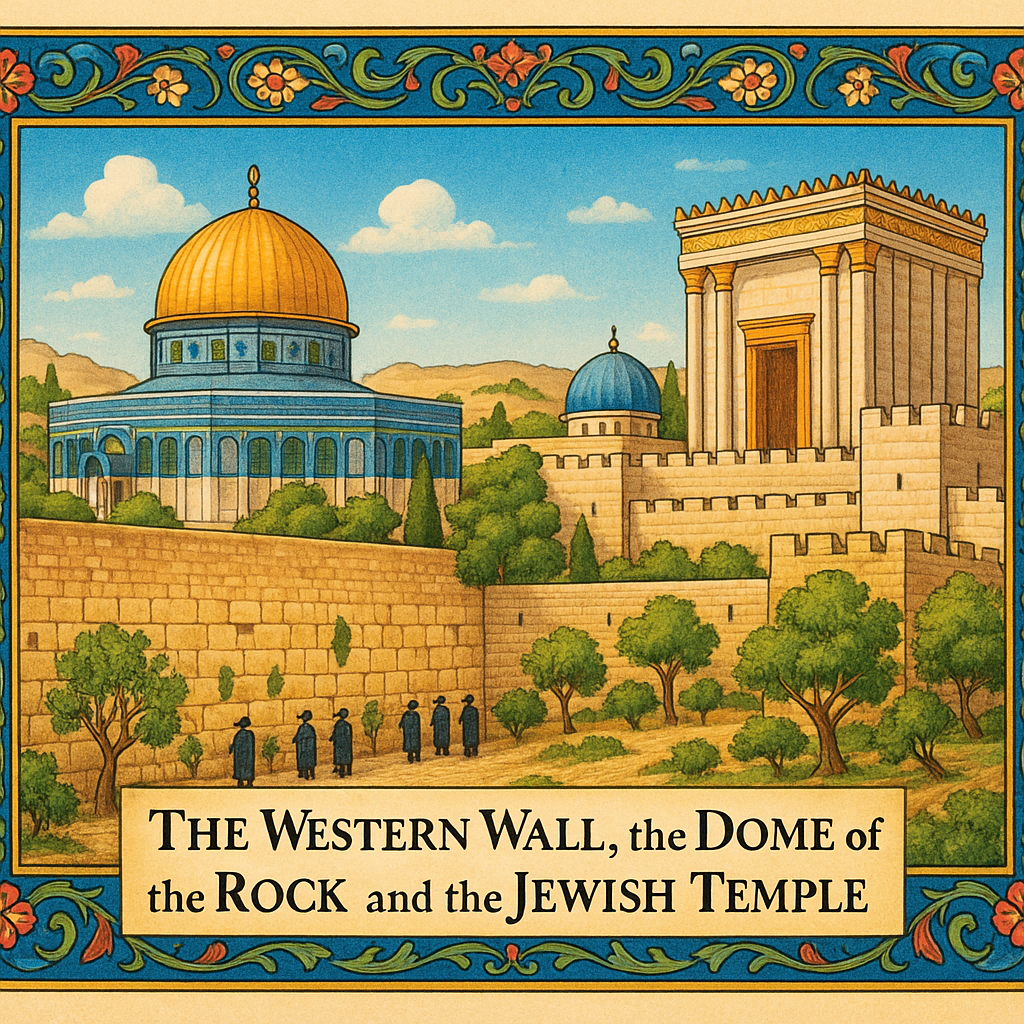
The Western Wall, the Dome of the Rock and the Jewish Temple


Azahari Hassim

Which location is considered more sacred according to rabbinic ruling: the Western Wall or the area where the Dome of the Rock currently exists?

According to rabbinic ruling, the area where the Dome of the Rock currently exists is considered more sacred than the Western Wall. The Dome of the Rock is located on the Temple Mount, which is traditionally viewed as the holiest site in Judaism, as it is believed to be the location of the ancient Jewish temples.

The Western Wall, while a very significant and sacred site for prayer and the Jewish people, is considered a remnant of the Second Temple and thus holds a different level of sanctity compared to the Temple Mount itself.

What is a considerable obstacle to the Jews to rebuild their temple in Jerusalem?

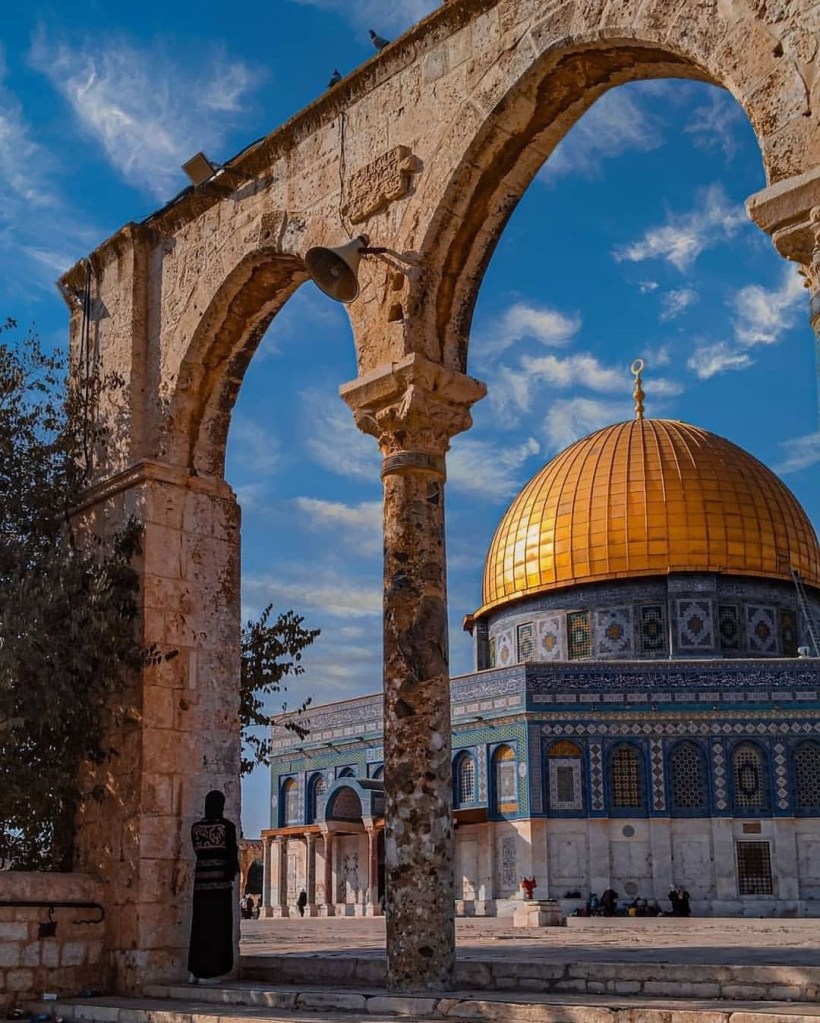
A considerable obstacle to the Jews rebuilding their temple in Jerusalem is the current presence of the Al-Aqsa Mosque and the Dome of the Rock, two of the holiest sites in Islam. Both structures are located on the Temple Mount (known as Haram al-Sharif in Islam), which is traditionally believed to be the location of the First and Second Jewish Temples.

Some Islamic scholars assert that Muhammad’s Night Journey to Jerusalem, which resulted in the establishment of the Dome of the Rock and Al Aqsa Mosque to honor this event, effectively nullifies the sacrificial practices of Judaism. In contrast, Christians hold that it was through Jesus’ crucifixion on the cross that such practices were superseded.

Why was the Jewish temple so vital to be attached to the person of Abraham?

The Jewish temple was so vital to be attached to the person of Abraham because Abraham was the founder of Judaism and the first person to make a covenant with God. The covenant was a promise that God made to Abraham and his descendants, that they would be God’s chosen people and inherit the land of Canaan, also known as the Promised Land.

The temple was the place where the Jews worshipped God and offered sacrifices, as well as the symbol of their connection to God and the Promised Land. The temple was also believed to be the dwelling place of God’s presence on earth, also known as the Shekhinah. Therefore, the temple was a vital link between Abraham, the father of Judaism, and God, the creator and protector of Judaism.

Did Abraham know that the temple would be built on the site where he almost sacrificed his son?

There is no definitive answer to whether Abraham knew that the temple would be built on the site where he almost sacrificed his son. Different traditions and interpretations have different views on this question. Here are some possible perspectives:

According to Jewish tradition, Abraham was aware of the future significance of Mount Moriah, as he named it “the Lord will provide” (Genesis 22 verse 14), implying that God would provide a place for His presence and worship there. Some Jewish sources also suggest that Abraham saw a vision of the future temple when he ascended the mountain with Isaac.

According to Christian tradition, Abraham did not know the exact location of the future temple, but he had faith that God would fulfill His promises to him and his descendants. Some Christian sources also see Abraham’s sacrifice of Isaac as a foreshadowing of God’s sacrifice of His Son, Jesus Christ, on the cross.

According to Islamic tradition, Abraham did not sacrifice Isaac, but Ishmael, his firstborn son by Hagar. Muslims believe that Abraham and Ishmael built the Kaaba, the house of God, in Mecca, which is the holiest site in Islam. Muslims do not consider the Temple Mount in Jerusalem as the place where Abraham offered his son, but rather as the place where Muhammad ascended to heaven during his night journey.

Abraham and the House of God in Jerusalem and Mecca

Did Moses and Abraham know that the temple would be built in Jerusalem?

The Bible does not explicitly state that Moses and Abraham knew about the future construction of the Temple in Jerusalem. However, both figures are significant in the Jewish tradition regarding the covenant with God and the eventual establishment of a central place of worship.

  1. Abraham: He is often associated with the land of Canaan, which includes Jerusalem. The biblical narrative highlights that he established altars and worshiped God in various locations, symbolizing a connection to the land that would later become significant in Jewish history.
  2. Moses: He led the Israelites out of Egypt and received the Law at Mount Sinai. His connection to the Tabernacle, a mobile sanctuary, is significant, as it laid the groundwork for central worship in the future. The establishment of the Temple in Jerusalem is often viewed as a fulfillment of the promise of a permanent dwelling place for God, but there is no direct indication that Moses was aware of the future Temple.

In Jewish tradition, the idea of a Temple in Jerusalem is connected to prophecies and promises made later in the biblical narrative, particularly during the time of King David and Solomon. Therefore, while Moses and Abraham played crucial roles in the religious history of the Israelites, there is no definitive evidence that Moses and Abraham had knowledge of the Temple’s future construction.


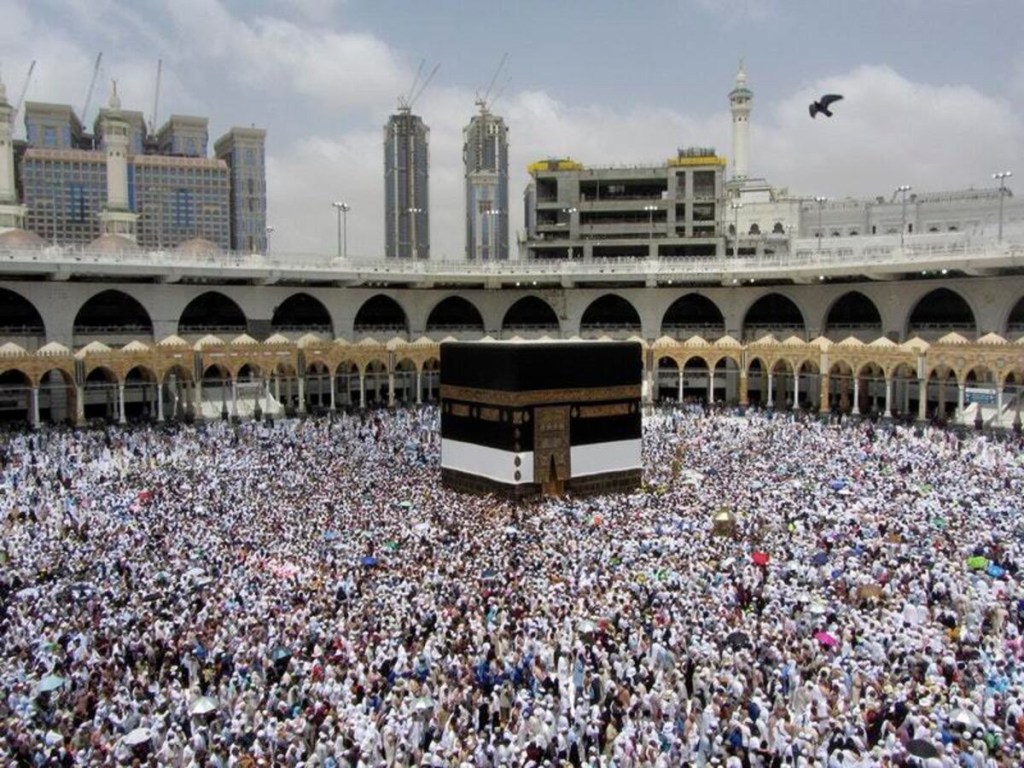
Mecca, located in present-day Saudi Arabia, is considered the holiest city in Islam. It is the birthplace of the Prophet Muhammad and the site of the Kaaba, a cube-shaped structure that Muslims face during their prayers. The city attracts millions of pilgrims each year, especially during the Hajj, which is one of the Five Pillars of Islam.

How is Abraham linked to the Kaaba (House of God) in Mecca in Islam?

In Islam, Abraham is deeply connected to the Kaaba in Mecca, which is regarded as the House of God. According to Islamic tradition:

1. Construction of the Kaaba: It is believed that Abraham, along with his son Ishmael, was instructed by God to build the Kaaba as a place of worship. The Kaaba is considered the first house of worship dedicated to the monotheistic belief in one God.

2. Covenant and Submission: Abraham is viewed as a key figure in Islam for his unwavering submission to God’s will and his role as a prophet. His dedication to monotheism is foundational to Islamic beliefs.

3. Pilgrimage (Hajj): The Kaaba is the focal point of the Hajj pilgrimage, one of the Five Pillars of Islam. Muslims from around the world perform rituals around the Kaaba, commemorating the actions of Abraham and Ishmael.

4. Significance of the Black Stone: The Black Stone (Hajar al-Aswad), set into the corner of the Kaaba, is said to have been given to Abraham by the angel Gabriel. It is revered by Muslims as a sacred object.

Overall, Abraham’s legacy as a prophet and the father of monotheism links him to the Kaaba (House of God), reinforcing the importance of the site in Islamic faith and practice.
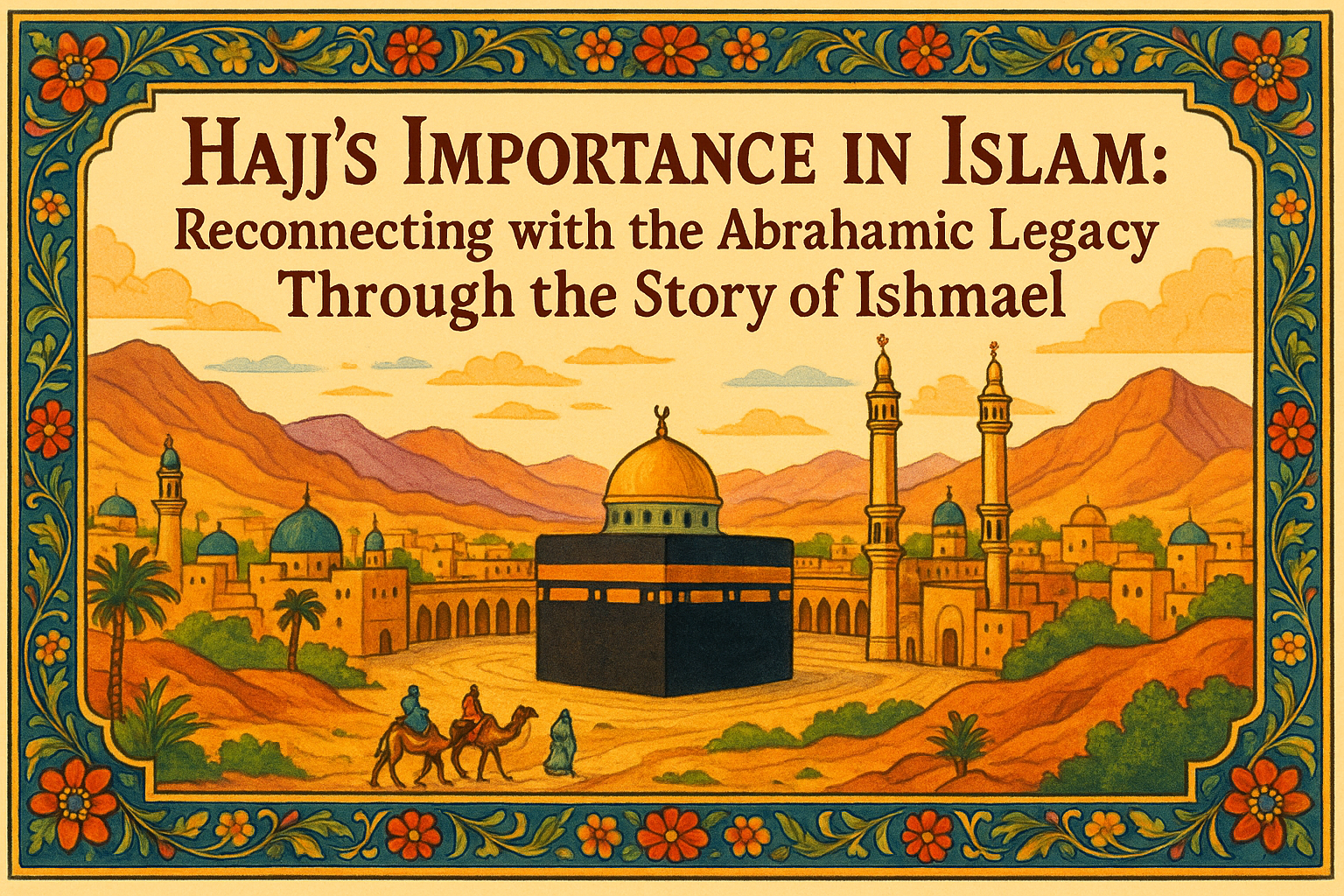
Hajj’s Importance in Islam: Reconnecting with the Abrahamic Legacy Through the Story of Ishmael


Azahari Hassim

There is an argument among scholars regarding the significance of Hajj in Islam as a restored religion tracing back to Abraham. It is posited that Ishmael was exiled as a young child well before the birth of Isaac, and that Ishmael, rather than Isaac, was the intended sacrifice. How is this argument articulated?

The argument regarding the significance of Hajj in Islam as a restored religion tracing back to Abraham, and the associated narrative involving Ishmael and Isaac, is articulated through several key points:

1. Lineage and Prophetic Tradition:

In Islamic tradition, Hajj is deeply connected to the figure of Abraham (Ibrahim). Muslims believe that Abraham, along with his son Ishmael (Ismail), played a foundational role in establishing the rites of Hajj. The Kaaba, the central structure around which Hajj is performed, is believed to have been built by Abraham and Ishmael.

2. The Story of Ishmael and Isaac:

Exile of Ishmael: According to Islamic narratives, long before Isaac was born, Ishmael and his mother Hagar were settled by Abraham in the desert of Mecca, which is where the Zamzam well miraculously appeared to sustain both of Hagar and her infant son Ishmael. This event is commemorated during the Hajj.

The Sacrifice: Islamic tradition holds that it was Ishmael, not Isaac, who was the intended sacrifice. This is based on interpretations of the Quran, specifically Surah 37, verses 100 to 113, where it is generally understood that the son who was to be sacrificed was Ishmael. According to the sequence of events in the Quran, the promise of Isaac’s birth comes after the story of sacrifice, indicating that Ishmael is the son in question.

This contrasts with the Judeo-Christian tradition, which identifies Isaac as the intended sacrifice.

3. Symbolic Acts of Hajj:

The rites of Hajj include reenactments and commemorations of events from the lives of Abraham, Hagar, and Ishmael. For instance:

The Sa’i, which involves walking seven times between the hills of Safa and Marwah, commemorates Hagar’s desperate search for water for her infant son Ishmael.

The stoning of the Jamarat represents Abraham’s rejection of Satan’s temptation, which is believed to have occurred when he was about to sacrifice Ishmael.

4. Restoration of Abrahamic Monotheism:

Islam views itself as a continuation and restoration of the pure monotheistic faith of Abraham. The Hajj serves as a means to reconnect with the Abrahamic legacy, emphasizing monotheism, obedience to God, and the unity of the Muslim community.

In summary, the argument hinges on the belief that Ishmael, rather than Isaac, was central to the narrative of sacrifice and that the rites of Hajj are rooted in the events of Abraham’s life as they unfolded in Mecca with Ishmael. This perspective underscores the significance of Hajj in Islam and its connection to Abraham as a pivotal prophet in the monotheistic tradition.

Abrahamic Covenant: Analyzing the Perspective of Fulfillment Through Ishmael

There is a belief among Islamic scholars that the Abrahamic covenant, fulfilled through Ishmael instead of Isaac, entails the promise of the land from the Nile River to the great river of Euphrates, along with the blessing to all nations through Abraham’s seed.

Those who hold this view argue that God asked Abraham to offer Ishmael, not Isaac. They also contend that the ancient Israelite scribes altered their scriptures.
In contrast, the Israelites are bound by the Sinai covenant, which highlights communal responsibilities and accountability to God and to each other as part of the agreement between God and the Israelites. What is the articulation of their argument?

The argument that the Abrahamic covenant is fulfilled through Ishmael rather than Isaac involves several key points articulated by those who support this view. Here is a summary and analysis of their arguments:

  1. Promise of the Land: Proponents of this view argue that the promise of the land extending from the Nile River to the Euphrates, as mentioned in Genesis 15, verse 18, was intended for the descendants of Ishmael. They believe that this geographic expanse aligns with the territories historically associated with Islam and Muhammad, who was a descendant of Ishmael.
  2. Blessing to All Nations: They interpret the promise of blessings to all nations through Abraham’s seed (Genesis 12, verse 3, and Genesis 22, verse 18) as being fulfilled through Muhammad (Surah 21, verse 107) which reads: “And We have not sent you (O Muhammad) but as a mercy for the unto all beings.” They argue that Islam, preached by Muhammad, has had a significant historical and cultural impact on a global scale, thus fulfilling the promise of being a blessing to all nations.
  3. Sacrifice of Ishmael: This argument hinges on the belief that God asked Abraham to offer Ishmael as a sacrifice, rather than Isaac. This is primarily based on Islamic tradition found in the Quran (Surah 37, verses 99 to 113), which states that Abraham was asked to sacrifice his son, and many Muslims believe this son was Ishmael. They argue that this narrative was the original one, which was later altered by Israelite scribes to place Isaac in the position of the sacrificial son.
  4. Scriptural Alterations: Supporters of this view contend that ancient Israelite scribes altered the scriptures to reflect Isaac as the chosen son who was to be sacrificed and through whom the covenant would be fulfilled. They believe that these alterations were made to establish and legitimize the Israelite claim to the covenantal promises.

Sinai Covenant Context

The Sinai covenant, distinct from the Abrahamic covenant, focuses on the relationship between God and the Israelites, emphasizing communal responsibilities and accountability. This covenant, given at Mount Sinai, includes the Ten Commandments and a detailed code of laws that govern the moral, religious, and social conduct of the Israelite community. The Sinai covenant underscores the idea that the Israelites are to be a holy nation and a kingdom of priests, dedicated to serving God and adhering to His commandments.

Articulation of Their Argument

Those who argue for the fulfillment of the Abrahamic covenant through Ishmael articulate their position by highlighting these key points:

  1. Historical and Geographic Claims: They argue that the promise of the land and blessings align more closely with the historical and geographic realities of Ishmael’s descendants rather than those of Isaac.
  2. Islamic Tradition: They cite Islamic scripture and tradition, which they believe preserves the original account of the sacrifice involving Ishmael, rather than Isaac. This account is viewed as being more authentic and less altered than the Hebrew Bible’s version.
  3. Critical View of Scripture: They take a critical view of the Hebrew Bible, suggesting that it underwent alterations by Israelite scribes to support their theological and political claims. They argue that these changes were made to establish a narrative that centers on Isaac and his descendants as the primary inheritors of God’s covenant with Abraham.
  4. Fulfillment Through Ishmael’s Lineage: They believe that the widespread influence and significance of Ishmael’s descendants fulfill the covenantal promises more broadly and inclusively, aligning with the idea of being a blessing to all nations.

In summary, the viewpoint that the Abrahamic covenant is realized through Ishmael instead of Isaac is based on scriptural interpretations, historical context, and theological perspectives. This stands in contrast to the conventional interpretation of the covenant, which is linked to Isaac’s descendants, and underscores notable distinctions between the Abrahamic and Sinai covenants.

Islamic Views on the Abrahamic and Sinai Covenants in Relation to Heritage and Relics

There is no specific Abrahamic relic that has been preserved through Jewish generations, similar to the Kaaba, the Black Stone (Hajar al-Aswad) and the Station of Abraham (Maqam Ibrahim) in Islam. The sole significant artifact associated with Jewish heritage is the Ark of the Covenant.

However, it is important to note that the Ark can be traced back to Moses rather than Abraham and was lost during the destruction of the First Temple. Consequently, Islamic scholars maintain that the Israelites were bound by the Sinai Covenant, while Muslims are considered to be under the Abrahamic Covenant. How does their argument go?

The argument presented by Islamic scholars regarding the Abrahamic Covenant and the Sinai Covenant is based on several theological and historical points. To understand their perspective, let’s break down the key elements:

  1. Abrahamic Covenant vs. Sinai Covenant: The Abrahamic Covenant is believed to be the original covenant between God and Abraham, which includes promises of land, descendants, and blessings.
    The Sinai Covenant, also known as the Mosaic Covenant, was established between God and the Israelites through Moses at Mount Sinai.
  2. Islamic view on continuity: Islamic scholars argue that Muslims are the true inheritors of the Abrahamic Covenant, which they consider to be universal and eternal.
    They contend that the Sinai Covenant was specific to the Israelites and was temporary or conditional.
  3. Lack of physical relics: The absence of a specific Abrahamic relic in Jewish tradition, comparable to the Kaaba, the Black Stone, or the Station of Abraham in Islam, is seen by some Islamic scholars as significant.
    They argue that this absence might indicate a break in the direct line of Abrahamic heritage.
  4. The Ark of the Covenant: While the Ark of the Covenant is a significant artifact in Jewish history, it is associated with Moses rather than Abraham.
    Its loss during the destruction of the First Temple is sometimes interpreted by Islamic scholars as a symbolic end to the Sinai Covenant.
  5. Islamic claim to Abrahamic heritage: Islamic scholars often emphasize the direct lineage of Muhammad to Abraham through Ishmael.
    They argue that Islam represents a restoration of the original Abrahamic monotheism, unencumbered by later additions or alterations.
  6. Universality vs. particularity: The Islamic view often presents the Abrahamic Covenant as universal, meant for all of humanity.
    In contrast, they view the Sinai Covenant as particular to the Israelites and not binding on all people.
  7. Supersessionism: Some Islamic interpretations incorporate a form of supersessionism, suggesting that Islam supersedes earlier revelations and covenants.

It’s important to note that this argument represents a specific Islamic perspective and is not universally accepted outside of Islamic scholarship. Jewish and Christian traditions have their own interpretations of these covenants and their ongoing relevance. The topic of covenants and their applicability is a complex theological issue with various interpretations across different faith traditions.

Ishmael: The Rightful Heir of the Abrahamic Covenant – Revisiting Biblical Circumcision and Lineage

The Abrahamic covenant stands as a foundational pillar in the sacred histories of Judaism, Christianity, and Islam. Central to this covenant is the rite of circumcision, instituted by God as a binding sign between Himself and Abraham’s descendants. 

Traditionally, Jewish and Christian interpretations assert that Isaac, the son born to Abraham and Sarah, is the rightful heir through whom this covenant is fulfilled.

However, a careful reexamination of the biblical chronology challenges this assumption. This article argues that Ishmael, not Isaac, was the first and only son to receive the covenantal sign alongside Abraham himself—prior to Isaac’s birth—thereby establishing Ishmael as the sole and true heir of the original Abrahamic covenant. By exploring the timing, recipients, and implications of circumcision in Genesis 17 and 21, this piece invites readers to reconsider long-held views and appreciate the overlooked centrality of Ishmael in the divine covenant.

1. The Biblical Basis for Circumcision as a Covenant

The Bible establishes circumcision as the sign of the covenant between God and Abraham:

Genesis 17:9–11:

“Then God said to Abraham, ‘As for you, you must keep my covenant, you and your descendants after you for the generations to come. This is my covenant with you and your descendants after you, the covenant you are to keep: Every male among you shall be circumcised… it will be the sign of the covenant between me and you.’”

Here, circumcision is the definitive sign of the Abrahamic covenant.

2. The Timing of Circumcision Before Isaac’s Birth

The Bible affirms that circumcision was performed before Isaac was born:

Genesis 17:23–26:

“On that very day Abraham took his son Ishmael and all those born in his household or bought with his money, every male in his household, and circumcised them, as God told him… Abraham was ninety-nine years old when he was circumcised, and his son Ishmael was thirteen.”

At this critical juncture, only Abraham and Ishmael were Abraham’s natural descendants to receive the sign of the covenant. Isaac had not yet been born.

3. Ishmael as the Sole and True Heir of the Abrahamic Covenant

This sequence of events reveals that:
Circumcision is the outward and binding sign of the Abrahamic covenant.
Ishmael was the only son of Abraham present to receive this sign alongside him.
All others circumcised at that time were household members and servants—not Abraham’s direct offspring.
Therefore, Ishmael alone stands as the true and sole heir of the Abrahamic covenant, sharing this foundational covenantal sign with Abraham himself.

4. Isaac as Merely a Participant Like Other Household Members

When Isaac was born, he too was circumcised on the eighth day (Genesis 21:4). However, this circumcision occurred after the covenant was already established through Abraham and Ishmael. Like the other members of Abraham’s household, Isaac simply entered into an existing covenantal practice rather than establishing or uniquely embodying it.

In this understanding:
Isaac’s circumcision parallels that of Abraham’s other household members.
He was brought into the covenantal sign but did not share in the original covenantal enactment alongside Abraham.
Thus, Isaac is seen merely as a participant in the Abrahamic covenant, not as its unique heir.

5. Distinction from the Sinai Covenant

The Sinai covenant was revealed exclusively to the descendants of Isaac through Jacob (Israel), establishing a separate covenantal framework for the Israelites.

In contrast, the original Abrahamic covenant—established through circumcision before Isaac’s birth—finds its complete and exclusive fulfillment in Ishmael, who was the first to embody and share this sign with Abraham.

6. Challenging Traditional Jewish and Christian Views

Traditionally, Jewish and Christian interpretations place Isaac as the sole heir of the Abrahamic covenant. However, this argument radically reorients that view:
Ishmael alone shares the covenantal enactment with Abraham.
Isaac, like the other household members, enters a covenantal practice already established.
Therefore, Ishmael alone emerges as the true and rightful heir of the Abrahamic covenant.

Summary of the Articulation

Circumcision, the outward sign of the Abrahamic covenant, was first performed on Abraham and Ishmael before Isaac was born. This historical reality establishes that while Isaac and others in Abraham’s household were participants in the sign of the covenant, only Ishmael shared in the covenant’s original establishment and thus stands as its true and exclusive heir. In this perspective, Ishmael’s role transcends mere participation—he alone embodies the Abrahamic covenant in its full and foundational form.

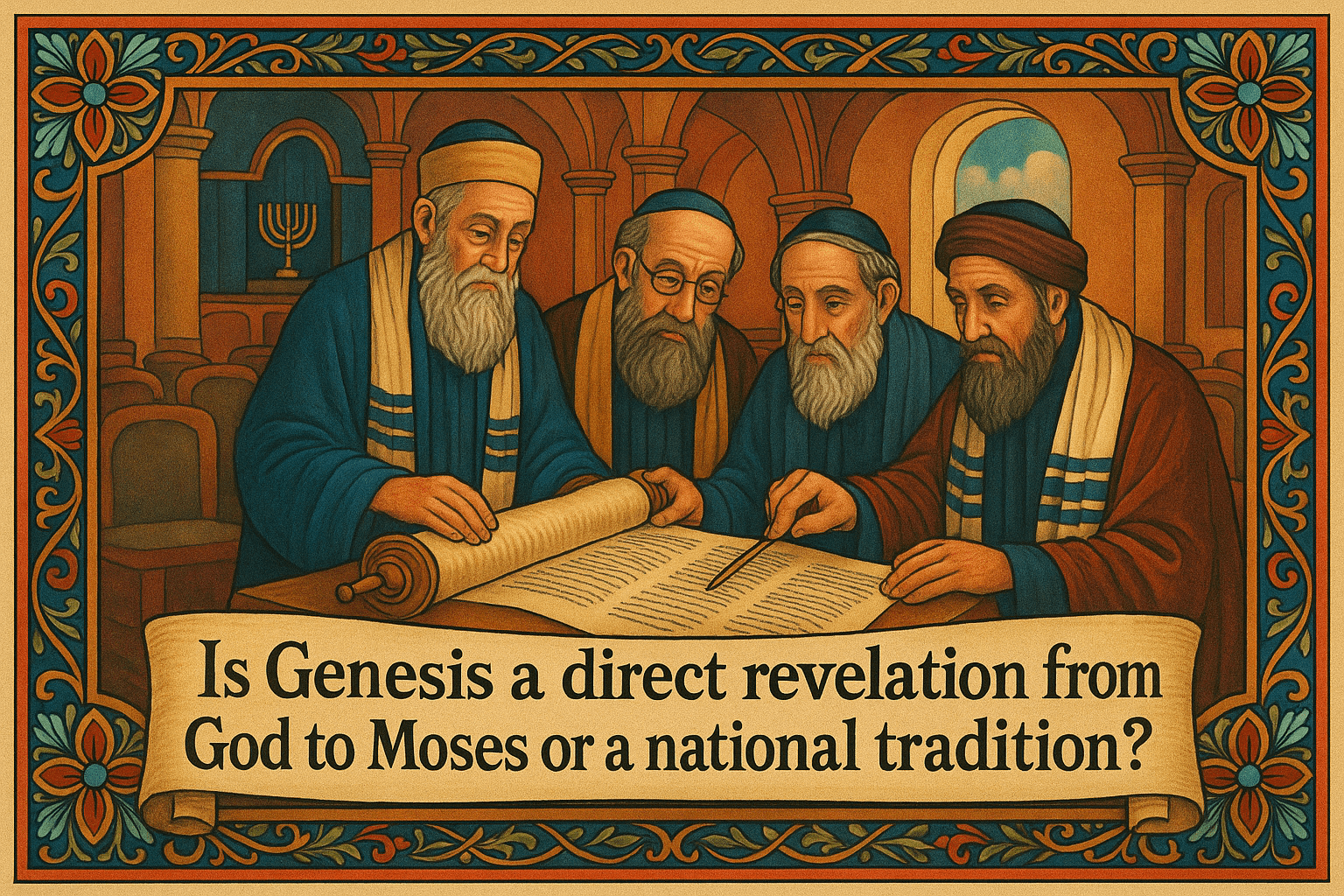
Is Genesis a direct revelation from God to Moses or a national tradition?


Azahari Hassim

Is the story in Genesis known to the Israelites long before the birth of Moses and is it not a direct revelation from God to Moses, but rather a national tradition handed down from their ancestors? How did this tradition become formalized as scripture?

The stories in the book of Genesis likely originated as oral traditions passed down through generations before being written. These narratives, including creation, the patriarchs, and early human history, reflect the cultural context of the ancient Near East, with parallels to Mesopotamian myths.

Many scholars believe that rather than being direct revelations to Moses, Genesis consists of national traditions expressing the Israelites’ collective experiences and understanding of God. Moses may have played a role in formalizing these stories, but he likely did not author them.

The transition from oral to written form occurred over centuries, possibly beginning during the Monarchy (around 1000 BCE) and intensifying during the Babylonian exile (6th century BCE). Scribes compiled these traditions into the Pentateuch, which later underwent editing and canonization.

In summary, the stories in Genesis likely existed as oral traditions long before Moses. They were part of the Israelites’ national heritage and identity, handed down from their ancestors. These traditions were later collected, edited, and formalized into scripture through a process involving various authors, scribes, and community leaders over several centuries, culminating in the canonical form we recognize today.

The direct revelation of God to Moses and the children of Israel primarily refers to the events described in the books of Exodus, Leviticus, Numbers, and Deuteronomy. These moments of direct communication serve as the foundation of Israelite religion and law. Here are the key instances of this revelation:

  1. The Burning Bush (Exodus 3): God reveals His name (Yahweh) and commissions Moses.
  2. Mount Sinai (Exodus 19-20): God gives the Ten Commandments and speaks to the people.
  3. The Covenant Code (Exodus 21-23): Laws for social and ethical conduct.
  4. Tabernacle Instructions (Exodus 25-40, Leviticus): Guidelines for worship, sacrifices, and the priesthood.
  5. Renewal of the Law (Deuteronomy): Moses reiterates the law and covenant before his death.
  6. Wilderness Guidance (Numbers): Divine guidance through a cloud and fire, and various miracles.

These revelations establish God’s covenant, laws, and Israel’s religious identity.

In summary, the direct revelations given to Moses and the Israelites mainly center on God’s laws, ethical instructions, and covenantal promises, shaping the theological and moral foundation of the Israelite community.

Greek orthodox chapel on mount sinai / moses mountain at 2285m in Egypt

Pre-Islamic Arab Tradition vs Torah

According to established tradition, prior to the advent of Muhammad, the Arabs believed that their ancestor Abraham was on the verge of offering his son Ishmael as a sacrifice to God. It is believed that their pre-Islamic tradition about Ishmael predates the Torah given to Moses. How is their argument articulated?

Scholars argue that the oral traditions of the Arabs, including those surrounding Ishmael, predate the written texts of the Torah. This assertion is based on the notion that oral traditions can be older than their written counterparts, as they may have been passed down through generations long before being codified in scripture.

The argument that the pre-Islamic Arab tradition about Ishmael predates the Torah given to Moses is articulated through several points:

  1. Historical Narratives: Early Arab traditions held that Ishmael, not Isaac, was the son Abraham was commanded to sacrifice. This belief is deeply rooted in the cultural and religious narratives of pre-Islamic Arabia.
  2. Religious Significance: The story of Ishmael’s near-sacrifice is significant in Islam, where it is believed that both Abraham and Ishmael willingly submitted to God’s command. This act of submission is seen as a profound demonstration of faith and obedience.
  3. Cultural Artifacts: Some early Muslim scholars argued that the horns of the ram, which was sacrificed in place of Ishmael, were once displayed in the Kaaba, suggesting a long-standing tradition that predates Islamic scripture.
  4. Jealousy Argument: There is also an argument that Jews claimed Isaac was the intended sacrifice out of jealousy, as Ishmael is considered the ancestor of the Arabs.

These points collectively support the belief that the tradition of Ishmael’s near-sacrifice has ancient roots, predating the Torah and reflecting the unique relationship between God and the Arab people.

Interestingly, before the rise of Islam, ancient Arabs in Mecca circumcised their children at the age of 13 or 14. Did they inherit this practice from the Torah, which requires circumcision at eight days, or was it a tradition tracing back to Abraham that predated the Torah?

It is plausible that the tradition of circumcision among ancient Arabs in Mecca traced back to Abraham, who is considered a common ancestor by both Jews and Arabs. It could be that this practice was passed down through generations independently of any direct influence from the Torah or Judaism.

The Divergent Accounts of Abraham, Hagar, and Ishmael in Islamic and Judeo-Christian Traditions

Islamic tradition holds that Abraham left his wife Hagar and their son Ishmael alone in the desert near Mecca. Ishmael was still an infant at the time. The interpolation of Genesis 21, verses 9 to 10, is therefore evident from this event. How are they articulating their argument?

The argument regarding the interpolation of Genesis 21, verses 9 to 10, in the context of Abraham, Hagar, and Ishmael is articulated by contrasting the Islamic tradition with the Judeo-Christian narrative. Here’s how the argument is framed:

  1. Divine Command Versus Human Jealousy:

In Islamic tradition, Abraham’s decision to leave Hagar and Ishmael in the desert was a direct command from God as a test of faith. This is seen as a noble and divinely ordained act, rather than a result of Sarah’s jealousy.

In the Judeo-Christian narrative, the banishment is attributed to Sarah’s jealousy when she saw Ishmael “mocking” Isaac, which led her to demand their expulsion.

  1. Age Discrepancy:

Islamic sources describe Ishmael as a nursing infant when he was left in the desert, which aligns with the practical details of Hagar carrying him and the subsequent events.

The Bible suggests Ishmael was about 17 years old, which raises logical issues about Hagar carrying him and the depiction of him as a helpless child under a bush.

  1. Miraculous Provision:

In Islamic tradition, the story emphasizes the miraculous provision of water through the Zamzam well, which is a central part of Hajj rituals and symbolizes God’s care and provision.

The Judeo-Christian account also mentions divine intervention, but it does not have the same ritualistic and symbolic significance as in Islam.

  1. Cultural and Religious Impact:

The Islamic narrative underscores the foundational role of Ishmael and Hagar in the establishment of Mecca and the Kaaba, highlighting their importance in Islamic tradition.

In contrast, Ishmael plays a minor role in Judeo-Christian traditions, primarily recognized as the ancestor of the Arabs but not central to religious practices.

Conclusion

The interpolation argument is articulated by highlighting these differences and suggesting that the Genesis account may have been influenced or altered to fit the theological and cultural context of the Judeo-Christian tradition. The Islamic narrative, with its emphasis on divine command and the early age of Ishmael, presents a coherent and practical story that aligns with the physical and spiritual elements of the Hajj pilgrimage, thus offering a distinct perspective on the events surrounding Abraham, Hagar, and Ishmael.

The Comma Johanneum: The History and Controversy Behind 1 John 5:7-8


Azahari Hassim

It often disturbs some devout Christians to learn that parts of 1 John 5, verses 7 and 8, as found in the King James Version and New King James Version, are actually present in only a handful of Greek manuscripts of the New Testament. Could you kindly elaborate more on this?

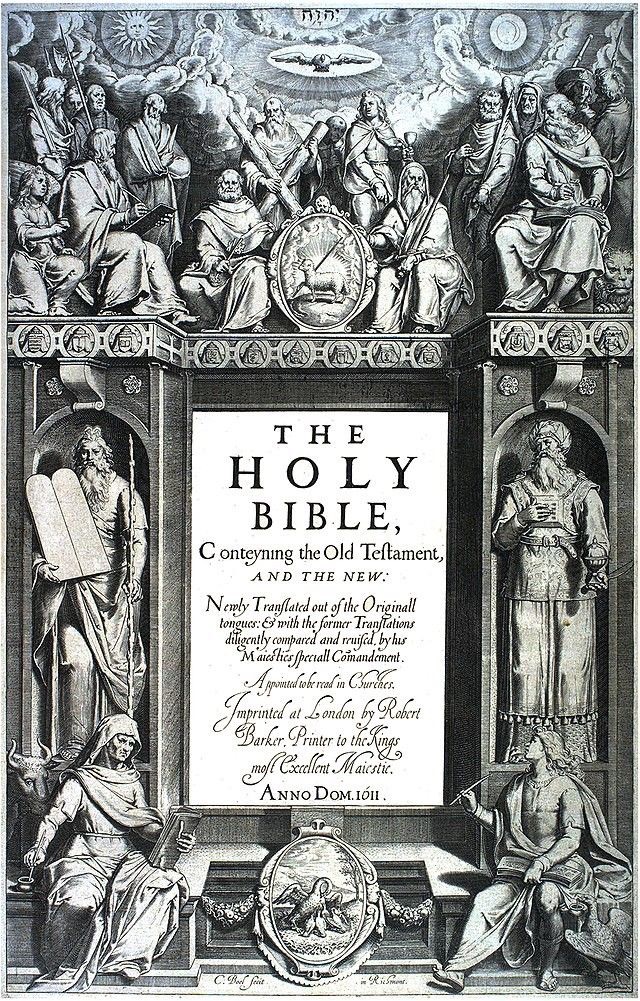
The passage in question, commonly referred to as the Comma Johanneum, is found in 1 John 5, verses 7 and 8 in the King James Version (KJV) and the New King James Version (NKJV). Here’s how it reads in those translations:

For there are three that bear record in heaven, the Father, the Word, and the Holy Ghost: and these three are one. And there are three that bear witness in earth, the Spirit, and the water, and the blood: and these three agree in one.”

The specific portion that is controversial is:

”…the Father, the Word, and the Holy Ghost: and these three are one.

This specific wording is not found in the majority of early Greek manuscripts of the New Testament. The Comma Johanneum is absent from nearly all Greek manuscripts before the 14th and 15th centuries.

1. Earliest Manuscripts: The earliest and most reliable Greek manuscripts of 1 John (such as the Codex Sinaiticus and Codex Vaticanus from the 4th century) do not contain the Comma Johanneum.

2. Church Fathers: Early church fathers like Origen, Cyprian, and Augustine also do not quote this Trinitarian formula, suggesting it was not present in the manuscripts available to them.

3. Latin Tradition: The Comma Johanneum appears in some Latin manuscripts from the 4th century onward, primarily in the writings of certain Latin theologians. It was included in later Latin translations, particularly those influenced by the Vulgate.

4. Introduction into Greek Texts: The insertion of the Comma into Greek manuscripts is believed to have occurred during the Middle Ages, significantly influenced by the Latin tradition. Its occurrence is limited to a small number of late medieval Greek manuscripts, specifically approximately seven to eight in total.

The King James Version translators in the early 17th century relied heavily on the Textus Receptus, a Greek text compiled by Erasmus in the early 1500s. Erasmus’s initial editions of the Textus Receptus did not contain the Comma Johanneum, since he found no Greek manuscript that included it. Under pressure from certain theologians and after being shown a Greek manuscript (likely created for this purpose), he included it in his third edition (1522). This inclusion led to its presence in the King James Version.

Most modern Bible translations (such as the NIV, ESV, NASB, and NRSV) exclude the Comma Johanneum or place it in a footnote, recognizing that it is not supported by the earliest and most reliable manuscripts.

Conclusion

The inclusion of the Comma Johanneum in both the King James Version and the New King James Version reflects historical context rather than original authenticity. Although this may be troubling for some Christians, it underscores the complexities involved in the transmission of biblical texts. Unlike most modern translations, its presence in these versions stems from varying manuscript traditions, and scholars largely agree that it was added to the text of 1 John at a later date.

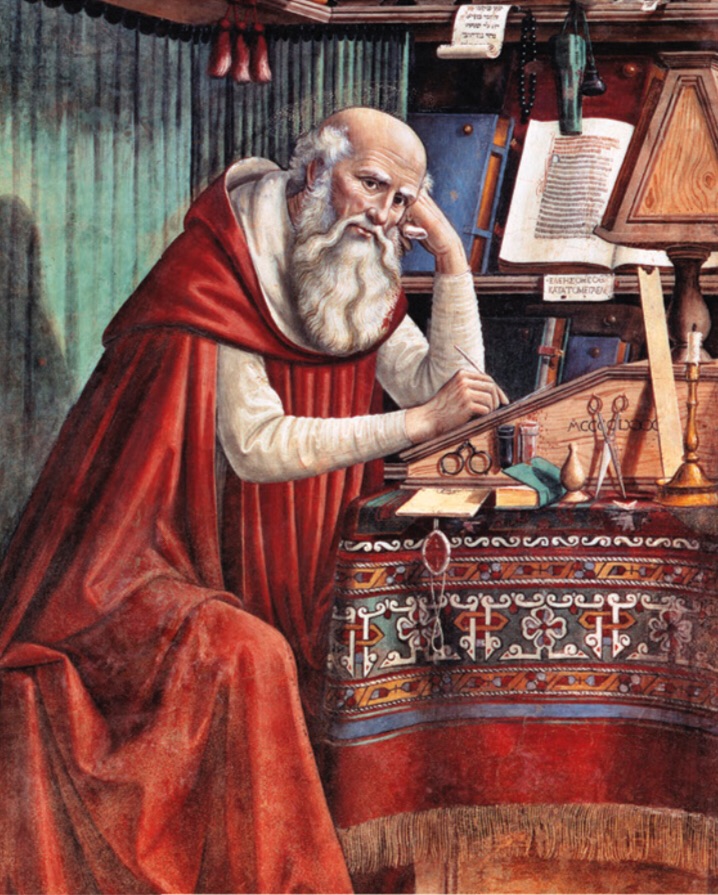
ST. JEROME
Originally written in Hebrew and Greek, the Bible has been translated into more than 2,000 languages. One of the most influential translations was the Latin one, made by St. Jerome (above), a priest, who lived in the 4th century ce. The Lindisfarne Gospels were written using this translation.

Isaac Newton and Arianism

It is believed that Isaac Newton adopted Arianism. How is this argument explained?

Arianism is a theological doctrine that denies the divinity of Jesus Christ and asserts that he is a created being, subordinate to God the Father. Arianism was condemned as a heresy by the Council of Nicaea in 325 CE, but it continued to have followers in some regions until the 7th century.

Isaac Newton, the famous physicist and mathematician, was a devout but heterodox Christian who rejected the doctrine of the Trinity and other orthodox beliefs. He was influenced by his extensive study of the early history of the Church and the origins of Christianity. He believed that the true faith of the apostles had been corrupted by the Roman Catholic Church and that the Holy Trinity was a pagan invention. He also thought that he was recovering the ancient wisdom of pre-Christian civilizations through his scientific discoveries.

Most scholars agree that Newton was an Arian, or at least a non-Trinitarian, who did not accept the co-equality and co-eternity of the Father, the Son, and the Holy Spirit. He wrote many religious tracts that dealt with the literal interpretation of the Bible and the refutation of the Trinity, but he kept them secret for fear of persecution and ostracism. He only shared his views with a few trusted friends and correspondents.

Therefore, the argument that Newton adopted Arianism is based on the evidence of his private writings, his theological research, and his correspondence with other like-minded individuals. Newton was a complex and secretive person who had a profound interest in religion and philosophy, but he did not publicize his heretical opinions. He was more concerned with finding the truth for himself than with influencing others.

Does the term “monotheism” include both Unitarians and Trinitarians?

Yes, the term “monotheism” broadly refers to the belief in a single, all-powerful God. Both Unitarians and Trinitarians are considered monotheists, but they understand the nature of God differently.

Unitarians typically believe in the oneness of God and reject the concept of the Trinity, emphasizing the singular nature of God.

Trinitarians, on the other hand, believe in a Triune God, meaning that one God exists in three persons: the Father, the Son (Jesus Christ), and the Holy Spirit, yet these three are co-equal and co-eternal.

While both groups affirm the existence of one God, their interpretations and theological understandings of that oneness differ significantly. Therefore, in a broader sense, both Unitarians and Trinitarians can be included under the umbrella of monotheism, but with important distinctions in their beliefs about the nature of God.

Which view of monotheism aligns better with Jesus’ statement in John 17, verse 3: Unitarian or Trinitarian?

In John 17, verse 3, Jesus says:

“Now this is eternal life: that they know you, the only true God, and Jesus Christ, whom you have sent.”

This highlights the differences between Unitarianism, which sees God as a single entity and views Jesus as a prophet, and Trinitarianism, which believes in one God in three persons, including the divine nature of Jesus.

Analysis of John 17, verse 3 shows that Jesus references God the Father as the “only true God,” aligning with Unitarian views of God’s singularity. Jesus’ distinction between himself and the Father supports this perspective, as it implies a subordinate role for Jesus.

On the other hand, Trinitarians may argue that this verse acknowledges the relational aspect of the Trinity, asserting that Jesus’ focus on the Father does not lessen his own divinity.

In conclusion, Unitarianism seems to align more closely with John 17, verse 3, emphasizing God’s oneness and the distinction between God and Jesus. However, Trinitarians argue that their interpretation encompasses a unified yet complex view of God. Ultimately, interpretations depend on underlying theological beliefs.

Contrasting Narratives: The Story of Hagar and Ishmael in Islamic and Judeo-Christian Traditions


Azahari Hassim

Genesis 21, verses 9 to 10, reads:

But Sarah saw that the son whom Hagar the Egyptian had borne to Abraham was mocking, and she said to Abraham, “Get rid of that slave woman and her son, for that woman’s son will never share in the inheritance with my son Isaac.”

Certain Islamic scholars assert that the narrative concerning Hagar and Ishmael as depicted in the Torah may have undergone modifications by later scribes. They propose that the verses in Genesis 21, verses 9 to 10 may have been inserted at a later date, given that Hagar and Ishmael had already left Abraham’s household prior to the birth of Isaac. Furthermore, Islamic tradition indicates that Ishmael was an infant during this period (when departing from Abraham’s household).

The story of Abraham, Hagar, and Ishmael is recounted in both Islamic and Judeo-Christian traditions, but the interpretations of events differ significantly, especially regarding motivations and circumstances.

In Islamic tradition, the narrative emphasizes that Abraham’s decision to leave Hagar and Ishmael in the desert was a direct command from God. This command is viewed as a test of Abraham’s faith and obedience to divine will. Muslims interpret Abraham’s actions as noble and part of a larger divine plan, which highlights his trust in God’s wisdom. The act is not attributed to any personal motives, such as jealousy or resentment, but is instead seen as a fulfilling of God’s purpose for Abraham and his family.

Conversely, in the Judeo-Christian tradition, the focus shifts more towards human emotions and relationships. The narrative often centers around Sarah’s jealousy and insecurity upon seeing Ishmael mock Isaac, her son with Abraham. This jealousy leads Sarah to demand that Abraham expel Hagar and Ishmael from their home. This viewpoint highlights how complicated human feelings can be and the possible disagreements that might occur within family relationships. These conflicts can lead to feelings of being left out due to personal emotions.

Concerning the age discrepancy, Islamic texts typically depict Ishmael as a nursing infant when Hagar was left in the desert. This portrayal aligns with the practical realities of the situation, as it is more feasible for a mother to carry a small child rather than an older one. The narrative implies that Hagar, in her role as a mother, is caring for a very young child, which makes Abraham’s abandonment of them even more poignant given their vulnerability.

In contrast, the Biblical account presents Ishmael as approximately 17 years old at the time of his expulsion. This significant age difference raises questions about the practicality of the situation. If Ishmael were indeed a teenager, it would be less feasible for Hagar to carry him in the way described in the narratives. Additionally, the image of a young man depicted as helpless under a bush can create a conflicting view of his character, complicating the emotional weight of the story.

In conclusion, the Islamic viewpoint on the story of Hagar and Ishmael as presented in the Torah is marked by skepticism regarding the authenticity of certain verses. Islamic scholars argue that the timeline and events described in the Torah may have been altered, and Islamic tradition suggests that Ishmael was an infant during this period (when departing from Abraham’s household).

The connection between Islam and the land that God promised to Abraham in the Torah

Genesis 15, verse 18 reads:

“In the same day the Lord made a covenant with Abram, saying, Unto thy seed have I given this land, from the river of Egypt unto the great river, the river Euphrates”.

Genesis 15, verse 18 is a specific verse in the Bible, which is part of the book of Genesis in the Old Testament. It describes a covenant that God made with Abraham, promising him and his descendants land from the river of Egypt to the Euphrates River.

Did the establishment of Islam as the religion of Abraham in the Middle East or the Levant fulfill the promise of God to Abraham that his descendants through Ishmael would inherit the land from the border of Egypt to the Euphrates River as mentioned in the Torah or Genesis 15, verse 18?

Islamic scholars assert that the ancient scribes may have manipulated the Torah to favor Isaac instead of Ishmael. How do they present their argument?

Islamic scholars argue that the establishment of Islam in the Middle East and Levant region did fulfill God’s promise to Abraham regarding Ishmael’s descendants.

They point out that Islam spread rapidly across this area in the 7th-8th centuries, bringing monotheistic worship of the God of Abraham to millions.

It is asserted that the ancient scribes who wrote the Torah may have altered the stories to show preference for Isaac’s descendants over Ishmael’s.

They suggest that this bias may have been influenced by socio-political factors, such as the dominance of the Israelite tribes, which led to the emphasis on Isaac’s descendants in the biblical account.

Historically, the Arab-Islamic Caliphates after the rise of Islam in the 7th century did indeed conquer and control territories extending from Egypt to the Euphrates River, which matches the geographical extent of the land mentioned in Genesis 15, verse 18. This has led some to draw parallels between the spread of Islam and the fulfillment of the promise to Ishmael’s descendants.

From an Islamic theological perspective, the establishment of Islam in the Middle East and the Levant is seen as the fulfillment of God’s promise to Abraham, as it recognizes and upholds the significance of Ishmael’s lineage.

Islamic scholars argue that both Isaac and Ishmael are equally revered as prophets, and that their respective lineages are part of God’s overarching plan for humanity, with Hebrew prophets paving the way for the coming of Muhammad, the last prophet.

In summary, Islamic scholars argue that:

  1. The promise made to Abraham about his descendants inheriting the land could have been fulfilled through Ishmael.
  2. The Torah might have been altered over time to give greater emphasis to Isaac’s lineage and downplay Ishmael’s role.
  3. The rise of Islam and the influence of the descendants of Ishmael (through Prophet Muhammad) is seen as a fulfillment of God’s promise to Abraham.
  4. The spread of Islam and its dominance in the Middle East aligns with the geographical scope of the promise made to Abraham in the Torah, reinforcing the idea that Ishmael’s descendants inherited this blessing.

These arguments reflect a broader theological debate regarding the interpretation of ancient texts and the legacy of Abraham’s two sons, Isaac and Ishmael, in the context of religious history.

What is Abraham’s Role in Islamic Theology?

According to Islamic theology, the prophet Abraham (known as Ibrahim in Arabic) plays a pivotal role as one of the most important figures in the religion. The Quran refers to him as Khalilullah, meaning “the friend of God.“

Abraham is seen as the father of monotheism and a patriarch for all three major Abrahamic faiths – Islam, Christianity and Judaism. He is considered a model of faith, obedience and devotion to the one true God. Some key aspects of Abraham’s significance in Islam include:

He is credited with establishing the Kaaba (House of God) in Mecca along with his son Ishmael. The Kaaba is Islam’s most sacred site towards which Muslims pray.

Abraham is associated with the rituals of the Hajj pilgrimage, such as the pilgrims casting stones at Jamrat al-Aqabah, which commemorates the time when Abraham stoned Satan for attempting to dissuade him from carrying out God’s command to sacrifice his son. Additionally, walking between the hills of Safa and Marwah commemorates Hagar’s search for water for her infant son, Ishmael. The Hajj reenacts many significant events from Abraham’s life.

The Eid al-Adha holiday celebrates Abraham’s willingness to sacrifice his son Ishmael at God’s command. God substituted a ram at the last moment, and Muslims commemorate this with ritual sacrifice.

Abraham is considered a “Muslim” in the sense of being one who submitted to God, even before the rise of Islam as a religion. He is a model for the Prophet Muhammad.

He is mentioned by name 69 times in the Quran and is revered as one of the greatest prophets along with Noah, Moses, Jesus and Muhammad. Blessings upon Ibrahim are recited by Muslims in daily prayers.

So in summary, the Prophet Ibrahim or Abraham is a central figure in Islam as the archetypal monotheist, a friend of God, a model of faith and obedience, and a patriarch whose life is commemorated through practices like the Hajj and Eid al-Adha. He represents a spiritual link between Islam and the other Abrahamic faiths.

The Covenant of Abraham: A Comparison Between the Bible and the Quran

According to biblical scripture, it is recorded that God established a covenant with Abraham through his son Isaac, rather than his firstborn Ishmael. Conversely, the Quran presents a different perspective by indicating that the covenant was made with Ishmael instead of Isaac. How does the Quran describe this?

Surah 2, verses 124 to 125 of the Quran read:

“And when his Lord tested Abraham with certain words, and he fulfilled them. God said, “I am making you a leader of humanity.” Abraham said, “And my descendants?” God said, “My covenant does not include the wrongdoers.”

“And We made the House a focal point for the people, and a sanctuary. Use the shrine of Abraham as a place of prayer. And We commissioned Abraham and Ishmael, “Sanctify My House for those who circle around it, and those who seclude themselves in it, and those who kneel and prostrate.”

The phrase “And when his Lord tested Abraham with certain words,” presented in verse 124, is understood by Quranic commentators to refer to the tests and commands that God imparted to Abraham. These included leaving his family in a barren land, sacrificing his son Ishmael, rebuilding the Kaaba (House of God), and instituting the rite of circumcision.

The Quran clearly states in Surah 2, verse 124 that God made a covenant with Abraham through his son Ishmael, not Isaac. The covenant was established prior to the birth of Isaac, who is regarded as a divine gift to Abraham and Sarah, a result of Abraham’s readiness to offer Ishmael as a sacrifice.
In this context, Ishmael is understood as a son dedicated to God, whereas Isaac is considered a son of blessing for Abraham and Sarah. This contradicts the Biblical account which portrays Isaac as the son who was to inherit the covenant from Abraham.

According to the Quran and Islamic tradition, the Biblical account was distorted to diminish Ishmael’s status as Abraham’s heir in favor of Isaac. This alteration is thought to stem from the bias of Jewish scribes toward the Israelite lineage.

The Quran asserts that it rectifies this distortion by confirming Ishmael as the son who carried on Abraham’s legacy in accordance with the original divine covenant. Additionally, the divine selection of the ancient Israelites and their Hebrew prophets before the advent of Islam is seen as a preparation for the arrival of Muhammad, the final Prophet.

Who were the Unitarian scholars among Christians prior to the establishment of the Nicene Creed?


Azahari Hassim

Prior to the formulation of the Nicene Creed in 325 CE, certain Christian scholars and theologians expressed Unitarian beliefs, focusing on the singularity of God and rejecting the doctrines of the Trinity. These figures typically aligned with early theological traditions that emphasized the Father as the sole God. Some of these individuals include:

1. Theodotus of Byzantium (late 2nd century):

Theodotus taught that Jesus was a man who was adopted as the Son of God at his baptism (“Adoptionism”). He rejected the idea of Jesus being divine by nature, affirming the singularity of God, and was excommunicated for his views.

2. Paul of Samosata (3rd century):

Paul, a bishop of Antioch, was a key figure in early Christian Monarchianism, emphasizing the unity of God. He taught that Jesus was a man endowed with divine wisdom and power but not preexistent or divine in nature. His views were condemned at the Synod of Antioch (268 CE).

3. Artemon (2nd–3rd century):

Artemon is associated with a form of Monarchianism, maintaining that early Christian doctrine affirmed that Jesus was merely human and not divine. He argued that the belief in Christ’s divinity was a later development.

4. Ebionites (1st–4th centuries):

The Ebionites were an early Jewish-Christian group that rejected the divinity of Jesus and the preexistence doctrine. They viewed Jesus as a prophet and the Messiah but emphasized the absolute unity of God.

5. Photinus of Sirmium:

Photinus was a 4th-century bishop who rejected the Trinity, viewing God as a singular entity rather than three distinct persons. His beliefs conflicted with orthodox Christian teachings, particularly the Nicene Creed established in 325 AD, which affirmed the Trinitarian view. Photinus emphasized God’s unity but was eventually condemned as a heretic by the Church for opposing the established doctrine.

6. Origen (184–253 CE):

Although Origen is often considered a precursor to later Trinitarian thought, he also emphasized the subordination of the Son to the Father. His theological framework left room for interpretations that leaned toward a Unitarian understanding of the supremacy of the Father.

7. Arianism and Arius (c. 250–336 CE):

Arius, though post-Nicene, was active before the council and denied the co-eternity and consubstantiality of the Son with the Father. He argued that the Son was created by the Father and therefore subordinate, aligning with a Unitarian emphasis on God’s singularity.

8. Early Jewish Christians:

Many early Jewish Christians, including those in the Nazarean and Ebionite communities, maintained strict monotheism. They rejected the idea of Jesus’ divinity and upheld the belief in God as a singular being.

These figures and groups represent diverse streams of early Christian thought that diverged from the later Trinitarian orthodoxy solidified at the Council of Nicaea. Their beliefs highlight the rich and contested theological debates of early Christianity.

Monotheism: Unitarian and Trinitarian

Does the term “monotheism” include both Unitarians and Trinitarians?

Yes, the term “monotheism” broadly refers to the belief in a single, all-powerful God. Both Unitarians and Trinitarians are considered monotheists, but they understand the nature of God differently.

Unitarians typically believe in the oneness of God and reject the concept of the Trinity, emphasizing the singular nature of God.

Trinitarians, on the other hand, believe in a Triune God, meaning that one God exists in three persons: the Father, the Son (Jesus Christ), and the Holy Spirit, yet these three are co-equal and co-eternal.

While both groups affirm the existence of one God, their interpretations and theological understandings of that oneness differ significantly. Therefore, in a broader sense, both Unitarians and Trinitarians can be included under the umbrella of monotheism, but with important distinctions in their beliefs about the nature of God.

When asked by a scribe which commandment is the most important, Jesus responds:
“The most important one,” answered Jesus, “is this: ‘Hear, O Israel: The Lord our God, the Lord is one. Love the Lord your God with all your heart and with all your soul and with all your mind and with all your strength.'”

(Mark 12:28-31)

Which view of monotheism aligns better with Jesus’ statement in John 17, verse 3: Unitarian or Trinitarian?

In John 17, verse 3, Jesus says:

“Now this is eternal life: that they know you, the only true God, and Jesus Christ, whom you have sent.”

This highlights the differences between Unitarianism, which sees God as a single entity and views Jesus as a prophet, and Trinitarianism, which believes in one God in three persons, including the divine nature of Jesus.

Analysis of John 17, verse 3 shows that Jesus references God the Father as the “only true God,” aligning with Unitarian views of God’s singularity. Jesus’ distinction between himself and the Father supports this perspective, as it implies a subordinate role for Jesus.

On the other hand, Trinitarians may argue that this verse acknowledges the relational aspect of the Trinity, asserting that Jesus’ focus on the Father does not lessen his own divinity.

In conclusion, Unitarianism seems to align more closely with John 17, verse 3, emphasizing God’s oneness and the distinction between God and Jesus. However, Trinitarians argue that their interpretation encompasses a unified yet complex view of God. Ultimately, interpretations depend on underlying theological beliefs.

How does the Hebrew Bible teach monotheism?

The Book of Isaiah in the Hebrew Bible contains several passages that emphasize the unity and singular nature of God, which are often cited in discussions about monotheism. Here are a few key verses from Isaiah that highlight the unity of God:

  1. Isaiah 44, verse 6: “Thus says the LORD, the King of Israel and his Redeemer, the LORD of hosts: ‘I am the first and I am the last; besides me there is no god.’”
    This verse clearly articulates the oneness of God, stating that there is no other deity besides Him.
  2. Isaiah 45, verse 5: “I am the LORD, and there is no other, apart from me there is no God; I will strengthen you, though you have not acknowledged me,”.
    Again, this asserts the exclusivity of God as the only divine being, emphasizing that no other gods exist alongside Him.
  3. Isaiah 45, verse 18: “For thus says the LORD, who created the heavens (he is God!), who formed the earth and made it (he established it; he did not create it empty, he formed it to be inhabited!): ‘I am the LORD, and there is no other.’”
    This verse not only speaks to God’s uniqueness but also to His role as the sole creator of the universe, reinforcing the idea of His singular divinity.
  4. Isaiah 46, verse 9: “Remember the former things of old; for I am God, and there is no other; I am God, and there is none like me,”.
    This verse emphasizes the uniqueness of God, stating there is none like Him, highlighting His distinct nature and the exclusivity of His divinity.

These verses from Isaiah are often used to support the concept of monotheism, a core belief in Judaism, Christianity, and Islam, albeit each religion understands and interacts with this concept differently. In the context of Islamic teachings, similar verses from the Quran echo these themes to assert the oneness of God against polytheistic beliefs and theological concepts like the Trinity in Christianity.

The Quran, Torah, and Trinity

Some scholars argue that the Quran complements the Torah given to the Jews, as the Torah does not contain a description of God’s nature mentioned in Surah 112 verse 3 of the Quran, which questions the idea of Trinity. How can this argument be clarified?
The topic you bring up involves several layers of religious interpretation and debate among scholars. Let’s unpack this step by step:

1. Surah 112 (Al Ikhlas) of the Quran:

This is a short chapter (surah) that describes the oneness of God (tawhid). The verses you’re referring to are:

Say, “He is Allah, [who is] One,
Allah, the Eternal Refuge.
He neither begets nor is born,
Nor is there to Him any equivalent.”

This is a clear declaration of monotheism and negates the idea of God having offspring or being born from something. Many interpret this as a challenge to the Christian idea of the Trinity and God’s sonship.

2. The Torah and God’s Description:

While it’s true that the Torah emphasizes the oneness of God, the Torah does not contain the explicit language found in Surah 112 of the Quran regarding God not begetting nor being begotten. This difference is often cited as evidence for the Quran being a complementary revelation.

3. Quran as Complementary:

The Quran itself claims to be a final testament that confirms what came before it (previous scriptures) and also acts as a guardian over them, correcting any deviations or misunderstandings. This is the foundation of the belief that the Quran is complementary to earlier revelations like the Torah.

However, it’s essential to understand that these interpretations and beliefs are rooted in faith and religious traditions. The interpretation of scriptures, whether it’s the Torah, Bible, or Quran, can vary widely among scholars and believers within their respective faiths.

How does Christianity and Judaism view the Holy Spirit differently?

What are the key theological distinctions between Judaism and Christianity regarding the Holy Spirit?

Here are some key theological distinctions between Judaism and Christianity regarding the Holy Spirit:

  1. Judaism:
    In Judaism, the Holy Spirit (Ruach HaKodesh) is seen as a divine force or presence from God, not a distinct person or entity.
    It is often associated with prophecy, inspiration, and the empowerment of individuals to perform God’s will.
    The Holy Spirit is considered a means through which God communicates with and influences the world.
    It is not worshipped as a separate being but is understood as an aspect of God’s interaction with humanity.
  2. Christianity:
    In Christianity, the Holy Spirit is one of the three persons of the Holy Trinity (Father, Son, and Holy Spirit).
    The Holy Spirit is considered fully divine and co-equal with God the Father and Jesus Christ.
    The Holy Spirit is believed to dwell within believers, guiding, comforting, and empowering them.
    It plays a crucial role in the process of salvation, sanctification, and the ongoing spiritual life of Christians.
  3. Key Differences:
    Judaism views the Holy Spirit as a divine force, while Christianity sees it as a distinct person within the Trinity.
    In Christianity, the Holy Spirit is worshipped as part of the Godhead, whereas in Judaism, it is not worshipped separately from God.
    The Holy Spirit’s role in Christianity includes indwelling believers and being actively involved in their spiritual lives, which is not a concept present in Judaism.
    These distinctions highlight the different theological frameworks and understandings of the Holy Spirit in Judaism and Christianity.

This image illustrates the moment when the angel Jibril appeared to Prophet Muhammad (PBUH) and commanded him to “Read” (Iqra)—which marked the beginning of the revelation of the Qur’an (Surah Al-‘Alaq 96:1-5). 

How does Surah 16, verse 102 in the Quran relate to the concept of the Holy Spirit in Judaism?

Surah 16, verse 102 in the Quran states,

“Say, ‘The Holy Spirit has brought it down from your Lord with truth to make firm those who believe and as guidance and good news to the Muslims.'”

In Islamic tradition, this Holy Spirit is often identified with the angel Gabriel.

This concept of the Holy Spirit in Islam has some similarities with the Jewish understanding of the Holy Spirit (Ruach HaKodesh), as described in the provided information:

  1. Divine Messenger: In both traditions, the Holy Spirit is seen as a means through which God communicates with humanity. In Judaism, it’s associated with prophecy and inspiration, while in Islam, it’s linked to bringing divine revelation.
  2. Not a Distinct Person: Similar to Judaism, Islam does not view the Holy Spirit as a distinct person of the Godhead. This contrasts with the Christian concept of the Trinity.
  3. Divine Force or Presence: Both Judaism and Islam see the Holy Spirit more as a divine force or presence rather than a separate entity to be worshipped.
  4. Empowerment: In Judaism, the Holy Spirit is associated with empowering individuals to perform God’s will. Similarly, in Islam, the Holy Spirit (as Gabriel) empowers the Prophet to receive and convey Allah’s message.

However, there are also some differences:

  1. Identification: While Judaism doesn’t typically identify the Holy Spirit with a specific angelic being, Islam often associates it with the angel Gabriel.
  2. Specific Role: In Islam, the Holy Spirit’s role is more specifically tied to the transmission of divine revelation, whereas in Judaism, its role is broader, including general inspiration and prophecy.

It’s important to note that while there are these similarities and differences, the theological frameworks of Judaism and Islam remain distinct, each with its own unique understanding of the nature of God and divine interaction with the world.

Heir to Abraham: Isaac vs. Ishmael


Azahari Hassim

The phrase “Heir to Abraham: Isaac vs. Ishmael” pertains to the biblical narrative surrounding Abraham, who is regarded as the progenitor of both Isaac and Ishmael. In the biblical account, God assures Abraham that he will have a son, leading to the birth of two sons: Isaac, born to his wife Sarah, and Ishmael, born to his servant Hagar.

The competition between Isaac and Ishmael arises from their respective positions as heirs to Abraham’s legacy. Within Jewish tradition, Isaac is recognized as the legitimate heir and the primary recipient of God’s covenant with Abraham, while Ishmael is frequently depicted as an outsider or a rejected figure.

Conversely, Islamic tradition perceives Ishmael as a fruit of Abraham, wheras Isaac is considered a divine gift given to Abraham and Sarah during their later years, due to Abraham’s obedience in leaving the infant Ishmael and his mother in the desert near the Kaaba (the house of God), as well as his willingness to sacrifice Ishmael.

I seek clarification regarding the interpretation of this argument.

In the Islamic tradition, Ishmael is regarded as a symbol of Abraham’s initial struggle and test of faith, while Isaac represents the ultimate reward for his unwavering obedience to God. The narrative of Abraham leaving infant Ishmael and his mother in the desert near the Kaaba illustrates Abraham’s trust in God’s plan, even when confronted with difficult decisions.

Abraham’s readiness to sacrifice Ishmael further underscores his complete submission to God’s will, as he was willing to relinquish the most precious thing in his life without hesitation. This act of devotion holds great significance in Islamic teachings and serves as a compelling example of faith and obedience.

As a reward for Abraham’s steadfastness and willingness to follow God’s commands — both in leaving infant Ishmael and Hagar in the desert and in his willingness to sacrifice Ishmael — God granted Abraham and Sarah a miraculous gift: the birth of Isaac in their old age.

This divine blessing signified God’s recognition of Abraham’s faith and further cemented his role as a patriarch of monotheistic faith, with both Ishmael and Isaac becoming the forebears of great nations.

This narrative highlights the interconnected themes of sacrifice, trust, and divine reward, demonstrating that true faith is met with God’s grace and fulfillment of His promises.

The Quran asserts that it rectifies the biblical narrative surrounding Abraham by confirming Ishmael as the son who carried on Abraham’s legacy in accordance with the Abrahamic covenant. Additionally, the divine selection of the ancient Israelites and their Hebrew prophets under the Sinai covenant before the advent of Islam is seen as a precursor to the coming of Muhammad, the last Prophet.

Ishmael, the son dedicated to God, and Isaac, the son of blessing for Abraham and Sarah

It is thought that Abraham abandoned Hagar and the baby Ishmael close to the Kaaba (House of God) to devote them to God as if they were His. Consequently, Muslims celebrate Eid al-Adha and Sa’i, which honors Hagar’s search for water for her child. This happened well before Isaac’s birth. How is their argument explained?

The Islamic narrative of Abraham, Hagar, and Ishmael differs significantly from the Biblical account and forms an important part of Islamic tradition and ritual. Here’s an explanation of the argument:

  1. Abraham’s Journey to Mecca

According to Islamic tradition, Abraham was commanded by God to take Hagar and their infant son Ishmael to Mecca. This journey was not seen as abandonment, but rather as fulfilling a divine command. Abraham left them near the location of what would later become the Kaaba, entrusting them to God’s care.

  1. Hagar’s Faith and the Zamzam Well

After Abraham’s departure, Hagar demonstrated remarkable faith. When their water supply was exhausted, she ran between the hills of Al-Safa and Al-Marwah seven times, desperately searching for water for her thirsty child. This act of faith resulted in the miraculous appearance of the Zamzam well, a spring of water that gushed forth near Ishmael.

  1. Significance in Islamic Ritual

This event is commemorated in the Islamic pilgrimage (Hajj) through the ritual of Sa’i, where pilgrims run or walk between the hills of Al-Safa and Al-Marwah seven times, reenacting Hagar’s search for water.

  1. The Kaaba and Mecca

Islamic tradition holds that Abraham later returned to Mecca multiple times. During one of these visits, he and Ishmael constructed the Kaaba as the first house of worship dedicated to the one true God. This established Mecca as a sacred site in Islam.

  1. Eid al-Adha

Eid al-Adha commemorates Abraham’s willingness to sacrifice his son (identified as Ishmael in Islamic tradition) at God’s command. This event is believed to have occurred near Mecca, further cementing the area’s religious significance.

  1. Timing in Relation to Isaac

In the Islamic narrative, these events occurred before Isaac’s birth. Ishmael is considered the elder son and the one whom Abraham was commanded to sacrifice.

  1. God’s Blessing of Isaac

Following the near sacrifice of Ishmael, God blessed Sarah and Abraham with a son named Isaac, fulfilling His promise to them and establishing Isaac as another patriarch in the Abrahamic faiths.

The Dead Sea Scrolls were discovered in caves in these cliffs.

Ishmael: The Rightful Heir of the Abrahamic Covenant – Revisiting Biblical Circumcision and Lineage

The Abrahamic covenant stands as a foundational pillar in the sacred histories of Judaism, Christianity, and Islam. Central to this covenant is the rite of circumcision, instituted by God as a binding sign between Himself and Abraham’s descendants. 

Traditionally, Jewish and Christian interpretations assert that Isaac, the son born to Abraham and Sarah, is the rightful heir through whom this covenant is fulfilled.

However, a careful reexamination of the biblical chronology challenges this assumption. This article argues that Ishmael, not Isaac, was the first and only son to receive the covenantal sign alongside Abraham himself—prior to Isaac’s birth—thereby establishing Ishmael as the sole and true heir of the original Abrahamic covenant. By exploring the timing, recipients, and implications of circumcision in Genesis 17 and 21, this piece invites readers to reconsider long-held views and appreciate the overlooked centrality of Ishmael in the divine covenant.

1. The Biblical Basis for Circumcision as a Covenant

The Bible establishes circumcision as the sign of the covenant between God and Abraham:

Genesis 17:9–11:

“Then God said to Abraham, ‘As for you, you must keep my covenant, you and your descendants after you for the generations to come. This is my covenant with you and your descendants after you, the covenant you are to keep: Every male among you shall be circumcised… it will be the sign of the covenant between me and you.’”

Here, circumcision is the definitive sign of the Abrahamic covenant.

2. The Timing of Circumcision Before Isaac’s Birth

The Bible affirms that circumcision was performed before Isaac was born:

Genesis 17:23–26:

“On that very day Abraham took his son Ishmael and all those born in his household or bought with his money, every male in his household, and circumcised them, as God told him… Abraham was ninety-nine years old when he was circumcised, and his son Ishmael was thirteen.”

At this critical juncture, only Abraham and Ishmael were Abraham’s natural descendants to receive the sign of the covenant. Isaac had not yet been born.

3. Ishmael as the Sole and True Heir of the Abrahamic Covenant

This sequence of events reveals that:
Circumcision is the outward and binding sign of the Abrahamic covenant.
Ishmael was the only son of Abraham present to receive this sign alongside him.
All others circumcised at that time were household members and servants—not Abraham’s direct offspring.
Therefore, Ishmael alone stands as the true and sole heir of the Abrahamic covenant, sharing this foundational covenantal sign with Abraham himself.

4. Isaac as Merely a Participant Like Other Household Members

When Isaac was born, he too was circumcised on the eighth day (Genesis 21:4). However, this circumcision occurred after the covenant was already established through Abraham and Ishmael. Like the other members of Abraham’s household, Isaac simply entered into an existing covenantal practice rather than establishing or uniquely embodying it.

In this understanding:
Isaac’s circumcision parallels that of Abraham’s other household members.
He was brought into the covenantal sign but did not share in the original covenantal enactment alongside Abraham.
Thus, Isaac is seen merely as a participant in the Abrahamic covenant, not as its unique heir.

5. Distinction from the Sinai Covenant

The Sinai covenant was revealed exclusively to the descendants of Isaac through Jacob (Israel), establishing a separate covenantal framework for the Israelites.

In contrast, the original Abrahamic covenant—established through circumcision before Isaac’s birth—finds its complete and exclusive fulfillment in Ishmael, who was the first to embody and share this sign with Abraham.

6. Challenging Traditional Jewish and Christian Views

Traditionally, Jewish and Christian interpretations place Isaac as the sole heir of the Abrahamic covenant. However, this argument radically reorients that view:
Ishmael alone shares the covenantal enactment with Abraham.
Isaac, like the other household members, enters a covenantal practice already established.
Therefore, Ishmael alone emerges as the true and rightful heir of the Abrahamic covenant.

Summary of the Articulation

Circumcision, the outward sign of the Abrahamic covenant, was first performed on Abraham and Ishmael before Isaac was born. This historical reality establishes that while Isaac and others in Abraham’s household were participants in the sign of the covenant, only Ishmael shared in the covenant’s original establishment and thus stands as its true and exclusive heir. In this perspective, Ishmael’s role transcends mere participation—he alone embodies the Abrahamic covenant in its full and foundational form.

Did Bible scholars debate Ishmael’s age when he left Abraham’s house?

Did classical Bible scholars engage in a debate regarding Ishmael’s age at the time of leaving Abraham’s house?

Yes, classical Bible scholars have indeed debated Ishmael’s age when he and his mother Hagar were sent away from Abraham’s household. The primary source of this debate stems from the biblical texts in Genesis.

According to Genesis 21, verses 8-14, the event occurred after Isaac was weaned. Since weaning typically happened around the age of three in ancient times, Ishmael would have been around 17 years old, given that he was 14 years older than Isaac. However, some interpretations of the text suggest that Ishmael is depicted as a much younger child, which has led to discussions about potential inconsistencies or symbolic interpretations within the narrative.

This debate highlights the complexities and nuances in interpreting ancient texts, where cultural, historical, and linguistic contexts play significant roles.

Some people think that Ishmael, when sent away by Abraham in the Torah, was just a young child, not a teenager, based on the phrase “and he grew” in Genesis 21, verse 20. They point out that the Hebrew word “yelid” is used for both Ishmael and baby Moses (Exodus 2, verse 6). How do they explain this argument?

The argument is articulated by pointing out the use of the Hebrew word “yelid” in both Genesis 21, verses 14 to 15, and Exodus 2, verse 6. In these verses, “yelid” is used to describe both Ishmael and infant Moses. Supporters of the argument claim that since “yelid” is used to describe Moses when he was an infant, it should also be understood to mean that Ishmael was still a young child in Genesis 21, verse 20.

Additionally, the phrase “and he grew” in Genesis 21, verse 20, is interpreted by some to imply that Ishmael was still in the process of growing and developing, suggesting a younger age. They argue that if Ishmael were already a teenager or older, it would not be necessary to mention his growth.

It should be noted, however, that interpretations of biblical texts can vary, and different scholars or readers may have different understandings of the intended meaning.

Here is how the Jewish scribe manipulated Ishmael’s story:

  1. The age of Ishmael at the time of his departure from Abraham’s house.
  2. Abraham’s son, who was offered as a sacrifice.

Reinterpreting Zechariah 12:10 through an Islamic Lens: The “Only and Firstborn Son.”

Zechariah 12, verse 10 reads:

“And I will pour upon the house of David, and upon the inhabitants of Jerusalem, the spirit of grace and of supplications: and they shall look upon me whom they have pierced, and they shall mourn for him, as one mourneth for his only son, and shall be in bitterness for him, as one that is in bitterness for his firstborn.”

Through an Islamic lens, let’s explore Zechariah 12, verse 10, where the “only” and “firstborn” may refer to Ishmael, Abraham’s intended sacrifice, causing him immense sorrow, and link this to Surah 2, verse 91 concerning the slaying of God’s prophets.

The Sacred Scriptures, both Old and New Testaments and the Qur’an, narrate profound tales of faith, sacrifice, and the unwavering will of God. Among these, the narrative of Abraham’s readiness to sacrifice his son stands as a paramount example of submission.

While Christian and Jewish traditions firmly identify this son as Isaac, an alternative perspective emerges when examining Zechariah 12, verse 10 through an Islamic lens, suggesting that the “only” and “firstborn” mourned may indeed be Ishmael, the elder son, and linking this poignant sorrow to the broader theme of the slaying of God’s prophets as mentioned in the Qur’an (Surah 2, verse 91).

From an Islamic perspective, the descriptors “only son” and “firstborn” resonate deeply with the position of Ishmael Abraham’s life at the time of the divine command for sacrifice. When Abraham received the command, Ishmael was Abraham’s sole son and indeed his firstborn, many years before Isaac’s birth.

The profound sorrow and “bitterness” described in Zechariah 12, verse 10, mirroring the grief for a singular, irreplaceable child, powerfully aligns with the immense emotional trial Abraham faced concerning Ishmael.

The narrative in the Qur’an (Surah Al-Saffat, 37, verses 102 to 107) speaks of Abraham’s vision and Ishmael’s courageous acceptance of his father’s duty, culminating not in a literal sacrifice, but in God substituting a great ram. This pivotal moment underscores the depth of the trial and the immense love and trust between father and son.

The weight of Abraham’s potential loss, had the sacrifice been carried out, would have been unimaginable. The idea that Abraham was prepared to sacrifice his only son at that time, his beloved firstborn, resonates profoundly with the language used in Zechariah. This interpretation posits that the grief envisioned in the prophecy is a reflection of this profound historical and emotional reality.

The anguish described in Zechariah 12, verse 10 – “and they shall look upon me whom they have pierced” – invites a profound contemplation within an Islamic worldview. While God in Islam is utterly transcendent, beyond physical form or suffering, the concept of “piercing” can be understood metaphorically. In the Quran, this metaphor aligns with the condemnation of those who have murdered God’s prophets, symbolically equating the rejection and killing of His messengers with an insult to God Himself.

Surah 2, verse 91 addresses this rebellion:

“And when it is said to them, ‘Believe in what Allah has revealed,’ they say, ‘We believe [only] in what was revealed to us.’ And they disbelieve in what came after it, while it is the truth confirming what is with them. Say, ‘Then why did you kill the prophets of Allah before, if you were [indeed] believers?’”

Here, the Quran rebukes the Israelites for killing the prophets, equating such acts with a direct affront to God Himself. This aligns with the language of Zechariah 12, verse 10—“they shall look upon me whom they have pierced.” In Islam, attacking God’s prophets is seen as a direct assault upon the divine mission and, by extension, a rebellion against God’s will.

Conclusion


Through an Islamic lens, Zechariah 12, verse 10’s references to “only” and “firstborn” harmonize with the identity of Ishmael as Abraham’s first son and the near-sacrificial offering. Abraham’s sorrow reflects the deep grief described in the verse.

Furthermore, the “piercing” mentioned in Zechariah 12, verse 10 finds a thematic parallel in the Quranic condemnation of those who murdered God’s prophets, illustrating that such acts of violence against the messengers of God are tantamount to defying God Himself.

The Covenant of Abraham: A Comparison Between the Bible and the Quran


Azahari Hassim

According to biblical scripture, it is recorded that God established a covenant with Abraham through his son Isaac, rather than his firstborn Ishmael. Conversely, the Quran presents a different perspective by indicating that the covenant was made with Ishmael instead of Isaac. How does the Quran describe this?

Surah 2, verses 124 to 125 of the Quran read:

“And when his Lord tested Abraham with certain words, and he fulfilled them. God said, “I am making you a leader of humanity.” Abraham said, “And my descendants?” God said, “My covenant does not include the wrongdoers.”

“And We made the House a focal point for the people, and a sanctuary. Use the shrine of Abraham as a place of prayer. And We commissioned Abraham and Ishmael, “Sanctify My House for those who circle around it, and those who seclude themselves in it, and those who kneel and prostrate.”

The phrase “And when his Lord tested Abraham with certain words,” presented in verse 124, is understood by Quranic commentators to refer to the tests and commands that God imparted to Abraham. These included leaving his family in a barren land, sacrificing his son Ishmael, rebuilding the Kaaba (House of God), and instituting the rite of circumcision.

The Quran clearly states in Surah 2, verse 124 that God made a covenant with Abraham through his son Ishmael, not Isaac. The covenant was established prior to the birth of Isaac, who is regarded as a divine gift to Abraham and Sarah, a result of Abraham’s readiness to offer Ishmael as a sacrifice.

In this context, Ishmael is understood as a son dedicated to God, whereas Isaac is considered a son of blessing for Abraham and Sarah. This contradicts the Biblical account which portrays Isaac as the son who was to inherit the covenant from Abraham.

According to the Quran and Islamic tradition, the Biblical account was distorted to diminish Ishmael’s status as Abraham’s heir in favor of Isaac. This alteration is thought to stem from the bias of Jewish scribes toward the Israelite lineage.

The Quran asserts that it rectifies this distortion by confirming Ishmael as the son who carried on Abraham’s legacy in accordance with the original divine covenant. Additionally, the divine selection of the ancient Israelites and their Hebrew prophets before the advent of Islam is seen as a preparation for the arrival of Muhammad, the final Prophet.

Hajj’s Importance in Islam: Reconnecting with the Abrahamic Legacy Through the Story of Ishmael

There is an argument among scholars regarding the significance of Hajj in Islam as a restored religion tracing back to Abraham. It is posited that Ishmael was exiled as a young child well before the birth of Isaac, and that Ishmael, rather than Isaac, was the intended sacrifice. How is this argument articulated?

The argument regarding the significance of Hajj in Islam as a restored religion tracing back to Abraham, and the associated narrative involving Ishmael and Isaac, is articulated through several key points:

1. Lineage and Prophetic Tradition:

In Islamic tradition, Hajj is deeply connected to the figure of Abraham (Ibrahim). Muslims believe that Abraham, along with his son Ishmael (Ismail), played a foundational role in establishing the rites of Hajj. The Kaaba, the central structure around which Hajj is performed, is believed to have been built by Abraham and Ishmael.

2. The Story of Ishmael and Isaac:

Exile of Ishmael:

According to Islamic narratives, long before Isaac was born, Ishmael and his mother Hagar were settled by Abraham in the desert of Mecca, which is where the Zamzam well miraculously appeared to sustain both of Hagar and her infant son Ishmael. This event is commemorated during the Hajj.

The Sacrifice:

Islamic tradition holds that it was Ishmael, not Isaac, who was the intended sacrifice. This is based on interpretations of the Quran, specifically Surah 37, verses 100 to 113, where it is generally understood that the son who was to be sacrificed was Ishmael.

According to the sequence of events in the Quran, the promise of Isaac’s birth comes after the story of sacrifice, indicating that Ishmael is the son in question.

This contrasts with the Judeo-Christian tradition, which identifies Isaac as the intended sacrifice.

3. Symbolic Acts of Hajj:

The rites of Hajj include reenactments and commemorations of events from the lives of Abraham, Hagar, and Ishmael. For instance:

The Sa’i, which involves walking seven times between the hills of Safa and Marwah, commemorates Hagar’s desperate search for water for her infant son Ishmael.

The stoning of the Jamarat represents Abraham’s rejection of Satan’s temptation, which is believed to have occurred when he was about to sacrifice Ishmael.

4. Restoration of Abrahamic Monotheism:

Islam views itself as a continuation and restoration of the pure monotheistic faith of Abraham. The Hajj serves as a means to reconnect with the Abrahamic legacy, emphasizing monotheism, obedience to God, and the unity of the Muslim community.

In summary, the argument hinges on the belief that Ishmael, rather than Isaac, was central to the narrative of sacrifice and that the rites of Hajj are rooted in the events of Abraham’s life as they unfolded in Mecca with Ishmael. This perspective underscores the significance of Hajj in Islam and its connection to Abraham as a pivotal prophet in the monotheistic tradition.

Ishmael: The Rightful Heir of the Abrahamic Covenant – Revisiting Biblical Circumcision and Lineage

The Abrahamic covenant stands as a foundational pillar in the sacred histories of Judaism, Christianity, and Islam. Central to this covenant is the rite of circumcision, instituted by God as a binding sign between Himself and Abraham’s descendants. 

Traditionally, Jewish and Christian interpretations assert that Isaac, the son born to Abraham and Sarah, is the rightful heir through whom this covenant is fulfilled.

However, a careful reexamination of the biblical chronology challenges this assumption. This article argues that Ishmael, not Isaac, was the first and only son to receive the covenantal sign alongside Abraham himself—prior to Isaac’s birth—thereby establishing Ishmael as the sole and true heir of the original Abrahamic covenant. By exploring the timing, recipients, and implications of circumcision in Genesis 17 and 21, this piece invites readers to reconsider long-held views and appreciate the overlooked centrality of Ishmael in the divine covenant.

1. The Biblical Basis for Circumcision as a Covenant

The Bible establishes circumcision as the sign of the covenant between God and Abraham:

Genesis 17:9–11:

“Then God said to Abraham, ‘As for you, you must keep my covenant, you and your descendants after you for the generations to come. This is my covenant with you and your descendants after you, the covenant you are to keep: Every male among you shall be circumcised… it will be the sign of the covenant between me and you.’”

Here, circumcision is the definitive sign of the Abrahamic covenant.

2. The Timing of Circumcision Before Isaac’s Birth

The Bible affirms that circumcision was performed before Isaac was born:

Genesis 17:23–26:

“On that very day Abraham took his son Ishmael and all those born in his household or bought with his money, every male in his household, and circumcised them, as God told him… Abraham was ninety-nine years old when he was circumcised, and his son Ishmael was thirteen.”

At this critical juncture, only Abraham and Ishmael were Abraham’s natural descendants to receive the sign of the covenant. Isaac had not yet been born.

3. Ishmael as the Sole and True Heir of the Abrahamic Covenant

This sequence of events reveals that:
Circumcision is the outward and binding sign of the Abrahamic covenant.
Ishmael was the only son of Abraham present to receive this sign alongside him.
All others circumcised at that time were household members and servants—not Abraham’s direct offspring.
Therefore, Ishmael alone stands as the true and sole heir of the Abrahamic covenant, sharing this foundational covenantal sign with Abraham himself.

4. Isaac as Merely a Participant Like Other Household Members

When Isaac was born, he too was circumcised on the eighth day (Genesis 21:4). However, this circumcision occurred after the covenant was already established through Abraham and Ishmael. Like the other members of Abraham’s household, Isaac simply entered into an existing covenantal practice rather than establishing or uniquely embodying it.

In this understanding:
Isaac’s circumcision parallels that of Abraham’s other household members.
He was brought into the covenantal sign but did not share in the original covenantal enactment alongside Abraham.
Thus, Isaac is seen merely as a participant in the Abrahamic covenant, not as its unique heir.

5. Distinction from the Sinai Covenant

The Sinai covenant was revealed exclusively to the descendants of Isaac through Jacob (Israel), establishing a separate covenantal framework for the Israelites.

In contrast, the original Abrahamic covenant—established through circumcision before Isaac’s birth—finds its complete and exclusive fulfillment in Ishmael, who was the first to embody and share this sign with Abraham.

6. Challenging Traditional Jewish and Christian Views

Traditionally, Jewish and Christian interpretations place Isaac as the sole heir of the Abrahamic covenant. However, this argument radically reorients that view:
Ishmael alone shares the covenantal enactment with Abraham.
Isaac, like the other household members, enters a covenantal practice already established.
Therefore, Ishmael alone emerges as the true and rightful heir of the Abrahamic covenant.

Summary of the Articulation

Circumcision, the outward sign of the Abrahamic covenant, was first performed on Abraham and Ishmael before Isaac was born. This historical reality establishes that while Isaac and others in Abraham’s household were participants in the sign of the covenant, only Ishmael shared in the covenant’s original establishment and thus stands as its true and exclusive heir. In this perspective, Ishmael’s role transcends mere participation—he alone embodies the Abrahamic covenant in its full and foundational form.

Muhammad, Torah and Hebrew prophets

Does Hagar’s prophecy in Genesis 21, verse 18, predate the Torah given to Moses?

Yes, Hagar’s prophecy in Genesis 21, verse 18, predates the Torah as given to Moses. The Book of Genesis, which includes the story of Hagar, is considered part of the Torah (the first five books of the Hebrew Bible) and traditionally attributed to Moses. 

However, the events described in Genesis, including Hagar’s encounter with God and the prophecy concerning her son Ishmael, are believed to have occurred long before the time of Moses, around the patriarchal period.

The narrative in Genesis 21 describes Hagar and Ishmael in the context of Abraham’s family and is thus seen as part of the pre-Mosaic tradition. The Torah, or Pentateuch, as a compilation and codification, is generally understood to have been formalized during the time of Moses, which occurs much later in the biblical timeline. 

Therefore, the events and prophecies in Genesis can be considered as part of the earlier history before the giving of the law to Moses.

What is the argument put forth by those who support the idea that the prophethood of Muhammad is linked to Hagar’s prophecy, which predates the Torah, in contrast to Hebrew prophets who are associated with the Torah? Consequently, Muhammad, in contrast to Hebrew prophets such as Jesus, is not bound by the laws of the Torah.

Supporters of the idea that the prophethood of Muhammad is linked to Hagar’s prophecy, which predates the Torah, argue that this connection sets Muhammad apart from Hebrew prophets who are associated with the Torah. Here is a detailed explanation of their argument:

1. Pre-Torah Origins of Hagar’s Prophecy

Proponents argue that Hagar’s prophecy, as mentioned in Genesis 21, verse 18, predates the Torah given to Moses. This prophecy concerns Hagar’s son, Ishmael, who is promised to become a great nation. This predates the formalization of the Torah, which is traditionally attributed to Moses and his time.

2. Reiteration and Fulfillment in Islamic Rituals

The Torah reiterates Hagar’s prophecy, but its fulfillment is seen in Islamic practices, particularly the Hajj pilgrimage. The Hajj, which involves rituals connected to Hagar and Ishmael, is viewed as a direct link to their legacy. This pilgrimage is a central practice in Islam, signifying the prophecy’s fulfillment and its importance in Islamic tradition.

3. Marginalization by Ancient Israelite Scribes It is suggested that ancient Israelite scribes attempted to downplay the significance of Hagar and Ishmael due to theological and political reasons. This marginalization aimed to elevate the prominence of Isaac and the Israelite lineage over Ishmael. The argument posits that the biblical narrative was shaped in a way that selectively emphasized aspects favorable to the Israelite lineage.

Contrast with Hebrew Prophets

1.Association with the Torah

Hebrew prophets are closely linked to the Torah, which is seen as the foundation of their prophetic authority. The Torah, given to Moses, contains the laws and ethical teachings that Hebrew prophets were tasked with interpreting and enforcing. This connection establishes a continuous line of prophetic tradition rooted in the Mosaic covenant.

2. Muhammad’s Independent Prophetic Lineage

In contrast, Muhammad’s prophethood is associated with the Abrahamic covenant through Ishmael, rather than the Mosaic covenant. This distinction is significant in Islamic theology, which views Muhammad’s message as a continuation and fulfillment of the Abrahamic faith, independent of the Mosaic laws. This perspective underscores the universality of Muhammad’s revelation, intended for all humanity, rather than being confined to the specific legal and ritual practices of the Jewish people.

Theological Implications

1. Universal Prophetic Tradition

By associating Muhammad with a prophecy that predates the Torah, supporters argue that prophetic messages have been universal and ongoing throughout human history. This places Islam within a broader, inclusive prophetic tradition that transcends Jewish ethnic and religious boundaries. It emphasizes the continuity of divine guidance from the time of Abraham through to Muhammad.

2. Distinct Covenants

The argument also highlights the existence of distinct covenants in the Abrahamic religions. While the Hebrew prophets operate under the covenant of Moses and the Sinai revelation, Muhammad is seen as part of the covenant given to Abraham and Ishmael. This theological distinction reinforces the idea that different prophetic traditions are validated by separate covenants within the broader framework of Abrahamic faiths.

In summary, the argument linking Muhammad’s prophethood to Hagar’s prophecy emphasizes its pre-Torah origins, fulfillment in Islamic Hajj, and the marginalization of Hagar’s significance by ancient Israelite scribes. This perspective contrasts Muhammad’s universal and independent prophetic lineage with the Hebrew prophets’ association with the Torah, highlighting distinct covenants and a broader prophetic tradition.