Azahari Hassim
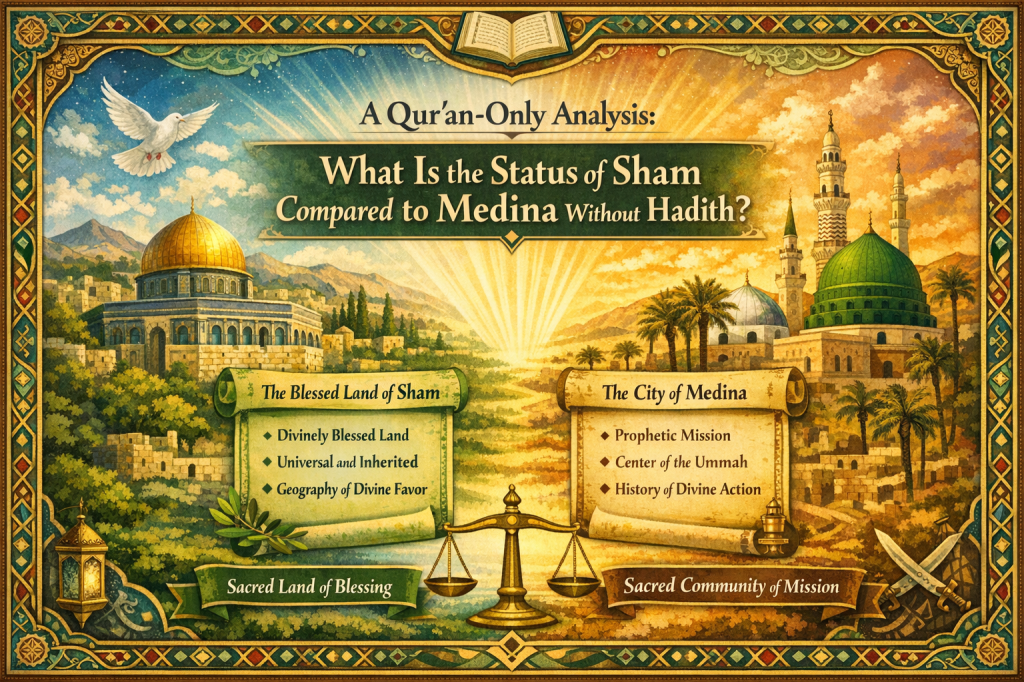
A Qur’an-Only Analysis: What Is the Status of Sham Compared to Medina Without Hadith?
Sham (الـشـام) refers to the blessed region of the Levant—including Palestine, Syria, Jordan, and parts of Lebanon
🌍 The Blessed Land of Sham and Its Relation to Medina — A Qur’anic Perspective
To answer this properly based solely on the Qur’an (without reference to Hadith), we must distinguish between:
• 🌿 Sham (the Blessed Land) — explicitly described and repeatedly emphasized
• 🕌 Medina — not named directly, but indirectly referenced in context (as the city of the Prophet)
⸻
🌿 1. Sham: A Land Explicitly Declared Blessed
The Qur’an clearly and repeatedly identifies Sham as a blessed region:
• Surah 21:71 — “the land We have blessed for all nations”
• Surah 21:81 — “…to the land which We had blessed…” (referring to the destination of Prophet Solomon’s wind)
• Surah 7:137 — inheritance of “the eastern and western parts of the land which We have blessed”
• Surah 17:1 — surroundings of Al-Aqsa Mosque described as “blessed”
• Surah 34:18 — blessed towns placed in continuity
✨ Key Qur’anic Features of Sham:
• 🌍 Universally blessed (for all nations, not one people)
• 🕊️ A land of prophetic history (Abraham, Moses, Jesus)
• 🌱 A place of settlement, inheritance, and continuity
• 🔄 A recurring stage of divine activity
👉 In Qur’anic terms, Sham is a divinely designated sacred geography—its blessedness is direct, inherent, and repeatedly affirmed.
⸻
🕌 2. Medina: A City of Mission, Not Declared Blessed by Name
Unlike Sham, Medina is not explicitly named in the Qur’an as a “blessed land.”
Instead, it appears indirectly as:
• “al-Madinah” (the City) — Surah 9:101, 9:120
• The place of Hijrah (migration)
• The center of the Prophet’s community and governance
✨ Key Qur’anic Features of Medina:
• 🧭 A place of struggle (jihad, trials, hypocrisy, sincerity)
• 🏛️ A political and spiritual center of the early Muslim community
• 📖 A location of revelation and law (many Medinan surahs)
• ⚖️ A testing ground for faith
👉 Medina is functionally central, but its sanctity is not described in the Qur’an in the same explicit, geographical, or universal terms as Sham.
⸻
⚖️ 3. The Qur’anic Relationship: Sacred Land vs. Sacred Mission
From a strictly Qur’anic lens:
🌿 Sham
• Divine initiative
• Blessed in itself
• A land of inheritance and prophecy
• Universal in scope
🕌 Medina
• Prophetic mission
• Not described as inherently blessed land
• A center of struggle, law, and community formation
• Historical rather than geographical sanctity
⸻
🔍 4. A Deeper Theological Insight
The Qur’an seems to present two complementary dimensions of sacred history:
• 🌍 Sham → The Geography of Divine Blessing
• 🕌 Medina → The History of Divine Implementation
In other words:
🌿 Sham represents where God’s blessing is placed
🕌 Medina represents where God’s message is established and lived
⸻
✨ Conclusion
📖 Based on the Qur’an alone:
• Sham holds a higher status in terms of explicit, inherent, and universal blessing
• Medina holds a central role in the unfolding of the final prophetic mission, but without the same explicit geographical designation of “blessed land”
🧭 Thus, the distinction is not one of superiority in faith, but of different divine functions:
• 🌿 Sham = Sacred Land (Blessed by God directly)
• 🕌 Medina = Sacred Community (Shaped through prophetic mission)
A Qur’an-Only Analysis: What Is the Status of Sham Compared to Medina Without Hadith?
Sham (الـشـام) refers to the blessed region of the Levant—including Palestine, Syria, Jordan, and parts of Lebanon
🌍 The Blessed Land of Sham and Its Relation to Medina — A Qur’anic Perspective
To answer this properly based solely on the Qur’an (without reference to Hadith), we must distinguish between:
• 🌿 Sham (the Blessed Land) — explicitly described and repeatedly emphasized
• 🕌 Medina — not named directly, but indirectly referenced in context (as the city of the Prophet)
⸻
🌿 1. Sham: A Land Explicitly Declared Blessed
The Qur’an clearly and repeatedly identifies Sham as a blessed region:
• Surah 21:71 — “the land We have blessed for all nations”
• Surah 21:81 — “…to the land which We had blessed…” (referring to the destination of Prophet Solomon’s wind)
• Surah 7:137 — inheritance of “the eastern and western parts of the land which We have blessed”
• Surah 17:1 — surroundings of Al-Aqsa Mosque described as “blessed”
• Surah 34:18 — blessed towns placed in continuity
✨ Key Qur’anic Features of Sham:
• 🌍 Universally blessed (for all nations, not one people)
• 🕊️ A land of prophetic history (Abraham, Moses, Jesus)
• 🌱 A place of settlement, inheritance, and continuity
• 🔄 A recurring stage of divine activity
👉 In Qur’anic terms, Sham is a divinely designated sacred geography—its blessedness is direct, inherent, and repeatedly affirmed.
⸻
🕌 2. Medina: A City of Mission, Not Declared Blessed by Name
Unlike Sham, Medina is not explicitly named in the Qur’an as a “blessed land.”
Instead, it appears indirectly as:
• “al-Madinah” (the City) — Surah 9:101, 9:120
• The place of Hijrah (migration)
• The center of the Prophet’s community and governance
✨ Key Qur’anic Features of Medina:
• 🧭 A place of struggle (jihad, trials, hypocrisy, sincerity)
• 🏛️ A political and spiritual center of the early Muslim community
• 📖 A location of revelation and law (many Medinan surahs)
• ⚖️ A testing ground for faith
👉 Medina is functionally central, but its sanctity is not described in the Qur’an in the same explicit, geographical, or universal terms as Sham.
⸻
⚖️ 3. The Qur’anic Relationship: Sacred Land vs. Sacred Mission
From a strictly Qur’anic lens:
🌿 Sham
• Divine initiative
• Blessed in itself
• A land of inheritance and prophecy
• Universal in scope
🕌 Medina
• Prophetic mission
• Not described as inherently blessed land
• A center of struggle, law, and community formation
• Historical rather than geographical sanctity
⸻
🔍 4. A Deeper Theological Insight
The Qur’an seems to present two complementary dimensions of sacred history:
• 🌍 Sham → The Geography of Divine Blessing
• 🕌 Medina → The History of Divine Implementation
In other words:
🌿 Sham represents where God’s blessing is placed
🕌 Medina represents where God’s message is established and lived
⸻
✨ Conclusion
📖 Based on the Qur’an alone:
• Sham holds a higher status in terms of explicit, inherent, and universal blessing
• Medina holds a central role in the unfolding of the final prophetic mission, but without the same explicit geographical designation of “blessed land”
🧭 Thus, the distinction is not one of superiority in faith, but of different divine functions:
• 🌿 Sham = Sacred Land (Blessed by God directly)
• 🕌 Medina = Sacred Community (Shaped through prophetic mission)
 ABRAHAMIC THEOLOGY