From Priest to Muslim: Rev. Keldani’s Scriptural Case for Muhammad

Azahari Hassim

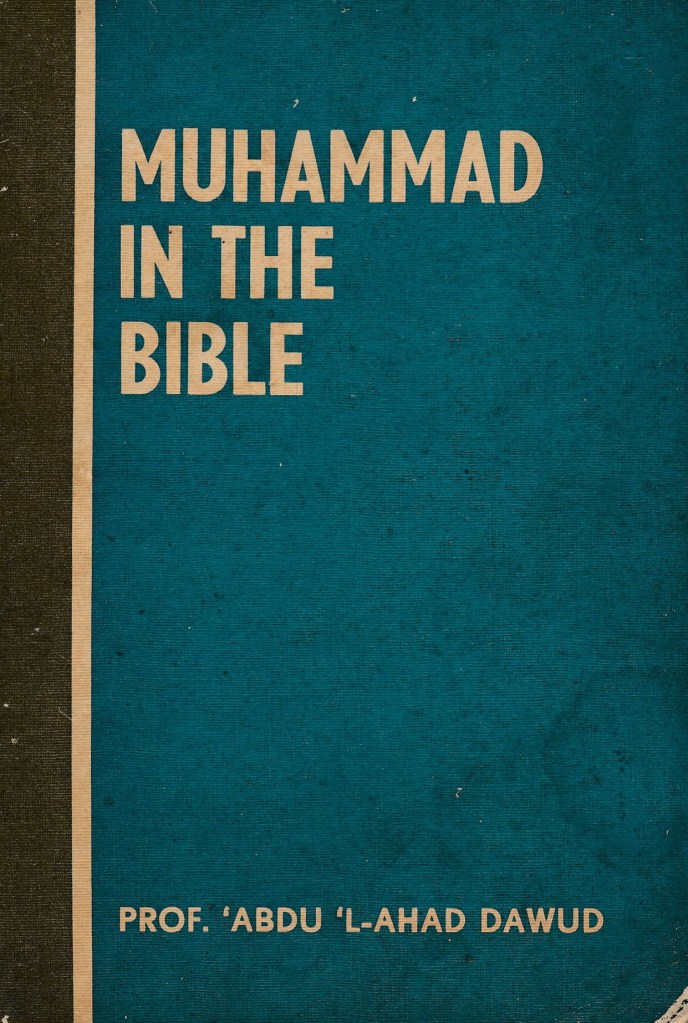
The book “Muhammad in the Bible” by Prof. Abdul Ahad Dawud (formerly Rev. David Benjamin Keldani), is an analysis that argues that Prophet Muhammad is prophesied in both the Old and New Testaments of the Bible. The author, a former Christian priest who converted to Islam, presents theological arguments supported by biblical texts, linguistic analysis, and historical context.

Key Themes and Arguments:

1. The Author’s Background:


Prof. Abdul Ahad Dawud, previously Rev. David Benjamin Keldani, was a Roman Catholic priest of the Uniate-Chaldean sect.
His conversion to Islam was based on his deep study of Christian scripture, concluding that Muhammad was the promised prophet mentioned in the Bible.

2. Muhammad in the Old Testament:


The book presents linguistic and contextual analysis to show that Muhammad is the “Promised One” foretold in the Hebrew scriptures.
The term “Himda” (חֶמְדָּה) in Haggai 2:7, which is commonly translated as “the desire of all nations”, is argued to be referring to Ahmed (another name for Muhammad).
The Book of Deuteronomy 18:18, which speaks of a prophet like Moses, is interpreted to refer to Muhammad, not Jesus, because Muhammad, like Moses, was a lawgiver.

3. The Birthright and the Covenant:


The book argues that Ishmael, not Isaac, was the rightful heir of Abraham’s covenant because he was the firstborn.
It asserts that the biblical narrative has been altered to favor Isaac, even though God’s original promise was to Ishmael and his descendants.

4. Muhammad in the New Testament:


The Gospel of John 14, verse 16, John 15, verse 26, and John 16, verses 7 to 14) refer to the coming of the Paraclete, often translated as the “Comforter” or “Advocate.”
The book argues that the Greek term “Paracletos” (παράκλητος) was likely a mistranslation of “Periclytos”, meaning “the praised one” (Ahmed, a name of Muhammad).
Jesus is said to have predicted Muhammad’s arrival as the final Messenger of God.

5. Comparison Between Jesus and Muhammad:


The book highlights key differences between Jesus and Muhammad, arguing that Jesus did not bring a new law, whereas Muhammad did—aligning him with Moses as predicted in Deuteronomy 18, verse 18.
It also argues that Jesus’ message was for the Children of Israel, whereas Muhammad’s message was universal.

6. Biblical Prophecies of Arabia and the Coming of Islam:


Isaiah 42 is interpreted as predicting Muhammad’s arrival, pointing to Kedar, a reference to Ishmael’s descendants, which includes the Arabs.
The mention of Paran in the Bible (Deuteronomy 33:2, Habakkuk 3:3) is linked to Mecca, Muhammad’s birthplace.

Conclusion:

The book aims to demonstrate that Muhammad is the final prophet prophesied in the Bible, and it challenges Christian interpretations that reject this claim. It is a theological and historical argument advocating for the Islamic perspective on biblical prophecy.
Quoted by Rev. David Benjamin Keldani:

“I must remind Christians that unless they believe in the absolute unity of God and renounce the belief in three persons, they are certainly unbelievers in the true God. The Old Testament and the Qur’an condemn the doctrine of three persons in God. The New Testament does not expressly uphold or defend it; even if it contains hints and traces regarding the Trinity, it holds no authority at all because it was neither seen nor written by Christ himself, nor in the language he spoke, and it did not exist in its present form and content for at least the first two centuries after him.”

Reinterpreting the “Son of Man”: Prof. Abdul Ahad Dawud’s Perspective in Muhammad in the Bible

In his groundbreaking work Muhammad in the Bible, Prof. Abdul Ahad Dawud—formerly Rev. David Benjamin Keldani, a former Catholic priest—presents a provocative and meticulously reasoned argument that challenges traditional Christian interpretations of the “Son of Man” figure in biblical literature.

According to Dawud, the title “Son of Man” has been misunderstood and misapplied over centuries, and he asserts that its true referent is not Jesus Christ, but rather the Prophet Muhammad.

1. Jesus’ Reluctance to Claim the Title

Dawud begins his analysis by addressing the silence of Jesus regarding the title “Son of Man.” Drawing from historical and textual evidence, he argues that Jesus consciously avoided adopting this title. In Muhammad in the Bible, Dawud notes that had Jesus claimed to be the “Son of Man” as portrayed in the apocalyptic visions of the Hebrew Scriptures, it would have rendered him “ridiculous in the eyes of his audience”. Faced with Messianic expectations, Dawud suggests that Jesus had only two options: to either reject the Messianic prophecies as interpolations or to embrace them fully by claiming the title—something Jesus notably refrained from doing.

2. The Quranic Terminology

A key theological point raised by Dawud is the distinction made in the Quran, where Jesus is never referred to as the “Son of Man.” Instead, he is consistently called the “Son of Mary”. Dawud interprets this linguistic choice as deliberate and meaningful. In his view, since Jesus was born of a virgin, he had no biological father and thus could not be accurately described as the “Son of Man.” According to Dawud, this reinforces the argument that Jesus does not fulfill the criteria associated with the “Son of Man” in biblical prophecies.

3. Prophecies and Apocalyptic Visions

Perhaps the most controversial aspect of Dawud’s thesis is his reinterpretation of biblical apocalyptic literature. He argues that the “Son of Man” described in texts like the Book of Daniel and other visionary writings more accurately describe the life, mission, and characteristics of Prophet Muhammad. From global impact and moral authority to the establishment of divine law and finality of prophecy, Dawud asserts that Muhammad uniquely fulfills these prophetic descriptions—traits which, he argues, are not fully manifested in the life of Jesus.

4. A Historical Reassessment

In the concluding sections of his book, Dawud posits that the early Church engaged in what he terms a “policy and cunning propaganda” to align Jesus with the Messianic expectations surrounding the “Son of Man”. He contends that Jesus himself never claimed this identity, and that it was the later ecclesiastical narrative that retroactively applied the title to him in order to appeal to Jewish expectations of a coming Messiah. Instead, Dawud believes that Jesus deliberately left the title unclaimed, reserving it for the true fulfillment of the prophecy—Prophet Muhammad.

Conclusion

Prof. Abdul Ahad Dawud’s Muhammad in the Bible offers a radical re-examination of long-held beliefs within Christian theology. By reinterpreting the “Son of Man” through a Qur’anic and historical lens, Dawud challenges readers to rethink the identity of the prophetic figure awaited in Jewish and Christian tradition. Whether one agrees or disagrees with his conclusions, his work remains a thought-provoking contribution to interfaith dialogue and comparative theology.

Does the phrase “the night visions” in Daniel 7 refer to Muhammad’s Night Journey?

How do some argue that the phrase “the night visions” in Daniel 7, verse 13 refers to Muhammad’s Night Journey to the seventh heaven to meet God instead of Jesus, whose ascension did not occur at night?

Some argue that the phrase “the night visions” in Daniel 7, verse 13, refers to Muhammad’s Night ( الإسراء والمعراج) rather than Jesus’ ascension based on the following points:

1. The term “night visions” directly suggests an event that takes place at night. Muhammad’s Night Journey, which is said to have occurred during the night, aligns with this description. In contrast, Jesus’ ascension is generally not described as happening at night in Christian texts.

2. According to Islamic tradition, during the Isra, Muhammad traveled from Mecca to Jerusalem and then ascended through the heavens in the Mi’raj. He is described as having profound spiritual experiences, meeting past prophets, and ultimately coming into the presence of God.

In Daniel 7, verses 13 to 14, “one like a son of man” is seen coming with the clouds of heaven and approaching the “Ancient of Days” (interpreted by scholars as God). This imagery of traveling through the heavens and meeting a divine figure has parallels with Muhammad’s Night Journey.

3. The mention of the “clouds of heaven” could be metaphorically linked to the ethereal and divine nature of Muhammad’s ascent through the heavens, which is a central element in the Night Journey narrative.

4. Some Muslim scholars see Daniel’s vision as prophetic, foretelling not just events relevant to Jewish history but also later significant religious events. They interpret the “one like a son of man” as a reference to a future prophet who would establish a new era, which Muhammad is believed to have done in Islam.

5. In the vision, the figure receives authority, glory, and sovereign power, and all nations serve him. Supporters of this interpretation argue that Muhammad’s establishment of Islam fits this prophecy as he united tribes and established a widespread religious and political community.

While these arguments are compelling within an Islamic interpretive framework, this interpretation is not widely accepted in Christian and Jewish traditions.

However, it’s important to note that these interpretations are not mainstream and are often viewed within the context of interfaith dialogue or polemics.

Traditional Jewish and Christian interpretations generally identify the “one like a son of man” as a messianic figure, often associated with Jesus in Christian theology, while in Jewish thought, it can be seen as a representation of Israel or the Messiah.

The Prophecy of Daniel: Constantine the Great and Muhammad the Prophet

Some believe that Daniel 7, verse 25 alludes to Constantine the Great, who presided over the council of Nicaea, while Daniel 7, verse 13, points to Muhammad’s Night Journey. How is this argument explained?

This is a very controversial argument that is not widely accepted by most biblical scholars and Christians, who believe that Daniel 7, verse 25, and Daniel 7, verse 13, refer to the Antichrist and the Messiah, respectively. However, some people who support this argument explain it in the following way:
They claim that Constantine the Great, who was the first Roman emperor to convert to Christianity and who convened the Council of Nicaea in 325 AD, was the little horn of Daniel 7, verse 25, who spoke pompous words against the Most High and tried to change the times and the laws.

They argue that Constantine corrupted the original teachings of Jesus and imposed his own doctrines and creeds on the Christian church, such as the doctrine of the Trinity, the observance of Sunday instead of Saturday as the Sabbath, and the celebration of Easter instead of Passover.

They also accuse Constantine of persecuting and oppressing those who did not conform to his version of Christianity, such as the followers of Arianism, who denied the divinity of Jesus.
Arianism sparked significant debates within the Church, particularly during the early Ecumenical Councils. The First Council of Nicaea in 325 AD condemned Arianism, affirming the doctrine of the Trinity and the full divinity of Christ. The Nicene Creed established the belief that the Son is “begotten, not made, of one substance with the Father.”

Islamic scholars claim that Muhammad, who was the prophet of Islam and who claimed to have a miraculous Night Journey from Mecca to Jerusalem and then to heaven in 621 AD, was the Son of Man of Daniel 7, verse 13, who came with the clouds of heaven and was given dominion, glory, and a kingdom by the Ancient of Days, that is God.

The term “night visions” directly suggests an event that takes place at night. Muhammad’s Night Journey, which is said to have occurred during the night, aligns with this description. In contrast, Jesus’ ascension is generally not described as happening at night in Christian texts.

They argue that Muhammad was a true prophet of God who restored the pure monotheism that was lost by Constantine and his followers. They also assert that Muhammad’s kingdom is an everlasting kingdom that will never be destroyed, and that all nations and peoples of every language will serve him or submit to his law.
In summary, these are a few points made by Islamic scholars to back the notion that Daniel 7, verse 25, and 7, verse 13, refer to Constantine as the little horn who established the Trinity at the Council of Nicea, and Muhammad as the Son of Man who encountered God on his Night Journey to the seventh heaven.

Muhammad’s Night Journey and the Fate of the Jewish Temple: A Theological Perspective


Azahari Hassim

What is the rationale behind the theological implications of the correlation between Surah 17 verse 1 and verse 7 of the Quran, which indicates that Judaism as a sacrificial religion has been abolished?

Surah 17 of the Quran, known as “Al Isra” (The Night Journey), contains verses that reference the Israelites and events associated with them. Let’s explore the verses you mentioned:

1. Surah 17 verse 1:

“Exalted is He who took His Servant by night from al Masjid Al Haram to Al Masjid Al Aqsa, whose surroundings We have blessed, to show him of Our signs. Indeed, He is the Hearing, the Seeing.”

This verse refers to the Isra, or the Night Journey, where Muslims believe that the Prophet Muhammad was taken from Mecca to Jerusalem and then ascended to the heavens (the Miraj). Al Masjid Al Aqsa is identified with the Temple Mount in Jerusalem.

2. Surah 17 verse 7:

“If you do good, you do good for yourselves; and if you do evil, [you do it] to yourselves. Then when the final promise came, [We sent your enemies] to sadden your faces and to enter the temple in Jerusalem, as they entered it the first time, and to destroy what they had taken over with [total] destruction.”

This verse refers to the punishment meted out to the Israelites due to their disobedience and recalls the destruction of the Temple in Jerusalem.

The argument you’re referencing seems to derive from the juxtaposition of these verses in the same chapter. By connecting the Night Journey of Prophet Muhammad to Al Masjid Al Aqsa (associated with the ancient Jewish Temples) with the subsequent verse about the Temple’s destruction, one might argue that it signifies a transfer of religious legitimacy from the Israelites to the followers of Muhammad.

The theological implication drawn from this, as posited in your question, is that the Quran might be suggesting that the original sacrificial religion of Judaism (centered around the Temple) has been superseded or “abolished” by Islam.

The Dome of the Rock in Jerusalem, which commemorates Muhammad’s Night Journey, symbolizes the continued connection between Abrahamic faiths. Islam is often seen as the final message that surpasses Judaism and Christianity.

Some scholars believe the Night Journey of the Prophet Muhammad to Heaven is theologically related to Daniel 7 verse 13. How is this argument explained?

The argument connecting the Night Journey of the Prophet Muhammad to Heaven with Daniel 7 verse 13 is based on theological interpretations that draw parallels between the two events. Here’s an explanation of this argument:

1. The Night Journey of Prophet Muhammad (الإسراء والمعراج):

According to Islamic tradition, the Night Journey (الإسراء) and Ascension (المعراج) is a miraculous event in which the Prophet Muhammad was transported from Mecca to Jerusalem and then ascended through the heavens, meeting various prophets and eventually coming into the presence of Allah.

2. Daniel 7 verse 13 in the Bible:

In the Book of Daniel in the Old Testament of the Bible, specifically in Daniel 7 verse 13, there is a prophecy that says: “I saw in the night visions, and behold, with the clouds of heaven there came one like a son of man, and he came to the Ancient of Days (that is, God) and was presented before him.” This verse is often interpreted as a reference to a messianic figure.

The argument connecting these two events revolves around the idea that both the Night Journey of Prophet Muhammad and the vision of “one like a son of man” in Daniel 7 verse 13 involve a figure coming into the presence of God. Some scholars, particularly in comparative religion and interfaith dialogue, suggest that there are thematic similarities between these events:

Divine Revelation: In both cases, there is a profound encounter with the divine. Prophet Muhammad ascended to the highest levels of heaven, and in Daniel 7 verse 13, the figure of “one like a son of man” is presented before the “Ancient of Days,” who is a divine entity.

Prophetic Roles: The figure in Daniel 7 verse 13 is often associated with a messianic or prophetic role. Similarly, Prophet Muhammad is considered the final prophet in Islam, and his Night Journey is seen as a confirmation of his messianic or prophetic role.

It’s important to note that this argument is primarily a matter of theological interpretation and interfaith dialogue. Different scholars and religious traditions may have varying perspectives on the significance and connections between these events.

Islamic Interpretation of Daniel 7: The Fifth Kingdom as the Rise of Islam

Numerous biblical scholars maintain that the four beasts described in Daniel 7 symbolize four distinct kingdoms: Babylon, Medo-Persia, Greece, and Rome. Subsequently, the establishment of the kingdom of God is noted.

In contrast, certain Islamic scholars assert that the fifth kingdom, which they identify as the kingdom of God, corresponds to Islam, as it arose subsequent to the Byzantine Empire, also referred to as the Eastern Roman Empire. What is the rationale behind this interpretation?

The Islamic interpretation of the prophecy in Daniel 7, which identifies the “fifth kingdom” (the kingdom of God) with Islam, is based on historical and theological reasoning. Here are the key points behind this interpretation:

1. Historical Succession of Empires

Daniel 7 describes four beasts representing four successive kingdoms. Many biblical scholars identify these as Babylon, Medo-Persia, Greece, and Rome.
Islam emerged in the 7th century CE, after the decline of the Western Roman Empire and during the weakening of the Byzantine (Eastern Roman) Empire. Since Daniel’s vision mentions the establishment of God’s kingdom after the fourth empire, some Islamic scholars argue that Islam, which emerged after Rome, fulfills this prophecy.

2. The Fall of the Byzantine Empire and the Rise of Islam

The Byzantine (Eastern Roman) Empire was a dominant power before Islam’s expansion. Islamic scholars argue that with the conquests of the Rashidun and Umayyad Caliphates, Islam effectively replaced Byzantine rule in large parts of the Mediterranean, the Levant, and North Africa.
The rapid spread of Islam and its dominance over former Roman territories is seen as a fulfillment of the prophecy that a divine kingdom would supersede worldly empires.

3. The Concept of God’s Kingdom in Islam

Jesus did not equate the kingdom of God that he preached with the religion of Christianity. Rather, the concept of the “kingdom of God” is frequently linked to the arrival of a figure resembling a son of man as described in Daniel 7.
Islamic scholars, however, interpret God’s kingdom as a system of governance based on divine law (Sharia). Since Islam established a political-religious order that claimed to rule by divine law, it is seen as fulfilling the vision of God’s kingdom replacing human empires.

4. Islam as a Universal and Everlasting Kingdom

Daniel 7, verse 14 describes the final kingdom as one that will never be destroyed. Islamic scholars argue that Islam, despite historical challenges, continues to be a major global faith and political influence.
The continuity of Islam as a religious and civilizational force is seen as evidence that it aligns with the prophecy of a kingdom that endures.

5. The Role of Prophet Muhammad in Quranic Prophecy

Some Islamic scholars extend this interpretation by linking it to prophecies about a future religion of Islam. They cite Surah 61, verse 9 of the Quran:

Muhammad’s establishment of a religious-political order is viewed as the fulfillment of the divine kingdom prophesied in Daniel.
Conclusion

“He it is Who hath sent His messenger with the guidance and the religion of truth, that He may make it conqueror of all religion however much idolaters may be averse.”

Islamic scholars interpret Daniel 7’s prophecy through a historical and theological lens, identifying Islam as the divine kingdom that follows Rome. They argue that Islam’s rise, territorial expansion, and legal-political system based on divine law fulfill the vision of a God-ordained kingdom that replaces human rule.

Consistency in Belief: Comparing the Night Journey of Muhammad and Daniel’s Vision

It is believed that those who deny the Night Journey of the prophet Muhammad from Mecca to Jerusalem, followed by his ascension to the seventh heaven to meet God, resemble the arguments of those who dismiss Daniel’s vision at night in Daniel 7, verse 13. How is this argument articulated?

The argument comparing the denial of the Isra and Mi’raj (the Night Journey and Ascension of the Prophet Muhammad) to the dismissal of Daniel’s vision in Daniel 7, verse 13 is articulated based on the following parallels:

1. Both Events Are Supernatural and Nighttime Experiences

The Isra and Mi’raj describe Prophet Muhammad’s journey from Mecca to Jerusalem and his ascension through the heavens, ultimately meeting God. This event is considered miraculous and beyond ordinary physical experiences.
Daniel 7, verse 13 states: “I saw in the night visions, and behold, with the clouds of heaven there came one like a son of man, and he came to the Ancient of Days and was presented before him.”
This is also a supernatural vision that occurs at night and describes an ascent toward the Divine.

2. Skepticism Toward Mystical or Spiritual Journeys

Critics of Isra and Mi’raj argue that such a physical and spiritual journey is implausible, similar to how some interpret Daniel’s vision as metaphorical rather than an actual event.
The argument suggests that if one denies the reality of Muhammad’s ascension on the basis of it being supernatural, they would logically also have to deny Daniel’s night vision using the same reasoning.

3. Heavenly Ascent and Divine Presence

In both cases, the central figure ascends toward a divine presence:
Muhammad ascends through the seven heavens, meeting prophets and ultimately reaching the Divine Presence.
Daniel sees one like a son of man coming with the clouds of heaven to stand before the Ancient of Days, a scene often interpreted as a meeting with God.

4. Implication of Denial: Consistency in Theological Interpretation

If one dismisses Muhammad’s ascension as merely metaphorical or fabricated, they must question whether Daniel’s vision was also just symbolic.
This challenges those (particularly in the Abrahamic faith traditions) who accept Daniel’s vision as authentic revelation but reject Muhammad’s journey on the grounds of improbability.

Conclusion

This argument is used to highlight consistency in belief regarding divine visions and supernatural events. If one affirms that Daniel’s vision describes a genuine, divinely granted experience, then logically, they should not outright dismiss the Isra and Mi’raj on the same grounds. Instead, they should engage with both narratives under a coherent theological framework.

Pauline Christianity vs. Ebionism: Diverging Paths in Early Christian Thought


Azahari Hassim

What does Pauline Christianity mean?

Pauline Christianity refers to the form of Christianity that follows the beliefs and teachings of the Apostle Paul, particularly emphasizing salvation by faith in Jesus Christ and not by adherence to the Mosaic Law.

Pauline Christianity and Ebionism are two distinct religious movements that emerged in the early years of Christianity.

Pauline Christianity refers to the teachings and beliefs associated with the apostle Paul, also known as Saint Paul. After his conversion to Christianity, Paul played a significant role in spreading the message of Jesus Christ throughout the Roman Empire.

He emphasized faith in Jesus as the means of salvation and argued for a universalist approach, welcoming both Jews and Gentiles into the Christian community. Paul’s writings, which form a significant portion of the New Testament, laid down theological foundations for many aspects of Christian doctrine.

Ebionism, on the other hand, was a Jewish-Christian movement that arose during the same period. The Ebionites were primarily Jewish followers of Jesus who maintained their adherence to Jewish laws and customs.

They believed that Jesus was not divine but rather an ordinary human being chosen by God as His Messiah or anointed one. According to Ebionite beliefs, salvation could only be achieved through strict observance of Mosaic Law (the Torah) along with faith in Jesus as the Messiah.

The main point of contention between Pauline Christianity and Ebionism lies in their understanding of Jesus’ divinity and his relationship with Judaism. While Pauline Christians saw Jesus as both fully human and fully divine, emphasizing faith over works for salvation, Ebionites regarded him solely as a human prophet sent by God within a Jewish context.

These two movements had different views on various theological matters such as circumcision, dietary laws, Sabbath observance, and more. Pauline Christians believed that these practices were no longer necessary for salvation since they considered themselves under a new covenant through Christ’s sacrifice on the cross. In contrast, Ebionites continued to observe these Jewish rituals alongside their belief in Jesus.

Over time, Pauline Christianity gained wider acceptance among Gentile converts while distancing itself from its Jewish roots. As a result, it became dominant within the early Christian community, eventually evolving into what is now known as mainstream Christianity. Ebionism, however, gradually faded away and became marginalized as a minority sect.

In summary, Pauline Christianity and Ebionism represent two distinct branches of early Christianity with differing beliefs on Jesus’ divinity and the role of Jewish law. While Pauline Christianity emphasized faith in Jesus for salvation and embraced Gentile converts, Ebionism maintained strict adherence to Jewish customs alongside their belief in Jesus as the Messiah.

The Gospel of Matthew: Challenging Pauline Doctrine by Upholding the Torah in the Gospel Narrative

The Gospel of Matthew is believed to have been written between 70 to 80 AD, while the Epistles of Paul were written between 50 to 64 AD. It’s important to note that these dates are approximate and subject to some scholarly debate.

In the 80s, a few years after the death of Paul but before the Book of Acts was written, the author of the Gospel of Matthew condemned Paul’s central teaching, and, interestingly, he did so through the words of Jesus. In the Sermon on the Mount, for instance, we find the following passage attributed to Jesus:

“Do not think that I have come to abolish the law or the prophets… For truly I tell you, until heaven and earth pass away, not one letter, not one stroke of a letter, will pass from the law until all is accomplished.

Therefore, whoever breaks one of the least of these commandments, and teaches others to do the same, will be called least in the kingdom of heaven.” (Matthew 5 verses 17 to 19).

This is a crucial passage for understanding Matthew’s Jesus. As a strict follower of Moses’ law, Jesus did not believe in the abolition of Torah. This passage is aimed squarely at the heart of Paul’s teaching, which had denied the validity of Jewish law.

It is also very easy to see Paul and his followers in the last phrase “whoever breaks one of the least of these commandments, and teachers others to do the same, will be called least in the kingdom of heaven.” Paul’s Christ Movement was the only religion on the horizon teaching that people should not observe the law.

Matthew sent a stern warning to those who would find Paul’s position attractive: Jesus would not have agreed with you. He made clear to his followers that Paul’s religion was not for them. Steer clear of these people was his advice. Their message violates the religion of Jesus.

Abandonment of Torah was not consistent with the religion taught and practiced by Jesus. Matthew’s Jesus was even more stringent than the Pharisees and required his followers to live up to the challenge of the higher righteousness.

Why were Ebionites antagonistic toward Paul?

The Ebionites were a Jewish-Christian sect that emerged in the early Christian era. They rejected the divinity of Jesus and insisted on the strict observance of Jewish law, including circumcision and dietary practices.

There are several reasons why the Ebionites were antagonistic toward Paul, who was a prominent figure in spreading the message of Christ among the Gentiles.

  1. Apostolic Authority: The Ebionites believed that only the original disciples and James, the brother of Jesus, had true apostolic authority. They viewed Paul as an interloper who had never met Jesus during his earthly ministry. They considered his apostleship to be illegitimate and believed that he had distorted the teachings of Jesus.
  2. Jewish Law: The Ebionites were strict observers of Jewish law and viewed it as a mandatory requirement for salvation. They criticized Paul’s teachings, which emphasized faith in Christ over the works of the law. Paul argued that salvation came through faith in Jesus, rather than adherence to the Jewish law, which caused disagreement and conflict between him and the Ebionites.
  3. Gentile Inclusion: Paul actively preached the message of Christ to Gentiles, allowing them to become followers of Jesus without undergoing circumcision or observing Jewish laws. This inclusive approach was contrary to the Ebionites’ strict adherence to Jewish customs and practices. They saw Paul as diluting the original Jewish character of Christianity by opening it up to non-Jews.
  4. Pauline Theology: The Ebionites had a different understanding of Jesus’ nature and believed that he was a human prophet and not divine. Paul’s writings, particularly his emphasis on Jesus as the Son of God, contradicted their beliefs, leading them to reject his teachings and view him as a heretic.

In summary, the Ebionites opposed Paul due to his claim to apostolic authority, his emphasis on faith over Jewish law, his inclusion of Gentiles in the Christian community, and his theology that conflicted with their understanding of Jesus’ nature.


This image appears to depict the martyrdom of James the Just, also known as James, the brother of Jesus. According to early Christian tradition, James the Just, the leader of the Jerusalem Church and brother of Jesus, was thrown from the pinnacle of the Temple and then beaten to death with a club or staff, as recorded by Hegesippus and later referenced by Eusebius and Josephus.

What was the level of esteem that the Ebionites held for James, the brother of Jesus?

The Ebionites held James, the brother of Jesus, in extremely high esteem, considering him a central and authoritative figure in their movement. They regarded him as the true successor to Jesus and a model of righteousness, likely due to his leadership of the early Jerusalem Church and his strict adherence to Jewish law.

Early Christian sources, such as The Recognitions of Clement and The Ascents of James, which are associated with Ebionite traditions, depict James as the ultimate teacher of the faith, emphasizing his role as the head of the Jerusalem community and a guardian of the Torah-observant message of Jesus. Additionally, Church Fathers like Epiphanius of Salamis noted that the Ebionites revered James and saw him as a pillar of their beliefs, in contrast to figures like Paul, whom they rejected.

Isaiah 54 and Hagar: Reassessing Paul’s Interpretation in Galatians 4


Azahari Hassim

Some argue that Isaiah 54 refers to Hagar, with the term “barren” in verse 1 signifying Hagar’s land, the prophecy of which in Genesis 21:18 remains unfulfilled. Paul knew this and changed its interpretation to Sarah instead. How is their reasoning justified?

The argument that Isaiah 54 refers to Hagar rather than Sarah is based on a few key points:

1. The Use of “Barren” in Isaiah 54:1

  • Isaiah 54:1 states: “Sing, O barren, you who have not borne! Break forth into singing, and cry aloud, you who have not labored with child! For more are the children of the desolate than the children of the married woman,” says the Lord.
  • Some argue that “barren” here refers metaphorically to Hagar’s land (often linked to the wilderness) rather than Sarah.
  • Genesis 21:18 contains God’s promise to Hagar that Ishmael will become a great nation, which some see as unfulfilled. They suggest that Isaiah 54:1 could be referencing a future fulfillment of Hagar’s descendants prospering.

2. Paul’s Interpretation in Galatians 4:27

  • Paul quotes Isaiah 54:1 in Galatians 4:27, but he applies it to Sarah, linking it to the Christian message of freedom.
  • He contrasts Hagar (the old covenant, slavery) with Sarah (the new covenant, freedom), seeing Sarah as the “barren” woman whose descendants (through Isaac and Christ) would become more numerous.
  • Critics argue that Paul reinterpreted Isaiah 54:1 for his theological agenda, deviating from what they see as the original reference to Hagar.

3. Hagar as the “Desolate” One and Sarah as the Woman with a Husband

• The term “desolate” (שׁוֹמֵמָ֛ה, shamemah) in Isaiah 54:1 could be understood as describing Hagar’s situation after being cast out in Genesis 21. Her experience of abandonment mirrors the condition of the “desolate woman” in Isaiah 54:1.

In contrast, Sarah is understood as the Woman with a Husband, who ultimately bore Isaac within the covenant.

  • Some suggest that, in its original context, Isaiah 54 speaks of restoration and an expansion of Hagar’s descendants, rather than Sarah’s.

4. Unfulfilled Promise in Genesis 21:18

  • The promise to Hagar that Ishmael would become a great nation is seen as an ongoing prophecy.
  • Those who argue for Hagar’s connection to Isaiah 54 suggest that Paul’s interpretation suppresses the potential application to Hagar’s descendants.

5. Isaiah 54:4-6 – Allusions to Hagar

These verses express themes of shame, abandonment, and restoration:

• Verse 4:
Fear not; for thou shalt not be ashamed neither be thou confounded; for thou shalt not be put to shame; for thou shalt forget the shame of thy youth, and shalt not remember the reproach of thy widowhood any more.”
This reflects Hagar’s experience of humiliation when she was cast out. God’s reassurance in Isaiah 54 mirrors His promise to care for Hagar and Ishmael (Genesis 21:17-18).

  • Verse 5:
    “For your Maker is your husband—the Lord Almighty is his name.”
    While Hagar was abandoned by Abraham, God Himself took the role of protector and provider for her, signifying divine restoration and care.
  • Verse 6:
    “The Lord will call you back as if you were a wife deserted and distressed in spirit—a wife who married young, only to be rejected.”

This resonates with Hagar’s story of rejection and distress. Just as God assured Hagar that her son would thrive and become a great nation, Isaiah 54:6 portrays a compassionate God who calls back the rejected and restores their dignity.

Conclusion:

The argument that Isaiah 54 refers to Hagar relies on a specific interpretation of “barren” and the idea that Genesis 21:18 remains unfulfilled. However, Paul’s reinterpretation aligns with a longstanding theological framework in which Isaiah 54 symbolizes Israel and, by extension, the new covenant. While some may argue that Paul altered the original intent, his reading follows common Jewish exegetical methods of reinterpreting scripture in new covenantal contexts.

The Apostle Paul and the people of Kedar

Paul claimed that he was an apostle to the Gentiles. What was his connection to the people of Kedar, who were Gentiles and would enter God’s fold as predicted in Isaiah 42 verse 11 and Isaiah 60 verse 7? Kedar was the son of Ishmael, the ancestor of the Arab people.

This is a very interesting question. Paul was an apostle to the Gentiles, meaning that he preached the gospel of Jesus Christ to the non-Jewish nations. He traveled extensively throughout the Roman Empire, visiting places such as Cyprus, Asia Minor, Greece, Macedonia, and Rome. He also wrote many letters to the churches he founded or visited, which are part of the New Testament.
While Paul’s ministry was mainly directed towards the Gentiles in various regions, there is no specific mention or connection between Paul and the people of Kedar in the New Testament.

The people of Kedar were a nomadic tribe of Arabs, descended from Ishmael, the son of Abraham and Hagar. They are mentioned several times in the Old Testament as examples of the distant nations that would worship the true God. Isaiah 42 verse 11 and Isaiah 60 verse 7 are two of the prophecies that foretell the inclusion of the people of Kedar in God’s salvation plan.

The references to Kedar in Isaiah are prophecies that speak about the inclusion of Gentiles into God’s fold. These prophecies imply that people from various nations, including the descendants of Kedar, would come to worship and acknowledge God.

Although Paul’s mission was to bring the message of salvation to the Gentiles, his primary interactions were with the Greco-Roman world rather than specific Arab or Ishmaelite communities. However, there is no specific mention of Paul having a direct connection to the people of Kedar mentioned in those specific verses of Isaiah.

Paul and the Prophecy of Hagar’s Descendants

Genesis 21, verse 18, reads:

“Arise, lift up the boy and hold him in your hand; for I will make him a great nation.”

Did Paul know the significance of the prophecy of Hagar’s descendants as Gentiles and what lies in store for them in future?

Paul the Apostle, a key figure in the New Testament known for his epistles and missionary work, does not specifically address the prophecy of Hagar’s descendants as Gentiles in his writings. To understand this question, we need to break down several components:

  1. Hagar’s descendants: In the Book of Genesis in the Old Testament, Hagar is the Egyptian servant of Sarah, Abraham’s wife. Hagar bears Abraham a son named Ishmael after Sarah herself is initially barren. God promises Hagar that he will make Ishmael’s descendants into a great nation.
  2. Gentiles: The term “Gentiles” traditionally refers to non-Jewish people. In the context of the New Testament and Paul’s writings, Gentiles are often the audience of his missionary work, as he is known as the “Apostle to the Gentiles.”
  3. Paul’s understanding of prophecy: Paul was well-versed in Hebrew scripture and often referenced Old Testament prophecies to support his teachings about Jesus Christ. However, he does not directly link the prophecy concerning Hagar’s descendants with the future of the Gentiles in his epistles.

Paul’s primary concern regarding the Gentiles was their inclusion in the salvation brought by Jesus Christ, as he believed that through Jesus, both Jews and Gentiles were offered salvation and could become part of the people of God. This is a theme that Paul revisits multiple times, emphasizing that faith in Christ, rather than adherence to the Law of Moses, is the path to righteousness and inclusion in God’s promises.

In Galatians 4, verses 21 to 31, Paul does use the story of Sarah and Hagar allegorically to contrast the old covenant under the law (associated with Hagar, Mount Sinai, and slavery) with the new covenant of freedom and promise (associated with Sarah and the Jerusalem above).

However, this allegory is meant to illustrate spiritual concepts rather than to provide commentary on the future of specific ethnic descendants.

The future of Hagar’s descendants, or Ishmaelites, as understood in biblical prophecy, is not a topic Paul explicitly addresses in terms of specific outcomes or roles for them in future events. He did not reveal what lies in store for Hagar’s descendants in the future. His focus is more on the spiritual implications of faith and the unity of believers under the new covenant in Christ.

Connecting the Dots: Isaiah 60:7, the Hajj Ritual, and the Prophecy of Ishmael’s Descendants

Some believe that Isaiah 60, verse 7, is related to the Hajj ritual, and is the fulfillment of Hagar’s prophecy regarding Ishmael in Genesis 21, verse 18. How is this interpretation presented?

This is an interesting question. The interpretation that Isaiah 60, verse 7, is related to the Hajj ritual and the fulfillment of Hagar’s prophecy regarding Ishmael is based on the following assumptions:

The verse reads:

“All the flocks of Kedar will be gathered to you, The rams of Nebaioth will serve you; They will go up on My altar with acceptance, And I will glorify My glorious house.”

The flocks of Kedar and the rams of Nebaioth in Isaiah 60, verse 7, refer to the descendants of Ishmael, who was the son of Abraham and Hagar, and the ancestor of the Arabs. Kedar and Nebaioth were two of Ishmael’s sons (Genesis 25, verse 13).

The altar and the glorious house mentioned in Isaiah 60, verse 7, refer to the Kaaba. The Kaaba is a sacred building in Mecca that has a cube shape. Muslims believe it was constructed by Abraham and Ishmael. It serves as the direction of prayer and is also the destination for the Hajj pilgrimage.

The acceptance of the offerings on the altar and the glorification of the house in Isaiah 60, verse 7, refer to Muslims performing their Hajj, known as the Feast of Sacrifice. This sacrifice is performed in remembrance of Prophet Abraham’s willingness to sacrifice his son Ishmael and as a demonstration of submission to Allah’s will.

Furthermore, it is a prophecy of God’s acceptance and blessing of the Ishmaelites, who worship Him at the Kaaba in sincerity and submission, as He promised Hagar in Genesis 21, verse 18, “I will make him into a great nation.”

This interpretation is presented by some Muslim scholars and commentators, who see it as a proof of the truth and validity of Islam and the Hajj ritual.

The Apostle Paul and the people of Kedar


Azahari Hassim

Paul claimed that he was an apostle to the Gentiles. What was his connection to the people of Kedar, who were Gentiles and would enter God’s fold as predicted in Isaiah 42 verse 11 and Isaiah 60 verse 7? Kedar was the son of Ishmael, the ancestor of the Arab people.

This is a very interesting question. Paul was an apostle to the Gentiles, meaning that he preached the gospel of Jesus Christ to the non-Jewish nations. He traveled extensively throughout the Roman Empire, visiting places such as Cyprus, Asia Minor, Greece, Macedonia, and Rome. He also wrote many letters to the churches he founded or visited, which are part of the New Testament.
While Paul’s ministry was mainly directed towards the Gentiles in various regions, there is no specific mention or connection between Paul and the people of Kedar in the New Testament.

The people of Kedar were a nomadic tribe of Arabs, descended from Ishmael, the son of Abraham and Hagar. They are mentioned several times in the Old Testament as examples of the distant nations that would worship the true God. Isaiah 42 verse 11 and Isaiah 60 verse 7 are two of the prophecies that foretell the inclusion of the people of Kedar in God’s salvation plan.

The references to Kedar in Isaiah are prophecies that speak about the inclusion of Gentiles into God’s fold. These prophecies imply that people from various nations, including the descendants of Kedar, would come to worship and acknowledge God.

Although Paul’s mission was to bring the message of salvation to the Gentiles, his primary interactions were with the Greco-Roman world rather than specific Arab or Ishmaelite communities. However, there is no specific mention of Paul having a direct connection to the people of Kedar mentioned in those specific verses of Isaiah.

Connecting the Dots: Isaiah 60:7, the Hajj Ritual, and the Prophecy of Ishmael’s Descendants

Some believe that Isaiah 60, verse 7, is related to the Hajj ritual, and is the fulfillment of Hagar’s prophecy regarding Ishmael in Genesis 21, verse 18. How is this interpretation presented?

This is an interesting question. The interpretation that Isaiah 60, verse 7, is related to the Hajj ritual and the fulfillment of Hagar’s prophecy regarding Ishmael is based on the following assumptions:

The verse reads:

“All the flocks of Kedar will be gathered to you, The rams of Nebaioth will serve you; They will go up on My altar with acceptance, And I will glorify My glorious house.”

The flocks of Kedar and the rams of Nebaioth in Isaiah 60, verse 7, refer to the descendants of Ishmael, who was the son of Abraham and Hagar, and the ancestor of the Arabs. Kedar and Nebaioth were two of Ishmael’s sons (Genesis 25, verse 13).

The altar and the glorious house mentioned in Isaiah 60, verse 7, refer to the Kaaba. The Kaaba is a sacred building in Mecca that has a cube shape. Muslims believe it was constructed by Abraham and Ishmael. It serves as the direction of prayer and is also the destination for the Hajj pilgrimage.

The acceptance of the offerings on the altar and the glorification of the house in Isaiah 60, verse 7, refer to Muslims performing their Hajj, known as the Feast of Sacrifice. This sacrifice is performed in remembrance of Prophet Abraham’s willingness to sacrifice his son Ishmael and as a demonstration of submission to Allah’s will.

Furthermore, it is a prophecy of God’s acceptance and blessing of the Ishmaelites, who worship Him at the Kaaba in sincerity and submission, as He promised Hagar in Genesis 21, verse 18,

“I will make him into a great nation.”

This interpretation is presented by some Muslim scholars and commentators, who see it as a proof of the truth and validity of Islam and the Hajj ritual.

The Prophecy of Hagar and Its Fulfillment: A Comparative Analysis of Genesis 21:18 and Isaiah 60:7

There is a belief that the prophecy of Hagar in Genesis 21, verse 18, holds more weight than Isaiah 60, verse 7, which is linked to and completes the former. How is this understanding conveyed?

The belief that the prophecy of Hagar in Genesis 21, verse 18, holds more weight than Isaiah 60, verse 7, which is linked to and completes the former, can be understood through a close examination of the biblical texts and their contexts. Here’s how this understanding is conveyed:

1. Genesis 21, verse 18 (The Prophecy of Hagar).

This verse is part of the story where God speaks to Hagar after she and her son, Ishmael, are sent away by Abraham. Hagar is distraught, fearing for her son’s life in the desert.

The verse reads:

“Arise, lift up the lad, and hold him in thine hand; for I will make him a great nation.”

This prophecy directly promises that Ishmael will become a great nation. This is a foundational promise, as it assures Hagar of her son’s future and his importance in God’s plan.

2. Isaiah 60, verse 7 (Completion of the Prophecy).

This chapter of Isaiah deals with the future glory of Zion, depicting a time of great prosperity and the gathering of nations to honor God.

The verse reads:

“All the flocks of Kedar shall be gathered together unto thee, the rams of Nebaioth shall minister unto thee: they shall come up with acceptance on mine altar, and I will glorify the house of my glory.”

Both Kedar and Nebaioth are descendants of Ishmael. This verse indicates the fulfillment and continuation of the promise given to Hagar, showing that Ishmael’s descendants will play a significant role in the future worship and honor of God.

3. Interconnection and Weight:

The prophecy in Genesis 21, verse 18, is seen as having “more weight” because it is the initial divine promise regarding Ishmael, establishing his importance and future. It is a direct communication from God to Hagar at a crucial moment. Isaiah 60, verse 7, is viewed as the completion or continuation of this promise. It confirms and elaborates on the fulfillment of God’s plan for Ishmael’s descendants, showing their eventual integration into the worship of God and their contribution to the glory of Zion.

The “weight” of Genesis 21, verse 18, lies in its foundational nature, while Isaiah 60, verse 7, provides a more detailed and expanded vision of the fulfillment of that initial promise.

This understanding is conveyed by recognizing that the original promise to Hagar is the cornerstone of the prophecy concerning Ishmael and his descendants.

The later prophetic vision in Isaiah builds upon this foundation, demonstrating the fulfillment of God’s promise in a broader and more comprehensive way. Therefore, while Isaiah 60, verse 7 is significant in its completion of the prophecy, Genesis 21, verse 18, holds a primary and foundational weight in the narrative.

Isaiah 54 and Hagar: Reassessing Paul’s Interpretation in Galatians 4

Some argue that Isaiah 54 refers to Hagar, with the term “barren” in verse 1 signifying Hagar’s land, the prophecy of which in Genesis 21:18 remains unfulfilled. Paul knew this and changed its interpretation to Sarah instead. How is their reasoning justified?

The argument that Isaiah 54 refers to Hagar rather than Sarah is based on a few key points:

1. The Use of “Barren” in Isaiah 54:1

  • Isaiah 54:1 states: “Sing, O barren, you who have not borne! Break forth into singing, and cry aloud, you who have not labored with child! For more are the children of the desolate than the children of the married woman,” says the Lord.
  • Some argue that “barren” here refers metaphorically to Hagar’s land (often linked to the wilderness) rather than Sarah.
  • Genesis 21:18 contains God’s promise to Hagar that Ishmael will become a great nation, which some see as unfulfilled. They suggest that Isaiah 54:1 could be referencing a future fulfillment of Hagar’s descendants prospering.

2. Paul’s Interpretation in Galatians 4:27

  • Paul quotes Isaiah 54:1 in Galatians 4:27, but he applies it to Sarah, linking it to the Christian message of freedom.
  • He contrasts Hagar (the old covenant, slavery) with Sarah (the new covenant, freedom), seeing Sarah as the “barren” woman whose descendants (through Isaac and Christ) would become more numerous.
  • Critics argue that Paul reinterpreted Isaiah 54:1 for his theological agenda, deviating from what they see as the original reference to Hagar.

3. Hagar as the “Desolate” One and Sarah as the Woman with a Husband

• The term “desolate” (שׁוֹמֵמָ֛ה, shamemah) in Isaiah 54:1 could be understood as describing Hagar’s situation after being cast out in Genesis 21. Her experience of abandonment mirrors the condition of the “desolate woman” in Isaiah 54:1.

In contrast, Sarah is understood as the Woman with a Husband, who ultimately bore Isaac within the covenant.

  • Some suggest that, in its original context, Isaiah 54 speaks of restoration and an expansion of Hagar’s descendants, rather than Sarah’s.

4. Unfulfilled Promise in Genesis 21:18

  • The promise to Hagar that Ishmael would become a great nation is seen as an ongoing prophecy.
  • Those who argue for Hagar’s connection to Isaiah 54 suggest that Paul’s interpretation suppresses the potential application to Hagar’s descendants.

5. Isaiah 54:4-6 – Allusions to Hagar

These verses express themes of shame, abandonment, and restoration:

Verse 4:
Fear not; for thou shalt not be ashamed neither be thou confounded; for thou shalt not be put to shame; for thou shalt forget the shame of thy youth, and shalt not remember the reproach of thy widowhood any more.”


This reflects Hagar’s experience of humiliation when she was cast out. God’s reassurance in Isaiah 54 mirrors His promise to care for Hagar and Ishmael (Genesis 21:17-18).

Verse 5:
For your Maker is your husband—the Lord Almighty is his name.

While Hagar was abandoned by Abraham, God Himself took the role of protector and provider for her, signifying divine restoration and care.

Verse 6:
The Lord will call you back as if you were a wife deserted and distressed in spirit—a wife who married young, only to be rejected.

This resonates with Hagar’s story of rejection and distress. Just as God assured Hagar that her son would thrive and become a great nation, Isaiah 54:6 portrays a compassionate God who calls back the rejected and restores their dignity.

Conclusion:

The argument that Isaiah 54 refers to Hagar relies on a specific interpretation of “barren” and the idea that Genesis 21:18 remains unfulfilled.

However, Paul’s reinterpretation aligns with a longstanding theological framework in which Isaiah 54 symbolizes Israel and, by extension, the new covenant. While some may argue that Paul altered the original intent, his reading follows common Jewish exegetical methods of reinterpreting scripture in new covenantal contexts.

Paul and the Prophecy of Hagar’s Descendants


Azahari Hassim

Genesis 21, verse 18, reads:

“Arise, lift up the boy and hold him in your hand; for I will make him a great nation.”

Did Paul know the significance of the prophecy of Hagar’s descendants as Gentiles and what lies in store for them in future?

Paul the Apostle, a key figure in the New Testament known for his epistles and missionary work, does not specifically address the prophecy of Hagar’s descendants as Gentiles in his writings. To understand this question, we need to break down several components:

  1. Hagar’s descendants: In the Book of Genesis in the Old Testament, Hagar is the Egyptian servant of Sarah, Abraham’s wife. Hagar bears Abraham a son named Ishmael after Sarah herself is initially barren. God promises Hagar that he will make Ishmael’s descendants into a great nation.
  2. Gentiles: The term “Gentiles” traditionally refers to non-Jewish people. In the context of the New Testament and Paul’s writings, Gentiles are often the audience of his missionary work, as he is known as the “Apostle to the Gentiles.”
  3. Paul’s understanding of prophecy: Paul was well-versed in Hebrew scripture and often referenced Old Testament prophecies to support his teachings about Jesus Christ. However, he does not directly link the prophecy concerning Hagar’s descendants with the future of the Gentiles in his epistles.

Paul’s primary concern regarding the Gentiles was their inclusion in the salvation brought by Jesus Christ, as he believed that through Jesus, both Jews and Gentiles were offered salvation and could become part of the people of God. This is a theme that Paul revisits multiple times, emphasizing that faith in Christ, rather than adherence to the Law of Moses, is the path to righteousness and inclusion in God’s promises.

In Galatians 4, verses 21 to 31, Paul does use the story of Sarah and Hagar allegorically to contrast the old covenant under the law (associated with Hagar, Mount Sinai, and slavery) with the new covenant of freedom and promise (associated with Sarah and the Jerusalem above).

However, this allegory is meant to illustrate spiritual concepts rather than to provide commentary on the future of specific ethnic descendants.

The future of Hagar’s descendants, or Ishmaelites, as understood in biblical prophecy, is not a topic Paul explicitly addresses in terms of specific outcomes or roles for them in future events. He did not reveal what lies in store for Hagar’s descendants in the future. His focus is more on the spiritual implications of faith and the unity of believers under the new covenant in Christ.

Isaiah 54 and Hagar: Reassessing Paul’s Interpretation in Galatians 4

Some argue that Isaiah 54 refers to Hagar, with the term “barren” in verse 1 signifying Hagar’s land, the prophecy of which in Genesis 21:18 remains unfulfilled. Paul knew this and changed its interpretation to Sarah instead. How is their reasoning justified?

The argument that Isaiah 54 refers to Hagar rather than Sarah is based on a few key points:

1.The Use of “Barren” in Isaiah 54:1

  • Isaiah 54:1 states: “Sing, O barren, you who have not borne! Break forth into singing, and cry aloud, you who have not labored with child! For more are the children of the desolate than the children of the married woman,” says the Lord.
  • Some argue that “barren” here refers metaphorically to Hagar’s land (often linked to the wilderness) rather than Sarah.
  • Genesis 21:18 contains God’s promise to Hagar that Ishmael will become a great nation, which some see as unfulfilled. They suggest that Isaiah 54:1 could be referencing a future fulfillment of Hagar’s descendants prospering.

2. Paul’s Interpretation in Galatians 4:27

  • Paul quotes Isaiah 54:1 in Galatians 4:27, but he applies it to Sarah, linking it to the Christian message of freedom.
  • He contrasts Hagar (the old covenant, slavery) with Sarah (the new covenant, freedom), seeing Sarah as the “barren” woman whose descendants (through Isaac and Christ) would become more numerous.
  • Critics argue that Paul reinterpreted Isaiah 54:1 for his theological agenda, deviating from what they see as the original reference to Hagar.

3. Hagar as the “Desolate” One and Sarah as the Woman with a Husband

• The term “desolate” (שׁוֹמֵמָ֛ה, shamemah) in Isaiah 54:1 could be understood as describing Hagar’s situation after being cast out in Genesis 21. Her experience of abandonment mirrors the condition of the “desolate woman” in Isaiah 54:1.

In contrast, Sarah is understood as the Woman with a Husband, who ultimately bore Isaac within the covenant.

  • Some suggest that, in its original context, Isaiah 54 speaks of restoration and an expansion of Hagar’s descendants, rather than Sarah’s.

4. Unfulfilled Promise in Genesis 21:18

  • The promise to Hagar that Ishmael would become a great nation is seen as an ongoing prophecy.
  • Those who argue for Hagar’s connection to Isaiah 54 suggest that Paul’s interpretation suppresses the potential application to Hagar’s descendants.

5. Isaiah 54:4-6 – Allusions to Hagar

These verses express themes of shame, abandonment, and restoration:

Verse 4:
Fear not; for thou shalt not be ashamed neither be thou confounded; for thou shalt not be put to shame; for thou shalt forget the shame of thy youth, and shalt not remember the reproach of thy widowhood any more.”

This reflects Hagar’s experience of humiliation when she was cast out. God’s reassurance in Isaiah 54 mirrors His promise to care for Hagar and Ishmael (Genesis 21:17-18).

Verse 5:
“For your Maker is your husband—the Lord Almighty is his name.”

While Hagar was abandoned by Abraham, God Himself took the role of protector and provider for her, signifying divine restoration and care.

Verse 6:
The Lord will call you back as if you were a wife deserted and distressed in spirit—a wife who married young, only to be rejected.”

This resonates with Hagar’s story of rejection and distress. Just as God assured Hagar that her son would thrive and become a great nation, Isaiah 54:6 portrays a compassionate God who calls back the rejected and restores their dignity.

Conclusion:

The argument that Isaiah 54 refers to Hagar relies on a specific interpretation of “barren” and the idea that Genesis 21:18 remains unfulfilled. However, Paul’s reinterpretation aligns with a longstanding theological framework in which Isaiah 54 symbolizes Israel and, by extension, the new covenant. While some may argue that Paul altered the original intent, his reading follows common Jewish exegetical methods of reinterpreting scripture in new covenantal contexts.

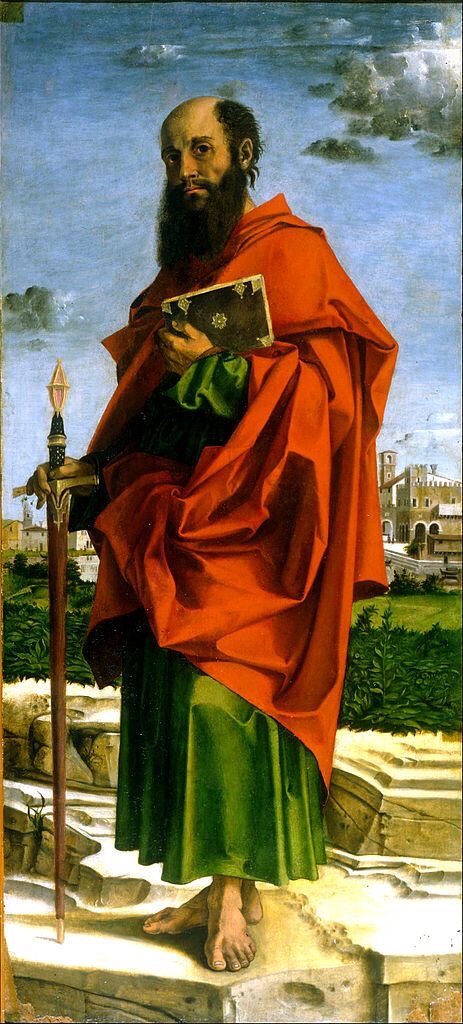
Saint Paul (Paul the Apostle). Saint Paul is commonly depicted in Christian art holding a book (symbolizing his epistles in the New Testament) and a sword (symbolizing his martyrdom and the “sword of the Spirit” from Ephesians 6:17).

The Apostle Paul and the people of Kedar

Paul claimed that he was an apostle to the Gentiles. What was his connection to the people of Kedar, who were Gentiles and would enter God’s fold as predicted in Isaiah 42 verse 11 and Isaiah 60 verse 7? Kedar was the son of Ishmael, the ancestor of the Arab people.

This is a very interesting question. Paul was an apostle to the Gentiles, meaning that he preached the gospel of Jesus Christ to the non-Jewish nations. He traveled extensively throughout the Roman Empire, visiting places such as Cyprus, Asia Minor, Greece, Macedonia, and Rome. He also wrote many letters to the churches he founded or visited, which are part of the New Testament.
While Paul’s ministry was mainly directed towards the Gentiles in various regions, there is no specific mention or connection between Paul and the people of Kedar in the New Testament.

The people of Kedar were a nomadic tribe of Arabs, descended from Ishmael, the son of Abraham and Hagar. They are mentioned several times in the Old Testament as examples of the distant nations that would worship the true God. Isaiah 42 verse 11 and Isaiah 60 verse 7 are two of the prophecies that foretell the inclusion of the people of Kedar in God’s salvation plan.

The references to Kedar in Isaiah are prophecies that speak about the inclusion of Gentiles into God’s fold. These prophecies imply that people from various nations, including the descendants of Kedar, would come to worship and acknowledge God.

Although Paul’s mission was to bring the message of salvation to the Gentiles, his primary interactions were with the Greco-Roman world rather than specific Arab or Ishmaelite communities. However, there is no specific mention of Paul having a direct connection to the people of Kedar mentioned in those specific verses of Isaiah.

Which verse in the Quran indicates that Islam represents supersessionism from an Abrahamic theological viewpoint?


Azahari Hassim

One verse often cited in discussions of supersessionism in Islam is Surah Al-Ma’idah (Capter 5, verse 48):

“And We have revealed to you, [O Muhammad], the Book in truth, confirming that which preceded it of the Scripture and as a criterion over it. So judge between them by what Allah has revealed and do not follow their inclinations away from what has come to you of the truth.”

This verse suggests that the Quran serves as a confirmation and criterion over previous scriptures, reflecting the concept that Islam completes and supersedes prior Abrahamic religions. This idea is central to Islamic theology, emphasizing that the Quran is the final and most complete revelation from God.

Islam is considered as a restored religion of Abraham due to Judaism corrupting their text as regards a son whom Abraham was commanded to sacrifice. At the same time, Christianity corrupted their scripture concerning the oneness of God and the rite of circumcision. What is the explanation for this?

The belief that Islam is a restored religion of Abraham stems from the belief that both Judaism and Christianity deviated from the original teachings of Abraham. According to Islamic beliefs, Judaism corrupted their text by incorrectly interpreting the command to sacrifice a son, as mentioned in the Quran. Muslims believe that Abraham was commanded to sacrifice his son Ishmael, not Isaac as mentioned in the Hebrew Bible.

Similarly, Muslims believe that Christianity corrupted their scripture by deviating from the belief in the oneness of God (monotheism) and by modifying the rite of circumcision. Islam emphasizes the concept of tawheed, which is the belief in the oneness of God, and questions the Trinity as mentioned in Christian theology. Islam also practices circumcision, although the method and significance may differ from those in Judaism and some Christian traditions.

These differences and perceived corruptions are seen from the perspective of Islamic theology, which asserts that Islam is the restoration of the original teachings of Abraham, as revealed in the Quran.

Why don’t Jews and Christians convert to Islam?

Jews and Christians considering conversion to Islam may be faced with theological and historical factors that could pose challenges to their decision.

Converting to Islam can be challenging for Jews and Christians primarily because of the significance of the Hajj ritual. This ritual emphasizes that God designated Abraham’s lineage through Hagar and Ishmael, rather than through Sarah and Isaac.

In this context, it is believed that God made a covenant with Abraham through Ishmael instead of Isaac, alongside the special status given to the Israelites under the Sinai covenant. Additionally, in Islamic tradition, it is Ishmael, not Isaac, whom God instructed Abraham to sacrifice.

The Hajj pilgrimage in Islam is a central religious duty that commemorates the events surrounding Abraham, Hagar, and Ishmael. The ritual commemorates Hagar’s search for water for her baby Ishmael and the construction of the Kaaba (House of God) by Abraham and Ishmael.

The ritual emphasizes the significance of Ishmael in Islamic tradition, as it is believed that Ishmael, not Isaac, was the son whom God commanded Abraham to sacrifice. This differs from the Jewish and Christian narrative, where Isaac is the central figure in the sacrifice story. This variation in narrative can pose a considerable theological challenge for Jews and Christians contemplating a conversion to Islam.

Another point of divergence is the selection of Abraham’s family through Hagar and Ishmael in Islamic tradition, as opposed to Sarah and Isaac in Judeo-Christian tradition. For Jews and Christians, the covenant with Isaac and the lineage tracing through him are central to their religious identity. Converting to a faith that reveres Ishmael’s lineage may challenge their established beliefs and traditions.

Participating in the Hajj and reenacting Abraham’s actions can symbolize the affirmation of Ishmael’s significance in Islamic theology. This could pose a conflict for Jews considering conversion to Islam, as it may be seen as contradictory to their understanding of God’s covenant with Isaac.

In summary, the argument for the difficulty of Jewish and Christian conversion to Islam revolves around the differing beliefs regarding the selection of Abraham’s family and the prominence of Ishmael in Islamic tradition. The Islamic narrative highlights Ishmael’s key role in the Abrahamic covenant, while Isaac is linked to the Sinai covenant.


The image portrays a deep sense of Jewish spirituality, tradition, and cultural identity. It emphasizes the sacredness of Shabbat, the importance of religious observance, and the historical resilience of the Jewish people.

Some Islamic scholars question the authenticity of parts of the Torah, especially the story of Hagar and Ishmael. They argue that Genesis 21, verse 9 to 10, might have been added later, as Islamic tradition states this event occurred before Isaac’s birth, depicting Ishmael as an infant, unlike the Torah’s portrayal of him as older and mocking Isaac.

Additionally, the identities of the intended sacrifice differ: the Quran claims it was Ishmael, while the Bible states it was Isaac. This inconsistency leads some scholars to challenge Genesis 22, verse 2, where Isaac is called Abraham’s “only son,” since Ishmael was his firstborn for fourteen years.

In Islamic tradition, Ishmael is significant, especially in relation to the Prophet Muhammad’s lineage, and is seen as more important in the Abrahamic covenant, while Isaac is linked to the Sinai covenant.

In summary, the Islamic view raises doubts about certain Torah passages, suggesting timeline alterations in Genesis 21 and identifying Ishmael as the son in Genesis 22, verse 2, instead of Isaac.

The Covenant of Abraham: A Comparison Between the Bible and the Quran

According to biblical scripture, it is recorded that God established a covenant with Abraham through his son Isaac, rather than his firstborn Ishmael. Conversely, the Quran presents a different perspective by indicating that the covenant was made with Ishmael instead of Isaac. How does the Quran describe this?

Surah 2, verses 124 to 125 of the Quran read:

“And when his Lord tested Abraham with certain words, and he fulfilled them. God said, “I am making you a leader of humanity.” Abraham said, “And my descendants?” God said, “My covenant does not include the wrongdoers.”
“And We made the House a focal point for the people, and a sanctuary. Use the shrine of Abraham as a place of prayer. And We commissioned Abraham and Ishmael, “Sanctify My House for those who circle around it, and those who seclude themselves in it, and those who kneel and prostrate.”

The phrase “And when his Lord tested Abraham with certain words,” presented in verse 124, is understood by Quranic commentators to refer to the tests and commands that God imparted to Abraham. These included leaving his family in a barren land, sacrificing his son Ishmael, rebuilding the Kaaba (House of God), and instituting the rite of circumcision.

The Quran clearly states in Surah 2, verse 124 that God made a covenant with Abraham through his son Ishmael, not Isaac. The covenant was established prior to the birth of Isaac, who is regarded as a divine gift to Abraham and Sarah, a result of Abraham’s readiness to offer Ishmael as a sacrifice.


In this context, Ishmael is understood as a son dedicated to God, whereas Isaac is considered a son of blessing for Abraham and Sarah. This contradicts the Biblical account which portrays Isaac as the son who was to inherit the covenant from Abraham.

According to the Quran and Islamic tradition, the Biblical account was distorted to diminish Ishmael’s status as Abraham’s heir in favor of Isaac. This alteration is thought to stem from the bias of Jewish scribes toward the Israelite lineage.

The Quran asserts that it rectifies this distortion by confirming Ishmael as the son who carried on Abraham’s legacy in accordance with the original divine covenant. Additionally, the divine selection of the ancient Israelites and their Hebrew prophets before the advent of Islam is seen as a preparation for the arrival of Muhammad, the final Prophet.

The Abrahamic and Sinai Covenants: An Islamic Perspective on Sacred Continuity and Relics

In the comparative theology of Abrahamic religions, the concept of divine covenants occupies a central role. Judaism, Christianity, and Islam all trace their spiritual lineage to the Prophet Abraham (Ibrahim عليه السلام), but they diverge in their understanding of which covenant is binding and through whom it continues. 

One unique Islamic perspective highlights the theological and symbolic significance of sacred relics and the distinction between the Abrahamic Covenant and the Sinai (Mosaic) Covenant. This article explores how Islamic scholars frame the continuity of divine promise, drawing attention to the absence of Abrahamic relics in Jewish tradition and the centrality of Abrahamic symbolism in Islamic rites.

1. Two Covenants: Abrahamic and Sinai

The Abrahamic Covenant, as recorded in both the Bible and Qur’an, was made between God and Abraham, promising:

• A multitude of descendants

• A blessed lineage

• A divinely appointed land

In contrast, the Sinai Covenant—or Mosaic Covenant—was established generations later, between God and the Israelites through Moses at Mount Sinai. This covenant was heavily centered on legal ordinances, ritual purity, and national identity.

Islamic scholars underscore this distinction, arguing that while the Sinai Covenant was specific to the Israelites and conditional upon their obedience, the Abrahamic Covenant is universal, unconditional, and eternal, forming the foundation of Islamic monotheism.

2. Islamic Continuity: Inheriting the Abrahamic Legacy

From an Islamic theological standpoint, the Prophet Muhammad ﷺ is seen as a direct descendant of Abraham through his firstborn son Ishmael. This lineage is critical in Islamic thought, as it places Muhammad ﷺ and the Muslim ummah within the direct stream of Abrahamic blessing and covenantal responsibility.

Islam views itself not as a new religion, but as the revival and perfection of the original Abrahamic faith. This perspective is reinforced by the Qur’an’s emphasis on following “the religion of Abraham, the upright” (Qur’an 3:95), and by prophetic traditions affirming the the reconstruction of the House of God (Kaaba) by Abraham and Ishmael.

3. The Role of Sacred Relics

A distinctive element of the Islamic argument involves the presence or absence of Abrahamic relics:

In Islam, the Kaaba (House of God) in Mecca is considered the house built by Abraham and Ishmael (Qur’an 2:125–127), accompanied by the Black Stone (Hajar al-Aswad) and the Station of Abraham (Maqam Ibrahim). These physical sites serve as living relics of the Abrahamic legacy, venerated by over a billion Muslims worldwide.

In Judaism, no physical relic directly associated with Abraham has been preserved. The most significant ancient artifact, the Ark of the Covenant, belongs to the Mosaic era and is tied to the Sinai Covenant, not Abraham. Moreover, it was lost during the destruction of the First Temple.

Islamic scholars point to this contrast to suggest that the direct covenantal heritage of Abraham has been preserved in Islam, not in Judaism. The absence of relics connected to Abraham in Jewish tradition is interpreted by some as symbolic of a rupture in the transmission of his legacy.

4. The Ark of the Covenant: Significance and Loss

The Ark of the Covenant remains an iconic symbol in Jewish history. It was said to contain the tablets of the Law (Torah) and represented the divine presence among the Israelites. However, from an Islamic perspective, the Ark is not seen as an Abrahamic relic but rather as a Mosaic artifact.

Its eventual loss during the Babylonian destruction of the First Temple is often viewed by Islamic scholars as a symbolic termination of the Sinai Covenant, marking the end of that specific historical phase of divine interaction.

5. Universality of the Abrahamic Covenant in Islam

A key theme in Islamic theology is the universality of the Abrahamic Covenant. Unlike the Sinai Covenant, which was exclusively for the Children of Israel, the Abrahamic Covenant—according to Islamic understanding—was meant for all peoples who follow the monotheistic path of submission to God (Islam).

This universalism is enshrined in the Qur’an (Surah 22:78):

“It is He who has named you Muslims before and in this [revelation], that the Messenger may be a witness over you and you may be witnesses over mankind.”

Thus, Islam positions itself as the final and universal expression of the Abrahamic mission, encompassing all of humanity beyond ethnic or tribal lines.

6. Supersession and Theological Fulfillment

While Islam respects the prophets of Judaism and Christianity, many Islamic scholars adopt a form of theological supersessionism: the idea that Islam, as revealed to Muhammad ﷺ, completes and supersedes previous revelations. This includes both the Abrahamic and Mosaic covenants.

According to this view, the Qur’an is the final testament, and the Muslim community (ummah) is the rightful heir to Abraham’s spiritual legacy, fulfilling his vision of pure monotheism (tawḥīd) untainted by tribal exclusivism or theological alteration.

Conclusion

The Islamic view on the Abrahamic and Sinai covenants is deeply rooted in both theological reasoning and historical symbolism. By emphasizing the continuity of Abrahamic rites, the preservation of sacred relics, and the universal scope of its message, Islam asserts itself as the true fulfillment of the covenant established with Abraham. The absence of equivalent Abrahamic relics in Jewish tradition and the eventual disappearance of the Ark are seen not as mere historical events, but as spiritual markers—signifying a shift from the tribal covenant of Sinai to the universal mission embodied by Islam.

While these perspectives are uniquely Islamic and may not be shared by Jewish or Christian theology, they contribute meaningfully to the broader discourse on how each faith understands its relationship with Abraham, the friend of God.

What is the British-Israel Theory?


Azahari Hassim

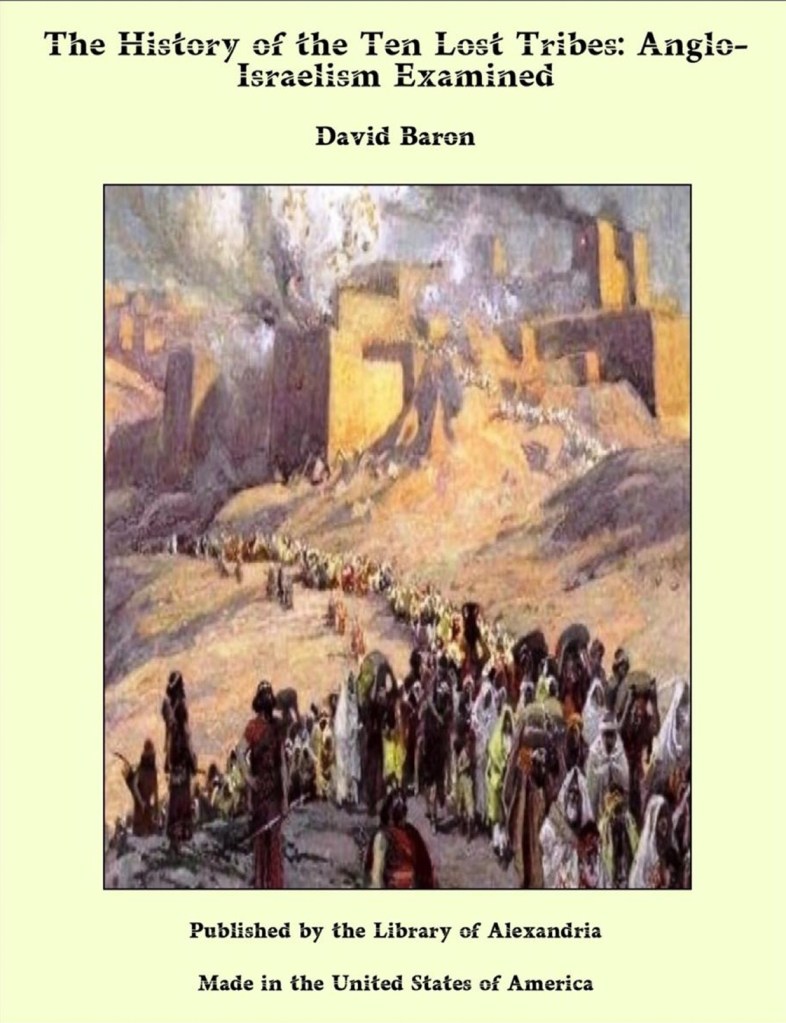
The British-Israel Theory, also known as British-Israelism, is a belief system that claims that the people of the British Isles, specifically the Anglo-Saxon peoples, are the direct descendants of the Ten Lost Tribes of Israel. This theory emerged in the 19th century and has since been associated with various religious and nationalist movements.

Historical Background

  1. Emergence: The concept began to take shape in the late 19th century, particularly during the period of British imperial expansion. As the British Empire expanded, some individuals began to draw parallels between the successes of the British Empire and the biblical narrative of the Israelites.
  2. Influence of Christianity: The theory was largely propagated by Protestant Christian groups who saw it as part of a divine plan. They believed that the Anglo-Saxon people were chosen by God, analogous to the chosen people of Israel in the Bible.
  3. Notable Figures: Important proponents of the theory include John Wilson, who published “Our Israelitish Origin” in 1840, and the British-Israelites, a group that promoted these ideas through pamphlets, books, and public lectures.

Key Tenets

  1. Identity of the Lost Tribes: According to this theory, the ten tribes of northern Israel, which were conquered by the Assyrians and subsequently “lost” to history, migrated to Europe and eventually settled in Britain. Proponents often claim that the Anglo-Saxon peoples embody the essence of these tribes.
  2. Biblical Connections: Advocates frequently cite various biblical passages to support their claims, believing in a direct lineage from biblical figures and asserting that historical events align with the narrative of the Israelites.
  3. Divine Destiny: The theory often intertwines with notions of predestination, suggesting that Britain has a special role in world history and fulfills biblical prophecies, particularly those relating to the Second Coming of Christ.

Cultural Impact

  1. Militarism and Nationalism: The theory found particular resonance in the context of British nationalism during the late 19th and early 20th centuries, at a time when there was considerable interest in imperial expansion and identity.
  2. Movement and Organizations: Various groups have emerged from the British-Israel theory, including the British Israel World Federation and other smaller sects. These groups often promote a blend of theology, history, and nationalism.
  3. Criticism and Controversy: The British-Israel theory has faced significant criticism from historians, theologians, and geneticists alike. Many argue that it reflects a misinterpretation of both biblical texts and historical evidence. Critics label it pseudohistory and point out that genetic studies do not support the claims of a direct line from the Ten Lost Tribes to the modern British population.

Modern-Day Relevance

In contemporary times, some groups continue to espouse British-Israelism, often aligning it with nationalist or even supremacist ideologies. However, it remains largely marginalized within mainstream academic and religious discourses.

Summary

In summary, the British-Israel Theory is a controversial belief that links the Anglo-Saxon people to the ancient Israelites, positing a connection that is both historical and theological. While it has played a role in the development of certain nationalist sentiments, it remains controversial and lacks empirical support from the academic community.

The British-Israel theory (also known as Anglo-Israelism) is the belief that the people of Great Britain (and sometimes other Western European nations) are descended from the Ten Lost Tribes of Israel. This theory was popularized in the 19th and early 20th centuries, with various scholars, theologians, and writers commenting on or promoting the idea. Below are some notable scholars and figures who have addressed or been associated with the British-Israel theory:

1. John Wilson (1782–1875)

A Scottish theologian and one of the earliest promoters of British-Israelism.

Quote: “The Saxons, the Danes, and the Normans are all of the same stock, and their ancestors may be traced to the lost tribes of Israel.” (Lectures on Our Israelitish Origin, 1840)

2. Edward Hine (1825–1891)

A leading British-Israelite writer in the 19th century.

Quote: “The people of the British Isles are the literal descendants of the lost House of Israel, and the promises given to Abraham have been fulfilled in them.

3. Rev. Joseph Wild (1834–1908)

A Canadian preacher who wrote extensively on British-Israelism.

Quote: “England is the land of Joseph, and her people are the people of the lost tribes. The marks of Israel are upon the Anglo-Saxon race.

4. William Pascoe Goard (1863–1937)

A leading British-Israelite scholar and writer.

Quote: “The throne of David has been preserved in the British monarchy, fulfilling the divine covenant that David’s descendants would reign forever.

5. J.H. Allen (1847–1930)

An American advocate of British-Israelism.

Quote: “The Saxons are Isaac’s sons, and the promises to Israel have found their fulfillment in the Anglo-Saxon race.” (Judah’s Scepter and Joseph’s Birthright, 1902)

6. Herbert W. Armstrong (1892–1986)

Founder of the Worldwide Church of God and a proponent of British-Israelism.

Quote: “The United States and Britain are the modern descendants of Ephraim and Manasseh, the birthright nations of Israel.” (The United States and Britain in Prophecy)

Criticism by Scholars

Many mainstream historians and theologians reject British-Israelism, arguing that it is based on pseudo-historical claims.

Professor Norman Cohn (1915–2007) (historian):

Quote: “British-Israelism is an example of how nationalist ideology can distort history to suit its own ends.

The Rev. Canon W.H. Bennett (critic of British-Israelism):

Quote: “The theory is unsupported by serious scholarship and has no basis in biblical or historical fact.”

The Ten Lost Tribes of Israel

The following is an excerpt from A Popular Dictionary of Judaism by Lavinia and Dan Cohn-Sherbok.

TEN LOST TRIBES:

The tribes in the Northern Kingdom who were conquered by the Assyrians in 721 BCE. The ten Northern tribes almost certainly intermarried with the surrounding peoples and lost their separate identity. 2 Kings Chapter 17 maintains they were exiled by the river Gozan and the rabbis taught that they dwelt beyond the River Sambatyon. The Samaritans are probably descended from some of the tribes and, during the course of history, various other groups have been identified with ten lost tribes including the British, the Japanese, the Afghans, and certain Red Indian tribes.

The idea that the Ten Lost Tribes of Israel migrated to distant lands has led to various theories, some with historical evidence and others rooted in legend and speculation. Here’s a summary of how different groups, including the British, Japanese, Afghans, and certain Native American tribes, have been linked to the Lost Tribes:

1. British-Israelism (British)

Theory: British-Israelism, a belief that gained traction in the 19th and 20th centuries, holds that the British people, particularly the Anglo-Saxons, are descendants of the Ten Lost Tribes.

Justification: Some proponents cite linguistic similarities between Hebrew and English words.
The Stone of Scone, used in British coronations, is sometimes linked to the biblical Stone of Jacob.
The British monarchy is said to be a continuation of the Davidic line.
Some connect the movement of the Scythians (believed by some to be Israelites) into Europe with the eventual settlement of Anglo-Saxons in Britain.

Criticism: Mainstream scholars dismiss this theory as pseudohistory, lacking archaeological and genetic evidence.

2. Japanese-Israelite Theory

Theory: Some theories propose that the Japanese people or certain Japanese clans, such as the Shinto priestly families, descend from the Lost Tribes.
Justification:
Japanese customs resembling Jewish traditions, such as ritual purification, shinto priestly garments similar to the Jewish ephod, and some linguistic similarities.
The Hata clan, an ancient family of silk weavers, is believed by some to have Jewish ancestry.
The Torii gates in Shintoism are thought by some to resemble the gates of the ancient Temple in Jerusalem.
Criticism: Most scholars consider these similarities to be coincidental or due to cultural diffusion rather than direct descent.

3. Afghans (Pathans/Pashtuns)


Theory: The Pashtun (Pathan) tribes of Afghanistan and Pakistan are widely believed, especially among their own traditions, to be descendants of the Lost Tribes.

Justification: Many Pashtun tribal names, such as Yusufzai (“sons of Joseph”), resemble biblical names.
Their customs, such as circumcision on the eighth day, avoiding pork, and levirate marriage, are similar to Jewish practices.
Ancient Muslim historians like Al-Biruni and Ibn Khaldun recorded traditions connecting the Pashtuns to the Israelites.
DNA studies have been inconclusive, but some genetic markers have been found that could link them to the Middle East.

Acceptance: This is one of the more widely held theories, with support from some historical and genetic evidence.

4. Native American Tribes (Red Indians)


Theory: Certain Native American tribes, particularly among the Cherokee, Hopi, and some others, have been linked to the Lost Tribes.
Justification: Some early European explorers, such as James Adair, observed customs among Native American tribes that he believed were Jewish in origin (e.g., purification rituals, feasts similar to Passover, and the use of sacred names for God).
The Book of Mormon, in Mormon theology, teaches that some Native Americans descended from Israelite tribes that migrated to the Americas.
Some Native American oral traditions include references to a great migration from the East.

Criticism: There is no genetic or archaeological evidence to support the claim that Native Americans are directly linked to the Israelites. Most of their ancestry traces to Asia via the Bering Strait migration.

Conclusion


While the Pashtun (Pathans) have the strongest historical and traditional connection to the Lost Tribes, the British, Japanese, and Native American theories are mostly speculative.
Most scholars believe that the Lost Tribes assimilated into surrounding cultures, primarily in the Middle East and Central Asia.
The topic remains fascinating from a historical and mythological perspective, but genetic and historical evidence does not strongly support most of these claims.

What is the significance of the title “The Matrix of Gog” authored by Daniel Patrick in the context of the book?

The title “The Matrix of Gog” authored by Daniel Patrick holds significant meaning in the context of the book. The term “Matrix of Gog” refers to the fulfillment of Bible prophecy, specifically Ezekiel 38 and 39, which describe a powerful world leader named Gog from the land of Magog who will emerge and precipitate a global war. The book aims to inform readers about Gog, Magog, and their connection to the Jews, revealing that today’s Jews are not descendants of Abraham but are of the Turkic bloodline from Khazaria, a country in the Caucasus south of Russia.

The title also implies a complex web or system (matrix) involving Gog and his influence on world events, particularly in relation to Israel and the Jewish people. The book challenges the common belief among Christian Zionists that they must support the Israeli state unconditionally, suggesting that this belief is based on a misunderstanding of biblical prophecy.

In essence, “The Matrix of Gog” is a title that encapsulates the book’s focus on uncovering the true identity of Gog and Magog and their role in fulfilling biblical prophecies, while also critiquing the prophetic paradigm that supports Zionist Israel.

Context and Content

1. Gog and Magog: In biblical and Quranic traditions, Gog and Magog are often associated with apocalyptic prophecies. The book explores the idea that Gog, from the land of Magog, has already exerted influence over the land of Israel, suggesting a fulfillment of these prophecies.

2. Khazars: The book delves into the history of the Khazars, a people who converted to Judaism in the medieval period. The author posits that they play a significant role in the destruction and plunder of lands, tying them to the narrative of Gog and Magog.

3. Prophetic and Historical Analysis: The author examines historical events and their potential prophetic significance, suggesting that the actions of Gog and Magog are part of a larger, divinely orchestrated plan. The “matrix” in the title implies a hidden framework through which these events unfold.

Overall, the title “The Matrix of Gog“ reflects the book’s exploration of complex historical and prophetic themes, suggesting an underlying network of influences related to Gog and Magog and their impact on world events, particularly concerning the land of Israel.

According to the author, who is Gog?

According to the author, Gog is the demonic leader or king of the land of Khazaria, which is the country of origin for today’s “Jews.” The book “The Matrix of Gog” informs us about Gog, Magog, and the Jews, revealing that today’s “Jews” are the “Synagogue of Satan” as mentioned in Revelation 2 and 3.

According to the author, who are the present-day descendants of the ancient Israelites?

According to the author, the present-day descendants of the ancient Israelites are not the majority of Jews, but rather some Palestinians who have more Israelite blood than the Jews. Some Palestinians even have DNA markers that establish them as descendants of the ancient priests who worked in the Jewish temples and synagogues.

In what way does “The Matrix of Gog” establish a connection between Khazars and Gog from the land of Magog?

The book “The Matrix of Gog” establishes a connection between Khazars and Gog from the land of Magog by revealing that Gog is the demonic leader or king of Khazaria, which is located in the Caucasus, south of Russia. It explains that the people we call “Jews” today are actually of the Turkic bloodline and not descendants of Abraham, Israelites, or Semites. 

The book informs us about Gog, Magog, and the Jews, showing that the Holy Bible is accurate in its depiction. Additionally, it delves into the lineage of Togarmah, who is related to Magog and Ashkenaz, giving insight into the origins of the Khazars and their connection to the Ashkenazi Jews.

The perspective of the author towards Palestinians is what exactly?

The perspective of the author towards Palestinians is that they had more Israelite blood than the Jews themselves, and some Palestinians even had DNA that established they were ‘Cohens’ – workers at the ancient Temple and synagogues of the Jews.

What is the author’s perspective towards Ashkenazi Jews?

The author’s perspective towards Ashkenazi Jews is critical, as they view revealing books on the origins of Ashkenazi Jewry as a “Frankenstein nightmare” that won’t die despite attempts to suppress it in the media. The author also mentions a book by Dr. Paul Wexler that challenges Zionist beliefs about Ashkenazi Jews. Additionally, the author discusses the Khazar mass migration into Eastern Europe and the DNA research findings that suggest most Jews came from Khazar blood.

The Second Temple’s Destruction: Prophetic Narratives in Judaism, Islam, and Christianity


Azahari Hassim

Jewish beliefs indicate that there were no prophetic warnings concerning the destruction of the Second Temple, in contrast to the warnings issued regarding the First Temple. Conversely, Surah 17:4 and 7 of the Quran affirm the existence of a prophecy pertaining to the destruction of the Second Temple, referencing the divine message conveyed by Jesus and John the Baptist.

The claim that there were no prophetic warnings about the destruction of the Second Temple in Jewish tradition, while the Quran affirms such prophecies, presents an interesting contrast between these religious perspectives.

Jewish Perspective

In traditional Jewish belief, there is indeed a notable difference in the prophetic warnings regarding the First and Second Temples:

  1. First Temple: The destruction of the First Temple in 586 BCE was preceded by numerous prophetic warnings, particularly from prophets like Jeremiah and Ezekiel.
  2. Second Temple: There is less emphasis on explicit prophetic warnings about the Second Temple’s destruction in 70 CE within mainstream Jewish sources.

Rabbi Joseph said, “Prophecy ceased during the time of the Second Temple, and thus there was no prophet to warn of its destruction as there had been for the First Temple.” This statement suggests that during the period of the Second Temple, which stood from around 516 BCE to 70 CE, there were no prophets who received divine messages or visions to warn the people about the impending destruction of the temple.

Islamic Perspective

The Quran, in Surah 17 (Al-Isra), verses 4 and 7, does refer to two instances of destruction and defilement of the temple:

“And We conveyed to the Children of Israel in the Scripture that, ‘You will surely cause corruption on the earth twice, and you will surely reach a degree of great haughtiness’… ‘So when the final promise came, We sent your enemies to sadden your faces and to enter the temple in Jerusalem as they entered it the first time, and to destroy what they had taken over with total destruction.’”

The verse addresses two instances of corruption by the Children of Israel and describes divine punishments for these transgressions. The verses suggest that the first punishment corresponds to the Babylonian destruction of Jerusalem and its Temple. The second punishment is interpreted by many Islamic scholars as referring to the Roman destruction of the Second Temple in 70 CE. The Quran states that enemies would enter “the Masjid” (interpreted as the Temple) and destroy it with utter devastation, just as they did during the first instance.

Islamic commentators often link this prophecy to historical events, with some identifying Jesus and John the Baptist as figures who warned against corruption and foretold divine retribution. These figures are seen as part of God’s message to guide and warn their communities before calamity struck.

Christian Perspective

The New Testament records Jesus predicting the destruction of the Second Temple. For example, in Matthew 24:1-2, Jesus says:

“You see all these things, do you not? Truly I say to you, there shall not be left here one stone upon another, that shall not be thrown down.”


This prophecy is seen by Christians as being fulfilled when the Romans destroyed the Temple in 70 CE.

In conclusion, while traditional Jewish sources may not emphasize prophetic warnings about the Second Temple’s destruction to the same degree as the First Temple, both Islamic and Christian traditions do record such prophecies. This difference in emphasis reflects the distinct theological perspectives and historical interpretations of these religious traditions.

The destruction of the Second Temple in Jerusalem

The destruction of the Second Temple

The destruction of the Second Temple in Jerusalem occurred in 70 CE and is a pivotal event in Jewish history. Here’s a summary of the key points:

Background:

Second Temple Period: The Second Temple was constructed in 516 BCE, replacing Solomon’s Temple, and it became the center of Jewish worship and national identity.

Roman Rule: By the 1st century CE, Judea was under Roman control, leading to tensions between the Jewish population and Roman authorities.

Key Events Leading to Destruction:

1. Jewish Revolt: In 66 CE, a Jewish rebellion against Roman rule broke out, driven by religious and political discontent.

2. Siege of Jerusalem: The conflict escalated, culminating in the Roman siege of Jerusalem in 70 CE, led by General Titus.

The Siege and Destruction:

Roman Assault: The Romans surrounded the city, cutting off supplies and engaging in brutal tactics to break the Jewish defenses.

Fall of the Temple: On Tisha B’Av (the 9th of Av in the Hebrew calendar), the Romans breached the walls of the city. They set fire to the Temple, leading to its complete destruction.

Aftermath: The destruction of the Second Temple marked the end of the Second Temple period, leading to significant changes in Jewish life, including the shift towards rabbinic Judaism and the diaspora.

Significance:

Cultural Impact: The destruction had a profound impact on Jewish religion and identity, leading to mourning rituals and the development of new religious practices.

Historical Memory: Tisha B’Av is observed as a day of mourning for the destruction of both the First and Second Temples.

This event remains a critical moment in Jewish history, shaping religious practices and cultural identity for centuries to come.

Islamic Interpretation of Daniel 7: The Fifth Kingdom as the Rise of Islam

Numerous biblical scholars maintain that the four beasts described in Daniel 7 symbolize four distinct kingdoms: Babylon, Medo-Persia, Greece, and Rome. Subsequently, the establishment of the kingdom of God is noted. In contrast, certain Islamic scholars assert that the fifth kingdom, which they identify as the kingdom of God, corresponds to Islam, as it arose subsequent to the Byzantine Empire, also referred to as the Eastern Roman Empire. What is the rationale behind this interpretation?

The Islamic interpretation of the prophecy in Daniel 7, which identifies the “fifth kingdom” (the kingdom of God) with Islam, is based on historical and theological reasoning. Here are the key points behind this interpretation:

1. Historical Succession of Empires


Daniel 7 describes four beasts representing four successive kingdoms. Many biblical scholars identify these as Babylon, Medo-Persia, Greece, and Rome.
Islam emerged in the 7th century CE, after the decline of the Western Roman Empire and during the weakening of the Byzantine (Eastern Roman) Empire. Since Daniel’s vision mentions the establishment of God’s kingdom after the fourth empire, some Islamic scholars argue that Islam, which emerged after Rome, fulfills this prophecy.

2. The Fall of the Byzantine Empire and the Rise of Islam


The Byzantine (Eastern Roman) Empire was a dominant power before Islam’s expansion. Islamic scholars argue that with the conquests of the Rashidun and Umayyad Caliphates, Islam effectively replaced Byzantine rule in large parts of the Mediterranean, the Levant, and North Africa.
The rapid spread of Islam and its dominance over former Roman territories is seen as a fulfillment of the prophecy that a divine kingdom would supersede worldly empires.

3. The Concept of God’s Kingdom in Islam


Jesus did not equate the kingdom of God that he preached with the religion of Christianity. Rather, the concept of the “kingdom of God” is frequently linked to the arrival of a figure resembling a son of man as described in Daniel 7.
Islamic scholars, however, interpret God’s kingdom as a system of governance based on divine law (Sharia). Since Islam established a political-religious order that claimed to rule by divine law, it is seen as fulfilling the vision of God’s kingdom replacing human empires.

4. Islam as a Universal and Everlasting Kingdom


Daniel 7, verse 14 describes the final kingdom as one that will never be destroyed. Islamic scholars argue that Islam, despite historical challenges, continues to be a major global faith and political influence.
The continuity of Islam as a religious and civilizational force is seen as evidence that it aligns with the prophecy of a kingdom that endures.

5. The Role of Prophet Muhammad in Quranic Prophecy


Some Islamic scholars extend this interpretation by linking it to prophecies about a future religion of Islam. They cite Surah 61, verse 9 of the Quran:

“He it is Who hath sent His messenger with the guidance and the religion of truth, that He may make it conqueror of all religion however much idolaters may be averse.”


Muhammad’s establishment of a religious-political order is viewed as the fulfillment of the divine kingdom prophesied in Daniel.
Conclusion

Islamic scholars interpret Daniel 7’s prophecy through a historical and theological lens, identifying Islam as the divine kingdom that follows Rome. They argue that Islam’s rise, territorial expansion, and legal-political system based on divine law fulfill the vision of a God-ordained kingdom that replaces human rule.

Muhammad’s Night Journey and the Fate of the Jewish Temple: A Theological Perspective

What is the rationale behind the theological implications of the correlation between Surah 17 verse 1 and verse 7 of the Quran, which indicates that Judaism as a sacrificial religion has been abolished?

Surah 17 of the Quran, known as “Al Isra” (The Night Journey), contains verses that reference the Israelites and events associated with them. Let’s explore the verses you mentioned:

1. Surah 17 verse 1:

“Exalted is He who took His Servant by night from al Masjid Al Haram to Al Masjid Al Aqsa, whose surroundings We have blessed, to show him of Our signs. Indeed, He is the Hearing, the Seeing.”

This verse refers to the Isra, or the Night Journey, where Muslims believe that the Prophet Muhammad was taken from Mecca to Jerusalem and then ascended to the heavens (the Miraj). Al Masjid Al Aqsa is identified with the Temple Mount in Jerusalem.

2. Surah 17 verse 7:

“If you do good, you do good for yourselves; and if you do evil, [you do it] to yourselves. Then when the final promise came, [We sent your enemies] to sadden your faces and to enter the temple in Jerusalem, as they entered it the first time, and to destroy what they had taken over with [total] destruction.”

This verse refers to the punishment meted out to the Israelites due to their disobedience and recalls the destruction of the Temple in Jerusalem.

The argument you’re referencing seems to derive from the juxtaposition of these verses in the same chapter. By connecting the Night Journey of Prophet Muhammad to Al Masjid Al Aqsa (associated with the ancient Jewish Temples) with the subsequent verse about the Temple’s destruction, one might argue that it signifies a transfer of religious legitimacy from the Israelites to the followers of Muhammad.

The theological implication drawn from this, as posited in your question, is that the Quran might be suggesting that the original sacrificial religion of Judaism (centered around the Temple) has been superseded or “abolished” by Islam.

The Dome of the Rock in Jerusalem, which commemorates Muhammad’s Night Journey, symbolizes the continued connection between Abrahamic faiths. Islam is often seen as the final message that surpasses Judaism and Christianity.

Some scholars believe the Night Journey of the Prophet Muhammad to Heaven is theologically related to Daniel 7 verse 13. How is this argument explained?

The argument connecting the Night Journey of the Prophet Muhammad to Heaven with Daniel 7 verse 13 is based on theological interpretations that draw parallels between the two events. Here’s an explanation of this argument:

1. The Night Journey of Prophet Muhammad (الإسراء والمعراج):

According to Islamic tradition, the Night Journey (الإسراء) and Ascension (المعراج) is a miraculous event in which the Prophet Muhammad was transported from Mecca to Jerusalem and then ascended through the heavens, meeting various prophets and eventually coming into the presence of Allah.

2. Daniel 7 verse 13 in the Bible:

In the Book of Daniel in the Old Testament of the Bible, specifically in Daniel 7 verse 13, there is a prophecy that says: “I saw in the night visions, and behold, with the clouds of heaven there came one like a son of man, and he came to the Ancient of Days (that is, God) and was presented before him.” This verse is often interpreted as a reference to a messianic figure.

The argument connecting these two events revolves around the idea that both the Night Journey of Prophet Muhammad and the vision of “one like a son of man” in Daniel 7 verse 13 involve a figure coming into the presence of God. Some scholars, particularly in comparative religion and interfaith dialogue, suggest that there are thematic similarities between these events:

Divine Revelation: In both cases, there is a profound encounter with the divine. Prophet Muhammad ascended to the highest levels of heaven, and in Daniel 7 verse 13, the figure of “one like a son of man” is presented before the “Ancient of Days,” who is a divine entity.

Prophetic Roles: The figure in Daniel 7 verse 13 is often associated with a messianic or prophetic role. Similarly, Prophet Muhammad is considered the final prophet in Islam, and his Night Journey is seen as a confirmation of his messianic or prophetic role.

It’s important to note that this argument is primarily a matter of theological interpretation and interfaith dialogue. Different scholars and religious traditions may have varying perspectives on the significance and connections between these events.

John the Baptist, Jesus, and the apocalyptic figure known as the ‘Son of Man


Azahari Hassim

The excerpt below is sourced from Peake’s Commentary on the Bible:

John the Baptist, however, an ascetic in both dress and habit of life, spoke with a ring of authority like that of the old prophets of Israel. It seems clear that John had no developed theological or ethical message to present to his people. At best he was merely a voice crying in the wilderness who exemplified the spirit of Elijah, the prophet whose coming again was anticipated in popular belief before the great and terrible day of the Lord’ (Malachi 4:5; Mark 9:12). John was an apocalyptic figure announcing the near approach of God’s judgment on men’s sins and proclaiming a baptism of repentance unto remission of sins in preparation therefor.

The baptism by John in running water was an apocalyptic sacrament that to his mind symbolised the genuine baptism in the stream of fire issuing from the throne of God, which the ’Coming One’ proclaimed by him would administer (see Carl H. Kraeling, John the Baptist (1951), 118-122). John never applied the term ‘Messiah to the Coming One whom he announced. This Coming One was to act as judge of men, sorting out the chaff from the wheat on the threshing-floor of judgment in his time, and the figure who most nearly fits this description is that, not of the Messiah as popularly conceived, but rather of the ‘Son of Man’ of 1 Enoch 37-71, who comes for judgment rather than for the salvation of the people of God.


The phrase “Son of Man” has been a source of significant debate among scholars, particularly regarding whether Jesus used it to refer to himself or to someone else. Here are some reasons why certain scholars argue that the “Son of Man” in Jesus’ parables and teachings could refer to someone other than Jesus himself:

  1. Third-Person Language:
    In many instances, Jesus speaks about the “Son of Man” in the third person, rather than directly identifying himself with the title. This detachment can suggest he is speaking of another figure. For example, in passages like Matthew 24, verses 27 to 30, Jesus describes the coming of the Son of Man with great power and glory, which some interpret as a future figure distinct from himself.
  2. Jewish Apocalyptic Tradition:
    The term “Son of Man” has roots in Jewish apocalyptic literature, particularly in the Book of Daniel (7, verse 13 to 14), where “one like a son of man” appears as a heavenly figure given dominion and authority by God. In this context, the “Son of Man” is seen as a messianic or eschatological figure who plays a central role in God’s final judgment and the establishment of God’s kingdom. Some scholars argue that Jesus may have been referring to this separate, messianic or eschatological figure rather than to himself.
  3. Jesus’ Use of the Term:
    Jesus often used the “Son of Man” title in ambiguous or enigmatic ways, which may reflect his intention to describe a transcendent figure rather than himself. For example, in Mark 8, verse 38, Jesus speaks of the Son of Man coming “in the glory of his Father with the holy angels,” a portrayal that aligns with Jewish expectations of a messianic or eschatological figure.
  4. Theological Development in the Gospels:
    Some scholars suggest that the Gospel writers, particularly in the Synoptic Gospels (Matthew, Mark, and Luke), may have retroactively identified Jesus with the “Son of Man” figure to emphasize his role as the Messiah and judge. In other words, the original sayings of Jesus might have referred to a different eschatological figure, but later Christian theology reinterpreted the phrase to apply to Jesus himself.
  5. Differences in Early Christian Traditions:
    There is evidence of diverse interpretations of the “Son of Man” within early Christian communities. Some groups may have understood Jesus to be pointing to an external figure who would fulfill apocalyptic roles, while others equated Jesus directly with the “Son of Man.” This diversity reflects the theological fluidity of the term in the first century.
  6. Passages Suggesting Distinction:
    In passages like Luke 12, verses 8 to 9, Jesus states that “the Son of Man will acknowledge before the angels of God those who acknowledge him.” This phrasing could imply a distinction between Jesus and the Son of Man, as Jesus refers to someone else who will perform this act.

Conclusion:

The debate hinges on whether Jesus’ use of the term was self-referential or pointed to an external, divine figure. Scholars who argue for a distinction highlight the third-person language, Jewish apocalyptic background, and potential theological developments in the Gospels. This ambiguity leaves room for varied interpretations of one of the most complex and debated aspects of Jesus’ teachings.

Who Was John the Baptist in the Context of Judaism?

John the Baptist (Yochanan the Immerser in Hebrew)

Heritage and Family Background:

John the Baptist was born into a Jewish priestly family. His father, Zechariah, served as a priest in the Temple, which positions John within the religious elite of ancient Jewish society. This priestly lineage provided him with a deeply rooted connection to Jewish religious practices and customs.

Jewish Context of His Ministry:

John’s ministry took place within the context of Second Temple Judaism. He practiced and preached in the same cultural and religious milieu that was characterized by various Jewish sects, such as the Pharisees and Sadducees. His teachings were steeped in Jewish traditions and scripture.

Call for Repentance and Ritual Immersion:

He is known for his call for repentance, urging people to return to God and prepare for the coming of the Messiah. John emphasized the importance of spiritual renewal and moral rectification. His practice of ritual immersion (Tevilah) served as a symbol of purification, and it was a well-established Jewish practice to cleanse oneself in water as part of repentance rituals.

Adherence to Jewish Religious Framework:

Throughout his life and ministry, John operated entirely within the Jewish religious framework of his time. His teachings and actions were aligned with Jewish Law (Halacha) and the prophetic traditions of the Hebrew Bible. He did not advocate for the creation of a new religious system but rather sought to reform and renew Jewish faith and practice.

Judaism’s Perspective on John the Baptist:

In Jewish tradition, John the Baptist is not recognized as a prophet. While his role as a preacher and reformer is acknowledged, Judaism does not view him as a divinely appointed prophet akin to figures such as Moses, Isaiah, or Jeremiah. The criteria for prophethood in Judaism are specific and include direct revelation from God, which John does not fulfill according to traditional Jewish beliefs.

Conclusion:

In summary, John the Baptist is regarded as a significant religious figure within the context of Judaism, recognized for his calls to repentance and his role as a precursor to Jesus in Christian tradition. However, he is firmly rooted in the Jewish religious context and is not considered the founder of a new faith or as a prophet in Judaism.

The Prophecy of John the Baptist: A Connection to Prophet Muhammad and the Baptism of Allah

Mark 1, verse 6 to 8 reads:

John wore clothing made of camel’s hair, with a leather belt around his waist, and he ate locusts and wild honey.
And this was his message: “After me comes the one more powerful than I, the straps of whose sandals I am not worthy to stoop down and untie.
I baptize you with water, but he will baptize you with the Holy Spirit.”

Certain scholars contend that the aforementioned prophecy is not applicable to Jesus.

The very preposition “after” clearly excludes Jesus from being foretold by John Baptist. They were both contemporaries and born in one and the same year. “He that is coming after me” says John, “is stronger than I.” This “after” indicates the future to be at some indefinite distance; and in the prophetical language it expresses one or more cycles of time.

It was not Jesus Christ who could be intended by John, because if such were the case he would have followed Jesus and submitted to him like a disciple and a subordinate. But such was not the case. On the contrary, we find John preaching baptizing, receiving initiates and disciples, chastizing King Herod, scolding the Jewish hierarchy, and foretelling the coming of another Prophet “more powerful” than himself, without taking the least notice of the presence of his cousin in Judea or Galilee.

The fact that John while in prison sent his disciples to Jesus, asking him: “Art thou that Prophet who is to come, or shall we expect another one?” clearly shows that the Baptist did not know the gift of prophecy in Jesus until he heard – while in the prison – of his miracles.

This testimony of Matthew 11, verse 3 contradicts and invalidates that of the Fourth Gospel, where it is stated that the Baptist, on seeing Jesus, exclaimed: “Behold the Lamb of God that taketh away the sin of the world!” The fourth Evangelist knows nothing of the cruel martyrdom of John.

The Prophet predicted by John the Baptist was undoubtedly Prophet Muhammad. Surah 2, verse 138, refers to Muhammad as the fulfillment of John’s prophecy in Mark 1, verse 7 about the one who would “baptize with the Holy Spirit.” This verse, describing the صِبْغَةَ اللَّهِ (Sibghah Allah or “Baptism of Allah”), symbolizes the transformative spiritual immersion brought through Muhammad’s divine revelation, aligning with the deeper spiritual renewal foretold by John.

John the Baptist is an important figure in the Christian tradition, known for baptizing Jesus Christ and calling for repentance. In the Gospel of Mark (1:7), he refers to the coming of a greater figure after him who will “baptize with the Holy Spirit.

In Islamic belief, some scholars interpret John’s prophecy as alluding to the advent of Prophet Muhammad, who is seen as a transformative figure. The argument posits that Muhammad fulfills this prophecy by bringing a revelation that immerses believers in a spiritual understanding and connection with God.

The Arabic term صِبْغَةَ (Sibghah) found in Surah Al-Baqarah, verse 138, is a profound word that connects to concepts of spiritual purification and immersion. The verse reads:

صِبْغَةَ اللَّهِ ۖ وَمَنْ أَحْسَنُ مِنَ اللَّهِ صِبْغَةً ۖ وَنَحْنُ لَهُ عَابِدُونَ

“The Baptism of Allah. And who is better than Allah in Baptism. And we are worshippers of Him.”

Meaning of صِبْغَةَ (Sibghah)

The word صِبْغَةَ primarily means “to dye” or “to immersed.” In this context, it metaphorically conveys a form of complete immersion or transformation into the divine nature and guidance of Allah. The act of being “dyed” or “immersed” by the صِبْغَةَ اللَّهِ (Sibghah of Allah) symbolizes adopting and immersing oneself fully in the religion and guidance of Allah.

Connection to Baptism and Immersion

  1. Baptism – The term “baptism” originates from the Greek word βάπτισμα (baptisma), meaning “to immerse” or “to submerge.” In Christian tradition, baptism represents the act of cleansing and spiritual rebirth by immersing in water, symbolizing purification and renewal.
  2. Immersion – Both the Arabic term صِبْغَةَ and the Greek βάπτισμα convey a sense of being completely enveloped or immersed. In the case of صِبْغَةَ اللَّهِ, the immersion is not physical but a complete and transformative acceptance of the faith, values, and divine teachings of Allah.