How is the concept of the Messiah in Samaritan belief and which passage in their Torah alludes to the arrival of their awaited Savior?


Azahari Hassim

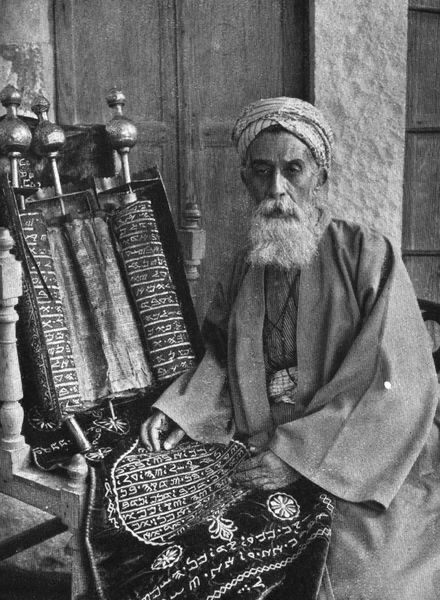
In Samaritan belief, the Messiah is a significant figure known as the “Taheb,” which means “Restorer” or “Returning One.” The Samaritans believe that the Taheb will be a prophet like Moses who will restore true worship and bring about an era of peace and righteousness.

Unlike Jewish messianism, which emphasizes a kingly Messiah from the line of David, the Samaritan Messiah is viewed primarily as a prophetic leader, focused on restoring the pure faith and re-establishing the sanctity of Mount Gerizim, which the Samaritans hold as the true holy mountain (rather than Jerusalem).


The Samaritan Torah (which is similar to the Jewish Torah but with some differences in emphasis and content) alludes to the coming of this awaited figure. The primary passage that Samaritans believe foretells the arrival of the Taheb is Deuteronomy 18, verse 18.

The verse reads:

“I will raise up for them a prophet like you from among their brothers. I will put my words in his mouth, and he will tell them everything I command him.”

This verse is interpreted by the Samaritans to be a prophecy about the coming of the Taheb, a prophet like Moses who will lead the people and restore proper worship of God on Mount Gerizim. It is seen as a promise of divine intervention to bring the Samaritans back to the original teachings and commandments as given to Moses.

In summary, the Messiah (Taheb) in Samaritan belief is a prophetic figure who will bring about a restoration of the true faith, and Deuteronomy 18, verse 18, is the key passage in the Samaritan Torah that alludes to his coming.

“The Samaritans had their own version of the Pentateuch (Torah), their own temple on Mount Gerizim, and regarded themselves as the true Israel, continuing the authentic worship of the patriarchs while dismissing the Jerusalem temple as illegitimate.”

F. F. Bruce (Scottish biblical scholar, 20th century)
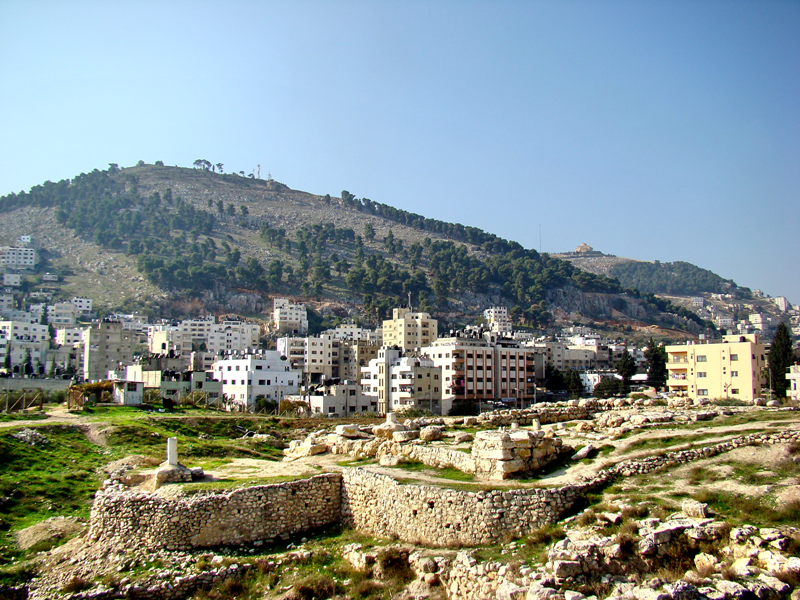
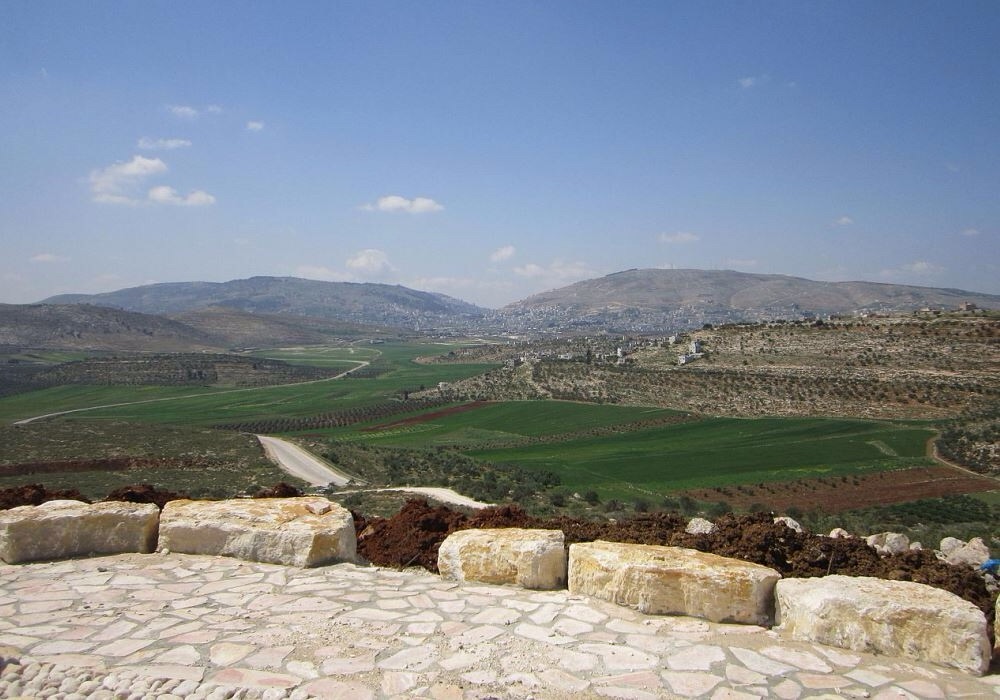
Mount Ebal (right) and Mount Gerizim (left) are two significant mountains located in the West Bank, near the city of Nablus. They hold historical and religious importance, particularly in the context of the Hebrew Bible.
Mount Gerizim: Traditionally associated with blessings, Mount Gerizim is where the Israelites were instructed to pronounce blessings upon the people when they entered the Promised Land (Deuteronomy 27:12-13). It is also significant to the Samaritan community, who consider it a holy site and the true location of the ancient Israelite temple.
Mount Ebal: In contrast, Mount Ebal is associated with curses. According to the biblical narrative, it is where curses were pronounced against those who disobeyed God’s commandments (Deuteronomy 27:14-26).
The two mountains are often mentioned together in biblical texts, symbolizing the choice between blessings and curses, good and evil, and obedience and disobedience to God’s laws. The area surrounding these mountains is rich in archaeological and historical significance, with various ancient ruins and sites of interest.

Does the prophet like Moses mentioned in Deuteronomy 18, verse 18, refer to the Messiah?

According to many interpretations, Deuteronomy 18, verse 18, does refer to the Messiah. In Jewish tradition, this verse is often understood as a prophecy about a future prophet who will be like Moses. This belief is based on the idea that Moses was a unique and significant figure in Jewish history, and that another prophet like him would arise in the future to guide and lead the people of Israel. Many Jewish scholars and commentators have identified this prophet as the Messiah, who will possess similar qualities and fulfill similar roles as Moses.

Does the Quran mention Muhammad as the Messiah whom the Jews await?

In the Quran, Muhammad is not explicitly referred to as the Messiah whom the Jews await. However, there is an indirect mention in Surah 2, verse 89, that can be interpreted in this context.

Surah 2, verse 89, states:

“And when there came to them a Book from Allah confirming that which was with them – although before they used to pray for victory against those who disbelieved – but [then] when there came to them that which they recognized, they disbelieved in it; so the curse of Allah will be upon the disbelievers.”

This verse is believed by some scholars and interpreters to refer to a prophecy mentioned in Jewish scriptures about a future prophet who would come after Moses. According to this interpretation, the Jews were awaiting this promised prophet or Messiah.

Muslims believe that Muhammad is the final prophet sent by Allah and consider him as fulfilling various prophecies mentioned in previous religious texts. Therefore, some Muslims interpret Surah 2, verse 89, as indirectly referring to Muhammad as the awaited Messiah.

It’s important to note that interpretations of religious texts can vary among different scholars and individuals. While some may see a connection between Muhammad and the awaited Messiah based on this verse, others may have different interpretations or understandings.

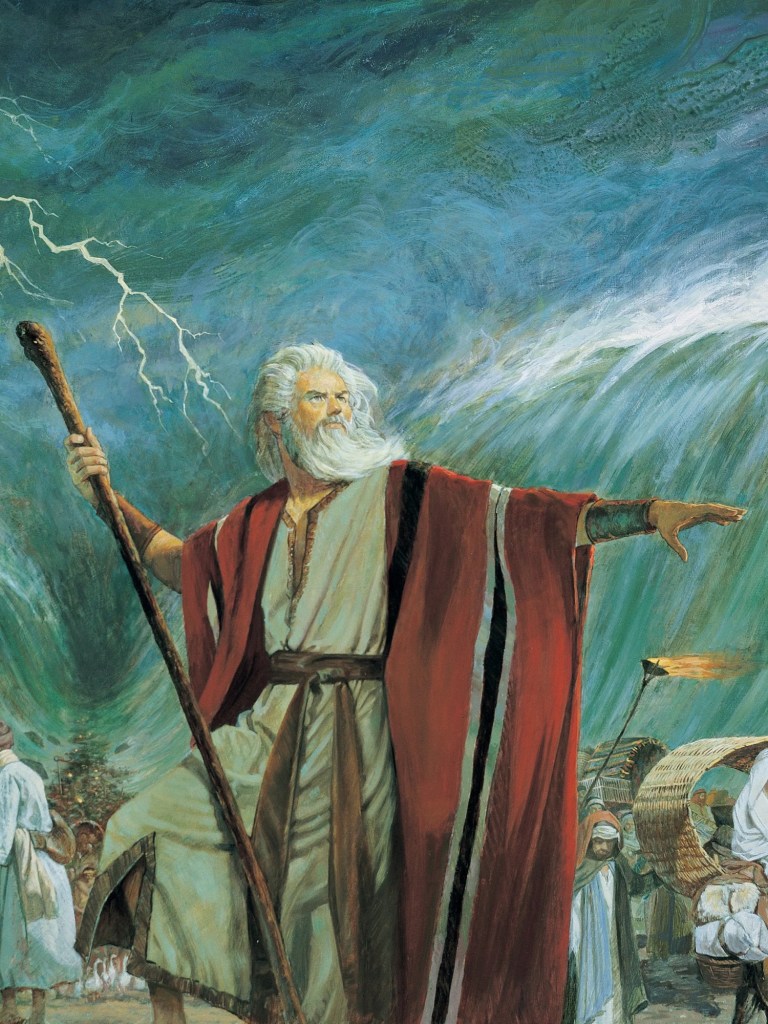
Painting of the the prophet Moses leading his people through the parted Red Sea

Understanding the Broad Concept of Messiah in the Hebrew Bible: Insights from Isaiah 45 / Psalm 105

The Hebrew translation of Isaiah 45, verse 1, refers to Cyrus as a messiah. Does God address him as such in this verse?

Yes, in Isaiah 45, verse 1, God refers to Cyrus as His anointed one, which is the Hebrew term “mashiach” (messiah). It is important to note that in this context, the term is not used in the same way as it is in the Christian tradition to refer to Jesus Christ, but rather as a title for a chosen or appointed leader.

According to some, Psalm 105, verse 15, and Isaiah 45, verse 1, support the hypothesis that there have been messiahs before Jesus. What is the explanation for this interpretation?

Some interpretations of Psalm 105, verse 15, and Isaiah 45, verse 1, suggest that they support the idea that there were messiahs before Jesus. In Psalm 105, verse 15, it says:

“Do not touch my anointed ones; do my prophets no harm.”

This verse is interpreted by some to refer to multiple anointed ones or messiahs throughout history, not just one specific individual like Jesus.

Similarly, in Isaiah 45, verse 1, it says:

“This is what the Lord says to his anointed, to Cyrus, whose right hand I take hold of to subdue nations before him.”

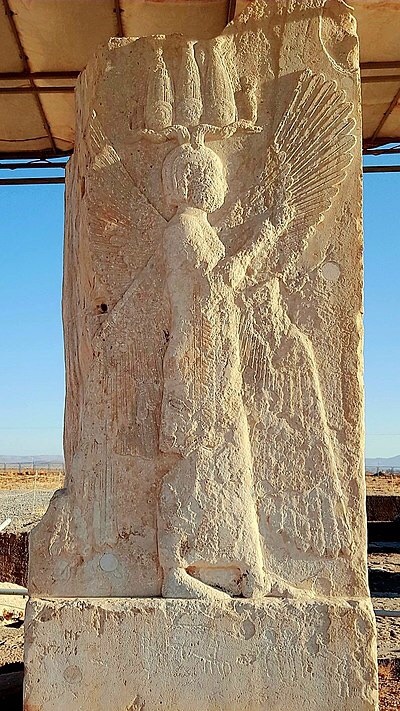
This verse refers to Cyrus the Great, a Persian king who was not Jewish but was still referred to as God’s anointed. Some interpret this as evidence that God can choose non-Jewish individuals as messiahs or anointed ones.

The reasoning behind this interpretation is that these verses show that the concept of being anointed by God or being a messiah is not limited to one specific individual (like Jesus), but can apply to multiple people throughout history who are chosen by God for a specific purpose.

It suggests that Jesus was not necessarily the first or only messiah in history, but part of a larger tradition of individuals chosen by God for special roles.

“Winged Genius” statue at Pasargadae, with braided hair and a Hemhem crown, traditionally identified as Cyrus

The Western Wall or Wailing Wall is considered a part of Al-Aqsa Mosque


Azahari Hassim

From a Quranic perspective, the Western Wall or Wailing Wall is considered a part of Al-Aqsa Mosque according to Surah 17 verse 1 in the Quran. How is this theological viewpoint presented?

According to the Quranic perspective, the Western Wall or Wailing Wall is considered a part of Al-Aqsa Mosque because it is believed to be the site where Prophet Muhammad (peace be upon him) tied his winged steed, al-Buraq, on his night journey to Jerusalem and ascension to heaven. This event is known as Isra and Miraj, and it is mentioned in Surah 17 verse 1 of the Quran, which states:

“Exalted is He who took His Servant by night from al-Masjid al-Haram to al-Masjid al-Aqsa, whose surroundings We have blessed, to show him of Our signs. Indeed, He is the Hearing, the Seeing.”

The term Al-Masjid Al-Aqsa, which means “the farthest mosque”, is interpreted by Muslim scholars to refer to the entire sacred compound in Jerusalem, including the Dome of the Rock and the Al-Qibli Mosque, as well as the Western Wall, which is the only remaining part of the ancient Jewish Temple.

One possible explanation for why the Western Wall or Wailing Wall is considered a part of Al-Aqsa Mosque is that it is the only remaining part of the ancient Jewish temple that once stood on the Temple Mount, the site of the First and Second Temples of Jerusalem. The temple was destroyed by the Romans in 70 CE, and its site was later occupied by various Islamic structures, including the Dome of the Rock and the Al-Qibli Mosque.

Muslims believe that the temple, originally built by Prophet Solomon, son of Prophet David, was located in Jerusalem, the place chosen by Allah for the Children of Israel to worship Him. Consequently, the Western Wall, as the last remnant of this temple, is also sacred to Muslims and considered part of the Al-Aqsa Mosque compound. It is also believed that Muhammad prayed at the temple site during his Night Journey, before ascending to heaven from the Dome of the Rock.

The Western Wall, also known as the Wailing Wall or Kotel, is a significant religious site located in the Old City of Jerusalem. It is a remnant of the Second Temple, which was destroyed by the Romans in 70 CE. The Western Wall is considered one of the holiest places in Judaism, as it is the closest accessible site to the former Holy of Holies, the innermost sanctum of the Temple.
The wall is a place of prayer and pilgrimage for Jews from around the world. Visitors often insert written prayers into the crevices of the stones. The site is also a focal point for various religious and cultural events, including bar and bat mitzvahs, and it attracts tourists and worshippers alike.
The Western Wall is part of the larger Temple Mount complex, which holds significant religious importance for Judaism, Christianity, and Islam. The area surrounding the wall is also a site of political and religious tension, reflecting the complex history of Jerusalem and its diverse communities.

Did Islam supersede Judaism concerning Jerusalem?

Some argue that based on Surah 17 verse 1 of the Quran, Islam supersedes Judaism concerning Jerusalem. How is this perspective presented?

This is a complex and controversial question that has been debated by scholars and religious leaders for centuries. There is no definitive answer, but I will try to explain some of the main arguments that have been made by those who believe that Islam abrogates Judaism in relation to Jerusalem.

One argument is based on the interpretation of Surah 17 verse 1 of the Quran, which states:

“Exalted is He who took His servant by night from al-Masjid al-Haram to al-Masjid al- Aqsa, whose surroundings We have blessed, to show him of Our signs. Indeed, He is the Hearing, the Seeing. “

Some Muslims understand this verse to mean that Prophet Muhammad (peace be upon him) was taken by Allah from the Sacred Mosque in Mecca to the Farthest Mosque in Jerusalem, where he prayed and ascended to heaven. This miraculous journey is known as the Isra and Mi’raj, and it is celebrated by Muslims as a sign of Allah’s favor and guidance.

According to this view, the Farthest Mosque (al-Masjid al-Aqsa) refers to the entire compound of the Noble Sanctuary (Haram al-Sharif) in Jerusalem, which includes the Dome of the Rock and the Al-Aqsa Mosque. This compound is considered the third holiest site in Islam, after Mecca and Medina, and the first qibla (direction of prayer) for Muslims.

Some Muslims believe that by taking Prophet Muhammad to Jerusalem, Allah honored and sanctified the city and its surroundings, and transferred the religious authority and leadership from the Jews to the Muslims. They argue that the Jews had violated their covenant with Allah by rejecting and killing the prophets, and that Allah had chosen the Muslims as the new community of believers and the inheritors of the Abrahamic legacy.

Another argument is based on the historical and political events that occurred after the death of Prophet Muhammad. Some Muslims claim that the Islamic conquests and expansions in the seventh and eighth centuries CE were a divine mandate and a fulfillment of the Quranic prophecies. They point out that the Muslims liberated Jerusalem from the Byzantine rule in 638 CE, and built the Dome of the Rock and the Al-Aqsa Mosque on the site of the former Jewish temples, which had been destroyed by the Babylonians and the Romans.

According to this view, the Muslim presence and rule in Jerusalem was a sign of Allah’s blessing and favor, and a proof of the superiority and validity of Islam over Judaism. They argue that the Jews had lost their right and claim to Jerusalem, and that the Muslims were the rightful custodians and guardians of the holy city and its sacred sites.

These are some of the main arguments that have been made by those who believe that Islam abrogates Judaism in relation to Jerusalem.

Historic Map : Pictorial Map of The Holy Land / Israel / Palestine w/ Sinai, Brown, 1928, Vintage Wall Art

“If we had to pray towards a particular place, as is customary among some, we should be justified in praying toward Jerusalem because it was there that the holy presence of God appeared and the divine presence was seen in the Temple.” (Homilies on Ezekiel 13:4).

Origen – A Christian theologian, apologist, and philosopher

Holy Land of Palestine and Islamic Caliphate

Holy Quran Surah 21, verse71 reads:

.‎وَنَجَّيْنَاهُ وَلُوطًا إِلَى الْأَرْضِ الَّتِي بَارَكْنَا فِيهَا لِلْعَالَمِينَ

And We rescued Abraham and Lot to the land which We have blessed for the whole world.

From the Quranic perspective, some believe any attempt to secularise the Holy Land of Palestine rather than establish it through an Islamic caliphate would incur divine disasters. After all, Surah 21, verse 71, of the Quran references the Holy Land of Palestine as a blessing to the whole world, especially the Muslim world. How is this argument articulated?

The argument as mentioned is based on the interpretation of Surah 21, verse 71 of the Holy Quran. According to this interpretation, the verse refers to the rescue of Abraham and Lot and their settlement in a blessed land. Some believe that this blessed land mentioned in the verse is the Holy Land of Palestine.

From this perspective, it is argued that the Holy Land of Palestine is not just a geographical region, but a sacred land with spiritual significance. It is believed to have been blessed by Allah, and therefore, it is seen as a land that should be governed by Islamic principles and established as an Islamic caliphate.

Those who hold this viewpoint argue that any attempt to secularize or separate the Holy Land from its Islamic identity would go against divine will and result in negative consequences. They believe that only through the establishment of an Islamic caliphate can the true potential and blessings of the Holy Land be realized for the benefit of the Muslim world and humanity as a whole.

It’s important to note that interpretations of religious texts can vary among individuals and scholars. Different perspectives exist on the issue of the Holy Land and its governance, and it is a topic of ongoing debate and discussion within the Muslim community.

Hagar in Islamic Tradition


Azahari Hassim

In Islamic tradition, Hagar, known as Hajar in Arabic, holds a significant and revered position. Her story is prominently featured in various Hadith (sayings and actions of the Prophet Muhammad) and Islamic teachings. Here are some key aspects of what Hadith and Islamic tradition say about Hagar:

  1. Hagar and Ishmael in the Desert:

One of the most well-known stories involving Hagar is her journey to the desert with her infant son Ishmael. According to Hadith, Abraham was commanded by God to leave Hagar and her baby in the barren desert of Mecca. Hagar’s trust in God and her perseverance are highlighted in this story.

A significant Hadith from Sahih Bukhari describes Hagar running between the hills of Safa and Marwah in search of water for her infant son Ishmael. This event is commemorated in the Sa’i ritual, part of the Hajj pilgrimage, where pilgrims re-enact her search for water.

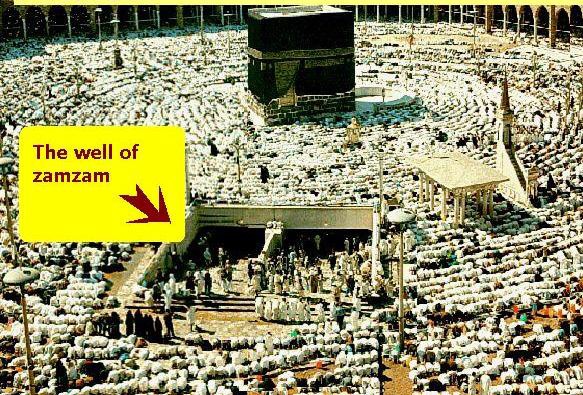
  1. The Well of Zamzam:

Islamic tradition holds that as Hagar searched desperately for water, the angel Jibril (Gabriel) struck the ground, and the well of Zamzam miraculously sprang forth. This well provided water for Hagar and Ishmael, and it remains a significant site in Islam to this day. This story is also recounted in Sahih Bukhari.

  1. Hagar’s Faith and Patience:

Hagar is often praised in Hadith and Islamic literature for her unwavering faith, patience, and devotion. Her story is used to exemplify trust in God’s plan and the importance of perseverance in the face of hardship.

  1. Role in Islamic Rituals:

As mentioned, the Sa’i ritual in Hajj, where pilgrims walk between Safa and Marwah, directly commemorates Hagar’s search for water. This act is a testament to her endurance and faith.

Example Hadith:

Sahih Bukhari 3364:

Narrated by Ibn Abbas: The first lady to use a girdle was the mother of Ishmael. She used a girdle so that she might hide her tracks from Sarah. Abraham brought her and her son Ishmael while she was suckling him, to a place near the Ka’ba under a tree on the spot of Zamzam, at the highest place in the mosque. During those days, there was nobody in Mecca, nor was there any water there. So he made them sit over there and placed near them a leather bag containing some dates, and a small water-skin containing some water, and set out homeward.

Hagar followed him, saying, “O Abraham! Where are you going, leaving us in this valley where there is no person whose company we may enjoy, nor is there anything (to enjoy)?” She repeated that to him many times, but he did not look back at her. Then she asked him, “Has Allah ordered you to do so?”

Abraham said, “Yes.” Hagar said, “Then Allah will not neglect us,” and returned while Abraham proceeded onwards, and on reaching Thaniya where they could not see him, Abraham faced the Ka’ba, and raising both hands, invoked Allah saying the following prayers:

“O our Lord! I have made some of my offspring dwell in a valley without cultivation, by Your Sacred House (Ka’ba at Mecca) in order, O our Lord, that they may offer prayer perfectly. So fill some hearts among men with love towards them, and (O Allah) provide them with fruits so that they may give thanks.”

Conclusion:

Hagar’s story in Islamic tradition is one of profound faith, resilience, and trust in God’s providence. Her experiences are integral to several Islamic rituals and continue to inspire Muslims around the world.

Hajj, for centuries, has remained a central, unifying force in the Muslim world. It brings together people of every race, language, and culture, in a shared act of worship and submission to God.

Karen Armstrong, a British author and scholar of comparative religion
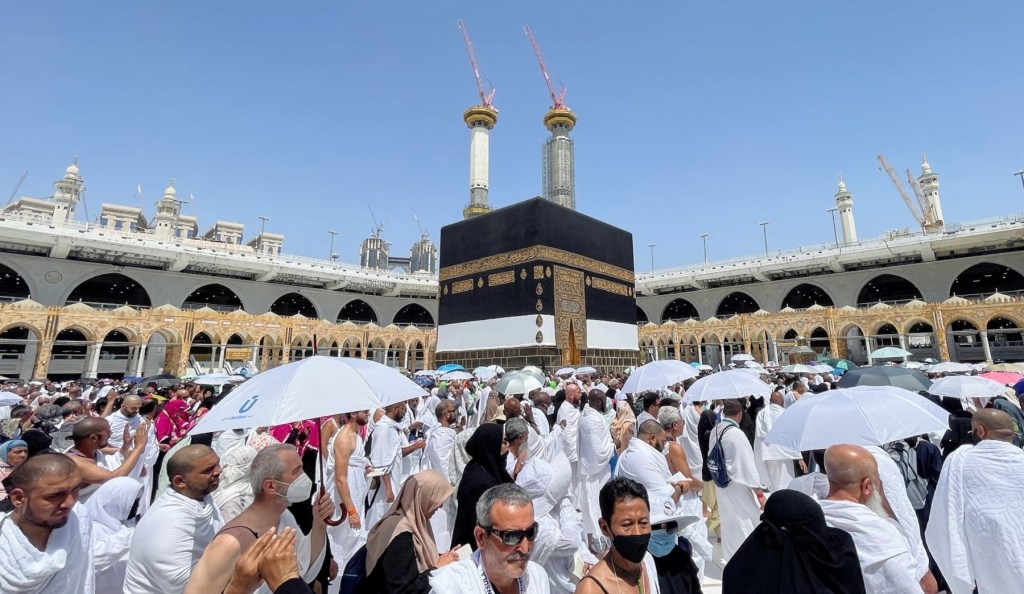
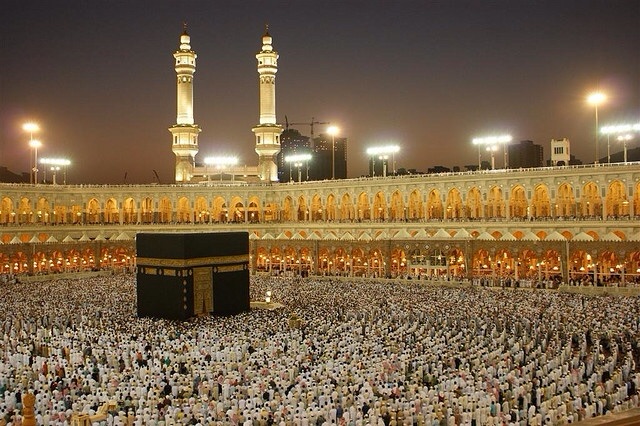
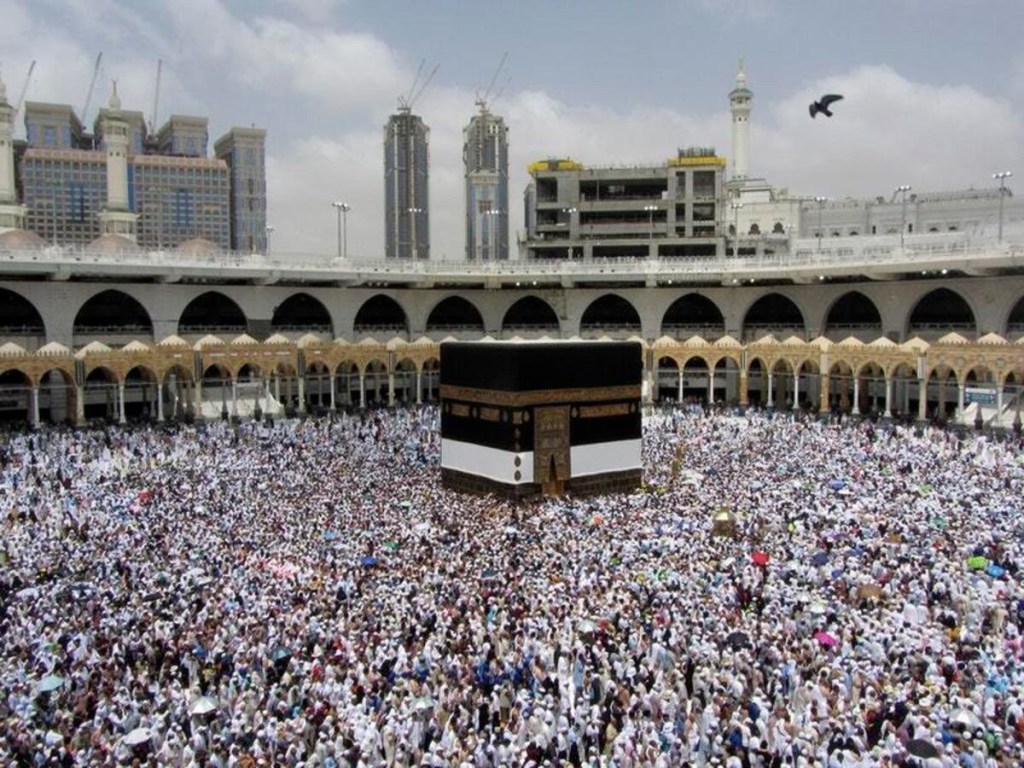
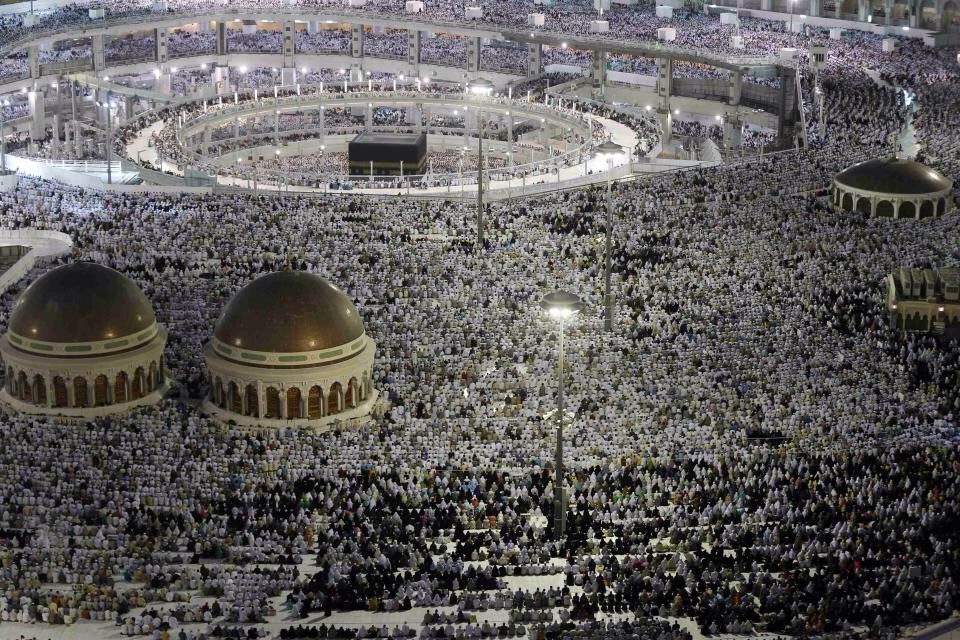
Muslim pilgrims pray around the holy Kaaba at the Grand Mosque, during the annual hajj pilgrimage in Mecca 

How did God fulfill the prophecy of Hagar, the mother of Ishmael, in the desert?

Some believe that the prophecy in the Torah (Genesis 21 verse 18) was fulfilled when God established Hajj as an Islamic rite. Pilgrims perform Sa’i in memory of Hagar, who searched for water for her infant son, Ishmael, in the desert, and God provided them with the well of Zamzam. Sa’i, which involves walking seven times between the hills of Safa and Marwa in Mecca, is one of the essential rituals of Hajj and Umrah. How is this argument articulated?

There is a belief among some Muslims that the prophecy mentioned in Genesis 21 verse 18 was fulfilled through the establishment of Hajj in Islam. This verse of the Torah prophesies that God will make a great nation from the descendants of Ishmael, the son of Abraham and Hagar. The argument connecting the Islamic narrative with the story in the Torah can be articulated through a few key points:

  1. Biblical Story of Hagar and Ishmael: In the Torah, the story of Hagar and her son Ishmael, who were cast into the desert, is recounted. In Genesis 21 verse 18, God tells Hagar, “Lift up the boy and hold him fast with your hand, for I will make him into a great nation.” This is often interpreted as a divine promise of Ishmael’s survival and future significance.
  2. Link to the Prophecy: The argument connects the establishment of Hajj, including the ritual of Sa’i, to the fulfillment of the prophecy in Genesis. It’s posited that God’s establishment of these rituals and the continued commemoration by millions of Muslims is a fulfillment of the promise made to Hagar regarding Ishmael.

In summary, the act of Sa’i is not only a way for pilgrims to remember and honor Hagar’s struggle but also to symbolize the fulfillment of the prophecy in the Torah through the establishment of the ritual of Hajj in Islam.

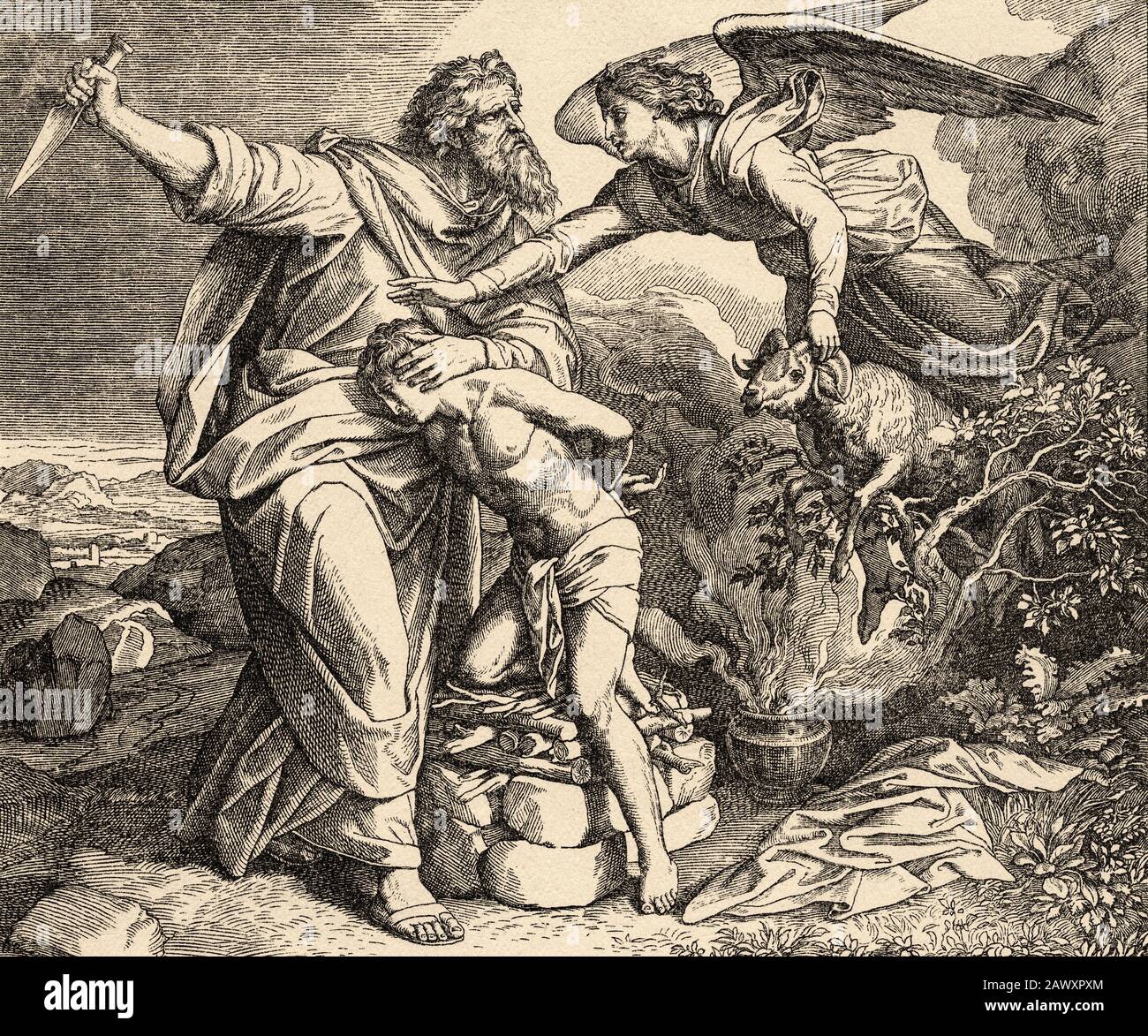
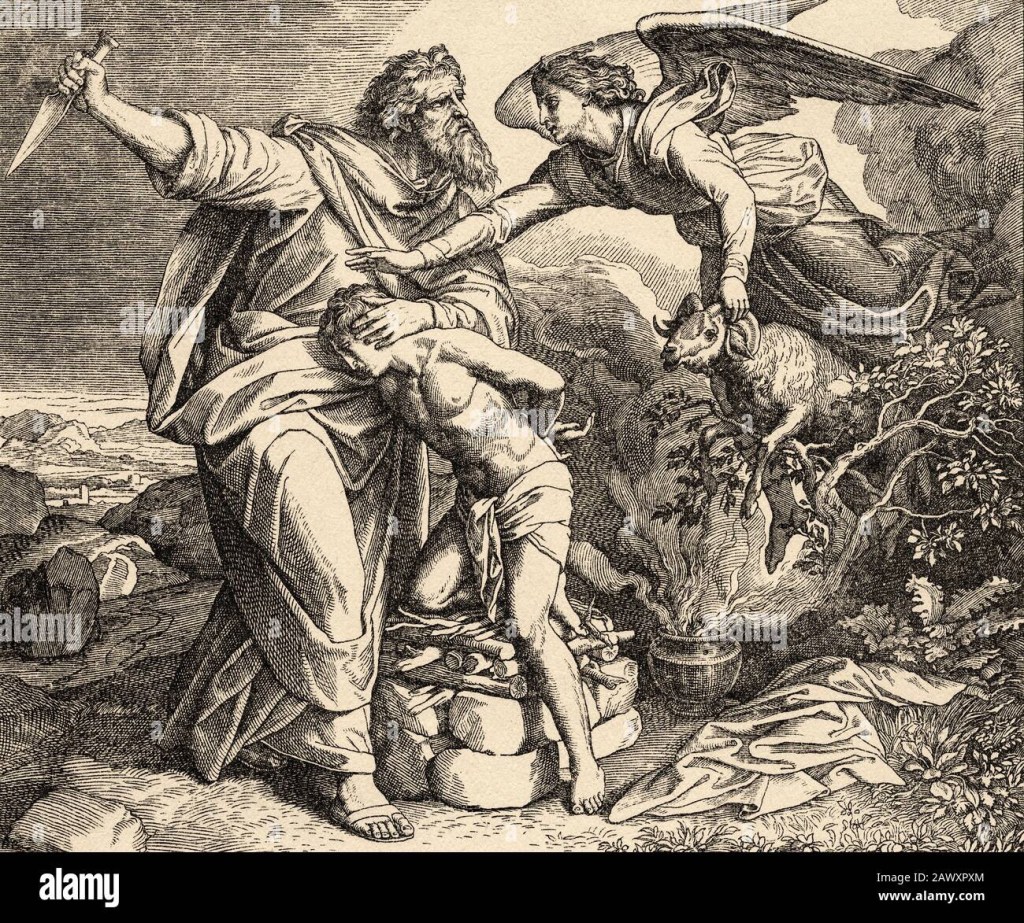
Abraham offering his son as a sacrifice to God. Ishmael or Isaac?

The Near Sacrifice of Ishmael: Islamic Theology and Its Support for the Prophethood of Muhammad

What theological reasoning do Islamic scholars offer to explain how Abraham’s near sacrifice of Ishmael, instead of Isaac, supports the prophethood of Muhammad?

According to Islamic tradition and theology, the near sacrifice of Ishmael by Abraham, rather than Isaac, provides support for the prophethood of Muhammad in several key ways:

Judaism, Christianity, and Islam all trace their spiritual lineage to Abraham as a shared patriarch. The story of Abraham’s willingness to sacrifice his son at God’s command is seen as a supreme test of faith in all three traditions. By identifying the son as Ishmael rather than Isaac, Islam establishes a direct link between Abraham and Muhammad through Ishmael.

The Quran in Surah 37 recounts the story of Abraham’s willingness to sacrifice his son out of obedience to God. Despite not explicitly naming the son, the Quran places the narrative of the sacrifice before the announcement of Isaac’s birth, which some interpret as an indication that Ishmael was the one sacrificed. This Quranic account is seen as affirming Ishmael’s role.

Islamic tradition holds that Muhammad is a direct descendant of Ishmael. The legitimacy and authenticity of Muhammad’s prophethood is thus connected to this lineage going back to Abraham through Ishmael. Ishmael’s willingness to be sacrificed is viewed as a significant event that foreshadows the prophethood of Muhammad, which holds a central role in the religion.

Muslims believe the Quran is the final, unaltered word of God as revealed to Muhammad, arguing that earlier scriptures like the Torah and Bible have been changed over time. In this view, the Quran corrects these alterations, and its indication that Ishmael was the sacrificial son is seen as the accurate version of the story. This affirms Muhammad’s role in restoring the original monotheistic message.

While acknowledging the prophets of Judaism and Christianity, Islam considers Muhammad to be the final prophet who came to restore the pure monotheistic faith and correct deviations that had entered the earlier religions. The story of Ishmael’s near-sacrifice is thus seen as part of this corrective prophetic message continuing through Muhammad.

In summary, the Islamic theological argument is that the identification of Ishmael as the son Abraham was commanded to sacrifice establishes a direct link between Abraham, Ishmael, and Muhammad, supporting the legitimacy of Muhammad’s prophethood as a continuation of the Abrahamic lineage and monotheistic message that was preserved intact through Ishmael and fully restored in the revelation of the Quran to Muhammad. The Ishmael narrative reinforces Muhammad’s prophetic authority for Muslims.

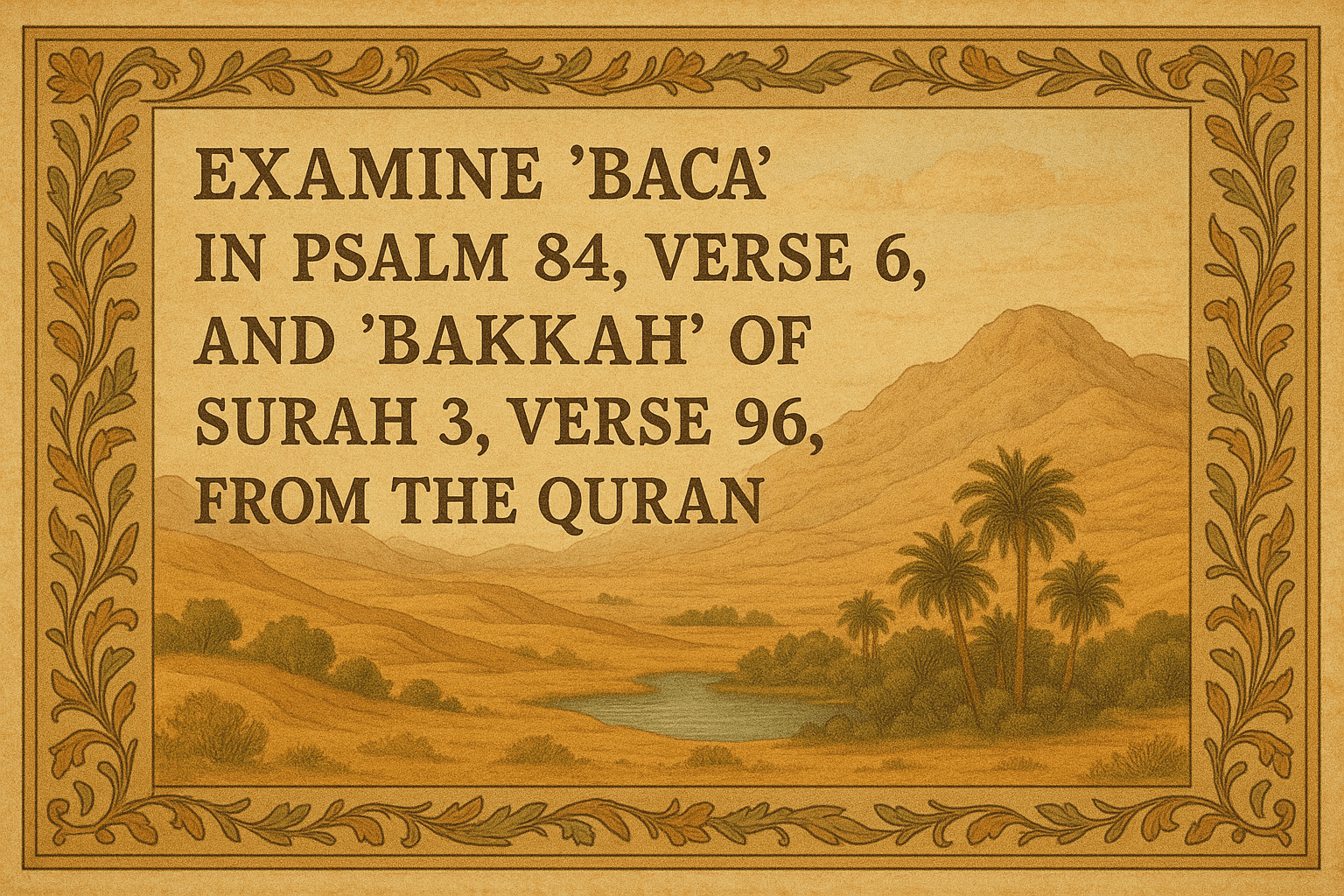
Examine “Baca” in Psalm 84, verse 6, and “Bakkah” of Surah 3, verse 96, from the Quran. How do they correlate?

An excerpt from Holman Concise Bible Dictionary about Baca in Psalm 84, verse 6:
Baca
(Balsam tree or weeping)
Valley in Psalm 84, verse 6, which reflects a poetic play on words describing a person forced to go through a time of weeping who found that God turned tears into a well, providing water.

Baca, mentioned in Psalm 84, verse 6, is believed to be Mecca, which Surah 3, verse 96 of the Quran refers to as Bakkah. It was Hagar, the mother of Ishmael, who was forced to experience a period of weeping, who discovered that God had turned tears into a miraculous well of Zamzam. What is the articulation of this argument?

The argument you’ve presented draws a connection between two distinct religious texts, the Bible and the Quran, by referencing similar concepts found within both. The statement juxtaposes the poetic description from Psalm 84, verse 6, in the Bible, which mentions the Valley of Baca (often interpreted as a place of weeping or sorrow), with a narrative from the Quran.

According to Surah 3, verse 96, the Quran mentions a place called Bakkah, identified by many scholars and tradition as Mecca, a city of paramount importance in Islam.

The biblical excerpt describes a metaphorical transformation where a time of weeping is turned into a source of sustenance and blessing, symbolized by tears turning into a well. This metaphor captures the idea of divine intervention and support during times of distress, providing not just relief but also nourishment and strength from the adversity faced.

The Quranic reference complements this biblical narrative by recounting the story of Hagar and Ishmael, where Hagar’s desperate search for water in the desert for her infant son Ishmael is rewarded by the miraculous appearance of the Zamzam well. This story is deeply embedded in Islamic tradition and highlights themes of faith, divine provision, and the transformation of despair into hope.

By articulating this argument, the connection being made is that both biblical and Quranic texts, while from different religious traditions, reflect a similar theological theme: the belief in a benevolent deity who transforms moments of deep personal despair into opportunities for divine blessing and providence.

The comparison suggests a shared motif of spiritual testing and divine intervention, where the act of enduring hardship with faith can lead to miraculous outcomes, symbolized through the provision of water in both narratives. This water, whether from the well mentioned in Psalm 84, verse 6, or the Zamzam well in Islamic tradition, stands as a powerful symbol of life, sustenance, and the transformative power of faith.

The connection between Islam and the land that God promised to Abraham in the Torah


Azahari Hassim

Genesis 15, verse 18 reads:

“In the same day the Lord made a covenant with Abram, saying, Unto thy seed have I given this land, from the river of Egypt unto the great river, the river Euphrates”.

Genesis 15, verse 18 is a specific verse in the Bible, which is part of the book of Genesis in the Old Testament. It describes a covenant that God made with Abraham, promising him and his descendants land from the river of Egypt to the Euphrates River.

Did the establishment of Islam as the religion of Abraham in the Middle East or the Levant fulfill the promise of God to Abraham that his descendants through Ishmael would inherit the land from the border of Egypt to the Euphrates River as mentioned in the Torah or Genesis 15, verse 18? Islamic scholars assert that the ancient scribes may have manipulated the Torah to favor Isaac instead of Ishmael. How do they present their argument?


Islamic scholars argue that the establishment of Islam in the Middle East and Levant region did fulfill God’s promise to Abraham regarding Ishmael’s descendants. They point out that Islam spread rapidly across this area in the 7th-8th centuries, bringing monotheistic worship of the God of Abraham to millions.


It is asserted that the ancient scribes who wrote the Torah may have altered the stories to show preference for Isaac’s descendants over Ishmael’s. They suggest that this bias may have been influenced by socio-political factors, such as the dominance of the Israelite tribes, which led to the emphasis on Isaac’s descendants in the biblical account.

Historically, the Arab-Islamic Caliphates after the rise of Islam in the 7th century did indeed conquer and control territories extending from Egypt to the Euphrates River, which matches the geographical extent of the land mentioned in Genesis 15, verse 18. This has led some to draw parallels between the spread of Islam and the fulfillment of the promise to Ishmael’s descendants.


From an Islamic theological perspective, the establishment of Islam in the Middle East and the Levant is seen as the fulfillment of God’s promise to Abraham, as it recognizes and upholds the significance of Ishmael’s lineage.


Islamic scholars argue that both Isaac and Ishmael are equally revered as prophets, and that their respective lineages are part of God’s overarching plan for humanity, with Hebrew prophets paving the way for the coming of Muhammad, the last prophet.

In summary, Islamic scholars argue that:

  1. The promise made to Abraham about his descendants inheriting the land could have been fulfilled through Ishmael.
  2. The Torah might have been altered over time to give greater emphasis to Isaac’s lineage and downplay Ishmael’s role.
  3. The rise of Islam and the influence of the descendants of Ishmael (through Prophet Muhammad) is seen as a fulfillment of God’s promise to Abraham.
  4. The spread of Islam and its dominance in the Middle East aligns with the geographical scope of the promise made to Abraham in the Torah, reinforcing the idea that Ishmael’s descendants inherited this blessing.

These arguments reflect a broader theological debate regarding the interpretation of ancient texts and the legacy of Abraham’s two sons, Isaac and Ishmael, in the context of religious history.

Origen (3rd Century)
Origen, known for his allegorical interpretations, also referenced Genesis 15:18. In his writings, such as his Homilies on Genesis and Commentary on Genesis, Origen viewed the promise of land to Abraham as a type or symbol of the greater spiritual inheritance offered to believers. For Origen, the “land” represented the kingdom of God, and the offspring of Abraham were those who followed God in faith, whether Jew or Gentile.

The Holy Land of Palestine and Muhammad the Prophet of Islam

The Prophet said:

فَإِنَّ اللَّهَ عَزَّ وَجَلَّ تَوَكَّلَ لِي بِالشَّامِ وَأَهْلِهِ.

“Verily, Allah Almighty has entrusted me with the land of Sham (that is, Palestine, Jordan, Lebanon, and Syria) and its people.”

Some believe the hadith is related to establishment of Islamic caliphate in the region of the Levant. How is this argument articulated?

The hadith is reported by Imam Ahmad in his Musnad, and it is considered authentic by some scholars. The hadith indicates that the Prophet (peace and blessings be upon him) was given a special responsibility and honor by Allah to take care of the land of Sham and its people, who are also praised in other hadiths for their faith and steadfastness.

Some people have used this hadith to support the idea of establishing an Islamic caliphate in the region of the Levant, which includes the modern countries of Syria, Lebanon, Jordan, Palestine, and Israel. They argue that since the Prophet (peace and blessings be upon him) was entrusted with this land by Allah, it is the duty of the Muslims to follow his example and protect it from any foreign occupation or oppression.

They also claim that this land has a special status and significance in Islam, as it is the place where many prophets and righteous people lived, where many battles and victories occurred, and where many signs of the Hour will take place.

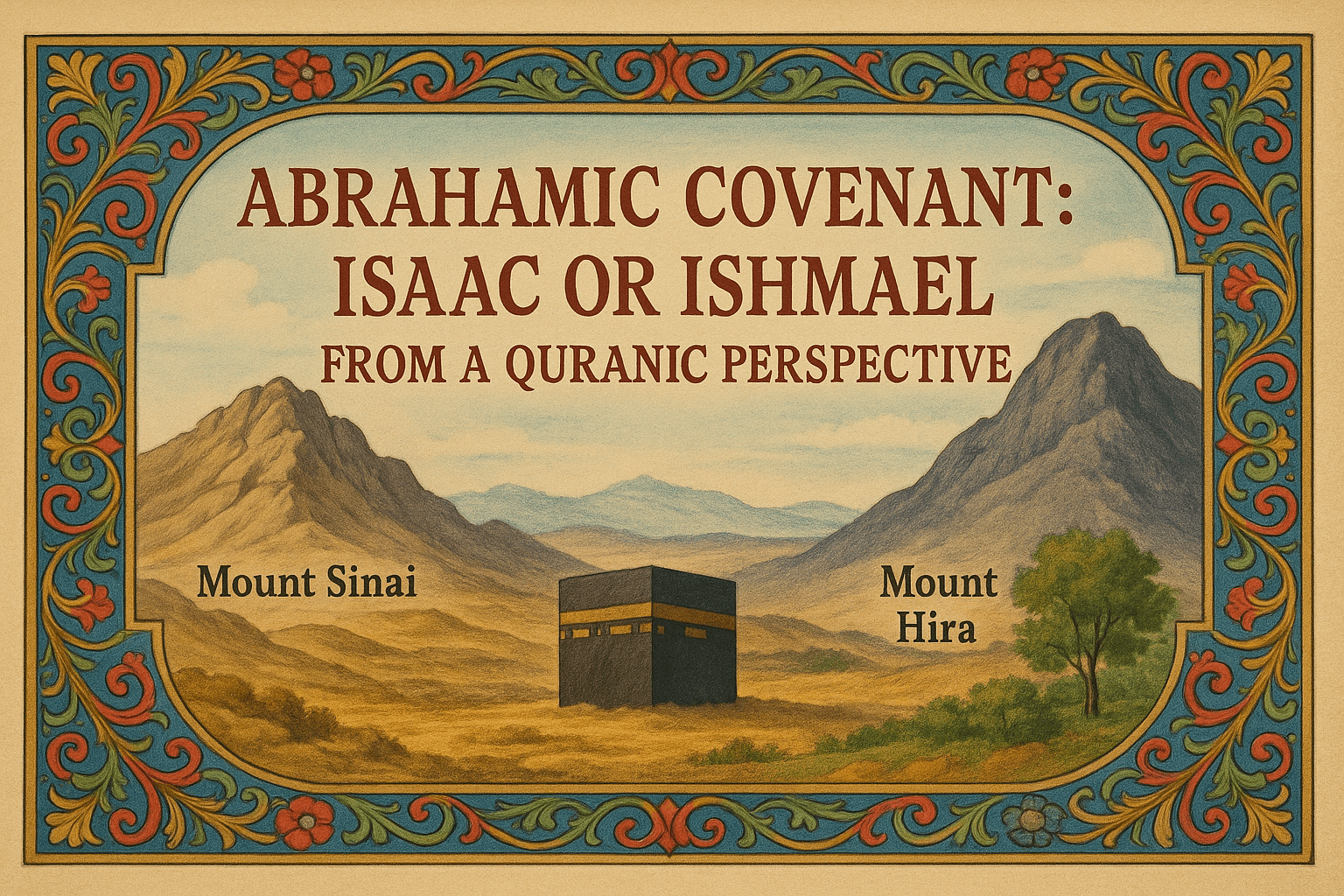
Reexamining the Abrahamic Covenant: Ishmael’s Primacy in Islamic Tradition

Did Abraham, Isaac and Jacob know about Mount Sinai and its sacredness?

The biblical accounts suggest that Mount Sinai and its sacredness were not known to Abraham, Isaac, and Jacob. The significance sacred of Mount Sinai is primarily associated with the story of Moses and the Israelites’ liberation from Egypt, as described in the Book of Exodus. However, it’s important to note that beliefs and interpretations may vary among different religious traditions.

The belief that the Abrahamic covenant was fulfilled through Ishmael rather than Isaac, including the promise of land from the Nile to the Euphrates and the blessing to all nations through Abraham’s seed, is held by some, particularly within Islamic tradition. Here’s a more detailed articulation of their argument:

Ishmael and the Covenant.

  1. Ishmael as the Firstborn: Supporters of this view argue that Ishmael, being Abraham’s firstborn son, was the original heir to the covenant. They emphasize that Ishmael was the first child of Abraham, born to Hagar, Sarah’s Egyptian maidservant.
  2. Sacrifice Narrative: They contend that the narrative of Abraham being asked to sacrifice his son originally referred to Ishmael, not Isaac. This is based on the belief that ancient scriptures were altered by Israelite scribes to emphasize Isaac’s role.
  3. Blessing and Land Promise: The promise of land from the Nile to the Euphrates and the blessing to all nations is seen as applying to Ishmael’s descendants. Islamic tradition views Ishmael as an ancestor of the Arab peoples, and thus sees the fulfillment of these promises through the Islamic Hajj and in the rise of Islamic civilization.

Scriptural Alteration Argument.

  1. Scribal Changes: They argue that ancient Israelite scribes altered the scriptures to shift the focus from Ishmael to Isaac. This was done to establish a theological foundation for the Israelites’ claim to the land and their unique covenantal relationship with God.
  2. Evidence from Quranic Texts: The Quran refers to the story of Abraham and his son, implying that Ishmael was the one to be sacrificed. This, combined with historical accounts and interpretations, is used to argue for the primacy of Ishmael in the covenantal promises.

In conclusion, the article argues within Islamic tradition that the Abrahamic covenant was fulfilled through Ishmael instead of Isaac. Key points include:

1. Ishmael as Firstborn: Ishmael’s status as Abraham’s firstborn makes him the original heir to the covenant.

2. Sacrifice Narrative: The initial sacrifice narrative is believed by proponents to refer to Ishmael, with later alterations made to focus on Isaac.

3. Blessing and Land Promise: The land and blessing promise is seen as fulfilled through Ishmael’s descendants, with Islamic traditions highlighting the Hajj and Islamic civilization as proof.

Additionally, it is argued that Israelite scribes modified scriptures to bolster Israel’s claims, while the Quran supports Ishmael’s role in the covenant.

The age of the Caliphs, history map of the Islamic Caliphate from 622 to 750. The expansion under the Prophet Muhammad, with additions during the Rashidun Caliphate and the Umayyad Caliphate.

Analyze Jesus and Muhammad in Abrahamic faiths through the concept of “Seed” in Genesis 22:18

Certain individuals argue that the reference to the “seed” in Genesis 22, verse 18, does not pertain to Jesus due to his words in Matthew 15, verse 24. Instead, they point to Muhammad based on Surah 21, verse 107. How is their argument articulated?

The argument that the “seed” mentioned in Genesis 22, verse 18, refers to Muhammad rather than Jesus is articulated by contrasting biblical and Quranic texts. Here’s how the argument is structured:

Genesis 22, verse 18, states:

“And through your offspring all nations of the earth will be blessed, because you have obeyed My voice”.

The Hebrew word used for “offspring” or “seed” is “zera”, which can be a collective singular noun, implying it could refer to a single individual or a group.

In Matthew 15, verse 24, Jesus says, :

“And through your offspring all nations of the earth will be blessed, because you have obeyed My voice”.

This statement is interpreted by some to mean that Jesus’ mission was primarily focused on the Israelites and not on all nations directly. This interpretation is used to argue that Jesus was not the fulfillment of the promise in Genesis 22, verse 18, which speaks of a blessing to “all nations”.

Surah 21, verse 107 of the Quran states:

“And We have not sent you, [O Muhammad], except as a mercy to the worlds”.

This verse is interpreted to mean that Muhammad’s mission was universal, extending to all of humanity, which aligns with the promise in Genesis 22, verse 18, about blessing all nations.

The proponents of this view argue that since Jesus explicitly stated his mission was to the Israelites, he does not fulfill the universal aspect of the blessing promised in Genesis 22, verse 18.

In contrast, Muhammad is described in the Quran as a mercy to all worlds, which they believe aligns more closely with the promise of a blessing to all nations. Therefore, they conclude that the “seed” in Genesis 22, verse 18, refers to Muhammad rather than Jesus.

This argument hinges on the interpretation of Jesus’ mission scope in the New Testament and the universal mission attributed to Muhammad in the Quran.

There are some scholars who believe the prophethood of Muhammad is related to Abraham’s near sacrifice of Ishmael. Therefore, Muslims commemorate Eid ul-Adha or the Feast of Sacrifice. How is this argument articulated?

The argument that the prophethood of Muhammad is related to Abraham’s near sacrifice of Ishmael is based on the Islamic tradition that Abraham was commanded by God to sacrifice his son Ishmael, not Isaac as mentioned in the Bible.

This event is seen as a test of Abraham’s faith and obedience to God, and Ishmael’s willingness to be sacrificed is seen as a demonstration of his own faith and submission to God’s will.

In Islamic theology, this event is considered a precursor to the prophethood of Muhammad, who is seen as a descendant of Ishmael. The story of Abraham’s sacrifice is commemorated by Muslims during the Eid al-Adha, or the Feast of Sacrifice, which is one of the most important Islamic holidays.

The argument is articulated as follows:

  1. Abraham was commanded by God to sacrifice his son Ishmael, as mentioned in the Quran (Surah 37: 100 to 108).
  2. Ishmael was willing to be sacrificed, demonstrating his faith and submission to God’s will.
  3. This event is seen as a test of Abraham’s faith and obedience to God.
  4. The prophethood of Muhammad is related to this event, as he is a descendant of Ishmael.
  5. The story of Abraham’s sacrifice is commemorated by Muslims during the Eid al-Adha, which is a celebration of Abraham’s faith and obedience to God.

Therefore, the prophethood of Muhammad is seen as a continuation of the legacy of Abraham and Ishmael, and the story of Abraham’s sacrifice is seen as a precursor to the prophethood of Muhammad.

Sa’i is a ritual performed during the Hajj and Umrah pilgrimages in Islam, which involves walking back and forth between the hills of Safa and Marwah. This act commemorates the search for water by Hagar, the wife of Prophet Ibrahim (Abraham), for her infant son Ishmael

What is Eid al-Adha?

Eid al-Adha, also known as the “Festival of Sacrifice,” is one of the most significant Islamic holidays. It commemorates the willingness of Prophet Ibrahim (Abraham) to sacrifice his son Isma’il (Ishmael) as an act of obedience to God.

According to Islamic tradition, just as Abraham was about to sacrifice his son, God provided a lamb to sacrifice instead.

The holiday is marked by various rituals and traditions, including:

  1. Prayer: Special prayers are held in congregation, usually at a mosque or an open field.
  2. Sacrifice: Families who can afford it will sacrifice an animal, typically a sheep, goat, cow, or camel. The meat is then distributed among family, friends, and those in need.
  3. Charity: Emphasizing the importance of helping others, Muslims give to charity and ensure that everyone can partake in the celebration.
  4. Gatherings and Feasts: Families and communities come together to share meals, celebrate, and enjoy each other’s company.

Eid al-Adha is celebrated on the 10th day of Dhu al-Hijjah, the last month of the Islamic lunar calendar, and it coincides with the pilgrimage to Mecca known as Hajj. Muslims who are performing Hajj experience this holiday in a particularly special way.

The Prophecy of Daniel: Constantine the Great and Muhammad the Prophet


Azahari Hassim

Some believe that Daniel 7, verse 25 alludes to Constantine the Great, who presided over the council of Nicaea, while Daniel 7, verse 13, points to Muhammad’s Night Journey. How is this argument explained?

This is a very controversial argument that is not widely accepted by most biblical scholars and Christians, who believe that Daniel 7, verse 25, and Daniel 7, verse 13, refer to the Antichrist and the Messiah, respectively. However, some people who support this argument explain it in the following way:
They claim that Constantine the Great, who was the first Roman emperor to convert to Christianity and who convened the Council of Nicaea in 325 AD, was the little horn of Daniel 7, verse 25, who spoke pompous words against the Most High and tried to change the times and the laws.

They argue that Constantine corrupted the original teachings of Jesus and imposed his own doctrines and creeds on the Christian church, such as the doctrine of the Trinity, the observance of Sunday instead of Saturday as the Sabbath, and the celebration of Easter instead of Passover.

They also accuse Constantine of persecuting and oppressing those who did not conform to his version of Christianity, such as the followers of Arianism, who denied the divinity of Jesus.
Arianism sparked significant debates within the Church, particularly during the early Ecumenical Councils. The First Council of Nicaea in 325 AD condemned Arianism, affirming the doctrine of the Trinity and the full divinity of Christ. The Nicene Creed established the belief that the Son is “begotten, not made, of one substance with the Father.”

Islamic scholars claim that Muhammad, who was the prophet of Islam and who claimed to have a miraculous Night Journey from Mecca to Jerusalem and then to heaven in 621 AD, was the Son of Man of Daniel 7, verse 13, who came with the clouds of heaven and was given dominion, glory, and a kingdom by the Ancient of Days, that is God.

The term “night visions” directly suggests an event that takes place at night. Muhammad’s Night Journey, which is said to have occurred during the night, aligns with this description. In contrast, Jesus’ ascension is generally not described as happening at night in Christian texts.

They argue that Muhammad was a true prophet of God who restored the pure monotheism that was lost by Constantine and his followers. They also assert that Muhammad’s kingdom is an everlasting kingdom that will never be destroyed, and that all nations and peoples of every language will serve him or submit to his law.
In summary, these are a few points made by Islamic scholars to back the notion that Daniel 7, verse 25, and 7, verse 13, refer to Constantine as the little horn who established the Trinity at the Council of Nicea, and Muhammad as the Son of Man who encountered God on his Night Journey to the seventh heaven.

Daniel 7:13-14:


[13] I saw in the night visions, and, behold, one like the Son of man came with the clouds of heaven, and came to the Ancient of days, and they brought him near before him.

[14] And there was given him dominion, and glory, and a kingdom, that all people, nations, and languages, should serve him: his dominion is an everlasting dominion, which shall not pass away, and his kingdom that which shall not be destroyed.

Constantine the Great, also known as Constantine I, was a Roman emperor who ruled from AD 306 to 337. He is best known for being the first Roman emperor to convert to Christianity and for his significant role in the establishment of Christianity as a major religion within the Roman Empire.
Here are some key points about Constantine:

Early Life: Born around AD 272 in Naissus (modern-day Niš, Serbia), Constantine was the son of Flavius Constantius, a Roman army officer, and Helena, who later became Saint Helena.

Rise to Power: After the death of his father in AD 306, Constantine was proclaimed emperor by his troops. His rise to power was marked by a series of civil wars against other claimants to the throne.

Battle of Milvian Bridge: In AD 312, Constantine fought against Maxentius at the Battle of Milvian Bridge. According to legend, before the battle, he had a vision of a cross in the sky with the words "In this sign, conquer." He attributed his victory to the Christian God, which influenced his conversion to Christianity.

Edict of Milan: In AD 313, Constantine, along with Licinius, issued the Edict of Milan, which granted religious tolerance throughout the empire and allowed Christians to practice their faith openly.

Foundation of Constantinople: In AD 330, Constantine refounded the city of Byzantium and renamed it Constantinople (modern-day Istanbul). He made it the new capital of the Roman Empire, which later became a center of Christianity.

Council of Nicaea: In AD 325, Constantine convened the First Council of Nicaea to address issues within the Christian community, including the Arian controversy. The Nicene Creed, which established foundational Christian beliefs, was formulated during this council.

Legacy: Constantine's reign marked a turning point in the history of the Roman Empire and Christianity. He is often credited with paving the way for the spread of Christianity throughout Europe. His legacy is complex, as he is viewed as a pivotal figure in both the history of the Roman Empire and the development of Christianity.

Death: Constantine died on May 22, 337, and was baptized shortly before his death. He was buried in the Church of the Holy Apostles in Constantinople.

Constantine's impact on religion, politics, and culture continues to be studied and debated by historians and scholars to this day.

Islam as the Restored Faith of Abraham: Addressing Perceived Deviations in Judaism and Christianity

Islam is considered as a restored religion of Abraham due to Judaism corrupting their text as regards a son whom Abraham was commanded to sacrifice. At the same time, Christianity corrupted their scripture concerning the oneness of God and the rite of circumcision. What is the explanation for this?

The belief that Islam is a restored religion of Abraham stems from the belief that both Judaism and Christianity deviated from the original teachings of Abraham. According to Islamic beliefs, Judaism corrupted their text by incorrectly interpreting the command to sacrifice a son, as mentioned in the Quran. Muslims believe that Abraham was commanded to sacrifice his son Ishmael, not Isaac as mentioned in the Hebrew Bible.

Similarly, Muslims believe that Christianity corrupted their scripture by deviating from the belief in the oneness of God (monotheism) and by modifying the rite of circumcision. Islam emphasizes the concept of tawheed, which is the belief in the oneness of God, and questions the Trinity as mentioned in Christian theology. Islam also practices circumcision, although the method and significance may differ from those in Judaism and some Christian traditions.

These differences and perceived corruptions are seen from the perspective of Islamic theology, which asserts that Islam is the restoration of the original teachings of Abraham, as revealed in the Quran.

Interfaith Perspectives: Islam’s View on Judaism and Christianity

Islam does not regard Judaism and Christianity as false religions but views them as having been corrupted in aspects such as which son was to be offered, the unity of God, and the divine covenant of circumcision. How is this argument articulated?

In Islam, Judaism and Christianity are considered as previous Abrahamic religions, and Muslims believe that they initially contained truth and guidance from God. However, Muslims also believe that these religions underwent changes and corruptions over time.

In the matter of which son was offered for sacrifice, Islam differs from both Judaism and Christianity. In the Islamic tradition, it is understood that Prophet Abraham (Ibrahim) was commanded by God to sacrifice his son, Ismail (Ishmael), not Isaac as mentioned in the Hebrew Bible. Muslims regard Ismail as the intended son of sacrifice, and this event is commemorated during the Islamic festival of Eid al-Adha.

Muslims also emphasize the unity of God, known as Tawhid, considering it as one of the fundamental principles of Islam. Islam strongly adheres to the notion that God is one and indivisible, without any partners or associates. This perspective varies from the Christian concept of the Trinity, which posits three distinct persons within the Godhead.

Another point of difference lies in the divine covenant of circumcision. In Christianity, the practice of circumcision is not considered a requirement or a necessary part of the divine covenant.
Muslims argue that these differences between Islam and other monotheistic religions highlight how the original teachings may have been altered or misinterpreted over time, leading Islam to claim that it is the final and most accurate revelation from God through the Prophet Muhammad.

What is a considerable obstacle to the Jews to rebuild their temple in Jerusalem?


Azahari Hassim

A considerable obstacle to the Jews rebuilding their temple in Jerusalem is the current presence of the Al-Aqsa Mosque and the Dome of the Rock, two of the holiest sites in Islam. Both structures are located on the Temple Mount (known as Haram al-Sharif in Islam), which is traditionally believed to be the location of the First and Second Jewish Temples.

Here are some specific challenges related to this:

  1. Religious Significance: The Al-Aqsa Mosque and the Dome of the Rock have been central to Islamic worship for over a millennium. Any attempt to alter or remove these structures would be met with strong resistance from the Muslim world.
  2. Political Implications: The status of Jerusalem, and particularly the Temple Mount/Haram al-Sharif, is one of the most contentious issues in the Israeli-Palestinian conflict. Any changes to the status quo could lead to significant political and social upheaval.
  3. Historical & Archaeological Concerns: While there is broad consensus among scholars and archaeologists that the Jewish Temples once stood on the Temple Mount, the exact locations and dimensions remain subjects of debate. Excavations or construction on the Mount would be controversial and potentially damaging to existing structures and artifacts.
  4. International Response: Any attempt to alter the status quo on the Temple Mount/Haram al-Sharif would likely elicit strong reactions from the international community, given the site’s significance to billions of people worldwide.

It’s worth noting that while there are some groups advocating for the rebuilding of the Jewish Temple, mainstream Jewish thought and Israeli policy have, for the most part, accepted the status quo, prioritizing peace and stability over any immediate plans to rebuild the Temple.

“Jerusalem is the eternal capital of Israel, and we shall rebuild the city and its holy sites. But the Third Temple will be rebuilt only in the time of the Messiah.”

David Ben-Gurion, Israel’s first Prime Minister, expressed his view on the Temple in the context of the State of Israel

For centuries, the dream of rebuilding the Third Temple has been embedded in Jewish culture. The idea of rebuilding the Temple is deeply rooted in Jewish faith, and has become a powerful symbol of hope and renewal. This dream has been passed down from generation to generation and is still very much alive today.

The Theological Significance of the Ruin of the First and Second Jewish Temples

Some believe that the destruction of the First and Second Jewish Temple by the Babylonians and Romans indicates that God had abandoned Jews, and they were no longer His chosen ones. Theologically, their fate is similar to Cain, the son of Adam, whose sacrifice God rejected. How is this argument explained?

This is a complex and controversial question that has been debated by Jewish theologians and scholars for centuries.

The argument being presented suggests that the destruction of the First and Second Jewish Temples by the Babylonians and Romans, respectively, signifies that God had abandoned the Jewish people and revoked their chosen status. This perspective can be interpreted from a theological standpoint, drawing comparisons to the story of Cain, whose sacrifice God rejected.

The comparison suggests that, just as Cain was rejected by God, the Jewish people also faced rejection through the destruction of their temples. The Jewish Temple, serving as a central place of worship and sacrifice, symbolized this rejection.

In this interpretation, the destruction of the Jewish Temples is seen as a divine sign that God had abandoned the Jewish people and withdrew His favor from them. It suggests that their fate is similar to that of Cain, implying a loss of chosen status and a sense of divine rejection.

According to this line of reasoning, the destruction of the temples may be seen as a consequence of the Jewish people’s actions. In the case of Cain, God rejected his sacrifice because of his disobedience and lack of genuine devotion. Similarly, some suggest that the destruction of the temples could be understood as a response to the Jewish people’s shortcomings, such as their failure to follow God’s commandments or their moral transgressions.

This line of thought might interpret these historical tragedies as a sign of losing the status of being “chosen” by God.

  “Why was the First Temple destroyed? Because of three things that were present there: idolatry, forbidden sexual relations, and bloodshed… And why was the Second Temple destroyed? Because there was baseless hatred among the Jewish people.”

In the Babylonian Talmud, Tractate Gittin 55b–58a, the destruction of the Temple is described as a punishment for internal strife and sin

What is the function of the Jewish temple in Jerusalem?

The function of the Jewish temple in Jerusalem was to serve as the central place of worship for Israelites and Jews, where they offered sacrifices and prayers to God. The temple was also considered the dwelling place of God’s presence on earth, and a symbol of the covenant between God and Israel.

The temple was built and destroyed twice in history, and its location is now occupied by two Islamic structures, the Dome of the Rock and Al-Aqsa Mosque.
The temple is still revered by Jews as a holy site, and they pray for its restoration in the future.

The temple also has significance for Christians and Muslims, who believe that important events in their religious traditions took place there.

The end of the Jews’ role as a kingdom of priests associated with ritual sacrifices

It is believe that the Kingdom of God, as announced by Jesus in Matthew 8, verse 11 to 12, signifies the end of the Jews’ role as a kingdom of priests associated with ritual sacrifices. This argument can be explained from an Islamic perspective as follows:

In Islam, the completion of prophethood through Muhammad, the final messenger, is a key belief. Therefore, the Islamic view aligns with the notion that Jesus proclamation of the kingdom of God effectively ended the Jewish role as a kingdom of priests tied to ritual sacrifices.

This is seen as part of a continuous prophetic tradition that calls for righteous living and submission to God’s will.

In Islamic theology, the Kingdom of God is perceived as God’s sovereign rule over all creation. The invitation to enter this kingdom is viewed as a call to submit to God’s will and to live according to His guidance.

Islam respects the historical role of the Children of Israel as a chosen community tasked with responsibilities and blessings, including their past as a kingdom of priests dedicated to worshiping God.

Thus, from an Islamic perspective, Jesus’ announcement about the Kingdom of God is interpreted as both a revocation of the Jews’ priestly role and a continuation of the prophetic message, emphasizing the importance of faith, righteousness, and devotion to God.”


The image you can see above dates back to the early sixteenth century. It is one of many representations of the Night Journey Muhammad took. 

From an Islamic viewpoint, Muhammad’s Night Journey to Jerusalem symbolizes the end of Judaism as a sacrificial religion, as it is linked to the former Jewish temple.

The Night Journey of Prophet Muhammad to Jerusalem holds significant importance in Islamic belief as it marks a turning point in the relationship between Islam and Judaism.

In Islamic perspective, this event signifies the end of Judaism as a sacrificial religion because it is believed that during his journey, Prophet Muhammad ascended to heaven and received instructions for the Muslim community, including the commandment to pray five times a day.

The connection to the Jewish temple in Jerusalem is also significant as it symbolizes the shift from Jewish practices to Islamic teachings. By visiting this sacred site, Prophet Muhammad demonstrated that Islam was now the true religion and successor to Judaism.

This event serves as a reminder of the historical ties between these two Abrahamic faiths while also emphasizing the unique beliefs and practices of Islam.

Overall, Muhammad’s Night Journey to Jerusalem represents a pivotal moment in Islamic history where Judaism’s role as a sacrificial religion came to an end, paving the way for Islam to emerge as a distinct and influential faith.

Exploring the Interpretations of ‘Son of Man’ in Biblical Scholarship: Diverse Perspectives


Azahari Hassim

Jesus, in Mark Chapter 8, verse 38, says:.

“For whoever is ashamed of me and my words in this adulterous and sinful generation, the Son of Man will also be ashamed of him when he comes in the glory of his Father with the holy angels.”

The interpretation of the term “Son of Man” used by Jesus in the Gospels has been a subject of debate among biblical scholars. While the majority of scholars understand the term to be a self-designation by Jesus himself, there are a few who propose alternative interpretations, suggesting that it refers to someone other than Jesus.

One prominent scholar who advocates for an alternative understanding of the term is Geza Vermes. Vermes proposes that the phrase “Son of Man” was not a title that Jesus used to refer to himself, but rather a designation for a future apocalyptic figure who would come at the end of time to judge the world. According to Vermes, the phrase “son of man” had its roots in the Hebrew Bible, specifically in the book of Daniel, where it is used to describe a heavenly figure who receives divine authority and is associated with apocalyptic events.

Another scholar who explores alternative interpretations of the term is Robert H. Gundry. Gundry suggests that the usage of “Son of Man” by Jesus indicates a distinct divine figure, separate from Jesus himself. According to Gundry, Jesus employed the term to refer to a heavenly figure who would come with divine authority and power to establish the Kingdom of God on earth.

Similarly, John P. Meier, in his multi-volume work “A Marginal Jew,” presents a comprehensive analysis of the historical Jesus. Meier acknowledges the widespread belief among scholars that the term “Son of Man” predominantly refers to Jesus himself in the Gospels. However, he also acknowledges that there are instances where the term could possibly be interpreted differently, referring to a figure other than Jesus.

The diversity of opinions on this subject reflects the complexity of interpreting ancient texts, the nuances of the original language, and the difficulties in reconstructing the historical context and intent of the speakers. Each interpretation is usually backed by a framework of theological or historical reasoning, and scholars often bring different presuppositions and methodologies to their readings of the biblical text.

Does Islam represent the concept of “the Kingdom of God” as taught by Jesus and John the Baptist?

Did Jesus and John the Baptist announce the coming of the kingdom of God?

Yes, both Jesus and John the Baptist announced the coming of the Kingdom of God. John the Baptist’s ministry focused on repentance and emphasized the nearness of the Kingdom. John’s message in the Gospels urges individuals to repent and return to God, preparing for the arrival of the Messiah, referred to as the “son of man” in Jesus’ parables, who will establish the Kingdom.

Jesus continued this theme in His ministry, often speaking about the Kingdom of God in His teachings. He used parables, miracles, and sermons to explain the nature of this Kingdom, addressing its spiritual dimensions and moral implications. 

Did Jesus equate the kingdom with the religion of Christianity?

No, Jesus did not explicitly equate the Kingdom of God with what later became known as Christianity. The term “Christianity” was not used during His lifetime; the followers of Jesus were initially seen as a Jewish sect. Jesus’ message encompassed the fulfillment of the Jewish prophetic tradition and the establishment of a new covenant, but how this developed into Christianity occurred after His death and resurrection through the efforts of His apostles and early followers.

In summary, Jesus and John the Baptist announced the coming of the Kingdom of God, but Jesus did not equate this Kingdom directly with the religion that later emerged as Christianity.

THE TOMB OF DANIEL
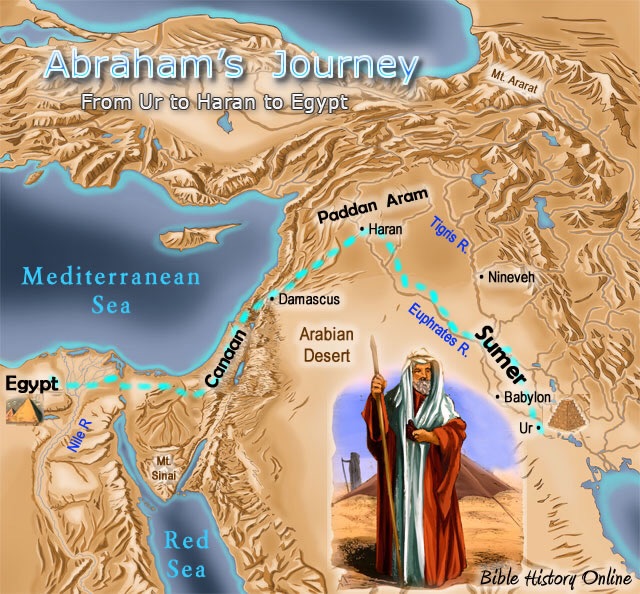
The Tomb of Daniel in Susa, Iran, is the most plausible of the possible locations for Daniel’s tomb. There are five other sites: Mala Amir in Iran; Samarkand in Uzbekistan; and Kirkuk, Babylon, and Muqdadiyah in Iraq.

It is thought that Christianity originated as an apocalyptic group within Judaism, with Jesus proclaiming the arrival of the son of man and his Kingdom as described in the Book of Daniel. Islamic scholars believe that this apocalyptic figure, son of man, is none other than Muhammad who established Islam in the land where God promised to Abraham in Genesis 15, verse 18. Islam is regarded as the kingdom of God preached by Jesus. How is their argument articulated?

The argument by some Islamic scholars that the apocalyptic figure referred to by Jesus is Muhammad, and that Islam is the kingdom of God as preached by Jesus, is based on a reinterpretation of certain Biblical and Qur’anic texts. Here’s how the argument is articulated:

1. Jesus and the Son of Man:

   In Christian eschatology, the “Son of Man” is an apocalyptic figure described in the Book of Daniel and in the Gospels. Jesus speaks of the coming of the “Son of Man” who will establish God’s kingdom.

  Islamic scholars who subscribe to this interpretation propose that the “Son of Man” could be a symbolic reference to Muhammad, who they argue, fulfilled this prophecy by establishing Islam from the River of Egypt to the Euphrates River including the Arabian Peninsula, a land promised to Abraham’s descendants.

2. The Kingdom of God:

   In Christian theology, the “Kingdom of God” or “Kingdom of Heaven” is often understood as a spiritual realm where God reigns supreme, and which will be fully realized in the eschatological future.

   Islamic scholars who support this view argue that Jesus’ references to the coming “Kingdom of God” were not about a spiritual kingdom, but a prophetic kingdom established on earth. They interpret this kingdom as the Islamic state that Muhammad established in Medina and later expanded throughout Arabia and beyond.

 3. The Covenant and the Land Promise:

    In Genesis 15, verse 18, God promises Abraham’s descendants a specific land. Jewish and Christian interpretations traditionally see this as a promise fulfilled in the biblical history of Israel.

   However, some Islamic scholars reinterpret this promise in the context of Islam, suggesting that the true fulfillment of God’s covenant and the promised land is seen in the establishment of Islam from the River of Egypt to the Euphrates River, a promise made to Ishmael instead of Isaac. They argue that Islam, as the final and complete religion, fulfills this covenant.

4. Prophecies and Islamic Tradition:

    Islamic tradition holds that Muhammad is the “Seal of the Prophets,” completing the line of prophets that includes Abraham, Moses, and Jesus. Some scholars interpret Jesus’ statements about a future prophet (like the “Comforter” in John 14, verses 16 to 17) as references to Muhammad.

   They argue that Jesus was predicting Muhammad’s arrival, and that the establishment of Islam represents the realization of the kingdom Jesus spoke of.

5. Theological Implications:

   This argument hinges on the belief that Islam is the final and most complete form of the Abrahamic faith, and that previous scriptures (Torah, Psalms, Gospels) were either incomplete or have been altered over time. The Qur’an is seen as the final, unaltered word of God, and Muhammad as the last prophet who brings the ultimate message.

In summary, the argument is built on a re-interpretation of Jesus’ teachings and the apocalyptic expectations found in the New Testament, suggesting that these were actually referring to the coming of Muhammad as a “son of man”and the establishment of Islam, which they view as the true “Kingdom of God.”

Does the prophecy of Daniel refer to Muhammad as the son of man?

Is there a theological correlation between the Night Journey of Prophet Muhammad to Heaven and the prophecy mentioned in Daniel 7:13?

Please provide a detailed explanation to support this argument.

The argument connecting the Night Journey of the Prophet Muhammad to Heaven with Daniel 7 verse 13 is based on theological interpretations that draw parallels between the two events. Here’s an explanation of this argument:

  1. The Night Journey of Prophet Muhammad ( الإسراء والمعراج): According to Islamic tradition, the Night Journey (الإسراء) and Ascension (المعراج) is a miraculous event in which the Prophet Muhammad was transported from Mecca to Jerusalem and then ascended through the heavens, meeting various prophets and eventually coming into the presence of Allah.
  2. Daniel 7 verse 13 in the Bible: In the Book of Daniel in the Old Testament of the Bible, specifically in Daniel 7 verse 13, there is a prophecy that says: “I saw in the night visions, and behold, with the clouds of heaven there came one like a son of man, and he came to the Ancient of Days (that is, God) and was presented before him.” This verse is often interpreted as a reference to a messianic figure.

The argument connecting these two events revolves around the idea that both the Night Journey of Prophet Muhammad and the vision in Daniel 7 verse 13 involve a figure coming into the presence of God. Some scholars, particularly in comparative religion and interfaith dialogue, suggest that there are thematic similarities between these events:

Divine Revelation: In both situations, there is a significant meeting with the divine, as Prophet Muhammad ascends to the highest levels of heaven, and the individual in Daniel 7 verse 13 is brought before the “Ancient of Days,” a divine being.

Prophetic Roles: The figure in Daniel 7 verse 13 is often associated with a messianic or prophetic role. Similarly, Prophet Muhammad is considered the final prophet in Islam, and his Night Journey is seen as a confirmation of his prophethood.

It’s important to note that this argument is primarily a matter of theological interpretation and interfaith dialogue. Different scholars and religious traditions may have varying perspectives on the significance and connections between these events.


Daniel and his friends respectfully refused to eat the non-kosher meat and wine of the king, which would defile them.  For ten days, they ate only vegetables and drank water.  “At the end of ten days, their appearance was better and healthier than all the young men who were eating the king’s food.”  (Daniel 1:15)

What is the perspective of Islam on the biblical figure of Daniel?

In Islam, the perspective on the biblical figure of Daniel is quite respectful, though Daniel is not mentioned explicitly in the Quran. Despite this absence, Daniel is recognized and revered in Islamic tradition and literature, primarily through historical narratives and the Hadith (sayings and actions of Prophet Muhammad).

Reverence in Islamic Tradition:

  1. Historical Narratives: Daniel is considered a prophet by some Muslim scholars, though this is not universally agreed upon since he is not mentioned in the Quran. His story and qualities are often cited in Islamic works, drawing from Jewish and Christian traditions. Islamic texts sometimes include stories about Daniel, portraying him as a wise and devout man. These narratives often focus on his ability to interpret dreams, his steadfast faith, and his survival in the den of lions—mirroring the biblical account.
  2. Literature and Folklore: Daniel appears in various Islamic texts and is particularly noted for his prophetic wisdom and piety. In some Islamic stories, he is credited with great wisdom and miraculous abilities, similar to those found in the Book of Daniel in the Bible. For instance, he is sometimes associated with the town of Susa in Iran, where a shrine said to be his tomb is located.
  3. Interpretations and Beliefs: In Islamic eschatology, Daniel is sometimes mentioned in discussions about the end times, although these references are more cultural and based on hadith literature rather than the Quran. His ability to interpret dreams and visions is often highlighted in Islamic teachings, paralleling the role he plays in the biblical narratives.

In summary, while Daniel is not a Quranic figure, his legacy as a wise and devout servant of God is acknowledged and respected within Islamic tradition, where he is often considered a prophet and a righteous man. His stories are used to impart moral lessons and to exemplify a life of faith and integrity.

Daniel is caught praying to God, which violated an edict of the king.  As punishment, he is thrown into the lions’ den (Daniel

The Argument for God’s Covenant Through Ishmael: An Articulation of Islamic Perspective


Azahari Hassim

Some believe God made a covenant with Abraham through Ishmael rather than Isaac. God chose Israel as his chosen nation prior to the coming of Prophet Muhammad who fulfilled all God’s promises to Abraham. After all, Ishmael was a firstborn, and both Hagar and Ishmael played important roles in the Hajj event together with Abraham. How is this argument articulated?

The argument that God made a covenant with Abraham through Ishmael rather than Isaac is articulated by considering the following points:

  1. Firstborn status: Ishmael was the firstborn son of Abraham, which traditionally holds significance in many cultures. Some argue that being the firstborn, Ishmael had a rightful claim to the covenant blessings. After all, in Deuteronomy 21 verses 15 to 17, it is stated that if a man has two wives and both bear him sons, he should not show favoritism to the son of the loved wife over the firstborn of the neglected wife. The neglected wife’s firstborn should receive double the inheritance as he is the firstfruits of the man’s virility.
  2. Mention in the Bible: The Bible does mention Ishmael and his descendants. In Genesis 17 verse 20, God promises to bless Ishmael, saying, “And as for Ishmael, I have heard you; behold, I have blessed him and will make him fruitful and multiply him greatly. He shall father twelve princes, and I will make him into a great nation.” This is seen as evidence that Ishmael was part of God’s plan.
  3. Important roles in the Hajj event: Both Hagar and Ishmael played important roles in the Hajj event, where Abraham was commanded by God to leave them in the desert of Mecca. This event is seen as significant because it demonstrates the inclusion of Ishmael and his mother in God’s plan. Muslims believe that Ishmael was the son whom Abraham was commanded to sacrifice, but God intervened and provided a ram instead. This event is commemorated by Muslims every year during Eid al-Adha, which is also known as the Festival of Sacrifice.
  4. Fulfillment of promises through Muhammad: Some argue that the coming of Muhammad, a descendant of Ishmael, fulfilled the promises made to Abraham. They believe that through Muhammad, God established Islam as the final and complete revelation, encompassing the fulfillment of all previous covenants and promises.
  5. Chosen nation prior to Muhammad: The argument suggests that Israel was chosen as God’s nation before the coming of Muhammad, but it does not necessarily mean that Israel was the only chosen nation. They believe that God’s covenant with Abraham through Ishmael was equally valid and fulfilled through the establishment of Islam.

It is important to note that this argument is not universally accepted and is subject to interpretation and theological differences. Different religious traditions may have varying views on this topic.

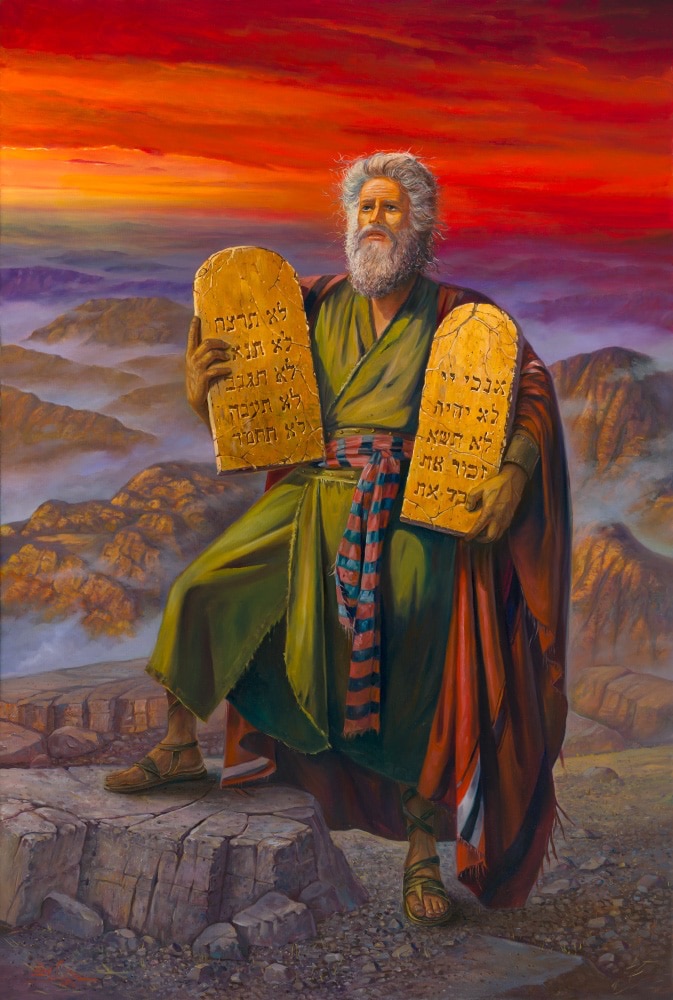
Mount Sinai is a sacred mountain mentioned in the Hebrew Bible as the place where Moses received the Ten Commandments from God. It is located in the Sinai Peninsula in Egypt and is a significant religious and historical site for Judaism, Christianity, and Islam. The mountain is also known as Jebel Musa in Arabic. Today, Mount Sinai is a popular pilgrimage site and tourist destination, attracting visitors from around the world.

Two covenants: Abrahamic and Sinai covenants from an Islamic perspective

Genesis 49, verse 10, reads:

“The sceptre shall not depart from Judah, nor a lawgiver from between his feet, until Shiloh come; and unto him shall the gathering of the people be.”

The verse implies that Judah’s offspring will govern Israel until the arrival of “Shiloh,” who holds all royal power. Here, Shiloh, similar to “the Seed” in Genesis 22, verse 18, refers to the future Messiah.

From an Islamic perspective, the word “Shiloh” in Genesis 49, verse 10, is connected to the Abrahamic covenant through Ishmael, who, not Isaac, is believed to be nearly sacrificed. Conversely, the terms “scepter” and “lawgiver” mentioned in Genesis 49, verse 10, are associated with the Sinai covenant. How is their argument articulated?

From an Islamic perspective, the interpretation of Genesis 49, verse 10, and its connection to the Abrahamic covenant through Ishmael involves several key arguments:

  1. Shiloh as Muhammad:
    Some Islamic scholars interpret “Shiloh” as a reference to Prophet Muhammad. They argue that the prophecy indicates a shift in divine authority away from the line of Judah to a descendant of Ishmael.
  2. Abrahamic Covenant through Ishmael:
    Islamic tradition holds that it was Ishmael, not Isaac, who was nearly sacrificed by Abraham. This is seen as a pivotal moment in the Abrahamic covenant, establishing Ishmael’s line as the inheritors of God’s promise.
  3. Scepter and Lawgiver:
    The terms “scepter” and “lawgiver” in Genesis 49, verse 10, are associated with the Sinai covenant given to Moses. Islamic interpretation suggests that these symbols of authority and divine law would remain with the descendants of Judah until the coming of “Shiloh” (Muhammad).
  4. Transfer of Authority:
    The verse is interpreted to mean that the religious and political authority (“scepter” and “lawgiver”) would depart from Judah’s line when Shiloh (Muhammad) comes. This is seen as a prophecy of the transition of divine guidance from the Israelite tradition to Islam.
  5. Gathering of the People:
    The phrase “unto him shall the gathering of the people be” is interpreted as referring to the universal message of Islam brought by Muhammad, which would unite people from various nations and backgrounds.
  6. Continuation of Abrahamic Legacy:
    Islamic scholars argue that Muhammad, as a descendant of Ishmael, fulfills this prophecy by bringing the final revelation that completes and supersedes previous covenants, while still maintaining continuity with the Abrahamic tradition.
  7. Non-Judahite Messiah:
    Some interpretations suggest that the verse implies the coming of a messianic figure from outside the tribe of Judah, which aligns with the Islamic view of Muhammad’s lineage through Ishmael.

It’s important to note that this interpretation is specific to Islamic theology and is not accepted in Jewish or Christian exegesis. The Islamic perspective sees this verse as one of many biblical passages that they believe foretell the coming of Prophet Muhammad and the establishment of Islam as the final Abrahamic faith.

A covenant is an agreement between two parties. In a biblical sense, covenants are made to humanity by God and are intended to ensure mankind acts together in harmony according to the teachings provided by biblical scripture. In some cases, biblical covenants may include symbolic sacrifice. In all cases, biblical covenants have no expiration date – and are enforced by God.

COVENANT

The word used to describe the agreements made between God and the Jewish people. Tradition says that God made several covenants. The Torah tells of the covenant God makes with Abraham, promising him that he will be the patriarch of a great nation. In return, Abraham agrees that every male will be circumcised as a sign of this covenant.

This ancient rite is still practiced today; Jewish males are circumcised in a ceremony known as brit milah, or “the covenant of circumcision.” God also makes a covenant with Moses as he prepares to receive the Ten Commandments. God tells Moses: “If you obey me faithfully and keep My covenant, you shall be treasured among all the peoples.”

Many scholars regard acceptance of the teachings of the Ten Commandments as an example of the Israelites’ covenantal relationship with God. God also made a covenant with Noah, a non-Jew, after the Great Flood, giving him the Noahide Laws and promising never again to destroy the world. God created the rainbow as a sign of this covenant.

Ishmael was the fruit of Abraham, while Isaac was a gift of God to Abraham

From the Islamic perspective, Ishmael was the fruit of Abraham, while Isaac was a gift of God to Abraham due to his willingness to sacrifice his firstborn son, Ishmael. What is the explanation for this?

In Islamic tradition, both Ishmael and Isaac are revered as prophets and are the sons of the Prophet Abraham. Here’s a breakdown from the Islamic perspective:

  1. Ishmael: He is the first son of Abraham and Hagar. When Hagar and her infant son Ishmael were in the desert, God provided them with the well of Zamzam. Ishmael and his father, Abraham, later constructed the Kaaba in Mecca. The majority of Islamic traditions indicate that it was Ishmael, not Isaac, whom Abraham was commanded to sacrifice. However, at the last moment, God provided a ram to sacrifice in place of Ishmael. This event is commemorated during Eid al-Adha.
  2. Isaac: He is the second son of Abraham and his wife, Sarah. In Islamic narratives, after the trial of the sacrifice, as a reward for Abraham’s unwavering faith, God blessed him with a second son, Isaac, through Sarah. Isaac is also considered a prophet and is respected in Islamic tradition.
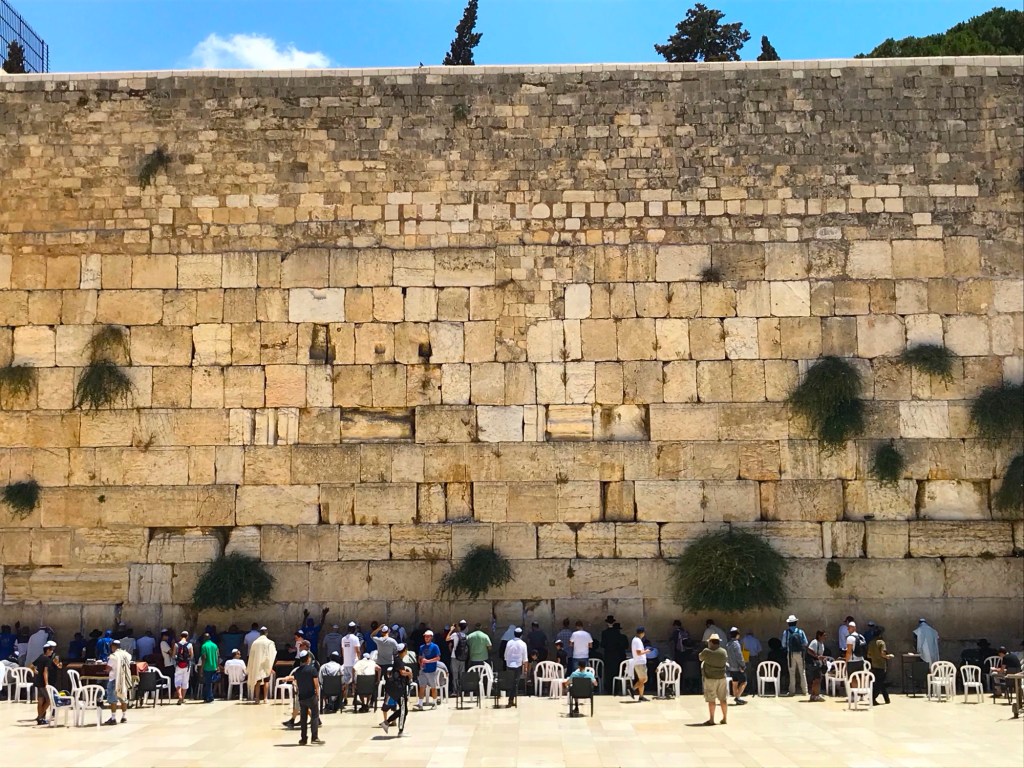
The Islamic account differs from the Jewish and Christian traditions, where Isaac is the one whom Abraham is commanded to sacrifice. In the Qur’an, the specific name of the son to be sacrificed is not mentioned, but many Islamic scholars and traditions identify him as Ishmael based on the sequence of events in the Quran, which suggests that the promise of Isaac’s birth came after the sacrifice narrative, implying Ishmael was the son involved (Surah 37, verses 100 to 112).

What does the Arabic word “نَافِلَةً” mean in Surah 21, verse 72, in the Quran? Could you elaborate more on why the Quran uses such a word to refer to Abraham concerning Isaac and Jacob?

The Arabic word “نَافِلَةً” in Surah 21, verse 72 of the Quran refers to “additional” or “extra” in English. In this verse, it is used to describe how Allah favored Abraham by giving him the additional gift of Isaac and Jacob, in addition to his son Ishmael.

This word is significant in this context because it highlights the special and additional blessings that Allah bestowed upon Prophet Abraham. It emphasizes the extraordinary nature of the gift of Isaac and Jacob, in addition to his first son Ishmael, as a form of divine favor and grace.

The use of the word “نَافِلَةً” also emphasizes the generosity and abundance of Allah’s blessings, highlighting the multiplicity of children and the continuity of prophethood within Prophet Abraham’s lineage. This choice of wording serves to underscore the extraordinary nature of Allah’s favors and blessings upon his chosen prophets and their descendants.

Overall, the use of the word “نَافِلَةً” in this verse serves to emphasize the exceptional nature of the gift of Isaac and Jacob to Prophet Abraham, in addition to his son Ishmael, highlighting the abundance and generosity of Allah’s blessings upon his chosen servants.

Hagar’s prophecy (the mother of Ishmael)


Azahari Hassim

Some believe that the prophecy in the Torah (Genesis 21 verse 18) was fulfilled when Allah established Hajj as an Islamic rite. Pilgrims perform Sa’i in memory of Hagar, who searched for water for her infant son, Ishmael, in the desert, and Allah provided them with the well of Zamzam. Sa’i, which involves walking seven times between the hills of Safa and Marwa in Mecca, is one of the essential rituals of Hajj and Umrah. How is this argument articulated?

There is a belief among some Muslims that the prophecy mentioned in Genesis 21 verse 18 was fulfilled through the establishment of Hajj in Islam. This verse of the Torah prophesies that God will make a great nation from the descendants of Ishmael, the son of Abraham and Hagar. The argument connecting the Islamic narrative with the story in the Torah can be articulated through a few key points:

  1. Biblical Story of Hagar and Ishmael: In the Torah, the story of Hagar and her son Ishmael, who were cast into the desert, is recounted. In Genesis 21:18, God tells Hagar, “Lift up the boy and hold him fast with your hand, for I will make him into a great nation.” This is often interpreted as a divine promise of Ishmael’s survival and future significance.
  2. Islamic Narrative and the Ritual of Sa’i: In Islamic tradition, Hagar’s desperate search for water in the desert for her infant son Ishmael is commemorated through the ritual of Sa’i, which is performed during the Hajj and Umrah pilgrimages. Pilgrims walk back and forth seven times between the hills of Safa and Marwa in Mecca, reenacting Hagar’s search.
  3. The Well of Zamzam: Allah’s provision of the Zamzam well for Hagar and Ishmael, as per Islamic tradition, is seen as a miraculous fulfillment of the divine promise. The well is a key element in the story and is considered a symbol of God’s mercy and sustenance.
  4. Link to the Prophecy: The argument connects the establishment of Hajj, including the ritual of Sa’i, to the fulfillment of the prophecy in Genesis. It’s posited that Allah’s establishment of these rituals and the continued commemoration by millions of Muslims is a fulfillment of the promise made to Hagar regarding Ishmael.
  5. Symbolism and Continuity: The ritual of Sa’i and the story of Zamzam are seen as not just historical events but also symbolic of God’s continuous guidance and sustenance. This symbolism is linked back to the Biblical prophecy, suggesting a continuity and fulfillment of divine promise across these Abrahamic faiths.

This argument is that the connection between this Islamic rite and the prophecy in the Torah (Genesis 21 verse 18) is seen by some as a fulfillment of the promise made to Hagar in the Torah, where it is stated that God will make a great nation of Ishmael. In Islamic belief, this promise is fulfilled through the lineage of Ishmael and the establishment of Hajj as a central pillar of Islam. Therefore, the act of Sa’i is not only a way for pilgrims to remember and honor Hagar’s struggle but also to symbolize the fulfillment of the prophecy through the establishment of Hajj as an Islamic rite.

Hajj as the Fulfillment of Abrahamic Prophecy

Torah, Genesis 22 verse 18, reads:

“And in thy seed shall all the nations of the earth be blessed; because thou hast obeyed my voice.”

It is believed the event of the Hajj in Mecca is the fulfillment of the biblical prophecy of Genesis 22 verse 18. According to the Islamic belief, Abraham offered Ishmael, not Isaac, as a sacrifice to God, emphasizing Ishmael’s role in fulfilling God’s covenant with Abraham. The event of Hajj proves that God made a covenant with Abraham through Hagar and Ishmael rather than Sarah and Isaac. How is this viewpoint presented?

The viewpoint that the Hajj in Mecca is a fulfillment of the biblical prophecy of Genesis 22 verse 18, and represents a covenant made by God with Abraham through Hagar and Ishmael, rather than Sarah and Isaac, is articulated based on several key aspects of Islamic belief and interpretation of religious texts:

  1. Prophecy of Genesis 22 verse 18: The verse in Genesis states, “And in thy seed shall all the nations of the earth be blessed; because thou hast obeyed my voice.” Some interpret this as a prophecy that is fulfilled through the descendants of Ishmael, Abraham’s son with Hagar. The Islamic narrative holds that it was Ishmael, not Isaac, who was offered by Abraham as a sacrifice to God. This signifies Ishmael’s importance in the fulfillment of God’s covenant with Abraham. The Hajj, as a major Islamic ritual commemorating the actions of Abraham and Ishmael, is seen as a manifestation of this blessing.
  2. The Hajj and Ishmael’s Legacy: In Islamic tradition, the Hajj includes rituals that are believed to commemorate the life and trials of Abraham and his son Ishmael. The ritual of Sa’i, where pilgrims travel back and forth between the hills of Safa and Marwah, is seen as a re-enactment of Hagar’s desperate search for water for her infant son Ishmael. According to Islamic belief, the well of Zamzam originated to rescue baby Ishmael.
  3. The Kaaba and Islamic Tradition: The Kaaba in Mecca, which is the focal point of the Hajj, is believed in Islamic tradition to have been built by Abraham and Ishmael as a house of worship to the one true God. This act of establishing monotheism in the region is viewed as a key part of fulfilling God’s covenant with Abraham.
  4. Universal Blessing and Unity of Humankind: The Hajj is seen as a fulfillment of God’s promise to bless all nations through Abraham’s descendants. The gathering of millions of Muslims from diverse nations during Hajj is viewed as a symbol of this blessing and the unity of humankind under God’s guidance.
  5. Continuity of Abrahamic Tradition: The Hajj is also seen as a continuation and fulfillment of the Abrahamic tradition of monotheism. This perspective posits that Islam, as the final revelation in the Abrahamic tradition, fulfills and perfects earlier revelations given to Jews and Christians.

This viewpoint is part of the broader Islamic interpretation of religious history, which sees Islam as both a continuation and a completion of the monotheistic tradition established by Abraham.

God commands Abraham to sacrifice his only son

“Hajj, for centuries, has remained a central, unifying force in the Muslim world. It brings together people of every race, language, and culture, in a shared act of worship and submission to God.”

Karen Armstrong, a British author and scholar of comparative religion

Islam as the Restored Faith of Abraham: Addressing Perceived Deviations in Judaism and Christianity

Islam is considered as a restored religion of Abraham due to Judaism corrupting their text as regards a son whom Abraham was commanded to sacrifice. At the same time, Christianity corrupted their scripture concerning the oneness of God and the rite of circumcision. What is the explanation for this?

The belief that Islam is a restored religion of Abraham stems from the belief that both Judaism and Christianity deviated from the original teachings of Abraham. According to Islamic beliefs, Judaism corrupted their text by incorrectly interpreting the command to sacrifice a son, as mentioned in the Quran. Muslims believe that Abraham was commanded to sacrifice his son Ishmael, not Isaac as mentioned in the Hebrew Bible.

Similarly, Muslims believe that Christianity corrupted their scripture by deviating from the belief in the oneness of God (monotheism) and by modifying the rite of circumcision. Islam emphasizes the concept of tawheed, which is the belief in the oneness of God, and questions the Trinity as mentioned in Christian theology. Islam also practices circumcision, although the method and significance may differ from those in Judaism and some Christian traditions.

These differences and perceived corruptions are seen from the perspective of Islamic theology, which asserts that Islam is the restoration of the original teachings of Abraham, as revealed in the Quran.

Exploring the Question: Is Allah the God of Israel Across Different Faiths


Azahari Hassim

Is Allah the God of Israel?

The question of whether Allah is the God of Israel connects to broader theological, historical, and linguistic discussions. In essence, the answer can vary significantly depending on religious and cultural perspectives:

1. Islamic Perspective: In Islam, Allah is the Arabic word for God, and Muslims believe Allah is the same singular, monotheistic God worshiped by Jews and Christians. This belief is rooted in the Islamic view that all Abrahamic faiths, which include Judaism, Christianity, and Islam, worship the same one God who revealed Himself to Abraham, Moses, Jesus, and Muhammad. Therefore, from an Islamic standpoint, Allah is indeed the God of Israel, as well as the God of all creation.

2. Jewish and Christian Perspectives: Judaism refers to God using several names, the most sacred being YHWH, often vocalized as Yahweh and traditionally not pronounced, using “Adonai” (Lord) in prayer and readings. Christianity, stemming from Jewish monotheism, also worships this God, referring to Him in English as God, and recognizing Jesus Christ as the Son of God and part of the Holy Trinity. While Jews and Christians acknowledge their God as the same God of Abraham worshiped by Muslims, the conceptualization of God’s nature can differ significantly among these faiths, especially with Christianity’s Trinitarian doctrine, which is not shared by Judaism or Islam.

3. Linguistic and Cultural Considerations: “Allah” is simply the word for God in Arabic, used by Arabic speakers of various religious backgrounds, including Arab Christians and Jews, when referring to God. The use of the term “Allah” by non-Muslims in Arabic-speaking and -influenced contexts underscores the linguistic aspect of the name rather than a theological one.

4. Theological Divergences: Despite the shared heritage, there are significant theological differences among the three monotheistic faiths, particularly concerning the nature of God, the role of Jesus Christ, and the revelations through their respective scriptures (the Torah for Jews, the Bible for Christians, and the Qur’an for Muslims). These differences lead to distinct understandings and relationships with God.

In summary, from a monotheistic standpoint and particularly within Islam, Allah is considered the same God worshipped in Judaism and Christianity. However, theological nuances and differences in belief systems contribute to varied perceptions and understandings of God’s nature across these faiths.

Moses Maimonides, Jewish philosopher, jurist, and physician.

Did Moses Maimonides, a great Jewish sage, use the word “Allah “ for God in his writing?

Yes, Moses Maimonides, a prominent Jewish philosopher and scholar, did indeed use the word “Allah” for God in some of his writings. In his famous work, “The Guide for the Perplexed,” written in Arabic, Maimonides used the term “Allah” to refer to the monotheistic God. This usage reflects the influence of Arabic and Islamic culture on Maimonides, as he lived in Muslim-dominated Spain and Egypt during the 12th century.

What is “The Guide for the Perplexed”?

The Guide for the Perplexed is a book written by Maimonides, a 12th-century Jewish philosopher and scholar. It tries to explain how to understand the Jewish religion and its sacred texts in a rational way, using the ideas of Aristotle and other Greek philosophers. It also discusses some topics of Jewish mysticism and the meaning of God’s attributes. The book was written in Arabic using the Hebrew alphabet, and later translated into Hebrew and other languages. It is considered one of the most influential works of Jewish philosophy and theology, and it has also influenced many Christian and Muslim thinkers.

Saadia Gaon and the Arabic language

Who was Saadia Gaon? Was his writing and commentary on the Torah influenced by Arabic and the name of Allah?

Saadia Gaon was a prominent Jewish scholar and philosopher who lived in the 9th and 10th centuries. He was born in Egypt but spent much of his life in Babylonia, where he served as the head of the Talmudic academy in Sura.

Saadia Gaon’s writing and commentary on the Torah were heavily influenced by Arabic culture and language, as well as Islamic theology. He was well-versed in Arabic literature and philosophy, which he incorporated into his interpretations of Jewish texts. Additionally, Saadia Gaon engaged with Islamic theological concepts such as divine unity (tawhid) and the nature of prophecy.

In terms of the name of Allah, Saadia Gaon did not shy away from using it in his writings. He believed that there was no harm in using the Arabic term for God when discussing theological matters, as long as it did not compromise Jewish monotheism. This openness to incorporating Arabic language and Islamic concepts into his work set Saadia Gaon apart from other Jewish scholars of his time.

Overall, Saadia Gaon’s writing and commentary on the Torah were indeed influenced by Arabic culture and Islamic theology, including references to Allah. His unique approach to blending these influences with traditional Jewish thought helped shape medieval Jewish philosophy and continues to be studied by scholars today.

The Bible states: “And on the seventeenth day of the seventh month the ark came to rest on the mount Ararat.” (Genesis, 8:4). During the Great flood, after floating on waters for 150 days, Noah’s ark parked on Mount Ararat, and on this very day, the human race was granted a second birth in Armenia: on Mount Ararat. This very fact makes both Ararat and Armenia a holy place. 

Pre-Christian Figures in Christian Theology: Understanding the Roles of Adam, Noah, and Abraham

According to Islamic belief, Adam, Noah, Abraham, and all prophets are considered Muslims. Does Christianity hold the view that they were all Christians?

In Christianity, Adam, Noah, and Abraham are not considered Christians in the same way they are viewed as Muslims in Islamic belief. Christianity teaches that these figures lived before the life and ministry of Jesus Christ, the central figure of the Christian faith, and therefore could not have been Christians in the traditional sense.

However, these individuals are highly regarded in Christian theology for their roles in God’s plan and are seen as part of the faith’s spiritual heritage.

For example, Abraham is considered a patriarch and a model of faith. He is often referred to as the “father of faith” because he demonstrated faith in God’s promises before the establishment of Christianity.

Christians view themselves as spiritual descendants of Abraham, sharing in the blessings of the covenant through faith in Christ.

Adam and Noah are also recognized as significant figures. Adam is seen as the first human created by God and the forefather of all humanity, and his actions are believed to have led to the fall of man, necessitating redemption. Noah is honored for his righteousness and obedience in the face of a sinful world.

Overall, while these figures are not labeled as Christians, their faith and actions are seen as foundational to the Christian narrative and are respected within the faith for their relationship with God and their roles in biblical history.

Holy Quran 3:33

۞ إِنَّ ٱللَّهَ ٱصْطَفَىٰٓ ءَادَمَ وَنُوحًا وَءَالَ إِبْرَٰهِيمَ وَءَالَ عِمْرَٰنَ عَلَى ٱلْعَٰلَمِينَ

God chose Adam, and Noah, and the family of Abraham, and the family of Imran, over all mankind.

God’s covenant with the Children of Adam

What covenant does God establish with the Children of Adam in Surah 7, verse 173 of the Quran?

In Surah 7, verse 172 of the Quran, God establishes a covenant with the Children of Adam by bringing forth their descendants from their loins and making them testify against themselves. They are asked, “Am I not your Lord?” to which they respond, “Yes, we have testified.”

This is done so that they cannot claim on the Day of Resurrection that they were unaware of this covenant. This verse is often interpreted as referring to the innate recognition of God and His lordship over humanity, which is considered a fundamental aspect of faith in Islam. It serves as a reminder of the accountability of human beings to their Creator and their inherent knowledge of His existence and sovereignty.

What is the consequence in the afterlife, as outlined in the Quran, for those who deny Islam and the prophethood of Muhammad?

In Islam, the Quran states that those who deny Islam and the prophethood of Muhammad will face consequences in the afterlife. These consequences are described as facing punishment in Hell for eternity. The Quran emphasizes the importance of belief in the teachings of Islam and the prophethood of Muhammad as a key aspect of faith. It is believed that those who reject these teachings will not receive mercy from God and will be held accountable for their disbelief.