
Azahari Hassim
In Surah 2, verse 124 of the Quran, God says to Abraham:
“And when his Lord tried Abraham with certain words and he fulfilled them.” God said, “I am making you a leader of humanity.” Abraham said, “And my descendants?” God said, “My covenant does not include the wrongdoers.”
What is the interpretation of “the certain words” (بِكَلِمَٰتٍ) in Surah 2, verse 124, of the Quran according to the Quranic commentators? Can you provide a list of those “certain words”?
The interpretation of “the certain words” (بِكَلِمَٰتٍ) in this verse according to Quranic commentators refers to the tests and commands that God gave to Abraham. These tests included leaving his family in a barren land, sacrificing his son Ishmael, rebuilding the Kaaba, and instituting the rite of circumcision.
Some of the specific “certain words” mentioned by Quranic commentators include:
- Leaving his family in a barren land: God commanded Abraham to leave his wife Hagar and their infant son Ishmael in the desolate valley of Mecca.
- Sacrificing his son Ishmael: God tested Abraham’s devotion by commanding him to sacrifice his beloved son Ishmael. However, at the last moment, God provided a ram as a substitute for sacrifice.
- Rebuilding the Kaaba: After leaving Hagar and Ishmael in Mecca, Abraham was instructed by God to rebuild the Kaaba as a place of worship for monotheism.
- The rite of circumcision: Circumcision is a significant command given to Abraham as a sign of the covenant between God and his followers. It remains a practice among his spiritual descendants, particularly in Islam, symbolizing purification and faithfulness to God’s covenant.
These “certain words” (بِكَلِمَٰتٍ) were tests of faith and obedience for Abraham, which he successfully fulfilled, demonstrating his unwavering devotion to God.

Abrahamic covenant: Isaac or Ishmael from a Quranic perspective
In Surah 2, verse 124 of the Quran, it is stated that God made a covenant with Abraham through Ishmael instead of Isaac, and it is implied that Jewish scribes corrupted the Torah in favor of Isaac. How is this interpretation explained?
Surah 2, verses 124 to 125 reads:
“And when his Lord tested Abraham with certain words, and he fulfilled them. God said, “I am making you a leader of humanity.” Abraham said, “And my descendants?” God said, “My pledge does not include the wrongdoers.”
“And We made the House a focal point for the people, and a sanctuary. Use the shrine of Abraham as a place of prayer. And We commissioned Abraham and Ishmael, “Sanctify My House for those who circle around it, and those who seclude themselves in it, and those who kneel and prostrate.”
The Quran clearly states in Surah 2, verse 124 that God made a covenant with Abraham through his son Ishmael, not Isaac. This contradicts the Biblical account which portrays Isaac as the son who was to inherit the covenant from Abraham.
The Quran suggests the Torah (the first five books of the Bible containing the story of Abraham and his sons) was corrupted by Jewish scribes who altered the narrative to favor Isaac over Ishmael. Evidence for this includes:
The Bible itself initially portrays Ishmael as the firstborn and heir before contradicting itself later by calling Isaac the “only son”.
Islamic sources consistently name Ishmael as the son taken by Abraham for the intended sacrifice, while the Bible names Isaac.
The Quranic narrative does not explicitly name the son of the near sacrifice, but Islamic tradition and many Muslim scholars have historically identified him as Ishmael. This is partly based on the sequence of events in the Quran, which suggests that the promise of Isaac’s birth came after the sacrifice narrative, implying Ishmael was the son involved.
The Quran establishes Ishmael’s lineage as the one that inherits the covenant and religious practices like the Kaaba in Mecca, contradicting the Biblical focus on Isaac’s descendants (the Israelites).
So according to the Quran and Islamic tradition, the Biblical account was distorted to displace Ishmael’s status as Abraham’s heir in favor of Isaac, likely due to Jewish scribes’ bias towards the Israelite lineage.
The Quran asserts that it rectifies this by confirming Ishmael as the son who carried on Abraham’s legacy in accordance with the original divine covenant, while the divine choice of the ancient Israelites and their Hebrew prophets before the arrival of Islam is intended to prepare the way for Muhammad, the final Prophet.
“The promise that Abraham shall be the father of many nations reflects an expansion of the covenant, indicating that the election of Abraham has implications for the entire world. It foreshadows the universalism that is to come.”
Gerhard von Rad

The Near Sacrifice of Ishmael: Islamic Theology and Its Support for the Prophethood of Muhammad
What theological reasoning do Islamic scholars offer to explain how Abraham’s near sacrifice of Ishmael, instead of Isaac, supports the prophethood of Muhammad?
According to Islamic tradition and theology, the near sacrifice of Ishmael by Abraham, rather than Isaac, provides support for the prophethood of Muhammad in several key ways:
Judaism, Christianity, and Islam all trace their spiritual lineage to Abraham as a shared patriarch. The story of Abraham’s willingness to sacrifice his son at God’s command is seen as a supreme test of faith in all three traditions. By identifying the son as Ishmael rather than Isaac, Islam establishes a direct link between Abraham and Muhammad through Ishmael.
The Quran in Surah 37 recounts the story of Abraham’s willingness to sacrifice his son out of obedience to God. Despite not explicitly naming the son, the Quran places the narrative of the sacrifice before the announcement of Isaac’s birth, which some interpret as an indication that Ishmael was the one sacrificed. This Quranic account is seen as affirming Ishmael’s role.
Islamic tradition holds that Muhammad is a direct descendant of Ishmael. The legitimacy and authenticity of Muhammad’s prophethood is thus connected to this lineage going back to Abraham through Ishmael. Ishmael’s willingness to be sacrificed is viewed as a significant event that foreshadows the prophethood of Muhammad, which holds a central role in the religion.
Muslims believe the Quran is the final, unaltered word of God as revealed to Muhammad, arguing that earlier scriptures like the Torah and Bible have been changed over time. In this view, the Quran corrects these alterations, and its indication that Ishmael was the sacrificial son is seen as the accurate version of the story. This affirms Muhammad’s role in restoring the original monotheistic message.
While acknowledging the prophets of Judaism and Christianity, Islam considers Muhammad to be the final prophet who came to restore the pure monotheistic faith and correct deviations that had entered the earlier religions. The story of Ishmael’s near-sacrifice is thus seen as part of this corrective prophetic message continuing through Muhammad.
In summary, the Islamic theological argument is that the identification of Ishmael as the son Abraham was commanded to sacrifice establishes a direct link between Abraham, Ishmael, and Muhammad, supporting the legitimacy of Muhammad’s prophethood as a continuation of the Abrahamic lineage and monotheistic message that was preserved intact through Ishmael and fully restored in the revelation of the Quran to Muhammad. The Ishmael narrative reinforces Muhammad’s prophetic authority for Muslims.
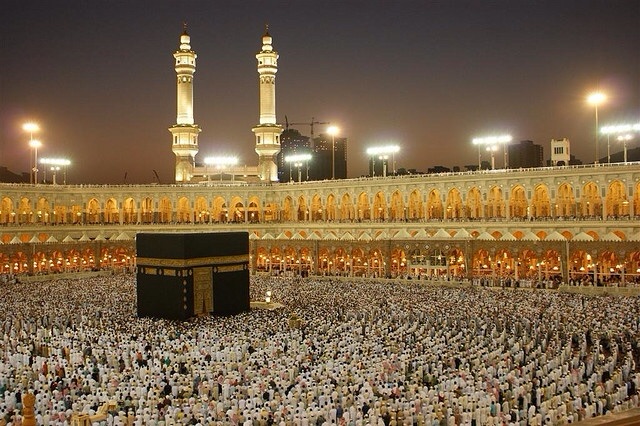
The Significance of Hajj: Commemorating Hagar’s Search for Water and Abraham’s Sacrifice
Introduction:
Hajj, the annual Islamic pilgrimage to Mecca, holds great significance for millions of Muslims worldwide. While Hajj is primarily associated with the life of Prophet Muhammad, it also commemorates important biblical events. One such event is the story of Hagar’s search for water for her baby Ishmael, as well as Abraham’s willingness to sacrifice his son, Ishmael. This essay aims to explore the historical and religious significance of these events in the context of Hajj.
Historical Background:
To understand the significance of Hagar’s search for water for her baby Ishmael and Abraham’s sacrifice, it is crucial to delve into their historical context. According to Islamic tradition, Hagar was the wife of the Prophet Abraham and the mother of Ishmael. Hagar and Ishmael were sent away by Abraham at God’s command. They wandered in the desert near Mecca until they ran out of water, prompting Hagar to search desperately for water to save her infant son.
Hagar’s Search for Water:
Hagar’s search for water for her infant son Ishmael is a deeply emotional and poignant story that resonates with the theme of struggle and resilience. In Islamic tradition, it is believed that Hagar’s unwavering faith and determination led her to the miraculous discovery of the Zamzam well, which continues to provide water for pilgrims during Hajj. The act of retracing Hagar’s footsteps during the Hajj pilgrimage symbolizes the physical and spiritual journey of seeking Muslims blessings and guidance from God.
Abraham’s Sacrifice:
Another biblical event associated with Hajj is the story of Abraham’s willingness to sacrifice his son Ishmael. According to Islamic tradition, Abraham received a command from God to sacrifice his beloved son as a test of his faith. Abraham, demonstrating unwavering devotion, prepared to carry out the command, but at the last moment, God intervened and replaced Ishmael with a ram. This event is commemorated during Hajj through the observance of Eid al-Adha, the Festival of Sacrifice.
Symbolism and Spiritual Significance:
The story of Hagar’s search for water for her infant son and Abraham’s sacrifice carries profound symbolism and spiritual significance for Muslims. Hagar’s unwavering faith and determination symbolize the importance of perseverance and trust in God’s providence. Her search for water reflects the universal human struggle for survival, while the discovery of Zamzam represents divine intervention and sustenance.
Abraham’s willingness to sacrifice his son symbolizes the ultimate act of submission to God’s will. Muslims commemorate this event during Hajj by performing the symbolic stoning of the pillars representing Satan, symbolizing the rejection of temptation and evil. The act of sacrificing an animal during Eid al-Adha symbolizes one’s willingness to give up personal desires and possessions for the sake of God’s pleasure.
Conclusion:
Hajj, the annual Islamic pilgrimage, holds immense religious and historical significance for Muslims worldwide. The commemoration of Hagar’s search for water for her infant son and Abraham’s willingness to sacrifice his son Ishmael adds depth and meaning to this sacred journey. These events symbolize the themes of struggle, faith, perseverance, and submission to God’s will. By retracing Hagar’s footsteps and participating in the rituals associated with Abraham’s sacrifice, Muslims reaffirm their commitment to their faith and seek spiritual enlightenment and blessings during Hajj.
 ABRAHAMIC THEOLOGY
wow!! 64The Tests of Abraham: Interpretation of ‘Certain Words’ in Surah 2:124
LikeLike