
Azahari Hassim
Is Allah the God of Israel?
The question of whether Allah is the God of Israel connects to broader theological, historical, and linguistic discussions. In essence, the answer can vary significantly depending on religious and cultural perspectives:
1. Islamic Perspective: In Islam, Allah is the Arabic word for God, and Muslims believe Allah is the same singular, monotheistic God worshiped by Jews and Christians. This belief is rooted in the Islamic view that all Abrahamic faiths, which include Judaism, Christianity, and Islam, worship the same one God who revealed Himself to Abraham, Moses, Jesus, and Muhammad. Therefore, from an Islamic standpoint, Allah is indeed the God of Israel, as well as the God of all creation.
2. Jewish and Christian Perspectives: Judaism refers to God using several names, the most sacred being YHWH, often vocalized as Yahweh and traditionally not pronounced, using “Adonai” (Lord) in prayer and readings. Christianity, stemming from Jewish monotheism, also worships this God, referring to Him in English as God, and recognizing Jesus Christ as the Son of God and part of the Holy Trinity. While Jews and Christians acknowledge their God as the same God of Abraham worshiped by Muslims, the conceptualization of God’s nature can differ significantly among these faiths, especially with Christianity’s Trinitarian doctrine, which is not shared by Judaism or Islam.
3. Linguistic and Cultural Considerations: “Allah” is simply the word for God in Arabic, used by Arabic speakers of various religious backgrounds, including Arab Christians and Jews, when referring to God. The use of the term “Allah” by non-Muslims in Arabic-speaking and -influenced contexts underscores the linguistic aspect of the name rather than a theological one.
4. Theological Divergences: Despite the shared heritage, there are significant theological differences among the three monotheistic faiths, particularly concerning the nature of God, the role of Jesus Christ, and the revelations through their respective scriptures (the Torah for Jews, the Bible for Christians, and the Qur’an for Muslims). These differences lead to distinct understandings and relationships with God.
In summary, from a monotheistic standpoint and particularly within Islam, Allah is considered the same God worshipped in Judaism and Christianity. However, theological nuances and differences in belief systems contribute to varied perceptions and understandings of God’s nature across these faiths.
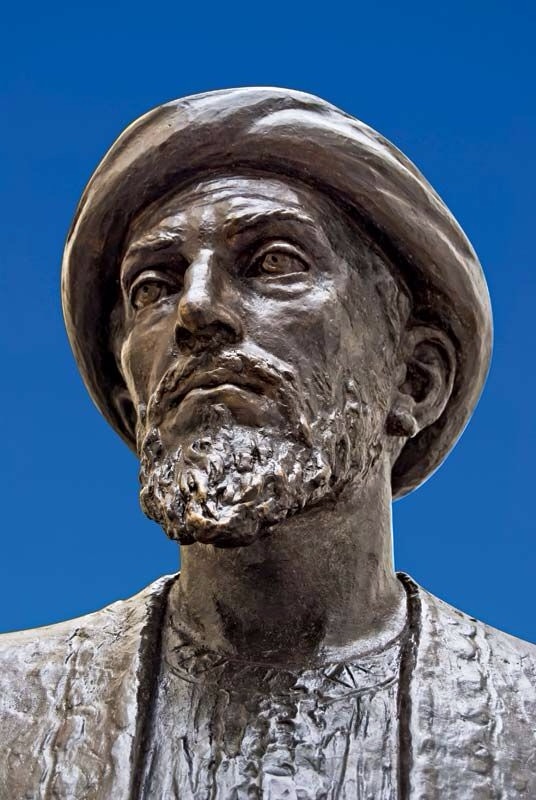
Did Moses Maimonides, a great Jewish sage, use the word “Allah “ for God in his writing?
Yes, Moses Maimonides, a prominent Jewish philosopher and scholar, did indeed use the word “Allah” for God in some of his writings. In his famous work, “The Guide for the Perplexed,” written in Arabic, Maimonides used the term “Allah” to refer to the monotheistic God. This usage reflects the influence of Arabic and Islamic culture on Maimonides, as he lived in Muslim-dominated Spain and Egypt during the 12th century.
What is “The Guide for the Perplexed”?
The Guide for the Perplexed is a book written by Maimonides, a 12th-century Jewish philosopher and scholar. It tries to explain how to understand the Jewish religion and its sacred texts in a rational way, using the ideas of Aristotle and other Greek philosophers. It also discusses some topics of Jewish mysticism and the meaning of God’s attributes. The book was written in Arabic using the Hebrew alphabet, and later translated into Hebrew and other languages. It is considered one of the most influential works of Jewish philosophy and theology, and it has also influenced many Christian and Muslim thinkers.
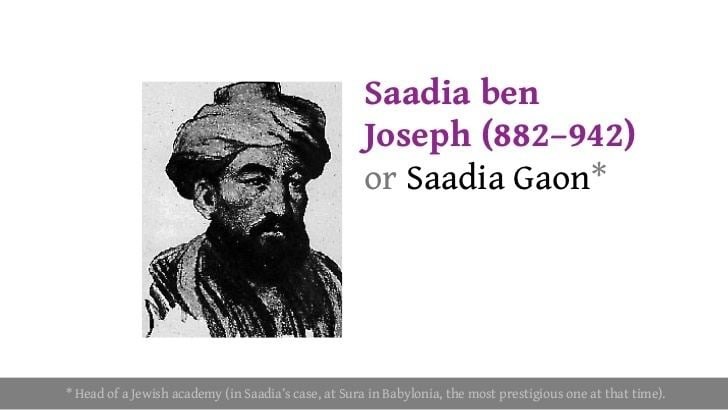
Saadia Gaon and the Arabic language
Who was Saadia Gaon? Was his writing and commentary on the Torah influenced by Arabic and the name of Allah?
Saadia Gaon was a prominent Jewish scholar and philosopher who lived in the 9th and 10th centuries. He was born in Egypt but spent much of his life in Babylonia, where he served as the head of the Talmudic academy in Sura.
Saadia Gaon’s writing and commentary on the Torah were heavily influenced by Arabic culture and language, as well as Islamic theology. He was well-versed in Arabic literature and philosophy, which he incorporated into his interpretations of Jewish texts. Additionally, Saadia Gaon engaged with Islamic theological concepts such as divine unity (tawhid) and the nature of prophecy.
In terms of the name of Allah, Saadia Gaon did not shy away from using it in his writings. He believed that there was no harm in using the Arabic term for God when discussing theological matters, as long as it did not compromise Jewish monotheism. This openness to incorporating Arabic language and Islamic concepts into his work set Saadia Gaon apart from other Jewish scholars of his time.
Overall, Saadia Gaon’s writing and commentary on the Torah were indeed influenced by Arabic culture and Islamic theology, including references to Allah. His unique approach to blending these influences with traditional Jewish thought helped shape medieval Jewish philosophy and continues to be studied by scholars today.

Pre-Christian Figures in Christian Theology: Understanding the Roles of Adam, Noah, and Abraham
According to Islamic belief, Adam, Noah, Abraham, and all prophets are considered Muslims. Does Christianity hold the view that they were all Christians?
In Christianity, Adam, Noah, and Abraham are not considered Christians in the same way they are viewed as Muslims in Islamic belief. Christianity teaches that these figures lived before the life and ministry of Jesus Christ, the central figure of the Christian faith, and therefore could not have been Christians in the traditional sense.
However, these individuals are highly regarded in Christian theology for their roles in God’s plan and are seen as part of the faith’s spiritual heritage.
For example, Abraham is considered a patriarch and a model of faith. He is often referred to as the “father of faith” because he demonstrated faith in God’s promises before the establishment of Christianity.
Christians view themselves as spiritual descendants of Abraham, sharing in the blessings of the covenant through faith in Christ.
Adam and Noah are also recognized as significant figures. Adam is seen as the first human created by God and the forefather of all humanity, and his actions are believed to have led to the fall of man, necessitating redemption. Noah is honored for his righteousness and obedience in the face of a sinful world.
Overall, while these figures are not labeled as Christians, their faith and actions are seen as foundational to the Christian narrative and are respected within the faith for their relationship with God and their roles in biblical history.
Holy Quran 3:33
۞ إِنَّ ٱللَّهَ ٱصْطَفَىٰٓ ءَادَمَ وَنُوحًا وَءَالَ إِبْرَٰهِيمَ وَءَالَ عِمْرَٰنَ عَلَى ٱلْعَٰلَمِينَ
God chose Adam, and Noah, and the family of Abraham, and the family of Imran, over all mankind.
God’s covenant with the Children of Adam
What covenant does God establish with the Children of Adam in Surah 7, verse 173 of the Quran?
In Surah 7, verse 172 of the Quran, God establishes a covenant with the Children of Adam by bringing forth their descendants from their loins and making them testify against themselves. They are asked, “Am I not your Lord?” to which they respond, “Yes, we have testified.”
This is done so that they cannot claim on the Day of Resurrection that they were unaware of this covenant. This verse is often interpreted as referring to the innate recognition of God and His lordship over humanity, which is considered a fundamental aspect of faith in Islam. It serves as a reminder of the accountability of human beings to their Creator and their inherent knowledge of His existence and sovereignty.
What is the consequence in the afterlife, as outlined in the Quran, for those who deny Islam and the prophethood of Muhammad?
In Islam, the Quran states that those who deny Islam and the prophethood of Muhammad will face consequences in the afterlife. These consequences are described as facing punishment in Hell for eternity. The Quran emphasizes the importance of belief in the teachings of Islam and the prophethood of Muhammad as a key aspect of faith. It is believed that those who reject these teachings will not receive mercy from God and will be held accountable for their disbelief.
 ABRAHAMIC THEOLOGY