
Azahari Hassim
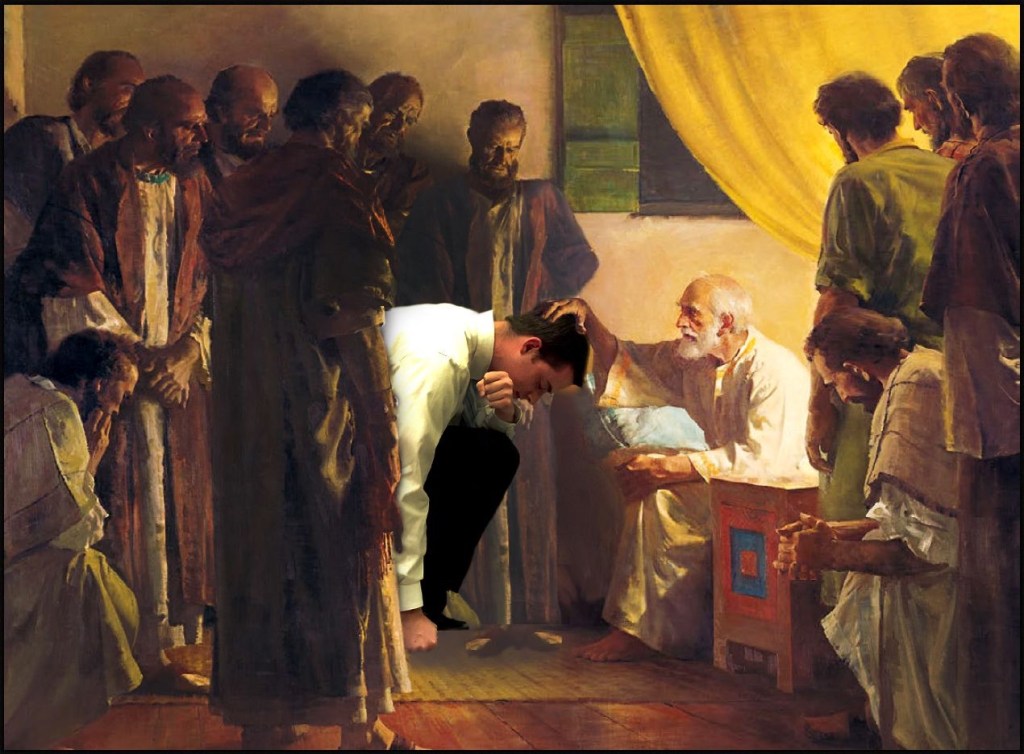
Genesis 49, verse 10, reads:
“The scepter shall not depart from Judah,
nor a lawgiver from between his feet, until Shiloh comes; and to him will be the obedience of the people.”
In this verse, it seems to be implied that Shiloh (Messiah) should be outside of the clan of Judah. What is the explanation for this argument?
The interpretation of Genesis 49, verse 10, particularly the term “Shiloh,” has been a subject of considerable debate among scholars and theologians for centuries. The passage is part of Jacob’s blessings to his sons, where he makes prophetic statements about their futures and the destiny of their descendants.
The verse is traditionally understood as a messianic prophecy within both Jewish and Christian traditions, although interpretations of who or what “Shiloh” represents may vary. The verse indicates that the scepter, which symbolises rulership, and the lawgiver, who represents the law, shall remain with Judah until “Shiloh” comes.
“Shiloh” is often interpreted as a reference to the Messiah, although the exact identity and meaning of the term are not clear from the text itself.
Several scholars believe that the word “until” in the verse indicates the time at which Judah’s authority ended.
Therefore, Shiloh (Messiah) does not descend from David’s lineage, which is traced back to Judah.
Some believe that the statement “and unto him shall the gathering of the people be” in Genesis 49, verse 10, refers to the replacement of the Jewish nation by new nations, specifically pointing to the Muslim community as a whole. Muhammad is regarded as a “Shiloh”. This interpretation is supported by Matthew 8, verse 12. Can you explain this interpretation further?
The verse from Genesis 49, verse 10, is part of the blessings Jacob gave to his sons before he died, where each son’s blessing contained prophecies about their descendants. The verse in question is traditionally ascribed to Judah:
“The scepter shall not depart from Judah, nor a lawgiver from between his feet, until Shiloh come; and unto him shall the gathering of the people be.”
“Shiloh” is a term that has been interpreted in various ways over the centuries. In Jewish interpretation, it is often understood as a reference to the Messiah from the line of Judah, who would be a ruler over Israel. Christianity interprets Jesus as this Messiah, and thus as “Shiloh.”
However, some Muslim scholars interpret “Shiloh” as a prophecy of Muhammad. In this view, the verse is seen as a prediction that rulership (the scepter) and religious authority (the lawgiver) would remain with the descendants of Judah until a new prophet (Muhammad) arises, and to him, the obedience of the peoples would turn. This interpretation thus sees the Muslim community as the fulfillment of this prophecy, with Muhammad being “Shiloh,” and the Muslim ummah (community) as the gathering of the people.
Matthew 8, verse 12, on the other hand, is a part of the New Testament where Jesus says:
“But the children of the kingdom shall be cast out into outer darkness: there shall be weeping and gnashing of teeth.”
This verse is often interpreted in a Christian context to mean that those who were originally chosen (the Jewish people) but do not accept Jesus as the Messiah will not inherit the Kingdom of Heaven. Some Muslim interpreters might use this verse to support the idea that there is a new chosen community (the Muslims) that has replaced the old (the Jewish people) due to their acceptance of the final prophet Muhammad, as prophesied in Genesis.
It’s important to note that this interpretation is not a traditional or mainstream understanding within Judaism or Christianity. Both religions typically do not see Muhammad as prophesied in their scriptures. Jewish tradition does not recognize either Jesus or Muhammad as the fulfillment of the messianic prophecies, and Christianity does not recognize Muhammad as a prophet.
However, there is the Quranic message of the Surah 2, verse 133, to the Jews and Christians:
“Or were you witnesses when death approached Jacob, and he said to his sons, “What will you worship after Me?” They said, “We will worship your God, and the God of your fathers, Abraham, Ishmael, and Isaac; One God; and to Him we submit.
Shiloh
A title of the Messiah (Gen. 49:10), Heb. shîlōh. Though there has been much discussion as to the grammatical interpretation of the word, Jewish officialdom and the Christian church agree as to the fact that the patriarch is here proclaiming the coming of the Messiah.
While the northern kingly lines were eventually obliterated by the Assyrians, Judah’s royal line continued right up to the time of the arrival of the Messiah. Jacob’s prophecy also points to the fact that eventually God’s kingdom will encompass much more than the Jewish nation. Of course, in a sense, God already reigns over the nations. He is not a mere Jewish tribal deity. He is Lord over all the earth, worthy of everyone’s worship.
Jesus, Muhammad, and the Davidic Messiah
In Matthew 22, verse 45, Jesus posed a question to the Pharisees. How can the Messiah be considered David’s descendant if David himself refers to him as ‘Lord’?
The following is an excerpt from Willmington’s Bible Handbook notes on Matthew 22, verses 42 to 45:
Jesus now asked a question of the Pharisees: They accepted Psalm 110 as a prediction of the Messiah, yet they considered that he would be a merely human descendant of David. If that were the case, asked Jesus, why did David refer to him as “Lord”? Both the deity and humanity of the Messiah are taught clearly in the Old Testament but the leaders could not see it. Jesus had finally silenced his critics once and for all.
Some Islamic scholars believe that, although Jesus was considered a messiah, he never publicly claimed to be the Davidic messiah whom the Jews were expecting. Moreover, it appears that in Matthew 22, verses 42 to 45, Jesus did not emphasize his divinity as most Christian commentators claim, but rather rejected the notion that the Messiah would be a descendant of David.
Islamic scholars argue that Jesus did not refer to himself but to someone other than him, that is Prophet Muhammad who was seated at the right hand of God. Similarly, while Jesus understood himself to be a prophet, he never publicly claimed to be the prophet mentioned in Deuteronomy 18, verse 18. How is this argument explained?
Islamic scholars present a nuanced interpretation of Jesus’ role as the Messiah and his relationship to the prophecies in the Hebrew Bible and the New Testament. Their arguments often center around specific biblical passages and the broader theological context within Islam.
Jesus as the Messiah and the Davidic Lineage
In Islam, Jesus (Isa) is recognized as the Messiah (Al-Masih), but this title does not carry the same connotations as it does in Christian theology. The Quran refers to Jesus as the Messiah eleven times, emphasizing his role as a prophet and messenger of God rather than a divine figure or a political savior from the line of David. This interpretation aligns with the Islamic view that Jesus did not claim divinity or a unique messianic kingship in the way that some Jewish and Christian traditions suggest.
Interpretation of Matthew 22, verses 42 to 45
In Matthew 22, verses 42 to 45, Jesus questions the Pharisees about the Messiah’s lineage, asking why David calls the Messiah “Lord” if the Messiah is his son. Some Islamic scholars have interpreted this passage as indicating that Jesus was referring to someone other than himself. Jesus was distancing himself from the traditional Jewish expectation of a Davidic Messiah. They contend that Jesus denied the future Messiah’s lineage from David and instead highlighted an inconsistent interpretation of messianic prophecy by the scribes.
Jesus and Prophet Muhammad
Some Islamic scholars extend this interpretation to suggest that Jesus was alluding to another figure who would fulfill the messianic expectations more completely. They propose that this messianic figure is Prophet Muhammad, who is considered the Seal of the Prophets in Islam and is believed to have brought the final and complete revelation from God. This perspective is supported by the belief that Jesus foretold the coming of Muhammad, aligning with the Islamic view that all prophets, including Jesus, pointed towards the final messenger.
Jesus and Deuteronomy 18, verse 18
Regarding Deuteronomy 18, verse 18, which speaks of a prophet like Moses, Islamic scholars argue that Jesus did not publicly claim to be this prophet. Instead, they believe that this prophecy refers to Muhammad, who, like Moses, brought a comprehensive law and led a community of believers. This interpretation is consistent with the Islamic view that Muhammad fulfills the role of the final prophet, bringing the last and complete message from God.
Conclusion
Islamic scholars argue that Jesus, although being a messiah like other messiahs before him, did not claim to be the Davidic Messiah in the traditional Jewish sense and that he did not see himself as the prophet mentioned in Deuteronomy 18, verse 18. Instead, they believe that these roles were fulfilled by Prophet Muhammad. This interpretation is rooted in a broader theological framework that sees Jesus as a significant prophet and messenger who foretold the coming of Muhammad, the final prophet.
 ABRAHAMIC THEOLOGY