Azahari Hassim
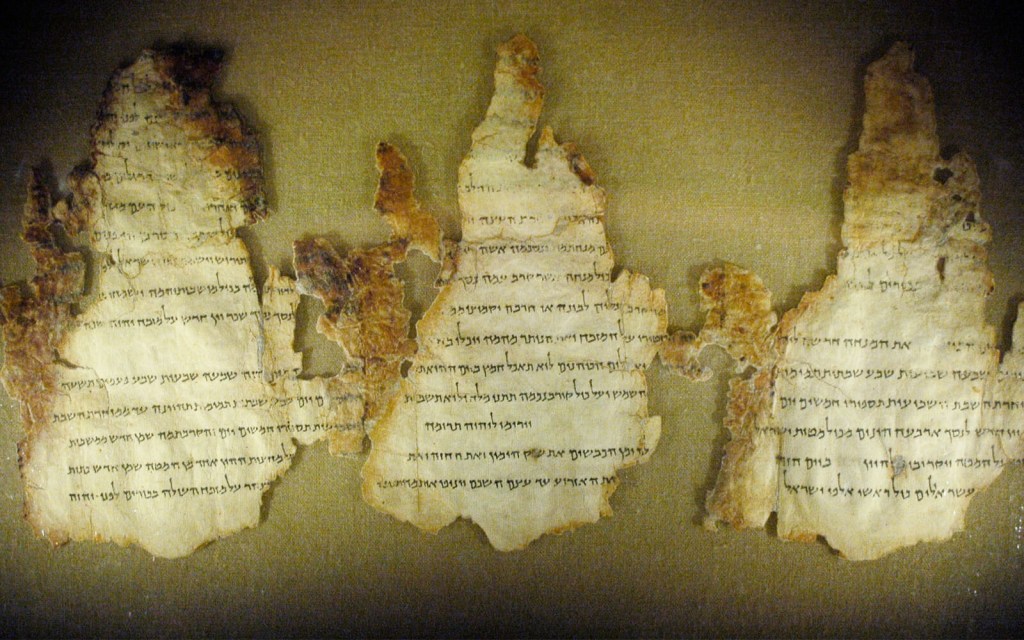
The Dead Sea Scrolls are a collection of ancient Jewish manuscripts discovered between 1947 and 1956 in the Qumran Caves near the Dead Sea. These texts, written in Hebrew, Aramaic, and Greek, date from the 3rd century BCE to the 1st century CE and provide invaluable insights into Jewish history, culture, and religion during the Second Temple period.
Key Features of the Dead Sea Scrolls
1. Discovery
• Location: Found in eleven caves near the site of Qumran, in the Judean Desert.
• First Discovery: In 1947 by a Bedouin shepherd, with subsequent excavations uncovering additional scrolls.
• Current Storage: The majority of the scrolls are housed in the Israel Museum’s Shrine of the Book in Jerusalem.
2. Contents of the Scrolls
The Dead Sea Scrolls comprise approximately 981 manuscripts, which can be categorized into three main groups:
1. Biblical Texts
• Fragments of every book of the Hebrew Bible (except Esther), including some of the oldest known versions.
• Examples: A complete Isaiah Scroll, the Psalms, and portions of Genesis.
2. Sectarian Texts
• Documents specific to the Essenes, a Jewish sect believed to have authored or preserved the scrolls.
• Include rules for communal living, rituals, and apocalyptic beliefs.
• Examples: The Community Rule, The War Scroll, and The Temple Scroll.
3. Other Texts
• Non-biblical writings, including commentaries, hymns, and works reflecting Jewish thought and practice.
• Examples: The Book of Enoch, The Book of Jubilees, and other pseudepigraphical works.
3. Historical and Religious Significance
• Second Temple Judaism: The scrolls shed light on Jewish life, theology, and practices before the destruction of the Second Temple in 70 CE.
• Biblical Studies: They provide early textual evidence for the Hebrew Bible, confirming its accuracy and transmission.
• Essenes: Thought to have been written or preserved by this ascetic Jewish sect, the scrolls reveal their beliefs, including messianic expectations and apocalyptic visions.
• Christianity: The scrolls provide context for understanding the Jewish environment in which Christianity emerged. Themes like messianism, eschatology, and communal living resonate with early Christian teachings.
4. Languages and Writing Materials
• Languages: Primarily Hebrew, with some texts in Aramaic and a few in Greek.
• Writing Material: Most scrolls were written on parchment, with some on papyrus or copper.
5. Controversies and Challenges
• Ownership: Disputes arose over the rightful ownership of the scrolls, particularly between Israel and Jordan.
• Interpretation: Scholarly debates persist over the identity of the Essenes, the scrolls’ authorship, and their connection to mainstream Judaism and early Christianity.
• Preservation: Ensuring the scrolls’ longevity has required advanced restoration and digitization efforts.
Major Texts of Interest
1. The Great Isaiah Scroll
• Contains the entire Book of Isaiah and aligns closely with the Masoretic Text, validating the Bible’s textual accuracy.
2. The War Scroll
• Describes an apocalyptic battle between the “Sons of Light” and the “Sons of Darkness.”
3. The Community Rule
• Outlines the laws and practices of a sectarian community, likely the Essenes.
4. The Copper Scroll
• A unique text engraved on copper sheets, listing hidden treasures yet to be found.
Legacy of the Dead Sea Scrolls
The Dead Sea Scrolls remain one of the most significant archaeological discoveries of the 20th century. They provide a window into the religious landscape of ancient Judaism and its influence on Christianity, enhancing our understanding of the Bible, Jewish sectarianism, and early religious thought.
 ABRAHAMIC THEOLOGY