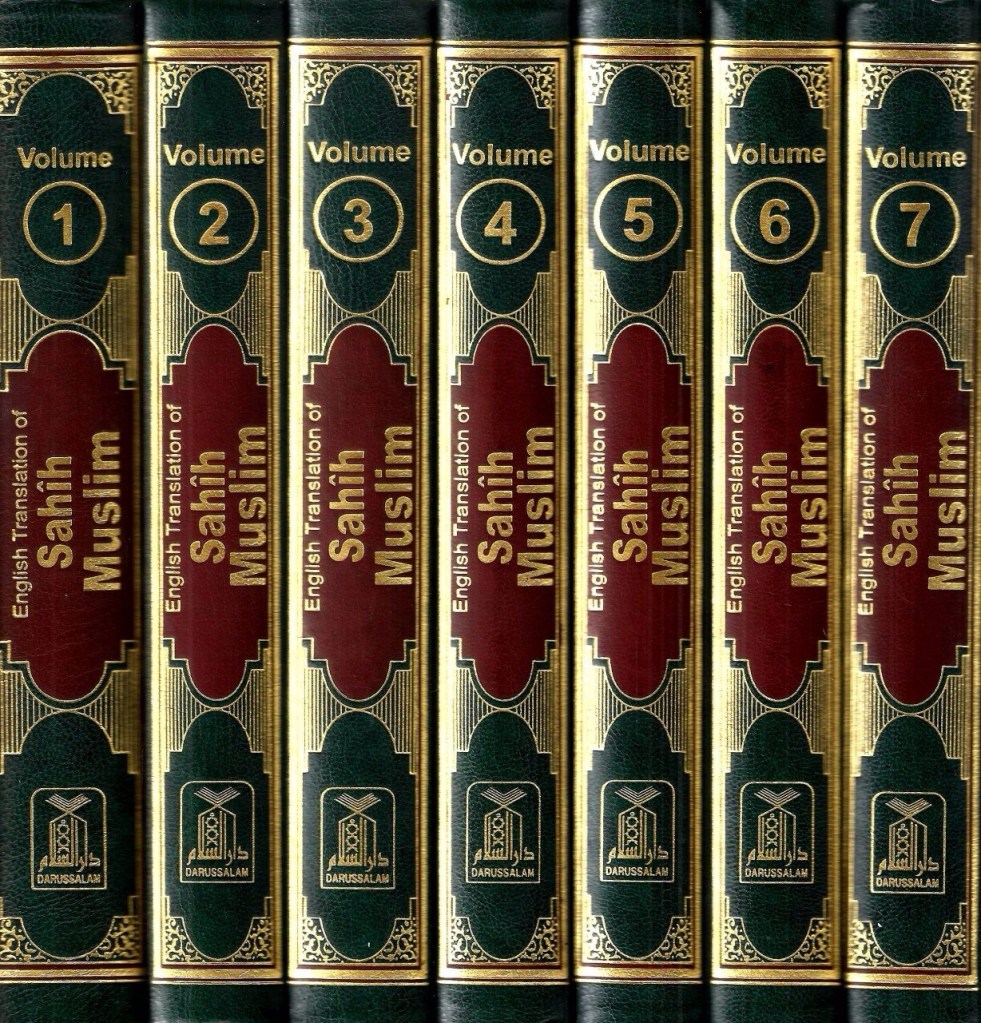
Sahih Muslim, one of the six major collections of hadith in Sunni Islam, is widely regarded as the second most authentic book of hadith after Sahih al-Bukhari. It is divided into 7 volumes, covering a broad spectrum of topics related to Islamic theology, jurisprudence, and ethical practices.
Overview of Sahih Muslim
• Compiler: Imam Muslim ibn al-Hajjaj (821–875 CE).
• Purpose: To compile rigorously authenticated hadiths with reliable chains of narration (isnad).
• Status: A key source of Islamic law and theology, second only to Sahih al-Bukhari in authority among Sunni Muslims.
• Total Hadiths: Approximately 7,563 hadiths (with repetitions), or 4,000 unique hadiths.
Structure of the 7 Volumes
The hadiths in Sahih Muslim are grouped into chapters (kitab) and subtopics that address various aspects of faith, worship, and daily life.
1. Volume 1:
• Introduction: Covers the principles of hadith authentication and Imam Muslim’s methodology.
• Faith (Iman): Explains the core beliefs of Islam, including the testimony of faith, the attributes of Allah, and the concept of destiny (qadar).
2. Volume 2:
• Purification and Prayer (Taharah and Salah): Discusses rituals of purification and details the five daily prayers, including their timings, methods, and significance.
• Zakat (Charity): Provides rulings on obligatory charity and its distribution.
3. Volume 3:
• Fasting (Sawm): Elaborates on the rules, virtues, and rewards of fasting, particularly during Ramadan.
• Hajj (Pilgrimage): Offers guidance on performing the pilgrimage to Mecca, its rituals, and its spiritual significance.
4. Volume 4:
• Marriage and Divorce (Nikah and Talaq): Details the rights and obligations of spouses, the concept of marriage, and rulings on divorce.
• Commerce and Transactions (Buyu): Discusses lawful and prohibited trade practices, contracts, and financial ethics.
5. Volume 5:
• Jihad and Governance: Addresses issues related to striving in the way of Allah, rulings on governance, and the responsibilities of leaders.
• Virtues of the Prophet (Shama’il): Highlights the character, conduct, and teachings of Prophet Muhammad.
6. Volume 6:
• Food and Drink (At’ima): Discusses lawful and prohibited foods and etiquettes of eating and drinking.
• Medicine (Tibb): Contains hadiths on health, hygiene, and remedies prescribed by the Prophet.
• Supplications (Du’a): Features prayers and supplications for various occasions.
7. Volume 7:
• The Hereafter (Akhirah): Explores eschatological themes, including descriptions of Paradise and Hell, the Day of Judgment, and resurrection.
• Miscellaneous Topics: Covers various aspects of personal conduct, ethics, and spiritual growth.
Significance of Sahih Muslim
• Authenticity: Imam Muslim applied rigorous standards for verifying the reliability of narrators and the continuity of chains of transmission.
• Complement to Sahih al-Bukhari: While similar in scope, Sahih Muslim often provides additional context, wording variations, or alternative chains for the same hadiths found in Sahih al-Bukhari.
• Practical Relevance: The collection addresses both theological and practical aspects of life, making it an essential resource for understanding Islamic teachings.
Legacy
Sahih Muslim remains a cornerstone of Islamic scholarship, widely studied and revered in the Muslim world. Its concise yet comprehensive presentation of hadith continues to provide guidance for worship, law, and personal conduct.
 ABRAHAMIC THEOLOGY