Azahari Hassim
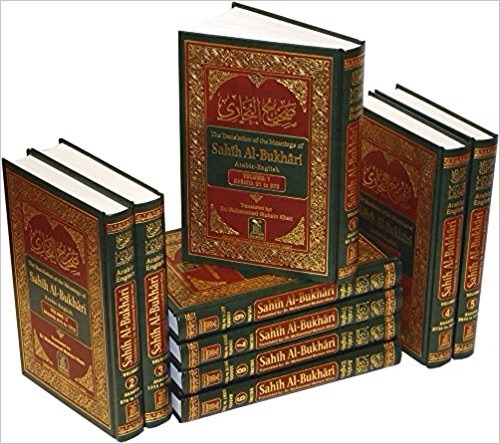
The Sahih al-Bukhari, one of the most authoritative collections of hadith (sayings and actions of Prophet Muhammad), is divided into 9 volumes with a total of 97 books (chapters) covering a wide range of topics related to Islamic beliefs, practices, and guidance for daily life. Here’s an overview of its structure and significance:
Overview of Sahih al-Bukhari
• Compiler: Imam Muhammad al-Bukhari (810-870 CE).
• Purpose: To compile authentic hadiths, verified through rigorous chains of narration (isnad).
• Status: Considered the most authentic book of hadith in Sunni Islam, second only to the Qur’an in authority.
• Total Hadiths: Approximately 7,275 hadiths (including repetitions), or 2,602 unique hadiths.
Structure of the 9 Volumes
1. Volume 1:
Focuses on foundational topics like Revelation, Faith (Iman), and Knowledge (’Ilm).
• Includes discussions on how revelation began, the importance of intention, and the pillars of faith.
2. Volume 2:
Concentrates on Prayer (Salah) and Ablution (Wudu).
• Covers the method of prayer, timings, and etiquettes, as well as purification rituals.
3. Volume 3:
Includes topics on Fasting (Sawm), Zakat (Charity), and the Hajj (Pilgrimage).
• Provides detailed guidance on these pillars of Islam.
4. Volume 4:
Covers Jihad (Striving in the Way of Allah) and Treaties.
• Discusses rulings on warfare, peace treaties, and related ethical guidelines.
5. Volume 5:
Focuses on Marriage (Nikah), Divorce (Talaq), and family matters.
• Discusses relationships, rights of spouses, and inheritance laws.
6. Volume 6:
Centers on Prophets, Stories of the Past, and Virtues of the Qur’an.
• Includes narratives about earlier prophets and commentary on Qur’anic chapters.
7. Volume 7:
Discusses Medicine (Tibb), Food (At’ima), and Etiquette (Adab).
• Covers prophetic guidance on health, lawful and unlawful foods, and social conduct.
8. Volume 8:
Focuses on Judgments (Ahkam), Witnessing, and Punishments.
• Includes Islamic rulings, judicial principles, and guidelines for societal justice.
9. Volume 9:
Includes End Times, Paradise, Hell, and Supplications.
• Covers eschatological topics and prayers for various occasions.
Significance
• Methodology: Imam al-Bukhari established strict criteria for authenticity, accepting only hadiths with reliable chains of narration.
• Practical Use: Provides guidance on worship, ethics, law, and spiritual matters.
• Legacy: Widely studied by scholars and taught in Islamic institutions around the world.
Sahih al-Bukhari remains a cornerstone of Islamic scholarship, offering insights into the life of Prophet Muhammad and serving as a manual for living a righteous life in accordance with Islamic principles.
 ABRAHAMIC THEOLOGY