What is Abrahamic theology?

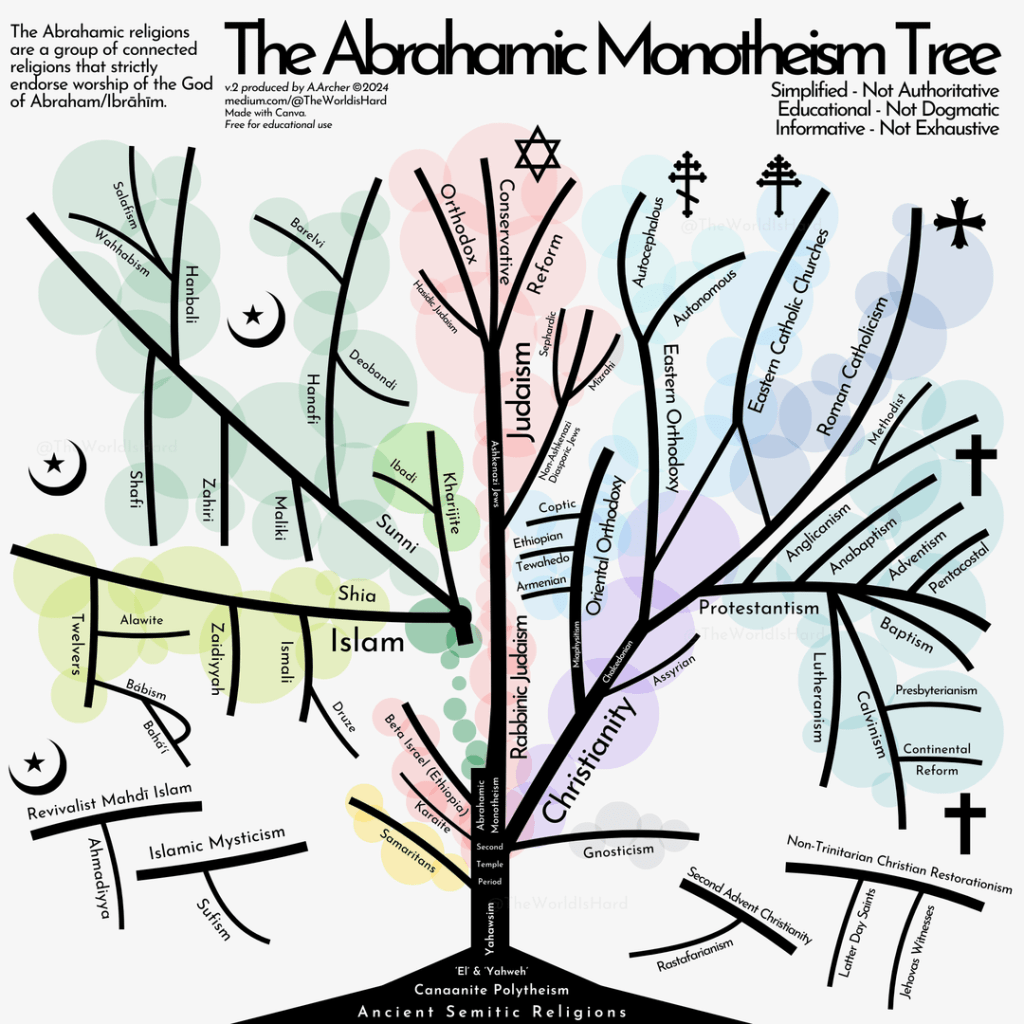
Abrahamic theology refers to the religious beliefs and teachings that are derived from the figure of Abraham in the three major monotheistic religions: Judaism, Christianity, and Islam. These religions all trace their origins back to Abraham, who is considered a central figure in their respective faiths.
Abrahamic theology emphasizes the belief in one God, ethical monotheism, and the importance of faith and obedience to God’s will. It also includes teachings on morality, ethics, salvation, and eschatology (the study of end times).
While there are differences in theological interpretations among these three religions, they all share common themes such as the belief in a single deity who created the universe and has a plan for humanity. The stories of Abraham’s faithfulness and obedience to God serve as foundational narratives for each religion.
Overall, Abrahamic theology serves as a unifying factor among Judaism, Christianity, and Islam despite their theological differences. It provides a framework for understanding the relationship between humanity and divinity while emphasizing shared values such as compassion, justice, and love for one another.
Introduction
The Abrahamic religions—Judaism, Christianity, and Islam—constitute a significant portion of the world’s religious landscape. Rooted in the narrative of the patriarch Abraham, these three monotheistic faiths share a common heritage yet diverge in key theological doctrines and practices. This essay explores the convergences and divergences among Judaism, Christianity, and Islam, examining their foundational beliefs, scriptures, and theological nuances. Understanding these similarities and differences provides a broader context for interfaith dialogue and mutual respect in an increasingly interconnected world.
Common Foundations
Central to the Abrahamic religions is the belief in one God, a concept that sets them apart from polytheistic traditions. This monotheistic principle is foundational in Judaism, Christianity, and Islam. Abraham, recognized as a patriarch in all three faiths, symbolizes obedience and faith in God. His narrative, including the covenant with God, serves as a theological cornerstone.
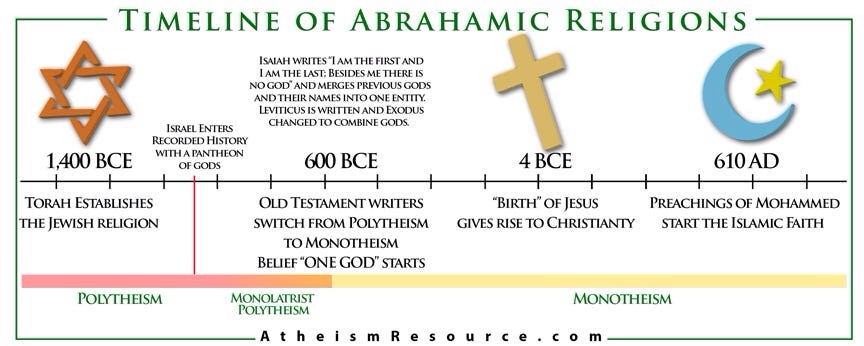
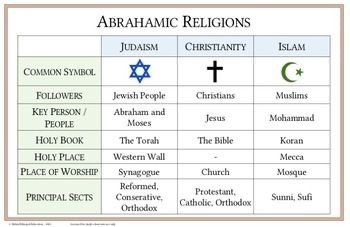
1. Judaism: Judaism is the oldest of the three, tracing its origins to the covenant established between God and Abraham. The Torah, comprising the first five books of the Hebrew Bible, is the central text. Jewish theology emphasizes the oneness of God (Yahweh) and the importance of following God’s commandments as detailed in the Torah. The concept of the chosen people and the land of Israel are also significant.
2. Christianity: Christianity emerged from Judaism in the first century CE, with Jesus of Nazareth as its central figure. Christians believe Jesus is the Messiah (Christ) prophesied in the Hebrew Bible, and his life, death, and resurrection are foundational to Christian faith. The New Testament, particularly the Gospels, documents Jesus’ teachings and the early Christian community. The doctrine of the Trinity, which posits one God in three persons (Father, Son, and Holy Spirit), distinguishes Christian theology from its Abrahamic counterparts.
3. Islam: Islam, founded in the 7th century CE by the Prophet Muhammad, considers itself the final and complete revelation of the monotheistic faith. The Quran, believed to be the literal word of God as revealed to Muhammad, is the central text. Islamic theology emphasizes the oneness of God (Allah) and the importance of submission to God’s will. The Five Pillars of Islam outline essential practices for Muslims, including prayer, fasting, and pilgrimage.

Theological Divergences
Despite their shared monotheistic foundation, the Abrahamic religions diverge significantly in their theological perspectives and interpretations.
1. Nature of God and Revelation:
In Judaism, God is seen as a singular, indivisible entity who communicates through prophets and the Torah.
Christianity’s doctrine of the Trinity introduces a complex understanding of God as three persons in one essence, which is not present in Judaism or Islam.
Islam emphasizes the absolute oneness of God (Tawhid) and rejects any division of God’s nature. The Quran is viewed as the final and unaltered revelation, superseding previous scriptures.
2. Prophethood and Messianism:
Judaism awaits the coming of the Messiah, a future leader who will restore Israel and bring peace.
Christianity holds that Jesus is the Messiah and divine Son of God, whose life and resurrection offer salvation to humanity.
Islam recognizes many prophets, including Abraham, Moses, and Jesus, but considers Muhammad the final prophet, whose message completes previous revelations.
3. Scriptures and Authority:
The Hebrew Bible (Tanakh) is central to Judaism, with rabbinic literature like the Talmud providing further interpretation.
Christianity combines the Old Testament (shared with Judaism) and the New Testament, which contains the teachings of Jesus and his apostles.
The Quran is the ultimate authority in Islam, supplemented by Hadith literature, which records the sayings and actions of Muhammad.
Ethical and Ritual Practices
Ethical teachings and ritual practices also exhibit both commonalities and distinctions.
1. Ethical Teachings:
All three religions emphasize justice, compassion, and the importance of ethical conduct.
Judaism’s ethical guidelines are encapsulated in the Torah and elaborated in rabbinic teachings.
Christianity teaches love and forgiveness, drawing heavily from Jesus’ Sermon on the Mount.
Islamic ethics are derived from the Quran and Hadith, emphasizing social justice, charity, and community welfare.
2. Ritual Practices:
Jewish rituals include circumcision, Sabbath observance, dietary laws (Kashrut), and festivals like Passover.
Christian practices vary among denominations but generally include sacraments like baptism and communion, as well as observance of liturgical seasons such as Lent and Easter.
Islamic rituals are codified in the Five Pillars, including daily prayers (Salah), fasting during Ramadan, and the pilgrimage to Mecca (Hajj).
Conclusion
The Abrahamic religions of Judaism, Christianity, and Islam, while sharing a common heritage and monotheistic belief, have developed distinct theological identities and practices. Their convergences underscore a shared quest for understanding the divine and living a life in accordance with God’s will. Their divergences reflect the diversity of human experience and interpretation. By appreciating both the commonalities and differences, adherents of these faiths can engage in meaningful dialogue, fostering mutual respect and understanding in a pluralistic world.
 ABRAHAMIC THEOLOGY