Azahari Hassim
📜 Who Wrote the Book of Genesis?
Tradition, Scholarship, and the Ongoing Debate
The question of authorship of Book of Genesis has long occupied both religious tradition and modern biblical scholarship. Unlike many ancient texts, Genesis does not identify its author within its own pages. Nor does any other book of the Bible explicitly name who wrote it. This absence has created a fertile ground for interpretation, debate, and evolving theories across centuries.
🕊️ The Traditional Attribution to Moses
Within Jewish and Christian tradition, Genesis has historically been attributed to Moses. This view did not arise arbitrarily. The remaining books of the Torah (or Pentateuch), such as Exodus, Leviticus, Numbers, and Deuteronomy, explicitly associate Moses with their composition, and biblical literature consistently treats the Torah as a unified body of sacred law and narrative. As a result, it was natural for ancient interpreters to regard Moses as the author of the entire collection, including Genesis.
There is also a compelling symbolic logic to this attribution. Moses, as the lawgiver and central prophetic figure of Israel’s formative period, seemed the most fitting individual to compile the book that narrates the origins of creation, humanity, and Israel itself. As has often been remarked, who better to write the book of beginnings?
🔍 The Limits of Tradition and the Rise of Critical Inquiry
Yet when tradition is set aside and the question is approached through historical and textual analysis, the evidence linking Moses directly to the writing of Genesis proves difficult to substantiate. The text of Genesis itself offers no explicit claim of Mosaic authorship, and internal features—such as shifts in style, vocabulary, and theological emphasis—have raised questions among scholars.
Over the past century, much academic scholarship has gravitated toward source criticism, a method that proposes Genesis is composed of multiple literary sources rather than a single author. These sources are often dated to the late pre-exilic and early post-exilic periods, long after the time traditionally associated with Moses. According to this view, Genesis reflects layers of tradition shaped and preserved over generations before being compiled into its present form.
🧠 Challenges to Source Criticism
Despite its influence, source criticism has not gone unchallenged. Advances in computer-assisted linguistic analysis have questioned whether the stylistic criteria used to separate sources are as reliable as once assumed. These studies suggest that variations in language may not necessarily indicate multiple authors, but could instead reflect genre, subject matter, or editorial purpose.
At the same time, alternative approaches such as redaction criticism have gained prominence. Rather than focusing primarily on identifying hypothetical sources, redaction criticism examines how the book was edited, arranged, and shaped into a coherent narrative. This perspective shifts attention from who wrote Genesis to how Genesis was formed and why it was structured in its final form.
📚 An Open Question Without a Final Answer
What emerges from this long history of debate is not a definitive conclusion, but a recognition of complexity. There is no shortage of theories regarding the authorship and composition of Genesis, and no single model has achieved universal acceptance. Tradition offers coherence and continuity; critical scholarship offers analytical depth and historical sensitivity. Each approach highlights different dimensions of this foundational text.
In the end, the authorship of Genesis remains an open and evolving question—one that continues to invite dialogue between faith, history, and literary study. Far from diminishing the book’s significance, this ongoing inquiry underscores its richness and enduring power as a text that has shaped religious thought for millennia.
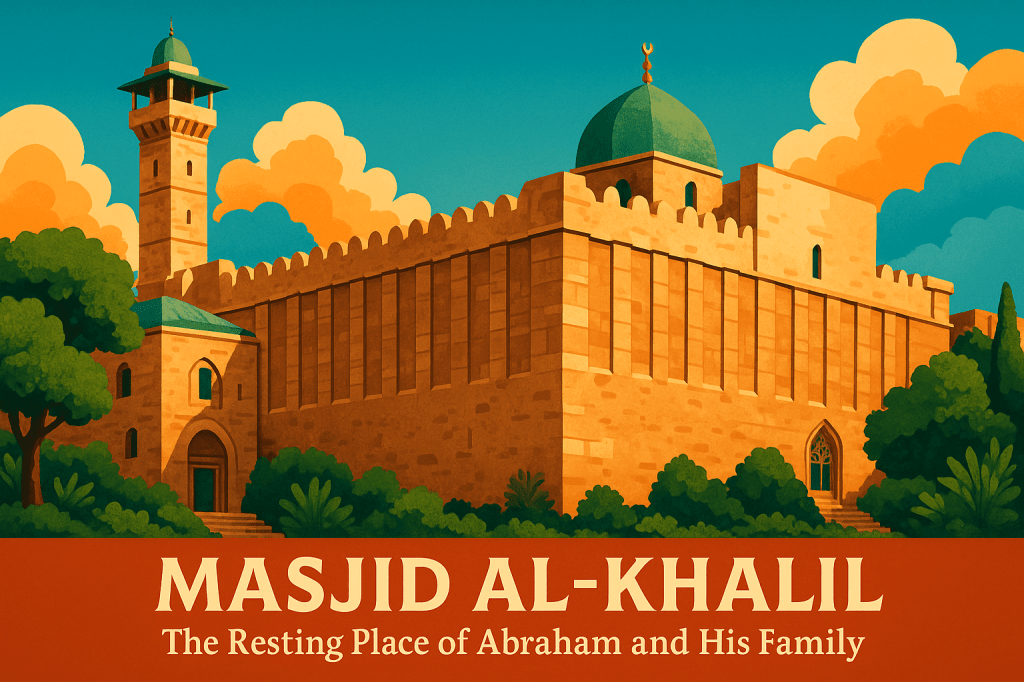
📜 Ishmael: The Fruit of Abraham, Isaac: The Divine Gift
An Islamic Perspective on Surah 21:72 and the Word “نَافِلَةً”
🌴 Ishmael – The Firstborn and the Fulfillment of Prayer
In Islamic tradition, Prophet Ishmael (Ismā‘īl عليه السلام) is the eldest son of Prophet Abraham (Ibrāhīm عليه السلام) through Hagar (Hājar عليها السلام). His birth is seen as the direct fruit of Abraham’s life and efforts — a response to his longing for a child and the covenantal blessing from Allah.
Ishmael’s story is inseparable from the sacred legacy of Mecca:
• As an infant in the desert, God miraculously provided the well of Zamzam for him and his mother.
• Together with Abraham, Ishmael later constructed the Kaaba (House of God), the spiritual epicenter of Islam.
• Most significantly, many Islamic traditions identify Ishmael as the son in the intended sacrifice. The Qur’an (Surah 37:100–112) narrates the event without naming the son, but the sequence of events — where the announcement of Isaac’s birth follows the sacrifice — strongly implies Ishmael was the one involved.
This near-sacrifice is commemorated annually in Eid al-Adha, symbolizing submission to God’s will.
🌾 Isaac – A Divine Gift After the Trial
As a divine gift after Abraham’s test of faith through the sacrifice, the Qur’an narrates that God blessed him with another son, Prophet Isaac (Ishāq عليه السلام), through his wife Sarah. This is where Surah 21:72 becomes important:
“And We gave him Isaac, and Jacob as an additional gift (نَافِلَةً), and all [of them] We made righteous.”
The Arabic word نَافِلَةً means “an addition,” “extra,” or “bonus.” In this context, Isaac (and his son Jacob) was not replacing Ishmael, but rather a special addition granted after Abraham’s monumental trial.
✨ Theological Significance of “نَافِلَةً”
- Abundance of Blessing – Ishmael had already fulfilled Abraham’s longing for a son. Isaac’s arrival, along with Jacob’s prophetic lineage, represented an overflow of divine favor.
- Recognition of Prophetic Continuity – By mentioning Isaac and Jacob together as “نَافِلَةً,” the Qur’an highlights that this was not just an extra child, but an additional prophetic branch in Abraham’s lineage.
- A Reward for Unwavering Faith – The placement of this verse after Abraham’s great trial underlines that these blessings were a reward for his total submission to Allah.
🕌 Two Lines of Prophethood
From an Islamic perspective, the Qur’an distinguishes between:
• Ishmael’s Line → Culminating in Prophet Muhammad ﷺ, connected to Mecca and the Abrahamic Covenant.
• Isaac’s Line → Leading to the prophets of Bani Israel, connected to the Sinai Covenant.
Thus, Ishmael is seen as the fruit of Abraham’s striving, while Isaac is the divine bonus gift, making both sons integral to the fulfillment of God’s promises.
💡 In essence, “نَافِلَةً” in Surah 21:72 is not just a linguistic detail — it is a theological key that unlocks the understanding that Isaac and Jacob were an extraordinary divine gift granted after Ishmael, underscoring God’s overflowing generosity toward Abraham.
 ABRAHAMIC THEOLOGY