
Azahari Hassim
📜 Until Shiloh Comes: The Transfer of Covenant from Sinai to Abraham through Ishmael
Introduction
🌟 Genesis 49:10 stands as one of the most profound prophecies in the Hebrew Bible, where Jacob’s blessing to Judah speaks of a mysterious figure called “Shiloh”. For centuries, both Jewish and Christian traditions have understood this verse as messianic, anticipating a redeemer from Judah’s lineage.
However, when examined through the wider lens of covenantal theology, this verse reveals a deeper transition — from the Sinai covenant, particular to Israel and bound by Mosaic law, to the Abrahamic covenant, universal in scope and ultimately fulfilled through Ishmael’s descendants.
This article explores how the prophecy of “Shiloh” may refer not to a ruler from Judah, but to a divinely appointed messenger from Ishmael’s descendants, through whom the Abrahamic faith reaches its completion and universality in the message of Islam.
This perspective recognizes that it was Ishmael, not Isaac, whom God commanded Abraham to offer in sacrifice — the supreme act of submission that sealed Abraham’s faith. This event, memorialized every year by Muslims in the festival of Eid al-Adha, signifies the enduring covenant through Ishmael’s line, culminating in the coming of Prophet Muhammad ﷺ, the promised Shiloh through whom divine guidance attained its universal form.
1. The Context of Jacob’s Prophecy
In Genesis 49, Jacob gathers his twelve sons and speaks of their future destinies. Concerning Judah, he declares:
“The scepter shall not depart from Judah,
nor a lawgiver from between his feet,
until Shiloh comes;
and to him shall the obedience of the peoples be.”
(Genesis 49:10)
Traditionally, this prophecy has been interpreted as predicting Judah’s enduring leadership until the arrival of a messianic ruler. Yet a covenantal reading reveals that this marks not permanence but transition — from Judah’s temporal authority under the Sinai covenant to the restoration of the Abrahamic covenant through Ishmael, the son of sacrifice and obedience.
Several scholars believe that the word “until” in the verse indicates the time at which Judah’s authority ended.
Therefore, Shiloh (Messiah) does not descend from David’s lineage, which is traced back to Judah.
2. The Scepter and Lawgiver: Symbols of the Sinai Covenant
The first half of the verse — “The scepter shall not depart from Judah, nor a lawgiver from between his feet” — symbolizes the religious and political authority vested in Judah.
The scepter represents kingship, embodied in David and his royal line.
The lawgiver refers to the Torah, the revealed law of Sinai that governed Israel’s covenantal life.
This Sinaitic covenant was conditional and particular, bound to a specific nation and land. It endured “until Shiloh came” — until divine authority passed to the heir of Abraham’s universal covenant through Ishmael.
3. Shiloh and the Renewal of the Abrahamic Covenant through Ishmael
The word Shiloh carries meanings such as peace, rest, or he whose right it is. It thus designates the rightful inheritor of divine authority.
In the story of Abraham’s supreme test, as preserved in Islamic tradition, Ishmael is the son chosen for sacrifice — the act that confirmed both Abraham’s faith and Ishmael’s submission. In recognition of this, God renewed His promise:
“As for Ishmael, I have blessed him, and will make him fruitful, and will multiply him exceedingly; twelve princes shall he beget, and I will make him a great nation.”
(Genesis 17:20)
This promise is inseparable from the earlier Abrahamic benediction in Genesis 22:18:
“And in your seed shall all the nations of the earth be blessed, because you have obeyed My voice.”
From an Islamic perspective, this universal blessing reaches its perfection in Shiloh — the divinely appointed messenger from Ishmael’s descendants, Prophet Muhammad ﷺ, through whom the Abrahamic faith was universalized beyond lineage and territory.
4. Shiloh as the Prophet from Ishmael’s Descendants
In the Islamic understanding, Shiloh points to Muhammad ﷺ, the final messenger and restorer of Abrahamic monotheism.
The scepter and lawgiver symbolize Judah’s rule under the Mosaic order, which lasted until Shiloh’s advent.
The arrival of Shiloh marks the transfer of divine covenant from a national to a universal dispensation.
The phrase “and to him shall the obedience of the peoples be” finds its fulfillment in the global ummah united in Islam.
Through Muhammad ﷺ, the two branches of Abraham’s family — Isaac and Ishmael — converge in spiritual unity, as the promise made on the mountain of sacrifice finds its universal realization.
This fulfills the Abrahamic prophecy of Genesis 22:18 — “in your seed shall all the nations of the earth be blessed” — echoed centuries later in the Qur’anic verse:
“And We have not sent you (O Muhammad) except as a mercy to all the worlds.”
(Surah 21:107)
The blessing to “all nations” in Genesis thus finds its full resonance in the Qur’an’s rahmah lil-‘ālamīn — mercy to the worlds.”
5. The Living Memory of the Covenant: Eid al-Adha
The memory of Abraham’s near-sacrifice of Ishmael is not a forgotten legend. It is commemorated annually by Muslims worldwide in the sacred festival of Eid al-Adha (“The Feast of Sacrifice”).
Each year, millions of believers retrace Abraham’s obedience by offering sacrifices in remembrance of his willingness to surrender his beloved son at God’s command. This universal observance — transcending race, nation, and language — is the living embodiment of the Abrahamic covenant through Ishmael, reaffirming humanity’s submission (Islām) to the One God.
Through Eid al-Adha, the covenant of faith, obedience, and trust in divine will is renewed across generations — a perpetual testimony that the legacy of Abraham and Ishmael remains alive within the heart of the Muslim community.
6. The Biblical and Qur’anic Continuity
The Qur’an reaffirms this covenantal unity:
“Were you witnesses when death approached Jacob, when he said to his sons:
‘What will you worship after me?’
They said: ‘We will worship your God, and the God of your fathers — Abraham, Ishmael, and Isaac — One God, and to Him we submit.’”
(Qur’an 2:133)
Here, Ishmael stands explicitly alongside Abraham and Isaac as a patriarch of covenantal faith, confirming that divine favor is not ethnic but spiritual — a continuity of submission to the Creator.
7. The Transfer of Covenant and Authority
The New Testament, too, preserves a hint of this covenantal transition. Jesus proclaimed:
“And I say unto you, that many shall come from the east and west, and shall sit down with Abraham, Isaac, and Jacob in the kingdom of heaven.
But the children of the kingdom shall be cast out into outer darkness: there shall be weeping and gnashing of teeth.”
(Matthew 8:11–12)
This declaration signifies a divine realignment of covenantal authority. The “children of the kingdom” — those who claimed exclusive descent from Israel — would lose their privileged position, while “many from the east and west” would inherit the covenantal blessings by embracing the faith of Abraham.
From an Islamic perspective, this imagery points to the emergence of a new spiritual community beyond ethnic or national boundaries — the ummah of Islam — gathered from all directions of the earth. It is this global assembly of believers, united in the submission (Islām) that characterized Abraham himself, who truly “sit with Abraham” in the renewed Kingdom of Heaven.
In the Abrahamic continuum, this renewal is realized through Ishmael’s descendants, led by Muhammad ﷺ, the promised Shiloh, through whom the covenant finds its universal completion. Thus, the “Kingdom of Heaven” in Jesus’ saying can be seen as the restored Abrahamic faith of submission, embodied and perfected in Islam.
8. From Sinai to Mecca: The Completion of the Covenant
The geography of revelation reflects this sacred progression:
From Mount Sinai, where the Law was given to Moses;
To Mount Zion, where David ruled over Israel;
To the Sanctuary of Mecca, where Muhammad ﷺ restored the House of Abraham.
Thus, revelation moves from law to faith, from tribe to humanity, from Sinai to Mecca. The coming of Shiloh from Ishmael’s line fulfills the Abrahamic promise in its universal form, making Islam the completion of the covenant’s long journey — the very fulfillment of Genesis 22:18 and Surah 21:107 united in one divine truth.
9. Conclusion
Genesis 49:10 encapsulates the divine drama of covenantal history — the passing of the scepter of revelation from Judah’s temporal rule to Ishmael’s enduring spiritual lineage.
For the Jews, Shiloh remains the awaited Messiah.
For Christians, he prefigures Christ.
But for Muslims, he is Muhammad ﷺ — the promised Shiloh, the Seal of Prophethood, and the descendant of Ishmael, whose submission on the altar of sacrifice became the symbol of perfect faith.
Every year, the world’s Muslim community renews this covenant through Eid al-Adha, keeping alive the memory of Abraham’s trial and Ishmael’s obedience. Through that living tradition, the promise of Genesis 22:18 — “in your seed shall all the nations of the earth be blessed” — finds its full realization in the Qur’an’s affirmation:
“And We have not sent you (O Muhammad) except as a mercy to all the worlds.”
(Surah 21:107)
Thus, the Abrahamic covenant, universalized through Ishmael and fulfilled in Muhammad ﷺ, stands as the enduring testament that divine mercy, guidance, and covenantal blessing belong to all humankind.

Samaritan Interpretation of Shiloh in Genesis 49:10
📜 Samaritan Interpretation of Shiloh in Genesis 49:10
The Samaritan interpretation of “Shiloh” (שִׁילֹה) in Genesis 49:10 differs dramatically from traditional Jewish and Christian messianic readings. Samaritans identify Shiloh with King Solomon, viewing this passage not as a prophecy of the Messiah but as a negative assessment of Solomon’s reign and moral failings.
The Samaritan Text and Translation
The Samaritan Pentateuch presents Genesis 49:10-12 with significant textual variations from the Masoretic Text. Based on Samaritan Targumim (Aramaic translations), the passage reads: “The scepter shall not depart from Judah, nor the ruler’s staff from among his hosts, until Shiloh comes. To him the people are gathering. He turned aside to his city, Gaphna [Jerusalem], and the sons of his strength to emptiness. He washes his garment in wine and his robe in the blood of grapes. His eyes are turbid from wine and white are his teeth from fat”.
In Samaritan Arabic translations, the identification becomes explicit. One medieval manuscript directly states: “The reign shall not depart from Judah, nor the ruler’s staff from among his hosts until Solomon comes. And the peoples will follow him”.
Theological Significance: Solomon as Shiloh
The medieval Samaritan-Arabic commentary Šarḥ al-barakatayn (“The Explanation of the Two Blessings”), commonly ascribed to the period after Ṣadaqa b. Munaǧǧā (died after 1223), provides detailed exegesis of this identification. According to this commentary:
The passage means that Judah’s descendants would remain under God’s blessing and obedience to the law “until the one mentioned before (i.e., Shiloh) comes. He removes the law, adopts a vile belief and permits negligence in religion, so that the fool may follow him”. The commentary explains that when it says “And the peoples will follow him,” this means many people will follow him, “because those who act righteously are small in number”.
The text explicitly states: “And this (i.e., Shiloh) is Solomon because the smallest of sins he committed, was that he took from the daughters of the kings dissenting from religion and married them, and (he committed even) more of the major sins”.
Criticism of Solomon’s Character
The Samaritan interpretation emphasizes Solomon’s moral deficiencies, particularly his excessive consumption and character flaws:
Wine and Luxury: Genesis 49:11 (“He binds his ass to the vine”) is interpreted as referring to Solomon’s excessive planting of vineyards and love for pressing wine. The commentary warns that “too much wine distracts the mind and hinders the body to rise, just as the clouds hinder the sunlight”.
Self-Indulgence: The phrase “his eyes are turbid from wine” is understood as describing Solomon when “the covetous power triumphs over the mind,” showing that “he was irrepressibly greedy and full of it”. The reference to teeth being “white from fat” indicates his excessive consumption of meat, which the commentary notes “is surely dispraised by law and by tradition”.
Historical Context and Samaritan Chronicles
This identification appears consistently in Samaritan literature beyond commentaries. The Samaritan Chronicle II (edited by Macdonald) uses “Shiloh” interchangeably with “Solomon” throughout, written in Neo-Samaritan Hebrew. The chronicle states: “Thus applies the statement of our ancestor Jacob concerning the tribe of Judah to the times of King Solomon the son of David. All these words apply in the same way to the deeds of King Solomon the son of David, for he behaved exactly as this statement said”.
Polemical Purpose
This interpretation serves a clear polemical function within Samaritan theology. The Samaritan tradition emphasizes the primacy of Joseph over Judah, in direct contrast to Jewish-Christian focus on Judah’s preeminence. By identifying Shiloh with Solomon and portraying him negatively, Samaritans accomplish several goals:
❇️ 1. Opposing Jewish messianic claims: They reject the Jewish identification of Shiloh with a future Messiah from the tribe of Judah.
❇️ 2. Discrediting the Jerusalem Temple: Solomon’s negative portrayal serves to delegitimize the Jerusalem Temple he built, which Samaritans considered a schismatic sanctuary competing with their legitimate worship center on Mount Gerizim.
❇️ 3. Challenging Davidic authority: The interpretation undermines the authority of the Davidic line and the tribe of Judah as a whole, “in gross opposition to the priority that is given to them in Jewish and Christian exegesis”.
This stands in stark contrast to ancient Jewish sources like the Dead Sea Scrolls and Targum Onkelos, which interpreted Genesis 49:10 messianically, as well as Christian interpretations that see it fulfilled in Jesus of Nazareth. The Samaritan reading represents a unique alternative that transforms a prophecy of blessing into a warning about moral corruption and religious decline.

How do Samaritan beliefs differ from Jewish beliefs?
🏞️ The image depicts Samaritan men in white garments and red fez hats gathered on Mount Gerizim for a religious ritual. A participant holds a Torah scroll wrapped in a blue-striped tallit. The scene, illuminated by warm light during sunrise or sunset, highlights their Passover or pilgrimage festival, celebrated in accordance with ancient Israelite traditions.
Samaritans share Israelite monotheism and the Mosaic Torah with Jews, but they diverge on scripture, sacred place, religious authority, and messianic expectation—accepting only the Pentateuch, centering worship on Mount Gerizim, upholding priestly authority over rabbinic law, and expecting the Taheb (a prophet-like-Moses, Deut. 18:18) rather than a Davidic Messiah. These differences shape distinct liturgy, festivals, and communal life despite overlapping origins and many shared practices.
Scripture and canon
Samaritans regard the Torah as the sole divinely authoritative scripture, holding the Samaritan Pentateuch to be the original and unchanged Torah and treating Moses as the greatest prophet. They explicitly reject the Prophets, Writings, and all rabbinic Oral Torah (Mishnah/Talmud), which are central sources of authority in Rabbinic Judaism.
Sacred place
For Samaritans, Mount Gerizim is the one legitimate sanctuary chosen by God, and they do not recognize the sanctity of Jerusalem or its Temple Mount. Jewish tradition centers holiness on Jerusalem and Mount Zion, in contrast to the Samaritan focus on Gerizim.
Authority and law
Samaritan religious authority is vested in a hereditary priesthood from the tribe of Levi, and halakhic life is derived directly and literally from the Torah rather than from later rabbinic interpretation. By contrast, Jews look to rabbinic teachers and the halakhic tradition embodied in the Oral Torah for interpretation and application of the commandments, which Samaritans reject.
Textual tradition
The Samaritan Pentateuch differs from the Masoretic Text in roughly six thousand places, with some variants affecting interpretation as well as wording, and Samaritans affirm their version preserves the pristine Torah. Samaritans also preserve readings that emphasize Mount Gerizim’s primacy, aligning with their sanctuary doctrine.
Messianic hope
Samaritans anticipate the Taheb (“Restorer”), a prophet-like-Moses from the tribe of Joseph who will inaugurate the end time, gather Israel, and accompany the resurrection of the dead, rediscovering the Tabernacle’s tent on Mount Gerizim before his death. Jewish eschatology, by contrast, awaits the Messiah rather than the Taheb, a distinction noted in intergroup comparisons of belief.
Ritual practice
Samaritans continue literal Pentateuchal observances such as the communal Passover lamb sacrifice on Mount Gerizim, along with distinctive prayer customs (including praying barefoot and facing Gerizim) and strict purity practices, including separate housing for menstruating women. They celebrate only the biblical festivals mandated in the Torah (e.g., Passover, Unleavened Bread, Weeks), and they do not observe later Jewish holidays like Hanukkah or Purim because these are not in the Pentateuch.
Lineage and community
Samaritans maintain patrilineal descent norms and historically have required adherence to Torah-based communal standards, with prayers oriented toward Gerizim. The community is very small and is concentrated around Mount Gerizim (near Nablus) and in Holon in Israel.
Historical self-understanding
Samaritans present themselves as the faithful Israelite remnant that preserved the original Mosaic religion in the north after the Assyrian conquest, with the split rooted in rival sanctuaries and priestly lines. In this view, Jerusalem’s prominence arose with dissenters who followed Eli to Shiloh, while the true sanctuary and priestly succession remained at Gerizim among those who became the Samaritans.
Common ground
Both Samaritans and Jews are heirs of ancient Israel and worship the one God of Abraham, Isaac, and Jacob, receiving the Torah through Moses as foundational revelation. They share many commandments and patterns of life from the Torah, even as their canons, sanctuaries, and authorities diverged over time.
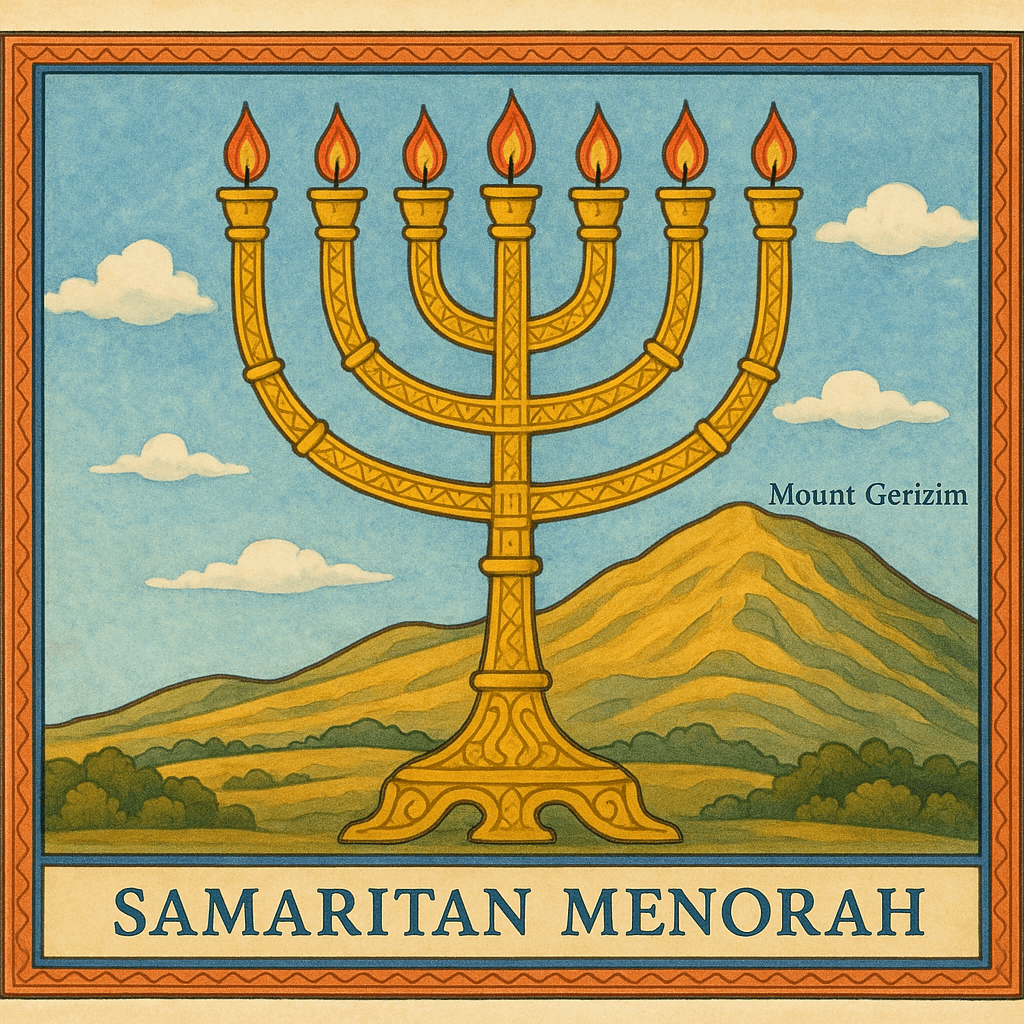
Samaritan Theology on the Prophecy of a Prophet Like Moses
⸻
🕎 Who Is the Taheb?
In Samaritan belief, the Taheb (תאהב) — a term meaning “the Restorer” or “He who returns” — is a future prophetic figure foretold by Moses in Deuteronomy 18:18:
“I will raise up for them a prophet like you from among their brethren; and I will put My words in his mouth, and he shall speak to them all that I command him.”
For Samaritans, this prophecy is not about a succession of prophets (as in Judaism), but about one ultimate prophet who will come at the end of days — a new Moses who restores the true religion and renews the covenant at Mount Gerizim.
⸻
📜 The Role of the Taheb
The Taheb is believed to:
- Restore pure worship of the one God (YHWH) on Mount Gerizim, rather than in Jerusalem — regarded by Samaritans as the holiest place on earth.
- Reunite the twelve tribes of Israel, healing the schism between Judah and Israel.
- Reveal divine truth anew, bringing a renewed understanding of the Torah and purifying the community.
- Initiate an era of peace and resurrection, when the dead will rise and divine justice will prevail.
He is thus not merely a moral teacher, but a messianic redeemer and eschatological restorer — the centerpiece of Samaritan hope for salvation.
⸻
🔱 Taheb and Moses: Theological Comparison
- Moses was the first prophet and lawgiver, who received the Torah at Sinai.
- Taheb is the future prophet and restorer of the Law, who will renew the covenant at the end of days.
- Moses revealed the original Torah and established God’s law.
- Taheb will reveal the perfect interpretation of the Torah and restore what has been corrupted or lost.
- Moses served as the founder of the covenant community.
- Taheb will act as the restorer and purifier of the covenant community.
- Moses is regarded as the supreme prophet, and none has arisen like him.
- Taheb is considered the second Moses — equal to him in authority and spirit, though not greater.
Thus, the Taheb is not above Moses, but a continuation of Moses’ prophetic spirit — his return in a new age. In Samaritan thought, the Taheb will complete what Moses began: the full realization of divine order on Mount Gerizim and among all Israel.
⸻
🕊️ Summary
- “Taheb” means Restorer or He who returns.
- He is a Mosaic messiah, not Davidic.
- He will reveal truth, restore worship on Mount Gerizim, and usher in the final redemption.
- His authority is derived from and equal to Moses, not independent of him.
In short, for the Samaritans, Moses is the beginning, and the Taheb is the completion — two ends of one divine mission.
 ABRAHAMIC THEOLOGY