Azahari Hassim
The British-Israel Theory, also known as British-Israelism, is a belief system that claims that the people of the British Isles, specifically the Anglo-Saxon peoples, are the direct descendants of the Ten Lost Tribes of Israel. This theory emerged in the 19th century and has since been associated with various religious and nationalist movements.
Historical Background
- Emergence: The concept began to take shape in the late 19th century, particularly during the period of British imperial expansion. As the British Empire expanded, some individuals began to draw parallels between the successes of the British Empire and the biblical narrative of the Israelites.
- Influence of Christianity: The theory was largely propagated by Protestant Christian groups who saw it as part of a divine plan. They believed that the Anglo-Saxon people were chosen by God, analogous to the chosen people of Israel in the Bible.
- Notable Figures: Important proponents of the theory include John Wilson, who published “Our Israelitish Origin” in 1840, and the British-Israelites, a group that promoted these ideas through pamphlets, books, and public lectures.
Key Tenets
- Identity of the Lost Tribes: According to this theory, the ten tribes of northern Israel, which were conquered by the Assyrians and subsequently “lost” to history, migrated to Europe and eventually settled in Britain. Proponents often claim that the Anglo-Saxon peoples embody the essence of these tribes.
- Biblical Connections: Advocates frequently cite various biblical passages to support their claims, believing in a direct lineage from biblical figures and asserting that historical events align with the narrative of the Israelites.
- Divine Destiny: The theory often intertwines with notions of predestination, suggesting that Britain has a special role in world history and fulfills biblical prophecies, particularly those relating to the Second Coming of Christ.
Cultural Impact
- Militarism and Nationalism: The theory found particular resonance in the context of British nationalism during the late 19th and early 20th centuries, at a time when there was considerable interest in imperial expansion and identity.
- Movement and Organizations: Various groups have emerged from the British-Israel theory, including the British Israel World Federation and other smaller sects. These groups often promote a blend of theology, history, and nationalism.
- Criticism and Controversy: The British-Israel theory has faced significant criticism from historians, theologians, and geneticists alike. Many argue that it reflects a misinterpretation of both biblical texts and historical evidence. Critics label it pseudohistory and point out that genetic studies do not support the claims of a direct line from the Ten Lost Tribes to the modern British population.
Modern-Day Relevance
In contemporary times, some groups continue to espouse British-Israelism, often aligning it with nationalist or even supremacist ideologies. However, it remains largely marginalized within mainstream academic and religious discourses.
Summary
In summary, the British-Israel Theory is a controversial belief that links the Anglo-Saxon people to the ancient Israelites, positing a connection that is both historical and theological. While it has played a role in the development of certain nationalist sentiments, it remains controversial and lacks empirical support from the academic community.
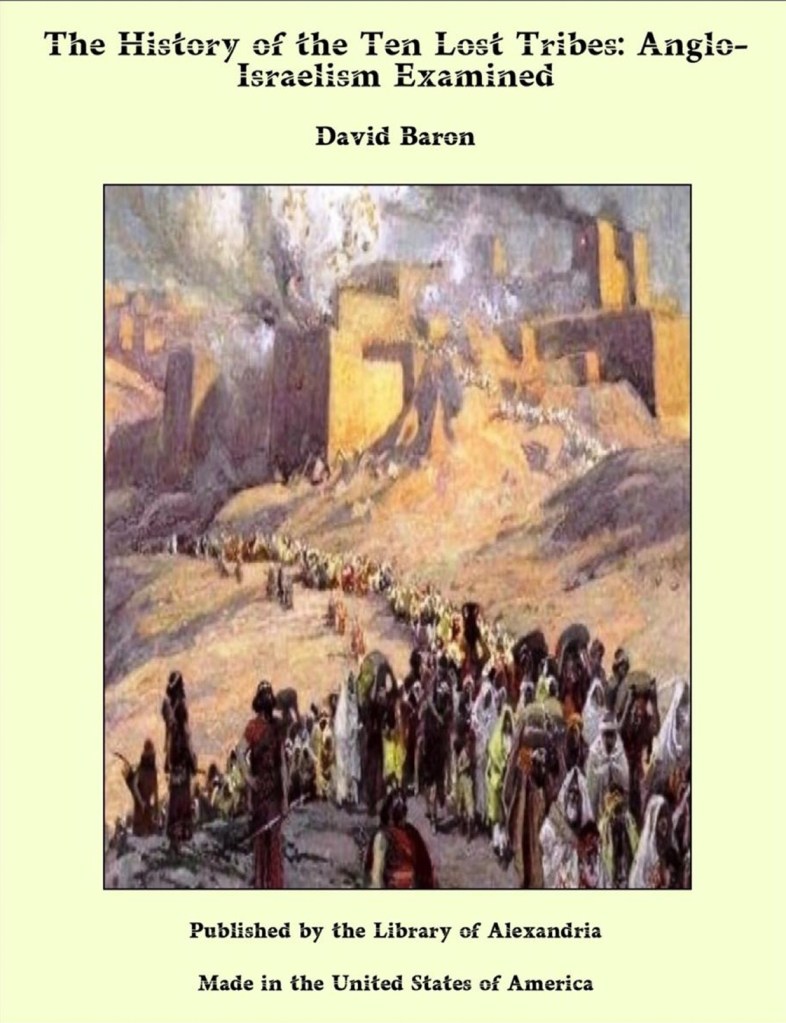
The British-Israel theory (also known as Anglo-Israelism) is the belief that the people of Great Britain (and sometimes other Western European nations) are descended from the Ten Lost Tribes of Israel. This theory was popularized in the 19th and early 20th centuries, with various scholars, theologians, and writers commenting on or promoting the idea. Below are some notable scholars and figures who have addressed or been associated with the British-Israel theory:
1. John Wilson (1782–1875)
A Scottish theologian and one of the earliest promoters of British-Israelism.
Quote: “The Saxons, the Danes, and the Normans are all of the same stock, and their ancestors may be traced to the lost tribes of Israel.” (Lectures on Our Israelitish Origin, 1840)
2. Edward Hine (1825–1891)
A leading British-Israelite writer in the 19th century.
Quote: “The people of the British Isles are the literal descendants of the lost House of Israel, and the promises given to Abraham have been fulfilled in them.”
3. Rev. Joseph Wild (1834–1908)
A Canadian preacher who wrote extensively on British-Israelism.
Quote: “England is the land of Joseph, and her people are the people of the lost tribes. The marks of Israel are upon the Anglo-Saxon race.”
4. William Pascoe Goard (1863–1937)
A leading British-Israelite scholar and writer.
Quote: “The throne of David has been preserved in the British monarchy, fulfilling the divine covenant that David’s descendants would reign forever.”
5. J.H. Allen (1847–1930)
An American advocate of British-Israelism.
Quote: “The Saxons are Isaac’s sons, and the promises to Israel have found their fulfillment in the Anglo-Saxon race.” (Judah’s Scepter and Joseph’s Birthright, 1902)
6. Herbert W. Armstrong (1892–1986)
Founder of the Worldwide Church of God and a proponent of British-Israelism.
Quote: “The United States and Britain are the modern descendants of Ephraim and Manasseh, the birthright nations of Israel.” (The United States and Britain in Prophecy)
Criticism by Scholars
Many mainstream historians and theologians reject British-Israelism, arguing that it is based on pseudo-historical claims.
Professor Norman Cohn (1915–2007) (historian):
Quote: “British-Israelism is an example of how nationalist ideology can distort history to suit its own ends.”
The Rev. Canon W.H. Bennett (critic of British-Israelism):
Quote: “The theory is unsupported by serious scholarship and has no basis in biblical or historical fact.”
The Ten Lost Tribes of Israel
The following is an excerpt from A Popular Dictionary of Judaism by Lavinia and Dan Cohn-Sherbok.
TEN LOST TRIBES:
The tribes in the Northern Kingdom who were conquered by the Assyrians in 721 BCE. The ten Northern tribes almost certainly intermarried with the surrounding peoples and lost their separate identity. 2 Kings Chapter 17 maintains they were exiled by the river Gozan and the rabbis taught that they dwelt beyond the River Sambatyon. The Samaritans are probably descended from some of the tribes and, during the course of history, various other groups have been identified with ten lost tribes including the British, the Japanese, the Afghans, and certain Red Indian tribes.
The idea that the Ten Lost Tribes of Israel migrated to distant lands has led to various theories, some with historical evidence and others rooted in legend and speculation. Here’s a summary of how different groups, including the British, Japanese, Afghans, and certain Native American tribes, have been linked to the Lost Tribes:
1. British-Israelism (British)
Theory: British-Israelism, a belief that gained traction in the 19th and 20th centuries, holds that the British people, particularly the Anglo-Saxons, are descendants of the Ten Lost Tribes.
Justification: Some proponents cite linguistic similarities between Hebrew and English words.
The Stone of Scone, used in British coronations, is sometimes linked to the biblical Stone of Jacob.
The British monarchy is said to be a continuation of the Davidic line.
Some connect the movement of the Scythians (believed by some to be Israelites) into Europe with the eventual settlement of Anglo-Saxons in Britain.
Criticism: Mainstream scholars dismiss this theory as pseudohistory, lacking archaeological and genetic evidence.
2. Japanese-Israelite Theory
Theory: Some theories propose that the Japanese people or certain Japanese clans, such as the Shinto priestly families, descend from the Lost Tribes.
Justification:
Japanese customs resembling Jewish traditions, such as ritual purification, shinto priestly garments similar to the Jewish ephod, and some linguistic similarities.
The Hata clan, an ancient family of silk weavers, is believed by some to have Jewish ancestry.
The Torii gates in Shintoism are thought by some to resemble the gates of the ancient Temple in Jerusalem.
Criticism: Most scholars consider these similarities to be coincidental or due to cultural diffusion rather than direct descent.
3. Afghans (Pathans/Pashtuns)
Theory: The Pashtun (Pathan) tribes of Afghanistan and Pakistan are widely believed, especially among their own traditions, to be descendants of the Lost Tribes.
Justification: Many Pashtun tribal names, such as Yusufzai (“sons of Joseph”), resemble biblical names.
Their customs, such as circumcision on the eighth day, avoiding pork, and levirate marriage, are similar to Jewish practices.
Ancient Muslim historians like Al-Biruni and Ibn Khaldun recorded traditions connecting the Pashtuns to the Israelites.
DNA studies have been inconclusive, but some genetic markers have been found that could link them to the Middle East.
Acceptance: This is one of the more widely held theories, with support from some historical and genetic evidence.
4. Native American Tribes (Red Indians)
Theory: Certain Native American tribes, particularly among the Cherokee, Hopi, and some others, have been linked to the Lost Tribes.
Justification: Some early European explorers, such as James Adair, observed customs among Native American tribes that he believed were Jewish in origin (e.g., purification rituals, feasts similar to Passover, and the use of sacred names for God).
The Book of Mormon, in Mormon theology, teaches that some Native Americans descended from Israelite tribes that migrated to the Americas.
Some Native American oral traditions include references to a great migration from the East.
Criticism: There is no genetic or archaeological evidence to support the claim that Native Americans are directly linked to the Israelites. Most of their ancestry traces to Asia via the Bering Strait migration.
Conclusion
While the Pashtun (Pathans) have the strongest historical and traditional connection to the Lost Tribes, the British, Japanese, and Native American theories are mostly speculative.
Most scholars believe that the Lost Tribes assimilated into surrounding cultures, primarily in the Middle East and Central Asia.
The topic remains fascinating from a historical and mythological perspective, but genetic and historical evidence does not strongly support most of these claims.

What is the significance of the title “The Matrix of Gog” authored by Daniel Patrick in the context of the book?
The title “The Matrix of Gog” authored by Daniel Patrick holds significant meaning in the context of the book. The term “Matrix of Gog” refers to the fulfillment of Bible prophecy, specifically Ezekiel 38 and 39, which describe a powerful world leader named Gog from the land of Magog who will emerge and precipitate a global war. The book aims to inform readers about Gog, Magog, and their connection to the Jews, revealing that today’s Jews are not descendants of Abraham but are of the Turkic bloodline from Khazaria, a country in the Caucasus south of Russia.
The title also implies a complex web or system (matrix) involving Gog and his influence on world events, particularly in relation to Israel and the Jewish people. The book challenges the common belief among Christian Zionists that they must support the Israeli state unconditionally, suggesting that this belief is based on a misunderstanding of biblical prophecy.
In essence, “The Matrix of Gog” is a title that encapsulates the book’s focus on uncovering the true identity of Gog and Magog and their role in fulfilling biblical prophecies, while also critiquing the prophetic paradigm that supports Zionist Israel.
Context and Content
1. Gog and Magog: In biblical and Quranic traditions, Gog and Magog are often associated with apocalyptic prophecies. The book explores the idea that Gog, from the land of Magog, has already exerted influence over the land of Israel, suggesting a fulfillment of these prophecies.
2. Khazars: The book delves into the history of the Khazars, a people who converted to Judaism in the medieval period. The author posits that they play a significant role in the destruction and plunder of lands, tying them to the narrative of Gog and Magog.
3. Prophetic and Historical Analysis: The author examines historical events and their potential prophetic significance, suggesting that the actions of Gog and Magog are part of a larger, divinely orchestrated plan. The “matrix” in the title implies a hidden framework through which these events unfold.
Overall, the title “The Matrix of Gog“ reflects the book’s exploration of complex historical and prophetic themes, suggesting an underlying network of influences related to Gog and Magog and their impact on world events, particularly concerning the land of Israel.

According to the author, who is Gog?
According to the author, Gog is the demonic leader or king of the land of Khazaria, which is the country of origin for today’s “Jews.” The book “The Matrix of Gog” informs us about Gog, Magog, and the Jews, revealing that today’s “Jews” are the “Synagogue of Satan” as mentioned in Revelation 2 and 3.
According to the author, who are the present-day descendants of the ancient Israelites?
According to the author, the present-day descendants of the ancient Israelites are not the majority of Jews, but rather some Palestinians who have more Israelite blood than the Jews. Some Palestinians even have DNA markers that establish them as descendants of the ancient priests who worked in the Jewish temples and synagogues.
In what way does “The Matrix of Gog” establish a connection between Khazars and Gog from the land of Magog?
The book “The Matrix of Gog” establishes a connection between Khazars and Gog from the land of Magog by revealing that Gog is the demonic leader or king of Khazaria, which is located in the Caucasus, south of Russia. It explains that the people we call “Jews” today are actually of the Turkic bloodline and not descendants of Abraham, Israelites, or Semites.
The book informs us about Gog, Magog, and the Jews, showing that the Holy Bible is accurate in its depiction. Additionally, it delves into the lineage of Togarmah, who is related to Magog and Ashkenaz, giving insight into the origins of the Khazars and their connection to the Ashkenazi Jews.
The perspective of the author towards Palestinians is what exactly?
The perspective of the author towards Palestinians is that they had more Israelite blood than the Jews themselves, and some Palestinians even had DNA that established they were ‘Cohens’ – workers at the ancient Temple and synagogues of the Jews.
What is the author’s perspective towards Ashkenazi Jews?
The author’s perspective towards Ashkenazi Jews is critical, as they view revealing books on the origins of Ashkenazi Jewry as a “Frankenstein nightmare” that won’t die despite attempts to suppress it in the media. The author also mentions a book by Dr. Paul Wexler that challenges Zionist beliefs about Ashkenazi Jews. Additionally, the author discusses the Khazar mass migration into Eastern Europe and the DNA research findings that suggest most Jews came from Khazar blood.
 ABRAHAMIC THEOLOGY