Azahari Hassim
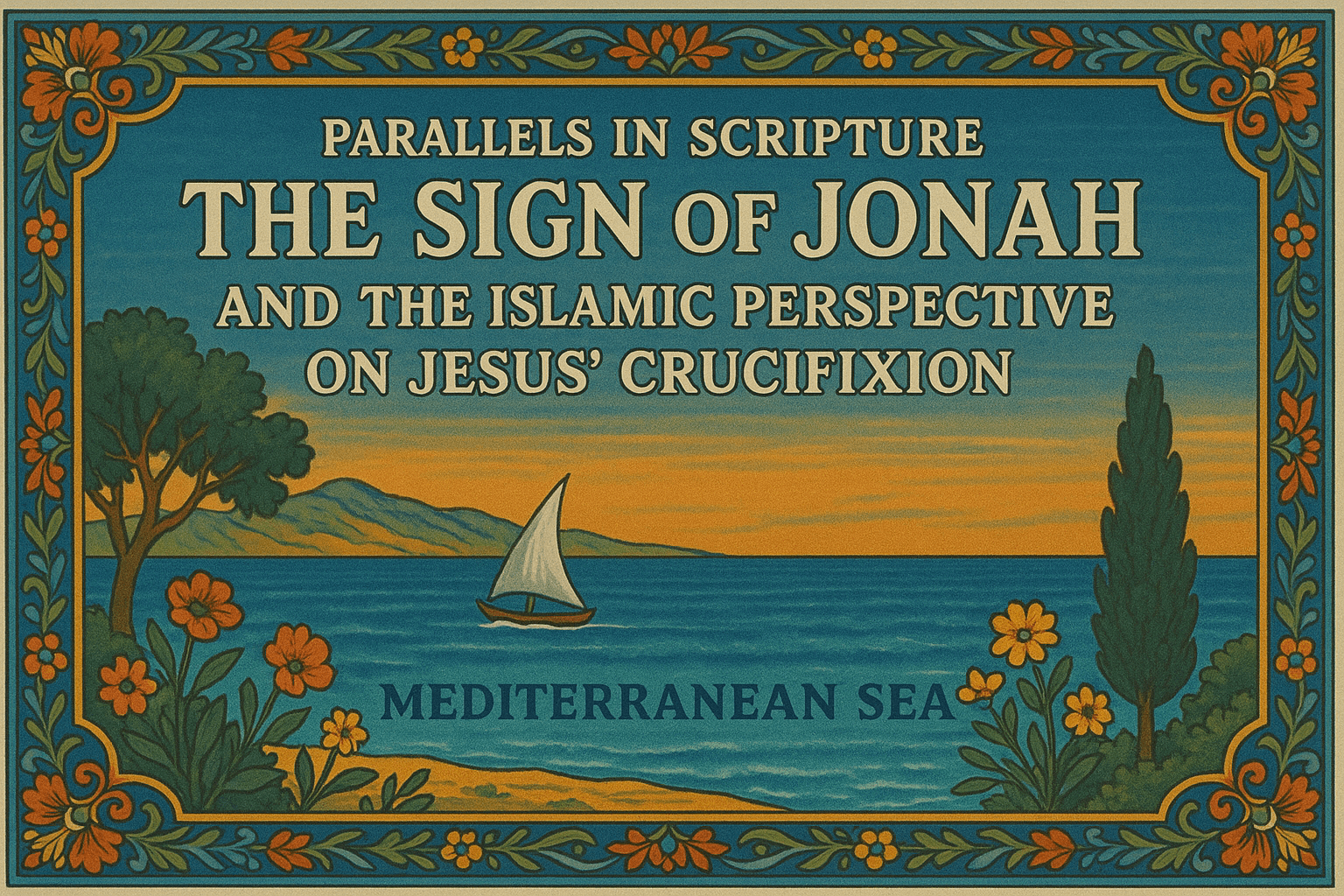
Certain Islamic scholars draw a connection between Matthew 12, verses 39 to 40, in the Bible and Surah 4, verse 157, in the Quran. They contend that the crucifixion of Jesus presents a paradox, as his sign or miracle would parallel that of Jonah, who did not perish in the sea. What is the framework of their argument?
The connection between Matthew 12, verses 39 to 40, in the Bible and Surah 4, verse 157, primarily revolves around the interpretation of significant events in the lives of Jesus and the prophet Jonah. This includes the crucifixion of Jesus and Jonah’s experience in the belly of the fish. Here’s a breakdown of the argument:
Biblical Context: Matthew 12, verses 39 to 40
In the Gospel of Matthew, Jesus responds to a request for a sign by referring to the story of Jonah:
“But he answered and said to them, ‘An evil and adulterous generation seeks after a sign, and no sign will be given to it except the sign of the prophet Jonah. For as Jonah was three days and three nights in the belly of the great fish, so will the Son of Man be three days and three nights in the heart of the earth.'”
In this context, Jesus had predicted that his miraculous event would resemble that of Jonah. According to the Book of Jonah, Jonah was alive at a time when all presumed he was dead. Similarly, while many anticipated Jesus to be deceased, the reality is that he is, indeed, alive.
Quranic Context: Surah 4, verse 157
In Surah 4, verse 157, the Quran discusses how Jesus was not killed or crucified:
“And [for] their saying, ‘Indeed, we have killed the Messiah, Jesus, the son of Mary, the messenger of Allah.’ And they did not kill him, nor crucify him; but so it was made to appear to them. And indeed, those who differ over it are in doubt. They have no knowledge of it except the following of assumption. And they did not kill him, for certain.”
In this context the Quran asserts that Jesus was not killed or crucified, countering the Christian belief in the crucifixion and resurrection. It suggests that God intervened to protect Jesus from a fate of crucifixion and death.
Framework of the Argument:
- Paradox of Death and Resurrection: Islamic scholars argue that the account of Jonah illustrates a theme of deliverance from death. If the crucifixion of Jesus was a true event resulting in his death, it seems to contradict the ‘sign’ that Jesus asserted. By likening himself to Jonah, however, Jesus suggests that he would also evade death. Just as Jonah spent three days in the sea, Jesus implies he also return after a short period, which might create the impression that He has died.
- Miraculous Rescues: Both accounts emphasize miraculous rescues—Jonah from the fish and Jesus from death. This perspective strengthens a fundamental Islamic tenet regarding the integrity of prophets and divine safeguarding.
- Differing Theological Implications: The scholars argue that these narratives illustrate differing theological perspectives on sin and sacrificial atonement. For Christians, the crucifixion and resurrection form the cornerstone of redemption. Conversely, Islamic theology highlights God’s safeguarding of prophets and the prevention of their unjust deaths, leading to an alternative interpretation of Jesus’ role.
- Misinterpretation and Faith: They often conclude that the misunderstanding of these narratives lies in the interpretation of faith and divine will. For them, the erroneous belief in the crucifixion leads to doctrinal inconsistencies that contrast sharply with Islamic teachings of Jesus as a revered prophet.
In summary, the interplay between Matthew 12, verses 39 to 40 and Surah 4, verse 157, reveals significant theological differences regarding the nature of Jesus, the significance of his life, and the understanding of miraculous occurrences that influence both Christian and Islamic perspectives.
Isaiah 60:7 and the Christian Belief in Jesus’ Sacrificial Atonement
Some scholars argue that Isaiah 60, verse 7, which predicts the restoration of animal sacrifices, contradicts the Christian belief in the sacrificial death of Jesus as the ultimate atonement for humanity’s sins. According to this Christian perspective, Jesus’ sacrifice negates the necessity for the Old Testament sacrifices. What is the basis of the arguments presented by these scholars?
Isaiah 60, verse 7, states:
“All the flocks of Kedar shall be gathered to you; the rams of Nebaioth shall minister to you; they shall come up with acceptance on my altar, and I will beautify my glorious house.”
This verse has prompted debates among scholars, particularly regarding its implications for the Christian belief in Jesus’ sacrificial death as the ultimate atonement for humanity’s sins. Here’s the basis of their argument:
- Literal Interpretation of the Prophecy
Some scholars argue that Isaiah 60, verse 7, predicts a literal restoration of Old Testament animal sacrifices. This interpretation suggests a future scenario where temple rituals, including offerings, are reintroduced. For Christians who believe Jesus’ death was the ultimate and final atonement for sin (Hebrews 10, verses 10 to 18), this interpretation seems contradictory, as it implies that these sacrifices in Isaiah retain some salvific value.
- Theological Implications
If Isaiah 60, verse 7, indeed prophesies the reinstatement of animal sacrifices, it raises questions about the sufficiency of Jesus’ sacrifice. Central to Christian theology is the belief that Jesus’ crucifixion fulfilled and replaced the sacrificial system outlined in the Old Testament (Matthew 5, verse 17; John 19, verse 30). Any reintroduction of sacrifices could imply that Jesus’ atonement was incomplete, directly challenging key doctrines of salvation and the New Covenant.
- Symbolic vs. Literal:
Many Christian scholars interpret Isaiah 60, verse 7 symbolically rather than literally. They argue that the reference to sacrifices and altars is metaphorical, symbolizing worship, devotion, and the gathering of nations to God. In this view, the verse does not predict a literal return to Old Testament sacrificial practices but reflects the restoration and glorification of God’s people in a spiritual sense.
- Eschatological Considerations
For Christians, eschatological theology plays a critical role in understanding Isaiah 60, verse 7. Some argue that if this prophecy is taken literally, it contradicts the belief that Jesus’ crucifixion and resurrection were the ultimate and final means of atonement. This creates tension between a literal interpretation of the verse and the Christian doctrine of salvation.
- Comparative Religious Perspective: Eid al-Adha
Interestingly, some Islamic scholars view the prophecy of Isaiah 60, verse 7, as aligning more closely with Islamic traditions, particularly the celebration of Eid al-Adha (the Feast of Sacrifice). This festival commemorates Abraham’s willingness to sacrifice his son Ishmael in obedience to God and involves the offering of animals as part of worship. From this perspective, the prophecy of Isaiah 60, verse 7, reflects a continuation of sacrificial practices consistent with Islamic beliefs, contrasting with the Christian claim that Jesus’ death replaced all sacrifices.
Conclusion
The interpretation of Isaiah 60, verse 7, presents a theological challenge, particularly for Christian doctrines concerning the sufficiency of Jesus’ sacrificial death. A literal understanding of the verse raises questions about the necessity and effectiveness of Jesus’ crucifixion as the final and complete sacrifice for sin.
However, alternative interpretations—such as symbolic readings or eschatological frameworks—allow many Christians to reconcile this passage with their beliefs. Meanwhile, comparative religious perspectives, such as those from Islam, offer alternative understandings that highlight the complexity and depth of this biblical prophecy.
The Comma Johanneum: The History and Controversy Behind 1 John 5:7-8
It often disturbs some devout Christians to learn that parts of 1 John 5, verses 7 and 8, as found in the King James Version and New King James Version, are actually present in only a handful of Greek manuscripts of the New Testament. Could you kindly elaborate more on this?
The passage in question, commonly referred to as the Comma Johanneum, is found in 1 John 5, verses 7 and 8 in the King James Version (KJV) and the New King James Version (NKJV). Here’s how it reads in those translations:
“For there are three that bear record in heaven, the Father, the Word, and the Holy Ghost: and these three are one. And there are three that bear witness in earth, the Spirit, and the water, and the blood: and these three agree in one.”
The specific portion that is controversial is:
”…the Father, the Word, and the Holy Ghost: and these three are one.”
This specific wording is not found in the majority of early Greek manuscripts of the New Testament. The Comma Johanneum is absent from nearly all Greek manuscripts before the 14th and 15th centuries.
- Earliest Manuscripts: The earliest and most reliable Greek manuscripts of 1 John (such as the Codex Sinaiticus and Codex Vaticanus from the 4th century) do not contain the Comma Johanneum.
- Church Fathers: Early church fathers like Origen, Cyprian, and Augustine also do not quote this Trinitarian formula, suggesting it was not present in the manuscripts available to them.
- Latin Tradition: The Comma Johanneum appears in some Latin manuscripts from the 4th century onward, primarily in the writings of certain Latin theologians. It was included in later Latin translations, particularly those influenced by the Vulgate.
- Introduction into Greek Texts: The insertion of the Comma into Greek manuscripts is believed to have occurred during the Middle Ages, significantly influenced by the Latin tradition. Its occurrence is limited to a small number of late medieval Greek manuscripts, specifically approximately seven to eight in total.
The King James Version translators in the early 17th century relied heavily on the Textus Receptus, a Greek text compiled by Erasmus in the early 1500s. Erasmus’s initial editions of the Textus Receptus did not contain the Comma Johanneum, since he found no Greek manuscript that included it. Under pressure from certain theologians and after being shown a Greek manuscript (likely created for this purpose), he included it in his third edition (1522). This inclusion led to its presence in the King James Version.
Most modern Bible translations (such as the NIV, ESV, NASB, and NRSV) exclude the Comma Johanneum or place it in a footnote, recognizing that it is not supported by the earliest and most reliable manuscripts.
Conclusion
The inclusion of the Comma Johanneum in both the King James Version and the New King James Version reflects historical context rather than original authenticity. Although this may be troubling for some Christians, it underscores the complexities involved in the transmission of biblical texts. Unlike most modern translations, its presence in these versions stems from varying manuscript traditions, and scholars largely agree that it was added to the text of 1 John at a later date.
 ABRAHAMIC THEOLOGY