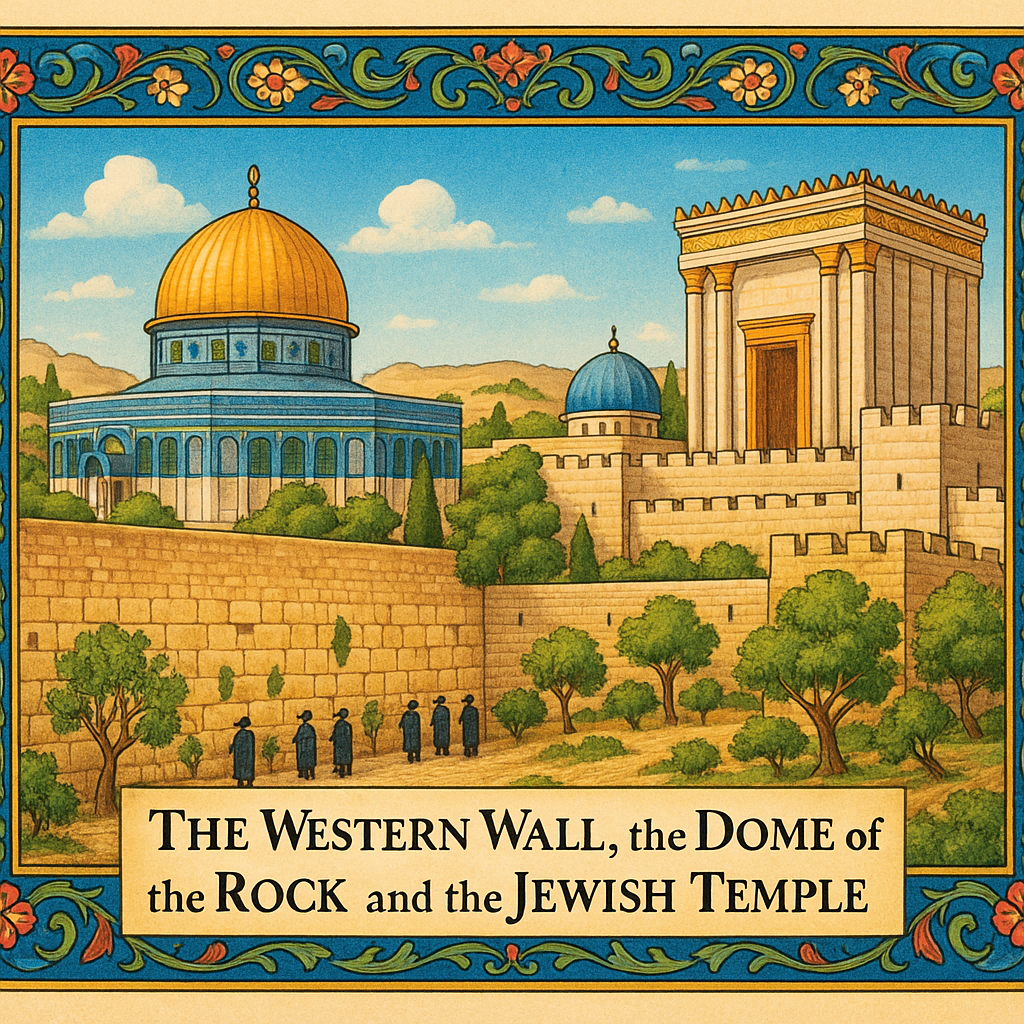
Azahari Hassim
Which location is considered more sacred according to rabbinic ruling: the Western Wall or the area where the Dome of the Rock currently exists?
According to rabbinic ruling, the area where the Dome of the Rock currently exists is considered more sacred than the Western Wall. The Dome of the Rock is located on the Temple Mount, which is traditionally viewed as the holiest site in Judaism, as it is believed to be the location of the ancient Jewish temples.
The Western Wall, while a very significant and sacred site for prayer and the Jewish people, is considered a remnant of the Second Temple and thus holds a different level of sanctity compared to the Temple Mount itself.
What is a considerable obstacle to the Jews to rebuild their temple in Jerusalem?
A considerable obstacle to the Jews rebuilding their temple in Jerusalem is the current presence of the Al-Aqsa Mosque and the Dome of the Rock, two of the holiest sites in Islam. Both structures are located on the Temple Mount (known as Haram al-Sharif in Islam), which is traditionally believed to be the location of the First and Second Jewish Temples.
Some Islamic scholars assert that Muhammad’s Night Journey to Jerusalem, which resulted in the establishment of the Dome of the Rock and Al Aqsa Mosque to honor this event, effectively nullifies the sacrificial practices of Judaism. In contrast, Christians hold that it was through Jesus’ crucifixion on the cross that such practices were superseded.
Why was the Jewish temple so vital to be attached to the person of Abraham?
The Jewish temple was so vital to be attached to the person of Abraham because Abraham was the founder of Judaism and the first person to make a covenant with God. The covenant was a promise that God made to Abraham and his descendants, that they would be God’s chosen people and inherit the land of Canaan, also known as the Promised Land.
The temple was the place where the Jews worshipped God and offered sacrifices, as well as the symbol of their connection to God and the Promised Land. The temple was also believed to be the dwelling place of God’s presence on earth, also known as the Shekhinah. Therefore, the temple was a vital link between Abraham, the father of Judaism, and God, the creator and protector of Judaism.
Did Abraham know that the temple would be built on the site where he almost sacrificed his son?
There is no definitive answer to whether Abraham knew that the temple would be built on the site where he almost sacrificed his son. Different traditions and interpretations have different views on this question. Here are some possible perspectives:
According to Jewish tradition, Abraham was aware of the future significance of Mount Moriah, as he named it “the Lord will provide” (Genesis 22 verse 14), implying that God would provide a place for His presence and worship there. Some Jewish sources also suggest that Abraham saw a vision of the future temple when he ascended the mountain with Isaac.
According to Christian tradition, Abraham did not know the exact location of the future temple, but he had faith that God would fulfill His promises to him and his descendants. Some Christian sources also see Abraham’s sacrifice of Isaac as a foreshadowing of God’s sacrifice of His Son, Jesus Christ, on the cross.
According to Islamic tradition, Abraham did not sacrifice Isaac, but Ishmael, his firstborn son by Hagar. Muslims believe that Abraham and Ishmael built the Kaaba, the house of God, in Mecca, which is the holiest site in Islam. Muslims do not consider the Temple Mount in Jerusalem as the place where Abraham offered his son, but rather as the place where Muhammad ascended to heaven during his night journey.
Abraham and the House of God in Jerusalem and Mecca
Did Moses and Abraham know that the temple would be built in Jerusalem?
The Bible does not explicitly state that Moses and Abraham knew about the future construction of the Temple in Jerusalem. However, both figures are significant in the Jewish tradition regarding the covenant with God and the eventual establishment of a central place of worship.
- Abraham: He is often associated with the land of Canaan, which includes Jerusalem. The biblical narrative highlights that he established altars and worshiped God in various locations, symbolizing a connection to the land that would later become significant in Jewish history.
- Moses: He led the Israelites out of Egypt and received the Law at Mount Sinai. His connection to the Tabernacle, a mobile sanctuary, is significant, as it laid the groundwork for central worship in the future. The establishment of the Temple in Jerusalem is often viewed as a fulfillment of the promise of a permanent dwelling place for God, but there is no direct indication that Moses was aware of the future Temple.
In Jewish tradition, the idea of a Temple in Jerusalem is connected to prophecies and promises made later in the biblical narrative, particularly during the time of King David and Solomon. Therefore, while Moses and Abraham played crucial roles in the religious history of the Israelites, there is no definitive evidence that Moses and Abraham had knowledge of the Temple’s future construction.
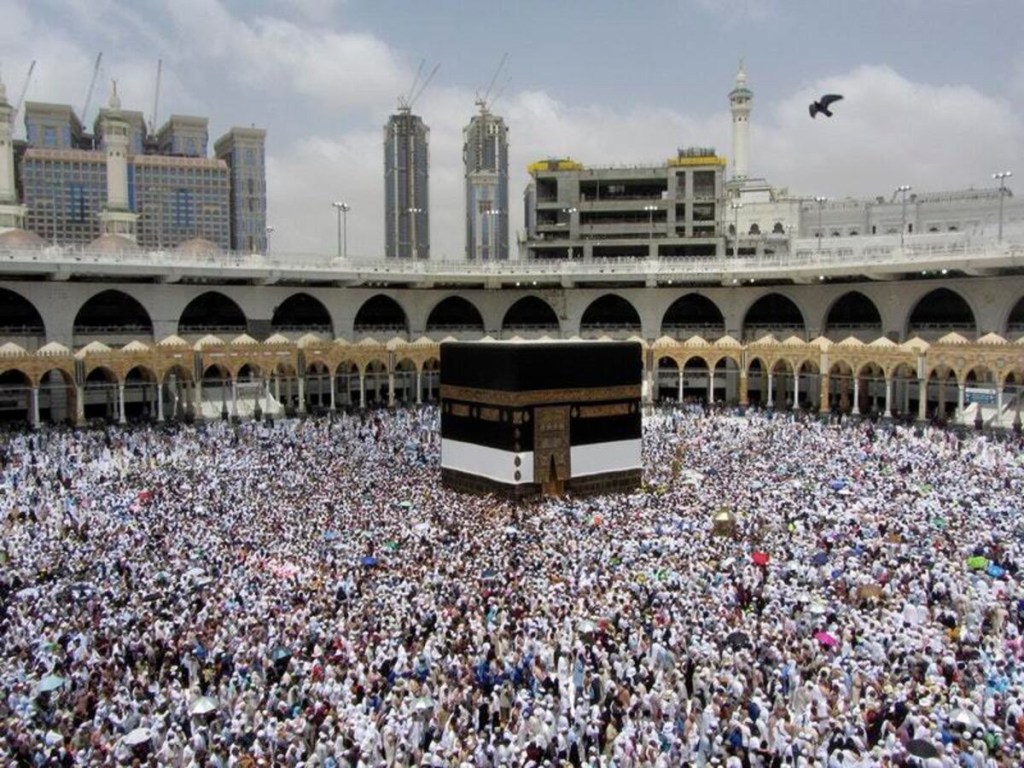
How is Abraham linked to the Kaaba (House of God) in Mecca in Islam?
In Islam, Abraham is deeply connected to the Kaaba in Mecca, which is regarded as the House of God. According to Islamic tradition:
1. Construction of the Kaaba: It is believed that Abraham, along with his son Ishmael, was instructed by God to build the Kaaba as a place of worship. The Kaaba is considered the first house of worship dedicated to the monotheistic belief in one God.
2. Covenant and Submission: Abraham is viewed as a key figure in Islam for his unwavering submission to God’s will and his role as a prophet. His dedication to monotheism is foundational to Islamic beliefs.
3. Pilgrimage (Hajj): The Kaaba is the focal point of the Hajj pilgrimage, one of the Five Pillars of Islam. Muslims from around the world perform rituals around the Kaaba, commemorating the actions of Abraham and Ishmael.
4. Significance of the Black Stone: The Black Stone (Hajar al-Aswad), set into the corner of the Kaaba, is said to have been given to Abraham by the angel Gabriel. It is revered by Muslims as a sacred object.
Overall, Abraham’s legacy as a prophet and the father of monotheism links him to the Kaaba (House of God), reinforcing the importance of the site in Islamic faith and practice.
 ABRAHAMIC THEOLOGY