
Azahari Hassim
It often disturbs some devout Christians to learn that parts of 1 John 5, verses 7 and 8, as found in the King James Version and New King James Version, are actually present in only a handful of Greek manuscripts of the New Testament. Could you kindly elaborate more on this?
The passage in question, commonly referred to as the Comma Johanneum, is found in 1 John 5, verses 7 and 8 in the King James Version (KJV) and the New King James Version (NKJV). Here’s how it reads in those translations:
“For there are three that bear record in heaven, the Father, the Word, and the Holy Ghost: and these three are one. And there are three that bear witness in earth, the Spirit, and the water, and the blood: and these three agree in one.”
The specific portion that is controversial is:
”…the Father, the Word, and the Holy Ghost: and these three are one.”
This specific wording is not found in the majority of early Greek manuscripts of the New Testament. The Comma Johanneum is absent from nearly all Greek manuscripts before the 14th and 15th centuries.
1. Earliest Manuscripts: The earliest and most reliable Greek manuscripts of 1 John (such as the Codex Sinaiticus and Codex Vaticanus from the 4th century) do not contain the Comma Johanneum.
2. Church Fathers: Early church fathers like Origen, Cyprian, and Augustine also do not quote this Trinitarian formula, suggesting it was not present in the manuscripts available to them.
3. Latin Tradition: The Comma Johanneum appears in some Latin manuscripts from the 4th century onward, primarily in the writings of certain Latin theologians. It was included in later Latin translations, particularly those influenced by the Vulgate.
4. Introduction into Greek Texts: The insertion of the Comma into Greek manuscripts is believed to have occurred during the Middle Ages, significantly influenced by the Latin tradition. Its occurrence is limited to a small number of late medieval Greek manuscripts, specifically approximately seven to eight in total.
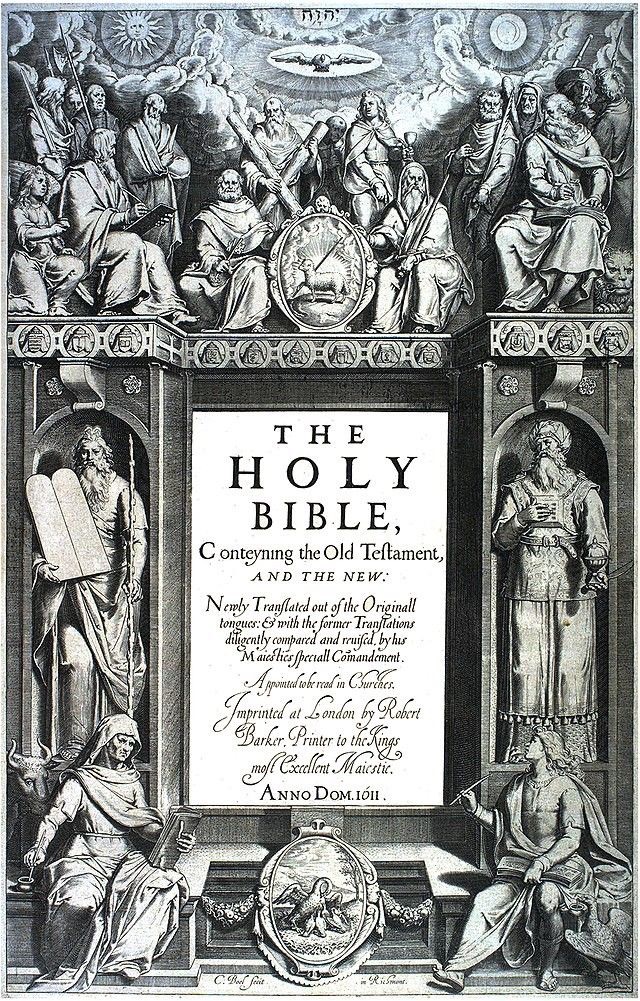
The King James Version translators in the early 17th century relied heavily on the Textus Receptus, a Greek text compiled by Erasmus in the early 1500s. Erasmus’s initial editions of the Textus Receptus did not contain the Comma Johanneum, since he found no Greek manuscript that included it. Under pressure from certain theologians and after being shown a Greek manuscript (likely created for this purpose), he included it in his third edition (1522). This inclusion led to its presence in the King James Version.
Most modern Bible translations (such as the NIV, ESV, NASB, and NRSV) exclude the Comma Johanneum or place it in a footnote, recognizing that it is not supported by the earliest and most reliable manuscripts.
Conclusion
The inclusion of the Comma Johanneum in both the King James Version and the New King James Version reflects historical context rather than original authenticity. Although this may be troubling for some Christians, it underscores the complexities involved in the transmission of biblical texts. Unlike most modern translations, its presence in these versions stems from varying manuscript traditions, and scholars largely agree that it was added to the text of 1 John at a later date.

Originally written in Hebrew and Greek, the Bible has been translated into more than 2,000 languages. One of the most influential translations was the Latin one, made by St. Jerome (above), a priest, who lived in the 4th century ce. The Lindisfarne Gospels were written using this translation.
Isaac Newton and Arianism
It is believed that Isaac Newton adopted Arianism. How is this argument explained?
Arianism is a theological doctrine that denies the divinity of Jesus Christ and asserts that he is a created being, subordinate to God the Father. Arianism was condemned as a heresy by the Council of Nicaea in 325 CE, but it continued to have followers in some regions until the 7th century.
Isaac Newton, the famous physicist and mathematician, was a devout but heterodox Christian who rejected the doctrine of the Trinity and other orthodox beliefs. He was influenced by his extensive study of the early history of the Church and the origins of Christianity. He believed that the true faith of the apostles had been corrupted by the Roman Catholic Church and that the Holy Trinity was a pagan invention. He also thought that he was recovering the ancient wisdom of pre-Christian civilizations through his scientific discoveries.
Most scholars agree that Newton was an Arian, or at least a non-Trinitarian, who did not accept the co-equality and co-eternity of the Father, the Son, and the Holy Spirit. He wrote many religious tracts that dealt with the literal interpretation of the Bible and the refutation of the Trinity, but he kept them secret for fear of persecution and ostracism. He only shared his views with a few trusted friends and correspondents.
Therefore, the argument that Newton adopted Arianism is based on the evidence of his private writings, his theological research, and his correspondence with other like-minded individuals. Newton was a complex and secretive person who had a profound interest in religion and philosophy, but he did not publicize his heretical opinions. He was more concerned with finding the truth for himself than with influencing others.
Does the term “monotheism” include both Unitarians and Trinitarians?
Yes, the term “monotheism” broadly refers to the belief in a single, all-powerful God. Both Unitarians and Trinitarians are considered monotheists, but they understand the nature of God differently.
Unitarians typically believe in the oneness of God and reject the concept of the Trinity, emphasizing the singular nature of God.
Trinitarians, on the other hand, believe in a Triune God, meaning that one God exists in three persons: the Father, the Son (Jesus Christ), and the Holy Spirit, yet these three are co-equal and co-eternal.
While both groups affirm the existence of one God, their interpretations and theological understandings of that oneness differ significantly. Therefore, in a broader sense, both Unitarians and Trinitarians can be included under the umbrella of monotheism, but with important distinctions in their beliefs about the nature of God.
Which view of monotheism aligns better with Jesus’ statement in John 17, verse 3: Unitarian or Trinitarian?
In John 17, verse 3, Jesus says:
“Now this is eternal life: that they know you, the only true God, and Jesus Christ, whom you have sent.”
This highlights the differences between Unitarianism, which sees God as a single entity and views Jesus as a prophet, and Trinitarianism, which believes in one God in three persons, including the divine nature of Jesus.
Analysis of John 17, verse 3 shows that Jesus references God the Father as the “only true God,” aligning with Unitarian views of God’s singularity. Jesus’ distinction between himself and the Father supports this perspective, as it implies a subordinate role for Jesus.
On the other hand, Trinitarians may argue that this verse acknowledges the relational aspect of the Trinity, asserting that Jesus’ focus on the Father does not lessen his own divinity.
In conclusion, Unitarianism seems to align more closely with John 17, verse 3, emphasizing God’s oneness and the distinction between God and Jesus. However, Trinitarians argue that their interpretation encompasses a unified yet complex view of God. Ultimately, interpretations depend on underlying theological beliefs.
 ABRAHAMIC THEOLOGY