
Azahari Hassim
There are some scholars who believe the prophethood of Muhammad is related to Abraham’s near sacrifice of Ishmael. Therefore, Muslims commemorate Eid ul-Adha or the Feast of Sacrifice. How is this argument articulated?
The argument that the prophethood of Muhammad is related to Abraham’s near sacrifice of Ishmael is based on the Islamic tradition that Abraham was commanded by God to sacrifice his son Ishmael, not Isaac as mentioned in the Bible.
This event is seen as a test of Abraham’s faith and obedience to God, and Ishmael’s willingness to be sacrificed is seen as a demonstration of his own faith and submission to God’s will.
In Islamic theology, this event is considered a precursor to the prophethood of Muhammad, who is seen as a descendant of Ishmael. The story of Abraham’s sacrifice is commemorated by Muslims during the Eid al-Adha, or the Feast of Sacrifice, which is one of the most important Islamic holidays.
The argument is articulated as follows:
- Abraham was commanded by God to sacrifice his son Ishmael, as mentioned in the Quran (Surah 37, verses 100 to 108).
- Ishmael was willing to be sacrificed, demonstrating his faith and submission to God’s will.
- This event is seen as a test of Abraham’s faith and obedience to God.
- The prophethood of Muhammad is related to this event, as he is a descendant of Ishmael.
- The story of Abraham’s sacrifice is commemorated by Muslims during the Eid al-Adha, which is a celebration of Abraham’s faith and obedience to God.
Therefore, the prophethood of Muhammad is seen as a continuation of the legacy of Abraham and Ishmael, and the story of Abraham’s sacrifice is seen as a precursor to the prophethood of Muhammad.
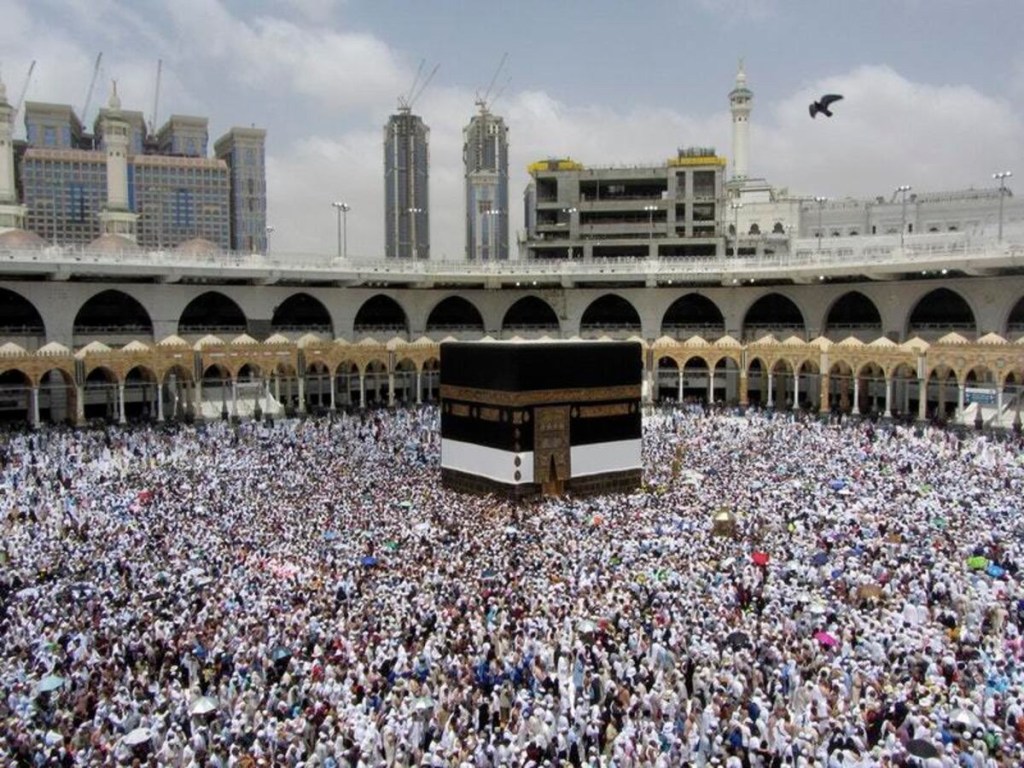
What is Eid al-Adha?
Eid al-Adha, also known as the “Festival of Sacrifice,” is one of the most significant Islamic holidays. It commemorates the willingness of Prophet Ibrahim (Abraham) to sacrifice his son Isma’il (Ishmael) as an act of obedience to God. According to Islamic tradition, just as Ibrahim was about to sacrifice his son, God provided a lamb to sacrifice instead.
The holiday is marked by various rituals and traditions, including:
- Prayer: Special prayers are held in congregation, usually at a mosque or an open field.
- Sacrifice: Families who can afford it will sacrifice an animal, typically a sheep, goat, cow, or camel. The meat is then distributed among family, friends, and those in need.
- Charity: Emphasizing the importance of helping others, Muslims give to charity and ensure that everyone can partake in the celebration.
- Gatherings and Feasts: Families and communities come together to share meals, celebrate, and enjoy each other’s company.
Eid al-Adha is celebrated on the 10th day of Dhu al-Hijjah, the last month of the Islamic lunar calendar, and it coincides with the pilgrimage to Mecca known as Hajj. Muslims who are performing Hajj experience this holiday in a particularly special way.
The Seed of Promise: Analyzing the Fulfillment of Genesis 22:18 in the Context of Jesus and Muhammad
Genesis 22, verse 18, reads:
“And through your offspring all nations of the earth will be blessed, because you have obeyed My voice.”
Genesis 22, verse 18, is a significant verse within the context of biblical narratives. After Abraham’s test of faith, where he was asked to sacrifice his son, God reaffirms His promises to Abraham, specifying the blessings that will come to him and his seed because of his faithfulness.
Some individuals contend that the reference to the “seed” in Genesis 22, verse 18, does not pertain to Jesus, citing his statement in Matthew 15, verse 24, as a basis for their argument. Instead, they posit that this reference should be associated with Muhammad, drawing support from Surah 21, verse 107, of the Quran. They believe Ishmael is the son who is to be nearly sacrificed, not Isaac. The articulation of their argument is as follows:
In Genesis 22, verse 18, it is stated, “And through your offspring all nations of the earth will be blessed, because you have obeyed My voice.” The Hebrew term for “offspring” or “seed” is “zera,” which can function as a collective singular noun, suggesting that it may refer either to an individual or a group.
Conversely, in Matthew 15, verse 24, Jesus declares, “I was sent only to the lost sheep of the house of Israel.” This declaration is interpreted by some to imply that Jesus’ mission was predominantly directed towards the Israelites, rather than encompassing all nations outright. This interpretation is utilized to argue that Jesus does not fulfill the universal promise articulated in Genesis 22, verse 18, which emphasizes blessings for “all nations.”
In support of their argument, proponents reference Surah 21, verse 107, in the Quran, which states, “And We have not sent you, [O Muhammad], except as a mercy to the worlds.” This verse is viewed as indicative of Muhammad’s universal mission, which extends to all of humanity, aligning seamlessly with the promise of blessing for all nations mentioned in Genesis 22, verse 18.
Advocates of this position argue that given Jesus’ explicit reference to his mission being limited to the Israelites, he falls short of fulfilling the universal dimension of the blessing foretold in Genesis 22, verse 18. In contrast, Muhammad is characterized in the Quran as a mercy extended to all worlds; thus, they assert that the “seed” referenced in Genesis 22, verse 18, pertains to Muhammad, rather than to Jesus.
The validity of this argument hinges on the interpretation of the scope of Jesus’ mission as presented in the New Testament, juxtaposed with the universal mission ascribed to Muhammad in the Quran.
Abrahamic covenant and Islam
Islam is considered a restored religion of Abraham, based on the perspective that both Judaism and Christianity have deviated from his original teachings.
Adherents of Islam assert that Judaism has altered the command regarding the sacrifice of Abraham’s son, holding that the son in question was Ishmael rather than Isaac.
Furthermore, they contend that Christianity has diverged from the tenet of monotheism by introducing the concept of the Trinity and modifying the practice of circumcision.
Therefore, from the Islamic viewpoint, Islam embodies the authentic restoration of the teachings of Abraham as presented in the Quran.
Was the Abrahamic covenant fulfilled through Ishmael rather than Isaac?
The belief that the Abrahamic covenant was fulfilled through Ishmael rather than Isaac, including the promise of land from the Nile to the Euphrates and the blessing to all nations through Abraham’s seed, is held by some, particularly within Islamic tradition. Here’s a more detailed articulation of their argument:
Ishmael and the Covenant
- Ishmael as the Firstborn: Supporters of this view argue that Ishmael, being Abraham’s firstborn son, was the original heir to the covenant. They emphasize that Ishmael was the first child of Abraham, born to Hagar, Sarah’s Egyptian maidservant.
- Sacrifice Narrative: They contend that the narrative of Abraham being asked to sacrifice his son originally referred to Ishmael, not Isaac. This is based on the belief that ancient scriptures were altered by Israelite scribes to emphasize Isaac’s role.
- Blessing and Land Promise: The promise of land from the Nile to the Euphrates and the blessing to all nations is seen as applying to Ishmael’s descendants. Islamic tradition views Ishmael as an ancestor of the Arab peoples, and thus sees the fulfillment of these promises through the Islamic Hajj and in the rise of Islamic civilization.
Scriptural Alteration Argument
- Scribal Changes: They argue that ancient Israelite scribes altered the scriptures to shift the focus from Ishmael to Isaac. This was done to establish a theological foundation for the Israelites’ claim to the land and their unique covenantal relationship with God.
- Evidence from Quranic Texts: The Quran does not name the son of the near sacrifice, but Islamic tradition identifies him as Ishmael. This is supported by the timeline in the Quran, which implies that the promise of Isaac’s birth occurred following the sacrifice event, suggesting that Ishmael was the probable candidate.
In conclusion, the perspective that Ishmael, rather than Isaac, was the true heir to the Abrahamic covenant is rooted in the belief that Ishmael, as the firstborn, was the original recipient of God’s promises. This view is supported by interpretations of Islamic tradition and arguments regarding scriptural alterations. While this belief contrasts with the traditional Judeo-Christian view that Isaac was the chosen heir, it highlights the diverse understandings and interpretations of Abrahamic history within different religious traditions.
 ABRAHAMIC THEOLOGY