Azahari Hassim
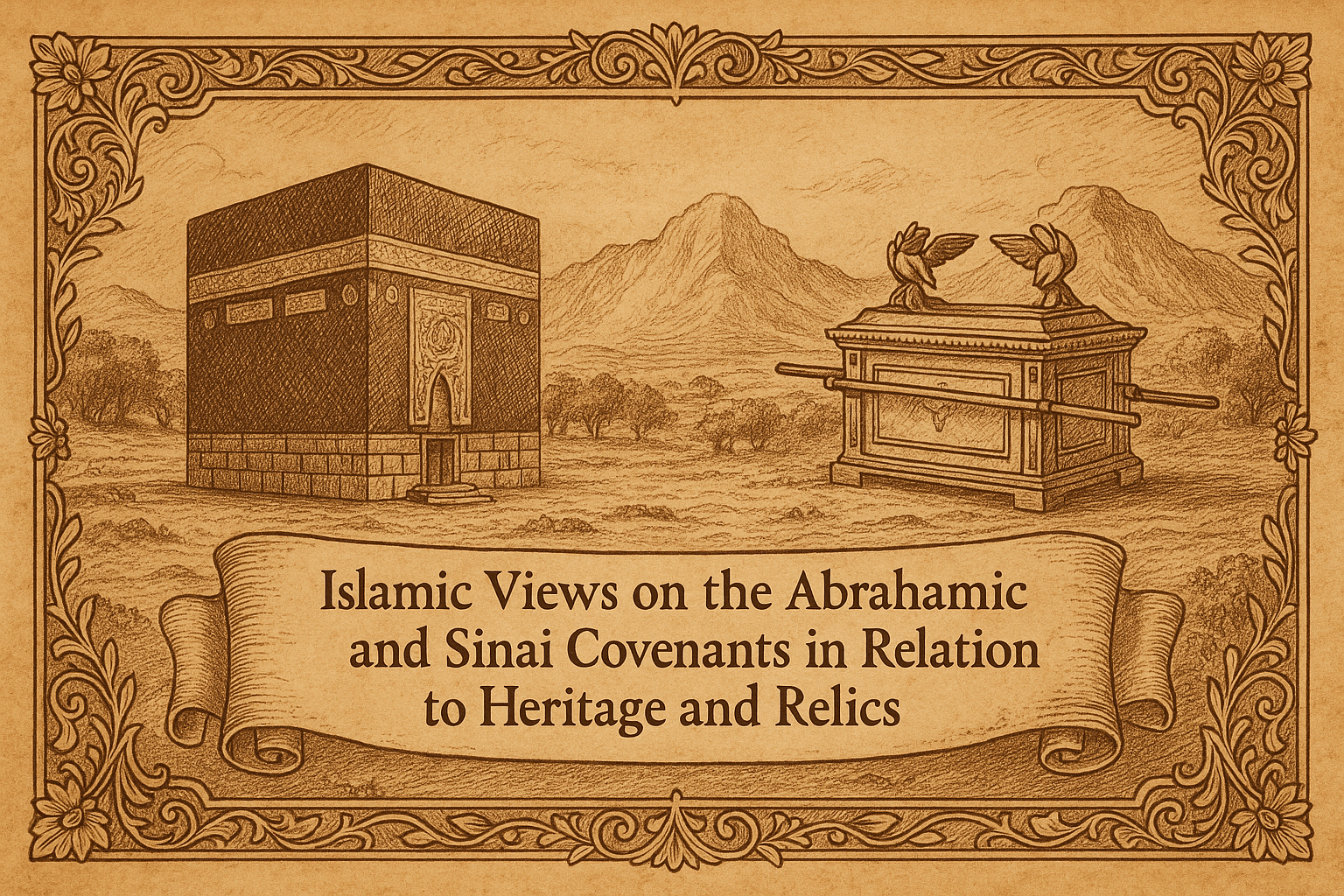
There is no specific Abrahamic relic that has been preserved through Jewish generations, similar to the Kaaba, the Black Stone (Hajar al-Aswad) and the Station of Abraham (Maqam Ibrahim) in Islam. The sole significant artifact associated with Jewish heritage is the Ark of the Covenant.
However, it is important to note that the Ark can be traced back to Moses rather than Abraham and was lost during the destruction of the First Temple. Consequently, Islamic scholars maintain that the Israelites were bound by the Sinai Covenant, while Muslims are considered to be under the Abrahamic Covenant. How does their argument go?
The argument presented by Islamic scholars regarding the Abrahamic Covenant and the Sinai Covenant is based on several theological and historical points. To understand their perspective, let’s break down the key elements:
1. Abrahamic Covenant vs. Sinai Covenant:
The Abrahamic Covenant is believed to be the original covenant between God and Abraham, which includes promises of land, descendants, and blessings.
The Sinai Covenant, also known as the Mosaic Covenant, was established between God and the Israelites through Moses at Mount Sinai.
2. Islamic view on continuity:
Islamic scholars argue that Muslims are the true inheritors of the Abrahamic Covenant, which they consider to be universal and eternal.
They contend that the Sinai Covenant was specific to the Israelites and was temporary or conditional.
3. Lack of physical relics:
The absence of a specific Abrahamic relic in Jewish tradition, comparable to the Kaaba, the Black Stone, or the Station of Abraham in Islam, is seen by some Islamic scholars as significant.
They argue that this absence might indicate a break in the direct line of Abrahamic heritage.
4. The Ark of the Covenant:
While the Ark of the Covenant is a significant artifact in Jewish history, it is associated with Moses rather than Abraham.
Its loss during the destruction of the First Temple is sometimes interpreted by Islamic scholars as a symbolic end to the Sinai Covenant.
5. Islamic claim to Abrahamic heritage:
Islamic scholars often emphasize the direct lineage of Muhammad to Abraham through Ishmael.
They argue that Islam represents a restoration of the original Abrahamic monotheism, unencumbered by later additions or alterations.
6. Universality vs. particularity:
The Islamic view often presents the Abrahamic Covenant as universal, meant for all of humanity.
In contrast, they view the Sinai Covenant as particular to the Israelites and not binding on all people.
7. Supersessionism:
Some Islamic interpretations incorporate a form of supersessionism, suggesting that Islam supersedes earlier revelations and covenants.
It’s important to note that this argument represents a specific Islamic perspective and is not universally accepted outside of Islamic scholarship. Jewish and Christian traditions have their own interpretations of these covenants and their ongoing relevance. The topic of covenants and their applicability is a complex theological issue with various interpretations across different faith traditions.

The Significance of Ishmael in Islamic Faith
If Abraham had been instructed by God to sacrifice Ishmael instead of Isaac, it could be argued that Islam and Muhammad have a legitimate claim as a true religion and prophet. This argument can be further explained by examining the differences in the narrative of Abraham’s sacrifice between Islamic and Judeo-Christian traditions.
The story of Abraham being commanded to sacrifice his son is significant in Judaism, Christianity, and Islam. However, the key difference lies in the identity of the son involved. In Jewish and Christian traditions, it is Isaac who was nearly sacrificed, while in Islamic tradition, it is believed to be Ishmael. Although Ishmael’s name is not explicitly mentioned in the Quran, Muslims believe that he was the son whom Abraham was instructed to sacrifice.
If one were to argue for the legitimacy of Islam and Muhammad as a prophet based on the premise that Ishmael was the son intended for sacrifice, the argument might be structured as follows:
- Shared Abrahamic Roots: All three monotheistic religions—Judaism, Christianity, and Islam—trace their spiritual lineage to Abraham, recognizing him as a patriarch. The story of Abraham’s willingness to sacrifice his son at God’s command is seen as a test of faith in all three traditions.
- Islamic Narrative: The Quran (Surah 37, verses 100 to 113) recounts the story of Abraham’s willingness to sacrifice his son as a demonstration of his obedience to God. While the Quran does not name the son, the majority of Islamic traditions and interpretations identify the son as Ishmael, the eldest son of Abraham through Hagar. This interpretation is derived from the order of events in the Quran, indicating that the promise of Isaac’s birth occurred after the sacrifice story, leading to the conclusion that Ishmael was the son mentioned.
- Prophetic Lineage: In Abrahamic theology, the near sacrifice of Ishmael is regarded as a foreshadowing of Muhammad’s prophethood. This connection between Ishmael’s near-sacrifice and Muhammad’s lineage plays a vital role in confirming Muhammad’s position as a prophet in Islam, serving as a fundamental aspect of the faith and offering valuable insight into the validity of his prophethood.
- Preservation of Revelation: Muslims believe that the Quran is the final and unaltered word of God, preserved exactly as it was revealed to Muhammad. They argue that earlier scriptures, such as the Torah and the Bible, have been altered or misinterpreted over time. In this view, the Quran corrects these alterations, and the indication that Ishmael was the son to be sacrificed is seen as the correct version of the story.
- Continuity of Prophethood: Islam acknowledges the prophets of Judaism and Christianity but considers Muhammad to be the last prophet, who came to restore the original monotheistic faith and to correct deviations that had entered earlier religions. The story of Ishmael’s near-sacrifice, then, is seen as part of this corrective message.
- Theological Implications: The identification of the son in the story of Abraham’s sacrifice holds great significance as it symbolizes the heir of the Abrahamic covenant. In Islamic tradition, designating Ishmael as the son underscores his pivotal role in their religious history and bolsters the credibility of the Islamic faith for Muslims. This underscores the crucial role that lineage and inheritance play within religious narratives.
In conclusion, the narrative of Ishmael as the son intended for sacrifice strengthens Islam’s theological foundation and affirms Muhammad as a prophet. It shows Islam’s connection to the Abrahamic tradition, preservation of divine revelation, and role in restoring monotheistic beliefs. This narrative difference also highlights the interconnectedness and differences among the three Abrahamic faiths, shaping their unique theological identities.
Ishmael: The Rightful Heir of the Abrahamic Covenant – Revisiting Biblical Circumcision and Lineage
The Abrahamic covenant stands as a foundational pillar in the sacred histories of Judaism, Christianity, and Islam. Central to this covenant is the rite of circumcision, instituted by God as a binding sign between Himself and Abraham’s descendants.
Traditionally, Jewish and Christian interpretations assert that Isaac, the son born to Abraham and Sarah, is the rightful heir through whom this covenant is fulfilled.
However, a careful reexamination of the biblical chronology challenges this assumption. This article argues that Ishmael, not Isaac, was the first and only son to receive the covenantal sign alongside Abraham himself—prior to Isaac’s birth—thereby establishing Ishmael as the sole and true heir of the original Abrahamic covenant. By exploring the timing, recipients, and implications of circumcision in Genesis 17 and 21, this piece invites readers to reconsider long-held views and appreciate the overlooked centrality of Ishmael in the divine covenant.
1. The Biblical Basis for Circumcision as a Covenant
The Bible establishes circumcision as the sign of the covenant between God and Abraham:
Genesis 17:9–11:
“Then God said to Abraham, ‘As for you, you must keep my covenant, you and your descendants after you for the generations to come. This is my covenant with you and your descendants after you, the covenant you are to keep: Every male among you shall be circumcised… it will be the sign of the covenant between me and you.’”
Here, circumcision is the definitive sign of the Abrahamic covenant.
2. The Timing of Circumcision Before Isaac’s Birth
The Bible affirms that circumcision was performed before Isaac was born:
Genesis 17:23–26:
“On that very day Abraham took his son Ishmael and all those born in his household or bought with his money, every male in his household, and circumcised them, as God told him… Abraham was ninety-nine years old when he was circumcised, and his son Ishmael was thirteen.”
At this critical juncture, only Abraham and Ishmael were Abraham’s natural descendants to receive the sign of the covenant. Isaac had not yet been born.
3. Ishmael as the Sole and True Heir of the Abrahamic Covenant
This sequence of events reveals that:
Circumcision is the outward and binding sign of the Abrahamic covenant.
Ishmael was the only son of Abraham present to receive this sign alongside him.
All others circumcised at that time were household members and servants—not Abraham’s direct offspring.
Therefore, Ishmael alone stands as the true and sole heir of the Abrahamic covenant, sharing this foundational covenantal sign with Abraham himself.
4. Isaac as Merely a Participant Like Other Household Members
When Isaac was born, he too was circumcised on the eighth day (Genesis 21:4). However, this circumcision occurred after the covenant was already established through Abraham and Ishmael. Like the other members of Abraham’s household, Isaac simply entered into an existing covenantal practice rather than establishing or uniquely embodying it.
In this understanding:
Isaac’s circumcision parallels that of Abraham’s other household members.
He was brought into the covenantal sign but did not share in the original covenantal enactment alongside Abraham.
Thus, Isaac is seen merely as a participant in the Abrahamic covenant, not as its unique heir.
5. Distinction from the Sinai Covenant
The Sinai covenant was revealed exclusively to the descendants of Isaac through Jacob (Israel), establishing a separate covenantal framework for the Israelites.
In contrast, the original Abrahamic covenant—established through circumcision before Isaac’s birth—finds its complete and exclusive fulfillment in Ishmael, who was the first to embody and share this sign with Abraham.
6. Challenging Traditional Jewish and Christian Views
Traditionally, Jewish and Christian interpretations place Isaac as the sole heir of the Abrahamic covenant. However, this argument radically reorients that view:
Ishmael alone shares the covenantal enactment with Abraham.
Isaac, like the other household members, enters a covenantal practice already established.
Therefore, Ishmael alone emerges as the true and rightful heir of the Abrahamic covenant.
Summary of the Articulation
Circumcision, the outward sign of the Abrahamic covenant, was first performed on Abraham and Ishmael before Isaac was born. This historical reality establishes that while Isaac and others in Abraham’s household were participants in the sign of the covenant, only Ishmael shared in the covenant’s original establishment and thus stands as its true and exclusive heir. In this perspective, Ishmael’s role transcends mere participation—he alone embodies the Abrahamic covenant in its full and foundational form.
Some contend that the celebration of Eid al-Adha (feast of sacrifice) by all Muslims, in contrast to the Jewish observance of Passover, suggests that Muslims are linked to the Abrahamic covenant through Ishmael, while Jews are associated with the Sinai covenant. How does their argument go?
The argument that Muslims are linked to the Abrahamic covenant through Ishmael, while Jews are associated with the Sinai covenant, is based on a few key points:
- Eid al-Adha commemorates Abraham’s willingness to sacrifice his son, which Muslims believe was Ishmael rather than Isaac. This directly connects Muslims to Abraham and Ishmael.
- All Muslims worldwide celebrate Eid al-Adha by sacrificing an animal, reminiscent of Abraham’s sacrifice. This universal observance is seen as linking all Muslims to the Abrahamic covenant.
- The Quran portrays Ishmael as assisting Abraham in building the Kaaba (House of God) in Mecca, further cementing the connection between Muslims, Abraham and Ishmael.
- In contrast, Passover specifically commemorates the Exodus of the Israelites from Egypt under Moses’ leadership. This event is directly tied to the giving of the Torah and establishment of the Sinai covenant.
- The Sinai covenant, with its 613 commandments, is seen as specifically binding on Jews rather than on all people.
- Some argue there is a distinction between the Abrahamic covenant characterized by promise, and the Sinai covenant characterized by law.
- While both trace ancestry to Abraham, Muslims see themselves as spiritual descendants of Ishmael, while Jews trace their lineage through Isaac and Jacob.
Therefore, this difference in religious observances implies that Muslims see themselves as heirs to the Abrahamic covenant through Ishmael, while Jews associate themselves more closely with the later Sinai covenant.
However, it’s important to note that both religions still consider Abraham a key patriarch and founder of monotheism.
This argument highlights some of the theological differences between Islam and Judaism regarding their relationship to Abraham and divine covenants, though both religions still revere Abraham as a major prophet and patriarch.
Islam as the Restored Faith of Abraham: Addressing Perceived Deviations in Judaism and Christianity
Islam is considered as a restored religion of Abraham due to Judaism corrupting their text as regards a son whom Abraham was commanded to sacrifice. At the same time, Christianity corrupted their scripture concerning the oneness of God and the rite of circumcision. What is the explanation for this?
The belief that Islam is a restored religion of Abraham stems from the belief that both Judaism and Christianity deviated from the original teachings of Abraham. According to Islamic beliefs, Judaism corrupted their text by incorrectly interpreting the command to sacrifice a son, as mentioned in the Quran. Muslims believe that Abraham was commanded to sacrifice his son Ishmael, not Isaac as mentioned in the Hebrew Bible.
Similarly, Muslims believe that Christianity corrupted their scripture by deviating from the belief in the oneness of God (monotheism) and by modifying the rite of circumcision. Islam emphasizes the concept of tawheed, which is the belief in the oneness of God, and questions the Trinity as mentioned in Christian theology. Islam also practices circumcision, although the method and significance may differ from those in Judaism and some Christian traditions.
These differences and perceived corruptions are seen from the perspective of Islamic theology, which asserts that Islam is the restoration of the original teachings of Abraham, as revealed in the Quran.
 ABRAHAMIC THEOLOGY