Azahari Hassim
Islam is considered a restored religion of Abraham, based on the perspective that both Judaism and Christianity have deviated from his original teachings.
Adherents of Islam assert that Judaism has altered the command regarding the sacrifice of Abraham’s son, holding that the son in question was Ishmael rather than Isaac.
Furthermore, they contend that Christianity has diverged from the tenet of monotheism by introducing the concept of the Trinity and modifying the practice of circumcision.
Therefore, from the Islamic viewpoint, Islam embodies the authentic restoration of the teachings of Abraham as presented in the Quran.
Was the Abrahamic covenant fulfilled through Ishmael rather than Isaac?
The belief that the Abrahamic covenant was fulfilled through Ishmael rather than Isaac, including the promise of land from the Nile to the Euphrates and the blessing to all nations through Abraham’s seed, is held by some, particularly within Islamic tradition. Here’s a more detailed articulation of their argument:
Ishmael and the Covenant
- Ishmael as the Firstborn: Supporters of this view argue that Ishmael, being Abraham’s firstborn son, was the original heir to the covenant. They emphasize that Ishmael was the first child of Abraham, born to Hagar, Sarah’s Egyptian maidservant.
- Sacrifice Narrative: They contend that the narrative of Abraham being asked to sacrifice his son originally referred to Ishmael, not Isaac. This is based on the belief that ancient scriptures were altered by Israelite scribes to emphasize Isaac’s role.
- Blessing and Land Promise: The promise of land from the Nile to the Euphrates and the blessing to all nations is seen as applying to Ishmael’s descendants. Islamic tradition views Ishmael as an ancestor of the Arab peoples, and thus sees the fulfillment of these promises through the Islamic Hajj and in the rise of Islamic civilization.
Scriptural Alteration Argument
- Scribal Changes: They argue that ancient Israelite scribes altered the scriptures to shift the focus from Ishmael to Isaac. This was done to establish a theological foundation for the Israelites’ claim to the land and their unique covenantal relationship with God.
- Evidence from Quranic Texts: The Quran does not name the son of the near sacrifice, but Islamic tradition identifies him as Ishmael. This is supported by the timeline in the Quran, which implies that the promise of Isaac’s birth occurred following the sacrifice event, suggesting that Ishmael was the probable candidate.
In conclusion, the perspective that Ishmael, rather than Isaac, was the true heir to the Abrahamic covenant is rooted in the belief that Ishmael, as the firstborn, was the original recipient of God’s promises. This view is supported by interpretations of Islamic tradition and arguments regarding scriptural alterations. While this belief contrasts with the traditional Judeo-Christian view that Isaac was the chosen heir, it highlights the diverse understandings and interpretations of Abrahamic history within different religious traditions.
The Significance of Ishmael in Islamic Faith
If Abraham had been instructed by God to sacrifice Ishmael instead of Isaac, it could be argued that Islam and Muhammad have a legitimate claim as a true religion and prophet. This argument can be further explained by examining the differences in the narrative of Abraham’s sacrifice between Islamic and Judeo-Christian traditions.
The story of Abraham being commanded to sacrifice his son is significant in Judaism, Christianity, and Islam. However, the key difference lies in the identity of the son involved. In Jewish and Christian traditions, it is Isaac who was nearly sacrificed, while in Islamic tradition, it is believed to be Ishmael. Although Ishmael’s name is not explicitly mentioned in the Quran, Muslims believe that he was the son whom Abraham was instructed to sacrifice.
If one were to argue for the legitimacy of Islam and Muhammad as a prophet based on the premise that Ishmael was the son intended for sacrifice, the argument might be structured as follows:
- Shared Abrahamic Roots: All three monotheistic religions—Judaism, Christianity, and Islam—trace their spiritual lineage to Abraham, recognizing him as a patriarch. The story of Abraham’s willingness to sacrifice his son at God’s command is seen as a test of faith in all three traditions.
- Islamic Narrative: The Quran (Surah 37, verses 100 to 113) recounts the story of Abraham’s willingness to sacrifice his son as a demonstration of his obedience to God. While the Quran does not name the son, the majority of Islamic traditions and interpretations identify the son as Ishmael, the eldest son of Abraham through Hagar. This interpretation is derived from the order of events in the Quran, indicating that the promise of Isaac’s birth occurred after the sacrifice story, leading to the conclusion that Ishmael was the son mentioned.
- Prophetic Lineage: In Abrahamic theology, the near sacrifice of Ishmael is regarded as a foreshadowing of Muhammad’s prophethood. This connection between Ishmael’s near-sacrifice and Muhammad’s lineage plays a vital role in confirming Muhammad’s position as a prophet in Islam, serving as a fundamental aspect of the faith and offering valuable insight into the validity of his prophethood.
- Preservation of Revelation: Muslims believe that the Quran is the final and unaltered word of God, preserved exactly as it was revealed to Muhammad. They argue that earlier scriptures, such as the Torah and the Bible, have been altered or misinterpreted over time. In this view, the Quran corrects these alterations, and the indication that Ishmael was the son to be sacrificed is seen as the correct version of the story.
- Continuity of Prophethood: Islam acknowledges the prophets of Judaism and Christianity but considers Muhammad to be the last prophet, who came to restore the original monotheistic faith and to correct deviations that had entered earlier religions. The story of Ishmael’s near-sacrifice, then, is seen as part of this corrective message.
- Theological Implications: The identification of the son in the story of Abraham’s sacrifice holds great significance as it symbolizes the heir of the Abrahamic covenant. In Islamic tradition, designating Ishmael as the son underscores his pivotal role in their religious history and bolsters the credibility of the Islamic faith for Muslims. This underscores the crucial role that lineage and inheritance play within religious narratives.
In conclusion, the narrative of Ishmael as the son intended for sacrifice strengthens Islam’s theological foundation and affirms Muhammad as a prophet. It shows Islam’s connection to the Abrahamic tradition, preservation of divine revelation, and role in restoring monotheistic beliefs. This narrative difference also highlights the interconnectedness and differences among the three Abrahamic faiths, shaping their unique theological identities.
The Legacy of Isaac and Ishmael: Diverging Perspectives in Judeo-Christian and Islamic Traditions
What is the issue between Isaac and Ishmael from a Judeo-Christian perspective?
The issue between Isaac and Ishmael from a Judeo-Christian perspective stems from the story of Abraham and his two sons. According to the biblical narrative, Abraham and his wife Sarah were unable to have children, so Sarah gave her servant Hagar to Abraham in order to bear a child. Hagar bore Ishmael, but later Sarah miraculously gave birth to Isaac.
The tension between Isaac and Ishmael arises from the fact that both sons were considered heirs to Abraham, and their descendants became the ancestors of the Jewish and Arab peoples, respectively.
This has led to conflict and rivalry between the two groups throughout history. In the Bible, Ishmael and his mother Hagar were eventually sent away by Abraham at Sarah’s insistence, further exacerbating the animosity between the two sons and their descendants.
The issue between Isaac and Ishmael serves as a source of division and conflict within the Judeo-Christian tradition, often emblematic of the larger divides between the Jewish and Arab peoples. However, interpretations and understandings of this issue can vary among different religious and cultural contexts.
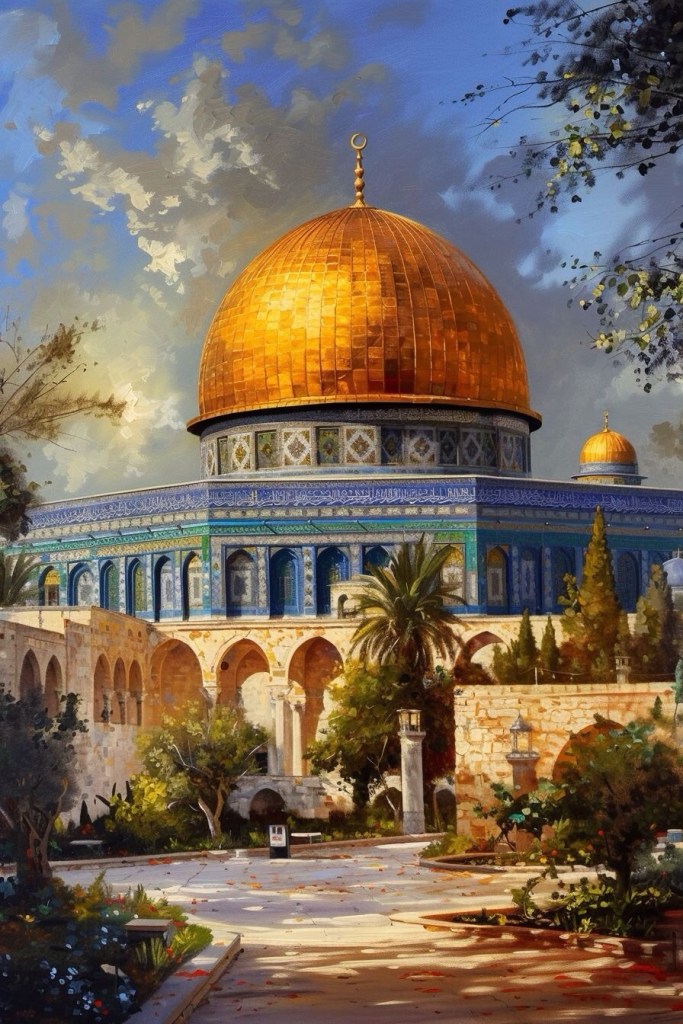
It is a common belief among Jews, Christians, and Muslims that God commanded Abraham to sacrifice his beloved son. However, these faiths differ on which son was to be sacrificed. Jews and Christians, drawing from the Old Testament, believe it was Isaac. In contrast, Muslims believe it was Ishmael.
In Genesis 22, verse 18 of the Torah, God tells Abraham, “In your seed, all the nations of the earth shall be blessed, because you have obeyed my voice.” Here, “seed” is interpreted by Jews to signify a great redeemer or divine messenger who will bring salvation to humanity. Christians share this view due to their inheritance of the Hebrew Bible.
Muslims, however, see Muhammad as the fulfillment of this promise, a view not shared by Jews and Christians. The Quran, in Surah 21, verse 107, states, “And we have not sent you (Muhammad) but as a mercy to the worlds,” reinforcing this belief. The Hajj, a central pillar of Islam, is considered a restoration of the religion of Abraham, which has been distorted by the Jews through their writings pertaining to whose son is to be sacrificed.
The Islamic narrative suggests that since Ishmael was Abraham’s only son for 14 years before Isaac’s birth, it is he who was to be sacrificed—a point hinted at in Genesis 22, verse 12, where God refers to Abraham’s “only son” without specifying a name. Muslims see this ambiguity as indicating Ishmael, rather than Isaac.
Circumcision is another point of contention. It is a practice traced back to Abraham and mandated in the Torah. Christians, however, have largely abandoned physical circumcision, instead emphasizing spiritual circumcision, or placing one’s faith in Jesus Christ. The Quran does not explicitly mention circumcision, but Surah 16, verse 123, which instructs Muhammad to follow the religion of Abraham, is interpreted by some to imply the practice. Thus, circumcision is widely regarded as obligatory in Islam.
The article questions why the Torah does not require the Israelites to commemorate Abraham’s sacrifice, as it does with other significant events like Passover. It suggests that this absence supports the Islamic claim that it was Ishmael, not Isaac, who was nearly sacrificed.
Furthermore, it argues that the practice of circumcision, which renders a sacrifice blemished according to Deuteronomy 17, verse 1, would disqualify both Isaac and Jesus as perfect offerings.
Since the scripture forbids sacrificing animals with defects, it’s argued that this applies to the child meant for offering. Isaac’s circumcision on the eighth day, alongside Jesus’s, is seen as scripturally imperfect for such a sacrifice.
In conclusion, the article implies that the religious practices of Jews and Christians have deviated from what it claims to be the original Abrahamic faith, particularly concerning the Sacrifice of Abraham and the rite of Circumcision.
Ishmael: The Rightful Heir of the Abrahamic Covenant – Revisiting Biblical Circumcision and Lineage
The Abrahamic covenant stands as a foundational pillar in the sacred histories of Judaism, Christianity, and Islam. Central to this covenant is the rite of circumcision, instituted by God as a binding sign between Himself and Abraham’s descendants.
Traditionally, Jewish and Christian interpretations assert that Isaac, the son born to Abraham and Sarah, is the rightful heir through whom this covenant is fulfilled.
However, a careful reexamination of the biblical chronology challenges this assumption. This article argues that Ishmael, not Isaac, was the first and only son to receive the covenantal sign alongside Abraham himself—prior to Isaac’s birth—thereby establishing Ishmael as the sole and true heir of the original Abrahamic covenant. By exploring the timing, recipients, and implications of circumcision in Genesis 17 and 21, this piece invites readers to reconsider long-held views and appreciate the overlooked centrality of Ishmael in the divine covenant.
1. The Biblical Basis for Circumcision as a Covenant
The Bible establishes circumcision as the sign of the covenant between God and Abraham:
Genesis 17:9–11:
“Then God said to Abraham, ‘As for you, you must keep my covenant, you and your descendants after you for the generations to come. This is my covenant with you and your descendants after you, the covenant you are to keep: Every male among you shall be circumcised… it will be the sign of the covenant between me and you.’”
Here, circumcision is the definitive sign of the Abrahamic covenant.
2. The Timing of Circumcision Before Isaac’s Birth
The Bible affirms that circumcision was performed before Isaac was born:
Genesis 17:23–26:
“On that very day Abraham took his son Ishmael and all those born in his household or bought with his money, every male in his household, and circumcised them, as God told him… Abraham was ninety-nine years old when he was circumcised, and his son Ishmael was thirteen.”
At this critical juncture, only Abraham and Ishmael were Abraham’s natural descendants to receive the sign of the covenant. Isaac had not yet been born.
3. Ishmael as the Sole and True Heir of the Abrahamic Covenant
This sequence of events reveals that:
Circumcision is the outward and binding sign of the Abrahamic covenant.
Ishmael was the only son of Abraham present to receive this sign alongside him.
All others circumcised at that time were household members and servants—not Abraham’s direct offspring.
Therefore, Ishmael alone stands as the true and sole heir of the Abrahamic covenant, sharing this foundational covenantal sign with Abraham himself.
4. Isaac as Merely a Participant Like Other Household Members
When Isaac was born, he too was circumcised on the eighth day (Genesis 21:4). However, this circumcision occurred after the covenant was already established through Abraham and Ishmael. Like the other members of Abraham’s household, Isaac simply entered into an existing covenantal practice rather than establishing or uniquely embodying it.
In this understanding:
Isaac’s circumcision parallels that of Abraham’s other household members.
He was brought into the covenantal sign but did not share in the original covenantal enactment alongside Abraham.
Thus, Isaac is seen merely as a participant in the Abrahamic covenant, not as its unique heir.
5. Distinction from the Sinai Covenant
The Sinai covenant was revealed exclusively to the descendants of Isaac through Jacob (Israel), establishing a separate covenantal framework for the Israelites.
In contrast, the original Abrahamic covenant—established through circumcision before Isaac’s birth—finds its complete and exclusive fulfillment in Ishmael, who was the first to embody and share this sign with Abraham.
6. Challenging Traditional Jewish and Christian Views
Traditionally, Jewish and Christian interpretations place Isaac as the sole heir of the Abrahamic covenant. However, this argument radically reorients that view:
Ishmael alone shares the covenantal enactment with Abraham.
Isaac, like the other household members, enters a covenantal practice already established.
Therefore, Ishmael alone emerges as the true and rightful heir of the Abrahamic covenant.
Summary of the Articulation
Circumcision, the outward sign of the Abrahamic covenant, was first performed on Abraham and Ishmael before Isaac was born. This historical reality establishes that while Isaac and others in Abraham’s household were participants in the sign of the covenant, only Ishmael shared in the covenant’s original establishment and thus stands as its true and exclusive heir. In this perspective, Ishmael’s role transcends mere participation—he alone embodies the Abrahamic covenant in its full and foundational form.
The Symbolism of Eid al-Adha (Feast of the Sacrifice)
What is Eid al-Adha?
Eid al-Adha is the “Feast of the Sacrifice,” commemorating Abraham’s devotion to God, when he intended to sacrifice his son and God provided a lamb to sacrifice instead. It follows the Hajj rituals for pilgrims in Mecca, but is celebrated by all Muslims.
Certain scholars contend that Eid Al Adha in Islam suggests a scribal interpolation in the Torah concerning the son intended for near sacrifice, positing that it is Ishmael rather than Isaac. How is their argument articulated?
Some Islamic scholars argue that Eid al-Adha in Islam points to a scribal interpolation in the Torah regarding which son Abraham was commanded to sacrifice. Their argument for scribal interpolation is articulated as follows:
Islamic tradition holds that it was Ishmael, not Isaac, whom Abraham was commanded to sacrifice. This belief forms the basis for the celebration of Eid al-Adha, one of the most important festivals in Islam.
Scholars who support this view present several arguments:
- Primacy of Ishmael: They argue that Ishmael, being Abraham’s firstborn son, was the original heir to the covenant and thus the logical choice for such a significant test of faith.
- Quranic Account: The Quran’s narrative of the sacrifice does not explicitly name the son, but contextual evidence and Islamic tradition point to Ishmael. This interpretation stems from the chronological events presented in the Quran, indicating that the promise of Isaac’s birth occurred after the narrative of the sacrifice, thereby suggesting that Ishmael was the son mentioned in that context.
- Historical Context: These scholars suggest that ancient Israelite scribes may have altered the original text to emphasize Isaac’s role, shifting the focus away from Ishmael to establish a stronger theological foundation for Israelite claims.
- Geographical Inconsistencies: They point out that the biblical account mentions Mount Moriah, while Islamic tradition places the event near Mecca, where Ishmael and Hagar settled.
- Linguistic Analysis: Some argue that careful examination of the original Hebrew text reveals inconsistencies that suggest later editing.
If this interpretation is accepted, it would have significant implications:
It would challenge the traditional Jewish and Christian understanding of the Abrahamic covenant.
It would support the Islamic view of Ishmael as a central figure in the Abrahamic narrative.
It would reinforce the Islamic belief in the Quran as a correction to earlier scriptures.
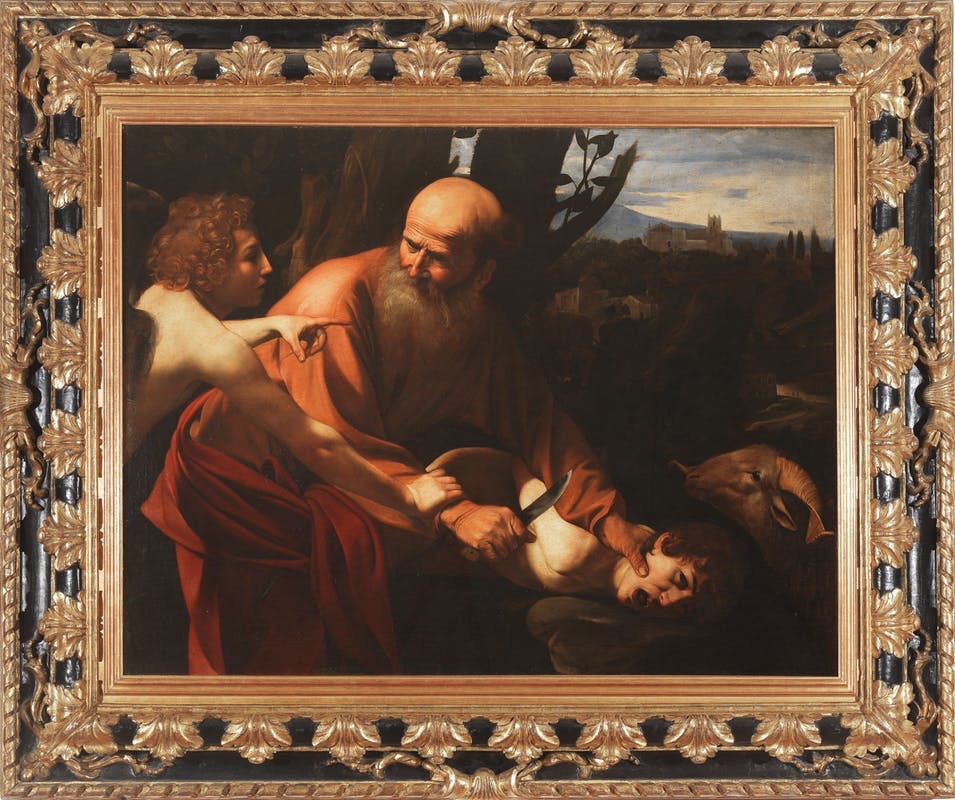
The Near Sacrifice of Ishmael: Islamic Theology and Its Support for the Prophethood of Muhammad
What theological reasoning do Islamic scholars offer to explain how Abraham’s near sacrifice of Ishmael, instead of Isaac, supports the prophethood of Muhammad?
According to Islamic tradition and theology, the near sacrifice of Ishmael by Abraham, rather than Isaac, provides support for the prophethood of Muhammad in several key ways:
Judaism, Christianity, and Islam all trace their spiritual lineage to Abraham as a shared patriarch. The story of Abraham’s willingness to sacrifice his son at God’s command is seen as a supreme test of faith in all three traditions. By identifying the son as Ishmael rather than Isaac, Islam establishes a direct link between Abraham and Muhammad through Ishmael.
The Quran in Surah 37 recounts the story of Abraham’s willingness to sacrifice his son out of obedience to God. Despite not explicitly naming the son, the Quran places the narrative of the sacrifice before the announcement of Isaac’s birth, which some interpret as an indication that Ishmael was the one sacrificed. This Quranic account is seen as affirming Ishmael’s role.
Islamic tradition holds that Muhammad is a direct descendant of Ishmael. The legitimacy and authenticity of Muhammad’s prophethood is thus connected to this lineage going back to Abraham through Ishmael. Ishmael’s willingness to be sacrificed is viewed as a significant event that foreshadows the prophethood of Muhammad, which holds a central role in the religion.
Muslims believe the Quran is the final, unaltered word of God as revealed to Muhammad, arguing that earlier scriptures like the Torah and Bible have been changed over time. In this view, the Quran corrects these alterations, and its indication that Ishmael was the sacrificial son is seen as the accurate version of the story. This affirms Muhammad’s role in restoring the original monotheistic message.
While acknowledging the prophets of Judaism and Christianity, Islam considers Muhammad to be the final prophet who came to restore the pure monotheistic faith and correct deviations that had entered the earlier religions. The story of Ishmael’s near-sacrifice is thus seen as part of this corrective prophetic message continuing through Muhammad.
In summary, the Islamic theological argument is that the identification of Ishmael as the son Abraham was commanded to sacrifice establishes a direct link between Abraham, Ishmael, and Muhammad, supporting the legitimacy of Muhammad’s prophethood as a continuation of the Abrahamic lineage and monotheistic message that was preserved intact through Ishmael and fully restored in the revelation of the Quran to Muhammad. The Ishmael narrative reinforces Muhammad’s prophetic authority for Muslims.
 ABRAHAMIC THEOLOGY