Azahari Hassim
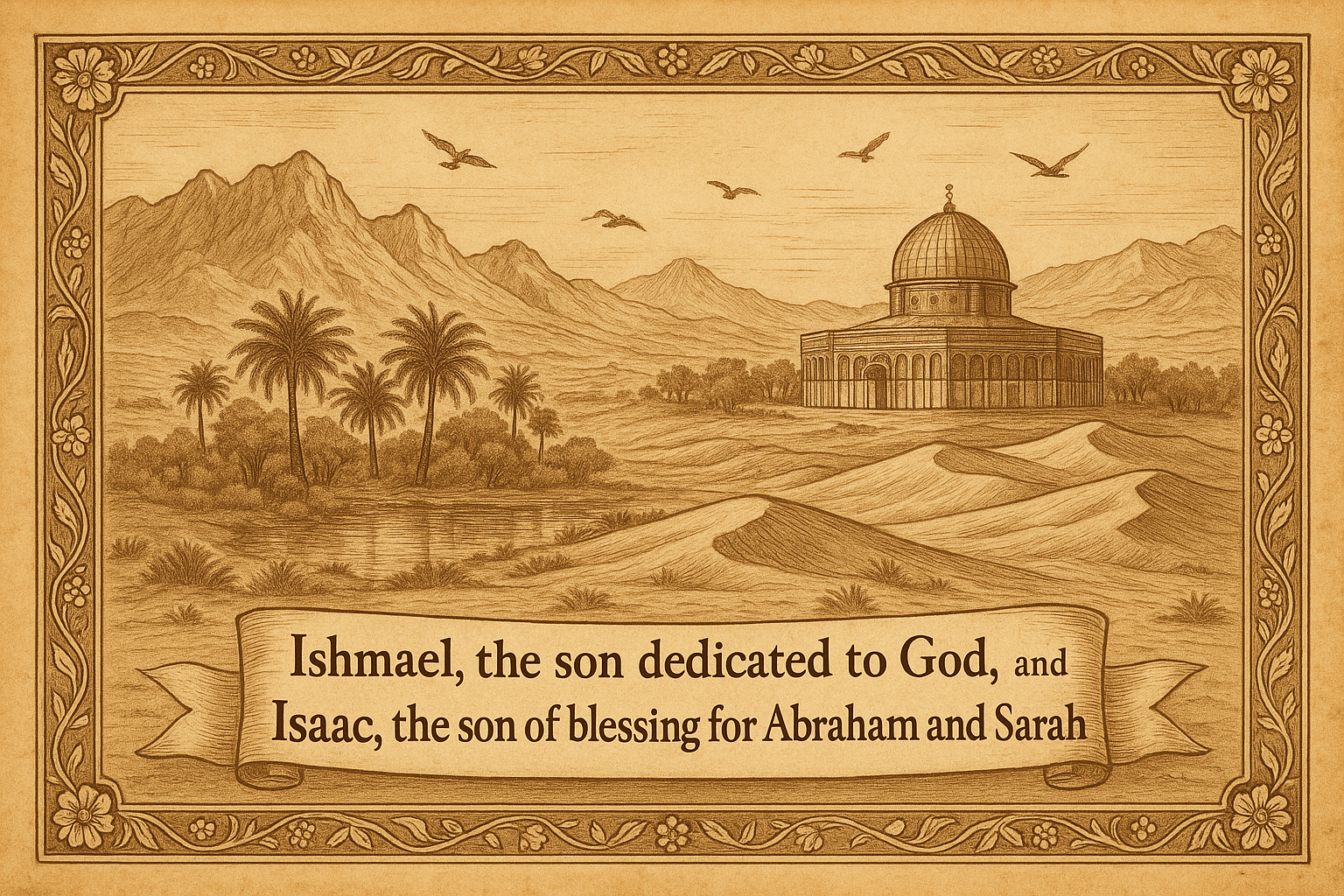
It is thought that Abraham abandoned Hagar and the baby Ishmael close to the Kaaba (House of God) to devote them to God as if they were His. Consequently, Muslims celebrate Eid al-Adha and Sa’i, which honors Hagar’s search for water for her child. This happened well before Isaac’s birth. How is their argument explained?
The Islamic narrative of Abraham, Hagar, and Ishmael differs significantly from the Biblical account and forms an important part of Islamic tradition and ritual. Here’s an explanation of the argument:
- Abraham’s Journey to Mecca
According to Islamic tradition, Abraham was commanded by God to take Hagar and their infant son Ishmael to Mecca. This journey was not seen as abandonment, but rather as fulfilling a divine command. Abraham left them near the location of what would later become the Kaaba, entrusting them to God’s care.
- Hagar’s Faith and the Zamzam Well
After Abraham’s departure, Hagar demonstrated remarkable faith. When their water supply was exhausted, she ran between the hills of Al-Safa and Al-Marwah seven times, desperately searching for water for her thirsty child. This act of faith resulted in the miraculous appearance of the Zamzam well, a spring of water that gushed forth near Ishmael.
- Significance in Islamic Ritual
This event is commemorated in the Islamic pilgrimage (Hajj) through the ritual of Sa’i, where pilgrims run or walk between the hills of Al-Safa and Al-Marwah seven times, reenacting Hagar’s search for water.
- The Kaaba and Mecca
Islamic tradition holds that Abraham later returned to Mecca multiple times. During one of these visits, he and Ishmael constructed the Kaaba as the first house of worship dedicated to the one true God. This established Mecca as a sacred site in Islam.
- Eid al-Adha
Eid al-Adha commemorates Abraham’s willingness to sacrifice his son (identified as Ishmael in Islamic tradition) at God’s command. This event is believed to have occurred near Mecca, further cementing the area’s religious significance.
- Timing in Relation to Isaac
In the Islamic narrative, these events occurred before Isaac’s birth. Ishmael is considered the elder son and the one whom Abraham was commanded to sacrifice.
- God’s Blessing of Isaac
Following the near sacrifice of Ishmael, God blessed Sarah and Abraham with a son named Isaac, fulfilling His promise to them and establishing Isaac as another patriarch in the Abrahamic faiths.
Ishmael and the House of God
Some scholars interpret the phrase “God was with the lad” from Genesis 21:20 to imply that Abraham left Ishmael and Hagar near the House of God (Kaaba) and dedicated them to God, as mentioned in the Quran, Surah 14, verse 37. They also believe the phrase “and he grew” in Genesis 21:20 indicates that Ishmael was still an infant at that time. What are their reasoning and arguments?
Here are the key arguments and reasoning behind this particular scholarly interpretation:
1. Analysis of “God was with the lad” (Genesis 21:20):
These scholars argue that this phrase indicates more than just divine protection – it suggests a specific sacred location. They connect this with Surah 14, verse 37, of the Quran where Abraham states: “O our Lord! I have settled some of my offspring in an uncultivated valley near Your Sacred House”. The parallel between these texts is seen as evidence that Ishmael was left near the Kaaba (House of God), where God’s presence would be particularly manifest.
2. Ishmael’s Age and the Phrase “And He Grew”:
The phrase “and he grew” suggests a developmental stage, implying that Ishmael was still a young child or infant when these events occurred. This is consistent with the narrative in Genesis 21, where Hagar carries the child and later places him under a shrub when they run out of water. In Islamic texts, Ishmael is depicted as an infant during the journey to Mecca. The miracle of the Zamzam well, which sprang forth to provide water for Hagar and Ishmael, is a central story illustrating God’s care for them in their vulnerability.
3. Theological Framework:
These scholars view the story as part of a larger narrative of divine purpose. Abraham’s action is interpreted not as abandonment but as a divinely guided placement. The location near the Kaaba is seen as crucial for Ishmael’s future role in establishing monotheistic worship there.
4. Textual Connections:
The scholars draw parallels between the biblical account and Quranic narrative. They see the biblical phrase “God was with the lad” as complementary to the Quranic account of Abraham settling his family near God’s Sacred House. The emphasis on divine presence in both texts is viewed as supporting this interpretation.
This interpretation represents a particular scholarly view that attempts to harmonize biblical and Quranic accounts, though it’s important to note that this is one of several interpretations of these texts.
Analyzing differences in Ishmael and Isaac stories in the Bible: focusing on age and sacrifice
Here is how the Jewish scribe manipulated Ishmael’s story:
- The age of Ishmael at the time of his departure from Abraham’s house.
- Abraham’s son, who was offered as a sacrifice.
Some people think that Ishmael, when sent away by Abraham in the Torah, was just a young child, not a teenager, based on the phrase “and he grew” in Genesis 21, verse 20. They point out that the Hebrew word “yelid” is used for both Ishmael and baby Moses (Exodus 2, verse 6). How do they explain this argument?
The argument is articulated by pointing out the use of the Hebrew word “yelid” in both Genesis 21, verses 14 to 15, and Exodus 2, verse 6. In these verses, “yelid” is used to describe both Ishmael and infant Moses. Supporters of the argument claim that since “yelid” is used to describe Moses when he was an infant, it should also be understood to mean that Ishmael was still a young child in Genesis 21, verse 20.
Additionally, the phrase “and he grew” in Genesis 21, verse 20, is interpreted by some to imply that Ishmael was still in the process of growing and developing, suggesting a younger age. They argue that if Ishmael were already a teenager or older, it would not be necessary to mention his growth.
It should be noted, however, that interpretations of biblical texts can vary, and different scholars or readers may have different understandings of the intended meaning.
Why are the statements about Abraham wanting to sacrifice his son in Genesis 22, verse 2, and verse 16 problematic? In one case, the son is referred to as “the only,” while in the other, the name of the son is not mentioned.
The story of Abraham being tested to sacrifice his son in Genesis 22 has raised some interpretative questions and concerns among readers. Specifically, the statements as mentioned in verses 2 and 16 are problematic for a couple of reasons.
First, in Genesis 22, verse 2, when God calls Abraham to sacrifice his son, Isaac is described as “your only son.” However, this raises a discrepancy because at that point, Abraham already had an older son named Ishmael, born to Hagar. Ishmael was not mentioned in this context, leading to confusion regarding why Isaac was referred to as the “only” son. This linguistic inconsistency has led some scholars to suggest that the story might have been composed independently from other narratives that mention Ishmael.
Secondly, in Genesis 22, verse 16, after Abraham successfully passes the test and God intervenes by providing a ram as a substitute sacrifice, God blesses Abraham and says, “because you have not withheld your son, your only son.” This repetition of “your only son” raises another concern since Isaac’s name is not mentioned. It seems that the narrative originally presents the unnamed and only son of Abraham, alluding to Ishmael who lived as Abraham’s only son for almost 14 years before Isaac was born.
These discrepancies may be due to several factors, such as different sources or traditions being woven together, intentional theological messaging, or even potential editorial modifications over time. Scholars have examined these issues and proposed various explanations to reconcile the inconsistencies, but it remains a topic of debate and interpretation.
Ultimately, the problematic nature of these statements arises from the textual and narrative intricacies within the story, which have led to questions about authorship, redaction, and theological implications.
 ABRAHAMIC THEOLOGY