Azahari Hassim
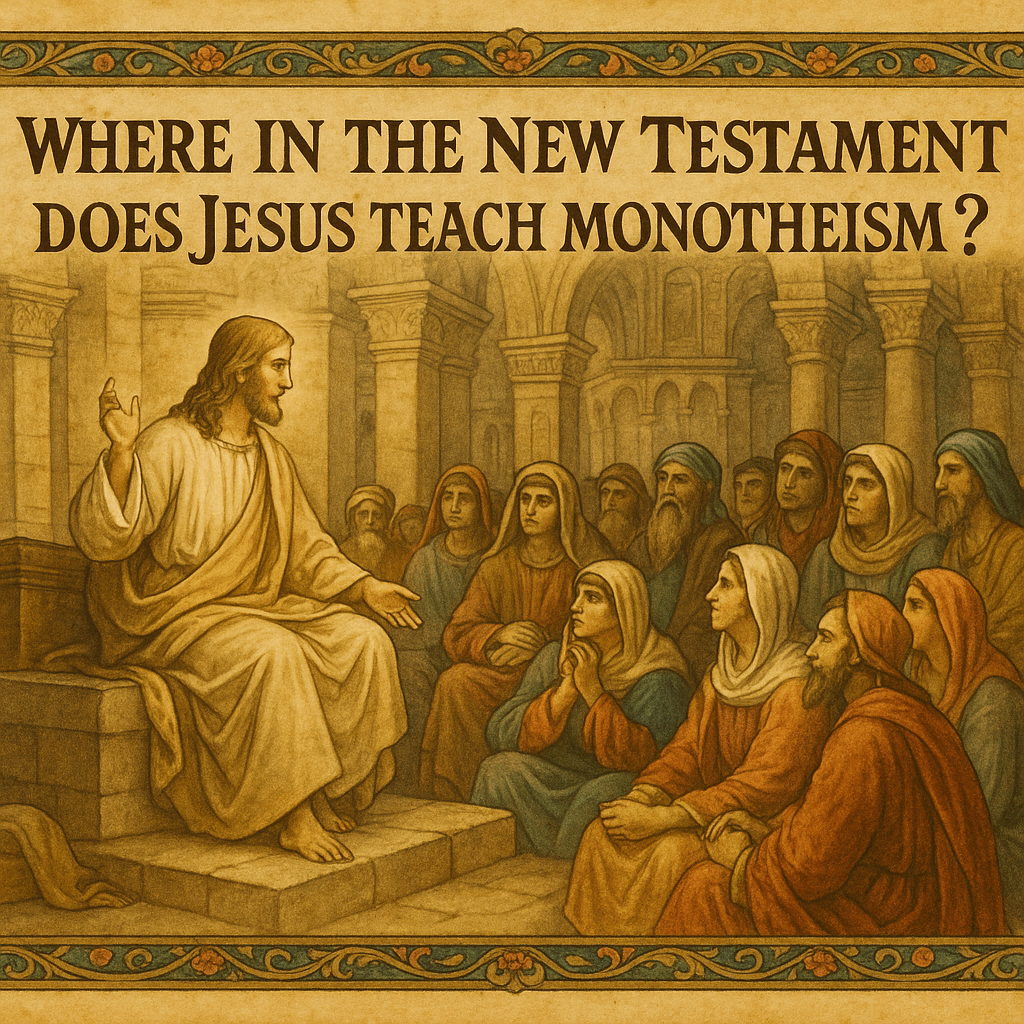
In the New Testament, Jesus affirms the belief in monotheism, the understanding of one God. He upholds the teachings of the Hebrew Scriptures, which emphasize belief in one true God. Here are several examples:
- Mark 12, verse 29: In response to a question about the greatest commandment, Jesus quotes the Shema from Deuteronomy 6, verse 4, saying, “The most important one is this: ‘Hear, O Israel: The Lord our God, the Lord is one.’” Here, Jesus emphasizes the foundational Jewish belief in one God, affirming that monotheism remains central to his teachings.
- John 17, verse 3: In his prayer to God, Jesus says, “Now this is eternal life: that they know you, the only true God, and Jesus Christ, whom you have sent.” By addressing God as the “only true God,” Jesus underlines that God alone is worthy of worship and emphasizes his own role as the one sent by God, distinguishing himself from God and reinforcing monotheistic belief.
- Matthew 4, verse 10: When tempted by Satan, Jesus responds, “Away from me, Satan! For it is written: ‘Worship the Lord your God and serve him only.’” Quoting Deuteronomy 6, verse 13, Jesus affirms that worship should be directed to God alone, rejecting the idea of worshiping anyone or anything else.
- Mark 10, verse 18: When a man addresses Jesus as “Good Teacher,” Jesus replies, “Why do you call me good? No one is good—except God alone.” Here, Jesus redirects the focus back to God, attributing ultimate goodness to God alone. This statement reflects Jesus’ humility and his acknowledgment of God’s unique holiness, underscoring monotheism by reserving true goodness and divinity for God alone.
These verses highlight Jesus’ affirmation of belief in one God and his rejection of worshiping any other gods or idols. Jesus consistently teaches that there is only one true God, encouraging his followers to worship and serve Him alone. Through his words and actions, Jesus aligns himself with the core tenets of monotheism found in the Hebrew Scriptures, affirming the oneness and sovereignty of God.
How does the Hebrew Bible teach monotheism?
The Book of Isaiah in the Hebrew Bible contains several passages that emphasize the unity and singular nature of God, which are often cited in discussions about monotheism. Here are a few key verses from Isaiah that highlight the unity of God:
- Isaiah 44, verse 6: “Thus says the LORD, the King of Israel and his Redeemer, the LORD of hosts: ‘I am the first and I am the last; besides me there is no god.’”
This verse clearly articulates the oneness of God, stating that there is no other deity besides Him. - Isaiah 45, verse 5: “I am the LORD, and there is no other, apart from me there is no God; I will strengthen you, though you have not acknowledged me,”.
Again, this asserts the exclusivity of God as the only divine being, emphasizing that no other gods exist alongside Him. - Isaiah 45, verse 18: “For thus says the LORD, who created the heavens (he is God!), who formed the earth and made it (he established it; he did not create it empty, he formed it to be inhabited!): ‘I am the LORD, and there is no other.’”
This verse not only speaks to God’s uniqueness but also to His role as the sole creator of the universe, reinforcing the idea of His singular divinity. - Isaiah 46, verse 9: “Remember the former things of old; for I am God, and there is no other; I am God, and there is none like me,”.
This verse emphasizes the uniqueness of God, stating there is none like Him, highlighting His distinct nature and the exclusivity of His divinity.
These verses from Isaiah are often used to support the concept of monotheism, a core belief in Judaism, Christianity, and Islam, albeit each religion understands and interacts with this concept differently. In the context of Islamic teachings, similar verses from the Quran echo these themes to assert the oneness of God against polytheistic beliefs and theological concepts like the Trinity in Christianity.
The Jewish Perspective on the Belief in God Having a Son
In Judaism, how grave a sin is it to believe that the God of Abraham has a son?
Judaism is a monotheistic religion that believes in one God who is the creator and ruler of the universe. Judaism rejects the idea that God has a son or any other partner or equal. Judaism considers the belief that God has a son to be a form of idolatry, which is a grave sin and a violation of the first commandment.
According to Judaism, God does not have a physical body or human attributes. God is transcendent and incomparable. God does not need a son or any other intermediary to communicate with humanity. God speaks directly to the prophets and reveals His will through the Torah, the sacred scriptures of Judaism.
The term “son of God” is sometimes used in the Hebrew Bible (Old Testament) to refer to different groups or individuals who have a special relationship with God, such as Israel, the king, the angels, or the righteous. However, this term is not meant to imply any biological or metaphysical connection between God and His creatures. It is a metaphorical expression of love, favor, or covenant.
Judaism does not accept the Christian claim that Jesus is the son of God.
Therefore, to believe that God has a son is contrary to the core principles of Judaism and an offense to God’s uniqueness and sovereignty. It is a serious sin that goes against the most fundamental belief of Judaism:
“Hear, O Israel: The Lord our God, the Lord is one” (Deuteronomy 6, verse 4).

What is the Jewish perspective on the Christian and Islamic doctrine of monotheism?
The Jewish perspective on the Christian and Islamic doctrines of monotheism is shaped by the fundamental beliefs of Judaism. Jews view themselves as maintainers of a strict and unchanging monotheism, which is articulated in texts like the Shema.
Regarding Christianity, many Jews see the doctrine of the Trinity as a significant departure from the concept of a singular, indivisible God. The idea that God exists in three persons is often viewed as incompatible with Jewish beliefs, which emphasize God’s oneness and uniqueness.
In relation to Islam, the Jewish perspective generally acknowledges the Islamic belief in one God (Allah) and sees it as closer to the Jewish conception of monotheism compared to Christianity.
However, there are still distinctions, especially regarding the role of prophets and the understandings of divine revelation. Jews acknowledge Muhammad as a prophet within the Islamic tradition; however, they do not view the Qur’an as a continuation or completion of the Jewish covenant.
Overall, Jews respect the monotheistic claims of both Christianity and Islam but maintain that their own interpretation of God as a singular entity is the true expression of monotheism as revealed in the Hebrew Bible.
The Quran and the Torah
Some scholars argue that the Quran complements the Torah given to the Jews, as the Torah does not contain a description of God’s nature mentioned in Surah 112 verse 3 of the Quran, which questions the idea of Trinity. How can this argument be clarified?
The topic you bring up involves several layers of religious interpretation and debate among scholars. Let’s unpack this step by step:
1. Surah 112 (Al Ikhlas) of the Quran: This is a short chapter (surah) that describes the oneness of God (tawhid). The verses you’re referring to are:
Say, “He is Allah, [who is] One,
Allah, the Eternal Refuge.
He neither begets nor is born,
Nor is there to Him any equivalent.”
This is a clear declaration of monotheism and negates the idea of God having offspring or being born from something. Many interpret this as a challenge to the Christian idea of the Trinity and God’s sonship.
2. The Torah and God’s Description: While it’s true that the Torah emphasizes the oneness of God, the Torah does not contain the explicit language found in Surah 112 of the Quran regarding God not begetting nor being begotten. This difference is often cited as evidence for the Quran being a complementary revelation.
3. Quran as Complementary: The Quran itself claims to be a final testament that confirms what came before it (previous scriptures) and also acts as a guardian over them, correcting any deviations or misunderstandings. This is the foundation of the belief that the Quran is complementary to earlier revelations like the Torah.
However, it’s essential to understand that these interpretations and beliefs are rooted in faith and religious traditions. The interpretation of scriptures, whether it’s the Torah, Bible, or Quran, can vary widely among scholars and believers within their respective faiths.
 ABRAHAMIC THEOLOGY