
Azahari Hassim
The Book of Isaiah in the Hebrew Bible contains several passages that emphasize the unity and singular nature of God, which are often cited in discussions about monotheism. Here are a few key verses from Isaiah that highlight the unity of God:
- Isaiah 44, verse 6: “Thus says the LORD, the King of Israel and his Redeemer, the LORD of hosts: ‘I am the first and I am the last; besides me there is no god.’”
This verse clearly articulates the oneness of God, stating that there is no other deity besides Him. - Isaiah 45, verse 5: “I am the LORD, and there is no other, apart from me there is no God; I will strengthen you, though you have not acknowledged me,”.
Again, this asserts the exclusivity of God as the only divine being, emphasizing that no other gods exist alongside Him. - Isaiah 45, verse 18: “For thus says the LORD, who created the heavens (he is God!), who formed the earth and made it (he established it; he did not create it empty, he formed it to be inhabited!): ‘I am the LORD, and there is no other.’”
This verse not only speaks to God’s uniqueness but also to His role as the sole creator of the universe, reinforcing the idea of His singular divinity. - Isaiah 46, verse 9: “Remember the former things of old; for I am God, and there is no other; I am God, and there is none like me,”.
This verse emphasizes the uniqueness of God, stating there is none like Him, highlighting His distinct nature and the exclusivity of His divinity.
These verses from Isaiah are often used to support the concept of monotheism, a core belief in Judaism, Christianity, and Islam, albeit each religion understands and interacts with this concept differently. In the context of Islamic teachings, similar verses from the Quran echo these themes to assert the oneness of God against polytheistic beliefs and theological concepts like the Trinity in Christianity.
The Jewish Perspective on the Belief in God Having a Son
In Judaism, how grave a sin is it to believe that the God of Abraham has a son?
Judaism is a monotheistic religion that believes in one God who is the creator and ruler of the universe. Judaism rejects the idea that God has a son or any other partner or equal. Judaism considers the belief that God has a son to be a form of idolatry, which is a grave sin and a violation of the first commandment.
According to Judaism, God does not have a physical body or human attributes. God is transcendent and incomparable. God does not need a son or any other intermediary to communicate with humanity. God speaks directly to the prophets and reveals His will through the Torah, the sacred scriptures of Judaism.
The term “son of God” is sometimes used in the Hebrew Bible (Old Testament) to refer to different groups or individuals who have a special relationship with God, such as Israel, the king, the angels, or the righteous. However, this term is not meant to imply any biological or metaphysical connection between God and His creatures. It is a metaphorical expression of love, favor, or covenant.
Judaism does not accept the Christian claim that Jesus is the son of God.
Therefore, to believe that God has a son is contrary to the core principles of Judaism and an offense to God’s uniqueness and sovereignty. It is a serious sin that goes against the most fundamental belief of Judaism:
“Hear, O Israel: The Lord our God, the Lord is one” (Deuteronomy 6, verse 4).
Where in the New Testament does Jesus teach monotheism?
In the New Testament, Jesus affirms the belief in monotheism, the understanding of one God. He upholds the teachings of the Hebrew Scriptures, which emphasize belief in one true God. Here are several examples:
1. Mark 12, verse 29: In response to a question about the greatest commandment, Jesus quotes the Shema from Deuteronomy 6, verse 4, saying:
“The most important one is this: ‘Hear, O Israel: The Lord our God, the Lord is one.’”
Here, Jesus emphasizes the foundational Jewish belief in one God, affirming that monotheism remains central to his teachings.
2. John 17, verse 3: In his prayer to God, Jesus says:
“Now this is eternal life: that they know you, the only true God, and Jesus Christ, whom you have sent.”
By addressing God as the “only true God,” Jesus underlines that God alone is worthy of worship and emphasizes his own role as the one sent by God, distinguishing himself from God and reinforcing monotheistic belief.
3. Matthew 4, verse 10: When tempted by Satan, Jesus responds:
“Away from me, Satan! For it is written: ‘Worship the Lord your God and serve him only.’”
Quoting Deuteronomy 6, verse 13, Jesus affirms that worship should be directed to God alone, rejecting the idea of worshiping anyone or anything else.
4. Mark 10, verse 18: When a man addresses Jesus as “Good Teacher,” Jesus replies:
“Why do you call me good? No one is good—except God alone.”
Here, Jesus redirects the focus back to God, attributing ultimate goodness to God alone. This statement reflects Jesus’ humility and his acknowledgment of God’s unique holiness, underscoring monotheism by reserving true goodness and divinity for God alone.
These verses highlight Jesus’ affirmation of belief in one God and his rejection of worshiping any other gods or idols. Jesus consistently teaches that there is only one true God, encouraging his followers to worship and serve Him alone. Through his words and actions, Jesus aligns himself with the core tenets of monotheism found in the Hebrew Scriptures, affirming the oneness and sovereignty of God.
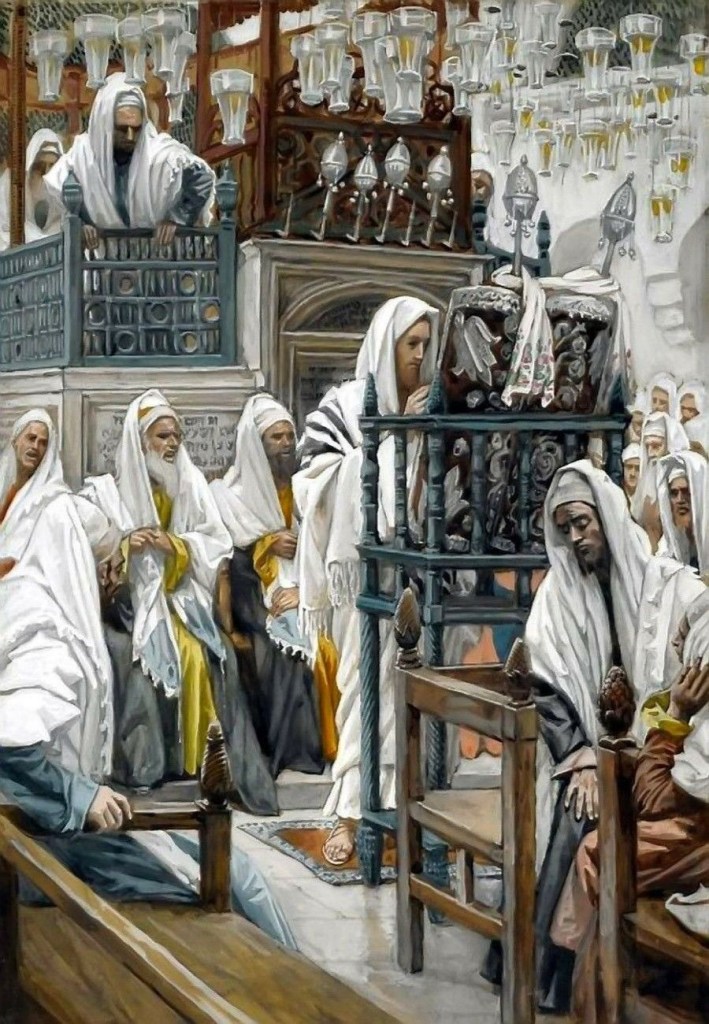
After reading, Jesus declares, “Today this scripture is fulfilled in your hearing,” indicating that He is the fulfillment of the prophecy and the promised Messiah. This moment is pivotal as it marks the beginning of His public ministry and highlights His mission to bring hope and healing to humanity.
Exploring the Compatibility of the Logos in John and Philo with Torah Monotheism
Is the Logos described by the Gospel of John and Philo compatible with the monotheistic teaching of the Torah?
The concept of the Logos as described by the Gospel of John and Philo of Alexandria introduces complex theological discussions, especially in relation to the monotheistic teachings of the Torah. These discussions touch on the nature of God, the interpretation of divine wisdom, and the relationship between God and His manifestations or expressions in the world.
Philo of Alexandria, a Hellenistic Jewish philosopher, lived in the 1st century BCE to the 1st century CE. He attempted to harmonize Greek philosophy with Jewish theology, using the concept of the Logos as a central intermediary figure through which God creates and maintains the universe. Philo’s Logos is not a separate god but an aspect of the one God, serving as a kind of divine reason or wisdom. This is somewhat compatible with the monotheistic teachings of the Torah, as Philo does not posit the Logos as a separate deity but rather as a means through which the singular, monotheistic God operates.
The Gospel of John, written in the late 1st century CE, begins with a high Christological statement that identifies Jesus as the Logos (“In the beginning was the Word, and the Word was with God, and the Word was God.” John 1:1). This Logos became flesh in the person of Jesus Christ (John 1:14). This introduction of the Logos as both distinct from and yet fully divine, coexisting with God from the beginning, presents a more complex challenge to traditional Jewish monotheism as presented in the Torah. The Christian interpretation of the Logos in John’s Gospel, identifying the Logos as Jesus Christ, introduces the concept of the Trinity in later Christian doctrine, which asserts the unity of Father, Son (Logos), and Holy Spirit as one God in three Persons.
From a traditional Jewish perspective, based strictly on the Torah’s teachings, the notion of God manifesting as the Logos in the flesh, as described in John’s Gospel, would be seen as incompatible with its strict monotheism. The Torah emphasizes the oneness and uniqueness of God (Deuteronomy 6:4), and any division or plurality within the Godhead would challenge that foundational principle.
However, theological interpretations and understandings of the nature of God have varied greatly over time and among different religious traditions. Some Jewish and Christian theologians have found ways to discuss the concepts introduced by Philo and the Gospel of John in manners that they believe are not in contradiction with the monotheistic essence of the Torah. For instance, discussions around the Logos can focus on the ways in which God’s wisdom and creative word manifest in the world, rather than on a literal interpretation of separate beings or entities.
The compatibility of these concepts with the monotheistic teaching of the Torah, therefore, depends greatly on the interpretive lens through which they are viewed. Intra-religious and inter-religious dialogues continue to explore these complex relationships, often focusing on the underlying unity of God as a foundational principle that can accommodate various expressions of divine interaction with the world.
 ABRAHAMIC THEOLOGY