Azahari Hassim
What is Eid al-Adha?
Eid al-Adha is the “Feast of the Sacrifice,” commemorating Abraham’s devotion to God, when he intended to sacrifice his son and God provided a lamb to sacrifice instead. It follows the Hajj rituals for pilgrims in Mecca, but is celebrated by all Muslims.
Certain scholars contend that Eid Al Adha in Islam suggests a scribal interpolation in the Torah concerning the son intended for near sacrifice, positing that it is Ishmael rather than Isaac. How is their argument articulated?
Some Islamic scholars argue that Eid al-Adha in Islam points to a scribal interpolation in the Torah regarding which son Abraham was commanded to sacrifice. Their argument for scribal interpolation is articulated as follows:
Islamic tradition holds that it was Ishmael, not Isaac, whom Abraham was commanded to sacrifice. This belief forms the basis for the celebration of Eid al-Adha, one of the most important festivals in Islam.
Scholars who support this view present several arguments:
1. Primacy of Ishmael: They argue that Ishmael, being Abraham’s firstborn son, was the original heir to the covenant and thus the logical choice for such a significant test of faith.
2. Quranic Account: The Quran’s narrative of the sacrifice does not explicitly name the son, but contextual evidence and Islamic tradition point to Ishmael. This interpretation stems from the chronological events presented in the Quran, indicating that the promise of Isaac’s birth occurred after the narrative of the sacrifice, thereby suggesting that Ishmael was the son mentioned in that context.
3. Historical Context: These scholars suggest that ancient Israelite scribes may have altered the original text to emphasize Isaac’s role, shifting the focus away from Ishmael to establish a stronger theological foundation for Israelite claims.
4. Geographical Inconsistencies: They point out that the biblical account mentions Mount Moriah, while Islamic tradition places the event near Mecca, where Ishmael and Hagar settled.
5. Linguistic Analysis: Some argue that careful examination of the original Hebrew text reveals inconsistencies that suggest later editing.
If this interpretation is accepted, it would have significant implications:
It would challenge the traditional Jewish and Christian understanding of the Abrahamic covenant.
It would support the Islamic view of Ishmael as a central figure in the Abrahamic narrative.
It would reinforce the Islamic belief in the Quran as a correction to earlier scriptures.
ثُمَّ أَوْحَيْنَآ إِلَيْكَ أَنِ ٱتَّبِعْ مِلَّةَ إِبْرَٰهِيمَ حَنِيفًا ۖ وَمَا كَانَ مِنَ ٱلْمُشْرِكِينَ
Holy Quran 16:123
Then We inspired you: “Follow the religion of Abraham, the Monotheist. He was not an idol-worshiper.”

What theological reasoning do Islamic scholars offer to explain how Abraham’s near sacrifice of Ishmael, instead of Isaac, supports the prophethood of Muhammad?
According to Islamic tradition and theology, the near sacrifice of Ishmael by Abraham, rather than Isaac, provides support for the prophethood of Muhammad in several key ways:
Judaism, Christianity, and Islam all trace their spiritual lineage to Abraham as a shared patriarch. The story of Abraham’s willingness to sacrifice his son at God’s command is seen as a supreme test of faith in all three traditions. By identifying the son as Ishmael rather than Isaac, Islam establishes a direct link between Abraham and Muhammad through Ishmael.
The Quran in Surah 37 recounts the story of Abraham’s willingness to sacrifice his son out of obedience to God. Despite not explicitly naming the son, the Quran places the narrative of the sacrifice before the announcement of Isaac’s birth, which some interpret as an indication that Ishmael was the one sacrificed. This Quranic account is seen as affirming Ishmael’s role.
Islamic tradition holds that Muhammad is a direct descendant of Ishmael. The legitimacy and authenticity of Muhammad’s prophethood is thus connected to this lineage going back to Abraham through Ishmael. Ishmael’s willingness to be sacrificed is viewed as a significant event that foreshadows the prophethood of Muhammad, which holds a central role in the religion.
Muslims believe the Quran is the final, unaltered word of God as revealed to Muhammad, arguing that earlier scriptures like the Torah and Bible have been changed over time. In this view, the Quran corrects these alterations, and its indication that Ishmael was the sacrificial son is seen as the accurate version of the story. This affirms Muhammad’s role in restoring the original monotheistic message.
While acknowledging the prophets of Judaism and Christianity, Islam considers Muhammad to be the final prophet who came to restore the pure monotheistic faith and correct deviations that had entered the earlier religions. The story of Ishmael’s near-sacrifice is thus seen as part of this corrective prophetic message continuing through Muhammad.
In summary, the Islamic theological argument is that the identification of Ishmael as the son Abraham was commanded to sacrifice establishes a direct link between Abraham, Ishmael, and Muhammad, supporting the legitimacy of Muhammad’s prophethood as a continuation of the Abrahamic lineage and monotheistic message that was preserved intact through Ishmael and fully restored in the revelation of the Quran to Muhammad. The Ishmael narrative reinforces Muhammad’s prophetic authority for Muslims.
“The promise that Abraham shall be the father of many nations reflects an expansion of the covenant, indicating that the election of Abraham has implications for the entire world. It foreshadows the universalism that is to come.”
Gerhard von Rad, Genesis: A Commentary, Old Testament Library.
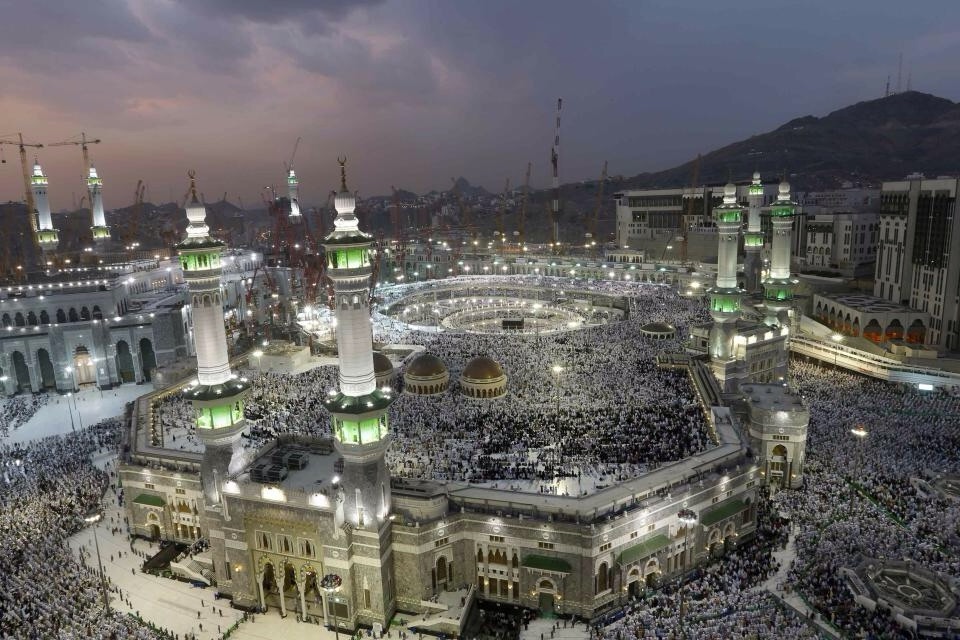
The Abrahamic Focus of Hajj: A Testament to the Prophet Muhammad’s Authenticity
One of the most striking aspects of Islam’s most sacred ritual, the Hajj pilgrimage, is its overwhelming focus on the figure of Abraham (Ibrahim in Arabic). This emphasis on Abraham, rather than on the Prophet Muhammad, peace be upon him, himself, offers a compelling argument for the Prophet Muhammad’s, peace be upon him, authenticity as a prophet. In an era when religious leaders often sought personal glory, Muhammad’s decision to center the Hajj around Prophet Abraham, peace be upon him, demonstrates a humility and divine focus that lends credence to his prophetic claims.
The Abrahamic Core of Hajj Rituals
The Hajj is one of the Five Pillars of Islam, obligatory for every able-bodied Muslim who can afford it at least once in their lifetime. It involves a journey to Mecca, Saudi Arabia, following a series of rituals that commemorate events in the lives of Prophet Abraham, his wife Hagar, and their son Ishmael peace be upon them. These rituals are deeply symbolic, each pointing back to this revered family rather than to Muhammad or his own life events.
For instance, the Kaaba, the black, cube-shaped structure at the heart of Mecca’s Grand Mosque. Muslims believe Prophets Abraham and Ishmael, peace be upon them, built this structure as the world’s first temple dedicated to the worship of the One God. During Hajj, pilgrims circumambulate the Kaaba seven times, symbolically centering their worship on the divine unity that Abraham proclaimed, not on any human figure.
Next, pilgrims run between the hills of Safa and Marwa, reenacting Hagar’s desperate search for water for her infant son Ishmael. This ritual recalls her trust in God during a moment of extreme vulnerability. It has no connection to the life of the Prophet Muhammad, peace be upon him, but instead honors a mother’s faith from thousands of years before his time. Had the Prophet Muhammad, peace be upon him, fabricated the religion, he would have likely made the ritual about one of his own wives or daughters.
Perhaps most tellingly, on the 10th day of Dhul Hijjah (the month of Hajj), pilgrims perform the symbolic stoning of the devil. This ritual commemorates Prophet Abraham’s unwavering obedience to God. According to Islamic tradition, when God commanded Prophet Abraham, peace be upon him, to sacrifice his son, Satan tried three times to dissuade him. Each time, the Prophet Abraham, peace be upon him, drove Satan away by throwing stones at him.
The Obvious Absence – Why Not the Prophet Muhammad, peace be upon him?
Given the status of the Prophet Muhammad, peace be upon him, in Islam as the final prophet, one might expect the Hajj to revolve around his life and teachings. After all, he was born in Mecca, received his first revelations nearby, and eventually returned to establish the city as Islam’s spiritual capital. His biographical events provide ample material for symbolic rituals. Yet, strikingly, none of the core Hajj rites center on the Prophet Muhammad, peace be upon him.
This deliberate focus on the Prophet Abraham, peace be upon him, is evidence that the Prophet Muhammad, peace be upon him, was a Prophet who simply obeyed commandments from God. In 7th century Arabia, tribal and religious leaders often sought to aggrandize themselves, using their influence to gain personal prestige, wealth, or power. In this context, a false prophet would likely design rituals that glorified himself, cementing his status among his followers.
However, the Prophet Muhammad, peace be upon him, did the opposite. Despite his unparalleled status in Islam, he directed the most important ritual not to himself but to the Prophet Abraham, peace be upon him. This decision aligns perfectly with the Quran which describes that the Prophet Muhammad, peace be upon him, as a messenger in the line of previous prophets, not as a competing or superseding figure.
The Hajj is one of Islam’s most important rituals and pillars. If the Prophet Muhammad, peace be upon him, had been an opportunist, the hajj would have presented a perfect chance for him to make it about himself. However, he had no say in it because it was ordained by God, who decided to root the hajjaaround the family of the Prophet Abraham, peace be upon him. This move facilitated the presentation of Islam as a universal faith, the culmination of a prophetic tradition rather than a break from it. A self-serving charlatan might have made the hajj about his own family, focusing on self-promotion. But the Prophet Muhammad, peace be upon him, did not exploit the hajj for personal gain, as it was a divine command beyond his controland is evidence of the truthful nature of his message.
Addressing Counter-Arguments
Critics might argue that the Prophet Muhammad, peace be upon him, simply co-opted pre-existing Arabian traditions associated with the Prophet Abraham, peace be upon him. Indeed, the Kaaba and some Hajj rituals predate Islam. However, this historical continuity actually strengthens the case for the Prophet‘s truthfulness. By purifying these practices from polytheistic elements and reorienting them toward monotheism, he fulfilled his self-described mission of revival, not invention.
Additionally, one could contend that the Prophet, peace be upon him, didn’t need to make the Hajj about himself because his influence was already pervasive in other aspects of Muslim life. Yet this counterargument fails to account for human nature. Most people, especially those in positions of power, tend to seek more glory, not less. The Prophet’s restraint in the realm of Hajj, despite his prominence elsewhere, suggests a consistent character focused on his divine mission.
The overwhelming Abrahamic focus of the Hajj rituals stands in stark contrast to the practices of most religious innovators throughout history. Founders of new faiths have frequently designed rituals and practices that reinforce their own spiritual authority and centrality. The Prophet Muhammad, peace be upon him, bucked this trend because it was not him, but God whodecided that the Hajj pilgrimage center entirely on the lives of the Prophet Abraham and his family. This provides compelling evidence that the Prophet Muhammad, peace be upon him, was not acting as a self-serving inventor of a new religion, but rather as a sincere Prophet restoring and reviving the original monotheistic tradition.
If the Prophet Muhammad, peace be upon him, had simply been an opportunistic religious charlatan, the Hajj would almost certainly have looked very different. He likely would have shaped it to elevate his own life events, teachings, and persona – as religious innovators so often do Instead, the Hajj’s sublime lack of focus on the life of the Prophet Muhammad, peace be upon him, remains a powerful signal of the truthfulness of Islam’s final prophet.
While acknowledging the prophets of Judaism and Christianity, Islam considers Muhammad to be the final prophet who came to restore the pure monotheistic faith and correct deviations that had entered the earlier religions. The story of Ishmael’s near-sacrifice is thus seen as part of this corrective prophetic message continuing through Muhammad.
In summary, the Islamic theological argument is that the identification of Ishmael as the son Abraham was commanded to sacrifice establishes a direct link between Abraham, Ishmael, and Muhammad, supporting the legitimacy of Muhammad’s prophethood as a continuation of the Abrahamic lineage and monotheistic message that was preserved intact through Ishmael and fully restored in the revelation of the Quran to Muhammad. The Ishmael narrative reinforces Muhammad’s prophetic authority for Muslims.
 ABRAHAMIC THEOLOGY