Azahari Hassim
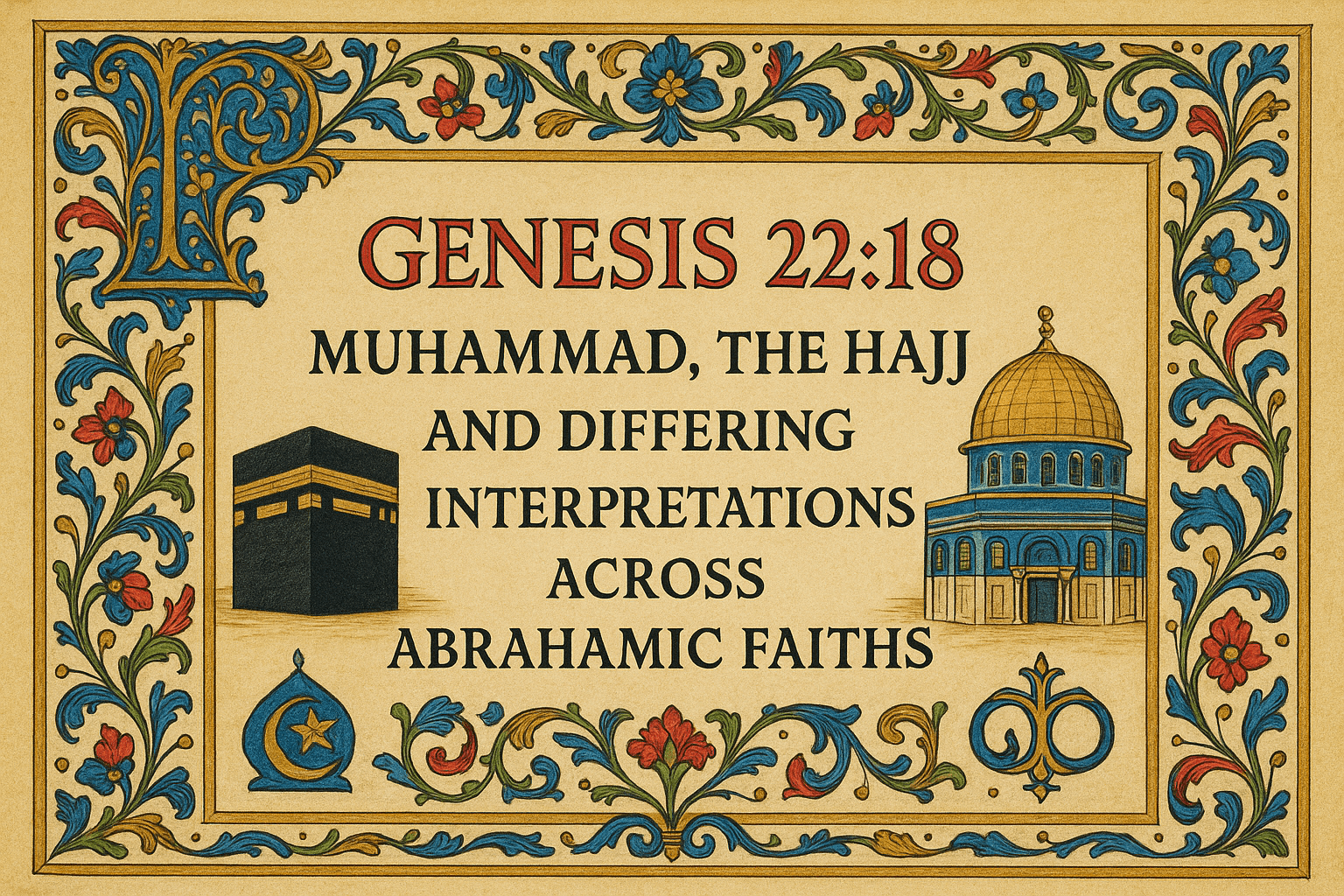
Did Muhammad, through the Hajj ritual, fulfill the prophecy mentioned in Genesis 22, verse 18?
The verse you are referring to, Genesis 22, verse 18, reads:
“And through your offspring all nations on earth will be blessed, because you have obeyed me.”
This promise is made to Abraham after he demonstrates his willingness to sacrifice his son (Isaac, according to the Bible; Ishmael, according to Islamic tradition).
Many Jewish and Christian theologians interpret the “offspring” (or “seed”) mentioned in this verse as a reference to the line of descendants that would lead to the Jewish people, and by extension, to Jesus Christ in Christian theology. Through this lineage, blessings would be conferred to all nations.
In Islamic theology, however, the “offspring” or “seed” in Genesis 22, verse 18, is often interpreted as referring to Ishmael, the son who was nearly sacrificed according to Islamic tradition. Muslims believe that the Prophet Muhammad, as a direct descendant of Ishmael, fulfills this prophecy, as it is through him that all nations are blessed with the message of Islam.
The lineage of Prophet Muhammad through Ishmael is considered important in Islamic belief because the near-sacrifice event, believed to involve Ishmael instead of Isaac, is central to the Abrahamic covenant. Muslims believe that the final and complete message of God to humanity, Islam, came through this prophetic lineage.
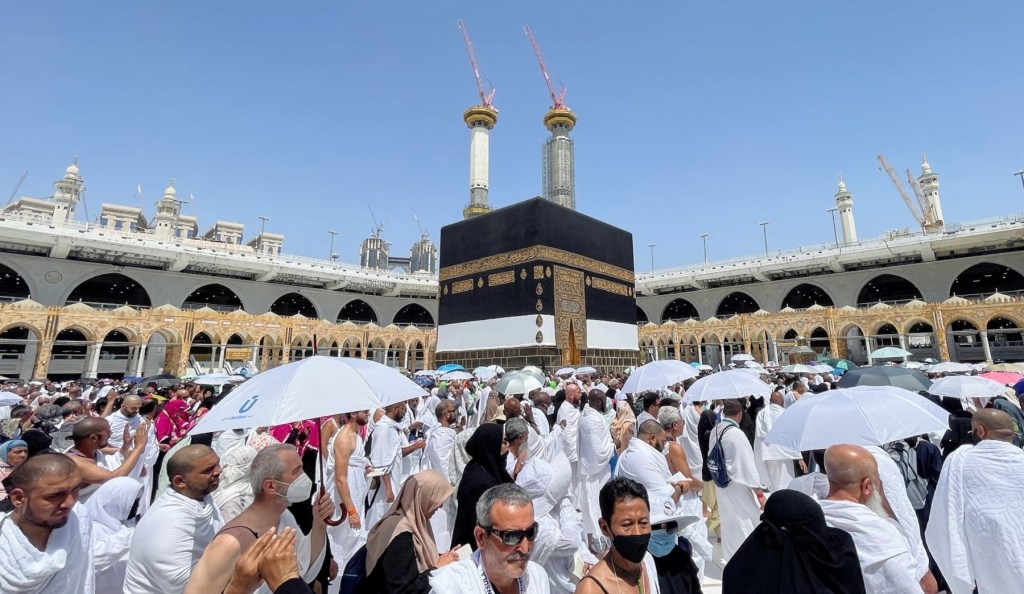
The Hajj ritual, which commemorates events in the lives of Abraham, Hagar, and Ishmael, can be seen by Muslims as a testament to the fulfillment of this prophecy. Every year, followers of Islam globally gather in Mecca to take part in the Hajj pilgrimage, commemorating the tradition of Abraham’s near sacrifice of his son Ishmael.
It symbolizes the universality of the blessings promised to Abraham’s descendants. For many Muslims, this pilgrimage is a manifestation of the blessings through Ishmael’s lineage, culminating in Muhammad and the global reach of Islam.
However, this interpretation is not universally accepted, especially among Jewish and Christian theologians, who typically see the “offspring” or “seed” in Genesis 22, verse 18, as referring to Isaac’s line, ultimately leading to the people of Israel and, in Christian theology, to Jesus Christ. Interpretations of scripture are deeply influenced by religious, theological, and cultural perspectives.
In summary, while some Muslims assert that Muhammad, as a descendant of Ishmael, fulfills the prophecy in Genesis 22, verse 18, through the message of Islam and rituals like the Hajj, this interpretation is specific to Islamic theology. It reflects the belief that Ishmael, rather than Isaac, was the son nearly sacrificed and that Muhammad, as Ishmael’s descendant, brings blessings to all nations. This view is not shared by all Abrahamic faiths.
Abrahamic covenant: Isaac or Ishmael from a Quranic perspective
In Surah 2, verse 124 of the Quran, it is stated that God made a covenant with Abraham through Ishmael instead of Isaac, and it is implied that Jewish scribes corrupted the Torah in favor of Isaac. How is this interpretation explained?
Surah 2, verses 124 to 125 reads:
“And when his Lord tested Abraham with certain words, and he fulfilled them. God said, “I am making you a leader of humanity.” Abraham said, “And my descendants?” God said, “My pledge does not include the wrongdoers.”
“And We made the House a focal point for the people, and a sanctuary. Use the shrine of Abraham as a place of prayer. And We commissioned Abraham and Ishmael, “Sanctify My House for those who circle around it, and those who seclude themselves in it, and those who kneel and prostrate.”
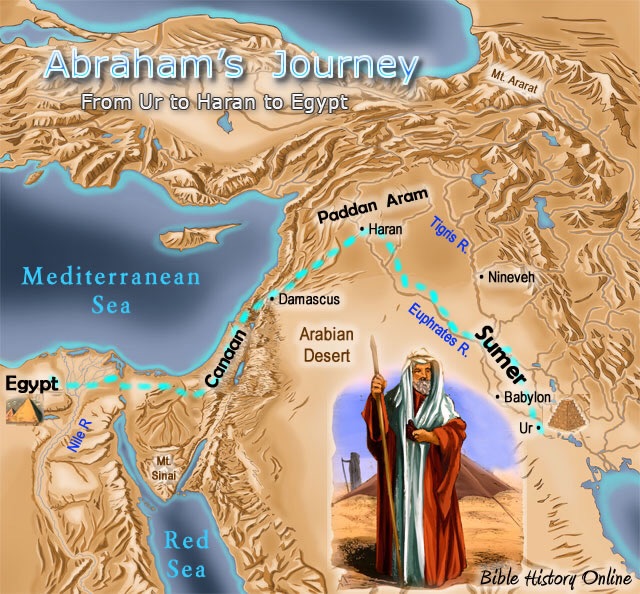
The Quran clearly states in Surah 2, verse 124 that God made a covenant with Abraham through his son Ishmael, not Isaac. This contradicts the Biblical account which portrays Isaac as the son who was to inherit the covenant from Abraham.
The Quran suggests the Torah (the first five books of the Bible containing the story of Abraham and his sons) was corrupted by Jewish scribes who altered the narrative to favor Isaac over Ishmael. Evidence for this includes:
The Bible itself initially portrays Ishmael as the firstborn and heir before contradicting itself later by calling Isaac the “only son”.
Islamic sources consistently name Ishmael as the son taken by Abraham for the intended sacrifice, while the Bible names Isaac.
The Quranic narrative does not explicitly name the son of the near sacrifice, but Islamic tradition and many Muslim scholars have historically identified him as Ishmael. This is partly based on the sequence of events in the Quran, which suggests that the promise of Isaac’s birth came after the sacrifice narrative, implying Ishmael was the son involved.
The Quran establishes Ishmael’s lineage as the one that inherits the covenant and religious practices like the Kaaba in Mecca, contradicting the Biblical focus on Isaac’s descendants (the Israelites).
So according to the Quran and Islamic tradition, the Biblical account was distorted to displace Ishmael’s status as Abraham’s heir in favor of Isaac, likely due to Jewish scribes’ bias towards the Israelite lineage.
The Quran asserts that it rectifies this by confirming Ishmael as the son who carried on Abraham’s legacy in accordance with the original divine covenant, while the divine choice of the ancient Israelites and their Hebrew prophets before the arrival of Islam is intended to prepare the way for Muhammad, the final Prophet.
“Say, [O believers], ‘We have believed in Allah and what has been revealed to us and what has been revealed to Abraham and Ishmael and Isaac and Jacob and the Descendants and what was given to Moses and Jesus and what was given to the prophets from their Lord. We make no distinction between any of them, and we are Muslims [in submission] to Him.’”
Surah Al-Baqarah (2:136)
Hagar’s Legacy: Exploring the Intersection of Biblical Prophecy and Islamic Tradition
Hagar, an Egyptian woman with no power or status, is the first person in Scripture to be visited by an angel and the only person in Scripture to give God a name—El Roi, “the God who sees me.” In the midst of her pain and struggle, Hagar receives God’s blessing and promises.
It is believed that the prophecy of Hagar predated the Torah revealed to the Israelites. The Torah reiterated her prophecy, whose fulfillment is realized in the ritual Hajj of Islam. Some argue that the scribes of ancient Israelites attempted to tone down its importance. How is the argument articulated?
The argument as presented suggests that the prophecy of Hagar, which is believed to have predated the Torah, finds its fulfillment in the Islamic ritual of Hajj, and that the scribes of ancient Israel attempted to diminish its significance. Here’s how this argument is explained:
- Pre Torah origins: This argument posits that the prophecy of Hagar and her descendants, including Ishmael, existed prior to the revelation of the Torah to Moses. Supporters of this view often point to the genealogical and historical connections between Hagar and Ishmael and the founding of the Arab people.
- Prophecy reiterated in Torah: The claim is made that the Torah, when it was revealed to the Israelites, reiterated and acknowledged the prophecy related to Hagar and Ishmael. This acknowledgment can be found in the biblical narrative where Hagar and Ishmael’s story is mentioned.
- Importance of the Hajj ritual: Proponents then assert that the fulfillment of Hagar’s prophecy, as reiterated in the Torah, can be seen in the Islamic ritual of Hajj. They argue that Hajj, which is a pilgrimage to the Kaaba in Mecca, Saudi Arabia, is seen as a direct link to Hagar and Ishmael and represents the fulfillment of their destiny. This ritual is regarded as a significant practice in Islam and is central to the religious identity of Muslims.
- Suppression of Hagar’s significance: The argument continues by suggesting that the scribes of ancient Israel attempted to downplay the importance of Hagar and her descendants, including Ishmael, due to theological and political motivations. It is proposed that, in shaping the biblical narrative, these scribes might have marginalized or selectively emphasized certain aspects to elevate the prominence of Isaac and the Israelite lineage over Ishmael.
It’s important to note that this argument reflects a particular perspective and interpretation. There are different viewpoints on this topic, and scholars hold a wide array of opinions regarding the relationship between biblical narratives, biblical redaction, and the Islamic tradition.
 ABRAHAMIC THEOLOGY