Azahari Hassim
The distinction between the prophethood mentioned in Deuteronomy 18, verse 18, and that in Numbers 12, verse 6, lies primarily in the nature and role of the prophets being described.
- Deuteronomy 18, verse 18: This verse speaks of a future prophet who will arise from among the brothers of Israelites, like Moses. The text states:
“I will raise up for them a prophet like you from among their brothers; I will put my words in his mouth, and he will tell them everything I command him.”
This prophet is often interpreted as a reference to a specific future figure, which many Christians understand to be Jesus Christ, while in Jewish tradition, it may refer to a line of prophets that continue the work of Moses. Muslims believe it refers to the prophecy of Muhammad as the last prophet. This prophecy emphasizes the authority of the prophet, who speaks God’s words directly and is seen as a mediator between God and the people.
- Numbers 12, verse 6: In this context, God is speaking about the prophets in general, indicating that He communicates with them through visions and dreams. The verse highlights the distinction between Moses and other prophets, stating that Moses is unique because he speaks to God “face to face” and has a more direct relationship with Him. This underscores Moses’ special status as the leader of the Israelites and the primary lawgiver.
In summary, Deuteronomy 18, verse 18, focuses on the future prophet who will speak God’s words with authority, while Numbers 12, verse 6, emphasizes the unique relationship Moses has with God compared to other prophets. This sets the stage for understanding the role of prophecy in Israel’s history, highlighting both continuity and distinction within the prophetic tradition.

Surah 10, verse 92, reads:
”Today We will preserve your body (O Pharaoh), so that you become a sign for those after you. But most people are heedless of Our signs.“
Some scholars contend that the discovery of Ramses’ body in modern times is viewed as a miraculous event in the Quran, specifically in Surah 10, verse 92. It resembles Moses’ parting of the Red Sea. As a result, they argue that Muhammad is the prophet mentioned in Deuteronomy 18, verse 18, similar to Moses. How do they express their argument?
The scholars who make this argument typically point to several key points to support their claim:
- Discovery of Ramses’ body: They argue that the discovery of Pharaoh Ramses II’s body in modern times is a significant event that aligns with the story of Pharaoh’s body being preserved as a sign in Surah 10, verse 92 of the Quran. This miraculous preservation of Pharaoh’s body is seen as a fulfillment of that prophecy.
- Resemblance to Moses’ parting of the Red Sea: The scholars suggest that the discovery of Ramses’ body can be seen as a parallel to the miracle of Moses parting the Red Sea, as both events involve extraordinary occurrences related to Pharaoh and Moses. This parallel further strengthens the connection between the two stories.
- Muhammad as the prophet like Moses: In Deuteronomy 18, verse 18, the Bible mentions the coming of a prophet like Moses, whom God will raise up among the brethren of Israelites. Some scholars argue that Muhammad fits the description of this prophet due to similarities in their roles, teachings, and experiences with prophethood.
By combining these points, scholars argue that the discovery of Ramses’ body, the resemblance to Moses’ story, and the identification of Muhammad as the prophet like Moses provide evidence for the divine inspiration of the Quran and Muhammad’s status as a prophet in the line of Moses.
The Prophethood of Muhammad and the Hebrew Prophets: Exploring Biblical and Theological Foundations
In Genesis, chapter 21 and verse 18, an important prophecy and interaction between God and Hagar regarding Ishmael is mentioned.
The verse states:
“Arise, lift up the lad and hold him with your hand, for I will make him a great nation.”
One hypothesis proposes that the prophethood of the Hebrew prophets is tied to the Torah given to Moses, whereas Muhammad’s prophethood is associated with the prophecy of Hagar which predates the Torah. How is this idea presented?
The hypothesis you mention explores the relationship and distinctions between the prophethood of the Hebrew prophets and that of Muhammad, focusing on their respective biblical and theological foundations. This idea can be presented and analyzed through various religious, historical, and scriptural perspectives:
The prophethood of the Hebrew prophets is often seen as being linked directly to the Torah, which according to Jewish tradition, was given to Moses by God on Mount Sinai. This link is crucial because it establishes a continuous line of prophetic authority and teaching that is rooted in the laws and ethical teachings of the Torah.
The prophets following Moses are considered to have the role of interpreting, enforcing, and expanding upon the Torah’s teachings.
In contrast, Muhammad’s prophethood is sometimes associated with the prophecy attributed to Hagar. Hagar, according to the Genesis account, was the servant of Abraham and Sarah, and mother of Ishmael, who is considered by Muslims to be an ancestor of Muhammad.
This association is used to argue that Muhammad’s prophetic lineage predates the Mosaic Torah and is linked instead to Abrahamic covenant through Ishmael.
This hypothesis suggests that there are distinct covenants in the Abrahamic religions that validate different prophetic traditions. The Hebrew prophets fall under the covenant of Moses and the Sinai revelation, while Muhammad is considered under the covenant given to Abraham and Ishmael (as Hagar’s son).
This distinction is important in Islamic theology which views Islam as a continuation and fulfillment of Abrahamic faith, independent of the Mosaic laws.
The idea also touches upon the nature of the revelations received by the prophets. The Torah is often viewed as a national revelation aimed at the Jewish people, containing civil, moral, and ceremonial laws specifically designed for them.
In contrast, Muhammad’s revelation (the Quran) is considered universal, intended for all humanity, and not tied to the specific legal and ritual practices of the Jews.
By associating Muhammad with a prophecy that predates the Torah, this hypothesis also underscores the notion that prophetic messages have been universal and ongoing throughout human history. This could be seen as an attempt to place Islam within a broader, inclusive prophetic tradition that transcends Jewish ethnic and religious boundaries.
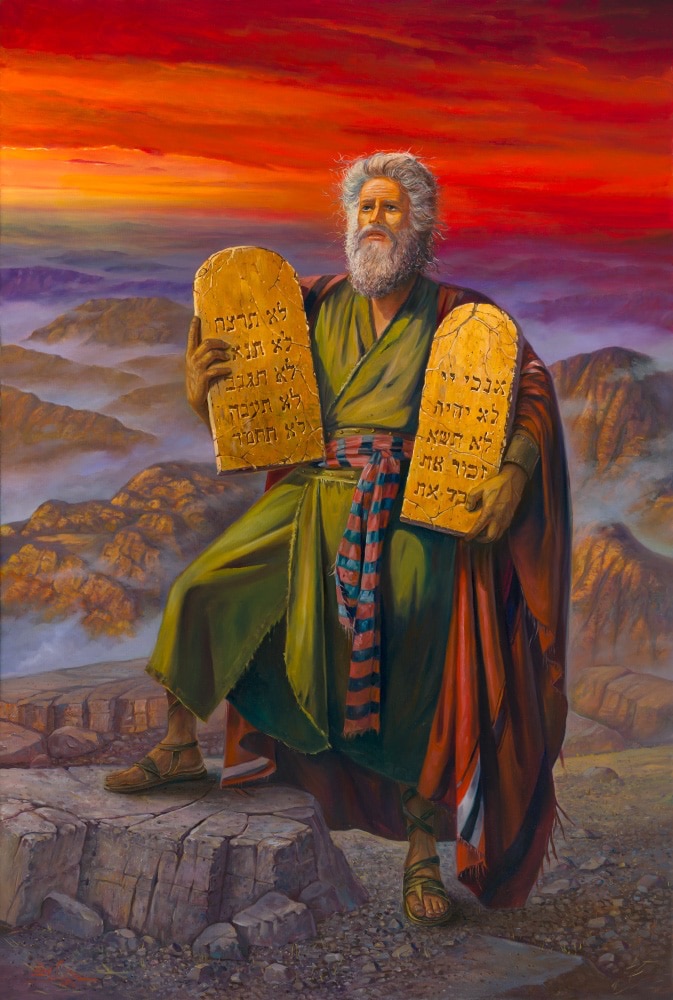
in Judaism and Christianity
found in Exodus and Deuteronomy. They include:
1. No other gods before Me.
2. No idols or images.
3. Do not misuse God’s name.
4. Keep the Sabbath holy.
5. Honor your parents.
6. Do not murder.
7. Do not commit adultery.
8. Do not steal.
9. Do not bear false witness.
10. Do not covet.
These commandments provide ethical
guidelines that have shaped moral and legal systems throughout history.
The Final Brick: Interpreting the Connection Between Psalm 118:22 and Prophethood in Islam
Is there any connection between Psalm 118, verse 22 and the conclusion of prophethood with Muhammad, the prophet of Islam?
Allah’s Messenger said,
“My similitude in comparison with the other prophets before me, is that of a man who has built a house nicely and beautifully, except for a place of one brick in a corner. The people go about it and wonder at its beauty, but say: ‘Would that this brick be put in its place!’ So I am that brick, and I am the last of the Prophets.”
It is believed the above Hadith has connection with Psalm 118, verse 22. How is this argument explained from a Islamic perspective?
The Hadith you’ve mentioned, where the Prophet Muhammad likens his role to that of a final brick completing the edifice of prophethood, is a significant illustration in Islamic teachings, emphasizing his position as the last prophet in a long line of messengers sent by Allah (God) to guide humanity. This Hadith is often cited to highlight the completion of prophetic revelation with Muhammad, affirming the belief in Islam that he is the seal of the prophets (Khatam an-Nabiyyin).
The connection between this Hadith and Psalm 118, verse 22, from the Bible, which reads, “The stone which the builders refused is become the head stone of the corner,” is seen in the thematic similarity of both references, with the latter often interpreted by scholars as a prophecy about Messiah.
In the context of Islamic interpretation, however, scholars might draw parallels to demonstrate the universal nature of God’s message and the continuity of monotheistic faith, suggesting that both texts metaphorically speak to the importance of recognizing and completing a divine mission or structure.
From an Islamic perspective, the argument linking the Hadith to Psalm 118, verse 22, might be explained in a few ways:
- Universal Message of Monotheism: Both texts can be seen as emphasizing the culmination of a divine plan or revelation. In Islam, the prophets are understood to have come with a consistent message of monotheism and submission to the will of God, with Muhammad completing this message. The connection to Psalm 118, verse 22, could be interpreted as an acknowledgment of the universal truth present in previous scriptures, culminating in the final message brought by Muhammad.
- Rejection and Acceptance: Psalm 118, verse 22, speaks of a stone rejected by builders that ultimately becomes the cornerstone, which can metaphorically represent the initial rejection and eventual acceptance of a prophet’s message. In Islamic thought, this can parallel the experience of Muhammad and, by extension, the message of Islam, which faced rejection but ultimately established a lasting religious and civilizational foundation.
- Interfaith Dialogue: Some scholars might use the similarity between the Hadith and the Psalm to foster interfaith dialogue, pointing out shared themes in Abrahamic religions. This approach emphasizes commonalities in the essence of the messages brought by prophets across these faith traditions.
- Completion and Perfection of the Divine Message: The Hadith specifically mentions Muhammad as the final brick, symbolizing the completion of the prophetic tradition. This idea can be seen as paralleled in the notion of a cornerstone in Psalm 118, verse 22, which is crucial for the integrity and completion of a structure. In this context, the argument would focus on the role of Muhammad in completing the cycle of prophetic messages, sealing the divine revelation.
It’s important to note that while drawing parallels, Islamic scholars also maintain the distinctiveness of the Islamic faith and its teachings, viewing the Quran and Hadith as the final and complete revelation of God’s will to humanity.
 ABRAHAMIC THEOLOGY