Azahari Hassim
Examine “Baca” in Psalm 84, verse 6, and “Bakkah” of Surah 3, verse 96, from the Quran. How do they correlate?
An excerpt from Holman Concise Bible Dictionary about Baca in Psalm 84, verse 6:
Baca
(Balsam tree or weeping)
Valley in Psalm 84, verse 6, which reflects a poetic play on words describing a person forced to go through a time of weeping who found that God turned tears into a well, providing water.
Baca, mentioned in Psalm 84, verse 6, is believed to be Mecca, which Surah 3, verse 96 of the Quran refers to as Bakkah. It was Hagar, the mother of Ishmael, who was forced to experience a period of weeping, who discovered that God had turned tears into a miraculous well of Zamzam. What is the articulation of this argument?
The argument you’ve presented draws a connection between two distinct religious texts, the Bible and the Quran, by referencing similar concepts found within both. The statement juxtaposes the poetic description from Psalm 84, verse 6, in the Bible, which mentions the Valley of Baca (often interpreted as a place of weeping or sorrow), with a narrative from the Quran.
According to Surah 3, verse 96, the Quran mentions a place called Bakkah, identified by many scholars and tradition as Mecca, a city of paramount importance in Islam.
The biblical excerpt describes a metaphorical transformation where a time of weeping is turned into a source of sustenance and blessing, symbolized by tears turning into a well. This metaphor captures the idea of divine intervention and support during times of distress, providing not just relief but also nourishment and strength from the adversity faced.
The Quranic reference complements this biblical narrative by recounting the story of Hagar and Ishmael, where Hagar’s desperate search for water in the desert for her infant son Ishmael is rewarded by the miraculous appearance of the Zamzam well. This story is deeply embedded in Islamic tradition and highlights themes of faith, divine provision, and the transformation of despair into hope.
By articulating this argument, the connection being made is that both biblical and Quranic texts, while from different religious traditions, reflect a similar theological theme: the belief in a benevolent deity who transforms moments of deep personal despair into opportunities for divine blessing and providence.
The comparison suggests a shared motif of spiritual testing and divine intervention, where the act of enduring hardship with faith can lead to miraculous outcomes, symbolized through the provision of water in both narratives. This water, whether from the well mentioned in Psalm 84, verse 6, or the Zamzam well in Islamic tradition, stands as a powerful symbol of life, sustenance, and the transformative power of faith.
84:6 Valley of Baka. An unknown location, but apparently a dry place that turns into “a place of springs” that “autumn rains” water because of the faithful pilgrims’ presence.
The NIV Biblical Theology Study Bible
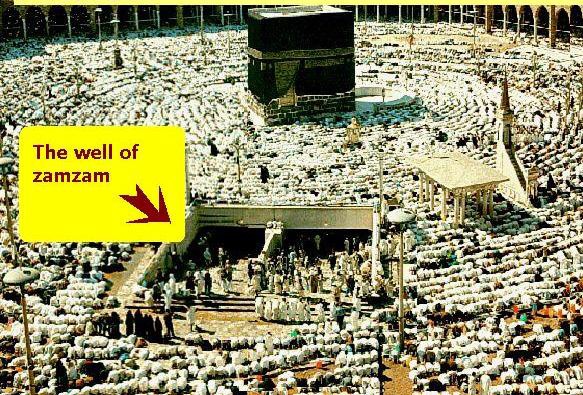
Zamzam Well
Islamic tradition states that the Zamzam Well was opened up in some form by God to assist Hagar, the second wife of Abraham and mother of Ishmael. In Islamic narratives Abraham, commanded by God, led Hagar and Ishmael to the area of present-day Mecca, there he left them alone in the desert.
The two are narrated to have been suffering severely from thirst. In some versions of the story Hagar walks back and forth between the two hills of Safa and Marwah in search of water.
The story of the appearance of the well either involves the infant Ishmael scraping the ground with his feet and water springing out or God sending Gabriel who consequently opens up the well using a variety of methods depending on the narration.
The Prophecy of Hagar and Its Fulfillment: A Comparative Analysis of Genesis 21:18 and Isaiah 60:7
There is a belief that the prophecy of Hagar in Genesis 21, verse 18, holds more weight than Isaiah 60, verse 7, which is linked to and completes the former. How is this understanding conveyed?
The belief that the prophecy of Hagar in Genesis 21, verse 18, holds more weight than Isaiah 60, verse 7, which is linked to and completes the former, can be understood through a close examination of the biblical texts and their contexts. Here’s how this understanding is conveyed:
- Genesis 21, verse 18 (The Prophecy of Hagar).
This verse is part of the story where God speaks to Hagar after she and her son, Ishmael, are sent away by Abraham. Hagar is distraught, fearing for her son’s life in the desert.
The verse reads:
Arise, lift up the lad, and hold him in thine hand; for I will make him a great nation.”
This prophecy directly promises that Ishmael will become a great nation. This is a foundational promise, as it assures Hagar of her son’s future and his importance in God’s plan.
- Isaiah 60, verse 7 (Completion of the Prophecy). This chapter of Isaiah deals with the future glory of Zion, depicting a time of great prosperity and the gathering of nations to honor God.
The verse reads:
“All the flocks of Kedar shall be gathered together unto thee, the rams of Nebaioth shall minister unto thee: they shall come up with acceptance on mine altar, and I will glorify the house of my glory.”
Both Kedar and Nebaioth are descendants of Ishmael. This verse indicates the fulfillment and continuation of the promise given to Hagar, showing that Ishmael’s descendants will play a significant role in the future worship and honor of God.
- Interconnection and Weight: The prophecy in Genesis 21, verse 18, is seen as having “more weight” because it is the initial divine promise regarding Ishmael, establishing his importance and future. It is a direct communication from God to Hagar at a crucial moment. Isaiah 60, verse 7, is viewed as the completion or continuation of this promise. It confirms and elaborates on the fulfillment of God’s plan for Ishmael’s descendants, showing their eventual integration into the worship of God and their contribution to the glory of Zion.
The “weight” of Genesis 21, verse 18, lies in its foundational nature, while Isaiah 60, verse 7, provides a more detailed and expanded vision of the fulfillment of that initial promise.
This understanding is conveyed by recognizing that the original promise to Hagar is the cornerstone of the prophecy concerning Ishmael and his descendants.
The later prophetic vision in Isaiah builds upon this foundation, demonstrating the fulfillment of God’s promise in a broader and more comprehensive way. Therefore, while Isaiah 60, verse 7 is significant in its completion of the prophecy, Genesis 21, verse 18, holds a primary and foundational weight in the narrative.
Some believe that Isaiah 60, verse 7, is related to the Hajj ritual, and is the fulfillment of Hagar’s prophecy regarding Ishmael in Genesis 21, verse 18. How is this interpretation presented?
This is an interesting question. The interpretation that Isaiah 60, verse 7, is related to the Hajj ritual and the fulfillment of Hagar’s prophecy regarding Ishmael is based on the following assumptions:
The verse reads:
“All the flocks of Kedar will be gathered to you, The rams of Nebaioth will serve you; They will go up on My altar with acceptance, And I will glorify My glorious house.”
The flocks of Kedar and the rams of Nebaioth in Isaiah 60, verse 7, refer to the descendants of Ishmael, who was the son of Abraham and Hagar, and the ancestor of the Arabs. Kedar and Nebaioth were two of Ishmael’s sons (Genesis 25, verse 13).
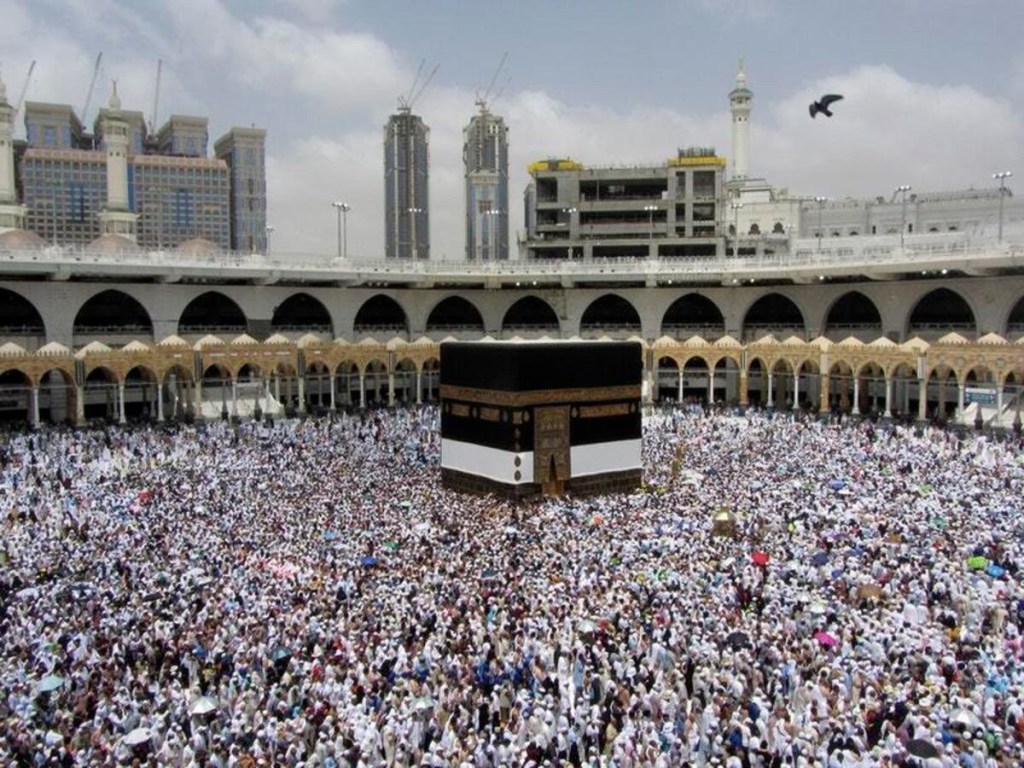
The altar and the glorious house mentioned in Isaiah 60, verse 7, refer to the Kaaba. The Kaaba is a sacred building in Mecca that has a cube shape. Muslims believe it was constructed by Abraham and Ishmael. It serves as the direction of prayer and is also the destination for the Hajj pilgrimage.
The acceptance of the offerings on the altar and the glorification of the house in Isaiah 60, verse 7, refer to Muslims performing their Hajj, known as the Feast of Sacrifice. This sacrifice is performed in remembrance of Prophet Abraham’s willingness to sacrifice his son Ishmael and as a demonstration of submission to Allah’s will.
Furthermore, it is a prophecy of God’s acceptance and blessing of the Ishmaelites, who worship Him at the Kaaba in sincerity and submission, as He promised Hagar in Genesis 21, verse 18, “I will make him into a great nation.”
This interpretation is presented by some Muslim scholars and commentators, who see it as a proof of the truth and validity of Islam and the Hajj ritual.
The Significance of Hajj: Commemorating Hagar’s Search for Water and Abraham’s Sacrifice
Introduction:
Hajj, the annual Islamic pilgrimage to Mecca, holds great significance for millions of Muslims worldwide. While Hajj is primarily associated with the life of Prophet Muhammad, it also commemorates important biblical events. One such event is the story of Hagar’s search for water for her baby Ishmael, as well as Abraham’s willingness to sacrifice his son, Ishmael. This essay aims to explore the historical and religious significance of these events in the context of Hajj.
Historical Background:
To understand the significance of Hagar’s search for water for her baby Ishmael and Abraham’s sacrifice, it is crucial to delve into their historical context. According to Islamic tradition, Hagar was the wife of the Prophet Abraham and the mother of Ishmael. Hagar and Ishmael were sent away by Abraham at God’s command. They wandered in the desert near Mecca until they ran out of water, prompting Hagar to search desperately for water to save her infant son.
Hagar’s Search for Water:
Hagar’s search for water for her infant son Ishmael is a deeply emotional and poignant story that resonates with the theme of struggle and resilience. In Islamic tradition, it is believed that Hagar’s unwavering faith and determination led her to the miraculous discovery of the Zamzam well, which continues to provide water for pilgrims during Hajj. The act of retracing Hagar’s footsteps during the Hajj pilgrimage symbolizes the physical and spiritual journey of seeking Muslims blessings and guidance from God.
Abraham’s Sacrifice:
Another biblical event associated with Hajj is the story of Abraham’s willingness to sacrifice his son Ishmael. According to Islamic tradition, Abraham received a command from God to sacrifice his beloved son as a test of his faith. Abraham, demonstrating unwavering devotion, prepared to carry out the command, but at the last moment, God intervened and replaced Ishmael with a ram. This event is commemorated during Hajj through the observance of Eid al-Adha, the Festival of Sacrifice.
Symbolism and Spiritual Significance:
The story of Hagar’s search for water for her infant son and Abraham’s sacrifice carries profound symbolism and spiritual significance for Muslims. Hagar’s unwavering faith and determination symbolize the importance of perseverance and trust in God’s providence. Her search for water reflects the universal human struggle for survival, while the discovery of Zamzam represents divine intervention and sustenance.
Abraham’s willingness to sacrifice his son symbolizes the ultimate act of submission to God’s will. Muslims commemorate this event during Hajj by performing the symbolic stoning of the pillars representing Satan, symbolizing the rejection of temptation and evil. The act of sacrificing an animal during Eid al-Adha symbolizes one’s willingness to give up personal desires and possessions for the sake of God’s pleasure.
Conclusion:
Hajj, the annual Islamic pilgrimage, holds immense religious and historical significance for Muslims worldwide. The commemoration of Hagar’s search for water for her infant son and Abraham’s willingness to sacrifice his son Ishmael adds depth and meaning to this sacred journey. These events symbolize the themes of struggle, faith, perseverance, and submission to God’s will. By retracing Hagar’s footsteps and participating in the rituals associated with Abraham’s sacrifice, Muslims reaffirm their commitment to their faith and seek spiritual enlightenment and blessings during Hajj.
 ABRAHAMIC THEOLOGY