Azahari Hassim
Jewish teachings about the Messiah, often referred to as the “Mashiach,” frequently evoke the figure of the Son of David. Here are a few notable quotes and concepts regarding the Messiah from Jewish rabbinical texts:
- Maimonides (Rambam): In his “Mishneh Torah,” he states that the Messiah will be a descendant of King David and will restore Israel to its former glory.
- Talmud (Sanhedrin 98a): The Talmud describes the Messiah as a “Son of David” who will arise in a time of tribulation and will bring peace to the world.
- Rabbi Isaac Luria (Ha’ari): He emphasized the messianic role of the Son of David in bringing about the final redemption and restoring the Jewish people to their land.
- Rashi: In his commentary on various texts, he frequently references the Messiah as a Davidic king who will gather Jews from the diaspora and rebuild the Holy Temple.
These teachings reflect a deep-rooted belief in a future redeemer who will come from the lineage of David, fulfilling prophetic promises found throughout the Hebrew Scriptures. The concept of the Messiah is a source of hope and expectation in Jewish thought.
Is Muhammad the messiah whom Jews were waiting for according to the Islamic belief? The answere is indirectly yes based on Surah 2, verse 89. How is their argument articulated from an Islamic perspective?
While Islamic belief does not directly identify Muhammad as the Messiah awaited by Jews, some interpretations and arguments can imply a connection based on Surah 2:89 of the Quran.
The verse reads:
“And when the Book was sent to them by God verifying what had been revealed to them already even though before it they used to pray for victory over the unbelievers and even though they recognised it when it came to them, they renounced it. The curse of God be on those who deny!“
Here’s how the argument is articulated from an Islamic perspective:
- “That which was with them”: Surah 2, verse 89, refers to the Jews receiving a Book (the Quran) that confirms earlier scriptures. This verse highlights that those who awaited divine guidance through a messiah should have recognized Muhammad’s prophethood since it aligns with their prophecies concerning redemption.
- Recognition of Truth: The verse emphasizes that the Jewish people had previously prayed for a deliverer( Messiah) or victory over disbelief. When Muhammad came with a message that they were familiar with (based on their scriptures), many of them rejected him. This rejection is seen as a failure to recognize the fulfillment of what they had been waiting for, which could suggest that from an Islamic perspective, Muhammad embodies the qualities of a Messiah in bringing forth God’s final revelation.
- Completing the Message: Muslims believe that Muhammad’s role as the final prophet completes the message of the earlier prophets and brings a universal message accessible to all, including Jews. Hence, in this context, some may argue that he fulfills the broader expectations of a Messiah-like figure, even if not in the traditional Jewish sense.
- Prophetic Tradition: Islamic tradition speaks of the coming of Jesus as a key figure who is also termed the Messiah (Masih). In this context, some Islamic interpretations view Muhammad’s prophecy as part of a continuum, where he is vital in the unfolding of the divine plan, which eventually includes the return of Jesus.
In summary, from an Islamic perspective, while Muhammad isn’t explicitly defined as the Messiah in the same way as in Judaism, some interpretations of Surah 2, verse 89, suggest that his mission aligns with the expectations surrounding a messianic deliverer or prophet, indicating a fulfillment of their hope for divine guidance.
How is the concept of the Messiah in Samaritan belief and which passage in their Torah alludes to the arrival of their awaited Savior?
In Samaritan belief, the Messiah is a significant figure known as the “Taheb,” which means “Restorer” or “Returning One.” The Samaritans believe that the Taheb will be a prophet like Moses who will restore true worship and bring about an era of peace and righteousness.
Unlike Jewish messianism, which emphasizes a kingly Messiah from the line of David, the Samaritan Messiah is viewed primarily as a prophetic leader, focused on restoring the pure faith and re-establishing the sanctity of Mount Gerizim, which the Samaritans hold as the true holy mountain (rather than Jerusalem).
The Samaritan Torah (which is similar to the Jewish Torah but with some differences in emphasis and content) alludes to the coming of this awaited figure. The primary passage that Samaritans believe foretells the arrival of the Taheb is Deuteronomy 18, verse 18.
The verse reads:
“I will raise up for them a prophet like you from among their brothers. I will put my words in his mouth, and he will tell them everything I command him.”
This verse is interpreted by the Samaritans to be a prophecy about the coming of the Taheb, a prophet like Moses who will lead the people and restore proper worship of God on Mount Gerizim. It is seen as a promise of divine intervention to bring the Samaritans back to the original teachings and commandments as given to Moses.
In summary, the Messiah (Taheb) in Samaritan belief is a prophetic figure who will bring about a restoration of the true faith, and Deuteronomy 18, verse 18, is the key passage in the Samaritan Torah that alludes to his coming.
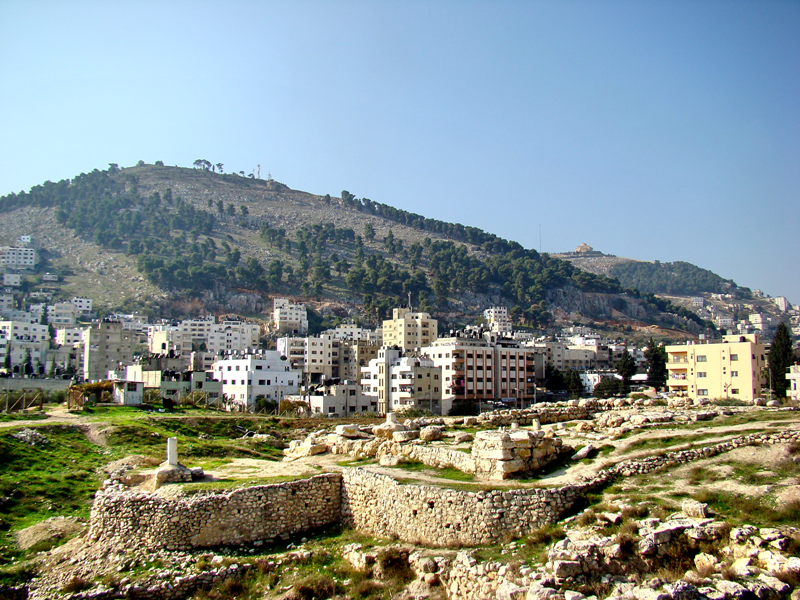
When Jesus conversed with the Samaritan woman at the well, she said, “Our fathers worshiped on this mountain” (John 4:20). She was speaking of Mount Gerizim, which was very much in sight of Jacob’s well, where they were talking.
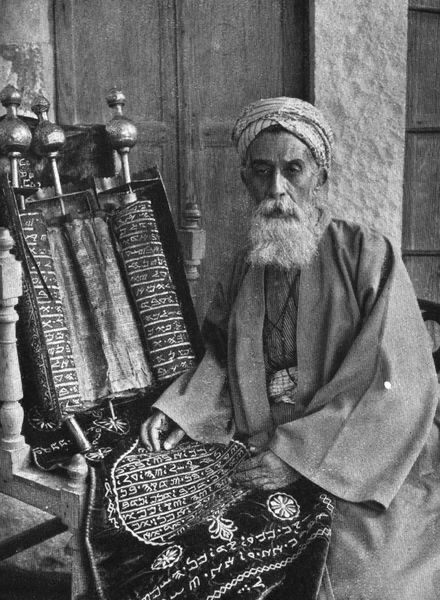
Jewish Sages on the Samaritans: Historical Perspectives and Theological Tensions
Jewish sages throughout history have expressed varying views on the Samaritans, often with critical perspectives due to theological and historical tensions between Jews and Samaritans. Here are a few notable quotes and references:
- Talmudic View on Samaritans as Converts:
In the Babylonian Talmud (Tractate Kiddushin 75b), the sages discuss the origins of the Samaritans (called Kutim in the Talmud), stating that they were brought into the land of Israel by the Assyrians after the exile of the Northern Kingdom of Israel. According to Jewish tradition, they were not true Israelites but a mixture of peoples who adopted certain Israelite practices but continued with idolatry. The Talmudic view implies that their conversion to Judaism was seen as insincere:
“The Samaritans are converts due to fear of lions.”
This refers to the biblical account in 2 Kings 17:24-41, where it is said that the new inhabitants of Samaria (who were brought in by the Assyrians) adopted the worship of the God of Israel after being plagued by lions. The Talmud emphasizes the questionable sincerity of their conversion.
- Mishnaic Classification of Samaritans:
In the Mishnah (Tractate Chullin 2:9), the Samaritans (Kutim) are sometimes regarded as partial observers of Jewish law:
“In matters where they are reliable, they are reliable; but in matters where they are not reliable, they are not reliable.”
This reflects the idea that the Samaritans were known to observe certain Jewish laws (particularly those related to purity and some aspects of Torah law), but in other areas, their practices were not trusted by the Jewish community.
- Rabbi Akiva on Samaritan Worship:
Rabbi Akiva, one of the most prominent Jewish sages of the 2nd century CE, is quoted in the Talmud as being suspicious of Samaritan practices, particularly their devotion to Mount Gerizim as the central place of worship:
“The land of the Samaritans is clean, but their waters are impure.” (Babylonian Talmud, Niddah 56b)
This reflects a critique of the Samaritans’ religious practices and a suspicion of their rituals, implying that while their land might not be physically impure, their religious practices (symbolized by their “waters”) were viewed with skepticism.
These quotes reflect the long-standing tension and division between the Jewish community and the Samaritans over matters of theology, identity, and religious practice.
 ABRAHAMIC THEOLOGY