
Azahari Hassim
From a Quranic perspective, the Western Wall or Wailing Wall is considered a part of Al-Aqsa Mosque according to Surah 17 verse 1 in the Quran. How is this theological viewpoint presented?
According to the Quranic perspective, the Western Wall or Wailing Wall is considered a part of Al-Aqsa Mosque because it is believed to be the site where Prophet Muhammad (peace be upon him) tied his winged steed, al-Buraq, on his night journey to Jerusalem and ascension to heaven. This event is known as Isra and Miraj, and it is mentioned in Surah 17 verse 1 of the Quran, which states:
“Exalted is He who took His Servant by night from al-Masjid al-Haram to al-Masjid al-Aqsa, whose surroundings We have blessed, to show him of Our signs. Indeed, He is the Hearing, the Seeing.”
The term Al-Masjid Al-Aqsa, which means “the farthest mosque”, is interpreted by Muslim scholars to refer to the entire sacred compound in Jerusalem, including the Dome of the Rock and the Al-Qibli Mosque, as well as the Western Wall, which is the only remaining part of the ancient Jewish Temple.
One possible explanation for why the Western Wall or Wailing Wall is considered a part of Al-Aqsa Mosque is that it is the only remaining part of the ancient Jewish temple that once stood on the Temple Mount, the site of the First and Second Temples of Jerusalem. The temple was destroyed by the Romans in 70 CE, and its site was later occupied by various Islamic structures, including the Dome of the Rock and the Al-Qibli Mosque.
Muslims believe that the temple, originally built by Prophet Solomon, son of Prophet David, was located in Jerusalem, the place chosen by Allah for the Children of Israel to worship Him. Consequently, the Western Wall, as the last remnant of this temple, is also sacred to Muslims and considered part of the Al-Aqsa Mosque compound. It is also believed that Muhammad prayed at the temple site during his Night Journey, before ascending to heaven from the Dome of the Rock.
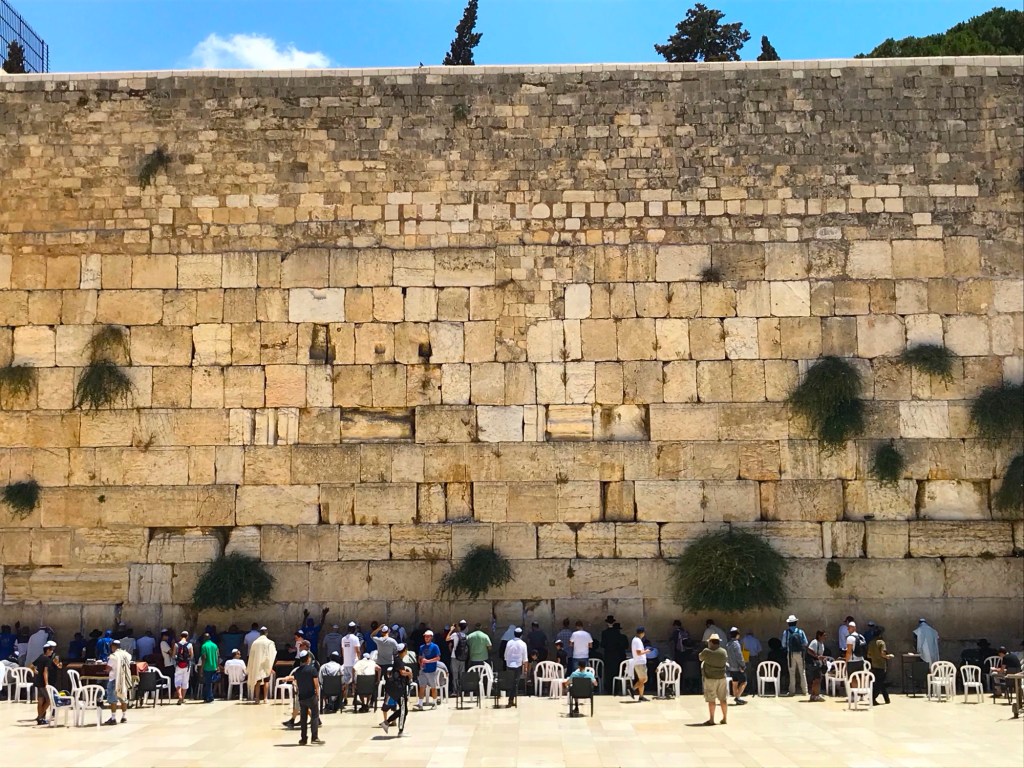
The wall is a place of prayer and pilgrimage for Jews from around the world. Visitors often insert written prayers into the crevices of the stones. The site is also a focal point for various religious and cultural events, including bar and bat mitzvahs, and it attracts tourists and worshippers alike.
The Western Wall is part of the larger Temple Mount complex, which holds significant religious importance for Judaism, Christianity, and Islam. The area surrounding the wall is also a site of political and religious tension, reflecting the complex history of Jerusalem and its diverse communities.
Did Islam supersede Judaism concerning Jerusalem?
Some argue that based on Surah 17 verse 1 of the Quran, Islam supersedes Judaism concerning Jerusalem. How is this perspective presented?
This is a complex and controversial question that has been debated by scholars and religious leaders for centuries. There is no definitive answer, but I will try to explain some of the main arguments that have been made by those who believe that Islam abrogates Judaism in relation to Jerusalem.
One argument is based on the interpretation of Surah 17 verse 1 of the Quran, which states:
“Exalted is He who took His servant by night from al-Masjid al-Haram to al-Masjid al- Aqsa, whose surroundings We have blessed, to show him of Our signs. Indeed, He is the Hearing, the Seeing. “
Some Muslims understand this verse to mean that Prophet Muhammad (peace be upon him) was taken by Allah from the Sacred Mosque in Mecca to the Farthest Mosque in Jerusalem, where he prayed and ascended to heaven. This miraculous journey is known as the Isra and Mi’raj, and it is celebrated by Muslims as a sign of Allah’s favor and guidance.
According to this view, the Farthest Mosque (al-Masjid al-Aqsa) refers to the entire compound of the Noble Sanctuary (Haram al-Sharif) in Jerusalem, which includes the Dome of the Rock and the Al-Aqsa Mosque. This compound is considered the third holiest site in Islam, after Mecca and Medina, and the first qibla (direction of prayer) for Muslims.
Some Muslims believe that by taking Prophet Muhammad to Jerusalem, Allah honored and sanctified the city and its surroundings, and transferred the religious authority and leadership from the Jews to the Muslims. They argue that the Jews had violated their covenant with Allah by rejecting and killing the prophets, and that Allah had chosen the Muslims as the new community of believers and the inheritors of the Abrahamic legacy.
Another argument is based on the historical and political events that occurred after the death of Prophet Muhammad. Some Muslims claim that the Islamic conquests and expansions in the seventh and eighth centuries CE were a divine mandate and a fulfillment of the Quranic prophecies. They point out that the Muslims liberated Jerusalem from the Byzantine rule in 638 CE, and built the Dome of the Rock and the Al-Aqsa Mosque on the site of the former Jewish temples, which had been destroyed by the Babylonians and the Romans.
According to this view, the Muslim presence and rule in Jerusalem was a sign of Allah’s blessing and favor, and a proof of the superiority and validity of Islam over Judaism. They argue that the Jews had lost their right and claim to Jerusalem, and that the Muslims were the rightful custodians and guardians of the holy city and its sacred sites.
These are some of the main arguments that have been made by those who believe that Islam abrogates Judaism in relation to Jerusalem.

“If we had to pray towards a particular place, as is customary among some, we should be justified in praying toward Jerusalem because it was there that the holy presence of God appeared and the divine presence was seen in the Temple.” (Homilies on Ezekiel 13:4).
Origen – A Christian theologian, apologist, and philosopher
Holy Land of Palestine and Islamic Caliphate
Holy Quran Surah 21, verse71 reads:
.وَنَجَّيْنَاهُ وَلُوطًا إِلَى الْأَرْضِ الَّتِي بَارَكْنَا فِيهَا لِلْعَالَمِينَ
And We rescued Abraham and Lot to the land which We have blessed for the whole world.
From the Quranic perspective, some believe any attempt to secularise the Holy Land of Palestine rather than establish it through an Islamic caliphate would incur divine disasters. After all, Surah 21, verse 71, of the Quran references the Holy Land of Palestine as a blessing to the whole world, especially the Muslim world. How is this argument articulated?
The argument as mentioned is based on the interpretation of Surah 21, verse 71 of the Holy Quran. According to this interpretation, the verse refers to the rescue of Abraham and Lot and their settlement in a blessed land. Some believe that this blessed land mentioned in the verse is the Holy Land of Palestine.
From this perspective, it is argued that the Holy Land of Palestine is not just a geographical region, but a sacred land with spiritual significance. It is believed to have been blessed by Allah, and therefore, it is seen as a land that should be governed by Islamic principles and established as an Islamic caliphate.
Those who hold this viewpoint argue that any attempt to secularize or separate the Holy Land from its Islamic identity would go against divine will and result in negative consequences. They believe that only through the establishment of an Islamic caliphate can the true potential and blessings of the Holy Land be realized for the benefit of the Muslim world and humanity as a whole.
It’s important to note that interpretations of religious texts can vary among individuals and scholars. Different perspectives exist on the issue of the Holy Land and its governance, and it is a topic of ongoing debate and discussion within the Muslim community.
 ABRAHAMIC THEOLOGY