Azahari Hassim
In Islamic tradition, Hagar, known as Hajar in Arabic, holds a significant and revered position. Her story is prominently featured in various Hadith (sayings and actions of the Prophet Muhammad) and Islamic teachings. Here are some key aspects of what Hadith and Islamic tradition say about Hagar:
- Hagar and Ishmael in the Desert:
One of the most well-known stories involving Hagar is her journey to the desert with her infant son Ishmael. According to Hadith, Abraham was commanded by God to leave Hagar and her baby in the barren desert of Mecca. Hagar’s trust in God and her perseverance are highlighted in this story.
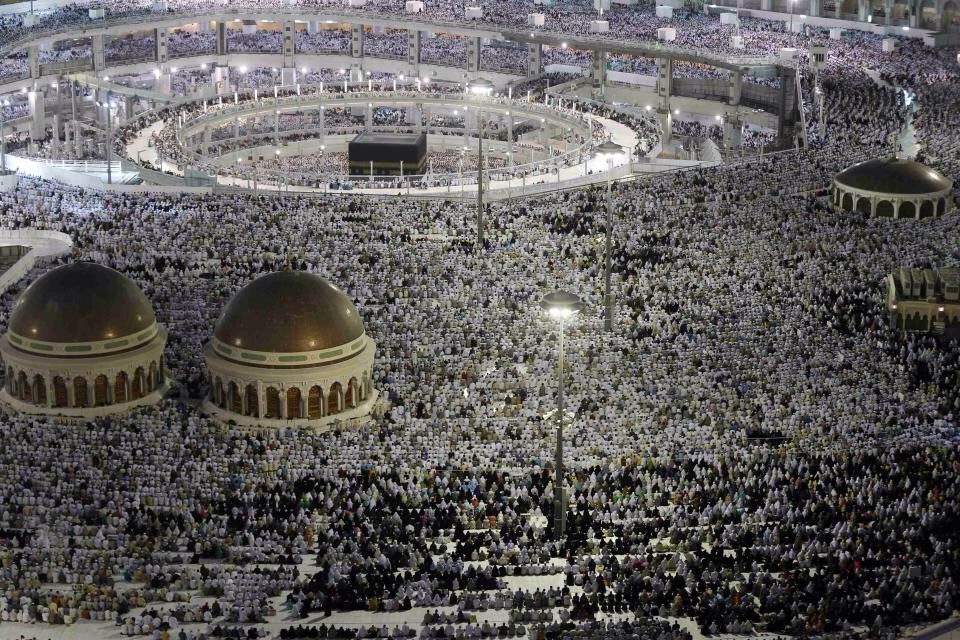
A significant Hadith from Sahih Bukhari describes Hagar running between the hills of Safa and Marwah in search of water for her infant son Ishmael. This event is commemorated in the Sa’i ritual, part of the Hajj pilgrimage, where pilgrims re-enact her search for water.
- The Well of Zamzam:
Islamic tradition holds that as Hagar searched desperately for water, the angel Jibril (Gabriel) struck the ground, and the well of Zamzam miraculously sprang forth. This well provided water for Hagar and Ishmael, and it remains a significant site in Islam to this day. This story is also recounted in Sahih Bukhari.
- Hagar’s Faith and Patience:
Hagar is often praised in Hadith and Islamic literature for her unwavering faith, patience, and devotion. Her story is used to exemplify trust in God’s plan and the importance of perseverance in the face of hardship.
- Role in Islamic Rituals:
As mentioned, the Sa’i ritual in Hajj, where pilgrims walk between Safa and Marwah, directly commemorates Hagar’s search for water. This act is a testament to her endurance and faith.
Example Hadith:
Sahih Bukhari 3364:
Narrated by Ibn Abbas: The first lady to use a girdle was the mother of Ishmael. She used a girdle so that she might hide her tracks from Sarah. Abraham brought her and her son Ishmael while she was suckling him, to a place near the Ka’ba under a tree on the spot of Zamzam, at the highest place in the mosque. During those days, there was nobody in Mecca, nor was there any water there. So he made them sit over there and placed near them a leather bag containing some dates, and a small water-skin containing some water, and set out homeward.
Hagar followed him, saying, “O Abraham! Where are you going, leaving us in this valley where there is no person whose company we may enjoy, nor is there anything (to enjoy)?” She repeated that to him many times, but he did not look back at her. Then she asked him, “Has Allah ordered you to do so?”
Abraham said, “Yes.” Hagar said, “Then Allah will not neglect us,” and returned while Abraham proceeded onwards, and on reaching Thaniya where they could not see him, Abraham faced the Ka’ba, and raising both hands, invoked Allah saying the following prayers:
“O our Lord! I have made some of my offspring dwell in a valley without cultivation, by Your Sacred House (Ka’ba at Mecca) in order, O our Lord, that they may offer prayer perfectly. So fill some hearts among men with love towards them, and (O Allah) provide them with fruits so that they may give thanks.”
Conclusion:
Hagar’s story in Islamic tradition is one of profound faith, resilience, and trust in God’s providence. Her experiences are integral to several Islamic rituals and continue to inspire Muslims around the world.
Hajj, for centuries, has remained a central, unifying force in the Muslim world. It brings together people of every race, language, and culture, in a shared act of worship and submission to God.
Karen Armstrong, a British author and scholar of comparative religion
How did God fulfill the prophecy of Hagar, the mother of Ishmael, in the desert?
Some believe that the prophecy in the Torah (Genesis 21 verse 18) was fulfilled when God established Hajj as an Islamic rite. Pilgrims perform Sa’i in memory of Hagar, who searched for water for her infant son, Ishmael, in the desert, and God provided them with the well of Zamzam. Sa’i, which involves walking seven times between the hills of Safa and Marwa in Mecca, is one of the essential rituals of Hajj and Umrah. How is this argument articulated?
There is a belief among some Muslims that the prophecy mentioned in Genesis 21 verse 18 was fulfilled through the establishment of Hajj in Islam. This verse of the Torah prophesies that God will make a great nation from the descendants of Ishmael, the son of Abraham and Hagar. The argument connecting the Islamic narrative with the story in the Torah can be articulated through a few key points:
- Biblical Story of Hagar and Ishmael: In the Torah, the story of Hagar and her son Ishmael, who were cast into the desert, is recounted. In Genesis 21 verse 18, God tells Hagar, “Lift up the boy and hold him fast with your hand, for I will make him into a great nation.” This is often interpreted as a divine promise of Ishmael’s survival and future significance.
- Link to the Prophecy: The argument connects the establishment of Hajj, including the ritual of Sa’i, to the fulfillment of the prophecy in Genesis. It’s posited that God’s establishment of these rituals and the continued commemoration by millions of Muslims is a fulfillment of the promise made to Hagar regarding Ishmael.
In summary, the act of Sa’i is not only a way for pilgrims to remember and honor Hagar’s struggle but also to symbolize the fulfillment of the prophecy in the Torah through the establishment of the ritual of Hajj in Islam.
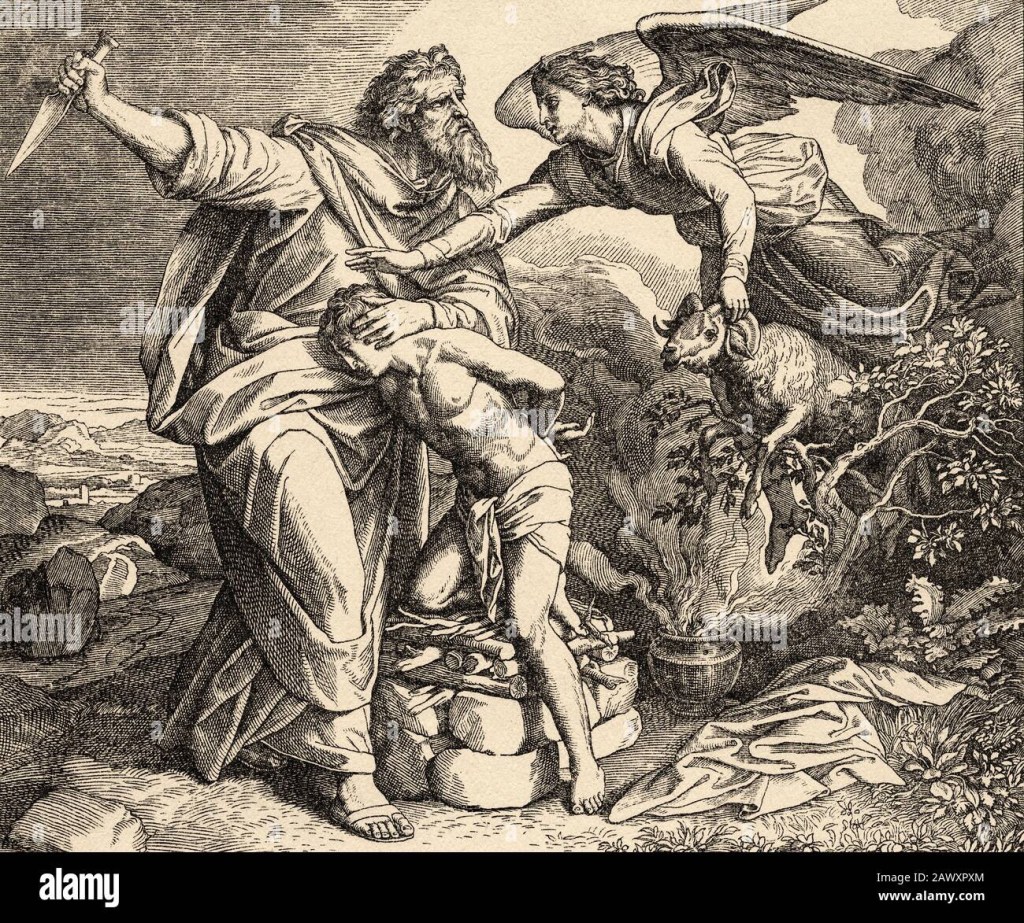
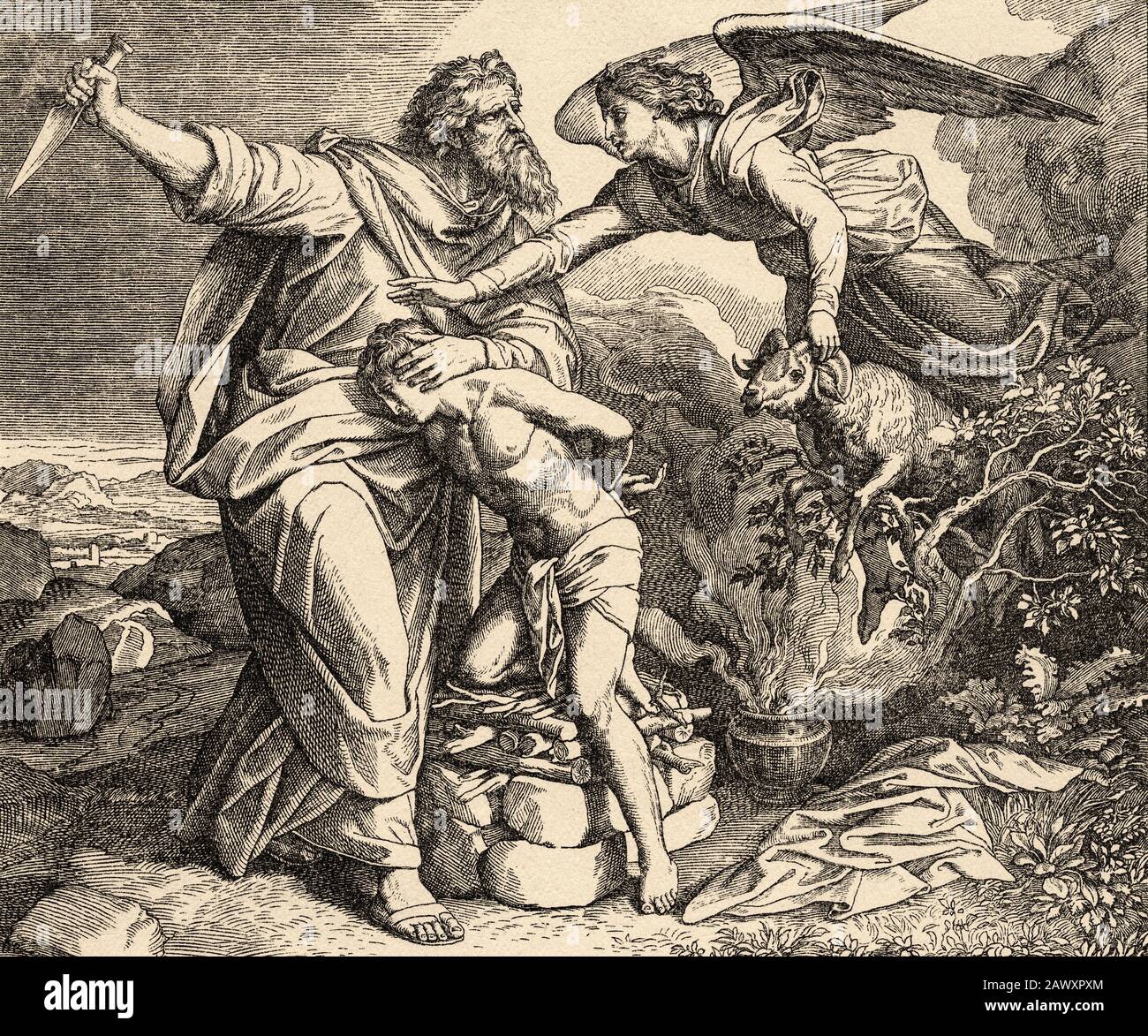
The Near Sacrifice of Ishmael: Islamic Theology and Its Support for the Prophethood of Muhammad
What theological reasoning do Islamic scholars offer to explain how Abraham’s near sacrifice of Ishmael, instead of Isaac, supports the prophethood of Muhammad?
According to Islamic tradition and theology, the near sacrifice of Ishmael by Abraham, rather than Isaac, provides support for the prophethood of Muhammad in several key ways:
Judaism, Christianity, and Islam all trace their spiritual lineage to Abraham as a shared patriarch. The story of Abraham’s willingness to sacrifice his son at God’s command is seen as a supreme test of faith in all three traditions. By identifying the son as Ishmael rather than Isaac, Islam establishes a direct link between Abraham and Muhammad through Ishmael.
The Quran in Surah 37 recounts the story of Abraham’s willingness to sacrifice his son out of obedience to God. Despite not explicitly naming the son, the Quran places the narrative of the sacrifice before the announcement of Isaac’s birth, which some interpret as an indication that Ishmael was the one sacrificed. This Quranic account is seen as affirming Ishmael’s role.
Islamic tradition holds that Muhammad is a direct descendant of Ishmael. The legitimacy and authenticity of Muhammad’s prophethood is thus connected to this lineage going back to Abraham through Ishmael. Ishmael’s willingness to be sacrificed is viewed as a significant event that foreshadows the prophethood of Muhammad, which holds a central role in the religion.
Muslims believe the Quran is the final, unaltered word of God as revealed to Muhammad, arguing that earlier scriptures like the Torah and Bible have been changed over time. In this view, the Quran corrects these alterations, and its indication that Ishmael was the sacrificial son is seen as the accurate version of the story. This affirms Muhammad’s role in restoring the original monotheistic message.
While acknowledging the prophets of Judaism and Christianity, Islam considers Muhammad to be the final prophet who came to restore the pure monotheistic faith and correct deviations that had entered the earlier religions. The story of Ishmael’s near-sacrifice is thus seen as part of this corrective prophetic message continuing through Muhammad.
In summary, the Islamic theological argument is that the identification of Ishmael as the son Abraham was commanded to sacrifice establishes a direct link between Abraham, Ishmael, and Muhammad, supporting the legitimacy of Muhammad’s prophethood as a continuation of the Abrahamic lineage and monotheistic message that was preserved intact through Ishmael and fully restored in the revelation of the Quran to Muhammad. The Ishmael narrative reinforces Muhammad’s prophetic authority for Muslims.
Examine “Baca” in Psalm 84, verse 6, and “Bakkah” of Surah 3, verse 96, from the Quran. How do they correlate?
An excerpt from Holman Concise Bible Dictionary about Baca in Psalm 84, verse 6:
Baca
(Balsam tree or weeping)
Valley in Psalm 84, verse 6, which reflects a poetic play on words describing a person forced to go through a time of weeping who found that God turned tears into a well, providing water.
Baca, mentioned in Psalm 84, verse 6, is believed to be Mecca, which Surah 3, verse 96 of the Quran refers to as Bakkah. It was Hagar, the mother of Ishmael, who was forced to experience a period of weeping, who discovered that God had turned tears into a miraculous well of Zamzam. What is the articulation of this argument?
The argument you’ve presented draws a connection between two distinct religious texts, the Bible and the Quran, by referencing similar concepts found within both. The statement juxtaposes the poetic description from Psalm 84, verse 6, in the Bible, which mentions the Valley of Baca (often interpreted as a place of weeping or sorrow), with a narrative from the Quran.
According to Surah 3, verse 96, the Quran mentions a place called Bakkah, identified by many scholars and tradition as Mecca, a city of paramount importance in Islam.
The biblical excerpt describes a metaphorical transformation where a time of weeping is turned into a source of sustenance and blessing, symbolized by tears turning into a well. This metaphor captures the idea of divine intervention and support during times of distress, providing not just relief but also nourishment and strength from the adversity faced.
The Quranic reference complements this biblical narrative by recounting the story of Hagar and Ishmael, where Hagar’s desperate search for water in the desert for her infant son Ishmael is rewarded by the miraculous appearance of the Zamzam well. This story is deeply embedded in Islamic tradition and highlights themes of faith, divine provision, and the transformation of despair into hope.
By articulating this argument, the connection being made is that both biblical and Quranic texts, while from different religious traditions, reflect a similar theological theme: the belief in a benevolent deity who transforms moments of deep personal despair into opportunities for divine blessing and providence.
The comparison suggests a shared motif of spiritual testing and divine intervention, where the act of enduring hardship with faith can lead to miraculous outcomes, symbolized through the provision of water in both narratives. This water, whether from the well mentioned in Psalm 84, verse 6, or the Zamzam well in Islamic tradition, stands as a powerful symbol of life, sustenance, and the transformative power of faith.
 ABRAHAMIC THEOLOGY