Azahari Hassim
Genesis 15, verse 18 reads:
“In the same day the Lord made a covenant with Abram, saying, Unto thy seed have I given this land, from the river of Egypt unto the great river, the river Euphrates”.
Genesis 15, verse 18 is a specific verse in the Bible, which is part of the book of Genesis in the Old Testament. It describes a covenant that God made with Abraham, promising him and his descendants land from the river of Egypt to the Euphrates River.
Did the establishment of Islam as the religion of Abraham in the Middle East or the Levant fulfill the promise of God to Abraham that his descendants through Ishmael would inherit the land from the border of Egypt to the Euphrates River as mentioned in the Torah or Genesis 15, verse 18? Islamic scholars assert that the ancient scribes may have manipulated the Torah to favor Isaac instead of Ishmael. How do they present their argument?
Islamic scholars argue that the establishment of Islam in the Middle East and Levant region did fulfill God’s promise to Abraham regarding Ishmael’s descendants. They point out that Islam spread rapidly across this area in the 7th-8th centuries, bringing monotheistic worship of the God of Abraham to millions.
It is asserted that the ancient scribes who wrote the Torah may have altered the stories to show preference for Isaac’s descendants over Ishmael’s. They suggest that this bias may have been influenced by socio-political factors, such as the dominance of the Israelite tribes, which led to the emphasis on Isaac’s descendants in the biblical account.
Historically, the Arab-Islamic Caliphates after the rise of Islam in the 7th century did indeed conquer and control territories extending from Egypt to the Euphrates River, which matches the geographical extent of the land mentioned in Genesis 15, verse 18. This has led some to draw parallels between the spread of Islam and the fulfillment of the promise to Ishmael’s descendants.
From an Islamic theological perspective, the establishment of Islam in the Middle East and the Levant is seen as the fulfillment of God’s promise to Abraham, as it recognizes and upholds the significance of Ishmael’s lineage.
Islamic scholars argue that both Isaac and Ishmael are equally revered as prophets, and that their respective lineages are part of God’s overarching plan for humanity, with Hebrew prophets paving the way for the coming of Muhammad, the last prophet.
In summary, Islamic scholars argue that:
- The promise made to Abraham about his descendants inheriting the land could have been fulfilled through Ishmael.
- The Torah might have been altered over time to give greater emphasis to Isaac’s lineage and downplay Ishmael’s role.
- The rise of Islam and the influence of the descendants of Ishmael (through Prophet Muhammad) is seen as a fulfillment of God’s promise to Abraham.
- The spread of Islam and its dominance in the Middle East aligns with the geographical scope of the promise made to Abraham in the Torah, reinforcing the idea that Ishmael’s descendants inherited this blessing.
These arguments reflect a broader theological debate regarding the interpretation of ancient texts and the legacy of Abraham’s two sons, Isaac and Ishmael, in the context of religious history.

Origen, known for his allegorical interpretations, also referenced Genesis 15:18. In his writings, such as his Homilies on Genesis and Commentary on Genesis, Origen viewed the promise of land to Abraham as a type or symbol of the greater spiritual inheritance offered to believers. For Origen, the “land” represented the kingdom of God, and the offspring of Abraham were those who followed God in faith, whether Jew or Gentile.
The Holy Land of Palestine and Muhammad the Prophet of Islam
The Prophet said:
فَإِنَّ اللَّهَ عَزَّ وَجَلَّ تَوَكَّلَ لِي بِالشَّامِ وَأَهْلِهِ.
“Verily, Allah Almighty has entrusted me with the land of Sham (that is, Palestine, Jordan, Lebanon, and Syria) and its people.”
Some believe the hadith is related to establishment of Islamic caliphate in the region of the Levant. How is this argument articulated?
The hadith is reported by Imam Ahmad in his Musnad, and it is considered authentic by some scholars. The hadith indicates that the Prophet (peace and blessings be upon him) was given a special responsibility and honor by Allah to take care of the land of Sham and its people, who are also praised in other hadiths for their faith and steadfastness.
Some people have used this hadith to support the idea of establishing an Islamic caliphate in the region of the Levant, which includes the modern countries of Syria, Lebanon, Jordan, Palestine, and Israel. They argue that since the Prophet (peace and blessings be upon him) was entrusted with this land by Allah, it is the duty of the Muslims to follow his example and protect it from any foreign occupation or oppression.
They also claim that this land has a special status and significance in Islam, as it is the place where many prophets and righteous people lived, where many battles and victories occurred, and where many signs of the Hour will take place.
Reexamining the Abrahamic Covenant: Ishmael’s Primacy in Islamic Tradition
Did Abraham, Isaac and Jacob know about Mount Sinai and its sacredness?
The biblical accounts suggest that Mount Sinai and its sacredness were not known to Abraham, Isaac, and Jacob. The significance sacred of Mount Sinai is primarily associated with the story of Moses and the Israelites’ liberation from Egypt, as described in the Book of Exodus. However, it’s important to note that beliefs and interpretations may vary among different religious traditions.
The belief that the Abrahamic covenant was fulfilled through Ishmael rather than Isaac, including the promise of land from the Nile to the Euphrates and the blessing to all nations through Abraham’s seed, is held by some, particularly within Islamic tradition. Here’s a more detailed articulation of their argument:
Ishmael and the Covenant.
- Ishmael as the Firstborn: Supporters of this view argue that Ishmael, being Abraham’s firstborn son, was the original heir to the covenant. They emphasize that Ishmael was the first child of Abraham, born to Hagar, Sarah’s Egyptian maidservant.
- Sacrifice Narrative: They contend that the narrative of Abraham being asked to sacrifice his son originally referred to Ishmael, not Isaac. This is based on the belief that ancient scriptures were altered by Israelite scribes to emphasize Isaac’s role.
- Blessing and Land Promise: The promise of land from the Nile to the Euphrates and the blessing to all nations is seen as applying to Ishmael’s descendants. Islamic tradition views Ishmael as an ancestor of the Arab peoples, and thus sees the fulfillment of these promises through the Islamic Hajj and in the rise of Islamic civilization.
Scriptural Alteration Argument.
- Scribal Changes: They argue that ancient Israelite scribes altered the scriptures to shift the focus from Ishmael to Isaac. This was done to establish a theological foundation for the Israelites’ claim to the land and their unique covenantal relationship with God.
- Evidence from Quranic Texts: The Quran refers to the story of Abraham and his son, implying that Ishmael was the one to be sacrificed. This, combined with historical accounts and interpretations, is used to argue for the primacy of Ishmael in the covenantal promises.
In conclusion, the article argues within Islamic tradition that the Abrahamic covenant was fulfilled through Ishmael instead of Isaac. Key points include:
1. Ishmael as Firstborn: Ishmael’s status as Abraham’s firstborn makes him the original heir to the covenant.
2. Sacrifice Narrative: The initial sacrifice narrative is believed by proponents to refer to Ishmael, with later alterations made to focus on Isaac.
3. Blessing and Land Promise: The land and blessing promise is seen as fulfilled through Ishmael’s descendants, with Islamic traditions highlighting the Hajj and Islamic civilization as proof.
Additionally, it is argued that Israelite scribes modified scriptures to bolster Israel’s claims, while the Quran supports Ishmael’s role in the covenant.

Analyze Jesus and Muhammad in Abrahamic faiths through the concept of “Seed” in Genesis 22:18
Certain individuals argue that the reference to the “seed” in Genesis 22, verse 18, does not pertain to Jesus due to his words in Matthew 15, verse 24. Instead, they point to Muhammad based on Surah 21, verse 107. How is their argument articulated?
The argument that the “seed” mentioned in Genesis 22, verse 18, refers to Muhammad rather than Jesus is articulated by contrasting biblical and Quranic texts. Here’s how the argument is structured:
Genesis 22, verse 18, states:
“And through your offspring all nations of the earth will be blessed, because you have obeyed My voice”.
The Hebrew word used for “offspring” or “seed” is “zera”, which can be a collective singular noun, implying it could refer to a single individual or a group.
In Matthew 15, verse 24, Jesus says, :
“And through your offspring all nations of the earth will be blessed, because you have obeyed My voice”.
This statement is interpreted by some to mean that Jesus’ mission was primarily focused on the Israelites and not on all nations directly. This interpretation is used to argue that Jesus was not the fulfillment of the promise in Genesis 22, verse 18, which speaks of a blessing to “all nations”.
Surah 21, verse 107 of the Quran states:
“And We have not sent you, [O Muhammad], except as a mercy to the worlds”.
This verse is interpreted to mean that Muhammad’s mission was universal, extending to all of humanity, which aligns with the promise in Genesis 22, verse 18, about blessing all nations.
The proponents of this view argue that since Jesus explicitly stated his mission was to the Israelites, he does not fulfill the universal aspect of the blessing promised in Genesis 22, verse 18.
In contrast, Muhammad is described in the Quran as a mercy to all worlds, which they believe aligns more closely with the promise of a blessing to all nations. Therefore, they conclude that the “seed” in Genesis 22, verse 18, refers to Muhammad rather than Jesus.
This argument hinges on the interpretation of Jesus’ mission scope in the New Testament and the universal mission attributed to Muhammad in the Quran.
There are some scholars who believe the prophethood of Muhammad is related to Abraham’s near sacrifice of Ishmael. Therefore, Muslims commemorate Eid ul-Adha or the Feast of Sacrifice. How is this argument articulated?
The argument that the prophethood of Muhammad is related to Abraham’s near sacrifice of Ishmael is based on the Islamic tradition that Abraham was commanded by God to sacrifice his son Ishmael, not Isaac as mentioned in the Bible.
This event is seen as a test of Abraham’s faith and obedience to God, and Ishmael’s willingness to be sacrificed is seen as a demonstration of his own faith and submission to God’s will.
In Islamic theology, this event is considered a precursor to the prophethood of Muhammad, who is seen as a descendant of Ishmael. The story of Abraham’s sacrifice is commemorated by Muslims during the Eid al-Adha, or the Feast of Sacrifice, which is one of the most important Islamic holidays.
The argument is articulated as follows:
- Abraham was commanded by God to sacrifice his son Ishmael, as mentioned in the Quran (Surah 37: 100 to 108).
- Ishmael was willing to be sacrificed, demonstrating his faith and submission to God’s will.
- This event is seen as a test of Abraham’s faith and obedience to God.
- The prophethood of Muhammad is related to this event, as he is a descendant of Ishmael.
- The story of Abraham’s sacrifice is commemorated by Muslims during the Eid al-Adha, which is a celebration of Abraham’s faith and obedience to God.
Therefore, the prophethood of Muhammad is seen as a continuation of the legacy of Abraham and Ishmael, and the story of Abraham’s sacrifice is seen as a precursor to the prophethood of Muhammad.
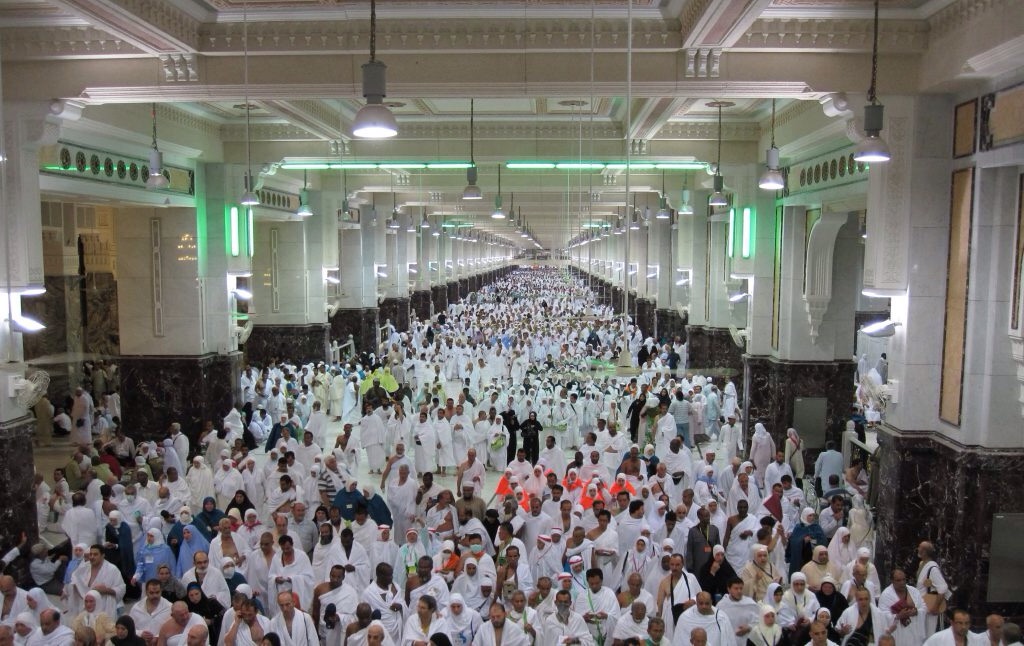
What is Eid al-Adha?
Eid al-Adha, also known as the “Festival of Sacrifice,” is one of the most significant Islamic holidays. It commemorates the willingness of Prophet Ibrahim (Abraham) to sacrifice his son Isma’il (Ishmael) as an act of obedience to God.
According to Islamic tradition, just as Abraham was about to sacrifice his son, God provided a lamb to sacrifice instead.
The holiday is marked by various rituals and traditions, including:
- Prayer: Special prayers are held in congregation, usually at a mosque or an open field.
- Sacrifice: Families who can afford it will sacrifice an animal, typically a sheep, goat, cow, or camel. The meat is then distributed among family, friends, and those in need.
- Charity: Emphasizing the importance of helping others, Muslims give to charity and ensure that everyone can partake in the celebration.
- Gatherings and Feasts: Families and communities come together to share meals, celebrate, and enjoy each other’s company.
Eid al-Adha is celebrated on the 10th day of Dhu al-Hijjah, the last month of the Islamic lunar calendar, and it coincides with the pilgrimage to Mecca known as Hajj. Muslims who are performing Hajj experience this holiday in a particularly special way.
 ABRAHAMIC THEOLOGY