Azahari Hassim
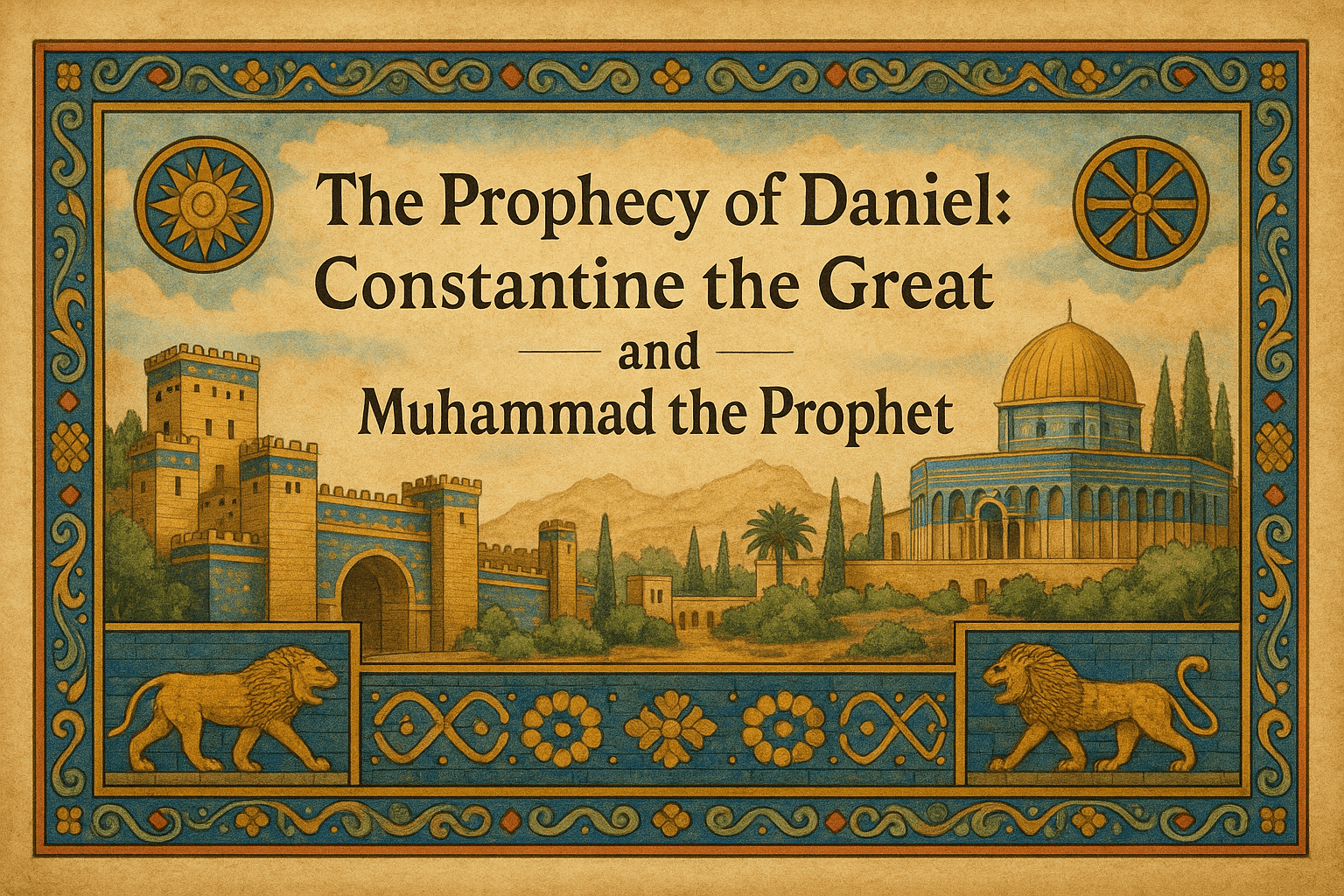
Some believe that Daniel 7, verse 25 alludes to Constantine the Great, who presided over the council of Nicaea, while Daniel 7, verse 13, points to Muhammad’s Night Journey. How is this argument explained?
This is a very controversial argument that is not widely accepted by most biblical scholars and Christians, who believe that Daniel 7, verse 25, and Daniel 7, verse 13, refer to the Antichrist and the Messiah, respectively. However, some people who support this argument explain it in the following way:
They claim that Constantine the Great, who was the first Roman emperor to convert to Christianity and who convened the Council of Nicaea in 325 AD, was the little horn of Daniel 7, verse 25, who spoke pompous words against the Most High and tried to change the times and the laws.
They argue that Constantine corrupted the original teachings of Jesus and imposed his own doctrines and creeds on the Christian church, such as the doctrine of the Trinity, the observance of Sunday instead of Saturday as the Sabbath, and the celebration of Easter instead of Passover.
They also accuse Constantine of persecuting and oppressing those who did not conform to his version of Christianity, such as the followers of Arianism, who denied the divinity of Jesus.
Arianism sparked significant debates within the Church, particularly during the early Ecumenical Councils. The First Council of Nicaea in 325 AD condemned Arianism, affirming the doctrine of the Trinity and the full divinity of Christ. The Nicene Creed established the belief that the Son is “begotten, not made, of one substance with the Father.”
Islamic scholars claim that Muhammad, who was the prophet of Islam and who claimed to have a miraculous Night Journey from Mecca to Jerusalem and then to heaven in 621 AD, was the Son of Man of Daniel 7, verse 13, who came with the clouds of heaven and was given dominion, glory, and a kingdom by the Ancient of Days, that is God.
The term “night visions” directly suggests an event that takes place at night. Muhammad’s Night Journey, which is said to have occurred during the night, aligns with this description. In contrast, Jesus’ ascension is generally not described as happening at night in Christian texts.
They argue that Muhammad was a true prophet of God who restored the pure monotheism that was lost by Constantine and his followers. They also assert that Muhammad’s kingdom is an everlasting kingdom that will never be destroyed, and that all nations and peoples of every language will serve him or submit to his law.
In summary, these are a few points made by Islamic scholars to back the notion that Daniel 7, verse 25, and 7, verse 13, refer to Constantine as the little horn who established the Trinity at the Council of Nicea, and Muhammad as the Son of Man who encountered God on his Night Journey to the seventh heaven.
Daniel 7:13-14:
[13] I saw in the night visions, and, behold, one like the Son of man came with the clouds of heaven, and came to the Ancient of days, and they brought him near before him.[14] And there was given him dominion, and glory, and a kingdom, that all people, nations, and languages, should serve him: his dominion is an everlasting dominion, which shall not pass away, and his kingdom that which shall not be destroyed.

Here are some key points about Constantine:

Early Life: Born around AD 272 in Naissus (modern-day Niš, Serbia), Constantine was the son of Flavius Constantius, a Roman army officer, and Helena, who later became Saint Helena.

Rise to Power: After the death of his father in AD 306, Constantine was proclaimed emperor by his troops. His rise to power was marked by a series of civil wars against other claimants to the throne.

Battle of Milvian Bridge: In AD 312, Constantine fought against Maxentius at the Battle of Milvian Bridge. According to legend, before the battle, he had a vision of a cross in the sky with the words "In this sign, conquer." He attributed his victory to the Christian God, which influenced his conversion to Christianity.

Edict of Milan: In AD 313, Constantine, along with Licinius, issued the Edict of Milan, which granted religious tolerance throughout the empire and allowed Christians to practice their faith openly.

Foundation of Constantinople: In AD 330, Constantine refounded the city of Byzantium and renamed it Constantinople (modern-day Istanbul). He made it the new capital of the Roman Empire, which later became a center of Christianity.

Council of Nicaea: In AD 325, Constantine convened the First Council of Nicaea to address issues within the Christian community, including the Arian controversy. The Nicene Creed, which established foundational Christian beliefs, was formulated during this council.

Legacy: Constantine's reign marked a turning point in the history of the Roman Empire and Christianity. He is often credited with paving the way for the spread of Christianity throughout Europe. His legacy is complex, as he is viewed as a pivotal figure in both the history of the Roman Empire and the development of Christianity.

Death: Constantine died on May 22, 337, and was baptized shortly before his death. He was buried in the Church of the Holy Apostles in Constantinople.

Constantine's impact on religion, politics, and culture continues to be studied and debated by historians and scholars to this day.
Islam as the Restored Faith of Abraham: Addressing Perceived Deviations in Judaism and Christianity
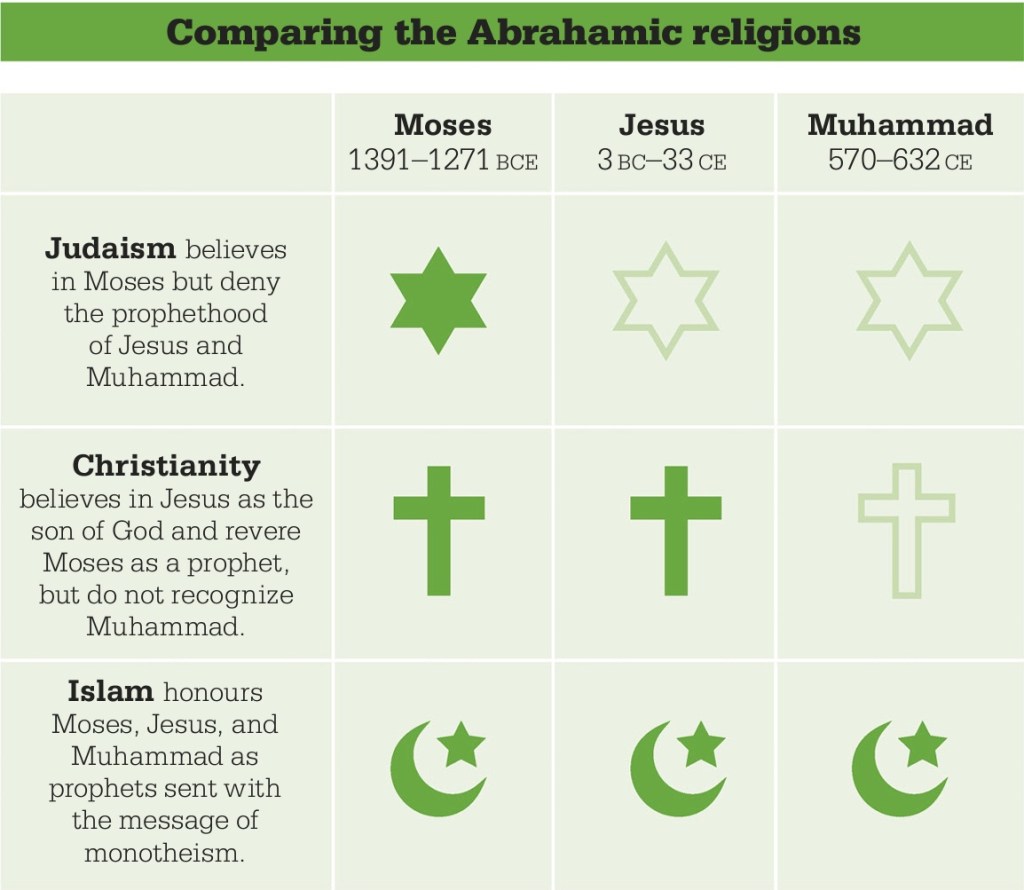
Islam is considered as a restored religion of Abraham due to Judaism corrupting their text as regards a son whom Abraham was commanded to sacrifice. At the same time, Christianity corrupted their scripture concerning the oneness of God and the rite of circumcision. What is the explanation for this?
The belief that Islam is a restored religion of Abraham stems from the belief that both Judaism and Christianity deviated from the original teachings of Abraham. According to Islamic beliefs, Judaism corrupted their text by incorrectly interpreting the command to sacrifice a son, as mentioned in the Quran. Muslims believe that Abraham was commanded to sacrifice his son Ishmael, not Isaac as mentioned in the Hebrew Bible.
Similarly, Muslims believe that Christianity corrupted their scripture by deviating from the belief in the oneness of God (monotheism) and by modifying the rite of circumcision. Islam emphasizes the concept of tawheed, which is the belief in the oneness of God, and questions the Trinity as mentioned in Christian theology. Islam also practices circumcision, although the method and significance may differ from those in Judaism and some Christian traditions.
These differences and perceived corruptions are seen from the perspective of Islamic theology, which asserts that Islam is the restoration of the original teachings of Abraham, as revealed in the Quran.

Interfaith Perspectives: Islam’s View on Judaism and Christianity
Islam does not regard Judaism and Christianity as false religions but views them as having been corrupted in aspects such as which son was to be offered, the unity of God, and the divine covenant of circumcision. How is this argument articulated?
In Islam, Judaism and Christianity are considered as previous Abrahamic religions, and Muslims believe that they initially contained truth and guidance from God. However, Muslims also believe that these religions underwent changes and corruptions over time.
In the matter of which son was offered for sacrifice, Islam differs from both Judaism and Christianity. In the Islamic tradition, it is understood that Prophet Abraham (Ibrahim) was commanded by God to sacrifice his son, Ismail (Ishmael), not Isaac as mentioned in the Hebrew Bible. Muslims regard Ismail as the intended son of sacrifice, and this event is commemorated during the Islamic festival of Eid al-Adha.
Muslims also emphasize the unity of God, known as Tawhid, considering it as one of the fundamental principles of Islam. Islam strongly adheres to the notion that God is one and indivisible, without any partners or associates. This perspective varies from the Christian concept of the Trinity, which posits three distinct persons within the Godhead.
Another point of difference lies in the divine covenant of circumcision. In Christianity, the practice of circumcision is not considered a requirement or a necessary part of the divine covenant.
Muslims argue that these differences between Islam and other monotheistic religions highlight how the original teachings may have been altered or misinterpreted over time, leading Islam to claim that it is the final and most accurate revelation from God through the Prophet Muhammad.
 ABRAHAMIC THEOLOGY