Azahari Hassim
Jesus, in Mark Chapter 8, verse 38, says:.
“For whoever is ashamed of me and my words in this adulterous and sinful generation, the Son of Man will also be ashamed of him when he comes in the glory of his Father with the holy angels.”
The interpretation of the term “Son of Man” used by Jesus in the Gospels has been a subject of debate among biblical scholars. While the majority of scholars understand the term to be a self-designation by Jesus himself, there are a few who propose alternative interpretations, suggesting that it refers to someone other than Jesus.
One prominent scholar who advocates for an alternative understanding of the term is Geza Vermes. Vermes proposes that the phrase “Son of Man” was not a title that Jesus used to refer to himself, but rather a designation for a future apocalyptic figure who would come at the end of time to judge the world. According to Vermes, the phrase “son of man” had its roots in the Hebrew Bible, specifically in the book of Daniel, where it is used to describe a heavenly figure who receives divine authority and is associated with apocalyptic events.
Another scholar who explores alternative interpretations of the term is Robert H. Gundry. Gundry suggests that the usage of “Son of Man” by Jesus indicates a distinct divine figure, separate from Jesus himself. According to Gundry, Jesus employed the term to refer to a heavenly figure who would come with divine authority and power to establish the Kingdom of God on earth.
Similarly, John P. Meier, in his multi-volume work “A Marginal Jew,” presents a comprehensive analysis of the historical Jesus. Meier acknowledges the widespread belief among scholars that the term “Son of Man” predominantly refers to Jesus himself in the Gospels. However, he also acknowledges that there are instances where the term could possibly be interpreted differently, referring to a figure other than Jesus.
The diversity of opinions on this subject reflects the complexity of interpreting ancient texts, the nuances of the original language, and the difficulties in reconstructing the historical context and intent of the speakers. Each interpretation is usually backed by a framework of theological or historical reasoning, and scholars often bring different presuppositions and methodologies to their readings of the biblical text.

Does Islam represent the concept of “the Kingdom of God” as taught by Jesus and John the Baptist?
Did Jesus and John the Baptist announce the coming of the kingdom of God?
Yes, both Jesus and John the Baptist announced the coming of the Kingdom of God. John the Baptist’s ministry focused on repentance and emphasized the nearness of the Kingdom. John’s message in the Gospels urges individuals to repent and return to God, preparing for the arrival of the Messiah, referred to as the “son of man” in Jesus’ parables, who will establish the Kingdom.
Jesus continued this theme in His ministry, often speaking about the Kingdom of God in His teachings. He used parables, miracles, and sermons to explain the nature of this Kingdom, addressing its spiritual dimensions and moral implications.
Did Jesus equate the kingdom with the religion of Christianity?
No, Jesus did not explicitly equate the Kingdom of God with what later became known as Christianity. The term “Christianity” was not used during His lifetime; the followers of Jesus were initially seen as a Jewish sect. Jesus’ message encompassed the fulfillment of the Jewish prophetic tradition and the establishment of a new covenant, but how this developed into Christianity occurred after His death and resurrection through the efforts of His apostles and early followers.
In summary, Jesus and John the Baptist announced the coming of the Kingdom of God, but Jesus did not equate this Kingdom directly with the religion that later emerged as Christianity.
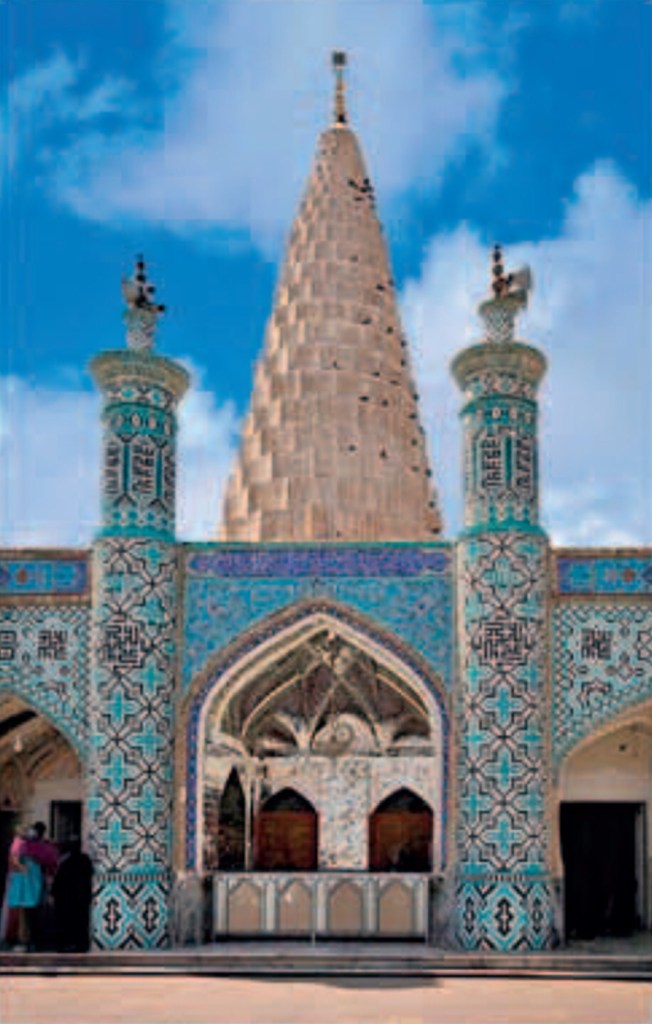
The Tomb of Daniel in Susa, Iran, is the most plausible of the possible locations for Daniel’s tomb. There are five other sites: Mala Amir in Iran; Samarkand in Uzbekistan; and Kirkuk, Babylon, and Muqdadiyah in Iraq.
It is thought that Christianity originated as an apocalyptic group within Judaism, with Jesus proclaiming the arrival of the son of man and his Kingdom as described in the Book of Daniel. Islamic scholars believe that this apocalyptic figure, son of man, is none other than Muhammad who established Islam in the land where God promised to Abraham in Genesis 15, verse 18. Islam is regarded as the kingdom of God preached by Jesus. How is their argument articulated?
The argument by some Islamic scholars that the apocalyptic figure referred to by Jesus is Muhammad, and that Islam is the kingdom of God as preached by Jesus, is based on a reinterpretation of certain Biblical and Qur’anic texts. Here’s how the argument is articulated:
1. Jesus and the Son of Man:
In Christian eschatology, the “Son of Man” is an apocalyptic figure described in the Book of Daniel and in the Gospels. Jesus speaks of the coming of the “Son of Man” who will establish God’s kingdom.
Islamic scholars who subscribe to this interpretation propose that the “Son of Man” could be a symbolic reference to Muhammad, who they argue, fulfilled this prophecy by establishing Islam from the River of Egypt to the Euphrates River including the Arabian Peninsula, a land promised to Abraham’s descendants.
2. The Kingdom of God:
In Christian theology, the “Kingdom of God” or “Kingdom of Heaven” is often understood as a spiritual realm where God reigns supreme, and which will be fully realized in the eschatological future.
Islamic scholars who support this view argue that Jesus’ references to the coming “Kingdom of God” were not about a spiritual kingdom, but a prophetic kingdom established on earth. They interpret this kingdom as the Islamic state that Muhammad established in Medina and later expanded throughout Arabia and beyond.
3. The Covenant and the Land Promise:
In Genesis 15, verse 18, God promises Abraham’s descendants a specific land. Jewish and Christian interpretations traditionally see this as a promise fulfilled in the biblical history of Israel.
However, some Islamic scholars reinterpret this promise in the context of Islam, suggesting that the true fulfillment of God’s covenant and the promised land is seen in the establishment of Islam from the River of Egypt to the Euphrates River, a promise made to Ishmael instead of Isaac. They argue that Islam, as the final and complete religion, fulfills this covenant.
4. Prophecies and Islamic Tradition:
Islamic tradition holds that Muhammad is the “Seal of the Prophets,” completing the line of prophets that includes Abraham, Moses, and Jesus. Some scholars interpret Jesus’ statements about a future prophet (like the “Comforter” in John 14, verses 16 to 17) as references to Muhammad.
They argue that Jesus was predicting Muhammad’s arrival, and that the establishment of Islam represents the realization of the kingdom Jesus spoke of.
5. Theological Implications:
This argument hinges on the belief that Islam is the final and most complete form of the Abrahamic faith, and that previous scriptures (Torah, Psalms, Gospels) were either incomplete or have been altered over time. The Qur’an is seen as the final, unaltered word of God, and Muhammad as the last prophet who brings the ultimate message.
In summary, the argument is built on a re-interpretation of Jesus’ teachings and the apocalyptic expectations found in the New Testament, suggesting that these were actually referring to the coming of Muhammad as a “son of man”and the establishment of Islam, which they view as the true “Kingdom of God.”
Does the prophecy of Daniel refer to Muhammad as the son of man?
Is there a theological correlation between the Night Journey of Prophet Muhammad to Heaven and the prophecy mentioned in Daniel 7:13?
Please provide a detailed explanation to support this argument.
The argument connecting the Night Journey of the Prophet Muhammad to Heaven with Daniel 7 verse 13 is based on theological interpretations that draw parallels between the two events. Here’s an explanation of this argument:
- The Night Journey of Prophet Muhammad ( الإسراء والمعراج): According to Islamic tradition, the Night Journey (الإسراء) and Ascension (المعراج) is a miraculous event in which the Prophet Muhammad was transported from Mecca to Jerusalem and then ascended through the heavens, meeting various prophets and eventually coming into the presence of Allah.
- Daniel 7 verse 13 in the Bible: In the Book of Daniel in the Old Testament of the Bible, specifically in Daniel 7 verse 13, there is a prophecy that says: “I saw in the night visions, and behold, with the clouds of heaven there came one like a son of man, and he came to the Ancient of Days (that is, God) and was presented before him.” This verse is often interpreted as a reference to a messianic figure.
The argument connecting these two events revolves around the idea that both the Night Journey of Prophet Muhammad and the vision in Daniel 7 verse 13 involve a figure coming into the presence of God. Some scholars, particularly in comparative religion and interfaith dialogue, suggest that there are thematic similarities between these events:
Divine Revelation: In both situations, there is a significant meeting with the divine, as Prophet Muhammad ascends to the highest levels of heaven, and the individual in Daniel 7 verse 13 is brought before the “Ancient of Days,” a divine being.
Prophetic Roles: The figure in Daniel 7 verse 13 is often associated with a messianic or prophetic role. Similarly, Prophet Muhammad is considered the final prophet in Islam, and his Night Journey is seen as a confirmation of his prophethood.
It’s important to note that this argument is primarily a matter of theological interpretation and interfaith dialogue. Different scholars and religious traditions may have varying perspectives on the significance and connections between these events.
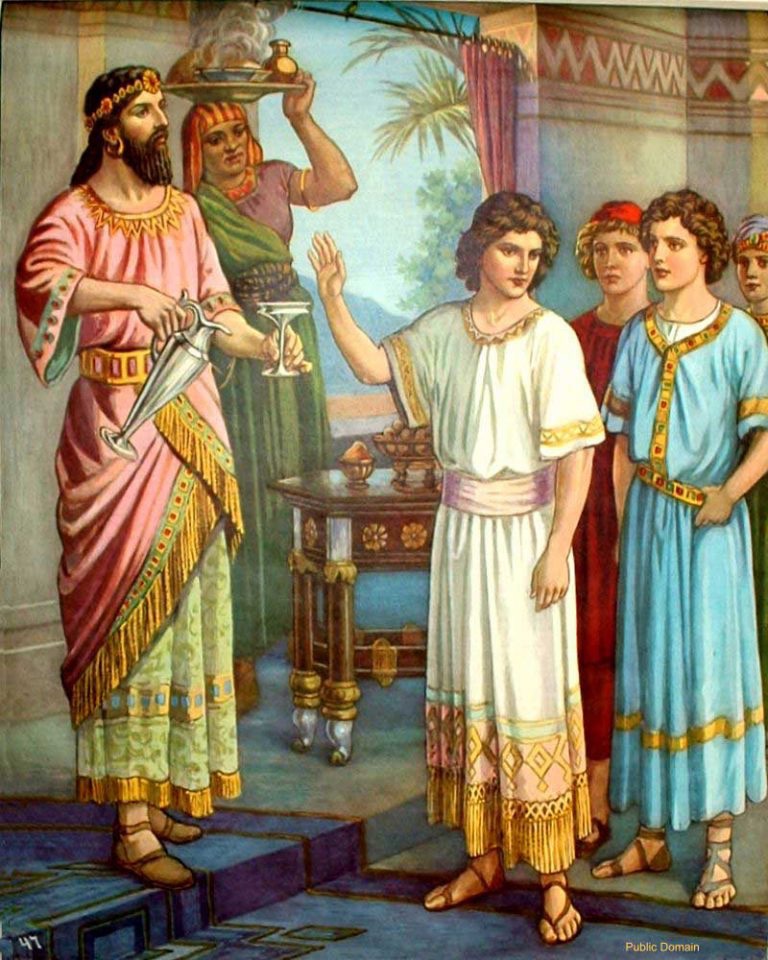
What is the perspective of Islam on the biblical figure of Daniel?
In Islam, the perspective on the biblical figure of Daniel is quite respectful, though Daniel is not mentioned explicitly in the Quran. Despite this absence, Daniel is recognized and revered in Islamic tradition and literature, primarily through historical narratives and the Hadith (sayings and actions of Prophet Muhammad).
Reverence in Islamic Tradition:
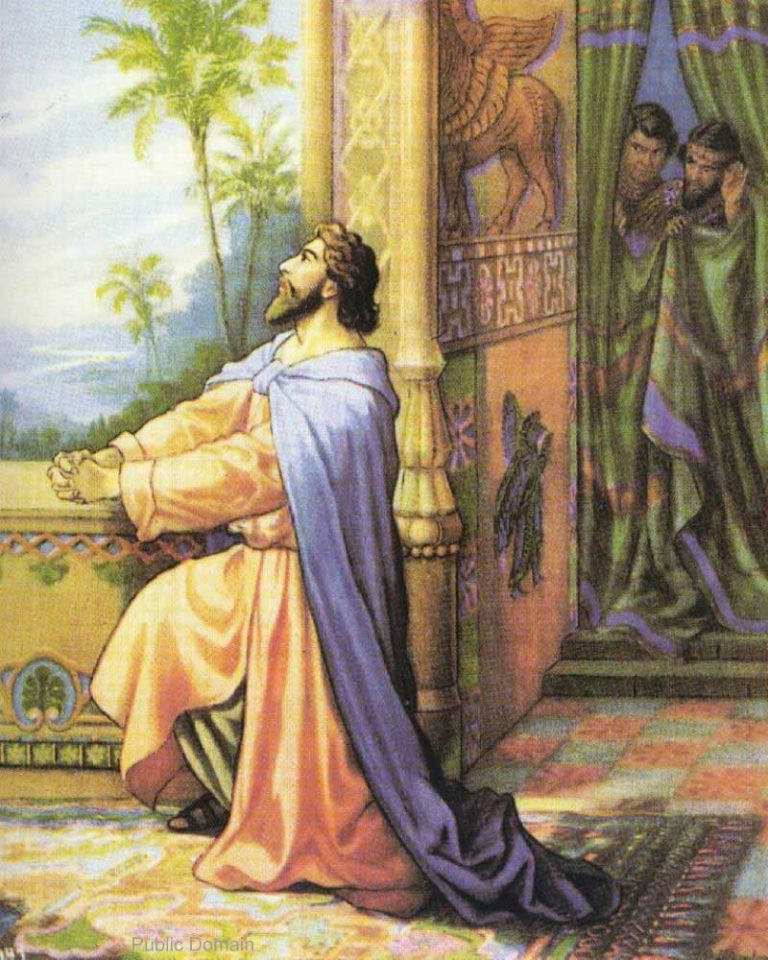
- Historical Narratives: Daniel is considered a prophet by some Muslim scholars, though this is not universally agreed upon since he is not mentioned in the Quran. His story and qualities are often cited in Islamic works, drawing from Jewish and Christian traditions. Islamic texts sometimes include stories about Daniel, portraying him as a wise and devout man. These narratives often focus on his ability to interpret dreams, his steadfast faith, and his survival in the den of lions—mirroring the biblical account.
- Literature and Folklore: Daniel appears in various Islamic texts and is particularly noted for his prophetic wisdom and piety. In some Islamic stories, he is credited with great wisdom and miraculous abilities, similar to those found in the Book of Daniel in the Bible. For instance, he is sometimes associated with the town of Susa in Iran, where a shrine said to be his tomb is located.
- Interpretations and Beliefs: In Islamic eschatology, Daniel is sometimes mentioned in discussions about the end times, although these references are more cultural and based on hadith literature rather than the Quran. His ability to interpret dreams and visions is often highlighted in Islamic teachings, paralleling the role he plays in the biblical narratives.
In summary, while Daniel is not a Quranic figure, his legacy as a wise and devout servant of God is acknowledged and respected within Islamic tradition, where he is often considered a prophet and a righteous man. His stories are used to impart moral lessons and to exemplify a life of faith and integrity.
 ABRAHAMIC THEOLOGY