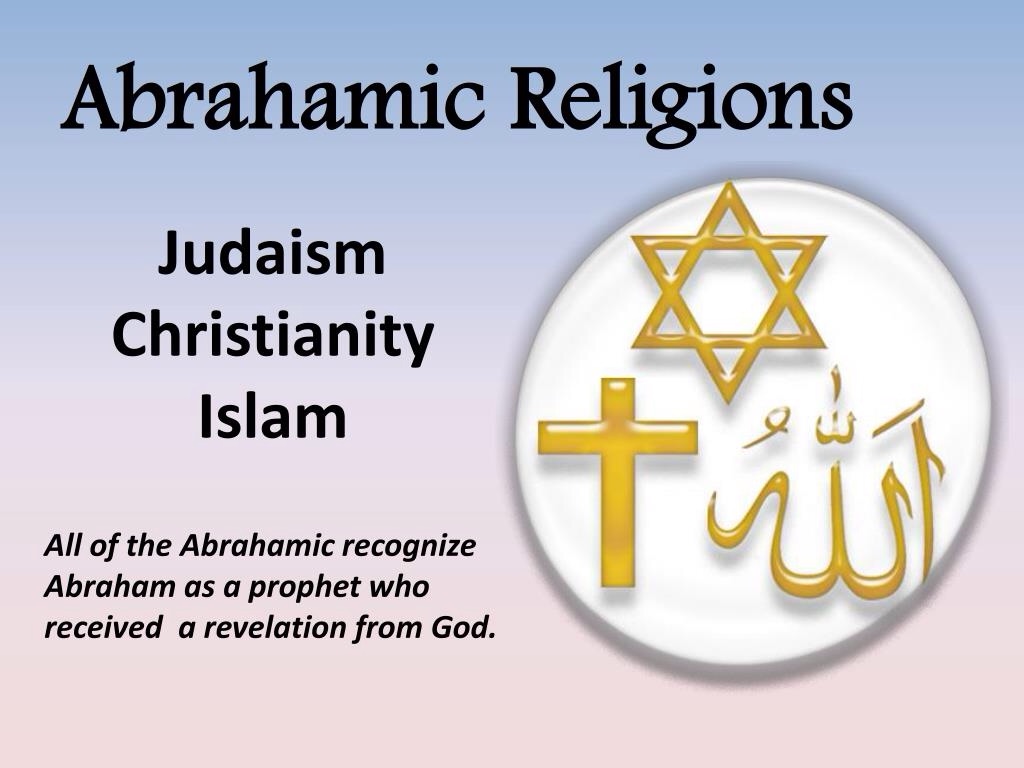
Azahari Hassim
Some believe God made a covenant with Abraham through Ishmael rather than Isaac. God chose Israel as his chosen nation prior to the coming of Prophet Muhammad who fulfilled all God’s promises to Abraham. After all, Ishmael was a firstborn, and both Hagar and Ishmael played important roles in the Hajj event together with Abraham. How is this argument articulated?
The argument that God made a covenant with Abraham through Ishmael rather than Isaac is articulated by considering the following points:
- Firstborn status: Ishmael was the firstborn son of Abraham, which traditionally holds significance in many cultures. Some argue that being the firstborn, Ishmael had a rightful claim to the covenant blessings. After all, in Deuteronomy 21 verses 15 to 17, it is stated that if a man has two wives and both bear him sons, he should not show favoritism to the son of the loved wife over the firstborn of the neglected wife. The neglected wife’s firstborn should receive double the inheritance as he is the firstfruits of the man’s virility.
- Mention in the Bible: The Bible does mention Ishmael and his descendants. In Genesis 17 verse 20, God promises to bless Ishmael, saying, “And as for Ishmael, I have heard you; behold, I have blessed him and will make him fruitful and multiply him greatly. He shall father twelve princes, and I will make him into a great nation.” This is seen as evidence that Ishmael was part of God’s plan.
- Important roles in the Hajj event: Both Hagar and Ishmael played important roles in the Hajj event, where Abraham was commanded by God to leave them in the desert of Mecca. This event is seen as significant because it demonstrates the inclusion of Ishmael and his mother in God’s plan. Muslims believe that Ishmael was the son whom Abraham was commanded to sacrifice, but God intervened and provided a ram instead. This event is commemorated by Muslims every year during Eid al-Adha, which is also known as the Festival of Sacrifice.
- Fulfillment of promises through Muhammad: Some argue that the coming of Muhammad, a descendant of Ishmael, fulfilled the promises made to Abraham. They believe that through Muhammad, God established Islam as the final and complete revelation, encompassing the fulfillment of all previous covenants and promises.
- Chosen nation prior to Muhammad: The argument suggests that Israel was chosen as God’s nation before the coming of Muhammad, but it does not necessarily mean that Israel was the only chosen nation. They believe that God’s covenant with Abraham through Ishmael was equally valid and fulfilled through the establishment of Islam.
It is important to note that this argument is not universally accepted and is subject to interpretation and theological differences. Different religious traditions may have varying views on this topic.

Two covenants: Abrahamic and Sinai covenants from an Islamic perspective
Genesis 49, verse 10, reads:
“The sceptre shall not depart from Judah, nor a lawgiver from between his feet, until Shiloh come; and unto him shall the gathering of the people be.”
The verse implies that Judah’s offspring will govern Israel until the arrival of “Shiloh,” who holds all royal power. Here, Shiloh, similar to “the Seed” in Genesis 22, verse 18, refers to the future Messiah.
From an Islamic perspective, the word “Shiloh” in Genesis 49, verse 10, is connected to the Abrahamic covenant through Ishmael, who, not Isaac, is believed to be nearly sacrificed. Conversely, the terms “scepter” and “lawgiver” mentioned in Genesis 49, verse 10, are associated with the Sinai covenant. How is their argument articulated?
From an Islamic perspective, the interpretation of Genesis 49, verse 10, and its connection to the Abrahamic covenant through Ishmael involves several key arguments:
- Shiloh as Muhammad:
Some Islamic scholars interpret “Shiloh” as a reference to Prophet Muhammad. They argue that the prophecy indicates a shift in divine authority away from the line of Judah to a descendant of Ishmael. - Abrahamic Covenant through Ishmael:
Islamic tradition holds that it was Ishmael, not Isaac, who was nearly sacrificed by Abraham. This is seen as a pivotal moment in the Abrahamic covenant, establishing Ishmael’s line as the inheritors of God’s promise. - Scepter and Lawgiver:
The terms “scepter” and “lawgiver” in Genesis 49, verse 10, are associated with the Sinai covenant given to Moses. Islamic interpretation suggests that these symbols of authority and divine law would remain with the descendants of Judah until the coming of “Shiloh” (Muhammad). - Transfer of Authority:
The verse is interpreted to mean that the religious and political authority (“scepter” and “lawgiver”) would depart from Judah’s line when Shiloh (Muhammad) comes. This is seen as a prophecy of the transition of divine guidance from the Israelite tradition to Islam. - Gathering of the People:
The phrase “unto him shall the gathering of the people be” is interpreted as referring to the universal message of Islam brought by Muhammad, which would unite people from various nations and backgrounds. - Continuation of Abrahamic Legacy:
Islamic scholars argue that Muhammad, as a descendant of Ishmael, fulfills this prophecy by bringing the final revelation that completes and supersedes previous covenants, while still maintaining continuity with the Abrahamic tradition. - Non-Judahite Messiah:
Some interpretations suggest that the verse implies the coming of a messianic figure from outside the tribe of Judah, which aligns with the Islamic view of Muhammad’s lineage through Ishmael.
It’s important to note that this interpretation is specific to Islamic theology and is not accepted in Jewish or Christian exegesis. The Islamic perspective sees this verse as one of many biblical passages that they believe foretell the coming of Prophet Muhammad and the establishment of Islam as the final Abrahamic faith.
COVENANT
The word used to describe the agreements made between God and the Jewish people. Tradition says that God made several covenants. The Torah tells of the covenant God makes with Abraham, promising him that he will be the patriarch of a great nation. In return, Abraham agrees that every male will be circumcised as a sign of this covenant.
This ancient rite is still practiced today; Jewish males are circumcised in a ceremony known as brit milah, or “the covenant of circumcision.” God also makes a covenant with Moses as he prepares to receive the Ten Commandments. God tells Moses: “If you obey me faithfully and keep My covenant, you shall be treasured among all the peoples.”
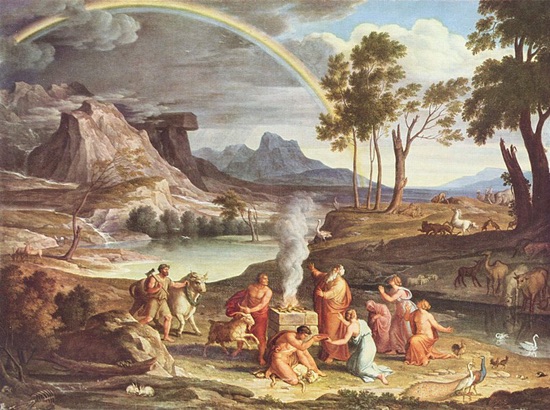
Many scholars regard acceptance of the teachings of the Ten Commandments as an example of the Israelites’ covenantal relationship with God. God also made a covenant with Noah, a non-Jew, after the Great Flood, giving him the Noahide Laws and promising never again to destroy the world. God created the rainbow as a sign of this covenant.
Ishmael was the fruit of Abraham, while Isaac was a gift of God to Abraham
From the Islamic perspective, Ishmael was the fruit of Abraham, while Isaac was a gift of God to Abraham due to his willingness to sacrifice his firstborn son, Ishmael. What is the explanation for this?
In Islamic tradition, both Ishmael and Isaac are revered as prophets and are the sons of the Prophet Abraham. Here’s a breakdown from the Islamic perspective:
- Ishmael: He is the first son of Abraham and Hagar. When Hagar and her infant son Ishmael were in the desert, God provided them with the well of Zamzam. Ishmael and his father, Abraham, later constructed the Kaaba in Mecca. The majority of Islamic traditions indicate that it was Ishmael, not Isaac, whom Abraham was commanded to sacrifice. However, at the last moment, God provided a ram to sacrifice in place of Ishmael. This event is commemorated during Eid al-Adha.
- Isaac: He is the second son of Abraham and his wife, Sarah. In Islamic narratives, after the trial of the sacrifice, as a reward for Abraham’s unwavering faith, God blessed him with a second son, Isaac, through Sarah. Isaac is also considered a prophet and is respected in Islamic tradition.
The Islamic account differs from the Jewish and Christian traditions, where Isaac is the one whom Abraham is commanded to sacrifice. In the Qur’an, the specific name of the son to be sacrificed is not mentioned, but many Islamic scholars and traditions identify him as Ishmael based on the sequence of events in the Quran, which suggests that the promise of Isaac’s birth came after the sacrifice narrative, implying Ishmael was the son involved (Surah 37, verses 100 to 112).
What does the Arabic word “نَافِلَةً” mean in Surah 21, verse 72, in the Quran? Could you elaborate more on why the Quran uses such a word to refer to Abraham concerning Isaac and Jacob?
The Arabic word “نَافِلَةً” in Surah 21, verse 72 of the Quran refers to “additional” or “extra” in English. In this verse, it is used to describe how Allah favored Abraham by giving him the additional gift of Isaac and Jacob, in addition to his son Ishmael.
This word is significant in this context because it highlights the special and additional blessings that Allah bestowed upon Prophet Abraham. It emphasizes the extraordinary nature of the gift of Isaac and Jacob, in addition to his first son Ishmael, as a form of divine favor and grace.
The use of the word “نَافِلَةً” also emphasizes the generosity and abundance of Allah’s blessings, highlighting the multiplicity of children and the continuity of prophethood within Prophet Abraham’s lineage. This choice of wording serves to underscore the extraordinary nature of Allah’s favors and blessings upon his chosen prophets and their descendants.
Overall, the use of the word “نَافِلَةً” in this verse serves to emphasize the exceptional nature of the gift of Isaac and Jacob to Prophet Abraham, in addition to his son Ishmael, highlighting the abundance and generosity of Allah’s blessings upon his chosen servants.
 ABRAHAMIC THEOLOGY