Azahari Hassim
From the Islamic perspective, Ishmael was the fruit of Abraham, while Isaac was a gift of God to Abraham due to his willingness to sacrifice his firstborn son, Ishmael. What is the explanation for this?
In Islamic tradition, both Ishmael and Isaac are revered as prophets and are the sons of the Prophet Abraham. Here’s a breakdown from the Islamic perspective:
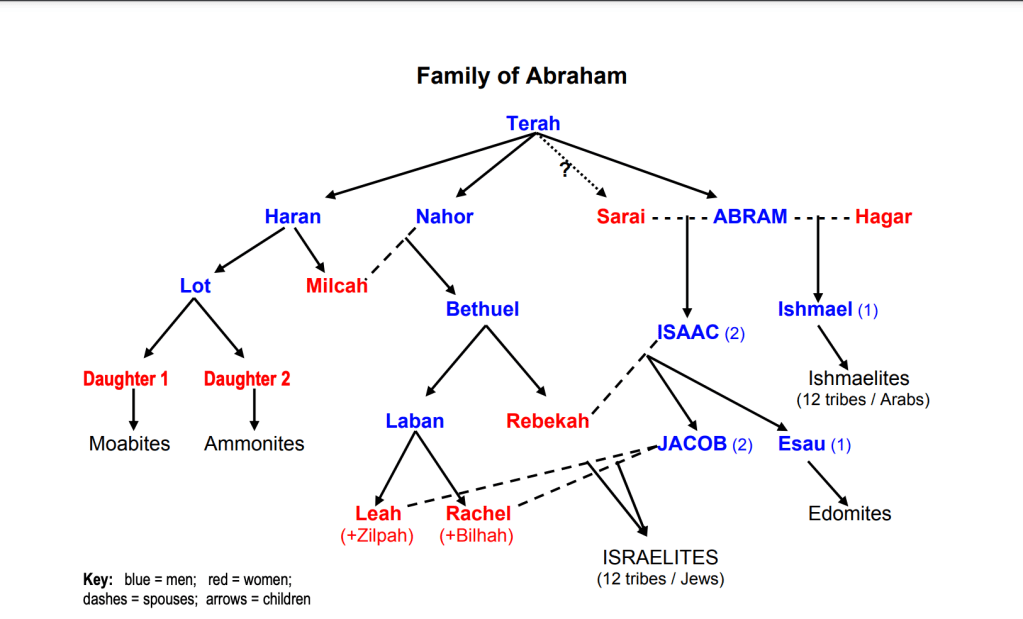
- Ishmael: He is the first son of Abraham and Hagar. When Hagar and her infant son Ishmael were in the desert, God provided them with the well of Zamzam. Ishmael and his father, Abraham, later constructed the Kaaba in Mecca. The majority of Islamic traditions indicate that it was Ishmael, not Isaac, whom Abraham was commanded to sacrifice. However, at the last moment, God provided a ram to sacrifice in place of Ishmael. This event is commemorated during Eid al-Adha.
- Isaac: He is the second son of Abraham and his wife, Sarah. In Islamic narratives, after the trial of the sacrifice, as a reward for Abraham’s unwavering faith, God blessed him with a second son, Isaac, through Sarah. Isaac is also considered a prophet and is respected in Islamic tradition.
The Islamic account differs from the Jewish and Christian traditions, where Isaac is the one whom Abraham is commanded to sacrifice. In the Qur’an, the specific name of the son to be sacrificed is not mentioned, but many Islamic scholars and traditions identify him as Ishmael based on the sequence of events in the Quran, which suggests that the promise of Isaac’s birth came after the sacrifice narrative, implying Ishmael was the son involved (Surah 37, verses 100 to 112).
What does the Arabic word “نَافِلَةً” mean in Surah 21, verse 72, in the Quran? Could you elaborate more on why the Quran uses such a word to refer to Abraham concerning Isaac and Jacob?
The Arabic word “نَافِلَةً” in Surah 21, verse 72 of the Quran refers to “additional” or “extra” in English. In this verse, it is used to describe how Allah favored Abraham by giving him the additional gift of Isaac and Jacob, in addition to his son Ishmael.
This word is significant in this context because it highlights the special and additional blessings that Allah bestowed upon Prophet Abraham. It emphasizes the extraordinary nature of the gift of Isaac and Jacob, in addition to his first son Ishmael, as a form of divine favor and grace.
The use of the word “نَافِلَةً” also emphasizes the generosity and abundance of Allah’s blessings, highlighting the multiplicity of children and the continuity of prophethood within Prophet Abraham’s lineage. This choice of wording serves to underscore the extraordinary nature of Allah’s favors and blessings upon his chosen prophets and their descendants.
Overall, the use of the word “نَافِلَةً” in this verse serves to emphasize the exceptional nature of the gift of Isaac and Jacob to Prophet Abraham, in addition to his son Ishmael, highlighting the abundance and generosity of Allah’s blessings upon his chosen servants.
Ishmael’s Story and Scriptural Alterations in The Torah: Islamic Perspectives
Genesis 21, verses 9 to 10, reads:
But Sarah saw that the son whom Hagar the Egyptian had borne to Abraham was mocking, and she said to Abraham, “Get rid of that slave woman and her son, for that woman’s son will never share in the inheritance with my son Isaac.”
Genesis 22, verse 2, reads:
Then God said, “Take your son , your only son, whom you love, Isaac, and go to the region of Moriah. Sacrifice him there as a burnt offering on a mountain I will show you. ”
Here is how the Jewish scribe manipulated Ishmael’s story:
- The age of Ishmael at the time of his departure from Abraham’s house.
- Abraham’s son, who was offered as a sacrifice.
Some Islamic scholars suspect that the scribes tampered with the story of Hagar and Ishmael in the Torah. It is argued that Genesis 21, verses 9 to 10, may have been added later because Ishmael and Hagar had already left Abraham’s house long before Isaac was born, with Ishmael being an infant according to Islamic tradition.
Similarly, some question whether Genesis 22, verse 2, could refer to Ishmael, since Isaac had never been Abraham’s only son, whereas Ishmael had been for fourteen years before Isaac was born. How is this Islamic viewpoint presented?
The Islamic perspective on the stories of Hagar, Ishmael, and Isaac, as presented in the Torah, differs significantly from the Jewish and Christian narratives. These differences have led some Islamic scholars to question the authenticity of certain Biblical passages, suggesting possible later additions or alterations.
In the Islamic tradition, Hagar and Ishmael’s story is seen through a different lens compared to the Biblical account. According to Islamic belief, Ishmael was an infant when he and his mother Hagar were left in the desert, which contrasts with the Biblical narrative where Ishmael is depicted as a young boy during this event. Some Islamic scholars argue that certain verses in Genesis, such as Genesis 21:9-10, might have been added later, as they imply that Ishmael was older and capable of mocking Isaac, which would not align with the Islamic timeline where Ishmael had already left before Isaac’s birth.
The question of who was the intended son of sacrifice is another point of divergence. In the Quran, it is generally believed that Ishmael was the son whom Abraham was commanded to sacrifice, whereas the Bible identifies Isaac as the intended sacrifice. This discrepancy has led some Islamic scholars to suggest that Genesis 22, verse 2, which refers to Isaac as Abraham’s “only son,” might be inaccurate, as Ishmael was Abraham’s firstborn and was his only son for fourteen years before Isaac’s birth. The argument is that the description of Isaac as the “only son” could have been a later addition to emphasize Isaac’s significance in the Jewish tradition.
Islamic narratives emphasize the significance of Ishmael and his descendants, linking them to the lineage of the Prophet Muhammad. The Islamic tradition holds that Abraham and Ishmael together built the Kaaba in Mecca, a central element in Islamic faith, which is not mentioned in the Bible. The Quran and Islamic teachings often highlight the spiritual and prophetic roles of both Ishmael and Isaac, but with a focus on Ishmael’s role in the lineage leading to Islam.
Conclusion
The Islamic viewpoint on the story of Hagar and Ishmael in the Torah is characterized by skepticism towards the authenticity of certain verses. Islamic scholars argue that the timeline and events described in the Torah may have been altered, and that Ishmael may have been the son referred to in Genesis 22:2 instead of Isaac.
 ABRAHAMIC THEOLOGY